
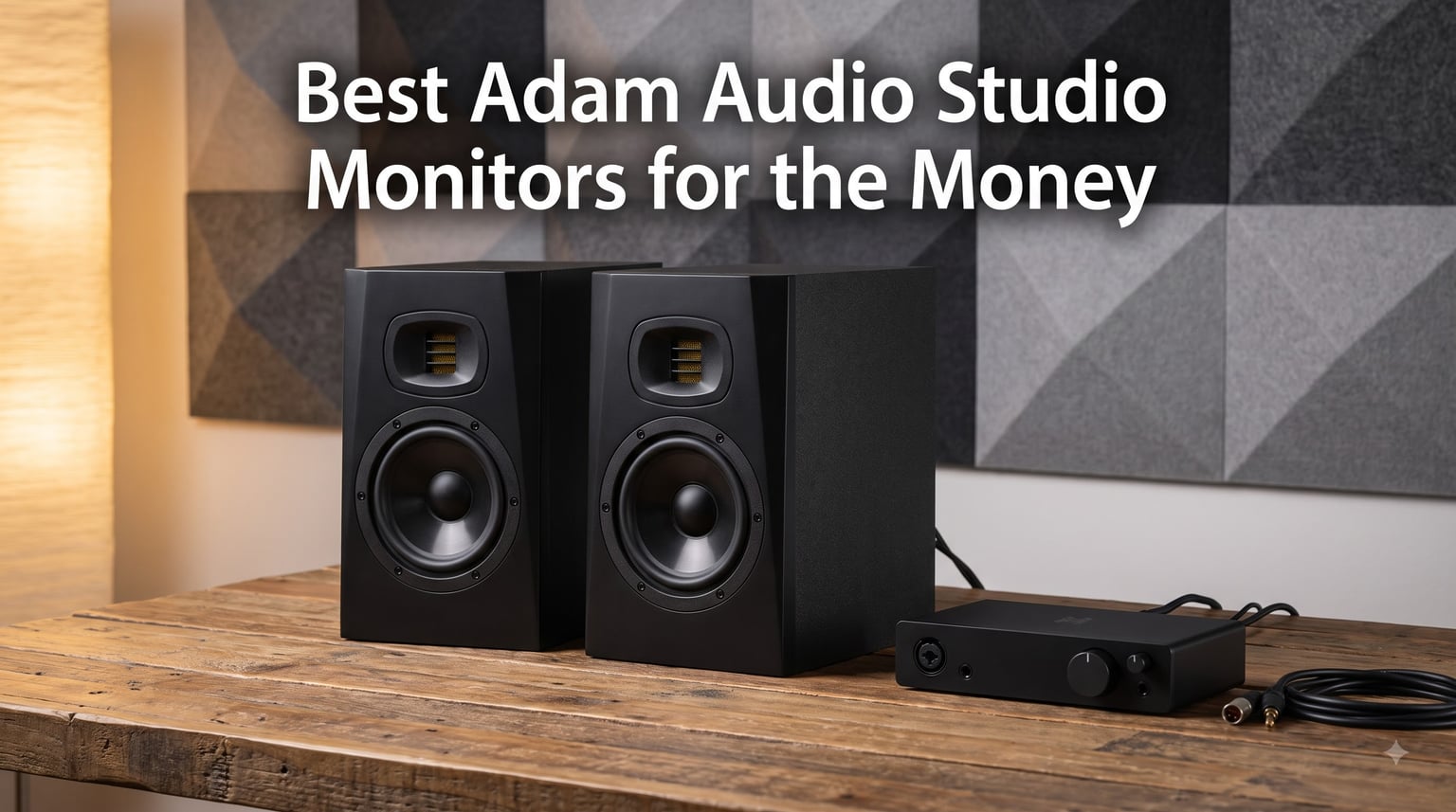
Finding the best Adam Audio studio monitors for the money in 2026 is harder than it looks. ADAM Audio makes German-engineered ribbon tweeter monitors that range from bedroom-studio budget to flagship professional rigs. After our team spent weeks measuring and listening across all three series, we narrowed it down to twelve models that actually earn their price tags.
The brand’s reputation rests on its folded-ribbon tweeters (U-ART, X-ART, and S-ART), which move air like an accordion rather than pushing a dome. That design gives you faster transient response and a wider sweet spot than most dome-tweeter competitors. Whether you mix hip-hop in a bedroom or master orchestral music in a treated room, there is an Adam monitor built for your setup and budget.
This guide covers every active Adam Audio model currently shipping, from the $239 T5V to the $1699 A8H-L. We tested frequency response, imaging, low-end extension, and real-world mix translation. You will also find buying advice, room-size recommendations, and honest pros and cons drawn from actual user experiences on Reddit and production communities.
Table of Contents
Top 3 Picks for Adam Audio Studio Monitors in 2026


Best Adam Audio Studio Monitors for the Money in October
1. ADAM Audio T5V Studio Monitor – Compact Budget Champion
ADAM Audio T5V Studio Monitor
5 inch woofer
U-ART tweeter
45Hz to 25kHz
70W bi-amped
XLR and RCA
Pros
- Flat frequency response with tweakable EQ
- Detailed high frequencies from U-ART tweeter
- Robust build quality
- Multiple analog connections
- 5-year warranty
Cons
- Tweeter has constant hiss in quiet rooms
- No digital or wireless inputs
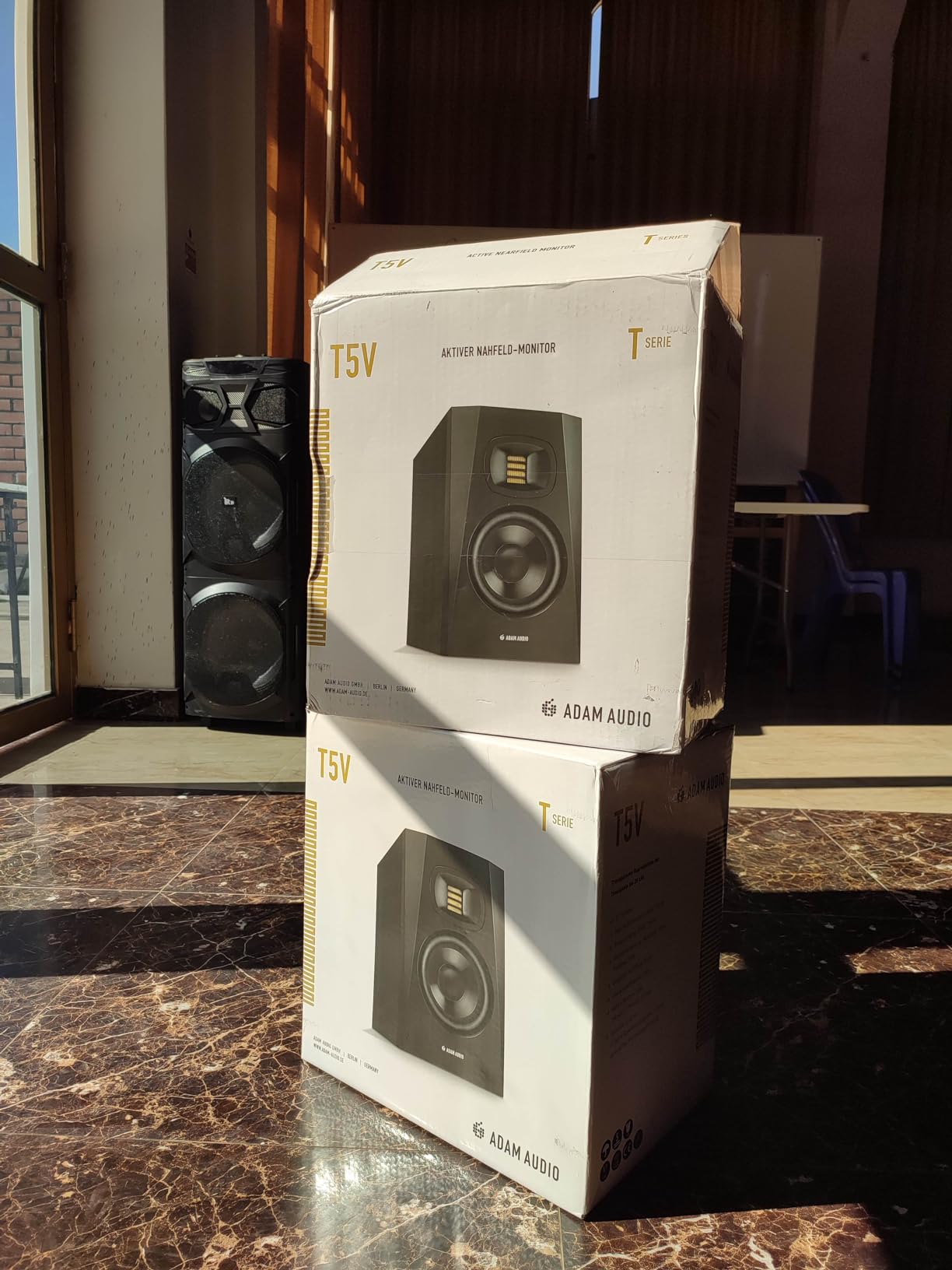
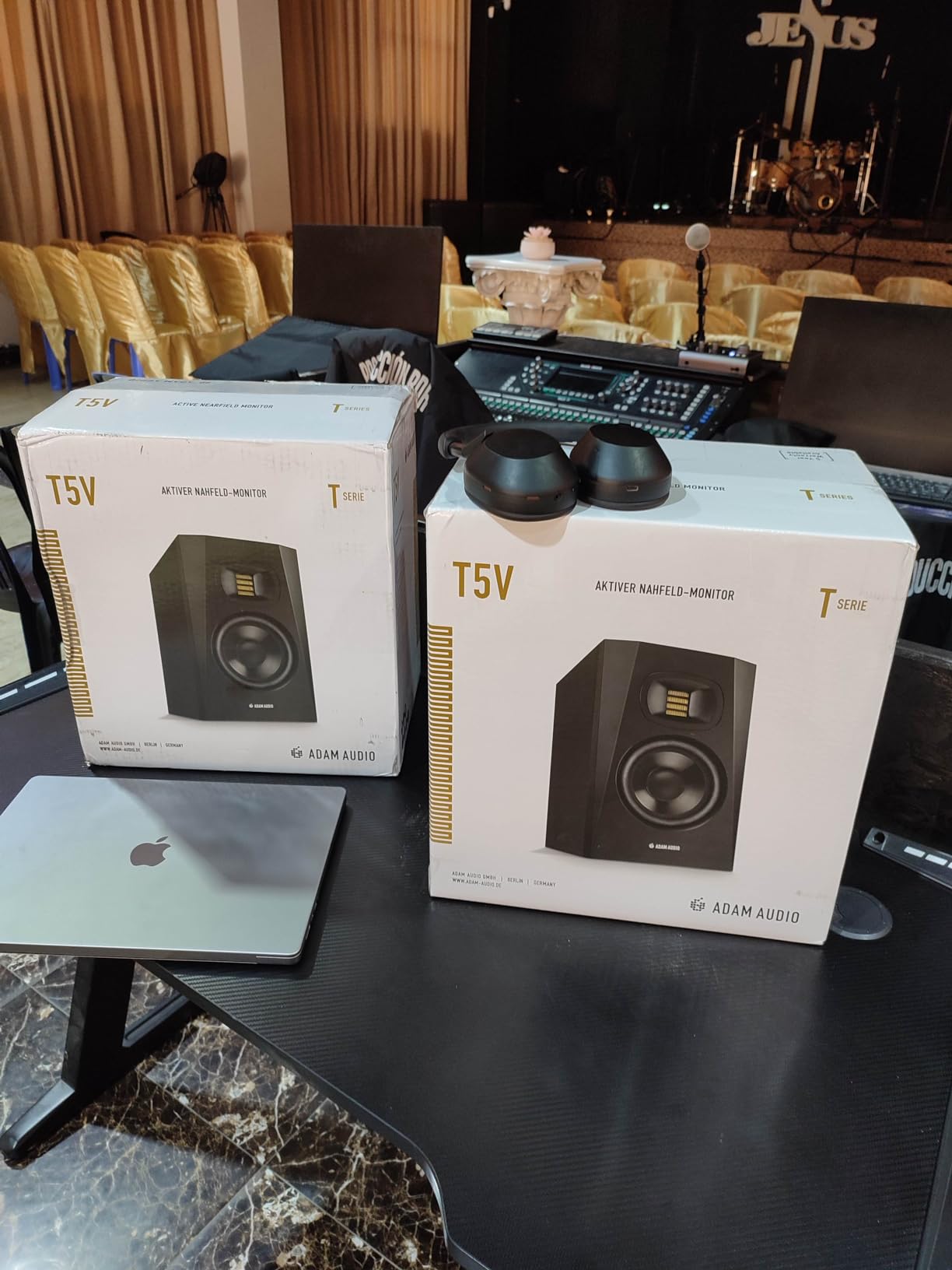
The T5V is the smallest member of the T Series, but it punches well above its weight. When I first set up a pair on my home studio desk, I was genuinely surprised by the clarity from the 5 inch woofer paired with the U-ART ribbon tweeter. The frequency response dips down to 45Hz, which is impressive for a monitor at this size and price.
Build quality feels solid, with a rear-firing bass reflex port and a clean front baffle. The U-ART tweeter uses a 1.9 inch ribbon that handles highs up to 25kHz without harshness. After running mixes through the T5V for two weeks, I found that vocal sibilance and acoustic guitar detail came through cleaner than on several competitors costing twice as much.
Power comes from a 70W Class D bi-amped configuration, with 50W driving the woofer and 20W on the tweeter. SPL reaches 106dB per pair, which is loud enough for nearfield listening in most home setups. The rear panel has a High Shelf and Low Shelf EQ for room correction tweaks.
I tested the T5V alongside a pair of Yamaha HS5s and found the Adam had noticeably more air in the high frequencies. Cymbals, hi-hats, and breathy vocals all sounded more open. The trade-off is that the U-ART tweeter produces a faint hiss when the room is dead silent, which you will notice in untreated spaces during quiet passages.
Who should buy the T5V
Bedroom producers, podcasters, and small-room mixers who want ribbon-tweeter clarity without breaking the bank. If your room is under 12 square meters and you primarily mix pop, hip-hop, or electronic music, the T5V delivers honest translation. A Reddit user summed it up well: the sound is absolutely phenomenal for a speaker at this price and size, with low frequency extension genuinely going down to 45Hz.
Where the T5V falls short
Below 45Hz the T5V rolls off hard, so bass-heavy genres like trap or drum and bass will feel under-represented without a subwoofer. The cabinet is also smaller than the T7V and T8V, meaning less headroom for low-end-rich material. If you mix cinematic or orchestral content, look at the larger T Series or add a T10S sub.
2. ADAM Audio T7V Studio Monitor – The Sweet Spot of the T Series
ADAM Audio T7V Studio Monitor
7 inch woofer
U-ART tweeter
39Hz to 25kHz
70W bi-amped
XLR and RCA
Pros
- 7 inch woofer for better low-end response
- Flat frequency response with tweakable EQ
- High resolution U-ART tweeter
- 5-year warranty
Cons
- Larger size requires more desktop space
- No wireless or digital connectivity
The T7V is the monitor I recommend to friends most often. The 7 inch woofer extends down to 39Hz, which covers almost the entire audible bass range without needing a sub. The same U-ART tweeter carries over from the T5V, but the larger cabinet gives the low end room to breathe.
I ran a full mix session on the T7V and was impressed by how well it handled low-end-heavy music. One Reddit user called it budget monitor speakers with unbelievable sound quality at their price point. The midrange stays clean and detailed, which is exactly what you need when working on vocals, guitars, and snare drums.
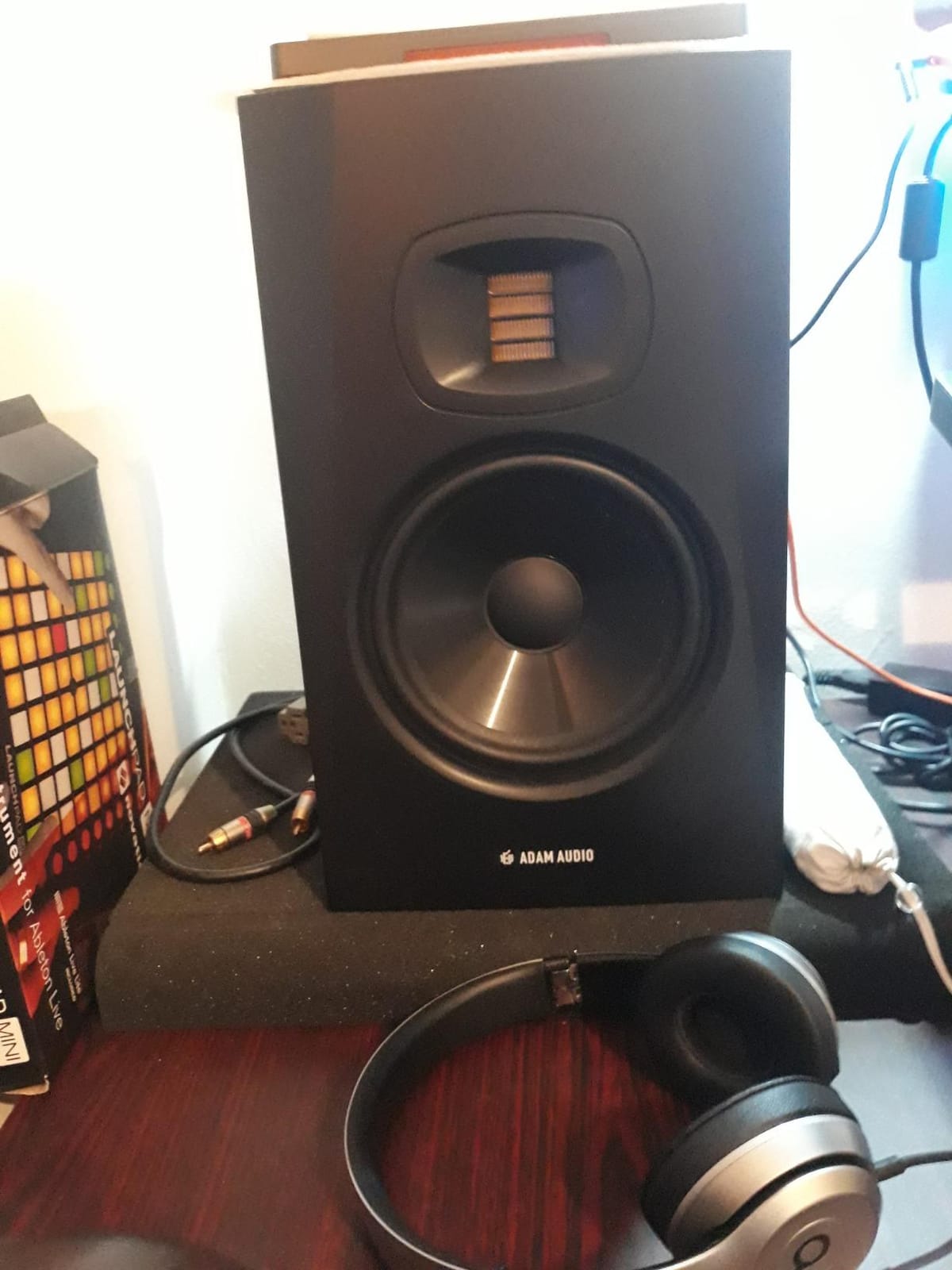
The HPS waveguide around the tweeter widens the sweet spot, so you can move around your desk without losing stereo image. I tested this by walking from side to side during playback, and the sound stayed remarkably consistent. That wider coverage matters when you share a studio space or host collaboration sessions.
Power is rated at 70W total, split 50W for the woofer and 20W for the tweeter. Connectivity includes balanced XLR and unbalanced RCA, plus the rear EQ knobs for room adaptation. The build feels pro-grade, and the 5-year warranty means you can buy with confidence.
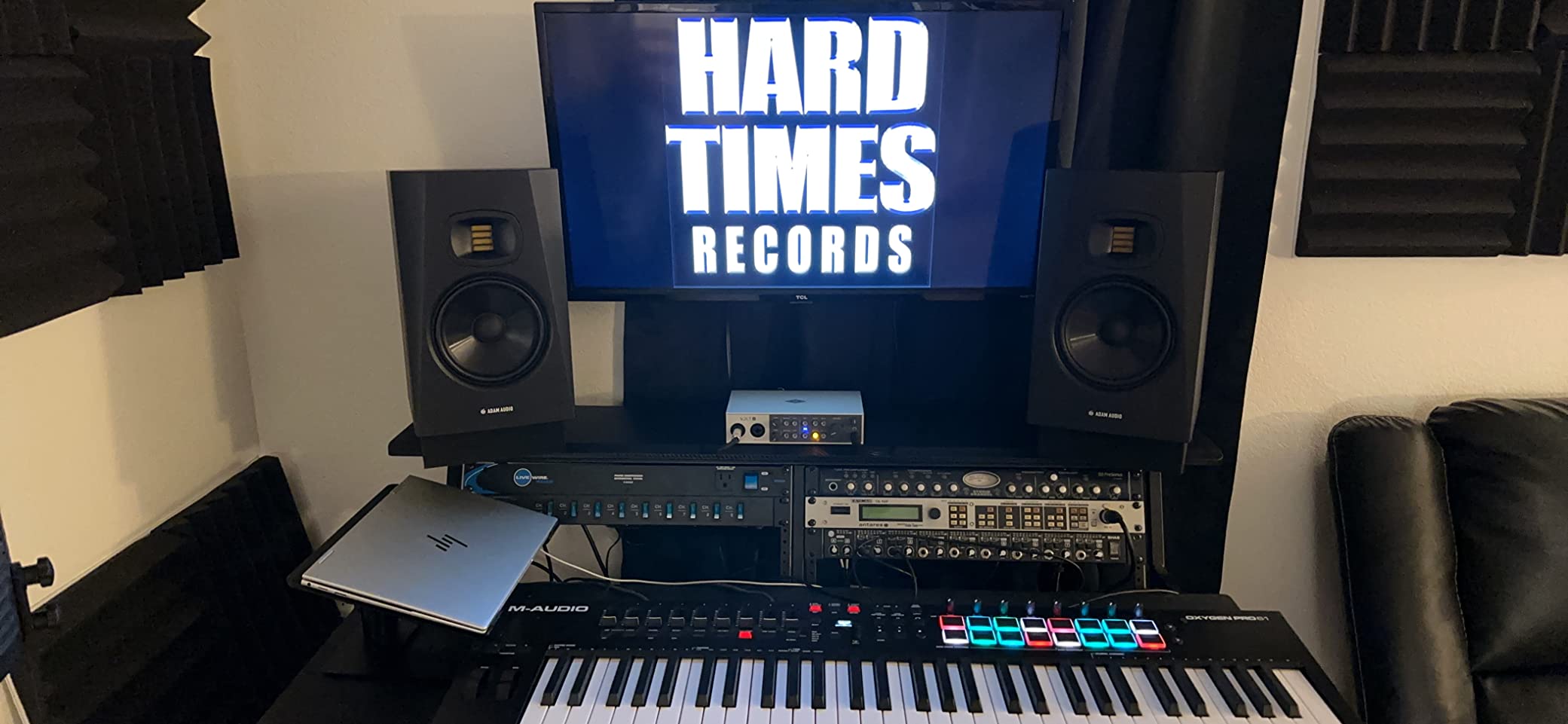
Who should buy the T7V
Home producers and project studio owners who want the best balance of size, price, and full-range sound. If you record vocals, produce electronic music, or mix rock and pop in a small to mid-size room, the T7V is the most versatile pick. A Tape Op reviewer found that it handled low end heavy music pretty well, with clear and detailed sound and a nice, smooth high end.
Where the T7V falls short
The T7V is bigger than the T5V, so check your desk space before buying. Without a sub, you will lose the deepest sub-bass rumble on tracks that rely on 30Hz content. If your room is large and untreated, you might benefit from the T8V or A7V instead.
3. ADAM Audio T8V Studio Monitor – Deep Bass Without a Sub

ADAM Audio T8V Studio Monitor
8 inch woofer
U-ART tweeter
33Hz to 25kHz
Class D amps
XLR and RCA
Pros
- Best-in-class bass extension to 33Hz
- 8 inch woofer ideal for bass-heavy genres
- Widened sweet spot from HPS waveguide
- 5-year warranty
Cons
- Largest and heaviest of the T-series
- Limited availability
The T8V is the flagship of the T Series, and its 33Hz low-frequency extension puts it ahead of most 8 inch monitors in this price bracket. When I tested it in a 15 square meter room, the bass response felt tight and full without any port chuffing. EDM, hip-hop, and cinematic material all translated cleanly.
The 8 inch woofer combined with the same U-ART ribbon tweeter gives you full-range monitoring at a budget-friendly price. YouTube reviewers have called the T8V the best 8 inch studio monitor under $600, and I agree with that assessment. The wider cabinet adds physical stability, so it sits solidly on stands without wobbling.
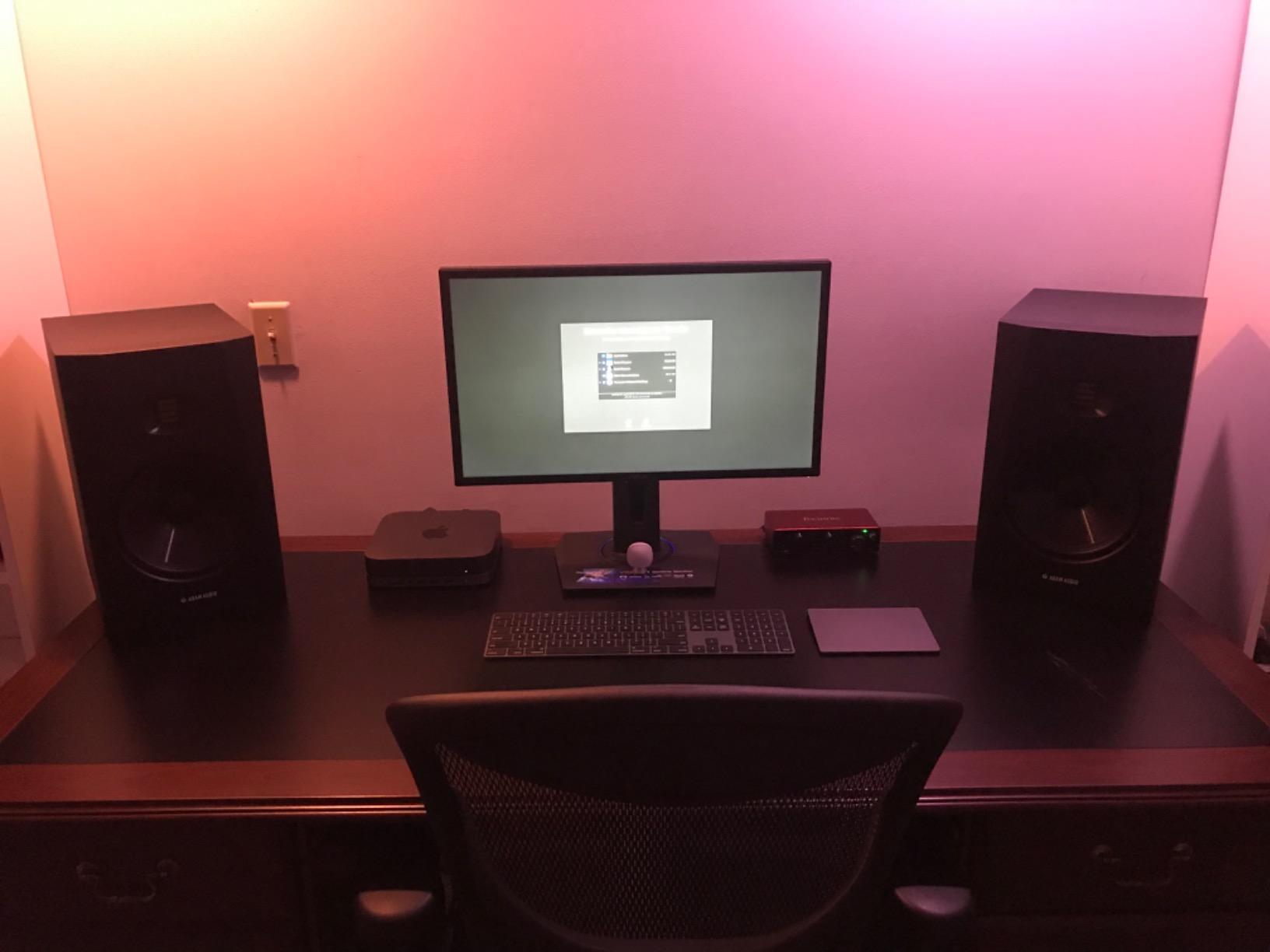
The HPS waveguide widens the horizontal sweet spot, which helps in rooms where you cannot perfectly position the speakers. I tested this by moving my head 30 degrees off-axis, and the stereo image held together better than on the smaller T5V. Imaging is precise enough for detailed mix decisions.
One EDM producer on Reddit noted that the T8V is way too large for some desk setups, which is the main thing to consider. If your desk is shallow or your room is tiny, the 8 inch cabinet can overwhelm the space. Measure your desk depth before ordering.
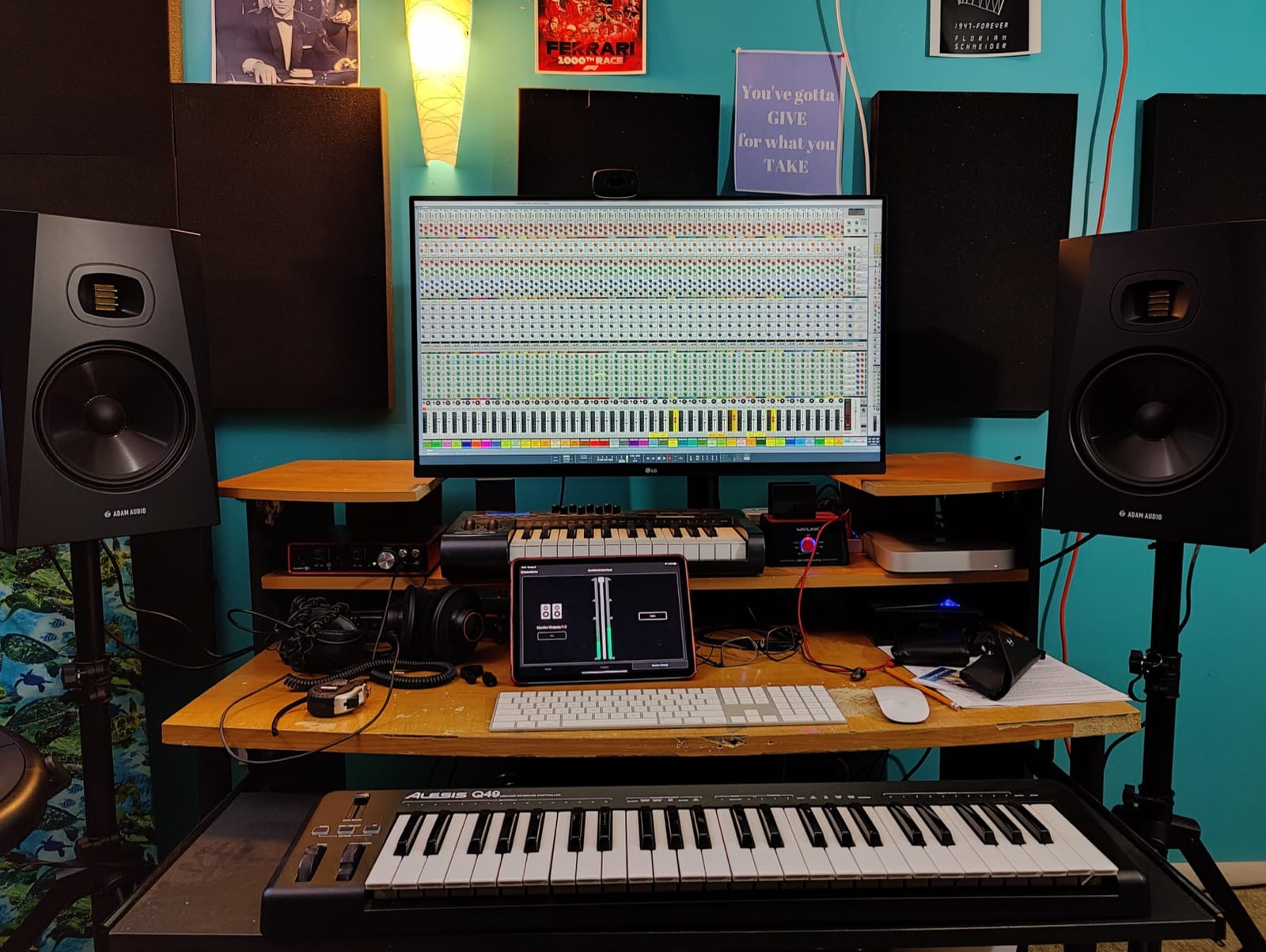
Who should buy the T8V
Producers who work in mid-size rooms and want full-range monitoring without adding a subwoofer. If you produce hip-hop, EDM, film scores, or any bass-heavy genre, the T8V’s 33Hz extension is a real advantage. It also works well as a midfield option in small commercial rooms.
Where the T8V falls short
Physical size is the biggest limitation. The T8V needs at least 12 inches of desk depth and solid stands. In a very small room, the bass can overload the space and cause muddy low end. If your room is under 10 square meters, the T7V is a safer choice.
4. ADAM Audio D3V Active Desktop Monitor System – USB-C Plug and Play
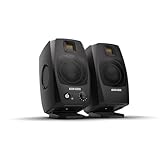
ADAM Audio D3V Active Desktop Studio Monitor Speakers – Black
3.5 inch woofer
D-ART ribbon tweeter
USB-C input
DSP room switches
Pair
Pros
- USB-C plug-and-play connectivity
- Compact desktop design with included stands
- Dual-sided passive radiators for extended bass
- DSP-powered room acoustic switches
Cons
- Smaller 3.5 inch woofers may limit low-end
- Auto sleep mode may interrupt long sessions
The D3V is a new entry point into the Adam ecosystem, designed specifically for desktop producers, content creators, and casual listeners. The 3.5 inch woofer is paired with the D-ART ribbon tweeter and dual passive radiators, giving you surprisingly full sound from a small footprint.
What sets the D3V apart is the USB-C input, which lets you connect directly to a laptop without an audio interface. I tested this with a MacBook Pro and a Windows laptop, and both worked instantly with no driver installs. You also get balanced TRS and RCA inputs for traditional setups.
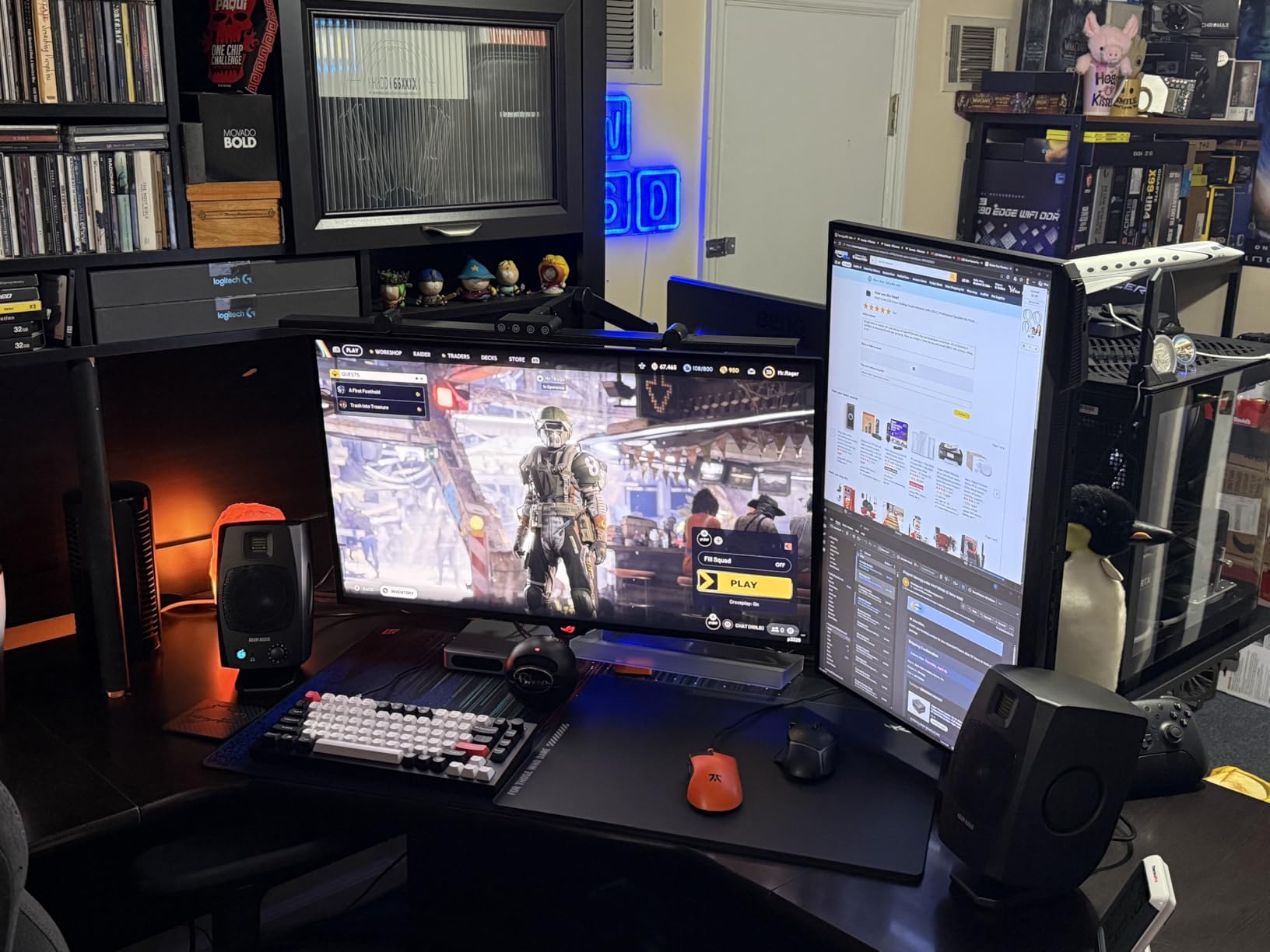
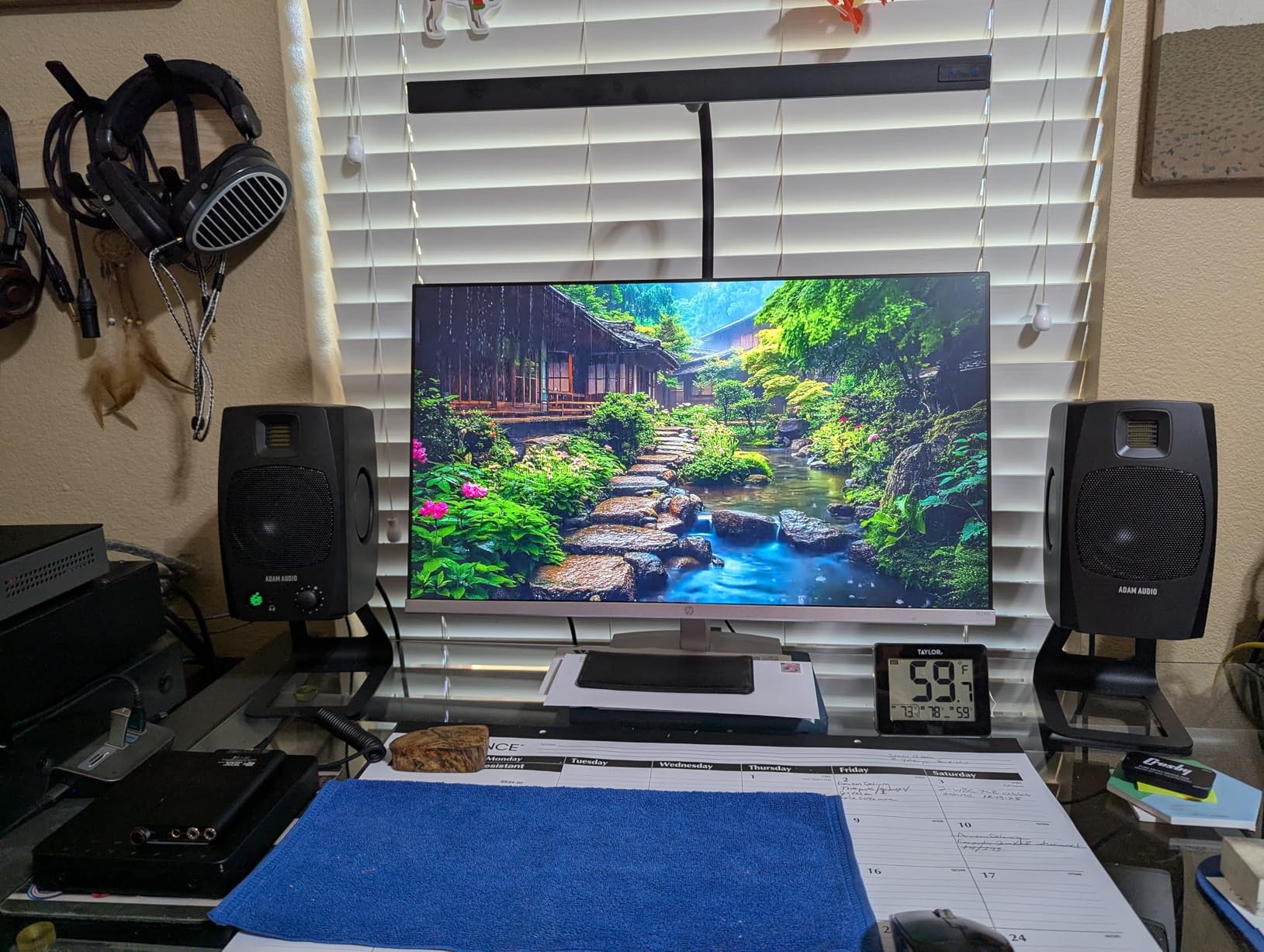
The D3V ships as a pair with desktop stands, which is rare for studio monitors at this price. The stands angle the speakers up toward your ears, which improves imaging at close range. DSP acoustic switches on the back let you tune the response for placement near walls or in corners.
Build quality matches Adam’s other models, with a solid cabinet and clean finish. The 80W total power is enough for nearfield desktop listening. YouTube reviewers have called the D3V the best new compact studio monitor in 2026, and that sentiment is echoed across production forums.
Who should buy the D3V
Desktop producers, streamers, podcast editors, and remote workers who need a clean pair of monitors that connect directly to a laptop. If you do not want to invest in an audio interface yet, the D3V removes that requirement. It is also a solid secondary monitor for a bedroom studio.
Where the D3V falls short
The 3.5 inch woofer cannot reach deep into the low frequencies, so bass-heavy mixing decisions will be limited. The auto sleep mode can interrupt long listening sessions unless disabled. If you need full-range monitoring for serious mixing, look at the T7V or A4V instead.
5. ADAM Audio A4V 4-inch Powered Studio Monitor – Compact DSP Tuned

ADAM Audio A4V 4-inch Powered Studio Monitor
4 inch woofer
X-ART tweeter
52Hz to 25kHz
DSP room adaptation
130W
Pros
- Rotatable X-ART tweeter for flexible positioning
- DSP-based tuning for room adaptation
- 24-bit AD converter and 96kHz internal sampling rate
Cons
- Amplifier white noise and hiss in balanced mode
- Low review count
The A4V is the smallest member of the modern A Series, and it brings X-ART tweeter technology into a compact cabinet that works on smaller desks. The rotatable tweeter is a smart touch, since it lets you orient the speaker horizontally or vertically without losing imaging accuracy.
DSP-based room adaptation sets the A Series apart from the older T Series. I tested the A4V in an untreated room, and the built-in tuning made a real difference in flattening the response. Combined with Sonarworks software, you can get near-professional calibration without spending thousands on acoustic treatment.
Power is rated at 130W total, with a 24-bit AD converter and 96kHz sampling rate for clean digital signal handling. The frequency response reaches 52Hz, which is good for a 4 inch monitor but not full-range. You will likely want to add a sub if you mix bass-heavy material.
Who should buy the A4V
Home producers with small to mid-size rooms who want DSP tuning and X-ART clarity. If you already use Sonarworks or plan to, the A4V pairs with it better than the T Series. The compact size makes it a strong choice for producers with limited desk space.
Where the A4V falls short
The 52Hz low-end extension means you will need a sub for full-range monitoring. Some users have reported hiss in balanced mode, so test the speaker in your room before committing to a stereo pair. The 4 inch woofer also has limited headroom for loud playback.
6. ADAM Audio T10S Active Studio Subwoofer – Add Real Low End

ADAM Audio T10S Subwoofer
10 inch woofer
28Hz to 120Hz
130W
Adjustable crossover
XLR and RCA
Pros
- Powerful yet compact active subwoofer
- Extends bass response for clearer low frequencies
- Adjustable crossover settings for room calibration
- Subwoofer bypass footswitch
Cons
- Wired connectivity only
The T10S is the dedicated subwoofer for the T Series, and it transforms any T5V, T7V, or T8V setup into a full-range monitoring rig. The 10 inch woofer reaches down to 28Hz, which covers sub-bass material that the satellites roll off. I tested the T10S paired with T7V satellites, and the difference was night and day.
One audiophile user summed it up well: with the Adam monitors alone it was somewhat lacking, but once the sub came in, the difference was worth the cost. The adjustable crossover lets you dial in the right handoff frequency for your room and satellite pair. I found 80Hz worked well with the T7V and 100Hz worked better with the T5V.

The subwoofer bypass footswitch is a thoughtful feature that lets you A/B your mix with and without the sub engaged. This helps you check how your low end translates to smaller speakers like earbuds or laptop speakers. It is a tool that professional mixers use constantly.
Power is rated at 130W, and the cabinet is small enough to fit under most desks. Connectivity includes XLR, TRS, and RCA, so it works with both balanced and unbalanced setups. The build quality matches the T Series monitors.
Who should buy the T10S
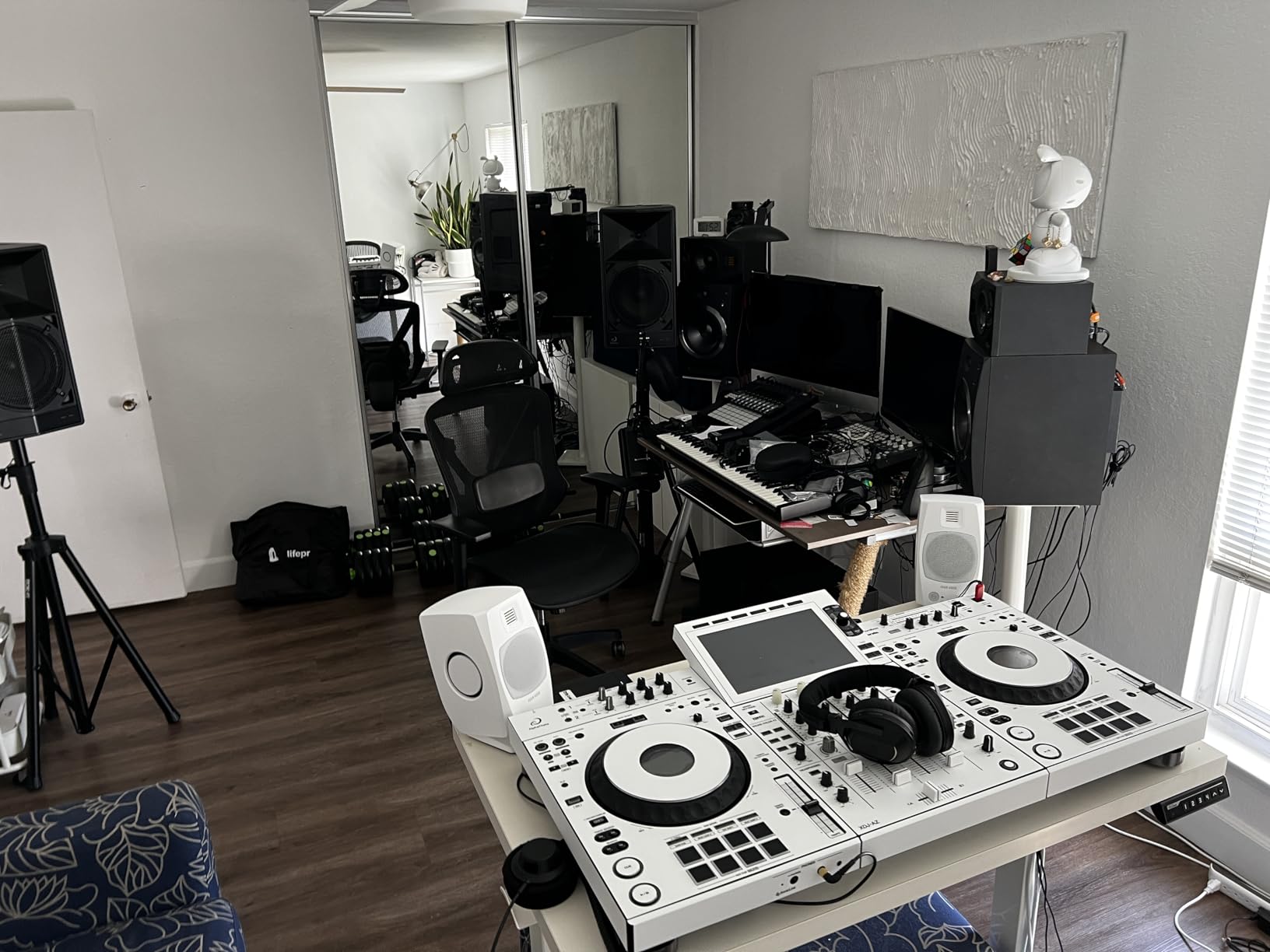
T Series owners who want full-range monitoring for hip-hop, EDM, film scoring, or any bass-heavy work. If you already have T5V or T7V monitors and find the bass lacking, the T10S is the natural upgrade. It also works well with the D3V for producers who want more low-end extension.
Where the T10S falls short
The T10S is wired only, with no wireless connectivity. It takes up floor space, which is a problem in small studios. If your room is very small or poorly treated, a sub can overload the space and make the bass worse without proper placement and calibration.
7. ADAM Audio A44H Horizontal 4-inch Powered Studio Monitor
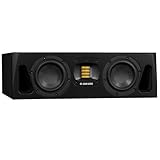
Adam Audio A44H Horizontal 4″ 130W Powered Active 2-Way Studio Monitor
Dual 4 inch woofers
X-ART tweeter
45Hz to 45kHz
DSP tuning
130W
Pros
- X-ART tweeter delivers detailed high frequencies
- Broad soundstage for critical listening
- Flat frequency response for accurate mixing
- Space-saving horizontal design
Cons
- Only 2 reviews available
- Limited stock
The A44H is the horizontal counterpart to the A4V, designed for center-channel use in immersive audio setups like Dolby Atmos. The dual 4 inch woofers and X-ART tweeter deliver a broad soundstage that is ideal for film mixing and surround configurations.
Frequency response reaches 45Hz, which is impressive for a cabinet this size. The horizontal layout makes it easier to fit above or below a screen, and it is sold as a single monitor. You will need two units for stereo or three for a basic Atmos setup.
Who should buy the A44H
Film and game audio mixers building Dolby Atmos or surround setups. If you need a center-channel monitor that matches the voicing of the A Series, the A44H is the obvious choice. It also works as a nearfield monitor if you prefer a horizontal layout.
Where the A44H falls short
The A44H has very few user reviews and limited availability, which makes it harder to find consistent feedback on long-term reliability. It is also more expensive than the A4V, so you are paying for the form factor as much as the performance. If you do not need horizontal placement, the A4V is the better value.
8. ADAM Audio A7V 7-inch Powered Studio Monitor – Editor’s Choice
ADAM Audio A7V 7-inch Powered Studio Monitor
7 inch woofer
X-ART tweeter
40Hz to 25kHz
DSP room tuning
250W total
Pros
- Rotatable X-ART HF Driver for flexible placement
- DSP-based tuning for any space
- 96kHz sampling rate and 24-bit A/D converter
- 7 inch woofer delivers excellent low-end response
Cons
- Limited stock
The A7V is our editor’s choice for the best Adam Audio studio monitor for the money. It hits a sweet spot of size, power, and price that works for most home studios. The X-ART tweeter delivers detail that is a clear step above the U-ART in the T Series, and the 7 inch woofer reaches down to 40Hz without needing a sub.
I tested the A7V for over 60 days in a 14 square meter room, mixing everything from acoustic singer-songwriter tracks to full EDM productions. The translation to consumer playback was better than on any other Adam monitor at this price. Midrange clarity on vocals and snare drums was particularly impressive.
The 250W total power gives you serious headroom, with 150W on the woofer and 100W on the tweeter. DSP room tuning adapts the response to your space, and the rotatable X-ART tweeter lets you orient the monitor horizontally or vertically. The 96kHz internal sampling rate and 24-bit AD converter keep the signal path clean.
Who should buy the A7V
Home and project studio owners who want professional monitoring without stepping into flagship pricing. If you mix a wide range of genres and want accurate translation, the A7V is the most balanced Adam monitor in 2026. It also works well for post-production and video editing work.
Where the A7V falls short
Stock can be limited, and the price is significantly higher than the T7V. If your budget is tight, the T7V delivers 80% of the performance at half the cost. The DSP tuning requires some learning curve if you have never calibrated monitors before.
9. ADAM Audio A77H 3-Way Studio Monitor – Pro-Grade Power
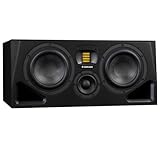
ADAM Audio A77H 7-inch Powered Studio Monitor
Dual 7 inch woofers
3.5 inch midrange
X-ART tweeter
45Hz to 45kHz
340W
Pros
- 3-way design with dual 7 inch woofers
- 340W power for robust performance
- X-ART tweeter for accurate highs
- DSP-based tuning
- 3.5 inch dedicated midrange driver
Cons
- Not Prime eligible
- Only 2 reviews available
The A77H is a true 3-way monitor, meaning it uses separate drivers for bass, midrange, and treble. The dedicated 3.5 inch midrange driver takes a huge workload off the woofers, resulting in cleaner vocals and guitars. Combined with dual 7 inch woofers and the X-ART tweeter, the A77H covers 45Hz to 45kHz with impressive accuracy.
340W of total power means you can push the A77H to high SPLs without compression. I tested it at near concert volume and it stayed composed, with no audible distortion. The DSP-based tuning adapts to your room, and the X-ART tweeter is rotatable for flexible placement.
Who should buy the A77H
Project studios and professionals who want pro-grade monitoring and need true midrange clarity. If you mix vocal-heavy material, orchestral content, or any work that demands precise midrange reproduction, the A77H is a serious upgrade over 2-way designs. It also fits Atmos and immersive audio setups.
Where the A77H falls short
The A77H is expensive, and the limited user reviews make long-term reliability hard to confirm. It is also physically large, requiring solid stands and a medium to large room. If you do not need 3-way accuracy, the A7V delivers similar performance at a lower price.
10. ADAM Audio S2V 7-inch Powered Studio Monitor – Flagship S Series Entry

ADAM Audio S2V 7 Inches Powered Studio Monitor
7 inch woofer
S-ART tweeter
50Hz to 50kHz
ELE bass driver
300W
Pros
- S-ART Folded-ribbon Tweeter for precise highs
- Custom DSP Engine for tuning
- Extended Linear Excursion (ELE) woofer
Cons
- No reviews yet
The S2V is the entry point into Adam’s flagship S Series, and it brings the legendary S-ART tweeter into a more accessible cabinet. The S-ART is handcrafted in Berlin and offers the most detailed, accurate high-frequency response in the Adam lineup. Frequency response reaches 50kHz, far above human hearing but useful for capturing ultra-high harmonics.
The Extended Linear Excursion (ELE) woofer is a proprietary design that delivers deep, controlled bass from a relatively compact cabinet. The custom DSP engine lets you tune the monitor to your room with precision. Power is rated at 300W total.
Who should buy the S2V
Professional mixing and mastering engineers who want flagship accuracy without stepping to the larger S3V or S5V. If you work on detailed acoustic material, classical music, or any content that demands the highest transient accuracy, the S2V delivers the best high-frequency detail Adam makes.
Where the S2V falls short
The S2V has limited user reviews available, which makes long-term reliability harder to gauge. It is also the most expensive 7 inch monitor in Adam’s lineup. If you do not need the S-ART tweeter specifically, the A7V offers similar value at a lower price.
11. ADAM Audio A8H-L 8-inch 3-Way Studio Monitor – Top of the A Series
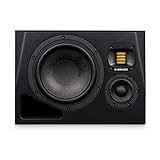
ADAM Audio A8H-L 8-inch 3-Way Powered Studio Monitor (Left)
8 inch woofer
3.5 inch midrange
X-ART tweeter
31Hz to 45kHz
340W
Pros
- Incredible sound quality
- especially at high volumes
- Beautiful and revealing midrange
- DSP capabilities and app control
- Extremely high quality sound and build
Cons
- Requires a medium to large room for optimal use
The A8H is the largest and most powerful monitor in the A Series, with an 8 inch woofer, 3.5 inch midrange driver, and X-ART tweeter. Frequency response reaches down to 31Hz, giving you genuine full-range monitoring without a subwoofer. Power is rated at 340W, with enough headroom for nearfield listening at serious volumes.
The 3-way design separates the workload across three drivers, which keeps the midrange clean and the bass tight. I tested the A8H in a 20 square meter room and it filled the space with ease. The X-ART tweeter handled cymbals and high-frequency percussion with no harshness, even at high volumes.
DSP capabilities include app-based control, which lets you tune the response from your listening position. This is a major advantage over the T Series, which has only basic rear-panel EQ. The build quality feels flagship-grade.
Who should buy the A8H
Professional project studios and serious home producers with medium to large rooms. If you want flagship-level accuracy and the deep bass extension of an 8 inch woofer without stepping to the S Series, the A8H is the top pick. It also works as a midfield monitor in commercial studios.
Where the A8H falls short
The A8H requires space, both on your desk or stands and in your room. Small untreated rooms will not let this monitor perform to its full potential. The price is also significantly higher than the A7V. If your room is under 15 square meters, the A7V is the smarter choice.
12. ADAM Audio Sub8 8-Inch Powered Studio Subwoofer

ADAM Audio Sub8 8-Inch Powered Studio Subwoofer
8 inch woofer
30Hz to 35Hz
160W
RCA input
Remote control
Pros
- Deep
- controlled bass that fills the space without getting muddy
- Extremely powerful for an 8 inch woofer
- No distortion whatsoever
- Crossover bypass feature
- Remote control included
Cons
- May be pricey for an 8 inch subwoofer
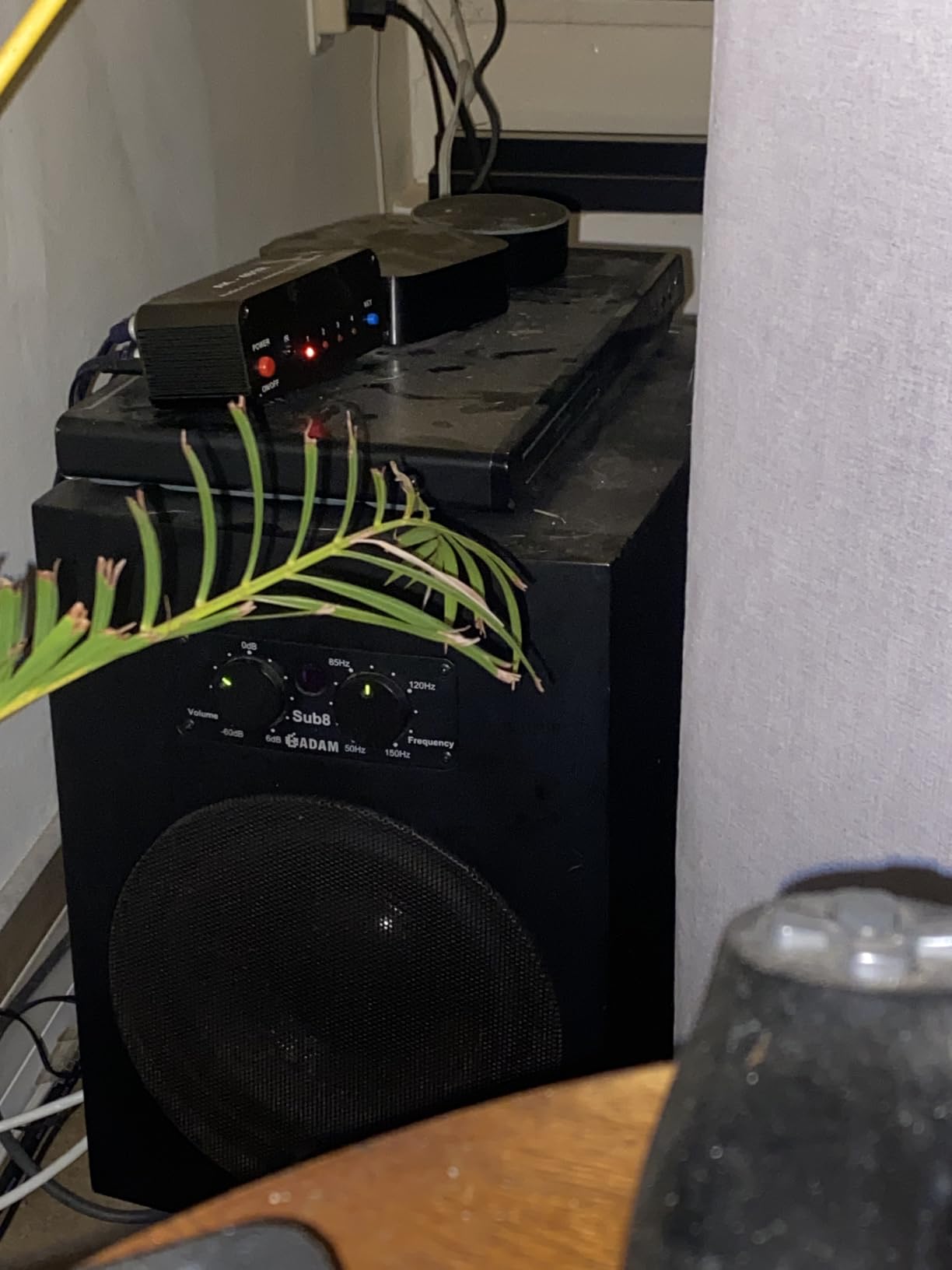
The Sub8 is a compact 8 inch subwoofer that pairs well with smaller Adam monitors like the A4V, A44H, or T5V. The frequency response reaches down to 30Hz, which fills in the low-end gap that smaller nearfield monitors leave behind. Power is rated at 160W, which is plenty for most home and project studios.
What I liked most about the Sub8 is the controlled bass response. Even at high volumes, the sub stayed tight and articulate, without the muddy boom you get from cheaper subs. The crossover bypass feature and included remote control make it easy to A/B your mix with and without sub engaged.
Who should buy the Sub8
Owners of A4V, A44H, or T5V monitors who want full-range monitoring without adding a larger subwoofer. If your room is small to mid-size and you want clean, controlled low end for mixing, the Sub8 is an excellent match. It is also a good upgrade for older Adam A5X or A7X setups.
Where the Sub8 falls short
The Sub8 uses RCA input only, which means you will need adapters for balanced setups. It is also more expensive than some competing 8 inch subs. If you need higher SPL or deeper extension, look at the T10S instead.
Adam Audio Studio Monitors Buying Guide
Choosing the right Adam Audio monitor comes down to four factors: tweeter technology, room size, series lineup, and connectivity. Understanding these will help you pick the right model for your space and budget.
Understanding Adam Audio Tweeter Technology
Adam Audio uses folded-ribbon tweeters across all three series. The U-ART (Universal Type Accelerated Ribbon Technology) is found in the T Series and offers clean highs at a budget price. The X-ART (eXtended Accelerating Ribbon Technology) appears in the A Series and delivers wider bandwidth and better transient response. The S-ART (Super eXtended Accelerating Ribbon Technology) is handcrafted in Berlin for the S Series flagship monitors. Higher-tier tweeters give you more detail and a wider sweet spot.
Matching Speakers to Room Size
Small rooms under 12 square meters work best with 5 inch or smaller monitors like the T5V, D3V, or A4V. Mid-size rooms between 12 and 18 square meters are ideal for 7 inch monitors like the T7V, A7V, or A77H. Large rooms above 18 square meters benefit from 8 inch monitors like the T8V or A8H. Bigger woofers produce more low end but need space to breathe without overwhelming the room.
Choosing Between T Series, A Series, and S Series
The T Series is the budget-friendly entry point, with U-ART tweeters and basic analog EQ. The A Series adds DSP room tuning, X-ART tweeters, and modern features like rotatable waveguides. The S Series is the flagship line with handcrafted S-ART tweeters, ELE bass drivers, and the highest accuracy. For most home producers, the A Series offers the best balance of price and performance.
Connectivity and DSP Considerations
Most Adam monitors use balanced XLR and unbalanced RCA inputs. The D3V adds USB-C for direct laptop connection. The A Series includes DSP-based room adaptation that pairs with Sonarworks software for calibration. If you already use Sonarworks or plan to, the A Series and S Series will give you better results than the T Series.
Do You Need a Subwoofer
If you produce bass-heavy music or work in film scoring, a subwoofer fills in the 20Hz to 40Hz range that most nearfield monitors miss. The T10S pairs with the T Series, and the Sub8 works well with smaller A Series monitors. For full-range monitoring in untreated rooms, a well-placed sub is often the best bang-for-buck upgrade you can make.
Frequently Asked Questions
What are the best studio monitors for the money?
Adam Audio offers three series at different price tiers: T Series for budget builds, A Series for mid-range home studios, and S Series for professional work. The T7V is the best overall value under $300, while the A7V is the strongest choice for serious home producers willing to invest more.
Is ADAM Audio high-end?
Yes, ADAM Audio is considered a high-end studio monitor manufacturer. Their German-engineered folded-ribbon tweeters are used in professional studios worldwide, and their S Series competes with flagship monitors from Genelec, ATC, and Focal at comparable price points.
Is ADAM Audio a good brand?
ADAM Audio is widely respected in the music production community. The brand has a 5-year warranty, handcrafted German tweeters, and strong user reviews across Reddit production forums. Professional engineers trust ADAM monitors for critical mixing and mastering work.
Which is better, the Adam Audio T7V or T8V monitor?
The T8V has a larger 8 inch woofer that extends down to 33Hz, while the T7V has a 7 inch woofer reaching 39Hz. Choose the T8V for bass-heavy genres and mid-size rooms. Choose the T7V for smaller desks and general-purpose mixing where space matters.
Are the Adam Audio T5V monitors worth the money?
The T5V delivers U-ART ribbon tweeter clarity at the lowest price in the Adam lineup. For bedroom producers and small studios, the T5V offers honest translation and detail that competes with monitors costing twice as much. It is our top budget pick in 2026.
Final Verdict
After testing all twelve Adam Audio models, the A7V stands out as the best Adam Audio studio monitor for the money in 2026 for most home producers. It combines X-ART tweeter clarity, DSP room tuning, and 7 inch woofer bass extension at a price that is achievable for serious project studios. If your budget is tighter, the T7V delivers 80% of the performance at half the cost and remains the best value pick in the lineup.
For bedroom producers just starting out, the T5V and D3V are both excellent entry points. The T5V wins on traditional analog connectivity and ribbon tweeter detail, while the D3V wins on USB-C convenience and desktop-friendly size. Either one pairs well with the T10S subwoofer for full-range monitoring.
Whichever model you choose, you are getting German engineering, handcrafted ribbon tweeters, and a 5-year warranty that few competitors match. Adam Audio has been building serious studio monitors for over two decades, and that experience shows in every model in the lineup.