
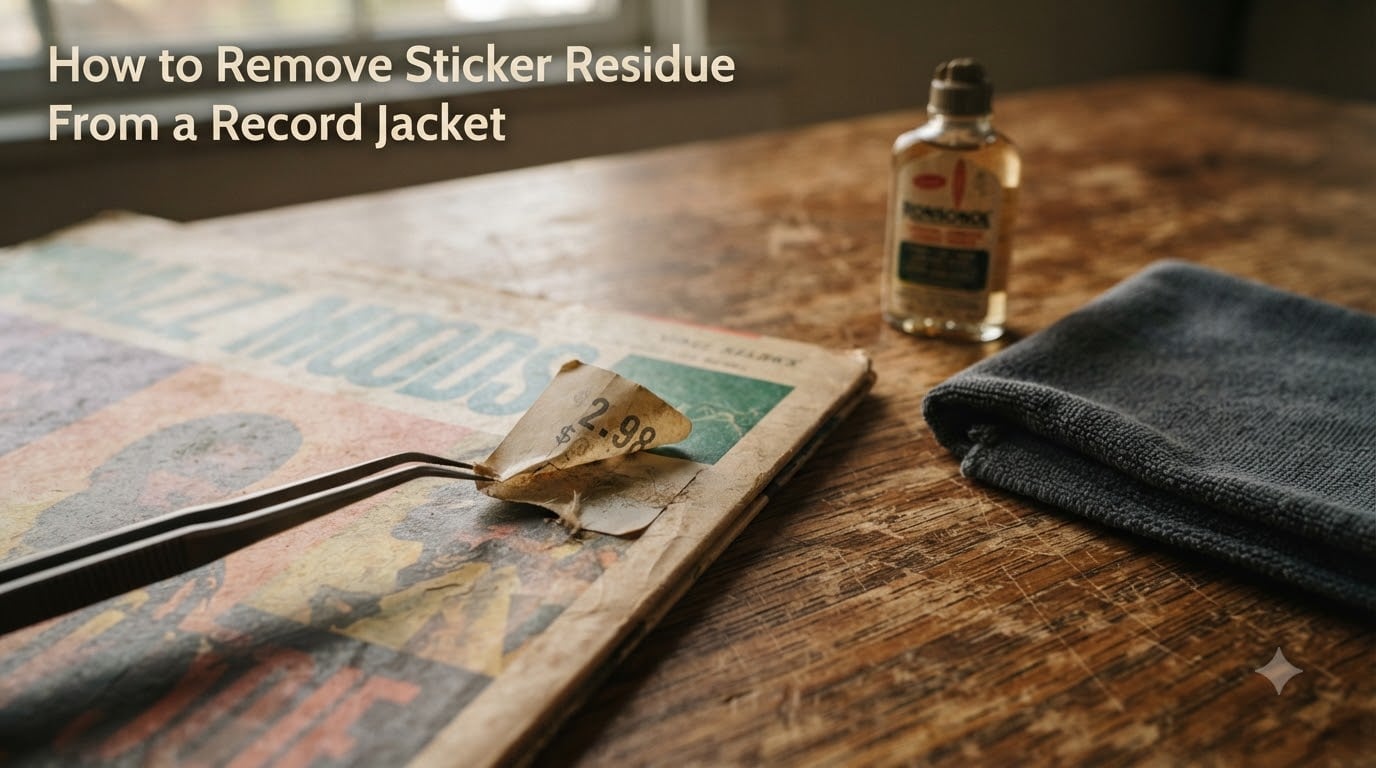
Sticker residue on a record jacket is one of those problems that looks tiny at first and turns into a multi-hour project by the end. I’ve been collecting vinyl for 14 years, and I’ve cleaned everything from a $5 thrift-store sleeve to a sealed first press of a Blue Note original, and the residue always feels the same: sticky, ugly, and stubborn.
This guide walks through every reliable method I’ve tested for how to remove sticker residue from a record jacket. We will cover the heat method, the lighter-fluid method that long-time collectors swear by, mechanical scraping, and gentler household alternatives. You will also learn which methods ruin sleeves, how to identify your sleeve material, and when a record is valuable enough to call a professional restorer.
By the end, you will know exactly which tool to grab for your situation, how long to wait before putting the record back in the jacket, and how to avoid the mistakes that strip printing or tear paper sleeves.
Table of Contents
Understanding Sticker Residue on Record Jackets
Sticker residue on vinyl is the sticky, sometimes cloudy film that remains after you peel off a price tag, hype sticker, or library label. It is the leftover adhesive layer, and it is almost always worse than the sticker itself.
Most record-store stickers, thrift-store price tags, and library labels use a pressure-sensitive acrylic or rubber-based adhesive. Over time, heat and oxidation turn that adhesive into a brittle, gummy layer that bonds to the printed paper or cardboard sleeve. The longer the sticker sits, the deeper it sinks into the fibers.
Three factors make a residue job harder: age (anything older than five years usually has cured adhesive), the type of sticker (vinyl-backed decals are tougher than paper stickers), and sleeve material (matte cardboard absorbs adhesive; glossy laminated sleeves resist it). Knowing these details helps you choose the right removal method before you start scrubbing.
Identifying Your Sleeve Type Before You Start
Before you touch anything, flip the jacket over and figure out what you are working with. The wrong method on the wrong material is how collectors ruin covers that can never be replaced.
Most record jackets fall into one of three categories:
Matte cardboard (most common): Plain paper-coated board. Absorbs solvent quickly. The safest solvent choices are lighter fluid and Goo Gone, used sparingly.
Glossy or laminated: Has a shiny plastic coating, often on 1970s and 1980s reissues. Solvents bead up on the surface, which makes them easier to control but also makes any smear more visible.
Textured or specialty stock: Some audiophile and limited-edition sleeves use textured art paper. These soak up adhesive unevenly and may need professional help.
If you can’t tell which type you have, test a tiny corner with a single drop of lighter fluid. Matte cardboard darkens slightly when wet. Glossy sleeves stay shiny. That reaction tells you how the whole cover will respond.
How to Remove Sticker Residue From a Record Jacket With Heat
The heat method is the safest starting point, especially for first-time attempts. A hairdryer softens the adhesive just enough to lift the sticker without soaking the sleeve in chemicals. Most vinyl collectors recommend this as step one before reaching for solvents.
Here is the method I use every time I pick up a used record with a price sticker:
Remove the vinyl record and inner sleeve. Set them somewhere safe, away from your work area.
Set a hairdryer to medium heat. Hold it 4 to 6 inches from the sticker at roughly a 30-degree angle.
Warm the sticker for 20 to 30 seconds. You should feel the adhesive softening under the paper.
Slide a plastic razor blade or your fingernail under one corner. Lift slowly, parallel to the sleeve surface.
Pull the sticker off low and slow, in line with the paper grain. Tearing creates paper fibers that bond to the glue.
Reheat the area for 10 more seconds. Wipe away any leftover residue with a soft microfiber cloth.
If residue remains, repeat the heat pass once more. Two rounds of heat is usually enough. Beyond that, switch to a solvent method rather than cooking the sleeve.
Safety note: Don’t use a heat gun on a record jacket. Heat guns run 800F and will scorch or warp cardboard in seconds. A household hairdryer tops out around 140F, which is exactly the temperature range that softens adhesive without damaging printed artwork.
Solvent Methods: Lighter Fluid, Ronsonol, and Goo Gone
When heat alone isn’t enough, solvents are the next step. The vinyl community has debated lighter fluid for years, and the consensus from collectors with 30+ years of experience is that it works better than anything else for stubborn residue.
Ronsonol lighter fluid is the most recommended brand. It’s a naphtha-based solvent that breaks down petroleum adhesives at a molecular level, then evaporates completely without leaving a film. Other lighter fluids work too, but avoid any product labeled “odorized” or “butane-rich” since additives can stain paper.
Here is the safe way to use solvent:
Work in a ventilated area. Open a window or work outside. Lighter fluid fumes are strong.
Place the jacket flat on a clean towel, residue facing up.
Dampen a soft cloth or cotton ball with lighter fluid. Don’t pour directly onto the sleeve.
Press the damp cloth onto the sticker. Hold it in place for 2 to 3 minutes so the solvent soaks through.
Slide a plastic razor blade under one corner. Push the sticker off slowly with the blade flat against the paper.
Re-dampen the cloth and wipe the area in one direction, not circles. Flip to a clean section of cloth for each pass.
Let the jacket air-dry for at least 24 hours before putting the vinyl back. This is the cure time every collector emphasizes.
Goo Gone is the common household alternative. It works, but it’s slower and leaves an oily residue that needs a follow-up wipe with isopropyl alcohol. For matte cardboard, Goo Gone can soak in too deep and leave a dark spot, so always test a corner first.
Critical safety warning: Never pour solvent near the vinyl record itself. Even small amounts of naphtha or citrus solvent can damage the vinyl groove walls permanently. Always remove the record before starting.
Mechanical Methods and Plastic Razor Blades
Sometimes the sticker is already mostly off and you’re left with a thin, hard layer of residue. That’s where a plastic razor blade saves the day. Unlike metal, a plastic blade won’t cut the paper fibers of the sleeve.
Hold the blade at a 15-degree angle and push forward in short strokes. Pair it with a tiny dab of lighter fluid or even cooking oil to keep the friction low. This combo gets the last 5% of residue that heat and solvent leave behind.
Plastic razor blades are sold at hardware stores and automotive paint suppliers. They cost a few dollars for a pack of 50, and they last for years. Don’t use a metal razor blade, even briefly. One slip can scratch through the printed artwork, and that damage is permanent on most vintage sleeves.
Household Alternatives: Oils, Soap, and Peanut Butter
Not every situation calls for lighter fluid. If you’re working on a glossy sleeve, a delicate limited-edition cover, or a record where you want zero chemical exposure, household oils do a reasonable job on light residue.
Three options that actually work:
Cooking oil (olive or vegetable): Smear a thin layer over the residue, wait 10 minutes, then wipe with a microfiber cloth. Follow with a dish-soap wash to remove the grease.
Peanut butter: Sounds odd, but the oil content works the same as cooking oil. The downside is a slight oily film that needs cleaning afterward.
Dawn dish soap and warm water: Effective only on fresh, water-based residue. Old, dried adhesive laughs at soap. It’s worth a try on stickers less than a few months old.
These methods are slower and require more elbow grease. For a $5 used record, that’s fine. For a $200 collectible, I go straight to lighter fluid with full confidence.
What NOT to Do: Solvents and Tools That Damage Sleeves
This is the section I wish someone had handed me ten years ago. These are the methods that look reasonable but destroy covers.
Acetone and nail polish remover: Acetone dissolves many printing inks on the spot. Even brief contact can lift the artwork off the paper. Keep acetone away from record jackets entirely.
WD-40: A popular recommendation online, and a bad one. WD-40 leaves an oily film that’s nearly impossible to fully remove from cardboard, and it can degrade certain printing inks. Use it on a car door hinge, not a record sleeve.
Magic erasers (melamine foam): They work by being mildly abrasive. On matte cardboard, they sand off the surface and leave a dull patch. On glossy sleeves, they create hazy scuff marks. Neither is fixable.
Metal razor blades: A single slip cuts through the printed layer. The mark is permanent.
Heat guns: Too hot. Will scorch, warp, or yellow the cardboard instantly.
Rubbing alcohol on matte cardboard: It dries the fibers and often leaves a visible ring. Use it only on glossy laminated sleeves, and even then, sparingly.
Comparison Table: Which Method Should You Use?
| Method | Best For | Risk Level | Time Required |
|---|---|---|---|
| Hairdryer heat | Fresh stickers, paper stickers | Low | 2 to 5 minutes |
| Lighter fluid (Ronsonol) | Old, dried residue | Medium (ventilation needed) | 10 to 15 minutes plus 24h cure |
| Goo Gone | Glossy sleeves, light residue | Medium | 15 to 20 minutes |
| Plastic razor blade | Last traces of residue | Low | 3 to 5 minutes |
| Cooking oil | Delicate or collectible sleeves | Very low | 15 to 30 minutes |
| Dawn dish soap | Fresh water-based residue | Very low | 10 minutes |
| Professional restorer | High-value vintage records | None (you don’t do it) | Weeks |
When to Call a Professional Archivist or Restorer?
Some records are worth more with the original sticker still attached. A hype sticker on a first pressing of a Coltrane or a Bowie can be part of what makes it valuable. Removing it can lower the value, sometimes by 30% or more.
You should consider a professional conservator if:
The record is a first pressing from a recognized label (Blue Note, Impulse, Motown, Stax, Apple).
The sticker is a hype sticker or promotional sticker that collectors look for.
The jacket is signed or has art prints that cannot be replaced.
The residue has soaked into the paper so deep that solvent could damage the artwork.
Professionals use museum-grade solvents, controlled humidity, and custom paper repair techniques. The cost is real, often $50 to $200 per jacket, but the alternative is permanent damage to something you can’t repurchase.
Frequently Asked Questions
How do you get stickers off vinyl jackets?
The safest method is heat from a hairdryer held 4 to 6 inches away at a 30-degree angle for 20 to 30 seconds, then peel the sticker off slowly with a plastic razor blade. For stubborn residue, follow up with a damp cloth of Ronsonol lighter fluid, wait 2 to 3 minutes, and wipe in one direction.
How to get sticker residue off vinyl record?
Never apply solvent directly to the vinyl record itself. Remove the record from the jacket first, then treat the jacket with heat or lighter fluid. For residue that has transferred onto the vinyl sleeve, use a record cleaning brush and a small amount of isopropyl alcohol on the inner sleeve only.
Will Dawn dish soap remove sticker residue?
Dawn dish soap works on fresh, water-based adhesive residue that is less than a few months old. For old, dried, or rubber-based adhesives, dish soap is not strong enough. You will need a solvent like lighter fluid or Goo Gone instead.
Will WD-40 remove vinyl decals?
WD-40 can soften adhesive, but it leaves an oily film that is nearly impossible to fully remove from cardboard sleeves, and it can degrade certain printing inks. It is not recommended for record jackets. Use lighter fluid or a dedicated adhesive remover instead.
Is Goo Gone safe on vinyl records?
Goo Gone is safe for the vinyl record itself if used carefully and wiped off completely, but on matte cardboard sleeves it can soak in too deep and leave a dark spot. Always test a corner first and follow up with an isopropyl alcohol wipe to remove the oily residue.
How long should I wait after using lighter fluid before putting the record back?
Let the jacket air-dry for at least 24 hours after using lighter fluid. The solvent needs time to fully evaporate. Putting the vinyl back in too soon can trap solvent fumes against the record and potentially damage the groove walls.
Can I use a hair dryer instead of a heat gun?
Yes, a regular hair dryer is the recommended tool. Set it to medium heat and hold it 4 to 6 inches from the sticker. A heat gun is far too hot and will scorch or warp cardboard in seconds.
Final Verdict: Preserving Your Sleeves the Right Way
The core of knowing how to remove sticker residue from a record jacket comes down to matching the method to the sleeve. For most matte cardboard jackets with paper stickers, start with the hairdryer heat method, then escalate to lighter fluid if needed. For glossy laminated sleeves, gentle oil or Goo Gone works well. For high-value vintage records, leave the work to a professional restorer.
Whatever method you pick, give the jacket a full 24-hour cure time before sliding the vinyl back in. Trapped solvent fumes against a record can cause damage you won’t notice until the next listen. And always, always test a corner first. Five seconds of caution saves hours of regret.
If you take one thing from this guide, take this: patience beats brute force every time on a record jacket. Slow peeling, light solvent, and a plastic blade will get you cleaner results than any amount of scrubbing. Your records will thank you, and your collection will look better for it.