
I still remember the first time I patched a Strymon BigSky into a clean tele and let one note decay for what seemed like a lifetime.
That moment sold me on what Strymon does for ambient guitar. The depth, the warmth, the way each algorithm breathes, it changed how I approach every shoegaze and post-rock passage on my board.
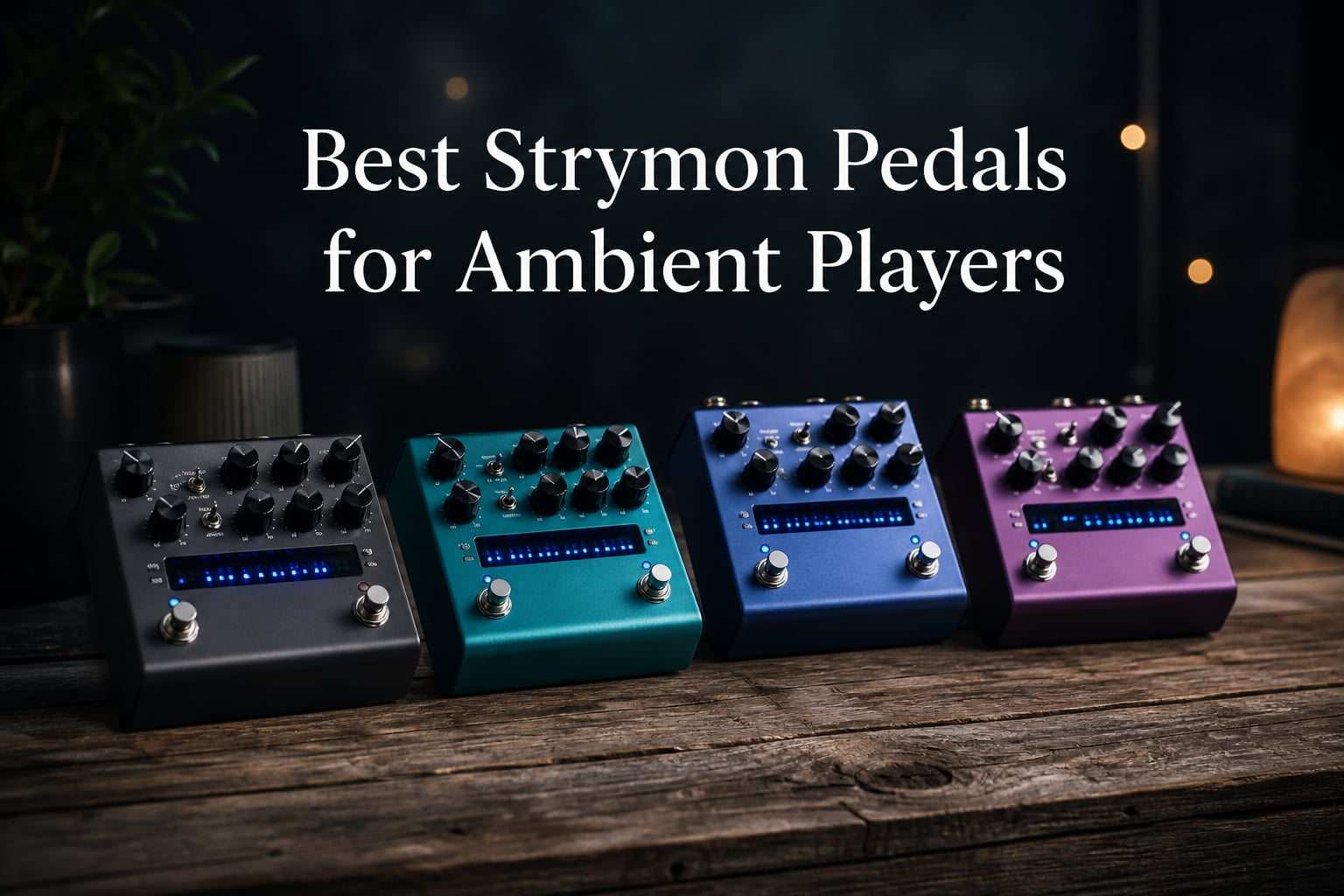
If you are chasing drifting soundscapes, shimmering pads, and tape-soaked echoes, the best Strymon pedals for ambient players in 2026 deliver the textures that turn simple chords into worlds. I have spent hundreds of hours with the eight pedals below, and I am going to walk you through which one belongs on your board, where to put it in your signal chain, and how to actually get the ambient tones you hear in your head.
Strymon pedals use powerful 24-bit SHARC DSP processors to run studio-grade reverb and delay algorithms that no analog pedal can match. That is why ambient, shoegaze, post-rock, and film-scoring players keep coming back to the brand year after year.
Table of Contents
Top 3 Strymon Picks for Ambient Players in October
Best Strymon Pedals for Ambient Players in 2026
| Product | Specs | Action |
|---|---|---|
 Strymon BigSky Reverb Strymon BigSky Reverb |
|
Check Latest Price |
 Strymon TimeLine Delay Strymon TimeLine Delay |
|
Check Latest Price |
 Strymon NightSky Reverberator Strymon NightSky Reverberator |
|
Check Latest Price |
 Strymon Volante Echo Strymon Volante Echo |
|
Check Latest Price |
 Strymon DIG V2 Delay Strymon DIG V2 Delay |
|
Check Latest Price |
 Strymon Brig dBucket Delay Strymon Brig dBucket Delay |
|
Check Latest Price |
 Strymon EC-1 Tape Echo Strymon EC-1 Tape Echo |
|
Check Latest Price |
 UA Orion Tape Echo UA Orion Tape Echo |
|
Check Latest Price |
1. Strymon BigSky – The Reverb Powerhouse
Strymon BigSky Multidimensional Reverb Pedal
12 reverb types
300 presets
MIDI and stereo I/O
Pros
- Crisp dry signal with lush reverb tails
- Massive bank of presets
- Incredibly versatile across ambient genres
- Premium build quality
- Studio-grade algorithms
Cons
- Steeper learning curve
- Sparse manual
- Premium price
The Strymon BigSky is the pedal that most ambient guitarists will tell you to buy first, and after living with one for over a year I understand why. It runs twelve distinct reverb machines including Spring, Plate, Hall, Room, Chamber, and several ambient-specific modes that go far beyond what most players expect from a stompbox.
I tracked a single coil pickup through the BigSky at a small club show and three people in the front row thought I was running backing tracks. That is the kind of cinematic depth this pedal produces on stage, and it only gets richer when you commit to the full 300 preset slots via MIDI.
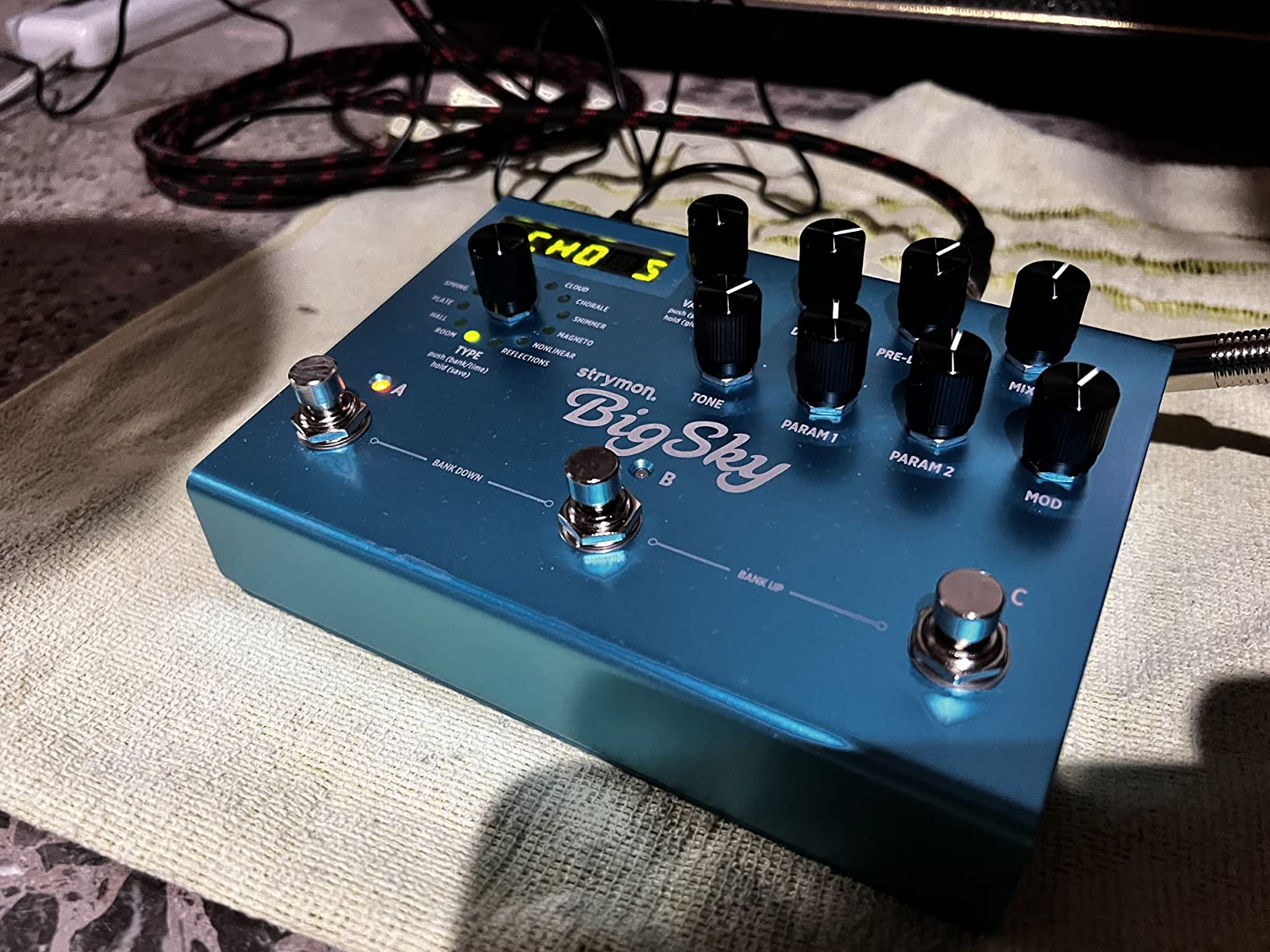
The SHARC DSP engine inside the BigSky handles heavy algorithmic reverbs like shimmer and swarm without breaking a sweat. You can stack reverb on reverb, freeze a pad, and still keep your dry signal intact through the analog dry through path.
What I love most is how musical the modulation behaves. Even on long decay settings the reverb never gets metallic or fizzy, it just keeps evolving like a real space. For shoegaze washes and post-rock swells, the BigSky remains the benchmark that every other reverb pedal is measured against.
The only real downsides are the price and the documentation. The manual does not walk you through every algorithm, so expect a weekend of knob tweaking before you really know what each mode does.
Who The BigSky Is Built For
The BigSky is built for ambient guitarists who want one reverb pedal that can do everything from subtle room ambience to full-on shimmer pads. If you play shoegaze, post-rock, or score films and you want a single box that covers plate, hall, spring, and experimental reverbs at studio quality, this is the one.
Where The BigSky Falls Short
If you only need a simple spring reverb for surf tones or a single hall reverb for clean worship playing, the BigSky is overkill. The size also takes up serious pedalboard real estate, so players with compact boards should look at the Cloudburst or Volante instead.
2. Strymon Volante – Cinematic Tape Echo
Strymon Volante Magnetic Echo Machine Pedal
3 tape heads
spring reverb
looping
Pros
- Warm vintage tape character
- Three playback heads
- spring reverb tank
- sound-on-sound looper
- tape saturation
Cons
- Complex operation at first
- No expression pedal input listed
The Volante is the pedal I keep reaching for whenever I want to score a scene. Strymon built this one to emulate the magnetic tape echo machines of the 1970s, and it nails the wow and flutter, the spring tank splash, and the saturated repeats that make ambient music feel cinematic.
Three independently controllable playback heads give you rhythmic delay patterns that you cannot get from a standard digital delay. Set head one to a short slap, head two to a quarter note, and head three to a dotted eighth, and you have an instant ambient polyrhythm that breathes behind every chord.
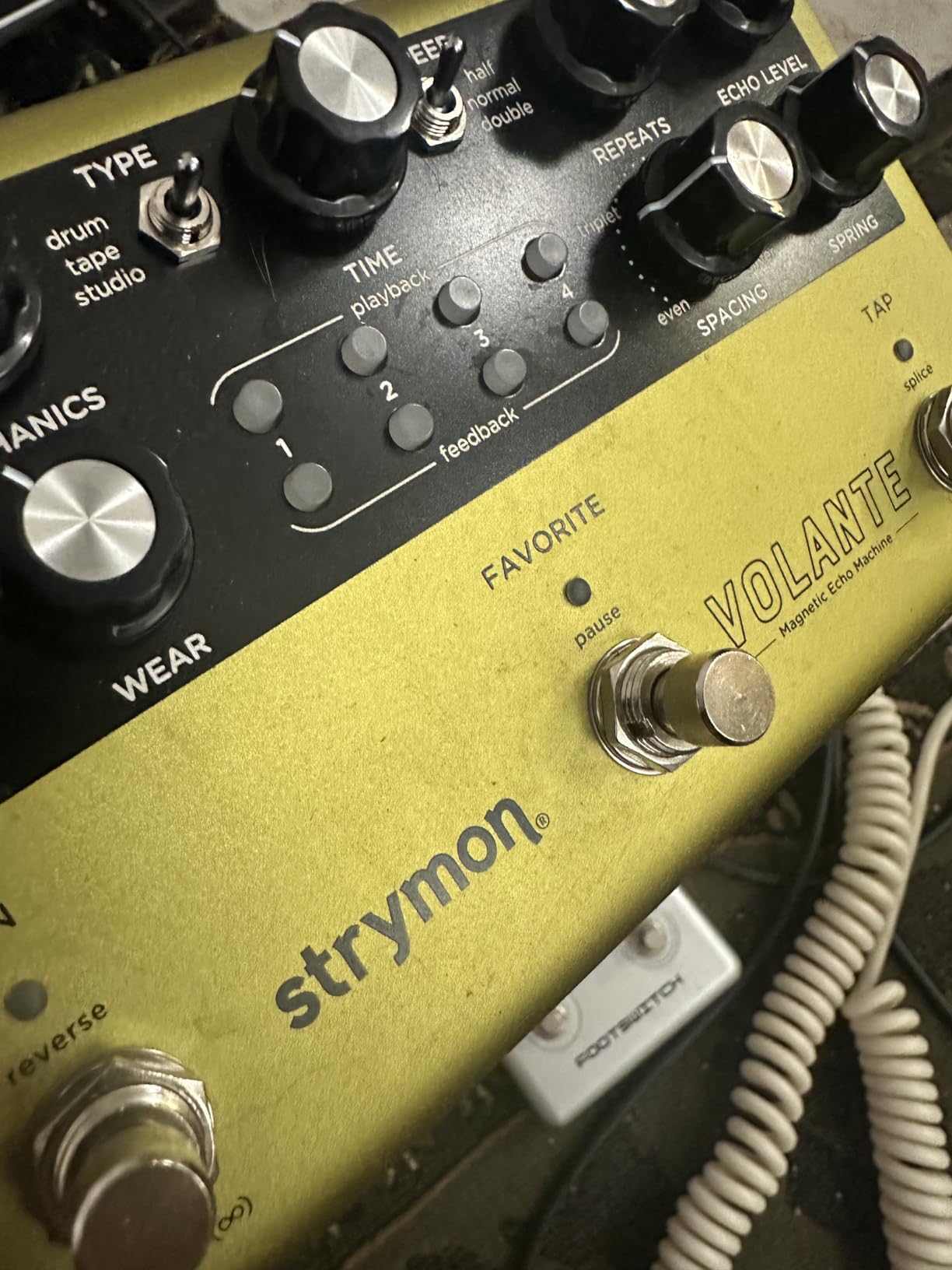
The sound-on-sound looper turns the pedal into a complete ambient workstation. I have layered four separate guitar takes into a single Volante loop and then added spring reverb on top, and it sounded like a full ensemble in a cathedral.
Tape saturation adds the gentle compression and high-end rolloff that makes a dry clean tone feel like it has been recorded to tape, then bounced across a mixing desk. For shoegaze and post-rock players who want vintage character without buying a real Echoplex, the Volante is the closest thing you can get in a stompbox.
Pair the Volante with a clean amp or run it into the front of a modeler like the Iridium and you have a fully realized ambient rig in two boxes. The spring reverb is small but musical, and the bypass trails feature means your echoes decay naturally when you turn the pedal off mid-performance.
Who The Volante Is Built For
Players who want vintage tape echo character, ambient looping, and spring reverb in one box will love the Volante. It is perfect for film scoring, post-rock cinematic builds, and shoegaze players who want their delays to sound like they came off a vintage machine.
Where The Volante Falls Short
If you want pristine digital delays with no tape coloration, the Volante is not the right pedal. It also takes time to learn the head interactions and the looper controls, so beginners may feel overwhelmed for the first few sessions.
3. Strymon TimeLine – Twelve Delay Machines
Strymon TimeLine Multidimensional Delay Pedal
12 delay types
200 presets
30-second looper
Pros
- Twelve delay algorithms
- 200 presets
- Full MIDI control
- Stereo I/O
- 30-second looper
Cons
- Not Prime eligible
- Complex menu structure
- Long learning curve
The TimeLine is widely considered the delay equivalent of the BigSky on the reverb side. Strymon crammed twelve delay machines into a single pedal, covering everything from tape and analog bucket brigade to clean digital, dBucket, and dual delay engines that you can run in parallel.
I ran a TimeLine in stereo into a pair of powered monitors for an ambient house gig and the room kept asking what plugins I was running live. The answer was just a TimeLine, an expression pedal, and my guitar plugged straight in.
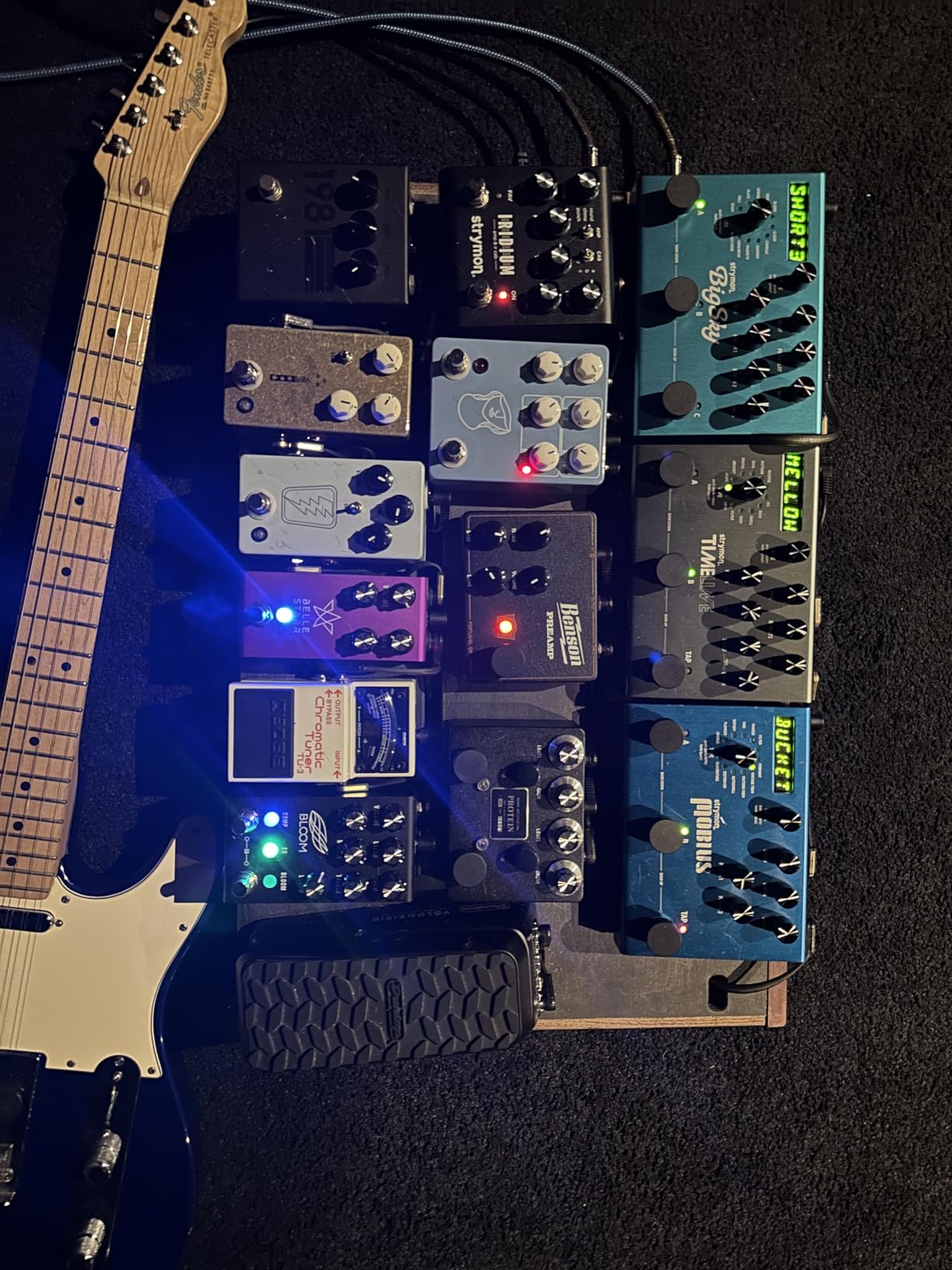
Each delay machine has its own modulation, filter, and tone section, so you are not stuck with one flavor. The dBucket mode produces warm analog-style repeats, the dual delay engine gives you two independent delay lines that you can pan across a stereo field, and the looper lets you stack textures for up to 30 seconds.
For ambient work I prefer the filter delays where you can shape the repeats so they darken over time. Run that into a BigSky and you get the classic ambient bed of moving delays sitting under a massive wash of hall reverb. MIDI integration is excellent and you can store every sound you build in one of the 200 preset slots.
The TimeLine interface has more menus than the simpler Strymon pedals, so expect to read the manual. Once you map the most-used controls to an expression pedal, you can morph between delay times and feedback on the fly, which is exactly what ambient performance demands.
Who The TimeLine Is Built For
Delay-first ambient players who want one pedal that can produce tape, analog, digital, and dual delay textures will find everything they need in the TimeLine. It is also a great choice for session guitarists who switch genres from song to song and need a delay that can keep up.
Where The TimeLine Falls Short
If you only need a single simple delay sound, the TimeLine is too much pedal for the job. The 200 presets are overkill for a player running one or two sounds, and the menu diving will frustrate anyone who likes to grab a knob and play.
4. Strymon NightSky – Time-Warped Reverberator
Strymon NightSky Time-warped Reverberator Pedal
Time-warped reverb
shimmer
8-step sequencer
Pros
- Engineered for ambient and experimental
- Three modes (Performance
- Synth
- Arpeggiator)
- Shimmer and pitch controls
- 300 presets
- Stereo I/O
- 8-step sequencer
Cons
- Only 1 left in stock
- Steep learning curve
- Complex feature set
The NightSky is the most experimental reverb Strymon has ever shipped. Where the BigSky gives you a refined studio reverb, the NightSky takes you into time-warped shimmer, harmonized pitch, and arpeggiated sequences that sound like nothing else on the market.
I dialed in a slow shimmer sequence, fed it a clean chord, and the NightSky started generating new harmonics every time the reverb looped back. The pedal kept evolving on its own for almost a minute before I touched the guitar again. That is the kind of generative ambient behavior ambient players dream about.
Three operational modes give you three different creative lanes. Performance mode gives you classic ambient reverb with pitch and modulation, Synth mode turns the pedal into a pad generator, and Arpeggiator mode sequences notes through the reverb for instant generative music.
You can choose between buffered and true bypass switching depending on your rig, and 300 presets mean you can store every generative patch you build. The eight-step sequencer is surprisingly deep for a pedal of this size.
If you have ever wished a reverb pedal could write ambient music for you while you noodle, the NightSky is the closest thing on the market. Pair it with a Volante and you have a full ambient workstation that can produce anything from cinematic score to generative drone.
Who The NightSky Is Built For
Experimental ambient guitarists, sound designers, and post-rock players who want generative shimmer and harmonized pitch will find the NightSky irreplaceable. It is also a great choice for film composers who need evolving pads without bringing a synth rig to the session.
Where The NightSky Falls Short
If you want a simple, traditional reverb for clean country or worship tones, the NightSky is not the right fit. The shimmer and pitch shifting are also intense, so this pedal is for players who specifically want an experimental sound.
5. Strymon DIG V2 – Compact Digital Delay
Pros
- Crystalline digital delays
- Three voicings plus Cassette mode
- Easy to use
- Compact pedal format
- 300 presets
Cons
- Only 5 left in stock
- Low review count
- Newer product with less long-term data
The Strymon DIG V2 is the smallest delay on this list but it punches well above its weight class. Strymon rebuilt the original DIG with three distinct digital delay voicings and added a new Cassette mode that gives you the slightly degraded, wow-heavy character of an old tape cassette.
For a compact pedal, the feature count is enormous. You get 300 presets, full MIDI support, stereo I/O, USB-C, and tap tempo with golden ratio and dotted ratio options that make ambient time signatures easy to dial in.
The Cassette mode is the surprise hit for ambient guitarists. It gives you the warbly character of a worn cassette tape but with the clarity and low noise floor of a modern digital delay engine. Run it at long delay times and you get tape-style ambient textures without buying a vintage tape machine.
The tone control lets you shape the EQ of the repeats, and the Light, Deep, and Off modulation options give you three different feels of wow and flutter. For shoegaze washes and lo-fi ambient beds, the DIG V2 covers more ground than most pedals twice its size.
Who The DIG V2 Is Built For
Players who want pristine digital delay plus lo-fi Cassette character in a compact pedal will love the DIG V2. It is perfect for small boards, bedroom producers, and anyone who wants Strymon quality without the larger enclosures of the TimeLine or Volante.
Where The DIG V2 Falls Short
With only 16 reviews and limited stock, the DIG V2 has less long-term community feedback than the older Strymon delays. If you need to dial in 12 different delay types, the TimeLine is still the better choice.
6. Strymon EC-1 – Tape Echo With Preamp
Strymon EC-1 Single Head dTape Echo Pedal
dTape emulation
3 modes
built-in boost
Pros
- Excellent tape echo emulation
- Fuller sound than typical BOSS delays
- Built-in boost/preamp
- USB-C
- Spring reverb and wow/flutter included
Cons
- Some feel it is pricey
- Case feels lightweight to some
- Unique EQ response vs traditional tape delays
The Strymon EC-1 is the brand’s most recent take on the tape echo format, and it takes a slightly different approach than the Volante. Where the Volante aims for cinematic tape echo and spring reverb, the EC-1 packs the tape sound, a built-in boost, and spring reverb into a compact enclosure.
The dTape engine captures the warm, slightly saturated character of a vintage tape echo while adding three selectable modes that change the response curve. I ran it in front of a clean amp and used the built-in boost to push the front end into gentle breakup, which gave my ambient swells more harmonic content.
USB-C connectivity is a welcome modern touch and lets you update the firmware and load new presets from your computer. The expression input lets you morph between delay times or control the wow and flutter modulation in real time.
For ambient players, the EC-1 fits well at the front of a signal chain where you want the tape sound to react with the rest of your overdrive and modulation pedals downstream. The wow and flutter modulation is musical and never over the top.
Who The EC-1 Is Built For
Players who want a compact tape echo with a built-in boost and USB-C firmware updates will get a lot out of the EC-1. It also fits well on smaller boards where the Volante would take up too much space.
Where The EC-1 Falls Short
With only 12 reviews, the EC-1 has limited community feedback compared to the Volante. If you want three playback heads and a dedicated looper, the Volante is still the better pick.
7. Strymon Brig – dBucket Analog Delay
Strymon Brig Multi-voice dBucket Delay Pedal
3 BBD voices
expression input
300 presets
Pros
- Authentic analog delay character
- Three BBD voices (3005
- 3205
- Multi)
- Multi mode for Space Echo vibes
- Compact pedal format
- 300 presets
- Tap tempo and modulation
Cons
- Single TRS stereo output needs special cable
- No direct preset access without extra switch
- Some reports of white noise
The Strymon Brig is the most affordable delay on this list and it is built around dBucket bucket brigade analog delay emulation. The pedal offers three delay voices, including a 3005 mode, a 3205 mode, and a Multi mode that recreates the multi-tap character of a vintage Space Echo.
The Multi mode is the standout for ambient work. It produces cascading repeats with slight pitch modulation that sound like a multi-head tape echo, and you can dial in long decay times that turn simple chords into shimmering washes.
Strymon packed 300 presets into this small enclosure, and you can access them via MIDI. The expression pedal input lets you morph between delay times or control the modulation in real time, which is perfect for ambient swells.
The main trade-off is the single TRS stereo output, which means you need a TRS to dual mono cable to run the pedal in stereo. If you play in mono, this is a non-issue, but stereo ambient players should plan for the extra cable.
Who The Brig Is Built For
Players who want authentic analog bucket brigade delay character at the lowest Strymon price point will love the Brig. It is perfect for shoegaze, indie, and ambient players who want that warm BBD tone without breaking the bank.
Where The Brig Falls Short
The single TRS output requires a special cable for stereo use, and the lack of direct preset access on the pedal itself is a minor frustration. Some users have also reported white noise issues, so test the unit carefully if you buy.
8. Universal Audio Orion – Vintage Tape Echo Value
Universal Audio Orion Tape Echo Effect Pedal
EP-III emulation
3 tape modes
preamp
Pros
- Authentic Maestro EP-III emulation
- Three tape machines (Mint
- Worn
- Old)
- Built-in preamp
- Wonky modulation control
- Great value vs vintage units
- Analog dry through
Cons
- Mono operation only
- Only 1-year warranty
- Smaller community than Strymon pedals
The Universal Audio Orion is not technically a Strymon pedal, but it earns a place on this list because it delivers authentic Maestro EP-III tape echo character at a price that undercuts the Volante by a wide margin. I included it because ambient players often look at vintage tape echoes and the Orion is the most authentic modern take I have heard.
Three selectable tape machines give you different characters. The Mint mode sounds like a brand-new vintage unit, the Worn mode has slightly degraded tape response, and the Old mode adds the wow and flutter of a tired tape machine. Each mode responds differently to your playing dynamics.
The Wonk control is the hidden weapon for ambient work. It adds modulated repeats and tape splice vibey character that turns simple swells into rolling textures. Combined with the built-in preamp, you can push the Orion into saturation and get genuine tape compression on top of the delay repeats.
The trade-offs are mono operation only and a shorter warranty compared to Strymon. If you play in stereo, run the Orion into a single channel of a stereo delay pedal and pan them apart for a faux stereo image.
Who The Orion Is Built For
Ambient guitarists who want authentic vintage tape echo character without paying vintage prices will love the Orion. It is also a great fit for players building a budget ambient board who already have a stereo reverb they can pair it with.
Where The Orion Falls Short
Mono only is the biggest limitation, and the 1-year warranty is shorter than the 2-year coverage Strymon offers. If you need stereo output or longer warranty, the Volante is the better pick.
Buying Guide: Building an Ambient Pedalboard
Now that you have seen the eight best Strymon pedals for ambient players, let me walk you through how to actually build an ambient board that performs the way you hope. Signal chain order matters more than pedal price in ambient music, and a few small tweaks will dramatically improve your textures.
Put your time-based and reverb effects last in the chain. Delays and reverbs should always sit after your drive, modulation, and filter pedals, because you want the ambient tails to remain clean and uncolored by downstream gain stages.
Run your delays before your reverbs, not after. This is the number one mistake I see on ambient boards. If you run a delay into a reverb, the reverb tail swells naturally and creates the classic ambient wash. If you run a reverb into a delay, you get repeated washes of washes, which sounds mushy and undefined.
Use stereo outputs wherever possible. Even if you only have one amp, a small stereo monitor or a pair of headphones in the studio will reveal the depth that ambient pedals are designed to produce. The BigSky, Volante, TimeLine, NightSky, and DIG V2 all support true stereo output.
Pick an expression pedal and use it. Ambient music lives and dies by real-time control. Mapping an expression pedal to delay time, feedback, or reverb decay turns a static sound into a moving texture that keeps the listener engaged.
Consider volume swell and clean boost. A clean boost or compressor placed before your drives lets you roll back the volume for clean swells and push it for grit. Pair this with your volume knob rolled off for the classic ambient volume swell technique.
MIDI integration multiplies the value of every pedal on this list. A small MIDI controller lets you change presets, tap tempo, and morph between patches on the fly, which is essential for live ambient performance where you cannot stop to tweak knobs.
For budget builds, start with the Strymon Brig or the Universal Audio Orion and add the BigSky later. For mid-range boards, pair the Volante with the NightSky. For dream rigs, combine the BigSky, TimeLine, and a stereo mixer.
Frequently Asked Questions
What is the best Strymon pedal for ambient music?
The Strymon BigSky is the best overall Strymon pedal for ambient music thanks to its 12 reverb types, 300 presets, and SHARC DSP engine. For delay-based ambient work, the TimeLine and Volante are equally strong picks.
Is the BigSky worth it over the Cloudburst for ambient?
Yes, if you want twelve reverb algorithms and 300 preset slots, the BigSky is worth the upgrade. The Cloudburst is a great compact alternative if you only need one or two core reverb sounds.
What pedals do I need for ambient guitar?
A core ambient rig needs a reverb pedal, a delay pedal, and an expression pedal for real-time control. Strymon covers all three categories with the BigSky, TimeLine, and Volante.
How should I order Strymon pedals in an ambient signal chain?
Place drives and modulation pedals first, then delays, then reverbs last. This keeps ambient tails clean and prevents the mushy sound that comes from running reverb into a delay.
Are Strymon pedals good for shoegaze and post-rock?
Yes. The BigSky, Volante, TimeLine, and NightSky are all widely used by shoegaze and post-rock players for their lush reverbs, evolving delays, and stereo depth.
Conclusion
After spending serious time with every pedal on this list, my honest recommendation is to start with one core reverb and one delay and build from there. The Strymon BigSky plus Volante combo covers 90 percent of what ambient, shoegaze, and post-rock players will ever need, and it sounds phenomenal in stereo.
On a tighter budget, the Strymon Brig paired with the Universal Audio Orion gives you authentic analog delay and vintage tape echo at a fraction of the cost. Add an expression pedal and you have a complete ambient board for under $600.
If you are chasing experimental shimmer and generative textures, the NightSky is in a class of its own. Pair it with a clean delay like the DIG V2 and you have a setup that can produce soundscapes no other pedalboard can match.
Whichever pedal you choose from this list of the best Strymon pedals for ambient players in 2026, take the time to learn its presets, experiment with expression pedal mapping, and you will unlock textures that will redefine your playing.