
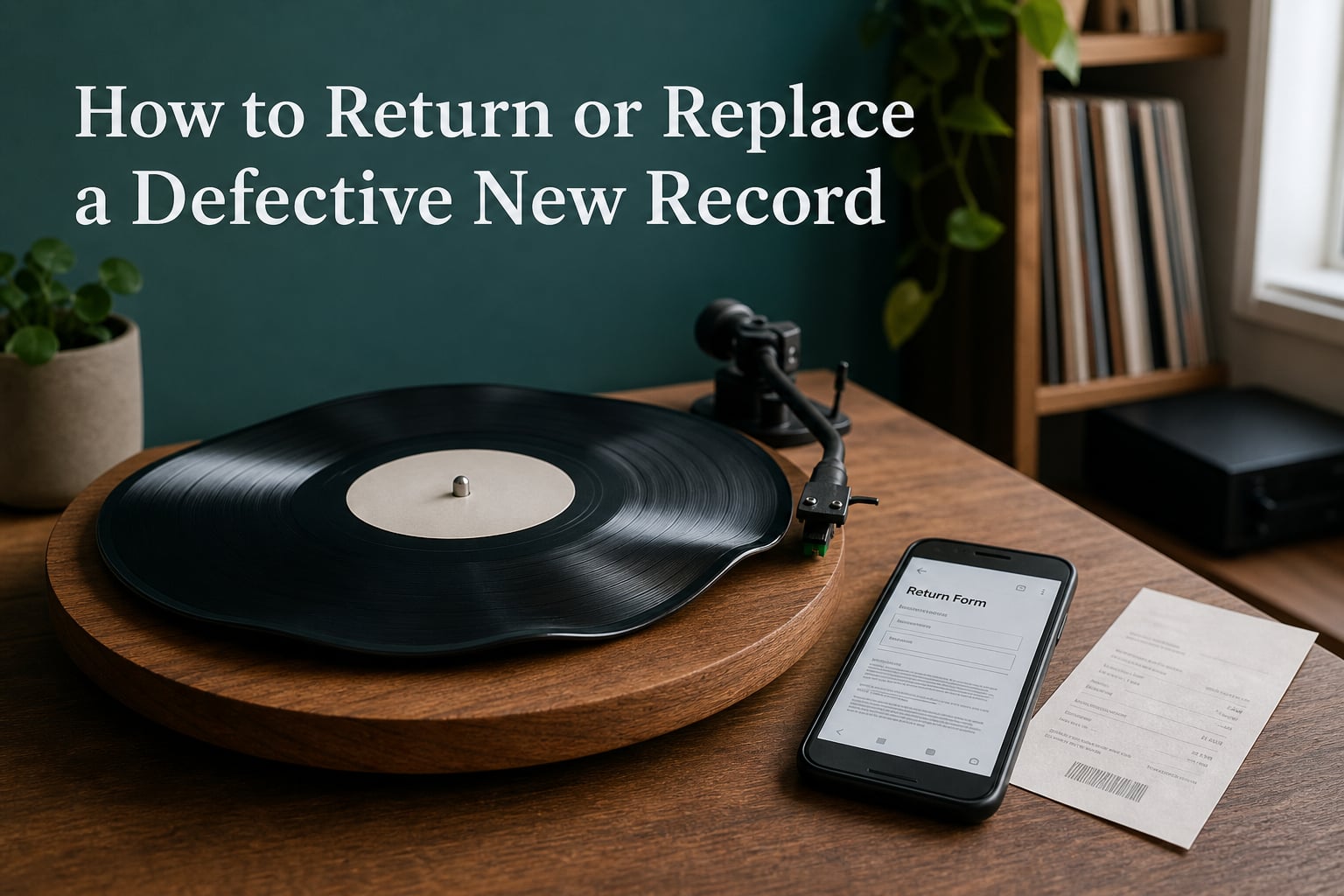
I pulled the shrink wrap off a sealed copy last month, dropped the needle, and watched it skip across three tracks in a row. That sinking feeling is exactly why this guide exists. If you just discovered your new vinyl is warped, scratched, or skips on playback, I’ll walk you through how to return or replace a defective new record without wasting weeks on emails that go nowhere.
Most record stores and online retailers have a clear process for manufacturing defects. The trick is knowing what qualifies, what to document, and how to contact the seller the right way so your refund or replacement lands fast.
Table of Contents
What Counts as a Defective New Record?
A defective new record is a vinyl album that arrived with manufacturing flaws severe enough to affect playback. Common qualifying defects include warping that prevents the needle from tracking, off-center pressings that cause repeated skipping, deep scratches audible without a microscope, and excessive surface noise on a brand new sealed copy.
Cosmetic issues like a small dent in the corner of the jacket, a creased inner sleeve, or minor paper scuffs on the cover usually do not qualify. The store is looking for functional damage that stops you from enjoying the music, not shelf wear from shipping.
Here are the defects stores accept most often:
Visible warping when the record lies flat on a turntable
Skips or jumps on multiple tracks during clean playback
Pressing defects like off-center holes, bubbles, or flash
Scratches deep enough to cause repeating clicks or pops
Cracks or chips in the vinyl itself
How to Document a Vinyl Defect Before Returning?
Documentation is the single biggest factor in getting a fast approval. Start a folder on your phone the moment you spot the issue and capture three things: a clear photo of the defect, a short video showing the skip or warp in action, and a written description with the time stamp of when you first played it.
For warps, place the record flat on a clean surface and shoot straight down so the warp is visible against a ruler. For skips, record video with your phone placed near the tonearm so the reviewer can see and hear the issue at the same time. Keep your receipt or order confirmation in the same folder so everything is ready when you reach out.
Step-by-Step Process to Return or Replace a Defective New Record
Follow these steps in order to get a fast resolution. Skipping a step is the main reason return requests get delayed or denied.
Step 1: Stop playing the record immediately. Continuing to play a damaged vinyl can be argued as further damage, which weakens your claim. Set it aside in its inner sleeve and original packaging.
Step 2: Gather your proof. Pull together the order number, date of purchase, photos, and a short video showing the defect. If you bought it from a local shop, have your printed receipt or the email confirmation ready.
Step 3: Contact the seller within their return window. Most stores require notification within 14 to 30 days of delivery. Email is usually preferred because it creates a written record, but phone calls work for local shops.
Step 4: Describe the defect clearly. State the issue in plain language, attach your photos or video, and include the order number. Avoid emotional language. Stick to facts like “the record skips on tracks 3, 5, and 7.”
Step 5: Request a specific resolution. Say whether you want a replacement, refund, or store credit. Many stores will ask you to keep the defective copy and ship a replacement, but policies vary.
Step 6: Follow the shipping instructions exactly. Some sellers send a prepaid label. Others ask you to ship it back yourself. Use the original packaging when possible and get a tracking number.
Step 7: Confirm the refund or replacement timeline. Refunds usually post within 5 to 10 business days of the store receiving the return. Replacements often ship within 2 to 3 business days of approval.
Return Timeframe Requirements
Most record stores give you 14 to 30 days from the delivery date to report a defective record. Online retailers tend to sit at the 30-day end, while local shops often enforce a 14-day window. After the window closes, your only option is usually the manufacturer’s warranty if one exists.
If you are approaching the cutoff and still have not heard back, send a polite follow-up email with the original message attached. Quick reporting leads to better outcomes, and silence on the seller’s side does not extend your window.
Refund vs Replacement: Which Option Should You Choose
A refund returns your money to the original payment method. A replacement sends a new copy, sometimes from a different pressing. Store credit can be used on future purchases and is often the fastest option when the title is out of stock at the distributor.
Pick a refund if the pressing itself is flawed and you suspect future copies will have the same defect. Pick a replacement if the defect looks like a one-off issue, like a single scratch. Pick store credit if you shop at the same store often and the refund timeline is dragging.
What Happens to a Defective Record After You Return It
This is where it gets interesting. Most independent record stores cannot return defective vinyl to the distributor, so they absorb the cost and either sell the copy as a “scratch and dent” at a discount or hold it for parts. Online retailers usually ask you to keep the defective copy or recycle it, because shipping a warped record back is more expensive than the cost of the album.
If you bought from a major chain, the return often flows back through their centralized system, which can flag the pressing plant and lead to a broader recall. Either way, your return creates a paper trail that helps the next buyer.
Online Store vs Local Record Shop Return Policies
Online stores rely on documented evidence because they cannot see the record in person. They almost always require photos or video before approving a return. Local record shops often trust your description, especially if you are a regular customer, and may swap the copy on the spot.
The trade-off is time. Online returns can take a week plus shipping. Local exchanges take five minutes but require you to bring the record in during business hours. For rare or out-of-print titles, calling the local shop first can save you the cost of shipping a record across the country.
Frequently Asked Questions
How long do you have to return a defective record?
Most record stores give you 14 to 30 days from the delivery or purchase date to report a defective record. Online retailers typically sit at the 30-day end while local shops often enforce a 14-day window. After that window closes, your only option is usually the manufacturer’s warranty.
Can you fix a damaged vinyl record?
Minor warps can sometimes be corrected by placing the record between two clean pieces of glass in a warm oven for a few minutes, but this is risky and can ruin the pressing. Scratches and pressing defects cannot be repaired at home. For valuable records, a professional cleaning or flattening service is the safest route.
Can I get a refund for a defective record?
Yes, you can get a refund for a defective record from most sellers if you contact them within their return window and provide documentation of the defect. Refunds typically post within 5 to 10 business days after the store receives the return.
Can I return an opened vinyl record to a major retailer like Target or Walmart?
Yes, major retailers like Target and Walmart accept returns on opened vinyl records if the defect is a manufacturing issue. Bring the record, your receipt, and your ID. Some stores require the defect to be confirmed by an associate before processing the refund.
Can I return a record if it is warped?
Yes, a warped record qualifies as a manufacturing defect at most stores and can be returned or exchanged. Document the warp with a photo of the record lying flat against a ruler and contact the seller within their return window.
Final Thoughts on Getting Your Defective Record Resolved
You now have a clear picture of how to return or replace a defective new record, from documenting the issue to choosing between a refund and a replacement. The process is straightforward when you act fast, keep your proof organized, and stay factual in your communication with the seller.
Start by photographing the defect today, then email the seller with your order number and a short video. Most stores resolve these requests within a week when the documentation is solid. If you found this guide helpful, bookmark it for the next time you crack open a fresh record and the needle jumps where it should not.