
If you have ever bought a used vinyl record online, you already know the anxiety of waiting for it to arrive. Will it sound as good as the seller claimed? Will that “VG+” rating actually mean something, or will you pull out a record covered in scratches and fingerprints? I have been collecting records for over 15 years, and I have been on both sides of a disappointing transaction. Understanding Discogs grading is the single most important skill you can develop as a vinyl collector.
Discogs uses the Goldmine Standard, a grading system that rates vinyl condition from Mint (perfect) down to Poor (barely playable). The problem is that grading is subjective. One seller’s Near Mint is another seller’s VG. Forum threads on Reddit and Discogs are filled with collectors venting about overgraded records arriving in worse condition than described. That frustration is real, and it costs collectors money.
This guide will teach you how to read Discogs grades, judge a record’s condition yourself, and protect yourself when buying used vinyl. Whether you are buying from Discogs, eBay, or your local record shop, these skills will help you make smarter purchases and avoid costly mistakes. I will walk you through every grade on the scale, show you exactly what to look for under proper lighting, and share the inspection process I use on every record that comes through my door.
Table of Contents
What Is Discogs Grading? The Goldmine Standard Explained
Discogs grading is the condition rating system used on the Discogs Marketplace, and it is based on the Goldmine Standard record grading guide. The Goldmine Standard was created by Goldmine Magazine decades ago and has become the universal language for buying and selling vinyl records. Every listing on Discogs includes two grades: one for the vinyl (or CD, cassette, etc.) and one for the sleeve or cover.
The system uses a scale from Mint (M) at the top down to Poor (P) at the bottom. Each grade has specific criteria for what the record should look like and how it should sound. The key thing to understand is that grading covers two dimensions: visual condition (what you see) and playback condition (what you hear). Discogs officially states that grading is about both looks and playback, though many sellers only grade visually since playing every record is time-consuming.
Here is where confusion sets in. A record can look clean under casual inspection but have surface noise during playback due to groove wear that is invisible to the eye. Conversely, a record with visible scuffs might play quietly. This gap between visual and audio grading is the source of most disputes between buyers and sellers on Discogs. Understanding how to assess both will make you a smarter buyer and a more honest seller.
The Complete Discogs Grading Scale: Every Grade Explained
The Discogs grading scale has six primary tiers, with a couple of intermediate steps. Let me break down each grade so you know exactly what to expect. I will cover both the visual signs and the playback characteristics for each level, plus what percentage of Near Mint value each grade typically commands.
One thing to keep in mind: the jump between VG+ and VG is the most significant drop on the scale. A VG+ record is a collector-grade listen. A VG record has noticeable wear. Understanding where that line falls will save you from overpaying or being disappointed.
Mint (M): The Unplayed Ideal
Mint is the highest grade on the scale. A Mint record is sealed or has never been played. The vinyl should have no visible marks, scratches, scuffs, or fingerprints under strong light. The sleeve should be pristine with no ring wear, seam splits, creases, or edge wear. Everything looks like it just left the factory.
In practice, true Mint records are extremely rare in the used market. Most sellers will not assign this grade unless the record is factory sealed. Even sealed records are sometimes graded Mint based on the assumption that the vinyl inside is perfect, though Discogs recommends grading sealed records as Mint only if the cover is also perfect. A Mint record typically commands 100% or more of its listed market value, assuming you can verify it actually lives up to the claim.
If you see a used, opened record graded Mint, proceed with caution. Ask the seller for photos of the record surface under direct light. Ask whether it has been play-graded. A seller who claims Mint without offering evidence is a red flag.
Near Mint (NM or M-): Nearly Perfect
Near Mint is the grade most collectors aim for. A Near Mint record has been played but has been handled with exceptional care. The vinyl should have no visible scratches, though extremely faint sleeve marks or paper scuffs may be present under intense lighting. The surface should retain its original shine. There should be no spindle marks on the label, or at most one or two faint ones indicating it was played carefully.
On playback, a Near Mint record should play with no surface noise during quiet passages or between tracks. There may be an occasional faint tick, but it should be barely perceptible. The sleeve should look nearly new with no more than the slightest signs of handling. Near Mint records typically hold about 75-100% of Mint value.
This is the grade where overgrading happens most often. Sellers want top dollar, so they stretch Near Mint to cover records that are really VG+. When you see NM in a listing, check the seller’s notes. A trustworthy seller will mention any minor flaw, even if they still consider the record Near Mint overall.
Very Good Plus (VG+): The Collector’s Sweet Spot
VG+ is the grade that causes the most debate in the vinyl community. Forum posts on Reddit routinely feature collectors asking whether a record is VG+ or VG, because the distinction matters for both listening pleasure and price. A VG+ record will show some signs of being played but has been cared for. You may see light scuffs, faint scratches that are visible but do not feel deep, and some spindle marks on the label.
The key test for VG+ is playback. A properly graded VG+ record should play cleanly with only occasional light ticks or pops. There should be no continuous surface noise, no skipping, and no distortion beyond what might be in the original recording. If the record sounds noisy throughout, it is probably VG, not VG+.
I buy a lot of VG+ records because they represent the best value. You get a record that looks and sounds great to most listeners, but you pay significantly less than Near Mint. VG+ records typically sell for 50-75% of Near Mint value. The trick is knowing how to verify the grade before you buy, which I will cover in the inspection section below.
Very Good (VG): Played but Cared For
Very Good is where you start hearing the record’s age. A VG record will have visible surface wear, including scuffs, light scratches, and possibly some groove wear. The vinyl may have lost some of its original shine. The label may show multiple spindle marks, indicating frequent play.
On playback, a VG record will have noticeable surface noise. You will hear crackle, ticks, and pops, particularly between tracks and during quiet passages. The music should still come through clearly without distortion overpowering the signal, and the record should not skip. This is a record that is fully playable and enjoyable, but not for critical listening.
VG records are great for casual listening or for filling gaps in your collection when you cannot afford a higher grade. They typically sell for 25-50% of Near Mint value. If a seller grades something VG and it plays cleanly, you got lucky. If they grade it VG+ and it sounds like VG, that is the overgrading problem everyone complains about.
Good (G), Good Plus (G+): Functional but Worn
A Good grade means the record plays but has significant wear. Expect visible scratches, groove wear, and possible warps. The surface noise will be constant and noticeable during playback. The record should still play through without skipping, though there may be occasional repeats or pops.
Good Plus (G+) sits just above Good and indicates a record that is slightly better than the bottom of the barrel but still clearly worn. These records are typically worth 10-25% of Near Mint value. They are useful for completing a collection when the record is rare and you just want a playable copy until you find something better. I keep a few G+ records in my collection for exactly this reason.
Poor (P) and Fair (F): Parts Copies
Poor and Fair are the lowest grades. A Poor record is essentially unplayable or close to it. It may have deep scratches, severe warps, or cracks. Fair is marginally better but still barely functional. These records are typically worth 0-10% of Near Mint value.
Collectors buy Poor or Fair records for one reason: to use as a placeholder, for the cover art, or to harvest a rare insert or inner sleeve. Do not expect to enjoy listening to them. If you see a record you love listed as Poor and it is cheap enough, grab it as a placeholder while you hunt for a better copy.
How to Grade the Sleeve and Cover Separately?
Every Discogs listing includes two grades: one for the media (the vinyl itself) and one for the sleeve (the cover and packaging). These grades are independent. A record can be Near Mint vinyl in a VG sleeve, or vice versa. Learning to assess sleeve condition is just as important as judging the vinyl, especially for collectors who care about artwork and packaging.
When grading a sleeve, look for these common defects. Ring wear is the faint circular impression of the record visible on the cover, caused by the vinyl pressing against the cardboard over time. Seam splits are tears along the edges where the cover’s seams have separated, usually from the record shifting inside. Corner dings are bent or crushed corners from dropping or mishandling. Writing or stickers on the cover reduce the grade. Water damage, mold, or fading are serious flaws that will drop a sleeve to Good or below.
Here is how sleeve grades typically align. A Mint sleeve has no flaws at all. Near Mint may have the faintest hint of wear. VG+ shows minor ring wear or a small corner ding. VG has visible ring wear, possible seam splits, and clear signs of handling. Good has significant wear, seam splits, or writing. Poor is torn, water-damaged, or barely holding together.
Do not overlook the inner sleeve and any inserts. Original printed inner sleeves, lyric sheets, and posters add value. A Near Mint record missing its original inner sleeve should probably be graded lower on the sleeve side. Always note what inserts are included when buying or selling.
One practical tip: when you buy a record, check whether the seller has listed the sleeve grade honestly. Many sellers focus on the vinyl and neglect accurate sleeve grading. If a listing says the vinyl is VG+ and the sleeve is VG+, but there is no mention of ring wear, ask for photos. The cover condition matters more than many sellers admit.
How to Judge Record Condition Yourself: Step-by-Step Visual Inspection
This is the section I wish I had read when I started collecting. Here is the exact step-by-step process I use to visually inspect and grade every record I buy or sell. You do not need expensive equipment. You need good lighting, a clean surface, and patience.
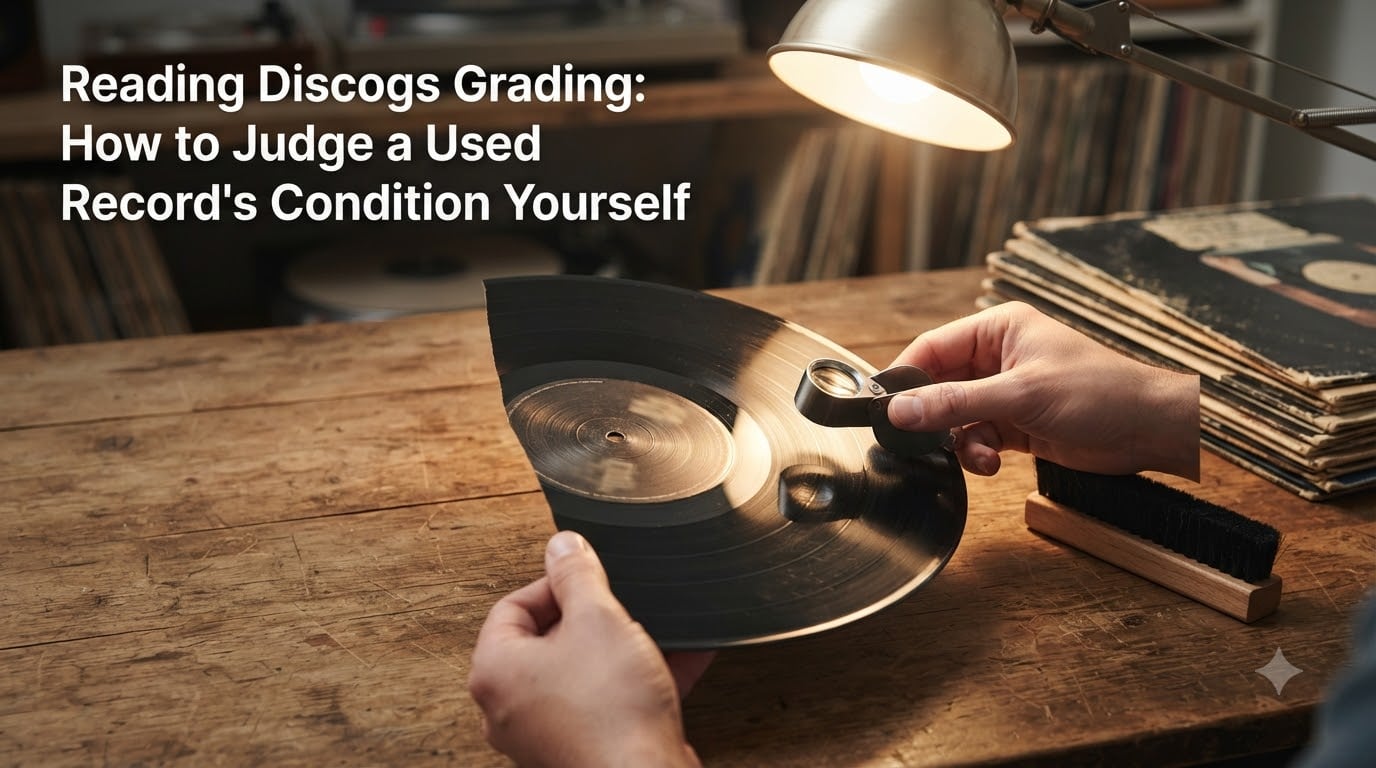
Step 1: Set up your inspection area. You need a bright, direct light source. A desk lamp with a daylight LED bulb works well. Avoid diffuse or ambient lighting because it hides surface marks. I use a single 100-watt equivalent LED bulb angled at about 45 degrees to the record surface. Place a clean microfiber cloth on your work surface.
Step 2: Hold the record by the edges and label only. Never touch the grooves with your fingers. Oils from your skin can damage the vinyl over time, and fingerprints will affect your visual inspection. Hold the record at the edges with one hand and support the label area with your thumb.
Step 3: Tilt the record under the light. This is the most important step. Hold the record at different angles to the light source. You are looking for two things: the reflection of light off the grooves (which tells you about shine and surface condition) and shadows cast by any scratches or scuffs. Slowly rotate the record 360 degrees, tilting it back and forth as you go.
Step 4: Look for scuffs versus scratches. Scuffs are light marks on the surface that do not penetrate the groove. They often look like faint lines or smudges and may not affect playback. Scratches are deeper marks that cut into or across the grooves. Feel a scratch gently with your fingernail (on the non-groove area near the label) to gauge depth. A scratch you can feel will almost certainly cause a tick during playback.
Step 5: Check the label for spindle marks. Turn the record over and examine the center label. Spindle marks are small marks or wear around the center hole, caused by the record being placed on and removed from the turntable spindle. No marks suggest the record was rarely played. A few faint marks are normal for VG+. Heavy marks or a visibly enlarged center hole suggest frequent play, pushing the grade toward VG.
Step 6: Inspect for warps. Place the record on a flat turntable platter and watch it spin. Look at the edge of the record from eye level. A flat record will show no movement. A slight warp will cause the edge to rise and fall slightly. A severe warp will be obvious and may cause the tonearm to bounce. Minor warps are often playable; severe warps are not.
Step 7: Assess overall shine. A record in Near Mint or VG+ condition should have a glossy, reflective surface. As records wear and accumulate micro-scratches from play, they lose their shine and develop a matte or cloudy appearance. This cloudiness is a sign of groove wear and typically corresponds to VG or lower grades.
Step 8: Grade conservatively. If you are torn between two grades, always choose the lower one. This applies whether you are buying or selling. As a buyer, assume the record is one grade lower than the seller claims. As a seller, grade honestly and mention every flaw. Conservative grading builds trust and prevents disputes.
Play Grading: What to Listen For
Visual inspection tells you a lot, but it does not tell you everything. Some records look pristine and play noisy. Others look worn and play beautifully. Play grading is the process of actually listening to a record to assess its playback quality. Not all sellers play-grade their records, which is why understanding the gap between visual and audio condition matters.
When play-grading a record, use a clean turntable with a properly set up cartridge and stylus. Make sure your stylus is clean, because a dirty stylus can cause noise that is not the record’s fault. Play the record at normal listening volume and pay attention during quiet passages, between tracks, and at the start and end of each side.
Listen for these specific sounds. Surface noise is a constant crackle or hiss in the background. Light surface noise is acceptable at VG+ and below. Heavy, constant surface noise pushes a record to VG. Ticks and pops are isolated sounds caused by scratches or debris. Occasional ticks are normal for VG+. Frequent, loud pops suggest deeper scratches and a VG grade. Skipping or jumping is a serious defect that usually means the record is G or lower. Distortion during loud passages can indicate groove wear, especially on inner tracks where the groove speed is slower.
One important note: some surface noise comes from dirt, not damage. A record that looks dirty and plays noisy might improve significantly after a proper cleaning. I always clean used records before making a final grading judgment. A vacuum cleaning machine or a good spin-clean can remove years of grime and reveal the true condition underneath.
How to Spot Overgrading When Buying on Discogs?
Overgrading is the number one complaint in the vinyl collecting community. Sellers grade records one or two levels higher than they deserve, either out of optimism, ignorance, or dishonesty. After buying hundreds of records on Discogs, I have developed a checklist for spotting overgrading before I commit to a purchase.
Check the seller’s feedback for grading complaints. Read through recent feedback, not just the star rating. Look for comments mentioning overgrading, inaccurate condition descriptions, or records arriving worse than described. Even a seller with 99% positive feedback might have a pattern of grading complaints buried in the comments.
Look for detailed condition notes. A trustworthy seller will write specific notes about the record’s condition beyond just the grade. Notes like “light sleeve scuffs, plays clean” or “faint hairline on side A, does not affect playback” show that the seller has actually inspected the record. A listing with a VG+ grade and no notes at all is a gamble.
Request photos if none are provided. Most Discogs listings do not include photos, but sellers can add them. If you are spending significant money on a Near Mint or Mint claim, message the seller and ask for a photo of the record surface under light. How a seller responds tells you a lot. A good seller will happily provide photos. A defensive or evasive response is a warning sign.
Watch for VG+ inflation. VG+ is the most overused grade on Discogs. Many sellers treat VG+ as their default grade for any record that is not obviously damaged. If a seller has 200 listings and they are all graded VG+, that is suspicious. Real collections have records in various conditions. A seller who never lists anything below VG+ may be grading too generously.
Ask whether the record has been play-graded. If a listing claims Near Mint, ask the seller if they have played it. If they say no, that is fine, but adjust your expectations. Visual Near Mint does not guarantee clean playback. If they say yes, ask what it sounded like. The best sellers will tell you exactly what they heard.
Pay attention to the seller’s overall reputation. Sellers with thousands of transactions and consistently good feedback about grading accuracy are generally reliable. New sellers or those with limited feedback are higher risk. This does not mean you should avoid them, but you should take extra precautions like requesting photos and detailed notes.
Trust your gut and document everything. When the record arrives, inspect it before playing. Take photos of any visible defects that do not match the listed grade. Compare what you see to the Goldmine Standard definitions in this guide. If the record is overgraded, you have the evidence you need to open a dispute.
Value by Grade: What Each Condition Is Worth
Grading directly affects value. A Near Mint copy of a sought-after album can be worth four to ten times more than the same album in Good condition. Understanding value percentages helps you spot overpriced records and negotiate fairly. Here is a rough guide based on Goldmine Magazine’s value scale.
Mint records command 100% or more of the listed market value, with sealed copies sometimes exceeding this due to their collectibility. Near Mint records hold about 75-100% of Mint value. VG+ records typically sell for 50-75% of Near Mint value, making them the sweet spot for value-conscious collectors. VG records fetch about 25-50% of Near Mint value. Good and Good Plus records are worth 10-25%. Poor and Fair records are worth minimal amounts, often just a few dollars.
These percentages vary based on rarity, demand, and pressing. A rare original pressing in VG might still command a high price simply because clean copies do not exist. Use these percentages as a starting point, then factor in the specific record’s scarcity and your own budget.
What to Do When You Receive an Overgraded Record
Despite your best efforts, you will eventually receive an overgraded record. It happens to every collector. The question is how to handle it professionally and get a fair resolution. The Discogs dispute process is designed to protect buyers, but you need to follow the right steps.
First, inspect the record immediately upon arrival. Do not wait days to open the package. Unseal the record, inspect it under good light, and take photos of any defects that contradict the listed grade. Compare what you see to the Goldmine Standard criteria. Having clear photographic evidence is essential for any dispute.
Second, contact the seller directly and politely. Message the seller through Discogs and explain the discrepancy. Use specific language: “The listing graded this as VG+, but I see visible scratches on side B that produce consistent pops during playback, which aligns more with VG condition.” Offer to send photos. Most sellers want to maintain good feedback and will work with you.
Third, propose a fair resolution. You can ask for a partial refund reflecting the actual grade, a full refund with return, or a replacement if the seller has another copy. Be reasonable but firm. If the seller listed Near Mint and delivered VG, a partial refund of 30-40% is appropriate based on the value percentages above.
Fourth, if the seller refuses to cooperate, file a PayPal or payment platform dispute. If you paid through PayPal Goods and Services, you have buyer protection. Open a dispute for “item not as described” and upload your photos and the Discogs listing screenshots. PayPal typically sides with buyers who have clear evidence of misrepresentation.
Finally, leave honest feedback. After the dispute is resolved, leave feedback that reflects your experience. If the seller graded honestly but you were unlucky, say so. If the seller consistently overgrades, warn other buyers. Honest feedback is how the community holds sellers accountable.
Frequently Asked Questions
How to grade vinyl record condition?
To grade a vinyl record, hold it under bright direct light at a 45-degree angle and slowly rotate it to inspect for scuffs, scratches, and loss of shine. Check the label for spindle marks, place it on a turntable to check for warps, and play it to assess surface noise. Compare your findings to the Goldmine Standard scale: Mint (no flaws), Near Mint (nearly perfect), VG+ (light wear, clean playback), VG (noticeable surface noise), Good (significant wear), and Poor (barely playable).
What is VG+ condition vinyl?
VG+ (Very Good Plus) is a record that shows signs of being played but has been cared for. It may have light scuffs or faint sleeve marks visible under strong light, and some spindle marks on the label. On playback, a VG+ record should play cleanly with only occasional light ticks or pops and no continuous surface noise. VG+ is the most common grade on Discogs and typically sells for 50-75% of Near Mint value.
How to check if a vinyl is in good condition?
Check a vinyl record by inspecting it under bright light for scratches, scuffs, and groove wear. Look for shine retention, tilt the record to catch light reflections, and check the label for spindle marks indicating how often it was played. Place it on a turntable to check for warps, then play it and listen for surface noise, ticks, pops, skipping, or distortion during quiet passages.
How to scan vinyl on Discogs?
To find a specific vinyl record on Discogs, use the search bar to type the artist name and album title. Filter results by format (Vinyl), year, and country to narrow down pressings. Each listing shows the seller’s grade for both the vinyl and sleeve, along with condition notes. You can message sellers to request photos or ask about play-grading before purchasing.
What is the difference between visual grading and play grading?
Visual grading means inspecting a record under light without playing it, assessing scratches, scuffs, shine, and label wear. Play grading means actually listening to the record to evaluate surface noise, ticks, pops, and distortion. Play grading is more accurate because some records look clean but play noisy, while others look worn but play well. Discogs allows both methods, so always ask sellers whether their grade is visual or play-graded.
What should I do if I receive an overgraded record from Discogs?
If you receive a record in worse condition than its listed grade, inspect it immediately and photograph the defects. Contact the seller through Discogs with specific details and photos, and propose a fair resolution such as a partial refund or return. If the seller refuses, file a dispute through your payment method (such as PayPal) for item not as described. Leave honest feedback after resolution to inform other buyers.
Conclusion
Learning to read Discogs grading and judge a record’s condition yourself is one of the most valuable skills in vinyl collecting. The Goldmine Standard gives us a shared language, but it only works when buyers and sellers apply it honestly. By understanding each grade from Mint to Poor, knowing how to inspect a record under proper lighting, and recognizing the difference between visual and play grading, you put yourself in control of every transaction.
The overgrading problem is real, but it is manageable. Buy from sellers with detailed notes and good feedback. Ask questions before you pay. Inspect every record the moment it arrives. And when a record does not match its grade, stand up for yourself through the proper channels. Every time a buyer holds a seller accountable, the marketplace gets a little more honest for everyone.
I encourage you to practice grading on records you already own. Pull a few from your shelves, set up a bright light, and work through the inspection steps in this guide. Compare your assessment to what you paid for each record. The more you practice, the faster and more accurate you will become at reading Discogs grading and judging vinyl condition. That confidence translates directly into better purchases and a collection you can be proud of.