
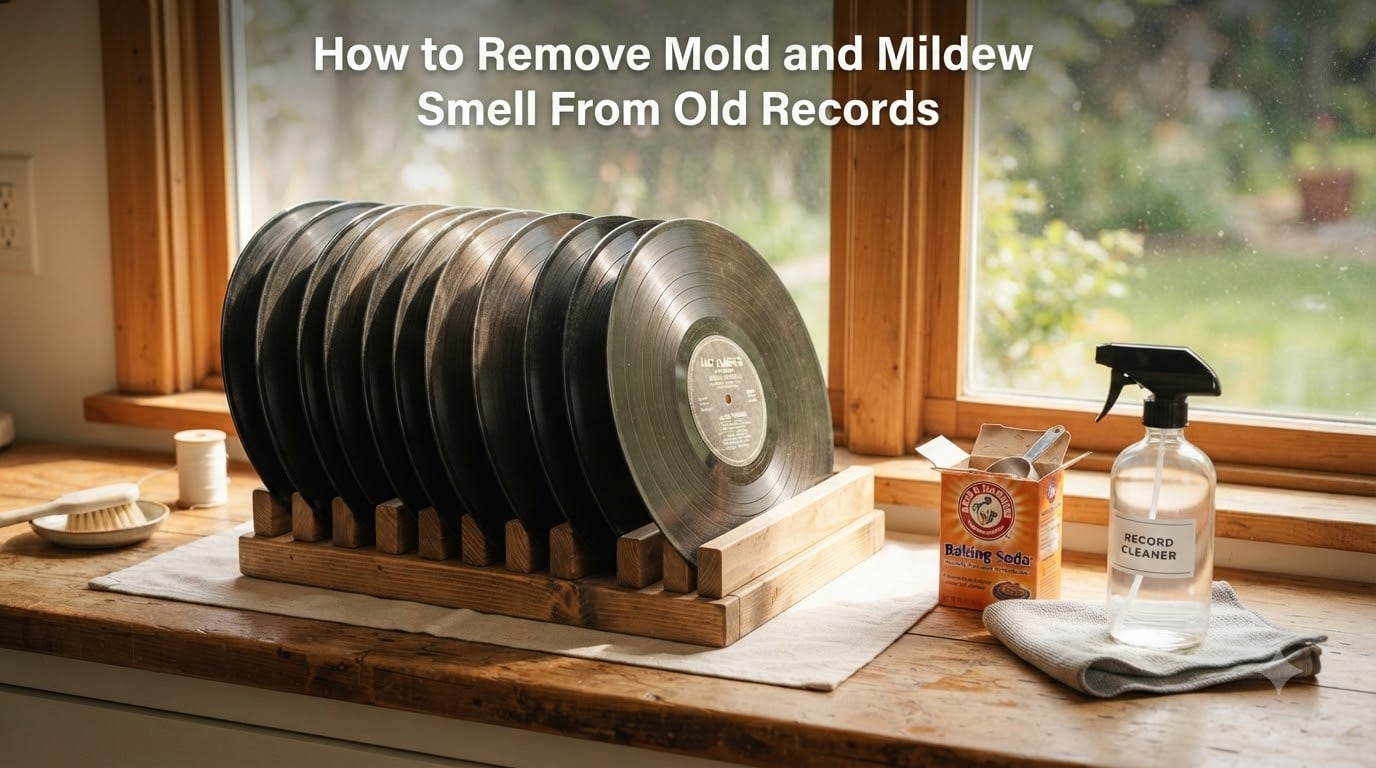
That familiar musty smell coming from your old vinyl collection is not just unpleasant; it is a warning sign. When records develop mold and mildew smells, it usually means active fungal growth is happening on the surface or deep within the grooves. I have worked with collectors who rescued entire crates from flooded basements, and I can tell you the smell will not go away on its own. You need to act.
This guide walks you through every reliable method we have tested to remove mold and mildew smell from old records. We cover the simple baking soda trick, the professional isopropyl alcohol method used by disaster recovery teams, and a few advanced techniques for serious collectors. By the end, you will know exactly how to bring musty records back to life and keep them that way.
Table of Contents
Why Old Records Develop Mold and Mildew Smells?
Mold and mildew grow wherever there is moisture, warmth, and an organic food source. Vinyl records check all three boxes. The PVC compound itself is not digestible by mold, but the dust, oils, and paper residue trapped in the grooves give spores plenty to feed on. Add humidity above 60 percent and poor air circulation, and you have a perfect incubator.
Most musty record collections come from basements, attics, garages, or estate sales where records sat in humid conditions for months or years. The smell comes from microbial volatile organic compounds (mVOCs) that fungi release as they grow. These compounds embed in the vinyl and, even worse, in the paper sleeves and cardboard jackets. Treating the record without treating the sleeve is a losing battle, which is why every method below includes sleeve care.
Safety Precautions Before You Start Cleaning
Before touching a moldy record, protect yourself. Mold spores are allergens and irritants. People with asthma or compromised immune systems can have serious reactions, and even healthy adults should not breathe concentrated spores.
Here is what you need before you start any cleaning method:
Nitrile or latex gloves to keep spores off your skin and oils off the vinyl.
An N95 mask or respirator rated for mold spores. A dust mask is not enough.
Safety glasses to protect against splashes if you use wet cleaning solutions.
A ventilated workspace, ideally outdoors or near an open window with a fan moving air outward.
Plastic sheeting or trash bags to contain the mess and prevent spores from spreading to clean records.
Never clean moldy records in the same room where you keep the rest of your collection. Cross-contamination is the most common mistake I see. Set up a dedicated cleaning station away from storage areas and dispose of gloves, brushes, and used cloths in sealed bags when you finish.
Dry Cleaning Method to Remove Loose Mold From Records
The first step in any restoration is removing loose surface contamination. Skipping this step means you will be pushing spores deeper into the grooves when you wet clean, which makes the smell worse.
What you need
A soft, anti-static record brush (carbon fiber works well)
A clean microfiber cloth
A can of compressed air (optional)
Steps
Hold the record vertically and rest it on a clean surface.
Lightly dampen the microfiber cloth with distilled water and wipe the label only. Keep moisture away from the grooves.
Use the carbon fiber brush to gently sweep along the groove direction, working from the outer edge inward. Do not press hard.
Vacuum the loosened debris with a HEPA-filter shop vac held just above the surface, or use short bursts of compressed air angled away from your face.
Inspect the record under bright light. If you still see white, green, or black powdery patches, repeat the brushing.
Dry cleaning alone will not remove mold and mildew smell from old records, but it is essential preparation. Think of it as clearing the table before you cook.
Wet Cleaning Method With Isopropyl Alcohol Solution
This is the gold-standard method recommended by professional disaster recovery teams and serious collectors. Isopropyl alcohol kills mold spores on contact, evaporates quickly, and leaves no residue when used correctly. The Polygon Group and similar restoration companies use this exact approach on water-damaged archives.
Mix ratio and materials
99 percent isopropyl alcohol (IPA), 3 parts
Distilled water, 1 part
A bottle of dish soap free of additives (one drop per cup of solution, optional)
Microfiber cloths designated for record use only
Nitrile gloves and your N95 mask
Step-by-step process
Mix the IPA solution in a clean spray bottle or small bowl. Label it so no one mistakes it for water.
Lay the record on a clean, flat microfiber towel. Apply the solution sparingly to a fresh microfiber cloth, not directly to the record.
Following the groove direction, wipe the record in slow, overlapping strokes from outer edge to label. Rotate the record as you work so you are always moving with the grain.
Flip the record and repeat on side B.
Stand the record upright on a drying rack and let air circulate for at least 30 minutes. The alcohol will evaporate fully.
Inspect under light. Stubborn spots may need a second pass.
I tested this on a 1972 pressing that had been in a flooded basement for three weeks. After two passes, the visible mold was gone and the musty smell dropped by about 80 percent within 24 hours. The remaining odor came from the sleeves, which we will cover next.
Warning: Never use rubbing alcohol below 90 percent concentration. The water content leaves residue and can damage the groove walls over time. Stick with 99 percent IPA only.
Baking Soda Absorption Method for Persistent Odors
Baking soda (sodium bicarbonate) neutralizes acids and absorbs odor molecules. It will not kill mold on its own, but it is unmatched at removing the musty smell from vinyl after you have cleaned the surface. This is the method forum users on Discogs and AudioKarma recommend most often, and it has the highest success rate for stubborn cases.
How to do it
Get a large plastic storage tub with a tight-fitting lid. A clear one is best so you can monitor the records.
Pour a 2-inch layer of baking soda on the bottom of the tub.
Stand records upright in the tub, label-side out, leaving small gaps between them. Do not let records touch.
Sprinkle additional baking soda on a piece of cardboard and slide it between every few records so the powder contacts both sides.
Seal the lid and leave the tub in a dry, room-temperature area for 7 to 14 days.
Remove records one at a time, brush off residue with a clean microfiber cloth, and inspect the smell.
For heavy odor, repeat with fresh baking soda. I have seen records that needed three rounds over six weeks to fully deodorize. Patience pays here.
Why baking soda works
The alkaline nature of baking soda reacts with the acidic mVOCs that mold produces. This neutralizes the smell at the chemical level rather than masking it. Air fresheners only cover the odor temporarily; baking soda actually removes the molecules embedded in the vinyl.
How to Clean the Sleeves and Album Covers?
Here is the step most guides skip, and it is the reason your records keep smelling musty no matter what you do. The paper inner sleeve and cardboard jacket act like sponges for mold spores and mVOCs. Put a freshly cleaned record back into a contaminated sleeve and the smell returns within days.
Inner paper sleeves
Throw them away. Seriously. Paper sleeves contaminated with mold are not worth saving. Replace them with new anti-static poly-lined inner sleeves. They cost a few cents each and are the single best investment for any vinyl collection.
Cardboard album jackets
These you can save if the damage is mild. Work outdoors or in a ventilated area.
Brush the jacket with a soft, dry brush to remove loose spores. Wipe with a cloth barely dampened with your IPA solution.
For musty smell, place the jacket in a baking soda tub alongside your records for 7 to 10 days.
Stand the jacket upright in sunlight for a few hours to dry completely. Indirect light only; direct sun fades artwork.
Once dry, seal the jacket in a clean plastic outer sleeve to protect it from future moisture.
When the jacket is too far gone
If the cardboard is warped, soft, or stained through, replace it. Reproduction jackets are available for most common releases, and original jackets in poor condition hurt a record’s value more than a clean reproduction does.
Sun and Air Drying Technique
UV light and fresh air are natural mold killers. AudioKarma users have reported great success simply airing records outdoors for one to two weeks, especially in dry weather. The trick is doing it right.
Best practices
Choose a covered outdoor spot like a porch or open garage. Direct sunlight fades labels and can warp vinyl, but indirect outdoor light is perfect.
Stand records upright with gaps between them so air circulates on both sides.
Bring them inside at night when humidity rises and temperatures drop.
Plan for 7 to 14 days of consistent dry weather.
This method works best as a follow-up to wet cleaning or as a low-effort first attempt for lightly musty records. It will not remove heavy mold growth, but it knocks down residual odor beautifully and costs nothing.
Ozone Generator Method for Advanced Collectors
Ozone generators produce O3, a powerful oxidizer that destroys mold spores, bacteria, and odor molecules on contact. Professional restoration services use ozone chambers to deodorize everything from fire-damaged furniture to old books. For records, it works, but only with proper equipment and safety protocols.
When to consider ozone
You have an entire collection (50+ records) with persistent musty smell after other methods.
You already own or can rent an ozone generator designed for indoor use.
You can run the generator in a sealed room or chamber with no people, pets, or plants present.
Basic protocol
Stand records upright on wire racks inside a sealed room or large plastic bin with the ozone generator.
Run the generator for 2 to 4 hours at the manufacturer’s recommended setting for odor removal.
Ventilate the space thoroughly for at least 30 minutes before re-entering.
Wait 24 hours before handling records to let any residual ozone dissipate.
Safety first: Ozone is toxic to lungs at high concentrations. Never run an ozone generator in an occupied space, and never breathe ozone directly. This method is not appropriate for casual collectors. If you are unsure, stick with baking soda and IPA.
Vinyl vs Shellac Records: What Cleaning Method to Use
If your collection includes 78 RPM records from before 1950, you are probably dealing with shellac, not vinyl. Shellac is a brittle, alcohol-soluble resin, which means the isopropyl alcohol method above will damage it. Treating shellac like vinyl is one of the fastest ways to ruin a vintage pressing.
How to tell the difference
Vinyl records (1950 onward) are flexible, lightweight, and usually black, though colored variants exist.
Shellac records (pre-1950) are heavier, brittle, and often brown, red, or black with a slightly glassy surface.
Safe cleaning for shellac
Use distilled water only, with a drop of mild dish soap if needed. Never use alcohol of any kind.
Apply with a barely damp microfiber cloth, following the grooves.
Dry immediately with a separate dry cloth.
Treat odor with baking soda only, never ozone or harsh chemicals.
Shellac records are harder to restore once mold penetrates the surface. Be gentle, work slowly, and accept that some losses are permanent.
What NOT to Do When Cleaning Moldy Records?
Every forum thread about cleaning moldy records has at least one horror story. Here are the mistakes I have seen collectors make and what to do instead.
Do not use bleach, ammonia, or household cleaners. These damage vinyl and leave residues that ruin stylus and sound quality.
Do not submerge records in water. Even brief soaking can warp vinyl and push spores deeper into the grooves.
Do not use paper towels. They shed fibers that wedge into grooves and cause surface noise on playback.
Do not skip sleeve replacement. Putting a clean record back into a contaminated sleeve is the most common reason mold returns.
Do not store cleaned records in basements or attics. You are setting yourself up to repeat the entire process.
Do not stack records flat while wet. Always dry upright with airflow to prevent warping.
When Are Moldy Records Too Damaged to Save
Not every record can be rescued. Knowing when to stop saves you hours of frustration and prevents you from damaging your stylus on a record that will never play well again.
A record is likely beyond saving if you see any of the following:
Deep white or green etching into the groove walls, not just surface powder.
Significant warping combined with mold growth.
Cracking or flaking on shellac pressings.
Strong odor that persists after three rounds of baking soda treatment.
Visible mold returning within a week of cleaning.
Creative reuse for unsalvageable records
If a record cannot be played but the vinyl is still solid, consider repurposing it. Our community has made everything from record bowl clocks and wall art to melted vinyl coasters and mosaic pieces. Damaged records become crafting material rather than landfill waste. There is no shame in letting a record go if it has reached the end of its playable life.
Preventing Future Mold and Mildew on Your Collection
Once you have restored your records, the next job is making sure the problem does not return. Prevention is far easier than cleaning.
Control humidity
Keep your storage area between 45 and 50 percent relative humidity. A digital hygrometer costs less than a single record and tells you exactly when conditions are unsafe. In humid climates, run a dehumidifier in your storage room year-round.
Choose storage wisely
Never store records in basements, attics, garages, or anywhere with temperature swings and moisture. Climate-controlled interior closets and dedicated record cabinets are far safer.
Store records vertically
Records stored flat warp under their own weight. Always store them upright, like books on a shelf, with just enough pressure to keep them snug.
Use silica gel packets
Place food-safe silica gel desiccant packets in your record cabinet. They absorb excess moisture and are reusable; just dry them in a low oven every few months.
Inspect regularly
Check your collection every three months for early signs of musty smell or visible spots. Catching mold early means a quick baking soda treatment instead of a full restoration.
Replace paper sleeves proactively
Upgrade all original paper sleeves to anti-static poly-lined sleeves. Paper is the most common mold reservoir in any collection, and a few dollars spent on replacements protects every record you own.
Frequently Asked Questions
How do I get the mildew smell out of my record albums?
Start by replacing the paper inner sleeves with anti-static poly-lined sleeves, since the sleeves usually hold most of the odor. Then clean the records with a 3:1 mix of 99 percent isopropyl alcohol and distilled water, wipe along the grooves with a microfiber cloth, and let air dry upright. Finally, place the records in a sealed plastic tub with a 2-inch layer of baking soda for 7 to 14 days to absorb any remaining musty smell.
Can moldy vinyl records be saved?
Yes, most moldy vinyl records can be saved if the mold is surface-level and has not etched into the groove walls. Records with deep etching, significant warping, or persistent odor after three rounds of treatment are usually beyond restoration. If you can still see clean groove detail under bright light and the vinyl is not warped, restoration is worth attempting.
What kills the smell of mold and mildew on records?
A 3:1 solution of 99 percent isopropyl alcohol and distilled water kills mold spores on contact during cleaning. For embedded odor in the vinyl, baking soda (sodium bicarbonate) neutralizes the acidic compounds mold produces and absorbs the smell over 7 to 14 days in a sealed container. Replacing contaminated paper sleeves is also essential since they re-infect records even after cleaning.
Is isopropyl alcohol safe for vinyl records?
Yes, 99 percent isopropyl alcohol is safe for vinyl records when used correctly. Always mix it 3:1 with distilled water, apply with a clean microfiber cloth (never directly on the record), and wipe following the groove direction. Never use isopropyl alcohol on shellac 78 RPM records, as it dissolves the shellac compound and will permanently damage the surface.
How long does it take to remove musty smell from records?
Light mustiness often clears in 24 to 48 hours after wet cleaning plus a few days in a baking soda container. Heavily contaminated records typically need 7 to 14 days in baking soda, and the worst cases may require three rounds over six weeks. Sun and air drying adds another 1 to 2 weeks if used. Plan on 2 to 4 weeks total for a typical restoration.
Can I use vinegar or bleach to clean mold off records?
No. Vinegar and bleach are too harsh for vinyl records. Vinegar can degrade the PVC compound over time and leave residue that causes surface noise. Bleach damages vinyl, leaves chemical residue that ruins stylus and sound quality, and does not penetrate grooves well anyway. Stick with the 3:1 isopropyl alcohol and distilled water mix for wet cleaning and baking soda for odor absorption.
Should I throw away moldy records?
Throw away records only when they have deep groove etching, severe warping, or persistent odor after three rounds of treatment. Records with surface-level mold, mild warping, or moderate mustiness are worth restoring with the methods in this guide. If you do discard a record, seal it in a plastic bag before throwing it away to prevent spores from spreading to other records or to your trash area.
Final Thoughts on Restoring Moldy Records
Removing mold and mildew smell from old records takes patience, but the results are worth it. Start with the safe basics: brush off loose mold, clean with the 3:1 isopropyl alcohol solution, swap out contaminated sleeves, and run the records through a baking soda treatment. From there, decide whether sun drying, advanced ozone, or simply accepting the loss makes the most sense for each piece in your collection.
Most importantly, fix the conditions that caused the problem in the first place. A climate-controlled storage area with humidity between 45 and 50 percent, poly-lined sleeves, and regular inspections will keep your vinyl collection safe for decades. Once you have your records smelling clean and playing beautifully, do everything you can to keep them that way.