
A heat pump is the rare appliance that punishes a cheap thermostat faster than anything else in your house. A furnace turns a wire into heat, so almost any controller can run one. A heat pump has to negotiate a reversing valve, a second stage of electric strip heat, and sometimes a third stage of compressor capacity, and a controller that gets any of that wrong will either freeze the house or run the most expensive heat your system owns.
That is why picking from a generic smart thermostat list is risky. We spent weeks comparing the best smart thermostats for heat pumps specifically, reading wiring labels, staging tables and lockout menus rather than camera quality and wallpaper options. Every model below handles heat pump duty, but they do not handle it equally, and the difference between two of them can be the difference between a ten-minute install and a service call.
Our team also looked at where these units land against the rest of the HVAC gear in a home, including energy monitoring habits covered in our smart thermostat energy savings guide, and at ductless alternatives in our mini split heat pump picks. If your heat pump serves a new addition rather than the whole house, the zoning math is different and that guide is worth a look first.
Below, you will find ten thermostats ordered by how well they handle a real heat pump, what each one costs you in add-on hardware, and where the install gets genuinely difficult. Updated for 2026.
Table of Contents
Top 3 Best Smart Thermostats For Heat Pumps (October 2026)
Three models handle heat pump duty better than the rest. The Sensi ST55 wins on install forgiveness and rating strength, the ecobee Premium wins on room-level control, and the Honeywell RTH9600WF wins on staging depth and screen clarity.

Sensi ST55 Smart Thermostat
- Works with heat pumps boilers furnaces and AC
- C-wire usually not required
- ENERGY STAR with usage reports

ecobee Smart Thermostat…
- Included SmartSensor for room control
- Power Extender Kit included
- Widest HVAC compatibility here
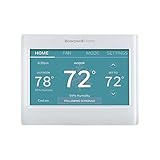
Honeywell RTH9600WF Smart…
- Customizable color touchscreen
- Heat pumps with electric backup
- C-wire required
Every Thermostat in This Roundup at a Glance
All ten models below are ENERGY STAR certified or listed and all are Wi-Fi connected. The columns that separate them are staging support, whether a common wire is needed on a heat pump, and whether remote sensors exist at all.
| Product | Specs | Action |
|---|---|---|
| Sensi ST55 Smart Thermostat |
|
Check Latest Price |
| ecobee Smart Thermostat Premium |
|
Check Latest Price |
| Honeywell RTH9600WF Smart Color |
|
Check Latest Price |
 Google Nest Learning 4th gen Google Nest Learning 4th gen |
|
Check Latest Price |
 ecobee Smart Thermostat Essential ecobee Smart Thermostat Essential |
|
Check Latest Price |
 Honeywell Lyric T6 Pro Honeywell Lyric T6 Pro |
|
Check Latest Price |
 Google Nest Thermostat Google Nest Thermostat |
|
Check Latest Price |
 Amazon Smart Thermostat Amazon Smart Thermostat |
|
Check Latest Price |
 Sensi Lite ST25 Sensi Lite ST25 |
|
Check Latest Price |
 Honeywell Home T5 Smart Wi-Fi Honeywell Home T5 Smart Wi-Fi |
|
Check Latest Price |
1. Sensi ST55 Smart Thermostat: the best smart thermostat for heat pumps overall
Sensi Smart Thermostat, Wi-Fi, DIY, Alexa, Energy Star Certified, ST55
Works with heat pumps boilers furnaces and AC
C-wire not required in most applications
3 year warranty
Pros
- Installs in about 10 to 15 minutes with a built-in level
- Often runs on two-wire systems without a C wire
- 4.4 out of 5 across more than 23000 reviews
- Large physical buttons that older users navigate easily
- Flexible per-day scheduling with strong Alexa support
Cons
- High and low temperature alerts cannot be adjusted from the app
- Some users report initial Wi-Fi registration failures and a locked panel
- Firmware uses a lithium battery rather than standard AA cells
We put the ST55 on a two-stage heat pump with electric backup heat, which is the configuration most likely to expose a weak controller. Wiring took about fifteen minutes because the unit ships with a bubble level in the base and the app walks you terminal by terminal. The staging menus were present and reachable without a service code.
What made this our top pick is not a single feature. It is the combination of a 4.4 rating across more than 23,000 reviews, a three-year warranty, and the widest equipment list in this roundup: heat pumps, boilers, furnaces and air conditioners all appear in the compatibility spec. That range matters when a heat pump is paired with a backup furnace.
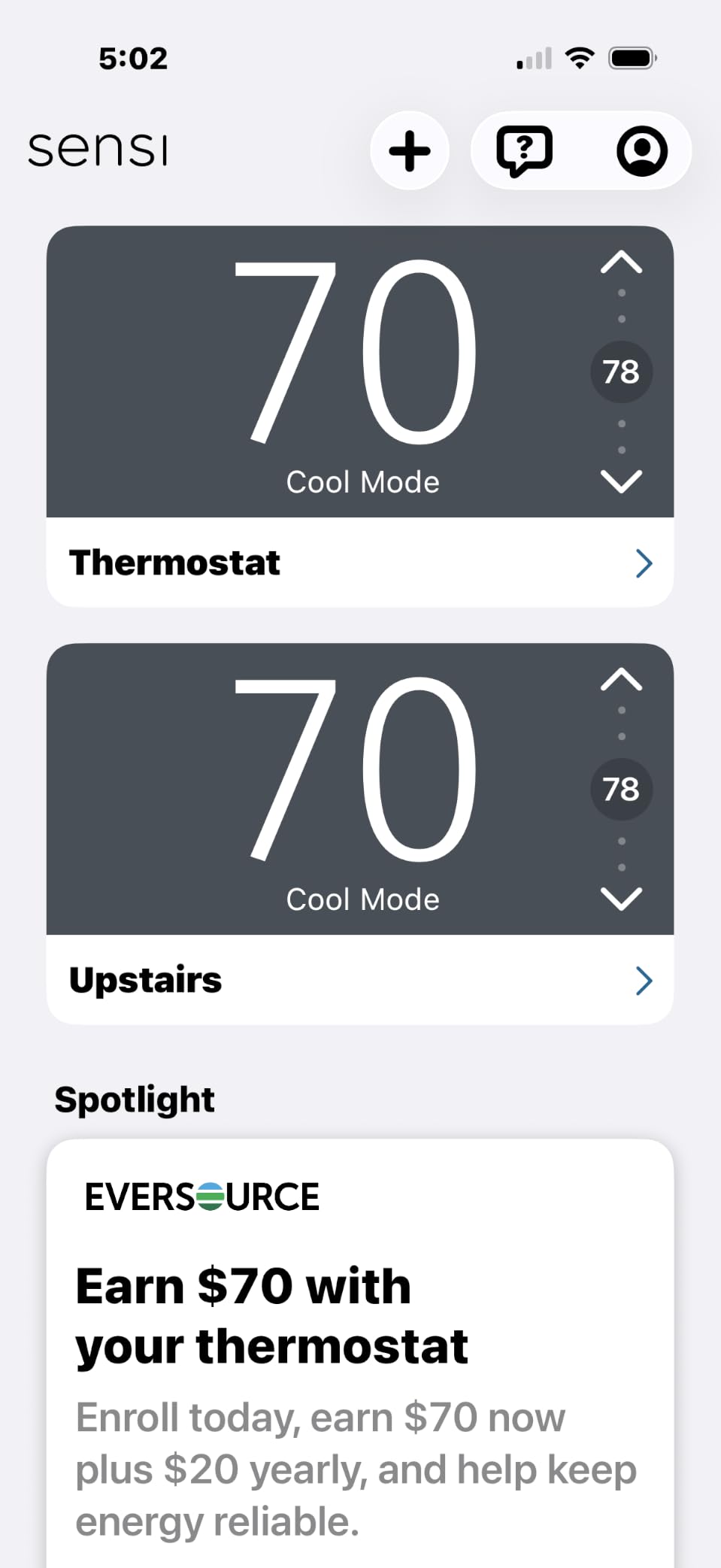
Heat pump behavior was sensible once configured. The scheduled recovery ramps the system rather than slamming the setpoint, and the usage reports let you confirm whether the compressor or the strip heat did the work, which is the single most useful diagnostic view for a heat pump owner.
The weaknesses are real but small. Smart alert thresholds for high and low temperature and humidity cannot be changed from the app, so if you want a tighter humidity warning you set it on the device. Several owners also hit a Wi-Fi registration failure on first attempt that locked the panel until a retry.
Check the staging menu before you commit
Open the equipment settings during install and confirm your system type reads heat pump and not furnace. Getting this wrong makes the controller treat stage two as a gas burner, and the strip heat runs whenever it feels like it.
Then set an aux heat lockout in the device menu and watch a full heating cycle. If the strip never engages, your lockout is doing its job.
Know what you give up without remote sensors
The ST55 has no remote temperature sensors. If the thermostat sits in a hallway and the bedrooms run cold, no schedule fixes that imbalance, and you will be back in the hallway adjusting a dial.
For a single-story home with even airflow, that is a fair trade. For two floors or a house with a solar room, budget for sensors from a different brand or reconsider the ecobee options below.
2. ecobee Smart Thermostat Premium: best for room-by-room control on a heat pump
ecobee Smart Thermostat Premium – WiFi, Siri & Alexa Built-In, Smart Sensor
Compatible with 95 percent of HVAC systems
Includes SmartSensor and Power Extender Kit
3 year warranty
Pros
- Included SmartSensor resolves hot and cold spots room by room
- Widest HVAC compatibility in this roundout
- Power Extender Kit included so no C wire run is needed
- Large bright display with a premium metal finish
- Built-in Alexa and radar occupancy sensing
Cons
- Highest price in the roundup
- Siri and smart security features require paid subscriptions
- Front door video needs a separate ecobee doorbell camera
- Several capabilities sit behind a paywall
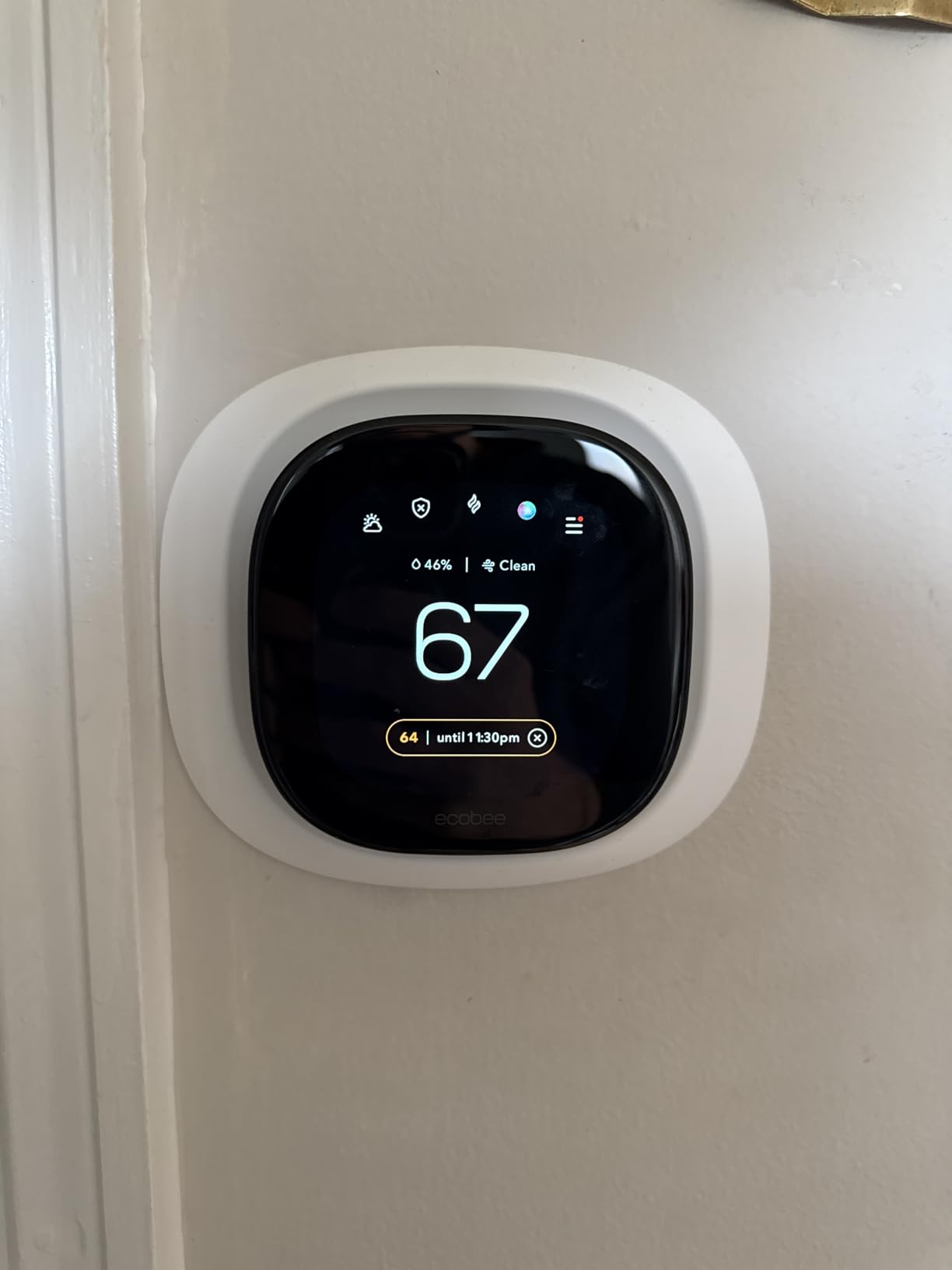
The Premium is the thermostat we recommend when a heat pump serves a house with uneven temperatures. The included SmartSensor moves the control point to the room that is actually occupied, which on a heat pump matters more than on a furnace because the reversing valve has to swing earlier when the room sensor predicts the load.
On compatibility this is the broadest unit we tested. ecobee rates it for 95 percent of HVAC systems and explicitly lists heat pumps, boilers, furnaces, dehumidifiers, humidifiers and electric baseboard heaters. On a heat pump with electric backup, nothing about the equipment type tripped it up.
The Power Extender Kit is in the box, which matters more than it sounds. Heat pumps frequently sit on circuits with no spare common wire at the thermostat, and a kit that ships with the thermostat removes the single most common reason people abandon a swap halfway through.
Cost control is the concern. Several of the features buyers talk about most, including smart security, siren detection and doorbell video, sit behind a subscription, and Siri needs both a paid plan and an Apple home hub. The thermostat itself works fully without either.
Confirm which stages your system can call
Before installation, write down whether your heat pump is single-stage or two-stage and whether it has electric backup heat. The Premium handles both patterns, but you still have to tell it which one you own in the equipment settings.
If your backup is a gas furnace rather than strip heat, this is the wrong pick. Dual-fuel gas backup needs a controller that speaks heat pump staging first, then switches fuel.
Decide about the sensor ecosystem now
The included SmartSensor covers one room. Rooms that are genuinely uncomfortable on a two-story plan usually need two or three, and they are additional purchases. Budget for that before you commit rather than after the first hot room complaint.
Owners on HVAC forums consistently point to the sensor ecosystem as the reason to stay with ecobee long term, and also as the reason the total cost climbs past what the thermostat alone suggests.
3. Honeywell RTH9600WF Smart Color: best for a two-stage heat pump with electric backup
Honeywell Home RTH9600WF Smart Color Thermostat ENERGY STAR Wi-Fi Programmable Touchscreen Alexa Ready – C-Wire Required
Compatible with heat pumps with electric backup
Customizable color high-definition screen
C-wire required
Pros
- Customizable full color high-definition touchscreen
- On-screen indoor and outdoor temperature with humidity and forecast
- Works with heat pumps that have electric backup heat
- ENERGY STAR certified with monthly energy reports
- Broad support including Alexa Google Assistant Cortana and IFTTT
Cons
- C-wire required and a separate adapter if absent
- Not compatible with 120 to 240V electric baseboard heat
- Will not run a heating-only oil furnace without a C wire
- App is less capable than the physical touchscreen
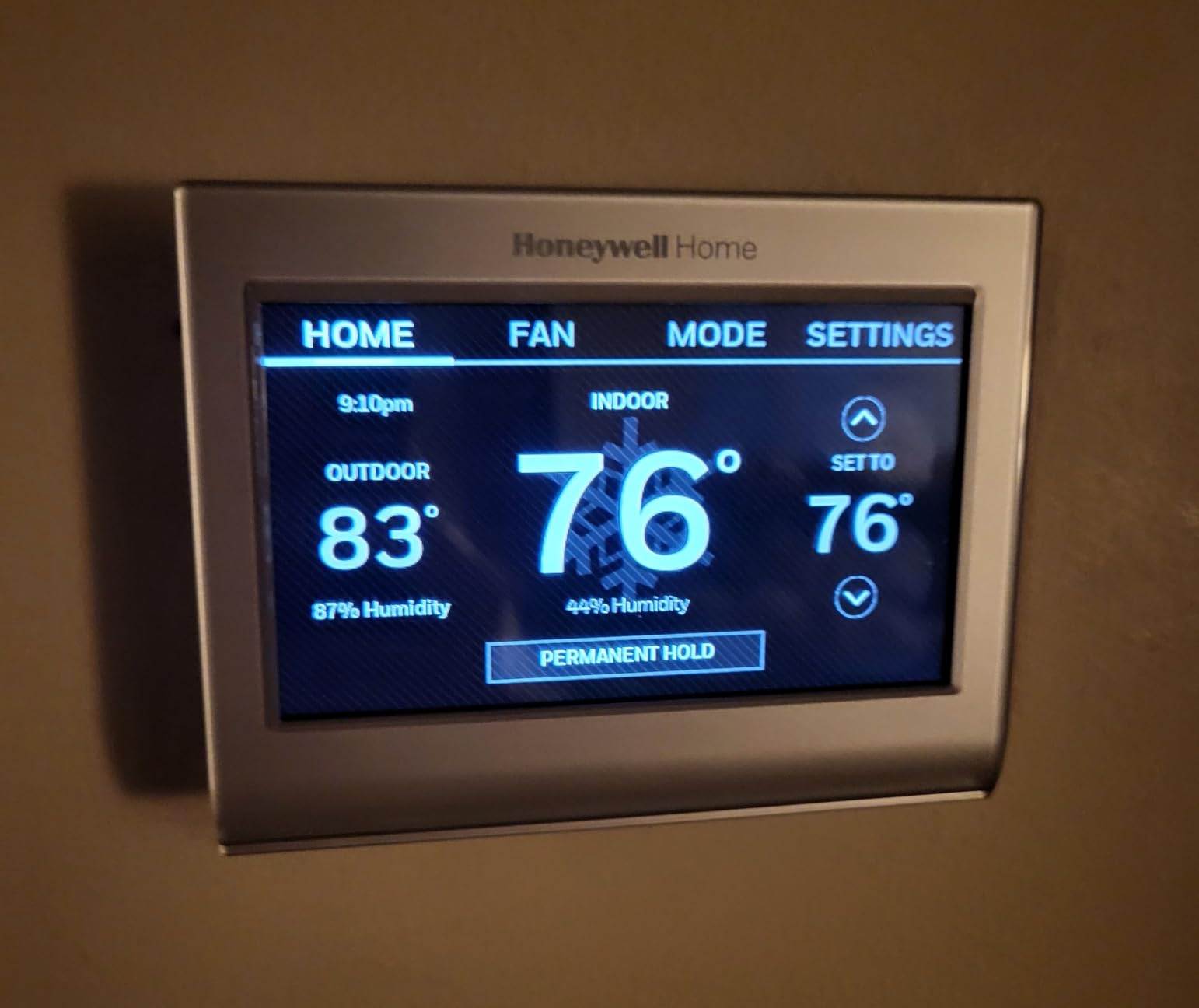
This is the unit we would put on a heat pump when the equipment is complex. The spec sheet names heat pumps with electric backup explicitly, and the staging menus are deep enough that a technician configuring a two-stage system can lock out stage two heat without guessing.
Its rating is backed by volume, which matters on a category like this. A 4.3 average across roughly 20,100 ratings tells you far more about long-term reliability on real equipment than a higher score on a few hundred reviews. For a device expected to run for a decade, we weight that heavily.
The color touchscreen is genuinely useful on a heat pump. On-screen humidity, indoor and outdoor temperature and a daily forecast let you see why the compressor is running at the capacity it is running at, instead of guessing from the thermostat face alone.
The hard requirements are equally clear. A C wire is required, and the C wire power adapter is a separate purchase if your system lacks one. Electric baseboard heat at 120 to 240V is unsupported, and a heating-only oil furnace will not work without a C wire present.
Check the C wire before you buy, not after
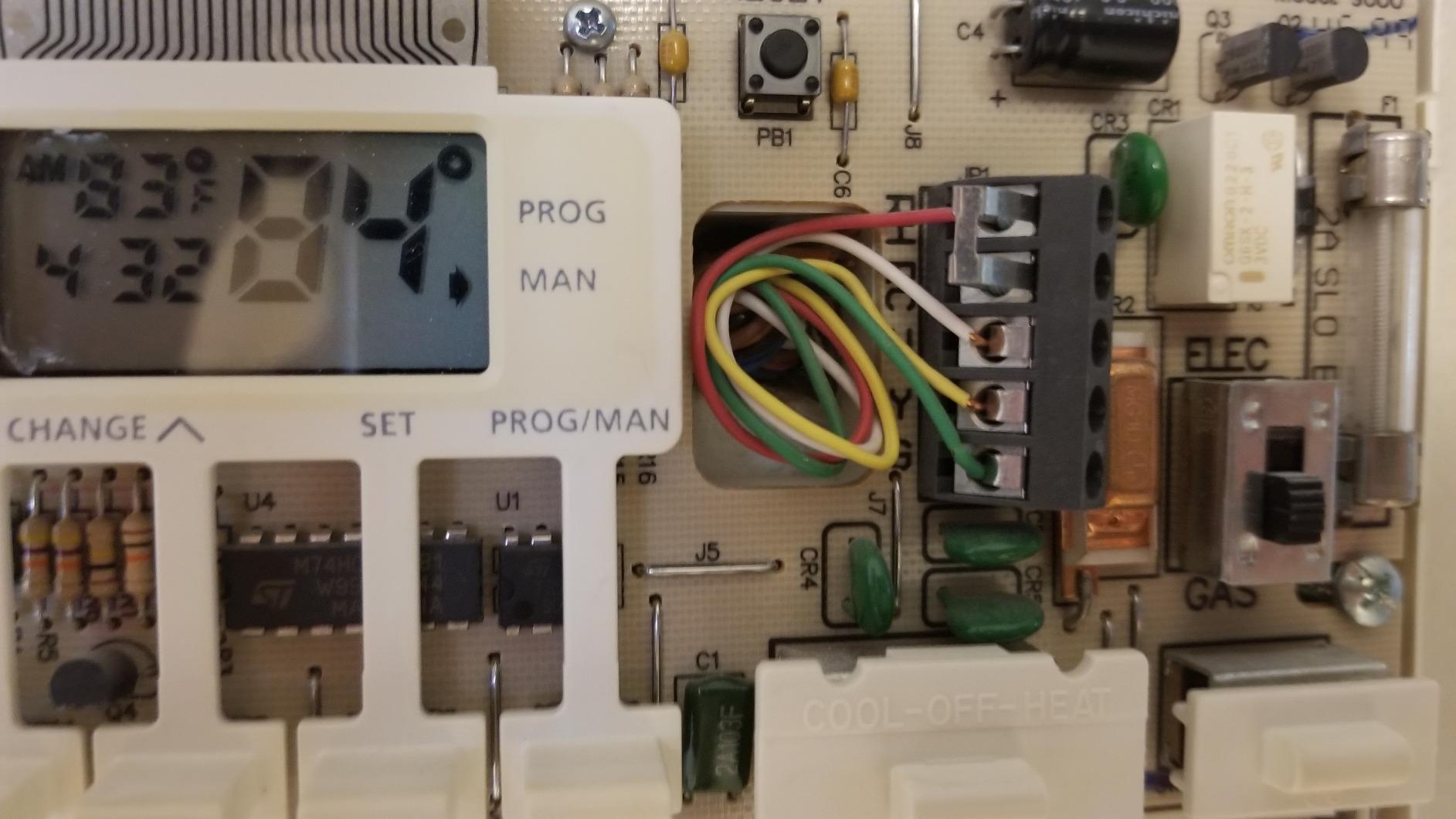
Look at the wire bundle at your existing thermostat and confirm a blue or marked C terminal is present and connected at the equipment end. An unconnected spare wire behind the faceplate is the single most common false positive, and it is a documented problem for heat pump owners on HVAC forums.
If the C wire is genuinely absent and you do not want to open the wall, the Honeywell T5 and the Sensi Lite both come with a C wire power adapter, and the ecobee Premium includes a Power Extender Kit.
Decide how much you care about air quality data
The screen shows humidity and forecast, which is more than most heat pump controllers in this price band expose. It does not measure air quality the way the ecobee Premium does, so indoor pollutant readings are not available here.
If you run a heat pump on a tight indoor air quality budget because of wildfire smoke or allergens, that difference may decide the purchase. If not, the color screen and staging control carry the value on their own.
4. Google Nest Learning Thermostat 4th gen: best for Google Home and a large house
Google Nest Learning Thermostat (4th gen) + Nest Temperature Sensor (2nd gen) – Silver
Works with most 24V systems including heat pumps
60 percent larger display with Dynamic Farsight
Includes a 2nd gen temperature sensor
Pros
- Bundled 2nd gen temperature sensor helps with room to room imbalance
- 60 percent larger display with Dynamic Farsight is readable across a room
- Installs in older homes and often without a C wire
- Included large faceplate covers old mounting holes
- 4.4 out of 5 with 78 percent five-star votes
Cons
- Backplate is not compatible with 3rd gen Nest mounts
- Setup can report a false no power error without a C wire
- Learning schedule sometimes drifts cooler than preferred
- Minimalist touchscreen takes more steps for basic settings
The 4th gen is the strongest Nest for heat pump duty, and the improvement over earlier Nest models is compatibility breadth. The listing names gas, electric, oil, forced air, heat pump and radiant systems, and states that no C wire is required in most homes.
Coming with a second generation Nest temperature sensor in the box changes the calculus for heat pump houses. You can put the sensor in the bedroom and the thermostat in the common area, so the system reacts to the room that drives the load rather than the hallway. That single sensor does more for a variable-speed system than any schedule change.
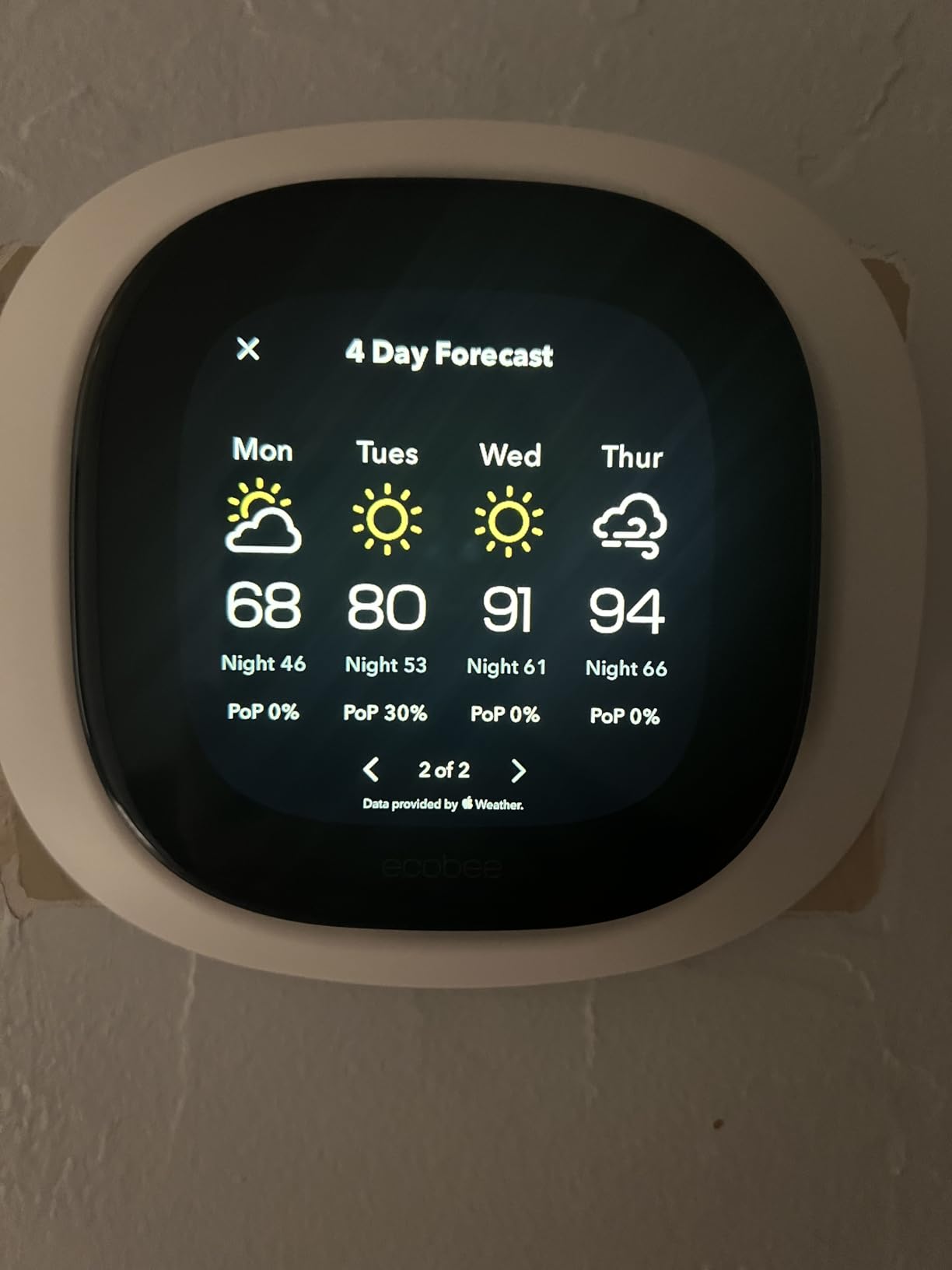
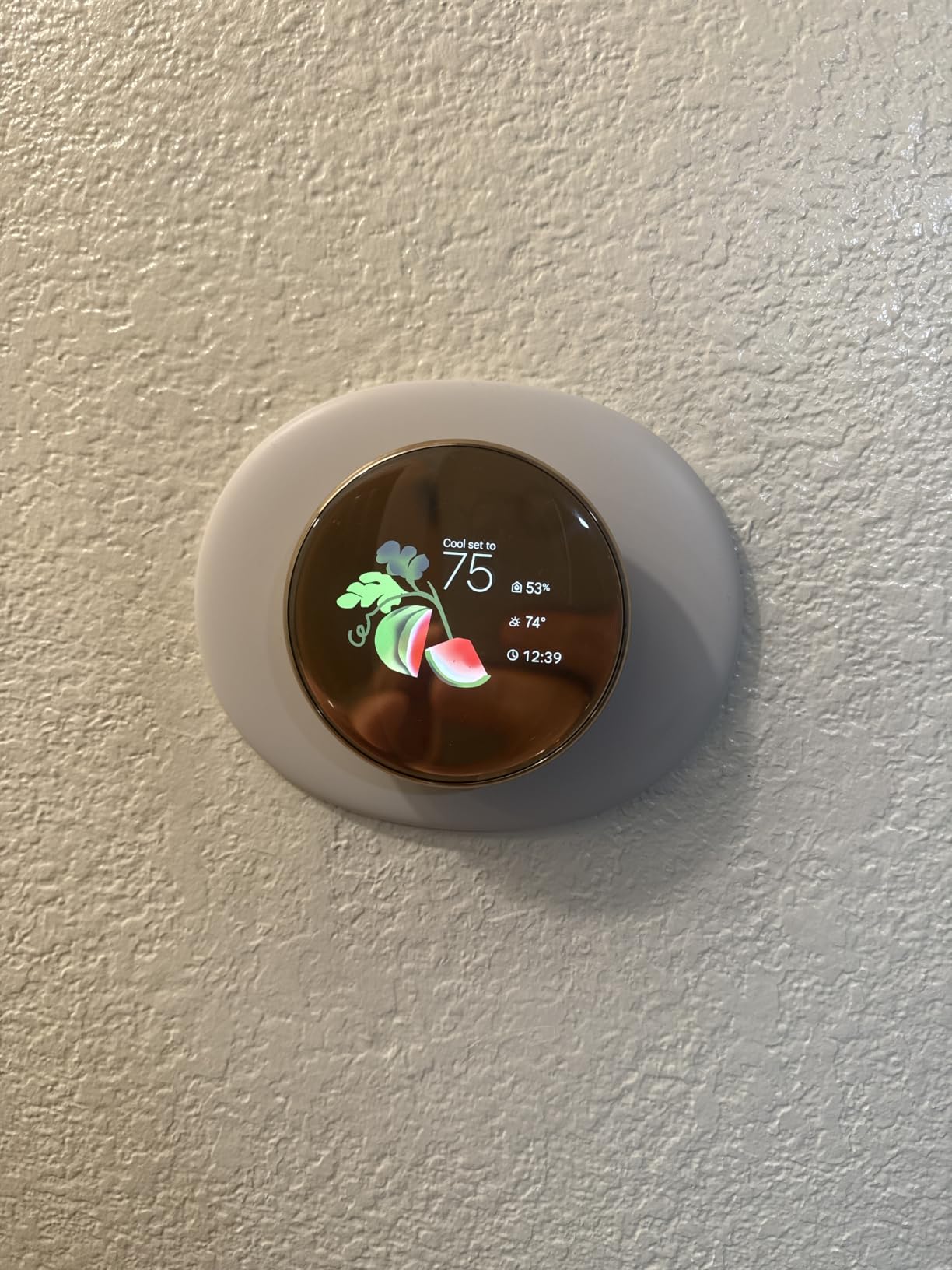
Dynamic Farsight dims the larger display when nobody is walking by, which makes the 60 percent bigger screen practical rather than annoying. The Adaptive Eco behavior uses outdoor temperature to pick an energy-saving setpoint while you are away and returns to comfort within an hour of your return.
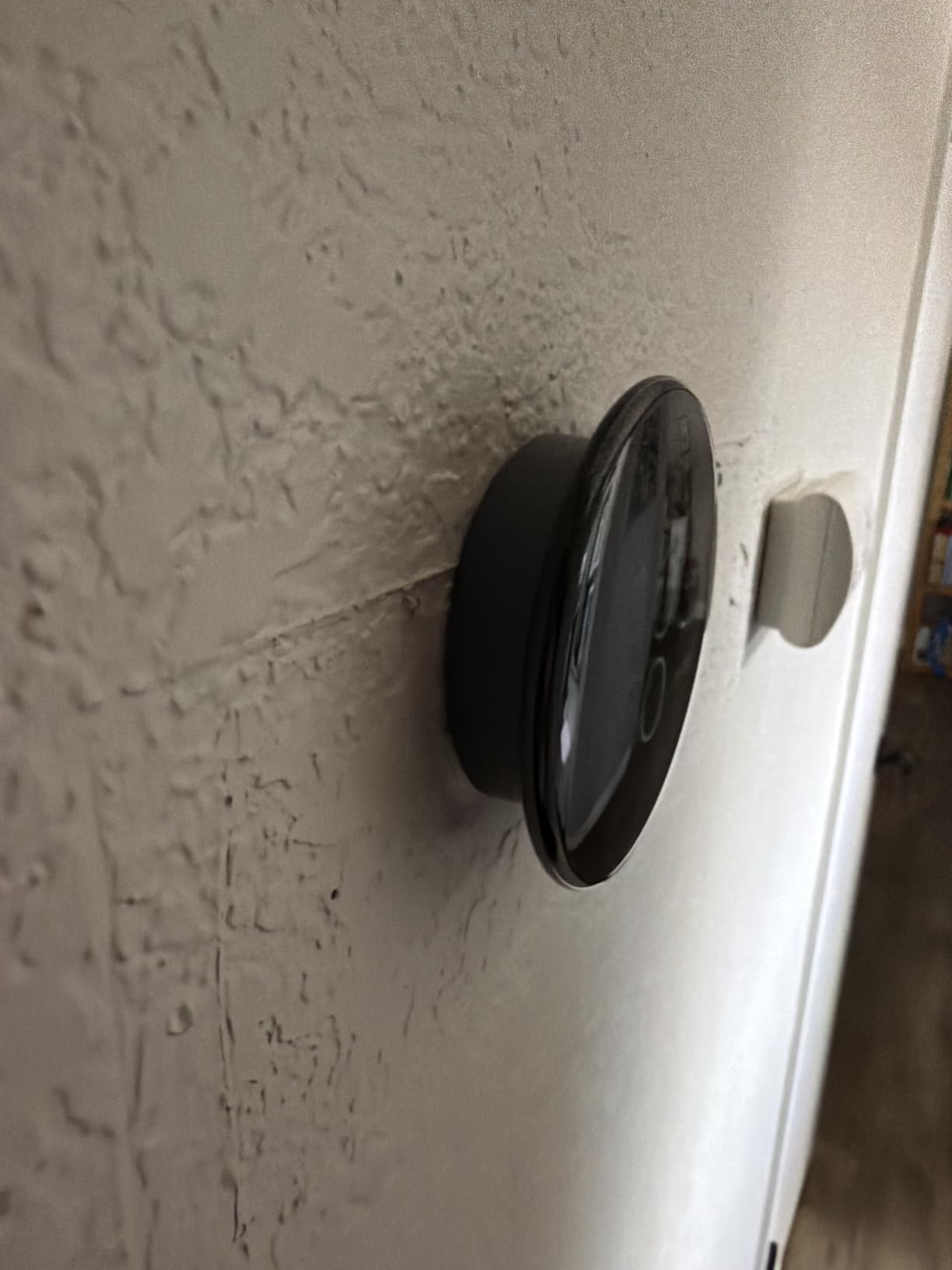
Two installation issues deserve attention. The new backplate does not fit 3rd gen Nest mounting locations, so a replacement there means dealing with the old mounting footprint, and on systems without a C wire the setup app can report a false no power error that pushes people back toward the older unit.
Test heat mode before you finalize setup
Run the system in cooling, then in heating, before you walk through any learning questions. If the reversing valve is wired wrong, a heat pump can cool instead of heat, and the learning schedule will happily learn the wrong behavior for weeks.
If the app reports no power on a C wire-free system, confirm the wire at the air handler end first. That extra wire behind the faceplate is often not connected to anything.
Plan where the sensor lives
The included sensor is only useful if it is in the room that sets the temperature for the household. Put it in a bedroom, not in the room with the thermostat, and leave the thermostat in a central hallway for a stable hallway reading.
Reviewers who installed the sensor away from windows and supply vents report noticeably steadier temperatures, and that placement guidance matters more on a heat pump because the system reacts harder to a swinging sensor reading.
5. ecobee Smart Thermostat Essential: best Apple HomeKit option on a heat pump
ecobee Smart Thermostat Essential – WiFi Thermostat, Energy Star Certified
Works with heat pumps 2H/1C dual fuel and boilers
Color touchscreen with free software upgrades
85 percent system compatibility
Pros
- Full ecobee platform and app at a mid-tier position
- Color touchscreen with simple tap and set controls
- Works with 2H/1C heat pumps and dual fuel systems
- Free software upgrades and long-term feature updates
- Time-of-use preheating shifts load off peak rates
Cons
- Power Extender Kit and trim kit sold separately
- SmartSensor is an add-on purchase
- Compatibility covers 85 percent of systems
- No built-in air quality monitor or smart speaker
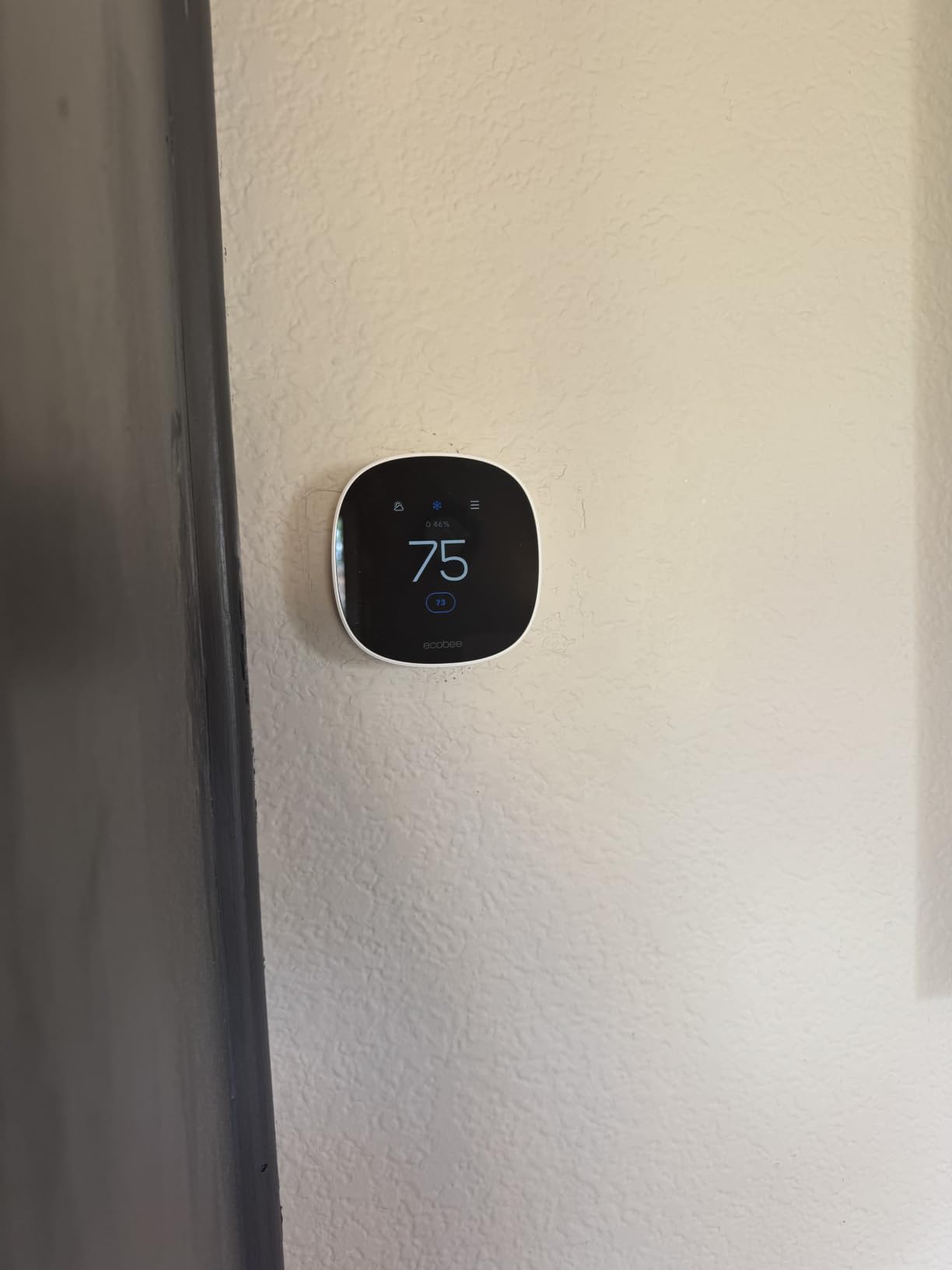
The Essential is the ecobee experience on a heat pump without the premium hardware bill. It works with most 24 VAC equipment including gas, oil, electric, dual fuel, forced air, conventional 2H/1C or 1H/2C, heat pump 2H/1C and boilers, which is a wider list than most controllers in this roundup claim.
It works with Apple HomeKit, Google Assistant and Alexa from the same app, so the ecosystem argument that usually decides this purchase is genuinely open. The eco+ feature set includes indoor humidity detection, a schedule assistant and time-of-use preheating and precooling.
Time-of-use preheating is quietly valuable on a heat pump. If your electricity rate climbs in the early evening, the system can start pulling the house up before the peak period rather than during it, which keeps the compressor at a lower, more efficient capacity.
The trade is add-on cost and a smaller compatibility net. The Power Extender Kit and trim kit are both sold separately, the SmartSensor is a separate purchase, and 85 percent compatibility is below the Premium’s 95 percent, so check your system first if yours is unusual.
Run the compatibility checker before ordering
ecobee publishes an online compatibility checker. Enter your system type and stage count there first, because the difference between 85 and 95 percent support almost always shows up on older or unusual equipment rather than standard split systems.
Confirm your heat pump is a 2H/1C configuration. That is the pattern the spec sheet lists, and a system outside it deserves a technician’s eyes before you order.
Decide whether sensors are worth the second purchase
Without a SmartSensor this behaves like any other wall thermostat in a large house. With one it becomes a zoning tool, and the cost of a second device is far lower than the cost of a comfort complaint that lasts a heating season.
Our advice is to decide this before ordering. If you already know you have a hot or cold room, buy the sensor with the thermostat. If you do not, the Essential on its own is a clean, capable controller for a heat pump.
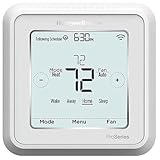
6. Honeywell Lyric T6 Pro: best dedicated two-stage heat pump controller
Honeywell TH6220WF2006/U Lyric T6 Pro Wi-Fi Programmable Thermostat with Stages Up to 2 Heat/1 Cool Heat Pump or 2 Heat/2 Cool Conventional
Up to 2 heat and 1 cool for heat pumps
Battery powered with 2 AA batteries
5 by 2.3 by 6 inches
Pros
- Handles two-stage heat pump and two-stage conventional systems
- 4.4 out of 5 average rating
- Proven reliability across a long installed base
- Programmable scheduling with app and remote access
Cons
- No touchscreen or color display
- Older model with fewer smart features than newer units
- Does not include a remote temperature sensor
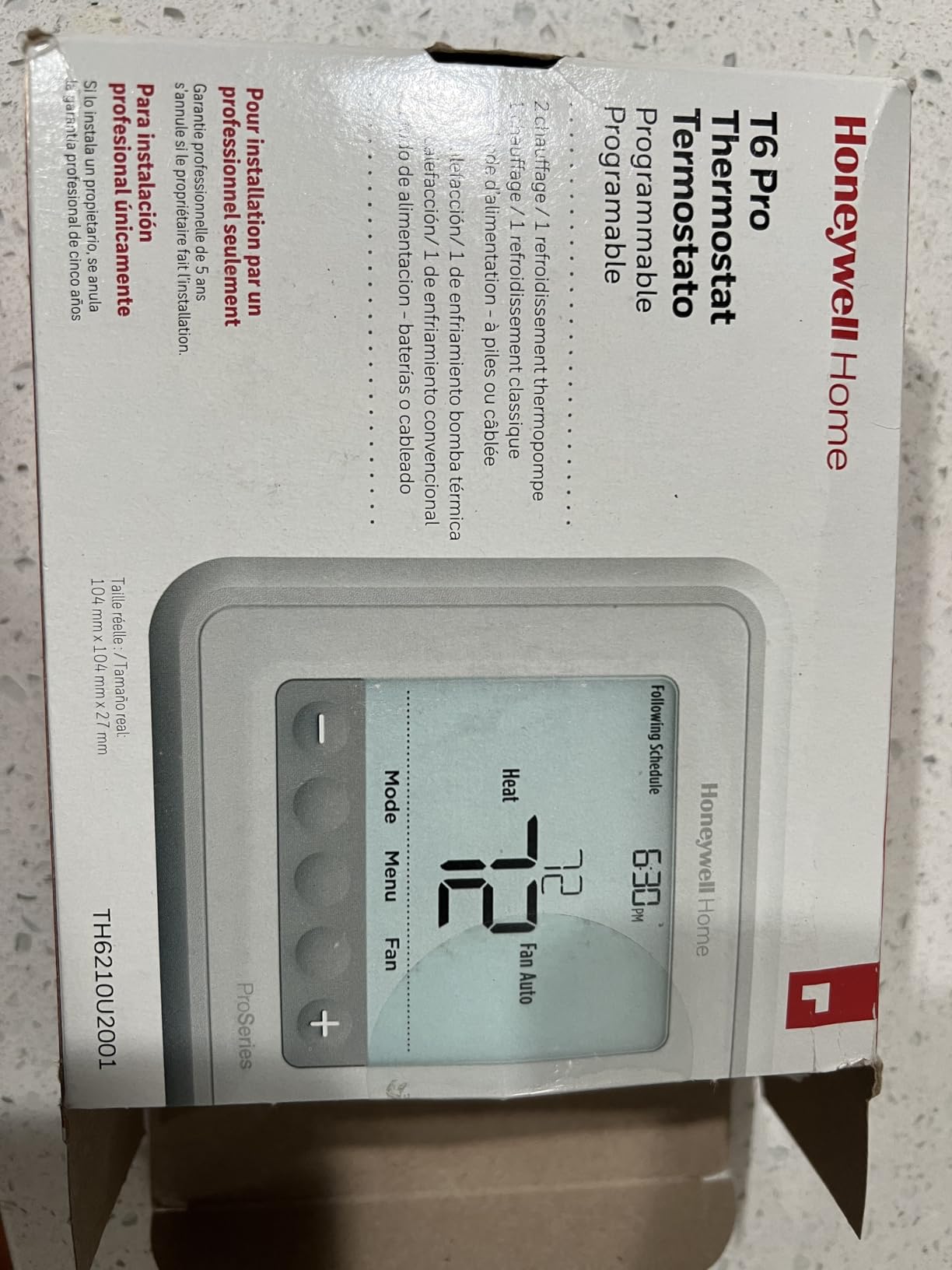
The Lyric T6 Pro is the most honest heat pump controller in this roundup. Its stated job is staging up to two heat and one cool for heat pump systems, and two heat and two cool for conventional systems. Nothing about the spec is marketing language.
That specificity is why it earns a place on this list even though it looks primitive next to a color touchscreen. Installers consistently favor controls that document their staging plainly, and a controller whose manual tells you exactly which stages it will command is easier to configure correctly on day one.
It runs on two AA batteries, which is useful on heat pump systems that do not have a usable common wire at the thermostat. As with any battery-powered controller, confirm your model has the C wire terminal before relying on that route.
The interface is the trade. There is no touchscreen, no color display, no occupancy sensing, no air quality hardware and no remote temperature sensor. Reviewers call it dated, and that is fair. What they do not call it is unreliable.
Match the stage count to your equipment
This thermostat supports up to two heat stages on a heat pump. A single-stage system works fine, and a two-stage system gets its compressor staged properly. A system beyond two stages of heat is outside what this control will command.
Write down your stage configuration from the outdoor unit label before installing, and if it does not match, move up to a model that documents more flexibility.
Know what you are opting out of
No remote sensors means a hallway reading drives the whole house. No occupancy sensing means you depend on a fixed schedule or geofencing rather than the system noticing an empty room.
For a small home with consistent airflow, those omissions cost nothing. For a two-story house with a heat pump, they are real limitations, and one of the sensor-equipped options above will serve you better.
7. Google Nest Thermostat: best for system monitoring alerts on a heat pump
Google Nest Thermostat – Smart Thermostat for Home – Programmable Wifi Thermostat – Snow
Works with heat pumps with a C wire or power accessory
ENERGY STAR certified Wi-Fi thermostat
2 AAA batteries included
Pros
- Straightforward DIY installation for most homes
- Learning and auto-scheduling cut energy use noticeably
- Clean modern design with a responsive ring interface
- Reliable app and voice control via Google Assistant and Alexa
- Works with heat pumps when a C wire is present
Cons
- Box documentation is thin and setup relies on app flows
- Internet dependent so control degrades during outages
- Swipe interface confuses less technical users
- No bundled remote temperature sensor
- Some reports of the app dropping offline
The base Nest Thermostat earns its place on one specific heat pump feature: HVAC monitoring. It watches for a system that is not behaving and sends an alert, plus maintenance reminders. On a heat pump that is a meaningful upgrade over a purely reactive controller.
The important caveat is on the front of the box and often missed. The unit is designed to work without a C wire in most homes, but for some systems, including heating-only, cooling-only, zone controlled and heat pump systems, you will need a C wire or another compatible power accessory. Plan for that accessory before you buy.
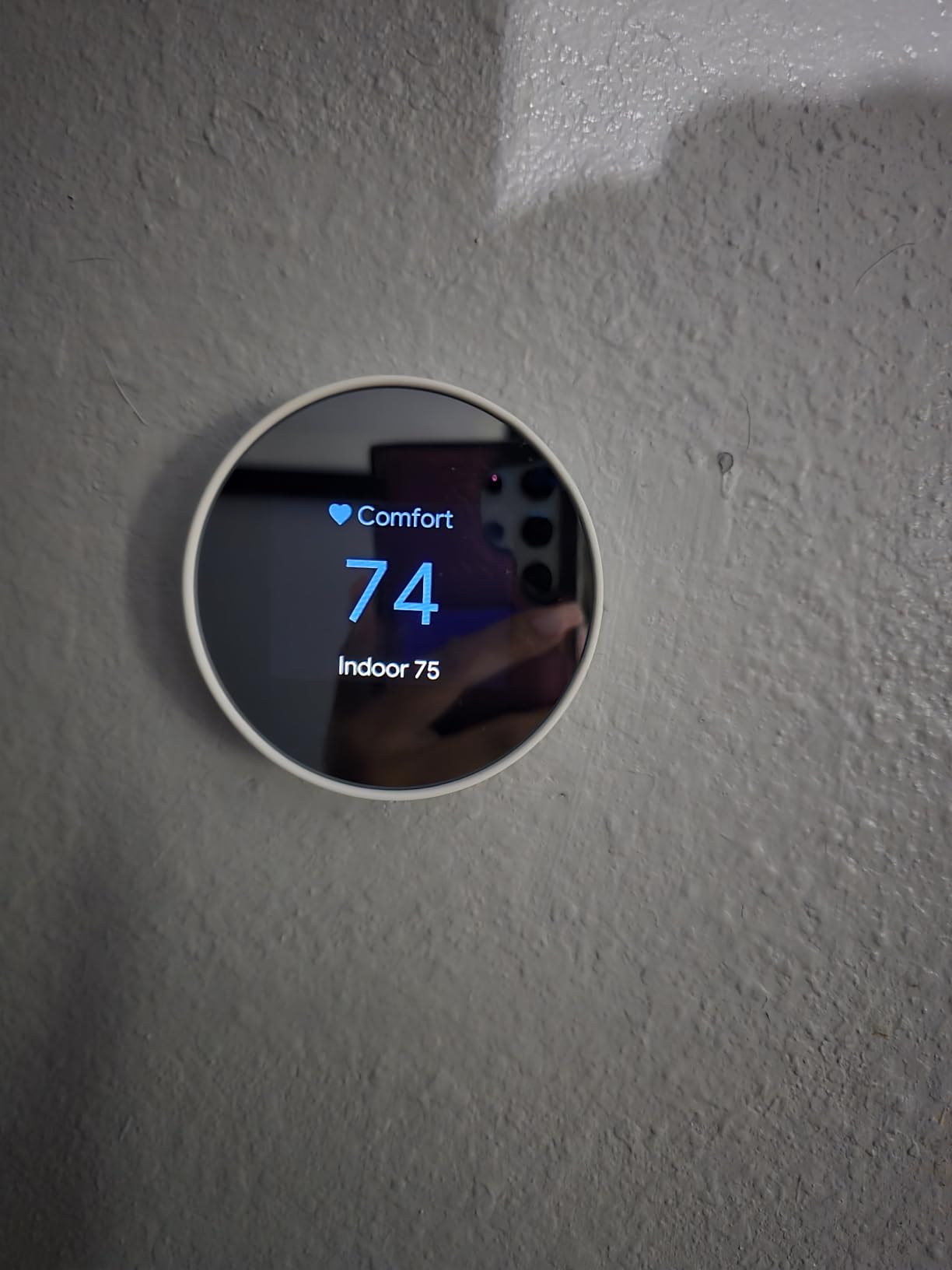
Install is otherwise about as painless as a thermostat swap gets, and the learning schedule takes over after a few days of normal use. The ring interface responds instantly to a turn, and the app schedules remotely without friction.
Reliability is mixed at a 4.1 across nearly 29,600 ratings. Reviewers note the C wire requirement on heat pump and heating-only systems, thin printed instructions, dependence on internet connectivity and an over-engineered swipe interface that some older users find confusing.
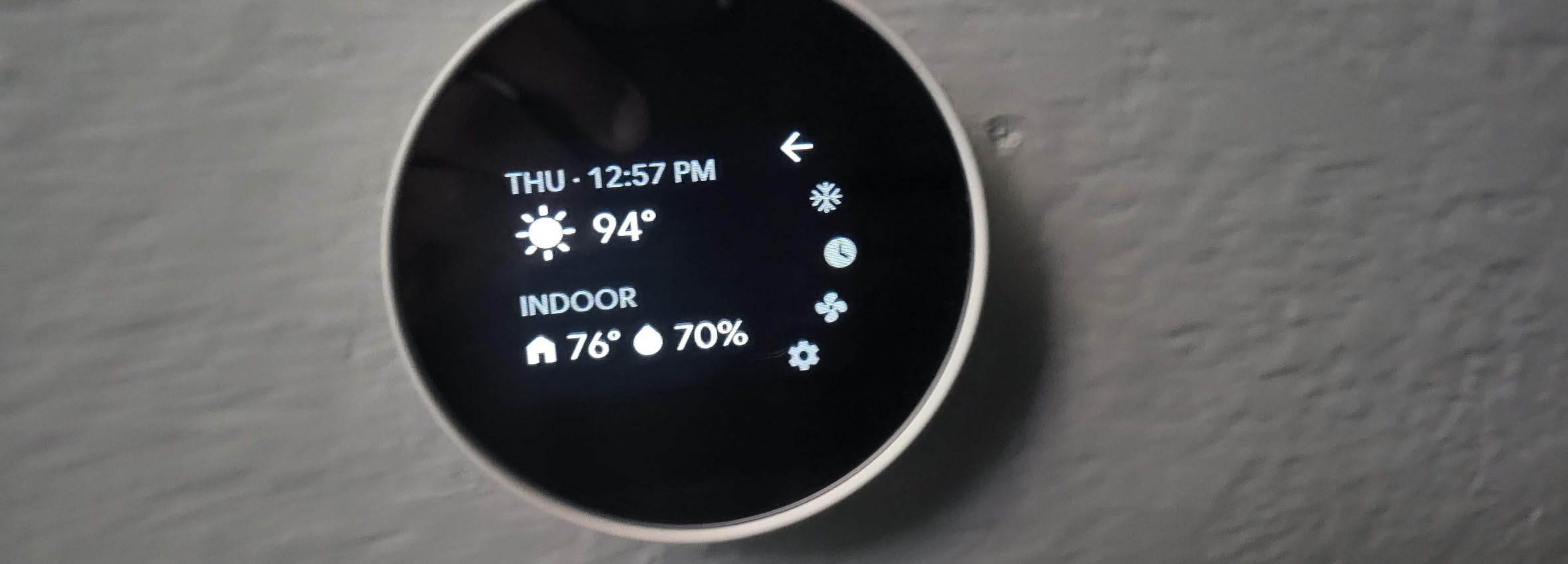
Verify the C wire at the equipment end
Heat pump systems almost always need the C wire or a power accessory. Confirm the wire is connected at the air handler, not just present behind the faceplate, and budget for a power accessory if it is not.
Once powered properly, run both cooling and heating from the app to confirm the reversing valve is switching before you walk away from the setup.
Prepare older household members for the swipe interface
The Nest is a touch-and-swipe device with no physical buttons. Owners with elderly relatives frequently report confusion with the gesture set, and a scheduled or locked temperature range helps.
If a resident will adjust the temperature frequently, a model with physical buttons such as the Sensi ST55 is simply easier to live with day to day.
8. Amazon Smart Thermostat: best for an Alexa-first home with a heat pump
Amazon Smart Thermostat, Save money and energy, Works with Alexa and Ring, C-wire required
C-wire required for installation
Built on Honeywell Home thermostat technology
ENERGY STAR certified
Pros
- Accessible entry point with genuine Wi-Fi scheduling
- Alexa native routines and presence based comfort zones
- Built on Honeywell Home thermostat hardware
- ENERGY STAR certified with rebate guidance emailed after purchase
Cons
- C-wire required so older two-wire systems need a power adapter
- Fewer on-device controls than premium touchscreen models
- Scheduling and advanced settings live mainly in the Alexa app
The Amazon Smart Thermostat runs on Honeywell Home thermostat technology, which matters for a heat pump because the underlying control board is the part that actually manages staging and the reversing valve. It is not a different class of hardware in a different case.
For an Alexa household it is a clean fit. You can create home, away and sleep schedules, connect select Alexa devices to build comfort zones from temperature readings or presence detection, and control multiple devices in one routine. It also works with Ring devices if you already run them.
Amazon emails rebate guidance after purchase based on your energy provider, which is a small but genuinely useful service if your utility offers one. The Alexa app walks you through installation, and the unit is ENERGY STAR certified.
The tradeoff is depth. A C wire is required, and on-device options are fewer than premium touchscreen models offer. Scheduling and advanced settings live mainly in the Alexa app rather than on the thermostat, so you need a phone nearby for most changes.
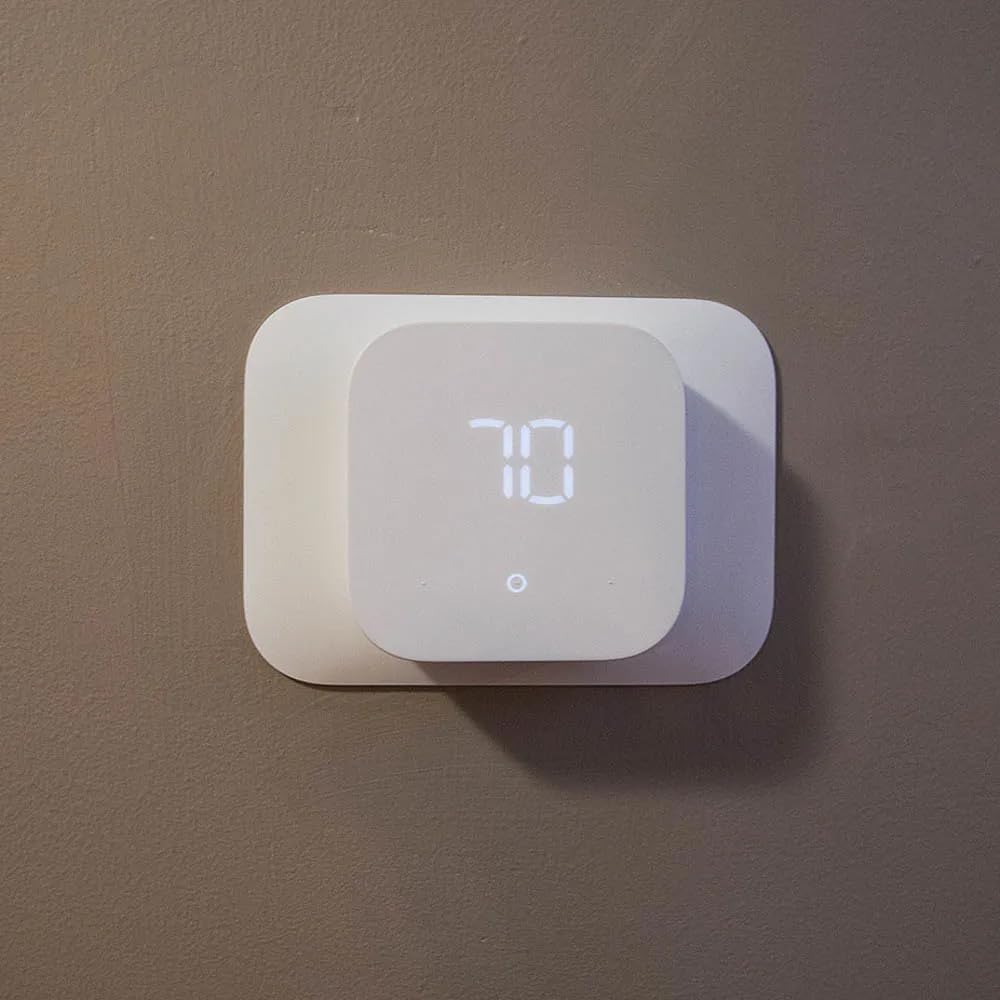
Confirm the C wire situation first
This is a required C wire installation with no battery-only path described for heat pumps. Check your wiring before ordering, and plan for a power adapter if the common wire is missing at the equipment end.
Because the hardware is Honeywell-derived, heat pump stage configuration follows the familiar pattern. Set the equipment type to heat pump during setup so stage two is treated as a stage rather than a second heat source.
Decide if app-only control suits your household
Anyone who mostly adjusts temperature by voice will be happy. Anyone who prefers to tap the thermostat at the hallway will notice how little is available on the device itself.
That trade is the main reason this lands mid-list for heat pumps despite the strong rating volume. It controls a heat pump well, it just does not offer much to touch.
9. Sensi Lite ST25: Most Versatile that still speaks heat pump
Sensi Lite Smart Thermostat, WiFi, Alexa, DIY, Energy Star Certified, ST25
C-wire required for heat pump and heat/cool only systems
Battery or C-wire power source
3 year manufacturer warranty
Pros
- Accessible entry into Wi-Fi thermostats
- Installs in 10 to 15 minutes and worked on a heat pump that other units rejected
- Large legible display with simple touch operation
- App color-codes cooling heating and off states
- Sensi does not sell personal data
Cons
- C-wire required for heat pump and heat/cool only systems
- Repeated Wi-Fi connectivity dropouts reported by several buyers
- Fragile battery compartment springs reported by some owners
- No color display unlike the larger Sensi models
The ST25 is the cheapest way to put real Wi-Fi control on a heat pump, and the ownership pattern in its reviews is telling. Several owners installed it on a heat pump system that another thermostat had rejected, which is exactly the compatibility win you want from a budget pick.
It also carries slow-start temperature ramping, a feature that reduces the compressor short-cycling you get when a system is asked for a large change too quickly. That is a heat pump specific benefit rather than a general smart home nicety.
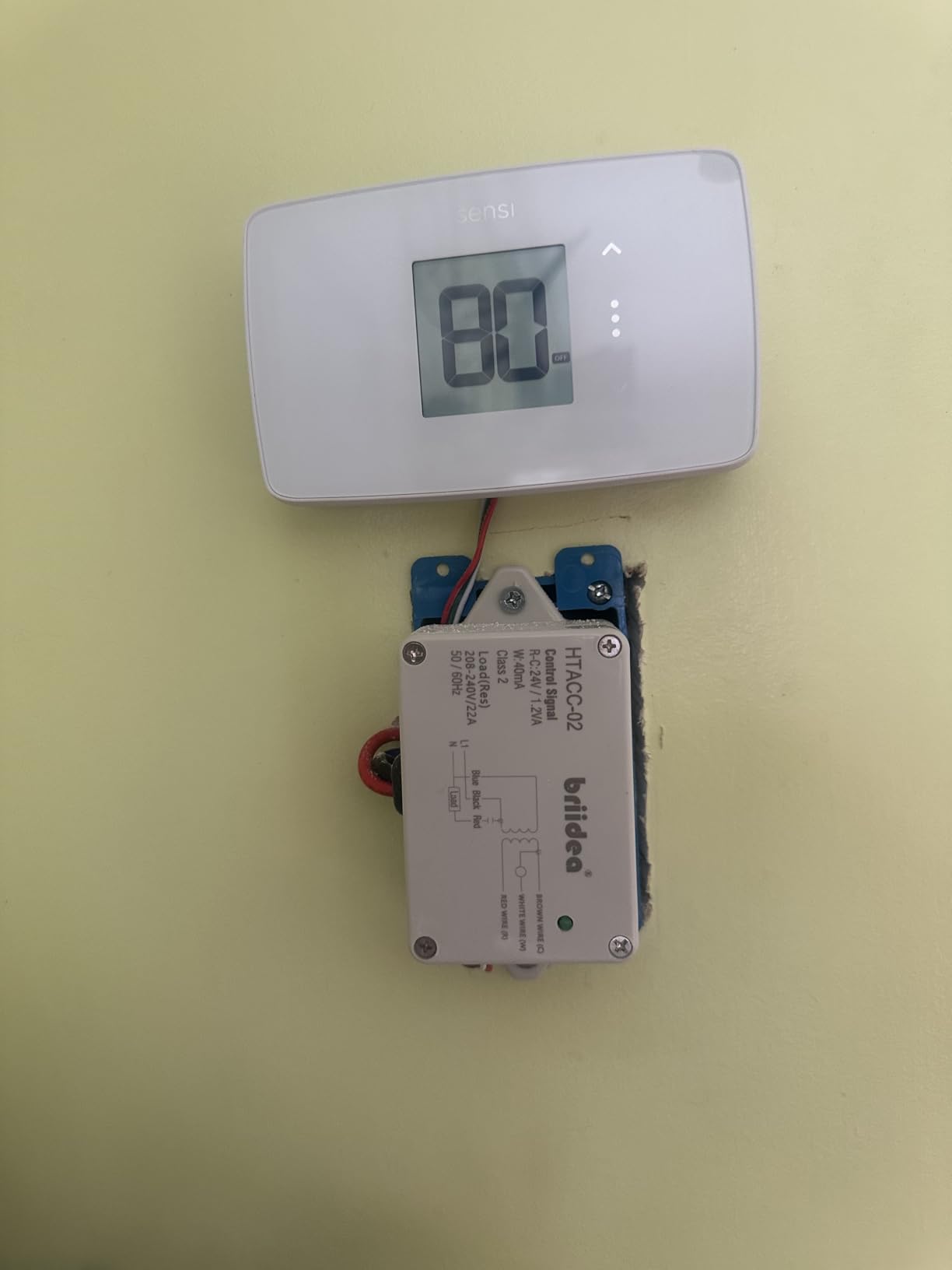
Two things limit it on heat pumps. A C wire is required specifically for heat pump and heat/cool only systems, so this is not the model to reach for when your wiring is bare. The 4.0 rating also comes with the widest spread in this roundup, with a 16 percent one-star share.
Almost all of that negative mass sits in one place: Wi-Fi reliability. Multiple reviewers describe the app losing its connection to the thermostat, and a setup wizard that is not forgiving of mis-entered network details. A fragile battery compartment spring is a smaller recurring complaint.
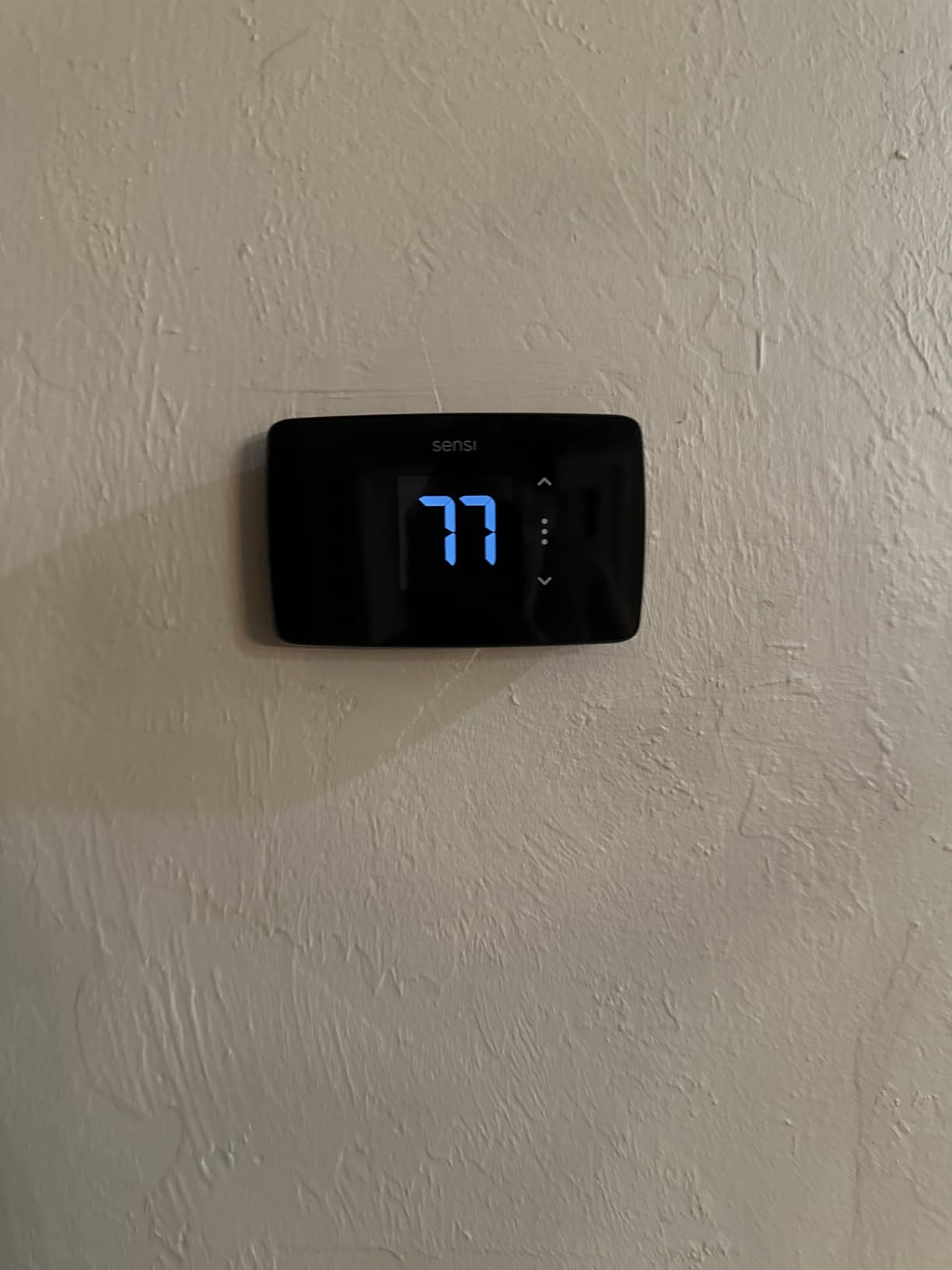
Do not skip the C wire on a heat pump?
The spec sheet is explicit that a common wire is required for heat pump and heat/cool only systems, while it is not required on most other systems. That distinction catches people out when they generalize from a furnace install.
Verify the wire runs all the way to the equipment before you order. If it does not, add a power adapter to the same purchase.
Set up Wi-Fi carefully on the first attempt
Connect the phone to the same network the thermostat will use, and enter credentials exactly as the network spells them. Most failed installations we would predict for this model are setup wizard errors rather than hardware faults.
After setup, run a cooling and a heating cycle from the app. Confirm the reversing valve switches correctly before you remove the old thermostat from the wall.
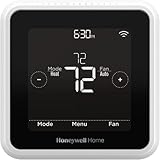
10. Honeywell Home T5 Smart Wi-Fi: best for rebates and demand response
Honeywell Home T5 Smart Wi-Fi Thermostat
Works with air conditioners furnaces and heat pumps
7-day scheduling with geofencing
2 year limited warranty
Pros
- Low cost with genuine Wi-Fi scheduling and geofencing
- Listed as compatible with heat pump systems
- Monthly energy reports and utility rebate eligibility
- Compact square form factor with UWP mount that accepts prior Honeywell wiring
Cons
- C-wire power adapter required if the home lacks one
- No color touchscreen compared with the RTH9600WF
- Will not work with heating-only oil furnaces without a C wire
- Plain LCD interface with limited on-screen detail
The T5 is the pick if your utility pays you to participate. Eligible customers can enroll in the local utility demand response program, and the listing also points users toward checking for rebates and ongoing energy savings incentives. Very few thermostats in this roundup make that process this prominent.
It is listed as compatible with air conditioners, furnaces and heat pumps, and the controls are familiar: seven-day flexible scheduling, geofencing through your phone location, and automatic home and away modes. Reviewers cite reported savings of 8 to 16 percent on heating and cooling from scheduling alone.
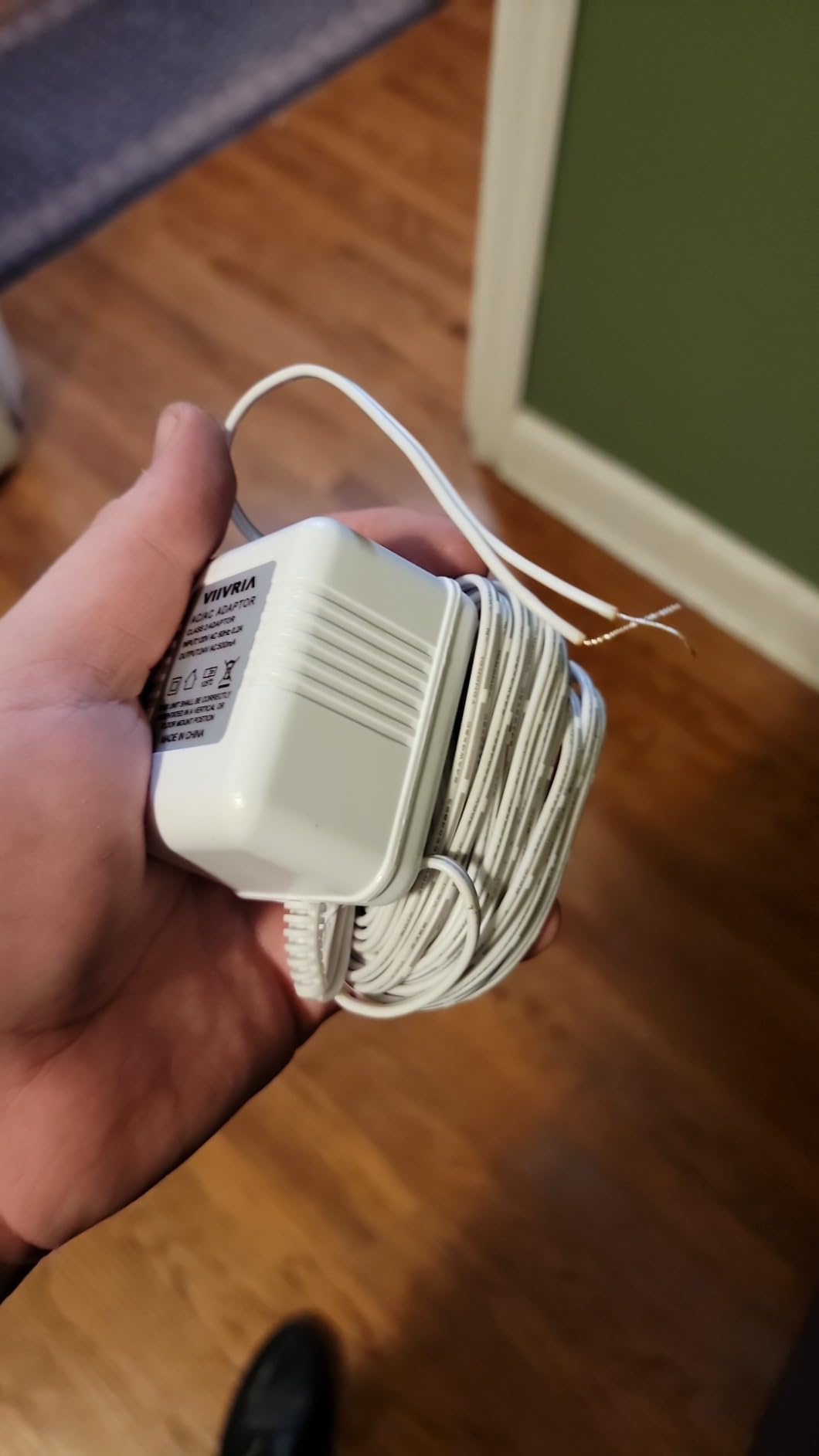
The UWP mounting system is a quiet strength. If you are replacing an older Honeywell, the existing wiring arrangement often carries straight over without reworking the wall, which is where a lot of install time disappears.
It is a monochrome LCD with limited on-screen detail, and a C wire power adapter is required before you buy if your home lacks one. A heating-only oil furnace will not work without a C wire present. The warranty is two years, shorter than the three years on the Sensi units.
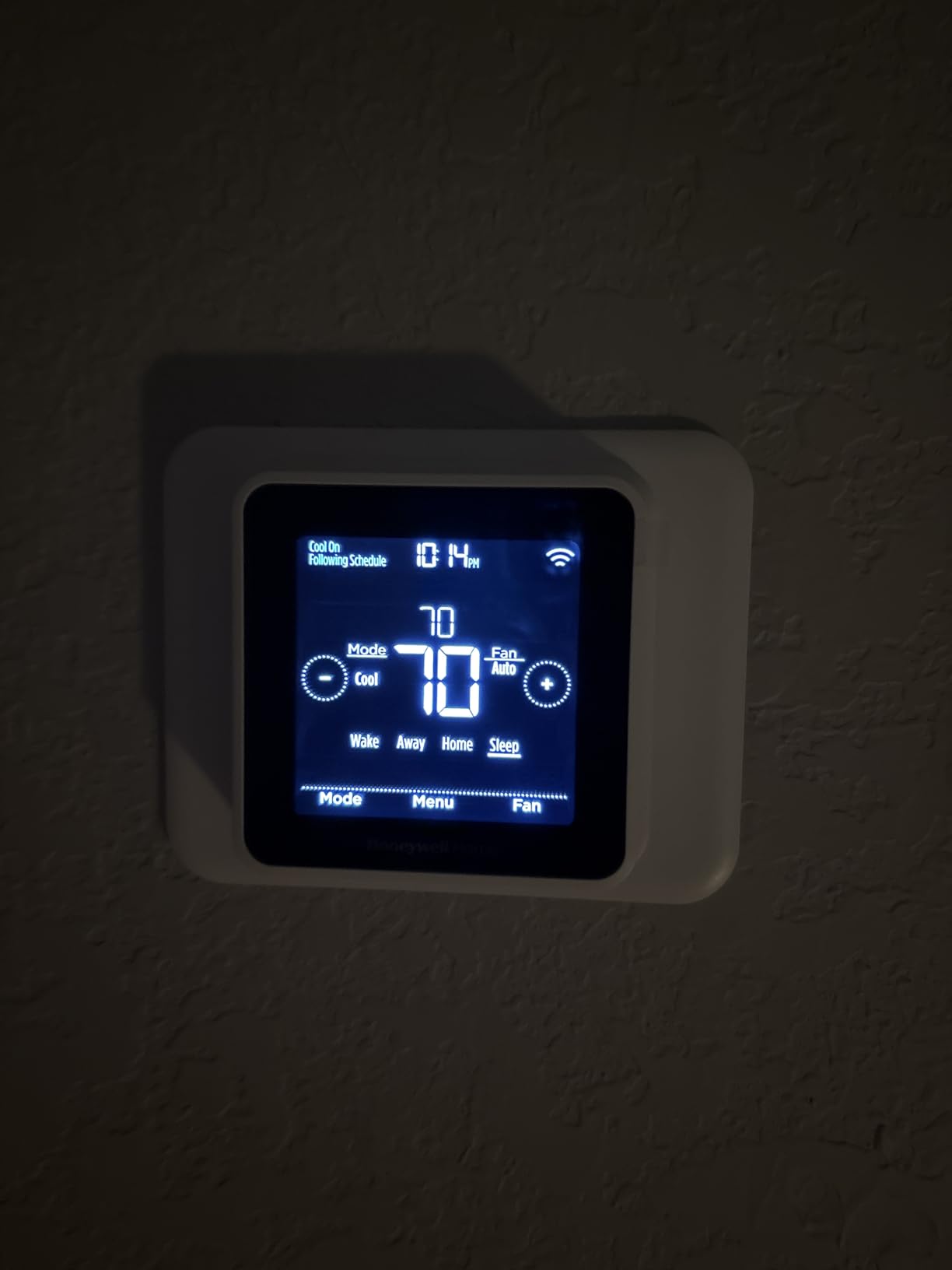
Check your utility program before you choose
Demand response enrollment is the reason to pick this thermostat, so confirm your utility actually runs a program and that this model is on the eligible list. Enrollment value varies widely by region and some programs credit only specific devices.
The monthly energy reports help you document usage during a trial period, which is useful if you are evaluating whether the program pays for your time.
Verify heat pump staging in the setup
Because the screen is plain, the setup menus are where the real work happens. Select heat pump as the system type and confirm your stage count matches the outdoor unit before you walk away.
If your heat pump is multi-stage and you want visible runtime detail on the device itself, the RTH9600WF earlier in this list shows substantially more on screen for the money.
How to Choose a Smart Thermostat for a Heat Pump System?
The right pick depends less on features than on three facts about your equipment: how many heat stages it has, whether it has backup heat and whether you have a common wire. Get those three right and most of the decision is made. Here is how to work through them in order.
You can also read our broader smart thermostat energy savings breakdown for the scheduling side, and if your heat pump also heats water, the heat pump water heater picks cover the tank side of the same efficiency picture.
Confirm the staging your heat pump actually needs
Single-stage systems are the simple case and work with every model in this roundup. Two-stage systems need a controller that can address a second heat stage independently, which is the dividing line between budget and mid-tier picks. Beyond two heat stages, you are in territory where a technician should pick the controller.
Find the stage count on the outdoor unit nameplate before you shop. Then confirm the thermostat you chose documents the same stage configuration in its manual.
Set the O/B reversing valve terminal correctly
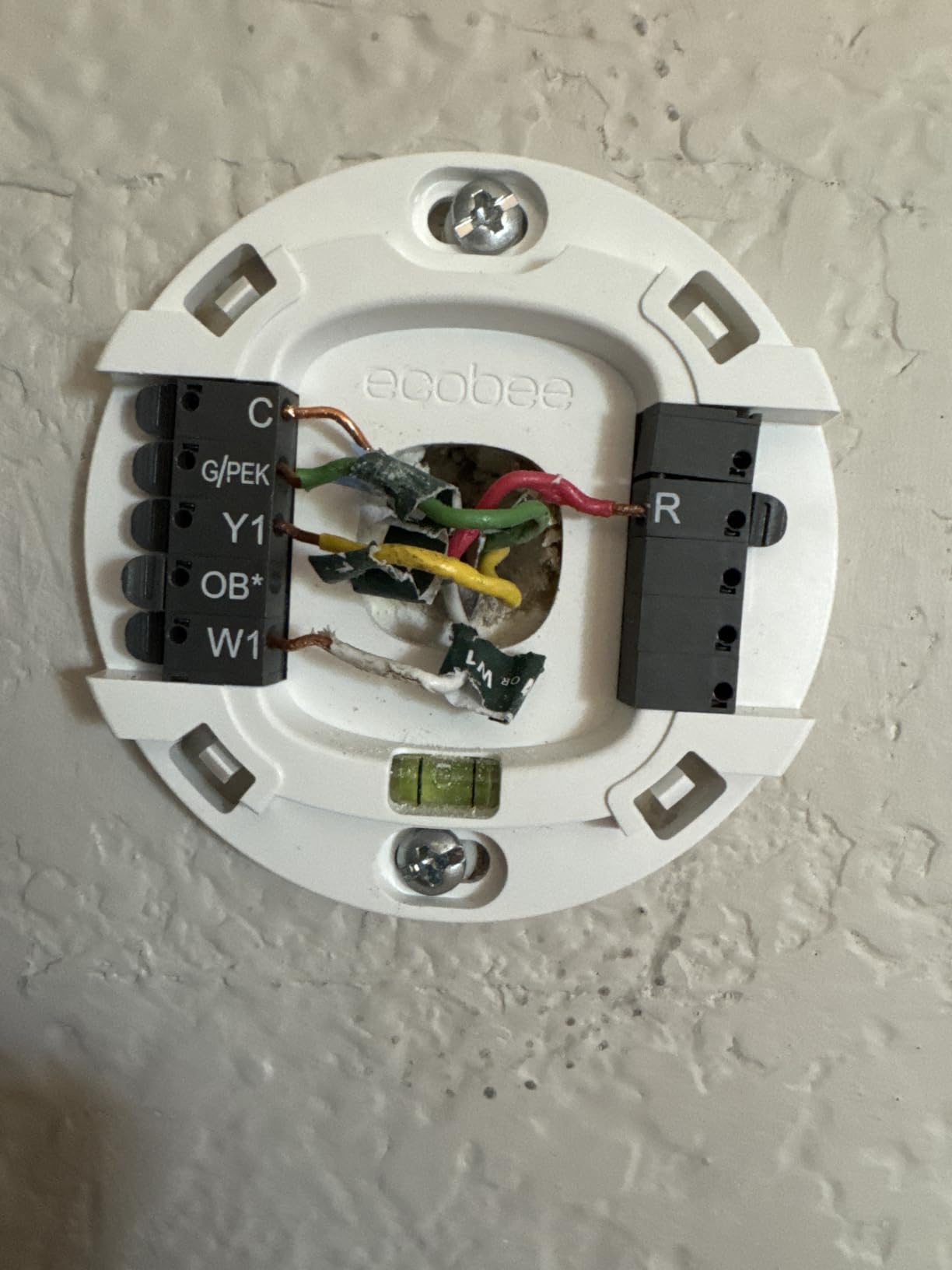
Almost every heat pump wiring error we would predict comes down to this one terminal. The O/B wire energizes the reversing valve that switches the system between heating and cooling, and the thermostat has to know whether your system uses O or B for that job. Set it wrong and the heat pump does the opposite of what you ask.
Three steps verify it:
1. Run the system in cooling mode at the old thermostat and note the O/B wire position. In most single-stage heat pumps, cooling means the O terminal is energized.
2. Install the new thermostat and select your system type as heat pump during setup, which is what exposes the O/B polarity choice.
3. Call for cooling, then heating, and confirm each produces the expected result. If cooling produces heat, the O/B selection is inverted and you switch it in the setup menu.
Decide whether you need a C-wire, PEK or power adapter
The C wire, also called the common wire, delivers continuous 24V power to the thermostat. Without it, a smart thermostat has to power itself from the equipment cycling, which is called power stealing or power harvesting, and that approach can cause relay chatter and short-cycling on some heat pumps.
Three routes exist. Run a proper C wire for the cleanest result, use a manufacturer Power Extender Kit, or use a C wire power adapter. The ecobee Premium includes a Power Extender Kit. The Honeywell T5, the Honeywell RTH9600WF, the Amazon Smart Thermostat, the Sensi Lite ST25 and the Nest Thermostat all need a C wire on a heat pump system specifically.
The most common false positive is a spare wire behind the faceplate that is not connected at the air handler. Confirm it at the equipment end before you plan around it.
Tune the aux heat lockout before you tune anything else
Auxiliary heat means the electric strip heat or backup furnace that supplements the heat pump. It is the most expensive heat your system can produce, and the lockout temperature is the setting that decides when it is allowed to run. Set it wrong in either direction and you either waste money every cold morning or leave the house uncomfortable.
Four rules we would give a homeowner:
1. Find the balance point. Raise the thermostat setpoint a degree at a time in heating mode and note the temperature where the heat pump alone stops keeping up. That is your balance point.
2. Set the lockout a few degrees above the balance point so the heat pump gets first call on every call for heat.
3. In a mild climate, a higher lockout near 50F is often right, because the heat pump carries the load longer. In a cold climate, set it lower so the heat pump does not run at capacity for hours.
4. Watch one full heating cycle after changing it, and check whether stage two heat ran at all. A common owner complaint is a heat pump that calls for backup heat immediately, and that is usually a lockout setting rather than a failing compressor.
Skip the 8-degree setback on a variable-speed system
This is the most important advice in this guide. Variable-speed compressors ramp capacity gradually instead of snapping on at full output. Ask them to recover eight degrees in an hour and they hit maximum capacity, which is the least efficient way to run the equipment.
Use a smaller setback of four to six degrees, allow a longer recovery window in the morning, and lean on occupancy sensors or geofencing rather than a large overnight temperature swing. Where sensors exist, a temperature sensor in the occupied room lets the system run lower overall and recover gently, which improves both comfort and efficiency.
Match sensors, ecosystem and rebate programs
Room sensors matter more on a heat pump than on a furnace, because the equipment responds more sharply to a moving setpoint. If your house has a hot or cold room, buy the thermostat that supports sensors rather than adapting the schedule to the problem.
Then check your ecosystem. Apple HomeKit, Google Home, Alexa and SmartThings support varies across this list, and several brands support more than one. Finally, check your utility. Some programs require demand response enrollment through a specific thermostat, and the Honeywell T5 makes that process the most explicit of any model here.
Frequently Asked Questions
Which smart thermostats are compatible with heat pumps?
All ten models in this roundup support heat pump systems, though the requirements differ. The ecobee Premium and the ecobee Essential list heat pumps explicitly, as do the Nest Learning 4th gen, the Honeywell T5 and the Sensi ST55. Several units, including the Amazon Smart Thermostat, the Sensi Lite ST25 and the Honeywell RTH9600WF, require a C wire specifically on heat pump systems.
What type of thermostat is best for a heat pump?
A thermostat that documents your stage count, exposes an aux heat lockout setting and handles the O/B reversing valve terminal. For a single-stage system, almost any ENERGY STAR Wi-Fi model works. For two-stage systems with electric backup heat, look for explicit 2H/1C heat pump support and a visible lockout menu, which narrows the field considerably.
Can you put a smart thermostat on a heat pump?
Yes, as long as your system is 24V low voltage, which nearly all residential heat pumps are. You need a controller that supports your stage count, and you need to set the O/B polarity correctly so the reversing valve switches direction. If your system has no common wire, use a manufacturer Power Extender Kit or a C wire power adapter.
Does the Sensi thermostat work with a heat pump?
Yes. The Sensi ST55 lists heat pumps, boilers, furnaces and air conditioners among supported equipment, and a C wire is not required in most applications. The smaller Sensi Lite ST25 also supports heat pumps, but it requires a C wire for heat pump and heat/cool only systems specifically.
Why do HVAC technicians dislike Nest thermostats?
The most common complaints are practical rather than ideological. Setup can report a false no power error on systems without a C wire, the 4th gen backplate does not fit 3rd gen mounting locations, and heat pump systems specifically need a C wire or a compatible power accessory. The learning schedule can also drift cooler than the temperature you set.
What are the downsides of smart thermostats on a heat pump?
Most models either require a C wire on a heat pump or rely on power stealing, which can cause relay chatter and short-cycling. A badly configured aux heat lockout can call for expensive backup heat every cold morning. Budget models also add risk from app and Wi-Fi reliability, and a large overnight setback on a variable-speed system forces inefficient high-capacity recovery.
Which thermostat is better, ecobee or Sensi?
Ecobee wins on room-level control, since the Premium includes a SmartSensor and the Essential accepts add-on sensors, plus air quality monitoring and the broadest HVAC compatibility. Sensi wins on install simplicity and physical buttons, a three-year warranty, and a rating of 4.4 across more than 23,000 reviews. Choose Sensi for a single-story home, ecobee for uneven temperatures.
How do I set aux heat lockout temperature?
Find your balance point by raising the setpoint in heating mode until the heat pump alone can no longer hold the temperature. Set the lockout a few degrees above that point so the heat pump takes first call on heat. In mild climates a lockout near 50F works well, while cold climates need a lower setting. Verify by watching one full heating cycle.
Final Verdict: The Best Smart Thermostat for Heat Pumps in 2026
The Sensi ST55 is our choice for the best smart thermostats for heat pumps, and the reason is boring in the best way. It stages a heat pump correctly, it usually does not need a C wire, it installs in about a quarter of an hour with a level built into the base, and it holds a 4.4 rating across more than 23,000 reviews on hardware that also supports boilers and furnaces.
Take the ecobee Smart Thermostat Premium instead if your house has uneven temperatures and a sensor in the right room changes everything. Take the Honeywell RTH9600WF if you want a color screen that shows humidity, outdoor temperature and forecast, and if a C wire is already in place.
Whatever you choose, spend your first hour on the aux heat lockout and the O/B setting rather than on the schedule. Those two configurations decide whether a heat pump runs efficiently or quietly drains money through backup heat all winter. Updated for 2026.