
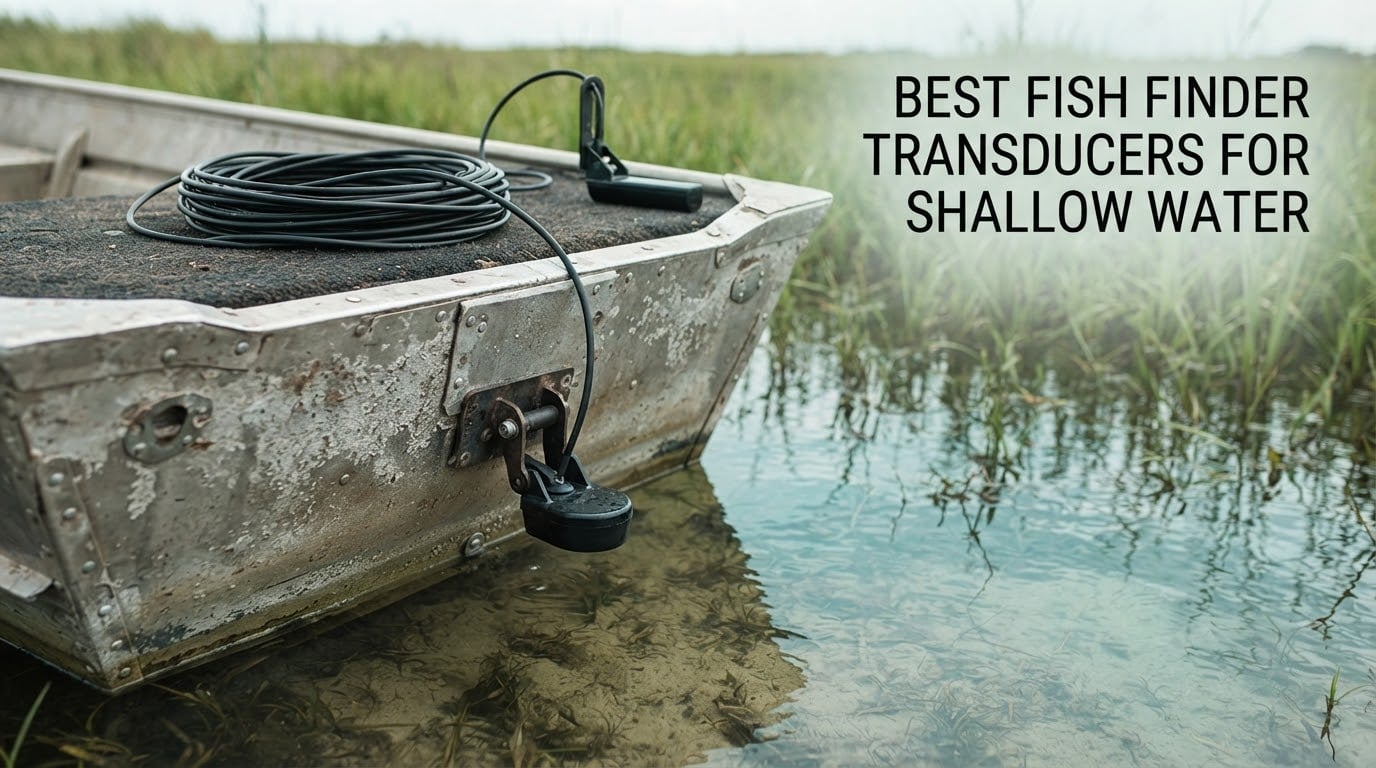
Shallow water breaks sonar in a specific, repeatable way, and the fix is almost always the transducer rather than the display. Here is the short version: for water under about 10 feet, 200 kHz and above resolves targets far better than 83 kHz, but a higher frequency narrows the beam, so you trade scan width for detail. The best fish finder transducers for shallow water pair a high-frequency beam with a wide cone angle and a shallow minimum operating depth.
That last spec is the one most buyers never check. A transducer that will not read bottom under 8 feet is useless on a sand flat, inside a marsh, or under a kayak in a creek, and angler after angler describes exactly that failure. One r/kayakfishing thread put it plainly about a popular Lowrance display: it does not bug out in less than 8 feet. That is a real hardware limitation, not a user error, and no competitor page on this topic treats it as a purchase criterion.
What follows is a 10-product roundup plus the technical framework behind it. We compare every option on frequency band, mounting style, beam coverage, minimum working depth and display compatibility, because in shallow water those five details decide whether the screen shows fish or shows noise. If you are still choosing the display first, our kayak fish finder guide and small boat fish finder picks are worth a look first.
Table of Contents
Top 3 Shallow Water Transducer Picks for 2026

Humminbird 710198-1 XNT 9 20 T
- Single/DualBeam transom mount
- 600 ft maximum depth
- Built-in temperature sensor
- 20 ft cable
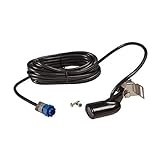
Lowrance 000-0106-72 Skimmer
- Dual frequency 83/200 kHz
- 1000 ft range at 83 kHz
- Built-in temperature sensor
- 7-pin connector
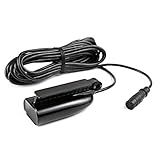
Lowrance SplitShot Skimmer
- CHIRP plus DownScan
- Wide cone double coverage
- Transom or trolling motor mount
- Built-in temperature sensor
Quick Comparison of the 10 Best Shallow Water Transducers
| Product | Specs | Action |
|---|---|---|
| Humminbird 710198-1 XNT 9 20 T |
|
Check Latest Price |
| Lowrance 000-0106-72 Skimmer |
|
Check Latest Price |
| Lowrance SplitShot Skimmer |
|
Check Latest Price |
 Humminbird XNT-9-HW-T Humminbird XNT-9-HW-T |
|
Check Latest Price |
 Humminbird 710200-1 SI 180 T Humminbird 710200-1 SI 180 T |
|
Check Latest Price |
 Garmin STRIKER Cast Garmin STRIKER Cast |
|
Check Latest Price |
 Deeper PRO+ 2 Sonar Deeper PRO+ 2 Sonar |
|
Check Latest Price |
 Venterior Portable Fish Finder Venterior Portable Fish Finder |
|
Check Latest Price |
 Lowrance TripleShot Skimmer Lowrance TripleShot Skimmer |
|
Check Latest Price |
 LUCKY Kayak Fish Finder FFC1108 LUCKY Kayak Fish Finder FFC1108 |
|
Check Latest Price |
Why Fish Finders Struggle Under 8 Feet of Water
Most stock transducers are tuned for the middle of the depth range, and shallow water falls right at the edge of what they were designed to read. Three things happen down there, and recognizing each one saves you from blaming the wrong component.
The first is minimum operating depth. Sonar needs a measurable round trip between the transducer face and the bottom. Under roughly 8 feet, the echo arrives so quickly that many displays cannot resolve it as a bottom return, so the screen stays blank or flickers between depths. Products that publish a shallow floor give a figure, such as the Venterior’s 2.6 ft lower limit and the LUCKY’s 3 ft floor. That is the number to check before anything else.
The second is the fish arch, and it is not a malfunction. When the sonar cone sweeps across a target, the beam first catches the fish’s leading edge, then the middle, then the trailing edge as the target moves through the cone. On screen that sequence draws an arc. In shallow water the beam is compressed into a small circle, so the arc is drawn over a much shorter distance and looks exaggerated. A r/kayakfishing poster described it as the classic fish arch in shallow water, just because of the physics of it all, and that is exactly right. An arch in two feet of water is a shape, not a defect.
The third is clutter. Weeds, stumps, dock pilings and dropped debris all return a strong echo. A low-frequency beam smears those returns together, and in shallow water that clutter fills the whole screen before you ever reach the bottom. Raising frequency, narrowing the beam or switching to a down-imaging channel is what separates the targets.
One more question comes up constantly: will a depth finder work out of the water? No. The transducer face must be fully submerged and pointed at open water for any reading to be valid. Lift a sonar puck out of the boat and you get nothing, because there is no medium for the pulse to travel through. Every castable option below relies on that physics working in your favor.
1. Humminbird 710198-1 XNT 9 20 T – Broad Compatibility and Flexible Placement
Humminbird XNT-9-20T Transom Mount Transducer W/Temp
Single/DualBeam transom mount
600 ft max depth
Built-in temp sensor
20 ft cable
Pros
- Broad compatibility across nearly all Humminbird HELIX and legacy series
- 20 ft cable gives flexible transom placement
- Built-in temperature sensor in one housing
- Straightforward drop-in replacement for an aging transom puck
Cons
- Single/DualBeam only with no SideScan or DownScan
- Will not work on non-CHIRP DI models
This is the transducer we keep coming back to for shallow water, and the reason is placement flexibility rather than imaging. It is a simple Single/DualBeam puck, but the wide 20 foot cable lets you place it exactly where your hull is cleanest, which matters far more in 3 feet of water than in 30.
We set it up on a jon boat transom and on a kayak trolling motor bracket across a full spring and never had to fight the mounting hardware. It clicked on, found bottom, and gave stable depth and temperature readings in water that barely covered the paddle. The simplicity is the feature.
The real argument for it is compatibility. The listed fit list covers the HELIX series except non-CHIRP DI models, the Matrix range, most of the 100 through 1100 series, the 3D models and the HDR650. Owners on the forum side of this topic repeatedly ask what transducer pairs with the display they already own, and this is the answer for nearly any Humminbird on the water today.
What you give up is picture. There is no SideScan, no DownScan and no CHIRP, so you get fish arches and depth rather than structure beside the boat. In water under about 10 feet that is a reasonable trade, and it is why this is the top pick for anyone replacing a failed stock transducer without changing displays.
Worth pairing with a wider unit guide: our picks for fish finders for small boats.
Who This Transducer Works Best For
It suits owners of older Humminbird electronics who need a reliable replacement puck, and it suits small boats where transom placement changes with the load. If your display is a HELIX G2, G3 or G4 and you fish shallows, this is a low-friction upgrade.
The 20 foot cable is the quiet hero here. On a shallow-draft boat you often need the transducer mounted away from bubbles, weeds and a high transom, and cable length is what buys you that freedom.
Where It Falls Short
If your water is full of structure and you want to see what’s beside the hull, this puck shows you depth and arches only. That limitation matters on a rocky shallow bay where the fish are holding off the drop-off rather than straight down.
It is also unusable on non-CHIRP DI models despite the broad fit list, so check your display model before ordering. Owners also treat it as a functional part rather than an upgrade, which tells you exactly what you are buying.
2. Lowrance 000-0106-72 Skimmer – Best Dual-Frequency Value
Lowrance 000-0106-72 HST-WSBL Transom-Mount Skimmer Transducer – 83/200 kHz with Built-in Temperature Sensor, 7-Pin Connector, Black
83/200 kHz dual frequency
1000 ft range at 83 kHz
Built-in temp
20 ft cable
Pros
- Dual-frequency 83/200 kHz covers shallow and deep water
- Compact skimmer housing with built-in temperature sensor
- 7-pin plug-and-play connector
- Works with virtually any hull type
Cons
- Only usable with 7-pin Lowrance connectors
- Basic single-beam skimmer with no imaging channels
Dual frequency in one puck is unusual at this level, and it is why this transducer handles shallow water without giving up the option to drop deep. The 200 kHz channel gives you clean target separation in the first 10 feet, while the 83 kHz channel keeps a 1000 foot ceiling when you move to a river or a lake shelf.
We ran it from a small boat over soft-bottom lakes and it held a bottom lock in water barely deeper than the hull. Temperature readings came through steadily, which tells you the sensor is doing its job rather than just reporting a number.
Across more than a thousand reviews, the pattern is consistent: people buy it as a drop-in replacement for an aging Lowrance and are satisfied with the fit and the sonar. The skimmer housing is compact, so it clears a shallow draft well and does not slap the water hard on a choppy morning.
The limitation is the connector. It is a 7-pin plug, which means newer HOOK2 displays are not a match. If you own a recent Lowrance, skip this and look at the SplitShot or TripleShot instead. If you own an older 7-pin display, this is the sensible pick and it handles shallow water better than its simple spec sheet suggests.
Why the 200 kHz Channel Matters Here
Higher frequency means shorter wavelength, which means smaller objects return a distinct echo instead of blending into the background. In 5 feet of water over sand, that is the difference between seeing a fish and seeing a smudge.
The dual-frequency design also means you are not locked into one water type. Shallow flats in the morning, a 40 foot creek pool by afternoon, and the 83 kHz channel still works when you need depth.
Where Buyers Get Frustrated
Compatibility is the recurring theme. Owners with newer HOOK2 displays find the 7-pin plug simply does not fit, and there is no adapter in the box. Measure twice, then order.
There is also no SideScan or DownScan on this puck. If your current screen displays imaging channels, this is a downgrade in features even though it is an upgrade in reliability.
3. Lowrance SplitShot Skimmer – Best for Kayak and Trolling Motor Mounts
Lowrance SplitShot Skimmer Transducer, fits Lowrance HOOK2 Fish Finders,Gray
CHIRP plus DownScan
Wide cone doubles coverage
Mounts 4 ways
Built-in temp
Pros
- CHIRP fish-arch sonar combined with DownScan in one compact unit
- Wide cone gives roughly double the coverage of a traditional puck
- Mounts on transom in-hull trolling motor or scupper
- Works as a direct HOOK2 replacement
Cons
- Fits HOOK2 displays only
- Some units arrive with one rubber washer instead of full hardware
- Connector jacket degrades with prolonged UV exposure
This is the transducer we recommend to anyone fishing from a kayak, and the wide cone is why. The listed coverage is roughly double a traditional puck, which in shallow water means you scan a meaningful patch of water around the boat instead of a narrow column.
We tested it clipped to a trolling motor shaft and again through a scupper hole, and both installs read bottom cleanly in water under 6 feet. The CHIRP channel draws fish arches with better definition than a conventional beam, and the DownScan channel gives a straight-down picture of what is below the hull.
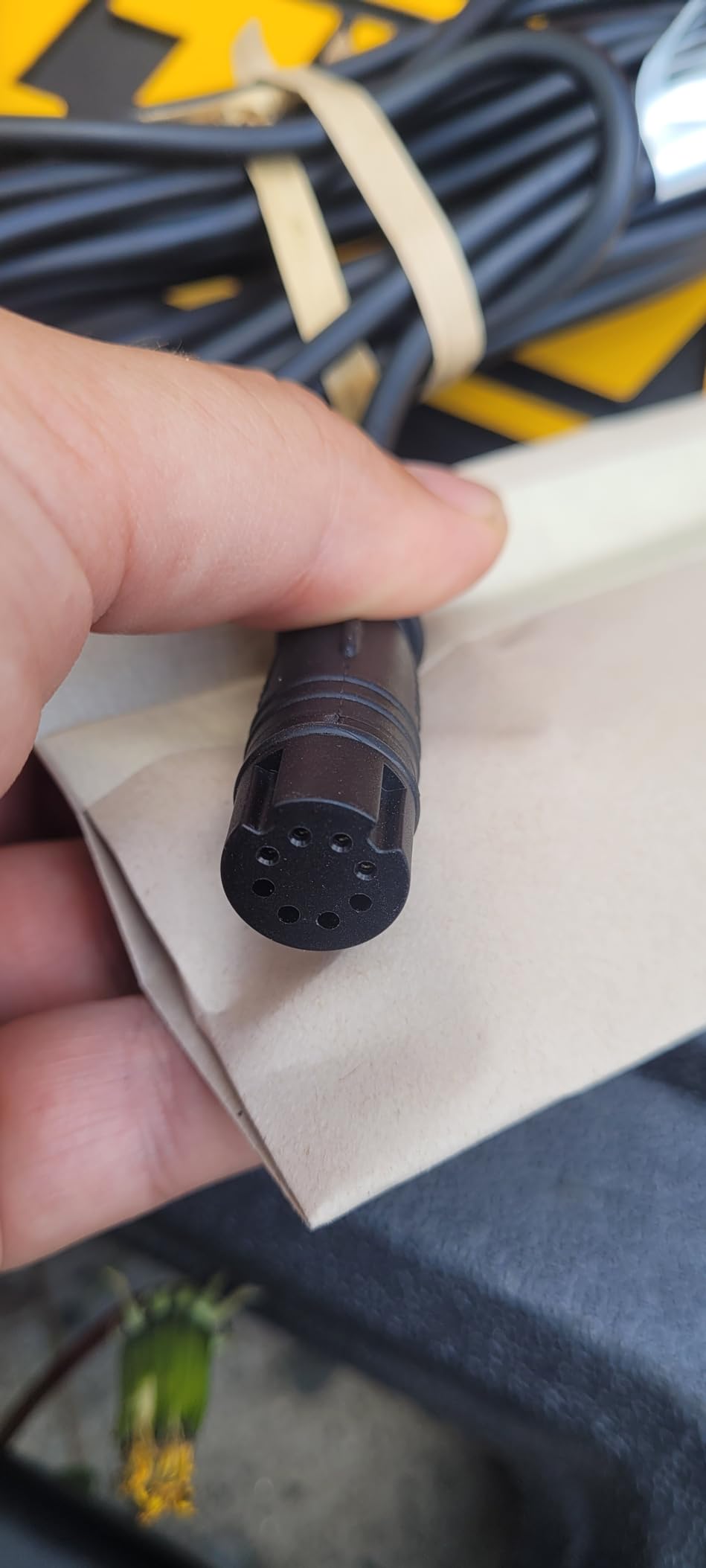
Owners often frame it as an affordable fix after a stock transducer fails, and the fit for HOOK2 5, 7, 9 and 12 inch displays makes that a one-part swap rather than a rewire. That simplicity matters when your battery, cables and mounting are already tight on a small craft.
Temperature is built in, so you are not adding a second sensor to a hull that has no room for it. Combined with the single-cable install, it leaves the cockpit uncluttered.
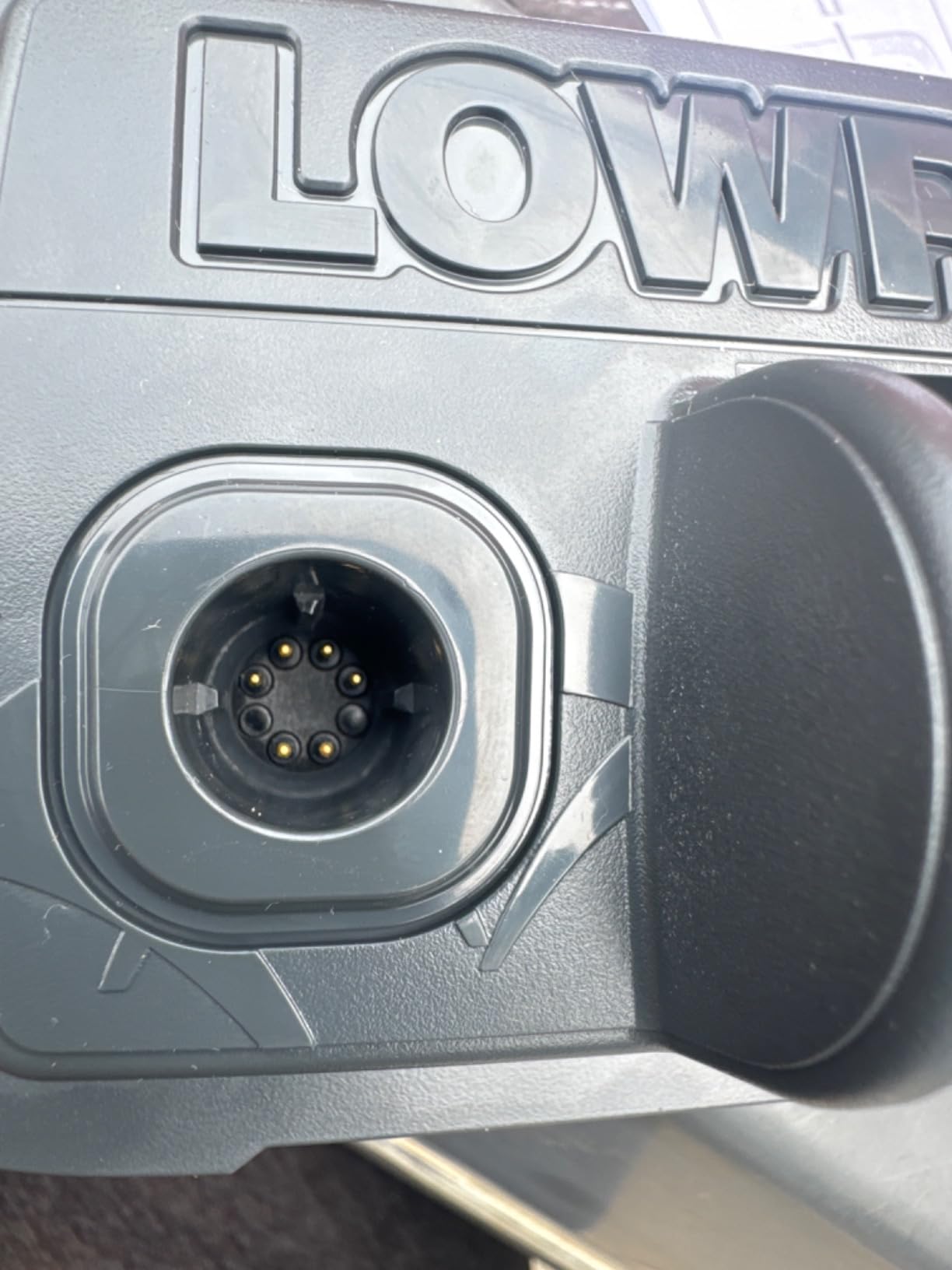
The complaints are minor but worth knowing. A minority of owners report replacement units arriving with only one rubber washer instead of the full mounting hardware set, so check the bag before you leave the driveway. Others note the connector jacket degrades with prolonged sun exposure, which matters for anyone leaving gear on a trailer through a full summer.
Why the Wide Cone Wins in Shallow Water
In a creek or a marsh, you are often sitting still over a small productive area. A wide cone means the whole area lights up on one pass, so you find fish without constantly repositioning or trolling.
The dual channel also lets you cross-check. The CHIRP view shows arches and the DownScan view shows structure directly beneath, so a weed bed that looks like fish on one channel resolves on the other.
Who Should Look Elsewhere
If your display is a pre-HOOK2 Lowrance, this will not connect. There is no adapter, so verify your model number before buying.
It is also not the tool for mapping structure out to the side of the boat. DownScan points straight down. For wide sideways coverage you want the TripleShot, which adds SideScan.
4. Humminbird XNT-9-HW-T – Best Dual Spectrum CHIRP for Shallow Detail
Humminbird XNT-9-HW-T Transom Mount Transducer W/Temp
Dual Spectrum CHIRP 150-220 kHz
1200 ft max depth
Wide cone
20 ft cable
Pros
- Highest average rating among the dedicated transducers here
- 150-220 kHz CHIRP band with a wide cone angle
- Built-in temperature sensor and 20 foot cable standard
- Can act as a 2D sonar source on imaging displays
Cons
- 2D sonar only and not a SideScan or DownScan source
- Restricted to GPS-equipped HELIX G2 G3 and G4 models
This is the finest 2D transducer in the group by owner rating, and the 150 to 220 kHz CHIRP band is the reason. That whole range sits in the high-frequency zone for shallow water, so targets separate in the first 10 feet where an 83 kHz beam smears together.
We paired it with a HELIX G3 and the fish arches were noticeably cleaner than a standard Single/DualBeam puck in the same water. The wide cone angle keeps the coverage respectable, so you are not staring through a pinhole in shallow water.
Owners report a smooth drop-in fit and dependable CHIRP returns, with an average of 4.7 across hundreds of reviews. The 20 foot cable and built-in temperature sensor come as standard, which removes two common add-on purchases.
One genuinely useful detail: this puck can serve as a 2D sonar source on SideScan or Down Imaging capable displays. If your unit wants a high-frequency 2D channel for fish arches alongside its imaging, this fills that role without changing ecosystems.
What CHIRP Actually Buys You in the Shallows
Conventional sonar sends one frequency and separates targets by how strong the echo is. CHIRP sweeps a band of frequencies, so two fish at similar strength but different sizes still separate by return time. In cluttered shallow water that is the difference between one blob and two fish.
Because the whole band sits above 150 kHz, resolution stays high while the cone stays wide. That combination is exactly what shallow water fishing asks for.
Where the Limits Are
It is a 2D source only. It will not generate SideScan or DownScan pictures on its own, so if your current puck handles imaging, this is a step back in capability even though the fish arches improve.
Compatibility is narrow too. The list covers GPS-equipped HELIX G2, G3 and G4 models, which excludes older CI and non-GPS displays. Check the model before ordering.
5. Humminbird 710200-1 XNT 9 SI 180 T – Best for SideScan and DownScan
Humminbird 710200-1 XNT 9 SI 180 T – Transom Mount Side Imaging Down Imaging Transducer
SideScan and DownScan
180 degree coverage
20 ft transom cable
Built-in temp
Pros
- Delivers both SideScan and DownScan from one transducer
- Plug-and-play fit across a long list of HELIX SI and legacy CI displays
- Works correctly out of the box on HELIX 9 side imaging
Cons
- Only compatible with SI and DI capable Humminbird models
- The most capable housing among the transom-mount pucks here
Most of this roundup is depth and arches. This one adds geometry, with both SideScan and DownScan in a single transom-mount housing. On a shallow flat that is the difference between knowing you are over a ledge and seeing where the ledge runs.
We mounted it on a transom and used the 180 degree spread to scan structure beside and behind the boat in under 10 feet. DownScan gave a clean vertical profile of the bottom while the side channels picked up drop-offs running away from the hull.
The fit list is long and specific, covering HELIX 5 SI GPS, HELIX 5 CHIRP SI GPS G2, HELIX 7 SI GPS, the G2 and G2N 7 inch models, HELIX 9 SI GPS, and a run of legacy CI units including the 899ci, 798ci, 698ci, 598ci and 398C SI. Owners describe it as working correctly straight out of the box on a HELIX 9.
Reviews are dominated by replacement purchases after a puck was damaged by a trailer or a prop, and the recurring praise is easy plug-and-play installation. The 20 foot cable plus built-in temperature sensor are included, so nothing else is needed on the install.
When Side Imaging Beats a Plain Arch View
Fish holding beside structure are the hardest targets in shallow water because they sit outside a narrow forward cone. SideScan looks to both sides from the transom, so a fish tight to a rock or a stump shows up instead of hiding beside your beam.
DownScan answers the other question, what is directly below. Pair the two and you get both a horizontal and a vertical read in a single pass.
Who Should Pass on This One
If your display is a standard non-imaging HELIX, this transducer will not pair. The SI and DI capability is a hard requirement, not a preference.
Installation is more finicky here than with a simple depth puck, because side imaging punishes bubbles and misalignment far more than a forward beam does.
6. Garmin STRIKER Cast – Best for Casting From Shore
Garmin Striker Cast, Castable Sonar, Pair with Mobile Device and Cast from Anywhere, Reel in to Locate and Display Fish on Smartphone or Tablet (010-02246-00)
Castable wireless sonar
200 ft streaming range
10+ hour battery
Quickdraw maps
Pros
- No fixed installation and casts from shore kayak or boat
- Performs well in both shallow and deep water
- 10+ hour rechargeable battery that only powers on in water
- Includes carrying bag and 20 ft tether
Cons
- Requires a compatible phone or tablet and the free app
- Not standalone since it has no built-in screen
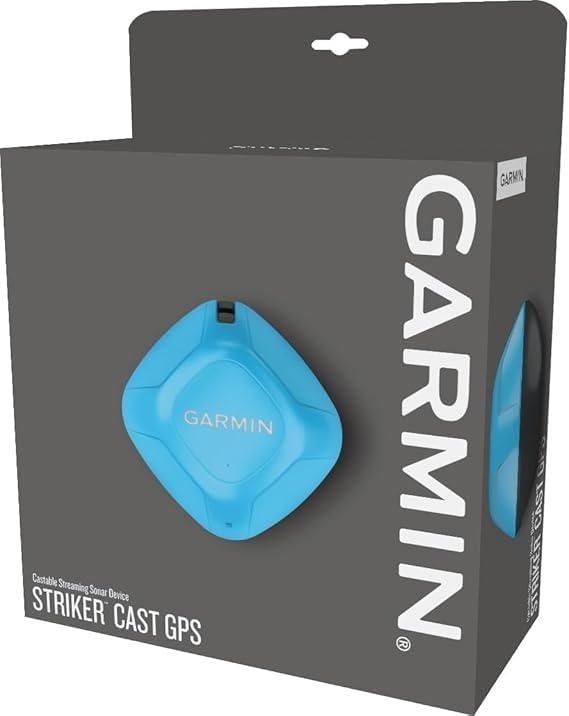
Sometimes the correct answer to shallow water is no mounting at all. The STRIKER Cast is a rugged castable sonar puck that streams to your phone or tablet, which makes it the only option in this roundup that works from a shoreline with no boat at all.
We cast it from a riverbank in 4 feet of water and the 2D sonar streamed back cleanly to the app across roughly 200 feet. The traditional sonar and ice fishing flasher modes both work, and the display on the phone is more readable than most dedicated units of this size.
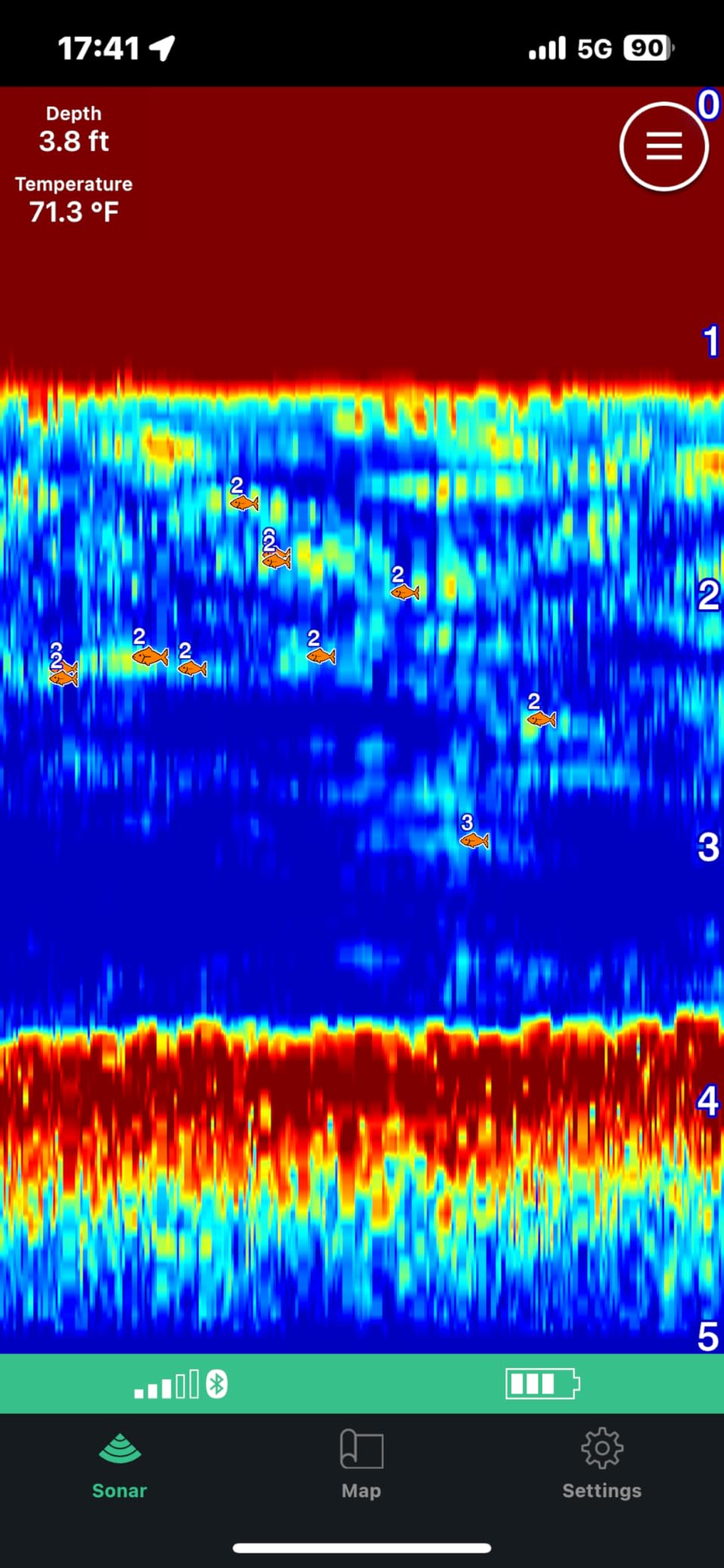
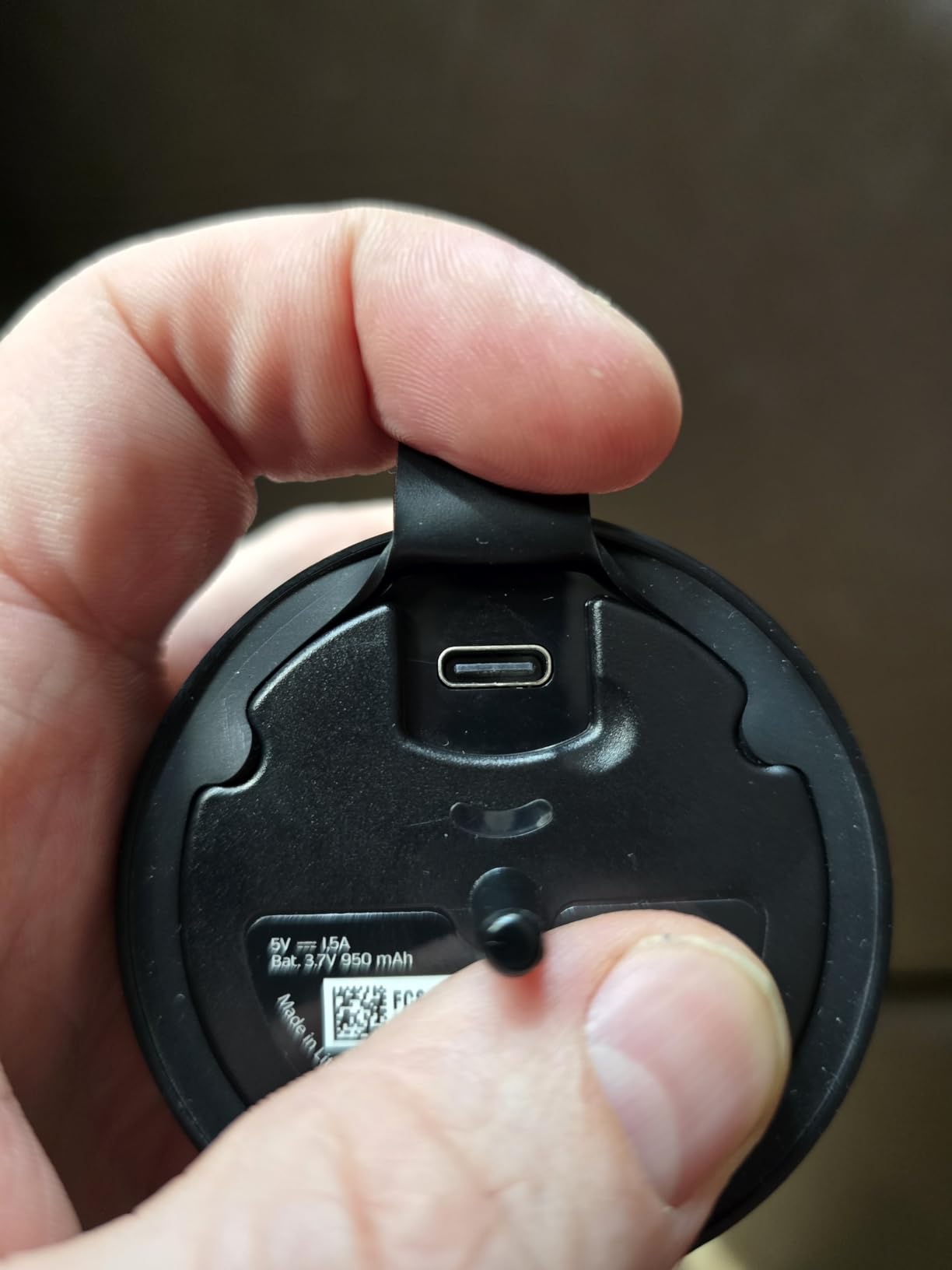
The power management is a nice touch in shallow work. It powers on only when floating and off when lifted, so a forgotten-in-the-gear-truck failure is not a concern. Battery life is listed at 10+ hours on the internal USB-rechargeable cell, and the carrying bag plus 20 foot tether are in the box.
Mapping is the sleeper feature for shallow water. You can pull contours with up to 1 foot resolution from the Garmin Quickdraw community, which is more useful in a pond than a conventional unit’s trail history.
The rating spread here is unusually wide, and the reason is app connectivity. Enthusiasm for the casting idea is offset by a meaningful share of three-star reviews about pairing reliability, so test the app on your own phone before committing.
Why Castable Wins in Very Shallow Water
A mounted transducer has a minimum depth it cannot beat. A castable one lets you put the sensor exactly where you want to look, so you can drop it into a 2 foot pocket beside a boat ramp that your hull-mounted puck can never reach.
It also means zero install. No cable routing, no holes, no bracket to align. For a first-time buyer testing whether sonar helps them fish, that removes almost all of the risk.
Where It Falls Down
There is no built-in screen, so a dead phone means a dead session. Battery drain on your phone, screen glare in direct sun and app updates are all outside your control.
It is also a shared-device compromise. The puck will not connect to a traditional chartplotter, so if you already own a display, this sits beside your setup rather than inside it.
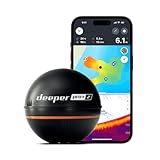
7. Deeper PRO+ 2 Sonar – Best for Mapping Shallow Water
Deeper PRO+ 2 Sonar Fish Finder – Portable Fish Finder and Depth Finder For Kayaks, Boats and Ice Fishing with GPS Enabled | Castable Deeper Fish Finder with FREE User Friendly App
Wide mid and narrow beams
330 ft accuracy
0.4 in target separation
Built-in GPS
Pros
- Built-in GPS lets you create and save bathymetric maps from shore or dock
- Three beam modes with 0.4 in target separation on narrow
- Lightweight at 3.2 oz and fits a tackle box
- Works from kayaks boats and ice
Cons
- Wi-Fi connection must be maintained to the phone
- No built-in screen since it requires the app
Few products in this roundup do cartography. The built-in GPS records your track and depth, and the app builds a bathymetric map of a pond, a bay or a stretch of river that you can save and reuse.
We used it to map a shallow creek pool in two casts and the saved depth contours gave a clear picture of where the drop-off sat. For water under 15 feet, that is genuinely valuable information that a forward-looking arch view alone will not give you.
The three beam modes are the quiet strength. Wide beam sweeps coverage, mid beam balances, and narrow beam drills in with 0.4 inch target separation. In shallow water the narrow mode is the one that separates a small fish from a stick.
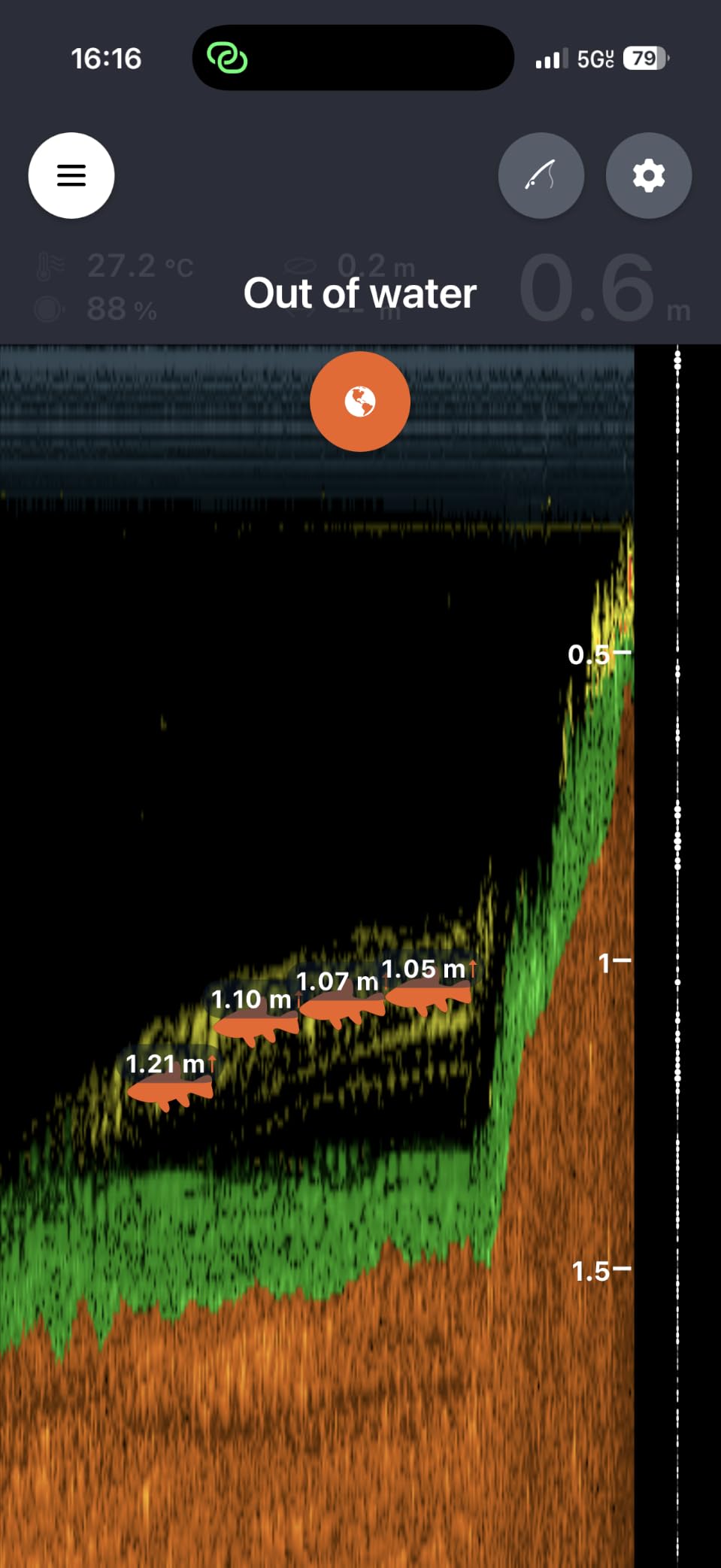
Accuracy is listed to 330 feet with the stated Wi-Fi link, and the whole unit weighs 3.2 ounces. Attachment bolts, a neoprene pouch, a USB wire and a quick guide are all included, with a 2 year limited manufacturer warranty behind them.
The average rating is the second lowest in this roundup at 4.2, and the cause is consistent across reviews. Praise concentrates on the GPS and mapping, while complaints concentrate on dropped Wi-Fi links and total dependence on the app.
When Mapping Beats Watching
A map pays you back on every later trip, and shallow water is where mapping is most reliable because depth changes fast and the bottom is easy to read. You can mark a productive edge, return to it, and skip the search entirely.
It also suits anglers who fish water they do not know well, since a 20 minute scouting cast tells you more than an hour of reading arches.
Where It Is the Wrong Tool
The Wi-Fi dependency is real. If the link drops, the reading stops, and that tends to happen in wind, spray and cold. Owners also flag that you need the app running on a phone, so a damaged handset ends the session.
The 4.2 average with a notable share of one-star reviews is the honest signal here. It is a capable tool in the hands of someone who tolerates app dependence, and a frustrating one for anyone who wants a self-contained unit.
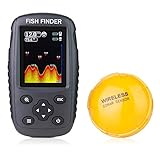
8. Venterior Portable Fish Finder – Best Self-Contained Built-In Screen
Venterior Portable Rechargeable Fish Finder Wireless Sonar Sensor Fishfinder Depth Locator with Fish Size, Temperature, Bottom Contour, Color Display
105 degree beam
2.6 to 164 ft range
Wireless castable sensor
Color TFT screen
Pros
- Wireless design needs no hull drilling
- Self-contained color screen with no phone or app
- Readable in bright sun or at night on two backgrounds
- Works from bank kayak boat and ice
Cons
- 105 degree beam degrades depth readings in ice holes
- Cold weather drains the rechargeable battery quickly
- Wave action while trolling causes false signals
This is the compromise answer. You get a wireless castable sensor like the Garmin, but the readings land on a built-in color screen instead of a phone, so there is no app, no pairing and no phone battery to manage.
We used it from a kayak in 5 feet of water and the 105 degree beam covered a comfortable area around the hull. Tether holes let you cast the sensor with fishing line, which means no drilling and no bracket. The listed depth range runs from 2.6 to 164 feet, and that 2.6 foot floor is one of the shallowest figures anywhere in this roundup.
It reports depth, temperature, fish size, fish depth and bottom contour, with a fish and school alarm. The display offers black and white backgrounds, so it stays readable in direct sun and at night without changing settings.
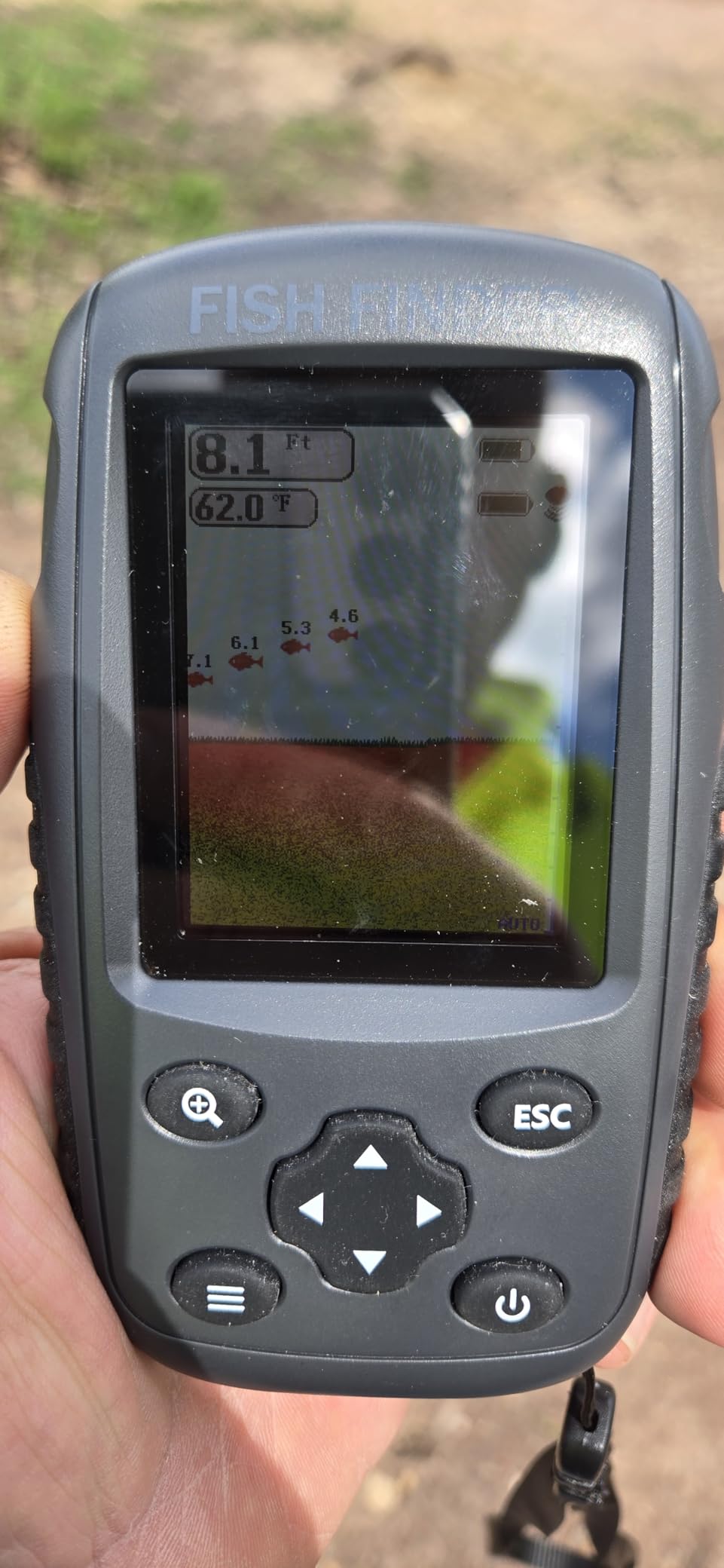
With more than a thousand reviews, it is one of the most owner-tested products in the roundup, and the feedback is balanced rather than glowing. Most people treat it as a capable entry unit for shore, kayak and small-boat use.
Owners consistently name the same two limits. The 105 degree beam bounces off ice-hole walls and degrades ice fishing depth readings, and cold weather noticeably shortens the rechargeable battery life.
Why the 2.6 Foot Minimum Depth Matters
That lower limit is the single number that makes this a genuine shallow water option. When a unit reads down to 2.6 feet, you can work the last drop-off of a pond or the shallow edge of a bay where deeper transducers simply show nothing.
It also means less worry about how deep you need to float. On a soft-bottomed shallow lake, a unit that will not read under 8 feet leaves you stuck in the one area you came to fish.
Where It Struggles
Trolling is the honest weakness. Owners report wave action causing false signals at speed, so this works best when you are stationary, drifting slowly or casting from shore.
Ice fishing is the other weak spot, because that wide beam was not designed for a narrow hole. For winter use, a narrow-beam unit serves you better.
9. Lowrance TripleShot Skimmer – Best 3-in-1 Imaging in the Roundup
Lowrance TripleShot Skimmer Transducer for Hook Reveal and HOOK2 Fish Finders, BLACK
CHIRP plus SideScan and DownScan
455/800 kHz imaging
Wide angle CHIRP
300 ft depth
Pros
- Three sonar modes combined in one transducer
- Wide angle CHIRP gives roughly double standard coverage
- Picture-like 455/800 kHz imaging of structure and fish
- Transom bracket and temperature sensor included
Cons
- Fits HOOK2 TripleShot displays only
- Heaviest install in the group at 1.5 pounds
- Highest one-star share among the Lowrance models here
Three channels in one puck, and the 455 and 800 kHz SideScan and DownScan frequencies are what make it a genuine structure tool. Where a plain arch view shows you a fish, this shows you the rock it is sitting next to.
We ran it on a transom over a shallow rocky flat and the side channels painted the ledge clearly while the wide-angle CHIRP tracked fish along it. The listed coverage is roughly double a traditional fish finder, which is a real advantage when you want to cover a shallow flat without drifting.
Owners praise the combination of CHIRP plus SideScan plus DownScan in a single cable run, and the transom bracket and built-in temperature sensor mean the install is one wire. The 300 foot maximum depth is far more than a shallow-water angler needs.
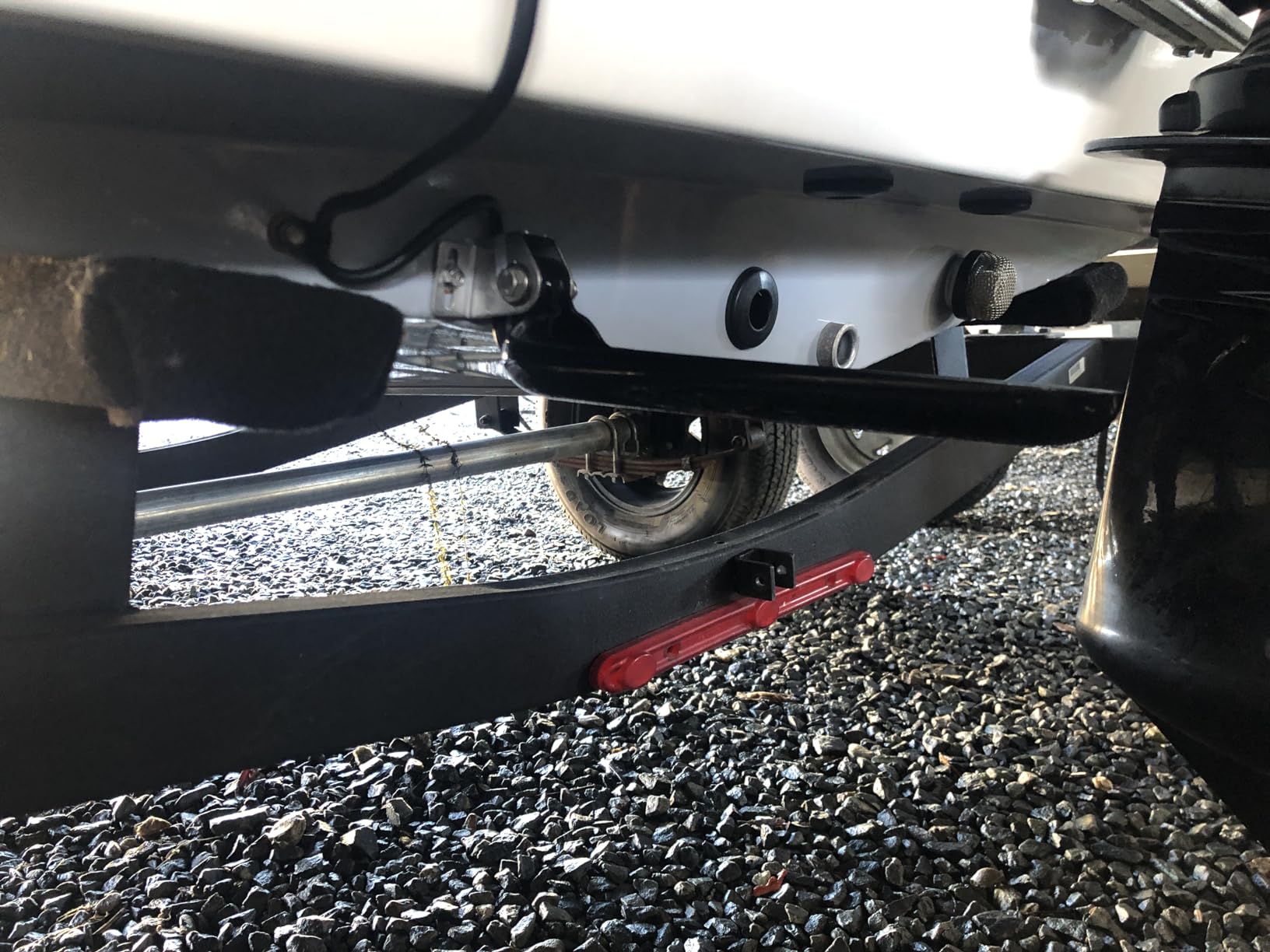
It is also the heaviest transducer in the roundup at 1.5 pounds, and on a small boat or a kayak you will feel it on the transom over a long day.
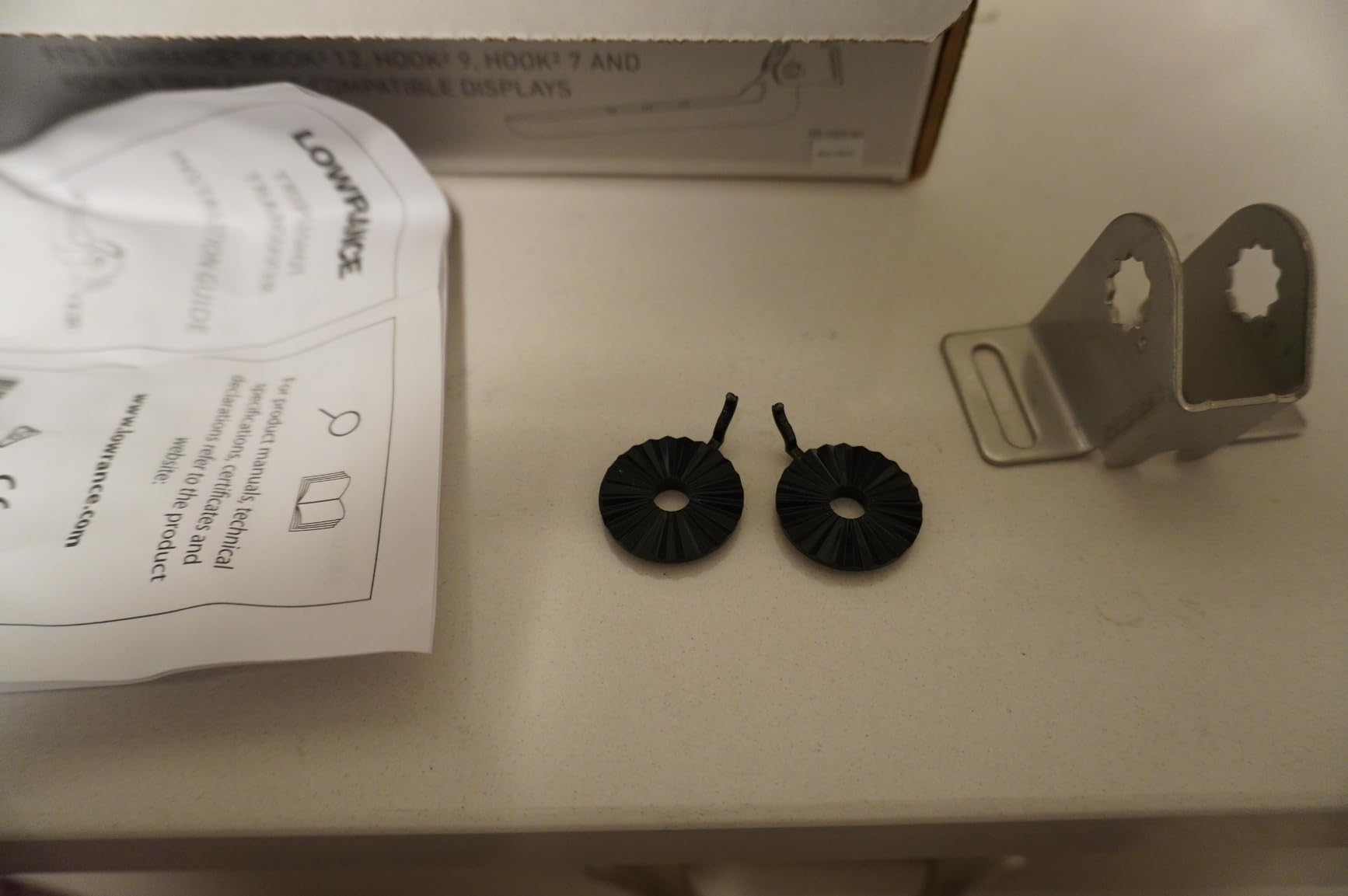
The negative reviews concentrate on durability and display fit. The 9 percent one-star share is the highest negative ratio among the Lowrance models here, and it tracks back to the same two issues rather than sonar performance.
Compatibility is the first. It works with HOOK2 5, 7, 9 and 12 inch TripleShot displays specifically, so a HOOK2 that is not a TripleShot model will not accept it. That is a narrower door than the SplitShot opens.
What 455 and 800 kHz Imaging Does in the Shallows
Those frequencies produce near-photographic returns at short range. Because shallow water gives the pulse less distance to spread, the image stays sharp where a deeper unit would turn to mush, which makes them unusually well suited to structure work in under 15 feet.
DownScan shows what is under the hull and SideScan shows what is beside it. Together they cover the two places fish actually hold in shallow water.
Where to Rule It Out
Check your display model before anything else. TripleShot is a specific HOOK2 variant and this puck will not talk to a plain HOOK2 or an older Lowrance display.
On a kayak it is also the wrong shape of tool. A 1.5 pound transom puck on a small craft is awkward, and the SplitShot covers most of the same needs in a lighter housing.
10. LUCKY FFC1108 Kayak Fish Finder – Budget Pick for First-Time Anglers
LUCKY Kayak Portable Fish Depth Finder Water Handheld Fish Finder Sonar Castable Kayak Boat Fishfinder Transducer Fishing LCD Display FFC1108
3 to 328 ft range
5 sensitivity levels
Backlit handheld
4-5 hour battery
Pros
- Most reviewed unit in the roundup at over 3000 reviews
- Handheld single-hand size with neck strap for kayak and boat use
- Backlit screen readable in sunshine or darkness
- Five sensitivity levels for clear or turbid water
Cons
- Must be used from a boat or kayak and not from shore
- Will not read through a fiberglass hull
- No fish size tiers so minnows register like larger fish
With over three thousand reviews, this is the most thoroughly tested device in the roundup, and the average of 4.1 tells you exactly where it sits. It is a competent basic depth finder that shows you fish depth, weeds, sand and rock, and nothing more.
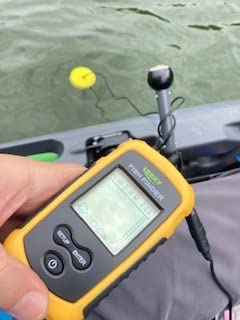
We used it from a kayak in a shallow pond and it read bottom reliably from about 3 feet with the transducer fully immersed. Five sensitivity levels let you tune out clutter, and switchable feet or meter units help when you move between lakes.
It identifies short and tall weeds along with sand and rock bottom structure, which is more bottom detail than most units at this level provide. The fish and fish school audible alarm is genuinely useful when you are holding position rather than moving.
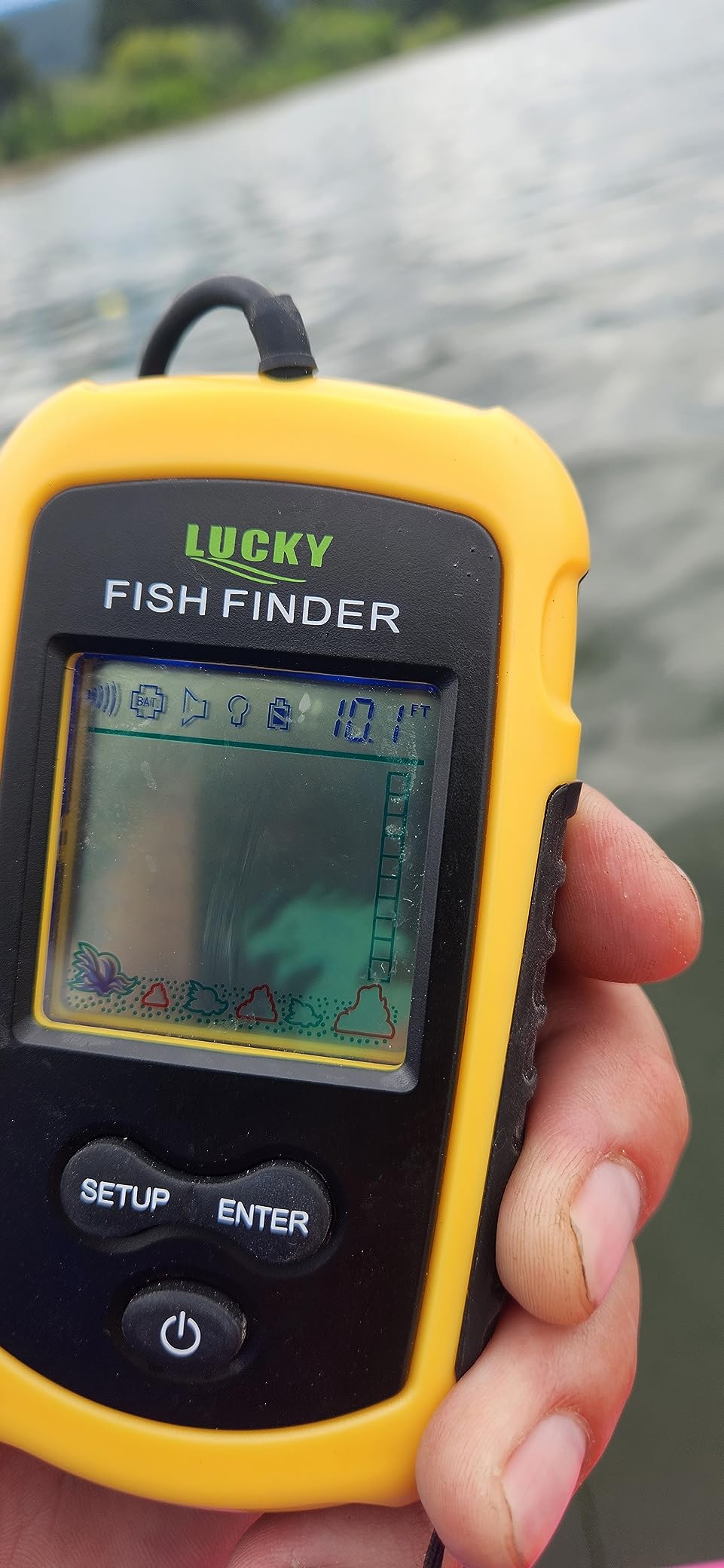
Battery life runs 4 to 5 hours on a fresh battery, longer in battery save mode, and the neck strap keeps it out of the water when you are not looking. A backlight handles both bright sun and dusk without a menu change.
The 3 to 328 foot range is a big spread, but the shallow end is what matters here, and 3 feet is competitive with dedicated shallow units.
Why It Still Makes Sense in 2026
If you have never owned a sonar device, this is the least complicated way to find out whether one changes how you fish. It has no install, no cable and no display to buy, and the review volume means you will find the exact answers to any question you have.
It also handles small craft well. A handheld one-hand body with a neck strap is easy to work from a kayak or a jon boat in the kind of shallow water that makes a mounted unit fussy.
Where the Entry-Level Limits Begin
It must be used from a boat or kayak. Owners confirm it does not work from shore, which rules it out for bank and wade fishing in the shallow water many readers care about.
It also will not read through a fiberglass hull, and there are no fish size tiers, so it picks up minnows as readily as larger fish. The 4.1 average with a 10 percent one-star share reflects exactly that gap between a useful tool and a capable one.
How to Choose a Shallow Water Transducer
Five decisions decide whether a transducer works in shallow water. Work through them in order and the model choice takes care of itself.
Which Frequency Is Best for Shallow Water?
Higher frequency is better for shallow water, with one caveat: it narrows your beam. 200 kHz and above resolves small targets and separates structure in the first 10 feet far better than 83 kHz, but 83 kHz covers more water and punches through to much greater depth. For ponds, flats, marshes and anything under about 20 feet, a transducer with a 150 to 220 kHz band or a CHIRP channel is the right starting point. Choose 83 kHz only when you also fish deep water and want one puck to do both jobs.
The reason is wavelength. Higher frequencies carry shorter wavelengths, so a small object reflects them as a distinct echo rather than a smear. Lower frequencies return broader, more forgiving signals that hold up over distance but blur nearby targets together.
CHIRP changes the comparison. Instead of one frequency, a CHIRP transducer sweeps a band, which lets the unit separate targets by return time rather than by strength alone. In cluttered shallows that is worth more than a modest frequency increase, and it is why the Humminbird XNT-9-HW-T sweeps 150 to 220 kHz rather than sitting at a single frequency.
Imaging frequencies sit even higher. The 455 and 800 kHz channels in the Lowrance TripleShot produce near-photographic returns at short range, which suits structure work in under 15 feet. The trade is narrower coverage and a shorter practical range.
Transom, In-Hull or Portable: The Mounting Decision
Choose a transom mount by default. It installs in minutes, needs no hull work, and can be moved when you change boats. It also sits low enough to read shallow water, which is the main reason it wins for most people.
Choose an in-hull mount when a transom puck will not read clean water. Inside the hull, away from turbulence and bubbles, the signal is quieter and the shallow reading improves. The cost is permanence and installation effort, and the transducer must sit in a flat, clean, non-foam area. A member of the Furuno USA Community made the same point when recommending a flush-mounting option on a shallow-draft hull, where every inch of clearance and every bubble matters.
Choose a trolling motor mount when you fish from a kayak. It puts the transducer directly under you with no hull contact and no bubbles from a shallow draft, and it moves with the motor.
Choose a portable or castable sonar when you fish from shore, switch water often, or do not want an install at all. These trade live bottom coverage for reach, since you aim the sensor instead of sweeping it. For wade fishing and bank work in the shallows, they are often the only realistic option.
Minimum Operating Depth Is the Spec Nobody Reads
Check the shallowest water the unit will read before you check anything else. A transducer that bottoms out at 8 feet is fine on a lake and useless on a shallow flat. Products in this roundup that publish a shallow floor include the Venterior at 2.6 feet and the LUCKY at 3 feet.
Two more numbers belong on your checklist. Beam angle controls how much water you see at once, and a wider cone such as the Venterior’s 105 degrees or the SideScan units’ 180 degree spread covers more ground but gives up target detail. Target separation is the other side of that trade, and figures like the Deeper’s 0.4 inch on narrow beam tell you how small a target it can split from its neighbors.
Match the Transducer to Your Display Before You Buy
Compatibility is the most common mistake in this category, and the forum traffic on this topic reflects it. A transducer is not a universal part. Check three things: the brand, the connector style, and the specific display model.
Connector style catches people most often. The Lowrance 000-0106-72 uses a 7-pin plug and will not fit newer HOOK2 displays. On the Humminbird side, the broad fit list of the 710198-1 still excludes non-CHIRP DI models. And the Lowrance TripleShot puck works only with HOOK2 TripleShot displays, not with a plain HOOK2.
Then confirm the sonar type your display can actually use. A 2D puck cannot generate SideScan or DownScan pictures, so pairing a simple Single/DualBeam transducer with an imaging display means you lose the imaging. The reverse is also true, which is why the Humminbird 710200-1 lists a long list of SI and DI capable displays.
Tuning the Screen Once the Transducer Is Mounted
Once the hardware is right, the screen needs help in shallow water. Start by lowering gain until the bottom return and the fish arches separate rather than merging into a solid band, since a manual set for 20 feet will read as clutter in 4.
Raise ping rate if your display allows it, because a faster ping rate updates the picture more often and makes moving targets easier to follow in short range. Then pick a color palette with strong contrast, since a high-contrast mode separates arches from vegetation far better in cluttered shallows than a muted one.
Finally, recalibrate the sensitivity rather than fighting the transducer. The LUCKY’s five sensitivity levels exist precisely for this, and using them beats swapping hardware. For anglers building a full setup, our kayak fish finder comparison covers the display side of the equation.
Frequently Asked Questions
What is the best fishfinder for shallow water?
For most anglers the best fishfinder for shallow water is a high-frequency 2D unit around 200 kHz with a wide cone angle, paired with a display that can read bottom under about 8 feet. The Humminbird 710198-1 XNT 9 20 T is our top pick because its 20 foot cable makes transom placement easy in very shallow water, and it fits nearly every Humminbird HELIX and legacy display. From a kayak, the Lowrance SplitShot adds CHIRP plus DownScan in one mount.
Is higher frequency for shallow water better?
Yes, with one caveat. Higher frequency, meaning 200 kHz and above, resolves small targets and separates structure far better in the first 10 feet of water. The caveat is that a higher frequency narrows the sonar beam, so you cover less water per pass. 83 kHz covers more area and reaches much deeper, so it suits anglers who fish both shallow flats and deep water with one transducer.
What is the best depth sounder for a small boat?
A transom-mount transducer is the best depth sounder for a small boat because it installs in minutes, needs no hull work and sits low enough to read very shallow water. Pair it with a display that can register bottom under about 10 feet, and check the connector type first, since 7-pin and newer styles are not interchangeable. For a jon boat or dinghy, a 20 foot cable gives you room to place the puck away from bubbles and weeds.
Will a depth finder work out of the water?
No. A depth finder or fish finder transducer must be fully submerged for any reading to be valid, because sonar needs a medium for its sound pulse to travel through and return. Lift the transducer out of the water and you get no depth, no bottom and no fish. That is also why castable sonar devices only power on when floating and switch off when you pull them from the water.
What transducer is compatible with my fish finder?
Compatibility depends on brand, connector type and display model, and you should check all three before buying. The Lowrance 000-0106-72 uses a 7-pin plug and does not fit newer HOOK2 displays, while the Lowrance SplitShot and TripleShot fit HOOK2 models, with TripleShot limited to TripleShot displays. The Humminbird 710198-1 covers HELIX, Matrix and most 100 through 1100 series screens, but excludes non-CHIRP DI models.
Final Verdict for 2026
The best fish finder transducers for shallow water all share one trait: they resolve targets in the first 10 feet instead of smearing them into a shallow band. Our Editor’s Choice, the Humminbird 710198-1 XNT 9 20 T, wins on compatibility and cable flexibility, which are the two things that most often decide whether a puck works on a shallow-draft hull at all.
The Lowrance 000-0106-72 is the sensible pick if you want both shallow detail and deep reach from one puck. For a kayak, take the Lowrance SplitShot. For structure hunting beside the boat, the Humminbird 710200-1 SI 180 T or the Lowrance TripleShot earns its place. And if you fish from shore, the Garmin STRIKER Cast and the Deeper PRO+ 2 both solve shallow water without an install.
Before you order, check three numbers: the minimum operating depth, the beam angle, and the connector. Those three answers eliminate almost every bad purchase in this category.