
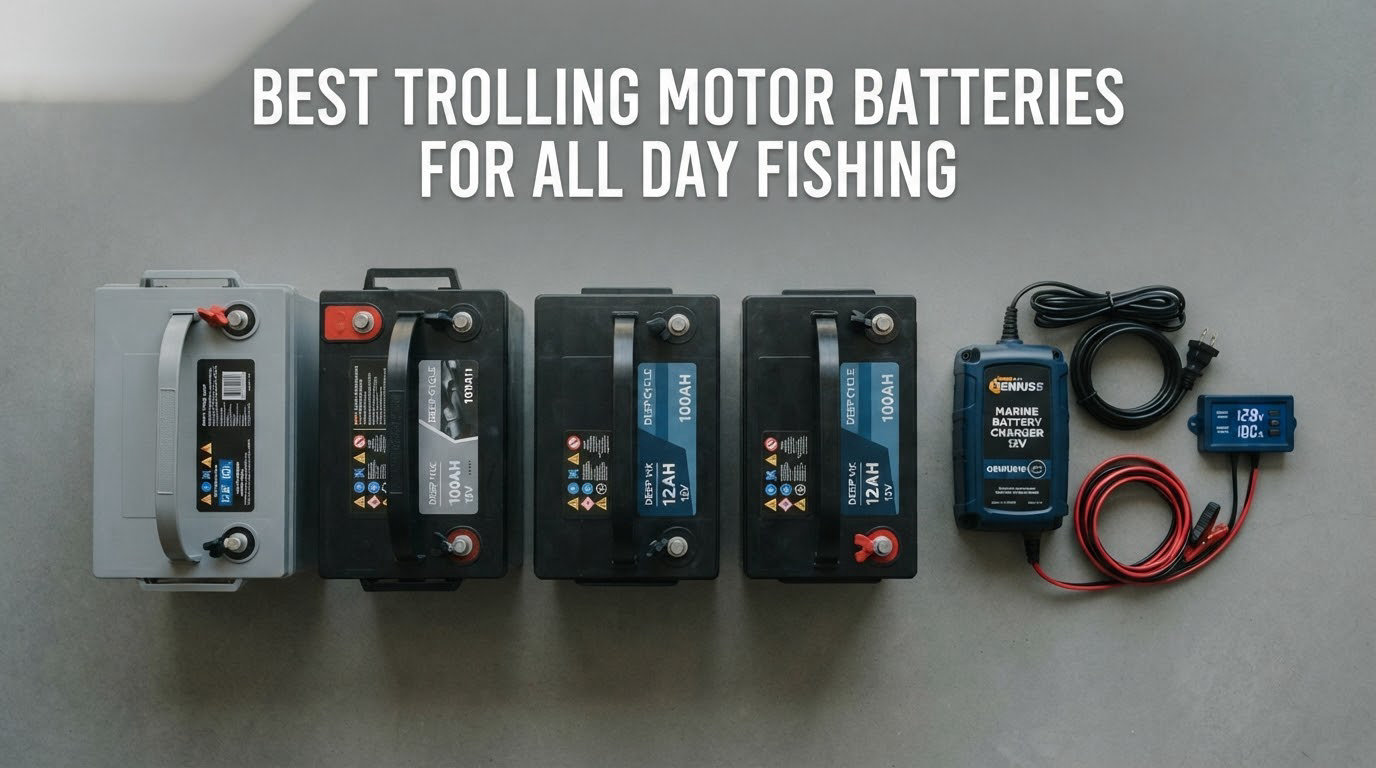
The all-day trip is where most trolling motor batteries quit before the angler does. Run the numbers and it is easy to see why: runtime in hours is roughly your amp-hour rating multiplied by usable depth of discharge, divided by the motor’s amp draw. A 100Ah LiFePO4 pack gives you about 90 usable amp-hours, while a 100Ah AGM gives you about 50, so the same nominal rating delivers very different days on the water. If you are shopping for the best trolling motor batteries for all day fishing in 2026, the chemistry and the usable capacity matter far more than the sticker price or the peak discharge number on the box.
We went through ten batteries in this class and read thousands of owner reviews, then sorted them by the three things that decide whether you come back at dusk: usable hours per outing, pounds on the boat, and how long the pack survives. The short version is that LiFePO4 has taken the top of this list almost by default, not because it is exotic but because it delivers roughly twice the usable capacity for about a third of the weight. Lead acid still makes sense for budget builds and for anglers who want zero charging protocol changes.
Two more things shape the recommendation. First, the 100Ah threshold: below 50Ah you are planning around a shorter trip, not a full day. Second, physical fit, because a battery that will not sit in your existing Group 24 or Group 31 box is a bigger headache than it looks. If you are still choosing the motor itself, start with our kayak trolling motor picks and our saltwater trolling motor guide to make sure the thrust rating matches the battery you pick here.
Table of Contents
Top 3 Picks for All-Day Trolling in 2026
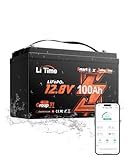
LiTime 12V 100Ah LiFePO4
- 12.8V 100Ah 1280Wh Group 31
- Bluetooth app monitoring
- Only 22.2 pounds
- 5-year warranty

Mighty Max 12V 55Ah
- 12V 55Ah sealed lead acid
- Group 22NF compact fit
- 4-6 hours on a 30-46 lb motor
- 1-year warranty

Redodo 12V 100Ah Group 31
- 12.8V 100Ah Group 31 LiFePO4
- 25.4 pounds
- 100A BMS
- 5-year warranty
All 10 Batteries Compared Side by Side
| Product | Specs | Action |
|---|---|---|
| LiTime 12V 100Ah LiFePO4 Trolling Motor Battery |
|
Check Latest Price |
| Mighty Max 12V 55Ah Deep Cycle Trolling Battery |
|
Check Latest Price |
| Redodo 12V 100Ah LiFePO4 Group 31 |
|
Check Latest Price |
 WEIZE Deep Cycle AGM 12V 100Ah WEIZE Deep Cycle AGM 12V 100Ah |
|
Check Latest Price |
 SUPER EMPOWER 12V 100Ah Group 24 LiFePO4 SUPER EMPOWER 12V 100Ah Group 24 LiFePO4 |
|
Check Latest Price |
 BtrPower 12V 50Ah LiFePO4 Trolling Battery BtrPower 12V 50Ah LiFePO4 Trolling Battery |
|
Check Latest Price |
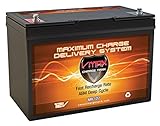 VMAX MR127 12V 100Ah Group 27 Marine AGM VMAX MR127 12V 100Ah Group 27 Marine AGM |
|
Check Latest Price |
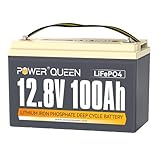 Power Queen 12V 100Ah Group 31 LiFePO4 Power Queen 12V 100Ah Group 31 LiFePO4 |
|
Check Latest Price |
 Redodo 24V 50Ah Group 24 LiFePO4 Redodo 24V 50Ah Group 24 LiFePO4 |
|
Check Latest Price |
 DC HOUSE 12V 100Ah Bluetooth LiFePO4 DC HOUSE 12V 100Ah Bluetooth LiFePO4 |
|
Check Latest Price |
How We Measured Runtime, Weight and Longevity
Every runtime figure in this guide comes from one formula, applied to published amp-hour ratings: hours = amp-hours multiplied by usable depth of discharge, divided by the motor’s typical amp draw. We use 90 percent usable capacity for LiFePO4 and 50 percent for AGM, which is why two batteries with the same 100Ah label can differ by nearly a full day of fishing.
Every battery here was checked against its published chemistry, capacity, weight, dimensions, BMS rating, temperature protection and warranty term, and against the recurring themes in owner reviews. Where owners report real numbers, like hours on the water or how much charge remained after a session, we use those as the tiebreaker between two batteries with similar paper specs.
Two honest caveats. First, real runtime runs about 20 percent below the calculated figure once you add wind, current, a fouled prop and a heavy boat. Second, nobody measures eight hours of trolling every weekend for a year, so cycle life ratings in this class are manufacturer claims, and owner reports of multi-season durability carry more weight than the spec sheet. Our deep cycle battery charger guide covers the charging side, because the wrong charger does more damage than a mediocre battery.
The 100Ah Runtime Table for 30, 40, 55 and 80 lb Motors
Here is the core sizing table. Hours are calculated at the motor’s typical full-to-medium throttle draw, before the 20 percent real-world derate for wind and fouling. Back the throttle down to cruising speed and these numbers roughly double.
| Motor thrust | Typical amp draw | 50Ah lithium | 100Ah lithium | 100Ah AGM |
|---|---|---|---|---|
| 30 lb | 15A | 3.0 hrs | 6.0 hrs | 3.3 hrs |
| 40 lb | 20A | 2.3 hrs | 4.5 hrs | 2.5 hrs |
| 55 lb | 30A | 1.5 hrs | 3.0 hrs | 1.7 hrs |
| 80 lb | 50A | 0.9 hrs | 1.8 hrs | 1.0 hrs |
Read that last column and the lead acid case gets weak at high thrust, because half the pack is sitting there unusable. Forum anglers running 24V 100Ah lithium banks on salmon report eight to ten hours of trolling without a kicker, and the same anglers point out that a 24V 100Ah LiFePO4 weighs about what a 12V 75Ah lead acid does. That weight parity is the real argument for lithium, and it is why most of the picks below are lithium.
1. LiTime 12V 100Ah LiFePO4 Trolling Motor Battery – Best Overall
Litime 12V 100Ah Trolling Motor LiFePO4 Battery for Marine, Boat, Yacht
12.8V 100Ah 1280Wh LiFePO4
Bluetooth app monitoring
Only 22.2 pounds
5-year warranty
Pros
- Highest rated in the group at 4.7 stars
- About half the weight of an equivalent lead acid bank
- Bluetooth app shows live state of charge and amp draw
- Reported 72 percent charge remaining after four hours in heavy wind
- Includes terminal hardware and a small wrench
Cons
- Needs a lithium activation or MPPT charger before Bluetooth pairs
- App asks for repeated sign in and some find it informational only
- One sample arrived dead and would not accept a charge
We spent the most time on this one because it sets the bar for the whole list. At 12.8V and 100Ah it delivers 1280Wh in a standard Group 31 footprint, and at 22.2 pounds it is the kind of battery you can lift out with one hand and carry to the bow without planning around it. That is the single biggest reason it wins, since the alternative on this list is a 57-pound AGM block.
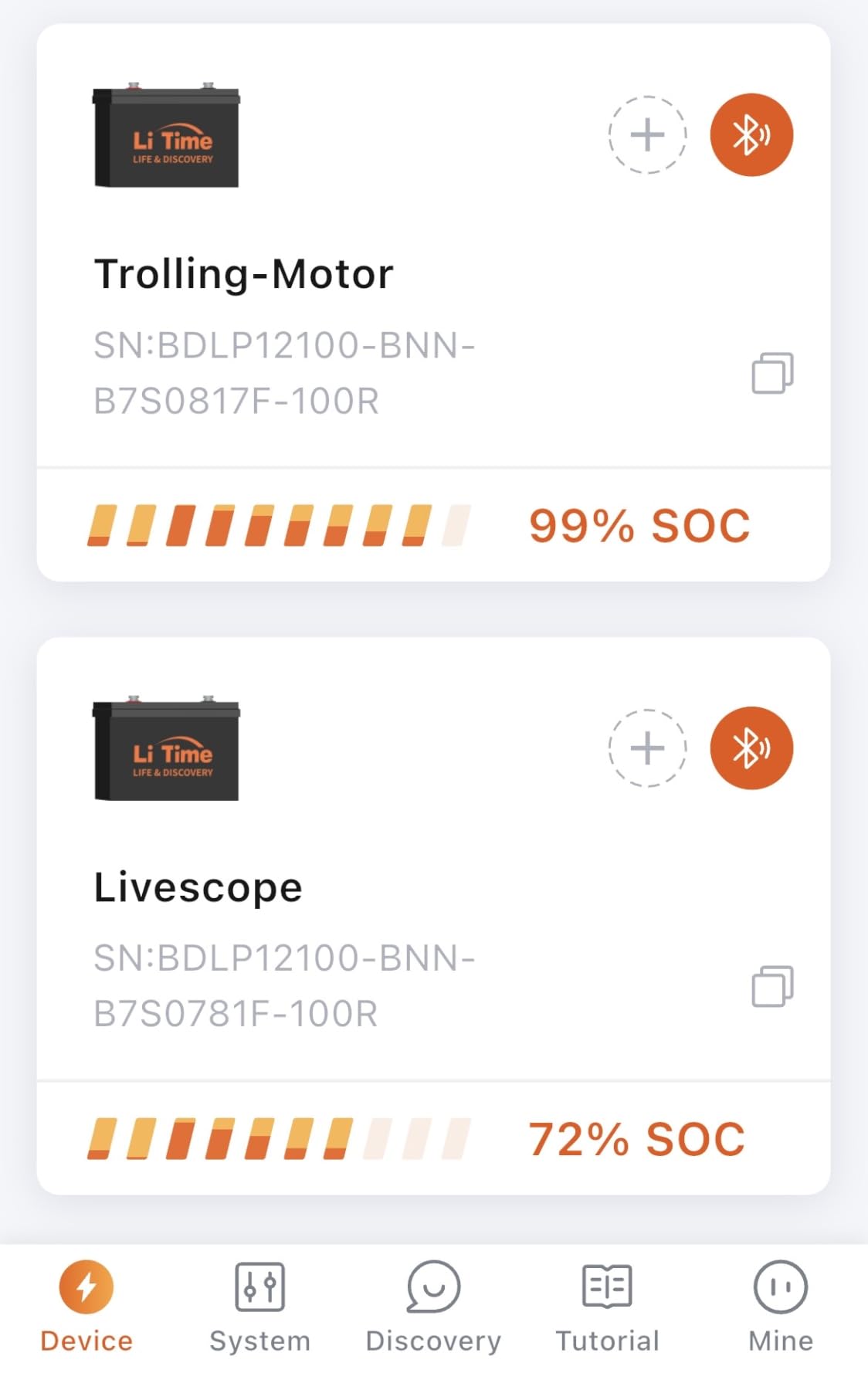
The Bluetooth app is the feature that changes daily behaviour rather than just spec-sheet bragging. Owners report live state-of-charge and amp draw readings that match what the app promised, and one describes still holding 72 percent after four hours of trolling in 25 mph wind gusts. On a boat where the difference between a full day and a paddle home is battery management, seeing the number beats guessing it.
The electrical picture is strong too. It is rated for 30-70 lb thrust motors, carries more than twenty safety protections, and is IP65 dustproof, waterproof and salt-resistant, which matters if you fish brackish water or bay water and rinse with a hose. Cycle life is rated at 4,000 deep cycles at full depth, 6,000 at 80 percent depth and up to 15,000 at 60 percent, and it expands to 51.2V 400Ah if you ever outgrow a 12V setup. There is also a two-level self-heating option for cold-weather charging.
Two things to know before you buy. The Bluetooth module will not pair until the pack has been through a lithium activation or MPPT charge, so plan that first trip accordingly. And the app is a monitoring tool rather than a control surface for the motor, so treat it as information, not as something to tweak while the boat is moving.
What you give up with the LiTime
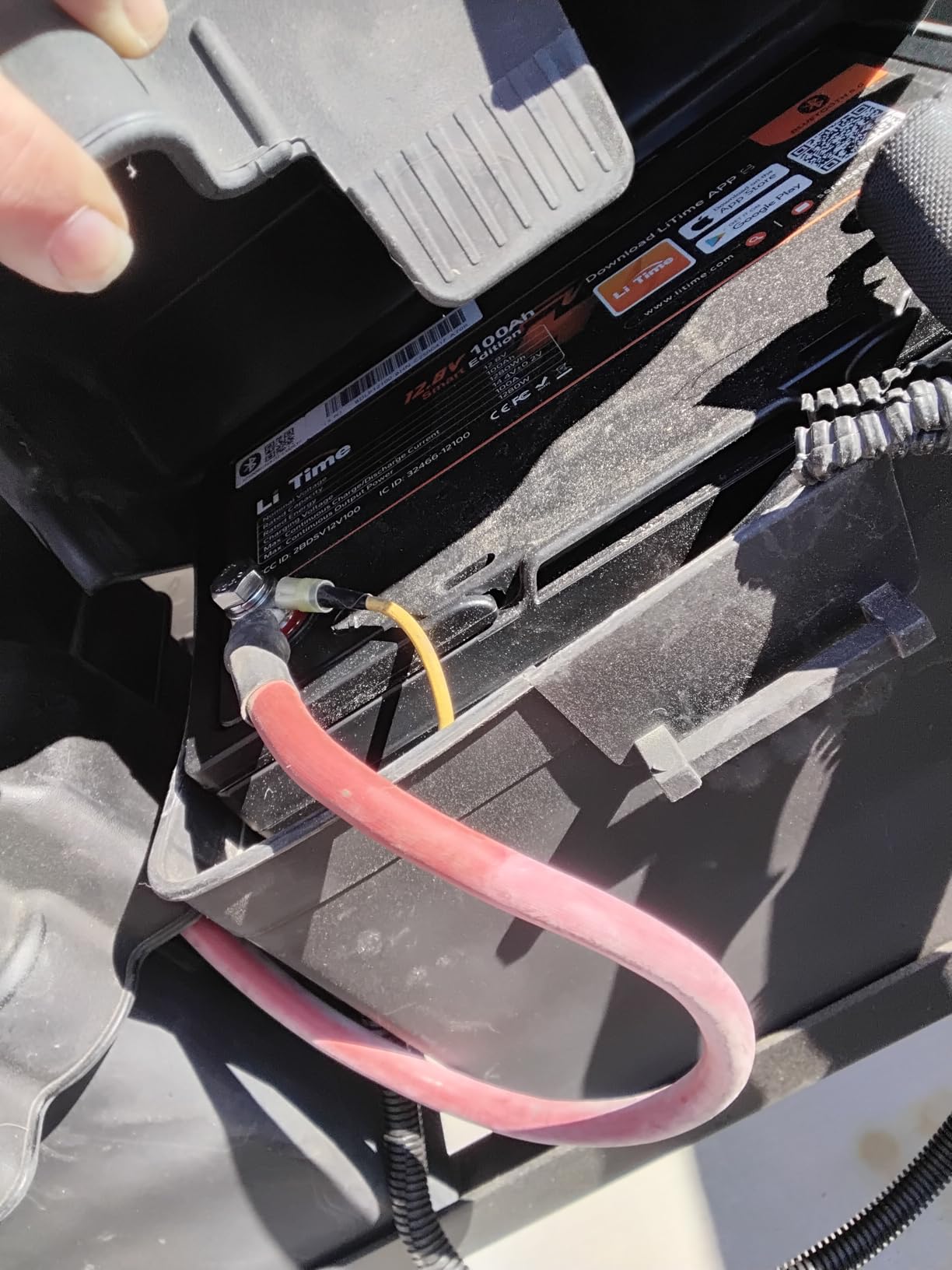
The one trade here is the budget. Every other battery in this roundup sits below it, and prices in this category move with frequent sales, so timing changes the maths. The app also asks you to sign in repeatedly, which several owners describe as friction nobody enjoys. One buyer received a pack that would not take a charge or pair, which is a small-sample failure but worth knowing about before a long trip.
Who should buy it, and who should not
Buy it if you fish 55 lb thrust or larger, run single-handed kayaks, or want Bluetooth state-of-charge data on the water. Pass if you are on a strict budget and only run a small motor, or if your battery box is a Group 27 and you refuse to modify the tray. In those cases the Redodo below or the WEIZE are the more sensible spend.
2. Mighty Max Battery 12V 55Ah Deep Cycle – Best Value Lead Acid
Mighty Max Battery 12V 55Ah Power Boat Pontoon Electric Trolling Motor Deep Cycle Battery
12V 55Ah sealed lead acid SLA
Group 22NF compact fit
UL certified
1-year warranty
Pros
- Roughly 4-6 hours on a 30-46 lb thrust motor
- Holds voltage and still reads near full after 2-3 hours
- Compact Group 22NF footprint fits standard small battery boxes
- Responsive service when a unit failed to hold charge
Cons
- Heavy for its 55Ah size in small kayaks and canoes
- Not enough for all-day running on higher-thrust motors
- Harness and mounting hardware are not included
This is the lead acid option that quietly works, and more than 1,600 owners have weighed in on it. At 55Ah it sits below the 100Ah threshold, but owners running 30-46 lb thrust motors report four to six hours of solid trolling, often with plenty of charge still showing at the end of the day. On a modest motor in a moderate pond, that is genuinely enough.
The Group 22NF footprint at 9.06 by 5.43 by 8.98 inches is the underrated part. It fits small battery boxes that a Group 31 lithium will not, which matters on jon boats, small bass boats and kayaks with limited deck space. The sealed SLA construction is spill-proof, mountable in any position, and rated to resist shock and vibration, and the battery is UL certified.
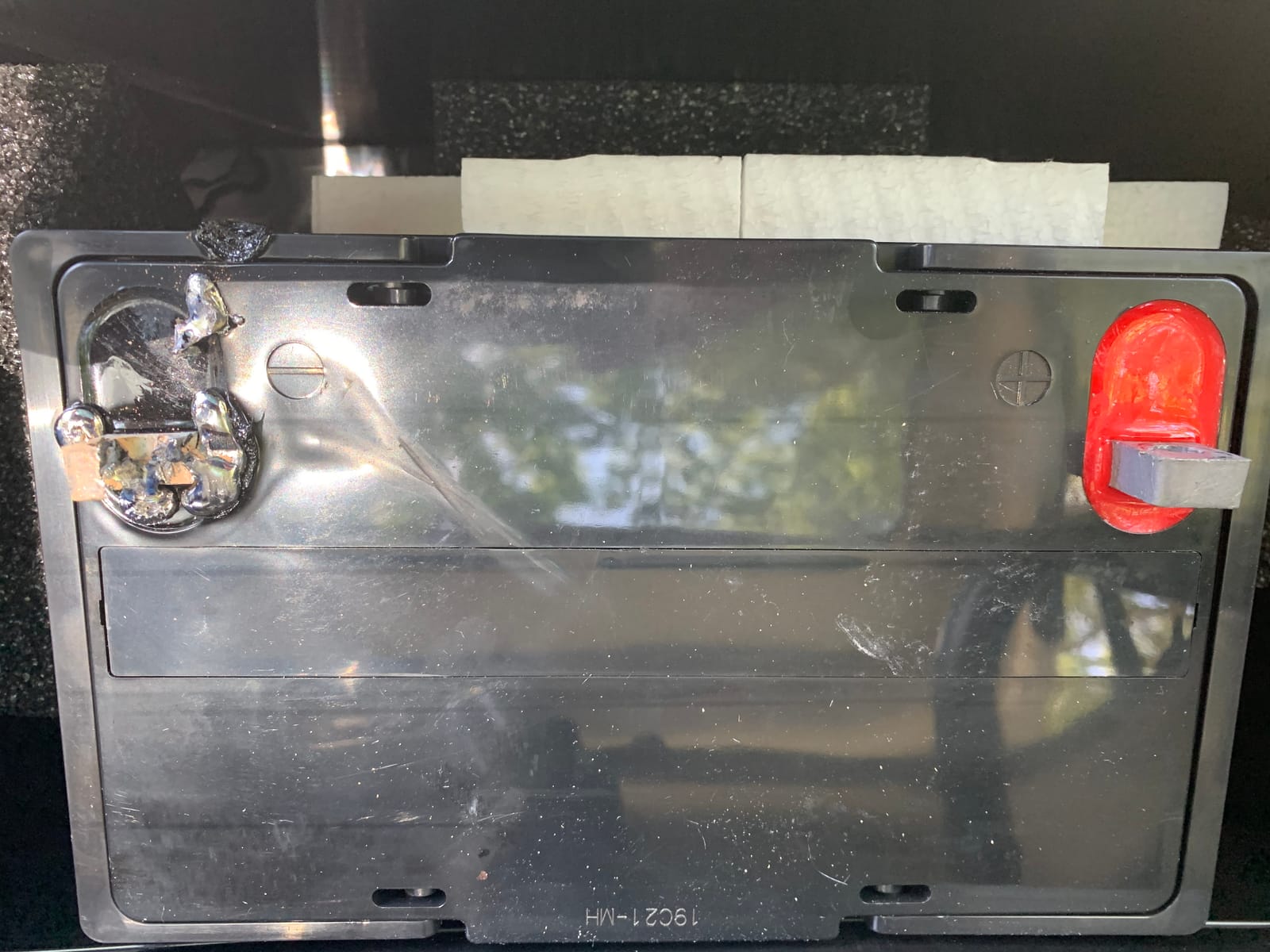
Longevity is where lead acid wins back some respect. One owner reports a unit still working after nearly two years of abuse in freezing truck beds, and several reviews describe good multi-season durability. Just remember the chemistry rules: give it a full trickle charge before first use, keep it above roughly 25 percent state of charge, and expect 300 to 500 cycles rather than thousands.
What arrives in the box is the battery and screws, so plan on sourcing your own harness and mounting hardware. For a first trolling battery on a small boat, or as a shore-side spare, that is a fine trade.
Where 55Ah runs out of road
Push this battery to a 55 lb motor at sustained high speed and the half-usable rule bites hard. Forty-six pounds of usable energy is gone in under two hours at 30 amps. It is also noticeably heavy for its capacity, which is a real balance issue in a narrow kayak, and there is no Bluetooth or app to tell you where you stand before it happens.
Is 55Ah enough for all-day fishing?
On a r/boating thread, owners argue that a 50Ah lithium is enough for a full day of bottom fishing on a smaller boat with a modest motor, which lines up with what we see here. The rule of thumb: 50-55Ah covers a half day or a light full day under 40 lb thrust. If you want a genuine eight-hour day at speed, step up to 100Ah.
3. Redodo 12V 100Ah LiFePO4 Group 31 – Best 100Ah Lithium With a 5-Year Warranty
Redodo 12V 100Ah LiFePO4 Battery, Group 31, for RV, Marine
12.8V 100Ah Group 31 LiFePO4
25.4 pounds
100A BMS
5-year warranty
Pros
- About 60 percent lighter than a 100Ah lead acid bank
- Flat discharge curve holds full thrust all day
- Reported all-day and multi-day runtime on 24V setups
- 23-page manual with clear diagrams and a quick-start card
Cons
- Will not fully charge on a lead acid charger
- Group 31 footprint will not fit some Group 27 boxes
- A minority of packs will not wake the BMS after long storage
Redodo built the most thoroughly documented 100Ah pack in this group, and the documentation matters more than it sounds. The 23-page manual with diagrams and a quick-start card removes most of the guesswork for first-time lithium owners, and the 100A BMS covers overcharge, over-discharge, over-current, short circuit and high temperature.
Cycle life is rated at 4,000 cycles at full depth of discharge, 6,000 at 80 percent and 15,000 at 60 percent, with a 3 percent monthly self-discharge rate. At 25.4 pounds it is about 60 percent lighter and slightly smaller than the 100Ah lead acid equivalent, and the flat discharge curve is the practical reason anglers notice no speed loss late in the day.
The discharge curve is the story here. AGM voltage sags as the pack empties, so a trolling motor that feels quick at 8 am feels laboured at 3 pm. Lithium holds its voltage, so thrust stays flat from full to near empty, which is exactly the behaviour you want when you are trying to hold structure in a current. Owners running 24V setups report all-day and multi-day runtime on a matched pair.
It expands to 4S4P for up to 400Ah or 51.2V, charges from a 14.6V 20A LiFePO4 charger, solar with a controller, an alternator or a generator, and carries a five-year warranty that has seen support honor replacements on out-of-warranty units.
Check your battery box first
Group 31 is physically larger than Group 27, so some existing trays will not take it without modification. That is the most common reason a buyer returns this battery, and it is entirely avoidable with a tape measure. The other two caveats: the pack will not reach full charge on a lead acid charger, and a minority of packs have failed to wake the BMS after extended storage.
Warranty service and sizing
Support is responsive, but resolution is sometimes a pro-rated discount or partial refund rather than a straight replacement, so read the warranty terms before you rely on it. On sizing, the maker suggests this battery for trolling motors in the 30-70 lb thrust range, and it is not a starter or golf cart battery. At 100Ah it is the right capacity for a genuine all-day trip on anything in that range.
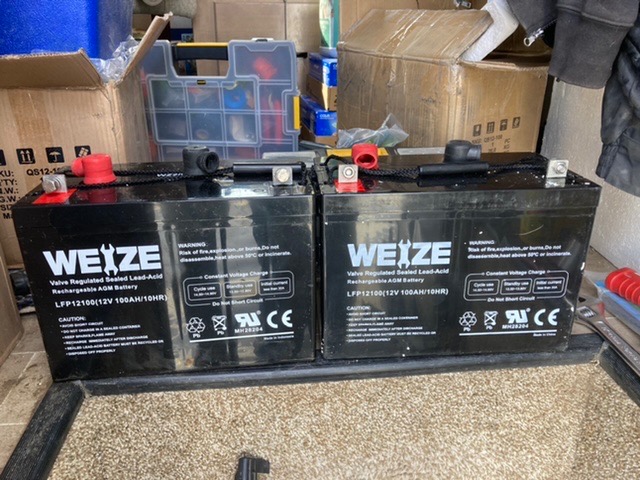
4. WEIZE Deep Cycle AGM 12V 100Ah – Best 100Ah Lead Acid
Weize Deep Cycle AGM 12 Volt 100Ah Battery, Maintenance-Free, 3% Self-Discharge Rate, 1150A Max Discharge Current, Perfect for RV, Solar, Trolling Motor, Wind, Marine, Camping and Off-Grid System
12V 100Ah sealed AGM
57 pounds
1-3 percent monthly self-discharge
1-year warranty
Pros
- Maintenance-free sealed AGM with no acid leak risk
- Holds charge well across multi-day trips
- 1-3 percent monthly self-discharge suits long storage
- 1100A max discharge for 5 seconds
Cons
- Very heavy at 57 pounds and awkward to lift from a boat
- Much heavier than a comparable LiFePO4 bank
- Some examples stop accepting charge around 73 percent state of health
With more than 16,900 reviews behind it, the WEIZE is the most battle-tested lead acid battery in this roundup, and it is the reason we did not simply write off AGM. Owners consistently report dependable multi-day trolling runtime, clean installation with no corrosion around the terminals, and a battery that keeps holding charge season after season.
Construction is sealed lead acid AGM, which absorbs the electrolyte and removes the acid spill and venting problems that make wet cell batteries a nuisance in a boat. Max discharge is 1,100A for five seconds, self-discharge runs 1-3 percent per month, and the listed operating range covers charging from 14F to 122F and discharging from 5F to 122F.
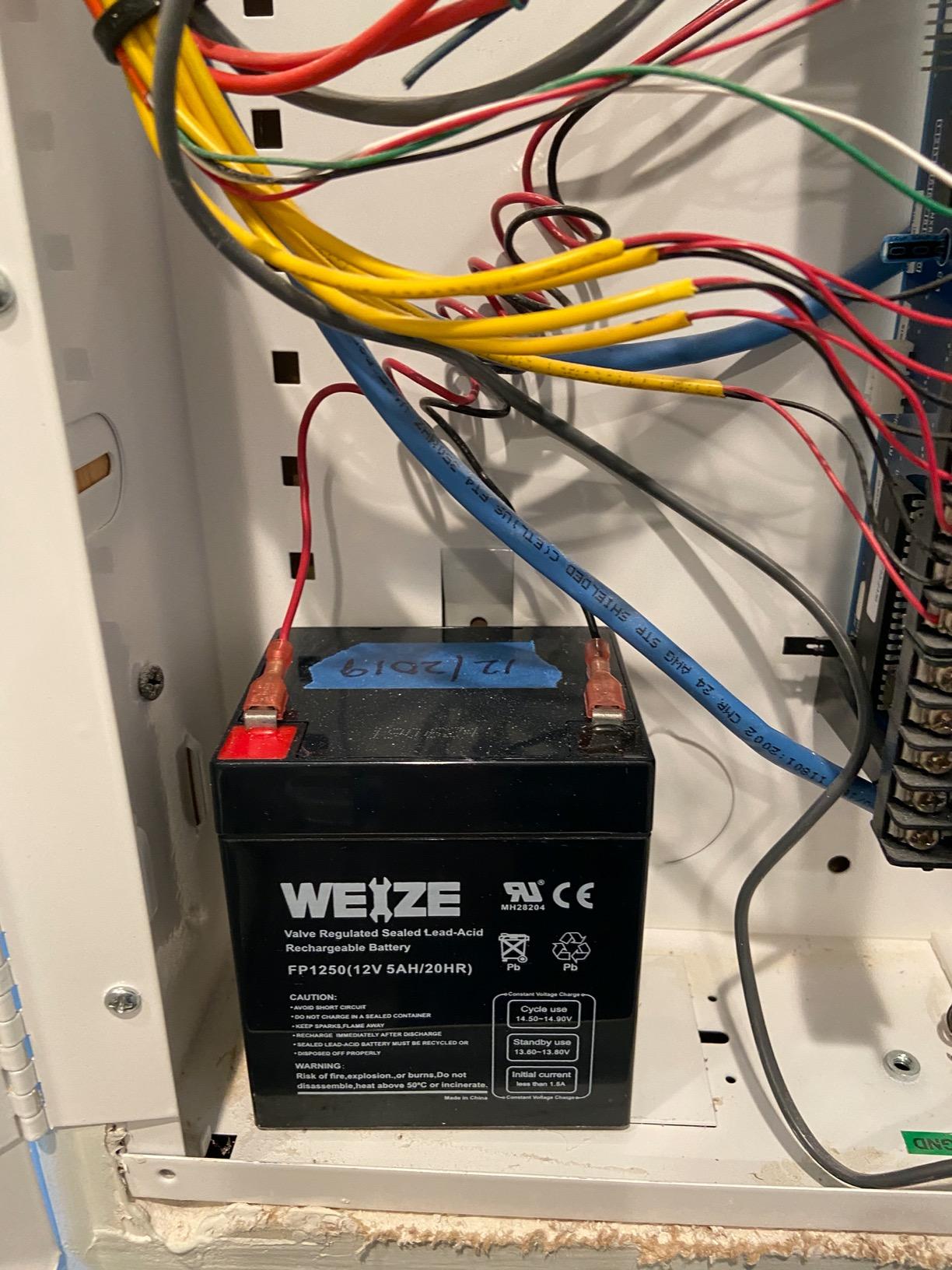
Weight is the headline downside, and it is not a minor one. At 57 pounds this is a two-person lift into a boat, and it changes how you trim the boat as well as how you load it. That weight comes with a reward: lead acid tolerates being hauled around, bounced over rough water and ignored for a season, and unlike lithium it will not be harmed if you top it off with the wrong charger.
At 6.73 by 12.99 by 8.43 inches the footprint is Group 31-like, so it usually drops into a standard tray. Terminal layout is positive on the red side and negative on the black side, which is worth checking against your wiring before you commit.
The failure mode to watch
A recurring complaint is units that will not charge above roughly 73 percent state of health. That is a sulfation signature, usually caused by deep discharge, prolonged storage at low charge, or an under-sized charger, and it tends to show up after the first season rather than out of the box. Seller support has generally been responsive on replacements.
When lead acid is still the right call
Pick this battery if you want a bank you can abuse, do not want to change charging habits, or are running a dual-purpose setup where starting matters. Do not pick it for a kayak or for a boat where you will load the battery at the ramp alone. Note also that the 1-year warranty is shorter than every lithium option in this roundup.
5. SUPER EMPOWER 12V 100Ah Group 24 LiFePO4 – Best Group 24 Fit
12V 100Ah LiFePO4 Battery, Group 24 Deep Cycle RV/Trolling Motor Battery
12.8V 100Ah 1280Wh Group 24 case
21.6 pounds
100A BMS
5-year warranty
Pros
- Group 24 drop-in fit with no box modification
- Only 21.6 pounds for 100Ah of lithium
- 100A BMS gives headroom for high-thrust motors
- Low-temp cutoff protects the pack in cold conditions
- 5-year warranty plus responsive technical support
Cons
- Needs a dedicated LiFePO4 profile charger
- Charging pauses below 32F
- Small review base at 220 reviews
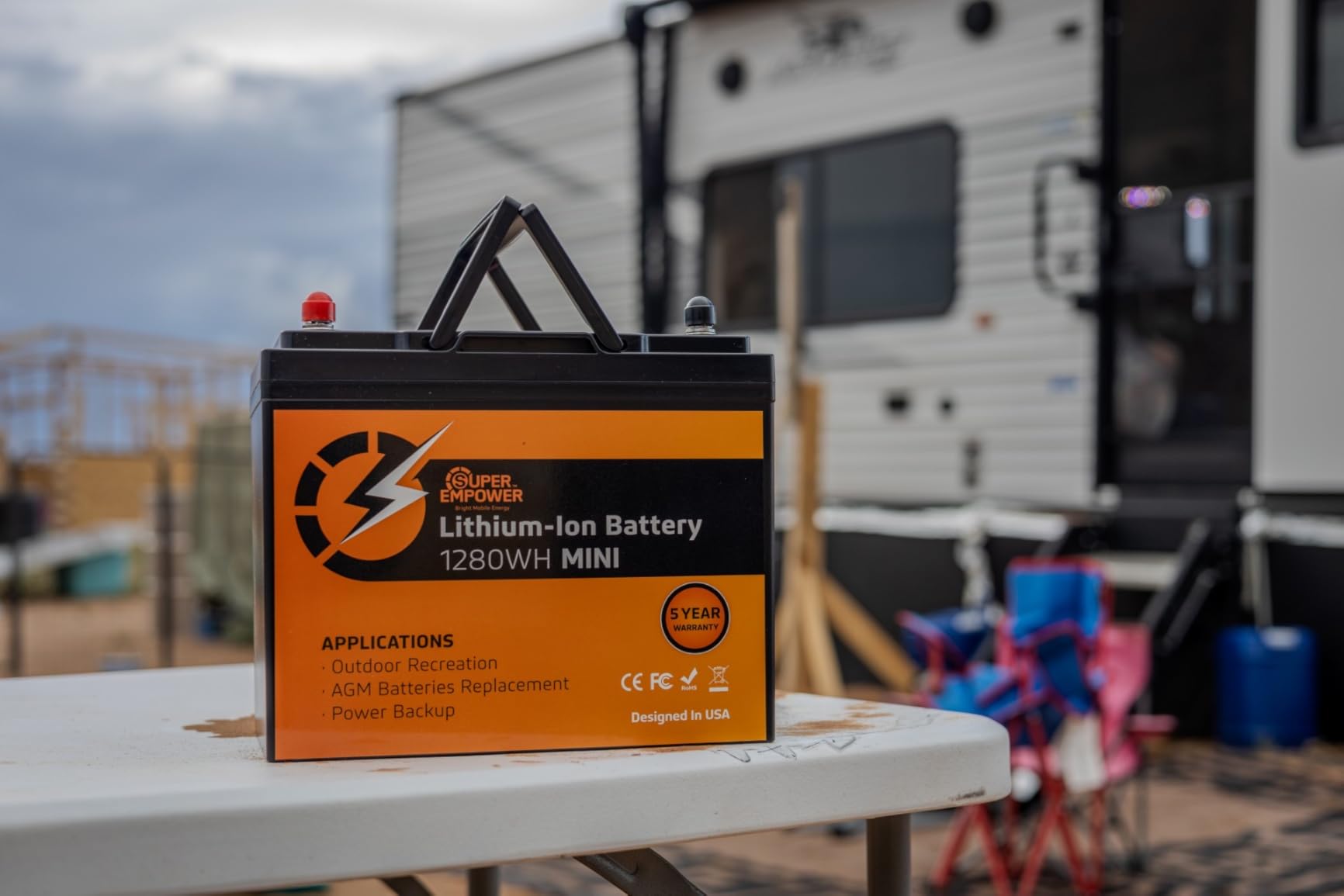
If your boat is set up around Group 24 trays, this is the pick. It is a dimensional drop-in replacement for lead acid, AGM and SLA Group 24 batteries, and at 6.49 by 10.24 by 8.98 inches it drops straight into a standard box with no cutting. That single fact removes the most common reason people end up with a battery they regret.
It carries 1,280Wh in 12.8V 100Ah form, uses Grade A LiFePO4 cells with a 100A integrated BMS, and weighs 21.6 pounds. Internal resistance is listed at 40 milliohms, and it expands to 4S4P for 51.2V 400Ah, or 20.48kWh, if your motor later moves up to 24V.
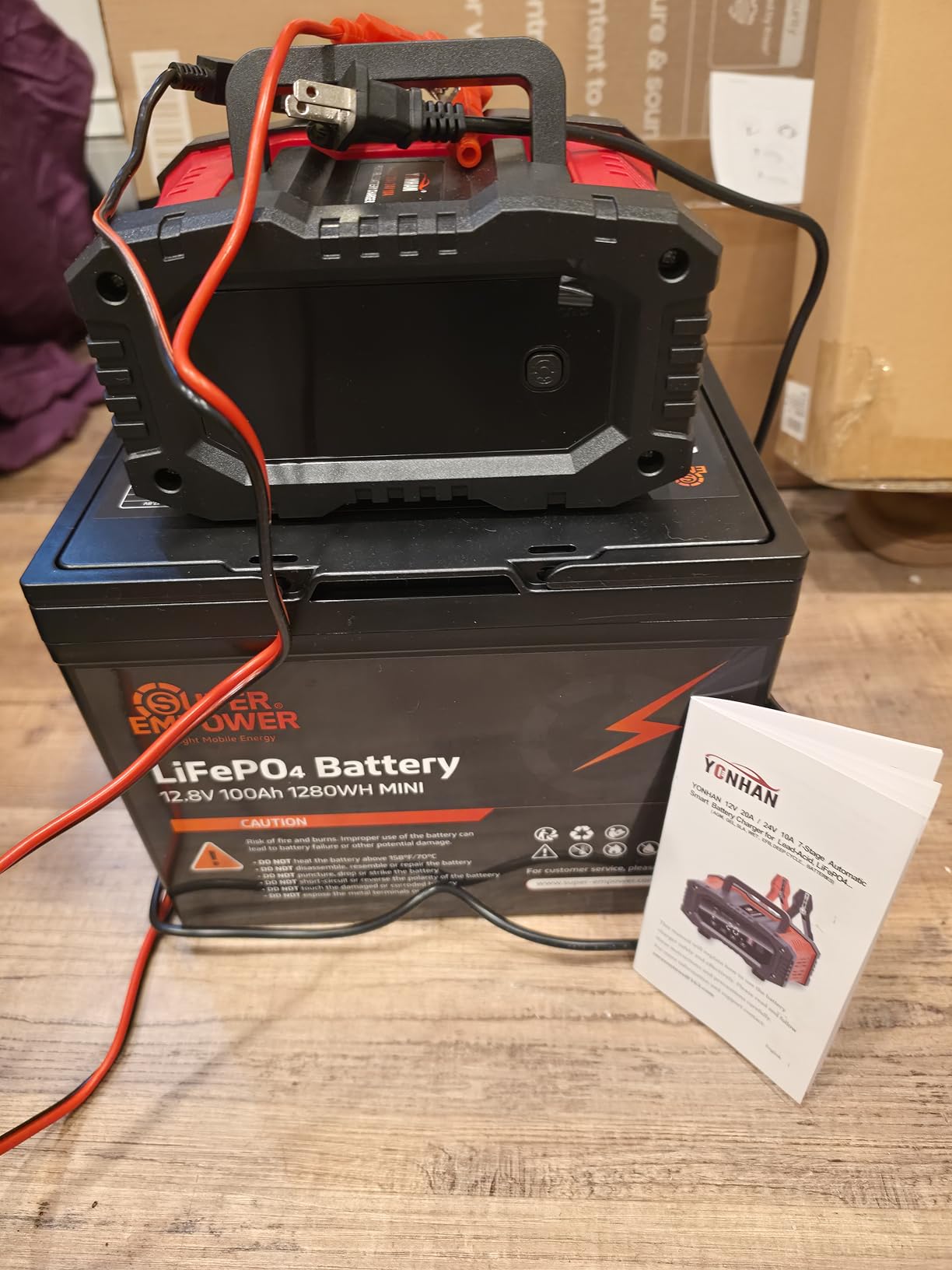
Charging options are flexible: a 14.4-14.6V CC/CV LiFePO4 charger, solar through an MPPT or PWM controller in lithium mode, or generator and DC-DC charging. The maker is direct that non-lithium chargers are not recommended, so plan your charging setup before the first trip rather than after the first flat battery.
Temperature handling is built in. Charging pauses below 32F, discharging stops at -4F, and it resumes once the pack warms above 41F. On northern fishing trips that is a feature rather than a limitation, because it protects the cells while still allowing you to run the motor on a cold morning.
The trade you accept for the fit
Two things. The 32F charging cutoff means a cold-morning recharge simply will not happen until the pack warms up, which is inconvenient when you want to top off overnight before an early launch. And at 220 reviews, long-term durability data is limited, so treat the cycle life claims as promising but unproven.
Who should choose it over the LiTime
Choose this one if Group 31 physically will not fit your boat, if you want 100Ah at the lowest cost per amp-hour, or if you are building a bank for a motor in the 40-70 lb range and the 100A BMS gives you the headroom a big motor needs. If weight and Bluetooth monitoring matter more than the exact footprint, the LiTime remains the stronger all-round package.
6. BtrPower 12V 50Ah LiFePO4 – Best Budget Pick for Small Boats
12V 50Ah Trolling Motor LiFePO4 Battery,5000+ Deep Cycle lithium Battery
12.8V 50Ah LiFePO4
Only 11 pounds
Rated for 30-50 lb thrust motors
1-year warranty
Pros
- Lightest battery in the group at 11 pounds
- Makes lithium chemistry accessible on a small budget
- 5000+ claimed deep cycles
- Suits 30-50 lb thrust motors on small boats and kayaks
Cons
- Only 50Ah so runtime is short on higher-thrust motors
- 50A BMS is the lowest here and gets stressed at high settings
- 1-year warranty is short for lithium chemistry
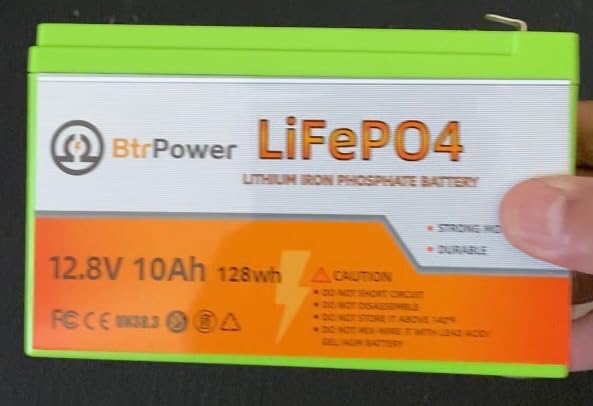
Eleven pounds. That is the number that sells this battery, and it is roughly a third of the weight of a comparable lead acid pack. At 5.5 by 9 by 8.3 inches with M8 terminals, it is small enough to carry from a shore to a kayak seat, which removes the single biggest objection people have to putting a real battery in a pedal angler’s boat.
It is a 12.8V 50Ah LiFePO4 rated for 30-50 lb thrust motors, which covers the Minn Kota, Newport Vessels and PEXMOR class of motors that most kayak and small-boat anglers actually run. The built-in 50A BMS handles overcharge, over-discharge, over-current, short circuit and cell balancing, and it can be expanded in series or parallel up to four batteries.
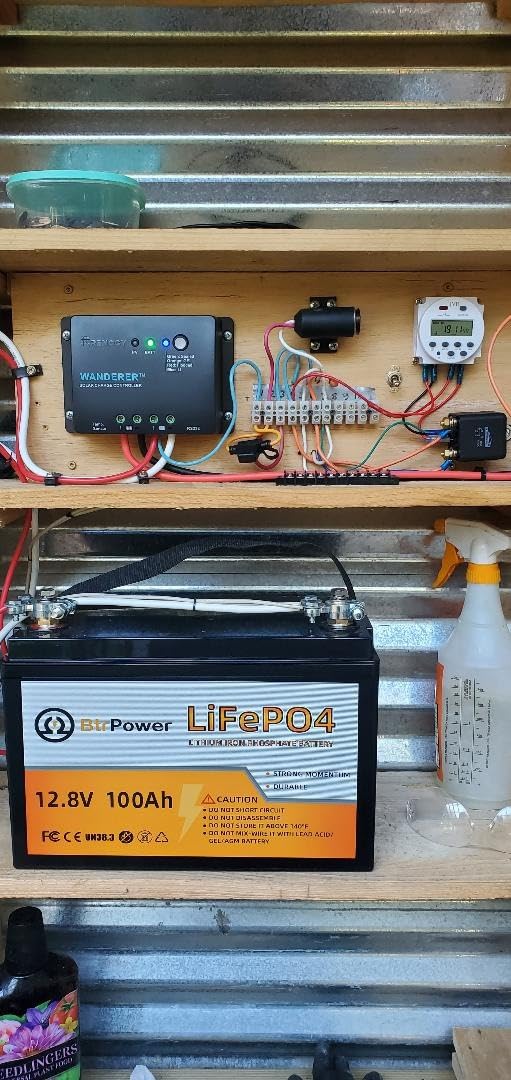
Charging calls for a 14.4-14.6V output at a recommended current of 10A or less, so a small charger is the right companion rather than a big one. The 5000+ claimed deep cycles, against 300 to 500 for lead acid, is where the value shows up over time even before you count the weight you are not carrying.
Warranty cover is one year with three months of free returns or replacements. That is the shortest lithium warranty here, so treat it as a consumable you will probably run for years without thinking about it rather than a long-term investment.
Why 50Ah is a half-day battery
Fifty amp-hours of lithium gives you about 45 usable amp-hours. On a 30 lb motor at 15 amps that is about three hours, and on a 45 lb motor at 24 amps it is closer to two. That is a real session, but it is not an eight-hour day, and the 50A BMS has less headroom than the 100A units when a big motor is pinned at high speed.
The kayak question
This is the battery to buy if your boat is a kayak, a jon boat under 14 feet, or a small pontoon, and your motor is in the 30-50 lb range. Our kayak motor roundup pairs well with it. If you plan to run 55 lb thrust or above for long days, buy 100Ah and accept the extra 10 pounds.
7. VMAX MR127 12V 100Ah Group 27 Marine AGM – Best for 55 lb and Larger Motors
VMAX MR127 12 Volt 100Ah AGM Deep Cycle Maintenance Free Battery compatible with boats and 40-100lb, minnkota, cobra, sevylor and other trolling motor (GROUP 27 Marine Deep Cycle AGM Battery)
12V 100Ah Group 27 marine AGM
68 pounds
Absorbed glass mat electrolyte
1-year warranty
Pros
- Genuine Group 27 marine AGM build from a tank manufacturer
- Owners report 90-95 percent charge after 3-4 hours of heavy trolling
- One owner ran two in series for an 86 lb thrust motor
- Carrying handles help despite the weight
Cons
- Heaviest battery here at 68 pounds
- Costs more than comparable 100Ah AGM deep cycle batteries
- Smart chargers can cut off early on a fully depleted pack
This is the battery for anglers who want a proven marine part rather than a general deep cycle unit. VMAX builds it for boats and rates it for 40-100 lb thrust Minn Kota, Cobra and Sevylor motors, and owners running 55 lb thrust report still reading 90-95 percent after three to four hours of heavy trolling, which is unusually good holdover for lead acid.
The electrolyte suspension system uses a high-porosity absorbed glass mat with no silica gels or contaminants, and the heavy duty lead-tin alloy grids add margin in cyclic service, which is exactly the abuse pattern a trolling motor delivers. Marine terminal posts and carrying handles are both sensible details that cheaper batteries skip.
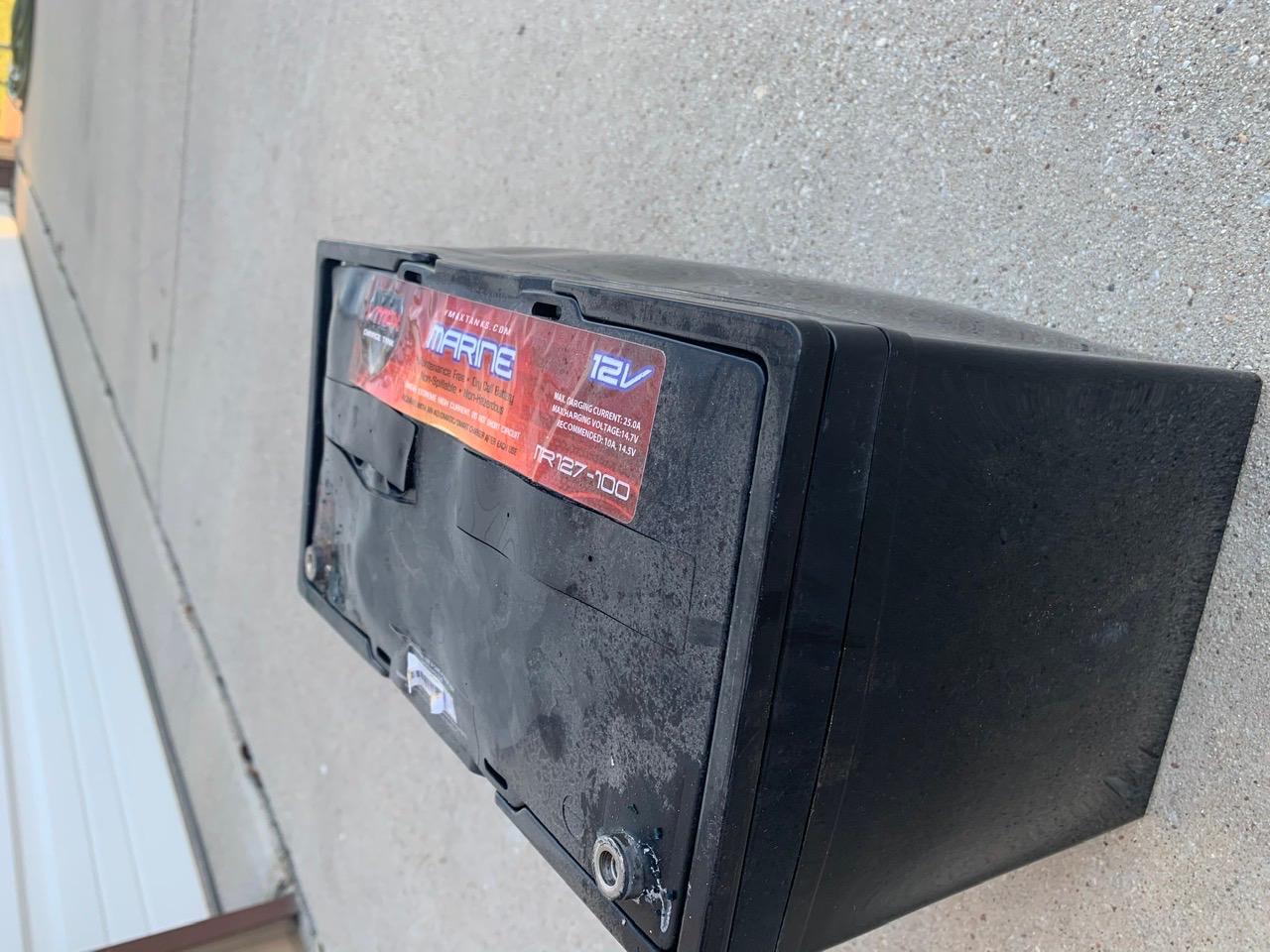
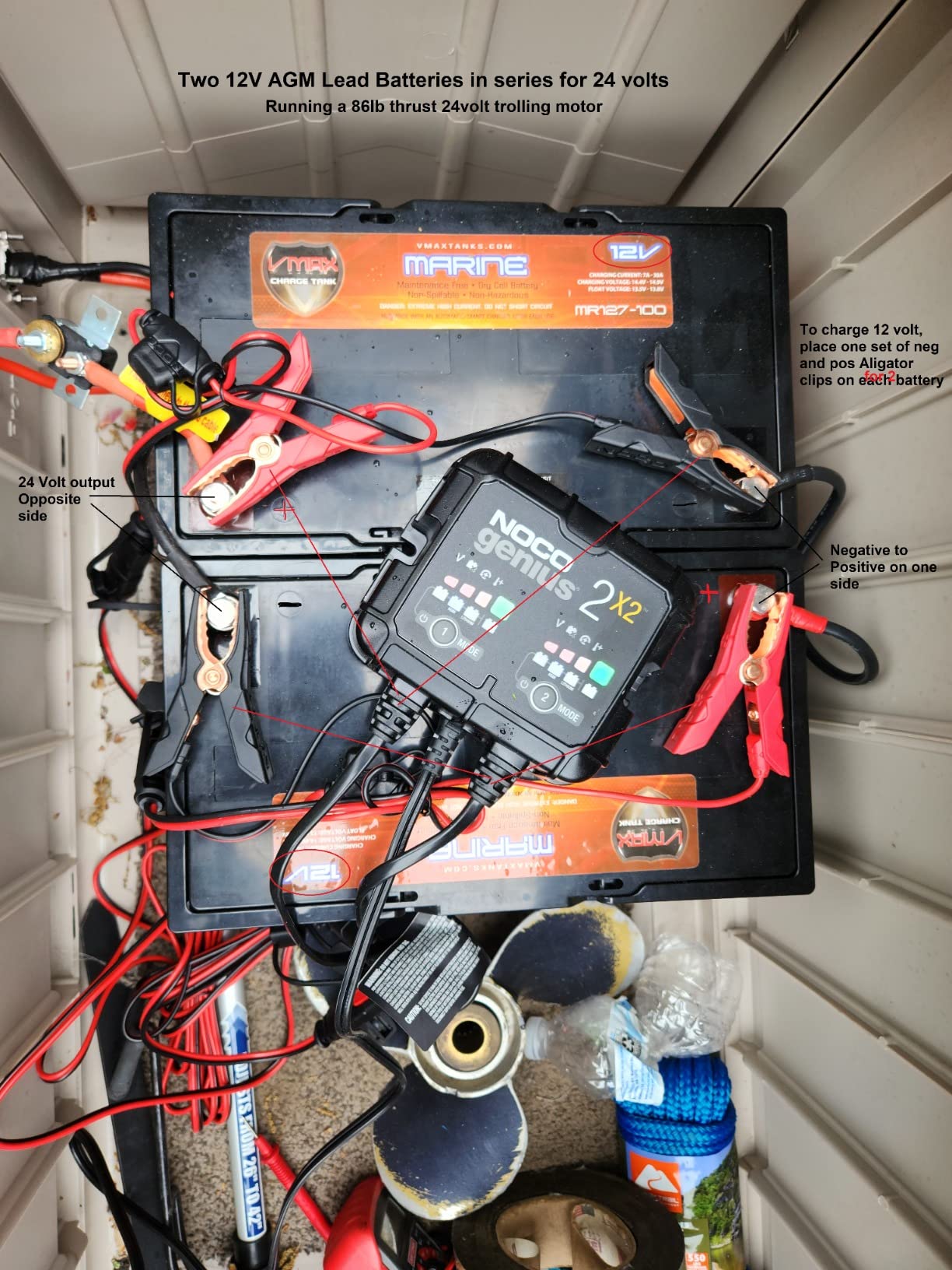
Long-term reports are the strongest part of the story. One owner reports five years of service on a solar setup before degradation, and another ran two of these in series to drive an 86 lb thrust motor without issue. If you fish big water in big wind, that kind of history is worth paying a little more for.
Deep discharge is where it gets awkward. Several owners note that smart chargers cut off early if the pack is fully depleted, and a depleted battery may need a jump to recover. That is an argument for a Group 24 lithium with a 100A BMS, or for disciplined charging habits.
The 68-pound problem
This is the heaviest battery in the roundup, and on anything under about 18 feet it changes how the boat loads and how you move around it. Two of these in series for an 86 lb motor is a genuine two-man job. Budget your time at the ramp, not just your capacity.
How it compares with the lithium picks
Against a 25-pound 100Ah lithium you give up 40 pounds and roughly half your usable capacity, and you gain a part that shrugs off neglect, deep discharge and the wrong charger. Big offshore boats with high-thrust motors and a kicker battery are where that trade still makes sense. Small boats and kayaks are better served by lithium.
8. Power Queen 12V 100Ah Group 31 LiFePO4 – Best for Fast Charging
Power Queen 12V 100Ah Group 31 Trolling Motor LiFePO4 Battery for RV, Boat
12.8V 100Ah 1280Wh Group 31
Only 24 pounds
About 5 hour full charge
5-year warranty
Pros
- Owners report all-day runtime on 42 lb thrust motors
- Light at 24 pounds
- about a third of a lead acid bank
- Very little voltage drop under load
- Support praised for a full refund outside the return window
Cons
- Group 31 has fewer battery box options than Group 24
- Some batteries need several cycles to normalise the charge curve
- No Bluetooth monitoring on this variant
Charge speed is this battery’s edge, and it matters more often than buyers expect. With a 14.6V 20A LiFePO4 charger it reaches a full charge in about five hours, which means a bank can be topped up overnight and be genuinely ready for a multi-day trip rather than still absorbing a trickle charge when you launch.
On the water it performs like the other good 100Ah lithium packs. Owners running 42 lb thrust motors report all-day runtime on a single charge, at 24 pounds it is about a third the weight of an equivalent lead acid bank, and reviewers specifically call out the minimal voltage drop under load compared with lead acid. Grade A cells and a 100A BMS cover overcharge, over-discharge, short circuit and overheat.
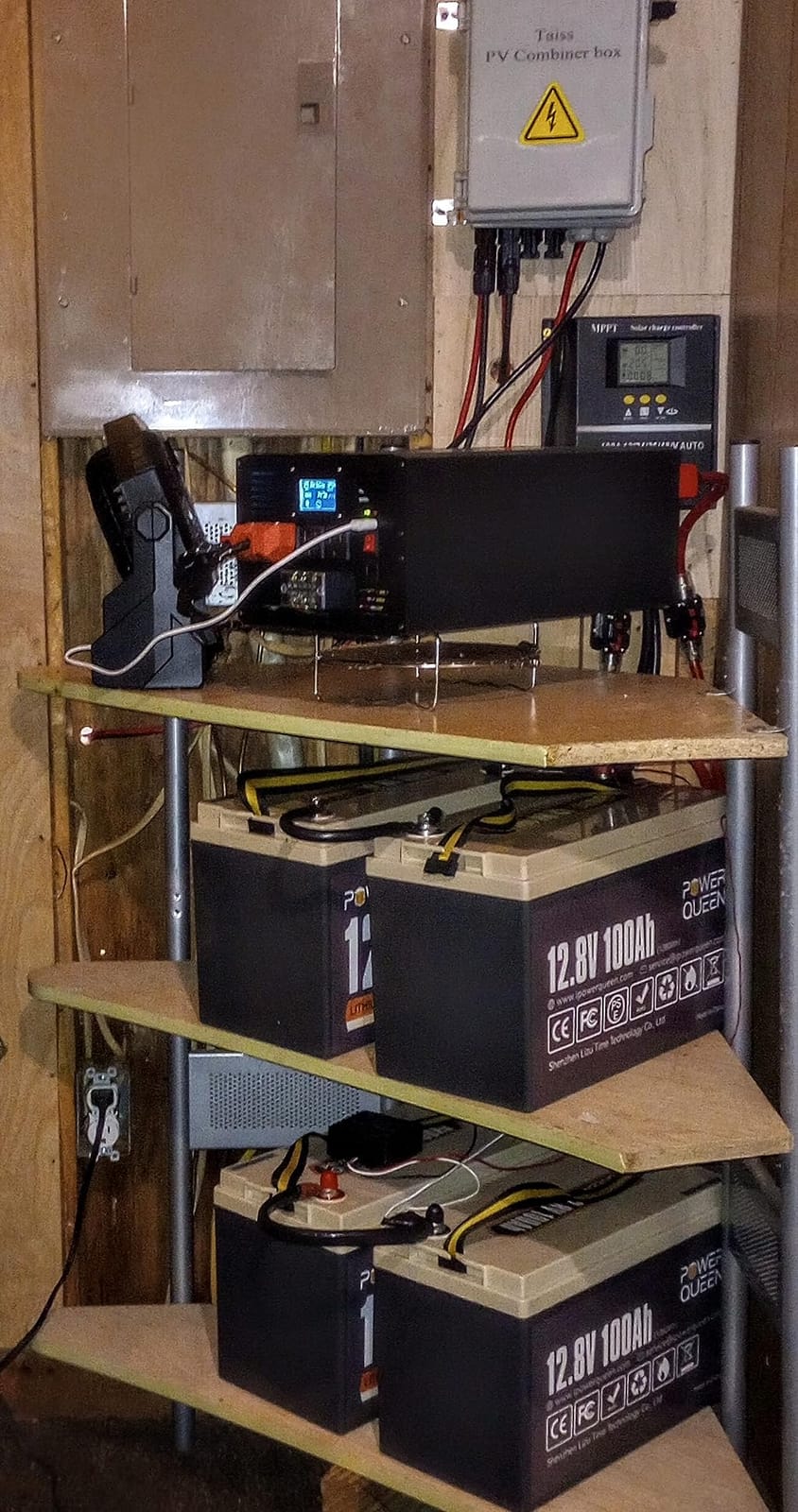
It is IP65 waterproof with a 3 percent self-discharge rate, rated for 30-70 lb thrust motors and RV use, and expandable to 4S4P for 51.2V 400Ah. Durability reports span hot and sub-zero climates across three years, which is the kind of data you rarely see outside manufacturer material.
Support is a genuine strength here. Owners mention fast, responsive technical help and a full refund granted even after the normal return window, which softens the risk of buying a chemistry you have not used before.

What you give up
No Bluetooth on this variant, so you are back to guessing state of charge or carrying a separate meter. Group 31 also has fewer battery box options than Group 24, and a minority of units need several charge cycles before they reach a normal charge curve, which can be alarming the first time if you are not expecting it.
Best fit for the way many people fish
Choose it if you run a single overnight charge between outings and want the bank at full capacity by launch, or if you fish 40-55 lb thrust motors in a boat where 24 pounds is the budget you have set. Pair it with a dedicated 20A lithium charger and treat the first few cycles as conditioning rather than a fault.
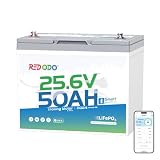
9. Redodo 24V 50Ah Group 24 LiFePO4 – Best Single-Pack 24V Setup
Redodo 24V 50Ah Group24 Trolling Motor LiFePO4 Battery
24V 50Ah 1280Wh LiFePO4
21.1 pounds
60A continuous discharge
5-year warranty
Pros
- One pack instead of two 12V batteries in series
- Only 21.1 pounds while delivering 60A continuous
- Rated for trolling motors up to 100 lb thrust
- App tracks charge and cycle count plus temperature
Cons
- Lowest rated in this roundup at 4.3 stars
- Makes most sense only when a 24V system is required
- Needs a LiFePO4 charger with 0V capability before first use
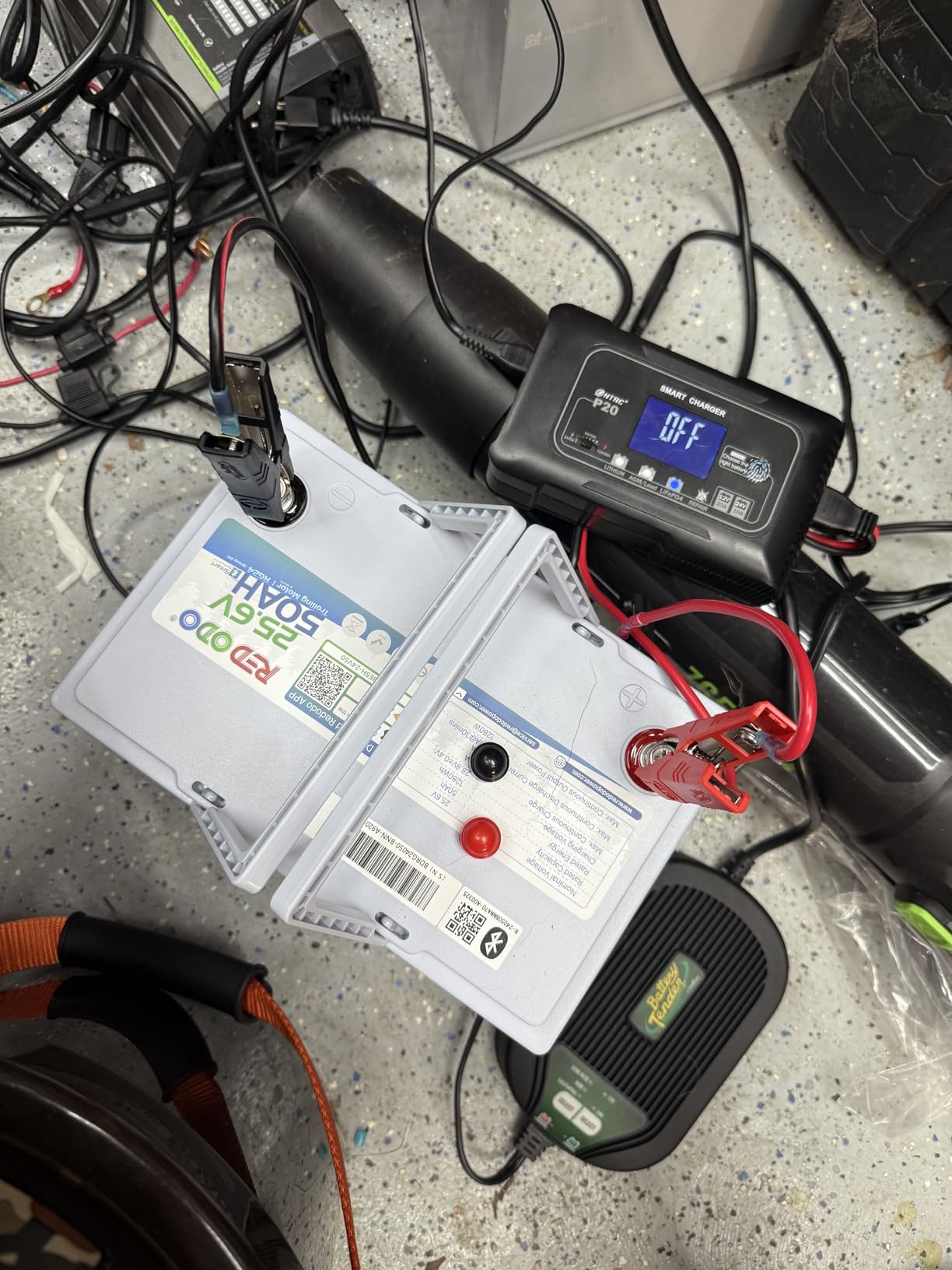
If your motor is 24V, this removes the most common wiring headache in the whole category. Instead of two 12V batteries in series with matched cables and balancing, you get a single 25.6V 50Ah pack delivering the same 1,280Wh, at 21.1 pounds, in a Group 24 footprint that fits standard battery boxes.
Continuous discharge is 60A, and the pack is rated for trolling motors up to 100 lb of thrust at full throttle. That is a serious output figure for something this light, and it is why offshore and salmon anglers use 24V lithium rather than stacking lead acid. iFish forum owners running 24V 100Ah lithium banks report eight to ten hours of trolling without needing a kicker battery.
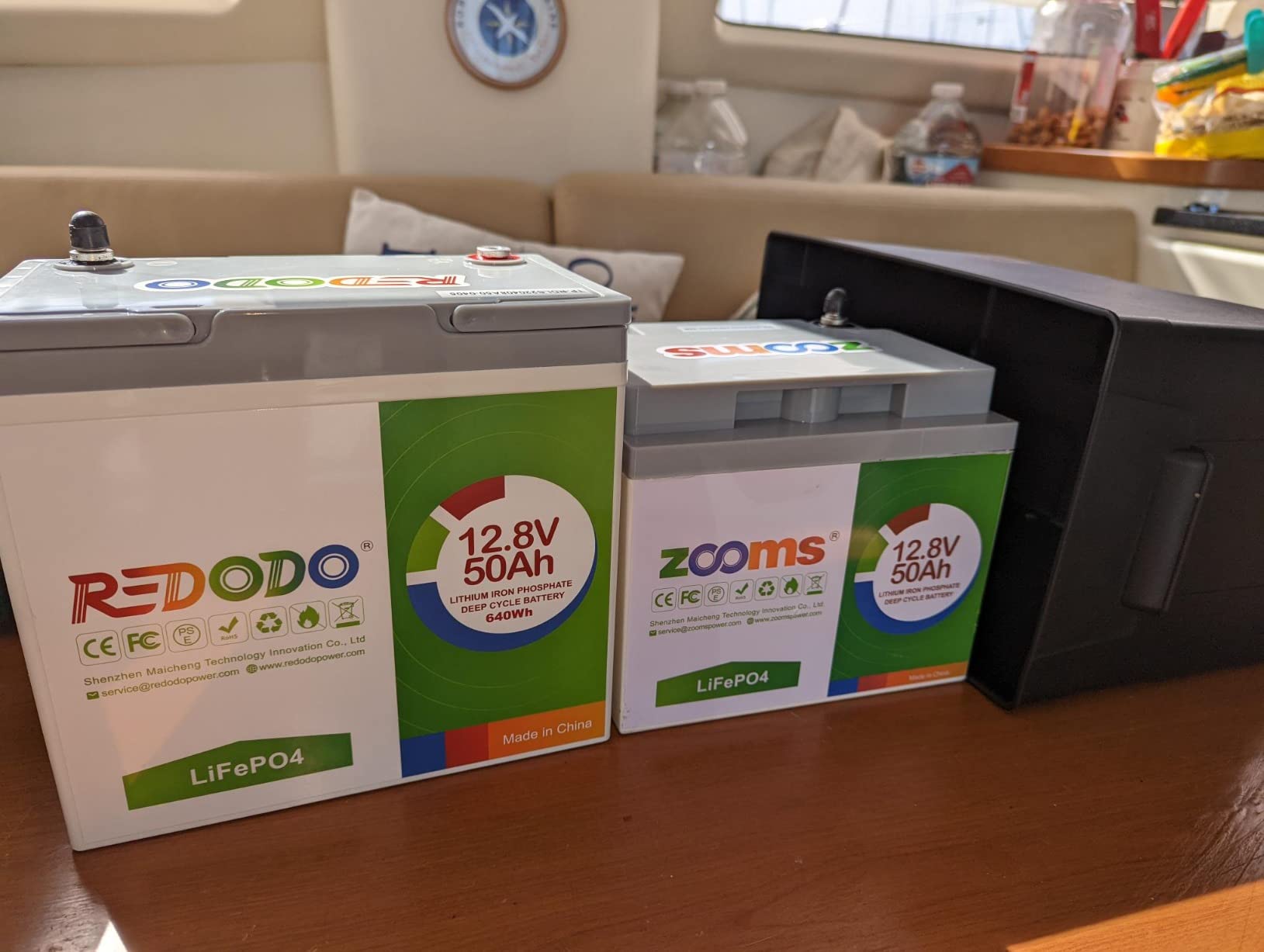
Bluetooth monitoring is genuinely useful on a 24V system, because the app reports charge status, cycle count, temperature and battery health, and allows remote discharge and power-off control. Grade A cells deliver more than 4,000 cycles at full depth of discharge, and the BMS covers overcharge, over-discharge, short circuit and a low-temperature cut-off. It expands to 10.24kWh at a maximum of 4P2S.
Support is available around the clock with one-on-one coverage, and the five-year warranty is among the longest in this roundup. The physical design is the quiet strength: at 6.61 by 10.24 by 8.27 inches it fits a standard Group 24 battery box without fuss.
The 4.3-star caveat
This is the lowest-rated battery in the roundup, with 10 percent of reviews at one star. The complaints concentrate on packs that would not wake or accept a charge, and on the mandatory dedicated LiFePO4 charger with 0V capability before first use. Some users have to jump the BMS to wake a deeply discharged pack.
Do you actually need 24V?
Only if your motor is 24V or you are running very high thrust in current or wind. A 36V motor needs a third series battery, which means three times the wiring, three matched batteries and a bigger charging budget. If a 12V 100Ah lithium covers your motor, the simpler single-pack approach wins. Our bass boat motor guide covers the thrust ratings that usually work at 12V.
10. DC HOUSE 12V 100Ah Bluetooth LiFePO4 – Best Cell-Level Monitoring
DC HOUSE 12V 100Ah Bluetooth LiFePO4 Trolling Motor Lithium Battery
12.8V 100Ah near Group 24
23.8 pounds
Bluetooth 5.1 per-cell data
3-year warranty
Pros
- Per-cell Bluetooth readings with fault alerts and push notifications
- Aggressive cold-weather cutoff that auto-recovers
- UL and UN38.3 certified Class A cells
- Near Group 24 fit so most standard boxes accept it
Cons
- 3-year warranty is the shortest of the lithium options
- Charging cuts off below 19.4F so the pack needs warming first
- Bluetooth range is only 5-10 meters
Most Bluetooth batteries report one number: pack state of charge. This one reports per-cell voltage and current, and pairs that with a fault display page and push notifications, so you can catch a single weak cell before it takes the whole bank down. If you run long trips far from a charger, that is the most useful telemetry in this roundup.
It is a 12.8V 100Ah LiFePO4 at 23.8 pounds in a footprint close to BCI Group 24, roughly 0.32 inches taller than a standard Group 24 unit, so most standard battery boxes accept it without modification. Bluetooth is version 5.1 with a 5-10 meter signal range through the DC HOUSE app.
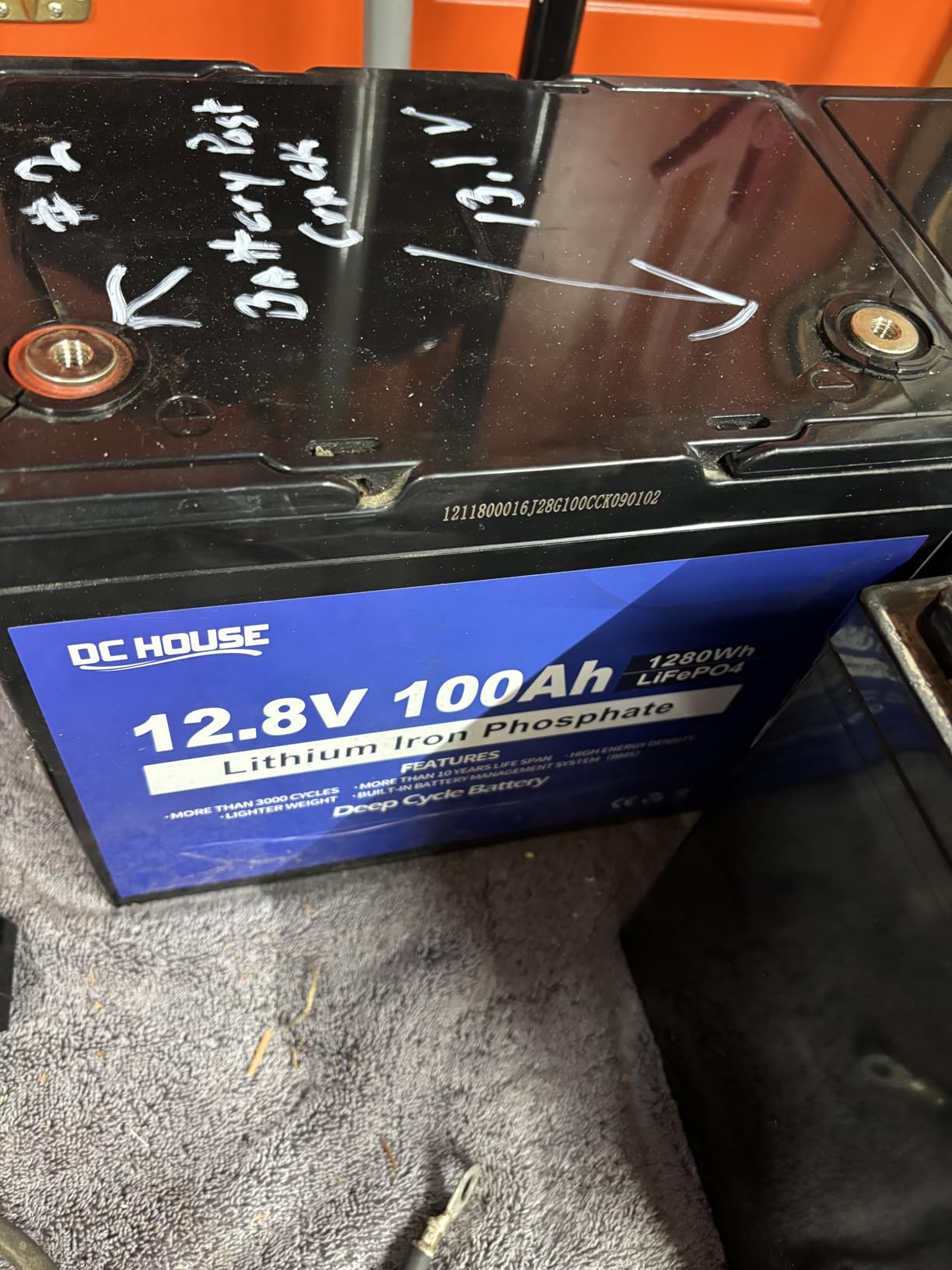
Temperature protection is the most aggressive in the group: charging stops below 19.4F, discharging stops below -4F, and it automatically recovers above 32F. On a cold-water trip that means the pack protects itself instead of being damaged, at the cost of a warm-up period before it will accept a charge.
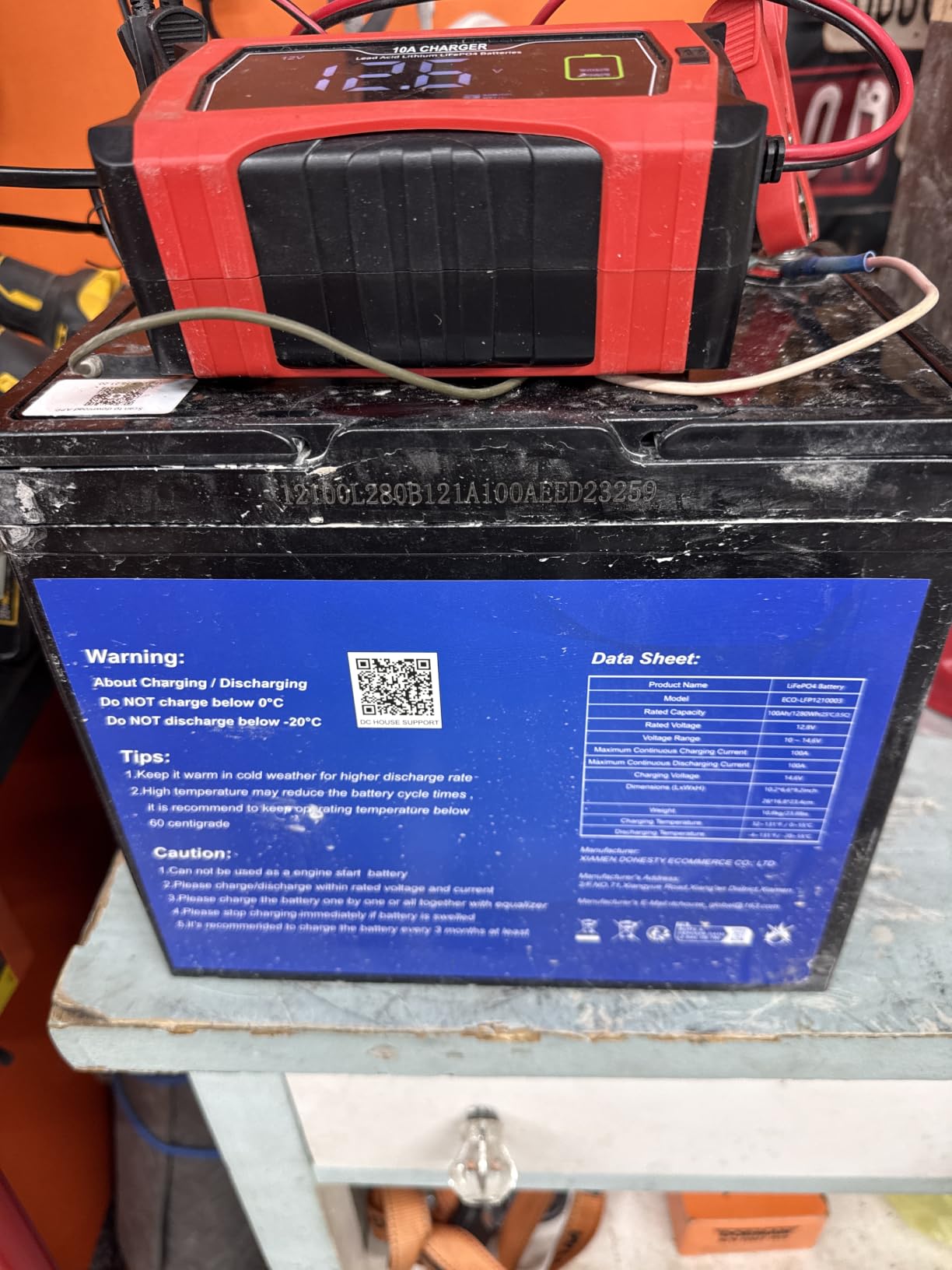
Cells are Class A and UL plus UN38.3 certified, cycle life is claimed at up to 15,000 cycles with a 10-year service life, and the 100A BMS handles the usual protection suite. It is rated for energy storage use only, not starting or cranking.
Check the expansion rules
Unlike most packs here, this one cannot be built as 4P4S. It expands up to four in series or four in parallel, eight batteries total, and the manufacturer explicitly does not allow the 4P4S combination. If you are planning a 24V or 48V build, confirm your configuration is legal for this specific battery before you order.
Best fit for multi-day and cold-water fishing
Choose it when you fish alone far from shore, when you want warning before a cell fails rather than after, or when your season starts in cold weather and you value a 19.4F charging cutoff. The three-year warranty and the 5-10 meter Bluetooth range are the trade-offs, and both are manageable with a good charger and a phone in your pocket.
LiFePO4 vs AGM: Which Chemistry Wins an All-Day Troll
Lithium wins on usable capacity, weight and cycle life. AGM wins on tolerance for neglect, cost up front and the ability to be topped up by almost any charger. That is the honest comparison, and the table below is why most of this roundup is lithium.
| Factor | LiFePO4 | AGM lead acid |
|---|---|---|
| Usable depth of discharge | About 90 percent | About 50 percent |
| Usable capacity of a 100Ah pack | About 90Ah | About 50Ah |
| Weight of a 100Ah pack | 21.6 to 25.4 pounds | 57 to 68 pounds |
| Claimed cycle life | 4,000 to 15,000 depending on depth | 300 to 500 |
| Self-discharge per month | About 3 percent | 1 to 3 percent |
| Charger requirement | Dedicated LiFePO4 profile | Standard smart charger |
| Low-temp charging | Blocked below 32F on several models here | Charges down to about 14F |
One piece of angler wisdom that rarely makes it into roundups: the Great Lakes Fisherman crowd treats lithium as a partial-cycle battery and keeps it in the 30-70 percent state-of-charge band rather than running it to empty. That habit extends calendar life without costing you anything, and it is the operating style we would recommend for anything you keep in a truck bed through January.
The weight math is the argument that closes most debates. A 24V 100Ah LiFePO4 bank weighs about what a 12V 75Ah lead acid does, which means you can carry the same usable energy in half the volume. On a kayak or a small jon boat, that difference decides whether an all-day battery is possible at all.
Buying Guide: Sizing a Battery Bank for Your Motor
Start with thrust, not with a target number. As a rough guide, a 30 lb motor wants 50Ah, a 40 lb motor wants 100Ah, and anything from 55 lb up wants 100Ah minimum and often a second battery. Anglers running 100 lb motors offshore generally go to 24V with two matched packs. A full-day 55 lb thrust setup on lithium is one 100Ah battery, and on AGM it is two, because of the 50 percent usable rule.
Then match the group size to your tray. Group 24, Group 27 and Group 31 are physical dimensions, not power ratings, and they do not interchange without modification. Group 24 is the easiest to fit on older boats, Group 31 is the most common on modern bass boats, and Group 27 sits between them. Measure the tray and the cable reach before you order, because this is the number one return reason in this category.
Weigh it against your boat type. A kayak or a 12-foot jon boat should stay under about 30 pounds of battery. A bay boat in the 16-18 foot range can comfortably carry 50 to 70 pounds. Offshore boats over 20 feet have no meaningful constraint. Our saltwater motor guide helps you match thrust to hull size first.
Series and parallel, in plain terms. Series adds voltage: two 12V packs in series give 24V, three give 36V. Parallel adds capacity: two 100Ah packs in parallel behave like one 200Ah pack. Do not mix lithium with lead acid in the same bank, and do not mix batteries of different ages or capacities, because the older unit becomes the weak link and drags the whole bank down.
Finally, plan for a reserve. Trolling until the battery reads empty and then discovering the boat is 300 yards from the ramp is a bad afternoon. Keep roughly 20 percent of your rated capacity in reserve as a get-home margin, and on a 100Ah lithium that means treating about 18-20Ah as untouchable.
Chargers, Cold Weather and Saltwater Care
Match the charger to the chemistry. Every lithium pack in this roundup specifies a 14.4-14.6V LiFePO4 charge profile, and several manufacturers state outright that non-lithium chargers are not recommended. Lead acid accepts overcharging far more gracefully, which is why a boiled AGM is the classic way anglers destroy an otherwise fine battery. Our deep cycle charger guide covers the profiles in detail.
Respect the cold-weather cutoffs. The lithium packs here block charging below 32F, and the DC HOUSE goes further, stopping at 19.4F with automatic recovery above 32F. This protects lithium plating damage, and it means you cannot recharge a cold pack on a frozen dock. Warm the battery first, then charge. The WEIZE AGM charges down to about 14F, which is one of the quiet advantages of lead acid in northern conditions.
Store it right over the offseason. Charge to full, disconnect the motor leads if the boat sits for months, keep the pack between roughly 40 and 60 percent for long storage, and put it somewhere above freezing and dry. Self-discharge on these packs runs 1-3 percent per month, so a neglected battery can drift low enough to need a recovery charge in spring, and stored lithium packs are the ones that occasionally arrive with a sleeping BMS.
Rinse the salt off. Saltwater corrosion on terminals and connectors is the most preventable failure in this category. After every saltwater trip, rinse the battery and the cable ends with fresh water, wipe the posts dry, and check that the terminal hardware is tight. The IP65 and salt-resistant lithium cases help, but no case is a substitute for a hose.
Frequently Asked Questions
How long will a 100Ah battery run a 55lb trolling motor?
At the 55 lb motor’s typical 30 amp draw, a 100Ah lithium pack gives about 3.0 hours at medium to full throttle, because roughly 90 usable amp-hours divided by 30 amps equals 3 hours. A 100Ah AGM gives about 1.7 hours, since only half of its capacity is usable. Back the throttle down to cruising speed and both figures roughly double, and expect another 20 percent haircut for wind, current and a fouled prop.
Is a 100Ah lithium battery enough for a trolling motor?
Yes, for most 30-70 lb thrust motors. A 100Ah LiFePO4 delivers about 90 usable amp-hours, which covers a full day of trolling at medium speed on a 40 or 55 lb motor, and it weighs roughly 22 to 25 pounds instead of 57 to 68 for the same nominal AGM capacity. For 80 lb and larger motors, or for 24V offshore setups, plan on a second matched battery.
What kills AGM batteries?
The most common killers are deep discharge, prolonged storage at low charge, heat, and overcharging. Pushing an AGM below about 50 percent state of charge causes sulfation, which is why owners report units that stop accepting charge around 73 percent capacity. A charger with the wrong voltage profile boils the electrolyte, and leaving a battery half-drained through winter is a reliable way to shorten its life to two or three seasons instead of five.
Are lithium batteries bad for Minn Kota trolling motors?
No. LiFePO4 works well with modern Minn Kota and other brushless motors, and anglers report that brushed motors actually draw slightly less current on lithium because the higher resting voltage means more usable energy per amp. The real caution is charging: give a lithium pack a charger with a 14.4 to 14.6V LiFePO4 profile, not a lead acid profile, and do not mix lithium and lead acid in the same bank.
How long does a 100Ah lithium battery take to recharge?
With a 14.6V 20A LiFePO4 charger, a 100Ah pack reaches a full charge in about five hours, which is the figure Power Queen publishes for its 12V 100Ah Group 31. With a smaller 10A charger on a 50Ah pack, expect roughly five to six hours. Budget more time if the pack is cold, because the batteries in this roundup block charging below 32F and need to warm up first.
The Verdict: Which Trolling Motor Battery to Buy in 2026
The best trolling motor batteries for all day fishing in 2026 come down to three decisions: how much usable capacity you need, how many pounds the boat can carry, and whether you are willing to change your charging habits. Buy the LiTime 12V 100Ah LiFePO4 if you want the complete package of 100Ah capacity, 22 pounds of weight, live Bluetooth state of charge and a five-year warranty. It is the best all-round choice for a 40-70 lb motor and the one we would put in our own boat.
If your tray is a Group 24, take the SUPER EMPOWER 12V 100Ah instead, which is a true drop-in at 21.6 pounds with a 100A BMS and a five-year warranty. On a kayak or a small jon boat, the BtrPower 12V 50Ah at 11 pounds is the sensible entry point for 30-50 lb motors. Offshore with a 24V system, the Redodo 24V 50Ah pack removes the series wiring entirely, and for 55 lb and larger motors in a boat that can carry the load, the VMAX Group 27 marine AGM remains a proven choice.
Whichever you pick, buy the right charger at the same time, keep 20 percent of your capacity in reserve, and rinse salt water off the terminals after every trip. That habit alone will outlast the difference between any two batteries on this list.