
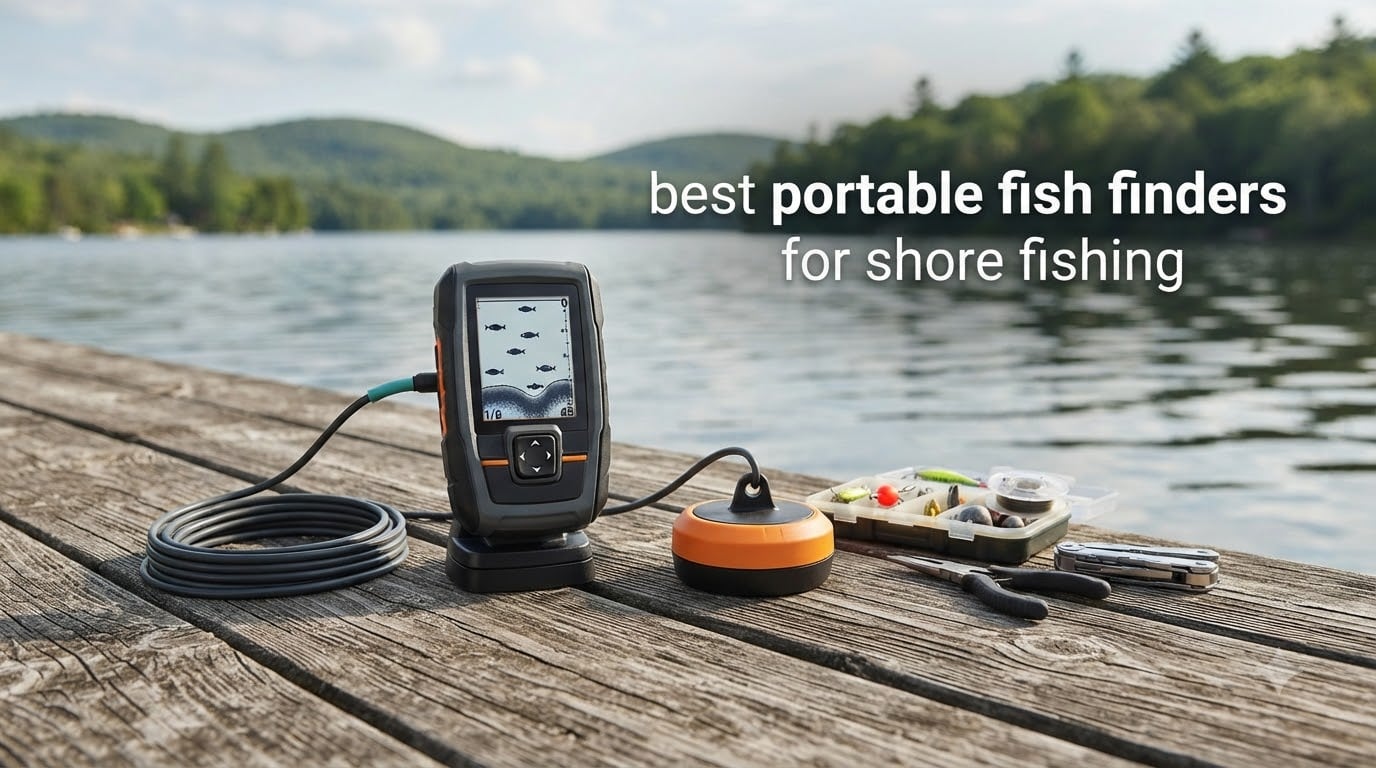
Do fish finders work from shore? Yes, but only if you pick the right deployment for the spot. A castable sonar streams readings to your phone out to roughly 200 to 330 feet, while a wired unit in a portable case can be clamped to a dock piling, a bank stick or a railing and read the water directly below you. The mistake most shore anglers make is buying the wrong type for the water in front of them.
That is the whole reason we built this guide to the best portable fish finders for shore fishing. Every pick below is mapped to one of the three ways you can actually get a transducer into the water from land: cast it out on a tether, clamp it to something solid, or hold it vertical by hand. We looked hard at casting range, maximum depth, target separation, screen readability in direct sun, battery runtime, and whether the unit needs your phone to work at all.
Two things up front. We did not bench-test these on a calibrated rig. What we did was compare the published specifications against thousands of owner reviews and long-running community threads, weighting the criteria that actually break down on a bank, and calling out the flaw on every single pick. If you also fish from a paddlecraft, our fish finder picks for kayaks cover the smaller-screen side of this. Anglers moving to a small boat can start with our small-boat sonar guide.
Table of Contents
Top 3 Best Portable Fish Finders for Shore Fishing

Garmin Striker 4 Portable Kit
- CHIRP sonar
- GPS waypoint map
- Built-in flasher
- Full portable kit

Garmin Striker Cast
- 200 ft streaming
- 10+ hour battery
- 2-D and flasher modes
- Quickdraw contours
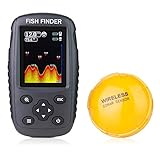
One quick note before the full list. The three devices in that box solve three different problems. The Striker 4 is a complete, self-contained shore setup that never touches your phone. The Striker Cast is a castable puck that streams to your phone across the longest usable link in this group. The Venterior gives you a real color screen without a phone at all, which matters more than most people expect when the sun is on the water.
Portable Fish Finders for Shore Fishing in 2026: Quick Overview
The table below is the fastest way to narrow the field. Match the deployment column to the water in front of you first, because a unit that reads brilliantly but cannot be mounted or cast from where you stand is useless.
| Product | Specs | Action |
|---|---|---|
| Garmin Striker 4 Portable Kit |
|
Check Latest Price |
 Deeper PRO+ 2 Deeper PRO+ 2 |
|
Check Latest Price |
| Garmin Striker Cast |
|
Check Latest Price |
| Venterior VT-FF005 |
|
Check Latest Price |
 ReelSonar iBobber ReelSonar iBobber |
|
Check Latest Price |
 HawkEye FishPod 5X HawkEye FishPod 5X |
|
Check Latest Price |
 HawkEye DT1H HawkEye DT1H |
|
Check Latest Price |
 LUCKY 1108 LUCKY 1108 |
|
Check Latest Price |
Every ASIN in that table appears in its own review below with the honest flaw spelled out.
1. Garmin Striker 4 Portable Kit: Best Overall for Shore and Bank
Garmin 010-01550-10 Striker 4 Fish-Finder with Portable kit, 3.5″
3.5 inch LCD
CHIRP sonar
200 W RMS
1600 ft freshwater depth
8 oz
Pros
- Highest rated in this group at 4.7 stars over 2000 reviews
- Crisp fish arches with good target separation
- Complete kit with battery transducer mounts and bag
- GPS waypoint map for repeat spots
- Screen readable in direct sun
Cons
- Paper documentation is thin
- No sun visor for the 3.5 inch screen
- Waypoint map only with no chart detail
- Ice transducer sold separately
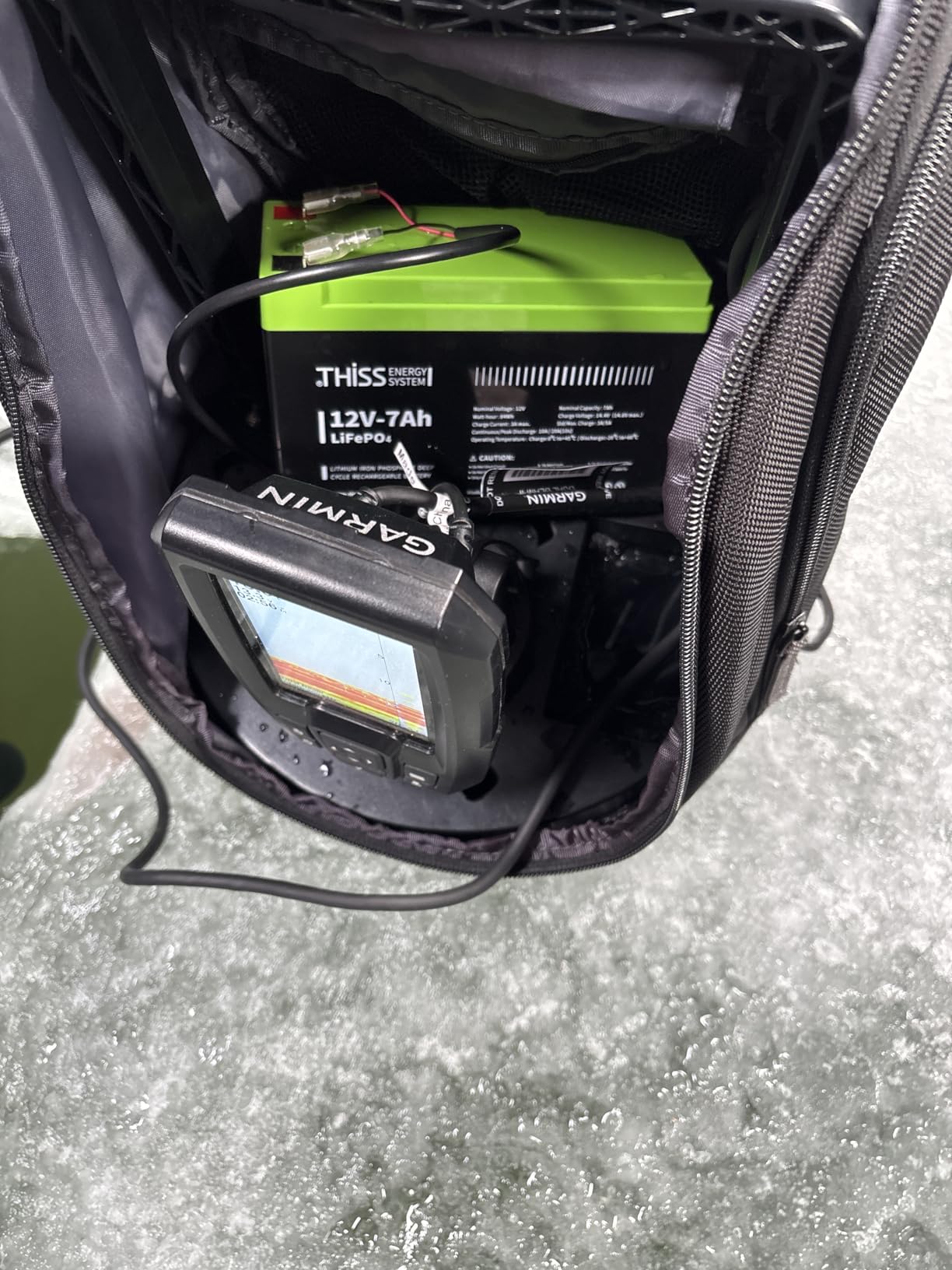
This is the one we recommend to most bank anglers, and the rating backs it up: 4.7 stars across more than 2,000 reviews, the highest score in this roundup by a clear margin. The kit arrives complete with the transducer, the tilt and swivel mount, transom and motor mounts, a kayak in-hull mount, the rechargeable battery and a carry bag. Nothing else on this list asks you to buy a second box to get started from shore.
CHIRP sonar is the real reason the image holds together. Instead of a single frequency, it sweeps a continuous band, which tightens the fish arches and improves target separation. At 200 watts RMS with a 1,600 foot freshwater rating, it also has far more headroom than any inland bank ever needs.
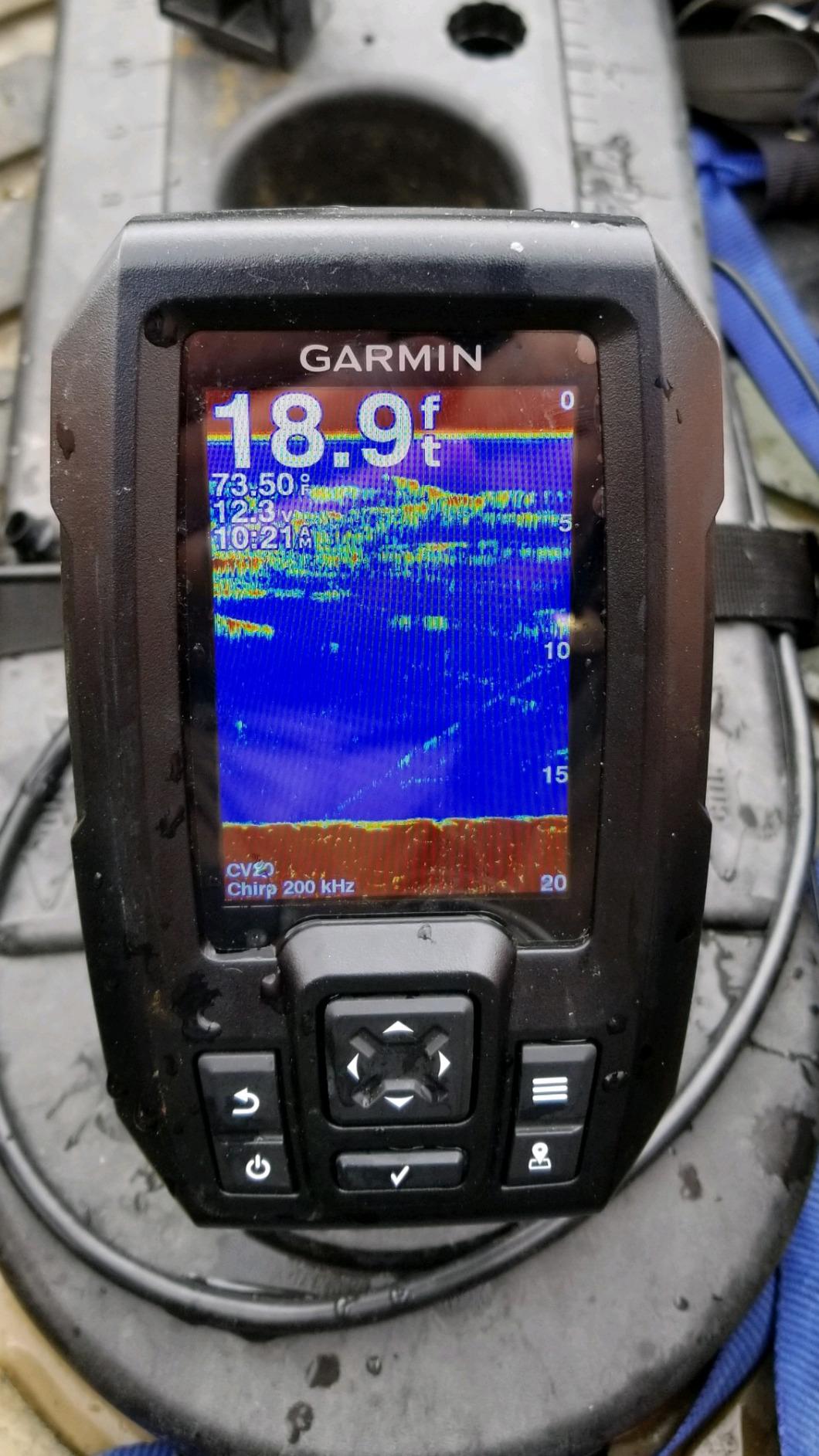
Owners report years of trouble-free use across ice, kayak and small-boat conditions, and the rechargeable pack runs multiple full days. In kayak and portable threads on r/Fishing_Gear it is the unit that comes up most often, praised for the simple button interface, the suction-cup transducer and the fact that it works in a rental boat with zero install. People in r/saltwaterfishing specifically recommend a Garmin Striker for saltwater use with no drilling.
The honest flaw is documentation, not performance. Most owners set the unit up by following setup videos rather than the manual, and the power cable has no Y-connector, so you pull the battery leads off the terminal to charge it. Neither issue matters much in the field.
Is the Striker 4 the right pick for a spot you keep fishing?
Yes, because the waypoint map is the feature that pays for itself on repeat trips. Mark the brush pile, the stump field or the dock corner that produced fish last month, and next session you cast straight to it instead of guessing. Flasher mode also comes built in, so the same box handles vertical jigging when the season turns.
Sonar history scroll-back lets you watch how a jig pattern moved the fish, which is a quiet advantage nobody mentions until they have used it.
Where the 3.5 inch screen and the waypoint-only map fall short
The 3.5 inch panel is small for anglers wearing polarized glasses at midday with no visor, though owner reviews consistently report it stays readable in direct sun. The map is waypoint-based, so you get your own pins rather than chart detail of creek channels and drop-off edges.
If you need full mapping, look at the GPS fish finder options for bass boats instead, or step up to a castable with built-in GPS below.
2. Deeper PRO+ 2: Best Castable With Built-In GPS Mapping
Deeper PRO+ 2 Sonar Fish Finder – Portable Fish Finder and Depth Finder For Kayaks, Boats and Ice Fishing with GPS Enabled | Castable Deeper Fish Finder with FREE User Friendly App
Up to 330 ft range
Built-in GPS
0.4 in narrow-beam separation
3.2 oz
Pros
- Built-in GPS builds bathymetric maps from the bank
- Three beam options for scanning or targeting
- Very light at 3.2 ounces
- Own Wi-Fi link is steadier than Bluetooth
- Free app with logbook and mapping
Cons
- Screen quality depends entirely on your phone
- Narrow-beam separation needs a steady cast
- App pairing takes practice to learn
- Costs more than entry castables
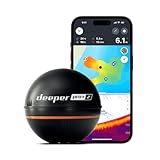
This is the pick if your bank has deep water close in and you want to map it properly. At 3.2 ounces it lives in a tackle box, and the built-in GPS is the feature that separates it from cheaper castables: you pull a retrieve across a spot and the app builds a bathymetric map of the bottom from shore or dock, with no subscription involved.
Three beam options change how you work. Wide beam scans a lot of water fast when you are searching, mid beam is the general-purpose default, and narrow beam drills into one spot with 0.4 inch target separation. That figure is manufacturer-stated, and it only holds with a steady cast and careful reeling, so treat it as a best case rather than a promise.
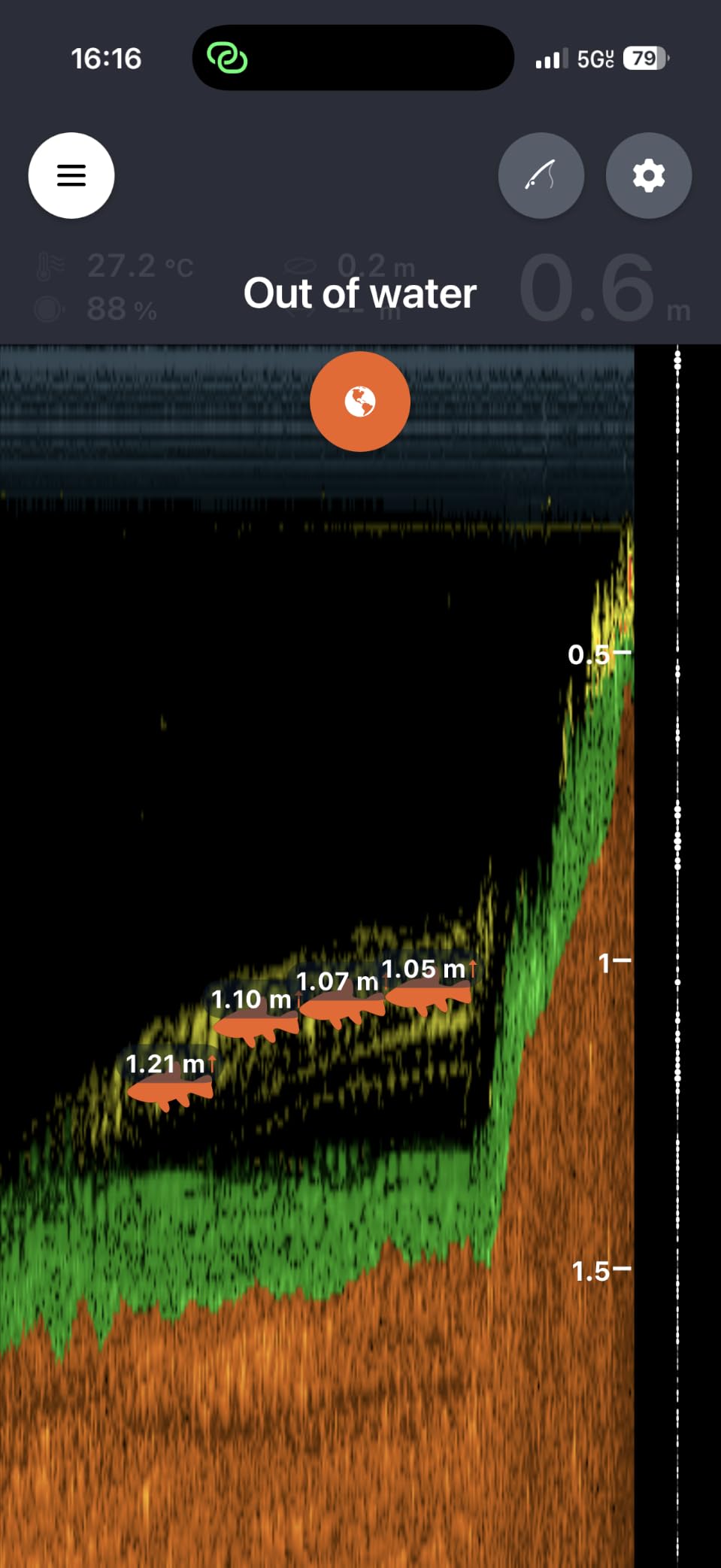
The own Wi-Fi connection is the quiet reason it outperforms Bluetooth-only rivals. Owners call out a 330 foot range as the real ceiling on a good cast, and mention the built-in GPS plus the ability to record and save maps from a bank as the reason it stands apart from cheaper castables. On r/Fishing and other kayak threads, Deeper Pro units are widely used from the bank and dock, though the community splits hard on whether phone-as-display is acceptable at all.
The honest flaw is that everything you see is on your own screen. The 2.4 inch body has no usable display of its own, so image quality, brightness and glare are all decided by the phone in your hand.
Does the built-in GPS change how you fish a bank?
More than most buyers expect. Because the unit records depth and position as it moves, you can walk or paddle a drop-off once, save the map, and then re-fish the same contour on a later trip without guessing. For water where the interesting structure is more than a rod length from the bank, that turns scouting into a repeatable process.
It also survives being passed between craft, which matters if you fish the same water from a kayak, a dock and an ice hole across the year.
When a phone-as-display is the wrong call
It is wrong when the sun is flat on the water and you are wearing polarized glasses, or when your phone battery is already at half charge after two hours of navigation. A dark phone screen in direct sun is the single most common complaint across the castable category, and reviewers are honest that a castable is not a substitute for a dedicated display when the phone is wet or bright.
Budget the session before you leave. A full phone charge, a sun hood and a waterproof pouch solve most of it, and we cover the field technique in the deployment section below.
3. Garmin Striker Cast: Best for Reaching Structure Well Off the Bank
Garmin Striker Cast, Castable Sonar, Pair with Mobile Device and Cast from Anywhere, Reel in to Locate and Display Fish on Smartphone or Tablet (010-02246-00)
Streams up to 200 ft
10+ hour battery
2-D and flasher modes
75 g
Pros
- 200 ft streaming range beats Bluetooth-only castables
- 10+ hour internal rechargeable battery
- Water-activated on and off saves power
- Rugged castable body with tether and bag
- Works with Apple and Android
Cons
- Everything displays on your phone
- Streaming can drop when the phone sleeps
- Basic package with no bundled extras
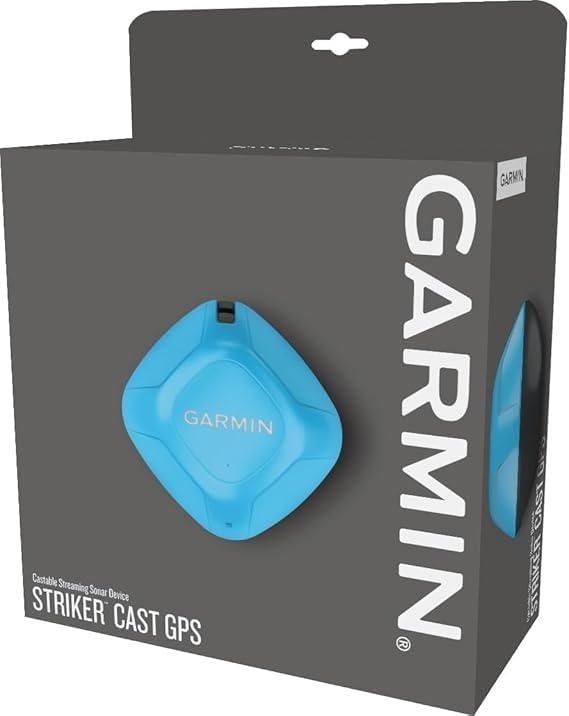
Where the PRO+ 2 maps, this one simply reaches. Both traditional 2-D and ice flasher modes stream from up to 200 feet, which makes it the pick for a shoreline where the drop-off, the channel edge or the wreck sits too far out to reach with the usual castable Bluetooth limit. Owners consistently single out that streaming distance as the reason to buy it over a cheaper puck.
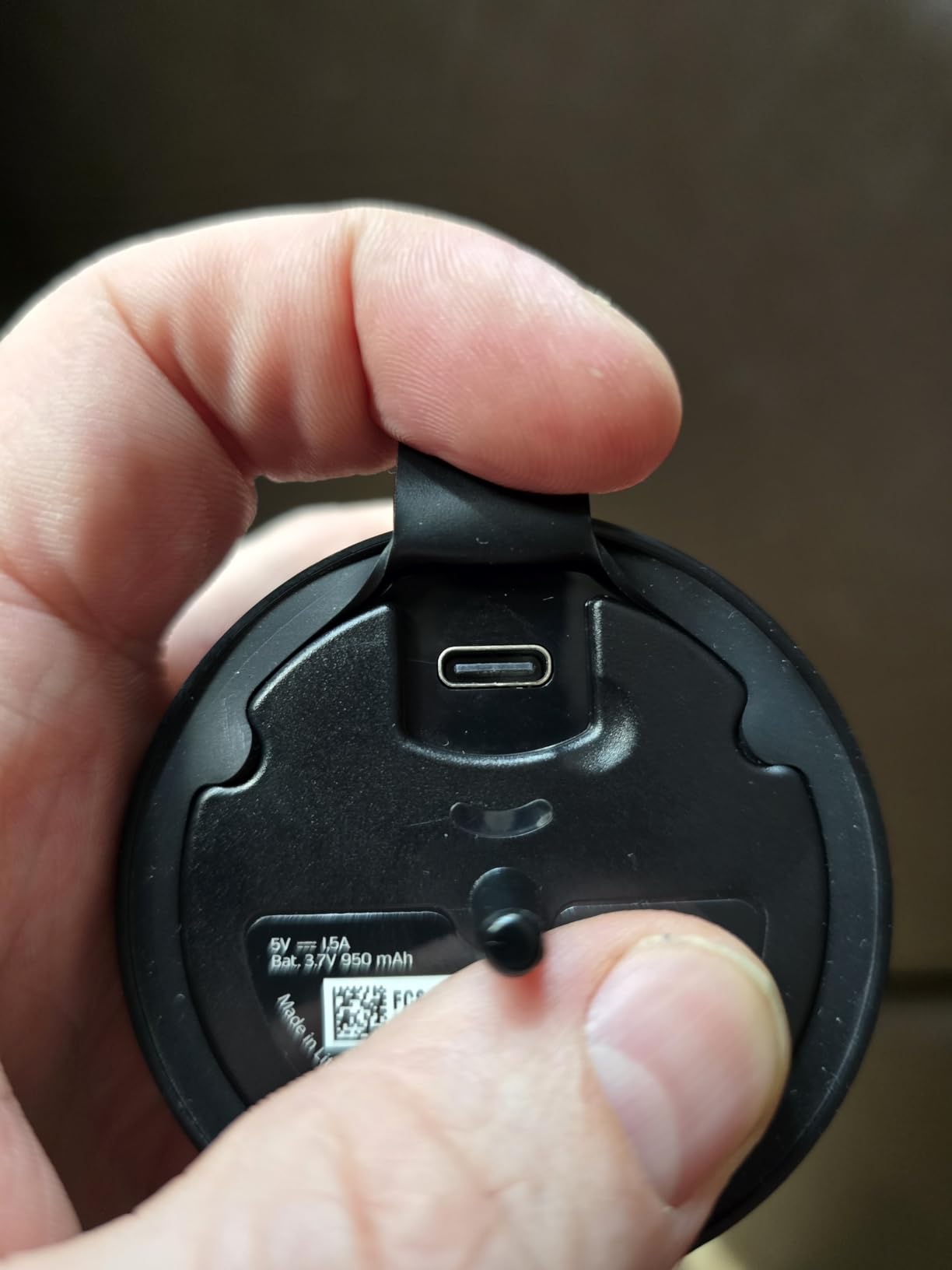
Power is the second strength. The internal USB-rechargeable battery runs 10 hours or more, and the unit wakes when it hits the water and sleeps when you pull it out, so a single charge covers a full day of casting from a bank.
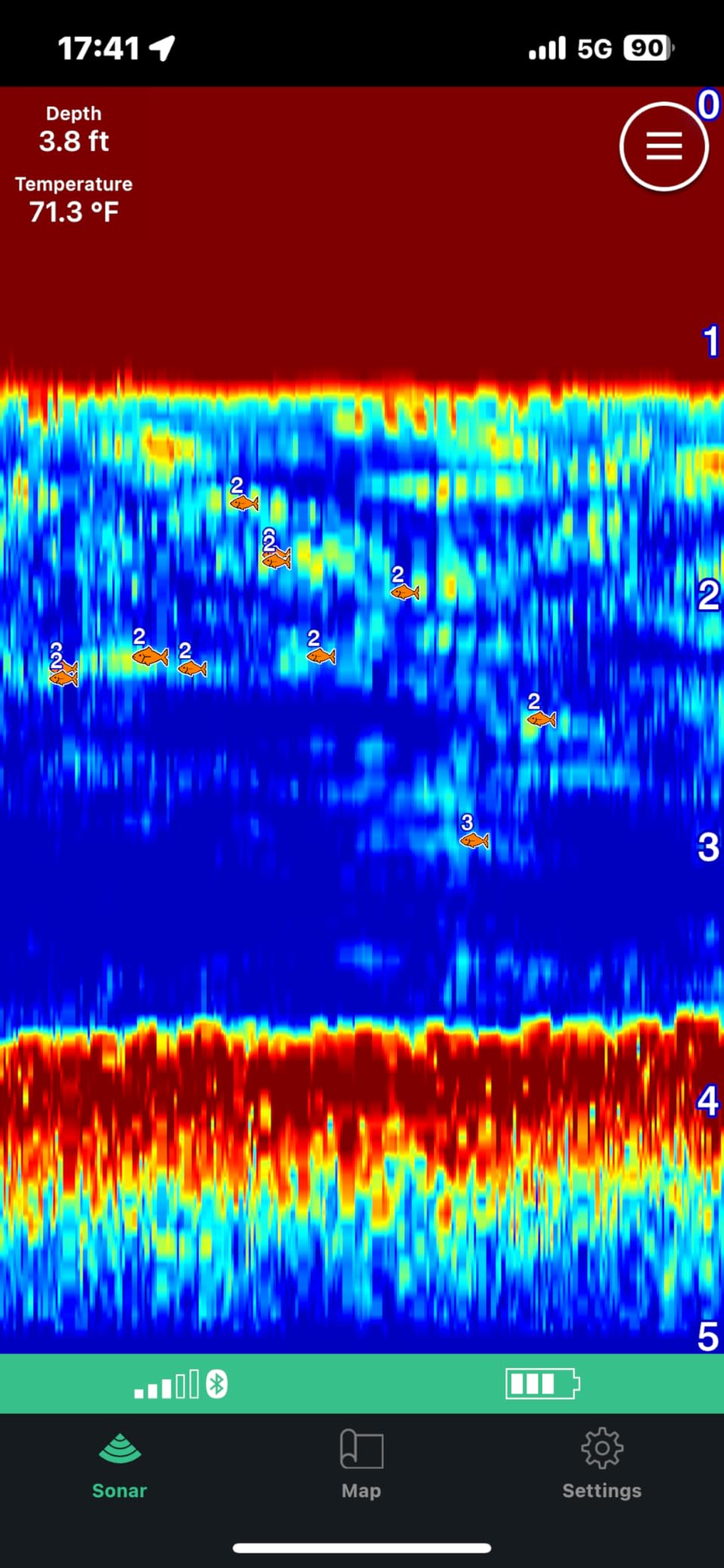
The Garmin app is free and works on both iOS and Android, and you can pull maps with 1 foot contours from the Garmin Quickdraw Community for spots other anglers have already recorded. Reviewers describe it as the most capable castable in this group, with a rugged build and reliable streaming. It is also a genuinely small box, which matters if you are walking a shoreline rather than sitting on one spot.
The honest flaw is again the phone, plus one stingy detail in the box. The package includes the unit, a 20 foot tether, a carrying bag, a USB cable and documentation. There is no transducer cable, because this is a self-contained puck rather than a wired system.
How much of the 200 ft streaming range is usable from a bank?
Treat the figure as the outer limit, not the working range. Real sessions settle into a comfortable band well inside it, and what limits you is casting skill and how much line your rod will lay out cleanly. The retrieve itself wants to be slow, roughly a foot of line per second, and you cast parallel to a drop-off rather than straight out so the arc follows the contour instead of crossing it.
If you cannot hit the structure, no amount of range helps. Practise the cast on a shoreline you already know before you trust the reading.
What the package does not include
Nothing you need to start, and nothing much beyond that. There is no ice mode accessory, no separate transducer and no mounting hardware, because none of that applies to a castable puck. Variants exist with and without GPS, so check which one you are actually buying if you want position logging rather than just sonar.
If your priority is mapping rather than reach, the PRO+ 2 above is the better fit.
4. Venterior VT-FF005: Best Value With a Built-In Color Screen
Venterior Portable Rechargeable Fish Finder Wireless Sonar Sensor Fishfinder Depth Locator with Fish Size, Temperature, Bottom Contour, Color Display
2.6 inch color TFT
262 ft sensor range
2.6 to 164 ft depth
105 degree beam
Pros
- Own color screen so no phone is required
- Switchable black and white backgrounds for sun or night
- Shows depth temperature fish size and contour together
- Connects instantly when it hits the water
- 2-year warranty with responsive support
Cons
- Wide 105 degree beam gives false returns
- Not useful over roughly 120 ft of depth
- Battery drains fast in always-on alarm mode
- Fish size labels are subjective
This is the answer to a specific frustration: you do not want to hold your phone over a wet line in bright sun. The VT-FF005 comes with its own 2.6 inch color TFT screen, so the sonar and the display are the same object, and the wireless sensor is tethered to fishing line and cast like any other puck. No drilling, no app, no pairing.
The screen background is the detail that matters most from a bank. You can switch between a black background for low light and a white one for direct sun, and owners specifically call out readability in bright sunlight on the white setting. Depth, water temperature, a small or big fish classification, fish depth and bottom contour all appear in a single view.
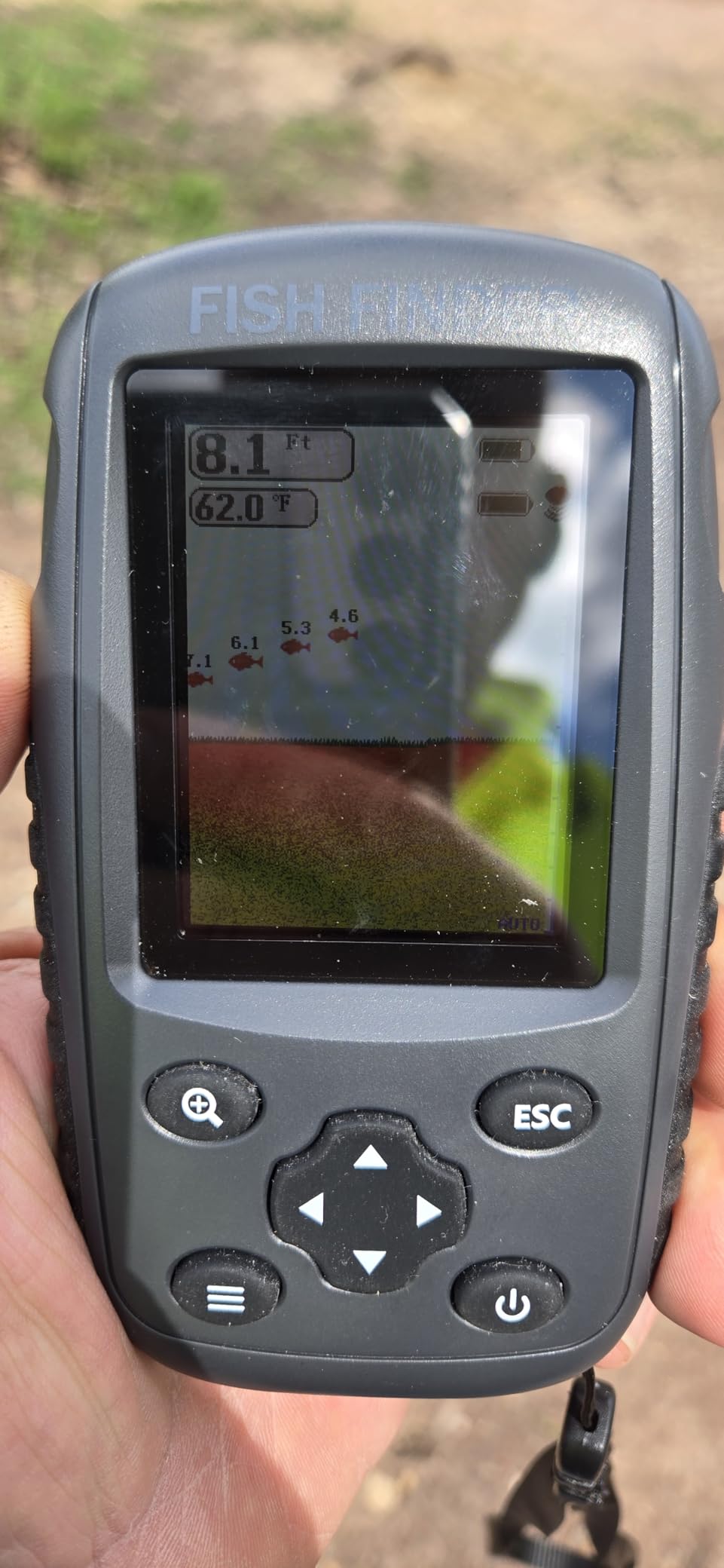
Reviewers describe it as accurate enough to map pond, river or lake structure quickly, with a rechargeable battery lasting about three to four hours of continuous use. The 262 foot sensor-to-unit distance gives it more headroom than most Bluetooth castables, and the 2-year warranty is longer than most of the field. Work and simulation modes help you learn the screen before you get wet.
The honest flaw is the beam angle. At 105 degrees it is a very wide cone, which is great for finding structure and terrible for telling you exactly where the fish is. A wide cone also produces false signals when the sensor is dragged behind a moving boat.
Is the color screen readable in direct sun from a bank?
On the white background setting, yes, and that is the mode you should be using at midday. Glare is the top complaint in almost every phone-based castable review, and this is the pick that simply removes that variable. The 2.6 inch panel is not large, but you are looking at it from arm’s length at your feet, not at a wall of water.
Night sessions work the same way in reverse. Switch to the black background and the same screen serves a dock or boat ramp after dark.
Where the 105 degree beam misleads you
A wide cone paints a broad swath, so two fish on opposite sides of the cone can read as one return, and structure off to one side can appear to sit directly below you. If you are working a specific piece of cover and need precision, this is the wrong tool and a narrow-beam unit is the right one.
Depth is the other limit. The stated range runs 2.6 to 164 feet, but owners find it unhelpful past roughly 120 feet, which rules it out for deep reservoirs. It also reads poorly through ice-hole walls.
5. ReelSonar iBobber: Best for Anglers New to Sonar
Reelsonar Portable Fish Finder Accurate Fish Depth Finder with Depth Range of 135 feet 10+ Hours Battery Life with iOS & Android App Wireless
135 ft depth range
10+ hour rechargeable battery
Fish icons by size
2 inch float
Pros
- Casts well and floats light enough to fish with
- 10 hour battery covers a full day
- Free app with depth-tagged color-coded fish icons
- Glowing LED ring finds the float at night
- Water-activated on and off
Cons
- Bluetooth reach is only about 40 to 50 ft of line
- Needs at least 3.5 to 5 ft of water depth
- App drains phone battery fast
- Strike alarm fires on any small movement
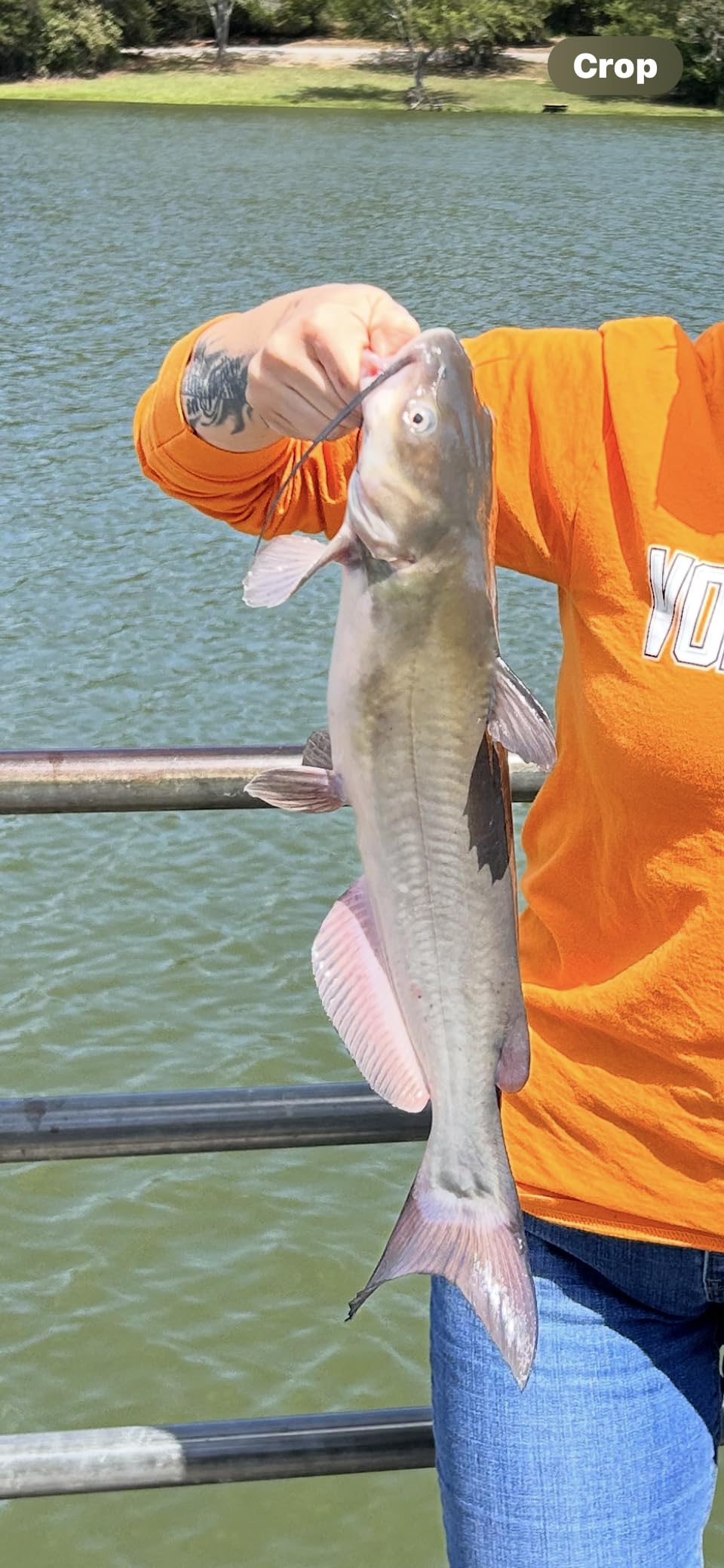
With the most owner reviews of anything in this roundup, the iBobber has the longest field record of the castable category, and that history matters more than any spec. It is also the easiest unit here to start with. It floats, it casts with a normal rod, and the app puts depth-tagged fish icons colour-coded by size on your phone instead of asking you to interpret a raw sonar trace.
The battery is the sleeper feature: a rechargeable pack rated at 10 hours or more, which is longer than most sessions. The glowing LED ring sounds trivial until you have cast at dusk and lost track of a float in the dark.
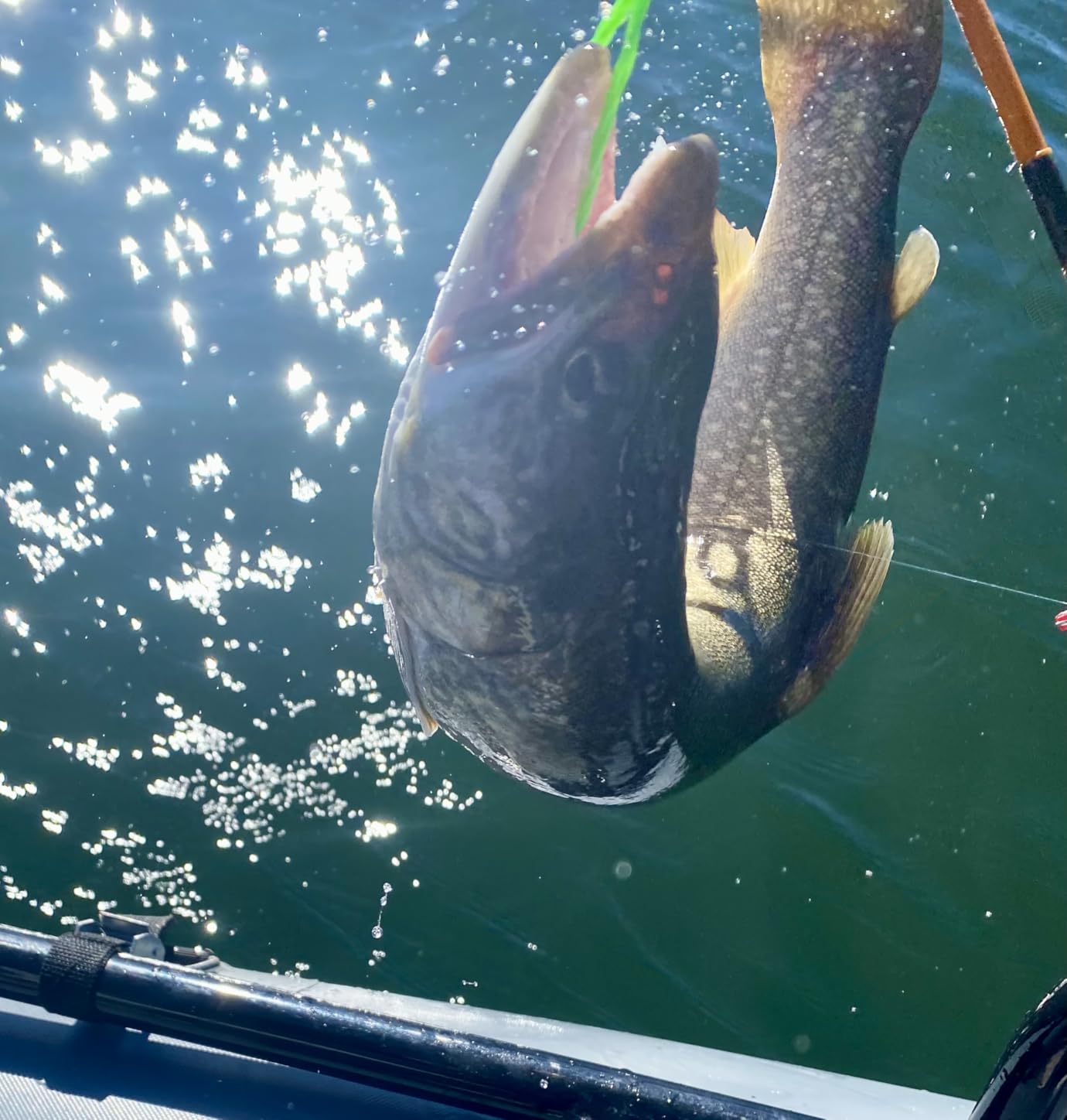
Owners report that it genuinely cuts down time spent fishing unproductive water, and that it works in fresh and salt water from shore or on the ice. It also supports smartwatch display, and the app adds water temperature, a bottom terrain map, and a GPS-based lunar calendar. The unit turns itself on when it hits the water and off when it dries, so nothing is drained on the walk to the bank.
The honest flaw is the 40 to 50 foot practical Bluetooth reach, which is far shorter than the advertised depth capability. Combined with the requirement for roughly 3.5 to 5 feet of minimum depth, it is a lake, river and dock tool rather than a shallow-margin one. Dropouts around aluminium boats are a reported issue too.
Will a 40 to 50 ft Bluetooth link reach the water you want?
It depends entirely on the drop-off relative to your feet. If your bank breaks at 6 to 10 feet of depth, you are fishing inside the range all session. If the structure you want sits 25 feet out, the link will not hold and you should be casting a Wi-Fi puck instead.
Depth is the other gate. Below about 3.5 feet the unit is not usable, which rules it out for shallow sloughs, marsh edges and small creeks.
What the fish icons get wrong
Two things. The icons read weeds as fish, particularly over a soft bottom near vegetation, and the strike alarm fires on any small movement rather than on an actual bite. Treat the icons as a fast way to spot something worth slowing down for, not as a verdict on what is down there.
The app is also a genuine battery drain, and reviewers note that the distance scale is hard to relate to distance from shore at first. Both improve after two or three sessions.
6. HawkEye FishPod 5X: Best for Clamp and 1/4-20 Track Mounts
FishPod 5x Bluetooth Fish Finder With AI Technology
199 ft max depth
Four preset modes
FishEcho filter
TraxNut 1/4-20 thread
Pros
- TraxNut thread fits any 1/4-20 bracket for pilings and tracks
- Reliable Bluetooth out to 60 to 70 ft from the bank
- Four preset modes auto-tune for size and depth
- Depth and temperature readings match higher-end gear
- App is free and simple to set up
Cons
- Vegetation produces false fish returns on basic settings
- Bluetooth degrades when the pod sits deep
- Battery seems to charge only part way
- No ground mapping in the app
Every other castable on this list is a puck on a line. The FishPod 5X is the one that also works as a fixed unit, because the TraxNut mounting system attaches to any 1/4-20 bracket. That is the standard thread used by countless rod holders and rail mounts, so a clamp on a dock piling or a kayak track becomes a two-minute job. It is the pick when your spot has a solid edge to work from.
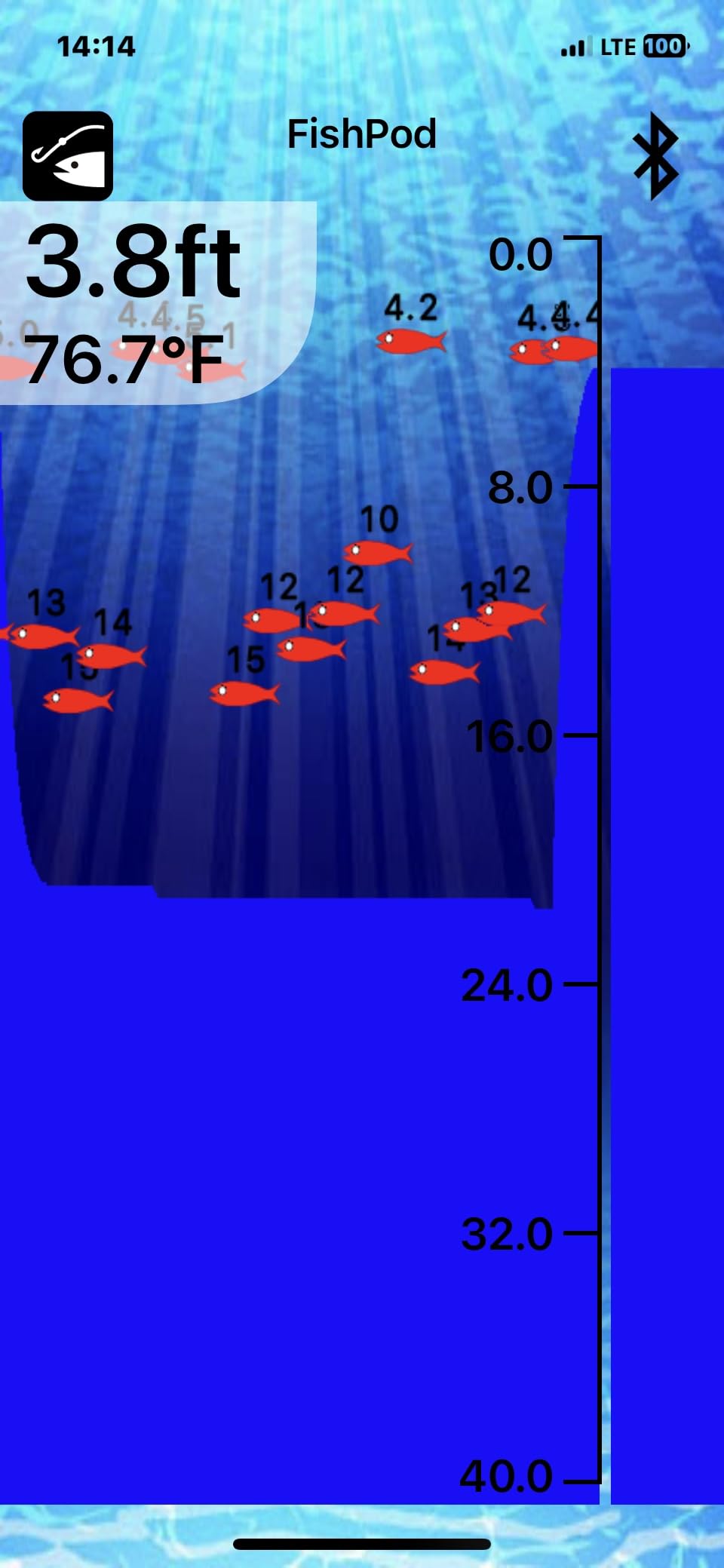
The four preset operating modes auto-adjust the screen for fish by size, depth or schooling habit, and the FishEcho mode tunes the signal in the water column to separate real fish from clutter. BottomScan adjusts the bottom reading to distinguish vegetation from hard or hard-soft bottom, and a vertical flasher mode is there for ice work.
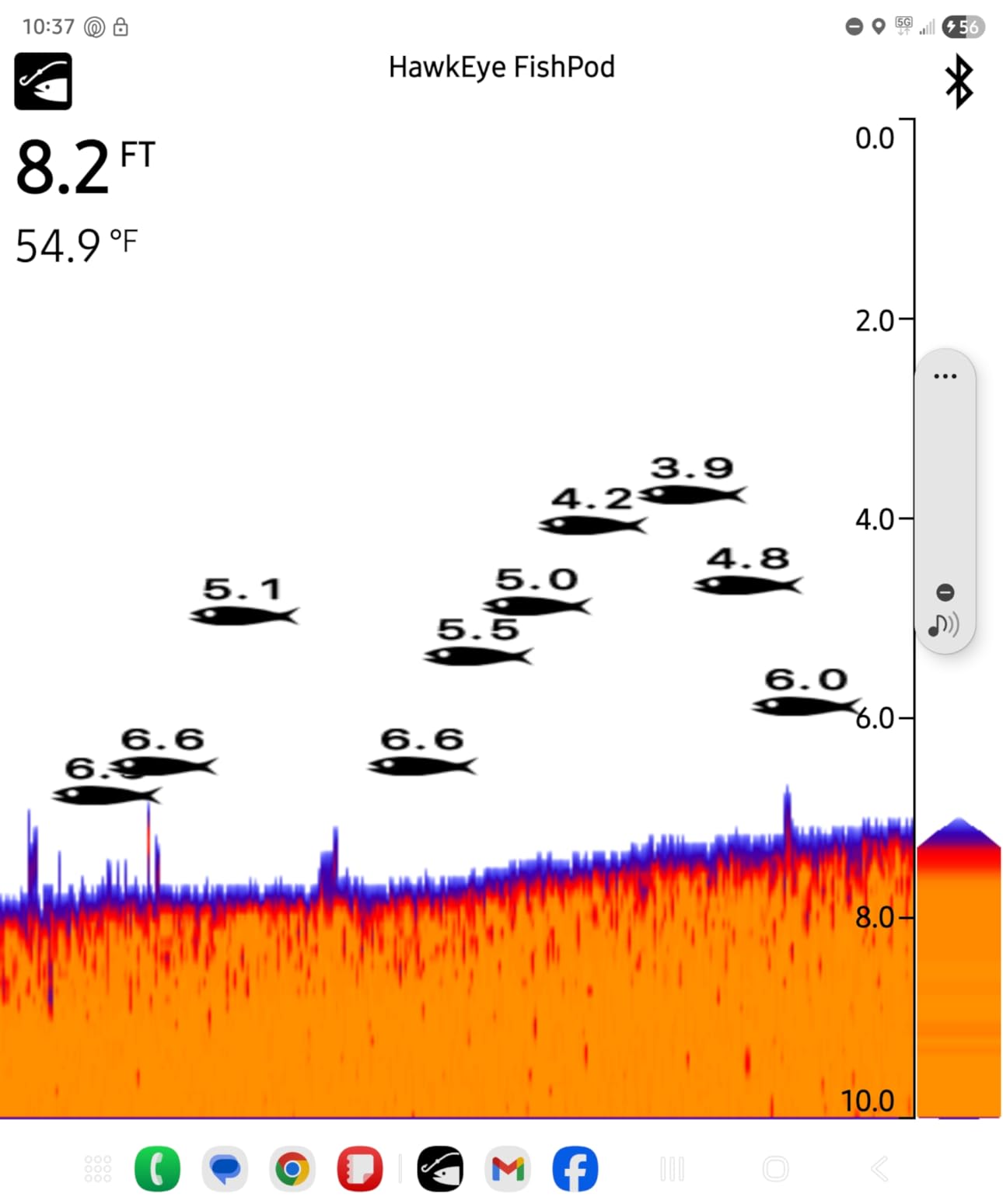
Owners report a reliable Bluetooth link out to 60 to 70 feet from the bank and at least 30 feet while casting, with depth, temperature and current speed readings that hold up against a Lowrance unit. They also describe it as an unexpectedly capable budget unit that is quick to install, activate and start reading, with a free and uncomplicated app.
The honest flaw is weed. On basic settings, vegetation frequently produces false fish returns, and owners have to switch to the HD and FishEcho settings to sort it out. There is also no ground-mapping option, so you cannot compile a saved map of a spot the way the PRO+ 2 can.
Can the TraxNut thread be rigged to a dock piling?
Yes, that is the main reason to buy it over a cheaper puck. Take a standard 1/4-20 rod holder or rail mount, clamp or screw it to the piling, and the pod threads straight in. You then get a fixed reading of the water directly below you, which is a completely different tool from a retrieve and a genuinely better one for holding a position over structure.
The same thread works on a kayak track mount, so this is the unit that moves between a bank and a paddlecraft without changing hardware.
When weed returns turn into fake fish arches
Over heavy vegetation, a basic setting will paint soft bottom as fish arches, and beginners consistently misread it. Turn on the FishEcho or HD mode, which filters clutter and false echoes, and the display settles down. The same problem shows up on any silty bottom, so it is worth learning the two settings before you trust the screen on new water.
One practical note: the Bluetooth link degrades when the pod sits deep or when you are moving, so keep it shallow and stationary if you want a clean read.
7. HawkEye DT1H: Best for Quick Depth Checks Without a Phone
HawkEye DT1H Handheld Depth Finder with Temperature, 300 Feet
300 ft maximum depth
3.5 inch LCD
Air and water temperature
Floats with wrist strap
Pros
- Instant reading in about two seconds with no app or pairing
- No battery anxiety beyond standard cells
- Floats and includes a wrist strap
- Rugged build that holds up in salt water
- Can measure distance to a submerged object
Cons
- Depth only with no fish arches or contour
- Temperature and depth share one screen
- Temperature sensor needs a minute to settle
- Will not read through white ice
Sometimes the question from a bank is not what is down there, it is simply how deep is it. For that, this is the cleanest tool in the roundup. Hold it vertical in the water, get a depth reading in about two seconds, and repeat. There is no app, no pairing, no Bluetooth and no charging, which is the opposite of every castable on this list.
It also reads air and water temperature, floats if it goes over, and carries a wrist strap. and the 3.5 inch LCD is bigger than the screen on most of the entry models here, and owners describe the build as noticeably more rugged than cheap unbranded handhelds, including in salt water where lesser models struggle.
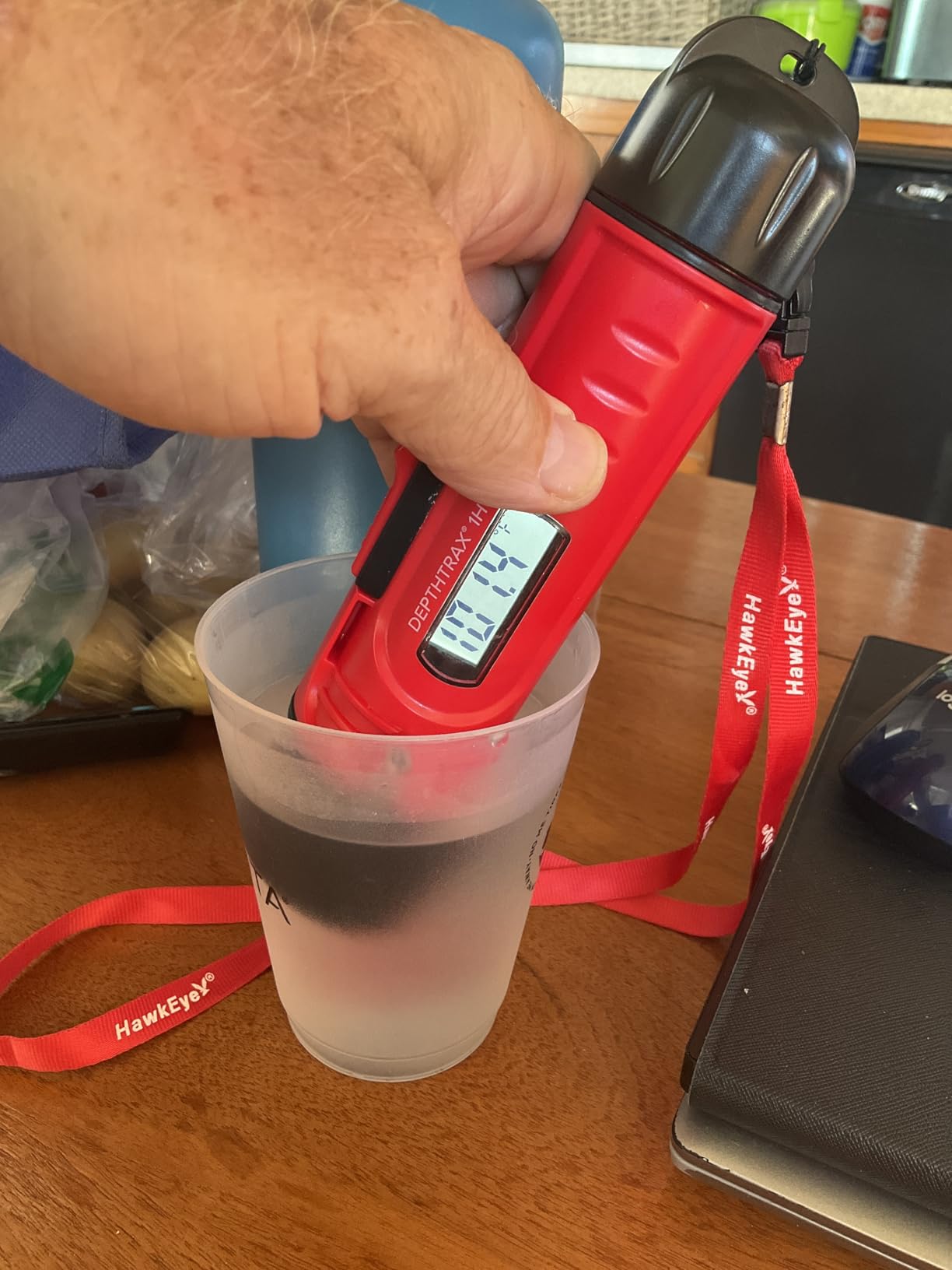
Reviewers call it a no-fuss depth sounder that holds up over multiple seasons, and the manufacturer support is repeatedly praised for explaining its limits clearly rather than deflecting. It works through black ice as well as in open water, which extends its season well past the bank-fishing months.
The honest flaw is that it is a depth sounder and nothing more. There are no fish arches, no bottom contour and no structure detail, so it will never tell you whether anything is holding fish. It is a tool for mapping the shape of a shoreline, not for finding fish with it.
When is a depth-only sounder the right tool?
When you are walking a shoreline for the first time, or scouting a new bank before committing a full day to it. Knowing that the bottom drops from 4 feet to 19 feet over a twenty-foot walk tells you where to set up before you unpack anything.
It is also the right choice as a backup on a trip where you already know the water, or as a salinity and temperature reference alongside a sonar unit. On a kayak, a floating depth sounder with a wrist strap is genuinely useful for spotting drop-offs while you paddle.
Why temperature and depth share one screen
It is a space-saving compromise. A slide switch cycles between the two readings, and a second press gets you back to depth, so the screen is not showing both at once. The temperature sensor also needs a minute or two submerged before it settles on an accurate number.
Two smaller annoyances: it defaults to feet and the switch to change units is fiddly to find, and it will not read through white air-trapped ice.
8. LUCKY 1108: Budget Pick for Occasional Bank Sessions
LUCKY Kayak Portable Fish Depth Finder Water Handheld Fish Finder Sonar Castable Kayak Boat Fishfinder Transducer Fishing LCD Display FFC1108
2 inch backlit LCD
3 to 328 ft depth
5 sensitivity levels
Neck strap
Pros
- Inexpensive and gives reliable depth readings
- Backlit screen works in sun and at night
- Five sensitivity levels for clear or turbid water
- Fish and fish-school alarm
- One-hand handheld with neck strap
Cons
- Basic display with no fish size or contour detail
- Some owners report a unit that stopped powering on
- Fiberglass hulls block the signal
- Works best mounted rather than held from shore
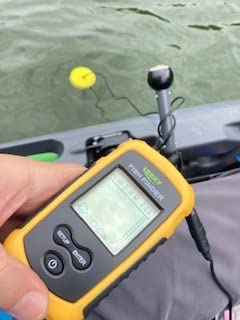
With more than 3,200 reviews, this is one of the most widely used portable depth finders there is, and owner sentiment lands on good value rather than serious fish locating. The 2 inch backlit LCD shows fish depth, water depth, short and tall weeds, sand and rocks, and five sensitivity levels let you tune it for clear or turbid water.
Runtime is four to five hours on a fresh battery, and a battery save mode extends that. The single-handheld form factor with the included neck strap means you can carry one rod and one finder up a bank without a case, and depth readings can be switched between feet and meters.
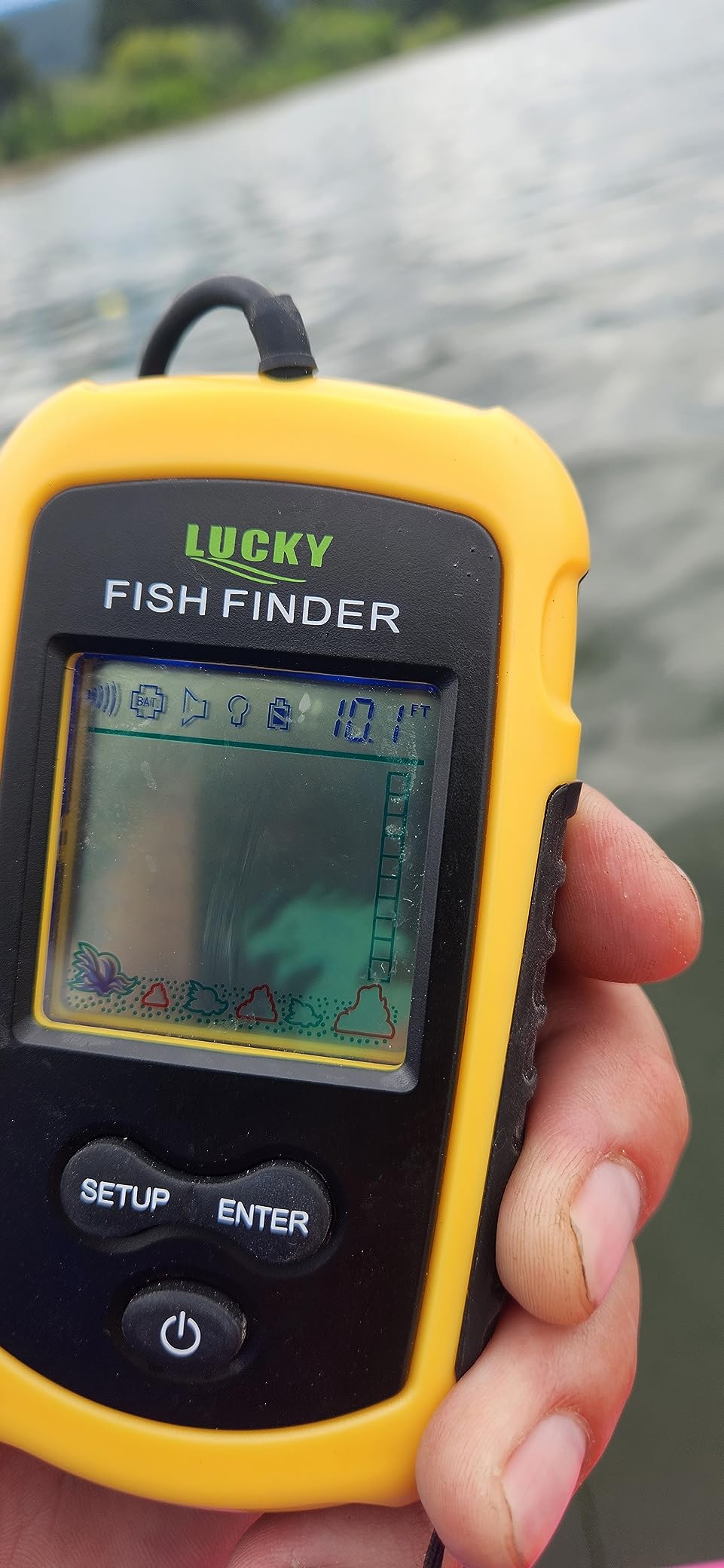
Owners rate it as an inexpensive depth finder for kayaks, small boats and shore use, with accurate readings and very easy operation. Sentiment is tempered by the fact that the fish-arch display is basic and will pick up minnows, and a small number of units reportedly failed to power on after light use.
The honest flaw is that it is a transducer-first tool. The signal works through a kayak hull but not a fiberglass one, and several owners feel it is more effective mounted to a boat or kayak than held by hand from a bank. For a shore-only angler, that is a real limitation rather than a detail.
Does a 2 inch backlit screen work from a shaded bank?
For depth and basic structure, yes, particularly in morning or evening shade where the backlight earns its keep. Owner reviews note the display is readable in bright sun and at night, which is unusual at this end of the market.
What it will not do is separate a small fish from a weed clump, or draw a contour worth navigating by. If you are reading screens for the first time, the resolution is coarse enough to slow you down.
What you give up with a depth-only display
There is no fish size coding, no bottom contour and no CHIRP, so the returns are thinner and less separated than anything on the Garmin or Deeper. For a pond you fish a few times a year, that trade is fine. For a water you are actively learning, it will slow you down.
If you want to spend a little more and get a real color screen, the Venterior above is the sensible step up.
How to Choose a Portable Fish Finder for Shore Fishing
Pick the deployment first: castable, clamp, or vertical
Everything else is secondary. If your water starts three feet from your boots, a castable is the right tool. If you are standing on a dock, a pier or a high bank with a piling or a handrail nearby, a clamp-mounted wired unit gives you a better, steadier image. If you just need to know the depth, a handheld sounder is faster than either.
Buy the deployment that matches your spot, not the one with the longest spec sheet.
CHIRP, target separation, and beam angle in plain terms
A transducer is the part that touches the water. It sends a sound pulse, listens for the echo, and turns the timing into depth, fish arches and bottom contour. CHIRP means the unit sweeps a range of frequencies instead of firing one, which produces crisper arches and better separation between two objects sitting close together. Target separation is the smallest gap the unit can read as two things rather than one.
Beam angle is the width of the slice of water each pulse covers. Narrow is precise, wide is fast, and very wide, like the 105 degrees on the Venterior, is excellent for finding structure and poor for telling you exactly where a fish is holding. Flasher mode is a high-contrast vertical display built for ice fishing and vertical jigging.
Range you will actually cast versus range on the box
Advertised casting range is a best case measured on a clean cast. Your limiting factors are your rod, your line, your skill and the wind. Community consensus, and the honest experience of everyone who uses them, is that a castable sonar is a structure-finding tool, not a lake-survey tool.
Depth range matters less than people think. Most inland fishing is under 60 feet, so models rated to 135 or 165 feet cover nearly everything, and a wide advertised maximum usually reflects open water you will not fish from a bank.
Screen readability in sun and with polarized glasses
This is where the phone-based castables lose points and the dedicated displays win. A dark phone screen in direct sun, at your feet, while wearing polarized glasses, is genuinely hard to read, and it is the most repeated complaint in the castable category. A dedicated unit with a switchable white or black background solves it outright.
Screen size matters less than brightness and viewing angle for shore work, since you are looking down rather than out.
Battery, cold weather, and the phone-as-display problem
Expect less runtime in winter. Lithium packs lose capacity in cold, and the budget castables in this roundup show noticeably shorter battery life in cold weather, with the receiver draining quickly if you leave an alarm mode running.
For phone-based units, budget the session. Start fully charged, carry a power bank, use a sun hood, keep the phone above the waterline in a waterproof pouch, and disable the screen timeout so the stream does not drop mid-cast.
Matching the unit to your water: clear, muddy, or salt
Muddy catfish ponds favour high-frequency, high-sensitivity units where you can crank gain, and a depth sounder alone will not tell you much. Clear reservoirs and deep drop-offs reward CHIRP for separation and a castable with a narrow beam for pinpointing. Saltwater flats and surf want a unit rated for saltwater depth and a transducer that works without a hull, which is why Garmin Striker units come up so often in saltwater threads as zero-install options.
You can also map a mud bottom you cannot see, and that is often where the catfish are.
Three Ways to Deploy Sonar From Shore
No page-one competitor treats this as a framework, and it is the single most useful thing on this page, so here it is in plain terms.
1. The castable tether. You clip a puck to your line and cast it like a lure, then retrieve slowly while watching a screen. It travels with your rod, so it is the only option that works from a shoreline with nothing to attach to. Retrieve at roughly a foot per second, and cast parallel to a drop-off rather than straight out so the arc follows the contour. Castable depth readings are about the fish under the puck, not the water in front of you.
2. Clamp and suction-cup mounting. You fasten a wired transducer to a dock piling, a bank stick, a railing or a suction cup, and the display sits on your knees or a tackle box. This gives a continuous reading of one spot, which is far better for working a piece of cover than a cast. This is where the Striker 4 and the HawkEye FishPod 5X earn their place.
3. Pole-deployed vertical. You hold a handheld sounder straight down beside you, or lower it on a bank stick into the water. It returns depth and temperature in about two seconds and tells you nothing about fish. It is the fastest way to learn the shape of a new shoreline before you commit to it, and it is the only deployment that needs no screen you own, no app and no battery bank.
Pick one, learn it, and only add a second once you know which water is producing fish.
Frequently Asked Questions
Do fish finders work from shore?
Yes. A castable sonar streams readings to your phone from roughly 200 to 330 feet, and a wired unit in a portable case can be clamped to a dock piling, bank stick or railing to read the water below you. From shore you cannot get a continuous picture of an entire lake, so choose a castable for open water and a clamp-mounted unit for fixed structure.
Are castable fish finders any good?
They are good at finding structure and confirming depth along a route, and less good at identifying species or fish size. The honest flaw of nearly all of them is that they display on your phone, so screen brightness, glare and phone battery become part of the equipment list. Reviewers also report connection dropouts and weed being read as fish arches.
Which castable sonar fish finder is the best?
For most shore anglers the Deeper PRO+ 2 is the strongest all-round choice, with 330 foot range, three beam options and built-in GPS that builds bathymetric maps from a bank or dock. If your priority is reaching distant structure rather than mapping, the Garmin Striker Cast streams from up to 200 feet on a 10 hour battery. If you refuse to look at a phone, the Venterior VT-FF005 has its own color screen.
How do I choose a portable fish finder?
Choose the deployment first: castable for open water, clamp or suction-cup if you have a piling or railing, handheld if you only need depth. Then check the depth range against your water, the screen for readability in direct sun, and whether the unit needs your phone. CHIRP and target separation matter for separating fish from structure on clear water.
What is the most user-friendly fish finder?
The Garmin Striker 4 is the most user-friendly for a beginner who wants a dedicated screen, because it uses plain buttons, needs no app, and ships as a complete kit with the transducer, mounts, battery and bag. The ReelSonar iBobber is the easiest to learn if you are happy using a phone, since the app shows depth-tagged fish icons instead of a raw sonar trace.
The Best Portable Fish Finder for the Way You Fish
If you take one thing from this guide, take the deployment rule. Buy the geometry that matches your spot, then let the specs decide. Fishing a shoreline with nothing to clamp to, start with the Deeper PRO+ 2. Standing on a dock with a piling, start with the Garmin Striker 4, which is our pick of the best portable fish finders for shore fishing at 4.7 stars across more than 2,000 reviews and the only unit here that works with no phone in your hand.
Everything else is a variation on that. Tell us about the water you fish and we will point you at the right one.