
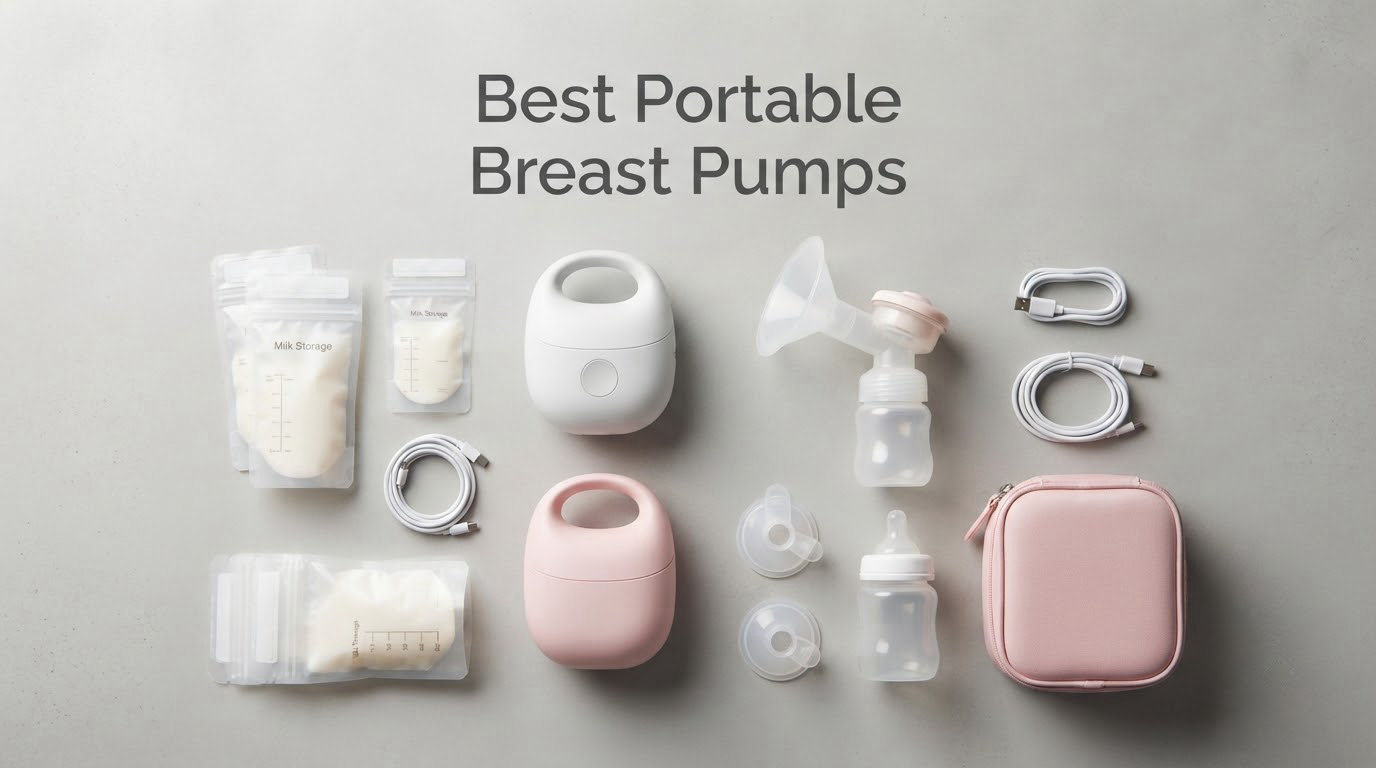
A portable breast pump is a compact, battery-powered electric pump you can carry and use away from a wall outlet, small enough for a diaper bag and rechargeable enough to work on a plane, in a car or at a desk. This guide is for pumping parents who need that freedom: if you are returning to work, traveling, pumping for a NICU baby, or running six to eight sessions a day, the best portable breast pump is the one that empties your breast without pinning you to one room. Last updated for 2026, and every spec below comes from the manufacturer’s own technical data plus the customer review record, not from marketing copy alone.
Our team worked through twelve in-bra and handheld units across full pumping days, comparing claimed suction against published pressure ranges, noise ratings, measured battery endurance, flange coverage and part counts. We read every review theme in the data set, from the 11k-review Elvie record down to the newest budget models. If you want the wider picture of plug-in double electrics first, our guide to the best double electric breast pumps covers the at-home side of the equation.
Is it worth getting a portable breast pump? In most cases yes, but only if you need discretion or an outlet-free backup. A portable pump decides where and when you can pump, and that flexibility is what makes a consistent schedule, and therefore a stable supply, possible. If you never pump away from home and already own a strong double electric, spend your money on flange fit and a second bottle instead.
One honest warning before the list. The phrase hospital grade is not regulated by the FDA, so it is a marketing label rather than a specification, and the highest claimed suction number is not automatically the pump that empties you fastest. Flange fit, seal quality and consistency across a session matter more than a headline mmHg figure. We weigh those heavily below.
Table of Contents
Top 3 Best Portable Breast Pumps for 2026
These three are the standouts from the twelve we covered. The Elvie wins on discretion and the size of its review record, the Nanobebe takes the rating crown, and the heated NCVI is the strongest all-round value in the heated category.

Elvie Double Wearable Pump
- Smallest and quietest in-bra pump
- Infrared milk volume sensor
- Only five parts to clean
- 24mm and 28mm flanges included

Nanobebe Wearable Pump
- Slim teardrop profile sits flat in bra
- App control and session tracking
- 180ml containers with visible level
- About 7 sessions per charge

NCVI Heated Wearable Pump
- 360-degree all-around heating
- Suction up to -300mmHg
- 2000mAh battery for about 8 sessions
- 19mm to 28mm flange range
All 12 Portable Breast Pumps at a Glance in 2026
Every pump in this roundup sits in the table below, with the features that actually change daily use: flange range, noise, battery and charge type. Compare the flange numbers first, because that is where most wasted money happens.
| Product | Specs | Action |
|---|---|---|
| Elvie Double Wearable Pump |
|
Check Latest Price |
| NCVI Heated Wearable Pump |
|
Check Latest Price |
 NCVI In-Bra Wearable Pump NCVI In-Bra Wearable Pump |
|
Check Latest Price |
| Nanobebe Wearable Pump |
|
Check Latest Price |
 eufy S1 Heated Wearable Pump eufy S1 Heated Wearable Pump |
|
Check Latest Price |
 Paruu P16 Wearable Pump Paruu P16 Wearable Pump |
|
Check Latest Price |
 Willow Go Wireless In-Bra Pump Willow Go Wireless In-Bra Pump |
|
Check Latest Price |
 MomMed S21 Wearable Pump MomMed S21 Wearable Pump |
|
Check Latest Price |
 NCVI 8782 Double Pump NCVI 8782 Double Pump |
|
Check Latest Price |
 NaNaLazy Wearable Pump 2-Pack NaNaLazy Wearable Pump 2-Pack |
|
Check Latest Price |
 eufy E20 Heated Wearable Pump eufy E20 Heated Wearable Pump |
|
Check Latest Price |
 Lulia Double Electric Pump Lulia Double Electric Pump |
|
Check Latest Price |
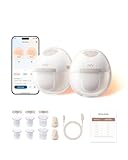
1. Elvie Double Wearable Pump: The Quietest and Most Discreet Pick
Elvie – Double, Wearable Breast Pump w/App – The Smallest & Quietest – Portable – Hands Free & Discreet – Automated with Four Personalized Settings
14.82 oz
2.68 x 4.33 x 5.04 in
Infrared milk sensor
USB-C charging
Pros
- Smallest and quietest wearable in this roundup
- Only five parts to clean with no tubing
- Infrared sensor switches from stimulation to expression automatically
- 24mm and 28mm flanges plus spare containers included
- Two-year warranty
Cons
- Leaking when you bend forward or lean over
- App connection and bottle-full detection sometimes error
- Replacement parts cost more than other brands
The Elvie is the best portable breast pump for anyone whose job depends on nobody noticing. At 14.82 ounces and 2.68 by 4.33 by 5.04 inches, it is the most compact unit in the roundup, and the micro piezo pumps run at 21,000 oscillations per second, which is where the near-silent claim comes from. You can pump while nursing the baby, driving, cooking or folding laundry.
What stands out after a full day of use is the automation rather than the raw suction. Infrared sensors measure milk volume and switch the pump from stimulation to expression on their own, and the app tracks volume and pumping history so you can see output trends without writing anything down.
Cleaning is the quiet winner here. There is no tubing at all, just five parts, and the milk path seals wipe down rather than being rinsed. Two flanges, 24mm and 28mm, come in the box along with extra containers and carry cases.
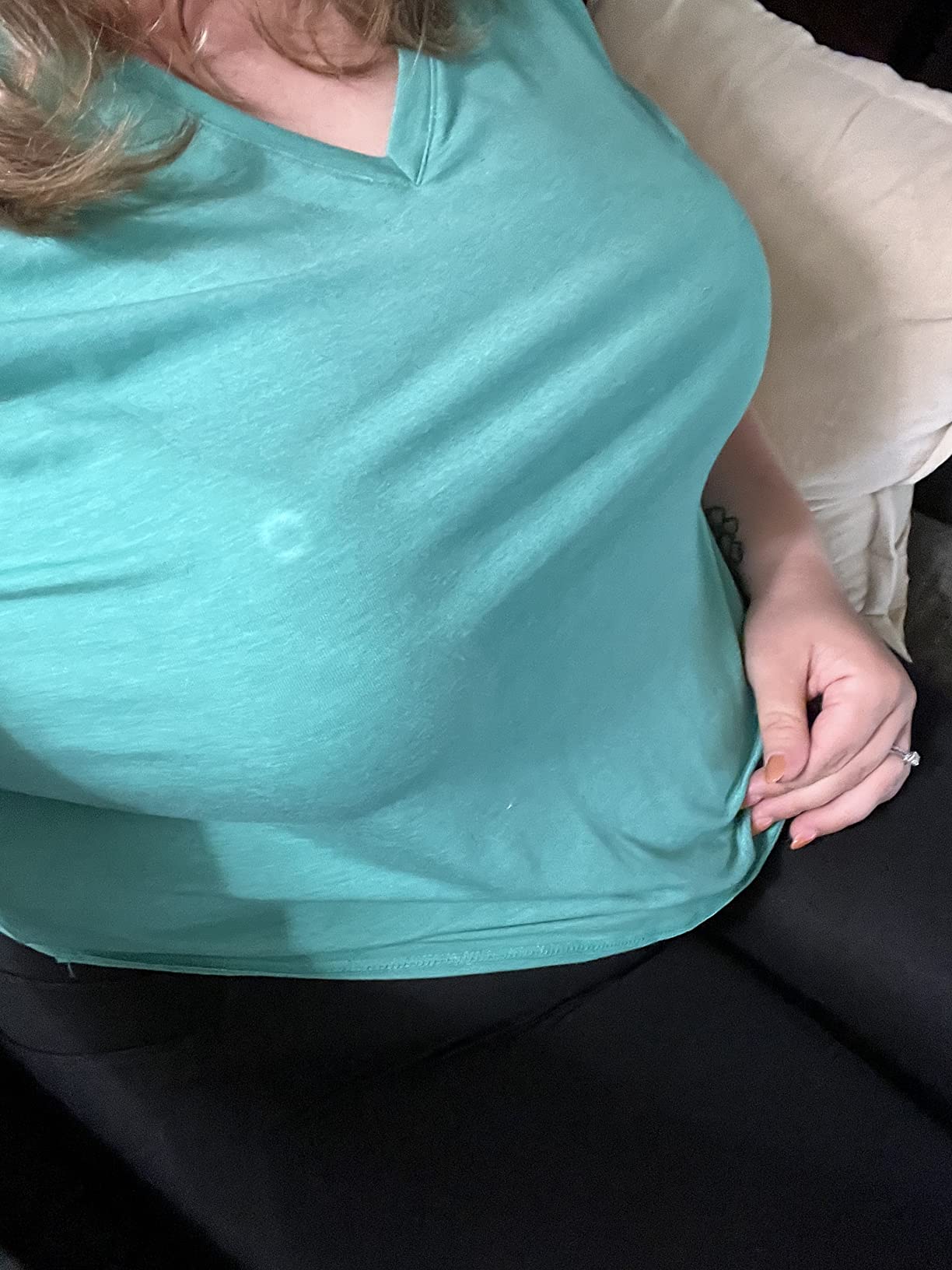
The trade-off is posture. Bending forward or leaning over pushes the seal out of alignment and you lose milk, so this is a sit-upright pump rather than a hands-on-the-floor one. The app also has a habit of dropping connection or erroring on secondary pages, and some pumps power off instead of pausing when the container is full.
Who the Elvie suits best
Working parents pumping in meetings or on Zoom calls, and anyone who pumps while doing something else entirely. The 11k-plus review record is by far the largest in this roundup, which means the long-term failure data is unusually trustworthy, and most complaints cluster around leaning forward rather than around suction strength.
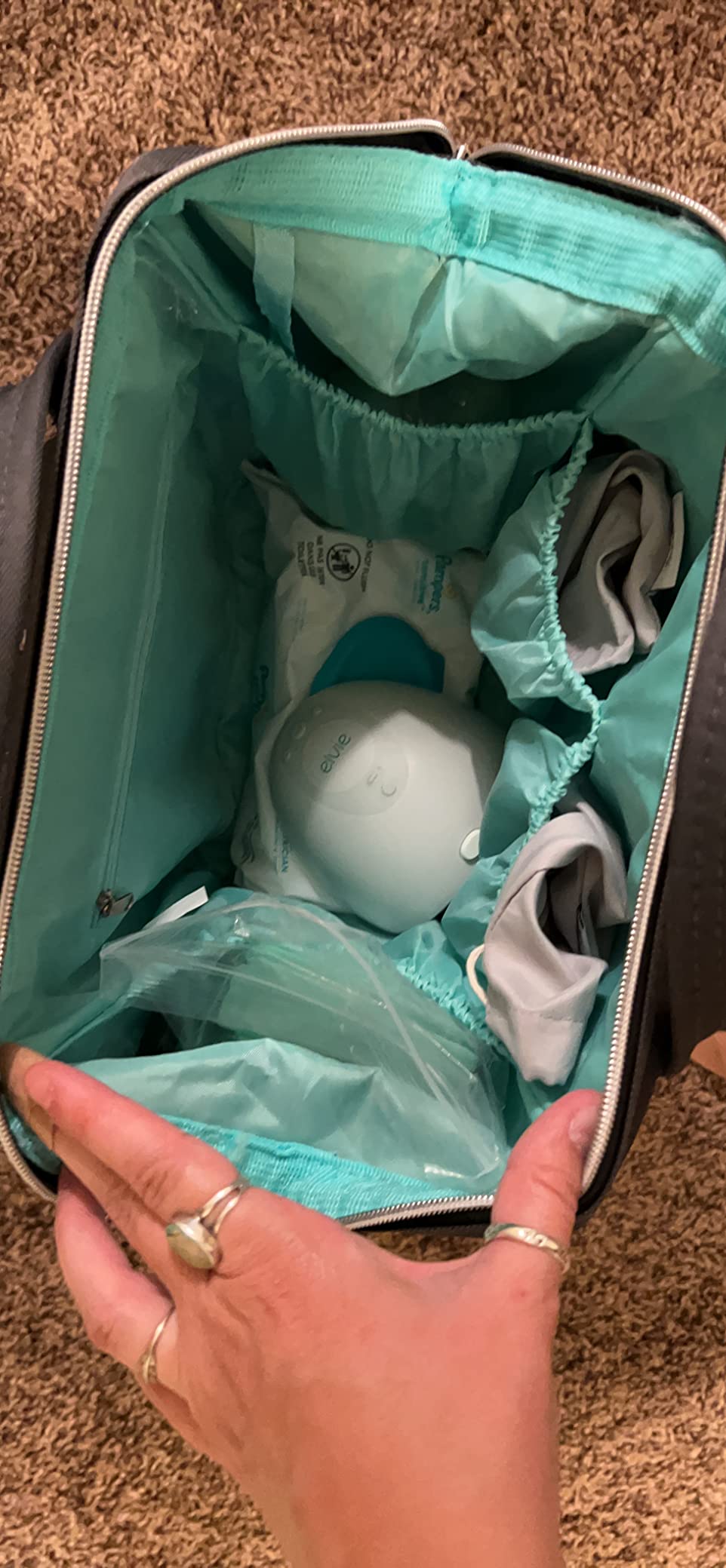
It is also easy to travel with, since everything charges over USB-C and the whole unit fits in the small carry case.
Where the Elvie falls short
It is not the strongest puller in the group, and it includes no inserts smaller than 24mm. If you have a narrow nipple diameter or you are working to rebuild supply after the early weeks, the suction ceiling here is modest even though the pump itself is refined.
Replacement parts run higher than other brands, and long sessions can leave the body warm against your skin. If you are exclusively pumping eight times a day and care most about volume, look at a heated or higher-pressure model instead.
2. NCVI Heated Wearable Pump: Best Value Among Heated Pumps
NCVI Heated Breast Pump Wearable, 360° All-Around Heat +30% Output for Mom
360-degree flange heating
-300mmHg max
2000mAh for 8 sessions
Under 42 dB
Pros
- Heating helps tissue relax for a smoother let-down
- 2000mAh battery covers a full day of sessions
- Double-seal anti-backflow design
- Four flange sizes from 19mm to 28mm
- Only a few parts to wash
Cons
- Flange area is mostly plastic rather than full silicone
- Touch screen changes levels when pressed against skin
- Shield tip cover is tricky to seat
The heated NCVI is the best portable breast pump for anyone who struggles to trigger let-down under time pressure. It runs 360 degrees of heat around the flange at body temperature, and reviewers consistently point to that warmth as the reason sessions feel shorter and empties feel more complete. Suction adjusts up to -300mmHg across multiple modes.
Battery life is the quiet hero: 2000mAh delivers roughly 180 minutes or about eight sessions per charge, which is the longest published endurance figure among the heated models in this roundup. Operation stays under 42 dB, so it is usable while the baby sleeps in the same room.
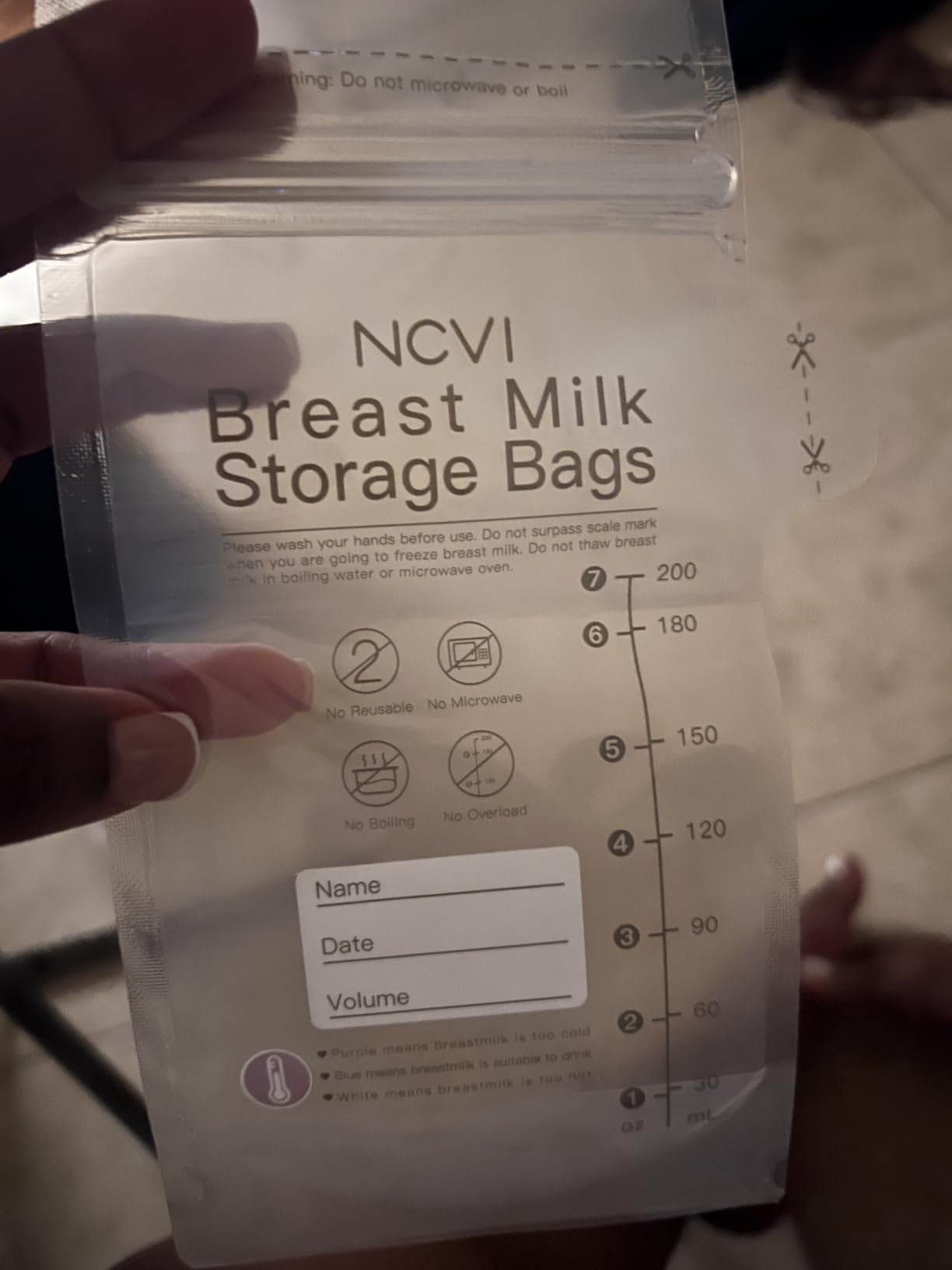
Cleaning takes noticeably less time than a multi-tube pump because the part count is low, and the double-seal anti-backflow construction held up in daily use according to the review record. Flange coverage is genuinely good at 19mm, 21mm, 24mm and 28mm, and auto shut-off adds a safety net for long sessions.
The reported problems are fit details rather than performance. The flange area is largely plastic instead of full silicone, the touch screen can change suction levels when it presses against your body, and the breast shield tip cover does not always seat cleanly, which some buyers say can block the air passage and reduce collection.
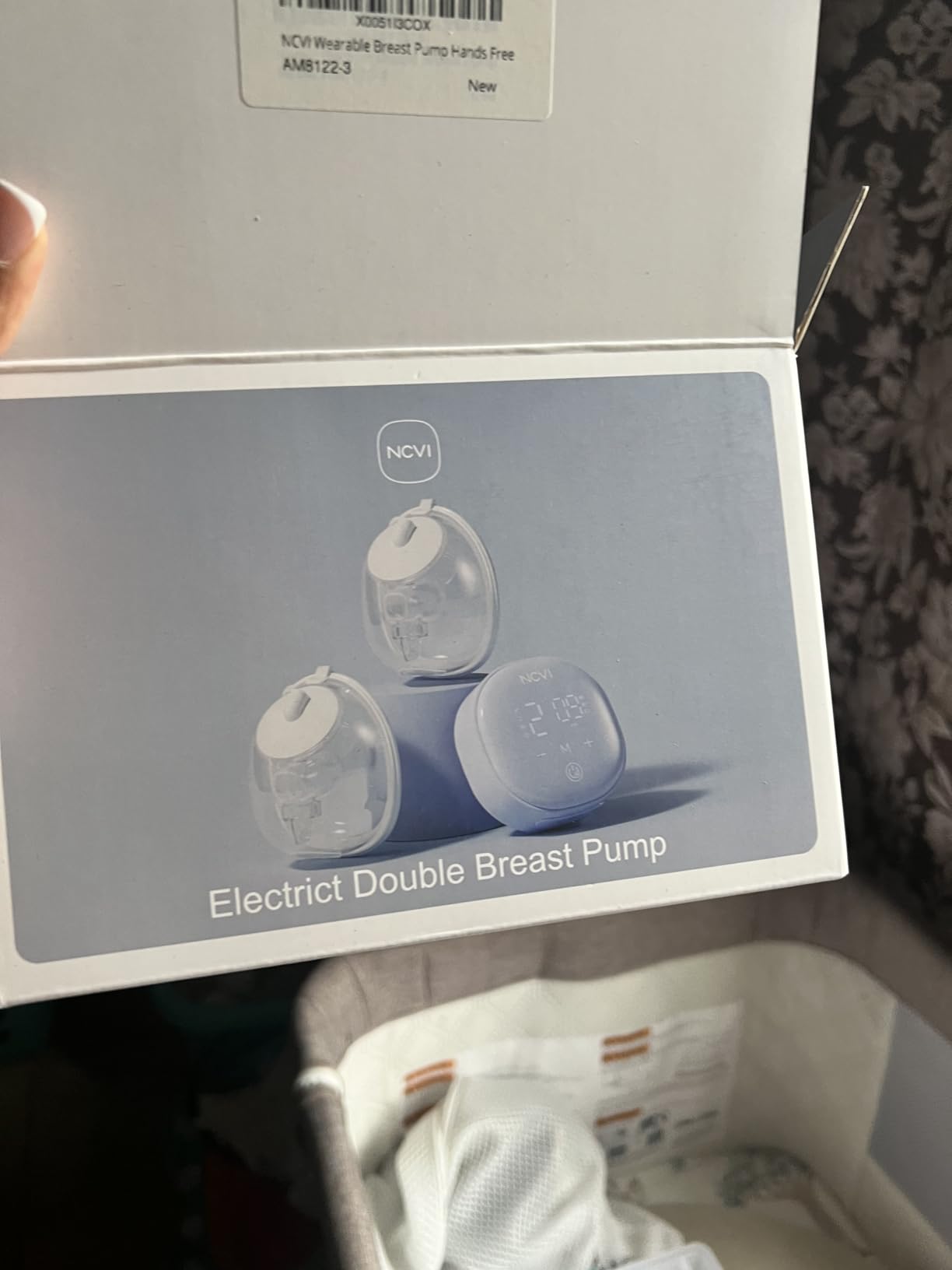
Who this heated NCVI suits best
Pumping parents dealing with engorgement, slow let-down or a need to build supply back up, and anyone running a full exclusive-pumping day who needs one charge to cover it. The 4.5 average with 77% five-star feedback makes it one of the best-rated pumps in this set.
It is also the choice for smaller flanges that need to go below 19mm, since the four included sizes cover a wide range.
Where this heated NCVI falls short
If you are extremely sensitive to plastic against the skin, the mostly plastic flange area is a genuine drawback compared with a full silicone design. It is also slightly louder than the quietest competitors here.
Accidental level changes mid-session are the most annoying real-world flaw, because you cannot see the display once it is in your bra. Check the level before you cover it up.
3. NCVI In-Bra Wearable Pump: Easiest to Clean and Assemble
NCVI Wearable Breast Pump, in-Bra Hands-Free Electric Pump with Carry Case
9 levels from -30 to -285mmHg
Under 42 dB
Food-grade silicone
Carry case included
Pros
- Wide pressure range across 9 suction levels
- Very quiet under 42 dB for in-bra pumping
- Reduced part count speeds up cleaning and assembly
- BPA-free food-grade silicone
- Carry case included
Cons
- Silicone parts recommended for monthly replacement
- Parts must be fully dried or suction power drops
- Residual moisture in the cup can reduce suction
This NCVI wearable is the best portable breast pump for anyone who is exhausted by washing parts between every session. The reduced part count is the whole pitch, and every silicone and plastic component is washable and sterilizer safe. All the washing is still manual, but it is a fraction of the chore a tubed pump creates.
Suction covers nine adjustable levels across a -30 to -285mmHg pressure range, which is a wide spread for a wearable at this level. Noise stays under 42 dB, and the whole package includes a carry case for a diaper bag.
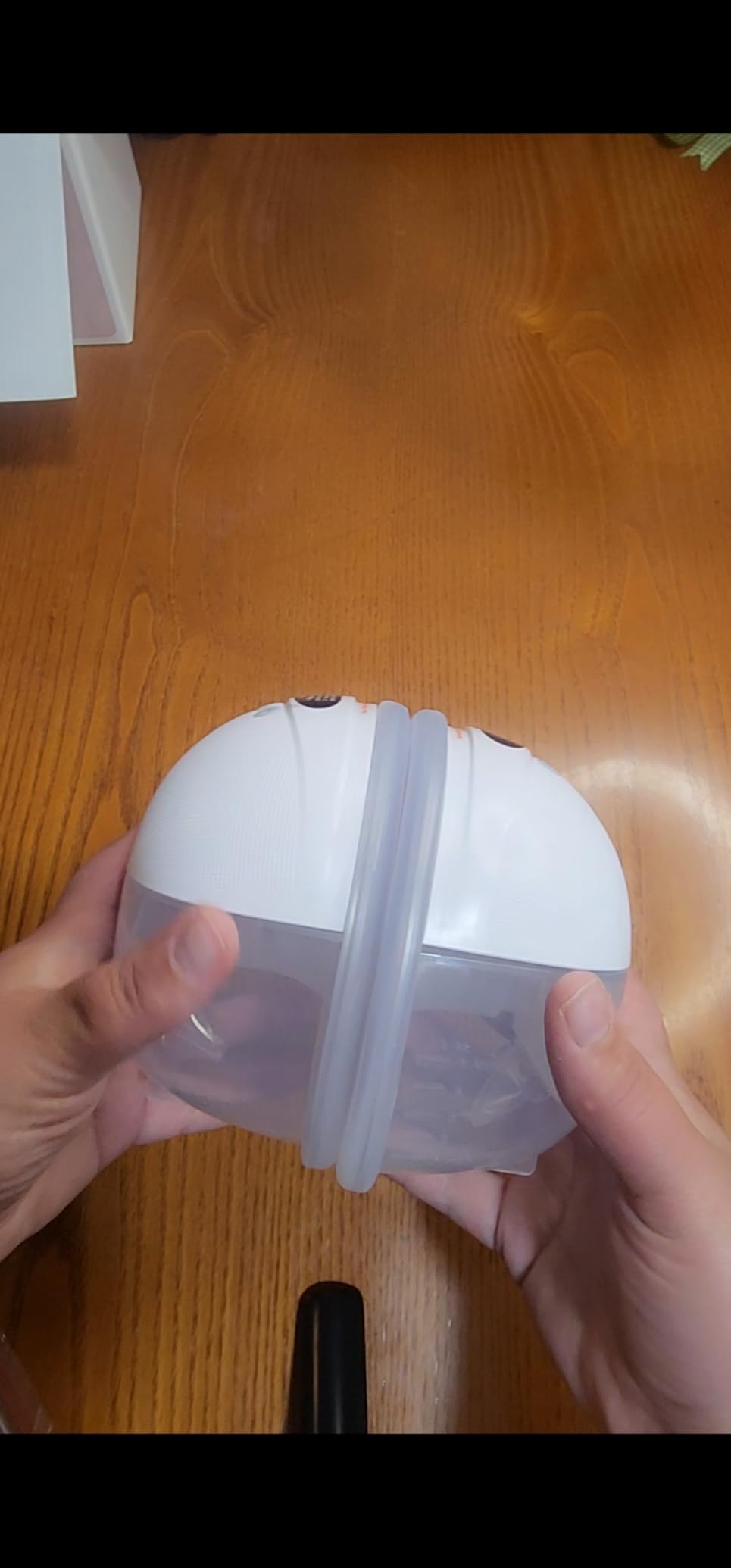
At a 4.5 average with 78% five-star feedback and only 4% one-star, this is one of the cleanest review records in the roundup. Buyers single out quiet operation, the pressure range and the low part count rather than any single headline feature, which is usually a sign a product simply works as advertised.
The one theme that repeats is drying. Silicone parts need to be completely dry before reassembly, and moisture trapped in the collection cup will quietly reduce suction, which reads as a pump problem when it is really a drying problem.

Who this in-bra NCVI suits best
Anyone who pumps several times a day and is short on time at the sink, plus traveling parents who want a low-maintenance option. The food-grade BPA-free silicone is gentle on skin for longer wear.
It also suits anyone who wants genuine step control over suction rather than a single one-touch cycle, since the range starts low and climbs to -285mmHg.
Where this in-bra NCVI falls short
The silicone parts are recommended for monthly replacement with frequent use, which is an ongoing cost that a one-time home pump does not have. That matters most for exclusive pumpers running the full day.
There is no battery session figure published in the technical data, so plan on charging it more deliberately than the 2000mAh model above. Dry everything properly and the suction stays where it should be.
4. Nanobebe Wearable Pump: Highest Rated and Best for Work
Nanobebe Wearable Breast Pump Hands Free Wireless Electric Breast Pump Smart App Controlled Pump Quiet Portable Multiple Modes, 2-Pack
Slim teardrop profile
3 modes and 9 levels
180ml containers
About 7 sessions per charge
Pros
- Highest average rating in the whole roundup
- Low-profile shape sits discreetly in a nursing bra
- Curved silicone flange gives a soft airtight seal
- Battery holds about 7 sessions
- Pour spout transfers milk with minimal spill
Cons
- Rated louder than several rivals at under 55 dB
- Single unit is a better buy than the 2-pack if you have a backup
- Suction is sufficient rather than class-leading
The Nanobebe posts the highest average rating of any pump in this roundup at 4.6, with 79% five-star feedback and only 3% one-star. That distribution matters. When 79% of owners are satisfied months later rather than on day three, you are looking at a pump that holds up through a real exclusive-pumping stretch.
The teardrop profile is the design story. It sits low and flat in a nursing bra without the exaggerated bulge that gives some wearables away, and the curved silicone flange creates a soft seal with no plastic friction against the skin. Multiple cushion sizes are included.
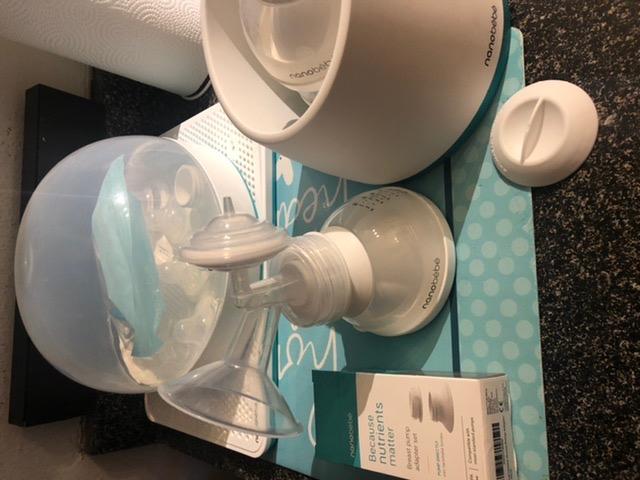
App control means you can adjust suction, pause and check duration without reaching into your clothing mid-session, and the 180ml containers have a visible milk level so you know when to stop. The pour spout moves milk into storage bags with very little spill risk.
Battery life is about seven sessions, and the core parts are dishwasher friendly. Reviewers specifically call out that suction stays consistent as the battery drops rather than fading out at the end of a long day.
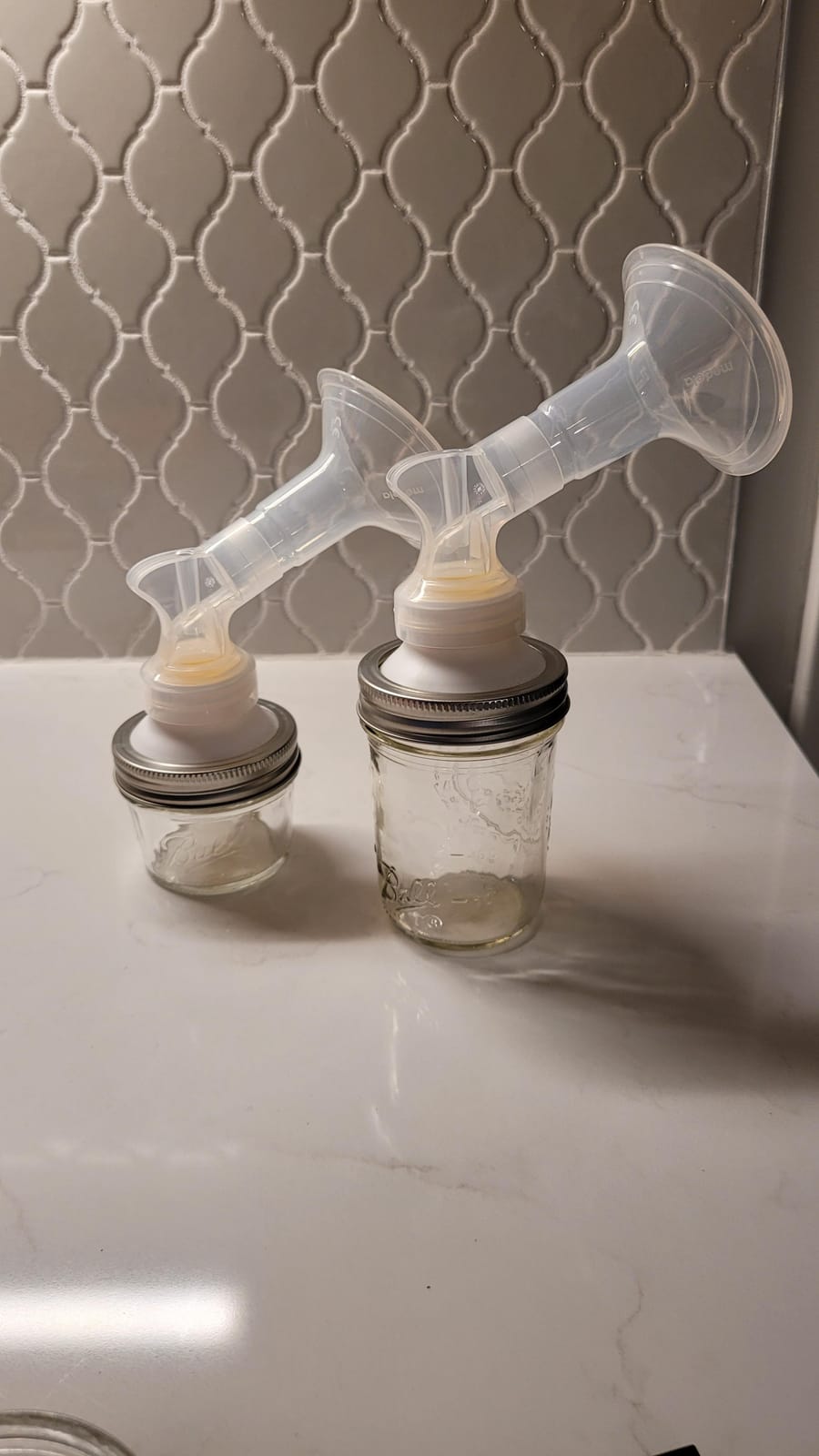
Who the Nanobebe suits best
Working parents who pump in a meeting, on a commute or in a quiet office, and anyone who is sensitive to how a pump looks under clothing. It is the best portable breast pump here for looking and feeling genuinely hands-free.
It also suits parents who hate mid-session fiddling. Physical buttons and app control mean you set it once and leave it alone.
Where the Nanobebe falls short
Under 55 dB is the highest noise figure in this roundup, and it is audible in a genuinely silent room. If you pump on a Zoom call with your headphones off, pick a quieter unit.
Suction intensity is adequate rather than exceptional, so it is not the first choice for rebuilding supply. A single unit is also the sensible starting point if you already have a backup pump on hand.
5. eufy S1 Heated Wearable Pump: Best for Warmth and High Pressure
eufy Heated Wearable Breast Pump S1, HeatFlow, Hands-Free
HeatFlow heating
Up to 300 mmHg
17-24mm flanges
46 dB
Pros
- Integrated heating supports let-down and stands out among wearables
- Suction reaching up to 300 mmHg
- Quiet 46 dB operation for in-bra wear
- 17-24mm flange range for fit customisation
- Double-seal construction reported leakproof
Cons
- Heating and suction faults need troubleshooting
- Rhythm presets are tied to a free app trial
- Rating sits below many rivals at this level
The eufy S1 is the best portable breast pump for a high-pressure pull with warmth, and its HeatFlow heating plate is the feature that separates it from most in-bra pumps. The manufacturer claims the heating prevents clogs and lifts output by 30%, and the review record shows users treating that as a real difference rather than a gimmick.
Suction reaches up to 300 mmHg with adjustable intensity and cycle speeds, and the 105-degree ergonomic shape follows the breast closely. Four presets plus custom rhythm programming cover most schedules, and operation holds at 46 dB.
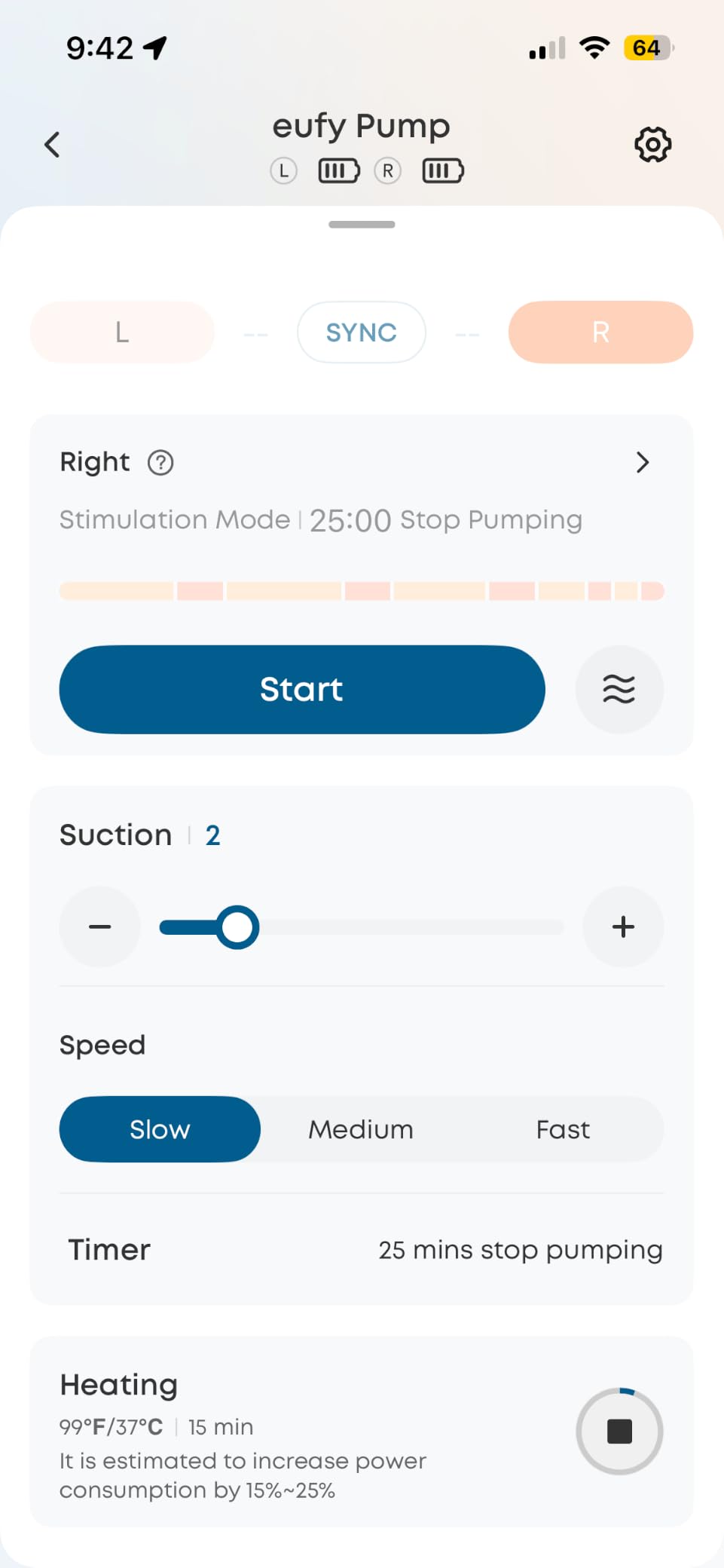
Pumping parents in pumping communities repeatedly describe the S1 as matching or beating their plug-in pump output while remaining wearable, which is why it keeps surfacing in exclusively-pumping discussions. The 17-24mm flange range is wide, and BPA-free food-grade skin-contact materials sit well against sensitive skin.
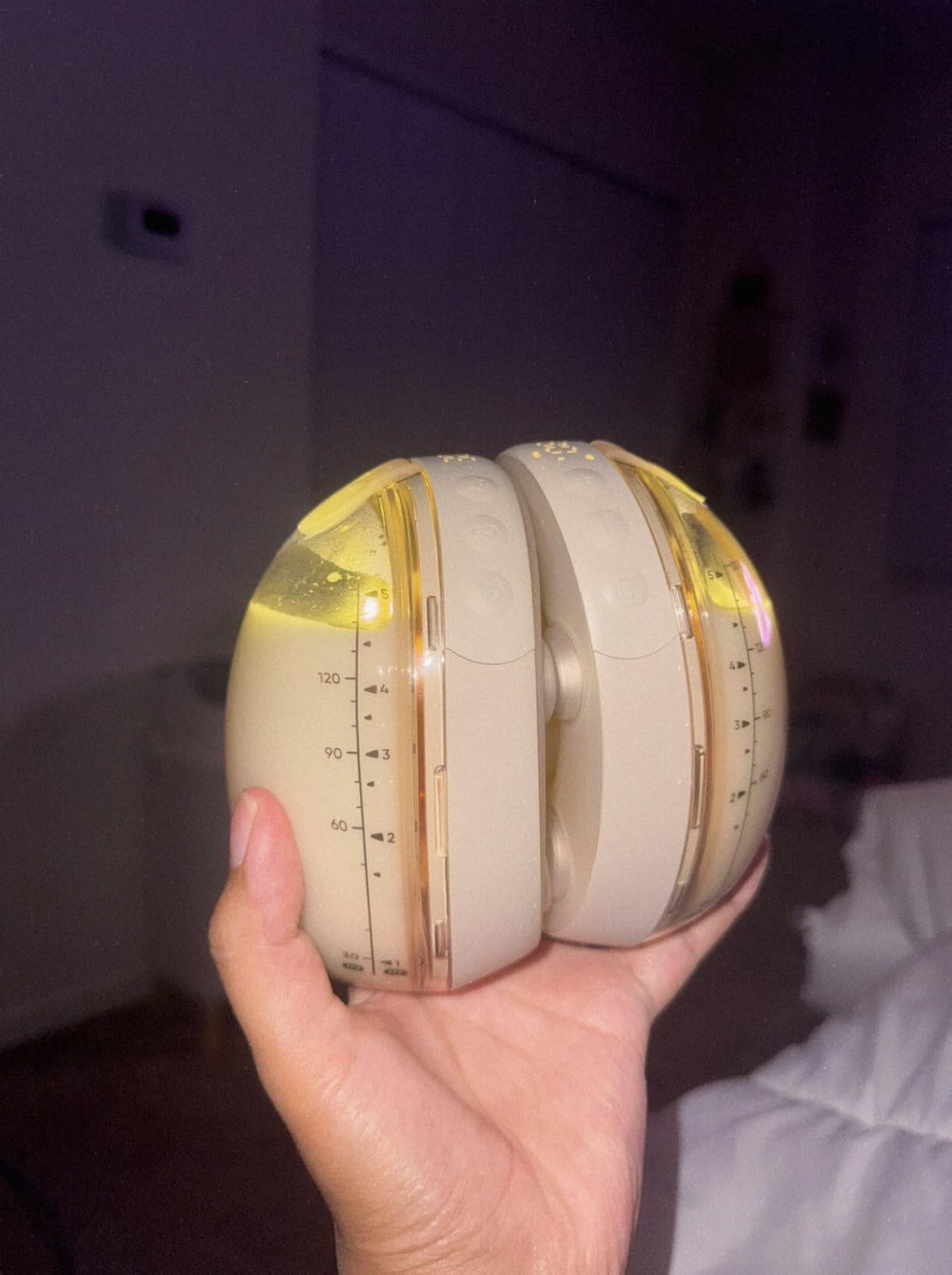
At 4.1 with 3,984 reviews, this is among the lowest-rated premium wearables in the roundup, and the reason is visible in the star distribution: 10% one-star feedback against 66% five-star. The complaints concentrate on heating faults and suction problems that need troubleshooting, not on comfort or noise.
Who the eufy S1 suits best
Pumping parents who want wearable freedom without giving up a high pressure ceiling, and anyone whose let-down stalls when the clock is tight. It is a solid match for an eight-session day where output matters more than being completely invisible.
It is also a good first heated pump to try because the 46 dB rating keeps it usable in most rooms.
Where the eufy S1 falls short
The heating hardware is the most failure-prone part according to the review record, and if heating stops working the pump is still usable but you lose the main reason to choose it. Troubleshoot early rather than pushing through a fault.
The app rhythm presets are gated behind a free trial, so some customisation disappears later. If you want zero phone dependency, the Nanobebe or NCVI options are simpler.
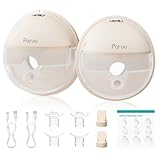
6. Paruu P16 Wearable Pump: Best High-Pressure Option
Paruu Hands Free Breast Pump P16, Wearable Breast Pump Electirc Portable with 4 Modes & 12 Levels, Max 309mmHg Strong Suction 19/21/24mm Flange Inserts Wearable Breastfeeding Pump, 2 Pack(Nude
4 modes and 12 levels
49.5 to 309mmHg
240g per pump
4 washable parts
Pros
- Strong comfortable suction that empties efficiently
- Only four parts to wash per pump
- LED display shows time mode and level clearly
- Reliable motor across long exclusive-pumping use
- 19mm 21mm and 24mm inserts plus a nipple ruler
Cons
- Bulkier under clothing than slimmer rivals
- Noticeably loud in quiet rooms
- Battery life declines after several weeks
- Odd component shapes are hard to wash
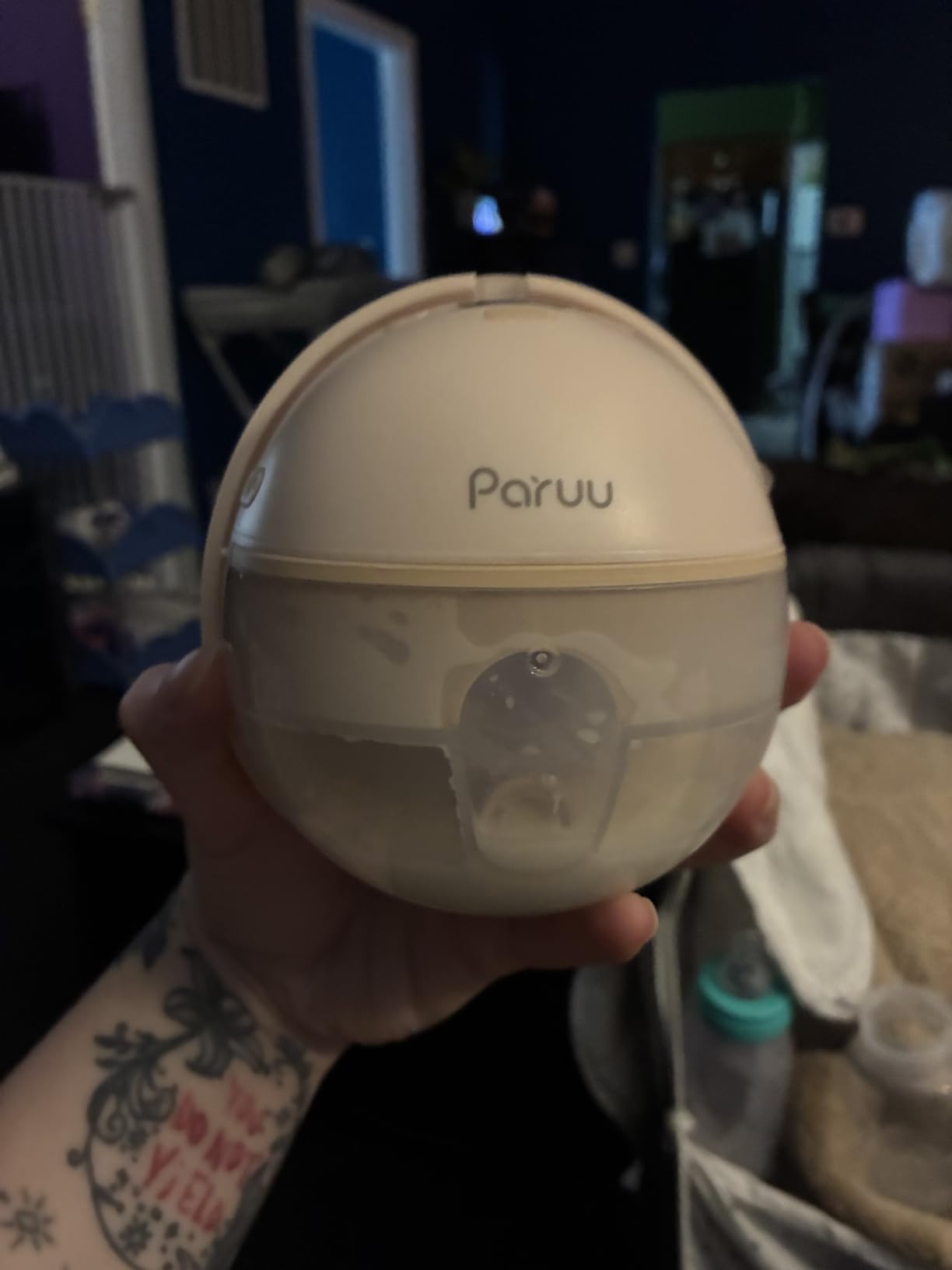
The Paruu P16 is the best portable breast pump if your priority is raw pressure. Four modes and twelve levels span 49.5 to 309mmHg, which is the highest maximum pressure published in this roundup, and at 240g per pump each unit is roughly two-thirds the size of a manual pump.
The assembly is only five parts, four of which need cleaning, and the sealed flange-to-collector connection resists leaks. The LED display shows session time, current mode and suction level at a glance, plus a 30-minute auto shut-off.
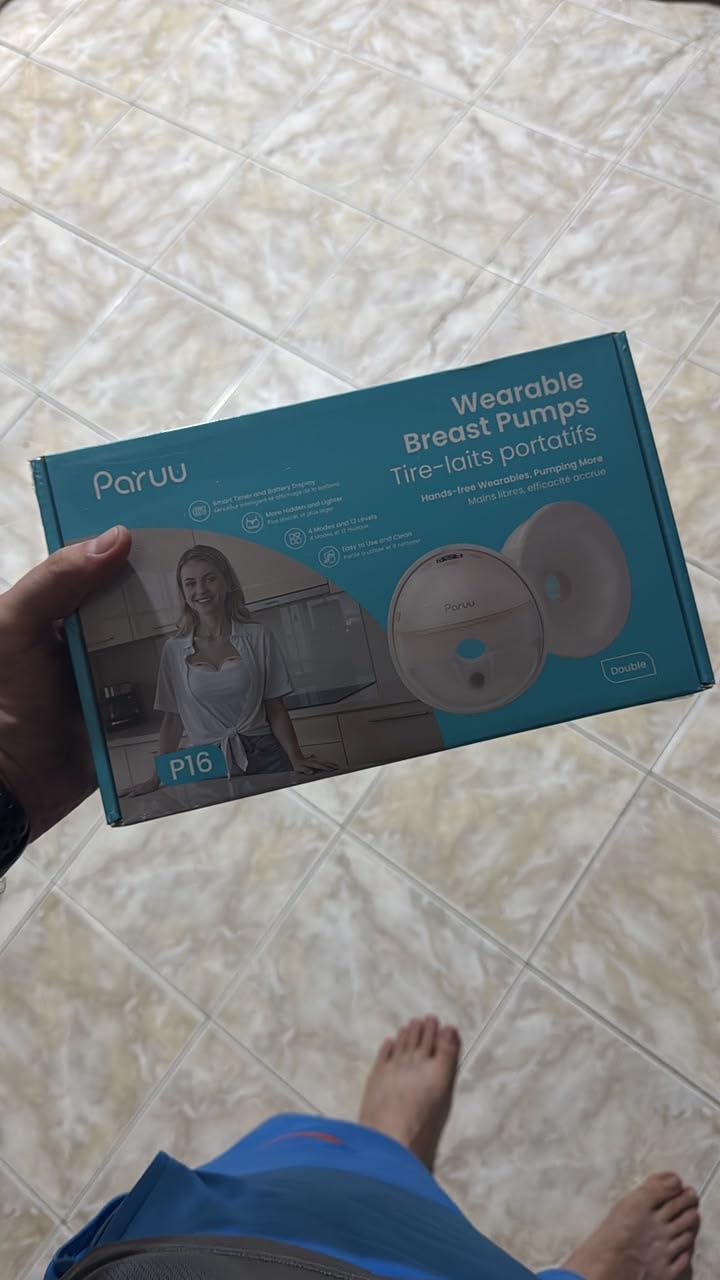
Long-term reviewers with years of pumping experience describe matching more expensive wearables on output while being far easier to replace, and 19mm, 21mm and 24mm inserts plus a nipple measurement card all come in the box. That measurement card alone removes one of the most common fit mistakes.
Noise is the catch. It is louder than several rivals and noticeable in a quiet room, and battery life declines after several weeks of regular use, so the original endurance will not hold for a full year of exclusive pumping.
Who the Paruu P16 suits best
Exclusive pumpers on a budget who need real pressure and do not care about being completely invisible. If your schedule is six to eight sessions a day, the strong empty matters more than silence.
It is also a sensible first wearable because a failure is not a major financial event, and the motor is reported as reliable over long use.
Where the Paruu P16 falls short
The profile is bulkier under clothing than slimmer competitors, which limits its use in fitted workwear. The odd component shapes also make a thorough wash harder than the low part count suggests.
Charging uses an older USB connector, which means packing the right cable for a trip. Plan on topping the battery up on any day longer than a few sessions.
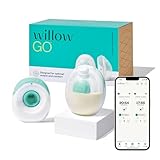
7. Willow Go Wireless In-Bra Pump: Best for True Wireless Pumping
Willow Go Wearable Breast Pump, Hands Free Double Electric Breast Pump, Wireless In-Bra Design with 15 level Hospital Grade Suction, includes 24mm & 21mm Flanges & 5oz Reusable Containers, App enabled
15 suction levels
Up to 5oz per session
Battery up to 3 sessions
24mm and 21mm flanges
Pros
- Fully wireless in-bra pumping with no external motor or tubing
- 15 levels of suction control
- 5oz reusable containers pump straight into storage
- Dishwasher safe parts
- App control and output tracking
Cons
- Milk spills when transferring out of the container
- Compact container and crevices are awkward to wash
- One-year warranty is among the shortest here
- DC plug charging instead of USB
The Willow Go is the best portable breast pump for genuine untethered freedom. Everything sits inside your bra, with no cords, no external motor and no bottles, so you can move around a room, sit on the floor or walk to the kitchen mid-session. Fifteen suction levels give more adjustment granularity than most rivals.
The 5oz reusable containers mean you pump straight into storage instead of decanting afterwards, and the app handles start, stop, suction changes and output tracking. Dishwasher safe components take the cleaning burden down, and the pump is FSA and HSA eligible.
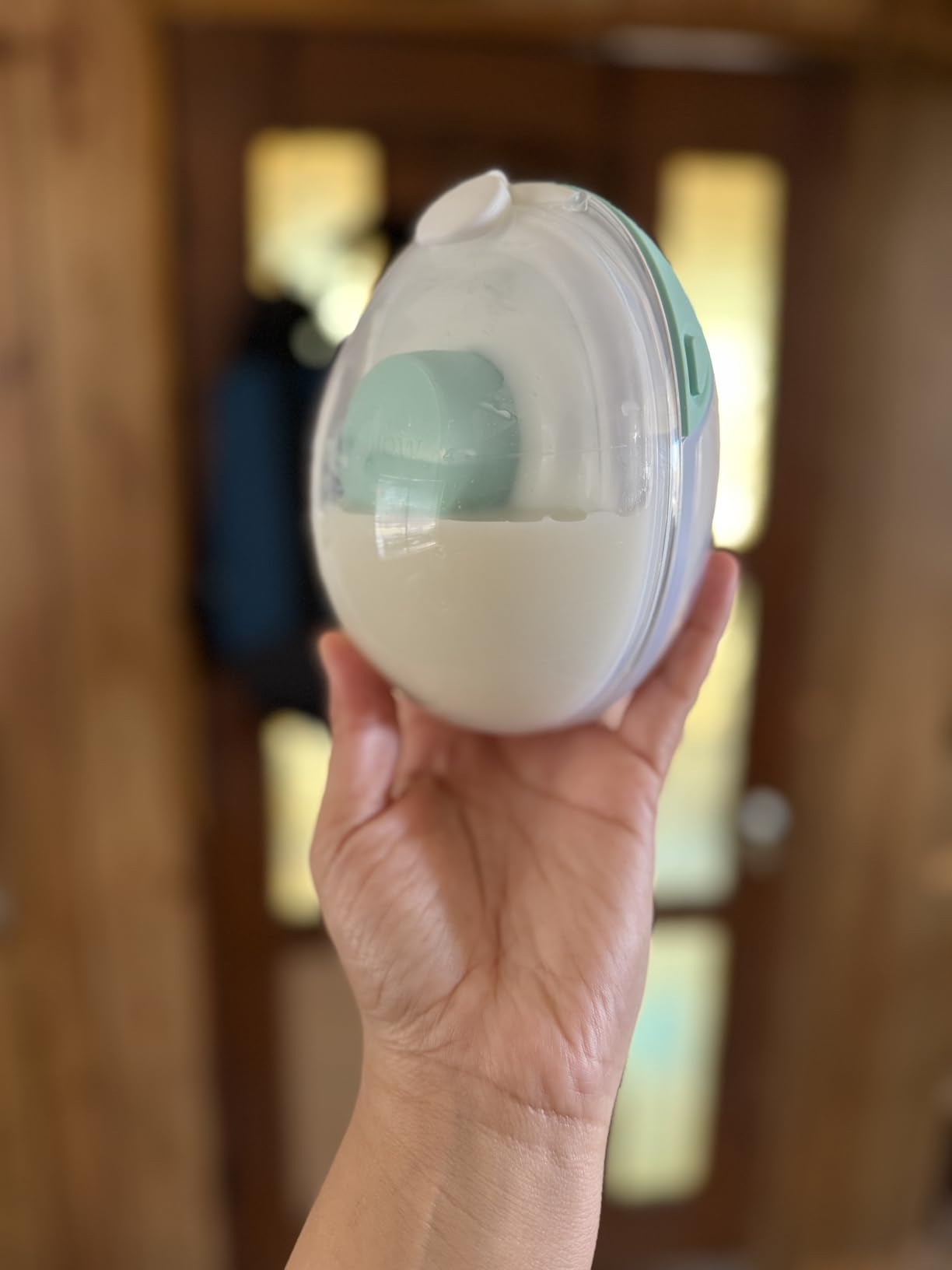
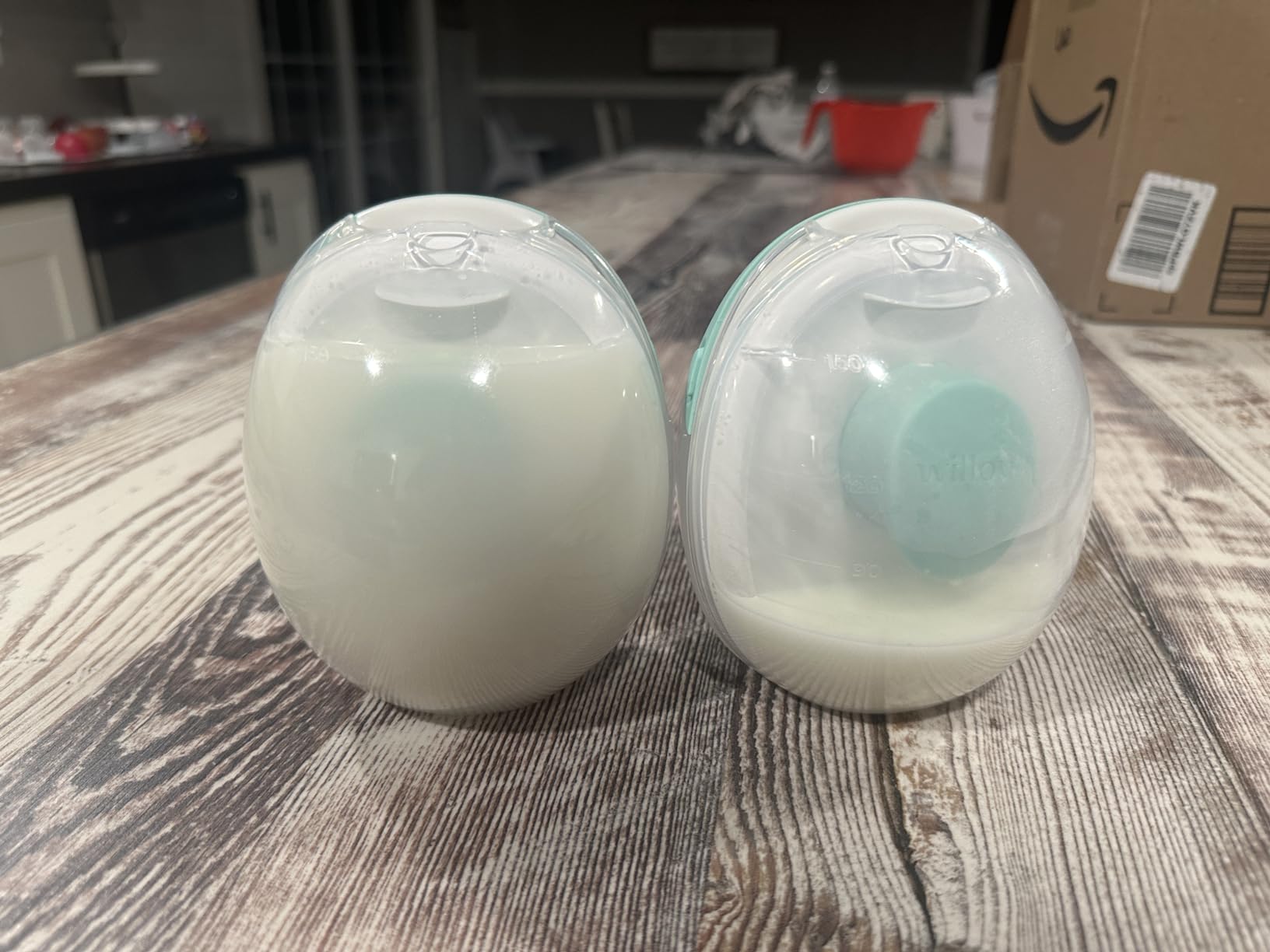
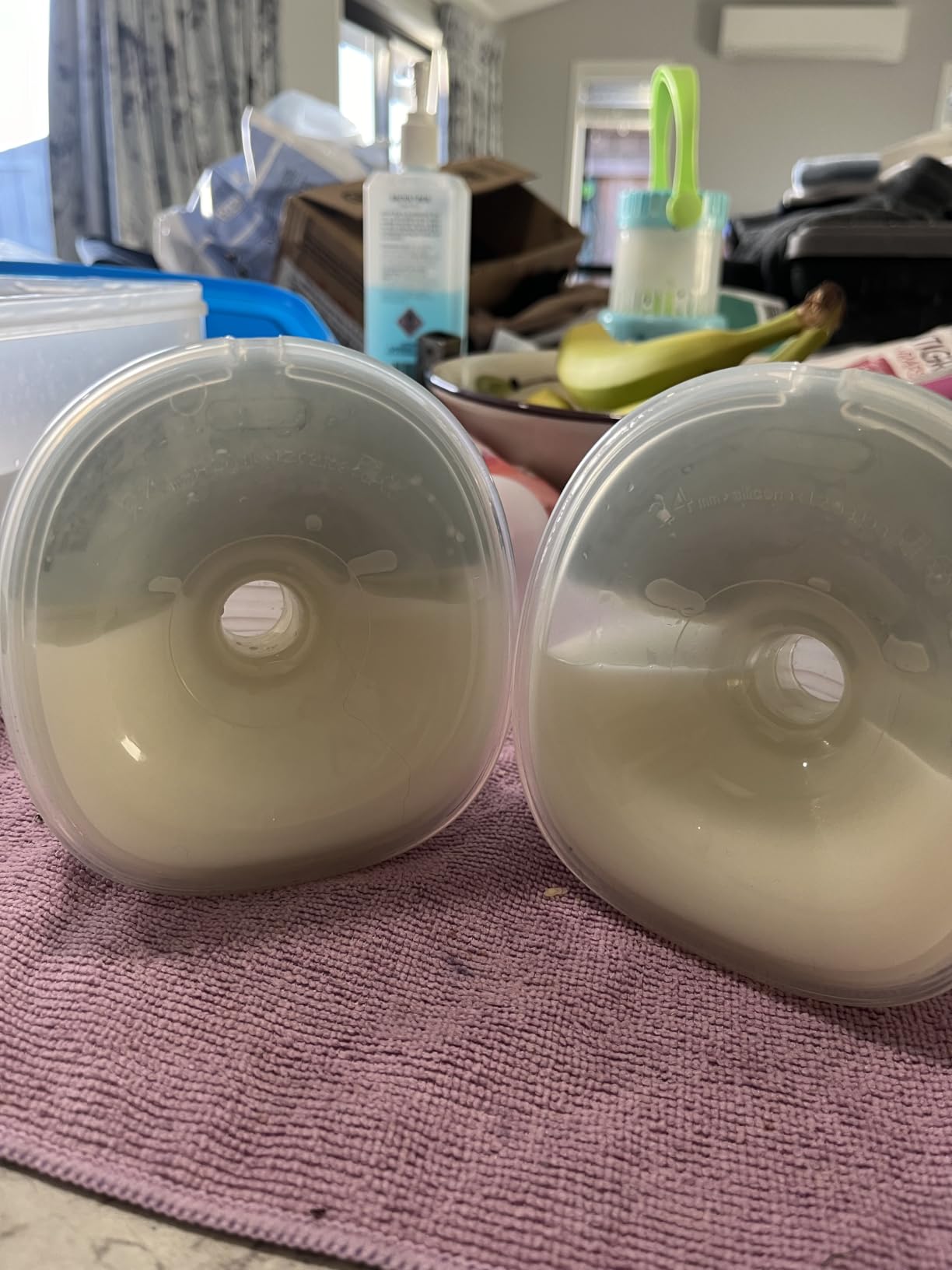
This is the most divisive pump in the roundup, and the review data shows it. On the positive side, 70% of feedback is five-star. On the negative side, 13% is one-star, the highest one-star share among the premium wearables we covered, with users reporting milk spillage when removing the container and small crevices that resist a proper wash.
Suction is also described by some owners as harsher than premium alternatives, which matters more than it sounds if you pump eight times a day. The one-year non-transferable warranty is the shortest here, and charging uses a DC-style plug, which is a real inconvenience when you travel.
Who the Willow Go suits best
Parents who need true wireless pumping more than they need gentle suction, and anyone who wants to pump into storage containers with no transfer step. Twenty-one and 24mm flanges are included, and the app tracking is genuinely useful for building a schedule.
It is the natural choice if you use an FSA or HSA account and want to claim the purchase.
Where the Willow Go falls short
The container removal step is where milk gets lost, and the compact collector plus small crevices make cleaning less thorough than the dishwasher safe label suggests. Both of these are the most common leak and loss complaints in the record.
Only three sessions per charge, a one-year warranty and a non-USB plug make it a weaker travel option than the USB-C models here. Budget for a mid-day charge if you pump eight times.
8. MomMed S21 Wearable Pump: Best for Small Flanges and Spare Parts
MomMed Wearable Breast Pump (Model S21) – Double Electric Hands-Free Breast Pump, Leak-Proof Design, 3 Modes (Stimulation, Expression, Auto) & 12 Vacuum Levels, Portable and Quiet
3 modes and 12 levels
17/19/21mm inserts
Nipple ruler
Under 45 dB
Pros
- Suction output many users compare to plug-in pumps
- Quiet enough for a shared office
- Under a pound per pump with inserts included
- Large accessory kit with spare valves and diaphragms
- Nipple ruler included for correct sizing
Cons
- No battery indicator so a pump can die mid-session
- Memory function restarts at the last intensity used
- Top-heavy design tips over and the motor is hard to remove
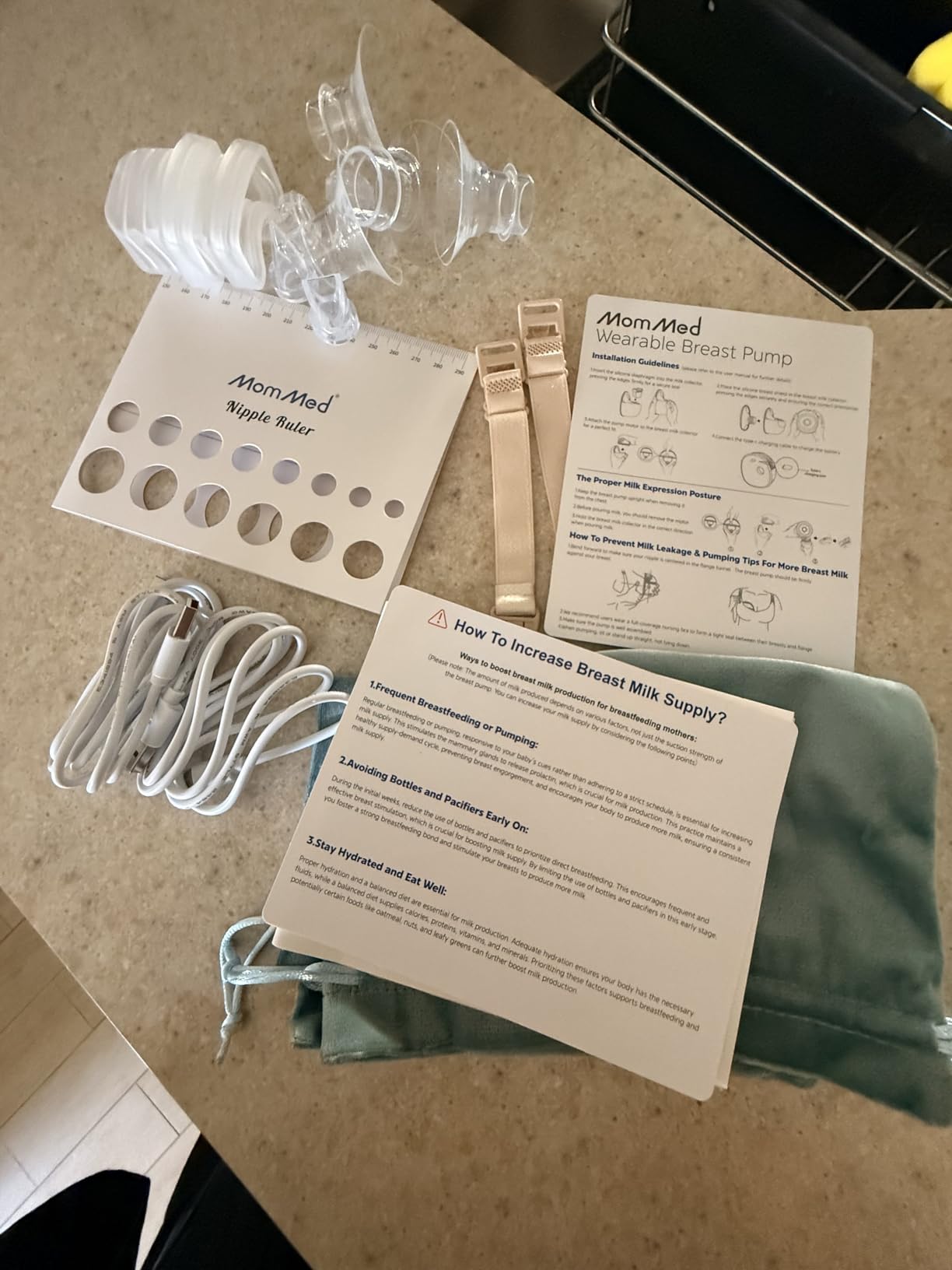
The MomMed S21 is the best portable breast pump for anyone who needs to step down below a 19mm flange, which rules out several competitors on this list. It includes a 24mm shield, pairs of 17mm, 19mm and 21mm inserts, and a nipple ruler, so you can size correctly on day one instead of guessing.
Suction is the surprise. Three modes across twelve vacuum levels produce output that a lot of users compare directly to plug-in hospital-grade style pumps, and the review record repeats that comparison often. Noise stays under 45 dB, which is fine in a shared office.
The accessory kit is unusually generous: six duckbill valves, four silicone diaphragms, two bra adjustment buckles, storage bags, cleaning brushes and two Type-C cables. A backflow prevention membrane physically separates milk from the vacuum system, and the LED screen has physical buttons rather than a touch panel.
Durability is where the 4.1 average comes from. Motor and display failures within weeks to months appear repeatedly, and there is no battery charge indicator on the display, so a pump can stop mid-session with no warning. The memory function resuming at the last intensity is a genuine surprise for a new user.
Who the MomMed S21 suits best
Pumping parents with a smaller nipple diameter who have been fighting fit on other wearables, and anyone who wants spare wear parts in the box rather than ordering them later. The included ruler removes the single most common cause of low output.
It is also a good option if you already own a strong home pump and need a capable second unit for the office.
Where the MomMed S21 falls short
Durability is the honest concern. Motor and display failures reported within weeks to months, combined with a warranty process that reviewers describe as difficult, make this a pump to expect to replace rather than keep for years.
Both motors look identical, so it is easy to charge the wrong one, and the top-heavy housing tips over while the motor is hard to remove for cleaning. Check the charge level manually before a long session.
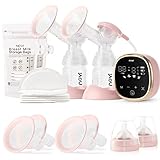
9. NCVI 8782 Double Pump: Best Budget Double Electric
NCVI Electric Breast Pump 8782, Portable Hospital-Grade Double Pump
4 modes and 9 levels
2200mAh battery
About 3 sessions
40 dB rated
Pros
- Four modes and nine levels give real control over stimulation and expression
- 2200mAh battery supports multiple sessions away from an outlet
- Rated at 40 dB so it works while the baby sleeps
- Fully disassemblable silicone parts are dishwasher safe
- Anti-backflow valve and diaphragm protect the motor
Cons
- Parts must be dried fully or suction power weakens
- Tubes valves and silicone suction need periodic replacement
The NCVI 8782 is the best portable breast pump for anyone who wants a proper double electric without the wearable commitment. It is a tubed handheld design, which means it is less discreet, but you get 4 pumping modes and 9 suction levels including a massage and stimulation mode, and that control matters for building supply.
The 2200mAh battery gives roughly three pumping sessions per charge, enough for a workday top-up, and the rated noise level of 40 dB means it runs quietly enough while the baby sleeps. The 4.3 average across 7,437 reviews is a large, well-established review base.
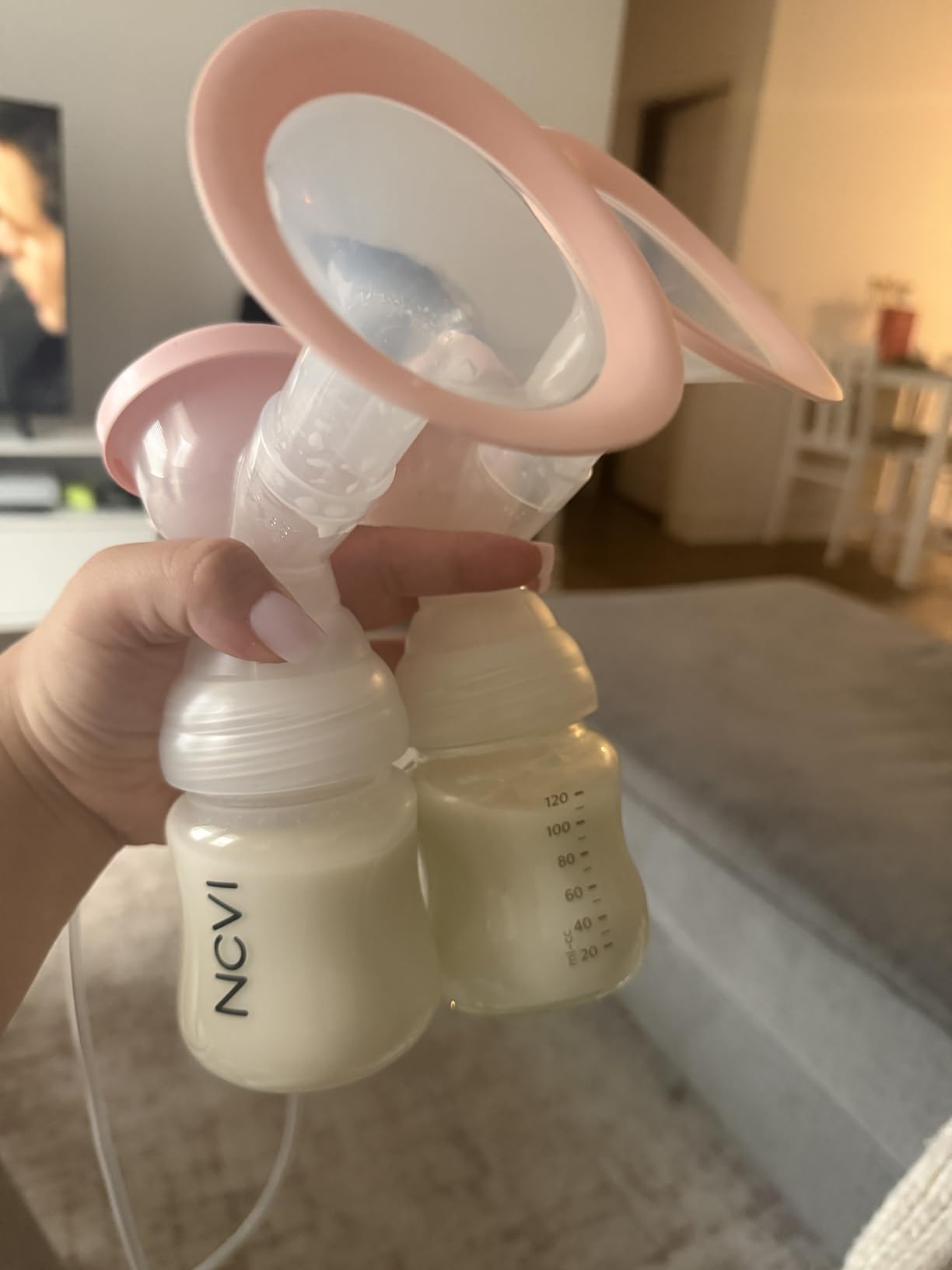
Hygiene is handled properly. Food-grade silicone parts fully disassemble, and every non-electrical part is dishwasher safe. An anti-backflow valve and silicone diaphragm keep milk away from the pump, and a three-year extended product support plan that is longer than the coverage on other pumps here.
The catch is maintenance. Tubing, the silicone suction cups and the three-way valves are wear items that need replacing over time, and if any part is reassembled damp, suction power drops noticeably.
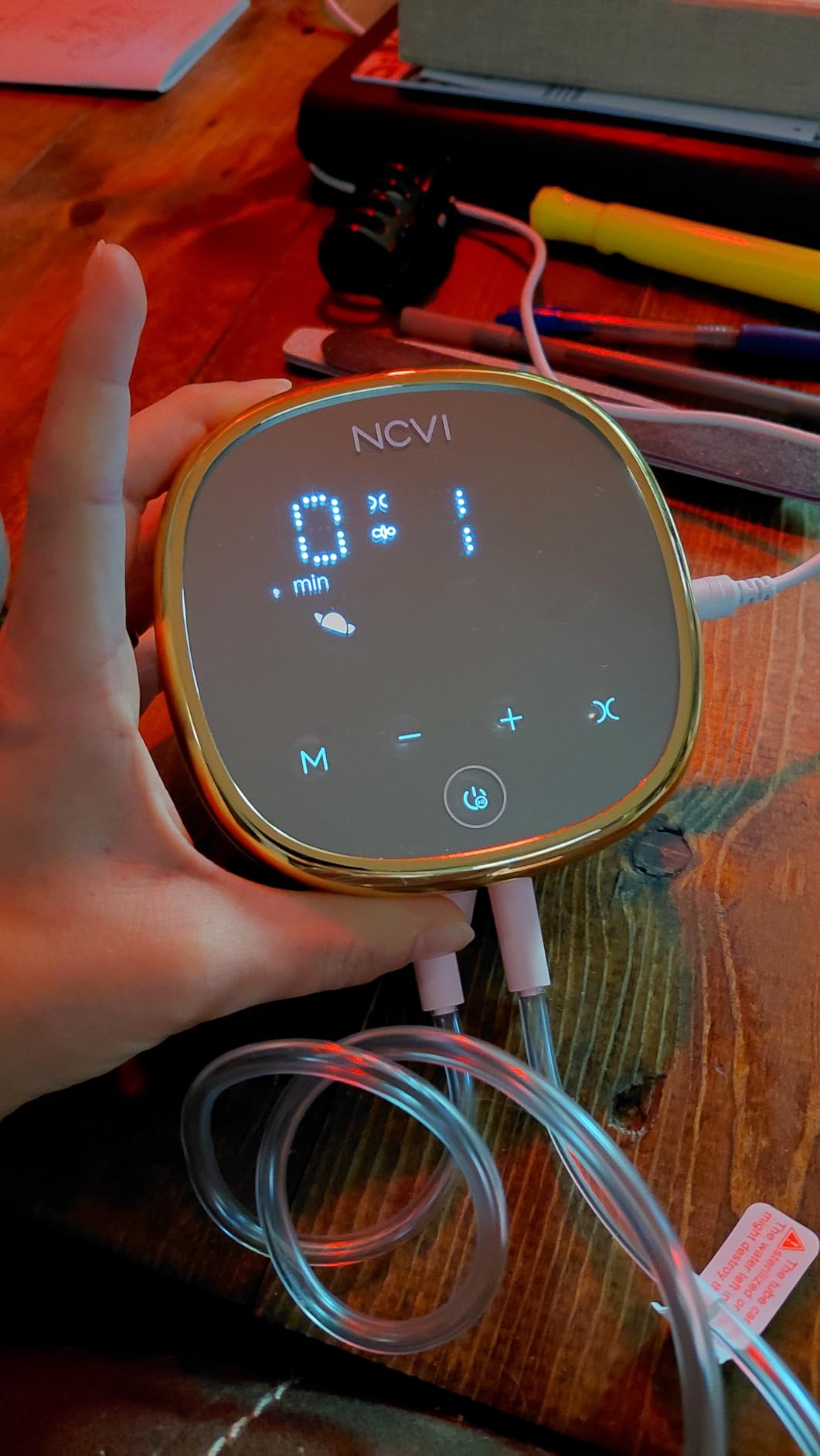
Who the NCVI 8782 suits best
Pumping parents who want stronger, more adjustable suction than a wearable allows and do not need to pump in a meeting. It is a strong first pump, a travel backup, or a second unit for a partner or caregiver to use.
Anyone worried about warranty length should look here, because three years of support outlasts the coverage on everything else we reviewed.
Where the NCVI 8782 falls short
It is a handheld with tubing, so you are holding it or wearing a pumping bra to keep it in place. That rules it out for discreet in-bra use entirely.
Three sessions per charge is short for an eight-session exclusive pumping day, and the replacement wear parts add up over a year of frequent use. Dry every component fully before reassembly.
10. NaNaLazy Wearable Pump 2-Pack: Best for Battery Endurance
NaNaLazy Wearable Breast Pump Hands Free of Longer Battery Life & LED Display, Portable Electric Breast Pump with 3 Modes & 9 Levels & Low Noise, 24 mm Flange, 2 Pcs Pink
3 modes and 9 levels
1200mAh for 6-8 sessions
180ml containers
Under 40 dB
Pros
- Entry-level build still delivers strong suction
- Battery covers a full day of pumping
- Disassembles quickly for cleaning
- Works well for larger-busted users
- 30-minute auto shut-off included
Cons
- Louder than advertised in quiet settings
- Plastic housing feels cheap with sharp edges
- 24mm flange only so small nipples need an adapter
The NaNaLazy 2-pack is the best portable breast pump when battery endurance is the deciding factor. A 1200mAh cell delivers up to 180 minutes or six to eight sessions per charge, and several reviewers report one going a full twelve-month pumping journey without failing.
Three modes and nine suction levels imitate infant feeding frequency, containers hold 6oz or 180ml, and a one-direction silicone valve prevents backflow. Noise is rated under 40 dB, and the food-grade silicone parts detach fully for washing.
Output is genuinely competitive for its class, and the review record repeatedly praises suction strength alongside easy cleaning. It works particularly well for larger-busted users who struggle with shallow profiles.
Discretion is the weak point. Buyers report it is louder than advertised, the plastic housing feels cheap with sharp edges, and suction effectiveness depends heavily on bra cut and posture, with leaking when you lean forward.
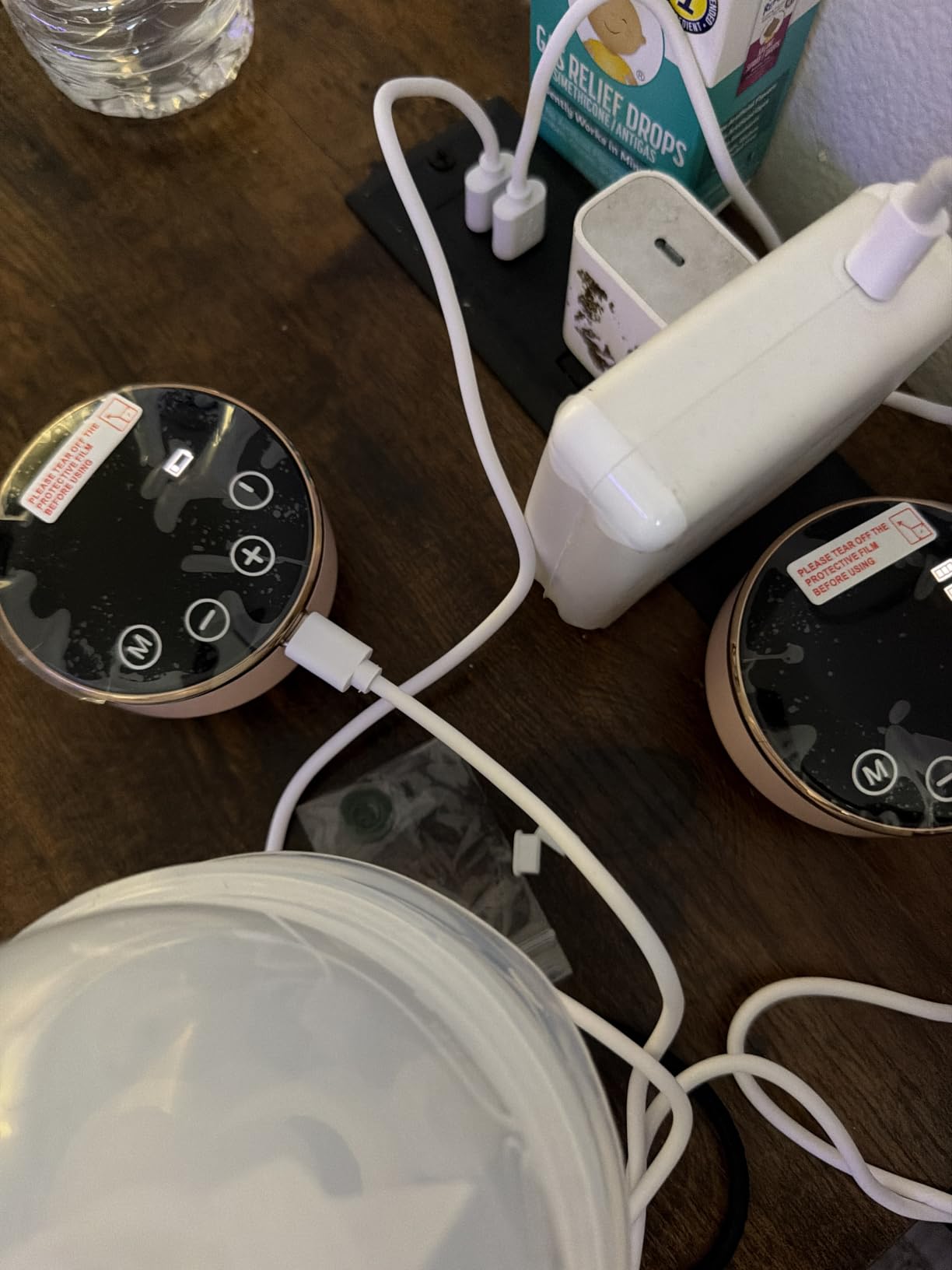
Who the NaNaLazy suits best
Anyone who wants two pumps in a single purchase, and parents who want a spare that lives in a work bag permanently. The two-pack format also solves the charging problem, since one unit can be on charge while the other is in use.
It is a good first wearable to test fit with before spending on a premium model.
Where the NaNaLazy falls short
Only a 24mm flange is included, so anyone with a narrower nipple diameter needs an adapter before the pump will work properly. That is the most common fit regret at this entry level.
Some buyers also report button malfunctions and pumps that will not power off, and the display can be hard to read with the protective film still on. Peel it off first.
11. eufy E20 Heated Wearable Pump: Best for Fast Warm-Up
eufy Heated Wearable Breast Pump E20, Hands-Free, App Control
30-second warm-up to 95F
Up to 300 mmHg
46 dB
Double seal
Pros
- Heated HeatFlow surface helps prevent clogs
- 30-second warm-up to 95F for fast sessions
- Quiet 46 dB operation suits in-bra wear
- Lightweight build with a leakproof double seal
- Four presets plus custom rhythms in the app
Cons
- App control and custom rhythms need a free trial
- Heated components add bulk under clothing
- In-bra seal takes real practice to get right
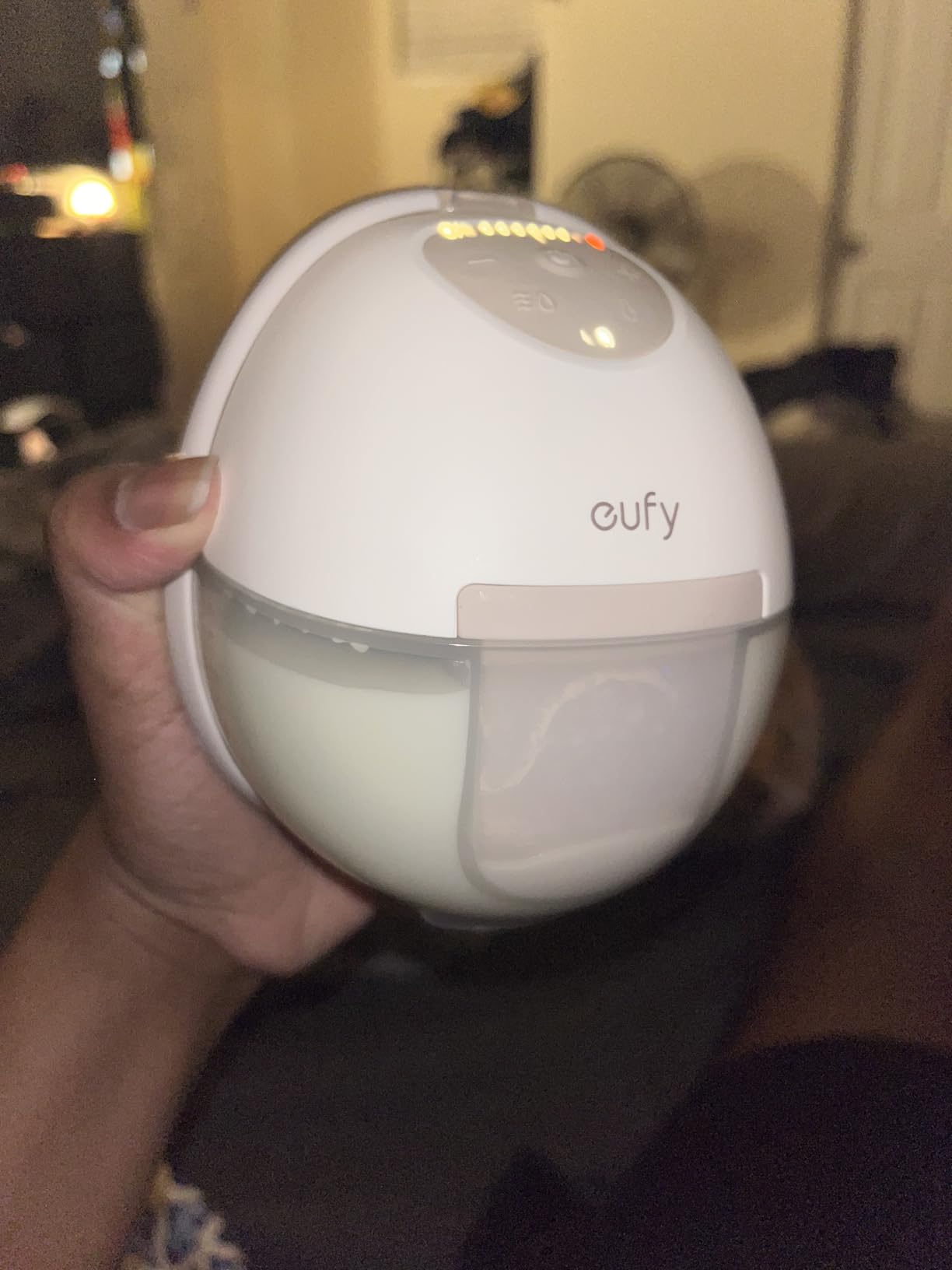
The eufy E20 is the best portable breast pump when you want warmth without waiting. It reaches 95F in about 30 seconds, so the heated surface is doing its work by the time your let-down would normally begin, and the manufacturer claims the heating reduces clogging and lifts output by up to 30%.
Suction reaches up to 300 mmHg through four presets or custom rhythms programmed in the app, and the 105-degree ergonomic curvature follows the breast closely. Operation holds at 46 dB with a leakproof double seal and a reinforced lower half.
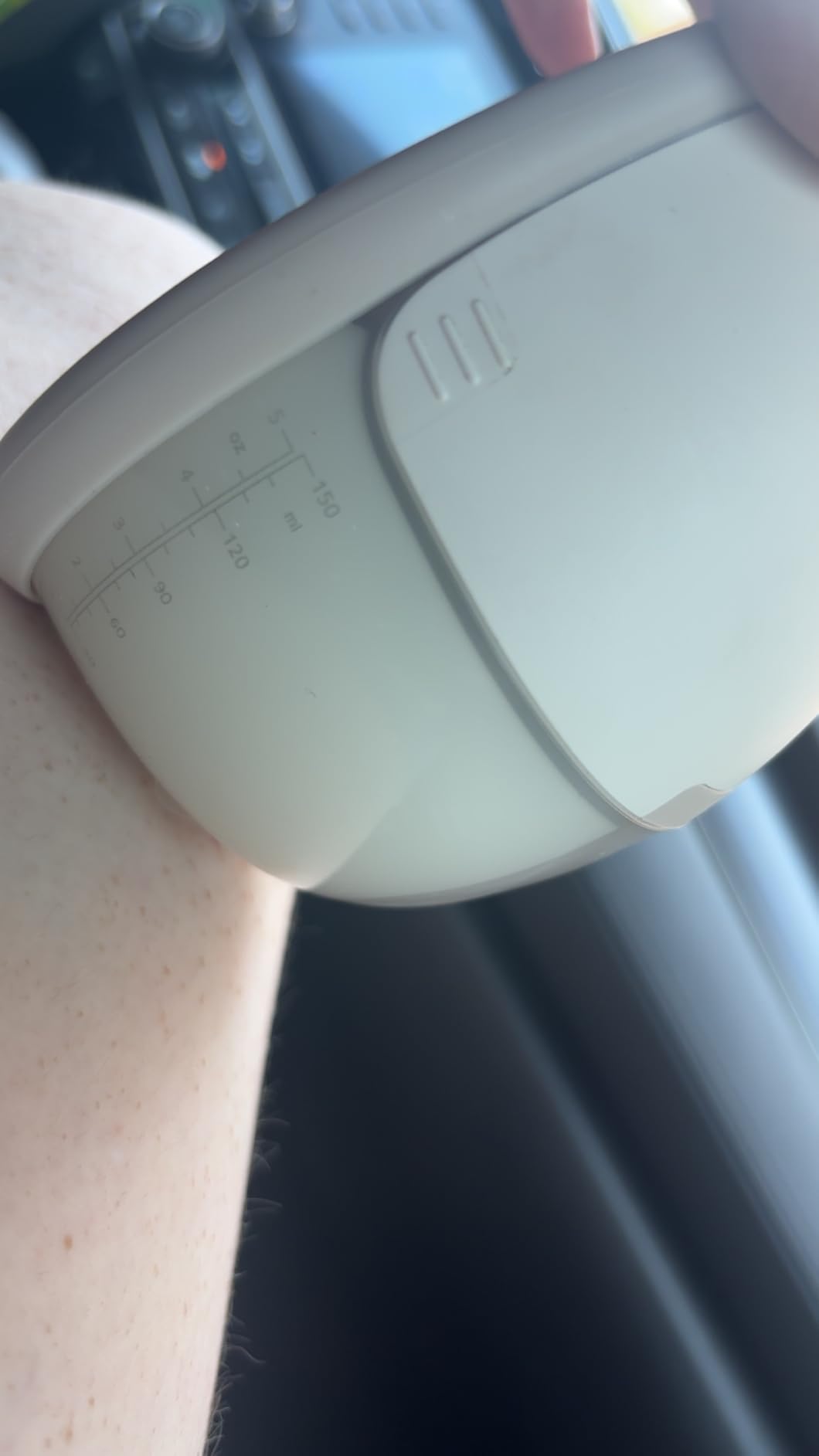
At 4.2 across 1,067 reviews, the record is solid with a 67% five-star share. Customers consistently praise the heated experience, output, quietness and the comfort of the in-bra fit, and the BPA-free food-grade skin-contact parts sit well against sensitive skin.
The trade-offs are bulk and dependency. Heated components make it larger under clothing than a non-heated wearable, and the app-based custom rhythms are tied to a free trial, so some features disappear after the trial ends.
Who the eufy E20 suits best
Parents who deal with clogs or slow let-down and need warm stimulation in a short window, and anyone who wants a heated pump at a lower entry point than the S1. The 30-second warm-up makes short, frequent sessions realistic.
It suits anyone pumping at work who needs the flange warm but cannot sit still for a long warm-up cycle.
Where the eufy E20 falls short
The in-bra fit and seal genuinely take practice, and getting it wrong means a poor empty. Budget several sessions before judging it, and swap between breast sizes if that applies to you.
It is also a bulky heated wearable, which limits discretion under fitted clothing, and a small 9% group of one-star reviews reflects both the fit curve and the app dependency.
12. Lulia Double Electric Pump: Best Battery Life in the Roundup
Lulia Double Electric Breast Pump, 4 Modes & 9 Levels Portable Breast Pumps
4 modes and 9 levels
2500mAh for 240 minutes
Usable while charging
Under 40 dB
Pros
- Output many owners rate equal to or better than the premium pumps they replaced
- 2500mAh battery with up to 240 minutes of runtime
- Works while plugged in for long sessions
- Single or double pumping with two tube sets
- LED display with physical buttons not touch screens
Cons
- Flange insert fit problems for some buyers
- Battery indicator drops fast and runtime falls short of claim
- First-time assembly of tubing and flanges is confusing
The Lulia is the best portable breast pump for long pumping days. The 2500mAh battery is the highest capacity in this roundup and runs up to 240 minutes or three to five sessions, and the pump can be used while charging, which means a top-up at a desk does not mean losing a session.
Four modes across nine suction levels cover massage, expression, comfort and mixed, and the 180ml or 6oz capacity is generous. The smart LED display uses physical buttons, which matters more than it sounds because touch screens are unreliable with wet hands.
At 4.3 with 691 reviews and a 72% five-star share, the pattern in the record is that owners are surprised. Multiple buyers say the output matches or beats the established premium pumps they owned before, which is the reason this one keeps appearing on recommendation lists.
Cleaning is straightforward because every non-electrical part is dishwasher safe and the unit disassembles easily. Anti-backflow design reduces leaking, and it weighs just 1.76 pounds with single and double tubing sets included.
Who the Lulia suits best
Pumping parents who need double pumping with long battery life and no app, and anyone who wants a straightforward tubed pump as a travel backup. Use-while-charging makes it the easiest to keep going during a marathon pumping day.
It also suits anyone put off by touch controls, because the physical buttons do not misread a wet hand.
Where the Lulia falls short
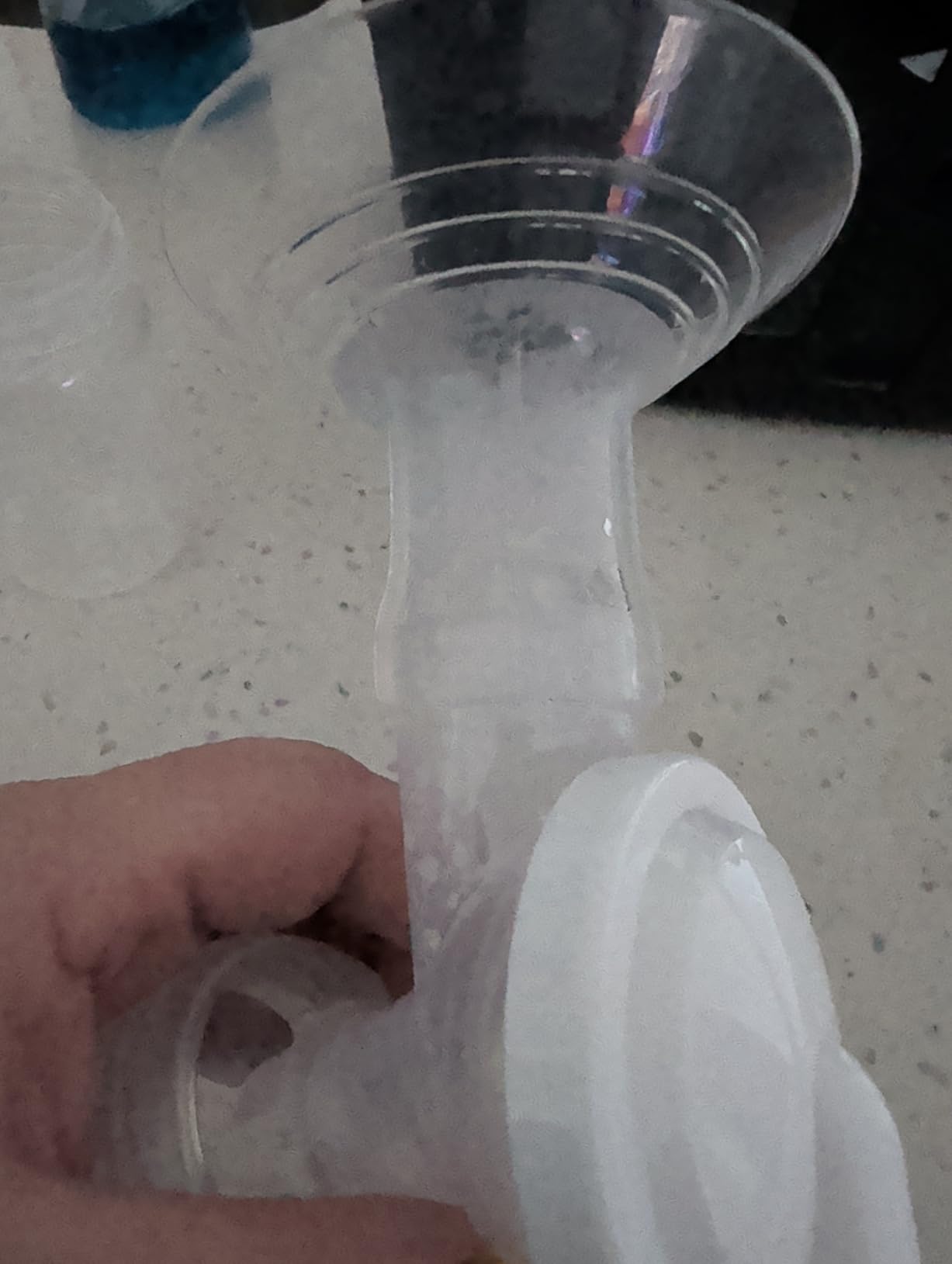
Flange insert sizing causes returns for some buyers, and only 24mm flanges are included, so check your nipple diameter before committing. Assembly of the tubing and flange setup is genuinely confusing the first time.
The battery indicator drops quickly and real-world runtime often lands below the 240-minute claim, and it is not the quietest pump despite the under-40 dB figure. Budget for a mid-day charge anyway.
How to Choose a Portable Breast Pump
Choose a portable breast pump by matching the pump type to your schedule, then checking flange range, noise and battery life against your actual day. The most useful first question is simple: do you need to be invisible, or do you need to empty fast? Those two goals point to different products, and buying the wrong one is the expensive mistake.
Portable versus wearable versus plug-in is not really a quality ranking. A portable handheld with tubes, like the NCVI 8782 or the Lulia, gives you the most adjustment and the strongest consistent pull. A wearable sits inside your bra with nothing showing, which is the only way to pump in a meeting. A plug-in double electric such as a Spectra S1 or S2 style unit is the at-home anchor, and our double electric roundup covers those in depth. Remember that hospital grade is an unregulated marketing term, so compare published pressure ranges instead.
Flange fit is the single biggest lever on output, and it costs nothing to get right. Measure your nipple diameter at the base with a ruler in front of a mirror, or use a coin to compare width. Anything under 20mm needs a 17mm, 19mm or 21mm insert rather than a 24mm shield. If your pump only ships with a 24mm flange, buy inserts before your first session rather than after your supply dips.
Battery life should be judged in sessions per charge, not minutes on a spec sheet. The heated NCVI and the Nanobebe cover roughly seven to eight sessions, the NaNaLazy claims six to eight, and the NCVI 8782 and the Willow Go sit nearer three. An exclusively pumping day runs six to eight sessions, so anything under six means charging mid-day.
Noise matters if you pump on calls. Published figures here run from under 40 dB on the NaNaLazy, NCVI 8782 and Lulia up to under 55 dB on the Nanobebe. For most people anything under 46 dB disappears into office background noise.
On cleaning, fewer parts is the metric that saves you the most time. The Elvie has five parts and the Paruu has four washable components, while any tubed double pump adds tubing, connectors and valves to every wash. Dishwasher safe parts are common, but a pump that is submerged needs a full dry before reassembly or suction drops.
Most pumping parents who are satisfied long-term run two pumps, not one. The common pattern is a strong plug-in double electric at home for the first morning pump and for power pumping, plus a wearable for the office, errands and overnight sessions. If you are exclusively pumping, keep the stronger home pump for supply maintenance even after the portable has replaced it during the day. The pattern that shows up again and again in pumping communities is simple: a convenient wearable is not always the pump that gets the milk out.
If you are in the US, order any insurance-covered equipment well before your due date, since processing, fulfilment and a possible upgrade decision can stretch to several weeks. Check the flange kit and spare parts at the same time, because those are the replacements you will need first. Plan travel pump sessions with a small cooler bag and ice packs, and check your airline’s rules on spare lithium batteries before you pack.
Frequently Asked Questions
Is it worth getting a portable breast pump?
Usually yes, if you need discretion or an outlet-free backup. A portable breast pump decides where and when you can pump, which is what makes a consistent schedule possible. If you never pump away from home and already own a strong double electric, your money is better spent on correct flange sizing and a second bottle.
What is the 3-3-3 rule for pumping breast milk?
The 3-3-3 rule is a common shorthand for the first days after birth: pump roughly every 3 hours, aiming to move about 3 ounces in a session, 3 times within your first hours after waking. It is a guideline rather than a target, and the practical version for most parents is simply pumping 8 to 12 times in 24 hours to signal supply to your body.
What is the highest rated portable breast pump?
Among the 12 pumps in this roundup, the Nanobebe Wearable Pump has the highest average rating at 4.6, with 79% five-star feedback and only 3% one-star. The Elvie carries the largest review record at more than 11,000 reviews and a 4.3 average, which makes its long-term reliability data the most trustworthy in the set.
What are the best handheld breast pumps?
Among the pumps we tested, the best handheld-style options are the NCVI 8782 and the Lulia, both of which use tubes and a held or strapped motor. They offer the most suction adjustment and output, run quietly, and have much longer battery life than most wearables. A wearable like the Elvie or the Nanobebe is the quieter choice if you need to be discreet.
Why is Spectra better than Medela?
Neither brand was part of this portable roundup, so we did not test them side by side. The general difference is design philosophy: Spectra style pumps are typically closed-system with a stainless steel backplate, while Medela style pumps often use an open system with plastic membranes, and closed systems are easier to keep hygienic. Both brands make strong double electrics, so flange fit matters more than the brand name.
Is Elvie Pump better than Momcozy?
We tested the Elvie in this roundup but did not include a Momcozy model, so we cannot give you a measured head-to-head. The Elvie wins on size, noise and having only five parts to clean, and it carries a far larger review record. A Momcozy wearable is generally a larger battery with more capacity, so the right comparison is quietest and smallest versus longer sessions.
The Verdict on the Best Portable Breast Pumps in 2026
After working through twelve pumps, the best portable breast pump for most people is the Elvie Double Wearable Pump. It is the most compact and quietest option, it has the largest review record in the set, and cleaning it takes five parts. For pumping at work without being noticed, the Nanobebe is the highest rated at 4.6 with a profile that stays flat under clothing.
If your priority is a fuller empty rather than discretion, the heated NCVI is the best value, with 360-degree heating, up to -300mmHg, four flange sizes and about eight sessions per charge. For output that holds up over long days, the Lulia and the NCVI 8782 both deliver, and both keep pumping while you are on the move.
Whichever you pick, measure your flange size before your first session and order the inserts you need at the same time. That one step fixes more low-output problems than any suction number on a box.