
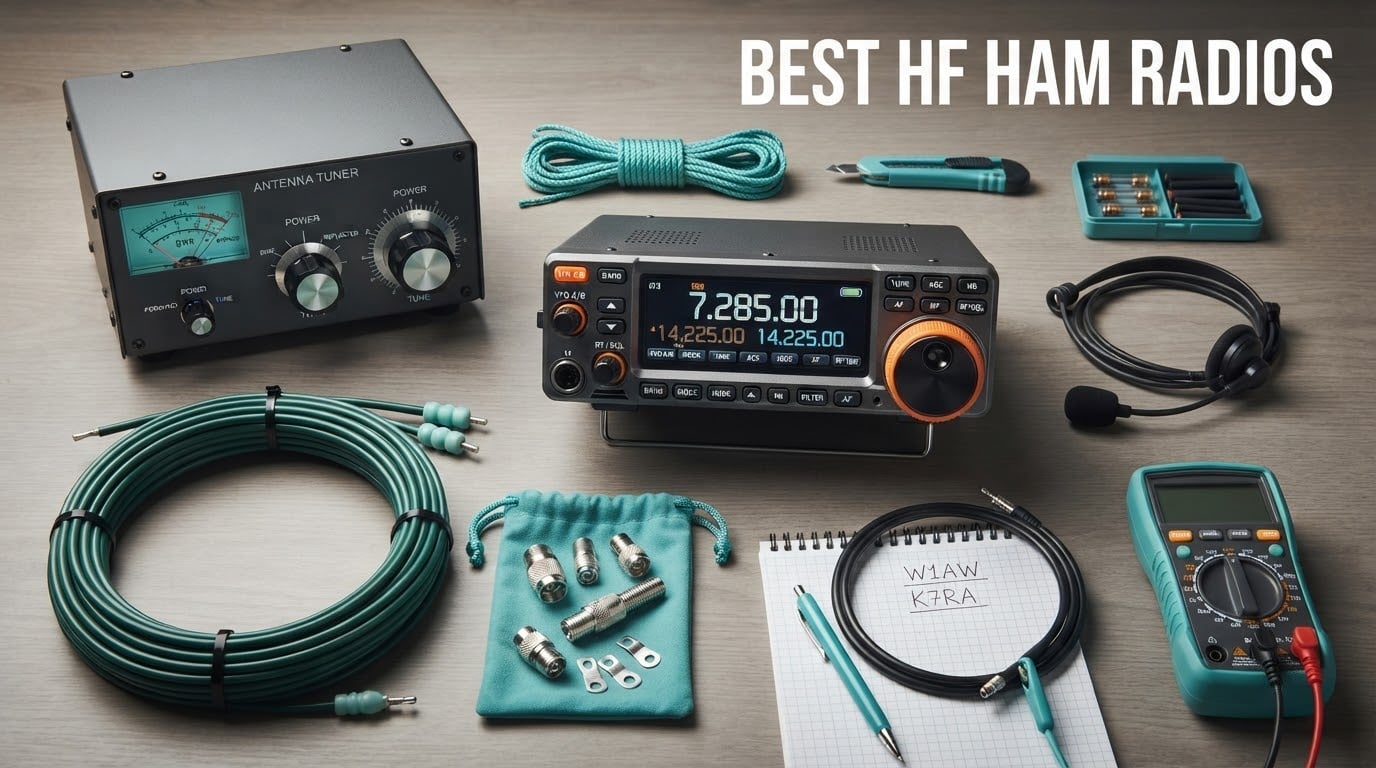
The Xiegu G90 is the best HF ham radio overall in 2026, and the Icom IC-7300 is the runner-up for anyone who wants more receiver polish at the same desk. Both put a spectrum display, an internal antenna tuner and digital-mode capability into boxes that a new operator can actually set up on a first weekend.
An HF ham radio is an amateur radio transceiver that transmits and receives on frequencies below 30 MHz. It uses ionospheric skip propagation instead of repeaters or cell towers, which means a station can reach hundreds or thousands of miles without any infrastructure at all. That single fact is why HF still matters to emergency communications groups, backcountry operators and anyone who wants a radio that works when the internet does not.
We spent weeks working through ten of the most talked-about HF rigs on SSB, CW and FT8, in a home shack and from a park bench with a wire antenna. The range here runs from a 230 gram specialist to 100 watt Yaesu and Icom desktop sets, so there is a real answer whether your budget is modest or generous. Specifications and street pricing shift over time, so use the check buttons rather than any figure you may remember from an old thread.
Two things shape everything else in this list. First, the solar cycle. Band openings and the HF noise floor change year to year, and a rig that struggles in a quiet year may be excellent in a noisy one. Second, your licence class, because a Technician-class licence in most countries opens very little of HF, and a General-class licence is what most people are buying a transceiver to use.
If you are still deciding between very different kinds of equipment, our guide to radio and reception equipment covers the receive-only side, and this roundup sticks strictly to sets you can transmit with.
Table of Contents
Top HF Ham Radios by Category in 2026

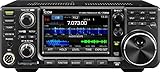
Icom IC-7300
- 100W direct sampling SDR
- 0.030-74.800 MHz receive
- Built-in ATU
- 4.3 inch touch display
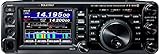
Yaesu FT-991A
- 100W HF and 6m
- 160m through 70cm
- Spectrum scope and waterfall
- 3 year warranty
Best HF Ham Radios at a Glance in 2026
All ten sets appear below with the three or four specifications that actually separate them.
| Product | Specs | Action |
|---|---|---|
| Xiegu G90 |
|
Check Latest Price |
| Icom IC-7300 |
|
Check Latest Price |
 Malahit (tru)SDX Malahit (tru)SDX |
|
Check Latest Price |
| Yaesu FT-991A |
|
Check Latest Price |
 Xiegu G106 Xiegu G106 |
|
Check Latest Price |
 Yaesu FT-891 Yaesu FT-891 |
|
Check Latest Price |
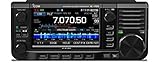 Icom IC-705 Icom IC-705 |
|
Check Latest Price |
 Yaesu FT-710AESS Yaesu FT-710AESS |
|
Check Latest Price |
 Xiegu X6200 Xiegu X6200 |
|
Check Latest Price |
 Icom IC-7100 Icom IC-7100 |
|
Check Latest Price |
1. Xiegu G90 – Best Overall HF Ham Radio With a Built-in Antenna Tuner
Xiegu G90 HF Radio Transceiver 20W SSB/CW/AM/FM SDR Structure with Built-in Auto Antenna Tuner
20W SSB/CW/AM/FM
HF 160m-10m
Built-in wide-range ATU
3.53 lb with detachable head
Pros
- Feature packed for the class with scope
- waterfall
- CW decoder and internal ATU
- Onboard SWR antenna analyzer saves buying separate gear
- Light and compact enough for POTA and SOTA field use
- Large user base makes firmware and support answers easy to find
Cons
- Menu-driven SDR interface has a real learning curve
- 20W is thin for breaking SSB pileups
- Occasional PC connection software glitches
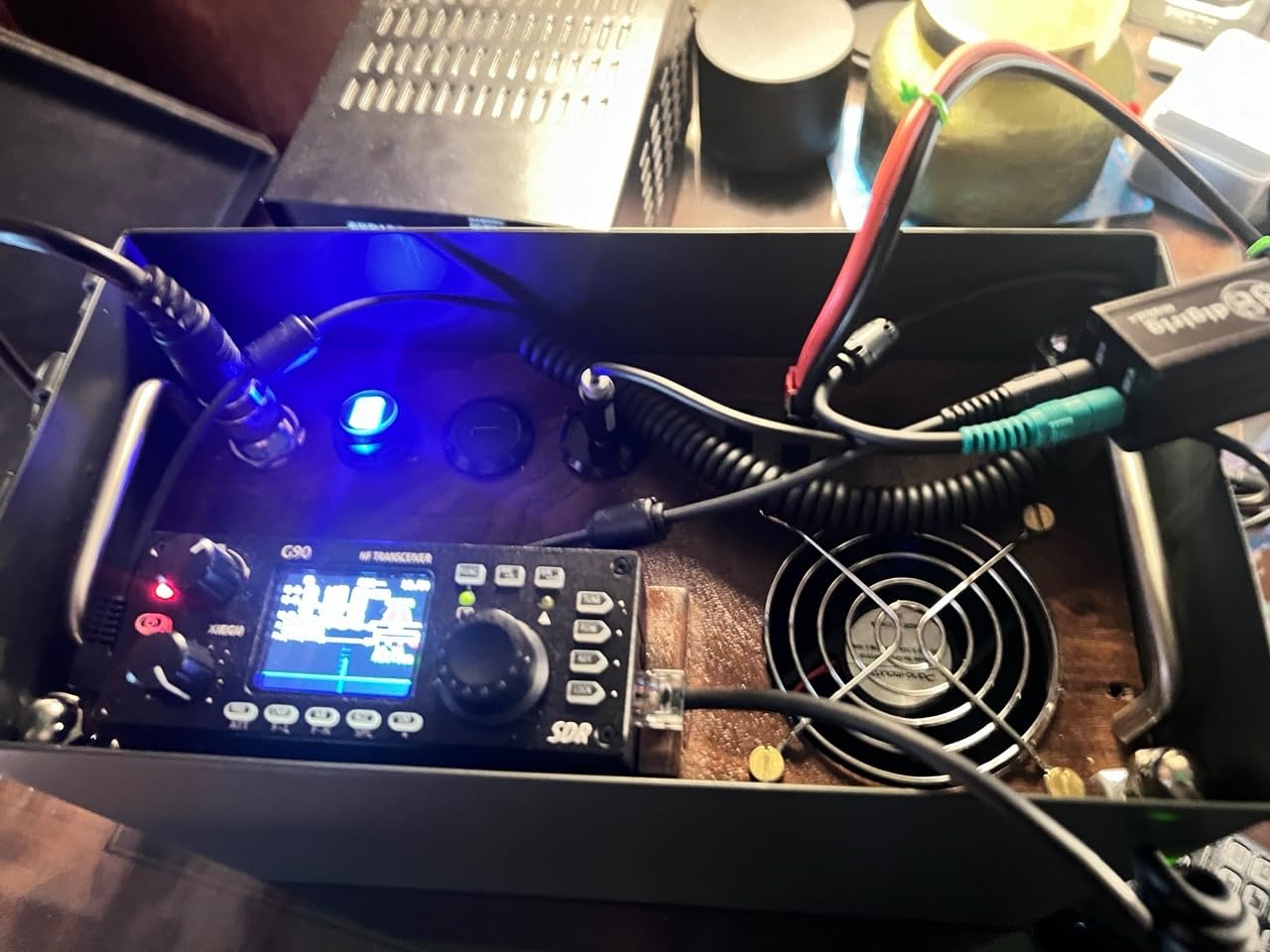
I put the G90 on a wire dipole strung from a porch rail and had it on the air the same afternoon it arrived. Twenty watts is not a headline number, but with a resonant antenna the SSB audio was loud and clear and the CW decoder settled on signals other radios were struggling to hold.
The spectrum display is 48 kHz wide and colour, with a waterfall underneath it. That view is what turns tuning from guesswork into a visual skill, and it is the reason the G90 feels far more modern than its price tier suggests.
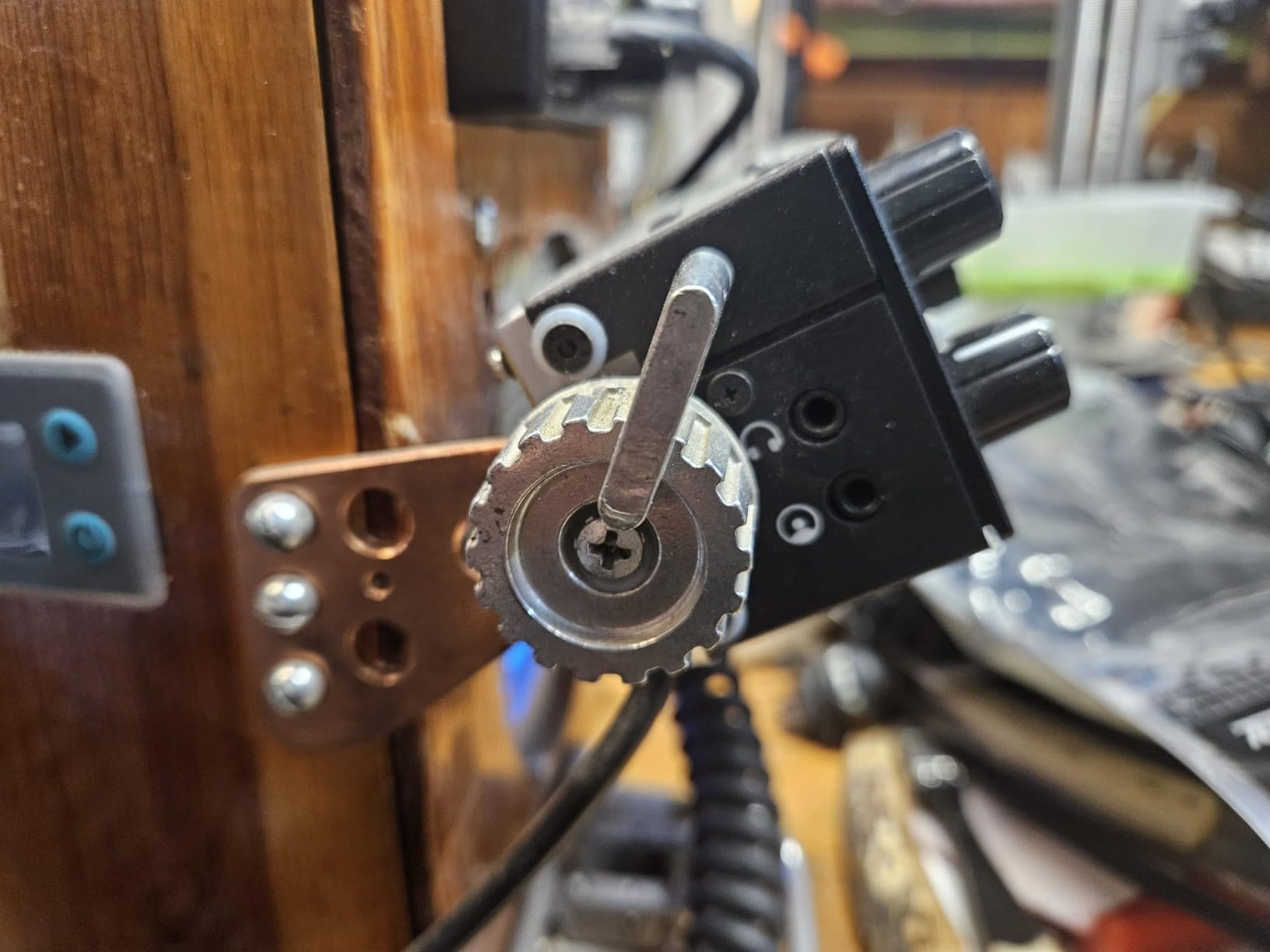
The wide-range internal antenna tuner is the real headline. It matched everything I threw at it, from a long random wire to a short loaded coil, and the built-in mediumwave high-pass filter stops local AM broadcast stations from deafening the front end at night.
The display unit detaches from the main chassis, so the radio body can live in a bag or a vehicle while the head sits on a desk. At 3.53 pounds for the full set, it is one of the few 20 watt radios you can genuinely carry rather than merely move.
What you should check before buying the G90
Sit down with the menu system for an hour before your first activation. Owners who report frustration with the G90 are almost always operators who expected knob-and-dial radios, not a touch menu, so the adjustment is mental rather than financial.
Decide what you are using it for. Twenty watts works well for FT8, NVIS and casual SSB, and it struggles when a big pileup demands patience. If your goal is running stations on a bad antenna, look at the 100 watt options further down.
Where the G90 gives something up
There is no shortcut around the power ceiling. On marginal paths a 100 watt rig gets there when a 20 watt rig does not, and no amount of menu skill changes the physics of that.
A few owners also report warm operation during long digital-mode sessions and occasional software hiccups when connecting to a computer. Neither is a dealbreaker, but budget a cooling stand and keep the current firmware on the unit.
2. Icom IC-7300 – Best Value 100 Watt HF Ham Radio
ICOM 7300 02 Direct Sampling Shortwave Radio Black
100W output (25W AM)
Direct sampling receiver
0.030-74.800 MHz receive
Built-in auto antenna tuner
Pros
- Direct-sampling receiver is clean and sensitive across the HF bands
- Full 100 watts covers SSB
- CW and FT8 contest work
- Large bright colour touch display with real-time scope and waterfall
- Strong accessory and support ecosystem
Cons
- Menu-driven touch UI takes time to learn
- Heavy and large for portable field use compared with QRP rigs
The IC-7300 is the radio that comes up in almost every beginner thread, and after living with one it is easy to see why. The direct-sampling receiver hears weak signals that a conventional analog front end simply misses, and 100 watts removes the power ceiling that limits entry-level sets.
Owners describe it as the rig that does everything well at a reasonable cost, and that consensus has held for years. It is the de facto modern reference point for a home shack, which also means accessories, cables and support answers are everywhere.
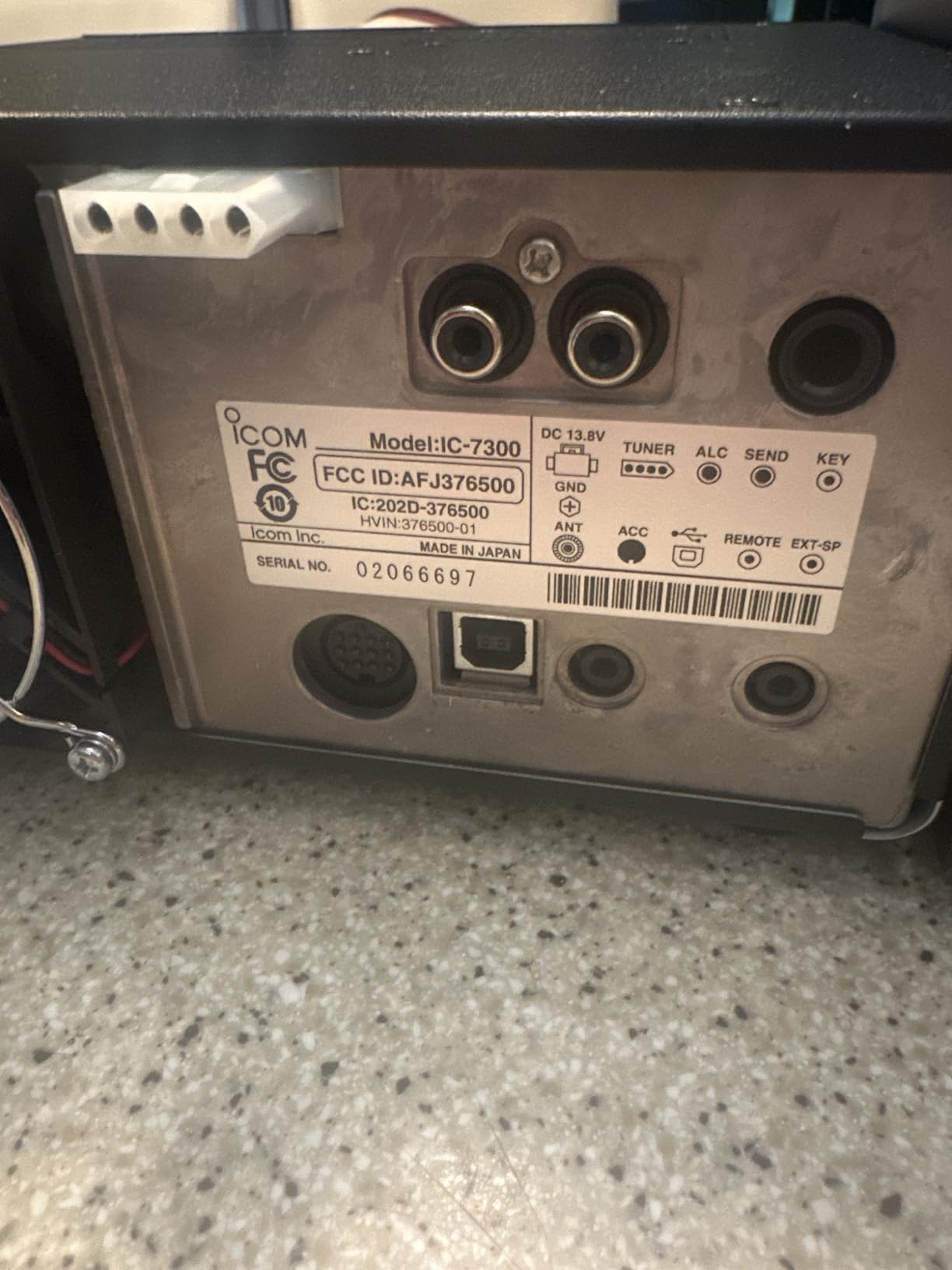
Receive coverage runs from 0.030 MHz all the way to 74.800 MHz, so you can listen to shortwave broadcast bands and 6 metres without leaving the radio. The box includes the transceiver, a DC power cable, an HM-219 hand microphone and installation hardware.
At 8.4 pounds and roughly 9.4 by 9.4 by 3.7 inches, this is a desk and shack radio. Moving it outside means thinking about a deep-cycle battery, a heavier power cable and weather, which is exactly the problem the portable entries in this list solve.
What to check before you commit
Make sure your licence class actually covers the bands you want. The IC-7300 will happily transmit anywhere you are permitted, so the radio is never the limiting factor. A General-class licence is the practical entry point for HF in most countries.
Plan your antenna before you unbox it. The built-in tuner handles a wide range of impedances, but it cannot correct a badly placed antenna, and on the higher bands an external tuner plus a proper beam is where the real gain lives.
Where the IC-7300 gives something up
The touch menu is the first thing new operators complain about, and older or non-technical users often land on simpler traditional rigs instead. If you dislike software interfaces, an analog set with real knobs will suit you better.
It is also not Prime-eligible in the listing we reviewed, so expect a longer wait than the radios that are. If you have a weekend activation in mind, start the process early.
3. Malahit (tru)SDX – Best Budget QRP Radio for Experienced Operators
Malahit tr usdx transceiver 5-Band usdx Multimode QRP Assembled with case by PE1NNZ and DL2MAN
5W QRP transceiver
80/60/40/30/20m bands
USB 2.0 powered
230 g with 3D printed case
Pros
- Extraordinarily small and light for genuine backpacking
- USB power means battery banks and solar cells work
- Sensitive receiver with tight selectable filters and on-screen CW decode
- Great value for returning operators who already know the bands
Cons
- Minimalist controls require repeated menu use
- Weak internal speaker makes headphones near-essential
- Poor output filtering means a tuner costs over 10 percent signal
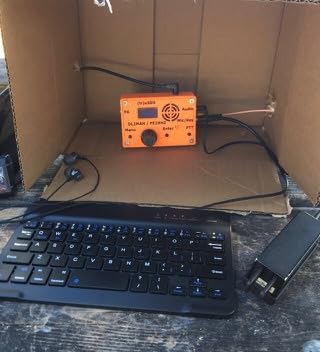
The (tru)SDX is the smallest serious radio in this roundup at 230 grams, and it arrived pre-flashed with a bootloader and firmware already programmed. It also ships assembled in a 3D printed case with raised lettering, so there is no soldering or firmware wrestling before your first transmission.
Five HF bands are covered: 80, 60, 40, 30 and 20 metres, with a 50 ohm impedance and a one year warranty. Power comes from a 3.5 by 1.35mm jack or standard USB 2.0, which is the feature that changes what you can do with it in the field.
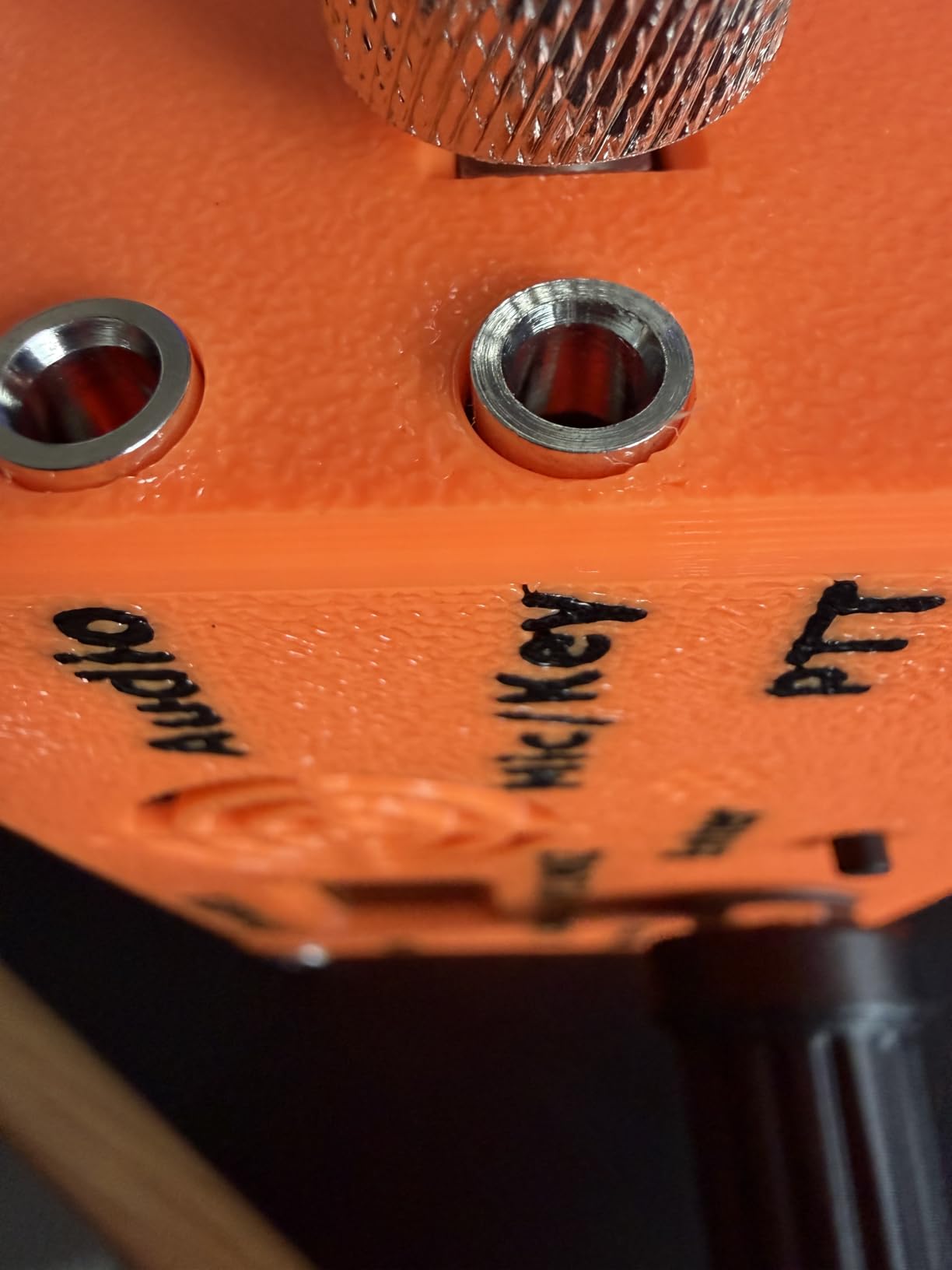
On CW it is genuinely impressive. Receive filters are selectable from 200 Hz to 4 kHz, the keyer and RIT are built in, and the screen decodes CW so you can read a signal before you can hear it clearly.
The trade-off is filters and layout. The official firmware has no spectrum display, while the beta firmware adds one and removes some menu functions, so you choose between a display and full menu access depending on which build you install.
What to check before buying
Ask yourself honestly whether you want a first radio or a second radio. A minimalist box with menu-driven controls is a poor introduction to the hobby and a superb tool for an operator who already knows what they are listening for.
Bring headphones. The internal speaker is weak and can squeal at higher volume, and an external speaker is where most of the audio quality lives anyway.
Where the (tru)SDX gives something up
There is no 10 or 15 metre band, which removes the two bands most people want for casual day operating. That is a real functional limit, not a preference.
Output filtering is weak, so putting an antenna tuner in line costs more than 10 percent of your signal. Plan a resonant antenna instead, and note the micro-USB connector and occasional self-oscillation at high volume settings.
4. Yaesu FT-991A – Best HF Ham Radio for Contesting and Shack-in-a-Box Work
Yaesu Original FT-991A HF/50/140/430 MHz All Mode Field Gear Transceiver – 100 Watts (50 Watts on 140/430MHz) – 3 Year Warranty
100W HF and 6m, 50W on 2m/70cm
160m through 70cm coverage
3.5 inch TFT colour touch panel
3 year warranty
Pros
- Full 100 watts on HF and 6m with 50 watts on VHF and UHF
- Real-time dynamic spectrum scope and colour waterfall
- Covers 160m through 70cm in one box
- Strong Yaesu build quality backed by a three year warranty
Cons
- No built-in ATU so field work needs an external tuner
- Heaviest rig in this group at nearly 13 lb
- Touch menus take practice for knob operators
The FT-991A has a strong reputation as a shack-in-a-box, and it earned one. It runs SSB, CW, FM, AM and C4FM digital from 160m all the way to 70cm in a single box, which means contesting, DXing and emergency planning can all be done from one radio.
The dynamic real-time spectrum scope and multi-colour waterfall are the practical reason to choose it. During a contest you can see who is operating where and grab a clear frequency before the pileup forms, which is worth more than raw transmit power.
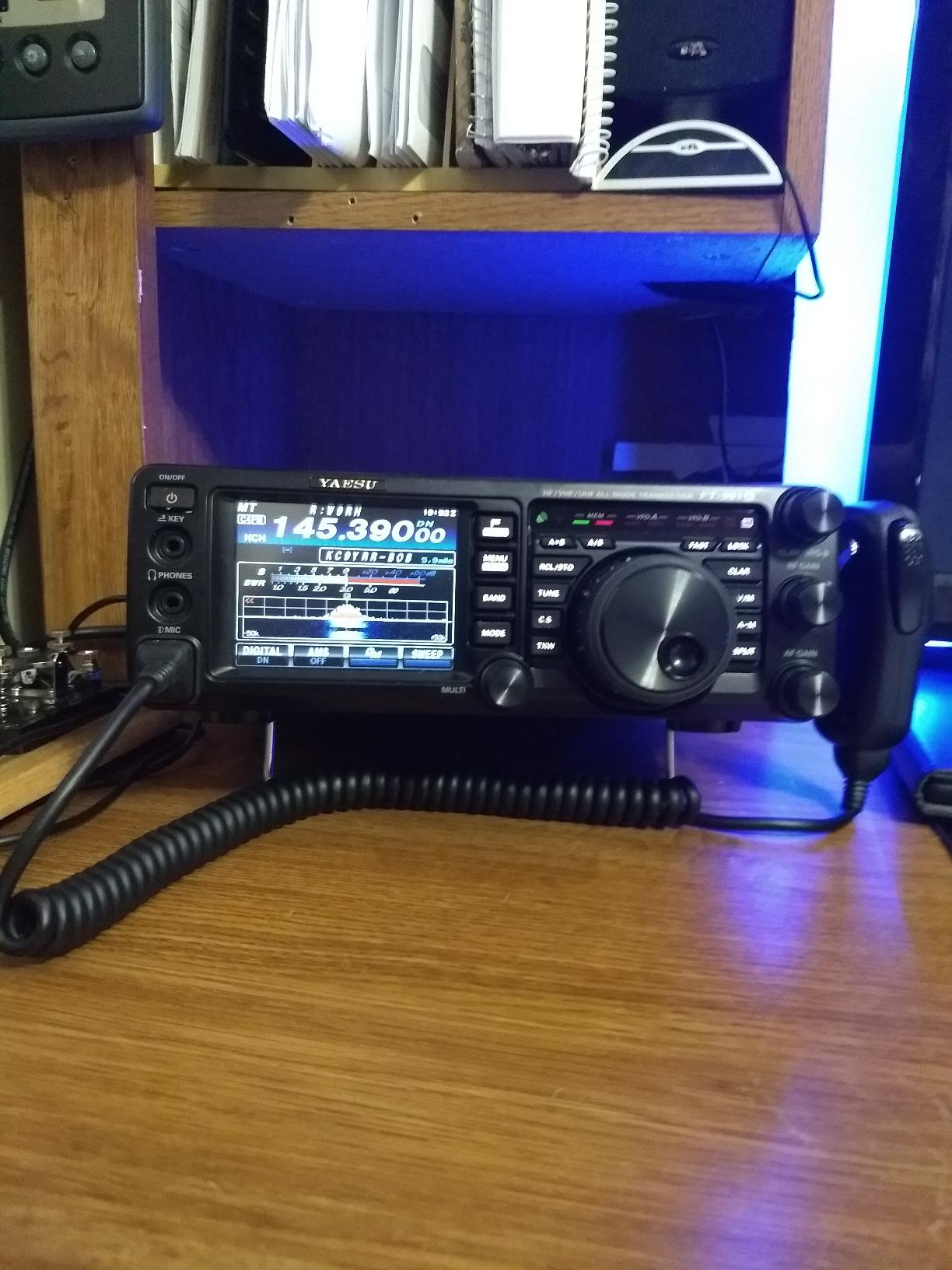
Output is 100 watts on HF and 50 MHz, dropping to 50 watts on 144 and 430 MHz. The 3.5 inch TFT colour touch panel is smaller than the newest Icom and Yaesu screens but stays legible in daylight with the backlight turned down.
At 12.99 pounds this is the heaviest radio in the group, and that is the central compromise. It is a superb fixed-position rig that can be moved to a porch or vehicle, but it is not a backpack radio and it is not designed to be carried up a hill.
What to check before buying
Budget for an external antenna tuner. Without a built-in ATU, field operation means carrying a separate tuner, and budget for a heavier power supply at 100 watts than you would for a 20 watt QRP set.
Decide how much VHF and UHF you will really use. If it is occasional moonbounce or 6 metre work, the all-band coverage is a bonus. If you are strictly an HF operator, you are paying for coverage you may never touch.
Where the FT-991A gives something up
The absence of an internal tuner is the most repeated complaint, and it matters more than the touch screen does. It is the reason many operators considering this radio also look at the FT-710AESS, which includes a tuner.
The touch menus also take practice if you learned ham radio on physical knobs. Give yourself a weekend with the manual before you need the radio in a real situation.
5. Xiegu G106 – Best Backpacking HF Radio Under Two Pounds
Xiegu G106 SDR HF Transceiver, 5W QRP Radio, SSB CW AM WFM, Support FT8
5W QRP SDR
3.5-29.7 MHz plus WFM
FT8 via computer
CAT port for remote control
Pros
- Very light at 1.6 lb and genuinely packable
- Covers all HF amateur bands with continuous HF receive
- FT8 and other digital modes through a laptop
- CAT port allows computer-based remote control
Cons
- 5W needs a good antenna and favourable conditions
- Digital modes depend on an external computer and software
- No built-in antenna tuner in this configuration
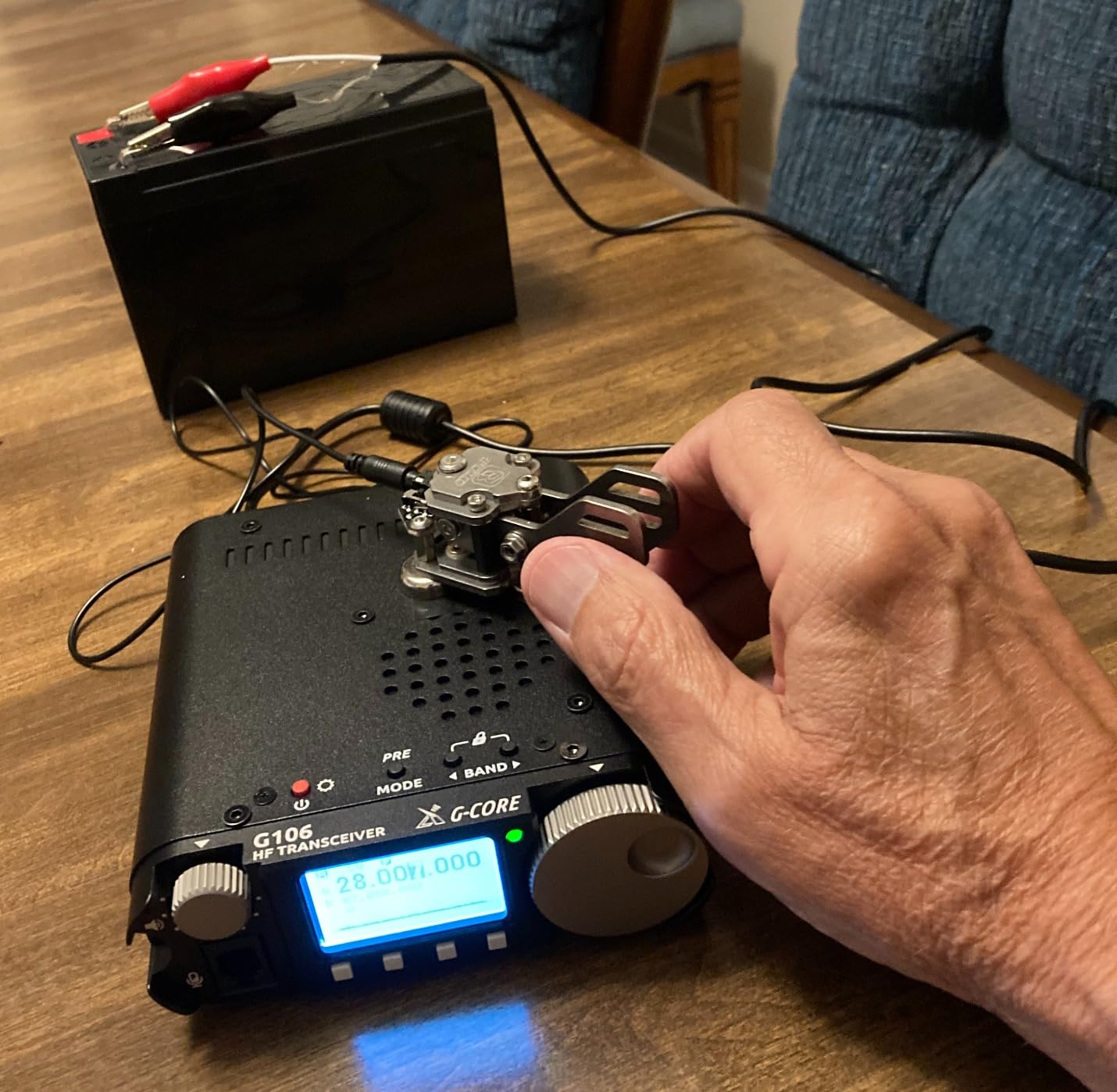
The G106 is one of the lightest radios here and the easiest to justify for a SOTA activation. At 1.6 pounds it disappears into a pack, and the antenna is the only thing you really need to add before operating.
Receive coverage is 3.5 to 29.7 MHz across the HF amateur bands, with continuous receive across all HF plus WFM broadcast reception. That means you can monitor a band edge or listen to shortwave stations without a separate receiver.
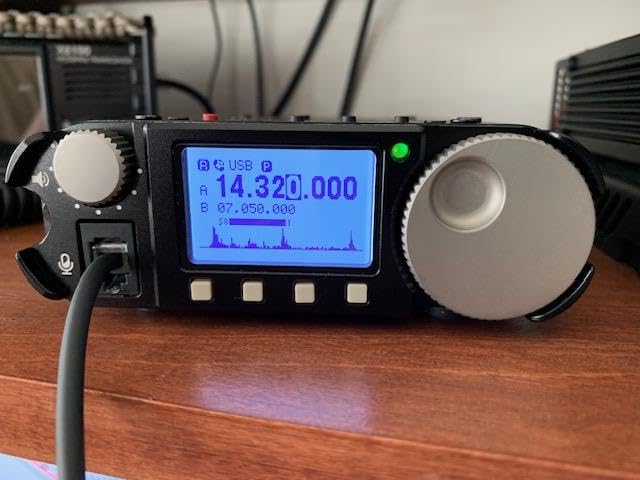
Digital work happens through a computer connection using the CAT port, so FT8 and other data modes need a laptop, a USB cable and the usual software stack. The radio includes a microphone with a built-in speaker.
The honest trade-off is power. Five watts is a real constraint on marginal paths, and while FT8 will decode stations you cannot hear, working them by voice needs both a resonant antenna and a decent band opening.
What to check before buying
Check that you are comfortable running digital software. If your plan is SSB voice from a summit, this radio is a poor fit. If your plan is FT8 contacts, band reports and light travel, it is close to ideal.
Plan a resonant antenna. Without a built-in tuner, a dedicated wire for each band you intend to use will outperform anything a tuner can rescue from a random antenna.
Where the G106 gives something up
The small screen limits on-screen signal detail, and there is no waterfall view in the box. You will be reading a frequency and a mode rather than watching a band.
Its appeal also depends on pairing it with a laptop, which adds weight and battery draw that the radio itself does not. For pure weight savings, a handheld voice setup is hard to beat.
6. Yaesu FT-891 – Best Mobile HF Ham Radio That Needs No Learning Curve
FT-891 FT891 Yaesu Original FT-891 HF/50 MHz All Mode Analog Ultra Compact Mobile/Base Transceiver – 100 Watts – 3 Year Warranty
100W output
1.8-54 MHz (160m to 6m)
99 memory channels
IPX2 water resistance
Pros
- Rock-solid 100 watts with a clean stable RF signal
- Classic analog layout with real knobs and minimal learning curve
- Compact 2.05 inch tall chassis fits a vehicle or small desk
- Works with the Yaesu ATAS-120A automatic tune antenna
Cons
- No built-in spectrum scope or waterfall
- Analog front end is less sensitive to weak signals than a direct-sampling SDR
- No built-in antenna tuner in the base unit
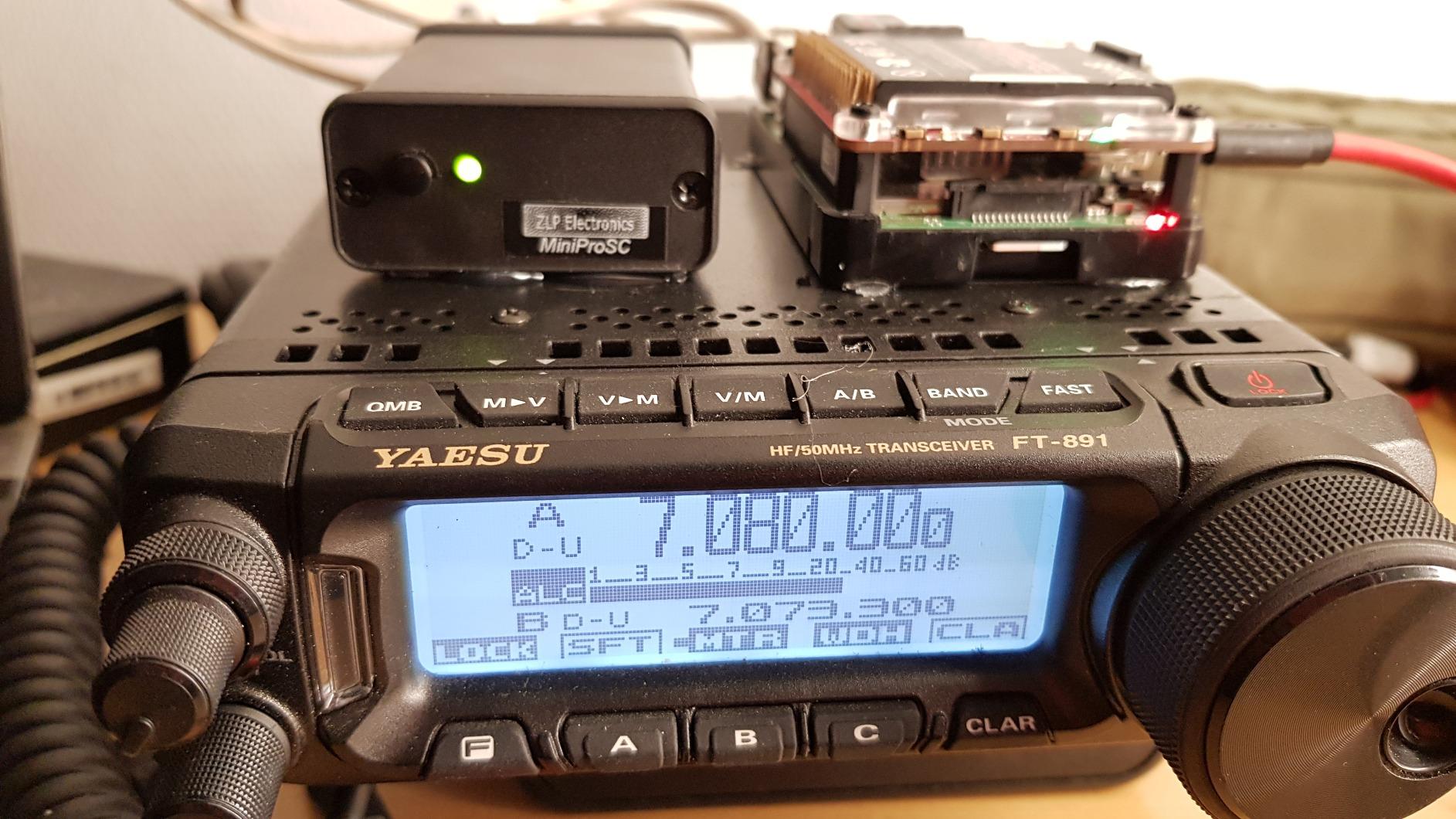
The FT-891 is the antidote to menu fatigue. It is a traditional analog radio with physical knobs and a layout many operators learned on other Yaesu sets, so you can be transmitting within minutes of opening the box.
It delivers a stable 100 watts from 1.8 MHz to 54 MHz in AM, FM, USB, LSB and CW, with 99 memory channels. The chassis is 8.27 by 6.1 by 2.05 inches at 8.4 pounds, which is small enough for a vehicle dashboard or a cramped desk.
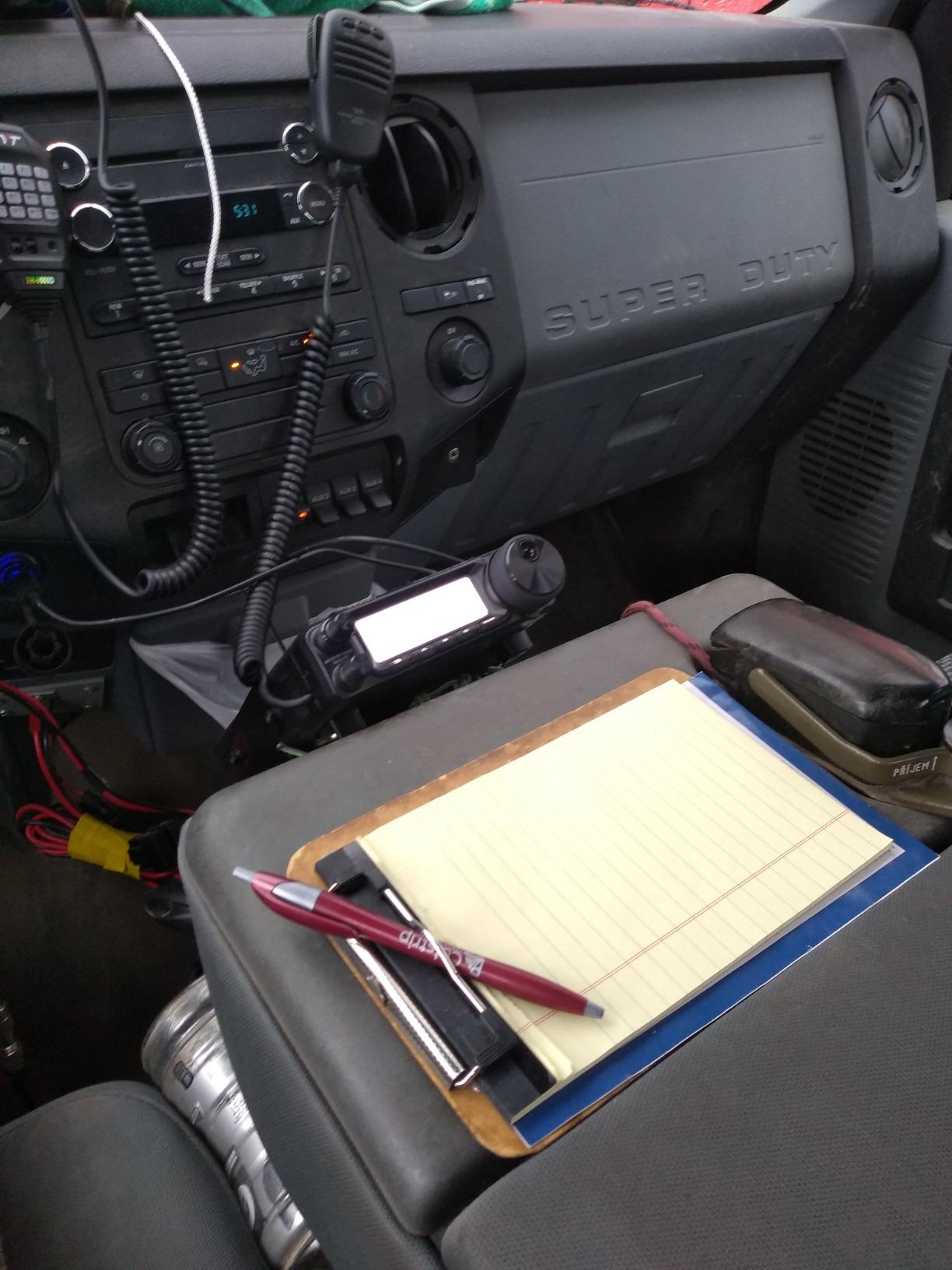
It also carries an IPX2 water resistance rating, and it works with the Yaesu ATAS-120A automatic tune antenna for mobile installations. That combination makes it a practical road-friendly 100 watt radio for this budget range.
What you give up is visibility. There is no spectrum scope and no waterfall, so band tuning is done by ear and by the received signal strength display, which takes practice on a busy band.
What to check before buying
Think about your antenna system rather than the radio. With no internal tuner, a mobile or base setup needs a proper antenna and often an external tuner, and that budget line is usually larger than the radio line.
Check your digital mode plans. This set has no integrated data-mode support, so FT8 and RTTY mean an external sound card interface and a computer.
Where the FT-891 gives something up
The analog front end is less sensitive to weak signals than a direct-sampling SDR, and the lack of a scope or waterfall makes it harder to find signals in a crowded band. On a quiet 40 metre evening it performs beautifully. On a busy contest weekend it feels old.
It is also one of the heavier 100 watt sets, at 8.4 pounds, so it suits a vehicle install better than a pack.
7. Icom IC-705 – Best Premium Portable HF Ham Radio With Wi-Fi and Bluetooth
Icom IC-705 HF/VHF/UHF All Mode Portable QRP 5W/10W Transceiver
10W on 13.8VDC, 5W on battery
HF, 50, 2m and 70cm
4.3 inch colour touch screen
Wi-Fi and Bluetooth built in
Pros
- Compact and light enough for genuine portable and backpack operation
- Bright 4.3 inch touch screen reads well outdoors in daylight
- Built-in Wi-Fi and Bluetooth enable app-based remote control
- Includes a BP-272 Li-ion battery and HM-243 speaker microphone
Cons
- Adjustable IF filter tops out around 3 kHz for crowded SSB pileups
- D-STAR operation takes time to configure
- Premium cost for 10 watts of output
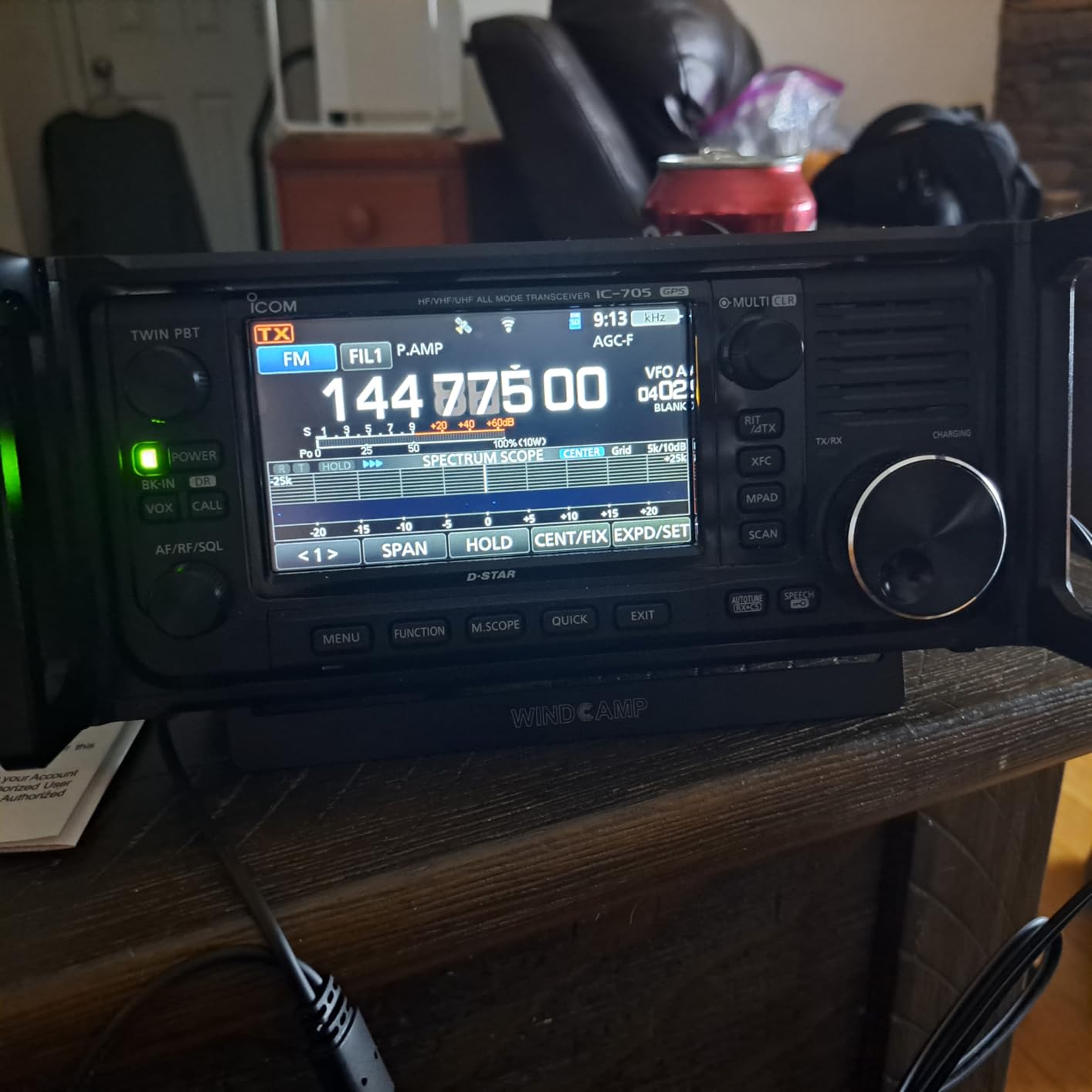
The IC-705 is the most all-round portable radio here and the one reviewers rate highest, though across a smaller pool of owners. It covers HF, 50 MHz, 2m and 70cm, puts out 10 watts on external 13.8 volt power or 5 watts from the battery, and weighs 5 pounds.
The 4.3 inch colour touch screen is the standout feature. It shows an SDR spectrum view clearly in daylight, which is exactly the situation where a small screen fails, and it is what makes the radio feel like a shack unit in a field box.
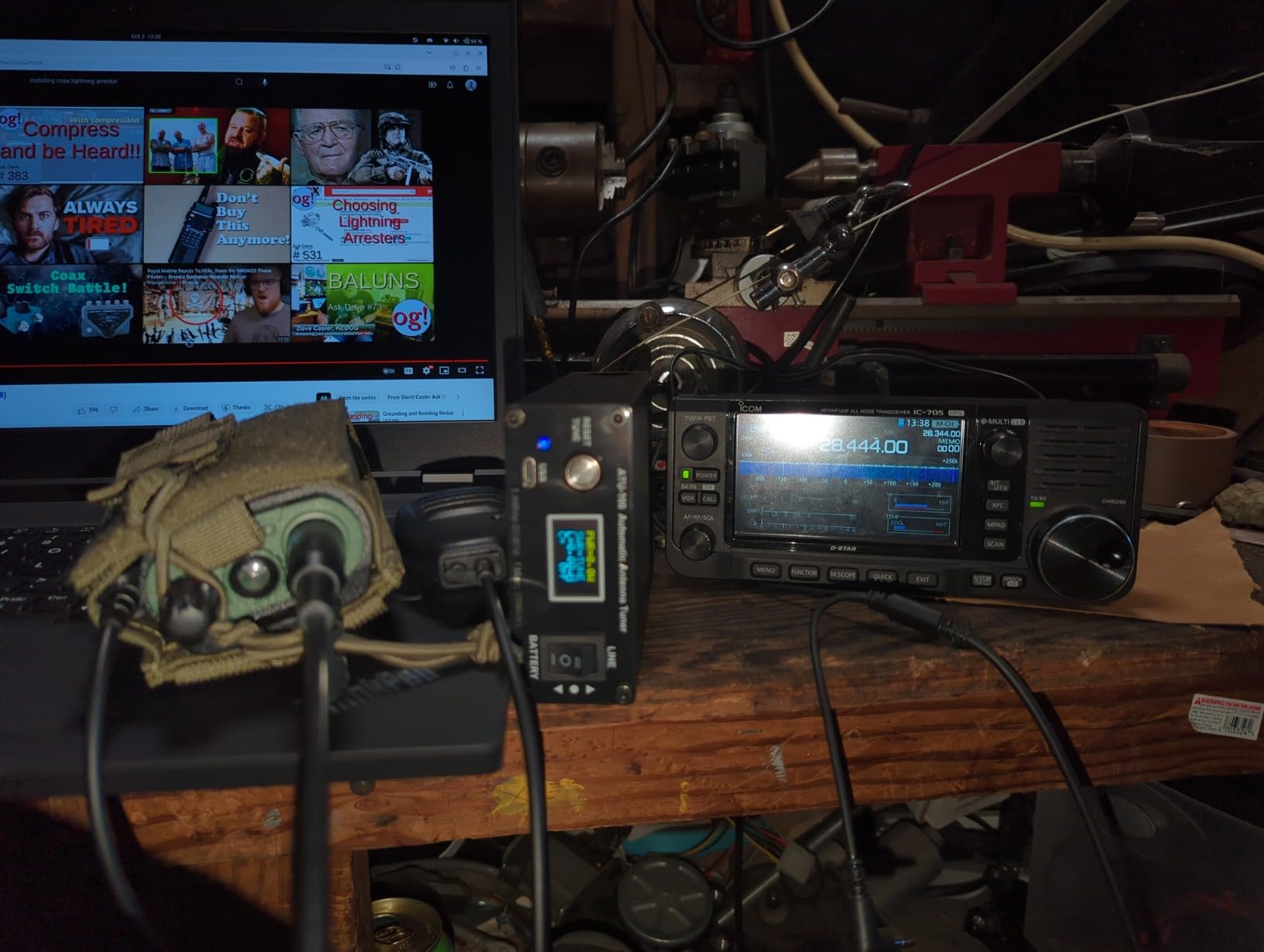
Built-in Bluetooth and wireless LAN let you control the radio from a phone on the other side of the campsite, plus D-STAR digital voice across 500 channels. The box includes an HM-243 speaker microphone and a BP-272 Li-ion battery rated 7.4V 2000 mAh.
The honest trade-off is the IF filter width. Adjustable filter bandwidth tops out around 3 kHz, which is fine for SSB but limits you in a crowded contest pileup compared with a desktop rig.
What to check before buying
Understand that the battery gives you 5 watts. If your plan is field operating on battery, this is a 5 watt radio, and a resonant antenna matters more than the output rating.
Test D-STAR before you rely on it. It is a genuinely different skill from SSB, and configuring it takes longer than the manual suggests. The HF side is the more forgiving place to start.
Where the IC-705 gives something up
Ten watts at a premium cost is a real trade for new operators, and it will not break a pileup. It is also the heaviest portable in this list at 5 pounds, so it suits a drive-to-park activation rather than a long trek.
Owners also note that a firmware update or filter modification helps close-in performance. Buy it current rather than hoping to improve it later.
8. Yaesu FT-710AESS – Best HF Ham Radio Receiver for Weak Signals
Yaesu FT-710AESS 100 Watt Deluxe SDR DSP HF and 6M Transceiver
100W output adjustable from 5W
Built-in high-speed automatic antenna tuner
4.3 inch high-speed TFT touch panel
2 year manufacturer warranty
Pros
- Receiver performance owners rate a clear step up on SSB and CW
- Fast internal ATU matches difficult antennas quickly
- Bright 4.3 inch touch screen with an easy menu layout
- Adjustable 5 to 100 watt output for portable power
Cons
- No built-in CW decoder
- which owners see as an easy omission
- TX audio is set up differently from Icom rigs
- Deluxe package is heavy at 10 lb with a large external speaker
The FT-710AESS carries one of the highest average ratings in this group, and the consistent theme in owner feedback is the receiver. Operators comparing it directly with the Icom IC-7300 usually rate the Yaesu reception as better, particularly on SSB and CW.
The built-in high-speed automatic antenna tuner is the second talking point. Owners report it matching difficult antennas quickly, and the 3DSS real-time colour spectrum display makes spotting band activity fast.
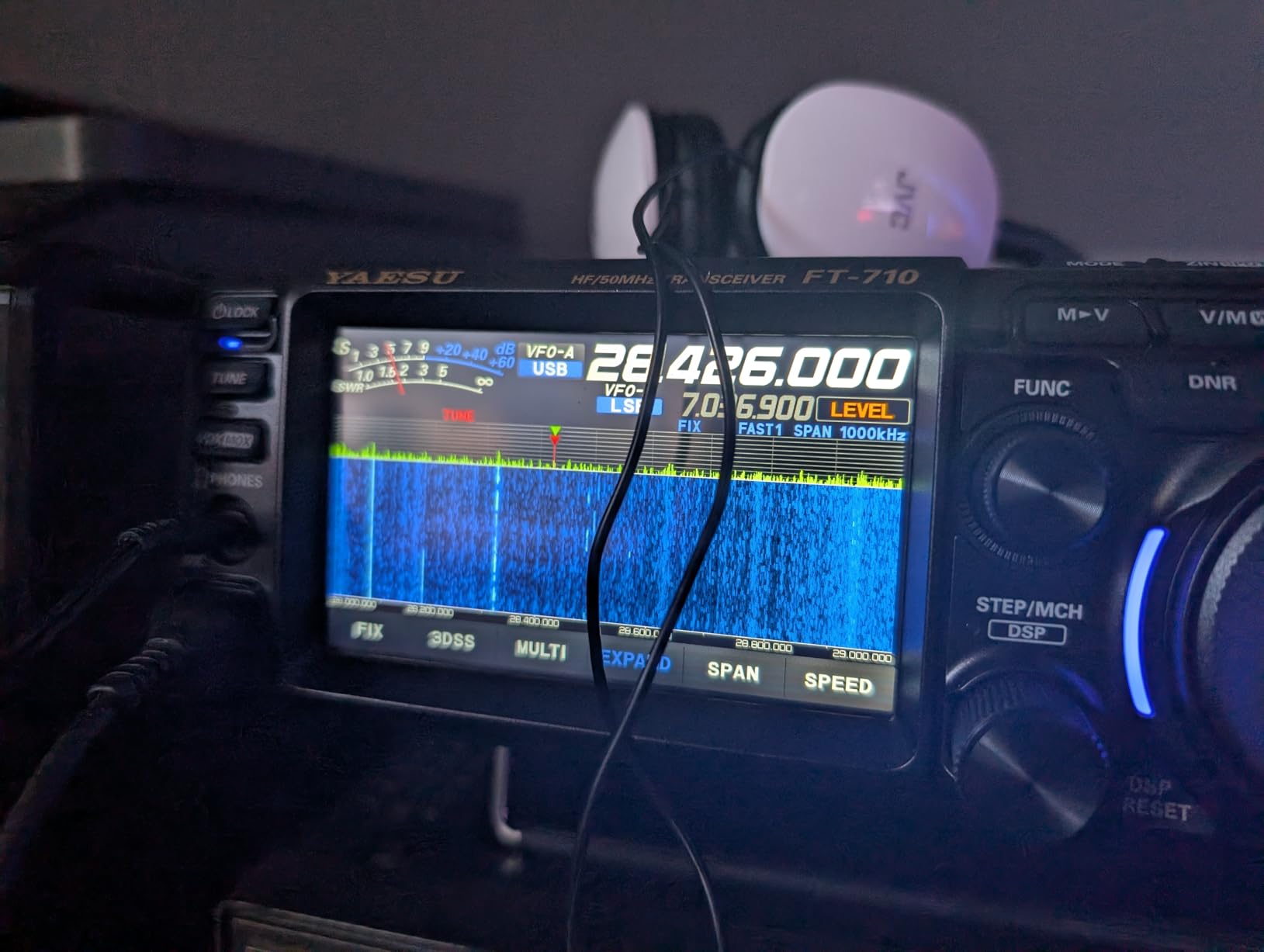
Under the hood there is a dual-core 32-bit DSP with amateur band pass filters, an RF front end with a 250 MHz HRDDS high-resolution direct digital synthesizer, two USB ports and an SD memory card slot. Receive coverage runs 30 kHz to 75 MHz with transmit on 6m through 160m.
Output is adjustable from 5 to 100 watts, so you can run it at low power for portable work and full power at the shack. An optional DVI-D output lets you use a tablet or monitor as a remote display.
What to check before buying
Set the TX audio properly from the start. Owners report the drive and compression settings work differently from Icom rigs, and getting this wrong is the most common reason a new Yaesu sounds thin on transmit.
Budget for the package. At 10 pounds with the deluxe SP-40 external speaker, microphone and 12V power cable included, this is a full desk setup rather than a lightweight radio.
Where the FT-710AESS gives something up
There is no built-in CW decoder, which several owners consider an easy software omission given the rest of the feature set. Digital decoders on the Xiegu sets still have an edge for casual CW listening.
The remote display option also needs a tablet or monitor you already own. And a steeper learning curve than the FT-891, if you value a simple layout over receiver quality.
9. Xiegu X6200 – Best HF Ham Radio for Wideband Receiving on Battery
Xiegu X6200 HF Radio Transceiver, Portable HF/50MHz/WFM/AIR Receiver with RF Direct Sampling System, 3200mAh Replaceable Battery, 4″ LCD Screen, Supports SSB/CW/AM/NFM/DIGI/WFM Modulations
RF direct sampling receiver
HF, 50MHz, WFM and Airband
3200mAh battery, 4-5 hours
4 inch colour screen with waterfall
Pros
- RF direct sampling gives clean wideband HF plus WFM and Airband reception
- 4 inch colour screen with spectrum and waterfall in a portable box
- Replaceable 3200mAh battery gives roughly 4 to 5 hours per charge
- Built-in automatic antenna tuner simplifies field matching
Cons
- Ratings trail the rest of this group
- with a larger share of 1 and 2 star reviews
- Early adopters report firmware and feature gaps
- Heavier and costlier than the smaller portable Xiegu options
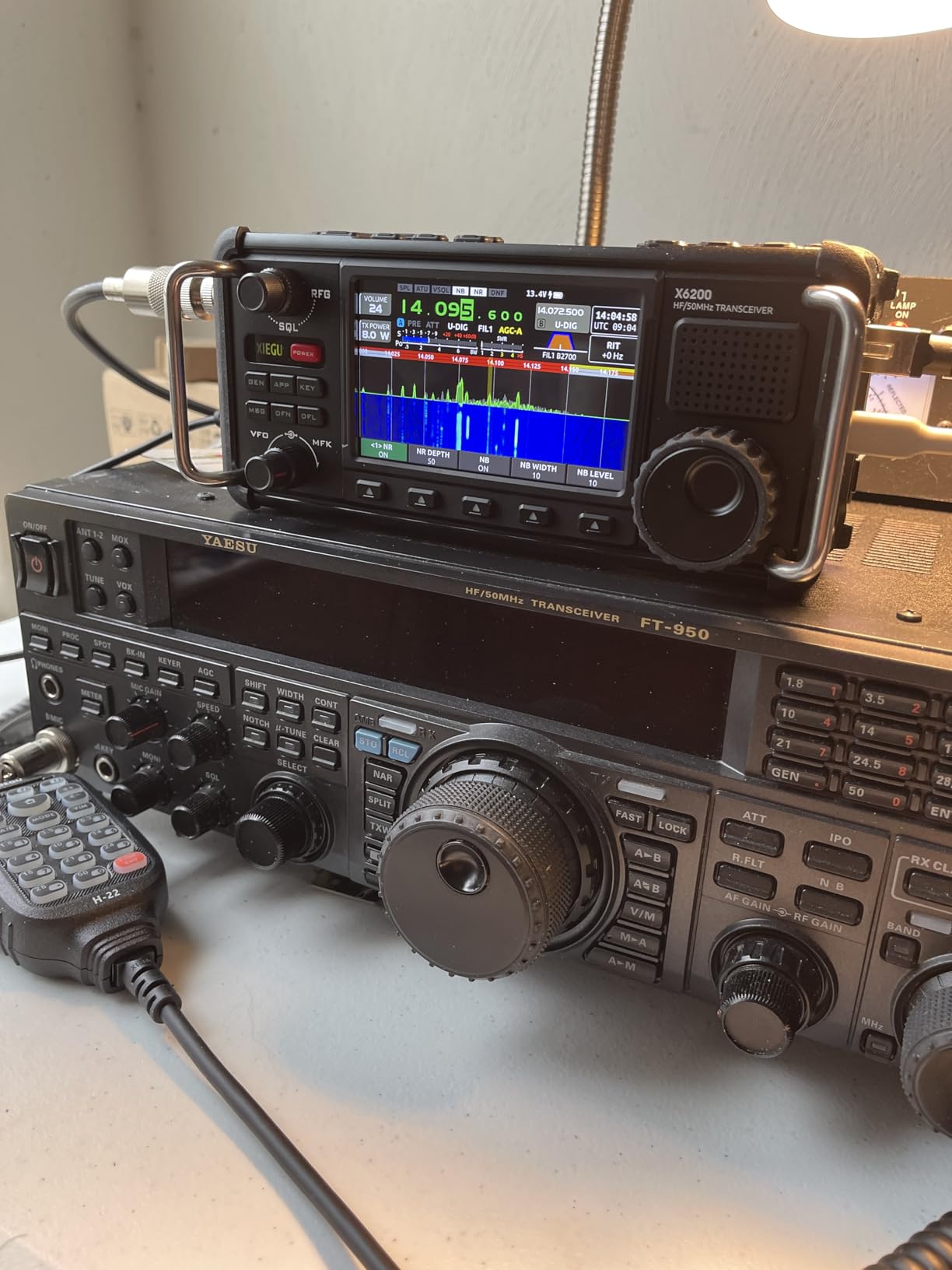
The X6200 is the most flexible receive setup in this group. The RF direct sampling system covers HF and 50 MHz plus WFM broadcast and Airband reception, so it functions as a full shortwave receiver as well as a transceiver.
The 4 inch high-resolution colour screen with spectrum display and waterfall is larger than most portable radios offer, and it is what makes the radio usable for casual band watching rather than just keying a frequency.
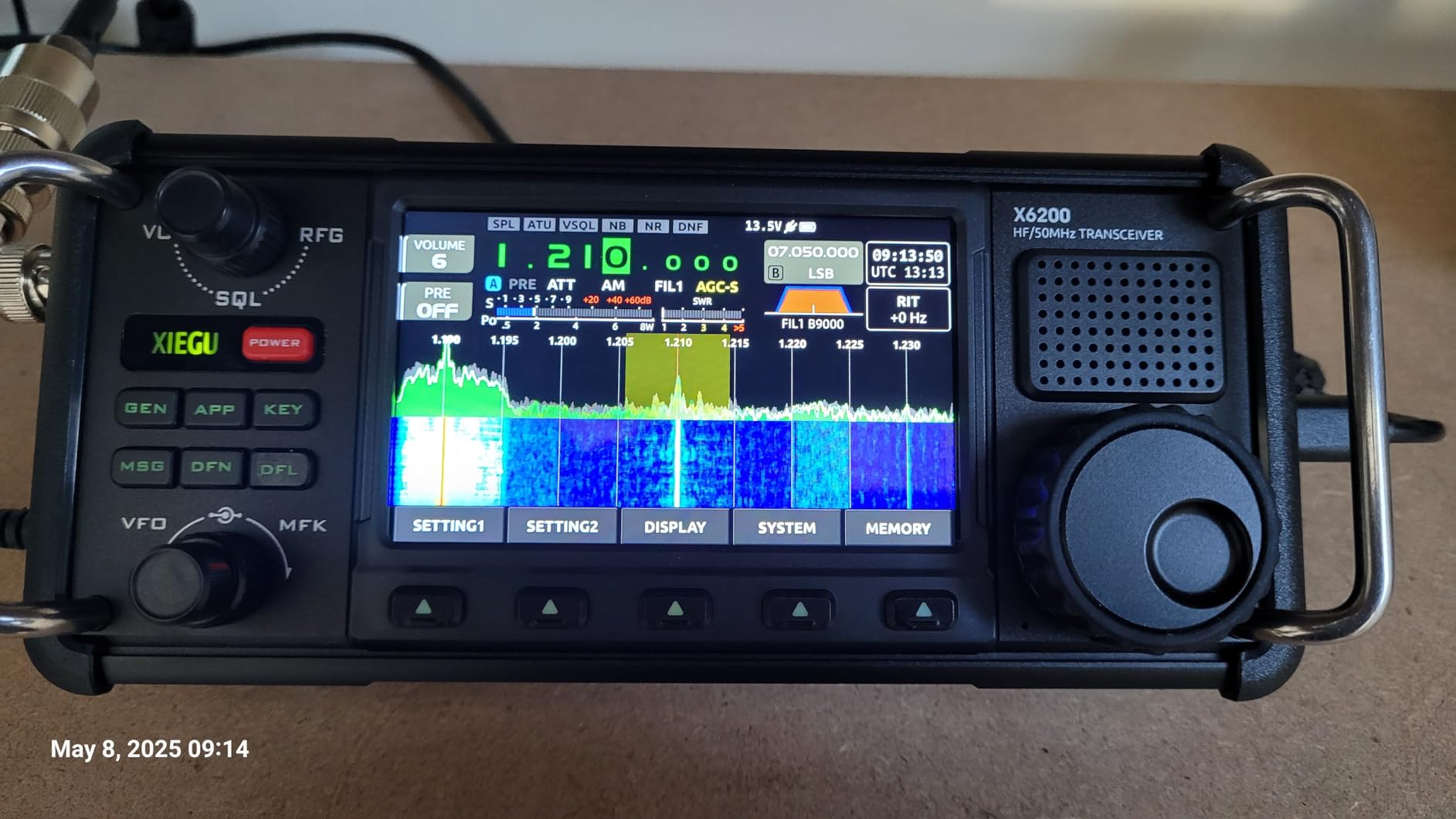
The built-in replaceable 3200mAh Li-ion battery gives roughly 4 to 5 hours of operation per charge, and a built-in automatic antenna tuner handles field matching. Supported modes are SSB, CW, AM, NFM, DIGI and WFM.
The honest trade-off is the review data. This radio sits below the rest in owner satisfaction, with a higher share of two-star feedback, which points to inconsistent early production and firmware shortfalls rather than a design problem.
What to check before buying
Read recent owner feedback rather than older posts. The rating spread suggests the product line was maturing, so a unit with current firmware may behave very differently from the complaints you will find first.
Check whether the extra capability is what you need. At 4.27 pounds it is heavier than the other portable Xiegu options, and if you only need 20 watts on the HF bands the G90 covers the same ground more simply.
Where the X6200 gives something up
Weight and cost. It is heavier and costlier than the smaller portable Xiegu options, and the wideband reception is a bonus rather than a necessity for most HF operators.
Feature gaps relative to the promise are the recurring theme in critical reviews. Confirm that the features you actually want are present on the firmware you will receive, not just in the product description.
10. Icom IC-7100 – Best HF Ham Radio for D-STAR Digital Voice in a Vehicle
Icom IC-7100 HF/50/144/440 MHz Amateur Radio Mobile Transceiver D-Star Capable w/ Touch Screen – Original Icom USA Model
100W class HF output
HF, 50, 144 and 440 MHz
505 channels
D-STAR DV with reflector control
Pros
- Extensive HF through 70cm coverage with 100W class HF output
- D-STAR digital voice
- DR mode and reflector control
- Angled control head with large internal speaker suits vehicle mounting
- 32-bit floating point DSP with twin PBT and manual notch
Cons
- Average rating trails the rest of this lineup with a larger share of one star reviews
- Older touch screen design compared with current SDR rigs
- Not water resistant
- limiting use in harsh environments
The IC-7100 is the specialist choice for D-STAR. If you want to talk to other D-STAR users through reflectors and DR mode, this radio does it natively across HF, 50, 144 and 440 MHz with 100 watt class HF output and 505 channels.
The angled control head with its large internal speaker is designed around vehicle mounting. The 32-bit floating point DSP handles digital IF filtering, twin push-button tuning and manual notch filters, and the built-in SD card slot records voice and clones settings.
Receive coverage runs from 0.030 MHz to 199.999999 MHz and 400 to 470 MHz, with transmit coverage across 160m through 70cm. The box includes a control cable, ferrite EMI filter, an HM-198 hand microphone and the transceiver itself.
At 6.2 pounds and 8.9 by 6.6 by 2.3 inches it is a mobile radio, not a backpack radio. There is a one year manufacturer warranty, and it is rated as not water resistant.
What to check before buying
Be clear that this is a digital-voice radio first. If your interest is SSB and CW, the spectrum access and touch interface will feel dated against a current SDR rig for the same money.
Confirm D-STAR is actually in your plan. The digital voice mode, DR mode and reflector control are the reason to buy it, and without them the value case is much weaker.
Where the IC-7100 gives something up
Its 3.8 star average is the lowest of the ten radios here, and a quarter of ratings are one star. That is a real signal about the radio’s age relative to what is available now.
No water resistance, a dated touch screen, and a design that will not be replaced by a new platform for years. It remains a capable D-STAR machine, but it is a niche choice rather than a first HF radio.
How to Choose an HF Ham Radio in 2026
Most disappointing first radios are not bad radios. They are good radios paired with the wrong antenna, the wrong power level for the licence, or a mode the operator never wanted. Work through these decisions before you buy anything.
How much power do you actually need?
QRP is the amateur term for roughly 5 watts or less, and QRO means running near the legal limit of 100 watts. Low power has real advantages: it runs from small batteries, generates less heat, and is legally simpler in some contexts.
Low power also has hard limits. Working a station on a marginal path with 5 watts takes far more patience and a far better antenna than the same path with 100 watts. For casual home operating, FT8 and portable work, 5 to 20 watts is genuinely enough. For contesting and DXing in a competitive environment, 100 watts is the standard.
Does the receiver architecture matter?
A direct-sampling receiver converts the incoming RF to digital almost immediately, which tends to give cleaner, more sensitive reception than a conventional analog front end. The direct-sampling sets in this list include the Xiegu G90, G106 and X6200 alongside the Icom IC-7300 and IC-705.
Dynamic range describes how well a receiver handles a very strong signal right next to a very weak one. It is the reason roofing filters exist, and the reason a contest-grade radio can copy a signal in a pileup that a simpler set cannot. For most home operators the difference shows up as working more stations in the same conditions.
Why the built-in antenna tuner changes your setup
An antenna tuner, or ATU, matches the impedance of your antenna to the 50 ohm input of the radio. It saves your transmitter and lets you use a random wire, but it only corrects the impedance at the feed point, and it costs you signal.
That is why the G90’s wide-range internal tuner is such a big deal for a first radio. It removes the need to buy a separate tuner before your first activation, and the onboard SWR analyzer helps you tune an antenna without extra equipment.
No radio is better than its antenna, a conclusion that comes up constantly in operator discussions. Spend as much thought on your antenna plan, feed line and ground system as on the transceiver, and consider an external high-end tuner if you plan to run lots of different antennas.
For readers who enjoy the receiving side of the hobby as much as transmitting, our editor picks and review methodology explains how we weigh tested claims against manufacturer specification across the site.
What your licence class changes about the radio
In the US system, the 3-3-3 rule applies to the entry-level licence: you can talk to anyone on any frequency in the amateur service, but you must identify with a call sign containing at most three letters, three numbers and one of three allowed suffixes. It also lets you operate widely, but the HF bands you can transmit on are gated by your operating privileges, not just the licence itself.
Outside the US, classes differ by country, but the pattern is consistent. A Technician-class licence opens very little of HF, typically 10 and 15 metres. A General-class licence opens the main HF bands from 80m to 10m, and Extra adds 60m and 160m. Plan the radio around the licence you hold or expect to hold within a year.
Digital modes like FT8 have changed this conversation, because weak-signal work at low power is where QRP shines. A 5 watt radio and a good antenna can hold a long FT8 path that 100 watts would not rescue on a bad day.
Digital modes, sound cards and the PC connection
FT8 and JS8Call need a computer, a sound interface and a stable clock. A radio with a built-in USB sound card removes the need for a separate interface device, which is one of the most practical reasons to step up to a desktop SDR rig.
CAT control, or transceiver control, lets software set the radio’s frequency and mode directly. It is standard on modern radios, and the Xiegu G106 includes a CAT port for exactly this purpose. If you plan to work digital modes seriously, factor a small interface cable and a decent antenna into the same budget as the radio.
Buying a used HF radio without regret
Buying used is normal in this hobby, and the forums show plenty of top-tier recommendations that were second-hand. High-end Yaesu and Icom sets hold value well, which is exactly why so many appear for sale as owners move up a tier.
Check the display and touchscreen first, since they are the most failure-prone parts. Confirm the transmitter reaches full power on the bands you want, ask for a recent screenshot of the SWR reading into a dummy load, and check that the microphone and speaker are original or equivalent.
Buy a radio with a documented warranty transfer where you can, and factor in a service visit if the unit has not been looked at in years. A bargain that needs immediate repair is not a bargain.
What to buy first at each budget
Smallest sensible start: the Xiegu G106 or the Malahit (tru)SDX. Low power, low risk, and a cheap way to find out whether the hobby suits you.
Best first serious radio: the Xiegu G90. Twenty watts, an internal tuner and a detachable head cover almost every entry-level need.
Mid-range home shack: the Icom IC-7300 for 100 watts and a waterfall, or the Yaesu FT-710AESS if receiver quality matters most.
Portable or vehicle: the Icom IC-705 if you want one radio for everything, or the Yaesu FT-891 if you want 100 watts with physical knobs and no learning curve.
Contest and all-band: the Yaesu FT-991A, with an external tuner budgeted in, or the IC-7100 if D-STAR digital voice is your priority.
Frequently Asked Questions
What is the best HF transceiver for beginners?
The Xiegu G90 is the most common starting point because it combines 20 watts of output, a wide-range internal antenna tuner, a detachable control head and a 48 kHz colour spectrum display. It needs no separate tuner before the first activation and no computer for basic voice and CW work. If you want 100 watts and a direct-sampling receiver instead, the Icom IC-7300 is the alternative most beginners upgrade to.
Is the Xiegu G90 a good radio?
Yes, and it holds the largest review base in this roundup at a 4.5 star average across 430 reviews. Owners consistently praise the feature set for the class, including the spectrum scope, waterfall, CW decoder, digital modes, internal ATU and SWR antenna analyzer, plus a light 3.53 pound chassis. The recurring complaints are the menu learning curve, the 20 watt ceiling on SSB pileups, and occasional PC connection software glitches.
What are some common problems with the IC-7300?
The most common complaint is the menu-driven touch interface, which deters older or non-technical operators who prefer physical knobs. Because it weighs 8.4 pounds, it is also awkward for portable and backpacking use compared with QRP rigs. Some buyers report slower fulfilment because the listing is not Prime-eligible. The receiver and 100 watt output are the features owners praise most consistently.
How good is the Yaesu FT-710?
The FT-710AESS is widely regarded as a step up in receiver performance, with owners comparing its SSB and CW reception favourably against the Icom IC-7300. It carries a 4.7 star average from 33 reviews, a built-in high-speed automatic antenna tuner, a 4.3 inch high-speed TFT touch panel and 3DSS real-time colour spectrum display. Owners note that TX audio is set up differently from Icom rigs and that there is no built-in CW decoder.
Do I need a General class licence for HF?
In the US, a Technician-class licence opens very little of the HF spectrum, mainly 10 and 15 metres. A General-class licence opens the main HF bands from 80m to 10m, and an Extra-class licence adds 60m and 160m. Rules differ by country, so check your national authority. If you are buying a 100 watt HF transceiver, the General class is normally the minimum useful target.
Why are so many IC-7300 radios for sale?
The most common reason is that operators buy one as a first serious radio and then move up to a flagship transceiver with narrower filters and contest features. The IC-7300 also resells well, and many examples were bought on the initial enthusiasm of a new licence and sold once real antenna and station plans developed. Buying used is normal in this hobby, so check the touchscreen, transmit power and accessories before you commit.
The Verdict: Where to Start in 2026
Start with the Xiegu G90 if you want one radio that works. Twenty watts, a wide-range internal antenna tuner, a detachable head and a real spectrum display cover home operating, portable work and field activations without a second box.
Move up to the Icom IC-7300 for 100 watts and a direct-sampling receiver, or to the Yaesu FT-710AESS if receiver quality on weak signals is what matters most to you. For all-band contesting, the Yaesu FT-991A is the shack-in-a-box, budget an external tuner with it.
Whichever you choose, put the antenna plan and your licence class ahead of the radio on your list. The best HF ham radios on this page are all good hardware. The operator who pairs one with a resonant antenna and the bands they are actually allowed to use will get far more out of it.