
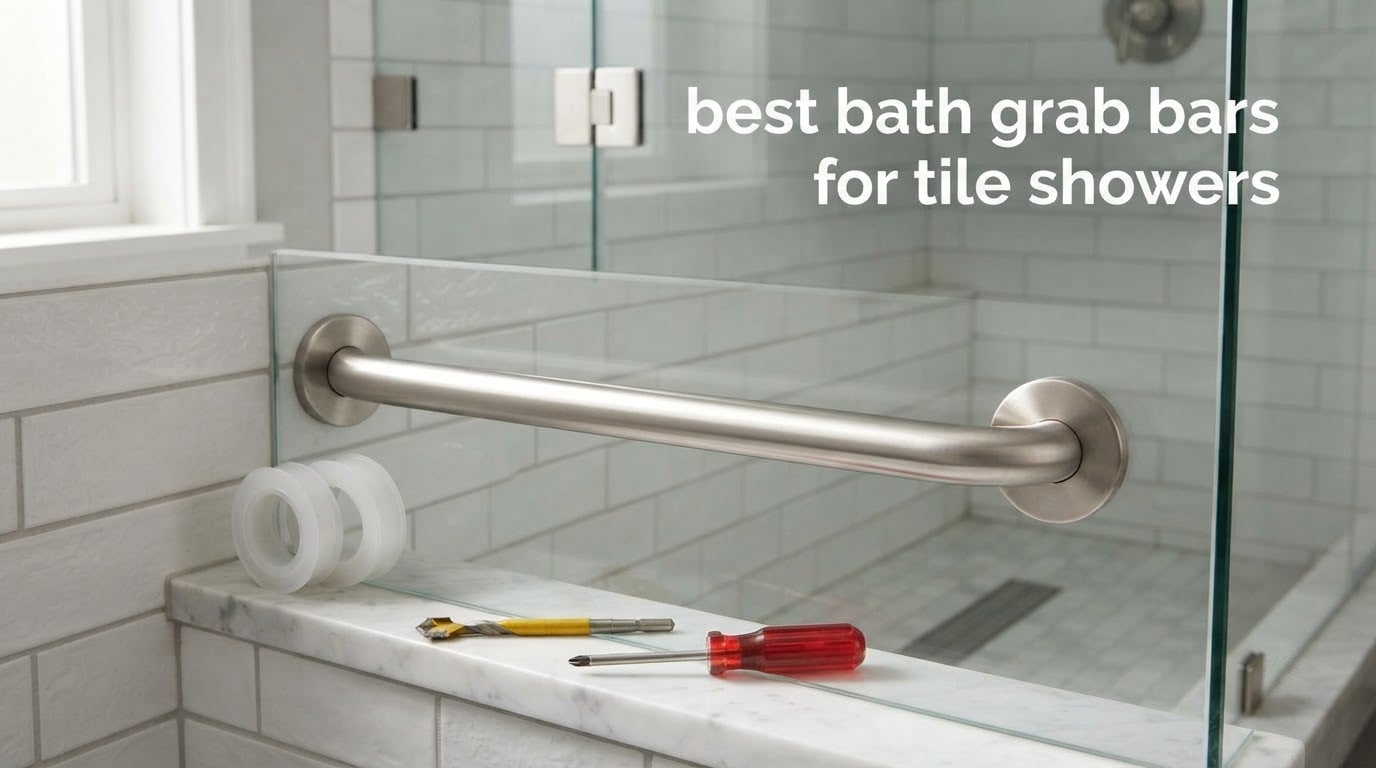
A tiled shower is the hardest room in the house to add a safety bar to, and most advice about grab bars quietly assumes painted drywall. It is not the tile you see that carries the load. It is whatever is behind it, and in a shower that is usually cement board, waterproofing membrane, and framing that may or may not have a stud exactly where you need one. Get that wrong and the bar pulls a chunk of tile off the wall the first time someone leans on it hard.
So this roundup of the best bath grab bars for tile showers is organized the way the decision actually works. Every pick below states its mounting method, what it anchors into, and whether it suits a tiled wall. We also cover the drilling sequence that gets a flange through ceramic tile without cracking it, because that is the step most people stall on.
If you are still working out how many bars you need or where they go, start with our broader bathroom safety grab bar guide, then come back here for the tile-specific detail. Readers who are planning a full remodel can also start with our walk-in shower system picks so the bar layout and the shower design are decided together.
Table of Contents
Top 3 Best Bath Grab Bars for Tile Showers
Moen, Kohler, Keeney, Seachrome and Ginger are the names that come up most when homeowners talk about which brand makes the best shower grab bars, and the three below are the ones we would actually put on a tile wall. The full ten follow.

Moen 24 Inch Stainless…
- 24 inch length
- 1.25 inch diameter
- Rated 500 lbs into a stud
- Concealed screws
- Limited lifetime warranty

Amazon Basics 18 Inch Grab…
- 18 inch length
- 1.5 inch diameter
- 500 lb rating
- Brushed stainless
- ADA compliant

ZUEXT 16 Inch Knurled Grab Bar
- Knurled anti-slip grip
- 16 inch length
- 1.0 inch diameter
- Concealed covers
- 3 year replacement
All 10 Grab Bars at a Glance
The table below lists every bar in the roundup with its mounting approach and what it anchors into. Length and diameter both matter in a tiled shower, because the flange footprint has to land where the framing can carry it.
| Product | Specs | Action |
|---|---|---|
| Moen 24 Inch Stainless Steel Grab Bar 8724 |
|
Check Latest Price |
| Amazon Basics 18 Inch Grab Bar, 1.5 Inch |
|
Check Latest Price |
| ZUEXT 16 Inch Knurled Grab Bar |
|
Check Latest Price |
 AmazerBath 16 Inch Brushed Nickel Bar AmazerBath 16 Inch Brushed Nickel Bar |
|
Check Latest Price |
 Gotega 16 Inch Silicone Grip 2 Pack Gotega 16 Inch Silicone Grip 2 Pack |
|
Check Latest Price |
 Gotega 12 Inch Grab Bar 2 Pack Gotega 12 Inch Grab Bar 2 Pack |
|
Check Latest Price |
 FANHAO 16 Inch Knurled Bar 2 Pack FANHAO 16 Inch Knurled Bar 2 Pack |
|
Check Latest Price |
 Munzong 32 Inch Brushed Nickel Bar Munzong 32 Inch Brushed Nickel Bar |
|
Check Latest Price |
 Fertoriy 16 Inch Grab Bar 2 Pack Fertoriy 16 Inch Grab Bar 2 Pack |
|
Check Latest Price |
 Moen R8960FD 30 Inch Flip-Up Bar Moen R8960FD 30 Inch Flip-Up Bar |
|
Check Latest Price |
1. Moen 24 Inch Stainless Steel Grab Bar 8724 – Best Overall for a Tile Shower
Moen Home Care Bathroom Safety 24 Inch Stainless Steel Handicap Grab Bar for Bathtub and Shower, Heavy Duty Handle, Elderly Assistance Product with Concealed Screws, 8724
24 inch length
1.25 inch diameter
500 lb when stud mounted
ADA compliant
Limited lifetime warranty
Pros
- Established brand with a limited lifetime warranty
- 1.25 inch diameter gives an easy substantial grip
- Concealed screw mounting leaves a clean finished look
- Coordinates with other Moen bathroom hardware
- ADA compliant specification
Cons
- SecureMount anchors sold separately for hollow walls
- Fewer lengths available than some value brands
This is the bar I would put on a tile wall before anything else. At 24 inches and 1.25 inch diameter it covers the length of a tiled shower back wall without crowding it, and the diameter is the sweet spot for hands that are losing strength rather than hands that need the very largest tube available. The brushed stainless finish sits quietly against most tile and grout colors.
It is rated to 500 pounds when installed into a stud, and Moen backs it with a limited lifetime warranty rather than the one-year paper most bars in this category carry. The 8724 uses concealed screw mounting, which matters more on a tiled wall than on drywall, because you can position the flange and seal the penetration without leaving visible hardware.
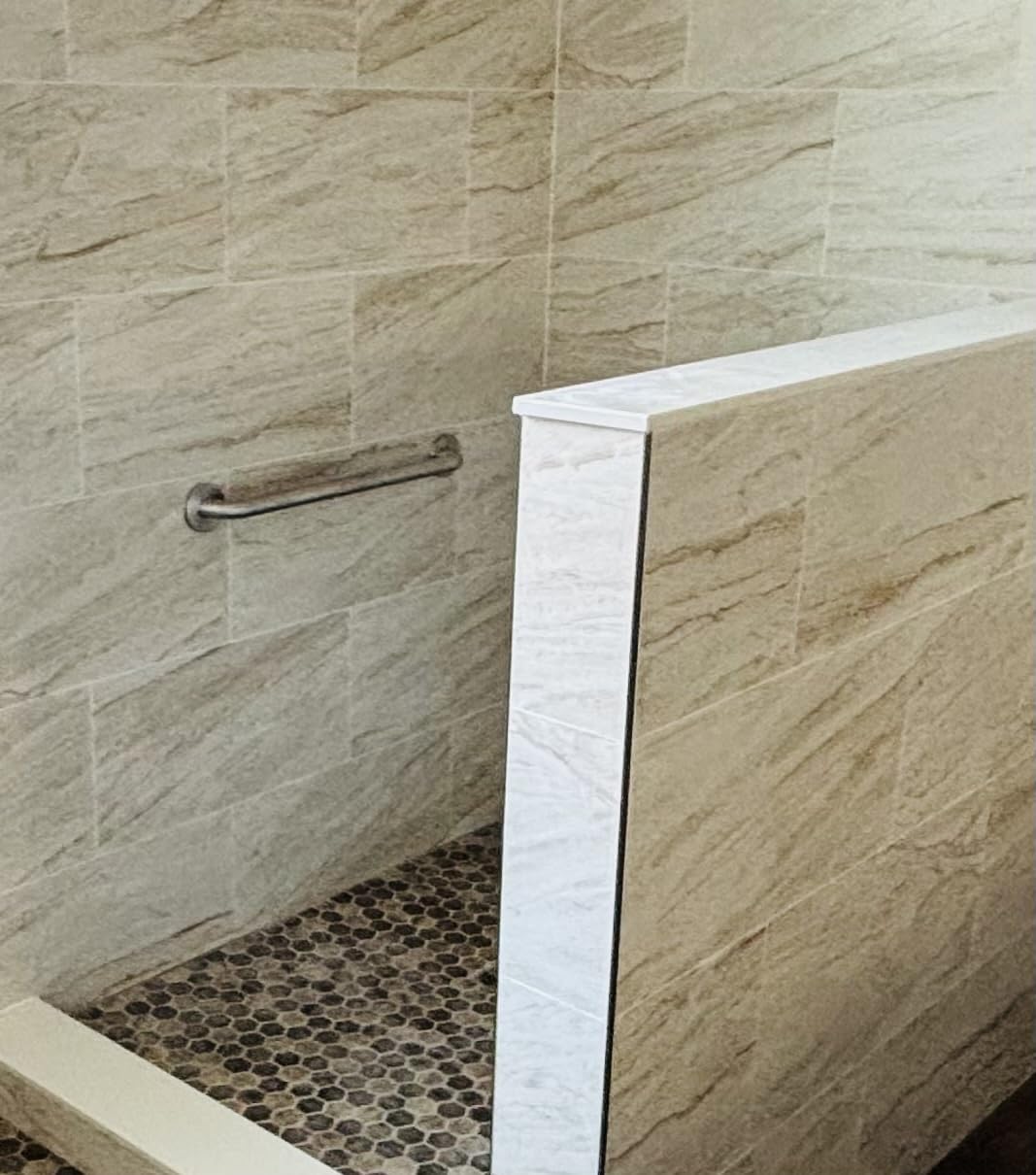
Installers report that the flange plate is forgiving about hole position compared with most fixed bars, which is a genuine advantage when you are working around tile that is already set. The SecureMount system lets it also work in a hollow wall, but that hardware is a separate purchase, and in a tiled shower the honest advice is to open the wall and add blocking instead. Owners of tile-walled bathrooms note that the bar mounts normally once the correct substrate and fasteners are identified.
The practical caution that shows up repeatedly is cost and effort of the no-stud path. If you have a stud behind the flange, this bar is a 20-minute job with a carbide bit. If you do not, plan on blocking, a plumber’s worth of caution around the wet wall, and a longer weekend than you expected.
Who This Bar Suits
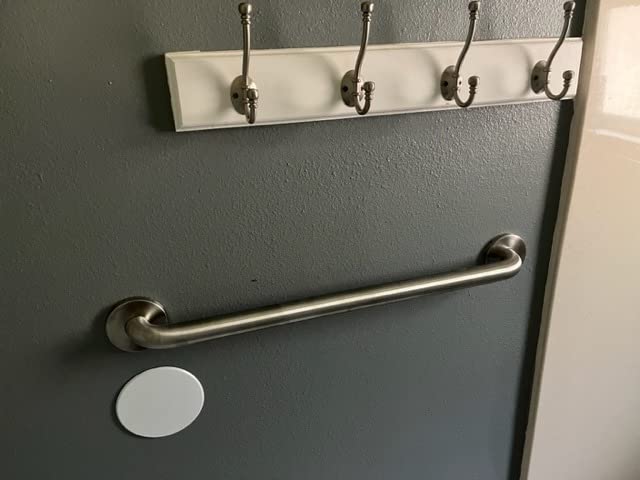
This suits anyone planning to age in place in a tiled shower, especially households where the person bathing has measurable grip loss but can still pull themselves up with one hand. A 1.25 inch diameter is comfortable for arthritic hands without being so large that a smaller user cannot wrap their fingers around it.
It is also the right pick for a caregiver-assisted routine, because 24 inches of continuous rail gives a helper a hand to steady a client through the sit-to-stand motion. Buy two if you can, one on the long wall and one vertical at the entry, and the matched finish makes the pair look intentional rather than added on.
Who Should Buy Something Else
Skip this if your wall has no framing behind the tile and you are not willing to cut into the shower. A 24 inch bar with fixed flanges needs two solid mounting points, and hollow-wall anchor hardware is a compromise, not a match for what the bar itself is rated for.
It is also the wrong choice for a narrow shower where a folding or flip-up design would free up floor area, or for anyone whose local installer will not warranty a bar hung on anchors rather than framing. Check that before you order.
2. Amazon Basics 18 Inch Grab Bar – Best Value for Tile Showers
Amazon Basics Bathroom Safety Grab Bar, 18 Inch Length, 1.5 Inch Diameter, Handicap Handle, Bathtub and Shower Fall Prevention, Holds up to 500LBs, ADA Compliant, Brushed Stainless Steel
18 inch length
1.5 inch diameter
500 lb rated
ADA compliant
Brushed stainless
Pros
- 1.5 inch diameter is the easiest tube here to grip
- Brushed finish hides fingerprints in a wet room
- ADA compliant with a 500 lb rating
- Solid feel once mounted into studs
- Available in several lengths and diameters
Cons
- Only a one year warranty versus lifetime from some brands
- Fixed straight bar takes more wall space than a flip-up model
A 1.5 inch tube is noticeably thicker than the 1.0 and 1.25 inch options elsewhere in this roundup, and the difference is immediately obvious to a hand with arthritis or a weakened grip. It is also the easiest tube here to close your fingers around and hold on to with a wet or soapy hand.
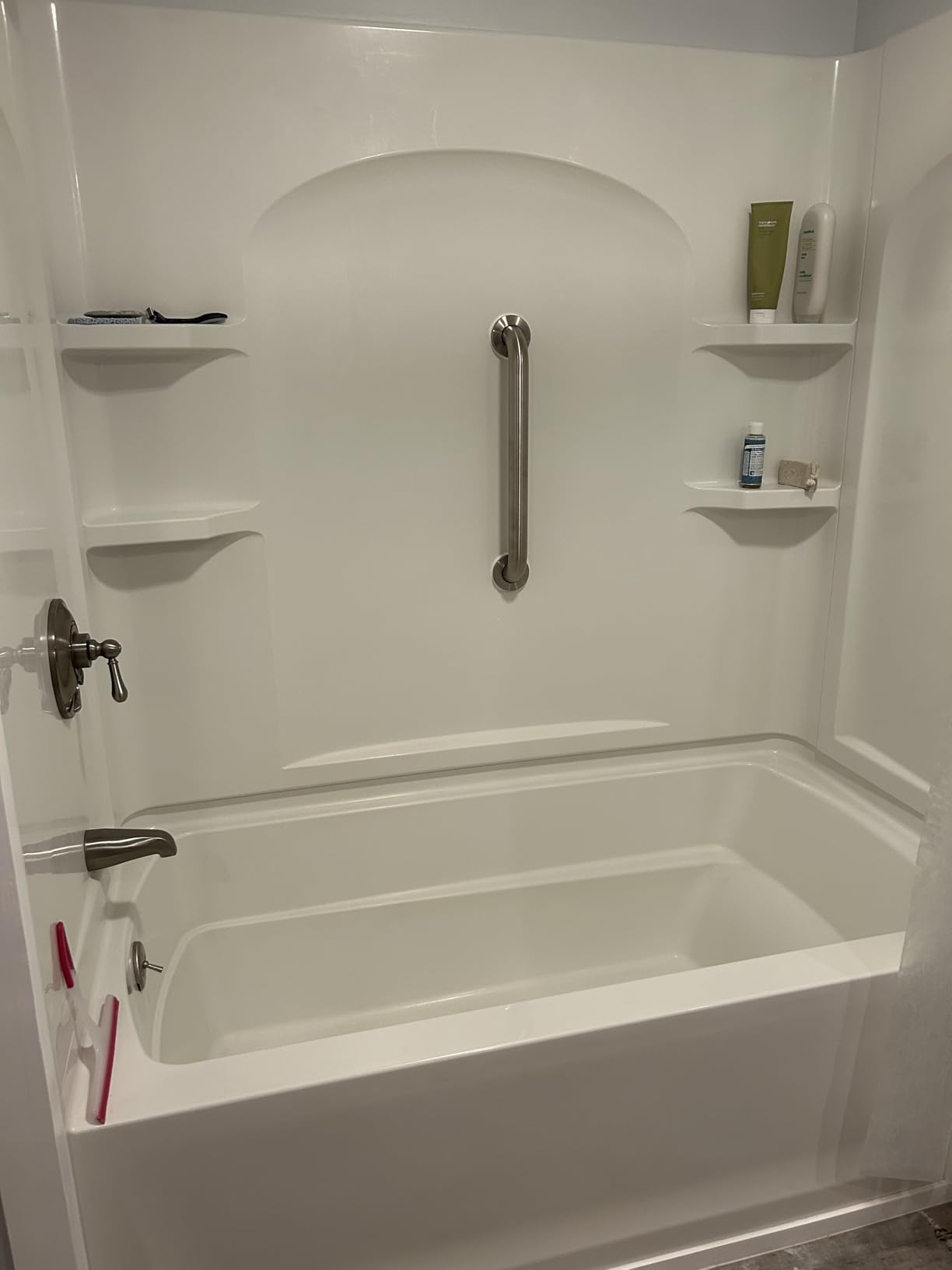
At 18 inches it is also the easiest length to fit into a small tiled shower where 24 inches would crowd the wall or run past the pan. Buyers with tile walls note it mounts normally once the correct substrate and fasteners are identified, which applies to every bar in this roundup.
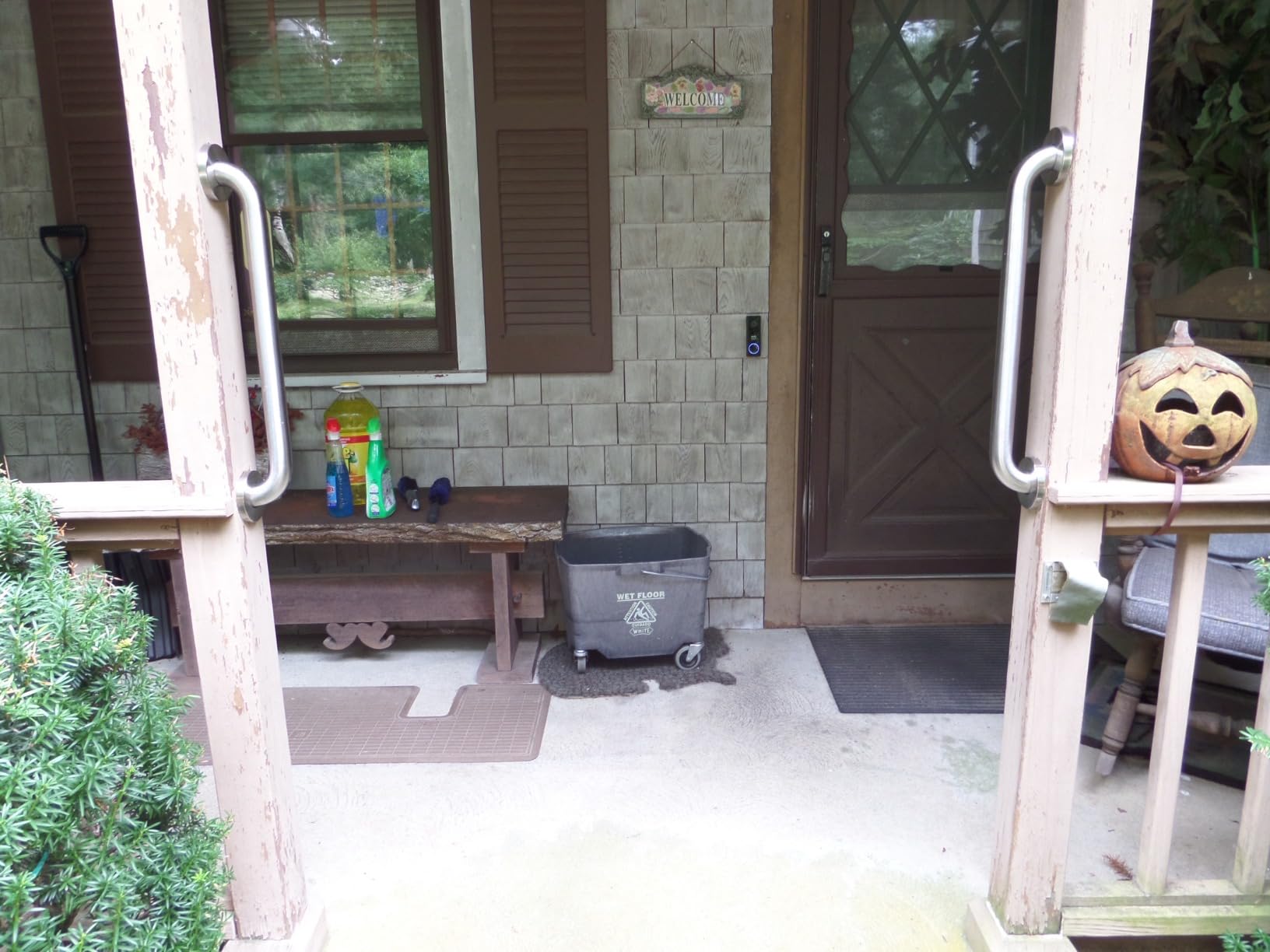
What buyers consistently praise is the brushed stainless finish. In a shower it is going to be hit with water and soap every week, and brushed metal hides fingerprints and water spots in a way polished chrome never does. At a 4.8 rating with more than 4,000 reviews, it carries an 86 percent five-star share, and the thick tube is repeatedly named as the deciding factor.
The trade-off is the one-year warranty. That is a real difference from a lifetime warranty, and it is the main reason this bar is not our top pick. It matters less if you are confident in the framing behind your tile, and more if you want a bar that will still be on that wall in fifteen years.
Who This Bar Suits
This suits anyone whose hands are the limiting factor rather than their balance. Rheumatoid arthritis, recovering wrist or hand surgery, and diabetic neuropathy all make grip diameter the deciding spec, and 1.5 inches is the widest tube in the group.
It also suits small tiled showers where wall space is the constraint. At 18 inches with a modest flange footprint, it is the easiest bar here to position between tile courses without drilling awkwardly close to the pan or the curb.
Who Should Buy Something Else
Buyers who plan to move or who want a long service life should weigh the one-year warranty against the lifetime options. It is not a quality problem, but it is a difference in who stands behind the product if a flange loosens.
Anyone in a wheelchair-transfer shower should look at a flip-up bar instead, since a fixed 18 inch rail projects into the turning path and this design has no way to fold away.
3. ZUEXT 16 Inch Knurled Grab Bar – Best for Wet Hands in a Tile Shower
ZUEXT 16 Inch Chrome Knurled Anti Slip Stainless Steel Shower Grab Bar
16 inch length
1.0 inch diameter
Knurled anti-slip grip
Concealed covers
3 year replacement warranty
Pros
- Knurled mid-section improves traction with soapy or wet hands
- 1 inch diameter suits smaller hands
- Concealed screw covers for a clean look
- Installs through ceramic tile without special tooling
- Wide range of lengths and finishes
Cons
- Supplied screws are short for masonry or brick
- Some units ship without adequate anchors
- Listed capacity of 250 lbs is lower than the 500 lb feature claim
- 1 inch tube feels thin to some
Knurling is the whole argument here. A smooth stainless tube with soap on it is a genuinely slippery object, and the raised pattern in the center section of this bar gives a soapy hand something to bite on. For anyone who is unsteady in a wet shower, that surface texture matters as much as the load rating.
At 16 inches it fits a compact tiled shower, and at 1.0 inch diameter it is the slimmest tube here, which reviewers with smaller hands specifically like. It installs through ceramic tile without special tooling, and the concealed covers keep the finished wall clean after the drilling is sealed.
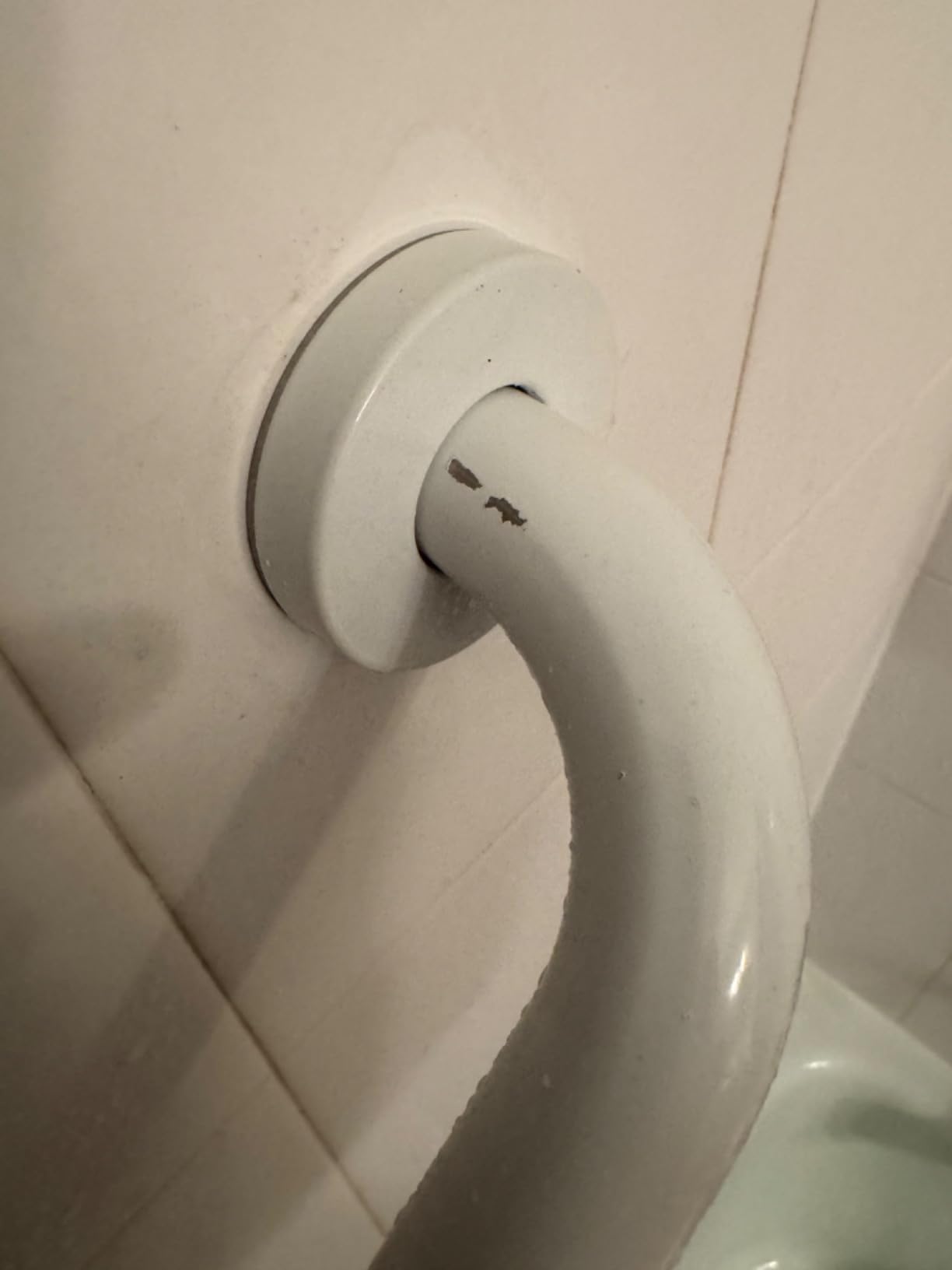
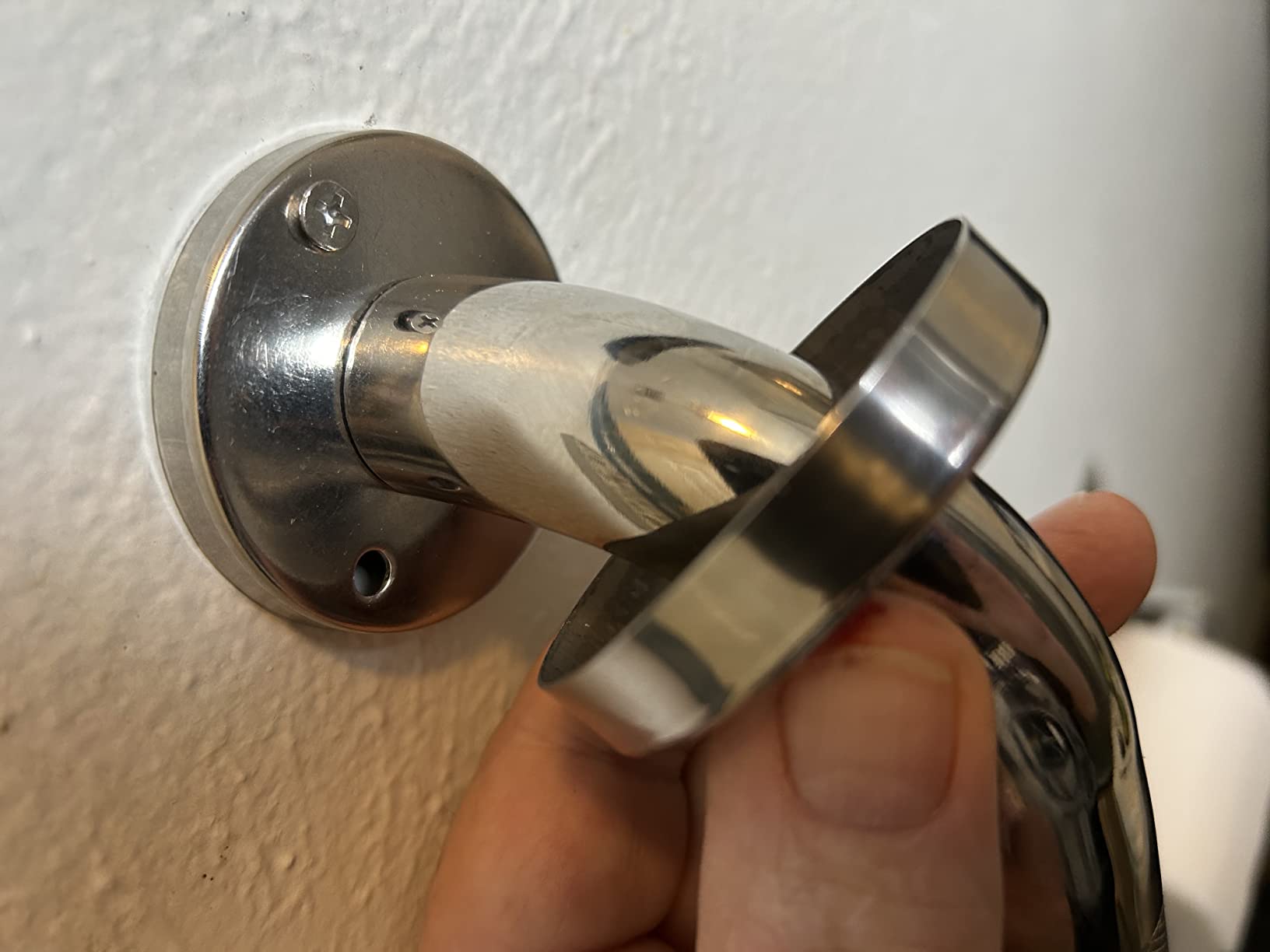
Two things to know before you buy. First, the spec block lists a 250 pound capacity while the feature description claims 500 pounds, and that inconsistency is exactly the kind of thing that should make you ask your installer what they will stand behind. Second, the included 1.6 inch screws are too short for masonry or brick, so if your shower is on a concrete slab you will need longer stainless fasteners and heavy-duty plugs.
Some orders have also arrived without adequate wall anchors. Check the box before you start, because discovering a missing anchor after the tile is drilled is the worst possible timing.
Who This Bar Suits
This suits anyone whose balance fails in the shower specifically because of the water and soap, rather than from a condition that can be compensated for with a larger grip. The knurled section is the deciding feature for people who already know their hands slip when they are wet.
It also suits a small tiled shower where a 16 inch bar is the only length that fits without crowding the wall, and buyers appreciate that it works in bathrooms, kitchens, stairways and laundry rooms without looking out of place.
Who Should Buy Something Else
Skip it for masonry or concrete shower walls unless you are prepared to buy longer fasteners separately. The supplied screws will not reach, and a bar that needs a workaround to attach is a bar that will not be attached properly by whoever else tries to install it later.
Anyone needing full body weight support should be cautious given the 250 pound figure in the spec block, and users expecting a commercial-weight tube will find 1 inch steel on the thin side. It is a balance aid with good texture, not a heavy-grip lever for a large user.
4. AmazerBath 16 Inch Brushed Nickel Bar – Best for Arthritic Hands
AmazerBath Shower Grab Bars for Seniors Anti Slip, Bath Safety Grab Bar for Needy, Stainless Steel Bathroom Safety Grab Bars, Thickened Bar Bigger Base Holds 500LBS, 16″ L x 1.25″ D, Brushed Nickel
16 inch length
1.25 inch diameter
Thickened tube, wide base
500 lb rated
Longer screws
Pros
- Thickened tube and enlarged base feel more rigid
- Brushed nickel anti-slip surface grips well when wet
- Longer included screws reach further into the wall
- 4.7 rating from nearly 1900 reviews
- Range from 9 to 36 inch sizes
Cons
- Strength still depends entirely on the wall substrate
- Fixed straight bar cannot fold away in tight bathrooms
The thickened tube and enlarged mounting base are what separate this from bars in the same size class. Buyers consistently report that it feels more rigid than similarly sized models, and in a tiled shower, where a flange sits on a brittle surface, spreading the load over a wider base is a genuine engineering advantage rather than a cosmetic one.
The 1.25 inch diameter sits in the middle of the group and works well for hands that need a bit more than the 1 inch bars but do not need the full 1.5 inch Amazon Basics tube. The brushed nickel finish matches common bathroom hardware, which matters if you are trying to make a safety bar look deliberate rather than tacked on.
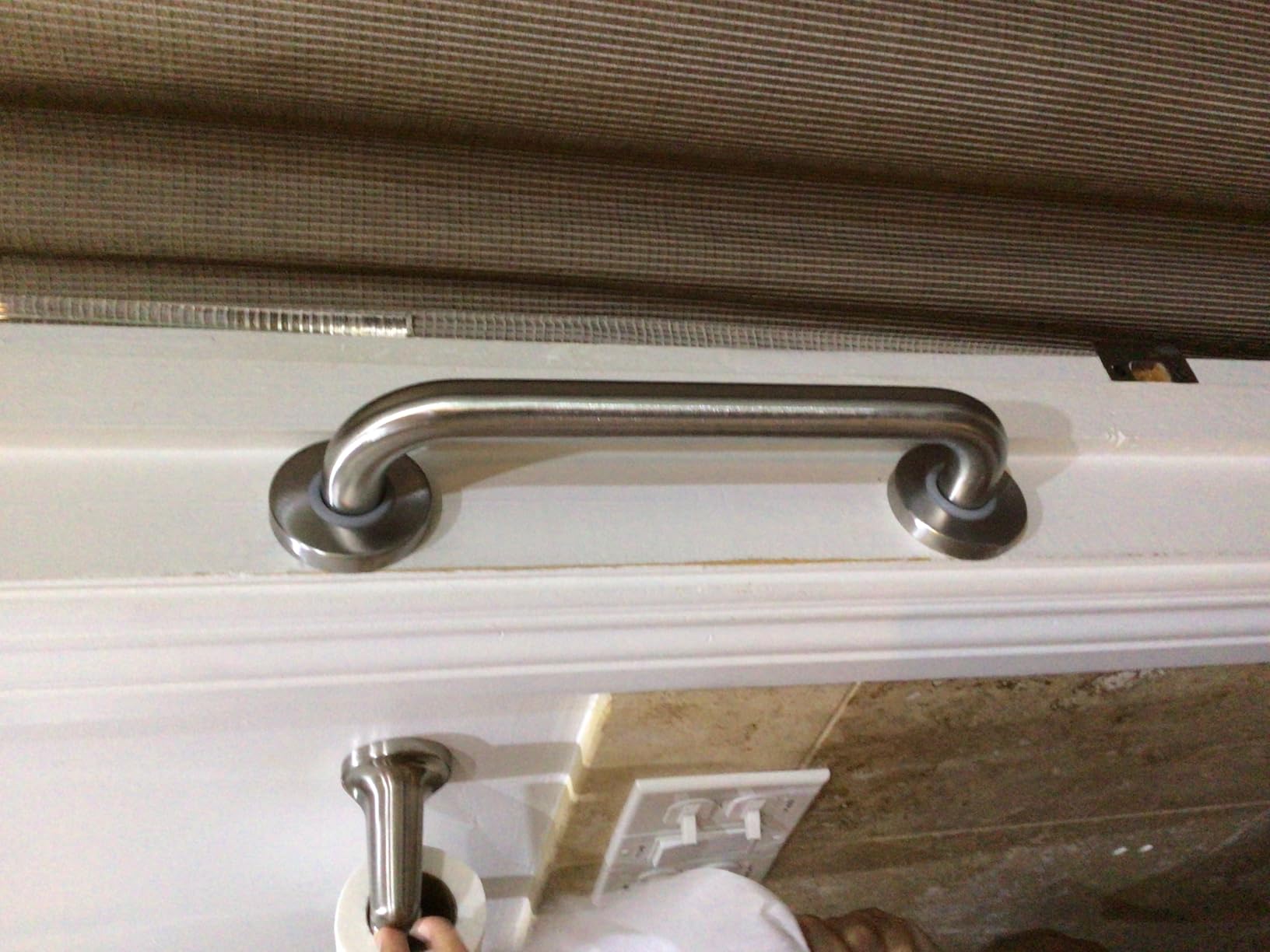
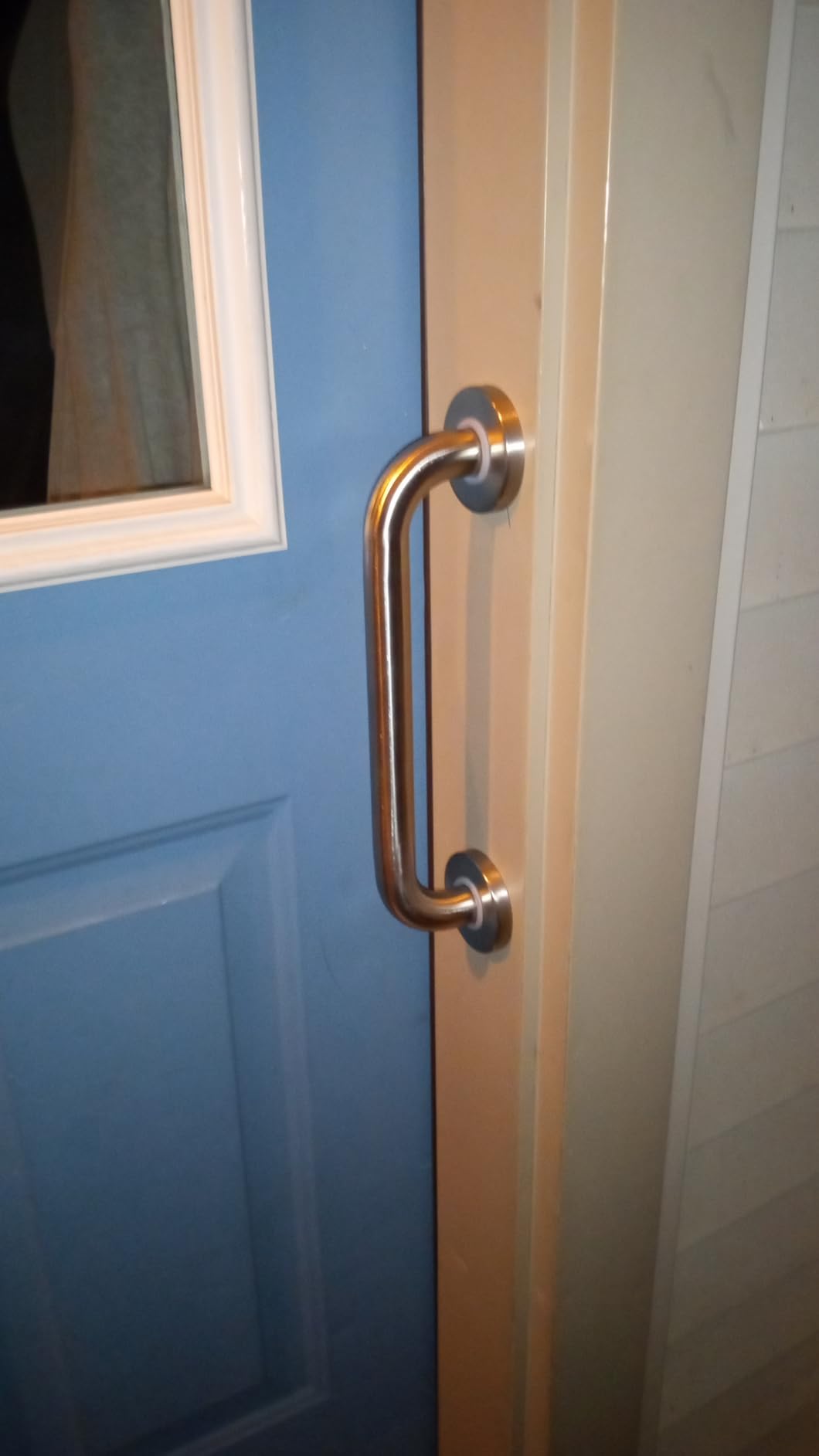
Two practical details stand out. The included screws are longer than typical for this class, which is helpful because tile and cement board add real thickness before you reach framing. And installation is described as straightforward, with a six-step instruction set and a 15/64 inch drill bit called out in the guidance.
The size range is also worth noting if you are planning a whole bathroom. The same bar comes in 9, 12, 16, 18, 20, 24, 32 and 36 inch lengths, so a vertical entry bar and a horizontal back-wall bar can match exactly. With 83 percent of reviews at five stars, the construction quality is consistently reported as better than the tier suggests.
Who This Bar Suits
This suits anyone with reduced grip strength who also needs a bar that feels solid the moment they touch it, which is often a better test than any specification. The enlarged base and longer screws make it the easiest of the compact bars to install securely through tile and into backing.
It also suits anyone outfitting more than one location, because the length range lets you match a short vertical bar at the entry to a longer horizontal bar on the shower wall without mixing brands or finishes.
Who Should Buy Something Else
Do not choose this expecting the substrate to be irrelevant. Reviewers are clear that mounting strength still depends entirely on what is behind the tile, and no amount of thickening in the bar compensates for a flange that lands between studs in an unfinished cavity.
Anyone in a very tight shower who needs the rail to fold away should pick a flip-up design instead, since this is a fixed straight bar and it will stay in the way.
5. Gotega 16 Inch Silicone Grip 2 Pack – Best for a Softer Grip Surface
Gotega 16 Inch Shower Grab Bars for Seniors, Anti Slip Handicap Grab Bars
16 inch length
Soft silicone grip
Waterproof steel and silicone
500 lb rated
2 pack
Pros
- Soft silicone grip feels warmer and less slippery than bare steel
- Five-finger anti-slip strip improves wet grip
- 2 pack covers multiple bathroom positions
- Concealed screws keep the wall clean
- Works in stairways and laundry rooms too
Cons
- Brand notes the bar assists only part of body weight
- Silicone and steel combination can feel less rigid than all-steel
This is the only bar in the roundup with a soft silicone sleeve over the rail, and for a hand that finds cold steel unpleasant or hard to feel, that changes the experience. The anti-slip strip is shaped to fit five fingers, which is a small design decision that makes a real difference when the hand is wet and the user is unsure of its position.
It also ships as a two-pack, which solves a common problem. A single bar at the shower entry does not help much with the sit-to-stand inside the pan, and buying two at once means both positions can be planned before the first hole is drilled into tile.
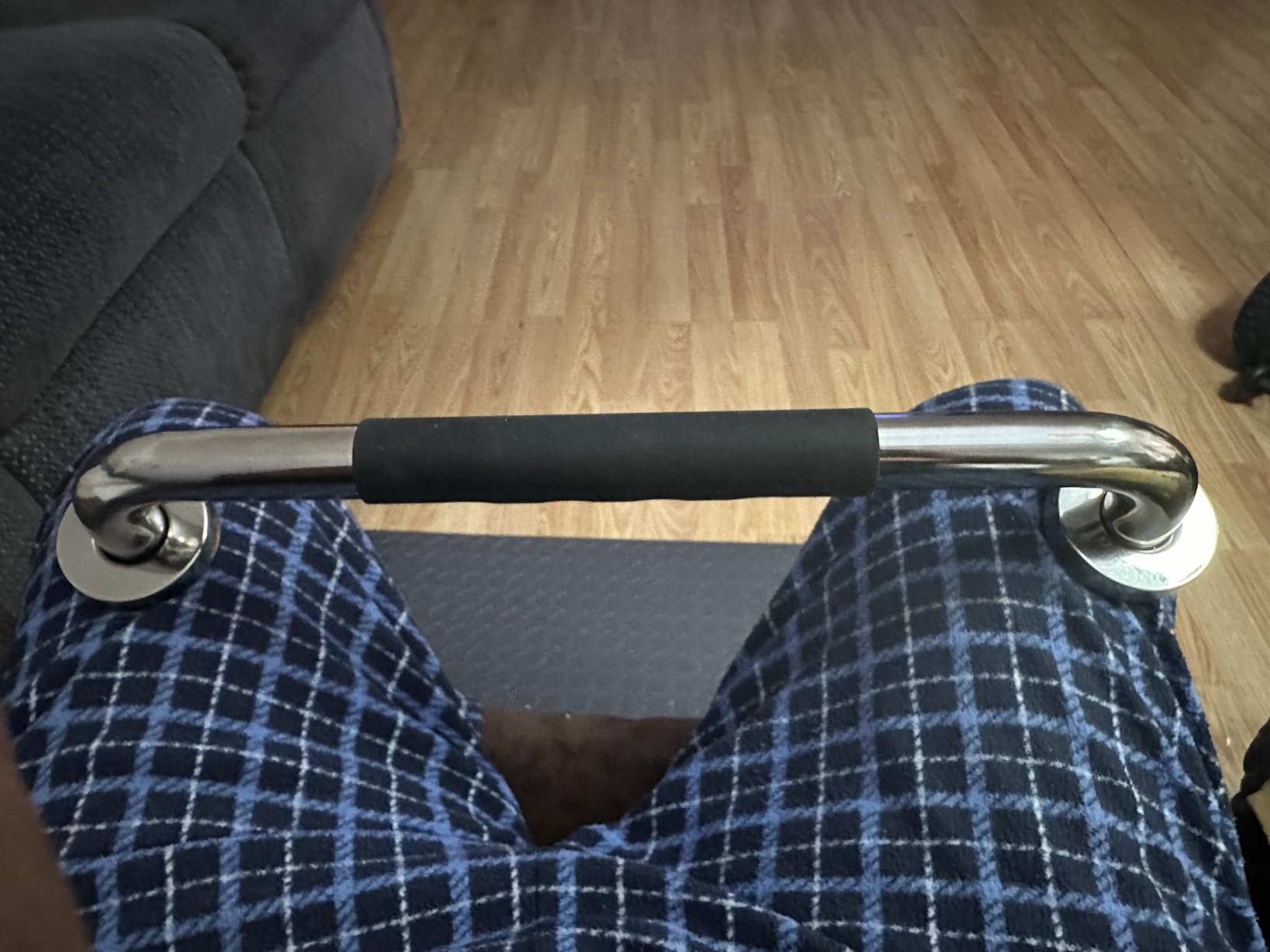
One limitation has to be read carefully. The manufacturer states that the bar assists and supports part of body weight rather than the entire weight, which is a meaningful difference from a fixed all-steel bar. If your installer or your doctor is planning around a bar that takes a fall’s worth of force, that limitation is disqualifying.
Otherwise, with 82 percent of reviews at five stars, buyers are satisfied and single out the silicone sleeve and the two-pack format as the deciding factors. The concealed screw design is repeatedly praised for keeping the shower wall looking clean after installation.
Who This Bar Suits
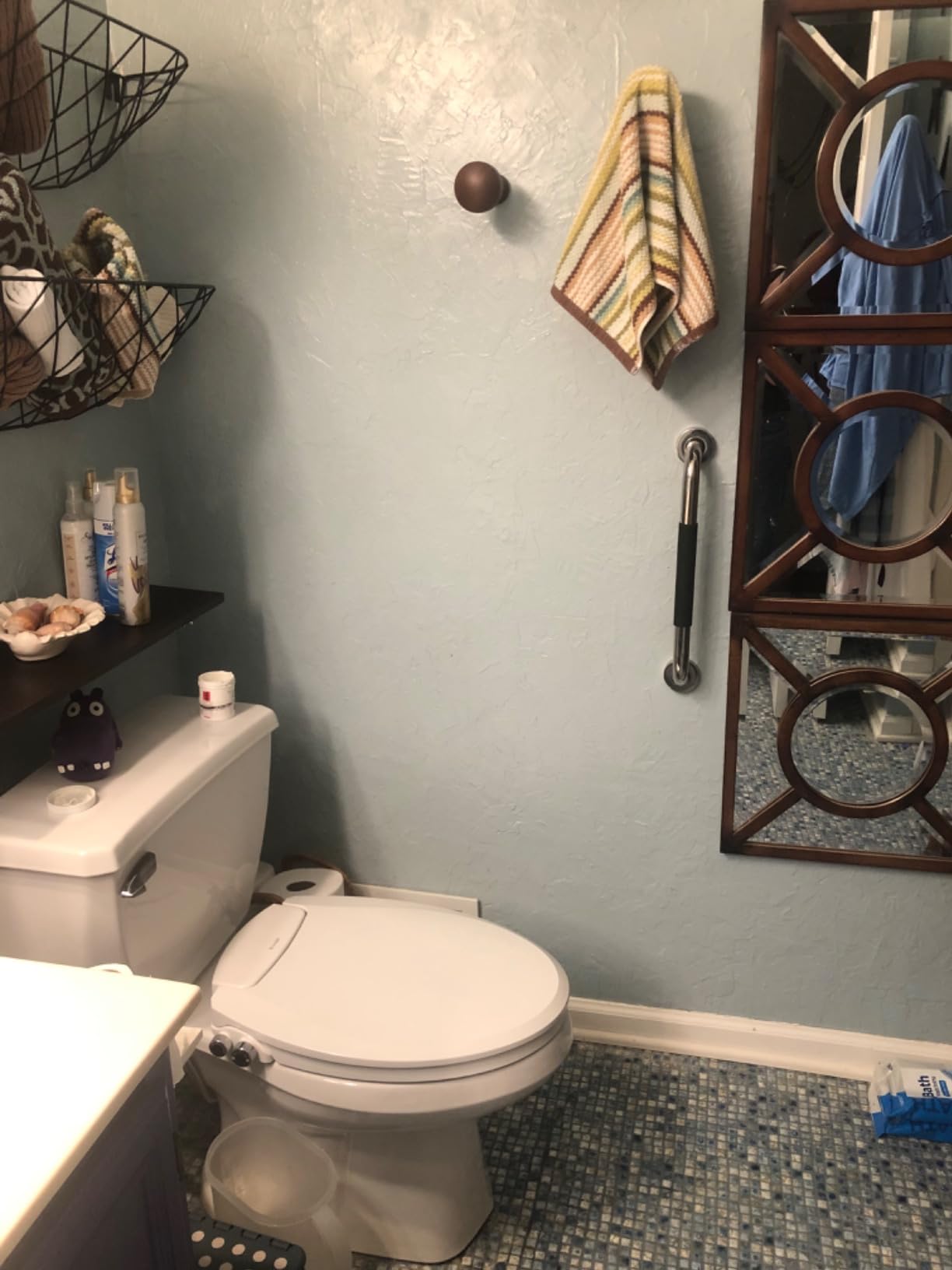
This suits anyone who needs a handrail for balance assistance rather than a load-bearing support, and who finds a hard metal tube uncomfortable against sensitive or numb skin. A diabetic neuropathy patient with reduced sensation, for example, gets real value from a surface that is easier to locate by touch.
It also suits anyone planning a two-position layout, since the second bar is in the box and the finish will match. That is convenient for a household that wants one vertical bar at the entry and one horizontal bar inside the pan.
Who Should Buy Something Else
Do not choose this as your only support if a fall onto it is plausible. The brand’s own language about partial body weight assistance is the deciding factor, and readers who need a hard stop should look at an all-steel bar rated for the full load.
Users who prefer a solid steel feel under the hand may find the silicone and steel combination less rigid than a plain tube, and anyone matching a matte black or chrome fixture set will need to check the finish rather than assume it blends in.
6. Gotega 12 Inch Grab Bar 2 Pack – Best for a Tight Shower Entrance
Grab Bars for Shower 2 Pack, Stainless Steel Bathroom Grab Bar for Seniors
12 inch bar
2.6 inch flanges, 3 hole
304 stainless steel
500 lb rated
2 pack
Pros
- Sturdy once properly installed into wall studs
- Stainless steel resists corrosion in a humid bathroom
- Compact size fits tight walk-in shower entries
- All mounting hardware and spare screws included
- 2 pack covers multiple locations
Cons
- 12 inch length is short for larger users
- Small diameter offers a shorter grip
- Some users find the bar light duty in hand
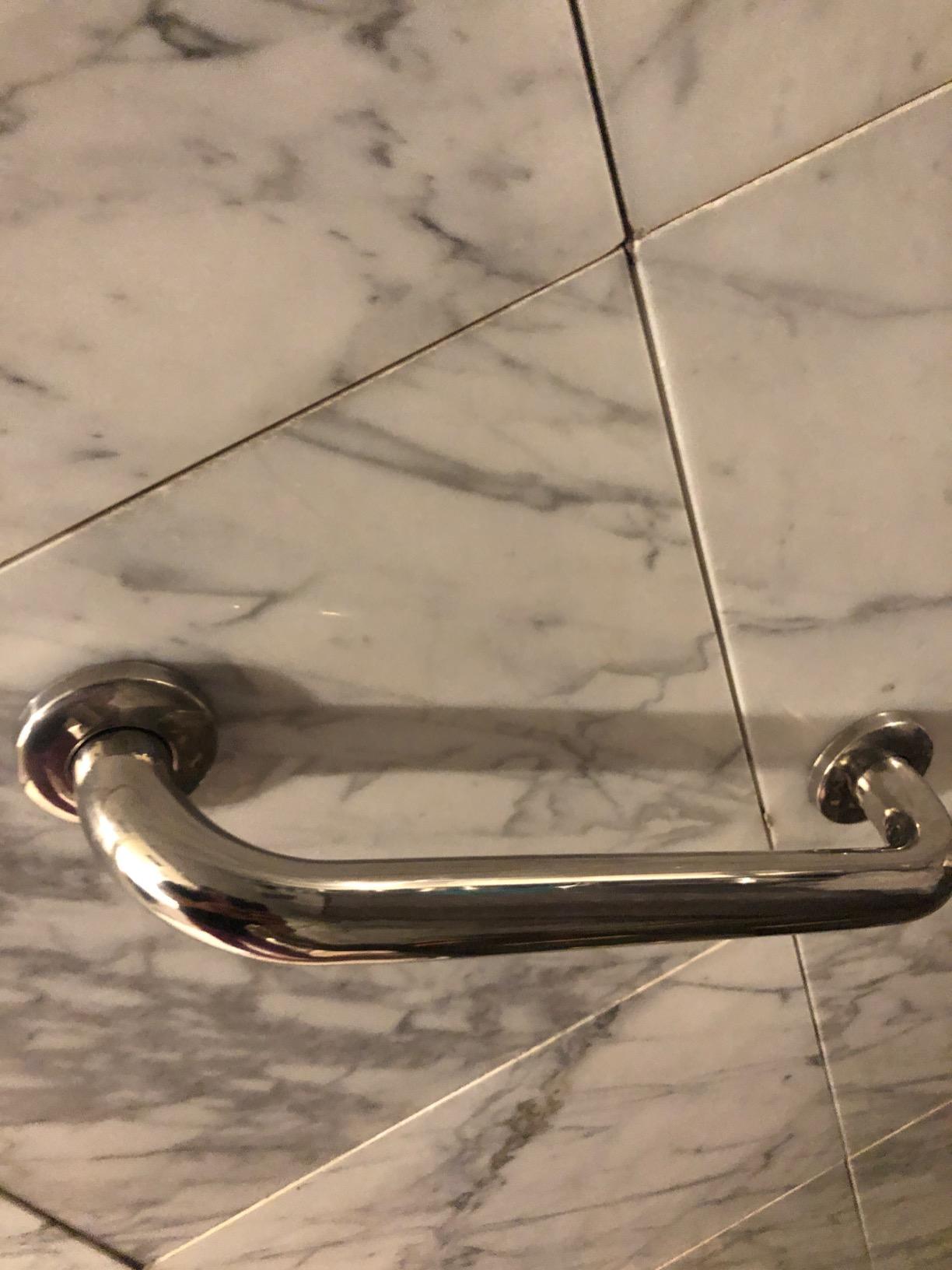
This is the shortest bar here at just under 13 inches overall, and that is a feature when the shower entrance is narrow or the curb is close to the opposite wall. A 24 inch bar in a tight walk-in shower blocks the entry; this one projects almost nothing. It is also the most reviewed product in the roundup, with more than 9,500 ratings.
The 3-hole flange design is worth noting for tile work. Three holes give you options for landing fasteners on a stud, and a 2.6 inch flange covers each hole cleanly with a concealing cover after the penetration is sealed.
Owners commonly report the bars feel solid once screwed into studs and still look clean after a year of daily use in a humid bathroom. The 304 stainless construction is the right material for a wet room, and corrosion resistance is the one specification you should not compromise on.
The recurring criticism is scale. A 12 inch bar with a slim tube gives a short grip, and a larger user or someone who needs to hang weight through one hand will find it marginal. Sentiment is strongly positive overall with a 69 percent five-star share, but the minority critique that it is small and light grade for heavier users is fair.
Who This Bar Suits
This suits small tiled showers, especially walk-in enclosures where a person steps over a curb and needs a hand at a specific moment rather than a continuous rail. The 2-pack means one can go at the entry and one inside without a second order.
It also suits anyone outfitting a bathroom on a tight budget who still wants a rated, stainless bar rather than an unrated rail, and every box includes the mounting hardware and spare screws.
Who Should Buy Something Else
Larger users should skip it. A short tube on a slim rail is a limited grip when the alternative is a 24 inch bar with 1.25 inch diameter, and the difference is the difference between steadying yourself and actually holding on.
Anyone expecting a premium feel should note that only the ends and mounts unscrew, so this is a fixed bar with no folding option. It is a compact functional choice, not a finish upgrade.
7. FANHAO 16 Inch Knurled Bar 2 Pack – Best for a Matched Pair Inside and Out
FANHAO 2 Pack Shower Grab Bar, 16 Inch Stainless Steel Bathroom Grab Bar with Anti-Slip Knurled Grip, Shower Handle Bath Handle, Safety Bars for Shower Chair Bench, Senior, Elderly, Handicap
16 inch length
Knurled grip
304 stainless steel, 500 lb rated
Concealed screws
2 pack
Pros
- 2 pack allows matching placement inside and outside the shower
- Knurled surface gives reliable traction with wet hands
- Concealed screw caps keep the finished wall clean
- Stainless steel resists corrosion in wet rooms
- Oil rubbed black coordinates with modern fixtures
Cons
- Mounting hardware does not substitute for proper in-wall backing
- Two pack means one bar must be used or stored
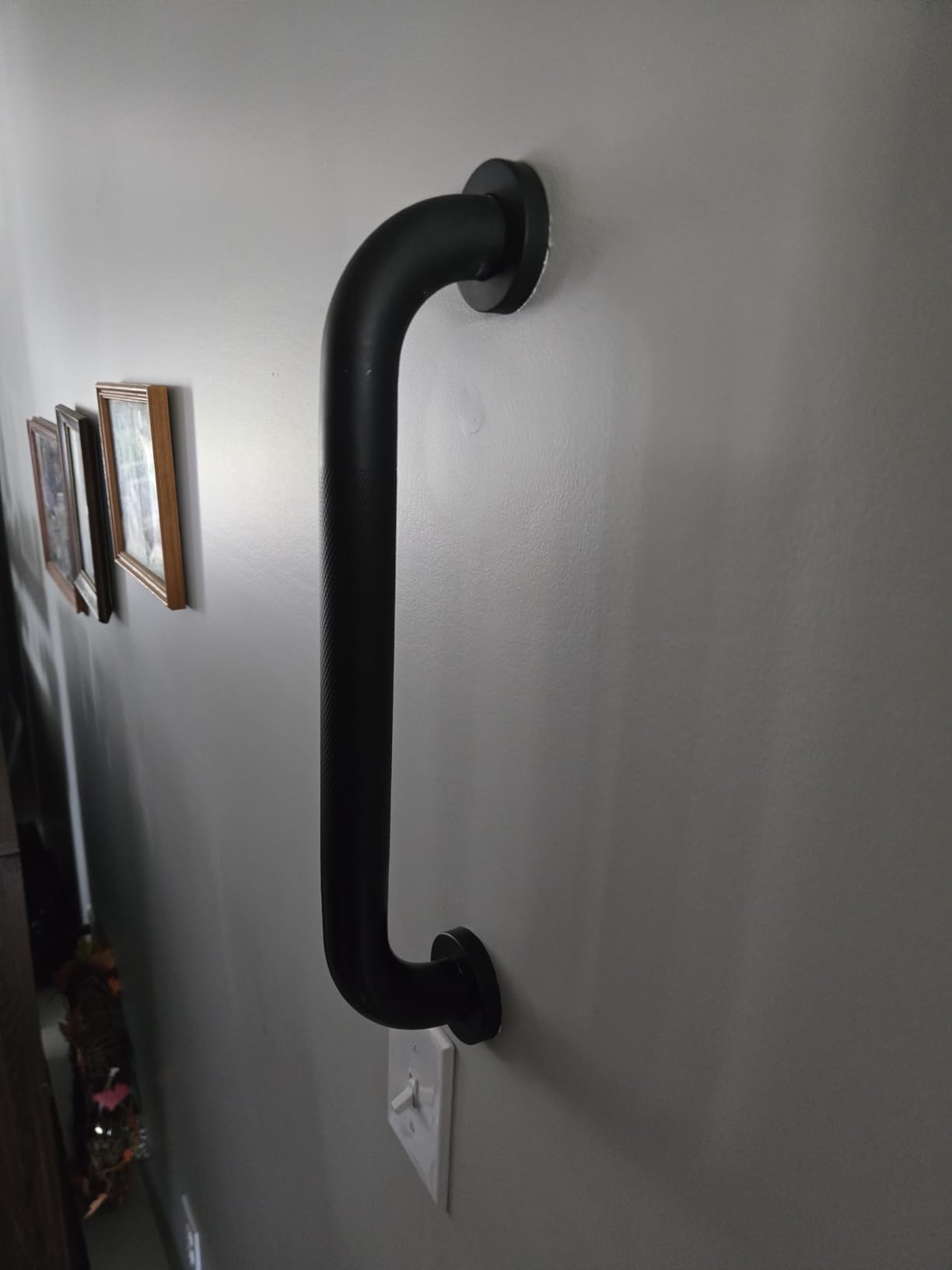
The reason to buy this over a single bar is layout. Two matched 16 inch bars let you place one inside the shower and one just outside it, so the handhold is available on both sides of the threshold. For someone who is unsteady on the step-over, that is the single highest-value position in the whole room.
The knurled surface handles the wet-hand problem in the same way the ZUEXT does, and the oil rubbed black finish gives you an option that reads as deliberate hardware rather than a safety fitting, which is the aesthetic objection that stops a lot of these installations from happening.
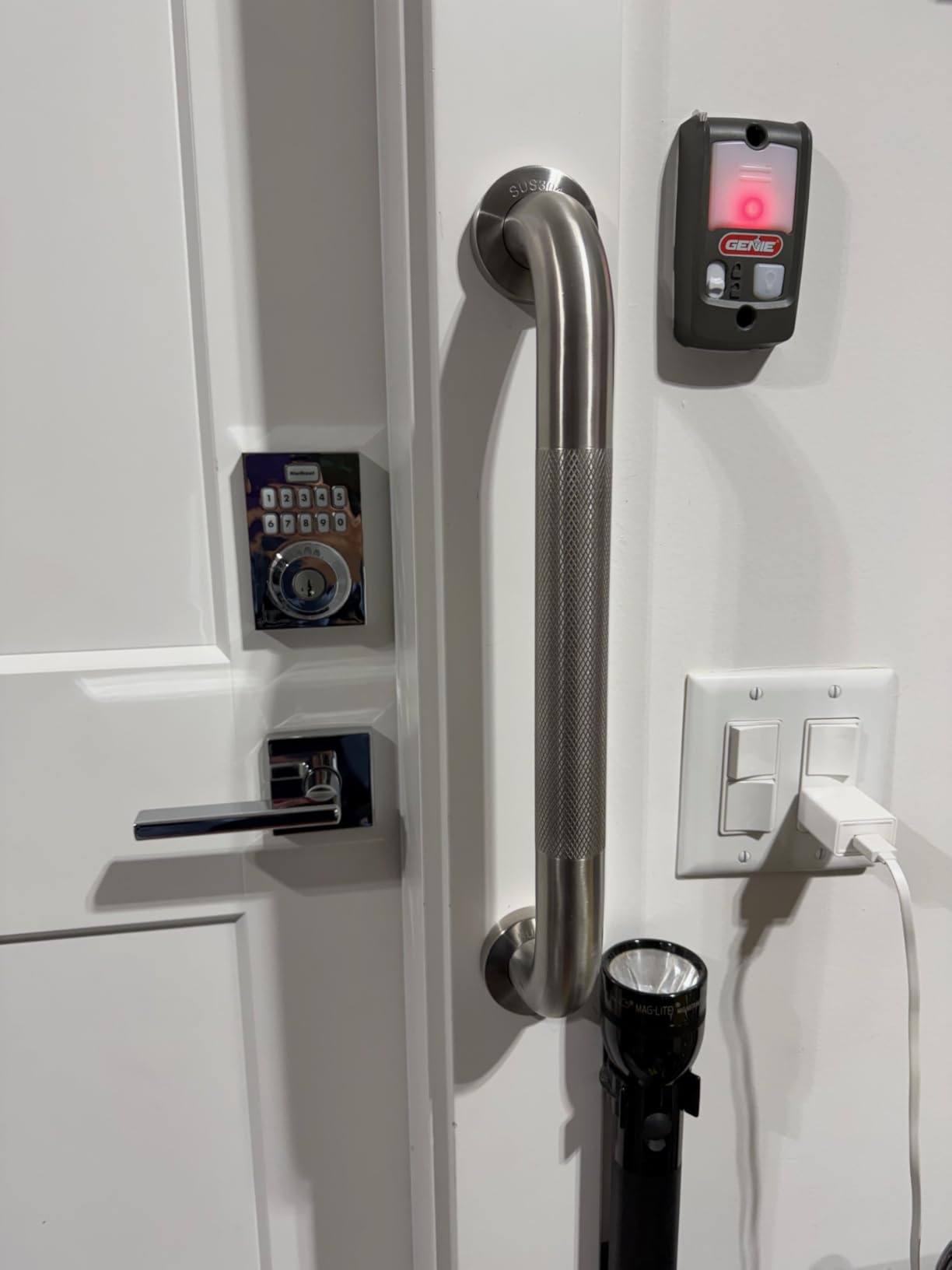
With 80 percent of reviews at five stars, buyers mainly value the two-bar pack and the knurled grip. The concealed screw design is repeatedly described as keeping the shower wall looking clean, which on tile means the escutcheon covers the drilled penetration neatly once silicone is applied.
As with most grab bars, the limiting factor reported is the wall substrate rather than the bar itself. That is worth internalizing before you buy anything: the black finish and the knurled grip are what you choose, but the framing behind the tile decides whether the installation is safe.
Who This Bar Suits
This suits households planning a two-position layout around a shower threshold, and anyone who wants the bar to look like part of the room rather than an addition. The black finish pairs especially well with dark grout and darker tile.
It also suits a caregiver-assisted routine where the helper works from outside the shower and the person being assisted works from inside, since both need a handhold in the same movement.
Who Should Buy Something Else
Skip it if you have no framing where the flanges land. The included mounting hardware does not substitute for proper in-wall backing, and a two-pack makes it tempting to install both bars at the same weaker location. Choose the position first, confirm the studs second.
Anyone who wants a folding or diagonal option should look elsewhere, since this is a fixed straight bar that mounts at whatever angle you set but does not change afterward.
8. Munzong 32 Inch Brushed Nickel Bar – Best for Long Tiled Walls
32 Inch Shower Grab Bar, Munzong Brushed Nickel Stainless Steel Handle
32 inch length
1.25 inch diameter
Knurled center section
500 lb rated
Concealed mount
Pros
- Long 32 inch span covers a full wall for two-handed support
- 1.25 inch diameter is a comfortable middle ground
- Knurled center improves grip with soapy hands
- Satin brushed nickel hides fingerprints
- Mounts horizontally
- vertically or diagonally
Cons
- Below the rest of the group at 4.4
- with 8 percent one-star reviews
- Long bar needs both ends in solid backing
- Sold as a single bar with no matching second
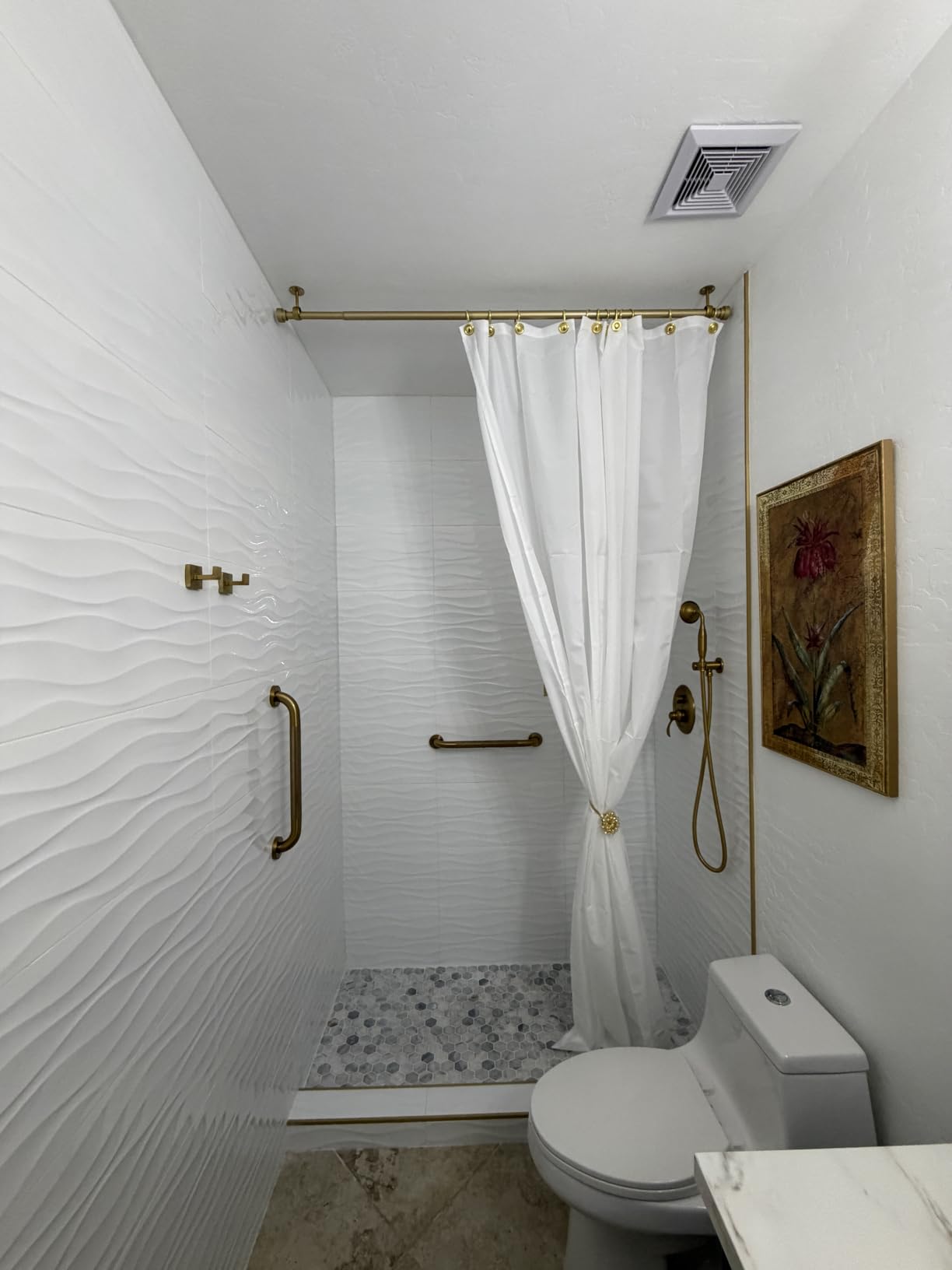
Thirty-two inches is the length that suits a full tiled shower wall where a person wants both hands on the rail at once, such as a caregiver stabilizing someone through a transfer. A shorter bar forces you to shuffle along it; this one lets you reposition your hands without moving your feet, which is often the point at which a fall happens.
The 1.25 inch diameter and knurled center section make it a comfortable two-handed hold, and the satin brushed nickel finish is one of the better choices for hiding water spots in a wet environment.
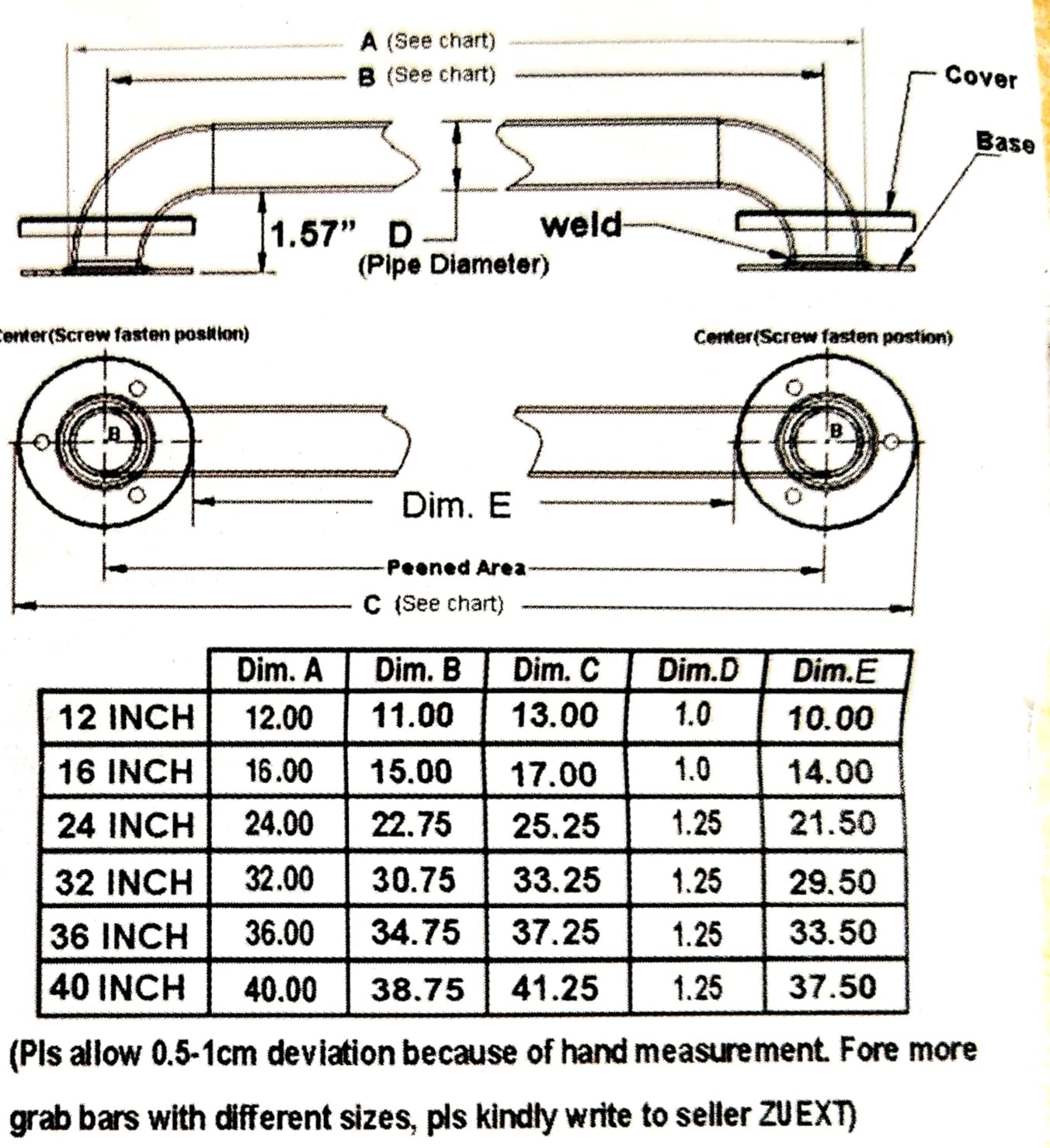
The catch is placement. A bar this long needs both mounting points in solid backing, and a 32 inch span is far more likely than a 16 inch one to have an end land in the cavity between studs. Measure the stud layout before ordering, and be prepared to add blocking for one end.
It also scores below the rest of the group at 4.4, with 8 percent one-star reviews. Buyers who return it tend to focus on installation rather than the bar, but that is still a signal worth taking seriously when the alternative is a 24 inch bar that is easier to anchor.
Who This Bar Suits
This suits anyone with a full-width tiled back wall, particularly a household where a caregiver assists with transfers and needs the whole length of the wall as a handhold. It also suits larger users who want more rail to work with than a 16 inch bar provides.
Anyone who wants flexibility on orientation will note it mounts horizontally, vertically or diagonally, so the same bar can serve an entry position and a back-wall position without buying a second product.
Who Should Buy Something Else
Do not buy this on a wall where you have not confirmed framing at both ends. The long span is the product’s best feature and its main installation risk, and on a tiled wall a retrofit means cutting tile at the point you most wanted to avoid cutting it.
Buyers who want a warranty behind the bar, or the widest diameter for arthritic hands, should look at the branded or oversized alternatives instead. This one sits below the rest of the group on rating and is the one I would replace first if something else failed.
9. Fertoriy 16 Inch Grab Bar 2 Pack – Most Versatile for Tile Showers
2 Pack 16 Inch Safety Grab Bars for Bathroom, Shower Grab Bars for Seniors
16 inch length
Knurled grip
Stainless steel, 500 lb rated
2 pack
Fixing screws included
Pros
- Two pack at one of the lower costs in the category
- Knurled surface improves friction when wet
- Stainless steel shows no rust over time
- Used successfully on tile walls in buyer installs
- Fixing screws included in each pack
Cons
- Listing dimensions reported as inconsistent
- Instructions do not state which wall types the anchors suit
- Escutcheon plates held by friction rather than a set screw
- Three hole flange can prevent all three screws reaching a stud
This is the pick if the budget line is the first constraint and the wall has framing where you need it. Two 16 inch stainless bars with knurled surfaces and a 500 pound rating cover a complete entry and interior layout at one of the lower costs in the group, and multiple buyers confirm using them on tiled shower walls.
There is nothing clever about it, which is sometimes the point. It is a straight stainless bar with an anti-skid surface and lengthened screws, and it does that without a brand premium.
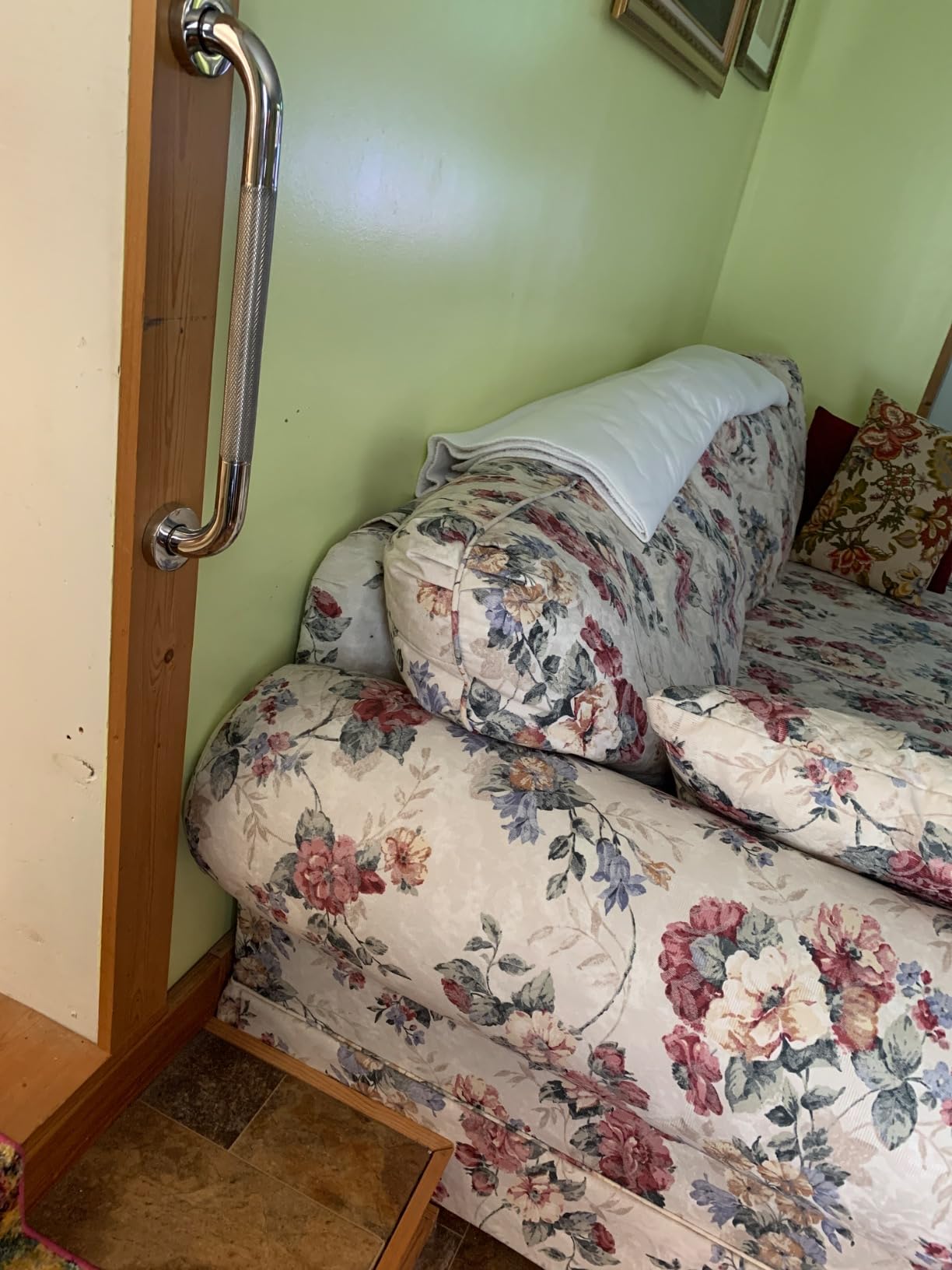
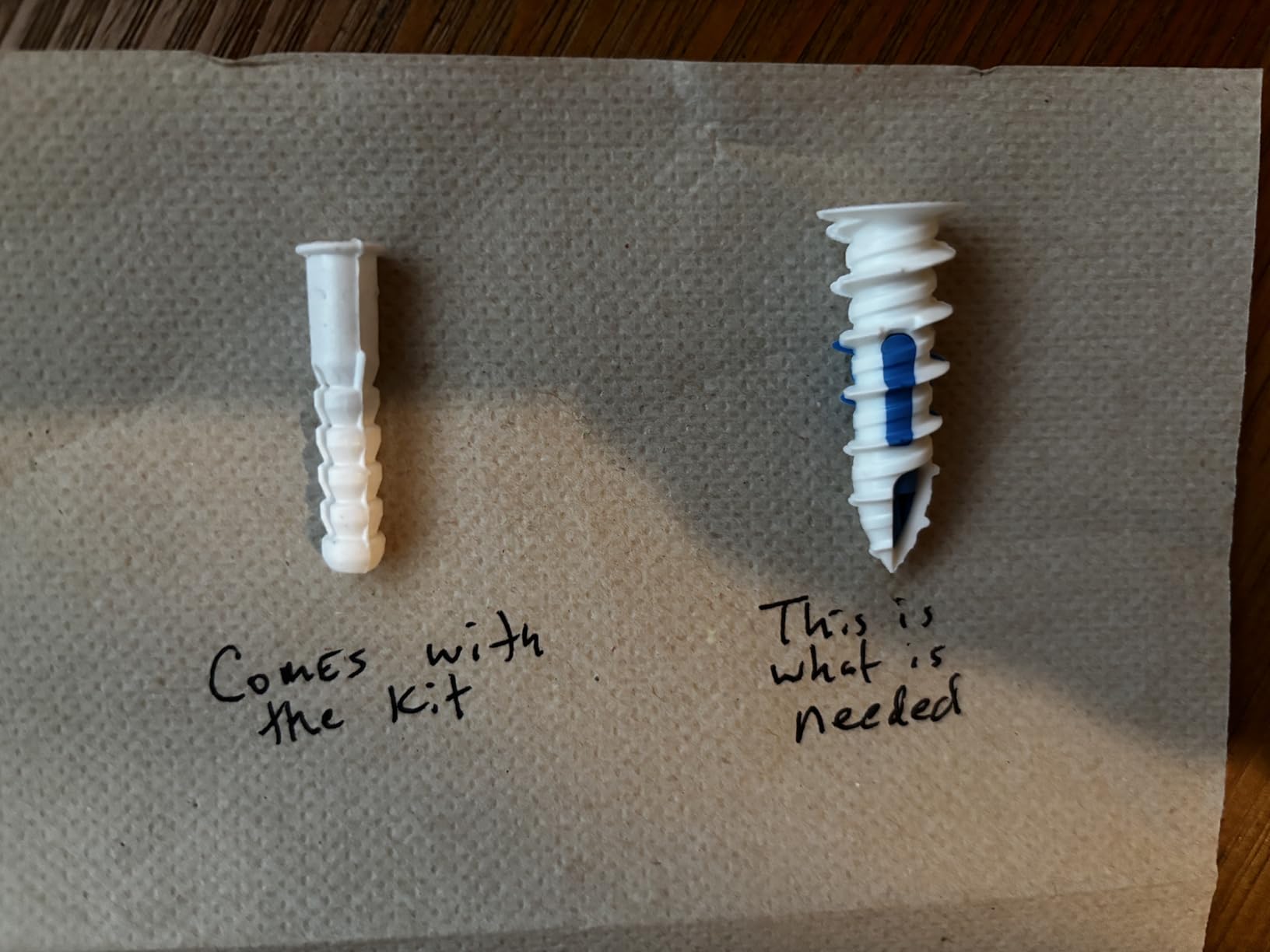
The honest list of drawbacks comes from a detailed buyer review rather than a complaint trend, and it is worth taking seriously before drilling tile. The listing dimensions are reported as inconsistent, so measure the bar yourself rather than trusting the product page. The instructions do not clearly state which wall types the included anchors suit, so plan on using fasteners appropriate to your actual substrate.
The escutcheon plates are held by friction rather than a set screw, and the three-hole flange geometry can prevent all three screws from reaching a stud. That last point matters: if the flange is wider than you expect, you may only get one or two fasteners into framing, which changes the rating the manufacturer claims.
Who This Bar Suits
This suits a household covering two positions on a budget, and anyone comfortable confirming their own fastener layout before drilling. The 16 inch length is the most commonly purchased size precisely because it fits standard stud spacing without modification.
It also suits a rental or a first-stage safety upgrade where the goal is a rated stainless bar now and a more permanent install later. Buyers report no rust over time and confirm use on tiled walls.
Who Should Buy Something Else
Skip it if you want a lifetime warranty, a named brand, or a bar that comes with instructions you can follow without researching anchors first. The gaps in the documentation are the product’s real weakness, not the steel.
Anyone planning to use a single bar as primary support for a full body weight transfer should choose a branded bar with published warranty terms instead. This one works, but you are relying on your own install judgment rather than a manufacturer’s commitment.
10. Moen R8960FD 30 Inch Flip-Up Bar – Best for Wheelchair Access
Moen R8960FD 30″ Flip-Up Grab Bar, Textured Grip, Stainless
30 inch length
Flip up clears the floor
Textured grip
ADA compliant, 300 lb
Lifetime warranty
Pros
- Folds up so a wheelchair or walker can clear the space
- Named brand build with a limited lifetime warranty
- Textured grip stays secure with wet hands
- Reliable when mounted into properly reinforced wood backing
- Can also be oriented horizontally
Cons
- Hole spacing often does not align with standard stud spacing
- Wood backing is required and anchor bolts are not adequate
- 300 lb rating is below the 500 lb of fixed bars
- Heaviest and most involved installation here
This is the only folding bar in the roundup, and in a small tiled shower where a fixed rail would block a wheelchair or walker entry, that is not a nice-to-have. The 30 inch length supports a sit-to-stand transfer, then folds flat against the tile when nobody is using it, which is exactly the clearance an accessible shower needs.
The textured grip is the same wet-condition advantage the knurled bars offer, and this one is the only folding design in the roundup with a limited lifetime Moen warranty behind it.
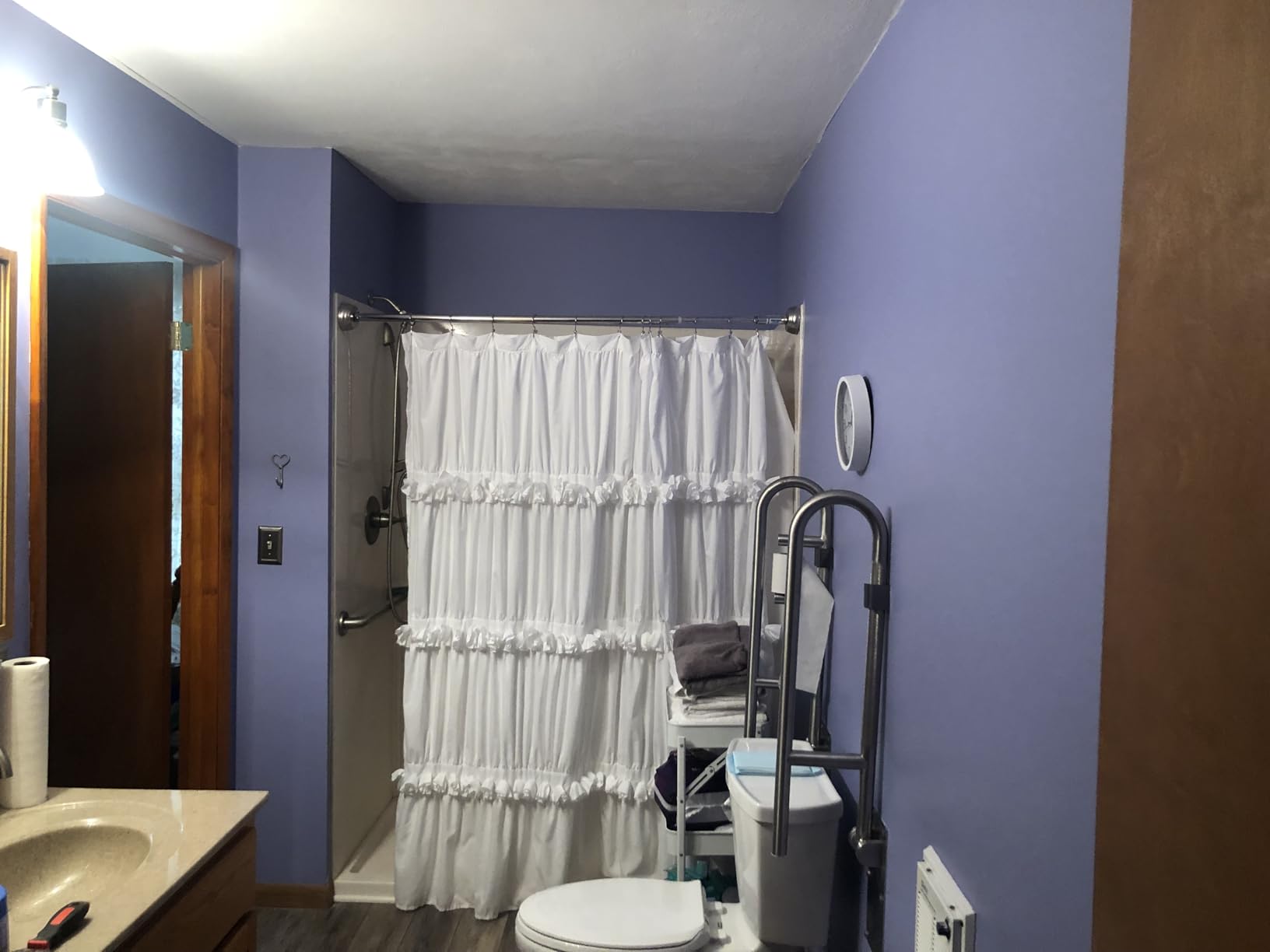
The installation is the hard part and it needs to be said plainly. Owners who reinforced the wall with wood planks or a 4×4 post describe the bar as exceptionally strong and are emphatic that anchor bolts alone will not do. The included screws are wood screws, the product is rated 300 pounds, and the mounting hole spacing frequently does not line up with standard stud spacing.
In a finished tile shower, that usually means opening the wall to add blocking before drilling. If your shower is already tiled and you are not prepared to do that, this bar is the wrong choice no matter how well it functions.
Who This Bar Suits
This suits anyone building or renovating an accessible shower for wheelchair or walker transfer, and anyone planning ahead who wants a bar that does not permanently reduce floor space. It also suits a household that is remodeling now and wants a rail that will still be the right choice in ten years.
It suits users who want a brand with a lifetime warranty behind a folding mechanism, which is the part most likely to wear over time. If you are adding blocking during a remodel anyway, this is the bar to specify.
Who Should Buy Something Else
Do not choose this for a finished tiled shower with no accessible framing. The hole spacing issue plus the wood backing requirement means a retrofit involves opening the wall, which is a much larger job than drilling two holes.
Anyone who needs more than 300 pounds of rated capacity, or who wants the simplest possible install, should pick a fixed bar instead. This is the most involved installation in the roundup and the least forgiving of a wall that was not prepared for it.
Installing a Grab Bar in a Tile Shower Without Cracking Tile
This is the sequence we would follow, and the order matters because the irreversible steps come after the reversible ones. Confirm the substrate before you buy anything, and the substrate is the least glamorous part of the job.
Find the framing first. Run a stud finder across the wall in several places, since a magnetic finder only reads the screws or nail heads in the wall and can miss metal studs entirely. Mark both edges of every stud and write them down before you move on.
Confirm the bar’s hole spacing against your stud layout. Measure the center-to-center distance between the bar’s mounting holes. Standard spacing is 16 inches on center, and most fixed bars are built to land on one stud or straddle two. A mismatch here is the single most common reason an install ends badly.
Locate plumbing and wiring before you drill. Shower walls almost always have a plumbing rough-in behind them, and an angle finder is cheap insurance. If your bar lands on a stud, you are almost certainly clear, because plumbers route around studs rather than through them.
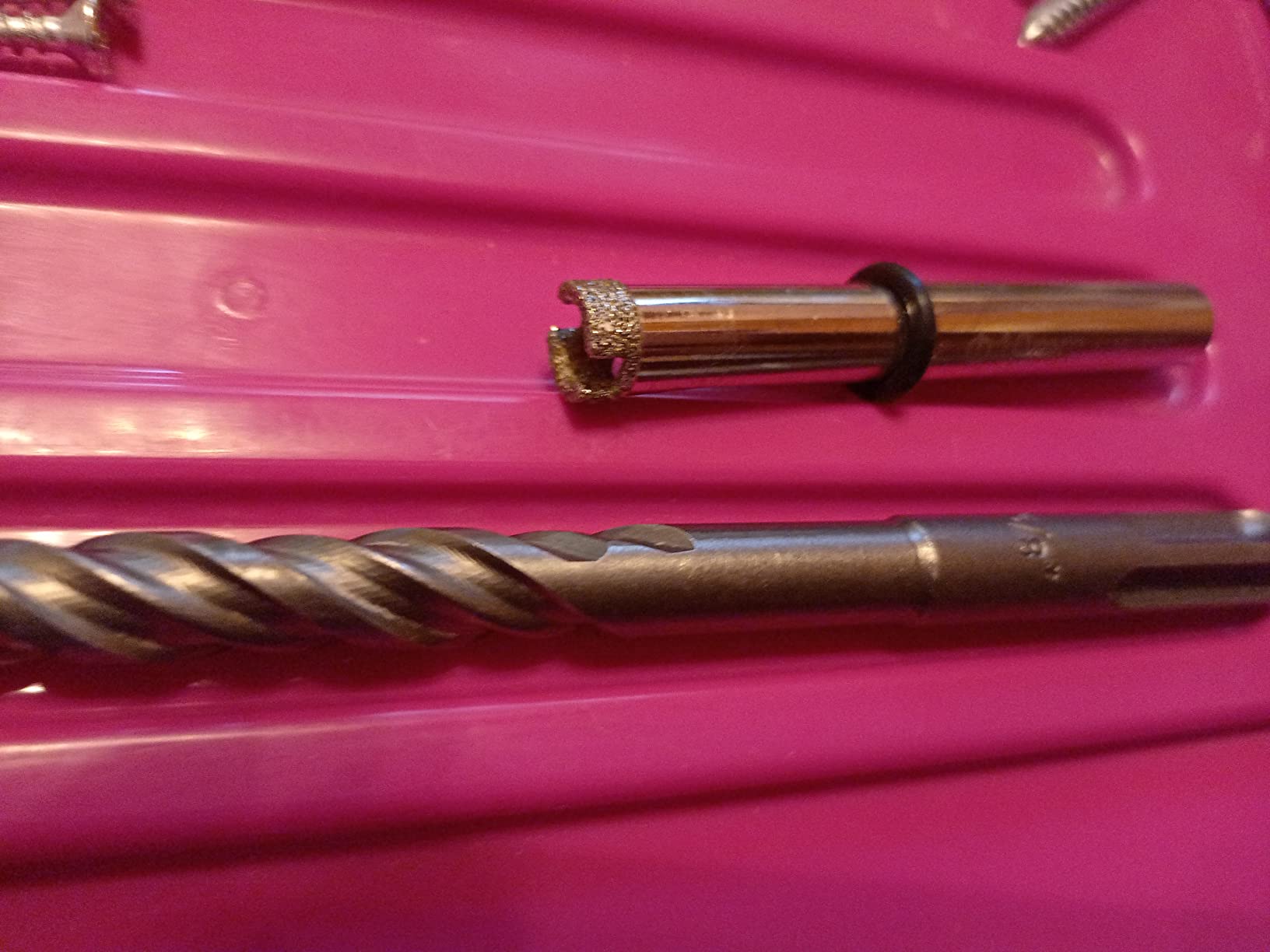
Choose the bit. A carbide or multi-cutter tile bit is the right tool. Users with hands-on experience on tile forums consistently rate four-cutter style bits above spade-style ones for the same job, and a diamond bit is the fallback for very hard porcelain.
Drill in stages. Start with a short pilot depth, then increase. Run the drill at moderate speed with steady light pressure rather than forcing it, and keep the bit lubricated. Grinding through the glaze in one aggressive pass is what chips porcelain.
Seal the penetration. Once the flange is in place, run a bead of silicone sealant around the escutcheon where it meets the tile. That is what keeps water out of the cavity behind the tile, and skipping it is how a drilled shower wall eventually develops a soft spot.
How to Find Studs Behind Tile
Tile confuses stud finders less than people expect, because the framing is still there, the boards just cover it. Scan the wall, then verify each hit by driving a small pilot screw into an inconspicuous spot. If you hit solid framing you will feel it immediately and the screw will bite.
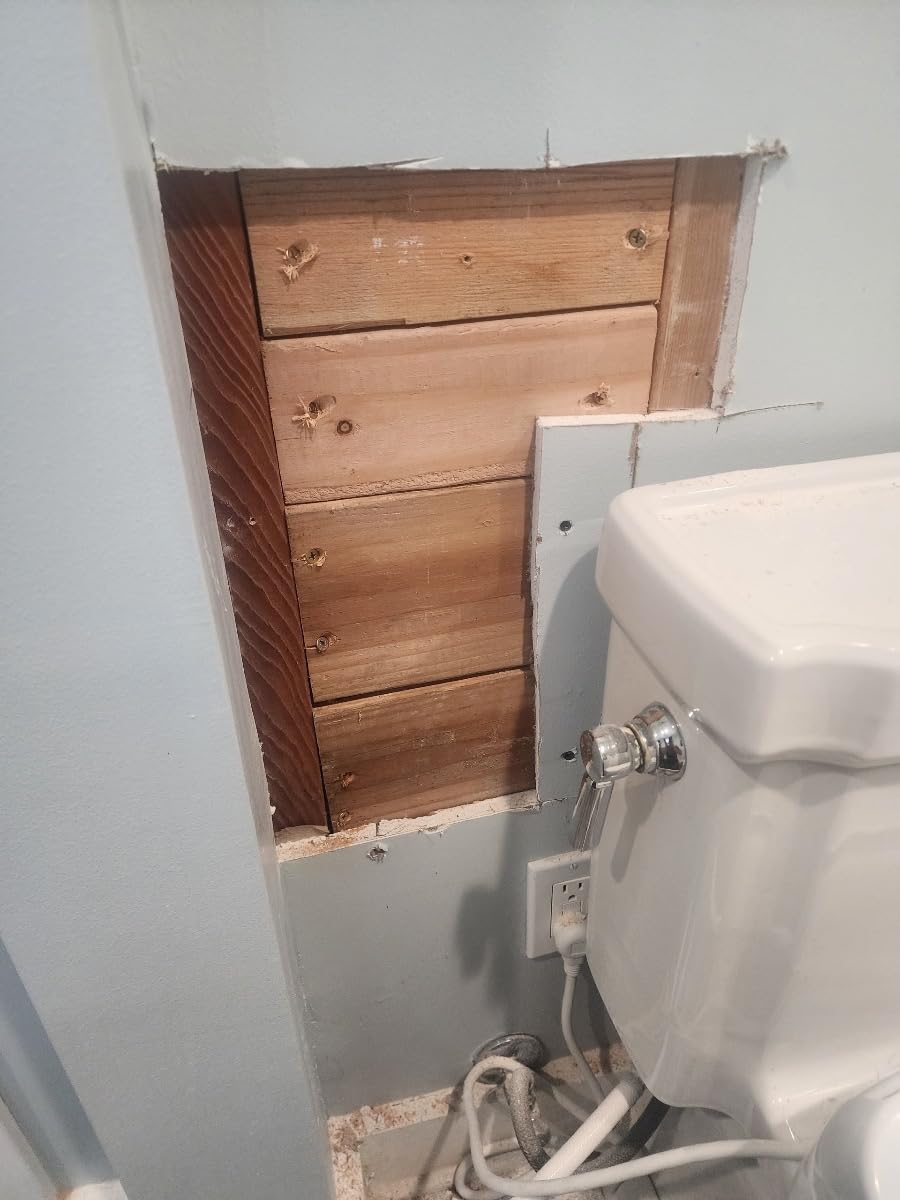
If there is no stud where you need the bar, your options in order of strength are: add solid blocking behind the wall, use a rated toggle or molly-type anchor into the backer board, or hire a professional. Installation guidance from tile forums suggests a molly-style anchor paired with epoxy behind the grab bar plate as a workable fallback, but the community consensus is equally clear that glue-to-surface mounting is not trusted for primary support.
What to Do When There Is No Stud
Open the wall during any future remodel and add blocking. Homeowners doing a shower seat have described adding blocking behind the shower specifically for future grab bars, and it is the cheapest insurance available, because adding it later means breaking open finished tile.
Clamp-over-the-curb bars are the option that requires no drilling at all, and they appear regularly in tile shower discussions as the answer for rentals and for anyone who will not touch finished tile. Their limitation is placement, since they grip the curb rather than the wall, so they help with the step-over rather than with the sit-to-stand.
Buying Guide: Length, Orientation, Diameter, and Mounting
Length: match the bar to the motion, not the wall
A 12 inch bar suits a narrow entrance where a longer rail would block the step-over. Sixteen to 18 inches is the most common size because it fits standard stud spacing and covers a single reach. Twenty-four inches is the all-round answer for a full back wall. Thirty-two inches or more gives you a two-handed hold across a wide wall but demands solid backing at both ends.
Orientation: horizontal for balance, vertical for entry
Horizontal bars support lateral movement and standing transfers, which is the main event in a shower. Vertical bars work best at the threshold, where a person is stepping and their hand is moving in one direction. Many households use one of each, and if you can only afford one, install it on the back wall where the sit-to-stand happens.
Diameter: 1.25 to 1.5 inches is the working range
Anything under 1 inch feels thin to most adults. Between 1.25 and 1.5 inches is where grip strength and hand size find a balance, and 1.5 inches is the easiest for arthritic hands. Note that ADA and U.S. Access Board guidance specifies a range rather than a single figure, which is a point that surprises most readers.
ADA and U.S. Access Board reference numbers
The U.S. Access Board benchmarks grab bars to withstand 250 pounds of applied force, specifies a 1.25 to 2 inch outside diameter, requires 1.5 inches of clearance between the bar and the wall, and places horizontal bars 33 to 36 inches above the finished floor measured to the top of the grip. One correction worth repeating: ADA does not require a vertical grab bar at a bathing fixture, contrary to a widespread belief.
ADA governs public facilities rather than private homes, so a residential install has no code requirement behind it. It is still the most useful benchmark available, because the 250 pound force figure tells you whether a bar is in a sensible range, and the clearance number tells you how much space to leave for a hand to fit.
Suction and adhesive bars on tile
Suction bars do attach to smooth tile, and a good one will hold a hand’s worth of weight on a clean, dry, flat surface. The problem is that a shower is wet, and moisture and mineral film on the tile face cause the seal to creep and then release without warning. Treat them as supplemental only, never as primary support.
Adhesive-mounted bars sit in a similar category. The concern homeowners voice in renovation forums is straightforward, that having hundreds of pounds of a person’s weight depending on a glue-to-surface bond overhead is not a risk most people want to take. If you install one, install it in addition to a properly anchored bar, never instead of one.
What to Avoid in a Tile Shower
Towel bars are the most important thing to avoid, and the confusion is understandable because they are made of the same steel and installed the same way. A towel bar uses decorative screws into drywall anchors, carries no published load rating, and is designed to hold a wet towel. It will fail under body weight, and a bar that pulls out while someone is on it is worse than no bar at all.
Shower-door handles fall into the same category. They are hardware, not safety equipment, regardless of how substantial they look. The same applies to any bar with no published capacity, which is a claim you cannot verify and should not have to.
Avoid drywall-only anchors, and avoid any suction or adhesive bar presented as primary support. Also avoid drilling tile without locating plumbing first, and avoid skipping the silicone seal around the flange, because that step is what protects the wall cavity from the shower you just modified.
On cost, the bar itself is the small part of a tile job. What drives the difference in a tiled shower is cutting into the surface, adding blocking, and resealing the penetration. If you are also planning tile work, our guide to tile saws for bathroom renovations covers the tooling side.
Frequently Asked Questions
Can you put a grab bar in a tile shower?
Yes, but only when the bar is anchored into wall studs or solid blocking behind the tile. Tile and cement board are not structural. Drilling through tile is entirely doable, but the anchors behind it determine whether the bar holds, and the penetration should be sealed with silicone once the flange is in place.
Do suction grab bars work on tile?
They attach to smooth tile, and a good one holds a hand’s worth of weight on a clean, dry, flat surface. In a shower, moisture and mineral film cause the seal to creep and release without warning, so treat suction bars as supplemental aids only and never as primary support.
Should shower grab bars be horizontal or vertical?
Horizontal bars support lateral movement and standing transfers, which is the main event in a shower. Vertical bars work best at the threshold where a person is stepping. If you can only install one, put it on the back wall where the sit-to-stand happens.
What is the strongest anchor for a grab bar in the shower?
Framing into a stud is strongest, followed by solid blocking added between studs. Rated toggle or molly-type anchors into the backer board come next. Adhesive and suction mounts are last and should be considered supplemental only, never primary weight-bearing support.
How do you install a grab bar in a tile shower without cracking the tile?
Use a carbide or multi-cutter tile bit rather than a spade style, drill in stages at moderate speed with steady light pressure instead of forcing it, and keep the bit lubricated. Locate plumbing and wiring first, confirm the bar’s hole spacing against your stud layout, and seal around the flange with silicone when finished.
Does Medicare pay for grab bars for seniors?
Medicare generally does not cover grab bars, since they are not classified as durable medical equipment. Some state Medicaid waiver programs assist with home modifications for aging in place, and local aging-in-place grants may exist. Check with your state program rather than assuming either answer.
Conclusion and Our Default Recommendation
If you want one answer for the best bath grab bars for tile showers, take the Moen 24 inch bar into a shower where framing is available. It is rated to 500 pounds into a stud, sized at 1.25 inch diameter for hands that are weakening, backed by a limited lifetime warranty, and finished in a way that will not look out of place on a tiled wall in 2026.
If the framing is not there, the correct move is to add blocking rather than to reach for an anchor, and if the shower is already tiled and you will not open the wall, plan on a clamp-over-the-curb bar for the threshold plus a proper install when you are ready to remodel. The bar is the easy part. It is what is behind the tile that decides whether this is a safety bar or a liability.
While you are planning, it is worth having blocking installed behind the shower wall for any future grab bars at the same time. It is the cheapest decision on this entire page, and it is the one that makes the rest of them easy.