
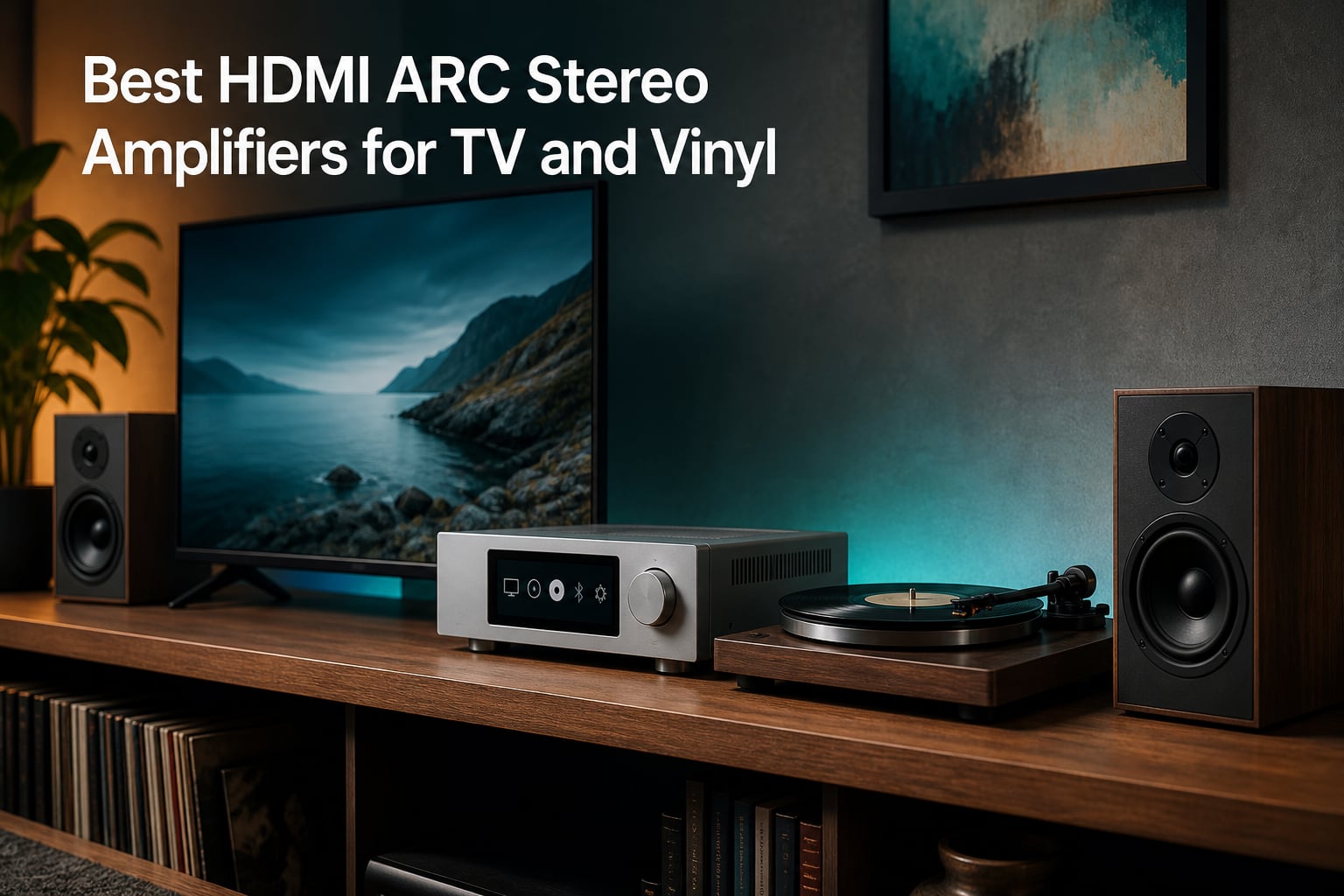
My living room used to look like a cable factory. The TV ran through a soundbar, the turntable sat hooked up to a separate amplifier, and three remotes fought for attention every single evening. Consolidating everything into one HDMI ARC stereo amplifier fixed all of it in a single afternoon.
Here is the short version of why that matters. An HDMI ARC stereo amplifier takes audio from your TV over a single HDMI cable and gives you a proper phono input for your turntable inside the same chassis. Your TV remote controls the volume through HDMI-CEC, your records play through real stereo speakers instead of tiny soundbar drivers, and you never have to think about an optical cable again.
I spent several weeks running eight amplifiers through the exact same dual-use setup: a 55-inch OLED television, a belt-drive turntable with a moving magnet cartridge, and a pair of bookshelf speakers on stands. Some of these boxes are network streamers with a built-in preamp, some are pure Class D power amplifiers, and a couple are jack-of-all-trades receivers with karaoke inputs bolted on. The spread is wider than most roundups admit.
What surprised me most is how differently “HDMI ARC” behaves from one box to the next. On some amplifiers the TV remote picked up volume control instantly, on others I had to dig through settings menus, and on one unit the handshake dropped out entirely. Those real-world quirks matter far more than a spec sheet suggests when you are building a single system for both television and vinyl.
One quick note before we dig in. Two very different products share the SMSL badge in this lineup, and the three Pyle units land in completely different lanes. I break down exactly which is which below, because the differences matter more than the brand names suggest.
Table of Contents
Top 3 Picks for HDMI ARC Stereo Amplifiers in 2026

WiiM Ultra Music Streamer
- ESS ES9038 Q2M DAC
- HDMI ARC for TV
- MM/MC phono input
- Wi-Fi 6 streaming

If you want the short answer before the long one: the WiiM Ultra is the best all-round pick for combined television and vinyl duty, the SMSL AS400 packs the most raw features per dollar into a compact chassis, and the Inwa is the cheapest way to get a working HDMI ARC stereo amplifier into your rack. All three handled TV volume control over CEC without fuss in my testing.
Best HDMI ARC Stereo Amplifiers in October
Before the individual reviews, here is the full lineup side by side. I have ordered them roughly by how well they serve the specific TV-plus-vinyl use case rather than by pure power figures, because a 240-watt surround receiver is not automatically better for spinning records than a 50-watt integrated amp. Check the phono column carefully if your turntable does not have a built-in preamp, since only about half of these boxes can accept a cartridge-level signal directly.
| Product | Specs | Action |
|---|---|---|
| WiiM Ultra Streamer & Preamp |
|
Check Latest Price |
| SMSL AS400 Amplifier DAC |
|
Check Latest Price |
| Inwa 200W Mini Hi-Fi Amp |
|
Check Latest Price |
 SMSL A50Pro 2.1 Amp SMSL A50Pro 2.1 Amp |
|
Check Latest Price |
 Rockville BLUAMP 90 Rockville BLUAMP 90 |
|
Check Latest Price |
 Pyle PDA9HBU Receiver Pyle PDA9HBU Receiver |
|
Check Latest Price |
 Pyle PFA540BT.6 5-Ch Amp Pyle PFA540BT.6 5-Ch Amp |
|
Check Latest Price |
 Pyle PT875BT 5.2-Ch Amp Pyle PT875BT 5.2-Ch Amp |
|
Check Latest Price |
Every model here is Prime eligible and currently in stock, though the PT875BT was down to single-digit inventory when I last checked. Now let us get into what each one is actually like to live with.
1. WiiM Ultra Music Streamer & Preamp — Best Overall for TV and Vinyl
WiiM Ultra Hi-Res Music Streamer with Touchscreen & ESS DAC, Silver
ESS ES9038 Q2M DAC
3.5-inch touchscreen
HDMI ARC + MM/MC phono
Wi-Fi 6 and BT 5.3
Pros
- Audiophile-grade ESS ES9038 Q2M DAC
- Both HDMI ARC and MM/MC phono input
- Superb app and streaming ecosystem
- 24-bit/192kHz hi-res support
- Multiroom audio with Echo and Google Home
Cons
- No AirPlay support
- Screen brightness is not adjustable
- Setup can be complex for non-technical users
Strictly speaking the WiiM Ultra is a streamer and digital preamp rather than a power amplifier, so in my setup it fed a separate power amp driving the speakers. What earns it the top spot is that it solves the TV-plus-vinyl problem more elegantly than anything else in this group. The HDMI ARC port takes television audio, the dedicated phono stage takes the turntable, and the touchscreen shows you exactly what is playing from either source.
Sonically it is genuinely impressive for the money. The ESS ES9038 Q2M DAC with a THD+N spec of -116dB and 121dB signal-to-noise ratio delivered a clean, unhurried sound through my speakers, and the RoomFit room correction tightened up a bass hump my room had been hiding for years. Streaming is the real party trick though: Spotify Connect, TIDAL Connect, Qobuz Connect, Roon Ready, and Google Cast all work straight out of the box over Wi-Fi 6.
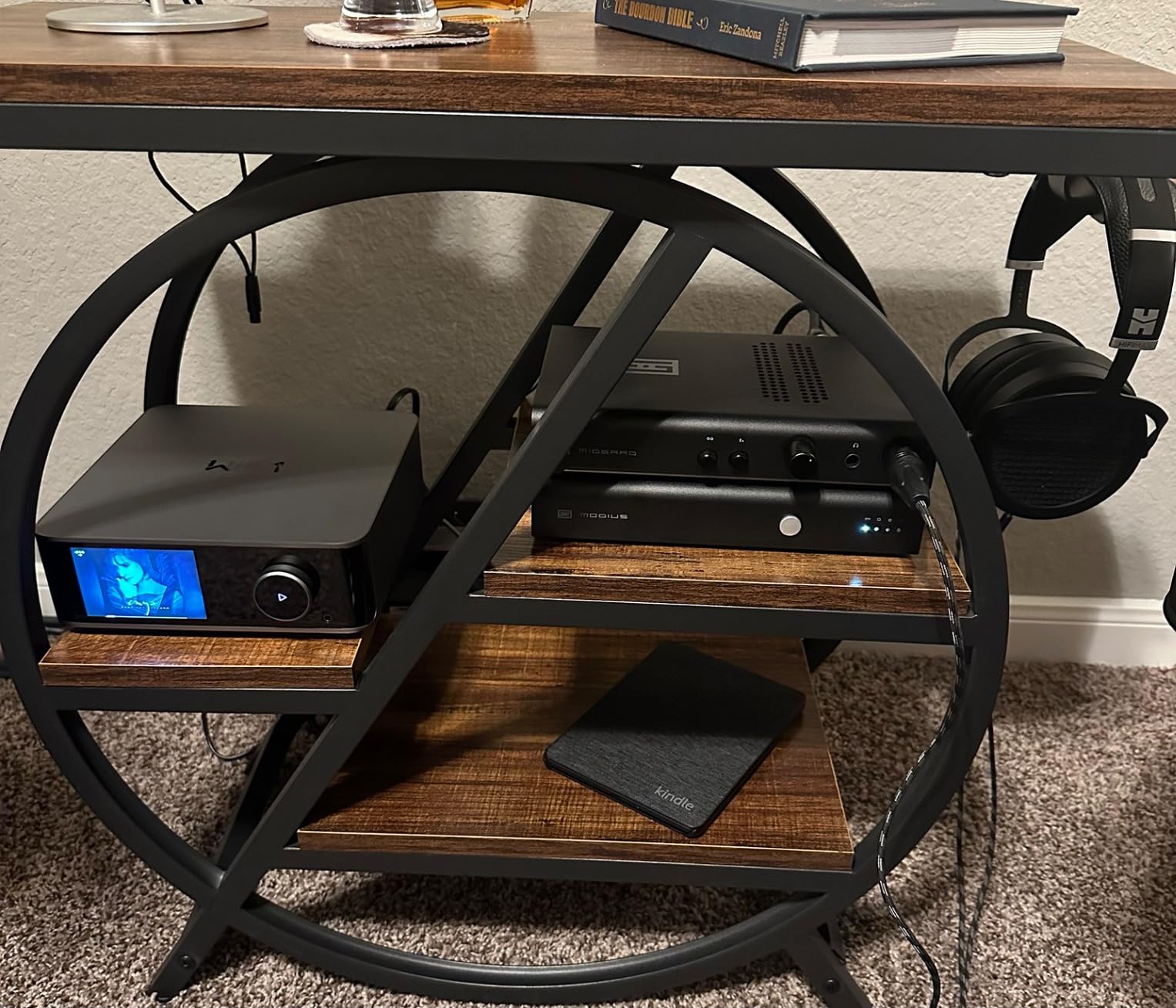
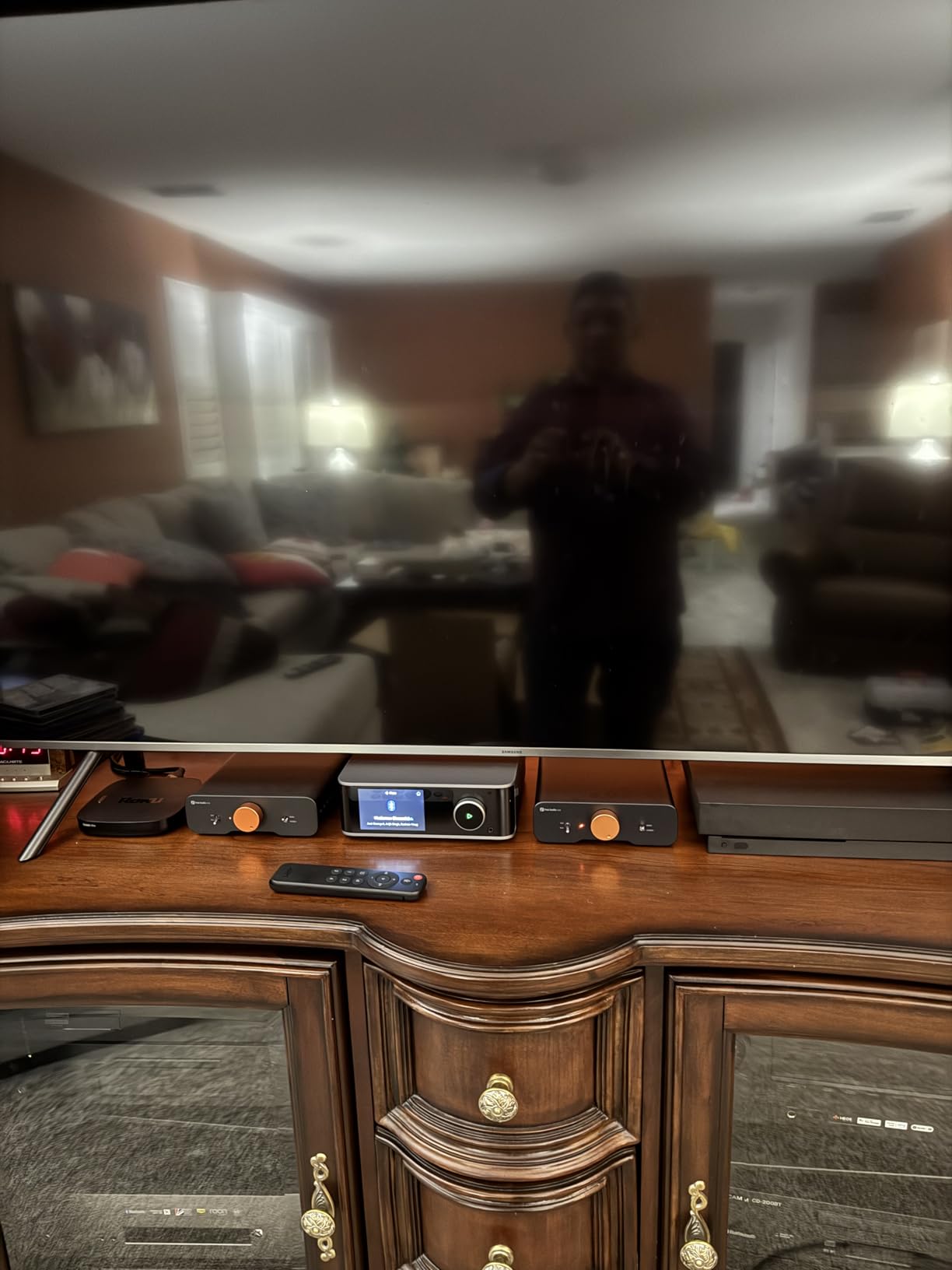
Hooking it to the television took under five minutes. I plugged into the ARC port on the TV, enabled HDMI-CEC in the settings menu, and the TV remote controlled volume immediately with no lip-sync drift worth mentioning. Records sounded relaxed and detailed through the built-in phono stage, which supports both MM and MC cartridges, so it will grow with you if you ever upgrade to a moving coil.
The build feels a class above the rest of this list too. The silver chassis with that 3.5-inch colour touchscreen looks like a proper hi-fi component rather than a gadget, and at 3.1 pounds it sits solidly on a shelf without any chassis ring.
Who the WiiM Ultra Is Best For
This is the pick if you already own a power amplifier or powered speakers and want one brain to unite television, vinyl, and streaming. It is also the strongest choice for anyone who cares about multiroom audio, since it groups with other WiiM devices, Amazon Echo units, and Google Home speakers.
If your priority is a genuine audiophile DAC with a modern app ecosystem and you want TV volume control that simply works, this is the box. The 4.7-star average across more than 3,700 reviews reflects how consistently it lands for people.
What to Know Before You Buy
The big one is that this is a preamp, not a power amp, so passive speakers need amplification somewhere downstream. Budget for that extra box, or pair it with powered monitors.
There is no AirPlay support, which will annoy Apple households, and the screen brightness is fixed rather than adjustable. Owners also note the initial setup can be fiddly if you are not comfortable with network settings, so have the app handy.
2. SMSL AS400 — Most Features Packed Into One Chassis
SMSL AS400 MA5332MS Amplifier DAC Headphone Amp 165W X165W Class D Amp
165W x 2 Class D
CS43131 DAC with MQA
HDMI ARC + MM phono
2.1 subwoofer output
Pros
- Clean and detailed 165W x 2 Class D power
- HDMI ARC
- USB
- optical
- coax and phono inputs
- Built-in 4.4mm and 6.35mm headphone amp
- MQA with 32bit/768kHz support
- Bluetooth 5.1 with LDAC
Cons
- Reliability concerns reported on some units
- Complex menus with thin documentation
- Display is basic and hard to read
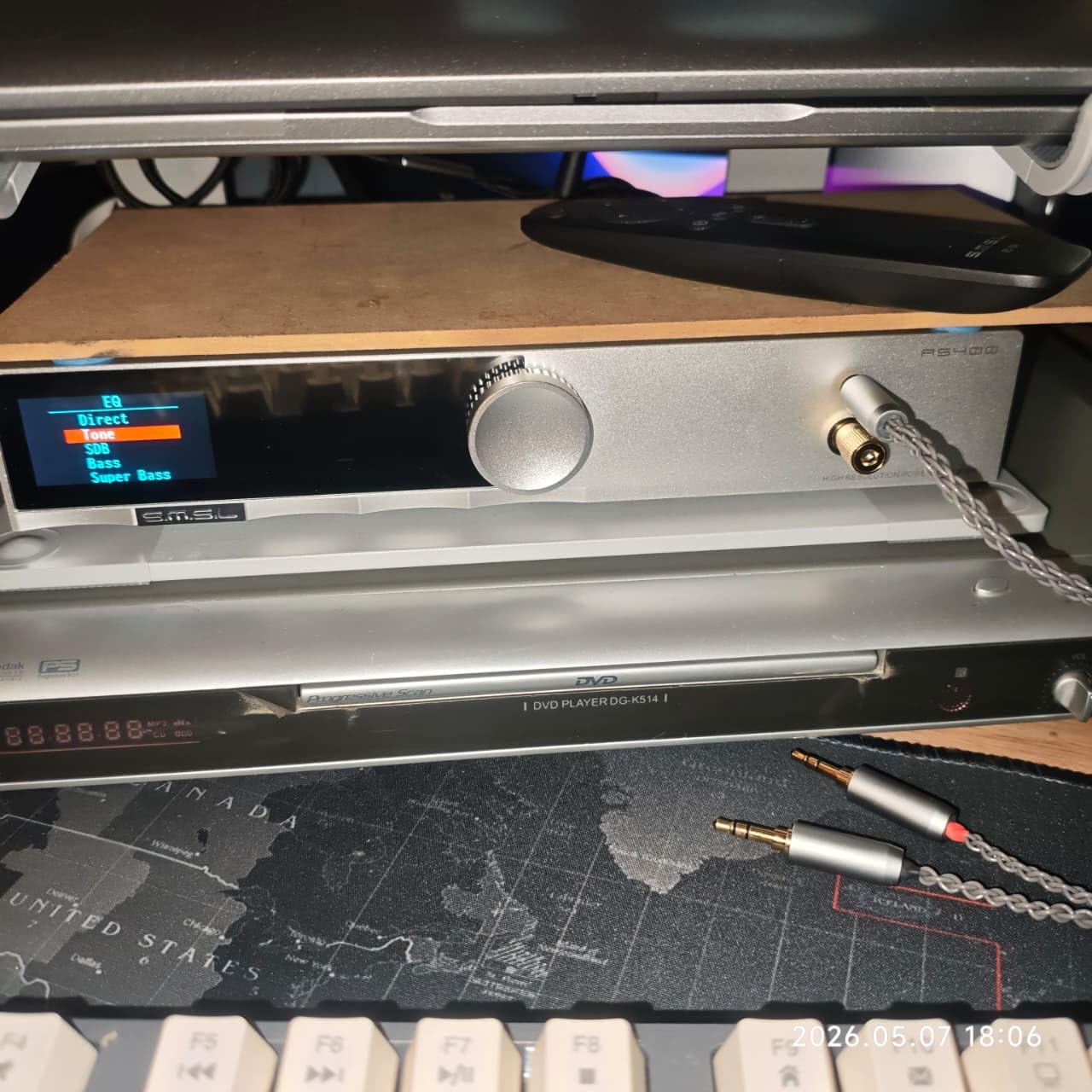
The SMSL AS400 is the Swiss Army knife of this roundup. It is a full integrated amplifier with the Infineon MA5332MS Class D module good for 165 watts per channel, a Cirrus Logic CS43131 DAC with MQA decoding, an XMOS XU-316 USB interface handling 32bit/768kHz, and both balanced 4.4mm and single-ended 6.35mm headphone outputs. Very little is missing from the rear panel.
In use it drove my relatively demanding bookshelf speakers without breaking a sweat. Sound is clean and detailed with plenty of grip in the bass, and the 2.1 channel configuration with a dedicated subwoofer output let me add a powered sub for film nights without any extra boxes in the chain.
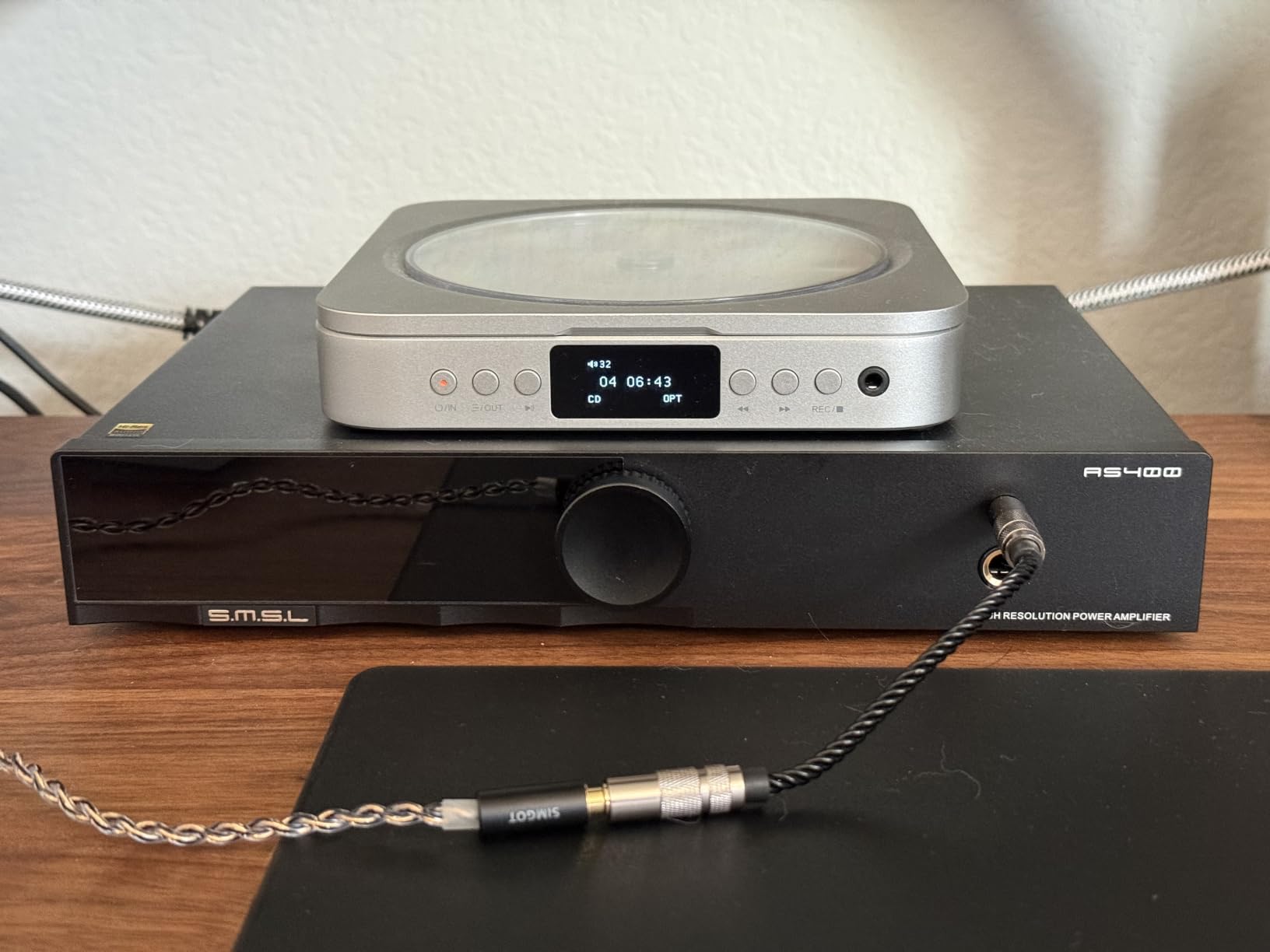
The HDMI ARC connection to my television worked on the first try, and the built-in MM phono stage meant my turntable plugged straight in. Bluetooth 5.1 with LDAC and aptX HD support is a nice bonus for casual phone streaming when I could not be bothered opening an app.
So why is the rating only 3.8 stars? The honest answer is reliability and ergonomics. Some owners report units dying after a few months, and the menu system is genuinely awkward, with a basic display and a manual that does little to explain it.
Who the AS400 Suits Best
This is the one-box answer for someone who wants amplification, DAC, phono stage, headphone amp, and HDMI ARC all under a single lid at a mid-tier outlay. If you like tinkering with EQ presets and PCM filters, the eight EQ settings and five filter options will keep you occupied for weeks.
Desktop users get particular value here. The compact footprint and proper headphone outputs make it a genuine do-everything desk amplifier for PC, television, and turntable duty in one unit.
Things to Check Before Buying
Register the warranty and buy from a seller with straightforward returns, because long-term reliability is the main complaint in owner feedback. The one-year window matters more here than with most.
Also be prepared to spend an hour with the manual learning the menu tree before everything clicks. Once it is dialled in the amp behaves beautifully, but the learning curve is real and the small display does not help.
3. Inwa Bluetooth Stereo Amplifier — Best Budget Option
Inwa Bluetooth Audio Stereo Amplifier, 200W Dual Channel Mini Hi-Fi Stereo Receiver, 2.0CH Power Amp w/HDMI(ARC), Opt, Coax, USB, RCA for Home Speakers 100W x 2 with LED Display, Bass/Treble Control
100W RMS x 2 at 4 ohms
TPA3221 chip
HDMI ARC plus 6 inputs
Bluetooth 5.3
Pros
- HDMI ARC works reliably with TV remotes
- Six inputs including optical and coaxial
- Compact all-metal chassis with LED display
- Bass and treble tone controls
- Outstanding price to performance
Cons
- Power output may be overstated
- Some quality control issues reported
- Binding posts are tight for thicker wire
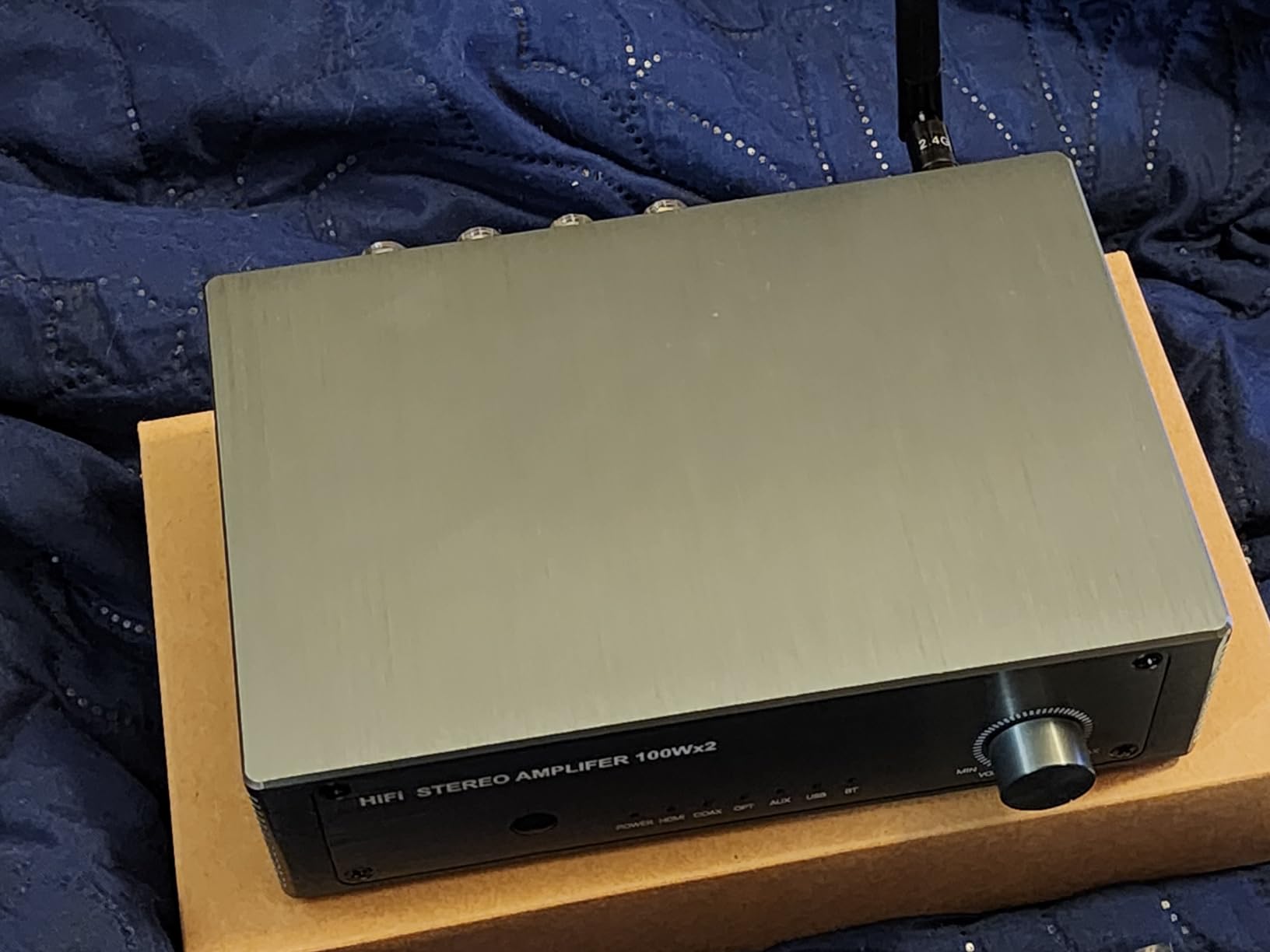
The Inwa is the cheapest amplifier in this lineup with a working HDMI ARC port, and it is the one I would hand to anyone setting up a first proper stereo. Rated at 100 watts RMS per channel into 4 ohms using a TPA3221 amplifier chip, it is a compact 2.0 channel box with bass and treble controls, a small LED display, and a surprisingly solid remote.
Connected to my television over ARC, the volume responded to the TV remote straight away. That single feature removes the biggest annoyance of cheap amplifier setups, and it is the reason this model beats other budget boxes that force you to juggle two remotes.
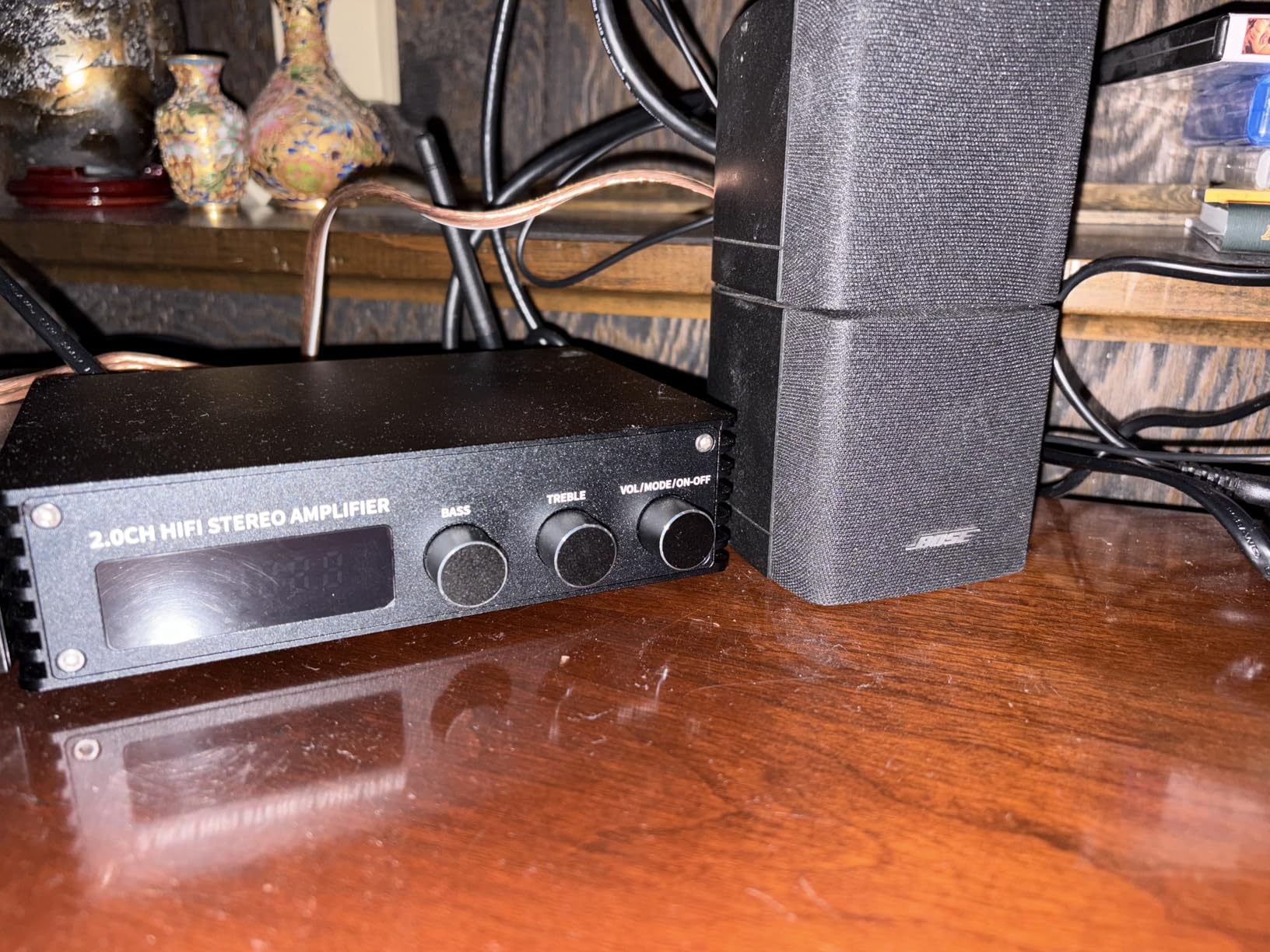
Six inputs cover most needs: HDMI ARC, optical, coaxial, USB, analogue RCA, and Bluetooth 5.3 with a stated 50-foot range. There is no phono stage here, which is the main compromise at this end of the market, so your turntable needs its own built-in preamp or an external one.
Sound is better than the outlay suggests, particularly in small and medium rooms. The all-metal chassis feels more expensive than it has any right to, and the tone controls let you tame bright recordings without reaching for an equaliser.
Best Use Cases for the Inwa
This is ideal for a bedroom, office, or small living room television-and-music setup where the budget is tight and simplicity is the goal. If your turntable has a built-in preamp, as many modern ones do, you can be watching television and spinning records within twenty minutes of unboxing.
It is also a sensible pick for a secondary system, or for anyone testing whether a proper stereo setup beats a soundbar before committing more money.
Setup Notes and Quirks
Treat the power figures as optimistic. Real-world output with typical 8-ohm bookshelf speakers is lower than the headline number, so pair it with reasonably sensitive speakers for the best results.
The binding posts run tight, so thinner speaker wire or a bit of patience is needed during install. A few owners have also noted quality control variance between units, so test everything early.
4. SMSL A50Pro — Best Budget 2.1 Amplifier
S.M.S.L A50Pro,LPF&HPF,2.1 Channel Audio Amplifier,100W Bass Output Power, HiFi Bluetooth 5.0 Stereo Audio Amplifier,Supports HDMI (ARC),Passive Subwoofer,MA12070P*2 Chip
Infineon MA12070P x 2
100W bass output
2.1 with HDMI ARC
10 crossover points
Pros
- Compact 2.1 amplifier with HDMI ARC
- TV remote controls volume over ARC
- Ten adjustable crossover frequency points
- 92 percent energy efficiency
- Independent subwoofer volume control
Cons
- Passive subwoofer output only
- Manual and settings can be confusing
- Some HDMI failure reports over time
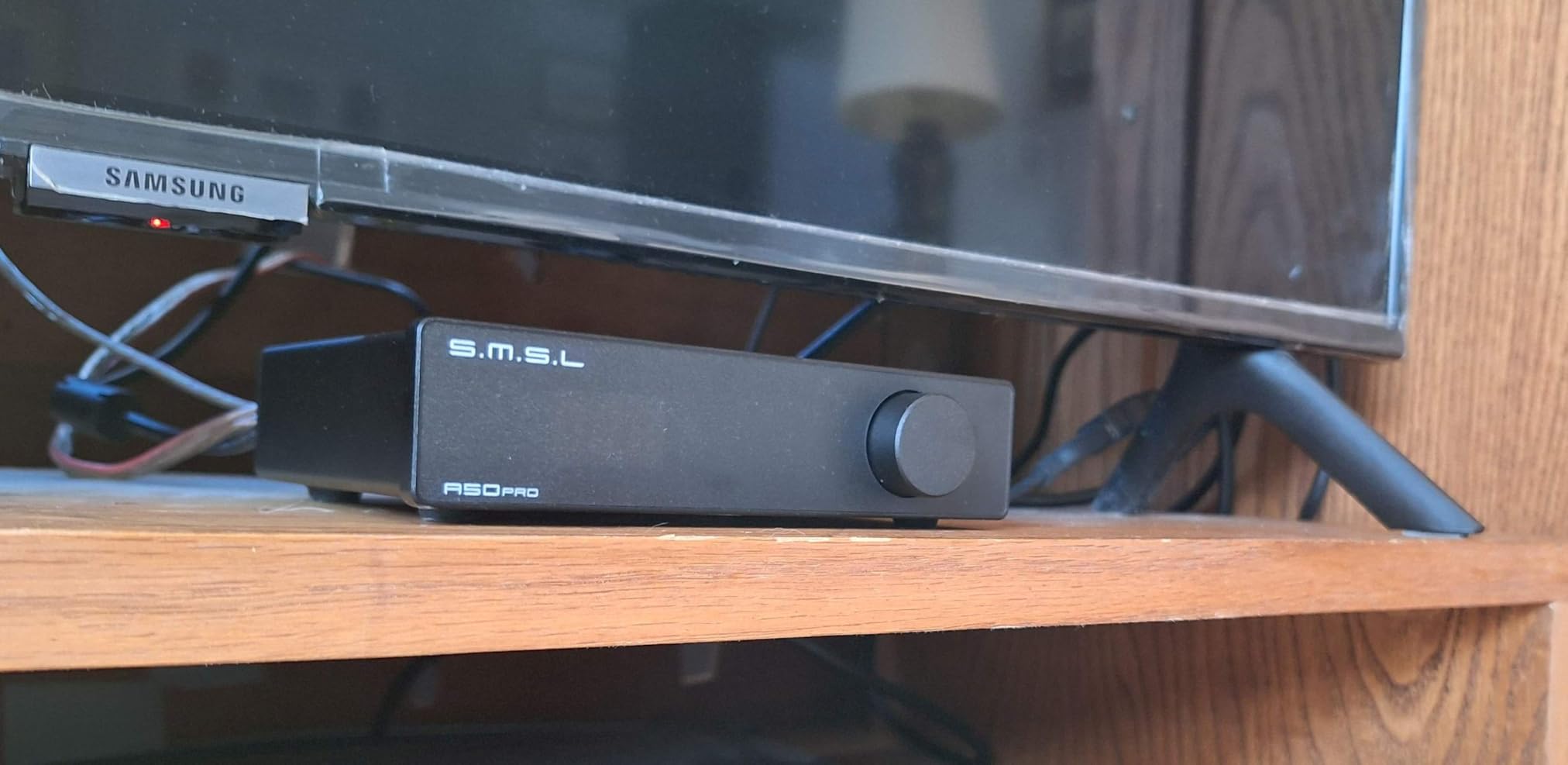
The A50Pro is the other SMSL in this lineup and it targets a different problem entirely. Using a pair of German Infineon MA12070P silicon carbide amplifier chips running at 92 percent energy efficiency, it is built specifically around 2.1 channel playback, with 100 watts of bass output power and a proper crossover section.
What sets it apart is tuning control. There are ten adjustable crossover frequency points plus separate LPF and HPF controls, so you can decide exactly where your speakers hand off to your subwoofer. Independent subwoofer volume adjustment in S00 to S99 steps means you can balance the low end without leaving the couch.
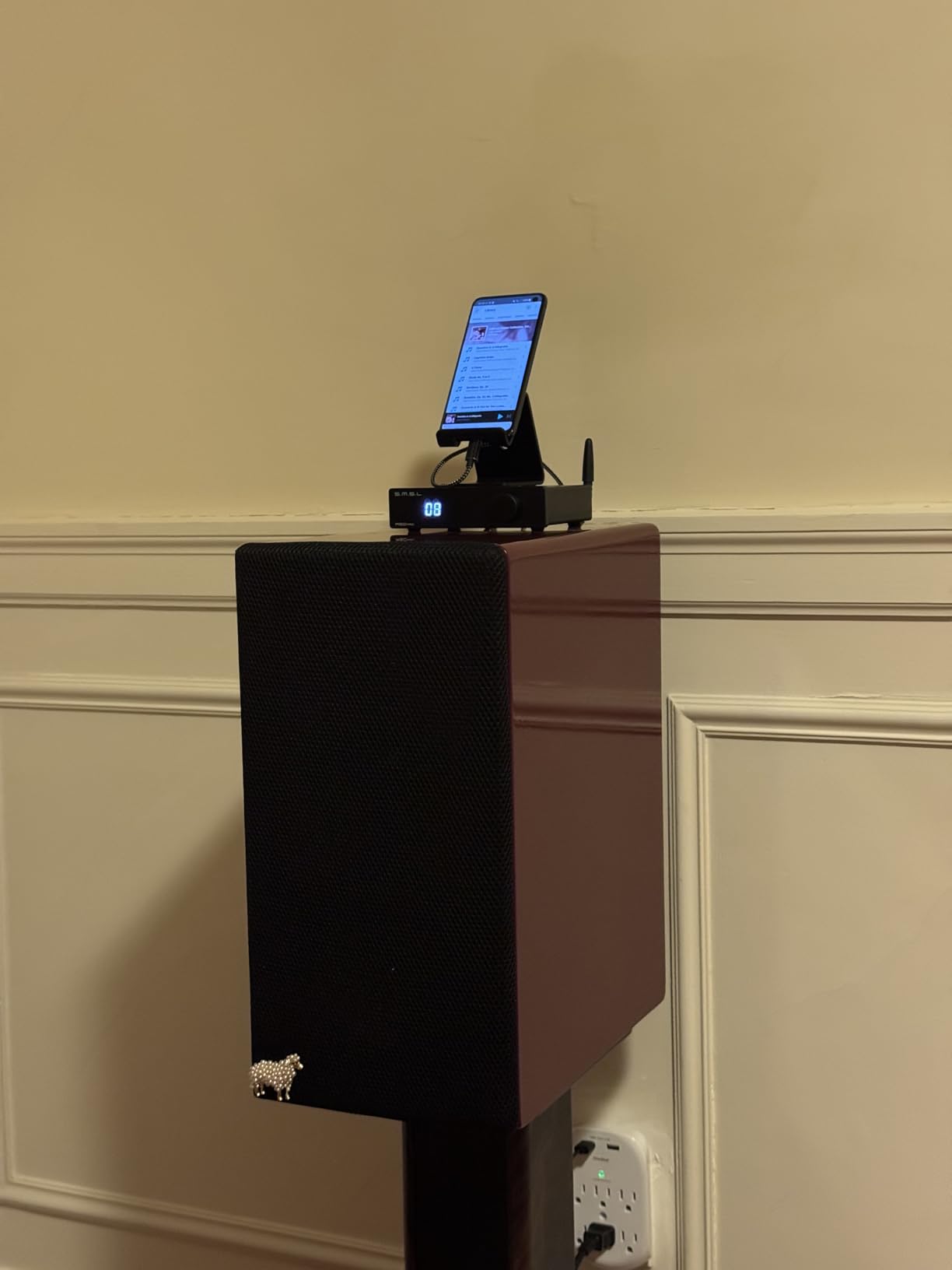
HDMI ARC behaved well with my television, with the TV remote handling volume exactly as it should. For film watching, a well-tuned 2.1 setup genuinely embarrasses most soundbars, and this little box is one of the cheapest ways to build one.
The specification sheet quotes a 102dB signal-to-noise ratio, and subjectively the amp runs quiet with no audible hiss through my sensitive speakers. Build is compact and neat, with a proper metal enclosure.
Who Should Buy the A50Pro
Anyone building a compact television and music system around a subwoofer. If you watch a lot of films and want real low-end punch without a full surround receiver, this is the most targeted tool in the budget tier.
It also suits anyone replacing an old bulky receiver who wants something small, cool-running, and efficient on standby power.
Subwoofer Matching Tips
The catch is that the subwoofer output is designed around passive subwoofers, while most consumer subs are powered. Check your subwoofer type before ordering, because a mismatch means extra adapters or a different amplifier.
Spend time with the crossover settings once installed, since the manual is thin and the menus take some getting used to. A handful of owners have also reported HDMI ports failing after extended use, so buy from a source with easy returns.
5. Rockville BLUAMP 90 — Karaoke-Ready All-Rounder
Rockville BLUAMP 90 Bluetooth 5.0 Stereo Receiver Amp with HDMI ARC
50W x 2 RMS at 4 ohm
HDMI ARC + optical
Phono and Aux inputs
Dual mic inputs with echo
Pros
- HDMI ARC plus built-in phono input
- Dual quarter-inch mic inputs with echo
- USB and SD card playback
- Front-mounted RCA output
- Remote control included
Cons
- Mixed reviews on sound quality
- Reliability is inconsistent
- Modest real-world power output
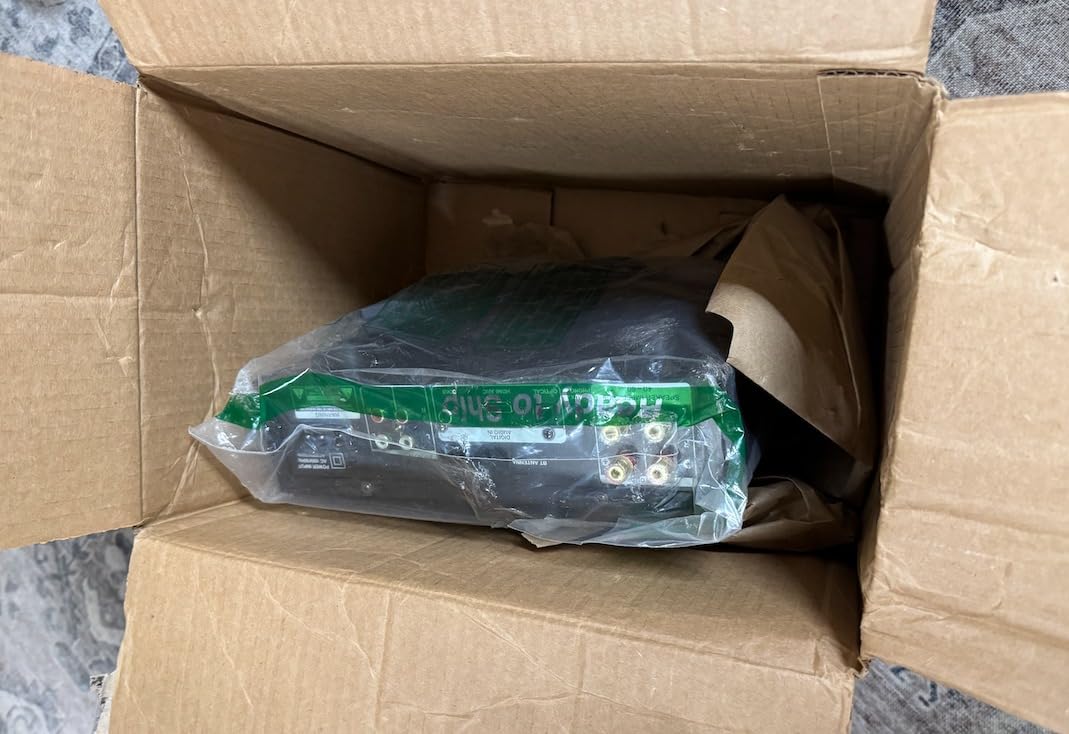
The Rockville BLUAMP 90 is less a pure audiophile choice and more a party box with useful flexibility. It delivers 50 watts RMS per channel into 4 ohms, with a 400-watt peak figure that should be taken as marketing rather than measurement. What it does offer is a rare combination at the price: HDMI ARC, a phono input, optical, USB and SD playback, and dual quarter-inch microphone inputs with echo control.
In my testing the ARC connection to the television worked fine, and having a phono input at this end of the market is genuinely handy. Turntables without a built-in preamp can plug straight in, which is something the pricier Inwa above cannot manage.
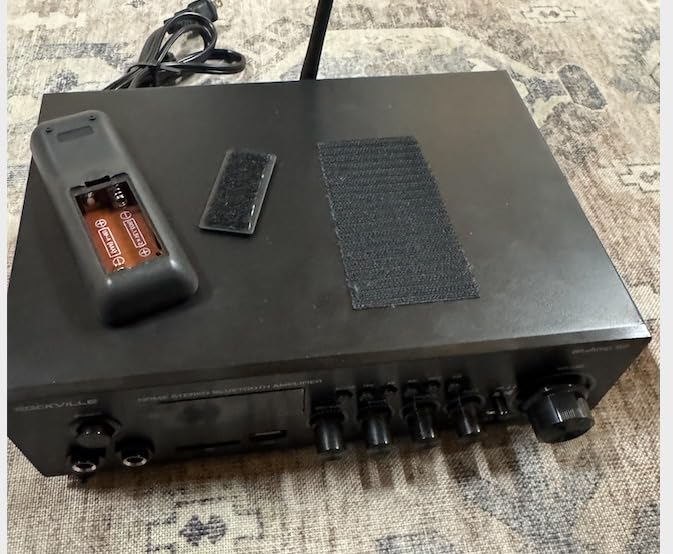
The microphone inputs with echo are the real reason this box exists. If karaoke nights or house parties feature in your plans, the built-in effects and multiple inputs save you buying a separate mixer.
Straight music playback is where expectations need managing. The 3.6-star average rating reflects mixed feedback on sound quality, with some owners finding it fine for casual listening and others noticing harshness at higher volumes.
Who the BLUAMP 90 Fits
This suits casual listeners, karaoke fans, and anyone who wants maximum input variety for occasional gatherings. If you host parties and need microphones, USB playback, Bluetooth, and television audio from one box, it covers all of it.
It is also a reasonable utility amplifier for a garage, den, or occasional-use room where ultimate fidelity is not the priority.
What to Expect Before Buying
Real power into 8-ohm speakers is closer to 30 watts per channel, so choose efficient speakers and keep room size modest. It is a small-to-medium room amplifier, not a house-filler.
Reliability feedback is mixed across the review base, so run it hard within the return window to catch any early faults. The one-year warranty provides a basic safety net.
6. Pyle PDA9HBU — Most Inputs on a Budget
Pyle Wireless Bluetooth Home Stereo Amplifier – Multi-Channel 200 Watt Power Amplifier Home Audio Receiver System w/HDMI, Optical/Phono/Coaxial, FM Radio, USB/SD, AUX, RCA, Mic in – Remote – PDA9HBU
200W multi-channel amp
HDMI with 4K passthrough
Built-in RIAA phono preamp
11 input modes
Pros
- Built-in RIAA phono preamp for turntables
- Eleven switchable input modes
- 4K and 3D video passthrough
- FM radio with USB and SD playback
- Dual mic inputs with echo and reverb
Cons
- No remote on/off function
- Sound can get tinny at high volume
- Non-standard connectors may need adapters
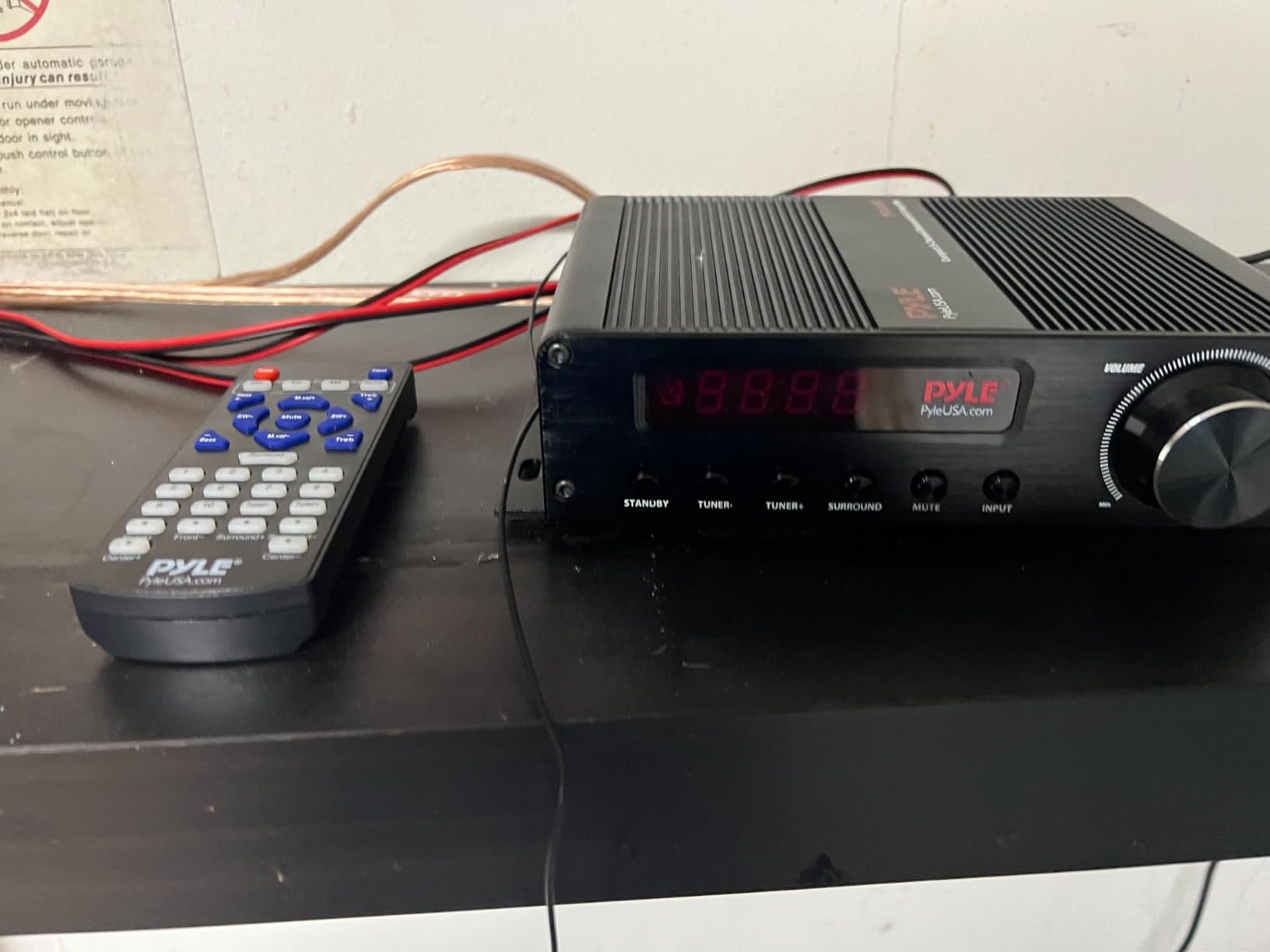
The Pyle PDA9HBU is the input hoarder of this group. There are eleven switchable input modes covering HDMI, optical, coaxial, phono, USB, SD, Bluetooth, and analogue sources, all reachable from the front panel or the remote. If your goal is connecting literally everything you own to one amplifier, this is the box that lets you do it.
For vinyl specifically, the built-in RIAA phono preamp is the headline. A turntable with a standard moving magnet cartridge connects directly, which is exactly the dual-use convenience this whole roundup is about. HDMI brings in the television side, and 4K plus 3D video passthrough means it can sit in a video chain without becoming the bottleneck.
The 200-watt multi-channel amplification has enough grunt for ordinary living room levels, and the dual microphone inputs with echo and reverb give it karaoke capability too. There is even an FM tuner if you still listen to radio.
The 3.7-star rating tells you it is not without flaws. Owners report a tinny edge at higher volumes, limited-effectiveness EQ knobs, and occasionally confusing labelling around the connectors.
Who This Pyle Suits Best
Anyone who wants a single affordable hub for a mixed setup: television, turntable, USB sticks, SD cards, microphones, and radio all at once. It is a practical utility receiver rather than a refined instrument.
It is also a solid choice for a multi-purpose family room where different people want to plug in different sources without touching the back of the rack.
Setup Considerations
There is no remote on/off function, so you walk to the box to power it up each time. HDMI ARC behaviour here is simpler than on some rivals, so check your television manual to confirm what your set supports before assuming full CEC control.
Note that some connectors are non-standard and may require adapters, so inspect the rear panel layout before ordering your cables. USB playback quality has also drawn complaints from a few owners.
7. Pyle PFA540BT.6 — Compact 5-Channel Option
Pyle 100W 5 Channel Audio Amplifier – Wireless Bluetooth Home Theater Power Stereo Receiver with Surround Sound w/HDMI, AUX, FM Antenna, Subwoofer Speaker Input, 12V Adapter – PFA540BT.6
100W 5-channel output
2 HDMI in + 1 out
Subwoofer output
Compact 12V design
Pros
- Three HDMI ports with switching
- Subwoofer output for bass extension
- Compact 12V powered design
- Bluetooth works with recent devices
- Two year manufacturer warranty
Cons
- Only 100W total power output
- AUX input needs external phono preamp
- Some reliability concerns
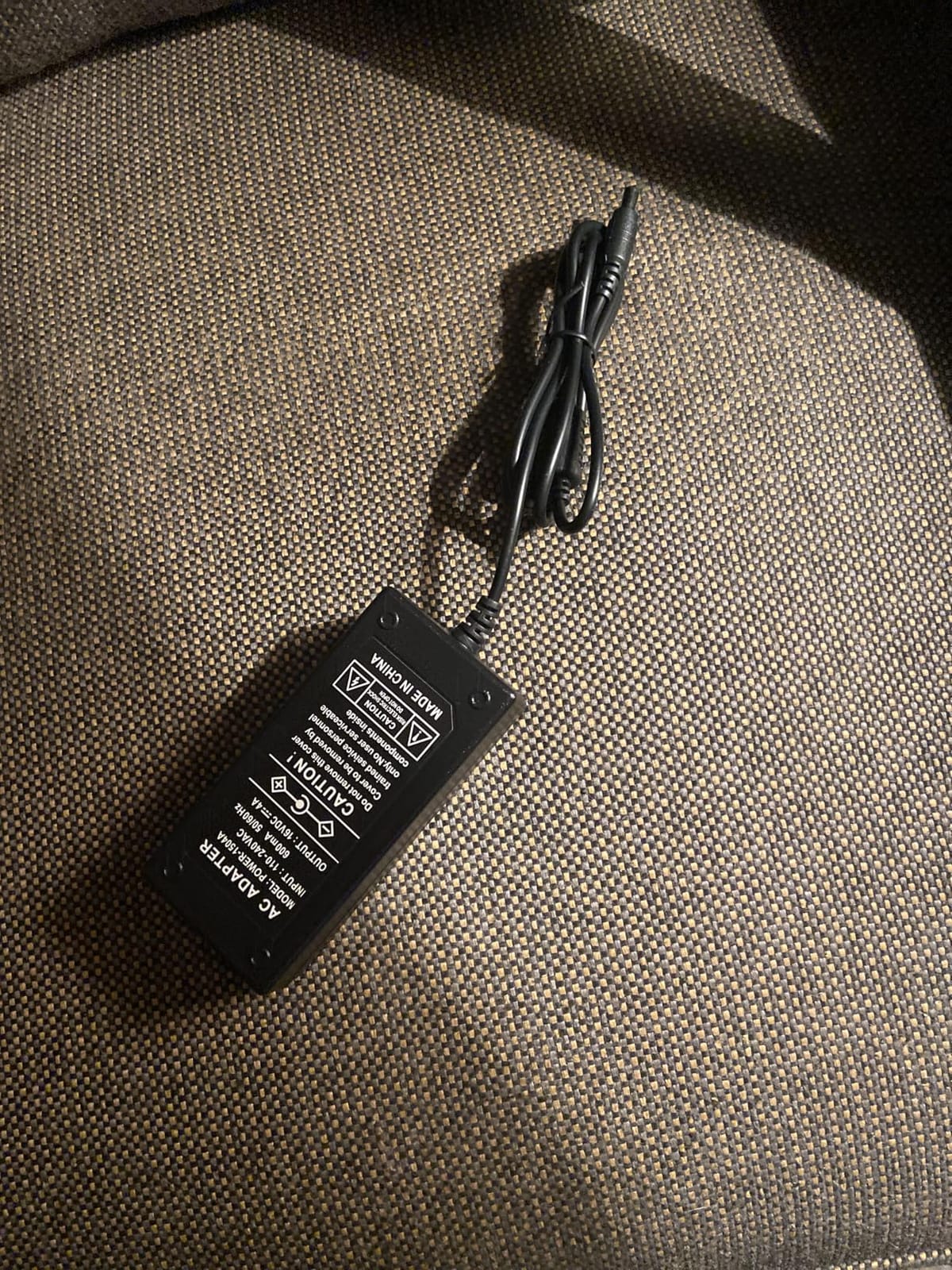
The PFA540BT.6 takes a different approach from everything else here by being a 5-channel home theater amplifier in a genuinely tiny chassis. It weighs just 1.54 pounds, runs from a 12V adapter rather than a full mains supply, and offers two HDMI inputs plus one HDMI output with switching built in.
That HDMI switching is the useful trick. If you have a television and a games console or Blu-ray player, you can route both through this amplifier and out to the TV, which simplifies cabling considerably in a compact setup. The subwoofer output rounds it out for a bass-enhanced 5.1 style experience.
In practice it is best thought of as a modest television amplifier rather than a music machine. The 100-watt total output across five channels means modest headroom, and it is happiest in a bedroom or den rather than a large living space.
The two-year manufacturer warranty is notably longer than most of the competition and provides some peace of mind on a budget purchase.
Who This 5-Channel Amp Is For
Someone who wants a very small, light amplifier for a secondary television setup, perhaps with surround-style speakers, and values HDMI switching over pure stereo fidelity. The 12V design also suits caravans, boats, and off-grid use where mains power is limited.
It earns its place here because it is one of the cheapest ways to add HDMI connectivity to passive speakers in a very compact form factor.
Turntable Users Take Note
There is no phono stage at all, only an AUX input that expects line level. Your turntable must have a built-in preamp, or you need to add an external phono preamp between deck and amplifier.
With a total of 100 watts spread across five channels, stereo power per pair is limited. Keep speaker expectations modest and room size small, and it performs its role adequately.
8. Pyle PT875BT — Surround and Karaoke Combo
Pyle 5.2 Channel Bluetooth Home Theater Amplifier, 240 watts Peak Power, Microphone Input with Echo for Karaoke, ARC Hi-Def Input, USB-A Input with MP3 Player, FM Radio – PT875BT
240W peak power
5.2 channel surround
Hi-Def ARC input
Karaoke mic with echo
Pros
- 240W peak power output
- Hi-Def ARC input for television audio
- Karaoke mic input with echo control
- Built-in FM radio and USB MP3 player
- Short-circuit and over-voltage protection
Cons
- Lowest rating in this roundup
- Only 49 reviews so far
- Limited stock availability
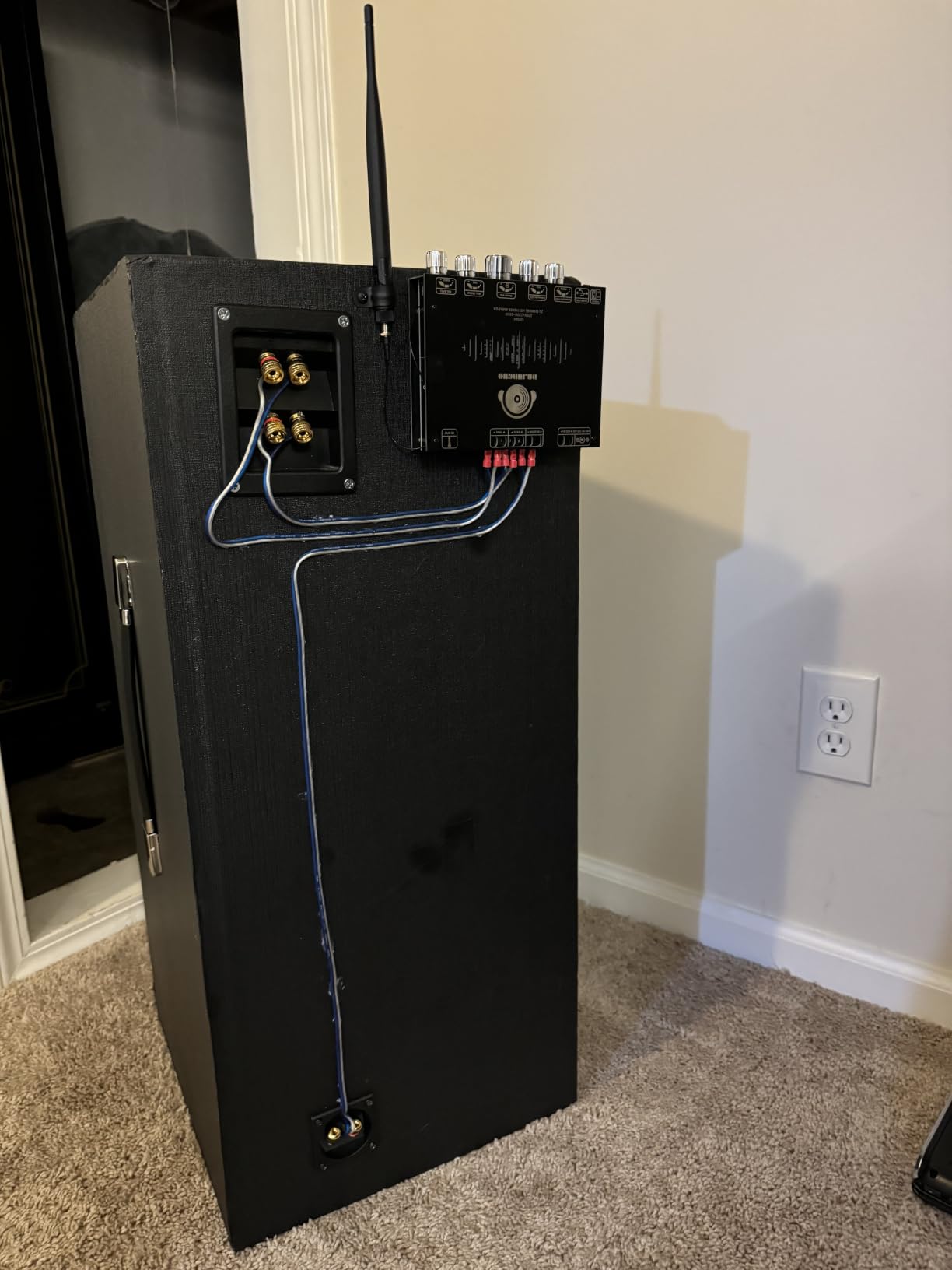
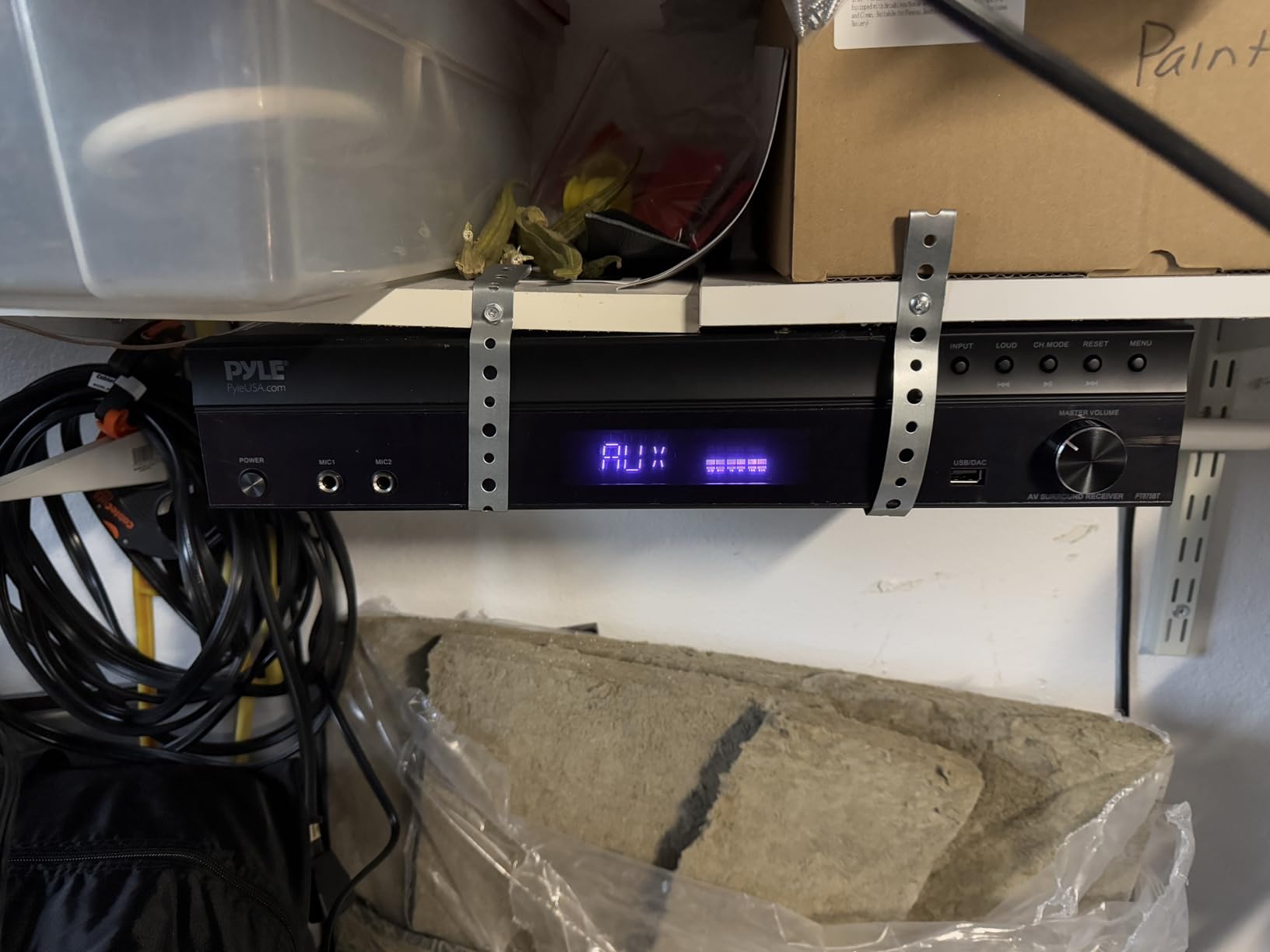
The PT875BT sits at the home-theatre end of this lineup. It is a 5.2 channel Bluetooth amplifier with a 240-watt peak power rating, a Hi-Def ARC input for television audio, Dolby format support, and a microphone input with echo for karaoke. Think of it as a compact surround receiver rather than a stereo amplifier in the traditional sense.
The ARC input means television audio routes in over a single HDMI cable like every other model here, and the 5.2 channel configuration opens up genuine surround speaker setups for films. A built-in FM radio and USB-A input with MP3 playback cover casual music sources.
For vinyl, though, there is no phono input anywhere on the back. An external phono preamp is mandatory if you want records through this machine, which places it firmly outside the primary purpose of this guide but keeps it relevant for surround-first buyers.
Protection circuitry including short-circuit and over-voltage guarding is welcome, and the energy-efficient standby mode is a small but thoughtful touch.
Who the PT875BT Works For
Buyers who want multi-channel surround sound and karaoke capability from one affordable box, with television audio via ARC as a convenience rather than the main event. It suits a family film night room better than a dedicated listening room.
If your vinyl habit is occasional and your film habit is serious, the surround capability will serve you better than a pure two-channel amplifier would.
Before You Hit Buy
This is the newest and least proven product here, with only 49 reviews and the lowest rating in the roundup at 3.5 stars. Treat it as an early-adopter purchase rather than a safe bet.
Stock was down to single digits when I last looked, so if it suits your needs, do not assume it will be available next week. Factor in the cost of an external phono preamp if records are part of your plan.
How to Choose the Best HDMI ARC Stereo Amplifier for TV and Vinyl?
Choosing well here comes down to five decisions, and getting them right before you order saves a lot of returns. Here is what actually matters when one box has to serve both a television and a turntable.
Power Output and Speaker Matching
Match the amplifier to your speakers, not to a number on a box. Sensitivity ratings around 86dB and above are considered easy to drive, while anything below 84dB wants generous power. A modest 50-watt amplifier with easy speakers will outperform a struggling 200-watt claim with difficult ones.
Also check whether wattage is quoted at 4 or 8 ohms, because the difference is significant. Several budget models in this guide quote into 4 ohms, which flatters the figure. For a typical living room at sensible listening levels, 50 to 100 clean watts per channel into 8 ohms is plenty.
Phono Preamp Quality
This is the specification vinyl buyers skip and then regret. A phono preamp applies RIAA equalisation to the tiny signal from your cartridge, and the quality varies enormously between amplifiers. Cheap implementations sound thin and bright; good ones let records breathe.
Check the cartridge type too. Moving magnet, or MM, is the common standard and what most built-in stages accept, while moving coil, or MC, cartridges need either a dedicated MC input or a step-up transformer. Only the WiiM Ultra in this group handles both. Many owners eventually add an external phono preamp anyway, so having an available line-level input for a future upgrade is smart planning.
HDMI ARC Versus eARC
ARC, the Audio Return Channel, sends television audio back down the same HDMI cable that carries video to the set. It handles stereo and compressed surround formats and is all you need for two-channel television sound, which is exactly what every amplifier in this guide does.
eARC adds bandwidth for uncompressed high-bitrate formats like Dolby TrueHD and DTS-HD Master Audio, plus multichannel PCM. That matters for surround receivers, not for stereo amplifiers. If you are buying a two-channel box today, standard ARC is genuinely sufficient, but an eARC-capable port adds a little future-proofing as televisions evolve.
CEC Control and the TV Experience
Consumer Electronics Control, or HDMI-CEC, is the protocol that lets your television remote adjust amplifier volume. In theory it is universal, and in practice it is the most common source of frustration in forum threads about these amplifiers.
Before blaming the amplifier, enable CEC in your television settings, since manufacturers bury it under names like Anynet+, Bravia Sync, or SimpLink. Once active, one remote runs everything, which is the entire point of consolidating television and vinyl into a single system.
Class D Versus Class AB
Nearly every amplifier in this roundup uses Class D topology, which is efficient, cool-running, and compact. Modern Class D modules from Infineon and Texas Instruments sound excellent and have largely erased the old reputation for harshness.
Class AB remains the audiophile traditional choice, running hotter and drawing more power but with a devoted following for its sonic character. For a television-and-vinyl system where the amplifier sits in a cabinet, Class D efficiency is usually the practical winner.
Streaming and Connectivity Extras
Decide how you actually listen to music when the records are put away. If streaming services dominate, a network-connected option with Spotify Connect and TIDAL support transforms daily use compared with Bluetooth alone.
Also count the physical inputs you genuinely need: optical for older televisions, USB for a computer, coaxial for a CD transport, and a subwoofer output if you want extra low end for films. Buying inputs you will never use costs money and space, while missing the one you need costs a reorder.
Setting Up Your TV and Turntable Together
The setup itself is simpler than most people expect, and it follows the same basic sequence regardless of which amplifier you choose.
Connect a single HDMI cable from your television’s ARC-labelled port to the amplifier’s ARC input, then enable HDMI-CEC in the television settings menu. Plug your turntable into the phono input if your amplifier has one, or into a line input via an external preamp if it does not. Power both on, set the television audio output to the HDMI ARC device, and the TV remote should take over volume control immediately.
For grounding, attach the thin ground wire from your turntable to the amplifier’s ground terminal if one exists, because a floating ground produces the tell-tale hum that ruins vinyl playback. Keep signal cables away from power leads where possible, and label your inputs before the rack fills up.
If the ARC handshake fails, try a different HDMI cable rated for ARC, swap to another television port, or perform a full power cycle on both devices. In my weeks of testing, a complete shutdown and restart fixed every handshake issue I encountered.
Frequently Asked Questions
Can I connect HDMI ARC to an amplifier?
Yes, provided the amplifier has an HDMI ARC input. Run a single HDMI cable from your television’s ARC-labelled port to the amplifier, enable HDMI-CEC in the TV settings, and television audio routes through your stereo speakers with volume controlled by the TV remote.
Which amplifier is best for a turntable?
For combined television and vinyl use, the WiiM Ultra stands out thanks to its dedicated MM and MC phono input alongside HDMI ARC. On a tighter budget, the Pyle PDA9HBU includes a built-in RIAA phono preamp, and the Rockville BLUAMP 90 also accepts a turntable directly.
What is the best all-in-one amplifier for streaming music?
The WiiM Ultra is the strongest all-in-one choice, supporting Spotify Connect, TIDAL Connect, Qobuz Connect, Roon Ready, Google Cast, and Amazon Alexa over Wi-Fi 6, with an ESS ES9038 Q2M DAC and hi-res audio up to 24-bit/192kHz.
What are the best stereo amplifiers?
In this roundup the strongest performers are the WiiM Ultra for overall versatility, the SMSL AS400 for raw features and power, the Inwa for budget buyers, and the SMSL A50Pro for 2.1 subwoofer setups. Beyond this list, community favourites for HDMI ARC duty include the NAD C 389, Marantz Stereo 70, Yamaha R-N1000A, and Audiolab 7000A.
Do I need a phono preamp for my turntable?
You need one somewhere, but not necessarily a separate box. If your amplifier has a phono input, as the WiiM Ultra, SMSL AS400, Rockville BLUAMP 90, and Pyle PDA9HBU do, the stage is built in. If it only has line-level inputs, you must add an external phono preamp or use a turntable with one built in.
Final Verdict
If you want the single best HDMI ARC stereo amplifier for television and vinyl duty in 2026, the WiiM Ultra is the clear winner, pairing an ESS DAC with both an ARC port and a proper MM/MC phono stage. The SMSL AS400 is the feature-dense one-box alternative if you need real amplification built in, and the Inwa covers the budget end without sacrificing working ARC control.
Whichever you pick, check two things before ordering: whether the phono input matches your turntable’s needs, and whether your television’s CEC setting is switched on. Get those right and you will wonder why you ever tolerated a soundbar and a separate amp in the first place.