
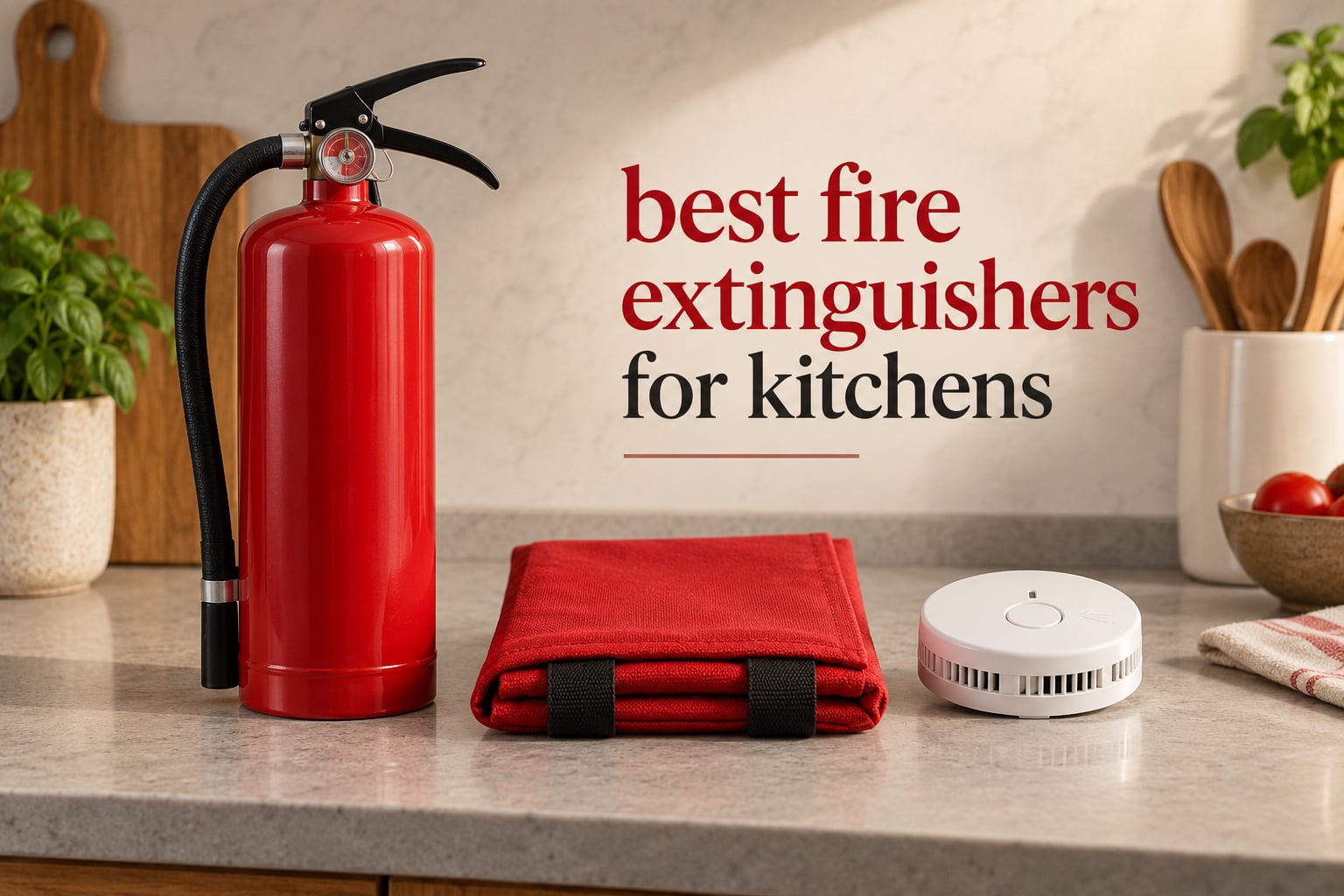
For a home kitchen, the best fire extinguisher is a UL Listed, ANSI/NFPA 10 rated canister you can reach in under ten seconds without walking through smoke. Most households should carry a multipurpose ABC dry chemical unit as the baseline, plus a dedicated kitchen-rated unit if you fry often or run a gas range.
Shopping results for the best fire extinguishers for kitchens are unusually noisy. Vendor pages sell one product and call it the best, editorial pages recommend a single canister, and carousels mix home units with 13-pound commercial cans. Almost nothing explains what the label ratings mean, and nothing admits a downside.
Cooking caused 44% of reported US fires between 2017 and 2021, according to the National Fire Protection Association. We went through ten extinguishers, checked every rating, agent, weight and discharge figure against manufacturer data, and sorted out which ones belong in a kitchen.
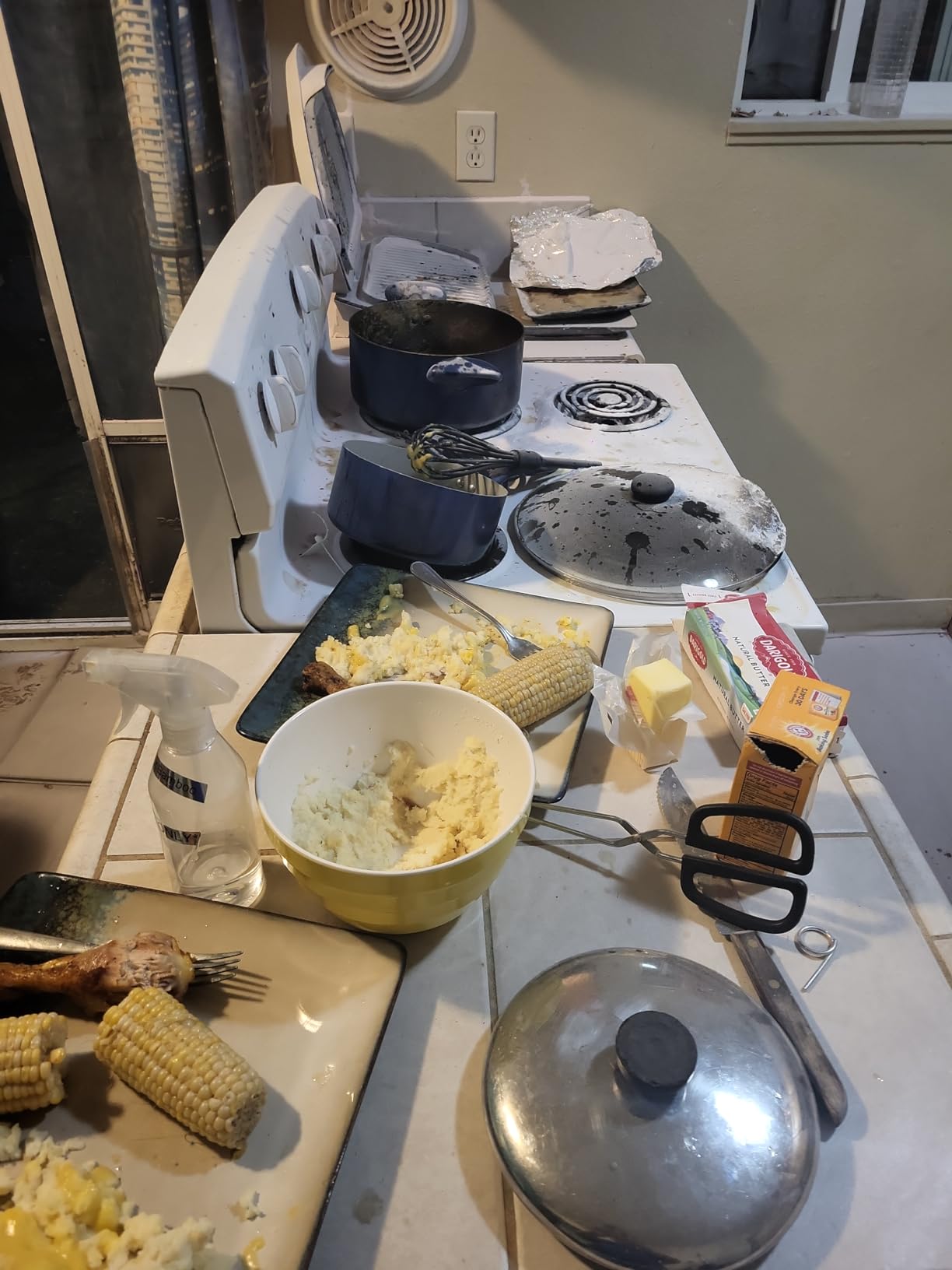
One warning first. Never put water on a grease fire. Cooking oil can carry burning oil out of the pan into the burner or across the stovetop in seconds. Lid, baking soda, extinguisher, blanket, then out the door.
Table of Contents
Top 3 Best Fire Extinguisher for Kitchens in 2026

First Alert Standard Home…
- UL rated multipurpose dry chemical
- Rechargeable after use
- Color-coded pressure gauge

Kidde Basic 110 1-A:10-B:C
- UL Listed multipurpose rating
- 2.5 lbs of agent
- Lightweight aluminum body

Kidde Kitchen 711A
- Sodium bicarbonate agent
- Flared anti-splash nozzle
- White body for cabinetry
Quick Overview: Best Fire Extinguishers for Kitchens in 2026
All ten canisters below are ordered by recommendation, from the strongest all-round home choice down to units that make sense only as secondary coverage.
| Product | Specs | Action |
|---|---|---|
| First Alert Standard Home 1-A:10-B:C |
|
Check Latest Price |
| Kidde Basic 110 1-A:10-B:C |
|
Check Latest Price |
 First Alert HOME2PRO 2-A:10-B:C First Alert HOME2PRO 2-A:10-B:C |
|
Check Latest Price |
 Kidde Pro 340 3A:40-B:C Kidde Pro 340 3A:40-B:C |
|
Check Latest Price |
 Amerex B402 5 lb ABC Amerex B402 5 lb ABC |
|
Check Latest Price |
| Kidde Kitchen 711A |
|
Check Latest Price |
 AmzBoom 2-Pack Water-Based AmzBoom 2-Pack Water-Based |
|
Check Latest Price |
 Ougist 4-Pack Foam Ougist 4-Pack Foam |
|
Check Latest Price |
 Ougist FF1KG Quick-Release Ougist FF1KG Quick-Release |
|
Check Latest Price |
 Ougist ABC 4-Pack 1.32 lb Ougist ABC 4-Pack 1.32 lb |
|
Check Latest Price |
1. First Alert Standard Home Fire Extinguisher: Best Overall for Kitchens
First Alert Fire Extinguisher, Standard Home Use
1-A:10-B:C dry chemical
4.5 pounds total
Stainless steel cylinder
Pros
- Light enough for one-handed use in a panic
- Readable color-coded pressure gauge
- Rechargeable by a certified professional after use
- Metal pull pin with safety seal
- Mounting hardware included
Cons
- Basic plastic mounting bracket
- Plastic handle and trigger on an otherwise metal body
- 1-A:10-B:C is the smallest household rating
This is the canister most people should buy. At 4.5 pounds it is light enough for a panicking adult to lift one-handed, and the stainless steel shell and metal valve are the parts that usually fail first on cheaper units. The rechargeable design matters most: a certified professional can refill it after a discharge, and it carries a 10-year limited manufacturer warranty.
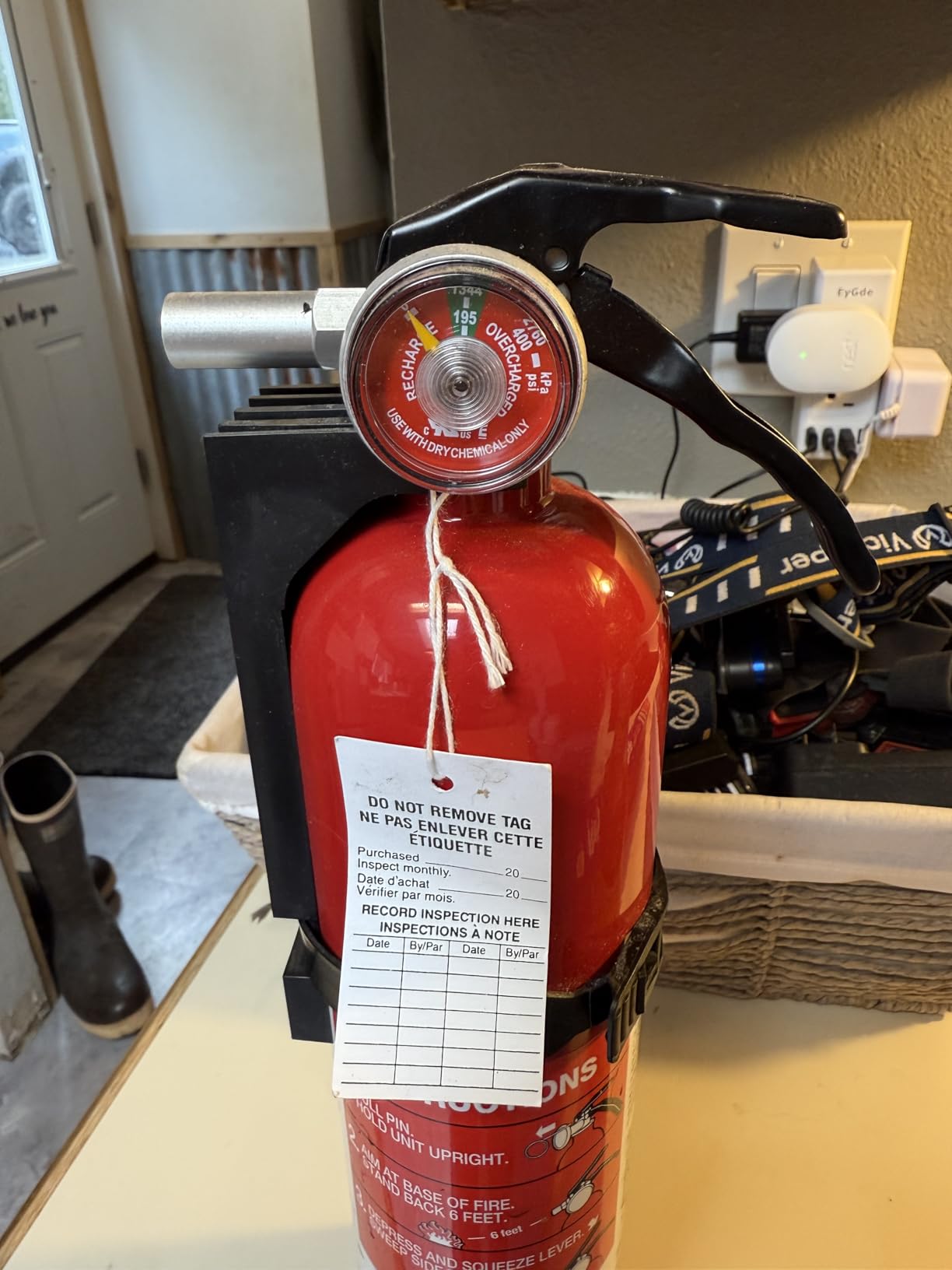
The 1-A:10-B:C rating covers ordinary combustibles, ten square feet of flammable liquid, and live electrical equipment, which makes it the smallest rating most home codes accept. The honest drawback is the fittings. Reviewers repeatedly note a plastic handle and trigger on an otherwise metal body, and a thin included bracket.
Check the gauge before you trust it
The color-coded metal gauge is what tells you whether the charge survived storage. A needle in the green band means pressurized, and anything outside it means the canister needs servicing. Because this model is rechargeable, a dead gauge is not the end of the cylinder.
Where this one falls short
If you deep-fry or run a high-output wok, a 1-A:10-B:C canister empties quickly against a developed grease fire. And the dry chemical will coat your counters and get into appliance vents, so clean-up is a real chore after every discharge.
2. Kidde Basic 110: Best Value Multipurpose Extinguisher
Kidde Basic 110 Fire Extinguisher for Home, 1-A:10-B:C, FA110G, 1 Pack
1-A:10-B:C UL Listed
2.5 lbs of agent
3.9 pounds total
Pros
- Lightweight aluminum body that anyone can lift
- Powder-coated cylinder resists corrosion
- Clear pressure gauge and easy-pull pin
- Wall strap bracket included
- Enormous base of verified owner reviews
Cons
- Single-use residential design with no recharge path
- Plastic strap bracket is lighter duty than a metal hanger
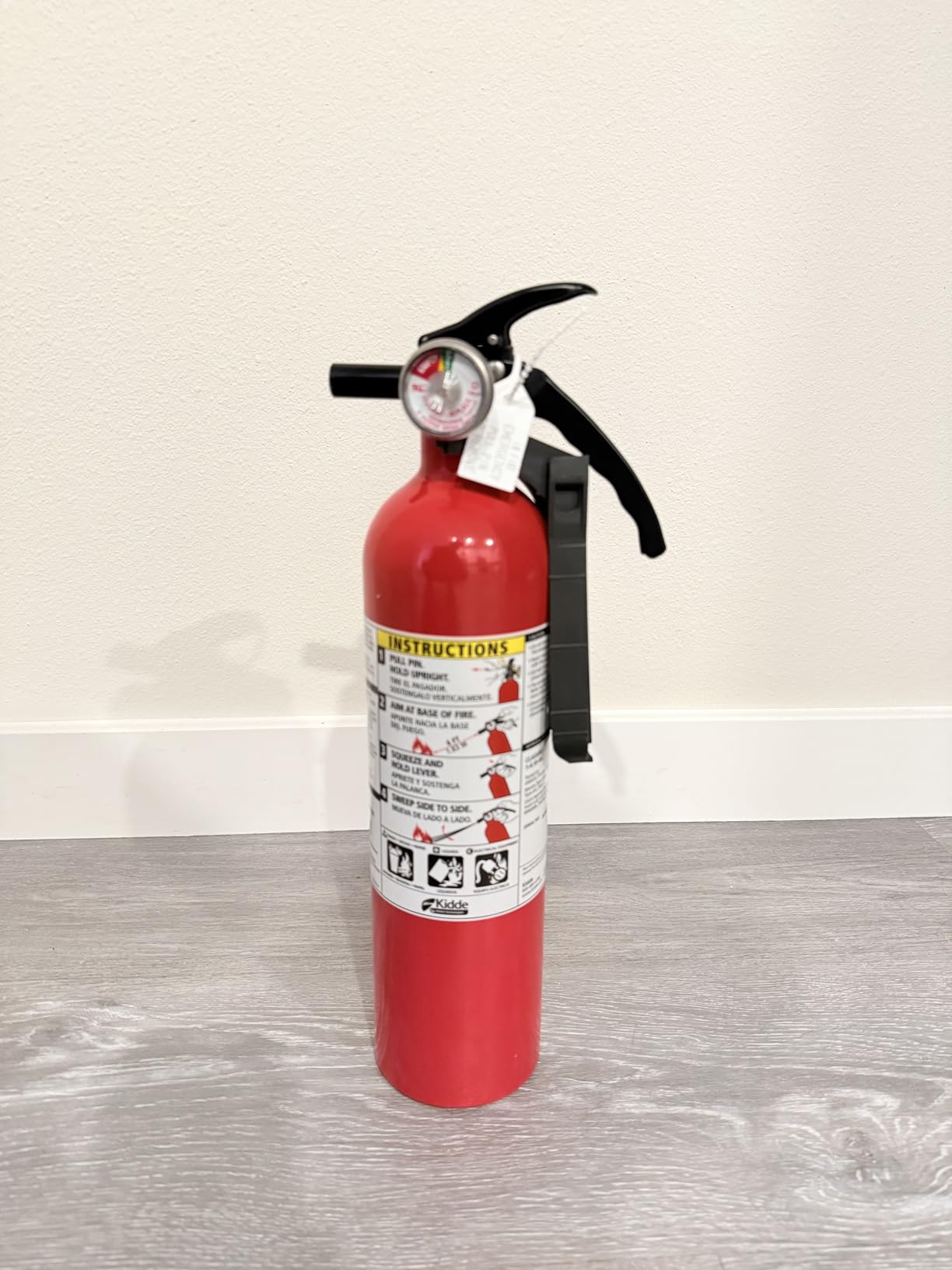
At 3.9 pounds this is the lightest UL Listed canister here, and it is the unit Consumer Reports recommends for a kitchen, as cited by The Kitchn’s extinguisher guide. Its 2.5 pounds of agent covers trash, paper, wood, flammable liquids, gases and electrical equipment, which is every realistic kitchen fire except a developed one in cooking oil.
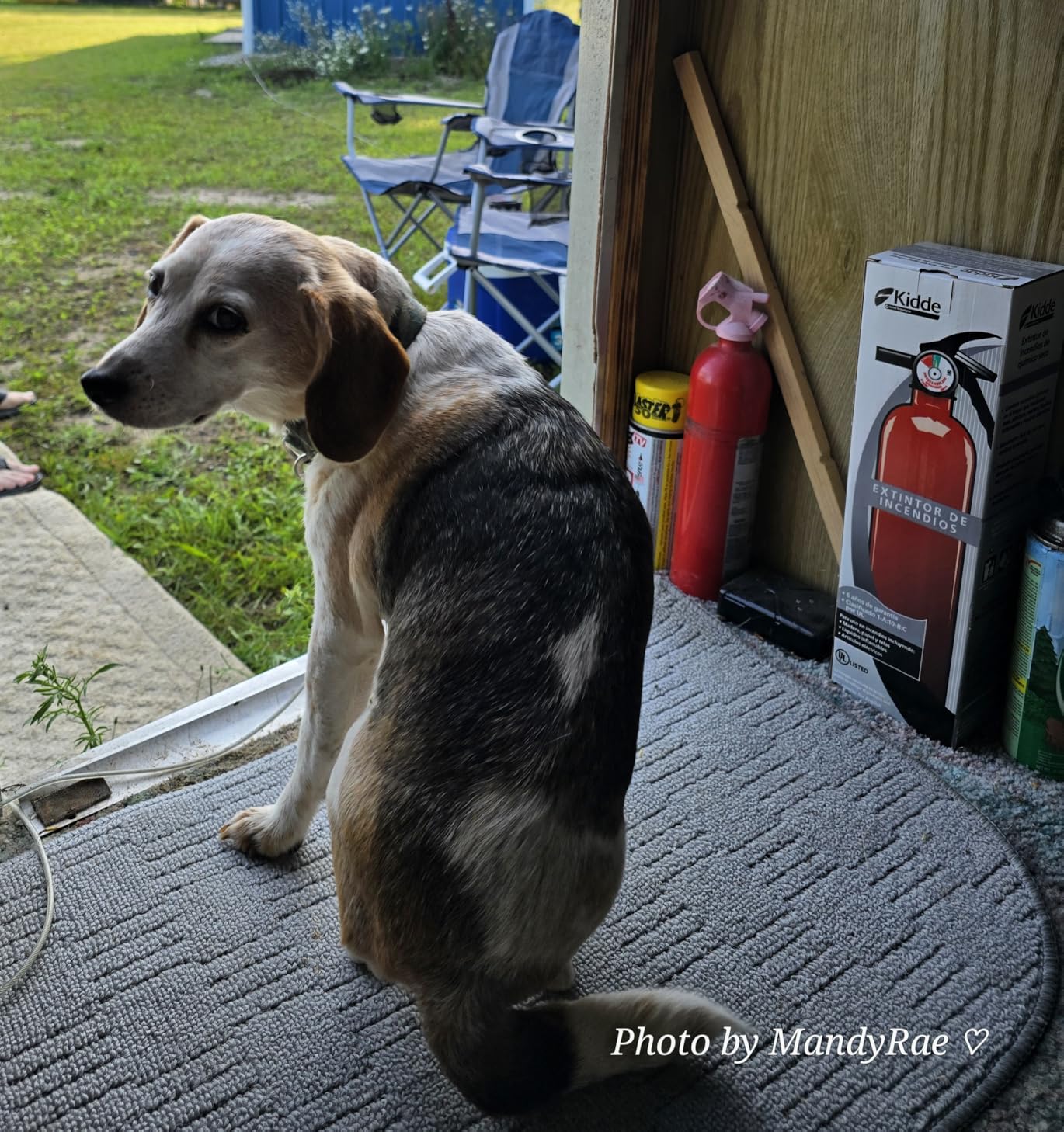
Across firefighter forums the recurring advice is to pair a small kitchen-rated canister with a larger ABC canister elsewhere in the house, and this is the natural small half of that pair. The powder-coated cylinder is the practical detail, since kitchen cabinets get damp and the coating is what keeps corrosion off the shell.
Is single-use a real problem?
For most households, no. Accidental discharges are rare, and the canister carries a six-year limited warranty from manufacture. Where it matters is a rental or shared building where several people use one kitchen, since a rechargeable unit keeps a full charge after the first use.
Check this before you hang it
The included strap bracket is a plastic band rather than a metal hanger, so it suits a cabinet or stud wall but can crack on masonry. Choose a spot you can reach without crossing in front of the stove.
3. First Alert HOME2PRO: Best Rechargeable Heavy-Duty Home Unit
First Alert Fire Extinguisher, Heavy Duty for Home & Commercial Use
2-A:10-B:C UL rated
Mono ammonium phosphate agent
9.6 pounds total
Pros
- Twice the capacity of a 1-A:10-B:C household model
- Rechargeable by certified professionals
- Metal valve and trigger
- Wall hook and readable gauge included
- 12-year limited manufacturer warranty
Cons
- Too heavy for most kitchen cabinets
- Large footprint for a small kitchen
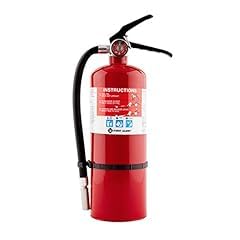
Doubles the firefighting capacity of the small household model with a 2-A:10-B:C rating that meets the minimum many local codes want for residential space. The mono ammonium phosphate agent handles wood, paper, plastics, gasoline, oil and electrical fires in one canister, and the twelve-year warranty is the longest in this group.
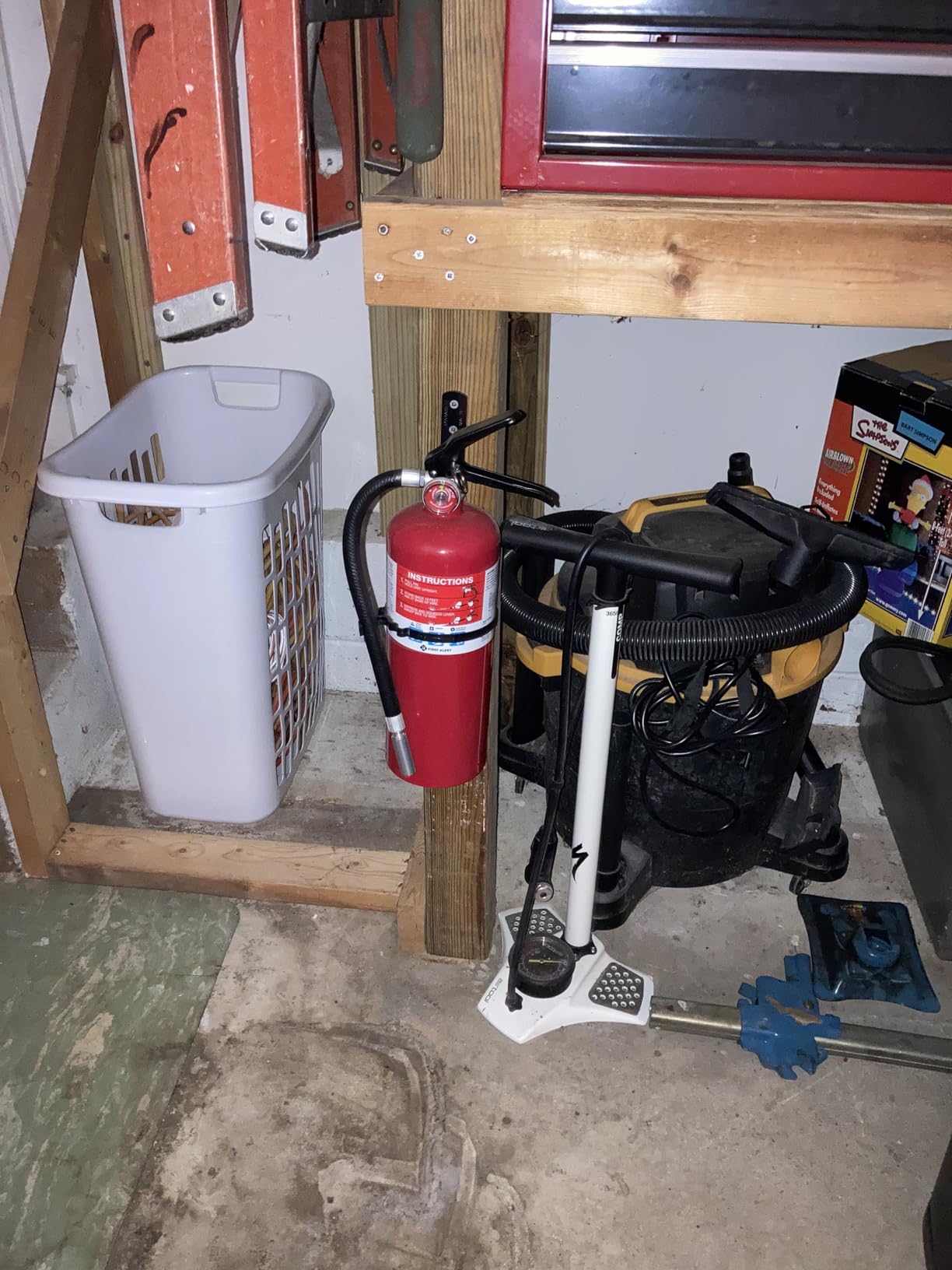
Several reviewers describe buying this after losing a house to fire and concluding they should have chosen the heavier model. That is the honest read: a 9.6-pound canister holds a line when a 2.5-pound unit empties out. Prepper communities consistently favour larger ratings for whole-home coverage, and this is the middle ground.
Where this canister belongs
Mount it in a garage, utility room, basement or laundry room rather than in a kitchen cabinet. At 9.6 pounds and 17 inches tall it is a two-hand carry, so it needs a solid anchor point and a wall hook.
What the extra weight buys you
Capacity translates into discharge endurance. A small canister is built for a fire still in its first seconds, while this one gives you the agent budget to fight a fire that has spread along a cabinet run.
4. Kidde Pro 340: Best for High-Heat and Heavy Cooking
Kidde Pro 340 Commercial Fire Extinguisher, 3A:40-B:C, PRO-5MP-1
3A:40-B:C rating
13-15 second discharge
8.95 pounds total
Pros
- Long 12-18 foot discharge range
- 5.5 lbs of agent for a sustained attack
- All-metal valve with impact-resistant handle
- Metal wall hanger included
- Rechargeable after professional servicing
Cons
- Too tall for a standard kitchen cabinet
- Short cylinder relative to its agent capacity
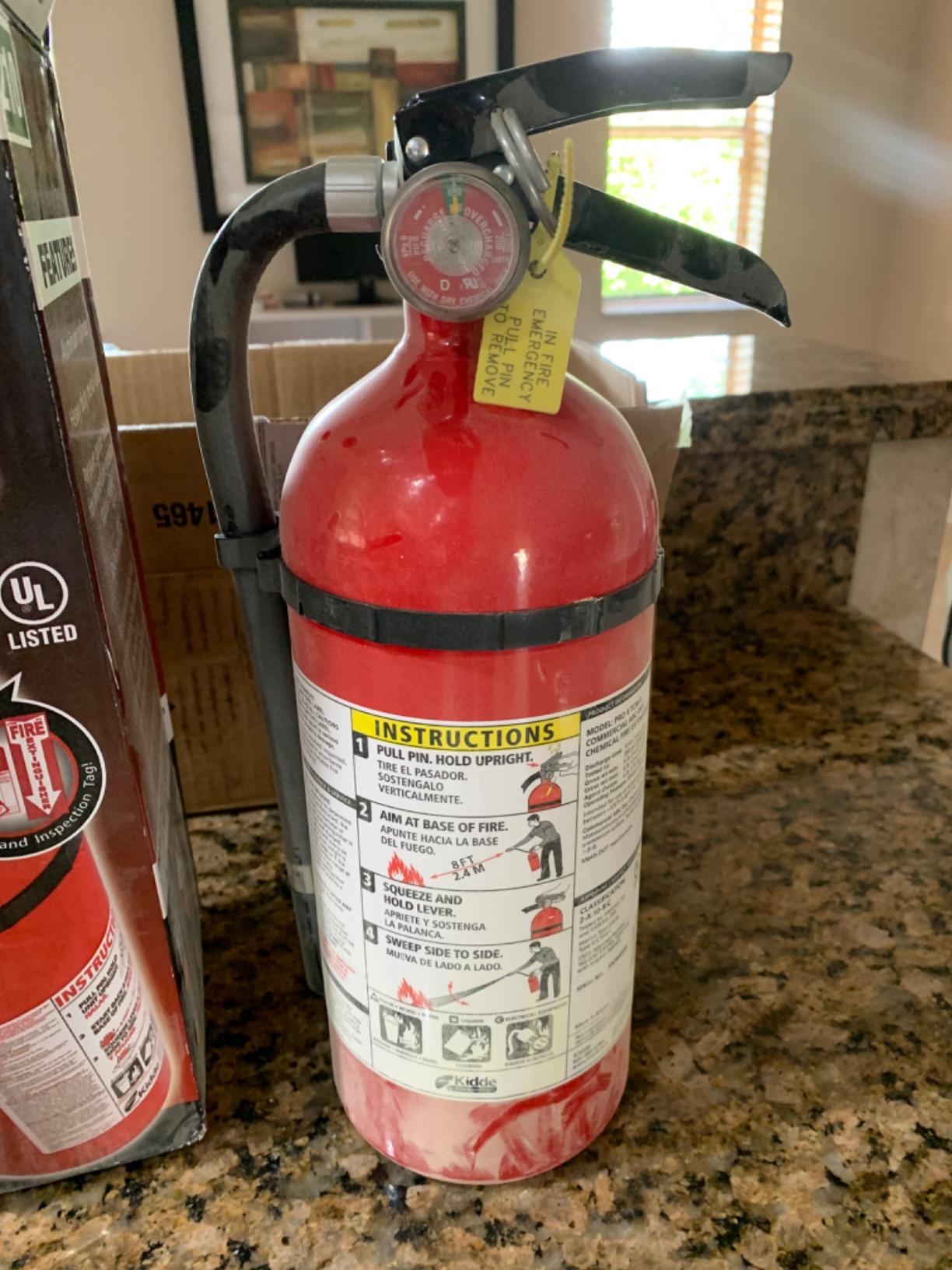
The 3A:40-B:C rating and 5.5 pounds of agent make this the most substantial canister here, and the one to consider if you run a deep fryer, a wok station or a multi-burner gas range. Discharge time is 13 to 15 seconds at 195 PSI, and the 12-to-18-foot range lets you attack a pan fire from the doorway rather than leaning over it.
Experienced reviewers stress that agent size is the variable that decides outcomes. One describes a small canister emptying in seconds against a real fire while a larger unit held until the fire department arrived. The impact-resistant handle and all-metal valve suit a workshop or garage where the canister gets knocked.
Why range matters more than rating
UL ratings measure extinguishing capability, not standoff distance. A higher number on the label does not let you stand further back, and the 12-18 foot range here does. That distance buys you the option to reconsider.
Be honest about the fit
At 18.4 inches tall this is not a cabinet canister. It needs a wall hanger in a garage, workshop or large utility space, and the cylinder is shorter than its agent capacity suggests.
5. Amerex B402: Best High-Capacity ABC Canister
Amerex B402, 5 lb. ABC Dry Chemical Fire Extinguisher, with Wall Bracket
5 lb ABC dry chemical
Class A:B:C rated
9.44 pounds total
Pros
- Largest agent capacity in this group
- All-metal valve with aluminum construction
- Wall bracket included for secure mounting
- ABC rating covers the common kitchen fire types
Cons
- Too large for most kitchen cabinets
- Heavy canister that needs a solid wall or floor mount
Five pounds of ABC dry chemical in an all-metal valve body, rated Class A:B:C. This is the canister people mount in a garage or shared utility room when they want maximum capability from a single cylinder, and its rating covers ordinary combustibles, flammable liquid spills and live electrical equipment.
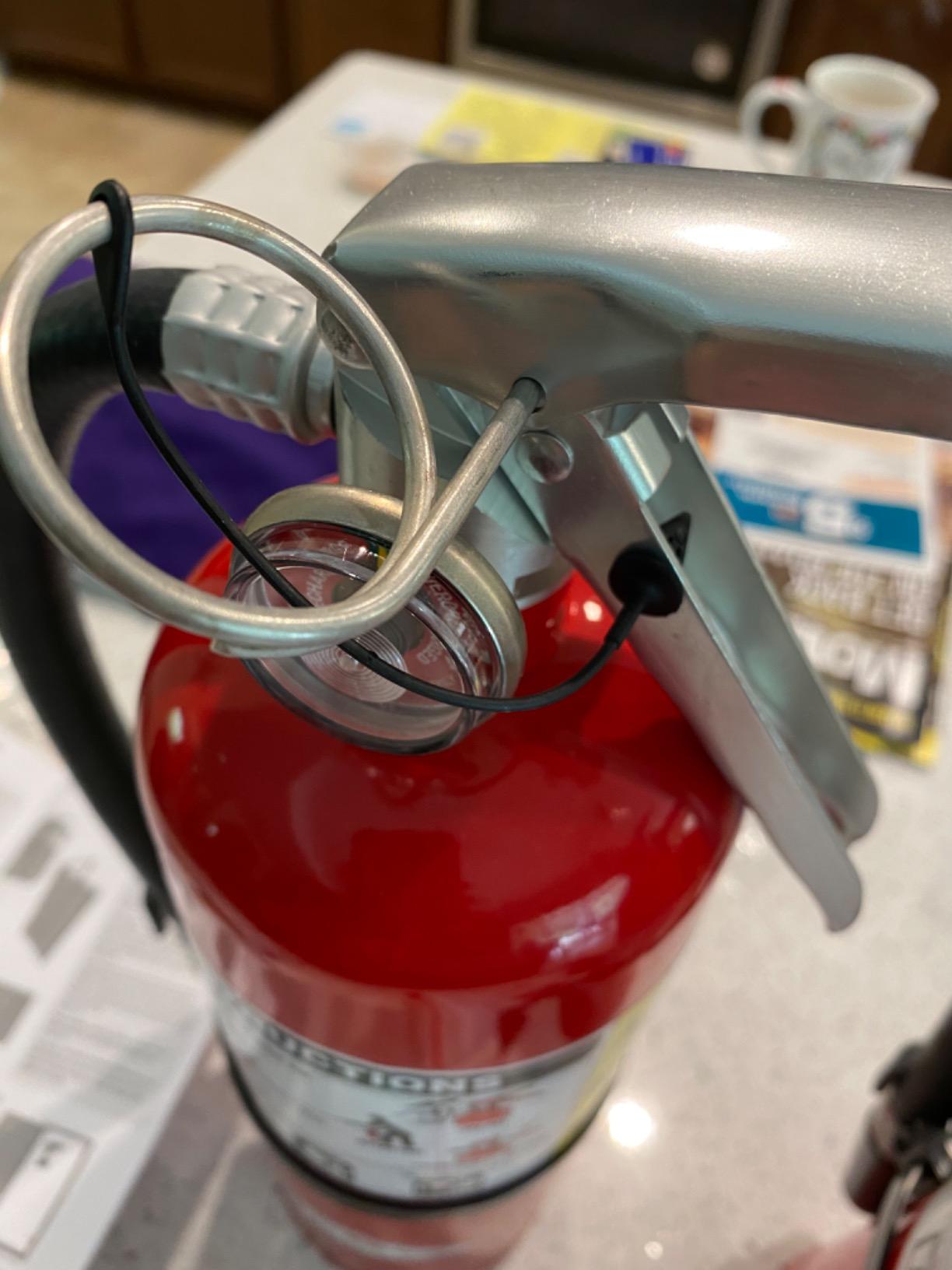
Reviewers treat it as the serious-capacity option rather than a kitchen fixture, and mounting is the recurring theme. The all-metal valve is the piece that ages best, since plastic handles crack with heat cycling and sun exposure.
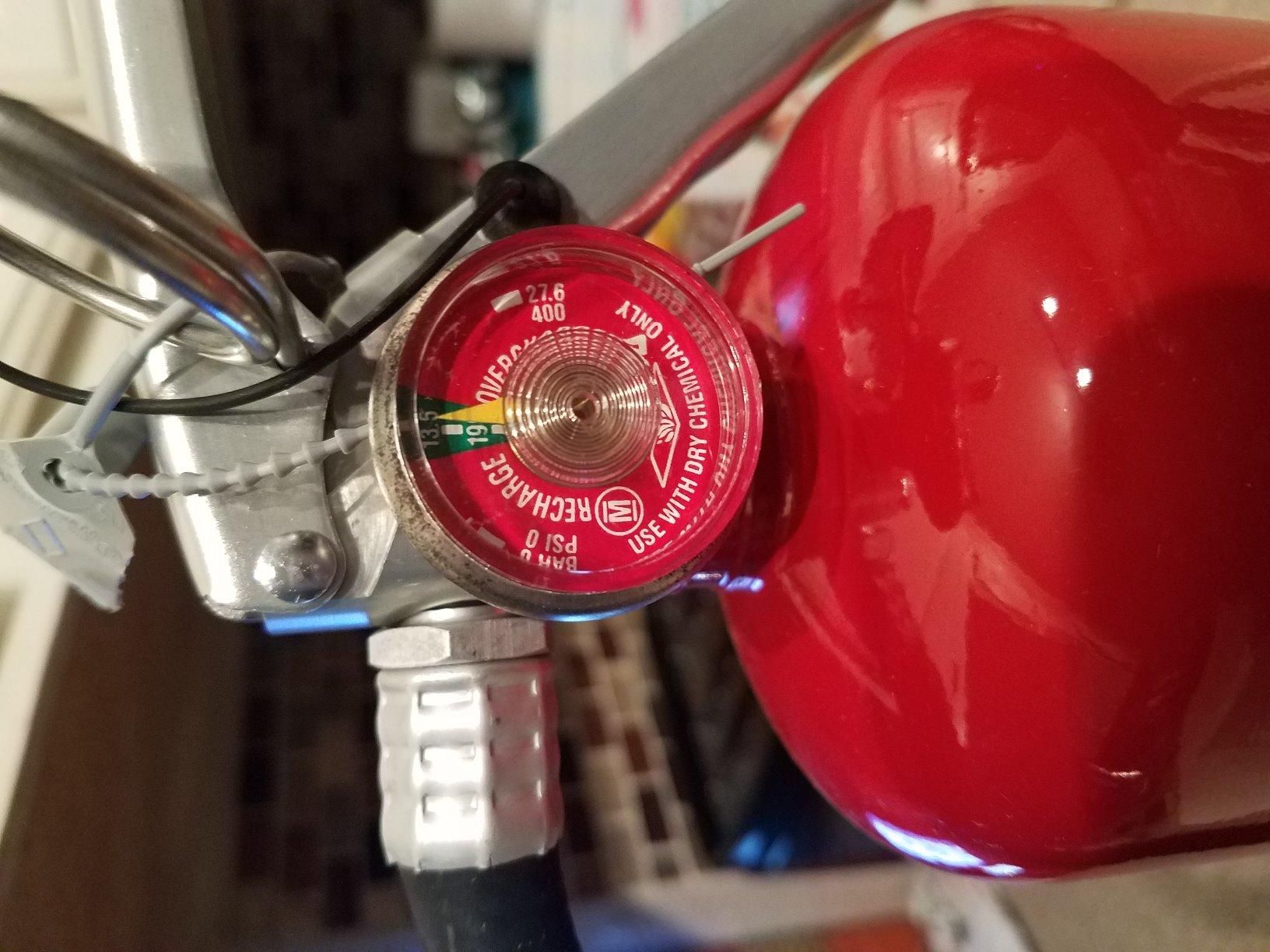
Is this overkill for a kitchen?
Usually. It is wider and taller than a standard base cabinet, and most kitchens have nowhere sensible to hang something that heavy and still reach it quickly. Put it in the garage and hang a small kitchen-rated canister next to the stove path.
Consider the mess honestly
Five pounds of mono ammonium phosphate leaves five pounds of abrasive powder. In a garage that is a non-issue, which is exactly why reviewers place this model there.
6. Kidde Kitchen 711A: Best Dedicated Unit for Grease Fires
Kidde Kitchen Fire Extinguisher, 711A, RESSP
Sodium bicarbonate agent
Flared anti-splash nozzle
8-10 second discharge
Pros
- Purpose-built for kitchen grease fires
- Flared nozzle reduces splashing of hot oil
- Non-toxic agent that will not ruin appliances
- White body blends into kitchen cabinetry
- Light aluminum body that is easy to lift
Cons
- Single-use residential design with no recharge path
- Short 5 foot discharge range limits standoff
This is the most kitchen-specific canister here and the only one built around the grease problem directly. It uses a sodium bicarbonate agent and a flared nozzle designed to spread the discharge and reduce splashing of burning oil, rather than dumping powder straight at a burning pan.
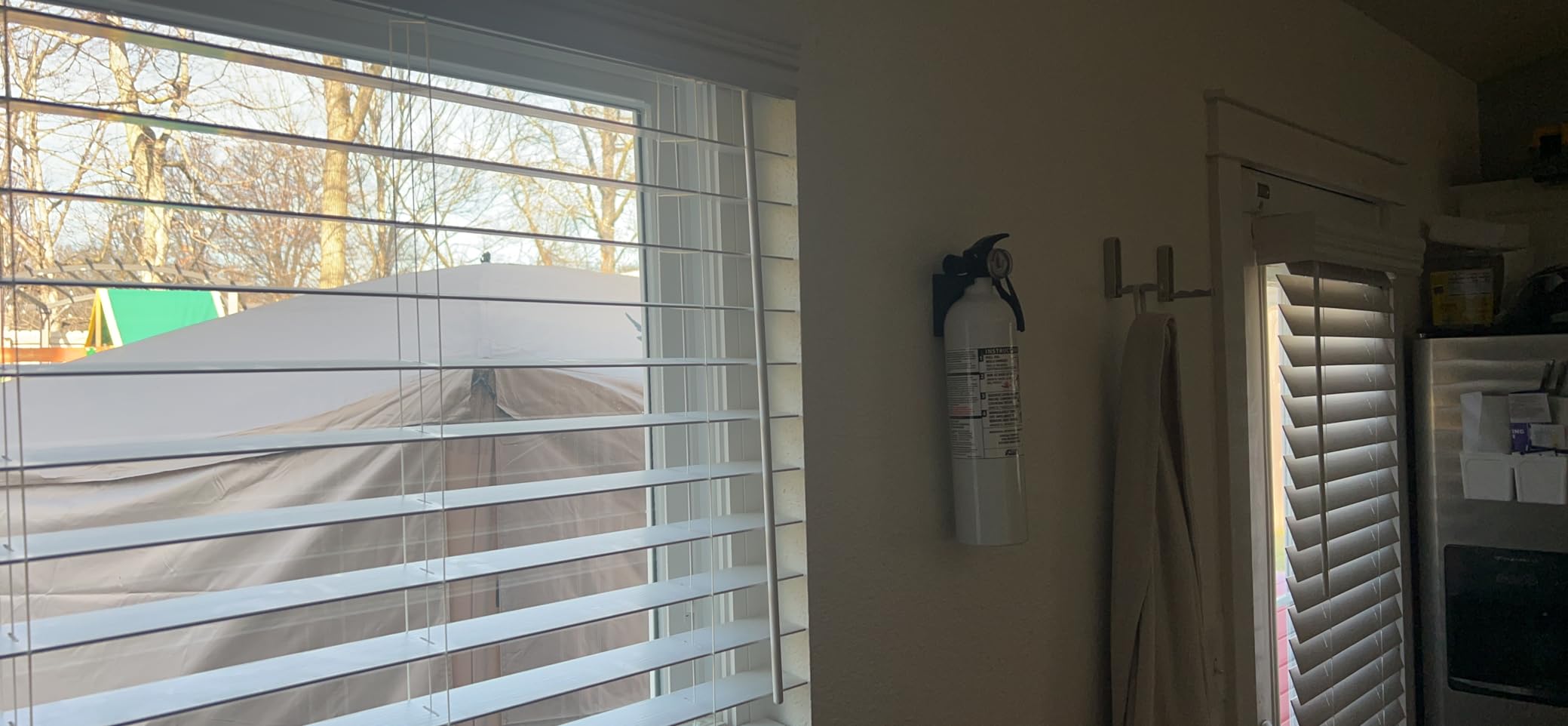
Reviewers respond to exactly that difference, comparing the non-damaging agent and splash-reducing nozzle favourably against generic dry chemical models. Two details nobody advertises: the white body disappears into kitchen cabinetry, and at 4.38 pounds a smaller person can lift it quickly. Coverage is listed at 6 to 8 square feet.
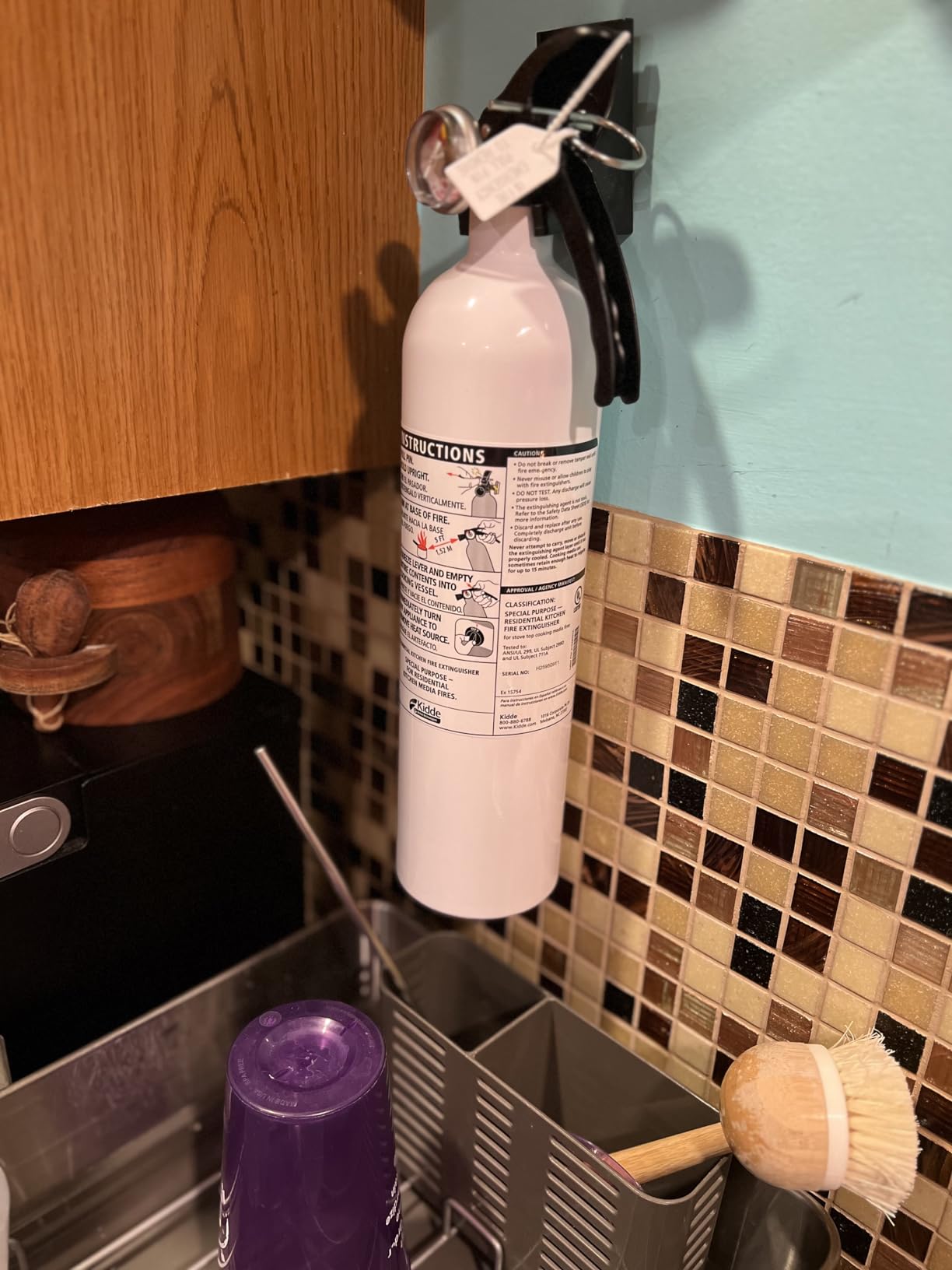
Why the wet chemical matters
Sodium bicarbonate is a Class B agent that smothers rather than breaking the chemical chain reaction, so it leaves nothing on your counters or in your appliance vents. That is why firefighter communities lean toward a wet unit for kitchens and save ABC for garages.
Know its limits before you need it
Discharge time is 8 to 10 seconds at 100 PSI with a range of about five feet, which is a very short window to arrive, aim and sweep. It is also single-use, and its B:C rating does not cover a wooden spoon or a paper towel.
7. AmzBoom 2-Pack Water-Based Spray: Best Residue-Free Backup
AmzBoom 2-Pack Fire Extinguisher for Home, Kitchen, Car, and Grill with Mounting Bracket– Extinguishing Spray, Compact A, B, C, K – Eco-Friendly, Prevents Reignition.
Water-based A/B/C/K spray
Two canisters per pack
1 pound each
Pros
- No powder or sticky residue on counters and electronics
- Very small and light enough for a drawer or glove box
- Two canisters so kitchen and vehicle can each have one
- Mounting brackets and hardware included for both
- One owner reports it stopped a real stove fire after a year of storage
Cons
- Not a pressurized UL-rated cylinder
- Small capacity suits early-stage fires only
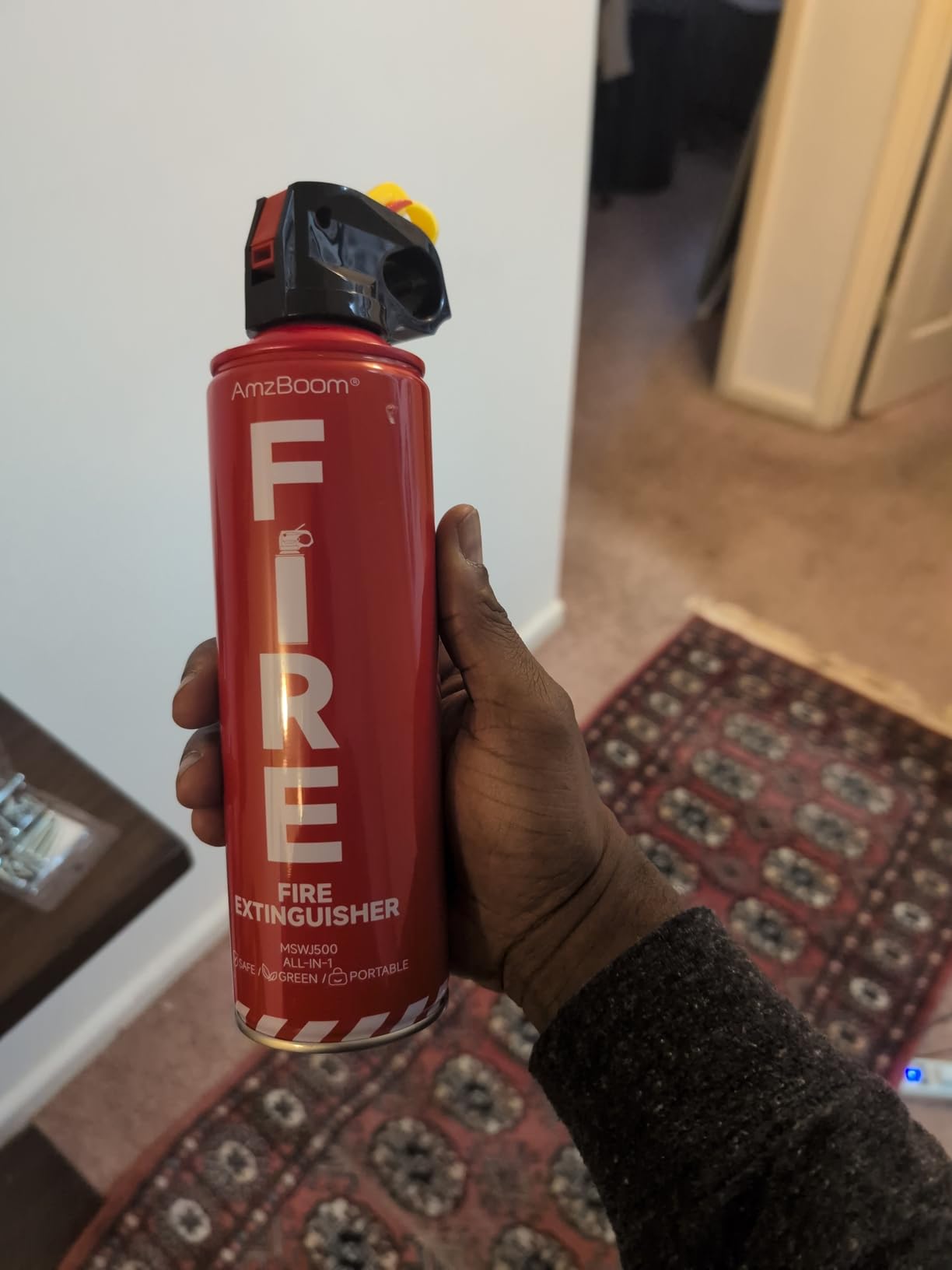
This is a hand-pressurised water-based spray, not a UL Listed cylinder, claiming coverage across wood, cooking oil, gasoline and lithium-ion battery fires. Two canisters come in the pack, each about one pound and roughly ten inches tall, and the reason it earns a place is clean-up: a non-toxic formula leaves nothing on counters or electronics.
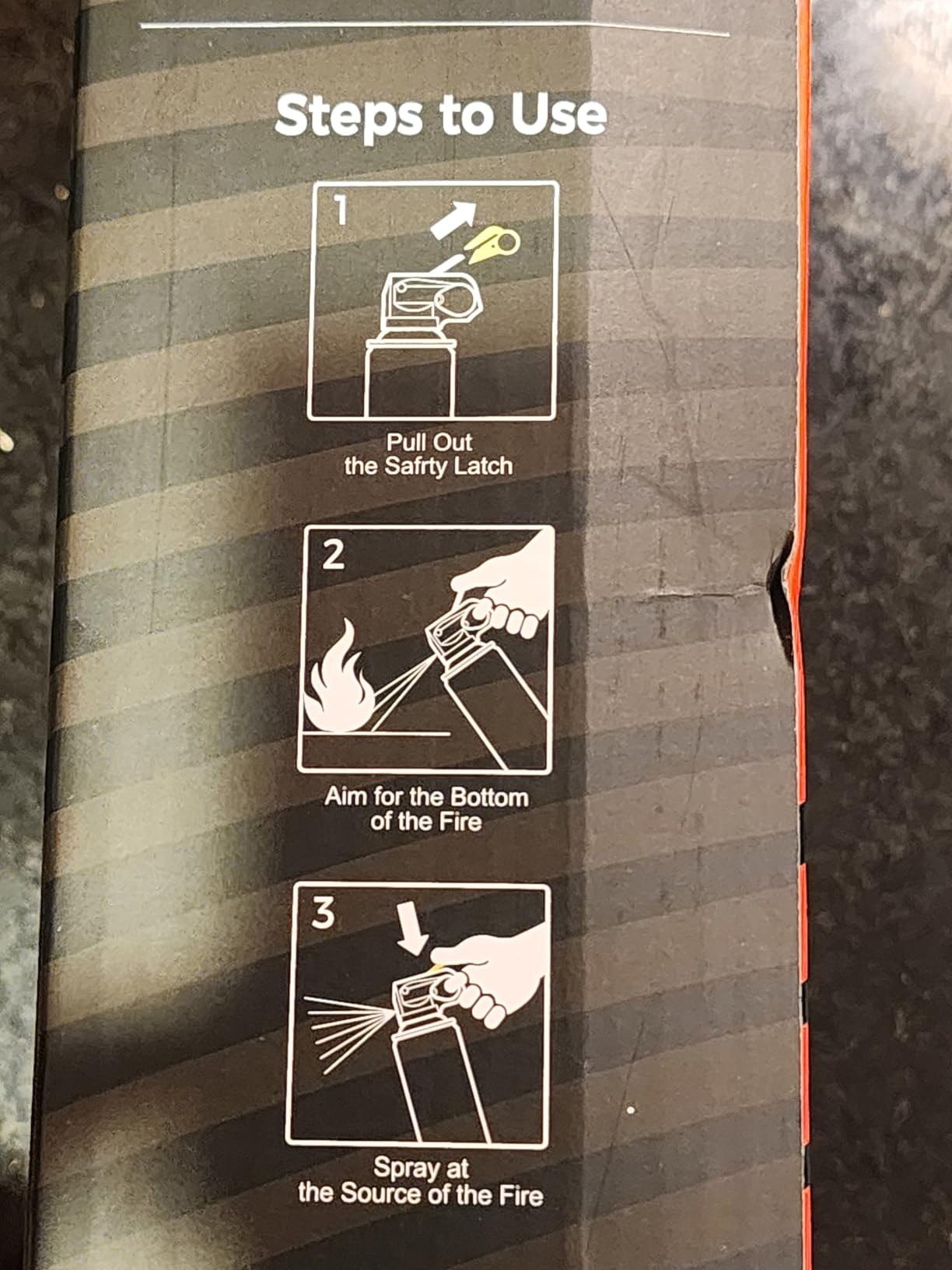
One detailed review describes the unit activating correctly after a year of unused storage and stopping a kitchen stove fire. That is a single report rather than a lab result, but it is more evidence than most novelty units offer. The format is also genuinely convenient, since each canister fits a drawer or glove box and both brackets are included.
Why this cannot be your only canister
It is not a pressurized UL-rated cylinder, so it does not satisfy a code requirement and carries no verifiable extinguishing rating. Buyers also note the canisters are smaller than the product photos suggest, which is fine for a first-stage fire and useless for anything developed.
When it genuinely helps
A secondary canister in a vehicle, a camper or a rental where you cannot mount a heavy cylinder solves a real gap, and there is no gauge or expiry date to track.
8. Ougist 4-Pack Water-Based Foam: Best Residue-Free Multi-Pack
Multipurpose Fire Extinguisher (4 Pack, 21oz Each) with Wall Mount Bracket, Water-Based Foam No Residue, for Kitchen Grease & Electrical Fires, Portable Small Extinguisher for Home, Vehicle & Office
Water-based foam agent
13 foot spray distance
11.7 inches tall
Pros
- Foam leaves no powder or sticky residue
- Four canisters cover kitchen garage vehicle and office
- 13 foot spray distance gives you standoff
- Bracket and screws included for each canister
- Compact height fits under a sink or in a trunk
Cons
- Small capacity for anything beyond an early fire
- Each canister is single-use once discharged
Four canisters at 21 ounces each, using a water-based foam agent for kitchen grease, electrical, liquid and small surface fires. Each is about 11.7 inches tall and 3.3 inches wide, so four of them fit in a cabinet that a 5-pound cylinder never could, and the 13-foot spray distance lets you stand back from the stovetop.
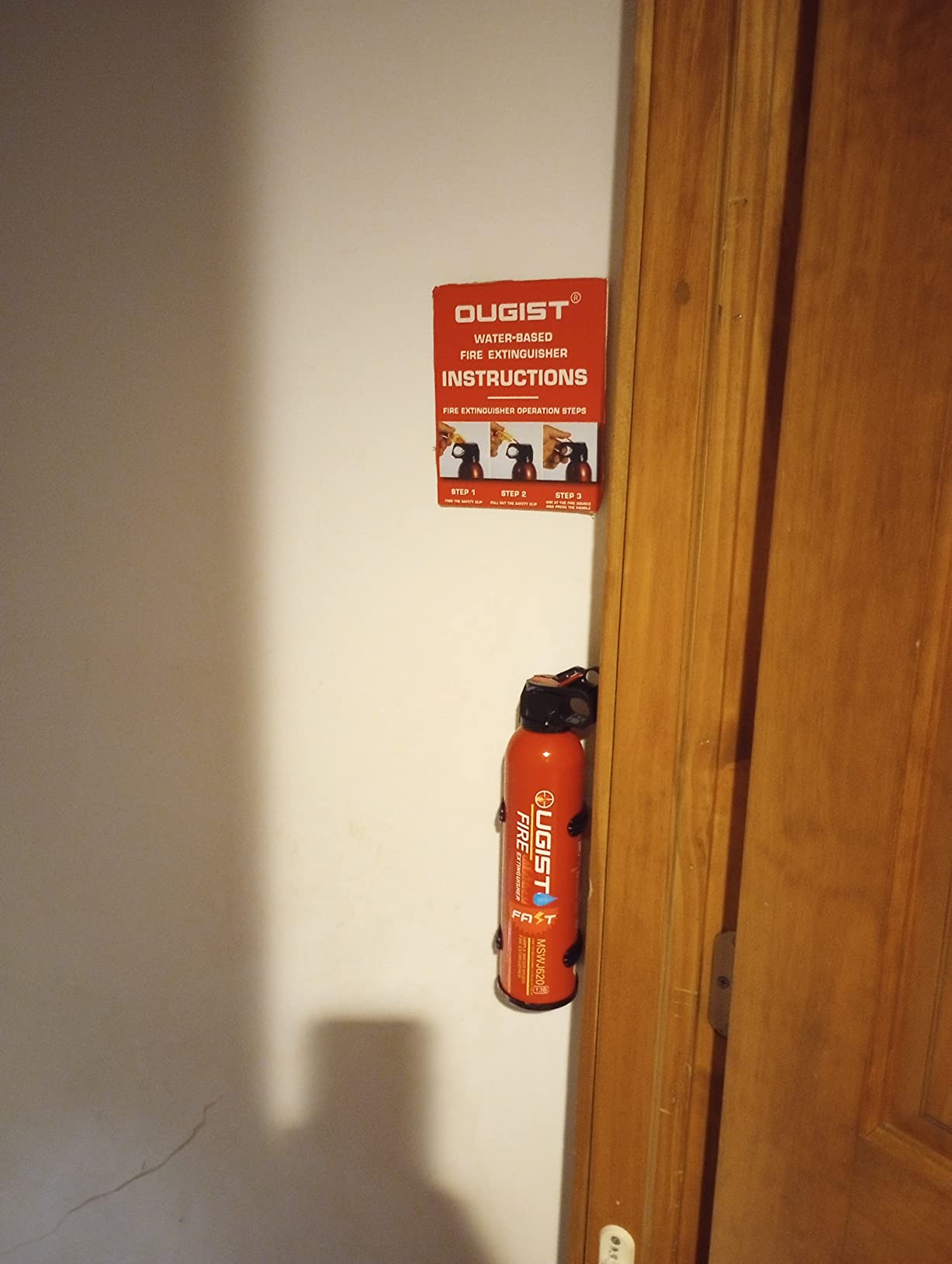
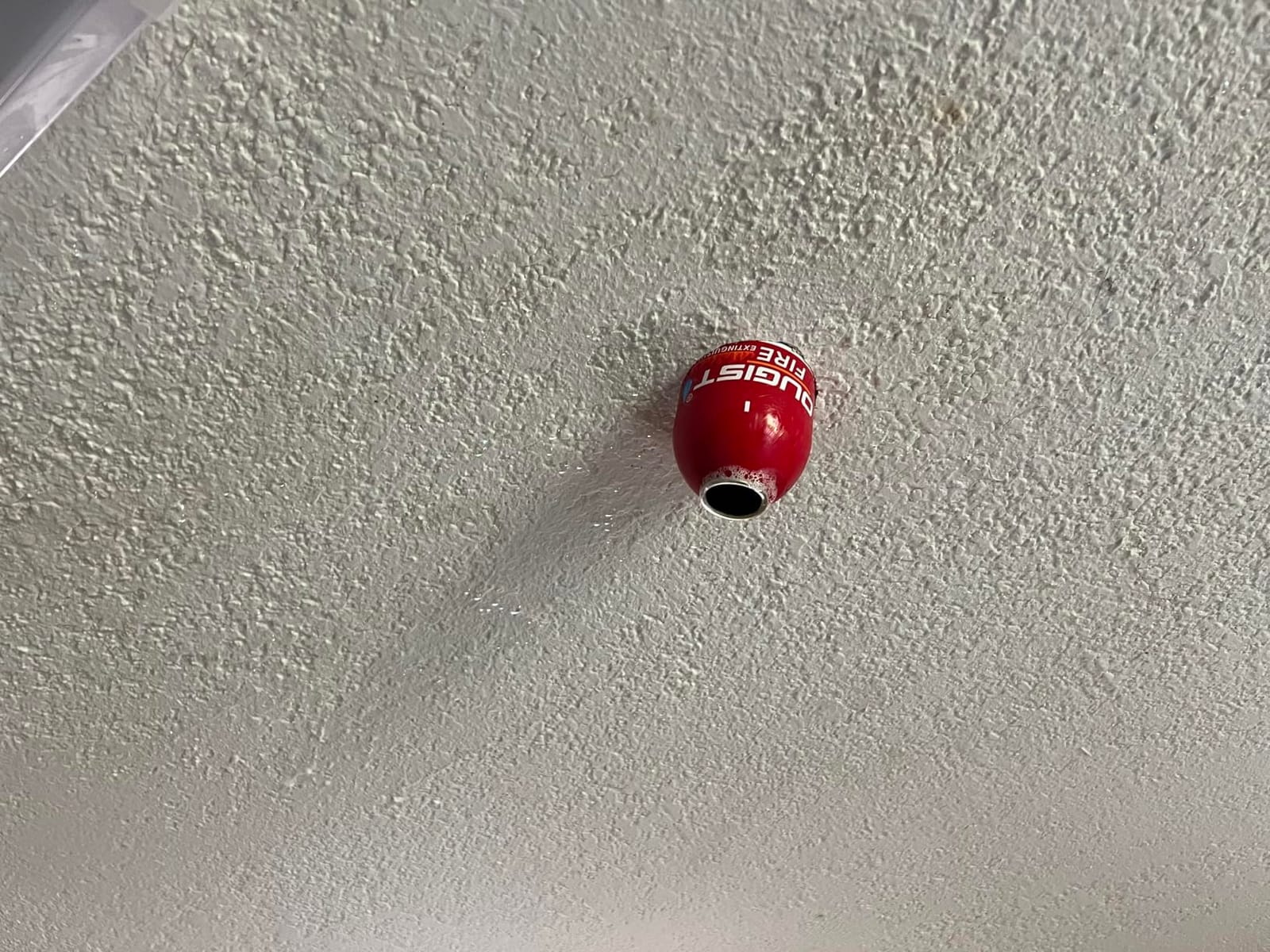
Owners place them in kitchens, garages, off-road rigs and vehicles, citing the tight brackets and mess-free foam. Nearly every reviewer admits they have never discharged one, which is honest and worth saying: effectiveness claims on a product like this are mostly prospective.
Multi-packs change the maths
Four canisters solve whole-home coverage in a way a single canister cannot, because a canister that is down the hall is one you will not reach in time. Each room gets its own.
Where foam beats powder
A water-based foam blankets the burning surface and cuts off oxygen without the abrasive mono ammonium phosphate powder, so nothing gets into appliance vents or onto a laptop. For renters, that residue difference is the whole argument for foam.
9. Ougist FF1KG Quick-Release Handle: Best for Limited Grip Strength
Ougist ABC Fire Extinguisher for Home & Vehicle – 2.5 lb 1-A:10-B:C Rated, Dry Chemical Fire Safety with Quick-Release Handle, Certified for Kitchen/Car/Boat Use-Model FF1KG
1-A:10-B:C dry chemical
Quick-release handle
4.4 pounds total
Pros
- Quick-release handle removes the pin without twisting
- Thick-wall steel cylinder feels more robust
- Correct 1-A:10-B:C rating for kitchen grease and electrical fires
- Wall hook location sign and inspection card included
- Rated for -22°F to 140°F storage
Cons
- Dry chemical agent leaves a powder residue on counters and appliances if discharged
- Single 2.5 lb unit needs additional units for whole-home coverage
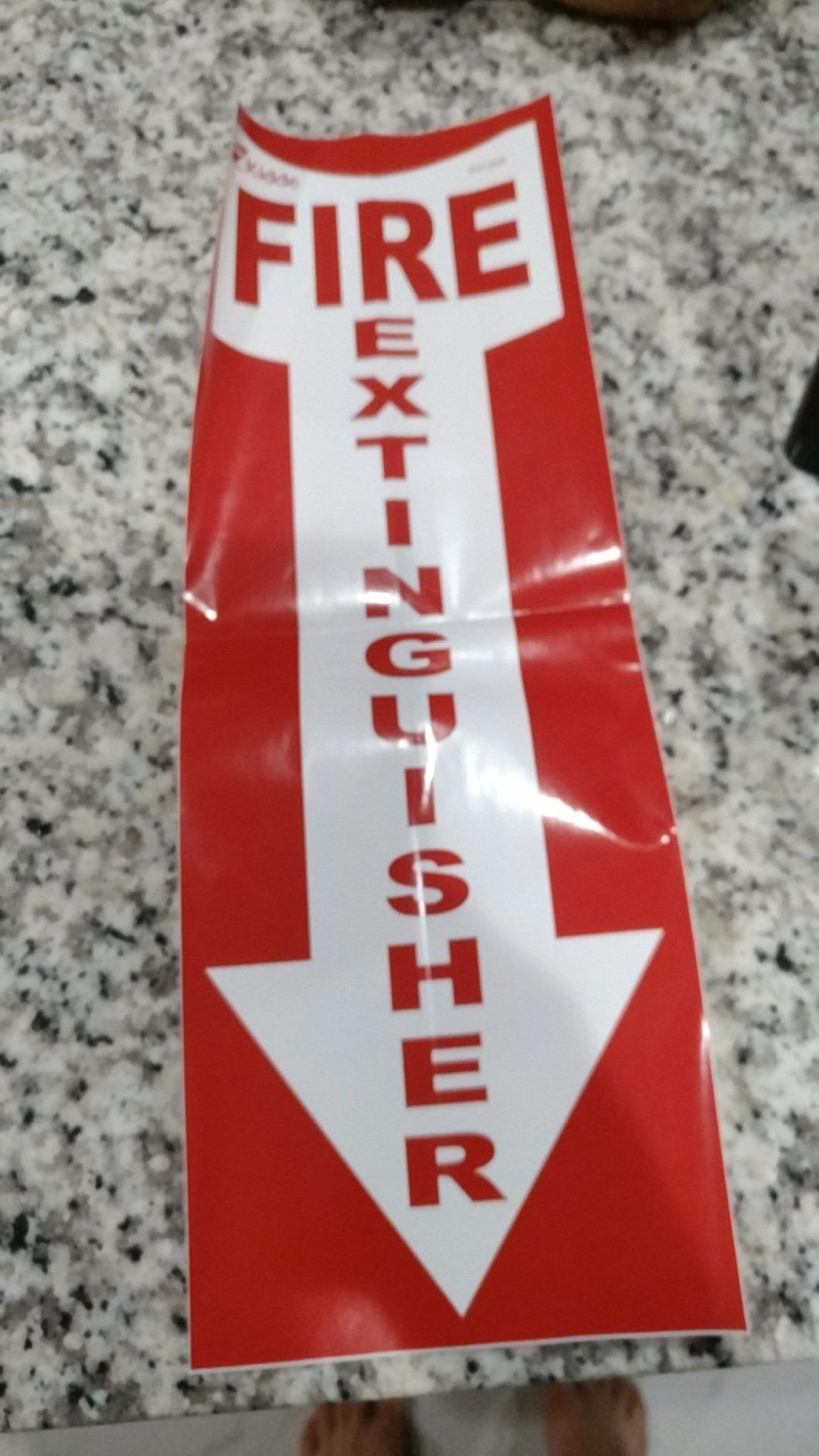
A 2.5-pound dry chemical canister in a thick-wall steel cylinder, defined by its patented quick-release handle. The safety pin comes out without the twisting pull that catches on arthritis or a weaker grip, and one buyer specifically bought it for an 87-year-old relative’s hands.
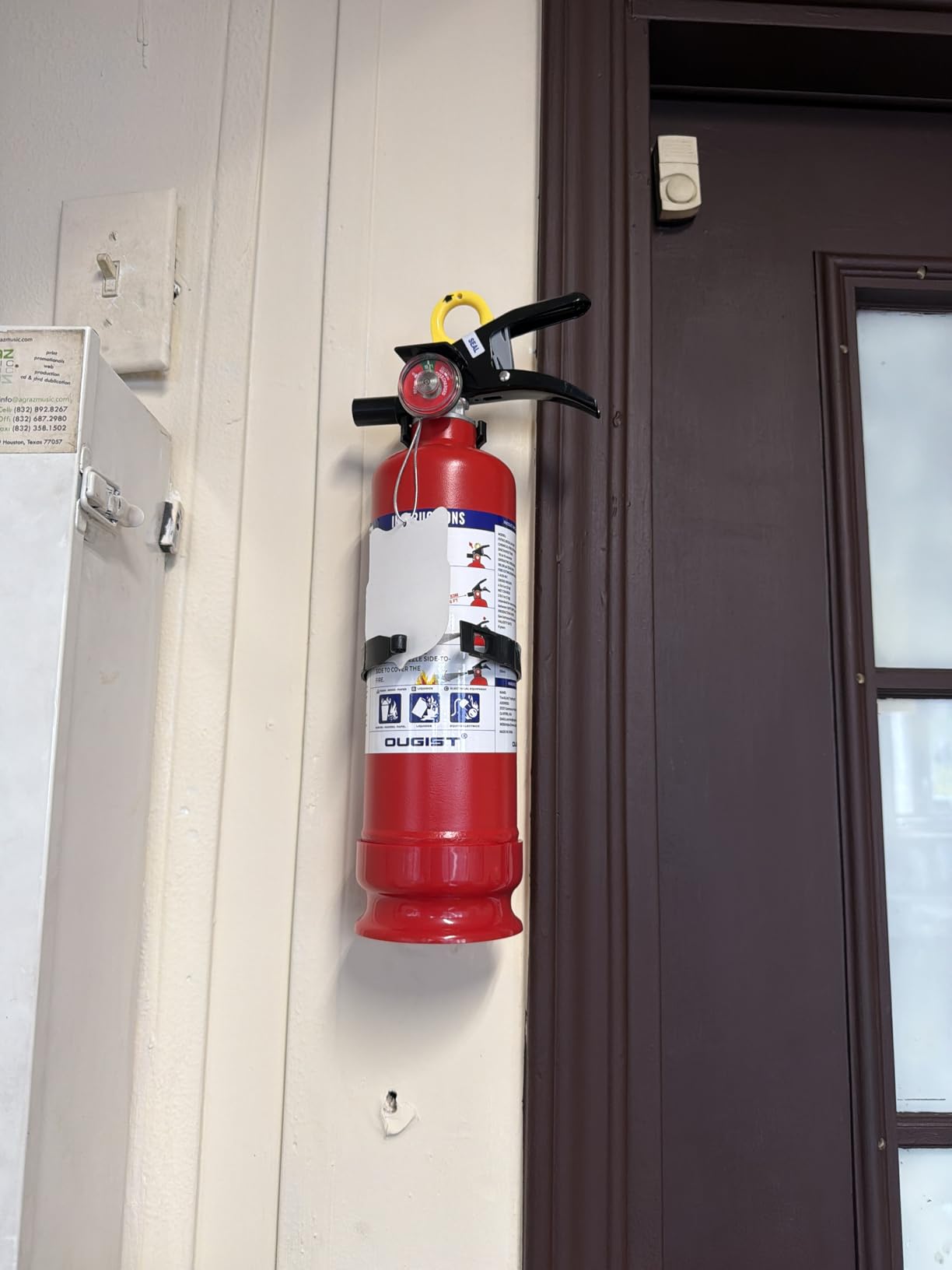
The box also includes a monthly inspection record card and a self-adhesive location sign, two small things usually sold separately that help you track a canister you rarely look at. Storage tolerance runs from -22°F to 140°F, so it can live in a garage or a vehicle.
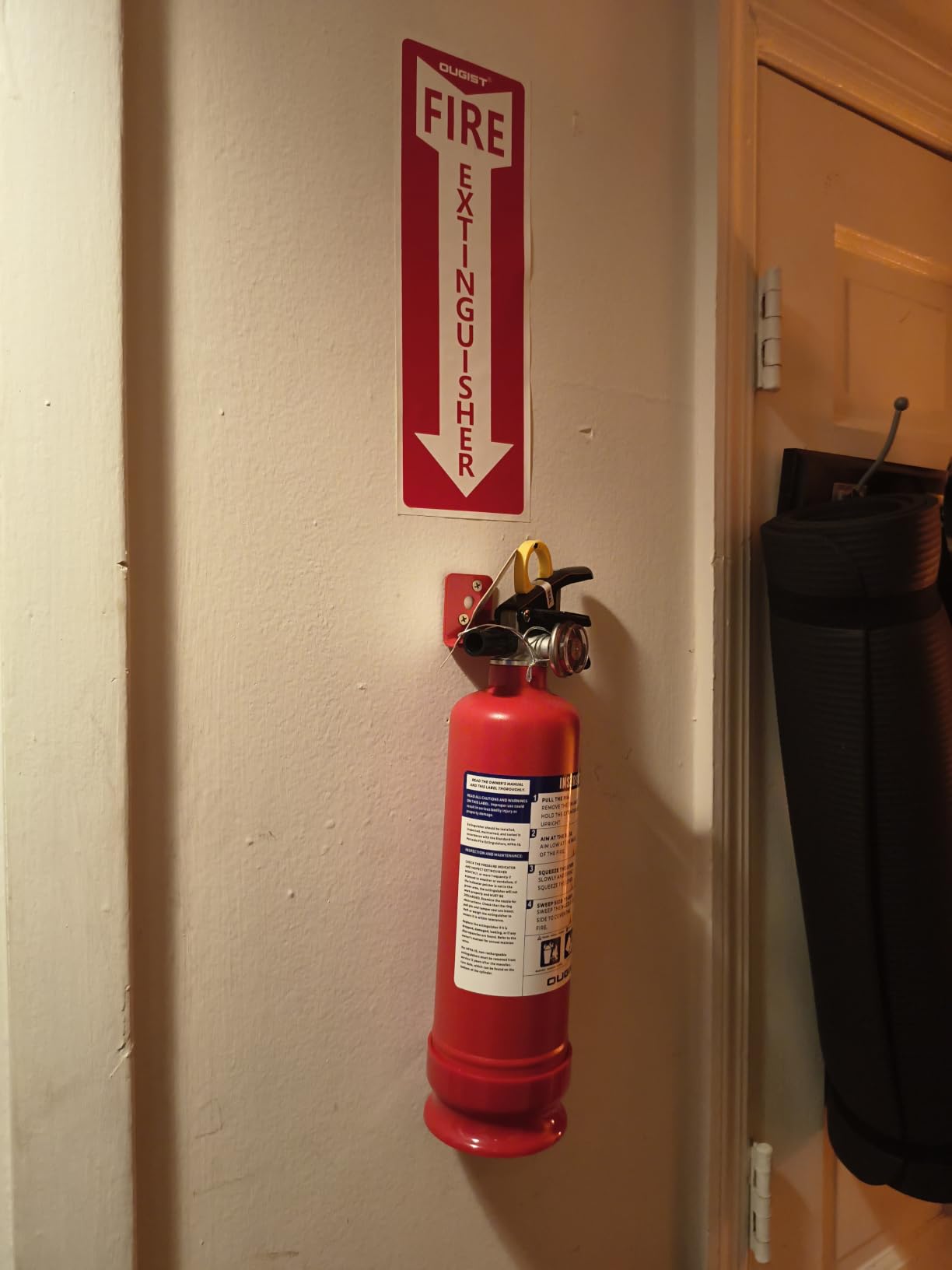
What the handle solves
Under stress, most people grip a canister two-handed and twist the pin out. That is the motion that fails on a stiff hand, and a handle that releases the pin with a squeeze removes the hardest second of the whole process.
Check the rating, not the brand
The 1-A:10-B:C rating is correct for grease, electrical and fuel fires in a kitchen, and it is the number to verify rather than any marketing claim. The trade-off is a single 2.5-pound canister and dry chemical residue.
10. Ougist ABC 4-Pack, 1.32 lb Each: Best for Vehicles and Hallways
ABC Fire Extinguisher for Home & Vehicle – Portable Dry Chemical Fire Extinguisher | Grease & Electrical Fire Extinguisher for Kitchen, Car, Easy for All Ages to Use (4-Pack, 1.32lb Each)
Four 1.32 lb ABC canisters
13 foot effective range
Stamped production dates
Pros
- Four canisters for kitchen vehicle garage and hallway
- Non-conductive non-corrosive agent safe for electronics
- Compact enough for a car bedroom or closet
- Production date stamped on each canister
- Mounting hardware included for each
Cons
- 1.32 lb capacity suits small early fires
- Dry chemical leaves powder residue in a kitchen
Four aluminium-bodied canisters at 1.32 pounds each, sold as a coverage pack rather than a single hero product. Buyers use them to cover a kitchen, a vehicle, a garage and a hallway in one purchase, and each carries a stamped production date, which makes shelf life far easier to track.
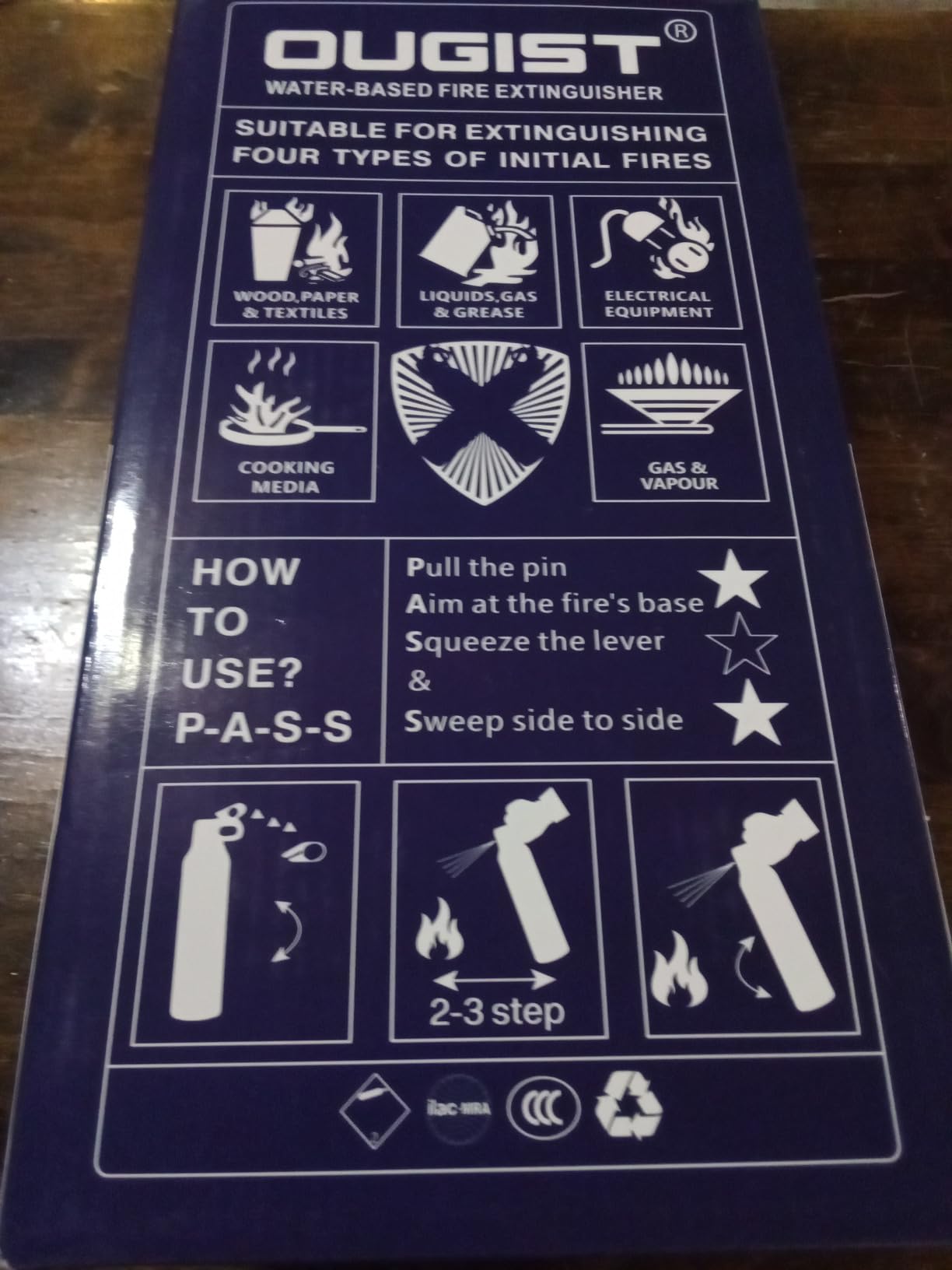
The agent is described as non-conductive and non-corrosive, which is what makes these reasonable around vehicles and electronics. Effective spray range runs up to 13 feet, mounting hardware comes in the pack, and the compact size fits places a 5-pound canister never will.
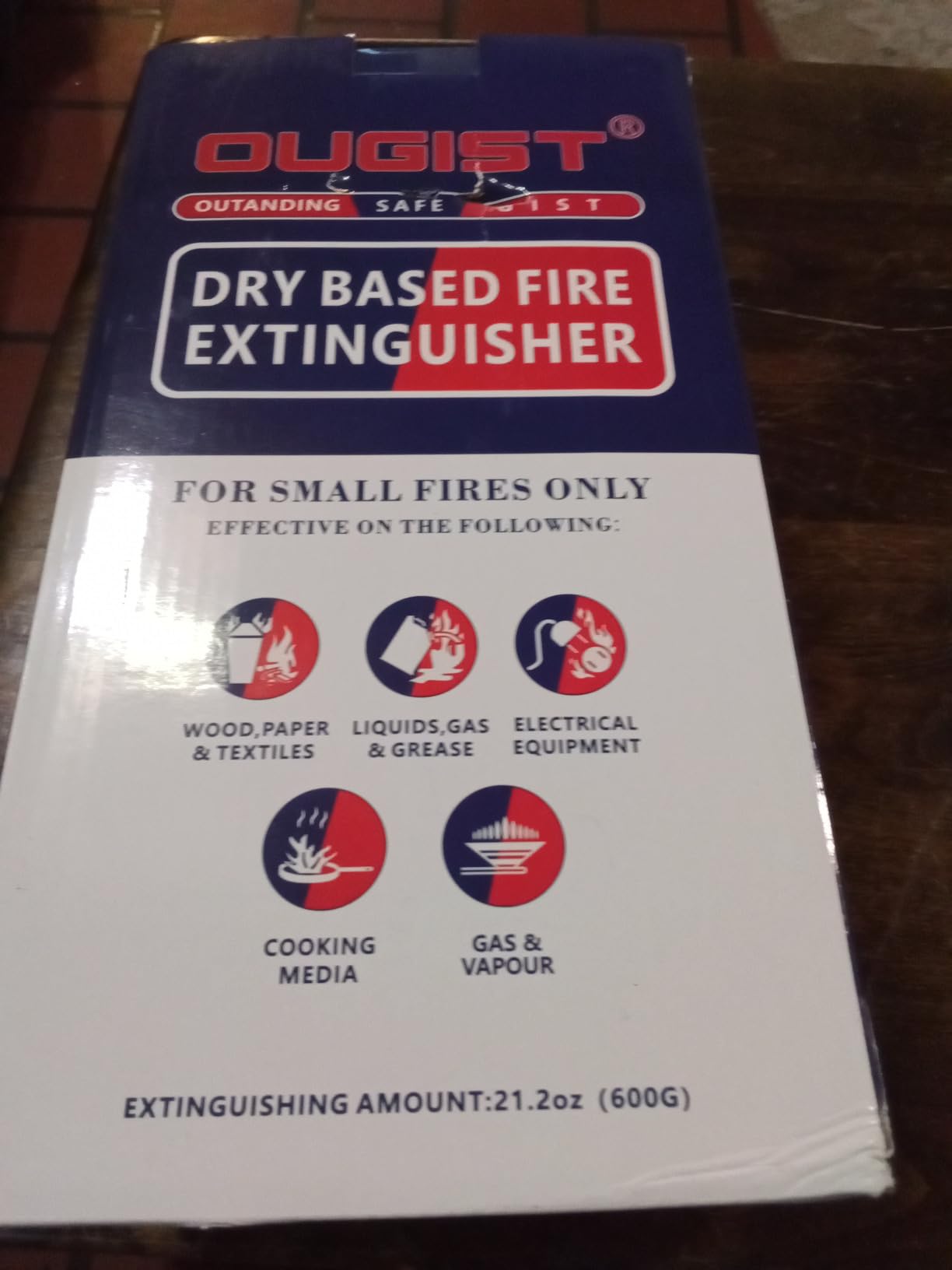
Why stamp the date on the unit
A canister that loses pressure in a cabinet is the most common false-confidence risk in a home. A stamped date lets you track service life, and checking the gauge needle at the same time tells you whether it is still pressurised.
Where the small capacity bites
At 1.32 pounds these are built for a small, early-stage fire. One reviewer calls them a practical complement rather than a heavy-duty solution, and the dry chemical still leaves powder in a kitchen.
Fire Class Decoder: What A, B, C and K Mean in a Kitchen
Read the class letter before anything else on the label. An extinguisher is only useful against the fires its rating names, and a kitchen produces more than one kind.
Class A covers ordinary combustibles: paper, wood, cloth, cardboard, and cooking grease soaked into a towel. A paper towel igniting beside a pan is a Class A fire.
Class B covers flammable liquids: cooking oil, grease, gasoline and solvents. A pan of burning oil is Class B, the most common kitchen emergency.
Class C covers energised electrical equipment: a toaster, a microwave, a faulty outlet or an extension lead.
Class K is the US cooking-media fire: oils and fats in commercial cooking appliances, using a heavier wet agent for high-temperature grease.
Class F is the European equivalent of Class K. UK, Irish and EU shoppers see Class F on the same problem under a different label.
That is why an ABC dry chemical canister is the household default. It covers the first three letters, and a kitchen fire is almost always one of them.
Safety warning: water on a grease fire drives burning oil out of the pan and can ignite the burner, backsplash or cabinets. Lid first, then baking soda, then extinguisher, then out.
Kitchen Fire Extinguisher Buying Guide: Rating, Agent, Size and Storage
ABC vs BC vs a wet chemical for kitchens
ABC uses mono ammonium phosphate, a dry powder that interrupts the chemical chain reaction. It is cheap and effective against Class A, B and C, but it leaves an abrasive, mildly corrosive powder that settles into vents and onto electronics.
A BC wet chemical uses sodium bicarbonate applied in a fan pattern to smother burning oil without splashing it, and leaves almost nothing behind. That is why firefighter communities recommend it for kitchens specifically and save ABC for garages.
A Class K unit uses a heavier wet agent meant for commercial fryers. In a residential kitchen it is rarely necessary, and the units are too large and heavy for a cabinet.
How to read the UL Listed label and a 1A:10B:C rating
UL Listed and ANSI/NFPA 10 rated are the two marks to look for. UL Listed means the unit was tested to a defined performance standard, and NFPA 10 is the standard for portable extinguishers itself.
A rating such as 1-A:10-B:C breaks into three numbers: square feet of Class A combustibles, square feet of Class B flammable liquid, and a C for safe use on live electrical equipment. Larger leading numbers mean a more capable canister. Also check that a pressure gauge is present and the pin and tamper seal are intact.
Choosing the right size
For most kitchens, 2.5 to 5 pounds of agent is the workable range. Anything heavier starts working against you in a panic, which is why professionals caution against an oversized kitchen canister. A 5-pound cylinder is a garage or utility room purchase, and anything above 10 pounds is commercial equipment.
Where to actually store it
Advice conflicts here, and the disagreement is worth resolving. Some sources say under the sink, some say by the kitchen door, some say never near the stove because you would reach through flames. All three have partial truth.
Under the sink is wrong in a humid kitchen, because trapped moisture corrodes the cylinder and the cabinet is often blocked by plumbing and cleaning supplies. Next to the stove is genuinely dangerous, because the heat and a flare-up put you in the fire’s path.
Our recommendation is a wall bracket on an exit path between the cooking zone and the door, mounted high enough to stay out of a child’s reach but low enough to pull down one-handed. The real test is whether you can reach it without passing the fire, which is where firefighter and preparedness advice converges.
Rechargeable vs disposable, and the maintenance calendar
A disposable unit is discarded after a discharge. A rechargeable unit is refilled by a certified professional, which keeps a full charge available in a home that already owns it.
Monthly, check that the needle sits in the green band and the seal is intact. Annually, read the label and look for corrosion at the neck. At six years, disposable units reach the end of their practical service life and rechargeable units are due for professional servicing. At twelve years, replace rather than gamble.
What not to buy for a kitchen
Aerosol fire sprays and novelty stick extinguishers are not real substitutes. They are not UL Listed, carry no verified rating, and exist mainly because the price looks friendlier than a canister. Oversized commercial Class K units are the other thing to skip: they are designed for restaurant fryers and will not fit a domestic kitchen.
Also skip any canister without a readable pressure gauge, or with a missing pin or broken tamper seal. Those failure modes come up most often in owner reports, and a canister that cannot be discharged is worse than none because it looks like a plan.
Apartments, condos and rentals
No NFPA rule obliges a renter to own an extinguisher, but most leases and local codes require one to be present, charged and mounted, and the landlord is responsible for providing it. Check your lease before buying.
Renters insurance often expects a smoke alarm on every level and a working extinguisher, and a landlord can cite that after a claim. For compact kitchens, a multi-pack beats a single large canister, since the foam and water-based packs fit where a 5-pound cylinder cannot be mounted at all.
How to Use a Fire Extinguisher: The PASS Method
Most household extinguishers empty in under 20 seconds. Hesitation or a wrong path burns the entire charge before you do anything useful, so rehearsing the sequence matters more than the model you own.
Pull the pin. Break the tamper seal and pull the safety pin straight out, twisting if the handle design requires it.
Aim at the base of the fire. Aim low, at the burning fuel rather than the flames, from roughly 5 to 6 feet back.
Squeeze the handle to discharge. Squeeze the lever and handle together to start the agent flowing.
Sweep side to side across the base until the fire is out, then watch for re-ignition because hot oil can flare back.
For a grease fire, work down a ladder instead. Turn off the heat if you can do so without reaching through flames. Slide a metal lid over the pan. Add baking soda. Then reach for the extinguisher, failing that a fire blanket draped over the pan from a distance. Then you leave and call 911.
Firefighter forum consensus is blunt about the limit: once a grease fire leaves the pan, no consumer extinguisher realistically contains it. Evacuate, close the door behind you, and call 911 from outside.
Frequently Asked Questions
What type of extinguisher should I use for a kitchen fire?
A UL Listed ABC multipurpose dry chemical extinguisher is the right default for most home kitchens, because it covers Class A combustibles, Class B flammable liquids and Class C electrical fires. For a cooking oil fire, a BC wet chemical unit smothers the fire with a fan spray that reduces splashing and leaves far less residue on appliances.
Is ABC fire extinguisher ok for kitchen?
Yes, an ABC extinguisher is perfectly acceptable in a kitchen and is the mainstream household recommendation. The reason some guidance favours BC instead is clean-up rather than capability: ABC powder leaves an abrasive, mildly corrosive residue that settles into appliance vents and electronics, while a wet chemical kitchen unit leaves almost nothing behind.
What is the difference between ABC and BC fire extinguishers?
ABC means the canister is rated for Class A combustibles such as wood and paper, Class B flammable liquids such as cooking oil and gasoline, and Class C energised electrical equipment. BC covers only flammable liquids and electrical fires. ABC is the more complete rating, while BC wet chemical is gentler on kitchen surfaces.
Do I need a 5 lb or 10 lb fire extinguisher?
For most home kitchens, neither. A canister holding 2.5 to 5 pounds of agent is the workable range, because anything heavier becomes hard to lift and aim during a panic. A 5-pound canister is better suited to a garage or utility room, and 10-pound and larger units are commercial equipment that will not fit a domestic kitchen.
Where should I store a kitchen fire extinguisher?
Mount it on a wall bracket along an exit path between the cooking zone and the door, high enough to keep it away from children but low enough to pull down one-handed. Avoid under the sink, where moisture corrodes the cylinder, and never next to the stove, where a flare-up would force you to reach through flames.
What is the best home fire extinguisher according to Consumer Reports?
Consumer Reports, as cited by The Kitchn’s kitchen extinguisher guide, recommends the Kidde 110 multipurpose as its top pick for a kitchen. It is a UL Listed 1-A:10-B:C canister at roughly 3.9 pounds, which is light enough for one person to handle during a fire and covers wood, paper, flammable liquids, gases and electrical equipment.
The Verdict for 2026
The First Alert Standard Home canister takes our Editor’s Choice as the best fire extinguisher for kitchens, because a 4.5-pound body, a metal valve, a readable gauge and a recharge path after discharge cover the most ground for the least fuss. The Kidde Basic 110 is the value answer if you want the same rating in a lighter body, and the Kidde Kitchen 711A is the one to add if you fry.
Hang one canister on an exit path, pair it with a fire blanket, check the gauge monthly, and never put water on a grease fire. While you are covering the rest of the kitchen, our guides to pantry cabinets and buffet cabinets handle the storage question.
Outdoors, the same rating logic applies to wood-burning gear, so our smokeless fire pit and backyard fire pit picks are worth a look if a grease fire is not your only risk.