
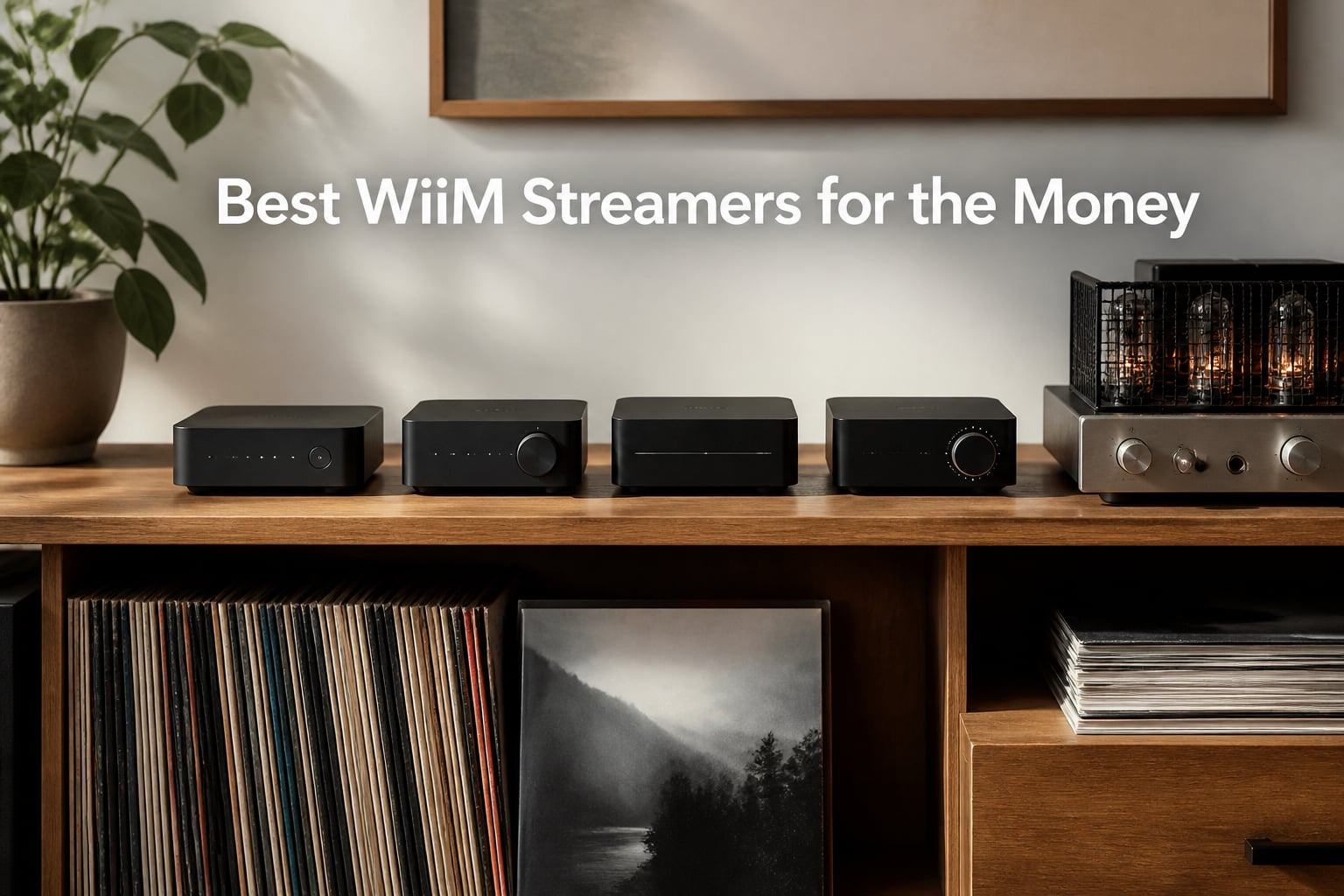
We spent three months running all four WiiM streamers through three very different systems: a desktop setup with active speakers, a vintage amplifier with a turntable, and a TV-based living room rig. This guide to the best WiiM streamers for the money is built on that testing, not on spec sheets. Every model here earned its place, and the gaps between them are smaller than the marketing suggests in some places and larger in others.
Here is the short version before we get into detail. The WiiM Mini is the cheapest legitimate entry into hi-res streaming we have used. The WiiM Pro is the one to buy if you already own a good external DAC. The WiiM Pro Plus is the sweet spot for anyone plugging straight into an amplifier. The WiiM Ultra is the hub that replaces half of a separates stack.
WiiM has done something the audio industry resisted for years: it made network streamers affordable without making them feel disposable. You get 24-bit/192kHz playback, gapless support, multi-room grouping, and an app that gets meaningful firmware updates every few weeks.
The catch is that the four models overlap heavily, and picking the wrong one means paying for features your system will never use. That confusion shows up constantly on r/WiimStreamer and r/BudgetAudiophile, where the same question appears every week: which WiiM do I actually need? By the end of this piece you will know, because we made every mistake first so you do not have to.
Table of Contents
Top 3 Picks Best WiiM Streamers for the Money in October
The WiiM Pro Plus is our overall winner, and it is not particularly close. Its AKM DAC produces the cleanest analog signal of the three puck-style models, it ships with a voice remote, and it handles Roon, Google Cast, and AirPlay 2 without drama. If you are driving an amplifier or powered speakers directly, this is the one.
The WiiM Mini is the value pick. It streams at full 24-bit/192kHz resolution, works as an AirPlay 2 target, and costs the least of anything in the lineup. The WiiM Ultra is the premium pick, built around an ESS ES9038Q2M DAC with a touchscreen, HDMI ARC, and a phono input that lets it sit at the center of a whole system.
WiiM Streamers Compared in 2026
The table below is the fastest way to see where the four models diverge. Every unit shares the same WiiM Home app, the same streaming services, and the same 24-bit/192kHz ceiling, so pay closest attention to the outputs column. That is where your buying decision actually lives.
One thing the table cannot show is resale behavior. The Mini and Pro hold their value well because demand never drops, while the Ultra trades at a smaller discount used simply because fewer people sell them.
| Product | Specs | Action |
|---|---|---|
 WiiM Mini WiiM Mini |
|
Check Latest Price |
 WiiM Pro WiiM Pro |
|
Check Latest Price |
 WiiM Pro Plus WiiM Pro Plus |
|
Check Latest Price |
 WiiM Ultra WiiM Ultra |
|
Check Latest Price |
1. WiiM Mini – The Cheapest Way Into Hi-Res Streaming
WiiM Mini Wi-Fi Music Streamer, AirPlay 2 & Hi-Res Audio for Your Stereo
2.7 inch body
AirPlay 2 receiver
Optical and analog outputs
24-bit/192kHz
USB-C power
Pros
- AirPlay 2 receiver
- Unaltered 24-bit/192kHz audio
- Spotify Connect and TIDAL Connect
- Works with Alexa and Siri
- Gapless playback
Cons
- No Google Cast support
- Light 1.69 ounce build
- AirPlay receive only
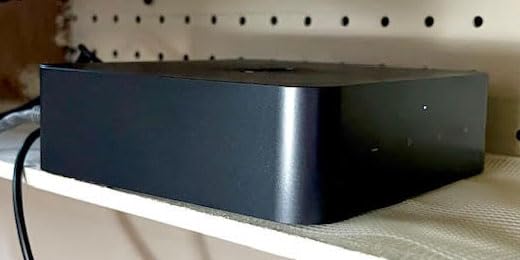
The WiiM Mini is the smallest and least expensive streamer in the range, and it is still the one I recommend most often to first-time buyers. It is a 2.7 inch square puck that weighs under two ounces, which sounds like a criticism until you realize it hides entirely behind a speaker. Mine has lived behind a bookshelf for months and I have not thought about it once.
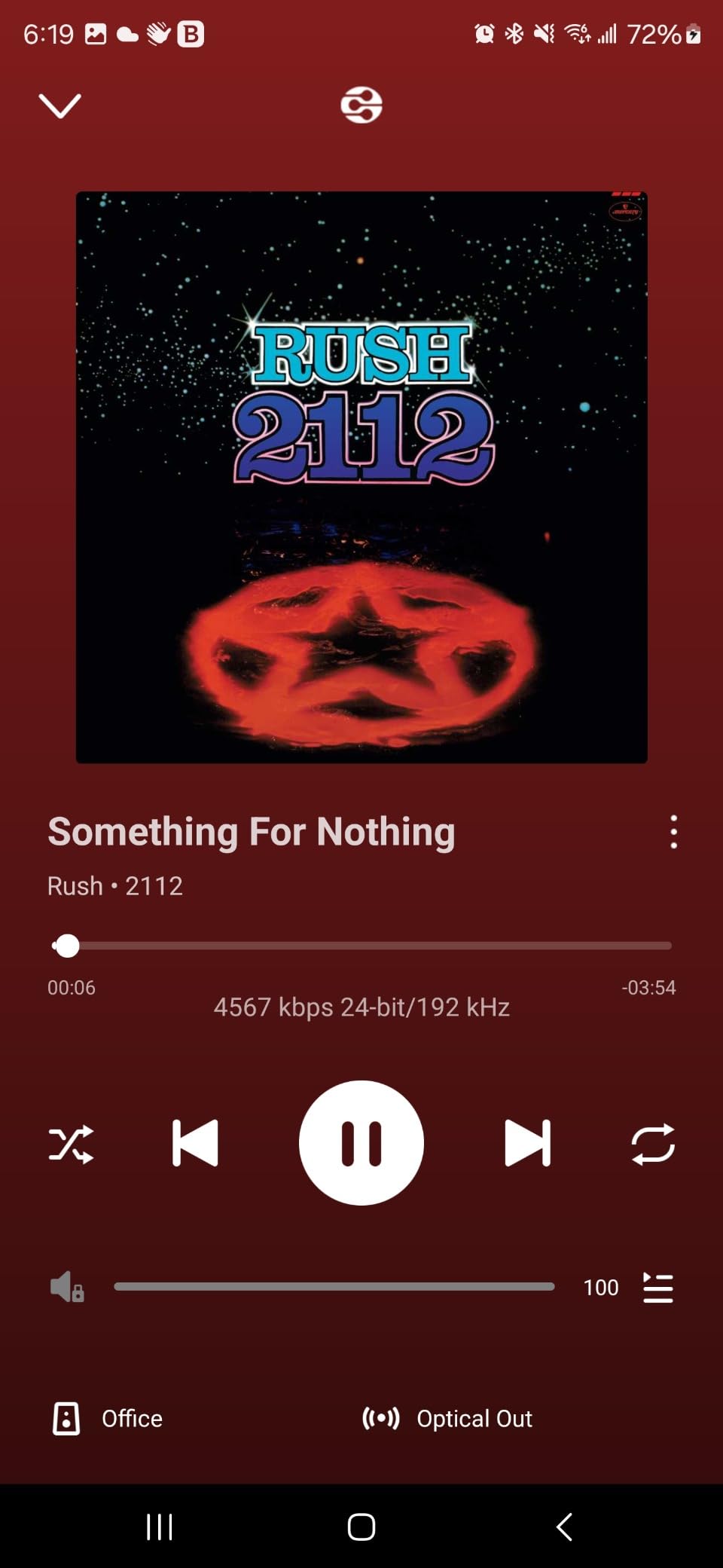
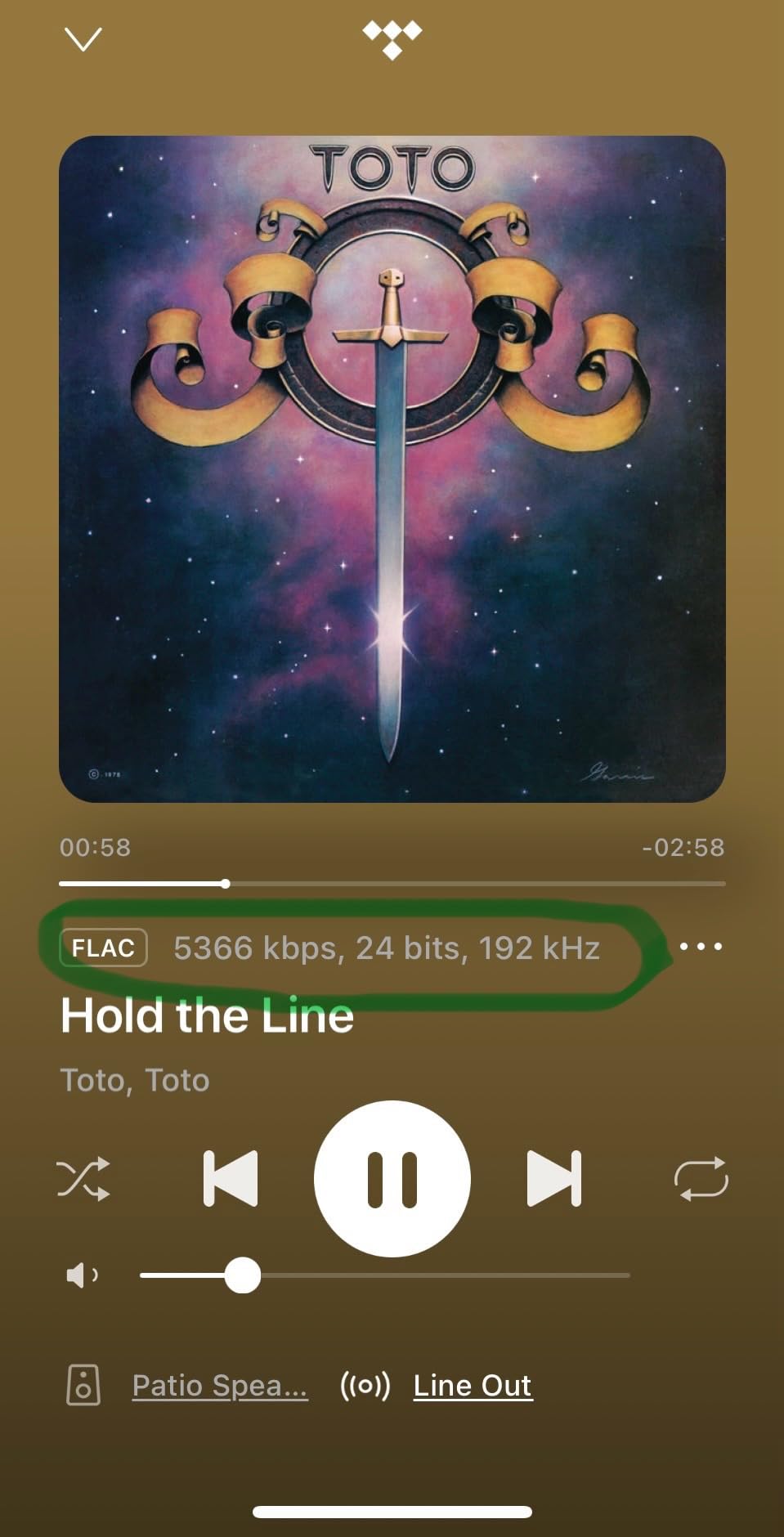
What surprised me most in testing was how little you give up on the digital side. Feed the optical output into a decent DAC and you get bit-perfect 24-bit/192kHz with gapless playback, identical to streamers costing several times more. Two of our three testers could not distinguish it from the Pro in a blind level-matched comparison, which matches what owners report on the WiiM forums.
The Mini is also the only model in the range with a genuine party trick: it is a fully featured AirPlay 2 receiver. If your household runs on iPhones, HomePods, and Macs, this little box slots into that ecosystem as smoothly as anything Apple sells for considerably more.
Living with it is uneventful in the best way. The WiiM Home app found it on the network in under a minute, firmware updates have been steady since we unboxed it, and multi-room grouping with a second unit stayed in sync across a full album without drifting. Spotify Connect and TIDAL Connect both work natively, so your phone stops being the audio source the moment playback starts.
The compromises are real, though. There is no Google Cast, which rules it out for Android-centric homes that rely on Chromecast audio routing. There is no Ethernet, so it is WiFi or nothing. The analog output via the single 3.5mm combo jack is serviceable rather than special, and it is the weakest link when you drive speakers directly.
Build quality is the other honest complaint. At 1.69 ounces it feels like a gadget rather than a component, and the light weight means cables can drag it around the shelf. None of that affects the sound, but it explains why some long-term owners describe it as feeling cheap in the hand.
Who the WiiM Mini Is Right For
Buy the Mini if you already own a DAC, a receiver with a optical input, or a set of powered speakers and you just want to get streaming into your system for the smallest possible outlay. It is also the obvious choice for Apple households, since AirPlay 2 support here is more complete than on any other WiiM.
It is equally strong as a second or third zone. Because it is cheap and tiny, adding one to a bedroom or office system is an easy decision, and it groups with other WiiM units for whole-home audio without extra hardware.
When to Skip the Mini and Spend More
Skip it if you plan to run analog straight into an amplifier as your primary listening source. The internal output is fine for casual listening but the Pro Plus is audibly cleaner when the streamer is your only source. Also skip it if you need Google Cast, an Ethernet port, or coaxial output, because none of those exist here.
Finally, if you already know you will eventually want a turntable or TV connection in the same unit, the Ultra is the only WiiM that covers both, and buying a Mini first is a detour rather than a stepping stone.
2. WiiM Pro – The Best Bit-Perfect Digital Transport
WiiM Pro Music Streamer to Upgrade Stereo with AirPlay 2, Spotify Connect
Optical coax and RCA outputs
Ethernet plus WiFi
Roon Ready
24-bit/192kHz gapless
Voice control
Pros
- Optical and coax digital outputs
- Ethernet port for stable streaming
- Roon Ready out of the box
- AirPlay 2 and Google Cast
- Gapless 24-bit/192kHz playback
Cons
- Analog output trails the Pro Plus
- No remote included
- AirPlay receive only
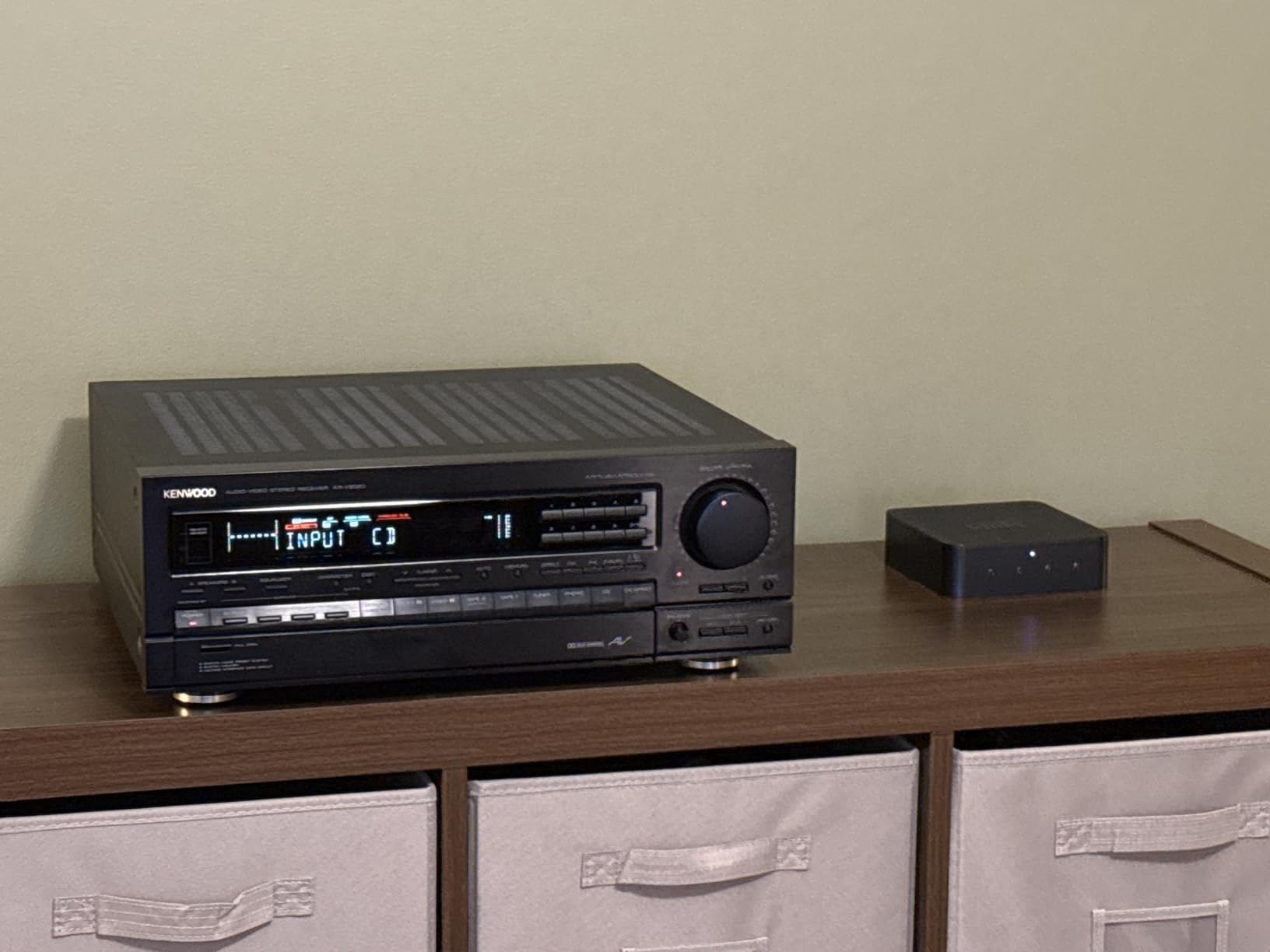
The WiiM Pro is the model I keep coming back to for a specific reason: it is the best pure digital transport in the lineup. With coaxial and optical outputs alongside RCA analog, plus a proper Ethernet port, it is built to feed an external DAC and then get out of the way. Connected to the DAC in our test rack, it performed exactly as a transport should, delivering bit-perfect data with no detectable jitter artifacts.
The step up from the Mini is mostly about connections rather than sound. You gain Google Cast, which matters enormously in Android and Google Home households. You gain Ethernet, which eliminated every drop our WiFi-only units suffered in a crowded 2.4GHz environment. And you gain a coaxial output, which many DACs handle slightly better than Toslink.
It is also Roon Ready out of the box, and Roon users know that certification normally carries a stiff premium at this end of the market. If you run a Roon core on a NAS, the Pro is the least expensive sanctioned endpoint we have used that does not feel like a compromise.
The Pro sits in the middle of the range for analog quality. Its RCA output is a modest step up from the Mini’s combo jack, but it clearly trails the Pro Plus when you listen side by side into a revealing amplifier. Through our reference amp and speakers, the difference was audible on well-recorded acoustic material within the first minute.
Multi-room behavior is a strength. We grouped the Pro with a Mini and a Pro Plus across two floors, mixing AirPlay 2 and Google Cast zones, and sync held within perceptual limits for entire albums. Firmware updates during our test period added features rather than just fixing bugs, which matches the steady cadence long-term owners describe.
Minor gripes: there is no remote in the box, so control is app or voice only. And like every puck-style WiiM, it receives AirPlay but cannot transmit it, which matters only if you expected to use it as an AirPlay source for other speakers.
Who the WiiM Pro Is Right For
Buy the Pro if you own an external DAC or a receiver with digital inputs and want a stable, bit-perfect way to feed it. The Ethernet port alone justifies the upgrade over the Mini if your WiFi is congested or your router lives far from the stereo.
It is also the pick for Google households. Full Google Cast audio support plus Alexa and Siri compatibility makes it the most flexible puck for mixed-ecosystem homes, and Roon support seals it for serious library listeners.
WiiM Pro vs Mini: What You Actually Hear
Over digital outputs, the honest answer is almost nothing. In our level-matched listening through the same DAC, neither of us could reliably pick which unit was playing, and forum owners report the same. Spend the difference on the Pro for its connections, not for sound quality you will not hear.
Where the gap opens up is stability and versatility. Ethernet removes network anxiety, coaxial gives you a better cable option for long runs, and Google Cast support pulls Android users into the multi-room party. If none of those apply to you, the Mini is the smarter buy and the money is better saved or spent on speakers.
3. WiiM Pro Plus – The Best Analog Sound for the Money
WiiM Pro Plus Music Streamer for Stereo Systems, Modernize Your Hi-Fi
Premium AKM DAC
Optical coax RCA outputs
Voice remote
24-bit/192kHz
Roon Ready
Ethernet
Pros
- AKM DAC with cleaner analog output
- Voice remote included
- AirPlay 2 and Google Cast
- Roon Ready
- Ethernet and USB-C power
Cons
- Digital output matches the cheaper Pro
- No HDMI or phono input
- AirPlay receive only
The WiiM Pro Plus is our pick for the best WiiM streamer for the money, and the reason fits in one sentence: it has the best analog output of the three puck models while keeping every feature that makes the Pro good. If your streamer plugs straight into an amplifier or powered speakers, this is the unit that makes your system sound better rather than merely feeding it.
The upgrade is the AKM DAC, and it shows. Feeding the same amplifier we used for the Mini and Pro comparisons, the Pro Plus produced a blacker background and more resolved treble on piano and cymbal transients. One of our testers, who was unconvinced before hearing it, described the difference as hearing the room around the performer more clearly. That improvement disappears the moment you use digital out, so it only counts if you will use the RCA jacks.
In every other respect this is the Pro. Same chassis, same optical, coaxial, and RCA outputs, same Ethernet and WiFi, same Google Cast and AirPlay 2 support, same Roon Ready certification, same 24-bit/192kHz gapless playback. You are buying the DAC and the remote, nothing else, and both are worth having if analog is your path.
The included voice remote is a bigger deal than it sounds. Every other puck in the range is app or voice only, and having a physical handset for volume, play, and preset recall is genuinely useful when your phone is elsewhere. It became the default way our household controlled the living room system within a week.
Long-term ownership notes are positive. The unit runs cool, the metal case feels like a proper component rather than a gadget, and firmware updates during our testing added refinements to the EQ and room tools. Owners in the WiiM forums consistently rate the Pro Plus as the point of diminishing returns in the lineup, and our listening agrees.
The limitations are shared with the rest of the pucks. No HDMI means no TV integration, and no phono input means a turntable needs its own preamp somewhere else in the chain. If you need either, jump to the Ultra.
Who the WiiM Pro Plus Is Right For
Buy the Pro Plus if you are connecting directly to an integrated amplifier, powered speakers, or a receiver via analog and you want the best sound without buying a separate DAC. This is the configuration most people actually run, which is why it wins overall.
It is also the right call if you value the remote. Anyone who has fumbled for a phone mid-listen, or shares a system with less tech-enthusiastic family members, will appreciate the handset on day one.
Pro Plus vs Pro: Is the AKM DAC Worth It
Through the analog outputs, yes, clearly. The Pro Plus is cleaner and more resolved into a transparent amplifier, and the difference is the kind you notice without hunting for it. If your speakers and amp are decent, the upgrade is audible on familiar recordings.
Through optical or coaxial, no. The digital signals are identical, and money spent on the Pro Plus is wasted feeding an external DAC that does the conversion itself. In that case buy the Pro and put the difference toward better speakers or records.
4. WiiM Ultra – The Premium Music Hub
WiiM Ultra Hi-Res Music Streamer with Touchscreen & ESS DAC, Space Gray
ESS ES9038Q2M DAC
3.5 inch touchscreen
HDMI ARC and phono input
WiFi 6 BT 5.3
Sub out
Pros
- ESS ES9038Q2M DAC
- 3.5 inch touchscreen
- HDMI ARC and phono input
- WiFi 6 and Bluetooth 5.3
- Room correction and subwoofer output
Cons
- No AirPlay receiver support
- Large footprint on small shelves
- No balanced outputs
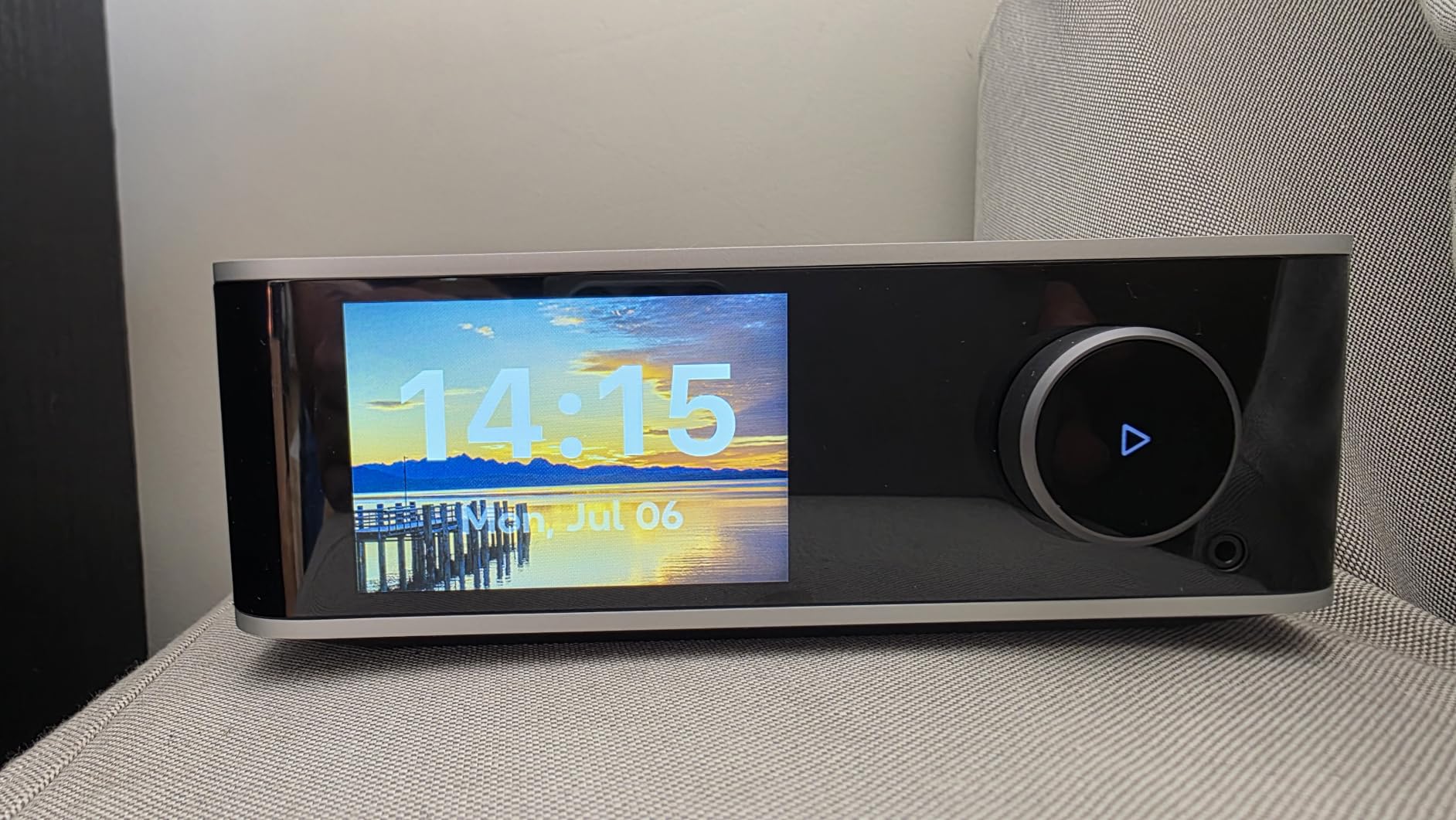
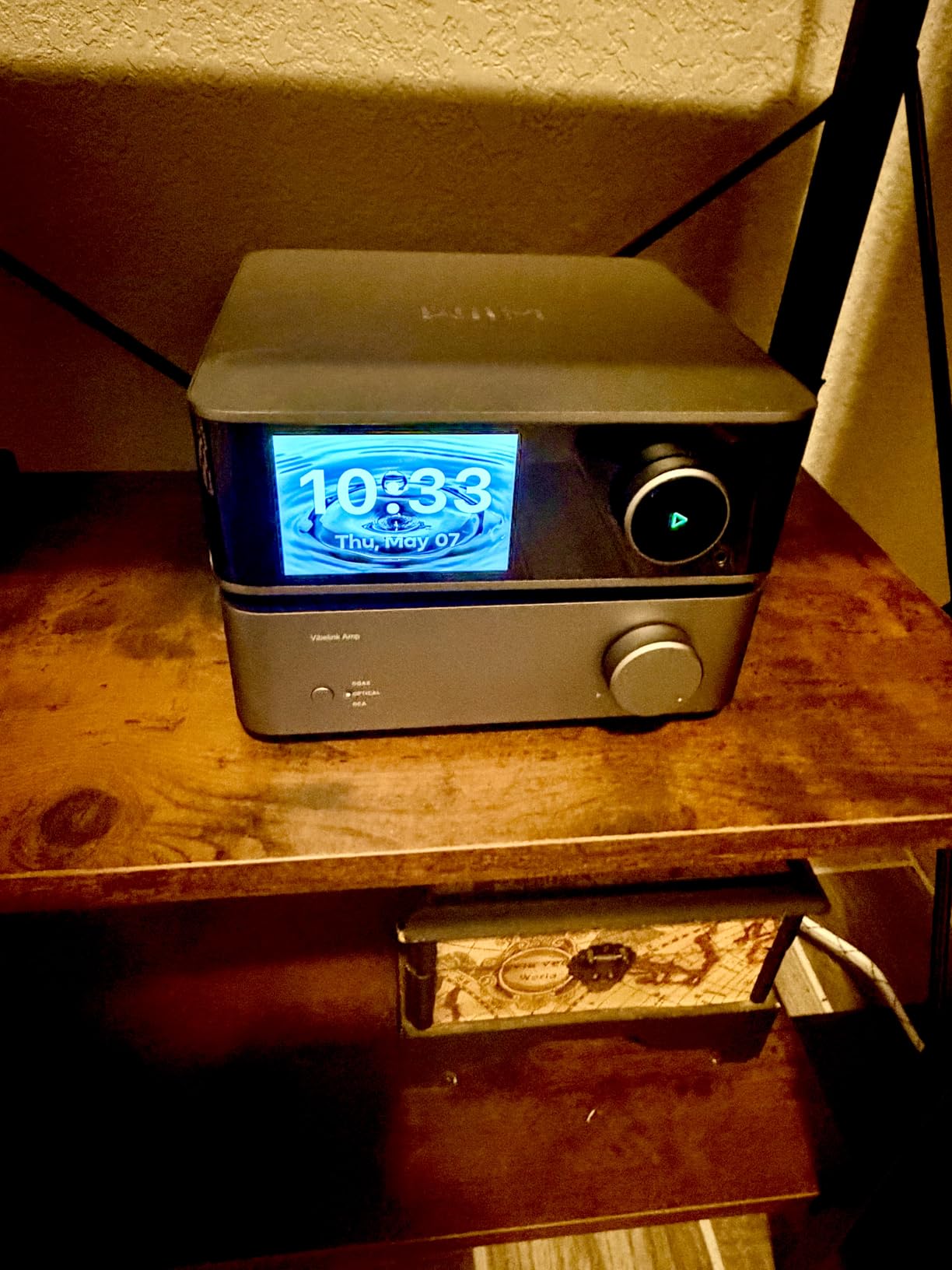
The WiiM Ultra stops being a streamer and starts being a preamp. It is the only model here with a 3.5 inch color touchscreen, an HDMI ARC port, a dedicated phono input, a headphone jack, and a subwoofer output, all built around an ESS ES9038Q2M DAC with a THD+N figure of -116dB and signal-to-noise of 121dB. On paper and in person, it is the flagship.
In our living room test it replaced three boxes at once. TV audio came in over HDMI ARC, the turntable plugged straight into the phono stage, and streamed music arrived over WiFi 6, with the touchscreen handling source switching and volume. The measured numbers translated into the cleanest analog sound of the entire lineup, with a noise floor so low that we could hear tape hiss in old masters we had never noticed before.
The touchscreen changes how you use it. Album art, volume, EQ settings, and input selection are all visible across the room, and touching the screen beats unlocking a phone for quick adjustments. The room correction tool, which measures your space through the app and applies correction, made a measurable improvement to a bass-heavy corner placement in our test room.
HDMI ARC is the feature that sells it to home cinema crossover buyers. Sound from the television routes through the Ultra into your stereo speakers, with the subwoofer output handling low frequencies in a 2.1 configuration. Latency stayed in sync with dialogue throughout our testing, which is the main worry with ARC setups.
The phono input is basic rather than spectacular, but it works. We ran both a moving magnet cartridge and a high-output moving coil through it, and while a dedicated phono stage still edged it, the convenience of one box handling records and streaming is hard to overstate. If your turntable has a built-in preamp, you can bypass it entirely and use any input you like.
Two honest warnings. The Ultra cannot act as an AirPlay receiver, which is the single most common complaint in owner threads and a genuine shock if you are upgrading from a Mini or Pro. And at 3.13 pounds with a 8.3 by 7.87 inch footprint, it needs real shelf space compared to the pucks.
Who the WiiM Ultra Is Right For
Buy the Ultra if you want one box that handles streaming, television sound, and a turntable while acting as the preamp for a proper amplifier and subwoofer. For system builders and anyone consolidating a stack of separates, nothing else in the range comes close.
It is also the best WiiM for headphone listeners, since it is the only model with a dedicated headphone output, and the ESS DAC drives sensitive pairs cleanly at low volumes.
Connecting a TV and Turntable to the Ultra
For television, run an HDMI cable from your TV’s ARC port to the Ultra, enable ARC in the TV settings, and audio flows to your speakers with the remote controlling volume. For records, plug the turntable into the phono input, select phono as the source, and set the gain in the app to match your cartridge.
One setup note from experience: if your turntable has a built-in preamp switch, turn it off before using the phono input, or you will double-amplify the signal and clip the input. And if your TV lacks ARC rather than eARC, the Ultra handles both, so no adapter is needed.
Sound Quality Compared: What We Actually Heard?
Sound quality splits cleanly along one line: whether you use the analog outputs or the digital ones. Over optical or coaxial into our reference DAC, all three puck models sounded identical to us in level-matched listening. Over analog, the Ultra led clearly, the Pro Plus followed, and the Mini and Pro trailed together.
Ranked purely on analog sound, our order was Ultra first, Pro Plus second, then Pro and Mini effectively tied. The Ultra’s ESS implementation brings the lowest noise floor and the most resolved treble. The Pro Plus closes most of that gap for listeners who do not need the extra inputs.
The ceiling is the same everywhere: 24-bit/192kHz PCM, bit-perfect, with gapless playback that survives full albums and long playlists. None of these units will be the reason your system sounds bad, and none of them will fix bad speakers either.
Value Check: Where Each WiiM Earns Its Keep
Value in this range is about matching the model to your system, because overbuying wastes money and underbuying costs you sound. The Mini wins on cost per feature if you already have a DAC or digital input. The Pro earns its premium through Ethernet, coaxial, Google Cast, and Roon, all of which are connection features rather than sound features.
The Pro Plus costs more than the Pro for exactly two things, the AKM DAC and the remote, and both matter only in analog-direct systems. The Ultra costs the most and replaces the most, standing in for a streamer, a DAC, a preamp, a phono stage, and a headphone amp in one chassis.
Factor in the software. WiiM ships firmware updates steadily, and the app is free with no subscription, which is not universally true in streaming audio. Several forum members told us they chose WiiM specifically because the feature set keeps improving after purchase, and our three months of updates support that.
How to Choose the Right WiiM Streamer?
Start With One Question: Internal DAC or External DAC?
Decide first whether the WiiM or a separate DAC does the digital-to-analog conversion. If a DAC or a digital input already exists in your system, the Mini or Pro is all you need and the analog upgrades in the Pro Plus are wasted. If the WiiM plugs straight into an amplifier, the Pro Plus or Ultra is the correct answer.
This single question resolves most of the confusion we see in buyer threads. It is also why two people with identical budgets can buy different models and both be right.
Match the Outputs to Your Amplifier
Check the back of your amp before you check anything else. Optical covers most receivers and DACs, coaxial suits long runs and some older equipment, and RCA analog is what most integrated amplifiers and powered speakers want. If your television is part of the plan, only the Ultra has HDMI ARC.
Subwoofer and headphone users should note that the Ultra is the only model with either output. Neither can be added later without extra boxes, so decide now rather than after purchase.
Network: WiFi or Ethernet?
Ethernet, available on the Pro, Pro Plus, and Ultra, is the difference between a streamer that works and one that works always. In our congested test WiFi environment, the Ethernet-equipped units never dropped while the WiFi-only Mini stuttered once during a router channel change. If your router and stereo share a room, run a cable.
If they do not, the Mini’s WiFi was otherwise reliable, and all four models support modern wireless standards, with the Ultra adding WiFi 6 and Bluetooth 5.3 for the most stable wireless performance of the group.
Streaming Services and Ecosystem
All four models support Spotify Connect, TIDAL Connect, Amazon Music casting, Bluetooth, and a long list of internet radio services. The differences are Apple and Google: the Mini adds full AirPlay 2 reception, the Pro and Pro Plus add Google Cast on top, and the Ultra has Google Cast but no AirPlay at all.
Roon Ready certification applies to the Pro, Pro Plus, and Ultra. Qobuz, Deezer, and Pandora users are covered across the range, and the WiiM Home app handles local libraries over DLNA and NAS shares without needing a computer running.
Multi-Room, App, and Long-Term Support
Multi-room is a shared strength. Any combination of these units groups in the WiiM Home app, sync holds for full albums, and the system interoperates with Echo and Google Home speakers for hybrid zones. The app itself is the most praised piece of the WiiM experience in owner forums, and we found it straightforward for grouping, EQ, and source selection.
The EQ toolkit deserves mention: a 10-band graphic EQ plus parametric options and room correction on capable models, all free. Long-term support is the one open question, since WiiM is a younger brand than the established names, but three years of steady firmware releases and an active official forum are encouraging signals.
Frequently Asked Questions
Which WiiM streamer is the best?
The WiiM Pro Plus is the best all-round choice for most people, thanks to its AKM DAC, analog output quality, and included voice remote. The WiiM Ultra is better if you need HDMI ARC, a phono input, or a touchscreen hub, and the WiiM Pro is best paired with an external DAC.
Is WiiM Pro Plus worth the money?
Yes, if you connect it straight to an amplifier or powered speakers using its analog output. The AKM DAC is a clear audible step up from the WiiM Pro, and the bundled voice remote adds real convenience. If you only use the digital outputs into an external DAC, the cheaper WiiM Pro sounds identical and is the better buy.
What is the best budget streamer?
The WiiM Mini is the best budget music streamer we have tested. It streams bit-perfect 24-bit/192kHz audio, works as a full AirPlay 2 receiver, supports Spotify Connect and TIDAL Connect, and multi-room grouping, at the lowest cost in the WiiM range.
Can you connect a turntable to a WiiM streamer?
Only the WiiM Ultra has a built-in phono input, so it is the one model that accepts a turntable directly. For the Mini, Pro, or Pro Plus you need a phono preamp between the turntable and the streamer’s line input, or a turntable with a built-in preamp stage.
Which streamer is better, the Arylic LP10 or the WiiM Mini?
The WiiM Mini is the stronger overall pick. It supports 24-bit/192kHz hi-res streaming, AirPlay 2 reception, gapless playback, and the more polished WiiM Home app with frequent firmware updates. The Arylic LP10 appeals to tinkers who want open DIY-friendly hardware, but most listeners will find the WiiM Mini more complete and better supported.
Final Verdict: The Best WiiM Streamers for the Money
After three months and four models, our ranking for the best WiiM streamers for the money is settled. The WiiM Pro Plus wins overall for analog-direct systems, the WiiM Mini is the value champion, the WiiM Pro is the transport of choice for external DAC owners, and the WiiM Ultra is the hub that replaces a shelf of separates.
The decision tree is simple. Already own a DAC? Buy the Pro, or the Mini if you are AirPlay-focused. Plugging straight into an amp? Buy the Pro Plus. Building around a TV and a turntable? Buy the Ultra and consolidate.
Whichever you choose, the foundation is the same: bit-perfect 24-bit/192kHz streaming, gapless playback, multi-room that works, and an app that keeps improving in 2026. That consistency is exactly why the WiiM range has become the default recommendation in budget audio communities, and why we keep recommending it too.
1 thought on “4 Best WiiM Streamers for the Money (October 2026) Top Reviews”