

Most decoy advice is written for open water. It talks about wind direction, spread width, and how far birds can see a silhouette against a horizon. None of that applies when you are sitting in a cypress brake at first light with 30 feet of standing water and a knot of cypress knees between you and the birds.
Flooded timber changes the rules. Ducks in a cypress swamp, tupelo slough, or beaver-drowned river backwater come to you before they ever see your spread. A dozen decoys in a tight cluster beats three dozen spread in a line. That is the single idea behind every pick in this guide to the best duck decoys for flooded timber in 2026.
Our team compared ten current decoy packs against the conditions that actually decide a timber hunt: close range, dappled light, calm water, and anchor lines that will wrap around submerged branches before the first flight finishes. We looked at keel weight, body size, paint contrast, and how each one packs into a boat bag. Ten products made the cut, and none of them required a field-spread layout to work.
One note before we start. I am not going to tell you a brand name is magic. What I can tell you is which pack has the keel weight to hold position on still water, which one stays readable at 25 yards, and which one to skip if you are wading a snag-filled slough with a full pack on your back.
Table of Contents
Top 3 Picks for Flooded Timber Duck Hunting for October 2026
These three cover the three jobs most people need. One adds movement to dead-calm water, one supplies the wood duck flock, and one puts a feeding ripple into an otherwise static setup.

MOJO Outdoors Spinning Wing Decoys
- Spinning wing motion
- Random on-off timers
- 20+ hours on 3 AA batteries

Avian-X Topflight Wood Duck Floaters
- Weight-forward swim keel
- Oversized 12.5 inch profile
- Set of 6 wood ducks

MOJO Butt Up Rippler Mallard
- Ripple motion mimics feeding
- 6-8 hour battery life
- Compact body
Our overall pick earned it on the combination of rating and volume of owner feedback, plus the fact that it solves the hardest problem in timber. A flooded cypress brake at 7 a.m. has no wind on it, and a static spread on flat water is a dead giveaway to wood ducks that are used to seeing moving birds.
Best Duck Decoys for Flooded Timber in October 2026
All ten products, side by side. The Key Features column is what each pack brings to a timber setup specifically. The individual reviews below cover who each one suits and where it falls down.
| Product | Specs | Action |
|---|---|---|
| MOJO Outdoors Spinning Wing Decoys |
|
Check Latest Price |
| MOJO Butt Up Rippler Mallard |
|
Check Latest Price |
| Avian-X Topflight Wood Duck Floaters |
|
Check Latest Price |
 Avian-X Topflight Backwater Mallards Avian-X Topflight Backwater Mallards |
|
Check Latest Price |
 Higdon Green Wing Teal 12 Pack Higdon Green Wing Teal 12 Pack |
|
Check Latest Price |
 Avery GHG Essential Mallard 12 Pack Avery GHG Essential Mallard 12 Pack |
|
Check Latest Price |
 Higdon Bufflehead All Drakes 6 Pack Higdon Bufflehead All Drakes 6 Pack |
|
Check Latest Price |
 Higdon Standard Bluebill 12 Pack Higdon Standard Bluebill 12 Pack |
|
Check Latest Price |
 Final Approach Last Pass Mallard Floaters Final Approach Last Pass Mallard Floaters |
|
Check Latest Price |
 Cupped Waterfowl Mallard Floater 6 Pack Cupped Waterfowl Mallard Floater 6 Pack |
|
Check Latest Price |
Floater vs. Silhouette vs. Full-Body Decoys in Standing Timber
Floaters win in flooded timber. A floater is a molded body built to sit on the water surface with a weighted keel holding it upright. In standing timber, that surface presentation is the whole point, because ducks are looking down at your spread from 20 to 30 yards and then dropping into it.
Silhouette decoys are flat profile pieces that sit low in the water and show a painted side view. Hunters who back them argue that a moving silhouette in dappled light reads as a feeding bird. The honest counter is that at close range a silhouette has no depth and no head detail, and a wood duck that is 25 yards away and closing will pick the difference out of a tree gap. If your water is dark, your sight line is broken by cypress trunks, and your birds approach on the far side of a blowdown, silhouettes work. If they approach head-on, use floaters.
Full-body decoys stand up off the water and cost more. They earn that money in open water and on windy days, where profile height does most of the work. In a flooded brake with still water, the extra height mostly adds pack weight and snag risk.
Motion decoys sit alongside the floater pack rather than replacing it. They exist because calm water has no natural movement. Pulsator-style units, which push a steady ripple outward, are the safest choice in timber. Many hunters on r/Waterfowl prefer them to jerk rigs precisely because a jerker slaps the surface hard enough to flare birds that are already committed.
And yes, you can use floater decoys in a field. Floaters are a water presentation. On dry ground you want low profile decoys that will not tip when a dog runs through the spread. Keep the two sets separate.
A useful note on size. A standard decoy measures around 12 to 13 inches breast to tail. Life-size and oversized packs run larger. In a cypress brake, slough, pothole, or flooded timber, where ducks will be close before they see the spread, standard decoys are generally sufficient, and an oversized pack earns its extra size only when visibility is limited by trees rather than distance.
The 10 Best Duck Decoys for Flooded Timber
1. MOJO Outdoors Spinning Wing Decoys – The Best Overall Pick for Calm Timber Water
MOJO Dove-A-Flicker Spinning Wing Dove Decoys for Dove Hunting, 4 Pack
Spinning wing motion
Random on-off timers
20+ hours on 3 AA batteries
Pros
- Spinning wing design is a proven long-range attractor
- Pre-programmed random timers mimic real bird movement
- Runs 20+ hours on 3 AA batteries
- Ground scatter works well on finishing birds
Cons
- Batteries are not included
- Listing copy leans on dove application rather than waterfowl use
The hardest condition in flooded timber is glassy water. A cypress brake at first light can be so still that your own body shows up in the reflection, and a spread of stationary floaters reads as a display case rather than a feeding flock. This four-piece set solves that directly with a motorized spinning wing that never stops.
MOJO has been building this motion platform since the 1990s, and that longevity shows in the details. The wing spins continuously rather than pulsing, so there is no rhythm for a bird to learn is mechanical. That matters more in timber than it does on a big lake, where birds are far enough away to accept repetition.
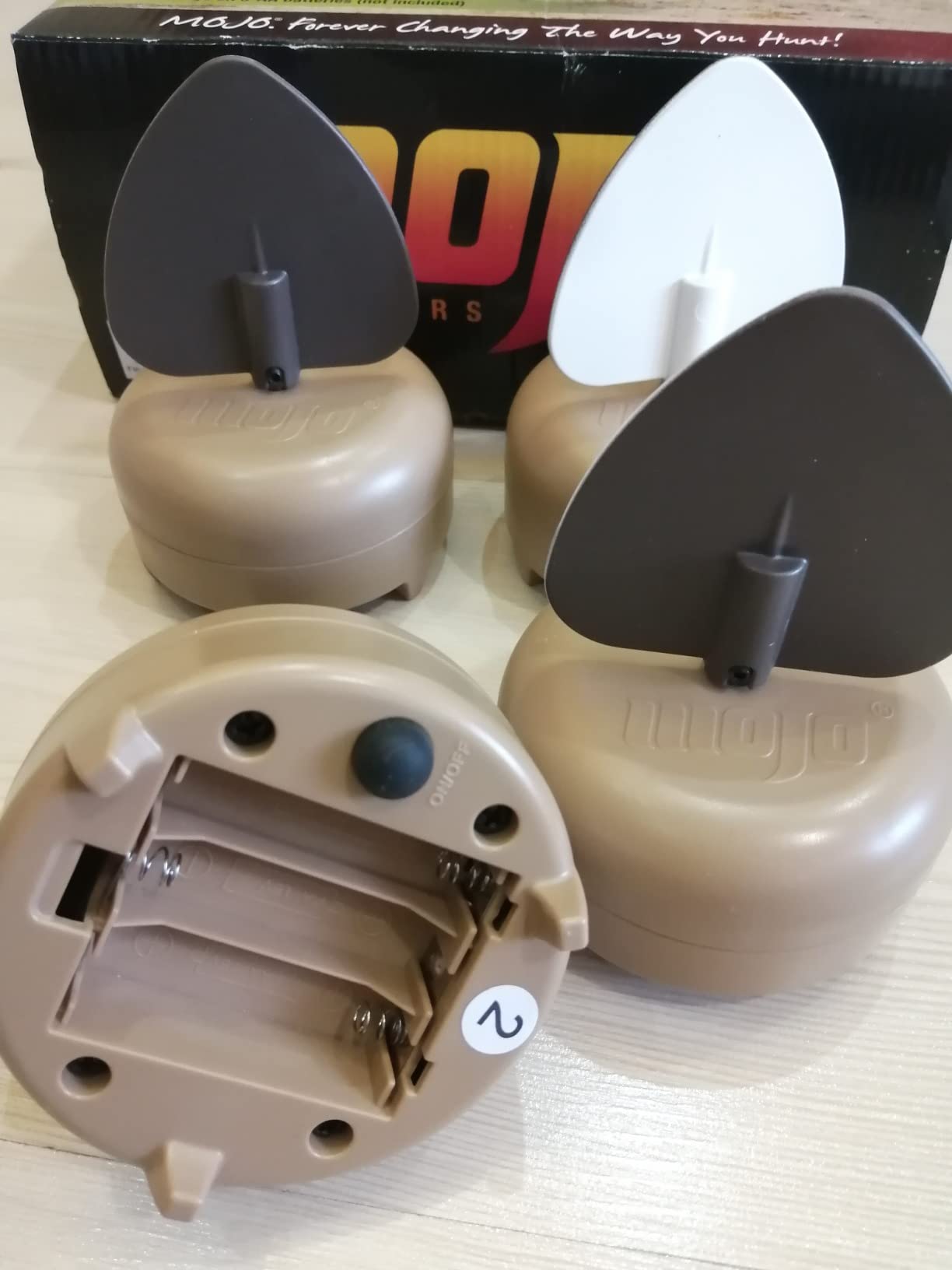
Each piece runs on three AA batteries for more than 20 hours, which covers a full dawn-to-midmorning sit and then some. The random on and off timers mean the set does not fire in unison, so the four units read as four separate birds rather than one mechanism multiplied.
The pack weighs 1.9 pounds and measures about 10.4 by 10.3 inches, which is a comfortable carry through a boat bag or a timber pack. Model number HW2461, one size, no assembly. You clip it in and turn it on.
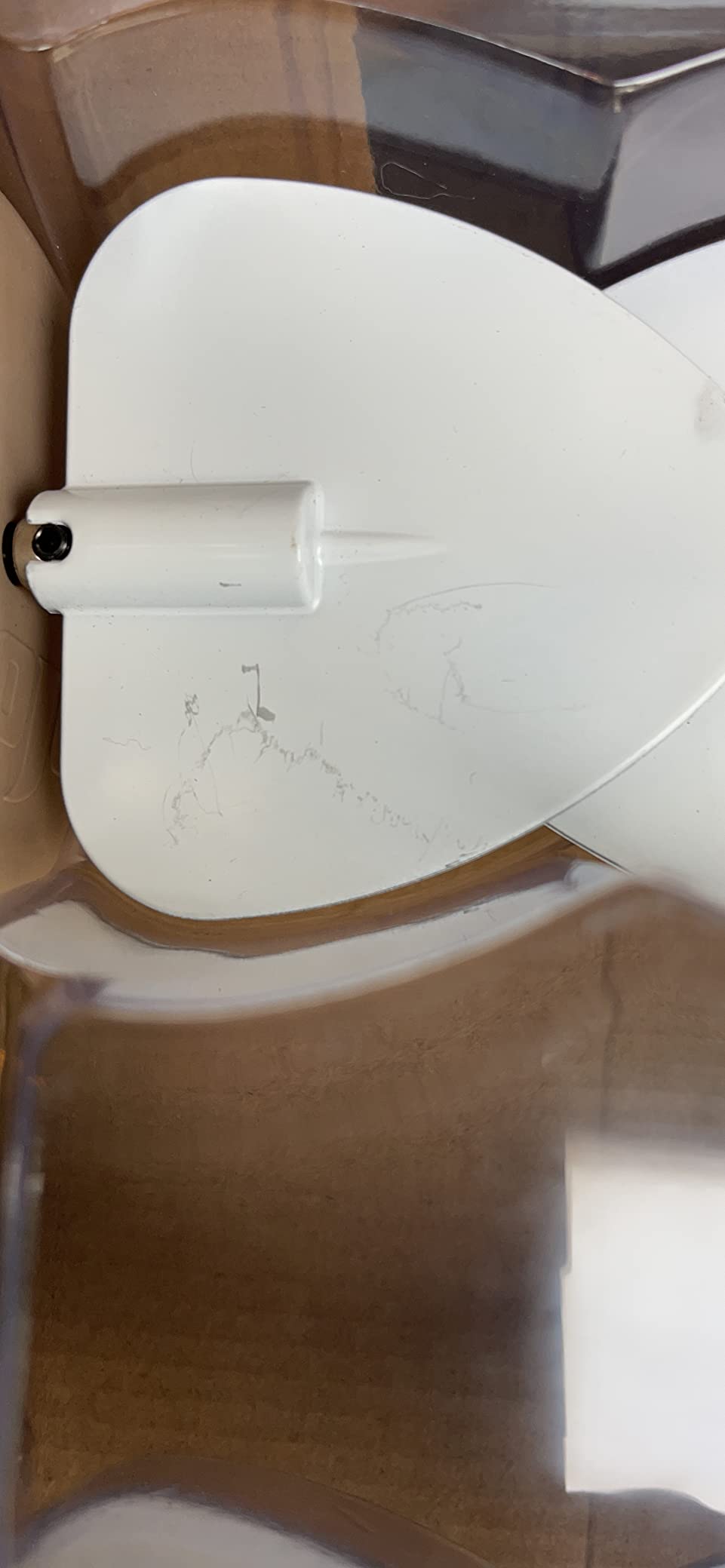
Reviewers consistently return to the same two points: the spinning wing concept works, and the battery runtime covers a real hunting day. The rating sits at 4.8 across 864 reviews, and an 88 percent five-star share is a strong signal for a product with this much owner history.
Who This Decoy Is For
This is the pick for anyone hunting a cypress or tupelo swamp, river backwater, or oxbow where the water barely moves. If your typical morning is a 20 to 30 yard pass shot off a boat or a shoreline stand in still water, the spinning wing is the single most useful thing you can add to the bag.
It also earns its place on windy days, because the wing keeps working when a spread of floaters would be tipped and scattered. Four pieces are enough. Nobody is filling a timber pocket with a dozen of these.
Where It Falls Short
The listing copy is written around dove application rather than waterfowl, which makes the product harder to research before you buy. You have to read the reviews to get the waterfowl picture.
Batteries are not included, so plan for a dozen AA cells the night before the season. And a spinning wing is audible. On an absolutely silent flooded pond in the last hour of legal light, that sound travels further than you would like, so set them before you commit to a stand rather than after.
2. MOJO Butt Up Rippler Mallard – The Best Value Ripple for a Static Spread
Mojo Outdoors Mojo Butt Up Rippler, Mallard
Ripple motion mimics feeding
6-8 hours of battery life
8 x 6 x 6 inch footprint
Pros
- Visible ripple motion mimics a feeding duck
- 6-8 hours of battery life spans multiple hunts
- Compact 8 x 6 x 6 inch body packs easily
Cons
- Needs 4 AA batteries that are not included
- Plastic housing draws durability complaints over seasons
A rippler is the gentler cousin of a jerker. Instead of slapping a paddle against the surface, it pushes a low, steady ring of ripples outward from a feeding bird’s position. In a timber pocket that already has some breeze on it, that ripple is often the difference between ducks committing and peeling off.
At 8 by 6 by 6 inches and 1.8 pounds, this is the easiest of the ten to pack. It fits in a pocket, it fits in the bottom of a boat bag under a dozen floaters, and it does not need its own anchor. Model HW2459, one piece, mallard.
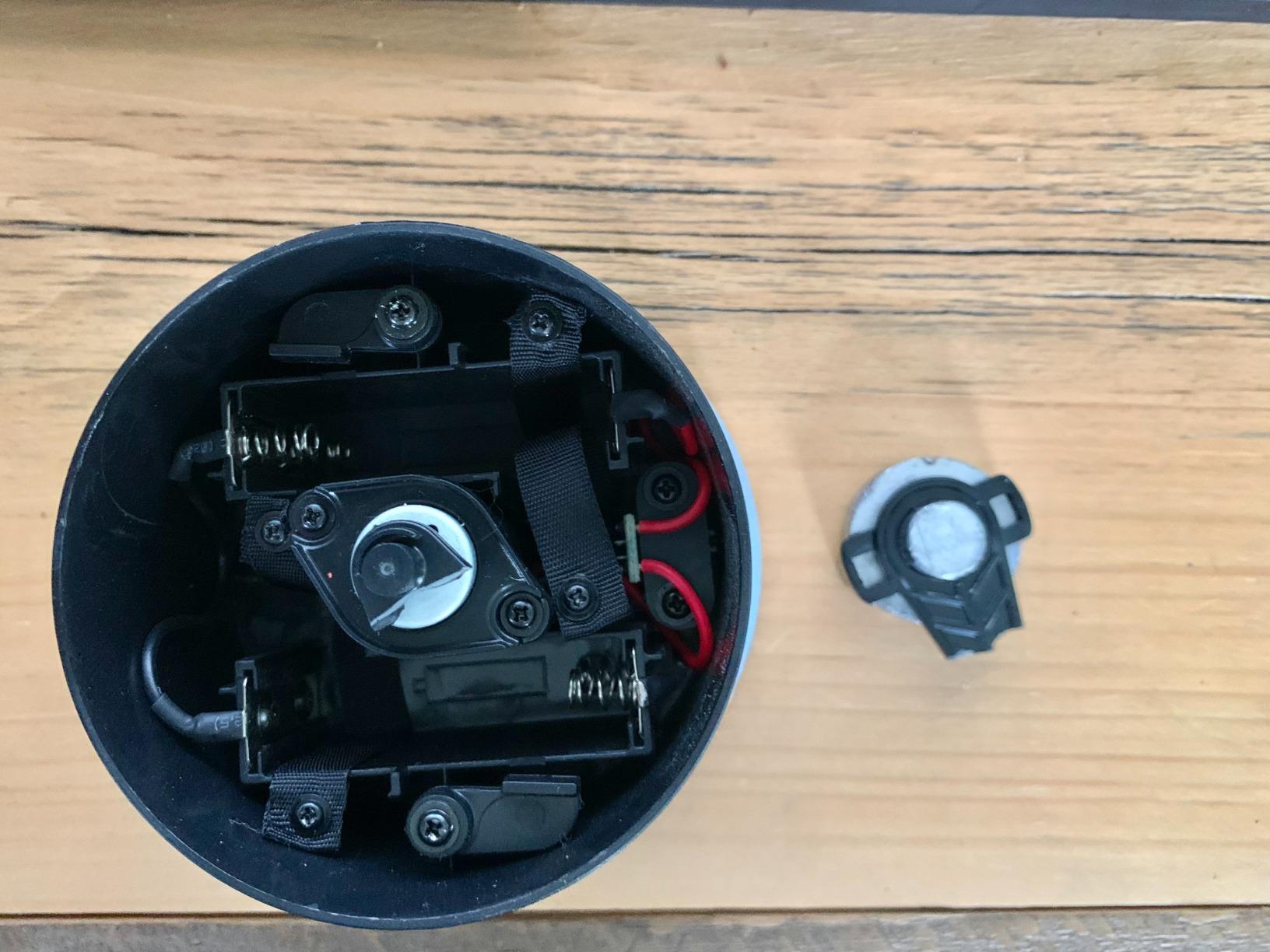
Buyers credit the ripple effect specifically for adding movement to an otherwise static spread, and the six to eight hour battery life is the other theme that repeats. It runs long enough to cover a morning hunt without a battery swap in the field.
This is also the most reviewed decoy on the list, with more than one thousand reviews, which matters in a niche where most of the competing listings have a few hundred at best. That much feedback tells you the failure modes are known, and the ripple effect works.
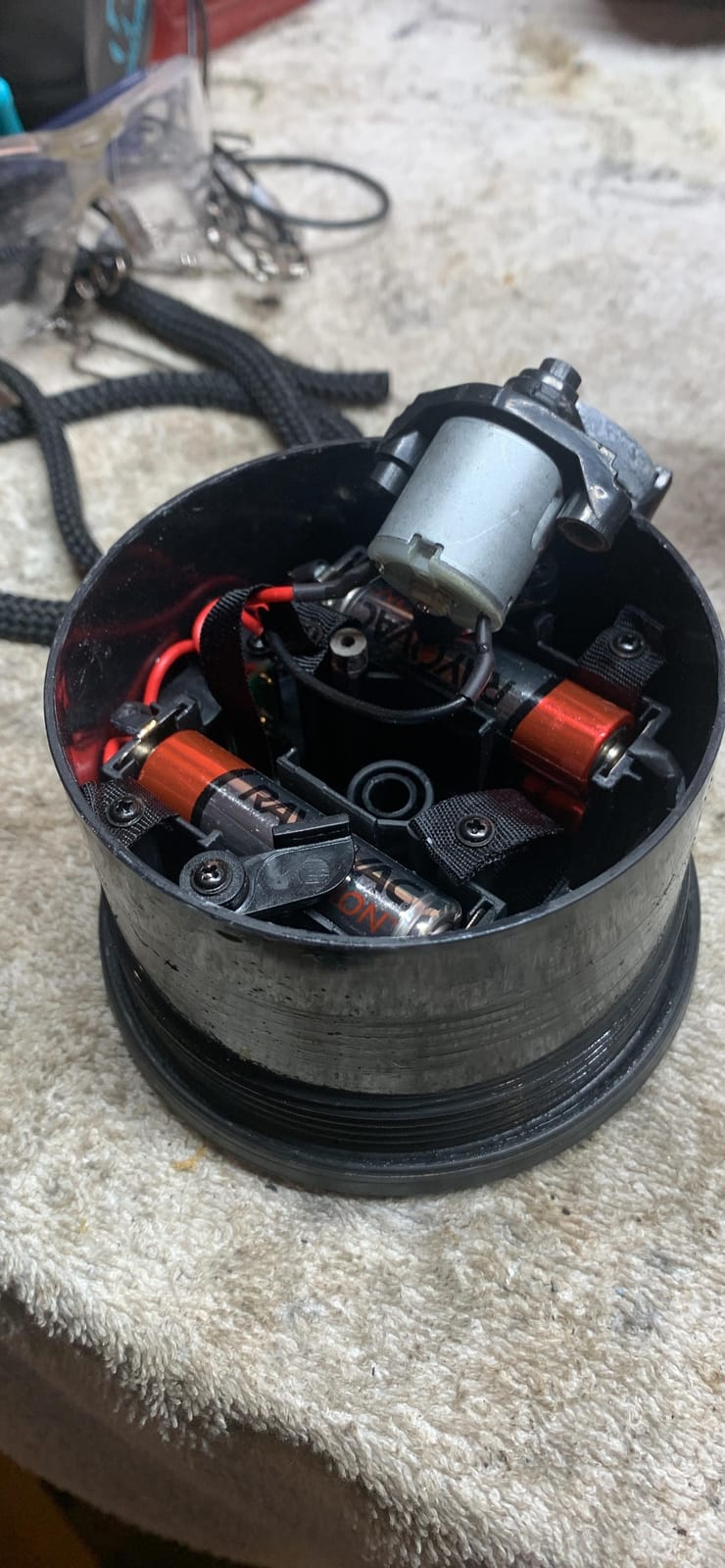
The 4.4 rating is tied for the lowest in this roundup, but the complaints that pull it down are not about performance. They are about batteries and long-term durability on a plastic housing that gets dropped in a boat all season.
Who This Decoy Is For
Buy this one if you already own a solid mallard floater pack and want movement without buying another dozen decoys. It is the cheapest way to stop a spread from looking frozen, and it is particularly good in a lightly rippled slough where a full spinning wing would be overkill.
It is also a good early-season wood duck add-on. Woodies work shallow feed at the front edge of a timber pocket, and a rippler in that zone keeps the water looking alive before the flock lands.
Where It Falls Short
It takes four AA batteries and they are not in the box. Six to eight hours is a real constraint if you are the kind of hunter who sits a full day through weather, since you will be swapping cells at a bad time.
At 4.4, this is not the durability leader in the group. If you are routinely running decoys through downed timber where things get knocked hard, spend up on a foam-filled pack instead.
3. Avian-X Topflight Wood Duck Floaters – The Best Wood Duck Pack for a Tight Cluster
Avian X Top Flight Wood Duck & Mallard Hunting Floater Decoys, Green (6 Pack)
Weight-forward swim keel
12.5 inch oversized profile
Set of 6 wood ducks
Pros
- Weight-forward swim keel gives natural motion
- Oversized 12.5 inch body adds visibility
- Rubberized molding and non-chip paint
- Three true-to-life feeding postures
Cons
- 3.74 kg package weight is a heavier carry
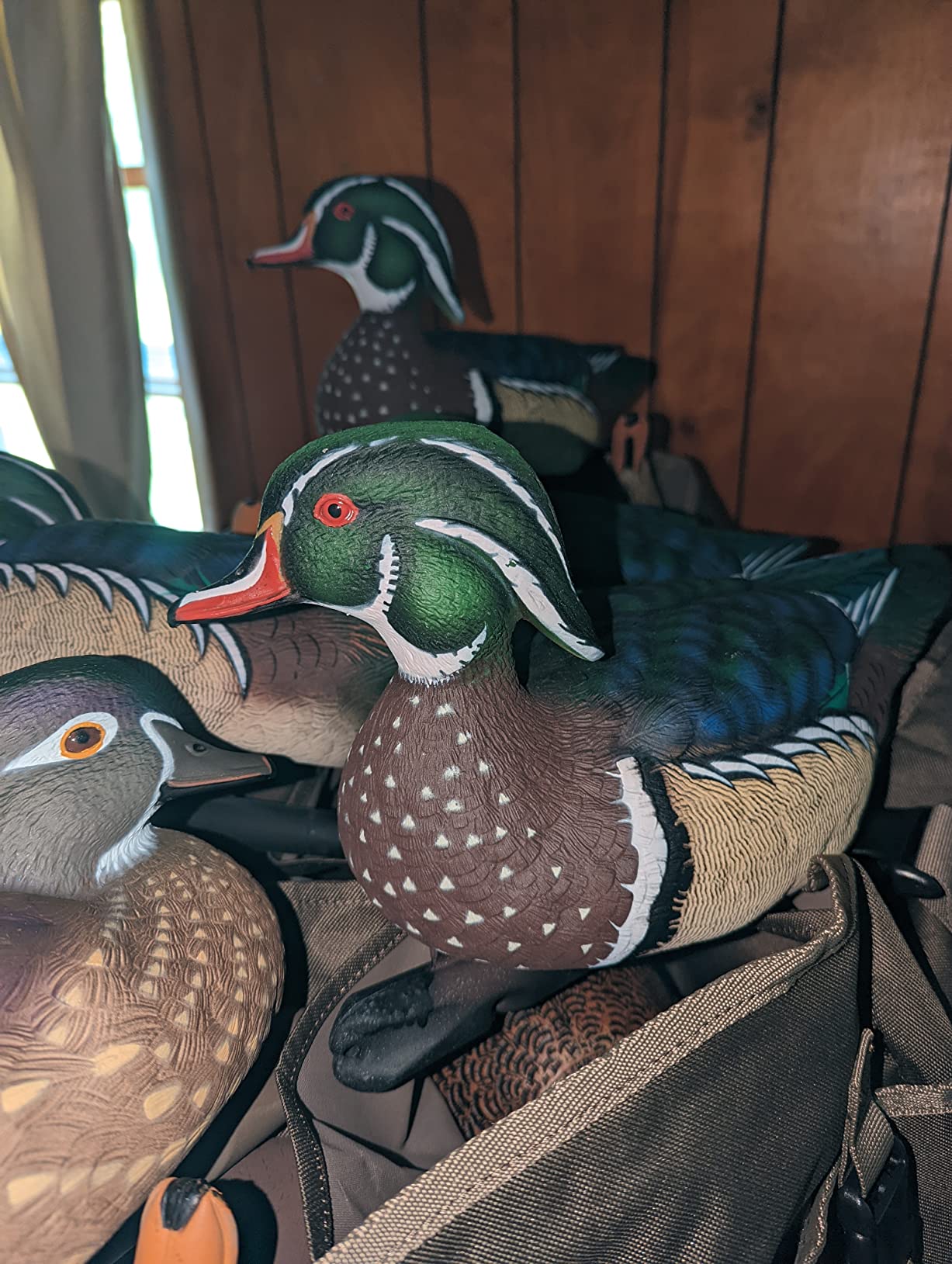
Wood duck floaters are the most timber-appropriate decoy category in this whole roundup, and this is the set to start with. Six of them, clustered in a small area, mimic a feeding flock in a way that nothing else here does. That tactic gets repeated constantly by timber hunters, and it works because it is honest about how wood ducks actually feed.
The weight-forward swim keel is the feature to pay attention to. It gives each decoy a slow rock and roll on the surface that a fixed keel cannot, and on calm water that motion is doing most of the work. Combined with three genuine postures, the flock looks like a group that is busy rather than parked.

These are oversized at 12.5 inches breast to tail. In a pocket where cypress trunks break your sight line, that extra half inch is worth having because birds see fragments of your spread first. Rubberized molding and a non-chip paint finish are the durability answer to the thing timber hunters complain about most, which is paint scuffing off in a boat over the season.
The pack breaks down as two low-head drakes, two low-head hens, and two high-head drakes, which gives you a believable group without hunting for individual poses. Rated 4.8 across 440 reviews with a 91 percent five-star share.
Model 8083, one size, first available in 2014, which tells you this is a proven design rather than a new one. Nothing about it is cutting edge, and that is a compliment in a category where designs change more often than they should.
Who This Decoy Is For
This is for the early-season wood duck hunter working flooded woods, cypress swamp, or a river backwater with a wood duck ledge. Six tightly clustered floaters in front of you, with a call and a motion piece behind them, is a complete timber wood duck setup.
It is also the right choice if your water is dark tannin-stained cypress swamp. The high-contrast plumage of a wood drake carries a long way through that kind of water, and a green-headed mallard in the same spot would disappear.
Where It Falls Short
The package weight is 3.74 kg, and that matters. Wading a flooded slough in chest waders with this on your shoulder is a real chore, and the oversized profile is part of why it is heavy.
Six decoys is a deliberate number, not a bargain. If you want a full twelve-rig mallard spread alongside your woodies, this pack will not cover it and you will be buying a second set.
4. Avian-X Topflight Backwater Mallards – The Best Premium Three-Posture Mallard Pack
Avian X Topflight Backwater Mallards Duck Decoys Pack, Ultra Realistic Floating Mallard Hunting Decoy, 3 Feeding Postures, Multicolor, 6 Pack
Three feeding postures
Weight-forward swim keel
No-flake paint finish
Pros
- Realistic dabbling mallard postures and color
- Weight-forward swim keel for lifelike motion
- No-flake paint holds up season after season
- Clip-and-line setup takes minutes
Cons
- Listed item weight of 10 pounds is heavy for a 6-pack
The name on this pack is Backwater, which tells you the design brief. This is a mallard floater set built for still, shallow water with vegetation, which is precisely the flooded timber scenario. Three real feeding postures rather than one pose repeated is what separates a pack that reads as a flock from a pack that reads as inventory.
The weight-forward swim keel again does the heavy lifting. It gives the birds a natural bob that survives a light chop, and because a floater spends most of its time sitting and waiting, that movement is the only motion you get without adding a battery.

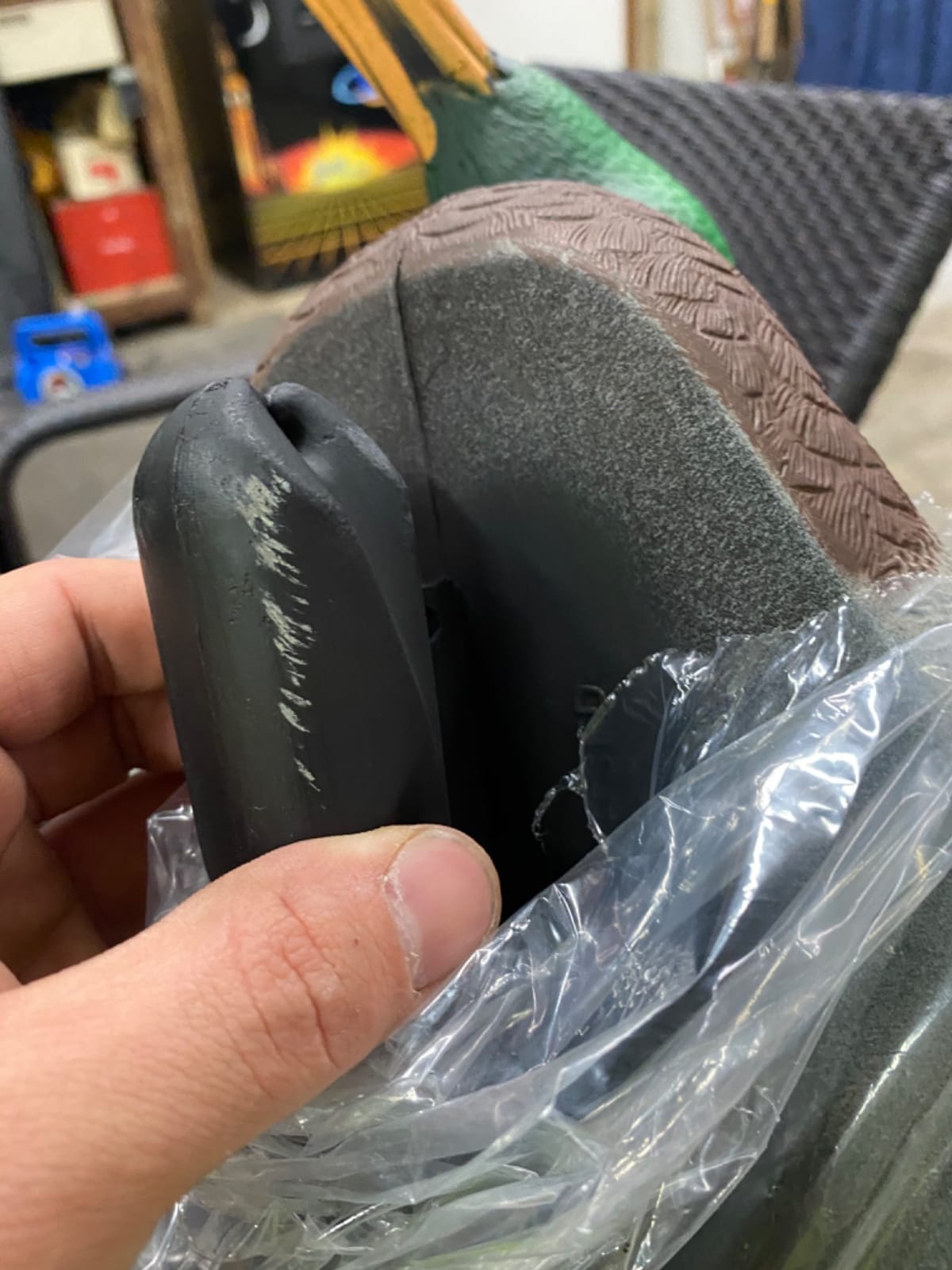
Buyers rate the paint scheme and the keel motion as the two consistent strengths, and the no-flake finish is a genuine answer to the timber reality where decoys get knocked against cypress knees on the way in. The clip-and-line setup takes minutes, which matters more than it sounds when you are setting up in the dark on a shoreline.
The composition is two surface feeder drakes, two feeder drakes, and two feeder hens. That spread of posture and sex is a good match for a mixed flock of puddle ducks working a timber edge.
At 4.8 across 297 reviews with a 91 percent five-star share, this is one of three packs in the roundup at the top rating. Variants in 6, 12, and 18 pack sizes exist if you need to scale up.
Who This Decoy Is For
This is the one to build around if your timber spread is centered on puddle ducks and black ducks rather than woodies. It is also a strong choice for anyone whose water is 12 to 18 inches deep and slow, since the keel handles that depth without a separate weight.
Buyers of this pack talk about realism in person, and in timber you are judging realism at 25 yards in dappled light, not at 150 yards on open water. That is the test this passes.
Where It Falls Short
The listed item weight is 10 pounds for a six-pack, which is heavier than comparable six-packs in this roundup. Check your pack dimensions before you commit to a wading carry.
At six decoys it is a small spread. Forum consensus puts a timber setup at six to twelve, so you will likely want a second pack or a filler set alongside it. And the money is real, so this is a buy-it-once pack, not a season-to-season replacement.
5. Higdon Standard Green Wing Teal 12 Pack – The Best Durable Pack for Divers
Higdon Outdoors Standard Red Head Floater Duck Decoys | Ultra Realistic Drake & Hen Decoys for Waterfowl Hunting | 8 Upright Drakes & 4 Resting Hens | Foam-Filled | 12pk
Foam-filled bodies
XHD hyper-feathering with UV paint
8 drakes and 4 hens
Pros
- Foam-filled bodies take shot damage
- Carved feathers with UV paint cut wet glare
- Lightweight standard size packs easily
- Color holds up over multiple seasons
Cons
- Standard size runs under life-size
- Some buyers had to drill their own rig holes
- One pack arrived with an incorrect drake mix
Teal are a coastal and far-west bird, but foam-filled teal packs have become a standard timber spread filler for a simple reason: they are cheap, they are durable, and they add bodies to a cluster. If your flooded timber spread needs more visual mass without more mallard detail, this is the pack.
Foam-filled construction is the headline. It takes stray shot, absorbs a drop into a boat, and will not crack the way a hollow shell can. On a snag-filled water where decoys get bumped constantly, that matters more than paint realism.
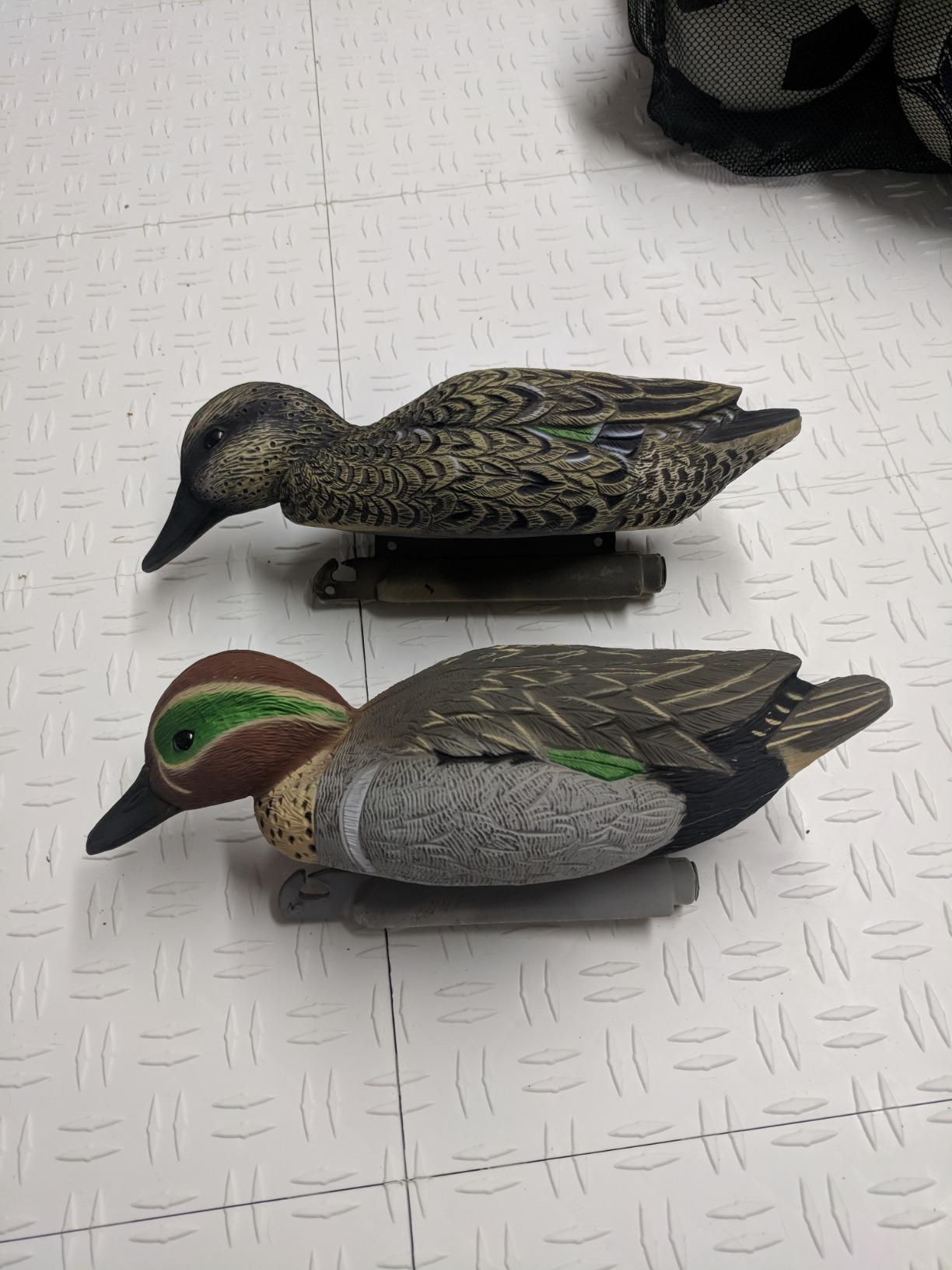
The XHD hyper-feathering and UV paint process are worth understanding. A matte carved feather on a wet decoy does not throw a hard glare, and glare is what kills a close-range illusion when the sun comes up behind a cypress trunk. The paint also resists fading across seasons, which is the other half of holding up over multiple years.
The pack is eight upright drakes and four resting hens, a good spread of posture for a filler group. A 4.7 rating across 283 reviews with an 86 percent five-star share, and buyers report both killing limits on redheads and using the teal pack purely as spread filler.
Who This Decoy Is For
This suits a hunter who is already set on wood duck and puddle duck decoys and needs a third layer of bodies to fill out a cluster. Twelve decoys of mixed posture give you headroom to build the six to twelve rig the forum consensus calls for without buying another premium mallard pack.
It is also a good choice for a hunter who breaks decoys. Foam-filled bodies survive a hard season of knocking into trees in a way a hollow plastic body does not, and that durability compounds season after season.
Where It Falls Short
Standard size runs slightly under life-size, so it will not carry the same close-range presence as the oversized wood duck pack. On very open water it is not the decoy you want. Some buyers also had to drill their own rig holes, and one pack shipped with a drake mix that did not match the listing.
That last point is worth stating plainly. It is a fulfillment problem rather than a design flaw, but in a niche where many people run a spread from one pack, it is a reason to open the box before the season rather than in October.
6. Avery GHG Essential Mallard 12 Pack – The Best Foundation for a Full Spread
Avery GHG Essential Mallard Duck Decpus – 12 Pack
6 drakes and 6 hens
Self-righting swim keels
High-definition feather etching
Pros
- Reads as a complete flock from a distance
- Even 6 drake and 6 hen split mirrors real behavior
- High-definition feather etching and contrast paint
- Self-righting keels hold in moving water
Cons
- Keel and body dimensions are not published by the manufacturer
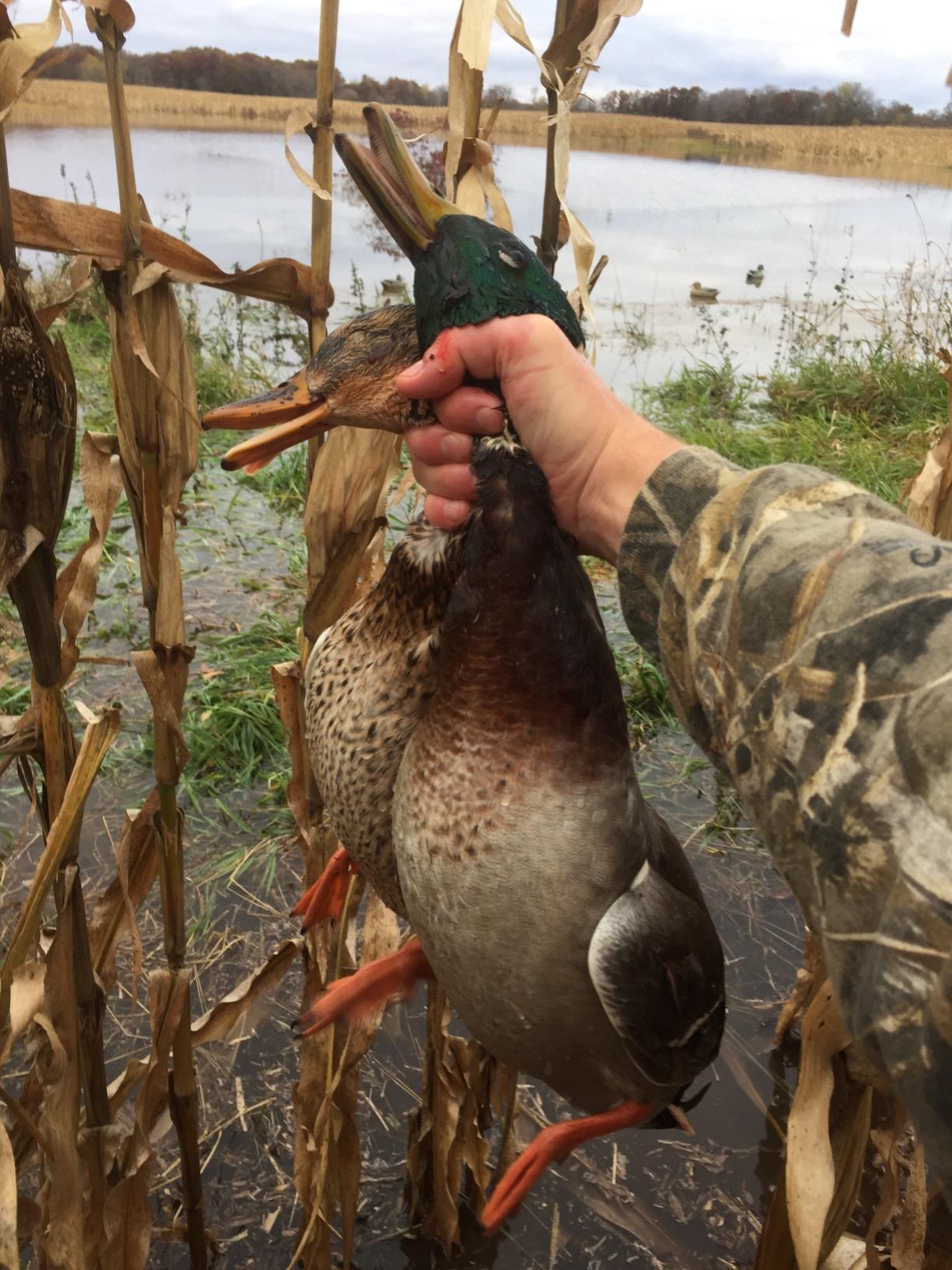
Twelve is the number most timber hunters land on, and this pack delivers twelve in one box with an even six drake and six hen split. That balance mirrors real mallard behavior, which means a spread built from it looks correct even before you add anything else.
The self-righting weighted keel is the feature that earns its place in timber. If a duck bumps a decoy or a gust tips one, it comes back up on its own instead of lying on its side in the water advertising the whole setup. Buyers specifically call this out as holding position in moving water.
High-definition feather etching and a realistic paint palette do the close-range work. A standard-size mallard body with strong contrast reads well at 25 yards through a gap in the trees, which is the actual distance that matters in a cypress brake.
This is the Essential Series, and buyers treat it as the base of the spread rather than the whole spread. That is the correct use. Twelve mallards plus two wood duck floaters plus a rippler gives you a complete, layered timber setup with room to spare.
Rated 4.7 across 281 reviews with an 83 percent five-star share, and first available in 2019. The package measures about 21.8 by 16.9 by 14 inches at 5.83 kg, so plan bag space accordingly.
Who This Decoy Is For
This is the base-layer pack for most people reading this guide. If you want one purchase that gets you to the consensus six to twelve count, gives you enough birds to build a convincing mallard cluster, and holds together in water that is moving, this is the box.
It is a good fit for a hunter who passeshoots from shore as well as one working a boat, because the self-righting keel means you do not have to re-rig after every shift in position.
Where It Falls Short
The manufacturer does not publish keel or body dimensions, so you are buying without knowing the exact float rating. If you are setting decoys in 6 to 10 feet of water over submerged branches, that is a real gap and one reason to check your anchor line length before you deploy.
It is a standard-size pack with standard-size limits. If your birds are approaching head-on through open sight lines rather than through tree gaps, you will want at least a few oversized decoys mixed in for visual punch.
7. Higdon Standard Bufflehead 6 Pack – The Best Contrast Pack for Dark Water
Higdon Outdoors Standard Bufflehead Floater Duck Decoys | Ultra Realistic Drake & Hen Decoys for Waterfowl Hunting | 6 Upright Drakes| Foam-Filled | 6pk
Six upright drakes
Foam-filled construction
Deep carving with UV paint
Pros
- Foam-filled bodies take stray shot
- Deep carving with bold black-and-white contrast
- Lightweight standard size carries easily
- Extra-wide upright profile adds visibility
Cons
- Standard size sits under life-size
- All-drake pack has no hen variety
Contrast is the whole reason this pack exists. Buffleheads are black and white, and black and white is the easiest thing to see through standing timber. On tannin-dark cypress swamp water with a low sun coming sideways, a flock of bufflehead drakes carries at a distance where a brown mallard has already gone invisible.
Deep carving plus a proprietary UV-resistant paint process gives the drakes a wet shine that reads as a wet bird. That is a subtle effect, and it is the difference between a decoy and a duck-shaped object when something is moving 30 yards out.

The foam-filled construction is the same durable build Higdon uses across the series, built to tolerate rough conditions and stray shot. At 2.63 kg for six decoys this is one of the lighter packs in the roundup, and the 14 by 13 by 10 inch package footprint is genuinely portable.
The extra-wide upright drake profile adds visibility that the standard mallard packs in this list do not have, which is exactly what you want when the sight line is short and the water is dark.
Rated 4.6 across 222 reviews with a 77 percent five-star share. Model 19934, first available in 2016, and it carries a one year manufacturer protection.
Who This Decoy Is For
Pick this if your flooded timber is dark water with a lot of shadow, or if you are working a pass-shooting setup where a bird crosses your face and you only have a few seconds to be noticed. Six decoys is also a clean number to split between a shoreline stand and a boat.
It pairs well with a mallard cluster. Buyers running buffleheads typically use them as the visual layer that draws the eye while the mallards do the believable work closer in.
Where It Falls Short
It is an all-drake pack with no hen variety, so a full flock of six identical males looks composed rather than natural. Three or four in a spread is a more convincing number.
Standard size sits a touch under life-size, which limits close-range detail. And these are divers, so they belong on a puddle duck and wood duck spread rather than standing in for puddle ducks themselves.
8. Higdon Standard Bluebill 12 Pack – The Best Self-Righting Pack for Changing Water Depth
Higdon Outdoors Standard Bluebill Floater Duck Decoys | Ultra Realistic Drake & Hen Decoys for Waterfowl Hunting | 8 Upright Drakes & 4 Resting Hens | Foam-Filled | 12pk
Foam-filled build
Self-righting weighted keel
Detailed UV painting
Pros
- Foam-filled build resists sinking and cracking
- Self-righting keel holds any water depth
- UV paint reduces glare when wet
- Lightweight and easy to deploy
Cons
- Standard size is a little smaller than live bluebills
Bluebills are tough, early-season birds, and a flooded timber puddle in October can turn from 12 inches of water to 3 feet in a night. The self-righting weighted keel is the feature that makes this pack work across that range without you re-rigging anything in the dark.
That is the honest reason to buy bluebill decoys for timber even if you have never seen a bluebill. You are buying a hull that holds position, and twelve of them give you the count to build a real cluster with room to set them deep and still read as close.
Foam-filled construction resists sinking and cracking, which answers the single most common complaint in decoy forums. Dead decoys floating upside down in a corner of a spread ruin a morning faster than any layout mistake, and a foam body with a weighted keel is the least likely version of this pack to do that.
Detailed carving with UV paint reduces the glare you get when a decoy is wet and the sun comes up behind a tree. Owners cite the keel and the glare-reducing paint as the practical wins for repeated early-season setups, which is precisely a timber-hunting situation.
Rated 4.6 across 211 reviews with a 79 percent five-star share. The 12 pack weighs 5.57 kg in a 22.52 by 16.22 by 12.8 inch package, and a 6-pack version exists if you want to start smaller.
Who This Decoy Is For
This suits the early-season hunter working shallow flooded wood where puddle ducks are feeding on available soft food rather than diving. A dozen bluebills clustered in a few square yards of water give you the visual mass to be found, and the keel handles the water level changing under you.
It is also a good pack to keep in the boat permanently rather than carry from a shore stand, because the foam body tolerates being tossed into the bottom of a hull.
Where It Falls Short
Standard size is a little smaller than a live bluebill, so at very close range the head detail gives out. In timber that is usually an acceptable trade for the keel and foam body, but it is a limitation.
There is no customer photography on this listing, which makes it harder to judge the paint scheme before you commit. If close-range appearance is your deciding factor, pick a pack where you can see the finish in owner photos.
9. Final Approach Last Pass Mallard Floaters – The Best Packability in the Roundup
Final Approach Last Pass Mallard Floaters, Decoy 12 Pack
Compact 12 inch body
One-piece HDPE construction
Pat Godin carvings
Pros
- Compact 12 inch body is easy to pack
- Carvings by 17-time champion carver Pat Godin
- One-piece HDPE design has no weak points
Cons
- Smaller size means less visibility on open water
- Highest one-star share in the set hints at finish inconsistencies
This is the pack for hunters who are already carrying too much. A one-piece high-density polyethylene body is the most forgiving material in this roundup. There are no parts to separate, nothing to crack at a seam, and a one-piece shell has no weak points to worry about when a decoy bounces off a half-submerged log.
The 12 inch bill-to-tail measurement is the smallest body in the roundup, and the carvings are by Pat Godin, a 17-time World Champion carver. That combination of small and well-shaped is what makes it work. A well-proportioned decoy at 12 inches holds up better close than a badly proportioned one at 13.
Buyers like the tough build and the packability, which is the correct reaction to a compact HDPE floater. Package weight is 4.36 kg for twelve decoys, in a 20.43 by 14.41 by 12.95 inch box, and twelve floaters in that weight class is efficient. The compact 12 inch body is also the smallest measurement in this roundup, which is the point of the design.
First available in June 2020 under part number FA-193005. It is a newer design than several other packs here, and the age shows in the fact that the paint and carving are still holding up well in owner photos.
Rated 4.4 across 208 reviews with a 71 percent five-star share. That is the lowest five-star ratio of the ten, and it is worth being straight about why.
Who This Decoy Is For
This is the pack for a boat hunter working flooded river backwaters and oxbows where every pound in the hull is a pound of gear. Twelve decoys that pack tight and weigh 4.36 kg with the packaging lets you carry a full mallard spread without giving up room for a dog, a blind, or a second gun.
It is also a good choice if you share decoys with a hunting partner, or if you want a durable second pack that lives in the boat year round and absorbs the abuse of a wet transport.
Where It Falls Short
The compact size means less visibility on open water. If you hunt big water as well as timber, this is a timber pack and only a timber pack. The compact body is also less forgiving at 30 yards than an oversized wood duck floater.
The 5 percent one-star share is the highest in the set, which points to some finish inconsistency across the pack. Inspect a few decoys closely when the box opens, and keep the ones with the cleanest paint as the front row of your cluster.
10. Cupped Waterfowl Mallard Floater 6 Pack – The Best Starter Pack for a First Timber Spread
Cupped Waterfowl Duck Decoys, Extremely Realistic 6-Pack of Duck Floater Decoys with Weighted Keels, Great for Waterfowl Hunting, Mallard Duck Decoy, Brown/Multi (CU2681)
Six mallard floaters
Weighted keel
One year warranty
Pros
- Detailed paint at an entry-level price
- Weighted keel gives balanced motion
- Durable molded plastic construction
- Buyers report birds onto ponds the next morning
Cons
- Runs small next to life-size packs
- Multi-season paint durability still unproven
If you are new to this and you want a real spread on the water before you spend serious money, this is the sensible first purchase. Six mallard floaters with a weighted keel, a detailed paint scheme, and a one year warranty put you inside the six to twelve consensus range on day one.
Reviewers consistently call out the detail for the money and report birds showing up on ponds the morning after setup. That is the practical measure that matters, and a 4.6 rating across 148 reviews with an 82 percent five-star share backs it up.
The weighted keel gives each decoy balanced, realistic motion rather than a fixed position. Durable molded plastic and a bright, detailed paint scheme round out a pack that works well as spread filler alongside larger decoys once you outgrow it.
Package dimensions are 17.7 by 14.5 by 12 inches at 4.06 kg, part number CU2681, first available in September 2022. It is a compact six-pack and it nests into a boat bag without a fight.
The honest limitation is that these run small next to life-size or standard packs, and paint durability over multiple seasons is not yet proven for newer buyers. If you keep this for one or two seasons and the paint is still flat, that is when to move up.
Who This Decoy Is For
This suits a first-season hunter or anyone who wants a second pack to mix into a cluster without spending mallard-pack money. Six of them behind a tighter premium group gives you depth, and depth in timber is what makes a flock read as a flock.
It is also the pack to test with before a big purchase. Put these out for a few mornings, watch what ducks do at 25 yards, and then decide whether you need oversized woodies or a second dozen mallards.
Where It Falls Short
Size is the main one. Compared to the life-size and standard packs in this roundup, these are on the small side, which limits how they read at the far end of a 20 to 30 yard pass shot.
Multi-season paint durability is the open question. Reviewers are largely new to the product, and nobody has yet reported how the finish looks after three winters in a slough. Treat it as a pack you may replace rather than a lifetime buy.
Decoy Spread Patterns That Work in Standing Timber
The wind layout rule that governs open water does not apply among trees. Hunters in flooded timber do not line decoys into the wind and stack them 20 yards deep. They build a compact block. Here is how we do it.
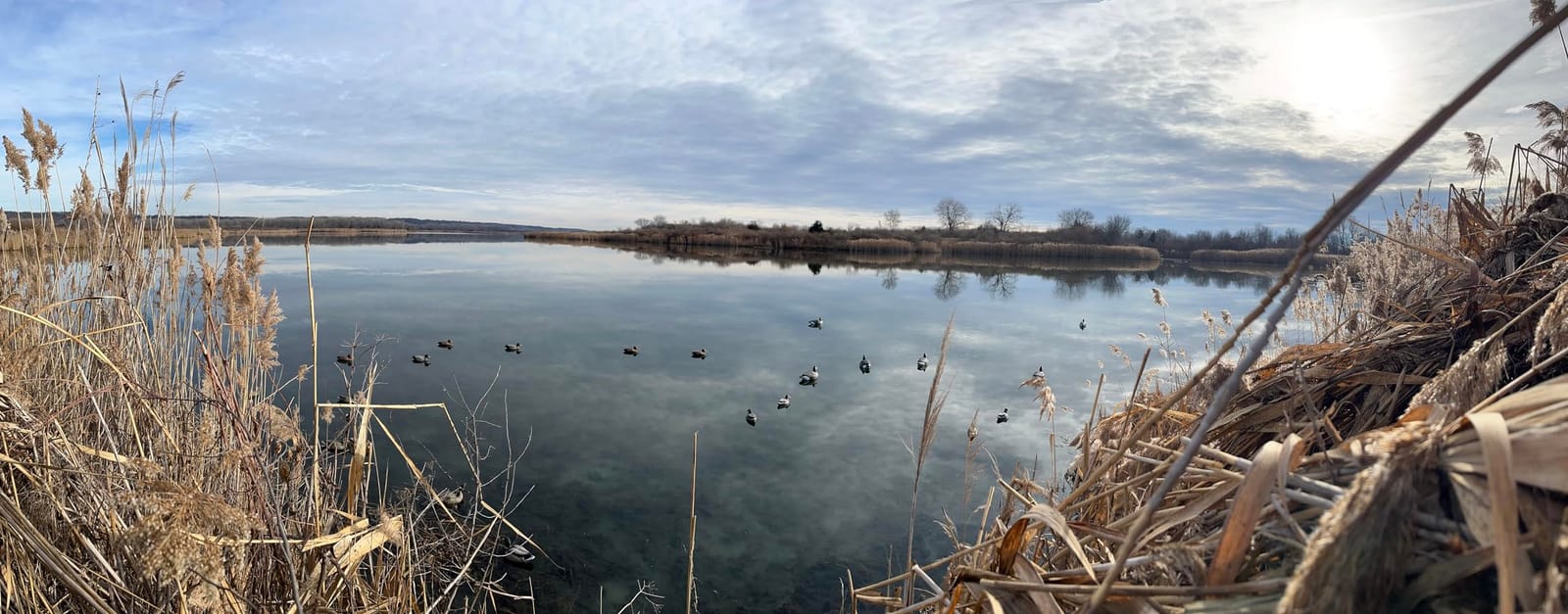
Choose your pocket, then place within it. Pick the open pocket of water you can actually reach and pick apart, whether it is a slough, a pothole, or the edge of a bay. Do not spread decoys across the whole scene. Ten to twelve decoys inside a 6 to 8 yard square gives a flock that looks like a flock.
Anchor from the near side. Set your decoys between you and the birds and no further out than 20 to 30 yards. If birds are going to come to you, put the spread at the working range of your shotgun rather than at the range you can see the farthest.
Set the deep end first. If you are working six to 10 feet of water with birds swimming back into shallows, set the far decoys first and the near ones last. Working back toward yourself keeps you from swimming through your own rig.
Break the outline. A perfect rectangle reads as a display. Set a few decoys at a slightly different depth or angle so the edge of the group is ragged. This is the timber version of the same principle that makes open-water spreads work.
Add motion at the back. Put your rippler or spinning wing behind the floater cluster, not in front of it. Movement at the far edge reads as birds feeding at the back of the group, and a gentle ripple is less likely to flare a committing bird than a hard jerk.
Muddy the water. Walk out through the spread partway through the morning. Disturbed water and a swinging decoy or two is free motion, and it is one of the oldest tricks in the sport. The same walk in open water would be pointless. In timber it works.
Know when to skip it. Some days in flooded timber the birds are not coming to decoys at all. If the flight is 40 feet off the water and never approaches, more decoys will not fix it. That is a calling and cover problem, not a decoy problem.
Buying Guide: Duck Decoys for Flooded Timber
Count first, then buy. Six to twelve decoys is the working range, and buying more is the most common and most expensive mistake in this sport. Forum consensus is blunt about it, and a hunter on kentuckyhunting.net put a dozen good decoys against three dozen bad ones. A large field spread built for wind and distance is wasted carry weight in timber.
Mix species in layers, not in equal parts. Six mallards as your base, four to six wood duck floaters clustered tight at the front, and two or three divers or buffleheads for contrast is a complete timber spread. Hunters report that wood duck floaters in a small cluster mimic a feeding flock, and that a few coot or confidence decoys bring bolder birds in. A mallard-only spread also works. Wood duck decoys are a strong addition, not a requirement.
Understand floaters versus field decoys. Floaters are a water presentation with a keel. Low profile field decoys are for dry ground. You can absolutely use floater decoys in a field, but you should not drag a keeled floater out of a water blind and expect it to sit right on mud. Keep the sets separate and stop repacking at the truck.
Prefer pulsators over jerkers in still water. Pulsator motion pushes a steady ripple, and a jerker slaps the surface. Hunters on r/Waterfowl specifically favor pulsator-style decoys because they add movement without flaring birds. If a motion decoy is too aggressive for a small timber pocket, it will turn good birds at the last second.
Plan for snags. This is the part no general decoy guide covers, and it is the biggest real-world failure in standing timber. Anchor lines and decoys snag constantly on submerged branches and downed timber. Tie off before you set, keep your lines short enough that a duck cannot drag a whole cluster under, and count your decoys in before the first flight rather than after.
Know your depth. Puddle ducks prefer three feet of water or less to feed. Decoys may be set in six to 10 feet of water with birds swimming back into shallows, which means your keel needs to hold at depth and your line needs enough slack to let a swimming bird move. Weighted self-righting keels handle the widest depth range of anything in this roundup.
Match pack weight to your approach. A boat hunter, a shore stand hunter, and a wader carry different amounts of gear into timber. If you are walking in, the lighter packs in this roundup matter more than the oversized ones. Check the package weight, not the individual decoy weight, because that is what you carry.
Check the lineup before the season. Inspect every decoy for sinking, and check every anchor line for frayed line and dry rot. A dead decoy floating upside down ruins a morning faster than a bad layout. Replacing a tired line is a few minutes of work before opening day and a lost hunt after it.
Buy ahead of the season. Popular decoy packs are difficult to find once the fall catalogs open, and a dead rig is a season wasted. Two months of lead time is comfortable. That is planning advice, not a reason to rush, but it is a real failure point for anyone buying an entire spread in October.
Balance the range. Timber birds are shot at 20 to 30 yards with small steel shot, so your decoys need to read well at that distance and no further. Paying for long-range detail you will never use is paying for the wrong thing, which is another reason life-size and standard packs beat oversized ones in most timber spots.
Frequently Asked Questions
How many decoys do I need for flooded timber?
Six to twelve decoys is the standard working range in standing timber, set in a tight cluster 20 to 30 yards from your blind rather than spread across open water. A dozen good decoys will outperform three dozen poor ones, because timber ducks come close before they see the spread. Add one motion decoy at the back of the cluster and the rig is complete.
What is the best decoy for wood ducks?
Wood duck floaters are the answer, and the Avian-X Topflight set is the strongest pick in this roundup. Six of them clustered tight in front of you mimic a feeding flock, the weight-forward swim keel gives them natural motion on still water, and the 12.5 inch oversized profile holds visibility through tree gaps where a standard mallard would go dark.
Do silhouette decoys work in flooded timber?
Sometimes. Silhouettes work when birds are approaching from the far side of a blowdown or through heavy shadow, because the low painted profile reads as a feeding bird in dappled light. They stop working when birds come at you head-on, since a flat profile has no depth or head detail at 25 yards. If your sight lines are short and open, use floaters instead.
How do I anchor duck decoys in flooded timber?
Tie off every decoy before you set it, keep anchor lines short enough that a swimming duck cannot drag a whole cluster under, and leave enough slack for birds working in six to 10 feet of water. Count your decoys before the first flight rather than after. Expect lines to snag on submerged branches and downed timber, and plan to reset a decoy or two per morning.
Can you use floater duck decoys in a field?
You can, but you should not need to. Floaters are a water presentation built around a weighted keel and a surface feeding posture. On dry ground, low profile field decoys sit correctly and will not tip when a dog runs through the spread. Keep two separate sets rather than repacking keeled floaters at the truck every morning.
How many duck decoys work best in deep water?
The same six to twelve, with the right gear. Deep water means a weighted self-righting keel and enough anchor line to let a decoy sit at six to 10 feet while birds swim back into shallows to feed. Foam-filled bodies also help, because they will not take on water and sink mid-morning. Set the far decoys first and work back toward the blind.
Final Call for Flooded Timber Hunters
If you take one thing from this roundup, take the count. Six to twelve decoys, clustered tight, 20 to 30 yards out. Everything else on this list is a refinement of that one decision.
Our pick for the best duck decoys for flooded timber in 2026 is the MOJO Outdoors spinning wing set, because dead-calm water is the defining condition of a cypress brake and a moving decoy is the only thing that fixes it. Pair it with the Avian-X Topflight wood duck floaters for the flock and the MOJO Butt Up Rippler for a gentle ripple, and you have a rig that a timber duck can approach from any angle.
Buy ahead of opening day, check every anchor line for frayed line and dry rot, and go set your spread tight. Six good decoys in a good pocket beat any field layout ever built.