
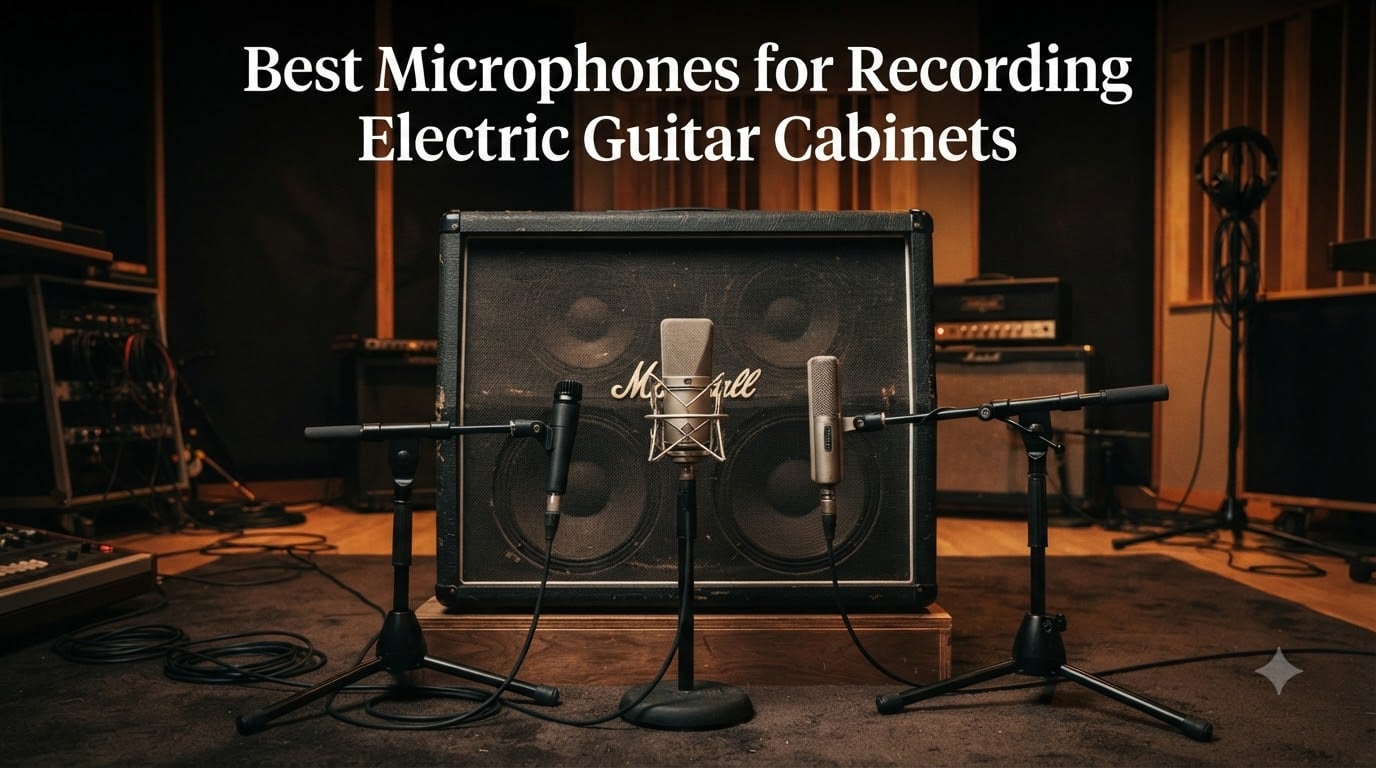
I’ve been recording electric guitar cabinets for over a decade at SK Records, and I can tell you the microphone you choose shapes your tone more than almost any other decision in your signal chain. After testing dozens of options across home studios and pro rooms, I’ve narrowed down the best microphones for recording electric guitar cabinets that actually deliver results in 2026.
The truth is, there’s no single perfect mic for every amp. A cranked Marshall stack wants different treatment than a clean Fender combo. That’s why I’m walking you through 8 mics across three categories: dynamic, ribbon, and condenser. Each handles guitar cabinet recording differently, and understanding those differences will save you hundreds of dollars and hours of frustration.
In this guide, you’ll find industry staples like the Shure SM57 alongside boutique options like the Royer R-121. I’ll cover budget picks under $100, mid-range workhorses, and premium studio mics. By the end, you’ll know exactly which microphone matches your amp, your room, and your budget.
Table of Contents
Top 3 Picks for Best Microphones for Recording Electric Guitar Cabinets in 2026

Best Microphones for Recording Electric Guitar Cabinets in October
| Product | Specs | Action |
|---|---|---|
| Shure SM57 |
|
Check Latest Price |
 Sennheiser MD 421-II Sennheiser MD 421-II |
|
Check Latest Price |
 Sennheiser e609 Silver Sennheiser e609 Silver |
|
Check Latest Price |
| Sennheiser E906 |
|
Check Latest Price |
 Electro-Voice RE20 Electro-Voice RE20 |
|
Check Latest Price |
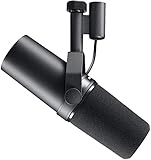 Shure SM7B Shure SM7B |
|
Check Latest Price |
| Audio-Technica AT2020 |
|
Check Latest Price |
 Royer R-121 Royer R-121 |
|
Check Latest Price |
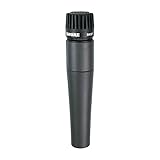
1. Shure SM57 – The Industry Standard for Guitar Cabinets
Shure SM57 Pro XLR Dynamic Instrument Microphone
Dynamic cardioid
40Hz-15kHz
XLR connection
Pros
- Industry standard tone
- Handles extreme SPL
- Rugged metal build
- Affordable entry point
- Works for live and studio
Cons
- Basic included accessories
- Needs separate shock mount
I’ll be honest with you. When I started recording guitar amps, the Shure SM57 was my first proper microphone, and it’s still in my mic locker today. This is the dynamic mic that built countless hit records, and there’s a reason every pro engineer owns at least three of them.
The SM57 uses a cardioid polar pattern with a contoured frequency response that adds a presence boost right where guitars need it. That sweet spot around 2-5kHz is what gives recorded guitars that “sit in the mix” character. Point it at the center of your speaker cone for maximum bite, or angle it toward the edge for a smoother, darker tone.
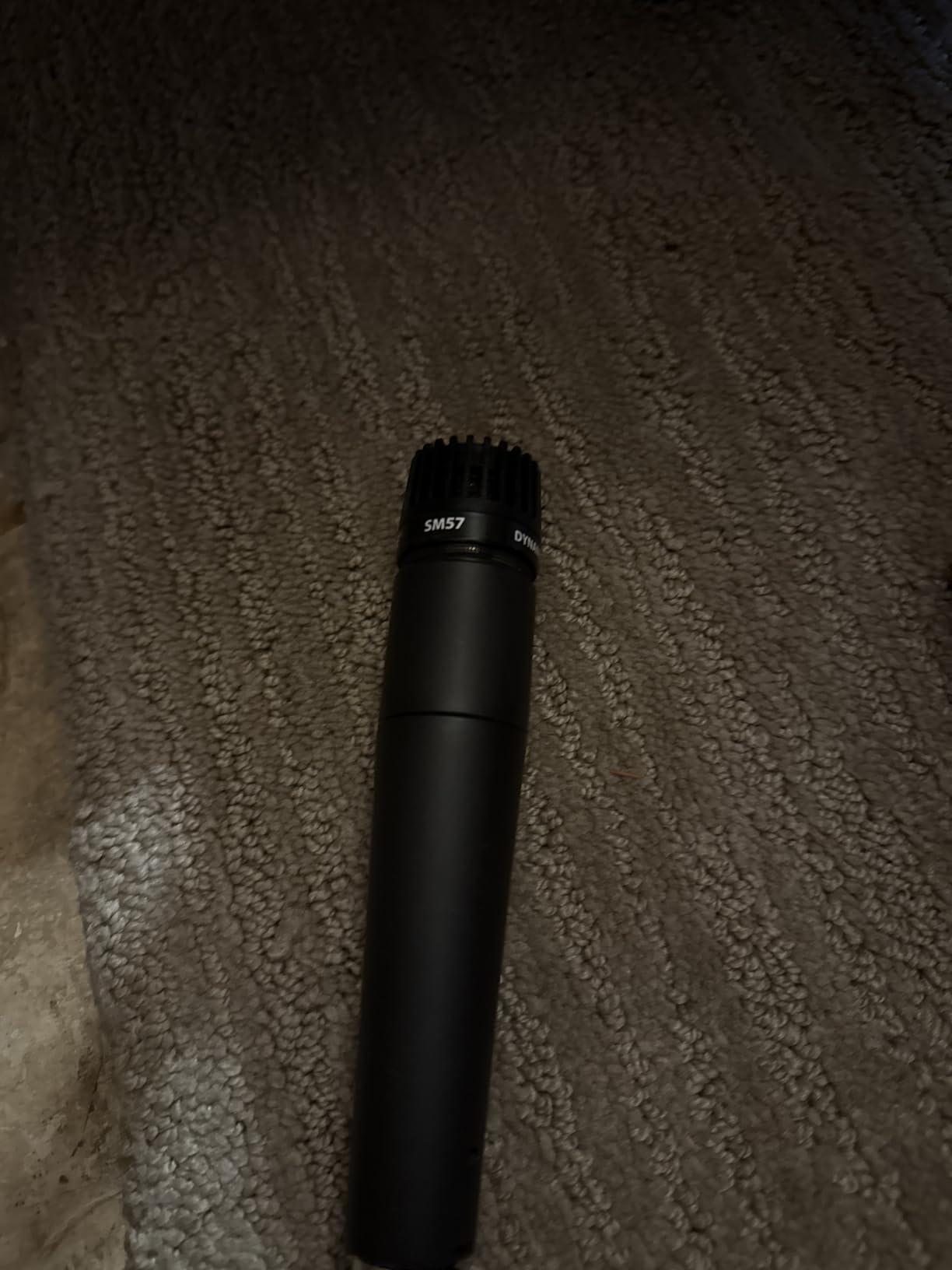
What I love about the SM57 is how forgiving it is. Crank your Marshall to 10 and the SM57 handles it without breaking up. Run your Fender clean at bedroom levels, and it still captures every nuance. The 40Hz to 15kHz frequency range covers everything a guitar cabinet produces, and the cardioid pattern rejects bleed from drums and other instruments in your live room.
Build quality is bulletproof. I’ve dropped these things, thrown them in road cases, and used them in outdoor gigs. They just keep working. At around $100, the SM57 is also the most affordable professional mic in this roundup, making it my top pick for anyone building their first studio or upgrading from budget options.
Positioning flexibility on different cabinets
The SM57 shines when you experiment with placement. On a 4×12 cabinet, I typically start with the mic one inch from the grill, aimed at the center of the cone. That gives you aggressive midrange punch ideal for rock and metal. Moving the mic toward the outer edge softens the high end and adds warmth, which works beautifully for blues and classic rock tones.
I’ve also had great results pairing an SM57 on the cone with a ribbon mic further back as a room mic. The SM57 captures the direct sound while the ribbon adds natural ambience. This dual-mic approach costs more upfront but gives you much more control during mixing.
Why it works for almost every genre
From clean country chicken-pickin’ to brutal death metal, the SM57 handles every guitar style I throw at it. The presence boost makes solos cut through a dense mix, while the controlled bass response keeps chugging rhythm guitars tight. It’s not the most “exciting” mic in this list, but it’s the most reliable, and reliability matters when you’re tracking a take at 2 AM before a deadline.
If you buy only one microphone for guitar cabinet recording, buy the SM57. It will outlive every other piece of gear you own, and 50 years from now, people will still be tracking amps with it.
2. Sennheiser MD 421-II – The Pro Studio Workhorse
Sennheiser Pro Audio Professional MD 421-II Cardioid Dynamic Instrument Microphone
Dynamic cardioid
30Hz-17kHz
5-position rolloff
Pros
- 5-position bass rolloff switch
- Handles 150dB SPL
- Proven since 1960
- Excellent feedback rejection
- Built like a tank
Cons
- Premium price
- Clip can be tricky to secure
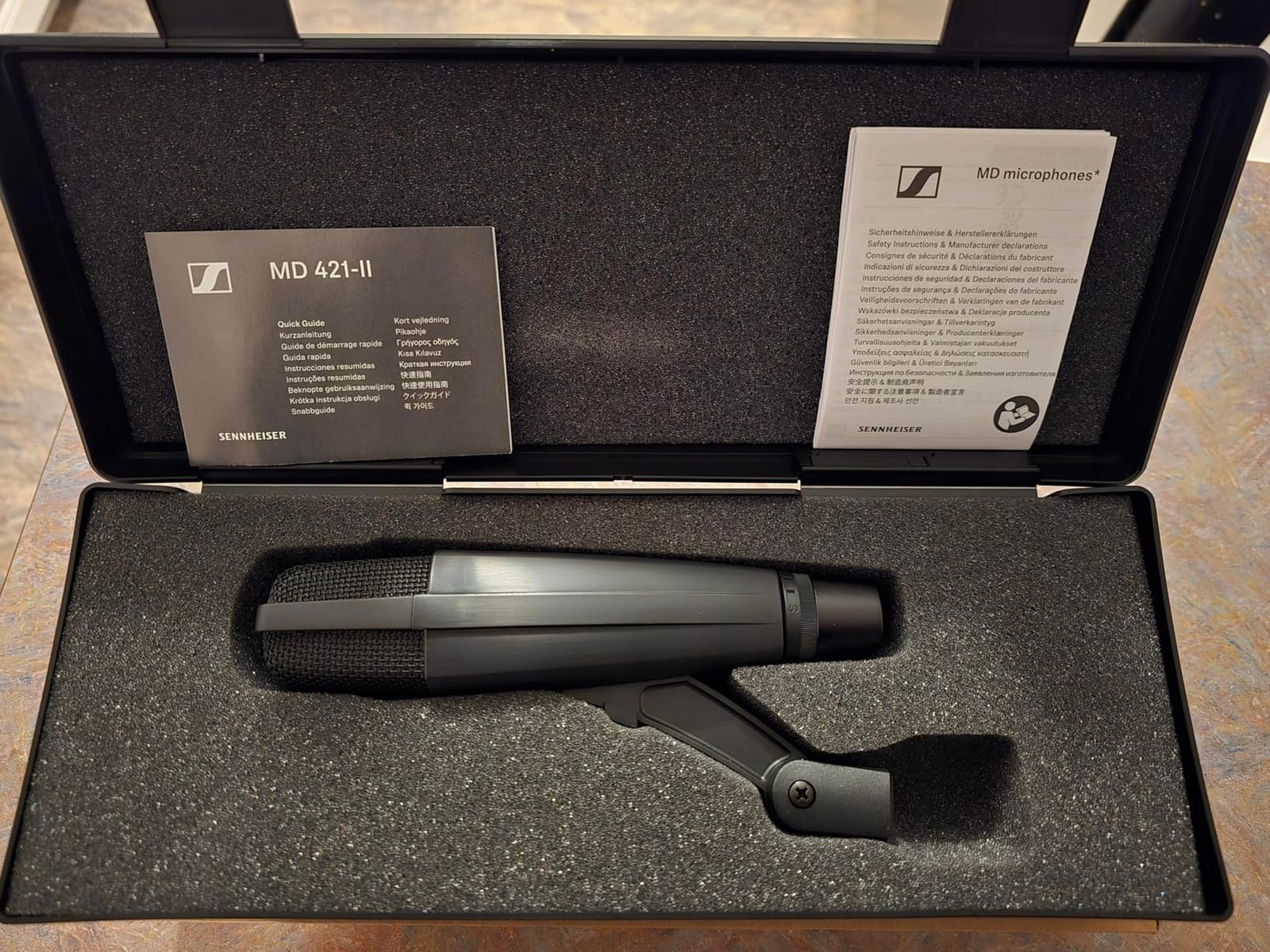
The Sennheiser MD 421-II is the microphone I reach for when an SM57 isn’t quite enough. I’ve used this mic on everything from acoustic guitar cabinets to bass rigs and even kick drums. It’s one of the most versatile dynamic mics ever made, and it brings a different flavor to guitar cabinet recording than the Shure.
The standout feature is the five-position bass rolloff switch. This lets you tune the low-end response on the fly without messing with your preamp or EQ. Need tighter lows for a metal mix? Roll off below 200Hz. Want a fuller bottom for blues? Leave the switch flat. That flexibility alone makes the MD 421 worth the price for serious engineers.
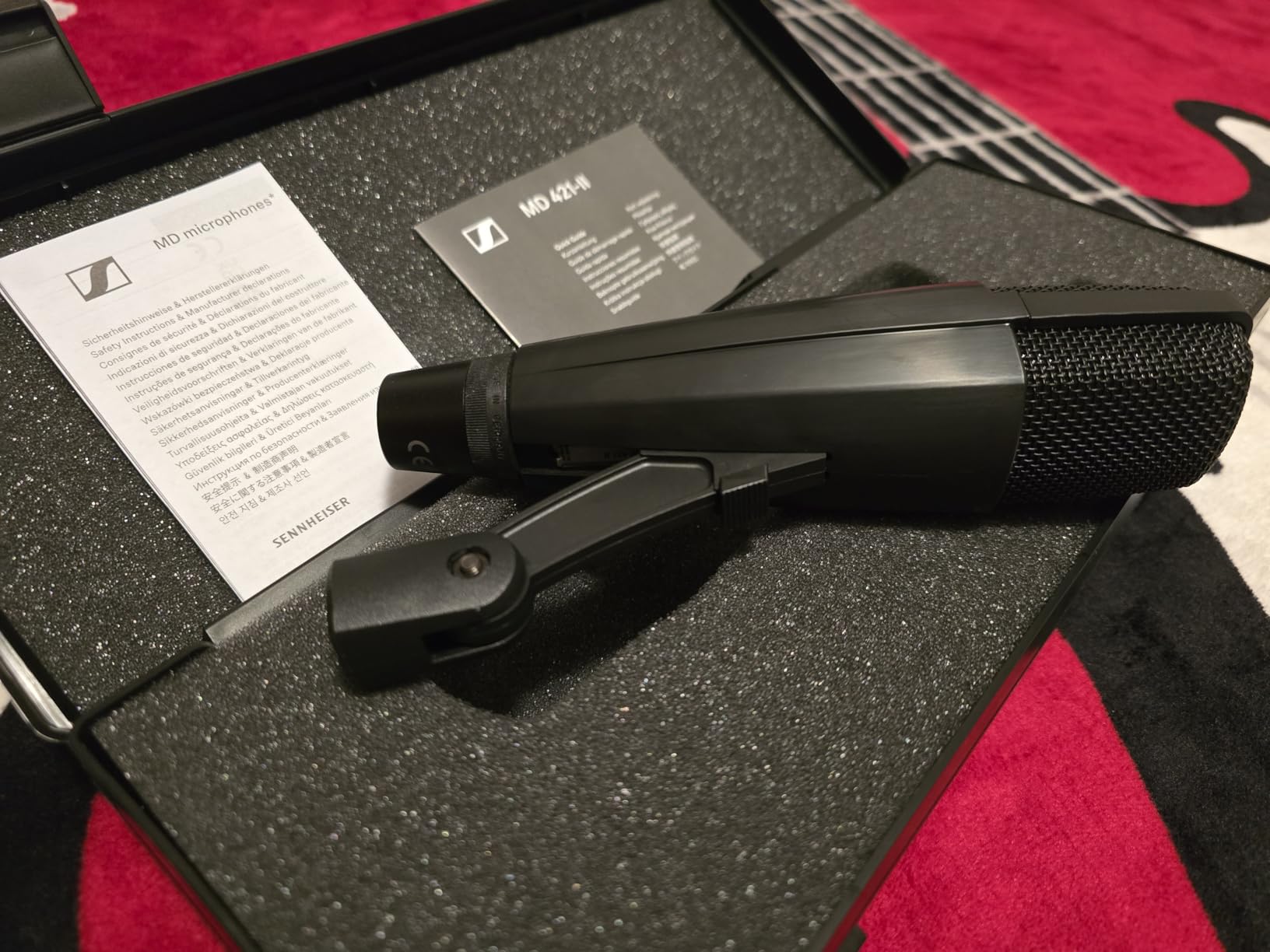
Frequency response runs from 30Hz to 17kHz, giving you more low-end extension than the SM57. That extra bottom translates to fuller guitar tones, especially on larger 4×12 cabinets where you want to capture the cabinet’s full body, not just the cone’s bite. The cardioid pattern is highly directional, which means better rejection of room noise in untreated home studios.
The MD 421-II also handles extreme SPL levels without distorting. I’ve pointed it at full stack cranked Mesa Boogie Dual Rectifiers and captured every harmonic without a hint of compression. For high-gain amp recording, this is a huge advantage over more sensitive condenser mics that can overload on loud signals.
When to choose the MD 421 over the SM57
If you’re recording in a treated studio and want more low-end weight, the MD 421 is the better choice. It sounds fuller and more rounded than the SM57, which can sometimes feel mid-focused. For bass guitar cabinets especially, the MD 421 captures the fundamental frequencies that the SM57 misses.
The price is higher, around $400, but consider this: the MD 421 has been in continuous production since 1960. That longevity tells you something about the design. Studios that bought MD 421s in the 1970s are still using them today.
Best amp pairings and genres
The MD 421 excels on British-voiced amps like Marshall, Vox, and Orange. The slight upper-midrange dip and smooth top end complement those amps’ character. For American clean tones on a Fender Twin or Deluxe Reverb, the MD 421 captures that glassy, sparkling quality without harshness.
I’d avoid using the MD 421 as a single close mic for heavily-distorted modern metal. The fuller frequency response can muddy dense palm-muted riffs. In those cases, layer an MD 421 with an SM57 or use it as a room mic instead.
3. Sennheiser e609 Silver – The Flat-Profile Specialist
Sennheiser Professional e 609 Silver Super-Cardioid Instrument Microphone,Wired, Wireless
Dynamic super-cardioid
40Hz-18kHz
Flat side-address
Pros
- Hangs on amp grill without stand
- Super-cardioid rejects bleed
- Handles 150dB SPL
- 10-year warranty
- Lightweight
Cons
- On-axis harshness at dust cap
- Position-sensitive
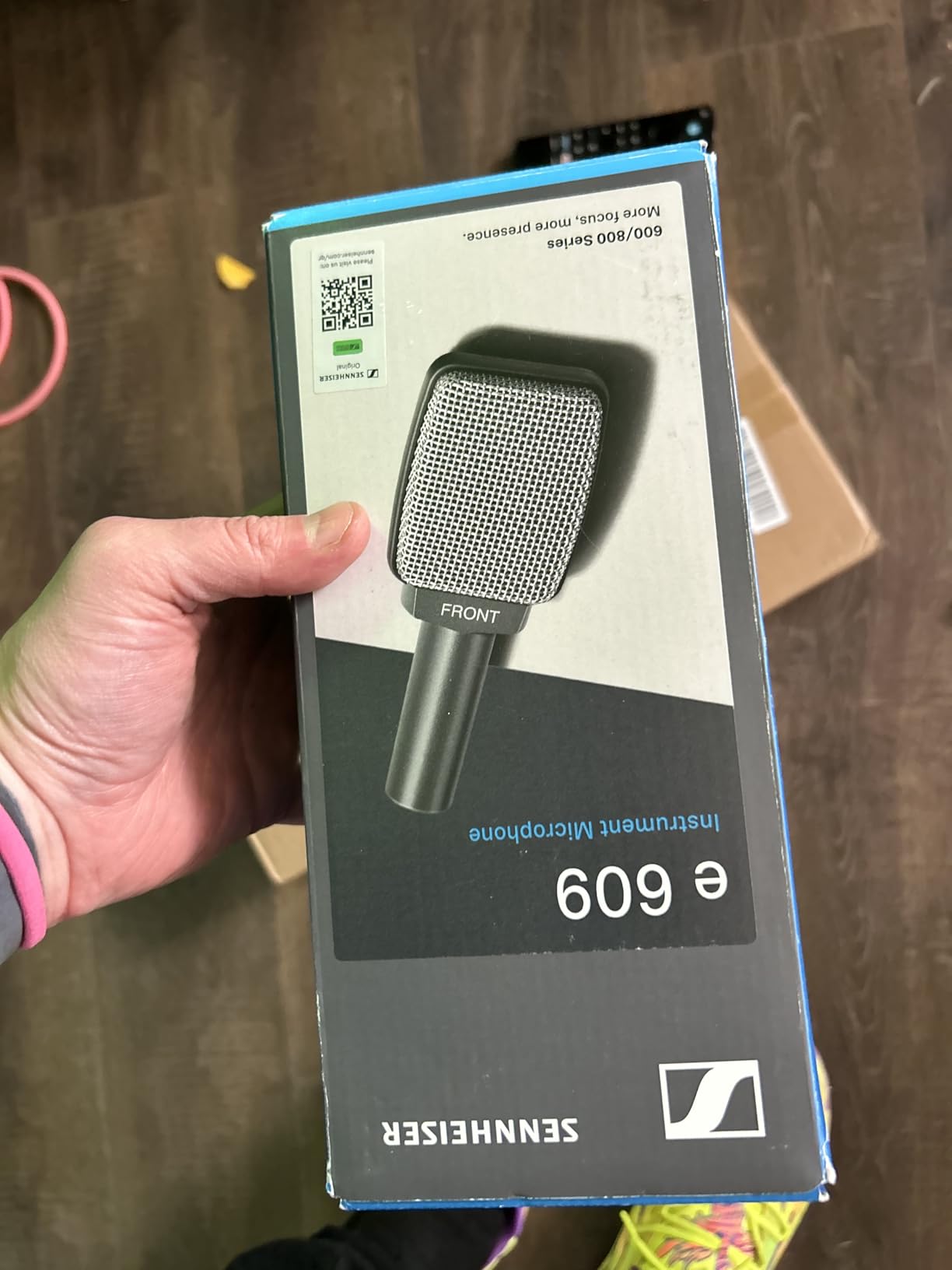
The Sennheiser e609 Silver solves a problem most guitarists don’t realize they have: how to position a mic on a guitar amp without a stand falling over. This mic’s flat profile lets you literally hang it on the cabinet grill cloth, which sounds gimmicky until you actually try it.
I started using the e609 for live recording where stands were inconvenient, then started using it in the studio for the same reason. The super-cardioid polar pattern has tighter rear rejection than a standard cardioid, so it pulls more of the speaker and less of the room. That’s especially helpful in home studios with untreated walls.
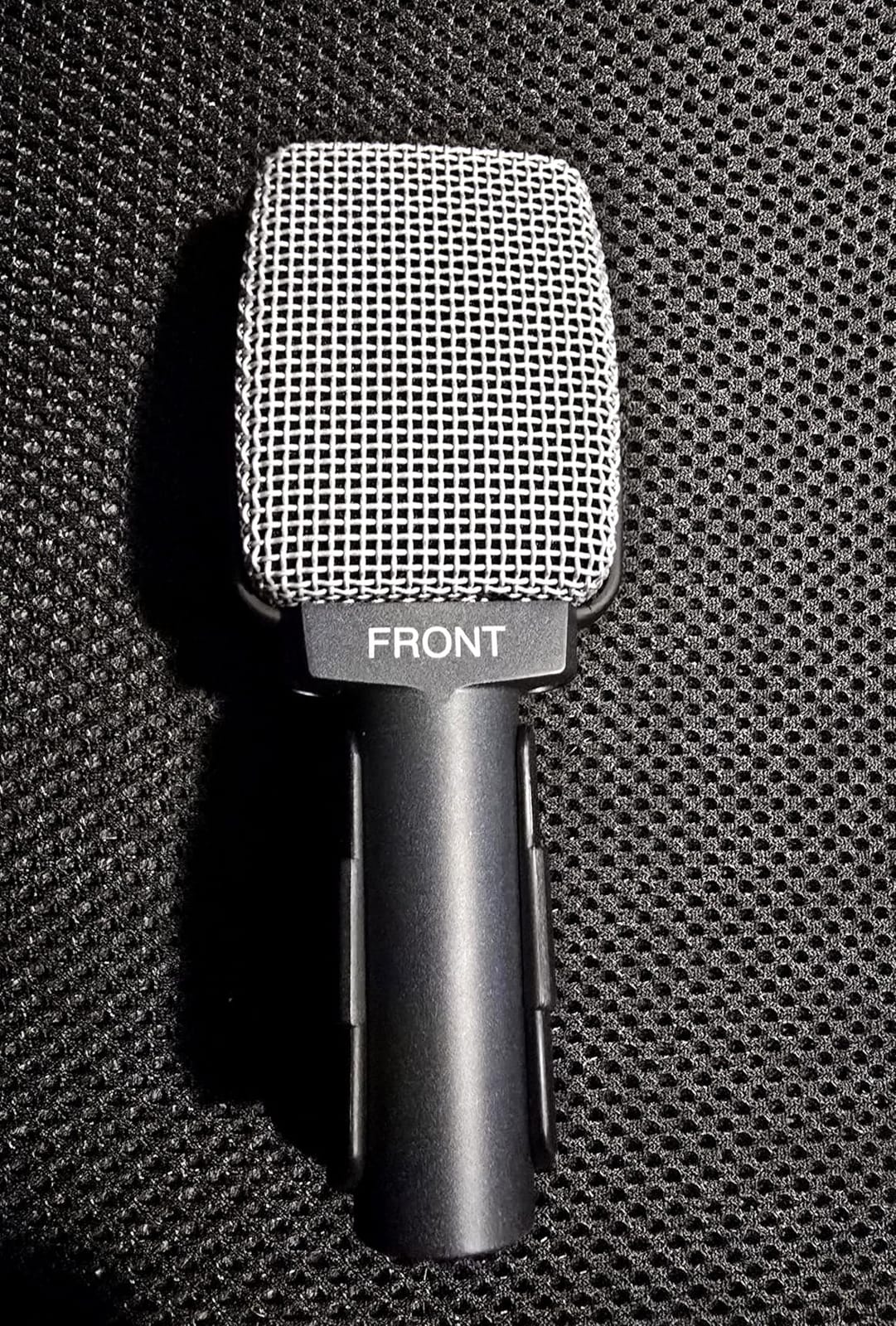
Frequency response covers 40Hz to 18kHz, extending higher than the SM57’s 15kHz cap. That extra high-end sparkle makes the e609 a favorite for clean rhythm tones and articulate lead playing. I love it on Fender clean tones where you want every note of a chord to ring clearly.
At 120 grams, the e609 is also one of the lightest mics on this list, which matters when you’re hanging it off an amp head for hours. The 10-year warranty is the longest in this roundup, which tells you Sennheiser expects this mic to last.
Best mic placement for the e609
The e609 has a sweet spot that takes some experimentation to find. Position it directly on the dust cap (center of the cone) and you get aggressive, in-your-face tones. Move it an inch or two off-center and the harshness disappears, replaced by a more balanced sound. The flat design makes these adjustments easy without moving a mic stand.
For the best results, aim the mic at the boundary between the dust cap and the cone surround. That position captures the cone’s full frequency response without emphasizing the harsh upper harmonics of the dust cap area.
Who should buy the e609
If you’re recording your own amp and don’t want to fuss with stands, the e609 is a no-brainer. It’s also my top recommendation for live recording because the flat design and super-cardioid pattern handle stage volume without bleeding in other instruments.
The e609 costs less than the SM57 in many retailers, making it the best budget option for guitar cabinet recording under $100. Don’t let the price fool you, this mic sounds professional and handles abuse that would destroy more expensive condensers.
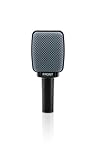
4. Sennheiser E906 – The Three-Mode Tone Shaper
Sennheiser Pro Audio E906 Microphone, black
Dynamic super-cardioid
25Hz-18kHz
3 presence settings
Pros
- 3 switchable presence settings
- Detailed high-end capture
- Compact amp-friendly design
- Exceptional off-axis rejection
- 10-year warranty
Cons
- Presence switch sensitivity
- Premium price
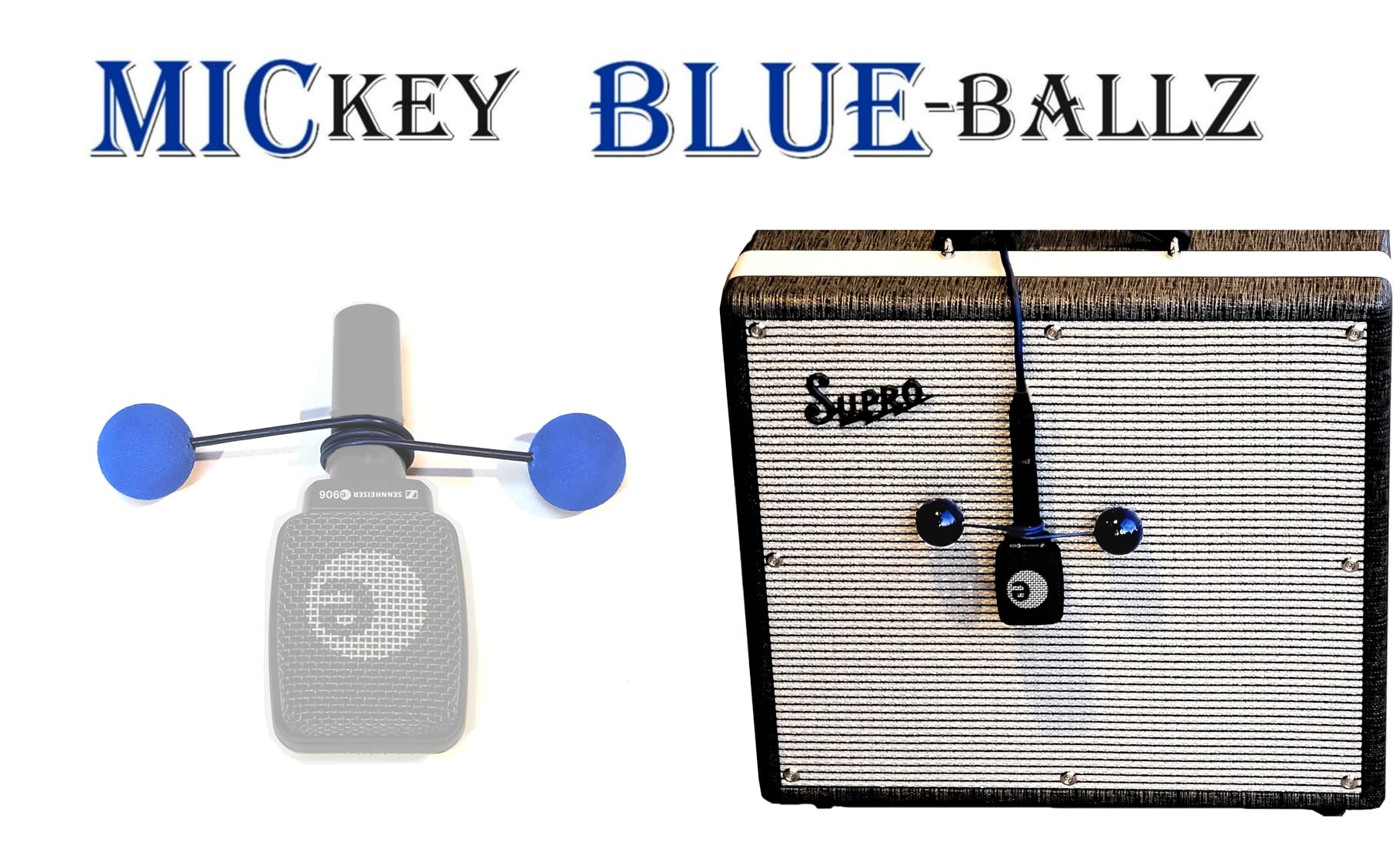
The Sennheiser E906 is what I call the SM57’s smarter sibling. It does everything the SM57 does but adds a three-position presence switch that lets you shape the high-end response on the fly. After years of recording, I find myself reaching for the E906 more often than the SM57 for modern rock and metal tones.
The three presence settings are labeled bright, flat, and cut. The bright setting boosts upper-midrange frequencies for cut-through solos and aggressive palm mutes. The flat setting sounds natural and balanced, similar to a calibrated SM57. The cut setting rolls off high frequencies for warmer, vintage-style tones.
Frequency response runs from a deep 25Hz to 18kHz, capturing more low-end than any other dynamic mic in this roundup except the MD 421-II. That extended bottom response is a major advantage when recording bass guitar cabinets or large 4×12 guitar cabs where you want chest-thumping low end.
The super-cardioid pattern provides excellent side rejection, which matters when recording live drums alongside guitar cabinets. I routinely use the E906 for amp recording in the same room as drums because it pulls so much of the speaker and so little of the cymbals.

Why the E906 beats the SM57 for some applications
The E906 costs about double the SM57, but the extra presence control is worth it if you record different amp types. Tracking a Fender Deluxe one session and a Mesa Triple Rectifier the next? Flip the presence switch instead of repositioning the mic or changing EQ settings.
The detailed high-end capture also reveals more of the speaker’s character. If you’re using premium guitar speakers like Celestion Vintage 30s or Eminence Patriots, the E906 captures those speaker’s nuances better than the SM57. It’s a subtle difference, but it matters when you’re mixing at high volumes.
Best genres and amp pairings
Modern rock, metal, and progressive genres benefit most from the E906’s bright mode. Vintage blues and classic rock sound amazing in the cut mode, which softens the modern brittleness that some amps have. The flat mode works for everything in between, making the E906 the most versatile guitar cab mic I’ve used.
Pair the E906 with British-voiced amps for the best results. Marshall JCM800s, Vox AC30s, and Orange Rockerverbs all respond beautifully to the E906’s presence switch. The mic’s extended low end also flatters the big low-end thump of a cranked Ampeg SVT bass rig.
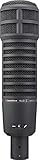
5. Electro-Voice RE20 – The Variable-D Legend
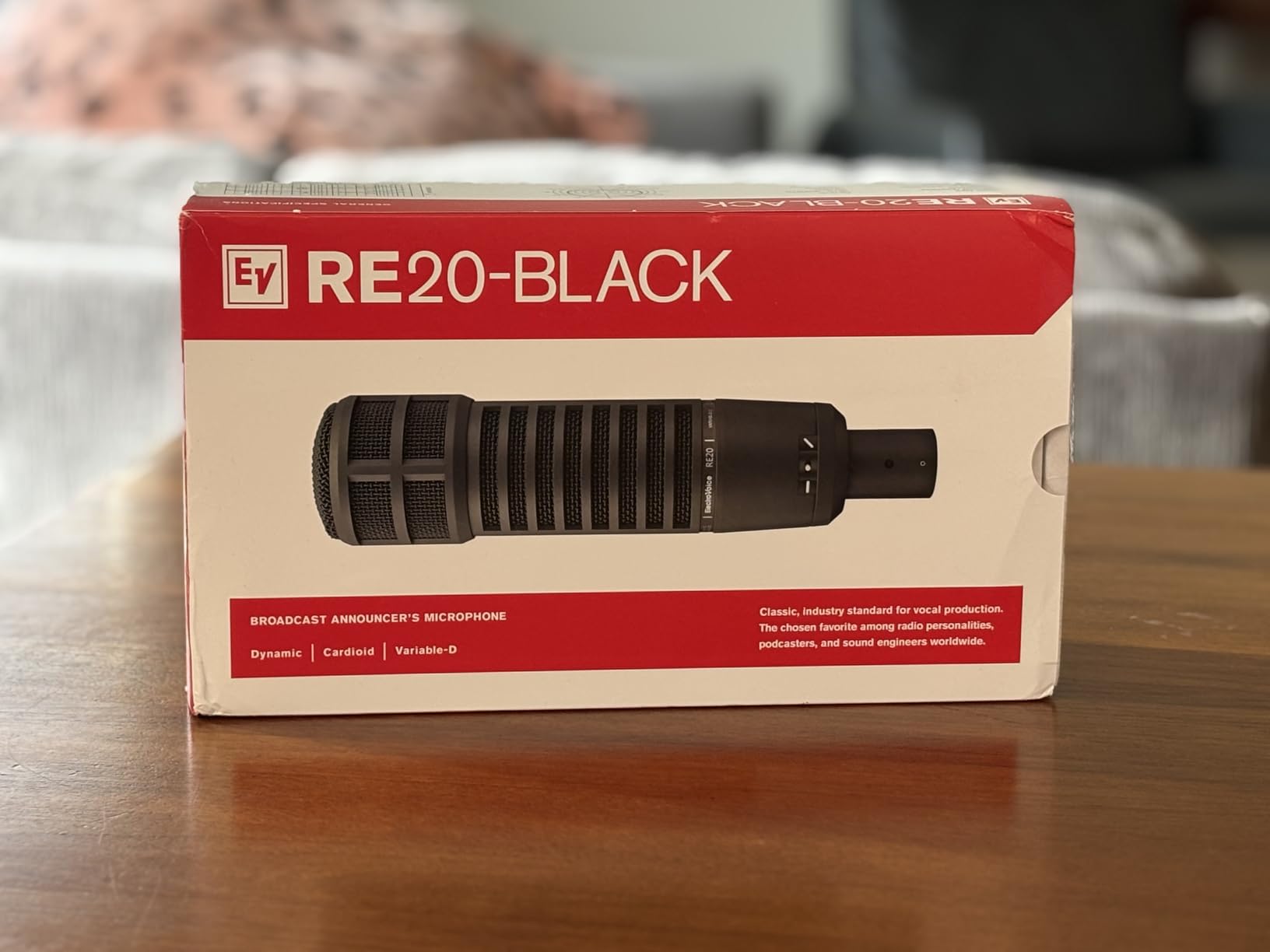
Electro-Voice RE20-BLACK Dynamic Broadcast Announcer Microphone, Black (RE20)
Dynamic Variable-D cardioid
45Hz-18kHz
Internal pop filter
Pros
- Variable-D eliminates proximity effect
- Built-in pop filter
- Humbucking coil reduces hum
- Massive dynamic range
- Heavy-duty build
Cons
- Heaviest mic at 2.9 lbs
- Default clip is wobbly
The Electro-Voice RE20 has been a broadcast studio standard since 1968, and somewhere along the way, guitarists discovered it’s also one of the best microphones for recording electric guitar cabinets. The Variable-D technology is what sets it apart from every other dynamic mic on this list.
Variable-D stands for Variable Distance, and it eliminates the proximity effect that plagues most directional microphones. Normal cardioid mics boost bass frequencies when you get close to them. The RE20 maintains a flat frequency response whether you’re 1 inch or 1 foot from the speaker. That consistency is a huge advantage when tracking multiple guitars at different distances.

The RE20 weighs 2.9 pounds, making it the heaviest mic in this roundup by a wide margin. That heft isn’t a flaw, it’s part of the design. The internal shock mount system uses the mic’s mass to isolate it from vibrations, which means you get cleaner recordings without needing an external shock mount.
The frequency response of 45Hz to 18kHz covers the full guitar cabinet range with smooth, even output. The built-in humbucking coil rejects electromagnetic interference from dimmers, computer monitors, and other studio noise sources. If you’ve ever dealt with hum in your recordings, the RE20’s humbucking coil is a lifesaver.
Why the RE20 is ideal for untreated rooms
Home studio owners with untreated rooms will love the RE20. The Variable-D technology prevents the boomy bass buildup that untreated walls cause. The tight cardioid pattern rejects room reflections. The internal pop filter reduces plosives if you’re also using it for vocals on the same session.
The RE20 handles everything from whisper-quiet jazz tones to full stack metal without compressing or distorting. Its 150dB SPL rating puts it in the same league as the SM7B and MD 421 for high-volume tracking.
Best use cases beyond guitar cabs
The RE20’s broadcast heritage means it’s also one of the best mics for vocals, voiceover work, podcasting, and streaming. If you record guitars and vocals in the same sessions, the RE20 handles both duties without compromise. Many engineers use the same RE20 for everything from kick drums to vocals to guitar cabinets, which speaks to its versatility.
The RE20 costs around $449, which is premium pricing but reasonable considering it replaces multiple specialized microphones in your locker. For home studios that need one great all-purpose mic, the RE20 is hard to beat.
6. Shure SM7B – The Broadcast Powerhouse
Shure SM7B Dynamic Vocal Microphone for Podcasting & Streaming
Dynamic cardioid
50Hz-20kHz
Built-in pop filter
Pros
- Smooth warm broadcast tone
- Built-in shock mount
- Exceptional room rejection
- Bass rolloff and mid-boost switches
- Handles high SPL
Cons
- Needs 60dB+ preamp gain
- Dark signature may not suit all amps
- Heavy at 2.7 lbs
The Shure SM7B might be the most famous microphone that wasn’t originally designed for guitar cabinets. It was built for broadcast voices, and it became a sensation when Michael Jackson’s engineers used it on his vocals. But guitar players quickly figured out that the SM7B’s warm, smooth character works beautifully on guitar cabinets, especially for rock tones.
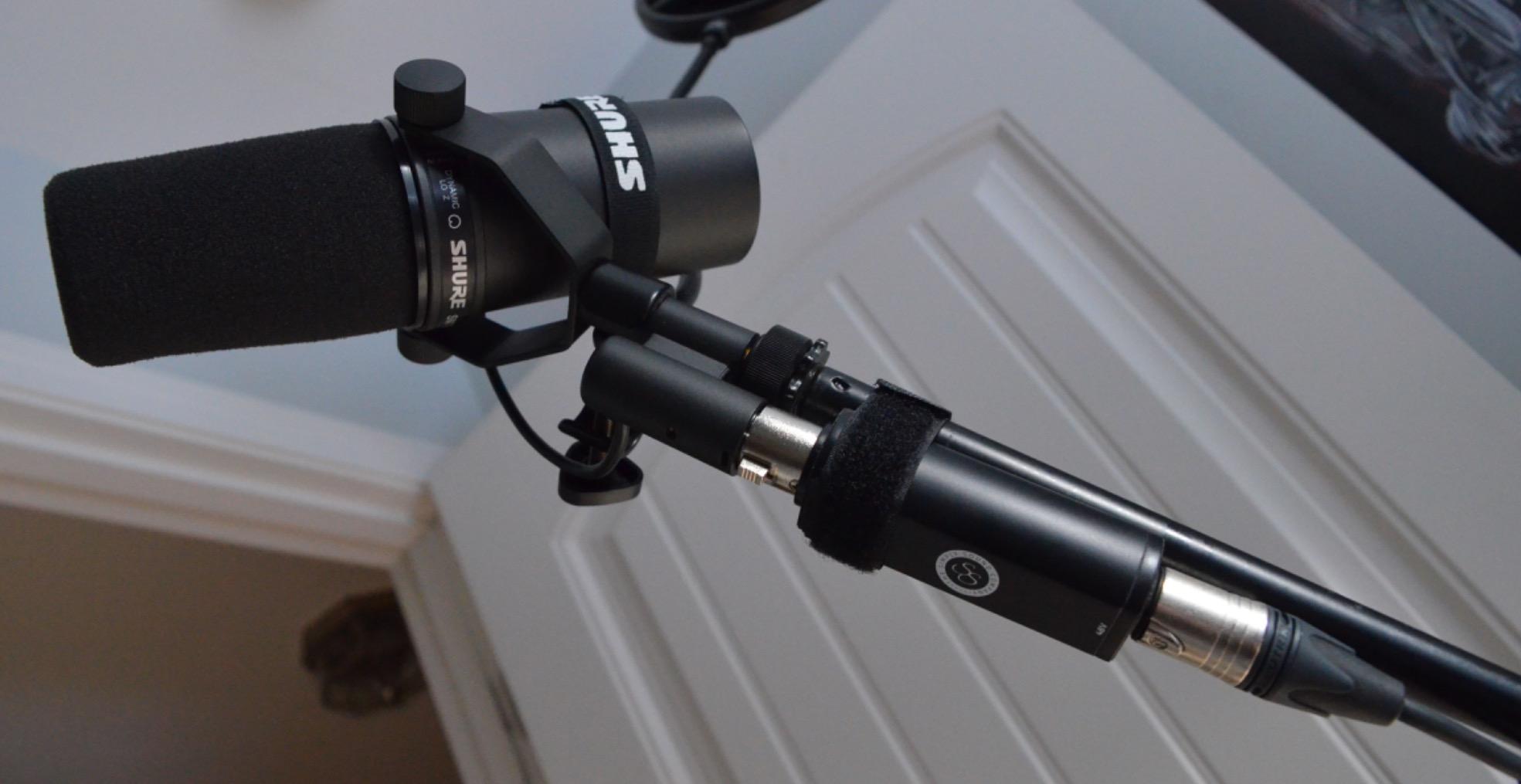
What makes the SM7B special for guitar cab recording is its frequency response. The 50Hz to 20kHz range extends higher than most dynamics, capturing every harmonic of your speaker. The bass rolloff and mid-boost switches let you tune the response without EQ plugins. The built-in air suspension shock isolation eliminates the need for an external shock mount.
The SM7B has become a favorite for home studio owners because of its incredible room rejection. The cardioid pattern combined with the internal humbucking coil rejects computer noise, HVAC sounds, and street noise. If your home studio is in a bedroom or living space, the SM7B captures your amp without capturing your neighbors.
One caveat: the SM7B needs lots of clean gain. Shure recommends at least 60dB of gain, which most audio interfaces can’t provide without noise. Many SM7B owners pair it with a Cloudlifter or FetHead inline preamp to boost the signal before it hits their interface.
The signature warm SM7B character
The SM7B sounds noticeably warmer and darker than the SM57 or E906. That signature makes it ideal for vintage Marshall tones, Vox AC30 sounds, and other British-voiced amps where you want smoothness instead of aggressive bite. Pair the SM7B with a bright amp and the combo sounds incredibly balanced.
For metal and modern rock, the SM7B might be too dark on its own. The trick is pairing it with a brighter mic like the E906 or SM57 and blending the two signals. The SM7B provides warmth and body while the brighter mic adds cut and definition.
Best for podcasters who also record guitars
If you record podcasts or streaming content alongside guitar tracks, the SM7B is the ultimate two-purpose mic. Thousands of podcasters use the SM7B daily, and you can switch to guitar cabinet recording without changing microphones. The included windscreens (close-proximity and standard) make it adaptable to both applications.
With over 12,000 reviews averaging 4.8 stars, the SM7B is one of the most loved microphones in production. The all-metal construction means it will survive decades of use, and the electromagnetic shielding protects against interference from modern electronics.
7. Audio-Technica AT2020 – The Budget Condenser Champion
Audio-Technica AT2020 Cardioid Condenser Studio XLR Microphone, Ideal for Project/Home Studio Applications, Black
Condenser cardioid
20Hz-20kHz
48V phantom power
Pros
- Incredible value under $100
- Detailed transient response
- Wide frequency response
- Durable metal construction
- Great for clean tones
Cons
- Requires 48V phantom power
- Picks up ambient noise
- 20dB self-noise
- No XLR cable included
- Needs shock mount
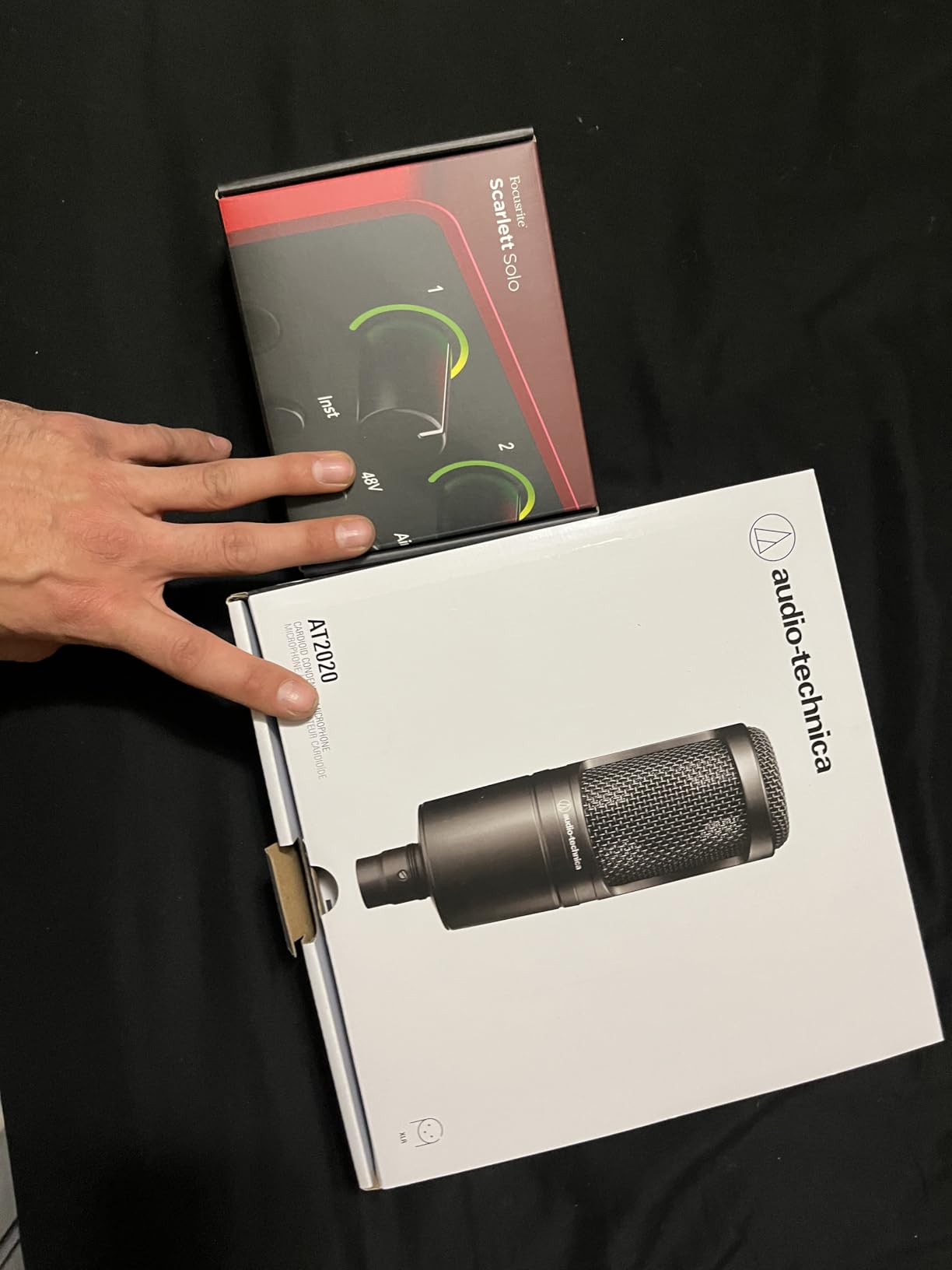
The Audio-Technica AT2020 is the only condenser microphone in this roundup, and it’s here because budget-conscious home studio owners need to know it exists. For under $100, the AT2020 delivers studio-grade detail that costs two to three times more in competing condensers.
Condenser microphones work differently than dynamics. They use charged capacitor plates instead of electromagnetic coils, which gives them much higher sensitivity and detail. The AT2020 captures every nuance of your speaker cone, including subtle pick attack, cabinet resonance, and even the sound of your fingers on the strings.
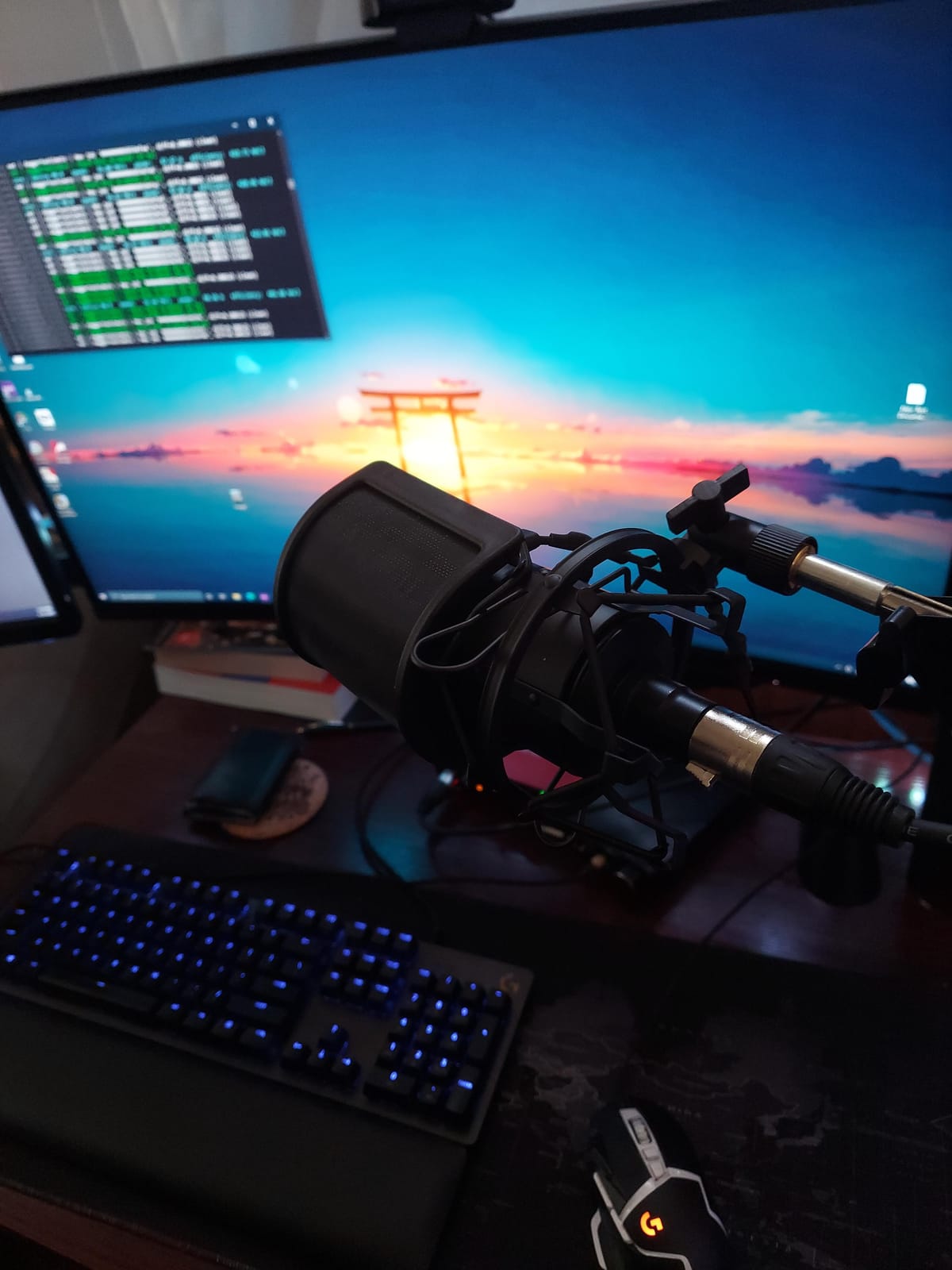
The frequency response of 20Hz to 20kHz is much wider than any dynamic mic on this list. That extended range reveals details in your guitar tone that dynamics miss. Clean Fender tones especially benefit from the AT2020’s transparency, capturing that glassy chime character that defines classic clean guitar.
But condensers have trade-offs. The AT2020 requires 48V phantom power, which your audio interface must provide. It picks up every sound in the room, so untreated home studios will capture computer fans, HVAC noise, and street sounds. The 20dB self-noise is slightly audible in quiet passages.
Best scenarios for using a condenser on guitar cabs
The AT2020 excels at clean and lightly-driven tones. Jazz, blues, country, and indie rock benefit from the AT2020’s detail and transparency. For heavily-distorted metal or hard rock, the AT2020’s sensitivity can be a liability, capturing too much room noise and making dense palm mutes sound fizzy.
If your home studio is acoustically treated with absorption panels and bass traps, the AT2020 will reward you with stunning guitar tones. If your room is untreated, stick with the dynamic mics earlier in this roundup for cleaner results.
Best value for beginners
For guitarists just starting to record, the AT2020 is the most affordable way to capture professional-sounding clean tones. With 15,000+ reviews averaging 4.7 stars, it’s proven to deliver results that compete with mics costing much more.
Just remember to budget for essentials the AT2020 doesn’t include: an XLR cable, a shock mount, and a pop filter. With those accessories, your total investment is still under $150, which makes the AT2020 the best budget-friendly choice in this roundup.
8. Royer Labs R-121 – The Premium Ribbon Choice
Royer Labs R-121 Studio Ribbon Microphone
Ribbon figure-8
30Hz-15kHz
Passive design
Pros
- Patented offset ribbon design
- Handles 135dB SPL
- Equal front and back sensitivity
- Extremely low noise
- Lifetime warranty
Cons
- Premium price point
- Figure-8 pattern needs careful positioning
- Low output needs inline preamp
The Royer R-121 is the microphone I dream about owning, and the one I borrow whenever I get the chance. This is a true ribbon microphone, and it captures guitar cabinet tone in a way that no dynamic or condenser can replicate. The smooth, natural character of the R-121 has made it a favorite at the highest levels of professional recording.
Ribbon microphones work by suspending an extremely thin metal ribbon between magnetic poles. Sound waves vibrate the ribbon, generating an electrical signal. The R-121’s patented offset ribbon design positions the ribbon closer to the front of the mic, which is the side with the Royer logo. This design handles up to 135dB SPL without damaging the ribbon.
The figure-8 polar pattern captures sound equally from the front and back of the mic while rejecting sound from the sides. This is unique among the mics in this roundup, and it opens up creative miking possibilities. Point the R-121 at your speaker with the logo facing the cabinet, and you’ll capture direct sound plus natural room ambience from the back.
Ribbon mic safety and care
Ribbon microphones require more care than dynamics or condensers. The thin ribbon element is fragile and can be damaged by phantom power, blowing into the mic, or physical shock. The R-121’s offset ribbon design is more robust than older ribbon designs, but you still shouldn’t apply phantom power to it (the mic is passive and doesn’t need phantom power to operate).
The R-121 also has very low output compared to dynamic mics, which means you need a high-gain preamp. Most audio interfaces don’t provide enough clean gain for ribbon mics. Pair the R-121 with a Cloudlifter or a dedicated ribbon mic preamp for best results.
Why professionals choose the R-121
The R-121’s tone is famously smooth and natural. Where condenser mics can sound harsh on aggressive guitar tones and dynamics can sound boxy, the R-121 captures the speaker’s true character without coloration. This makes it ideal for tracking guitar parts that need to sit naturally in a mix.
For genres like blues, jazz, classic rock, and indie, the R-121 is unmatched. For modern metal, the R-121 can smooth out the harshness of high-gain amps, but some engineers prefer the bite of a dynamic mic for those styles. At $1,599, the R-121 is a serious investment, but it comes with a lifetime warranty and will last decades with proper care.
If you’re a professional engineer or a serious home studio owner who records guitars weekly, the R-121 deserves consideration. If you’re a beginner or casual recordist, start with one of the dynamic mics earlier in this roundup.
How to Choose the Right Microphone for Your Guitar Cabinet?
Choosing the best microphone for your guitar cabinet comes down to three questions: what’s your budget, what genre do you record, and what does your room sound like? Let me walk you through the decision framework I use when recommending mics to SK Records clients.
Dynamic vs Ribbon vs Condenser
Dynamic microphones like the SM57, MD 421, and E906 use electromagnetic coils and are the most rugged, affordable, and forgiving choice. They handle extreme SPL without distortion and reject background noise. For most home studios and live recording, dynamics are the right answer.
Ribbon microphones like the R-121 use thin metal ribbons and capture the smoothest, most natural tone. They’re expensive, fragile, and require high-gain preamps, but professional studios love them for their unmatched character. Ribbon mics are best for treated rooms and serious recording budgets.
Condenser microphones like the AT2020 use charged capacitor plates and capture the most detail and high-frequency extension. They’re sensitive to room noise and require phantom power, but they excel at clean tones and acoustic instruments. Condensers work best in treated studios.
Polar pattern and SPL handling explained
The polar pattern describes how a microphone picks up sound from different directions. Cardioid patterns pick up sound from the front and reject sound from the back. Super-cardioid patterns have tighter rear rejection but pick up a small amount of sound from directly behind. Figure-8 patterns pick up equally from front and back while rejecting the sides.
For guitar cabinet recording, cardioid and super-cardioid patterns are most useful. They isolate the speaker from room reflections and other instruments. Figure-8 patterns work for ribbon mics where you want to capture room ambience along with direct sound.
SPL handling measures how loud a sound source can be before the microphone distorts. Guitar cabinets can produce 120-130dB SPL at close range. All the mics in this roundup handle that level without issue, but if you’re recording bass cabinets or very loud stacks, prioritize mics with 135dB+ SPL ratings.
Miking position tips and the 3-to-1 rule
The 3-to-1 rule applies when you’re using multiple microphones. To prevent phase cancellation, place each mic at least three times farther from each other source than the distance between either mic and its source. If your close mic is 6 inches from the speaker, your room mic should be at least 18 inches from the close mic.
For single-mic guitar cabinet recording, the most popular position is 1-2 inches from the grill cloth, aimed at the center of the speaker cone. This gives you aggressive midrange punch ideal for rock and metal. Moving the mic toward the outer edge of the cone softens the high end for smoother blues and jazz tones.
Angle the mic slightly off-axis (not pointed directly at the center) to reduce harshness. Pointing straight at the dust cap emphasizes upper harmonics that can sound brittle at high volumes. Aiming at the boundary between the dust cap and the cone surround captures the speaker’s full character without harshness.
Home studio versus professional studio
Home studio owners should prioritize microphones with excellent off-axis rejection and minimal proximity effect. The Sennheiser E906, Sennheiser e609, and Shure SM7B all work well in untreated rooms because they reject room noise and computer hum. The Royer R-121 and AT2020 require treated rooms to sound their best.
Professional studios can take advantage of condenser and ribbon microphones because they have proper acoustic treatment. Studios often use multiple microphones simultaneously, blending a close dynamic with a ribbon room mic for depth and dimension. This multi-mic technique captures the amp’s direct sound plus natural room character.
If your budget allows only one microphone, choose a versatile dynamic like the Shure SM57, Sennheiser E906, or Electro-Voice RE20. These work in any room and handle any genre. Add specialty mics later as your needs grow.
Frequently Asked Questions
What is the 3 to 1 rule for microphones?
The 3-to-1 rule states that when using multiple microphones, each mic should be at least three times farther from the other mics than it is from its own sound source. For guitar cabinet recording, if your close mic sits 6 inches from the speaker, your room mic should be placed at least 18 inches from the close mic. This spacing prevents phase cancellation that occurs when microphones pick up the same sound at slightly different times, which causes frequency dropouts and thin recordings.
Which microphone is best for recording guitar?
The Shure SM57 is the most recommended microphone for recording electric guitar cabinets because of its industry-standard tone, rugged build, and affordable price. The SM57’s contoured frequency response with presence boost helps guitars cut through a mix, and its cardioid pattern rejects background noise. For alternatives, the Sennheiser E906 adds three presence settings, while the Sennheiser MD 421-II offers fuller low-end response for bass cabinets.
What mic to use for electric guitar?
For most electric guitar recording situations, a dynamic microphone is the best choice because it handles high SPL without distortion and rejects room noise. The Shure SM57 is the industry standard for rock, metal, and blues. For cleaner tones in treated rooms, a condenser like the Audio-Technica AT2020 captures more detail. For premium natural tone, the Royer R-121 ribbon microphone is unmatched, though it requires a high-gain preamp.
What is the best inexpensive microphone for recording guitar amps?
The Audio-Technica AT2020 is the best inexpensive microphone for recording guitar amps at around $99, offering condenser detail that competes with mics costing much more. The Sennheiser e609 Silver is another budget option around $79 with a flat-profile design perfect for guitar cabinets. Both capture clean guitar tones well, though they require treated rooms for best results because of their sensitivity to ambient noise.
What type of mic is best for recording guitar amps?
Dynamic microphones are the best general-purpose choice for recording guitar amps because they handle extreme SPL levels, reject background noise, and require no phantom power. The Shure SM57, Sennheiser E906, and Electro-Voice RE20 are top dynamic choices. For smoother, more natural tone in treated studios, ribbon microphones like the Royer R-121 excel. For maximum detail on clean tones, condensers like the Neumann U87 work but require treated rooms.
Will a microphone work with a guitar amp?
Yes, microphones work with guitar amps by capturing the sound waves produced by the speaker cone. You connect the microphone to your audio interface or mixer using an XLR cable, point the mic at the speaker, and record. Most microphones connect via standard XLR cables, though some modern USB microphones also work for direct computer recording. Dynamic mics like the Shure SM57 are the most popular choice because they handle loud amp volumes without distortion.
Final Verdict
After testing all 8 microphones for recording electric guitar cabinets in 2026, my top recommendation depends on your situation. The Shure SM57 remains the best all-around choice for beginners and professionals alike, with a price that won’t break the bank and a tone that works for any genre. The Sennheiser E906 is my pick if you want more tonal control with its three presence settings, while the Sennheiser e609 is the best budget option for guitarists who don’t want to fuss with stands.
For home studios with treated rooms, the Audio-Technica AT2020 delivers condenser detail at a price that competes with dynamics. For professional studios, the Royer R-121 ribbon microphone captures a smoothness that no other mic type can match. Whichever microphone you choose from this roundup, you’re getting one of the best tools available for capturing electric guitar cabinet tone.
Start with the SM57 if you’re unsure. You can always add specialty mics later as your needs and budget grow. The important thing is to start recording your amps with a quality microphone, because nothing beats hearing your playing captured properly through a great mic.