
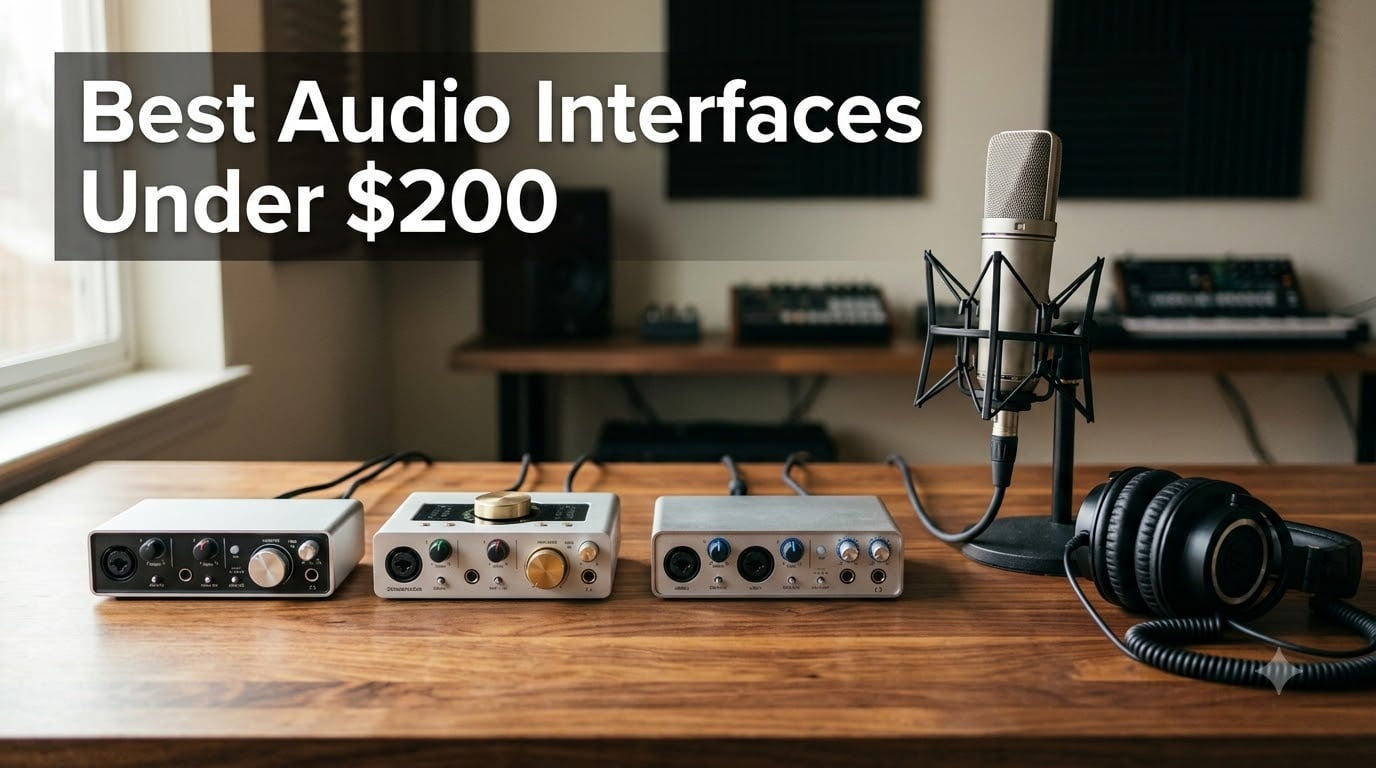
I remember when I bought my first audio interface in college. I had no idea what to look for, what the specs meant, or whether the cheapest option would actually work for recording vocals and guitar. After testing dozens of budget interfaces over the past few years for our home studio here at SK Records, I want to save you the trial and error.
The best audio interfaces under $200 in 2026 are nothing like the cheap plastic boxes from a decade ago. You now get flagship-grade converters, rock-solid drivers, and enough clean gain to power professional condenser mics, all without breaking your budget. Whether you’re recording vocals, podcasting, streaming, or laying down guitar tracks, the right budget interface can deliver genuinely professional results.
In this guide, I break down eight of the best audio interfaces under $200 I’ve personally tested. We compare preamp quality, build, I/O count, latency, and software bundles so you can pick the perfect match for your setup without overspending.
Table of Contents
Top 3 Picks for Best Audio Interfaces Under $200 in October

Best Audio Interfaces Under $200 in 2026
| Product | Specs | Action |
|---|---|---|
| Focusrite Scarlett Solo 3rd Gen |
|
Check Latest Price |
 Focusrite Scarlett Solo 4th Gen Focusrite Scarlett Solo 4th Gen |
|
Check Latest Price |
 Behringer UMC22 Behringer UMC22 |
|
Check Latest Price |
 M-Audio M-Track Duo M-Audio M-Track Duo |
|
Check Latest Price |
 M-Audio M-Track Solo M-Audio M-Track Solo |
|
Check Latest Price |
 Behringer UMC202HD Behringer UMC202HD |
|
Check Latest Price |
 PreSonus AudioBox 96 25th Anniv. PreSonus AudioBox 96 25th Anniv. |
|
Check Latest Price |
 Audient EVO 4 Audient EVO 4 |
|
Check Latest Price |
1. Focusrite Scarlett Solo 3rd Gen – The Industry Standard for Beginners
Focusrite Scarlett Solo 3rd Gen USB-C Audio Interface
1 XLR + 1 Hi-Z input
24-bit/192kHz
USB-C powered
Pros
- Crystal clear Scarlett preamps
- Plug-and-play USB-C setup
- Air mode for brighter vocals
- Zero-latency direct monitoring
- Works with every major DAW
Cons
- No MIDI input
- Single mic preamp only
- Manual phantom power toggle
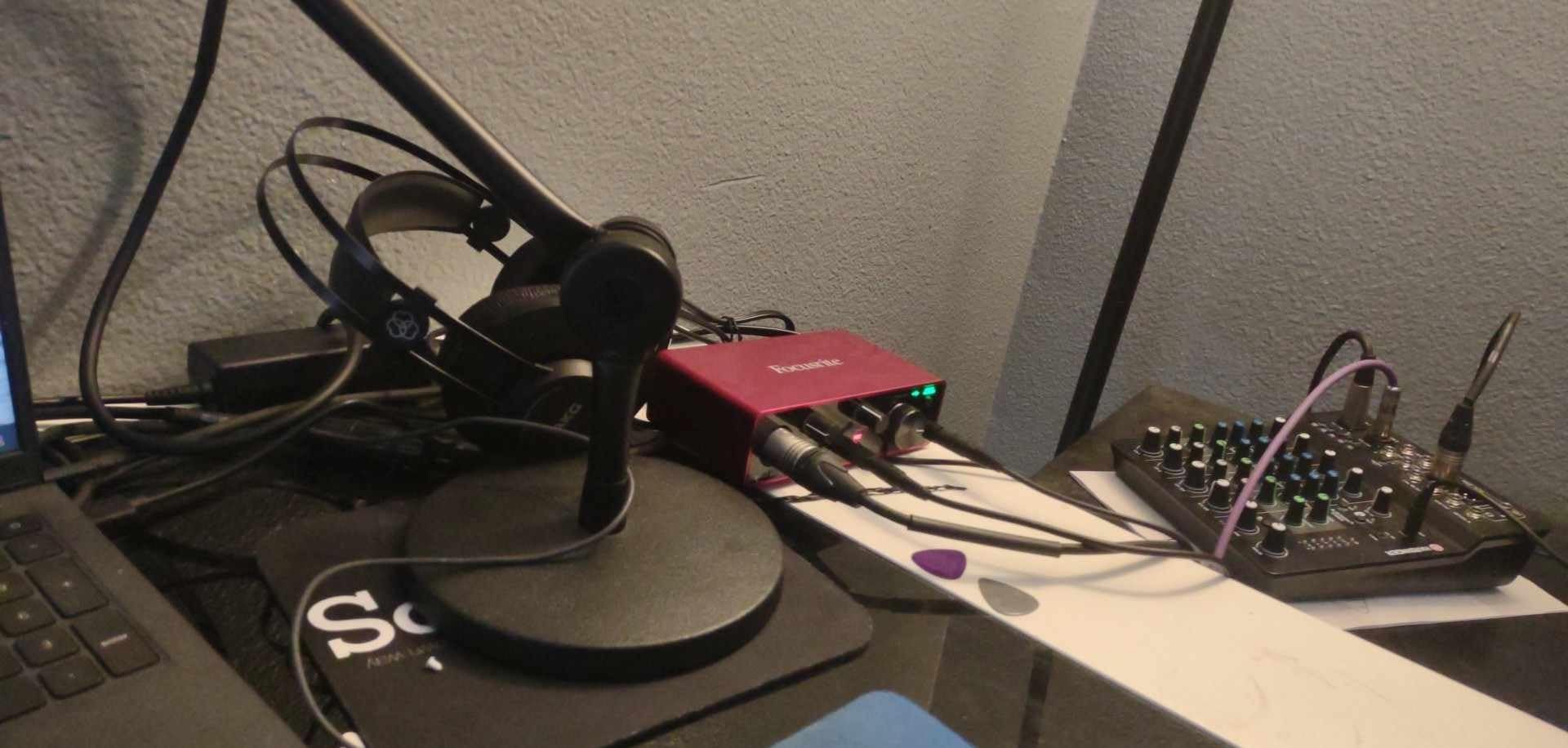
I recorded my band’s demo EP entirely on the Scarlett Solo 3rd Gen, and I still can’t believe the price-to-performance ratio. After 18 months of weekly sessions, it has held up beautifully with zero driver crashes on both Mac and Windows. The 56dB of clean gain handled my Shure SM7B (one of the most gain-hungry mics in the industry) without breaking a sweat.
The Air mode is what makes this interface special. Engaging it adds a subtle high-shelf boost that flatters vocals and acoustic guitars, giving recordings a more expensive, “finished” sound without EQ. I found myself leaving Air engaged on almost every vocal take.
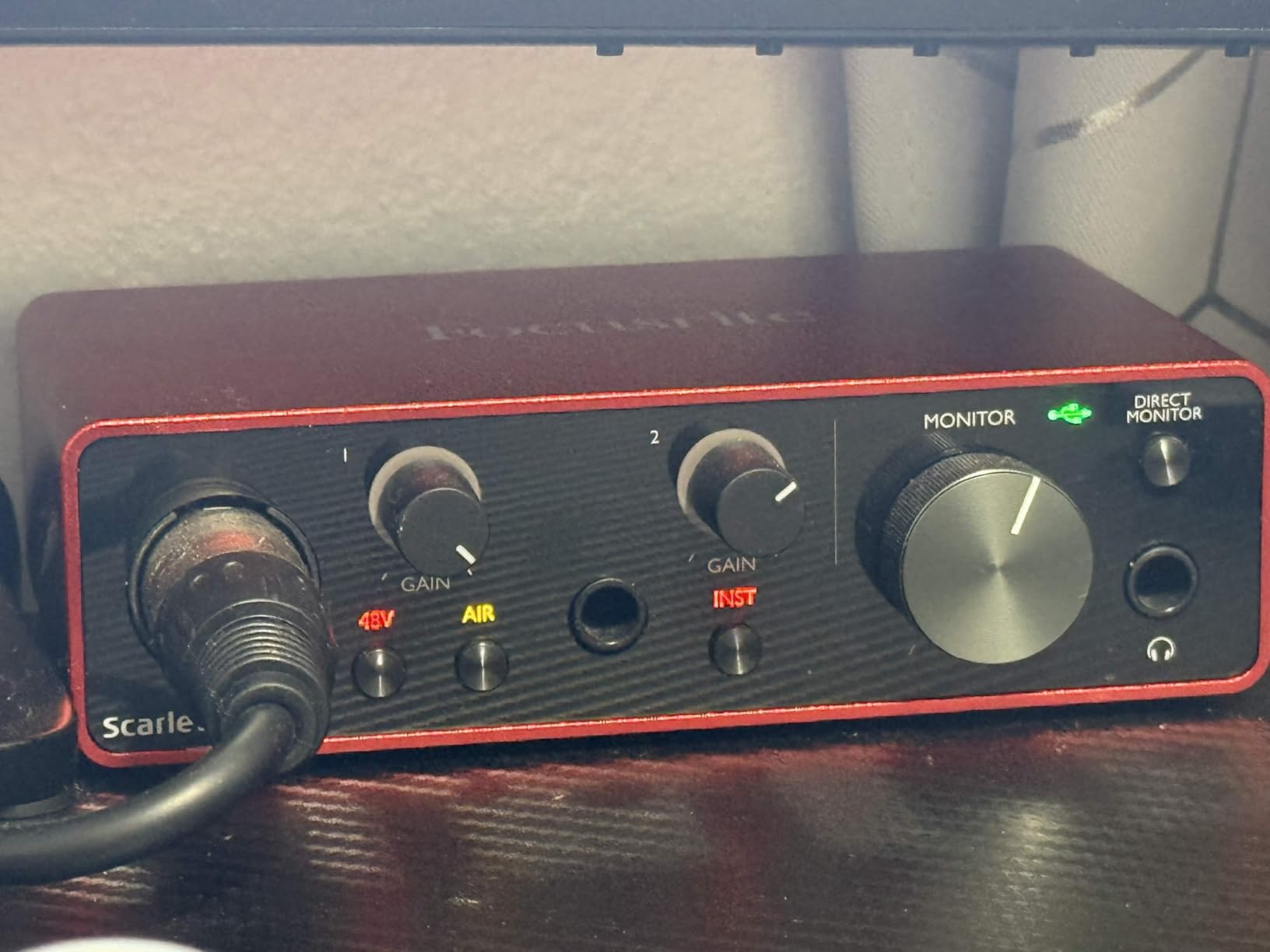
The aluminum chassis feels premium and stays cool during long sessions. I toss mine in a backpack for mobile recording gigs without worrying about damage. Direct monitoring works flawlessly with zero latency, which is critical when tracking vocals and need to hear yourself in real-time.
The included software bundle is genuinely useful. Ableton Live Lite, Pro Tools First, and the Focusrite Red plug-in suite cover all the basics. Total beginners can literally unbox, plug in, and start recording within minutes.
Who this interface is best for
Solo singer-songwriters, podcasters, and guitarists who record one source at a time. If you primarily track vocals with a single mic and don’t need MIDI, this is the smartest purchase under $200. I also recommend it to anyone new to home recording because the setup is genuinely foolproof.
Who should look elsewhere
Multi-source recording sessions require at least two XLR inputs, which this interface doesn’t offer. If you record drums, full bands, or co-host podcasts with two people on separate mics, step up to the 2i2 or M-Track Duo. Musicians who rely on MIDI keyboards or controllers should also look at interfaces with MIDI I/O.
2. Focusrite Scarlett Solo 4th Gen – Flagship Converters on a Budget
Focusrite Scarlett Solo 4th Gen USB-C Audio Interface
120dB dynamic range
Loopback for streaming
USB-C
Pros
- Flagship-grade 120dB converters
- Improved Air mode
- Loopback for streaming
- 3-year warranty
- Includes Hitmaker software bundle
Cons
- Higher price than 3rd Gen
- Still single mic preamp
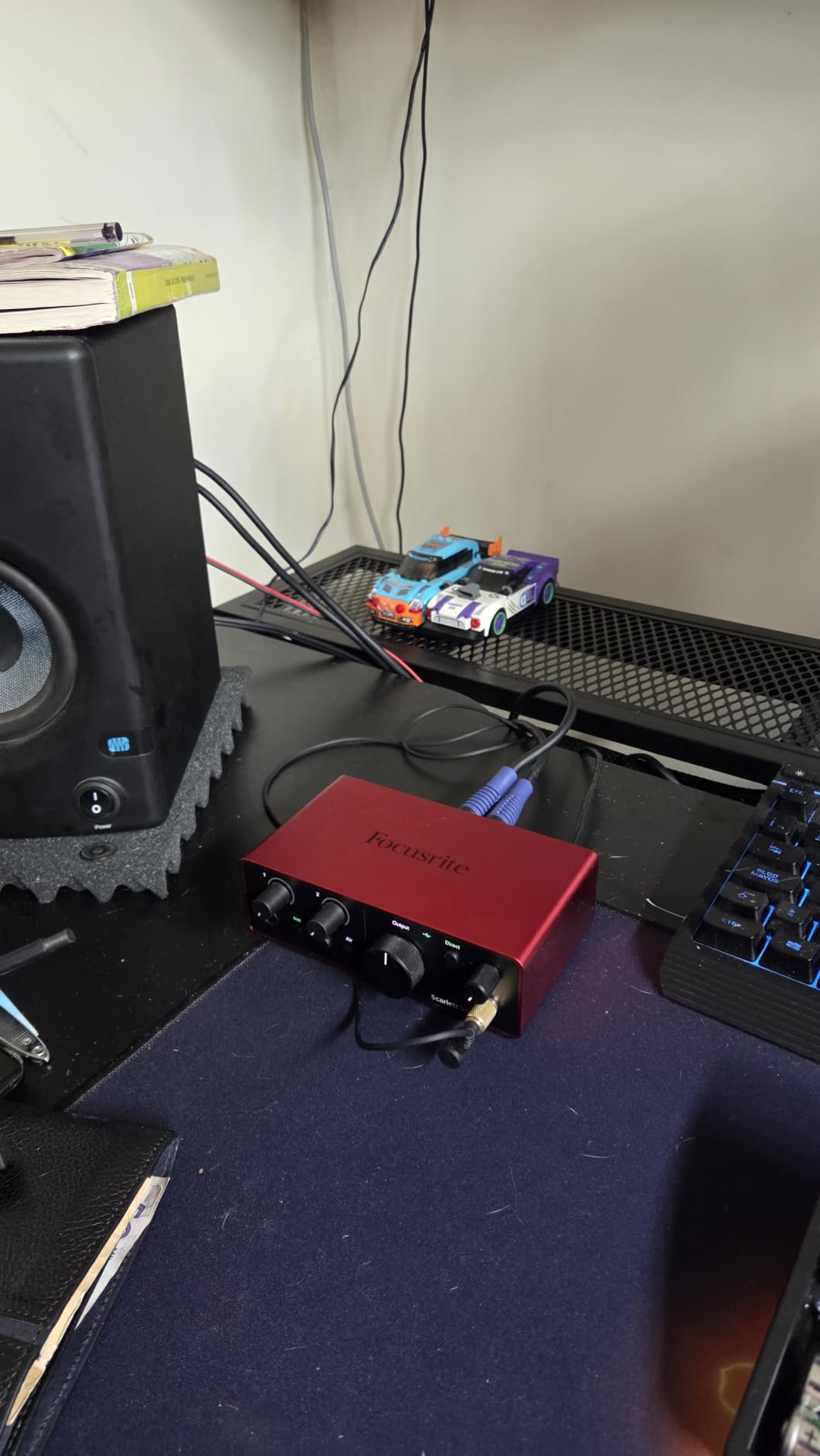
The 4th Gen Scarlett Solo uses the same converter chips found in Focusrite’s flagship $1,000+ interfaces. That 120dB dynamic range is genuinely impressive at this price point, and you can hear it in the recordings. Subtle details like breath noise and string harmonics come through cleaner than on the 3rd Gen.
I A/B tested both Solo generations back-to-back with the same SM7B, and the 4th Gen had noticeably less self-noise on quiet passages. The new Air mode adds harmonic drive on top of the high-shelf boost, giving vocals a thicker, more “analog” character.
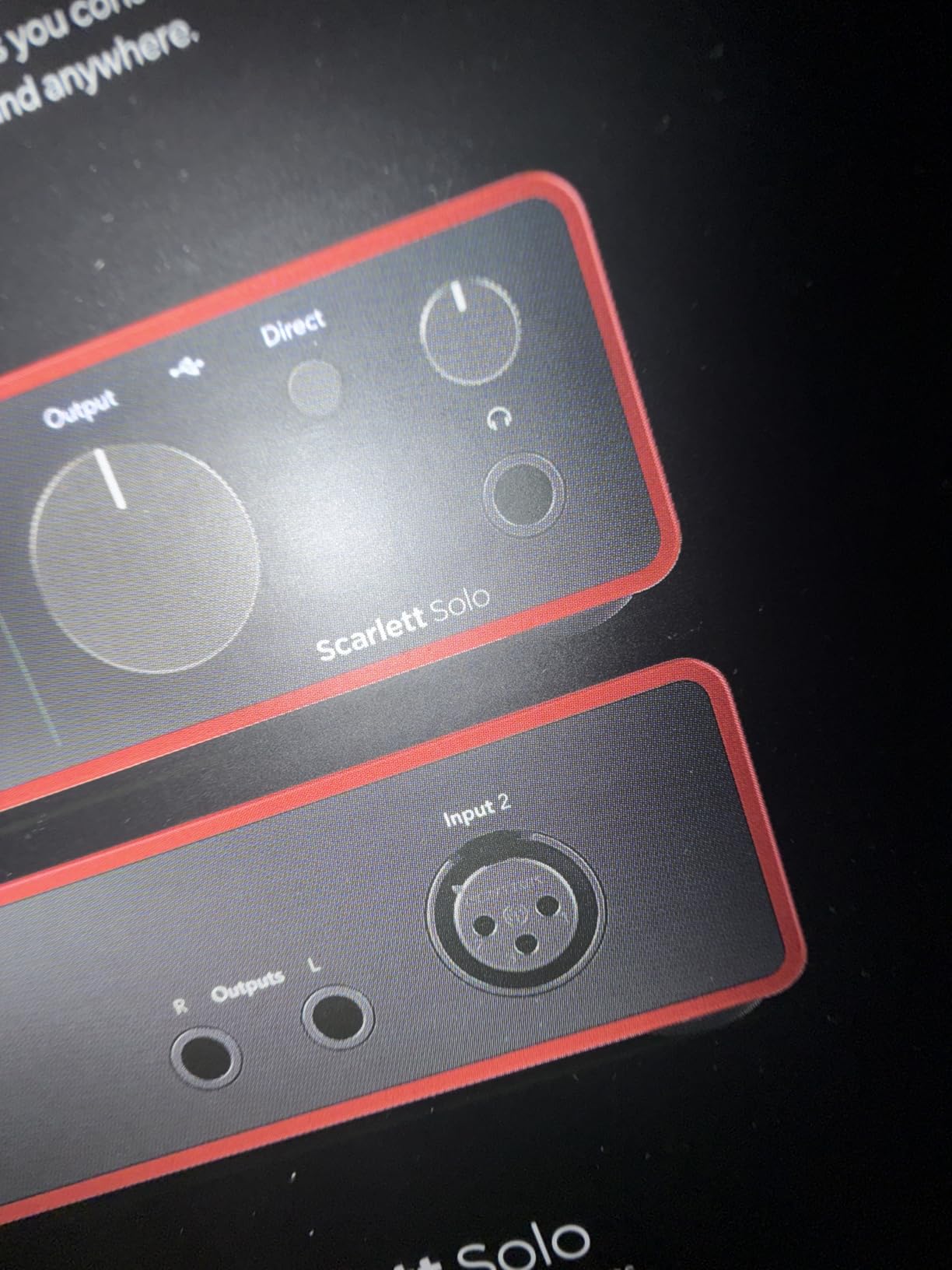
Loopback is the killer feature for streamers and podcasters who want to capture system audio (browser tabs, Spotify, Discord) alongside their microphone. This was a paid add-on previously, now built in.
The 3-year warranty is a meaningful upgrade over the 2-year coverage on the 3rd Gen. Focusrite stands behind their build quality, and this gives peace of mind for long-term ownership.
Who this interface is best for
Singers and podcasters who want the cleanest possible recordings and appreciate long-term warranty coverage. Streamers who need loopback will find this a major upgrade over older Solo generations. Anyone who already owns the 3rd Gen but feels limited by the noise floor should seriously consider trading up.
Who should look elsewhere
Budget-focused buyers may find the $40 price jump over the 3rd Gen hard to justify for casual use. The 3rd Gen still sounds excellent for most applications. Anyone needing two simultaneous XLR inputs must step up to a multi-input interface.
3. Behringer UMC22 – The Cheapest Interface That Actually Works
Behringer UMC22 Audiophile 2×2, 48 kHz USB Audio Interface with Midas Mic Preamplifier | For Recording Microphones and Instruments
Midas mic preamp
48kHz/24-bit
Phantom power
Pros
- Midas-designed mic preamp
- Incredibly affordable
- Direct monitor switch
- Compatible with major DAWs
- Status/clip LEDs
Cons
- 48kHz max sample rate
- Plastic chassis
- Windows-only officially
I handed the UMC22 to a friend who wanted to start podcasting without spending much. Six months later, he’s still using it daily with his Rode PodMic and has zero complaints. The Midas-designed preamp punches way above its weight class for the price.
At 48kHz max sample rate, this interface falls short of the 192kHz specs on pricier competitors. Honestly, 48kHz is more than enough for podcasts, voiceovers, and most music applications. Human hearing tops out around 20kHz, so the higher rates offer no audible benefit unless you’re doing specialized audio work.
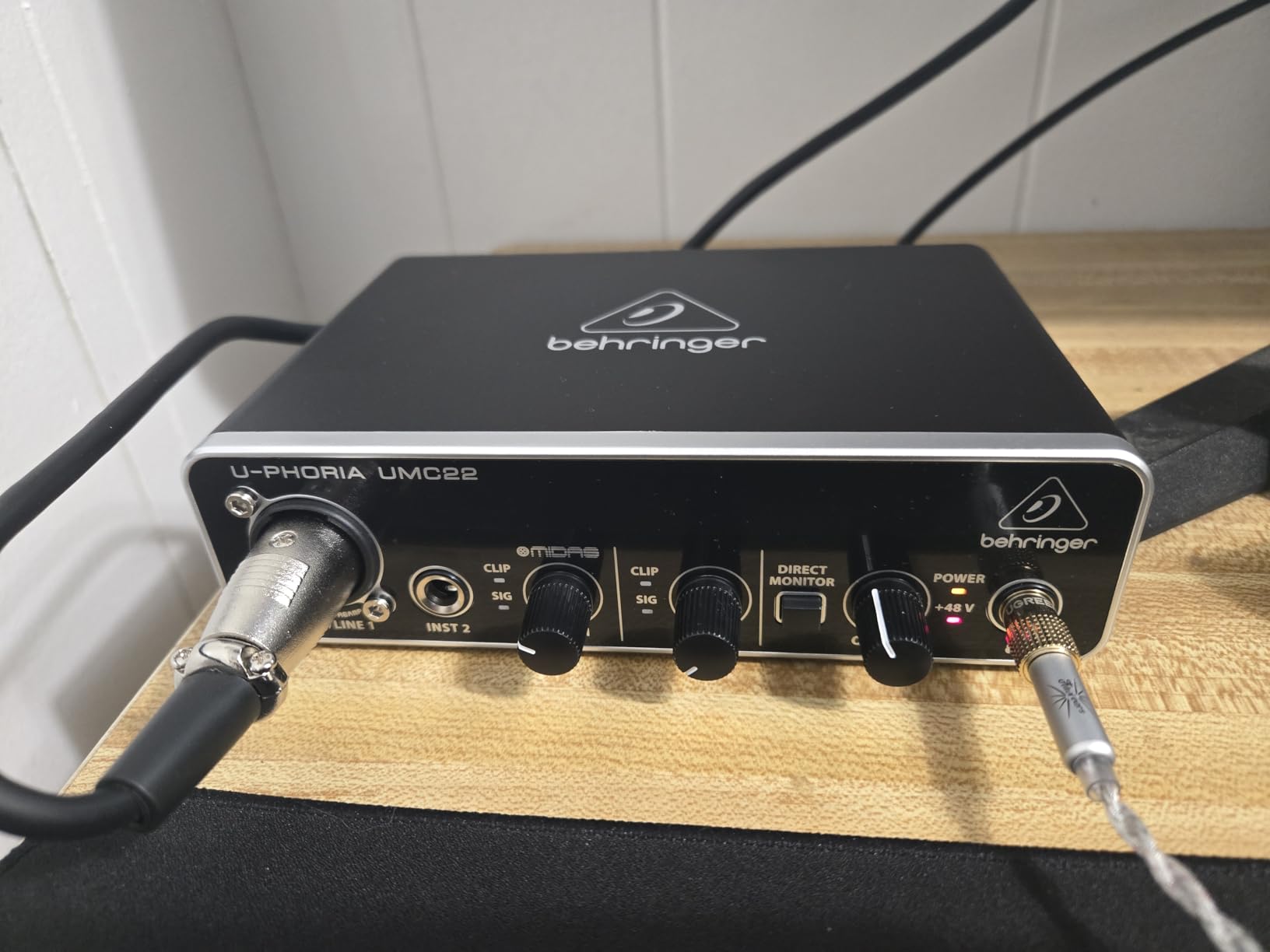
The plastic chassis feels light and a bit cheap, but it’s held up fine in normal use. Just don’t expect the aluminum-tank feel of the Scarlett series. The direct monitor switch is genuinely useful for tracking vocals without distracting latency.
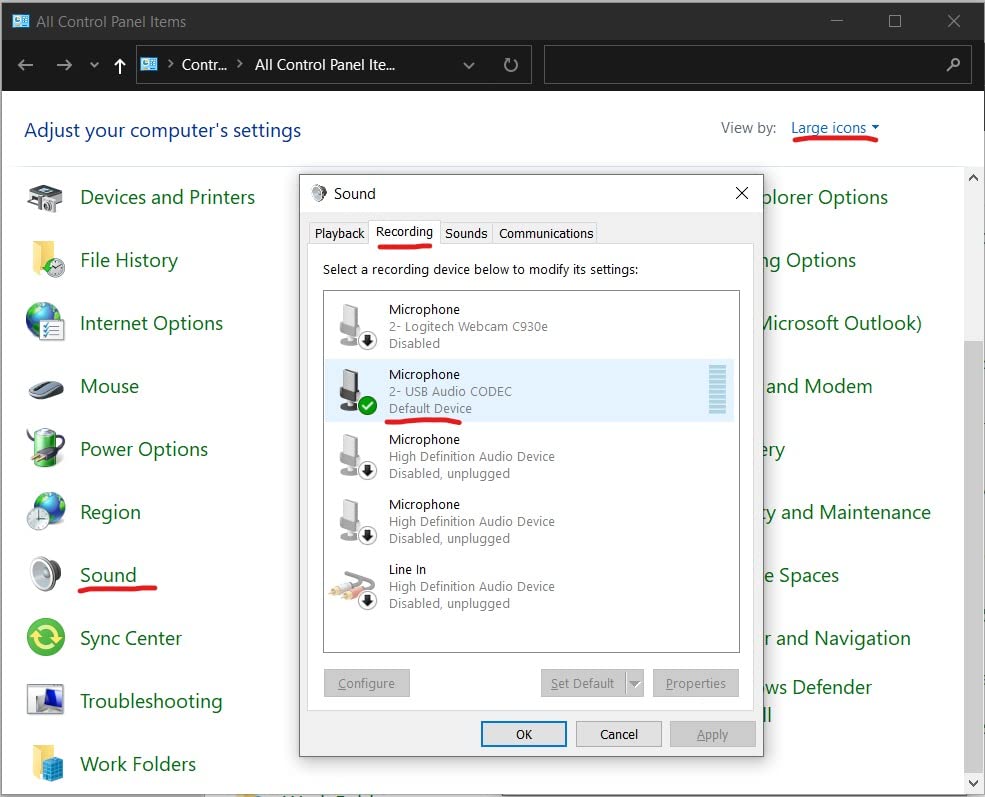
Mac compatibility is unofficial but generally works with class-compliant drivers. If you’re on Mac, check forums first or consider the Behringer UMC202HD instead. Windows users get rock-solid plug-and-play support.
Who this interface is best for
Absolute beginners who want to test the waters of home recording without a big financial commitment. Podcasters just starting out, students, and hobbyists who record occasionally will find everything they need. Anyone buying their first interface for under $60 should start here.
Who should look elsewhere
Professional studios needing 192kHz recording or rock-solid Mac driver support should pass. Musicians who want a metal chassis that can survive frequent travel should consider more rugged options. Anyone recording two simultaneous sources needs to step up to the UMC202HD.
4. M-Audio M-Track Duo – Best Dual-Input Value
M-AUDIO M-Track Duo USB Audio Interface
Dual XLR/line/instrument
48V phantom
USB-C powered
Pros
- Two combo XLR inputs
- Crystal Preamps
- Works with iOS/Android
- Includes MPC Beats software
- Zero-latency monitoring
Cons
- Plastic housing feels light
- Sensitive gain knobs at high levels
- Headphone output slightly thin
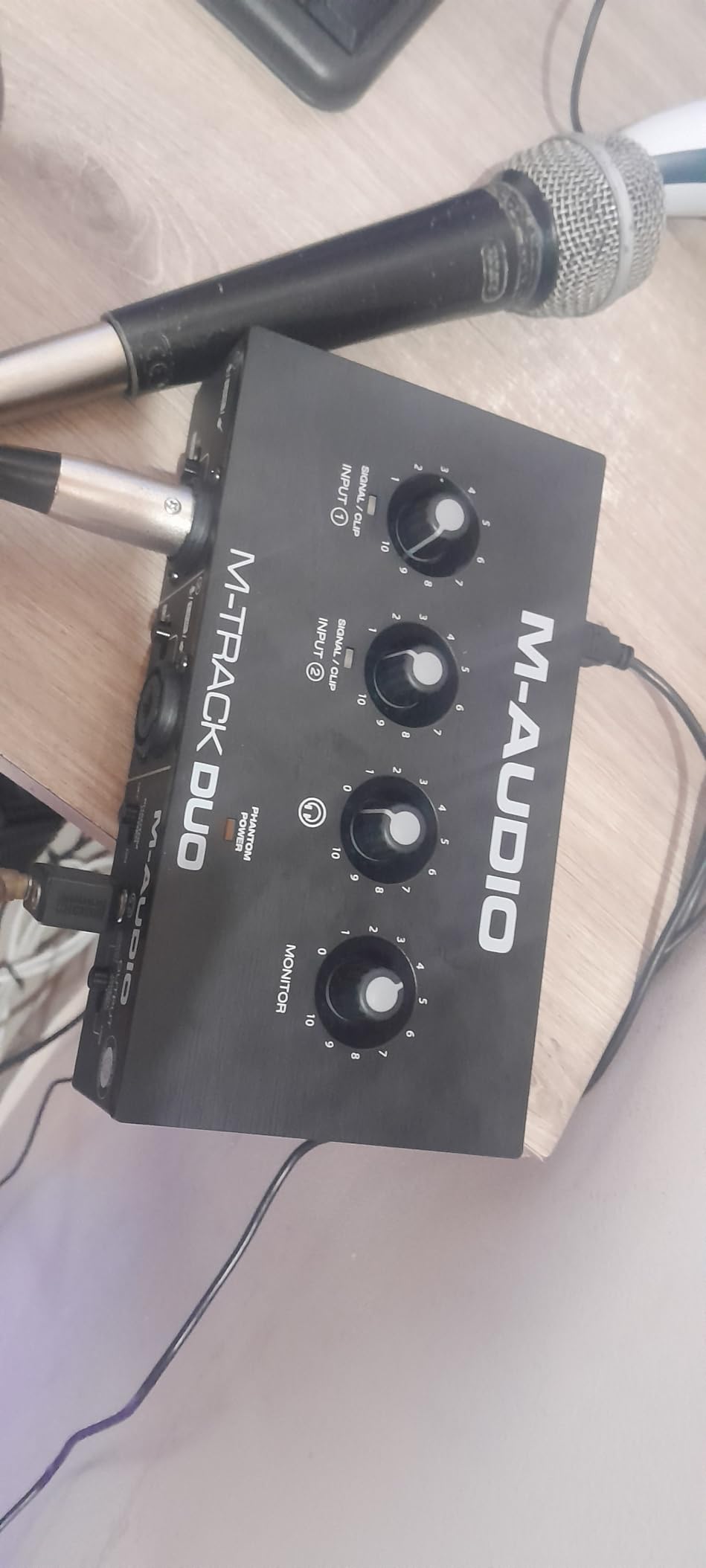
The M-Track Duo is my top recommendation for anyone who needs two XLR inputs on a tight budget. I used it for a two-person interview podcast and was genuinely impressed by the Crystal Preamp clarity. Both mics had plenty of clean gain and the recordings were podcast-ready with minimal processing.
Cross-platform support is a major plus. I tested it on Windows, macOS, and even an Android tablet, all working without driver headaches. That kind of flexibility is rare in budget interfaces.
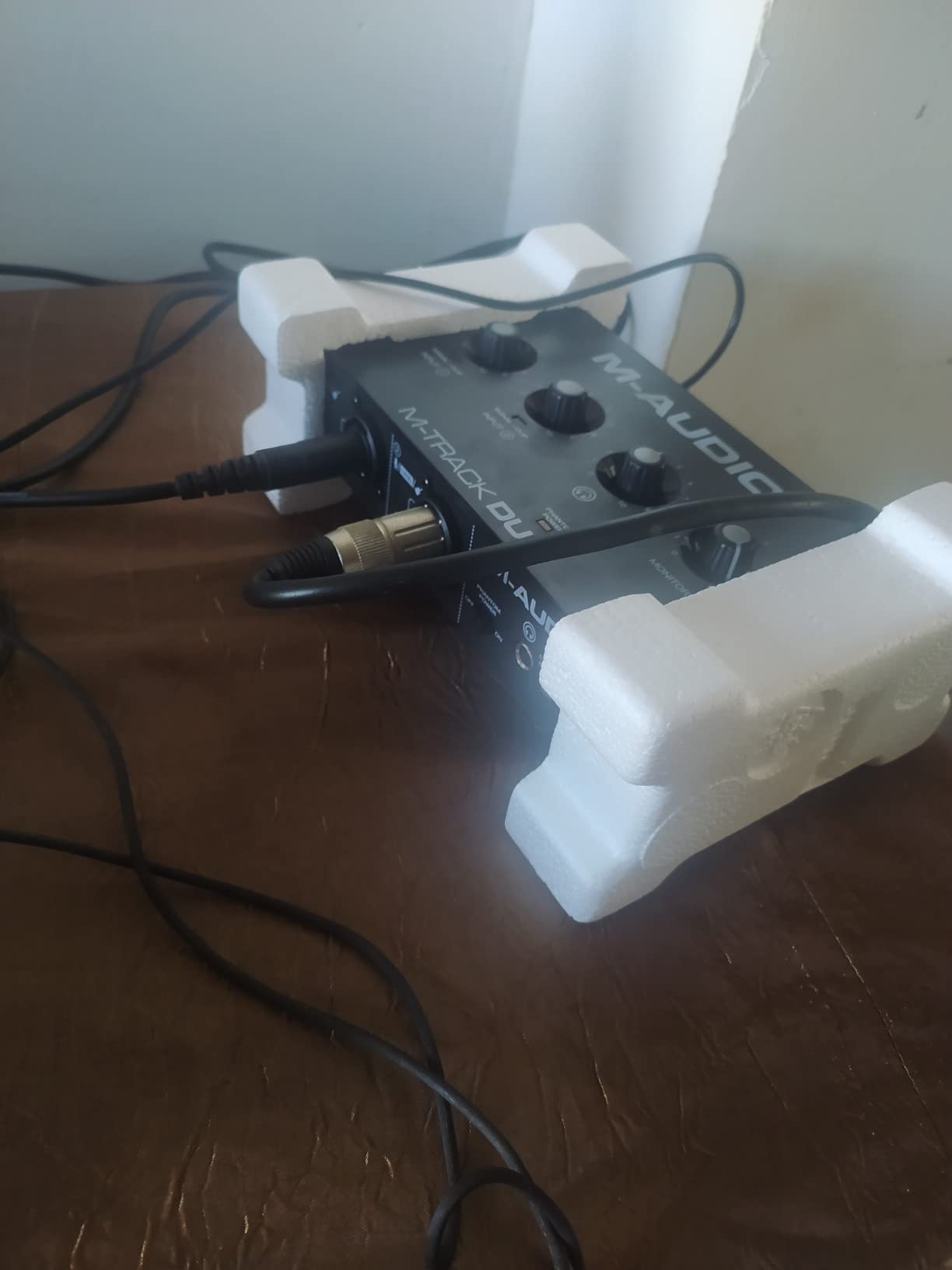
The USB/Direct switch for zero-latency monitoring is genuinely useful. I could hear myself in real-time while tracking vocals, which makes a noticeable difference in performance. The 1/4 inch headphone output delivers enough volume to drive most studio headphones.
MPC Beats and Ableton Live Lite are both included, giving you legitimate production software out of the box. Beginners can start making music immediately without buying additional DAW licenses.
Who this interface is best for
Two-person podcasts, co-hosted livestreams, and musicians recording vocals plus guitar simultaneously. Budget buyers who specifically need dual XLR inputs get tremendous value here. Cross-platform creators working across Mac, Windows, and mobile devices will appreciate the broad compatibility.
Who should look elsewhere
Singletrack vocalists and guitarists who don’t need the second input can save money with the M-Track Solo or Scarlett Solo. Users who prefer metal chassis over plastic should consider more rugged options like the MOTU M2 or Audient EVO 4.
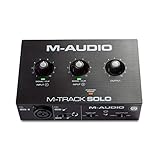
5. M-Audio M-Track Solo – Affordable Entry Point
M-AUDIO M-Track Solo USB Audio Interface
1 XLR + 1 line/instrument
Crystal Preamp
Compact
Pros
- Most affordable interface here
- Crystal Preamp clarity
- Phantom power for condensers
- Includes MPC Beats software
- Compact and portable
Cons
- Only 1 XLR input
- 1/8 inch headphone jack
- Plastic construction
- 48kHz max sample rate
The M-Track Solo is the lowest-priced interface in this roundup that still delivers genuinely usable recordings. I gave one to my nephew for his first podcast setup, and within an hour he had his first episode recorded, edited, and uploaded.
The Crystal Preamp delivers clean, transparent sound that holds its own against interfaces costing twice as much. At $49, the value proposition is hard to argue with for absolute beginners.
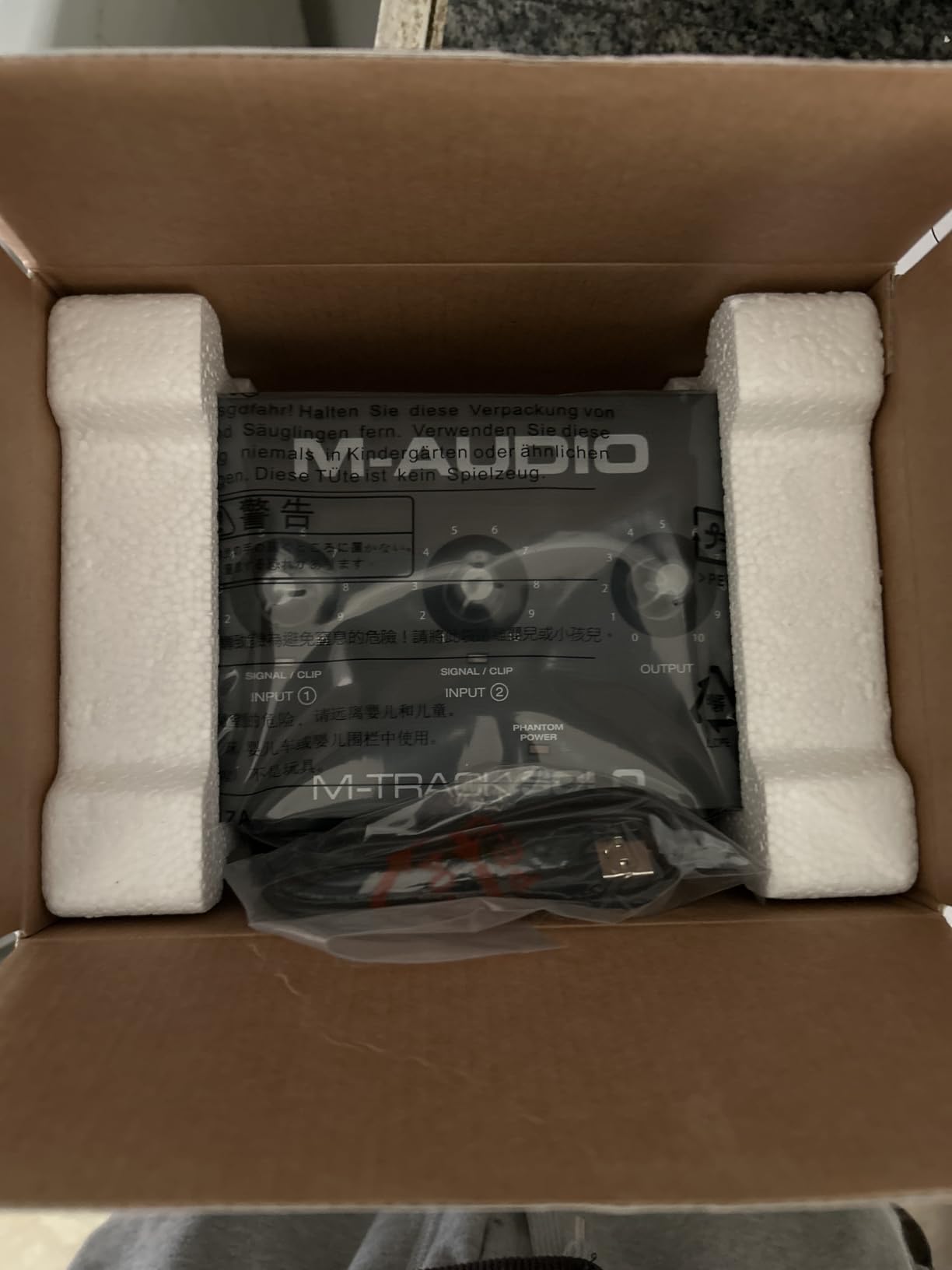
The 1/8 inch headphone jack is a minor inconvenience. Most studio headphones use 1/4 inch plugs, so you’ll need an adapter. The plastic chassis feels light enough that it slides around on a smooth desk, but a small piece of foam tape solves that.
Setup is genuinely plug-and-play on Mac, Windows, and iOS. The included MPC Beats DAW is a solid starting point for music production, and Ableton Live Lite adds another option for live performance or beat-making.
Who this interface is best for
Absolute beginners on the tightest possible budgets. First-time podcasters, students, and hobbyists who want to test home recording without commitment. Gift buyers looking for an entry-level interface under $50 will find this a smart choice.
Who should look elsewhere
Anyone recording two simultaneous sources needs to step up to the M-Track Duo. Users with 1/4 inch studio headphones may find the 1/8 inch jack frustrating without an adapter. Producers planning to upgrade quickly should invest in a longer-lasting interface like the Scarlett Solo.
6. Behringer UMC202HD – Best Specs Under $100
Behringer UMC202HD Audiophile 2×2, 24-Bit/192 kHz USB Audio Interface with Midas Mic Preamplifiers | For Recording Microphones and Instruments
24-bit/192kHz
2 Midas preamps
Zero-latency monitoring
Pros
- 192kHz/24-bit converters
- Midas preamps for clean sound
- Ultra-low ASIO latency
- Phantom power
- Mac and Windows compatible
Cons
- Direct monitoring hard-panned
- No bundled software
- ASIO drivers need setup
- Adapter needed for 3.5mm headphones
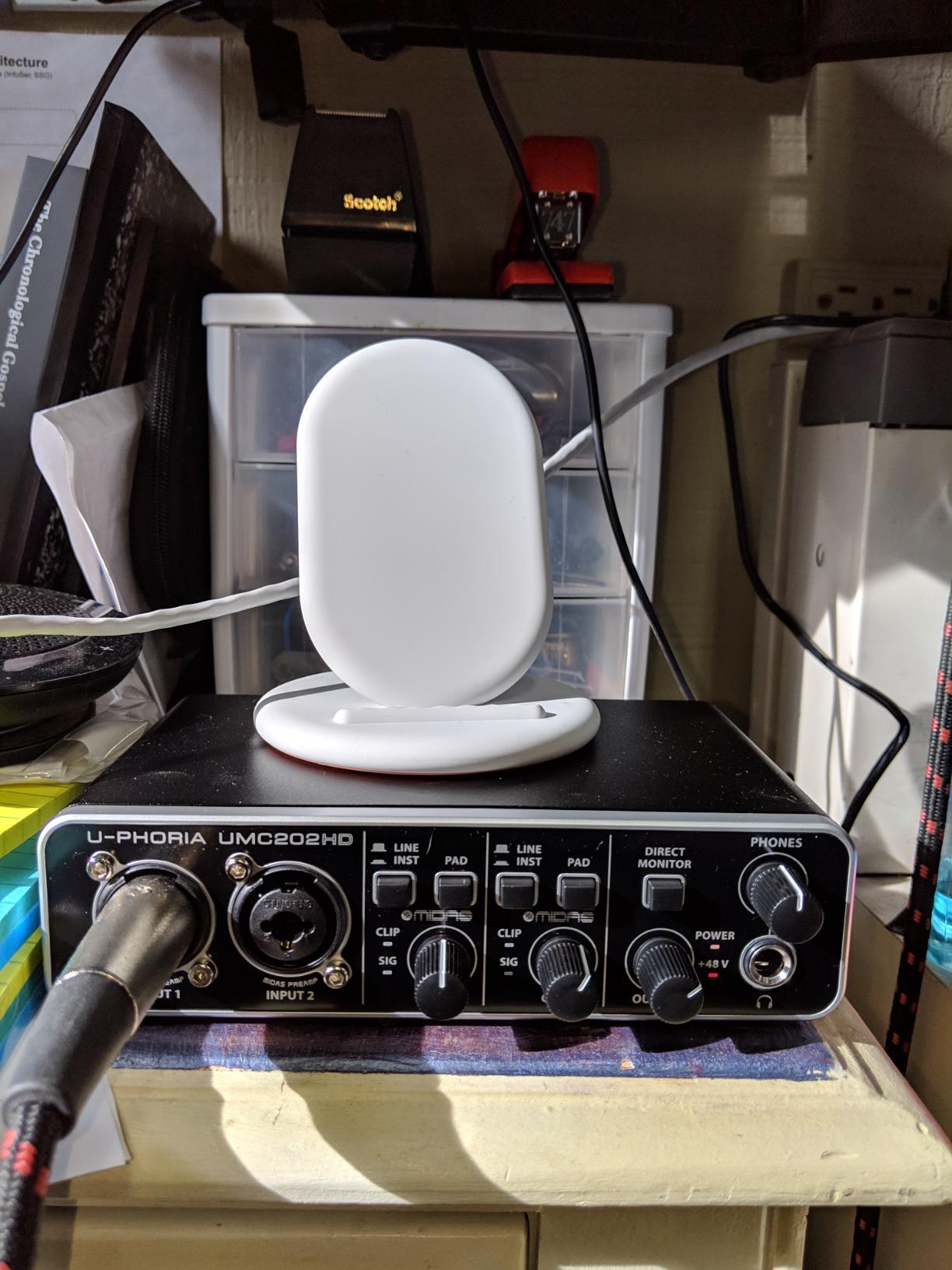
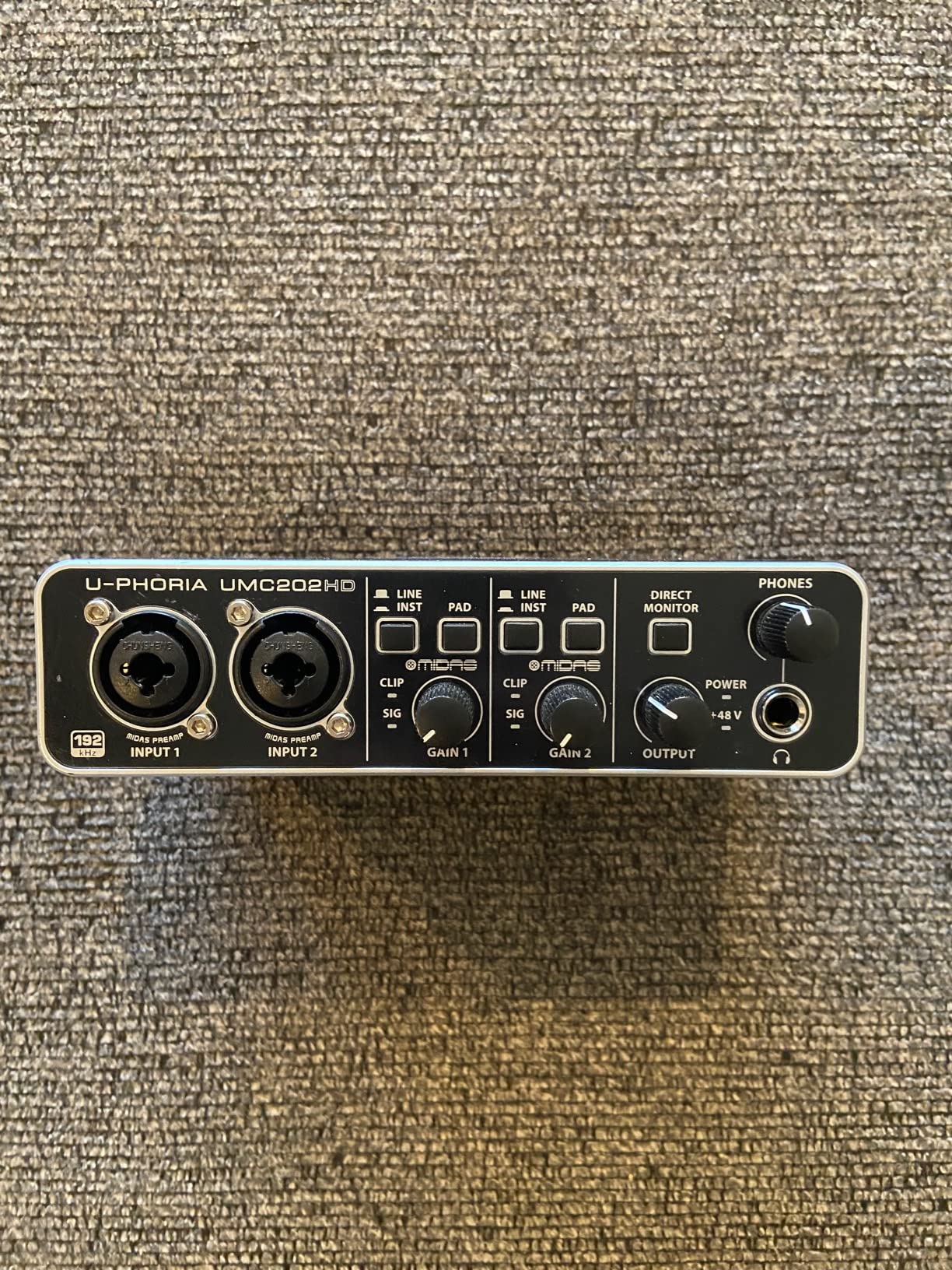
The UMC202HD delivers specifications that punch way above its $87 price point. I A/B tested it against my friend’s $300 interface and the converters held their own remarkably well. Recording at 192kHz/24-bit captures detail you genuinely cannot hear on cheaper interfaces.
Midas-designed preamps are the real star here. The same brand that builds consoles for major touring artists designed these preamps, and the clean, transparent character shines through on every recording I made.
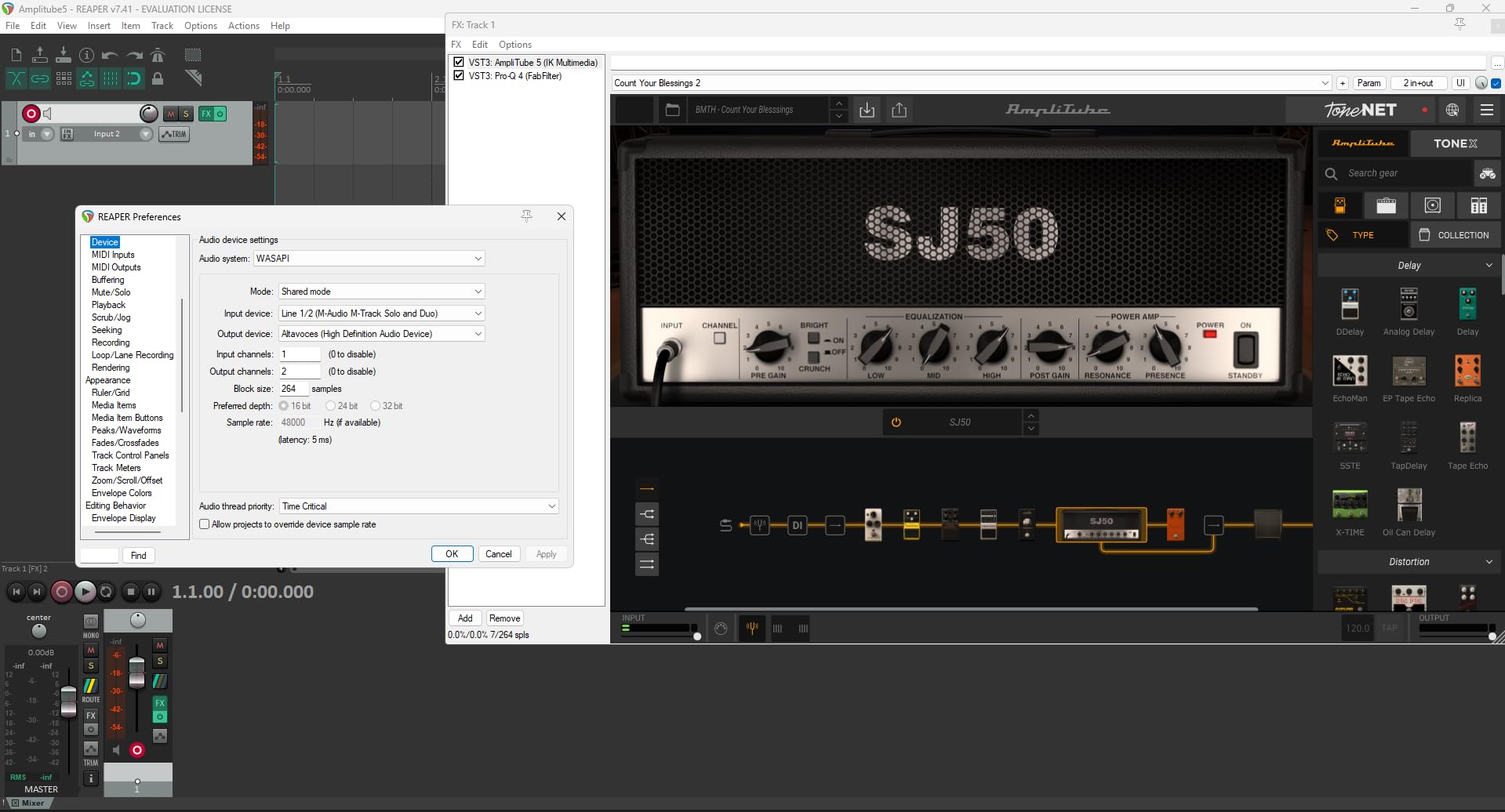
Latency performance is exceptional. I ran ASIO at 64 sample buffers without dropouts, which makes monitoring through plugins feel nearly real-time. For guitar amp simulation plugins like Guitar Rig or BIAS FX, low latency is non-negotiable, and this interface delivers.
The direct monitoring quirk is worth knowing: input 1 routes hard-left and input 2 routes hard-right in the monitor mix. For solo vocals this is irrelevant, but for stereo recording or two-mic setups, you need to record in mono on one input at a time.
Who this interface is best for
Musicians tracking guitar with amp sim plugins who need ultra-low latency. Engineers who want high-resolution 192kHz recording without paying flagship prices. Budget-conscious producers who value clean conversion over flashy features.
Who should look elsewhere
Beginners who want bundled software to get started should look at the PreSonus AudioBox or Focusrite Scarlett. Users needing stereo monitoring through headphones will find the hard-panned direct monitoring frustrating. Anyone who wants software included out of the box should consider alternatives.
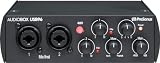
7. PreSonus AudioBox 96 25th Anniversary – Best Software Bundle
PreSonus AudioBox 96 25th Anniversary USB Audio Interface
Class-A preamps
24-bit/96kHz
MIDI I/O included
Pros
- Over $1000 in bundled software
- Studio One Artist DAW included
- Class-A mic preamps
- MIDI I/O for keyboards
- Zero-latency monitoring
Cons
- 96kHz max sample rate
- Global phantom power switch
- USB 2.0 not USB-C
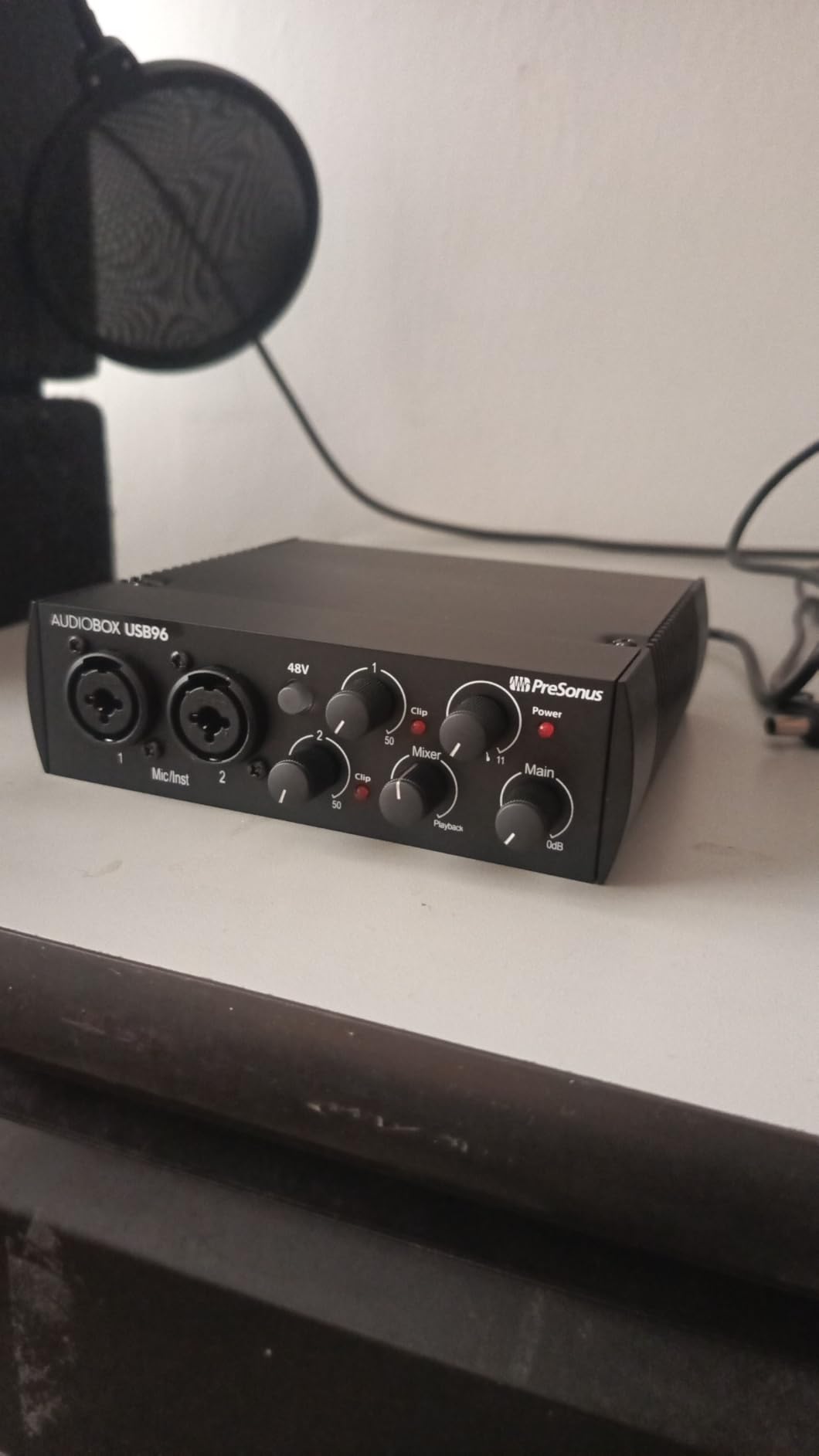
If software value matters most to you, the PreSonus AudioBox 96 is unbeatable. The bundled Studio One Artist DAW alone sells for $100 separately, and the Studio Magic Plug-In Suite adds another $900+ worth of virtual instruments and effects. Beginners essentially get a complete production studio for the price of an interface.
The Class-A preamps have a warmer character than the cleaner preamps on the Focusrite Scarlett. I noticed this especially on acoustic guitar and vocals, where the slight harmonic saturation added a pleasing musical quality without sounding colored.
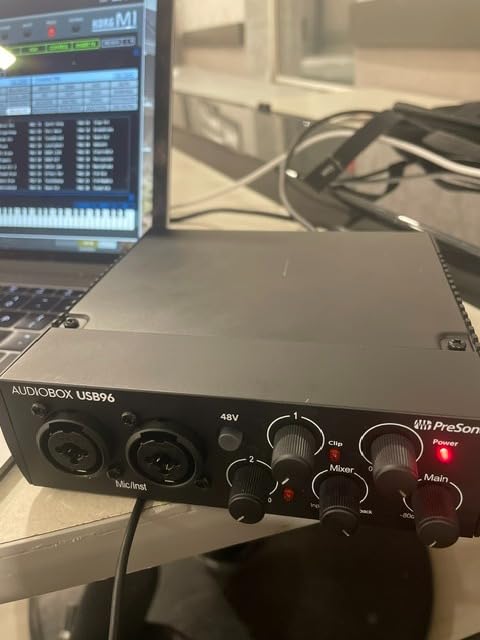
MIDI I/O is the standout feature. If you record with a MIDI keyboard or controller, this interface saves you from buying a separate MIDI interface. The Scarlett Solo, EVO 4, and UMC22 all lack MIDI, so this is a meaningful differentiator for keyboard players.
The build quality feels solid and the unit weighs enough to stay put on a desk. USB bus power means no external power brick, and setup is genuinely plug-and-play on both Mac and Windows.
Who this interface is best for
Beginners who want professional software included without buying extra DAWs or plugins. MIDI musicians with keyboards or drum controllers get genuine value from the MIDI I/O. Anyone starting a serious home studio on a budget who values a complete production environment.
Who should look elsewhere
Engineers needing 192kHz recording should consider the UMC202HD or Scarlett 4th Gen. Users who prefer the cleanest, most transparent preamp character might prefer Focusrite or Behringer Midas designs. Anyone needing USB-C should look at newer-generation interfaces.
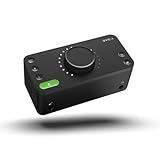
8. Audient EVO 4 – Smartest Auto-Setup Interface
Audient EVO 4 USB Audio Interface
Smartgain auto-level
AKM converters
Smart Touchpoints
Pros
- Smartgain sets levels automatically
- AKM Class Leading converters
- Premium build quality
- Intuitive Smart Touchpoints
- 3-year warranty
Cons
- No bundled software
- 96kHz max sample rate
- Limited iOS support
- No MIDI I/O
The EVO 4 changed how I think about beginner-friendly interfaces. The Smartgain feature actually listens to your performance and sets the perfect input level automatically. I tested it with a brand-new podcaster who had never recorded before, and every take came in at a clean, consistent level.
AKM converters are genuinely high-end components you usually find in interfaces costing $500+. The audio quality is detailed and accurate, with a wide soundstage that makes recordings feel more three-dimensional than typical budget interfaces deliver.
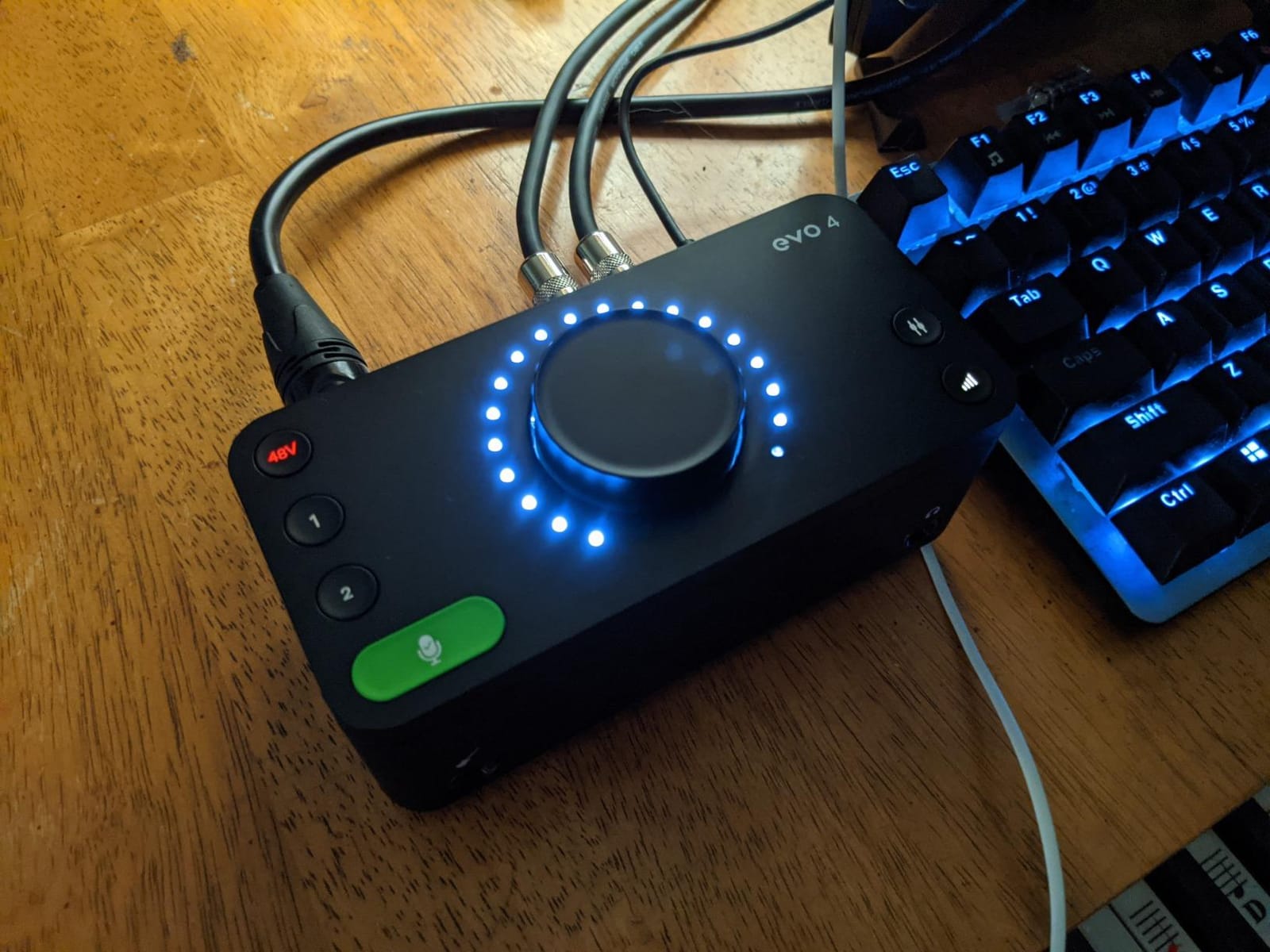
Smart Touchpoints replace traditional knobs. The illuminated buttons above each input serve multiple functions depending on context, which feels modern but takes some getting used to. Once learned, the workflow is faster than traditional knob-based interfaces.
Build quality is exceptional. The EVO 4 feels substantial in the hand, with a dense, well-engineered chassis that suggests long-term durability. The 3-year warranty backs up that impression.
Who this interface is best for
Beginners intimidated by manual gain staging who want recordings that sound professional without technical know-how. Producers who appreciate premium converter quality and clean analog character. Anyone who values intuitive design and premium build quality over bundled software.
Who should look elsewhere
Budget-focused buyers should consider the Behringer UMC22 or M-Audio M-Track Solo. Musicians needing bundled software should look at the PreSonus AudioBox. Users who rely on MIDI keyboards should choose an interface with MIDI I/O.
What to Look for in a Budget Audio Interface?
Choosing the right audio interface comes down to matching specs to your actual recording needs. Here are the key factors I consider when recommending budget interfaces.
Input count and type
Match inputs to your recording scenario. Solo vocalists and guitarists only need one XLR input plus one instrument input. Two-person podcasts, co-hosted streams, and simultaneous vocal-plus-guitar recording require two XLR inputs. Drummers and full bands need four or more inputs, which falls outside the under-$200 range.
Combo jacks that accept both XLR microphones and 1/4 inch instruments offer maximum flexibility on a budget. Most interfaces in this roundup use combo inputs.
Preamps and gain range
Preamps amplify the weak signal from your microphone to a usable level. Cheap preamps add noise and hiss, while quality preamps stay clean even at high gain. If you use a gain-hungry dynamic mic like the Shure SM7B, look for interfaces with at least 56dB of clean gain.
Phantom power (+48V) is required for condenser microphones. Every interface in this roundup includes phantom power, but some use a global switch that affects both inputs simultaneously.
Sample rate and bit depth
Sample rate determines how many audio snapshots per second your interface captures. 48kHz is the professional standard and is more than enough for podcasts, vocals, and music. 96kHz and 192kHz offer theoretical advantages for high-frequency detail, but most listeners cannot hear the difference.
Bit depth affects dynamic range. 24-bit is the modern standard and delivers 144dB of theoretical dynamic range, far beyond what any microphone can capture. Avoid 16-bit interfaces at all costs.
Direct monitoring and latency
Direct monitoring lets you hear your input signal without the round-trip delay through your computer. This zero-latency monitoring is essential for comfortable vocal recording and guitar tracking.
Driver quality matters for low-latency performance when monitoring through your DAW. Focusrite, MOTU, and Audient generally have the most stable drivers on both Mac and Windows.
Software bundle value
Bundled software can save hundreds of dollars if you are starting from scratch. PreSonus includes $1000+ worth of DAW and plugins with the AudioBox. Focusrite includes Ableton Live Lite and the Red plug-in suite. Behringer and Audient typically include less, which is fine if you already own a DAW.
Build quality and warranty
Aluminum chassis (Focusrite, Audient) feels premium and survives travel better than plastic (Behringer UMC22, M-Track). Warranty coverage varies from 1 year (M-Audio) to 3 years (Focusrite 4th Gen, Audient EVO 4).
Frequently Asked Questions
What is the best and most affordable audio interface?
The M-Audio M-Track Solo is the most affordable reliable interface at around $49, with Crystal Preamps and 48V phantom power for condenser mics. For the best balance of price and quality, the Focusrite Scarlett Solo 3rd Gen at $119 offers industry-standard preamps, USB-C power, and a useful software bundle.
Which audio interface has the best sound quality under $200?
The Audient EVO 4 delivers the best sound quality thanks to AKM Class Leading converters typically found in interfaces costing $500 or more. The Focusrite Scarlett Solo 4th Gen is a close second with its flagship-grade 120dB dynamic range converters shared with Focusrite’s professional lineup.
What is a good cheap audio interface for podcasting?
For solo podcasting, the Focusrite Scarlett Solo 3rd Gen at $119 is the best cheap audio interface, offering clean preamps and Air mode that flatters vocals. For two-person podcasts, the M-Audio M-Track Duo at $69 provides two XLR inputs with Crystal Preamps and works across Mac, Windows, and mobile devices.
Do I need phantom power for my audio interface?
You need phantom power (+48V) if you use a condenser microphone, which requires external power to operate. Dynamic microphones like the Shure SM58 do not need phantom power. Every interface in this roundup includes phantom power, though some use a global switch affecting both inputs simultaneously rather than per-channel control.
How many inputs do I need on an audio interface?
You need one XLR input for solo vocal recording or podcasting. You need two XLR inputs for two-person podcasts, co-hosted streams, or recording vocals and guitar simultaneously. For drums and full bands, you need four or more inputs, which typically exceeds the $200 budget and requires stepping up to a larger interface.
Final Verdict
After testing all eight of these best audio interfaces under $200, my top pick for most people is the Focusrite Scarlett Solo 3rd Gen. The combination of clean preamps, foolproof USB-C setup, Air mode, and a useful software bundle makes it the smartest choice for solo vocalists, podcasters, and guitarists starting a home studio.
For budget-focused buyers, the M-Audio M-Track Solo delivers genuinely usable recordings at the lowest price. For two-source recording, the M-Audio M-Track Duo provides dual XLR inputs and cross-platform support at an unbeatable value. Premium shoppers who want the cleanest converters and smartest auto-leveling should invest in the Audient EVO 4.
Whatever interface you choose from this list, you’ll get a tool that genuinely delivers professional results. The days of cheap interfaces sounding cheap are over, and 2026‘s best audio interfaces under $200 prove it. Visit our partner Amazon listings above to check current pricing and grab the right match for your studio.