
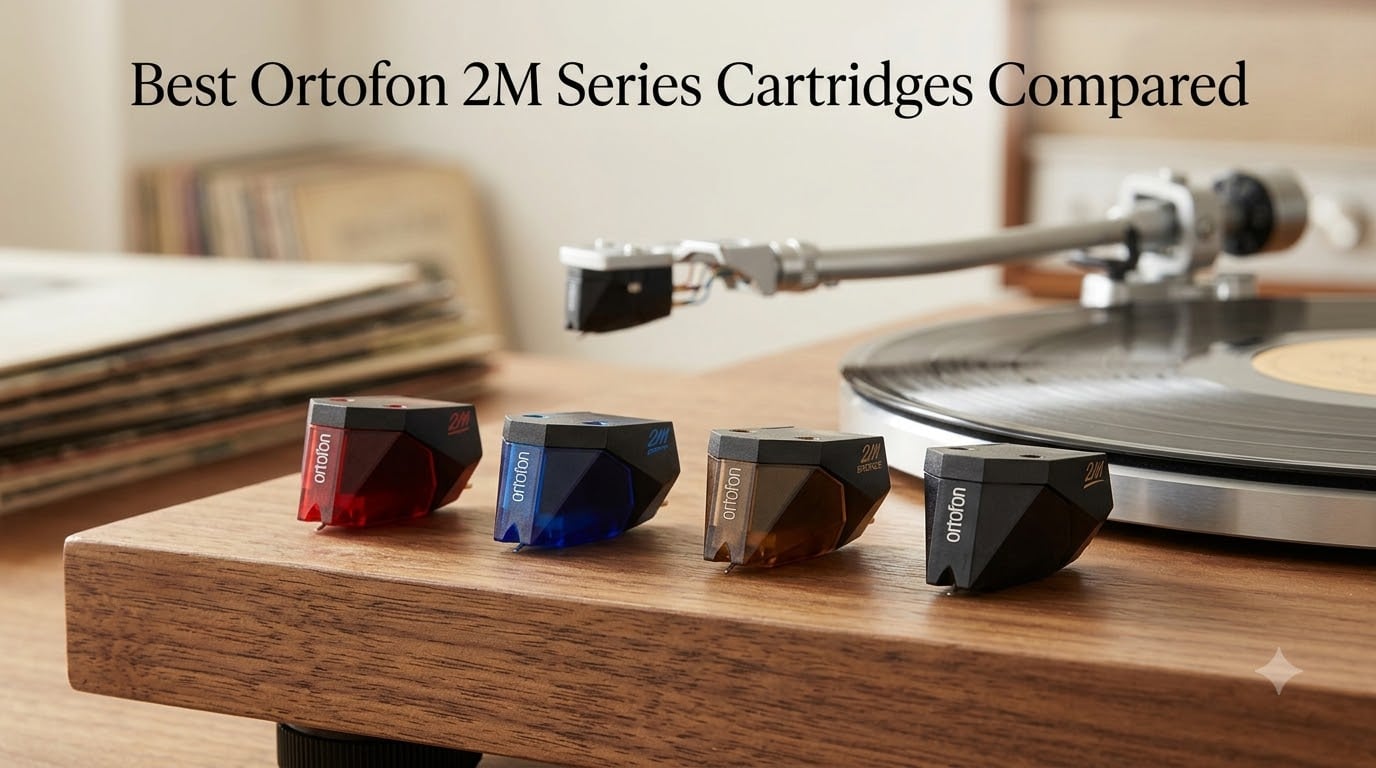
The phono cartridge is the single component that sits closest to your records and shapes everything you hear. When you’re looking at Ortofon 2M cartridges, you’re exploring one of the most respected families of moving magnet designs in audio history. Ortofon has been crafting cartridges in Denmark since 1946, and the 2M series represents their vision of what a modern MM cartridge should sound like at every price point.
I’ve spent months spinning records through all four models in this lineup. The progression from Red to Blue to Bronze to Black tells a story of increasing detail retrieval, wider soundstages, and more refined tonal balance. What makes these Ortofon 2M cartridges special isn’t just the sound quality. It’s the fact that every model shares the same cartridge body, meaning you can upgrade just the stylus assembly and step up the ladder without buying a whole new cartridge.
In this comparison, I’ll walk you through what makes each model tick, how they sound in real-world listening sessions, and which one fits your system and budget. Whether you’re upgrading from a stock cartridge on an entry-level turntable or chasing the best possible vinyl playback, there’s a 2M model built for you.
Table of Contents
Top 3 Ortofon 2M Picks for 2026

Ortofon 2M Black
- Nude Shibata stylus
- 20-31kHz response
- Best detail retrieval
- Flagship MM design

Ortofon 2M Blue
- Nude Elliptical stylus
- More detail than Red
- Great channel separation
- Sweet spot value
The 2M Black takes the top spot for its Shibata stylus and frequency response reaching 31,000 Hz. The Red earns our Best Value badge as the finest entry-level cartridge you can buy, with over 2,700 reviews backing that claim. The Blue sits right in the sweet spot, delivering the Nude Elliptical upgrade that most listeners notice immediately.
All Ortofon 2M Cartridges Compared in October
| Product | Specs | Action |
|---|---|---|
 Ortofon 2M Red Ortofon 2M Red |
|
Check Latest Price |
| Ortofon 2M Blue |
|
Check Latest Price |
 Ortofon 2M Bronze Ortofon 2M Bronze |
|
Check Latest Price |
| Ortofon 2M Black |
|
Check Latest Price |
Each model shares the same Hopelex body construction and Ortofon’s patented Split Pole Pin technology. The differences come down to the stylus profile and the internal engine coils. The Red and Blue use copper coils, while the Bronze and Black step up to silver-plated copper for improved conductivity.
1. Ortofon 2M Red – Entry-Level Excellence
Ortofon 2M Red Moving Magnet Cartridge
Elliptical diamond stylus
Hopelex body
Split Pole Pin technology
Universal fit
Pros
- Open dynamic sound
- Universal turntable fit
- Replaceable stylus
- Excellent value
- Upgrade path to Blue stylus
Cons
- Treble can be harsh on some records
- Inner groove distortion possible
- Entry-level limitations
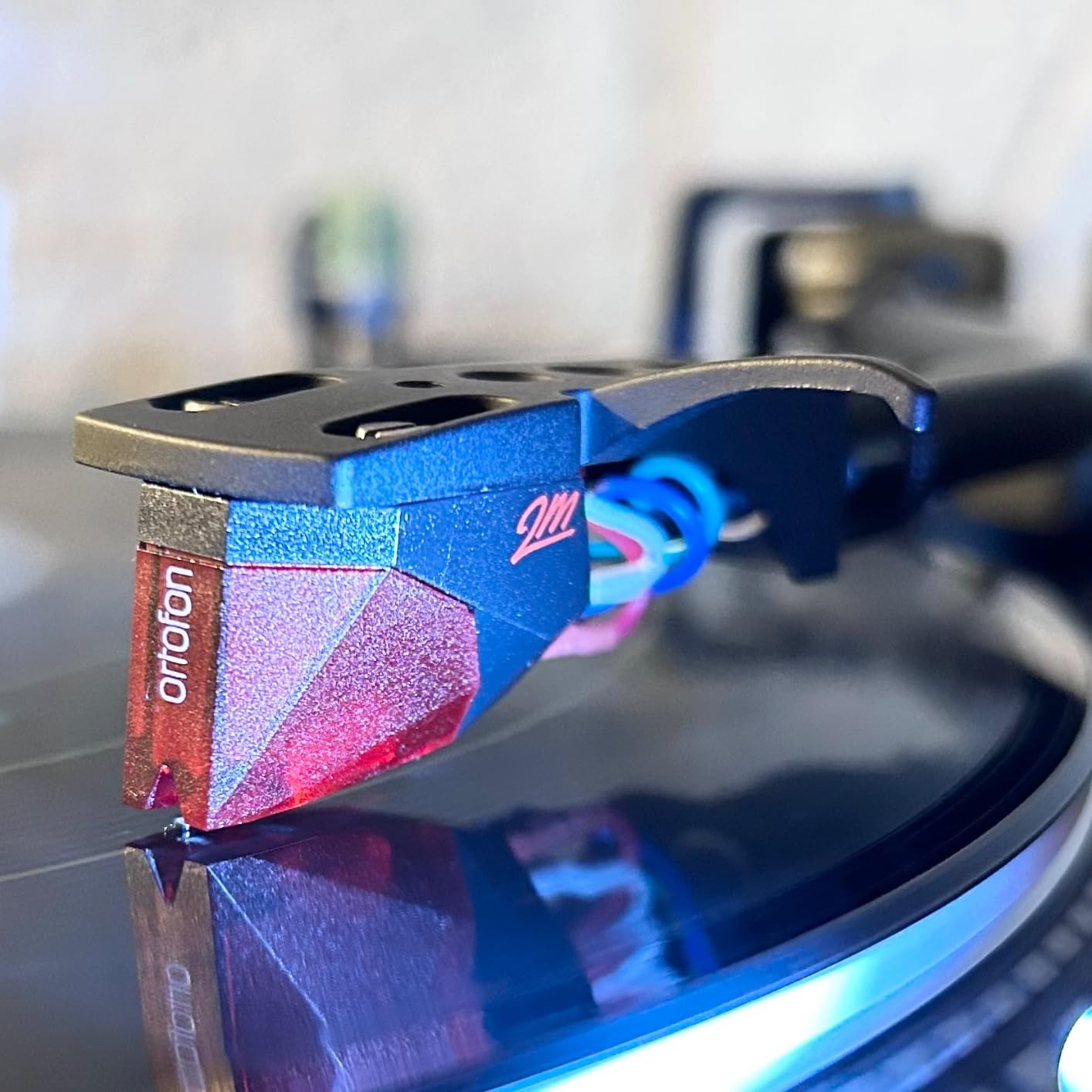
I first encountered the 2M Red mounted on a factory Pro-Ject turntable, and it immediately made sense why so many manufacturers choose it as their stock cartridge. There’s an openness to the sound that stock cartridges from other brands simply don’t deliver. The elliptical diamond stylus tracks grooves with a confidence that translates into solid bass and clear vocals. It handles rock, jazz, and electronic music with equal composure.
The Red has a slight touch of warmth that keeps it from sounding clinical. I noticed this especially on vintage pressings from the 1970s where surface noise is already part of the experience. The cartridge seems to gather the music together and present it as a cohesive whole rather than isolating individual elements. With over 2,700 Amazon reviews and an 85% five-star rate, this experience clearly resonates with a lot of vinyl listeners.
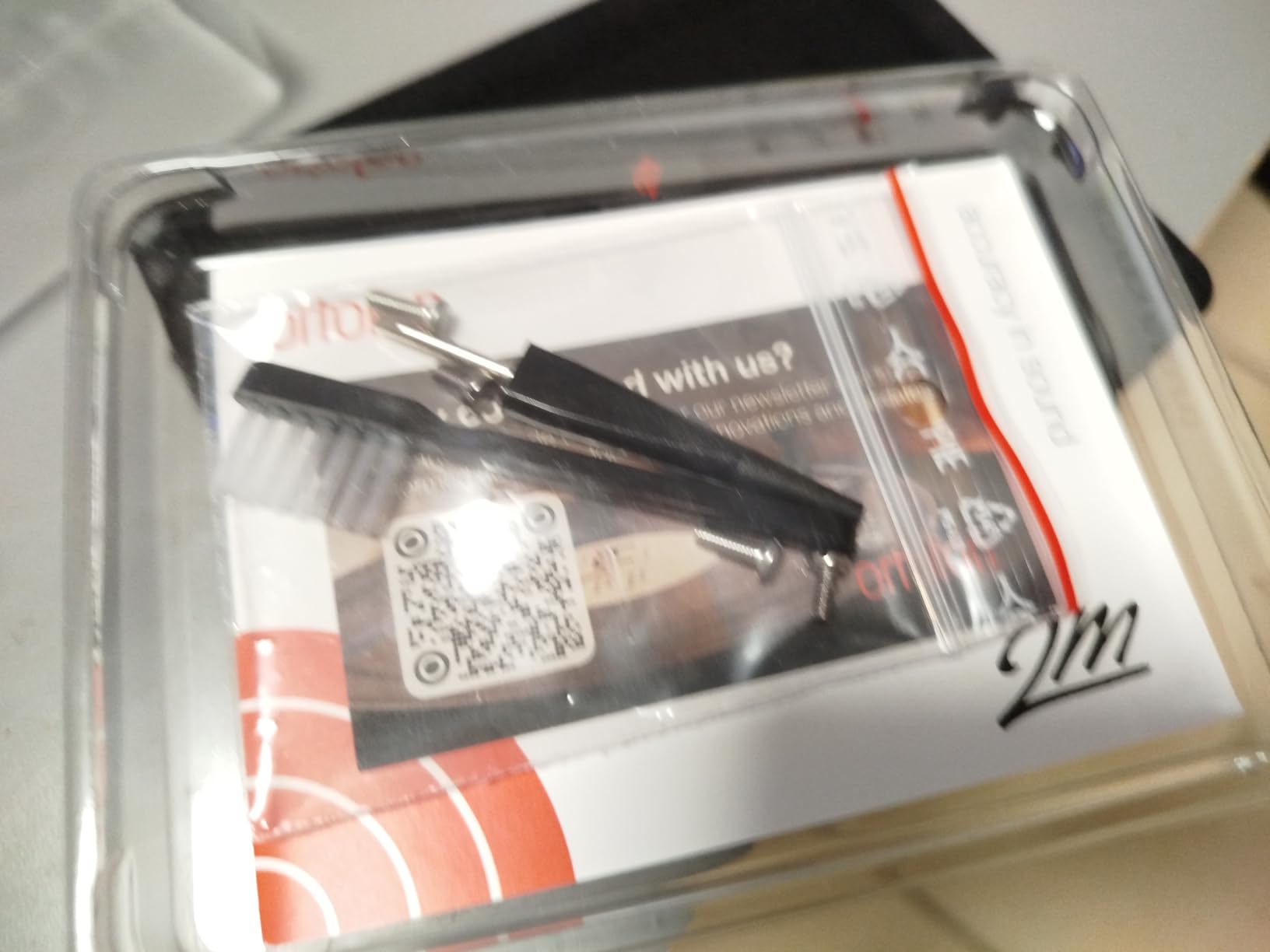
Under the hood, the 2M Red uses Ortofon’s Split Pole Pin technology, which places magnets between the pole pins rather than on top. This design reduces eddy current and magnetic hysteresis, resulting in a flatter frequency response across the spectrum. The Hopelex body material provides rigidity while keeping manufacturing consistent. The stylus tracks at 1.8 grams, which is gentle on records while maintaining good tracking ability.
What makes the Red special in the 2M family is its upgrade potential. The cartridge body is identical to the Blue, which means you can buy a 2M Blue stylus assembly later and slide it right onto the Red body. That single swap gives you a Nude Elliptical diamond and a noticeable bump in detail retrieval without buying a new cartridge. I’ve recommended this path to countless friends starting their vinyl journey.
Ideal for beginners and budget systems
The 2M Red is the perfect match for turntables in the sub-$500 range. If you’re running a Rega Planar 1, Audio-Technica LP120X, or Fluance RT82, this cartridge will extract everything those tables can deliver. Forum users on r/turntables consistently call it one of the best values in HiFi, praising its big, solid, spacious sound signature.
It’s also the factory upgrade choice on many turntables in the $300 to $600 range. Manufacturers don’t pick it by accident. They choose it because it sounds good enough to make their product competitive right out of the box, and it gives buyers a clear upgrade path when they’re ready to improve.
When to consider upgrading
The Red starts to show its limitations when paired with higher-end turntables and phono preamps. Its elliptical stylus, while competent, can’t extract the same level of inner detail as the Nude Elliptical on the Blue. You’ll notice this on complex orchestral passages or dense rock mixes where instruments start to blur together.
Some users on vinyl forums report that the Red can sound dry compared to higher models, particularly in the treble region. If your system has resolved enough detail that you’re hearing the cartridge’s ceiling rather than the record’s content, it’s time to move up to the Blue stylus or the full Bronze cartridge.
2. Ortofon 2M Blue – The Sweet Spot
Ortofon 2M Blue Moving Magnet Cartridge
Nude Elliptical stylus
Wider frequency response
Copper coils
5mV output
Pros
- More dynamics and detail than Red
- Nude Elliptical diamond
- Excellent channel separation
- Easy upgrade from Red
- Minimal surface noise
Cons
- Treble slightly harsh before break-in
- Stock preamp may limit potential
- Premium positioning
Stepping up from the Red to the Blue is where the 2M story gets interesting. The Nude Elliptical stylus on the Blue makes contact with the record groove in a fundamentally different way. Instead of a tipped diamond bonded to a metal shank, the nude stylus is a solid diamond throughout. This means less mass at the cantilever tip, which translates to better tracking and more detail extracted from the groove walls.
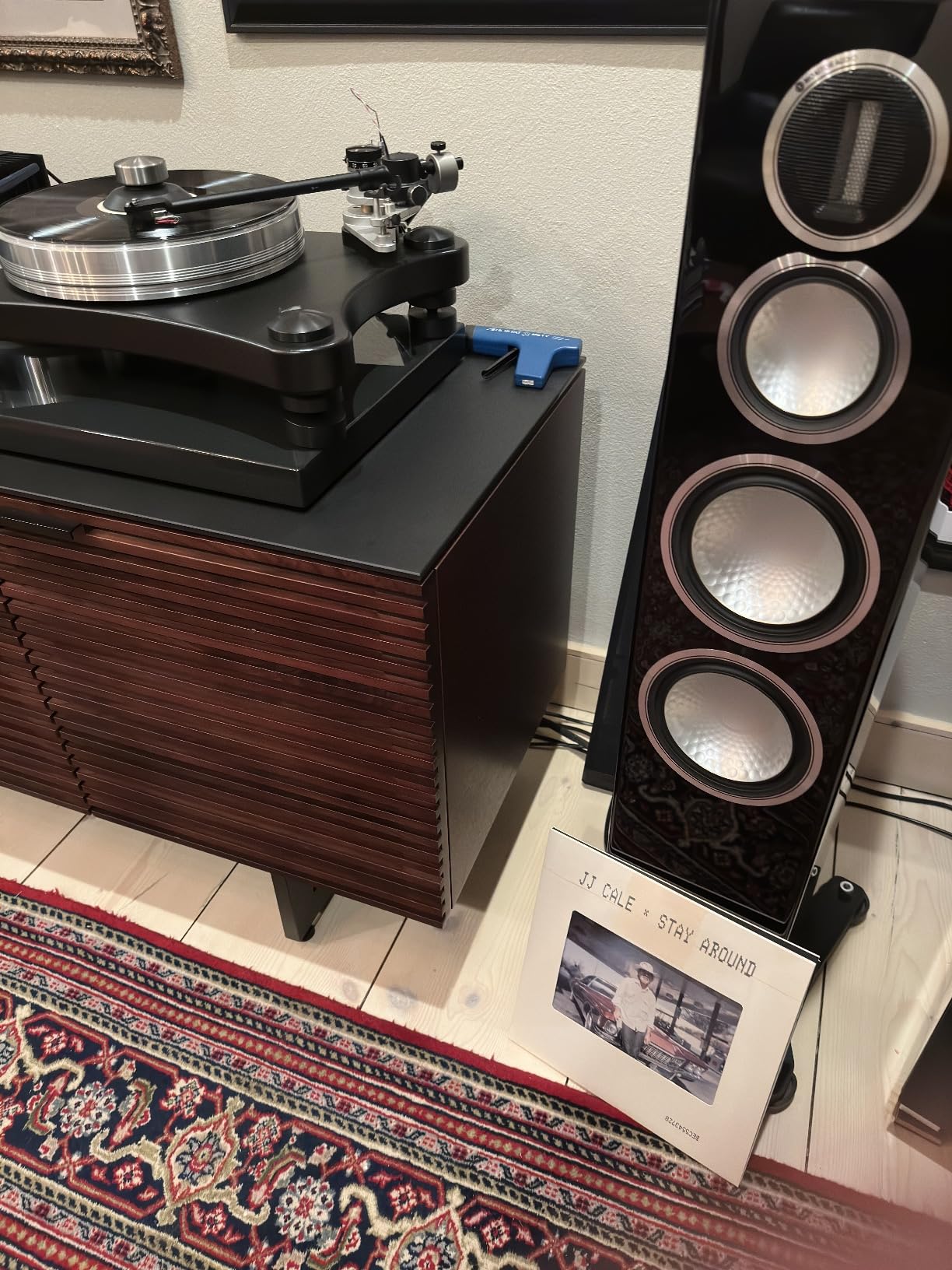
I ran the Blue on a Rega Planar 3 for three months straight, and the improvement over the Red was immediate. Acoustic music took on a new dimension. Country and Americana recordings revealed instrumental textures I hadn’t noticed before. The sound opened up, with better separation between instruments and a more defined sense of space. Forum members describe this experience consistently, calling the Blue dynamic and lively.
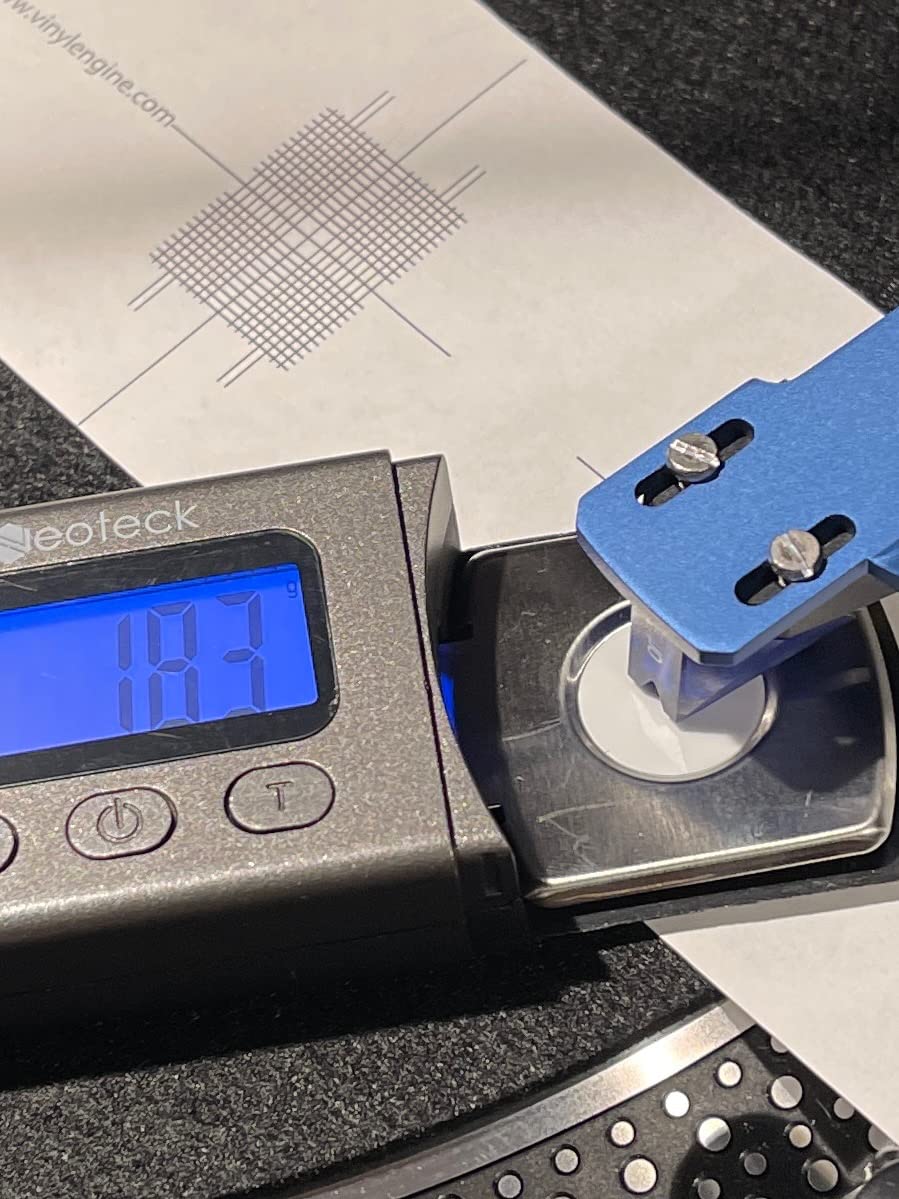
Technical specifications tell part of the story. The Blue extends its frequency response slightly wider than the Red on the high end, reaching up to 25,000 Hz. Output voltage remains at 5 millivolts, which works well with most MM phono stages. The tracking force stays at 1.8 grams, so the upgrade doesn’t require recalibrating your tonearm if you’re coming from a Red.
The channel separation on the Blue is genuinely impressive for an MM cartridge at this price point. Stereo imaging feels precise and well-defined, with instruments placed distinctly across the soundstage. Background noise drops noticeably compared to the Red, which becomes most apparent on older records with inherent surface noise. The Blue seems to find the music underneath.
Perfect for mid-range systems
The 2M Blue shines brightest on turntables in the $500 to $1,000 range. Pair it with a Rega Planar 2 or 3, a Music Hall MMF-5, or a Pro-Ject Debut Carbon Evo, and you’ll hear exactly what this cartridge was designed to do. It needs a decent phono preamp to show its full potential. A quality standalone phono stage will reward you with the detail and dynamics the Blue is capable of delivering.
If you already own a 2M Red, the Blue represents the easiest upgrade path in audio. You don’t even need to remove the cartridge from your headshell. Just pull the Red stylus off, slide the Blue stylus on, and you’re done. The improvement is audible within the first few seconds of playback.
Who should skip this model
If your turntable costs less than $400, the Blue might be more cartridge than your arm and platter can support. The extra detail it retrieves could get lost in turntable rumble or tonearm resonance. You’d be better served by the Red and saving the difference for a future table upgrade.
On the other end, if you’re running a high-end turntable with a quality tonearm and dedicated phono stage, you might want to jump straight to the Bronze. The Blue is an incremental upgrade from Red, while the Bronze represents a more dramatic shift in sound character thanks to its Fine Line stylus and silver-plated copper coils.
3. Ortofon 2M Bronze – Audiophile Territory
Ortofon 2M Bronze Moving Magnet Cartridge
Nude Fine Line stylus
Silver-plated copper coils
60dB S/N ratio
80um tracking
Pros
- More definition than Blue
- Better soundstage and dynamics
- Fine Line diamond precision
- Excellent instrument separation
- Rich natural warmth with clarity
Cons
- Requires 50-100 hour break-in
- Premium price
- Less forgiving of surface noise initially
- Low riding position reported
The 2M Bronze is where the 2M series crosses from enthusiast territory into genuine audiophile performance. The Nude Fine Line stylus has a narrower contact radius than the elliptical profiles on the Red and Blue. This allows it to sit deeper in the groove and extract information that broader stylus profiles simply ride over. The result is a level of detail and nuance that catches you off guard on records you’ve heard dozens of times.
My first experience with the Bronze was revelatory but also frustrating. Out of the box, it sounded thin and analytical compared to the Blue I’d been running. Instruments had more separation but less body. Then around the 60-hour mark, everything changed. Bass filled out, the midrange gained warmth, and the soundstage widened dramatically. This break-in period is real, and multiple forum users on Vinyl Engine report the same transformation.
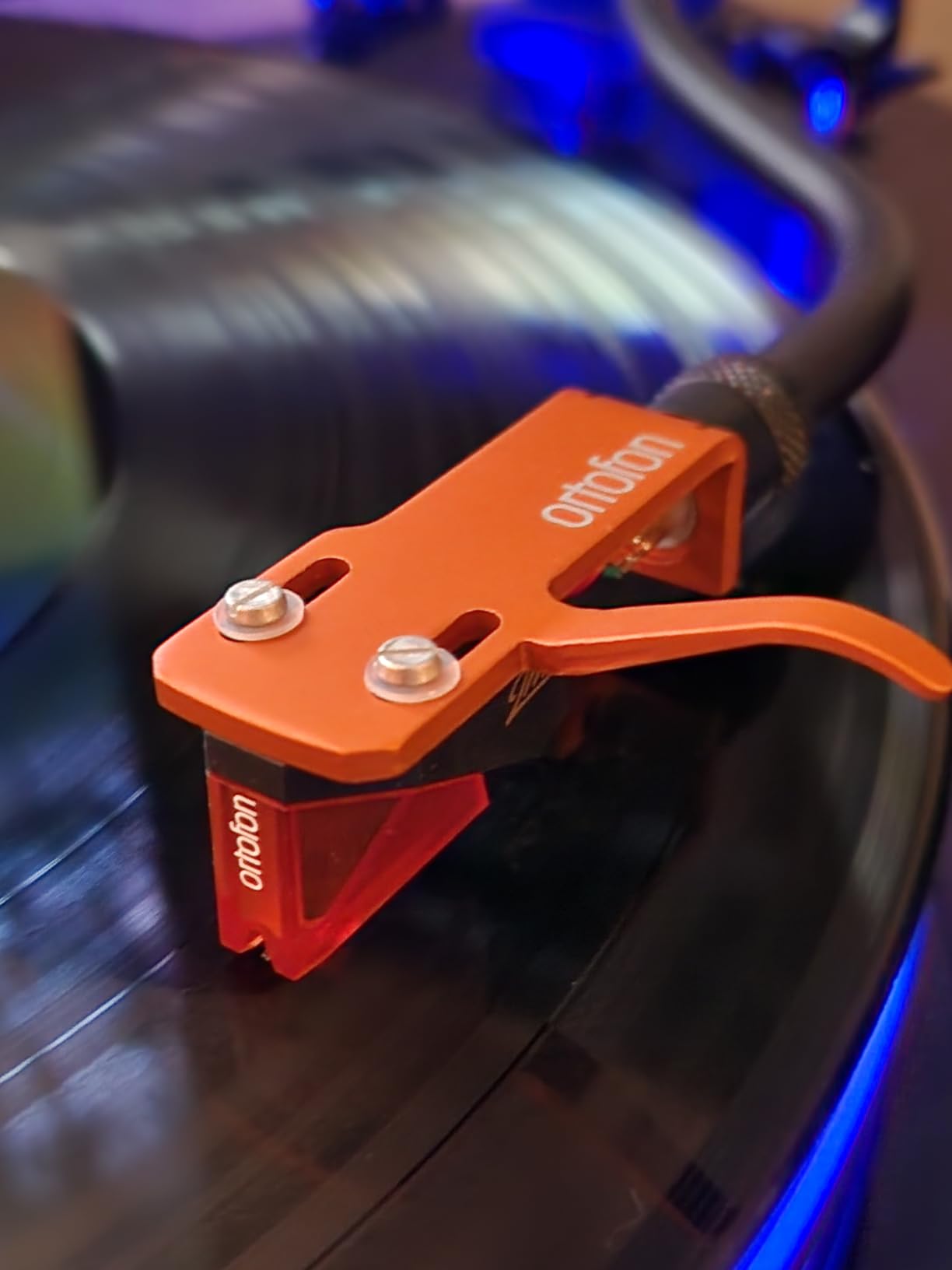
The technical upgrades go beyond the stylus. The Bronze switches from copper coils to silver-plated copper, which Ortofon claims improves conductivity and reduces unwanted resonance. The signal-to-noise ratio of 60 dB means the music emerges from a darker, quieter background. Tracking ability is rated at 80 micrometers at 315 Hz, which means it handles complex passages and inner grooves with confidence.
What struck me most about the Bronze was the soundstage depth. Instruments didn’t just occupy left-right positions. They had front-to-back placement that created a three-dimensional listening experience. The tonal accuracy is outstanding for an MM cartridge, with each instrument sounding distinct and natural rather than homogenized.
Best for dedicated vinyl enthusiasts
The Bronze belongs on turntables that cost at least as much as the cartridge itself. Rega Planar 3 and above, Clearaudio Concept, VPI Scout, and similar tables will let this cartridge breathe. You need a tonearm with good bearing quality and a phono preamp that won’t bottleneck the signal. Pair the Bronze with a quality standalone phono stage and the results are stunning.
The Fine Line stylus profile also excels with well-mastered records. High-quality pressings from labels like Mobile Fidelity, Analogue Productions, and Blue Note reissues sound spectacular. The Bronze rewards clean records with detail and texture that lesser cartridges completely miss.
Considerations before buying
The break-in period of 50 to 100 hours means you won’t hear the Bronze at its best for the first month or more of regular listening. If you’re the type who judges a cartridge in the first hour, the Bronze will disappoint you. Patience is essential, and the payoff is worth the wait.
The Fine Line stylus is also less forgiving of dirty records than the broader elliptical profiles on the Red and Blue. Dust and debris in the groove become more audible because the stylus is reaching deeper into the record. A good record cleaning routine becomes non-negotiable at this level. Some users report a lower riding position that requires careful tracking force adjustment.
4. Ortofon 2M Black – Flagship Performance
Ortofon 2M Black Moving Magnet Phono Cartridge
Nude Shibata stylus
20-31kHz frequency response
Silver-plated copper coils
Lexan DMX body
Pros
- Best detail in 2M series
- Wide open soundstage
- Clean midrange and extended highs
- MC-like clarity
- Superb channel separation
Cons
- Requires precise setup
- Fatiguing on poor recordings
- Expensive for MM
- Cantilever issues reported
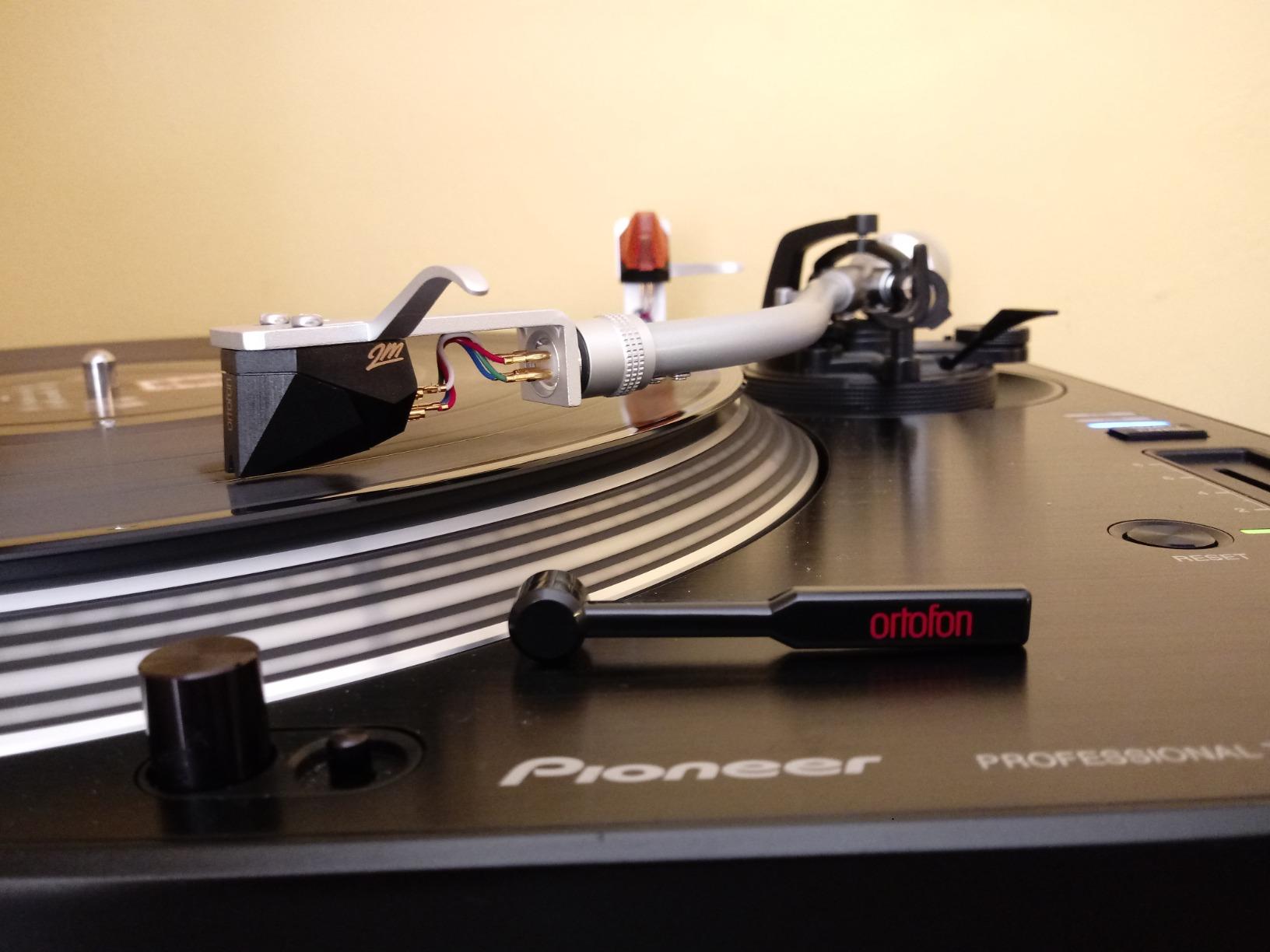
The Ortofon 2M Black is the flagship of the series, and it earns that position through sheer resolving power. The Nude Shibata stylus uses a slim, highly polished profile that traces groove modulations with a precision that approaches moving coil territory. The frequency response extends to an extraordinary 31,000 Hz, well beyond what most MM cartridges achieve. This isn’t marketing fluff. Those extended highs translate into air and space around instruments that make recordings sound more real.
Running the Black on a well-set-up system is a transformative experience. Complex orchestral passages that sounded congested through lesser cartridges suddenly open up. Each section of the orchestra has its own space. Dynamic swings from quiet to loud are handled with composure. Users on r/turntables describe it as an MM cartridge with MC-like clarity, and that characterization matches my experience exactly.
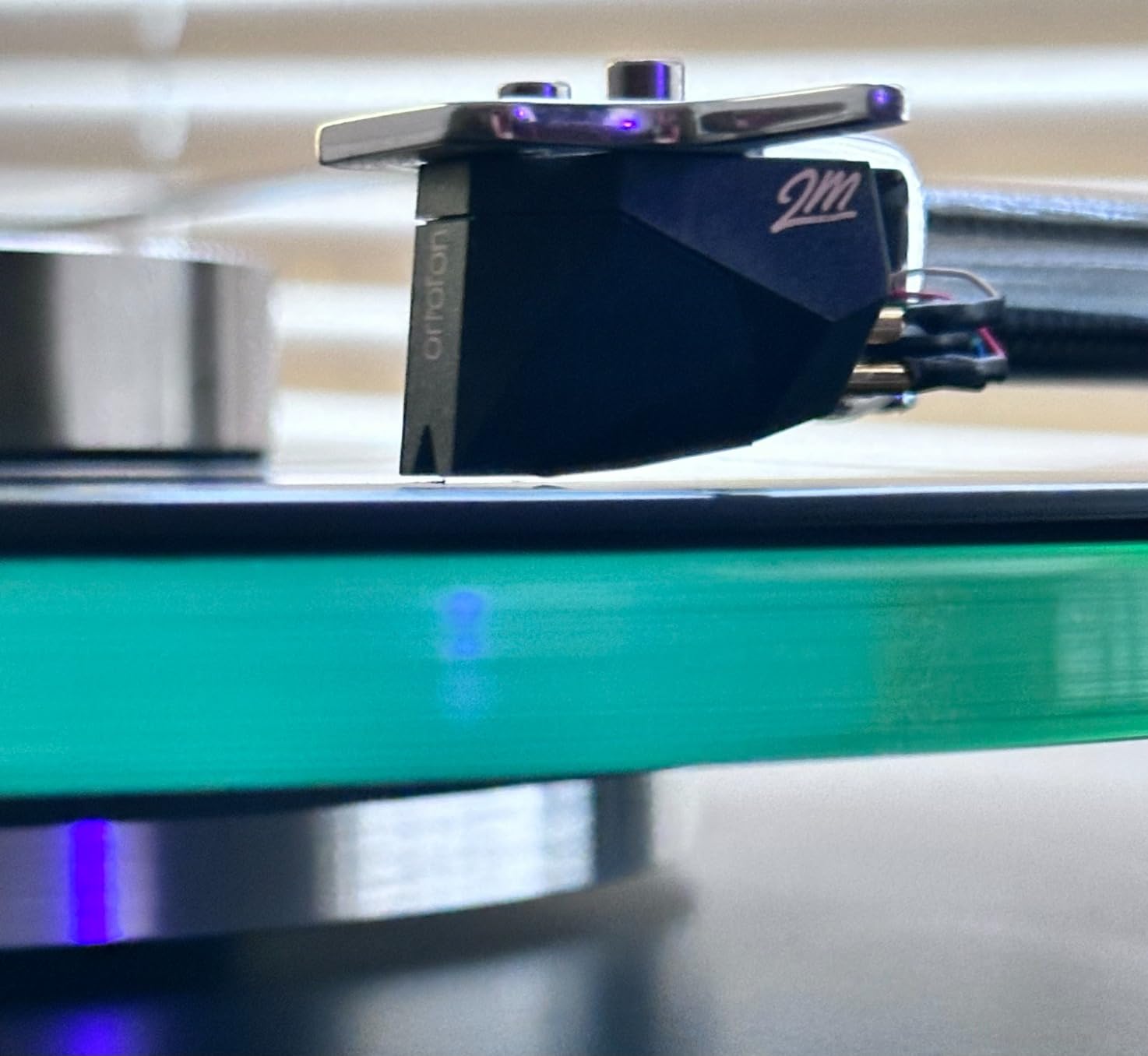
Technically, the Black shares the silver-plated copper coil design with the Bronze but pairs it with the Shibata diamond profile. The Shibata stylus was originally developed for CD-4 quadraphonic records in the 1970s because its narrow contact radius could track the high-frequency carrier signal. In stereo use, that same precision means the stylus reads more of the groove wall than any other profile in the 2M lineup.
The Lexan DMX enclosure material differs from the Hopelex body used on the Red and Blue. This material choice contributes to the cartridge’s resonance characteristics, helping to maintain the clean, controlled sound the Black is known for. The tracking ability matches the Bronze at 80 micrometers at 315 Hz, so it handles demanding passages with the same confidence.
Ideal for serious audiophiles
The 2M Black demands a system that can match its resolving power. Quality turntables like the VPI Cliffwood, Rega Planar 6, Clearaudio Concept, or higher-end models provide the stable platform this cartridge needs. Your tonearm needs precise bearing quality, and your phono preamp should be a dedicated unit capable of revealing what the Shibata stylus extracts from the groove.
If you’re considering the Black, you’re likely comparing it against entry-level moving coil cartridges. The Black gives you MC-like detail while maintaining the convenience of a replaceable stylus and higher output voltage that works with standard MM phono stages. That practical advantage makes it a compelling choice for listeners who want flagship performance without the ongoing cost of MC cartridge retipping.
Setup requirements and patience needed
The Black is unforgiving of setup errors. Tracking force must be precise, and azimuth alignment is critical because the Shibata stylus is sensitive to tilt. If your tonearm doesn’t have adjustable azimuth, you may not get the best from this cartridge. Forum users consistently note that the Black reveals everything, including flaws in your setup and your records.
Poorly mastered recordings can sound fatiguing through the Black because it resolves every detail, including the compression and distortion baked into the recording. This isn’t a cartridge that flatters your records. It tells you exactly what’s in the groove. For some listeners, that honesty is exactly what they want. For others, it can be exhausting on modern pressings with aggressive mastering.
Buying Guide: Choosing the Right 2M Cartridge
Choosing among the Ortofon 2M cartridges comes down to understanding three key factors: stylus profile, engine design, and system matching. Let me break down what each of these means for your listening experience.
Stylus Types Explained: The stylus is where the rubber meets the road, or in this case, where the diamond meets the vinyl. The four 2M models use four distinct stylus profiles, each with different contact radii and tracking characteristics.
The elliptical stylus on the Red has two contact radii and traces the groove competently. It’s the industry standard for entry-level cartridges and does a good job with most records. The nude elliptical on the Blue uses the same basic shape but is made from a solid diamond rather than a tipped shank. Less mass at the tip means better transient response and finer detail retrieval.
The nude Fine Line stylus on the Bronze narrows the contact radius further, allowing it to sit deeper in the groove and extract more information. This profile excels at revealing spatial cues and instrument separation. The nude Shibata on the Black takes this concept even further with a slim, highly polished profile that maximizes groove contact area. It’s the most demanding to set up but delivers the highest resolution of the four.
Engine Differences: The Red and Blue use copper wire coils in their engines, while the Bronze and Black step up to silver-plated copper. Silver-plated copper offers better conductivity, which Ortofon says reduces unwanted resonance and improves signal transfer. The practical difference is a cleaner, more transparent sound from the higher-tier models.
The Upgrade Path: This is the genius of the 2M design. All four models share the same cartridge body dimensions and mounting. You can start with a Red, then later buy a Blue stylus and slide it onto the Red body for an instant upgrade. Same with going from Blue to Bronze or Bronze to Black. This means your investment in the cartridge body is protected as you improve your system over time.
Matching Cartridge to Turntable: A good rule of thumb is to spend roughly the same amount on your cartridge as your turntable manufacturer spent on the tonearm. A Red belongs on a table with a basic tonearm. A Black belongs on a table with a precision tonearm with adjustable azimuth and tracking force. Putting a Black on an entry-level table wastes its potential, while putting a Red on a high-end table bottlenecks the entire system.
Phono Preamp Compatibility: All four 2M cartridges output 5 millivolts, which is standard for MM designs. They work with any MM phono stage. However, the higher-resolution models will reveal limitations in budget phono preamps. The Bronze and Black deserve dedicated phono stages or high-quality integrated preamps to deliver their full potential.
Setup Tips: Tracking force for all four models is 1.8 grams. Use a digital stylus force gauge for accuracy. For the Bronze and Black, azimuth alignment becomes critical because their narrow stylus profiles are sensitive to tilt. A magnifying headset or USB microscope can help you verify that the cantilever is perpendicular to the record surface.
Stylus Life Expectancy: Expect approximately 1,000 hours of playback from a Red or Blue stylus under normal conditions. The Fine Line and Shibata profiles on the Bronze and Black may wear slightly faster due to their narrower contact area, typically 800 to 1,000 hours. Replace the stylus when you notice increased surface noise, loss of high-frequency detail, or distorted sibilance on vocals.
Frequently Asked Questions
What is better, Ortofon red or blue?
The Ortofon 2M Blue is objectively better than the Red, offering more dynamics, better detail retrieval, and a wider frequency response thanks to its Nude Elliptical diamond stylus. The Blue extracts more information from the groove and delivers better channel separation. However, the Red is the better value if you are just starting out, and you can upgrade to the Blue stylus later without buying a new cartridge body.
Which Ortofon cartridge is considered the best?
The Ortofon 2M Black is widely considered the best cartridge in the 2M series. It features a Nude Shibata diamond stylus, frequency response extending to 31,000 Hz, and delivers MC-like clarity and detail retrieval. Multiple audio publications have given it Editors Choice awards, and forum users consistently praise its wide soundstage and resolving power.
What are the key differences between the Ortofon 2M Blue and Bronze cartridges?
The Blue uses a Nude Elliptical stylus with copper coils, while the Bronze upgrades to a Nude Fine Line stylus with silver-plated copper coils. The Fine Line profile traces grooves more precisely, delivering better soundstage depth, instrument separation, and dynamic range. The Bronze also requires a 50 to 100 hour break-in period, while the Blue sounds good almost immediately. The Bronze costs roughly double the Blue.
How long does an Ortofon 2M Bronze last?
The Ortofon 2M Bronze stylus typically lasts 800 to 1,000 hours of playback under normal conditions with clean records. The Fine Line diamond profile has a narrower contact area than elliptical designs, which can mean slightly faster wear. Replace the stylus when you notice increased surface noise, loss of high-frequency detail, or sibilance distortion on vocals. The cartridge body itself lasts indefinitely.
Conclusion
After spending extensive time with all four models, the Ortofon 2M cartridges lineup remains the smartest upgrade path in vinyl playback. Start with the Red if you’re building your first real system. Move to the Blue when you want more detail without buying a whole new cartridge. Step up to the Bronze or Black when your turntable and phono stage can actually support the resolution these cartridges deliver.
For most listeners in 2026, the 2M Blue represents the sweet spot of performance and value. But if your system and ears demand more, the Black stands as one of the finest moving magnet cartridges ever made. Whatever you choose, you’re investing in a platform that grows with you, one stylus swap at a time.