
Short answer: an N95 is enough for light hand-sanding of softwood, but it is not enough for full days of belt sanding, random-orbit sanding or MDF work. For anything beyond a weekend of orbital sanding, you want a reusable half-face respirator with P100 cartridges, and the fit of the facepiece matters more than the label on the filter. That is the whole decision in one sentence, and the rest of this round-up is the evidence behind it.
Sanding is the single dustiest thing you do in a shop. A random-orbit sander puts fine hardwood dust into the air faster than a dust collector can pull it down, and that dust stays suspended for hours after you switch the sander off. The sawdust you see on the bench is the coarse fraction. The fraction that reaches your lungs is the sub-micron part you cannot see, and that is the part a good dust mask for sanding wood is designed to catch.
We went through ten respirators and dust masks for this guide, checked the NIOSH approval markings on each, and weighed them on the two things that actually decide whether you keep wearing a mask on a long day: how the facepiece seals and how much you notice it after four hours. What follows is the best dust masks for sanding wood round-up, with one honest pick per use case, a decode of the N and P rating system, and a clear warning about the popular mesh and cloth masks that look like respirators but are not certified for this job.
One note before the list, because it comes up constantly on woodworking forums: a respirator does not replace a dust collector. The mask is your last line of defence for the dust your extractor misses, not a way to skip building extraction. Shops that run a respirator with no extraction still get a lung full of dust, just in a smaller room.
Table of Contents
Is N95 Enough for Sanding Wood? The Short Answer?
No, not for heavy sanding. An N95 filters at least 95 percent of non-oil particles, and wood dust from sanding is a dry particulate with no oil, so N95 is a legitimate rating for it. It is simply not enough margin when the concentration in front of your face is as high as it gets during a long session on a belt sander.
P100 removes at least 99.97 percent of both oil and non-oil particles. That extra margin is what lets a P100 half-mask handle a day of MDF sanding without the facepiece loading up within an hour, and it is why most experienced woodworkers land on P100 as the default community answer. Use N95 for under a few hours a week of light hand-sanding; use P100 for everything else.
Top 3 Best Dust Masks For Sanding Wood (October 2026)
These three cover the most ground for the widest range of sanders. The 3M 8511 is what most people should buy, the 3M 8210 is the bulk-buy workhorse, and the GVS Elipse is the respirator to move up to when your sanding hours grow.


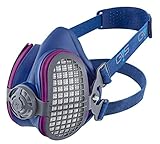
GVS Elipse P100 Half Mask
- NIOSH P100 TC-84A-6949
- Replaceable P100 filters
- Low-profile compact body
If you want one answer, take the 3M 8511. If you sand MDF or hardwood every day, skip ahead to the GVS Elipse P100 at number four on the list below, because that is the respirator that scales with your hours.
Quick Comparison of the 10 Dust Masks in This Round-Up
Every pick below, side by side. The filtration column is the first thing to sort on; the reusable column tells you what your ongoing cost looks like.
| Product | Specs | Action |
|---|---|---|
| 3M 8511 Valved N95 10-Pack |
|
Check Latest Price |
| 3M 8210 N95 20-Pack |
|
Check Latest Price |
 AirGearPro G-500 A1P2 Kit AirGearPro G-500 A1P2 Kit |
|
Check Latest Price |
| GVS Elipse P100 Half Mask |
|
Check Latest Price |
 BASE CAMP M Plus Mesh Mask BASE CAMP M Plus Mesh Mask |
|
Check Latest Price |
 RZ Mask RZM3 Mesh Mask RZ Mask RZM3 Mesh Mask |
|
Check Latest Price |
 AirGearPro M-500 A1P2 Mask AirGearPro M-500 A1P2 Mask |
|
Check Latest Price |
 Klein Tools 60552 P100 Klein Tools 60552 P100 |
|
Check Latest Price |
 North 5500 P100 Bundle North 5500 P100 Bundle |
|
Check Latest Price |
 Honeywell Nuisance Cup Mask Honeywell Nuisance Cup Mask |
|
Check Latest Price |
How We Picked: NIOSH Verification and Wear Testing?
Filtration claims are easy to print and hard to verify, so we started at the certification. Every pick that carries a N or P rating in this guide has its approval marking stated by the manufacturer, and where a TC-84A approval number is listed we have repeated it so you can look it up. Products that are not NIOSH approved are included, but they are labelled as such and placed in the roles where consumer-grade filtration is acceptable.
Comfort was the second filter. Almost every woodworking thread on this topic has the same top complaint: heat, sweat, glasses fogging and pressure on the nose bridge. We weighted the exhalation valve, the harness layout, the weight of the facepiece and whether the shape works with safety glasses and hearing protection already in place.
The third filter was ongoing cost. A disposable N95 that costs very little per mask loses to a reusable P100 half-mask once you pass roughly a hundred hours of sanding a year, because the P100 filter pairs are the only recurring spend. We did not convert any of that into a per-hour figure, because mask life depends entirely on how dusty your shop is and how disciplined you are about swapping filters.
1. 3M 8511 Valved N95 – The Best Dust Mask for Sanding Wood Overall
3M 8511 N95 Cool Flow Valved Respirator, 10-Pack
NIOSH N95
95 percent filtration
Cool Flow valve
10-mask pack
Pros
- Valve keeps heat down over long sessions
- Reliable seal from adjustable noseclip
- Over 16
- 000 reviews of real-world sanding use
- Disposable convenience
Cons
- Disposable
- so heavy users burn through packs fast
- No valve-free option in the pack
- Universal fit varies on extreme face shapes
This is the mask I hand to anyone who asks me where to start. It is a valved N95, and the valve is the reason it survives a sanding session where a plain cup mask has you breathing through wet fabric by the second hour. 3M rates the Cool Flow valve as making the mask up to 50 percent easier to breathe than the non-valved 8200, and in practice the difference is larger than that number suggests because the valve vents heat rather than pushing it back at your face.
For sanding tasks it suits, the list is long: hand-sanding with a block, a random-orbit sander on a weekend, touch-ups, and cleanup sweeping. Those are the jobs where an N95 class is the right tool. The mask weighs under 9 ounces, has adjustable braided headbands, and uses the M noseclip that is the reason your glasses fog less than with a cheap cup mask.
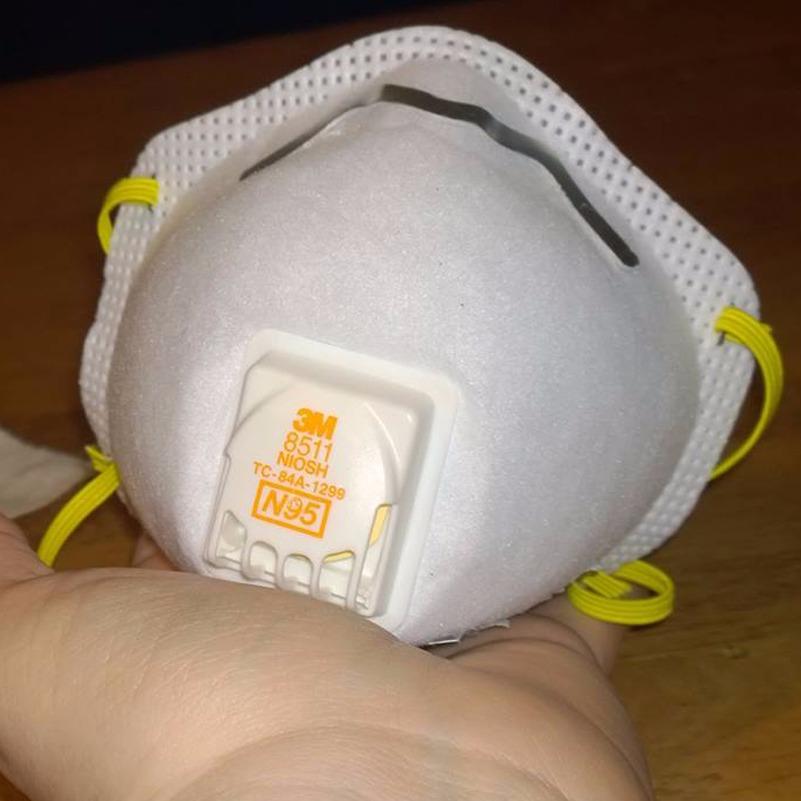
Where it runs out of road is duration. Under heavy belt-sander or MDF work the filter loads fast, and once it does you are pushing harder through a loaded medium, which is exactly when people rip the mask off. The filter is also non-oil rated, so misty conditions from spraying are outside what it is approved for.
It also does nothing about vapours. If your sanding sequence ends in a coat of lacquer or polyurethane, this is the wrong tool for that part of the job, and you would need an organic vapour cartridge on a reusable facepiece instead.
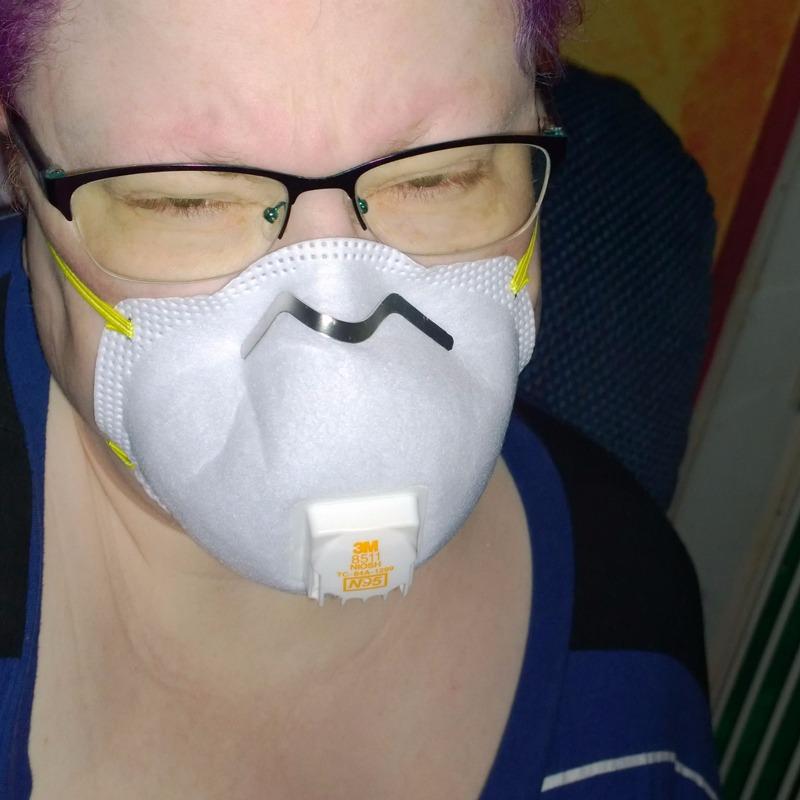
How long you can realistically wear it?
For hand-sanding and scattered orbital work, most wearers get through a full session comfortably because the valve carries the heat. Push it into a full day of belt sanding and the answer changes, because you will be swapping masks rather than wearing one all day.
A useful rule: if you are breathing hard enough that you want to open your mouth to get more air, the filter is loaded and it is time to change it. Do not push past that point, because the extra effort is your body’s signal that the medium is no longer moving air at the rated rate.
Where it is the wrong choice?
Skip it if you sand MDF, particleboard or hard exotic woods daily. Those dusts are finer and more abundant than softwood dust, and the N95 class simply does not have the headroom for that concentration.
Also skip it if you have facial hair along the jawline or chin, since a disposable cup mask has no adjustment to pull the seal clear of it. A half-mask with a proper harness handles that far better.
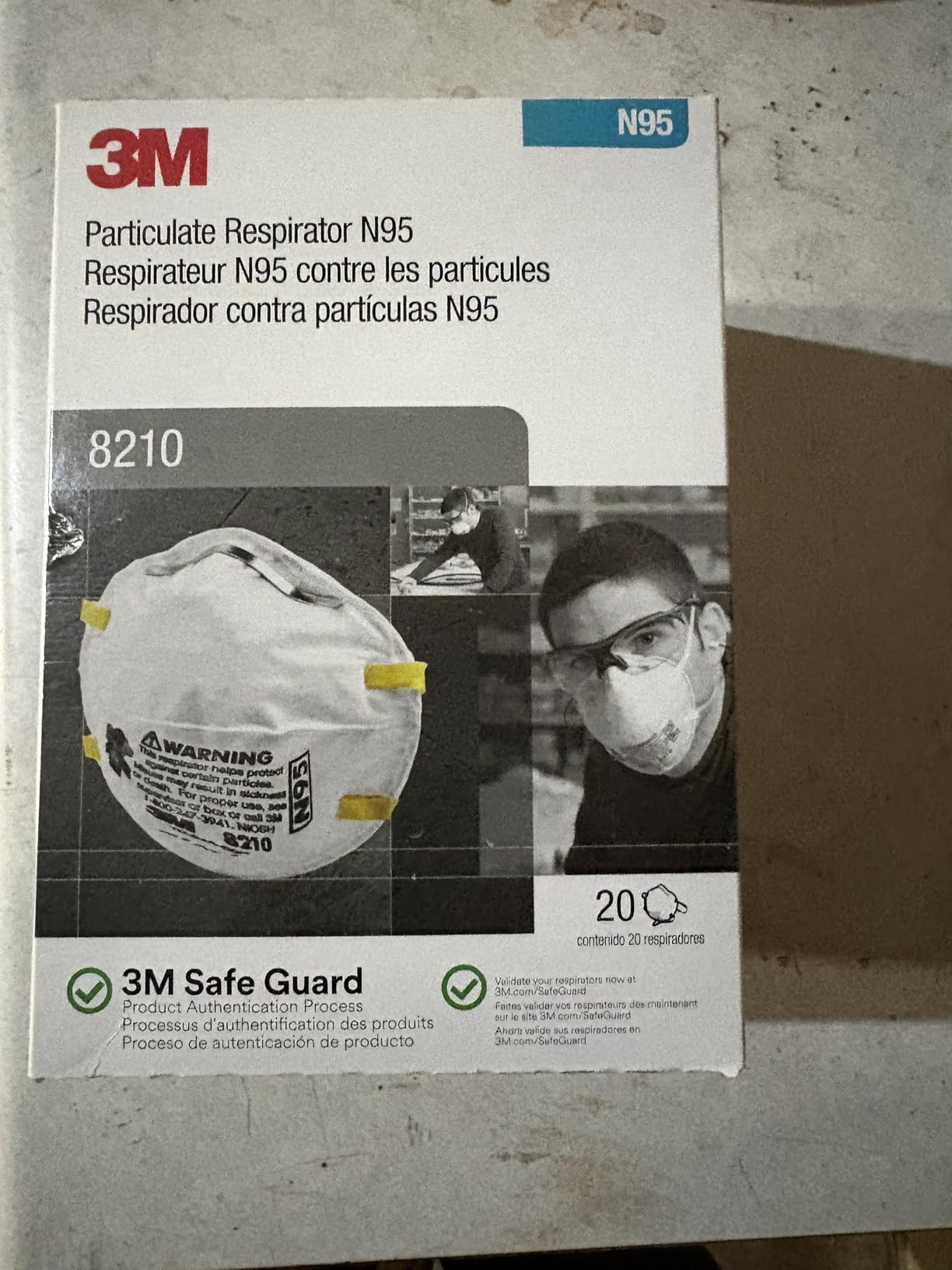
2. 3M 8210 N95 20-Pack – The Best Value Dust Mask for Bulk Sanding Sessions
3M Particulate Disposable Respirator 8210, N95, Pack of 20, NIOSH APPROVED
NIOSH N95
95 percent filtration
20-mask pack
Two-strap welded design
Pros
- Lowest cost per certified mask in this round-up
- Dependable welded two-strap seal
- Explicitly listed for sanding and grinding
- Works with safety eyewear
Cons
- No exhalation valve so it runs warm
- Disposable only
- Marked for industrial or occupational use
This is the one to buy by the case. The 20-mask pack works out to the lowest cost per certified mask in this round-up, and with over 19,000 reviews averaging 4.4, it is the most thoroughly proven disposable respirator here. Buyers consistently report a dependable seal and a fit that holds while the sander is running.
The welded two-strap design with dual-point attachment is doing the real work. It spreads the pull around the back of the head instead of concentrating it on the ears, which is what separates it from the single-strap nuisance masks further down this list. The adjustable noseclip also does double duty: it improves the seal and it reduces the amount of warm air reaching your glasses.
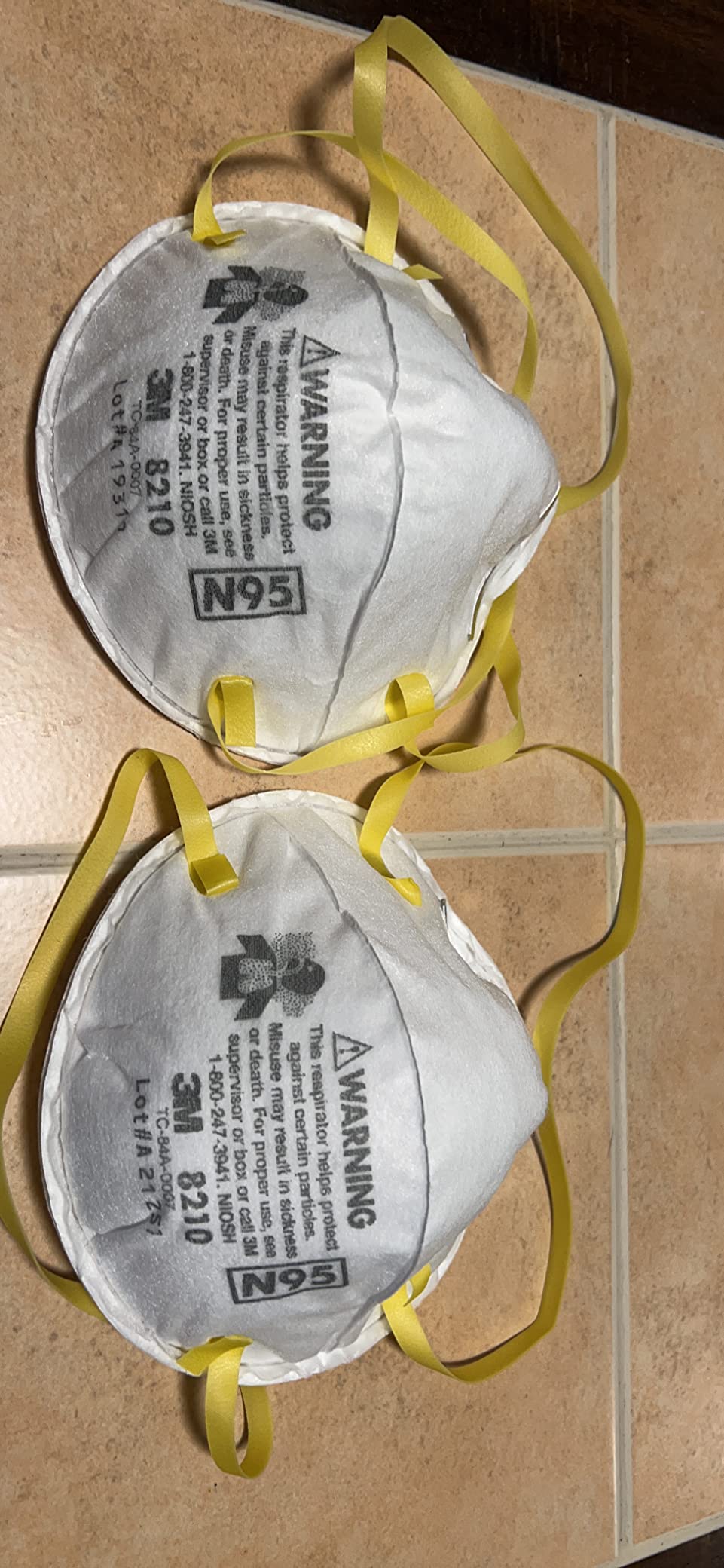
The heat is the downside. There is no exhalation valve, so everything you exhale comes back through the filter, and by the end of a long session the mask is warm and damp against your face. This is the single most common complaint in the reviews, and it is a real limitation rather than a nitpick.
It is also labelled for industrial and occupational use rather than consumer sale, and the standard fit can feel loose on smaller faces. Neither stops it being the sensible bulk choice, but both are worth knowing before you order for a whole workshop.
When this beats the valved version?
Choose the 8210 over the 8511 when your sanding sessions are short and frequent rather than long. A forty-minute orbital sanding job does not generate enough heat for the missing valve to matter, and the lower cost per mask adds up quickly across a year of them.
It is also the better pick for anyone who works in a cold garage. There is no plume of warm air around the face, so the unvalved design feels less oppressive in low temperatures than it does in summer.
What you give up by choosing it?
You give up the ability to stay in one mask for a full day, because heat accumulation forces changes. And you give up any path to vapour protection, since there is no cartridge interface at all.
If your sanding is mostly hand work on solid wood and you are not dealing with MDF, the trade is worth it. If it is the reverse, move down the list to a reusable P100 half-mask.
3. AirGearPro G-500 A1P2 – Best Dust Mask for Sanding Then Finishing
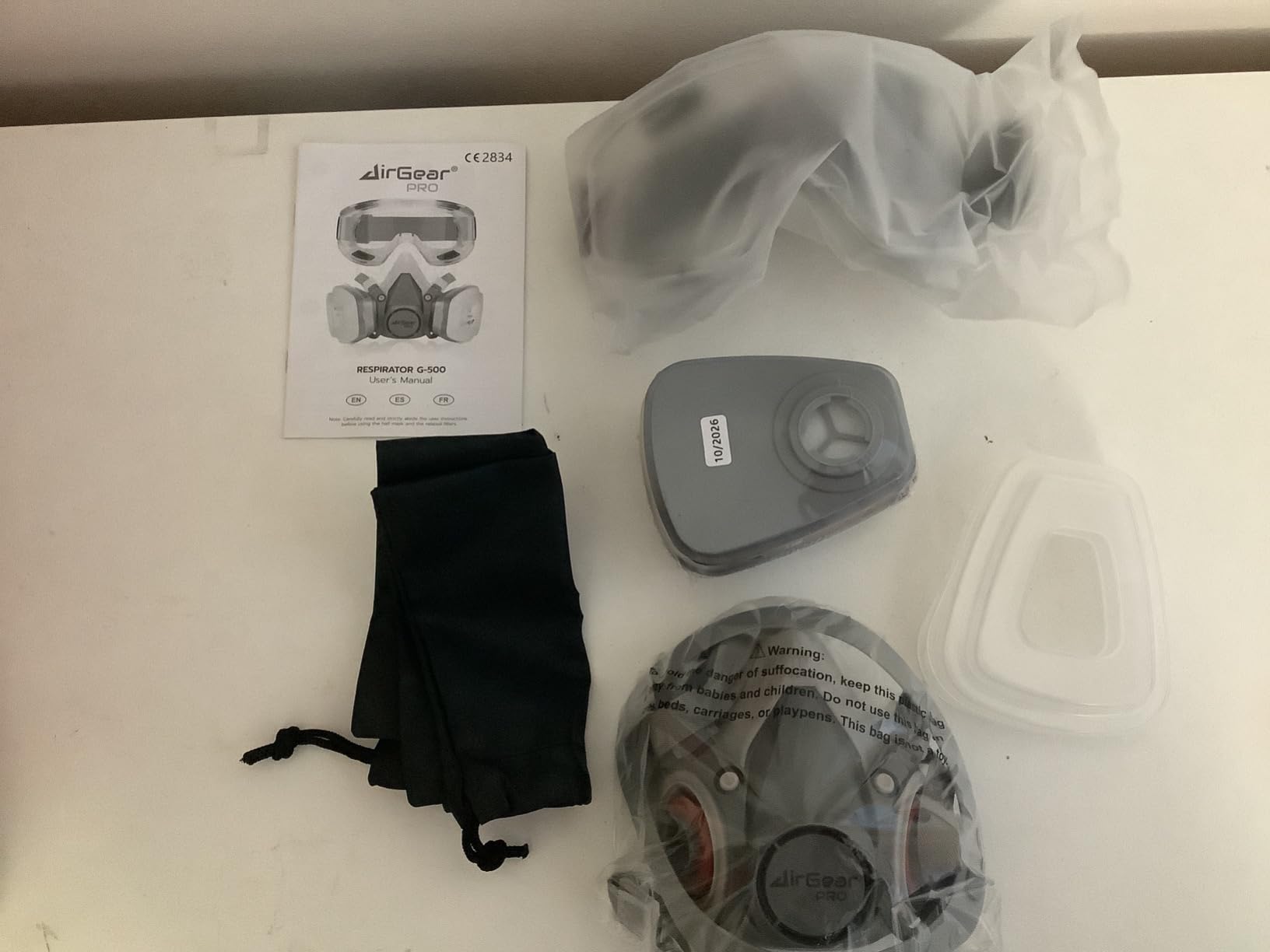
AirGearPro G-500 Reusable Respirator Mask with A1P2 Vapor & Dust Filters
A1P2 particle and vapour filters
92 g body
Includes goggles
CE certified
Pros
- Handles wood dust and solvent vapours in one mask
- Soft seal stays comfortable while sweating
- Filter pads swap in seconds
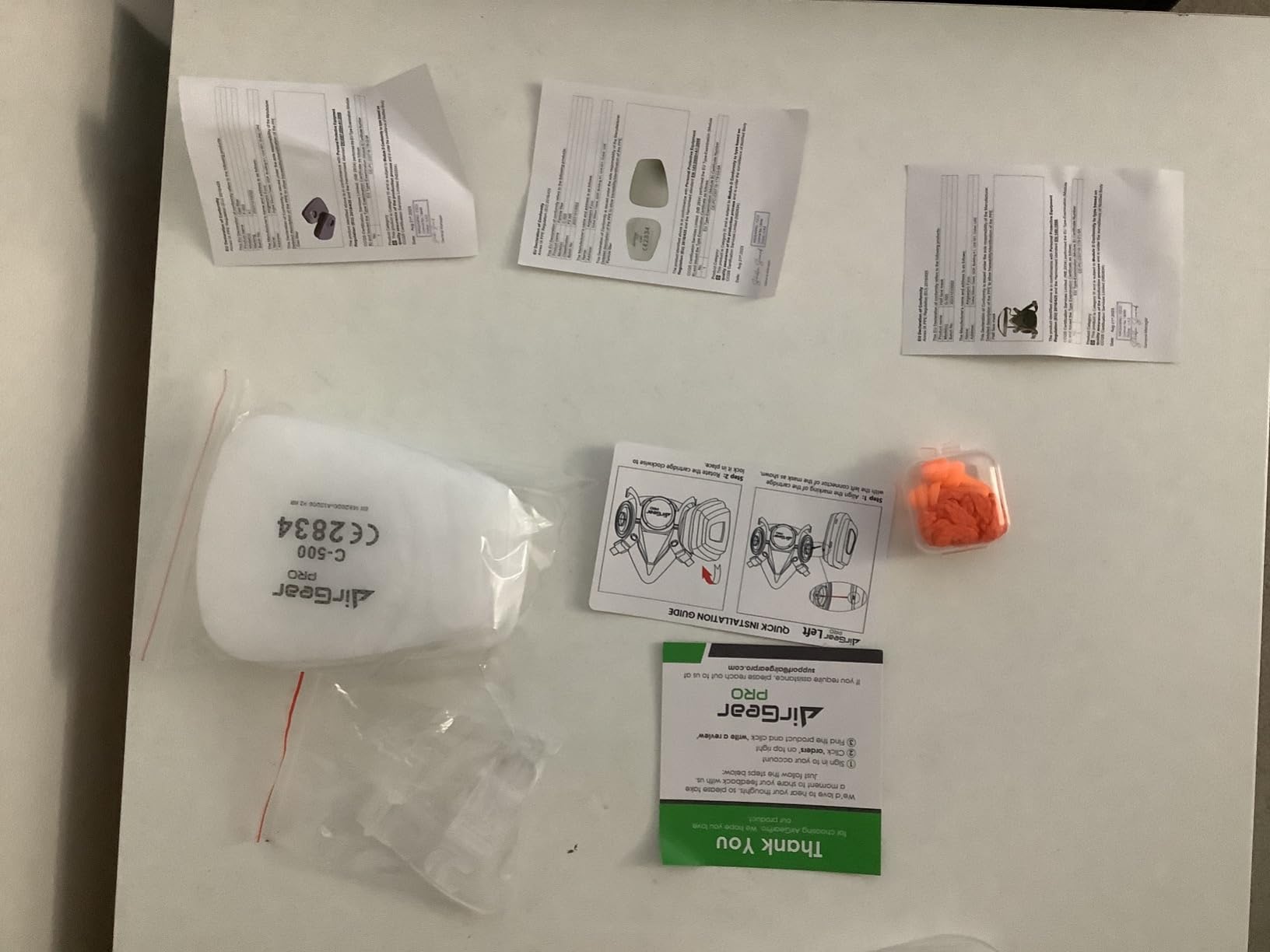
- Kit includes goggles ear plugs and bag
Cons
- CE certified rather than NIOSH approved
- Included goggles fog over prescription glasses
- Assembly is confusing at first
- One-size strap adjustment
Most sanding days end with a finish, and most sanders are caught out by that because a particulate filter does nothing for solvent vapour. The G-500 solves it in one facepiece: an A1 rated anti-gas cartridge for organic vapours with boiling points above 65 degrees Celsius, paired with a P2 dust filter that captures at least 98 percent of airborne particles.
The facepiece weighs 92 g, which is genuinely light for a half-mask, and the skin-contact material stays soft rather than chafing when you sweat. Buyers with dust allergies report handling several hours of sawing in it, and the soft silicone seal is the part they single out as the reason it stays comfortable.
One of the nice things about a fabric-media filter is that you can see it work. Wearers talk about visible dust loading on the pad after a sanding session, which is direct evidence that dust is being captured rather than passing through, and it gives you a visual cue for when to change the filter.
The important caveat is certification. This is CE marked to A1P2, not NIOSH approved, so it does not meet US occupational respirator standards and it is not a P100 or N95 class device. In a hobby shop or home garage that is a reasonable trade for the vapour capability. In a commercial shop with a respiratory protection programme, it is the wrong class of device entirely.
Why the A1P2 combination is worth it for finishing?
A P100 particulate filter is excellent at wood dust and completely useless at lacquer and polyurethane vapour. Because a sanding project usually ends with spraying, having one facepiece that handles both phases removes the most common gap in a home shop setup.
It also handles epoxy and resin work, which is where the anti-gas cartridge earns its keep. If you cast or laminate anything, this is a more complete answer than any particulate-only mask on this list.
What to watch before you buy?
Assembly takes a few minutes and is easier with the QR code video than from the printed manual alone. Budget five minutes before your first session rather than fighting it on the day.
Be realistic about the vapour cartridges too. They saturate, and a cartridge that has been sitting open for a year has lost capacity regardless of how it looks. The included goggles also fog more than most, especially over prescription glasses, so plan to lift them for the parts of the job where you do not need eye protection.
4. GVS Elipse P100 – The Best Respirator for Sanding Wood Every Day
GVS SPR457 Elipse P100 Dust Half Mask Respirator with replaceable and reusable filters included, blue, m/l size
NIOSH P100 TC-84A-6949
Replaceable P100 filters
Low-profile body
M/L size
Pros
- Highest filtration class among the certified picks here
- Very low breathing resistance over long sessions
- Filters rated to last up to five years
- Compact body clears safety glasses
Cons
- Filters bought separately as needed
- M/L sizing only
- Costs more upfront than disposables
This is the respirator to graduate to when sanding stops being occasional. The NIOSH approval number is P100 TC-84A-6949 meeting 42 CFR 84, and the manufacturer explicitly lists wood dust among the recommended applications alongside silica, gypsum and rock wool, which tells you the certification covers the hazards you are likely to meet in a mixed shop.
What sets it apart from bulkier half masks is the low breathing resistance. P100 media is normally stiff, and that is where comfort over a long day usually falls apart. This one stays easy to breathe through, which is the difference between a respirator you wear all day and one that ends up hanging on a hook by lunch.
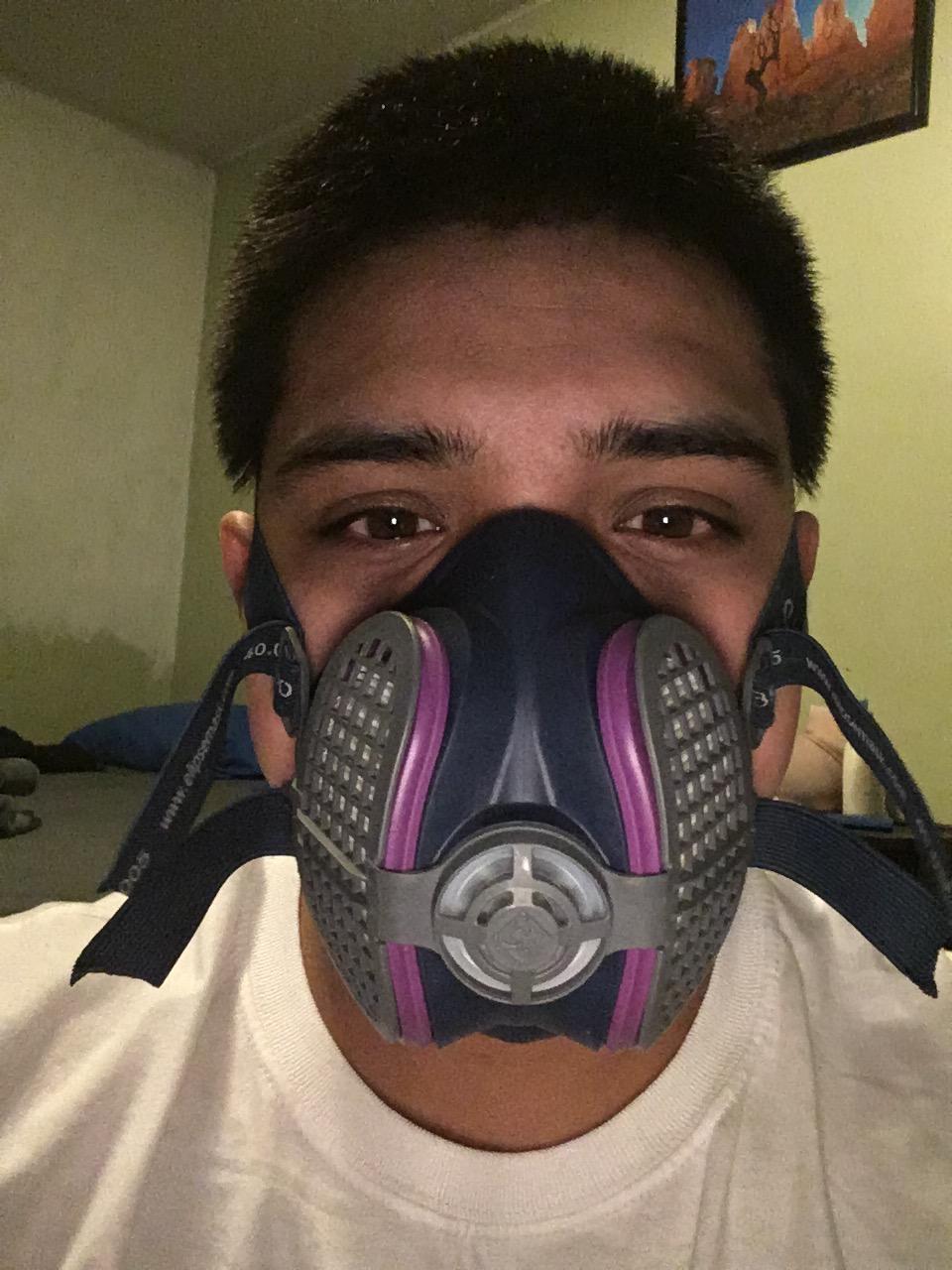
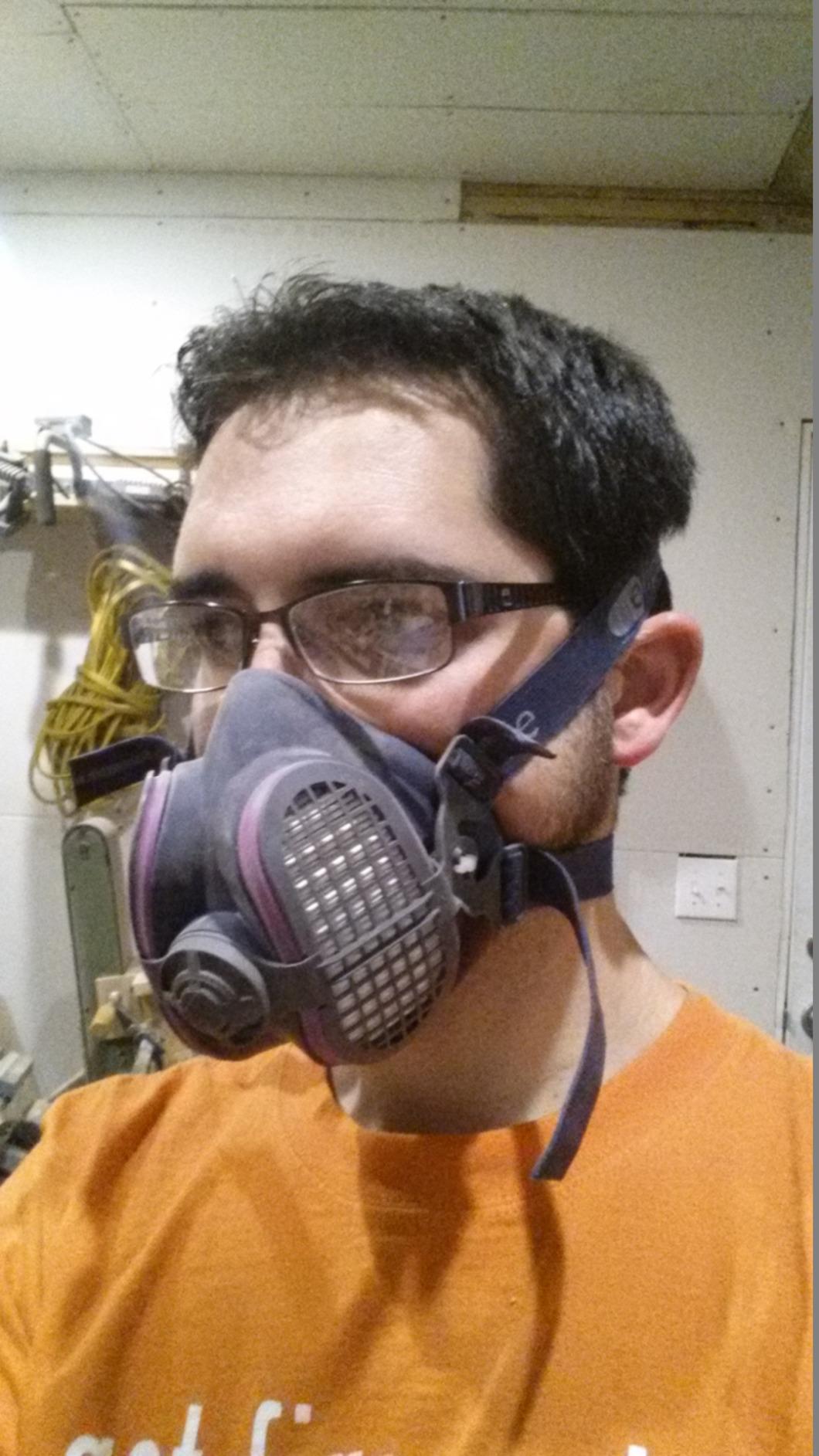
The body is deliberately compact and low-profile. That shape exists so it does not interfere with required eye and ear protection, and in practice it means the side arms of safety glasses clear the seal instead of lifting it every time you look down at your work. The material is thermoplastic elastomer that is latex-free and silicone-free, which matters if you have reacted to either in other masks.
Filter life is the other big practical point. GVS rates these filters to last up to five years, and while that assumes you change them when they load rather than wearing them indefinitely, it is a very different ongoing cost profile from a disposable mask a day.
Why P100 is the right class for heavy sanding?
Filtration efficiency is only half the equation. The other half is total inward leakage, the air that slips in around the edges of a facepiece instead of going through the filter. A well-seated N95 can outperform a badly seated P100, and no rating on a box fixes a seal that does not close.
Where P100 clearly wins is margin. When dust concentration spikes during a belt-sanding pass, a higher-efficiency filter delays the point at which the facepiece loads and breathing becomes laboured. That delay is what gets you through the session without changing it.
The sizing limitation to check first
This shell is medium-large only. If you have a notably small or large face, the seal will not close properly no matter how good the filter is, and no amount of strap tightening fixes a facepiece that is the wrong shape.
Filters are also sold separately, so plan for that as a recurring purchase rather than an occasional one. Given the rated service life, that is still far cheaper per hour than disposables for anyone sanding regularly.
5. BASE CAMP M Plus – The Coolest Mask for Weekend Woodworking
BASE CAMP M Plus Dust Mask, Breathable Reusable Face Mask with 6 Activated Carbon Filters for Woodworking Construction Mowing Grinding (Modern1)
99.6 percent stated filtration
Six carbon filters
Washable mesh shell
CE FFP2
Pros
- Stays cooler than the certified half masks here
- Six replaceable carbon filters in the box
- Handles glasses fogging with an adjustable nose clip
- Works for people who find close masks claustrophobic
Cons
- Weaker seal with dust reported entering at the edges
- CE FFP2 rather than NIOSH certified
- Neck strap can slide and latch inconsistently
- Runs small on larger faces
There is a persistent thread in the reviews of this mask about sanding dust getting in around the edge and settling on the mask rim. That is the honest limitation, and it is the direct consequence of it being a CE FFP2 mesh design rather than a NIOSH-certified elastomeric half mask. The gap at the facepiece is where the filtration rating stops mattering.
What it does well is heat. The enlarged one-way valves are claimed to move 26.3 percent more heat, water vapour and carbon dioxide than standard valves, and the mesh shell is claimed to be 11.3 percent more breathable. Whether you land exactly on those numbers or not, the consistent report is that this mask stays cool in a way the certified half masks here do not.
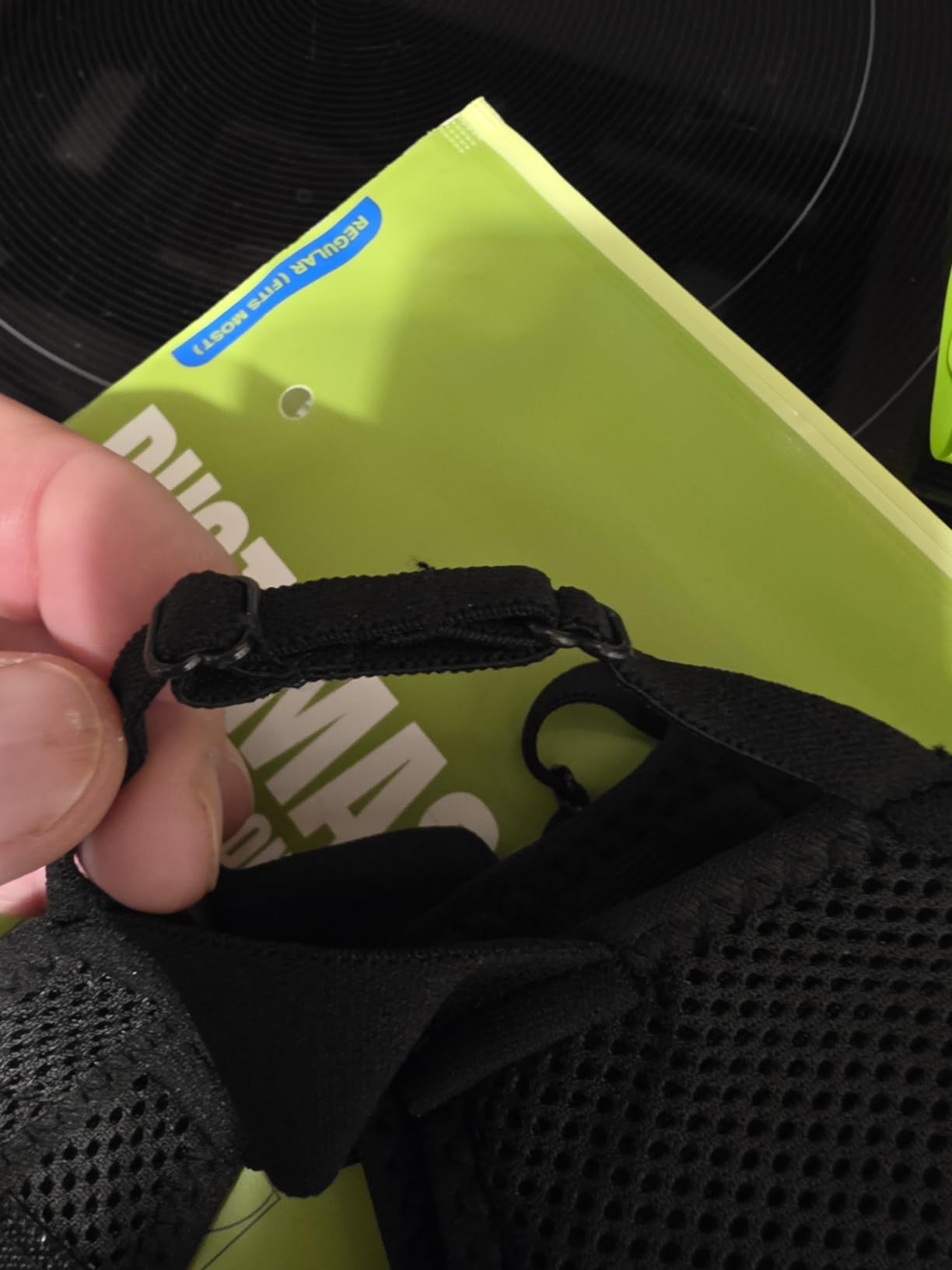
It is also genuinely reusable. The mesh shell and valves are washable, and the activated carbon filters are replaceable, with six included in the box, so the practical running cost is a small box of carbon inserts every few months. The dual attachment, ear loops plus a neck strap, holds it on when both hands are on a sander.
The adjustable nose clip is aimed squarely at the glasses-fogging problem that dominates forum threads, and users who wear prescription glasses in the shop rate it well on that point.

Where a non-certified mask is an acceptable trade?
For occasional sanding of softwood in a ventilated garage, for mowing and yard dust, and for general cleanup, this is a reasonable comfort-first choice. You are not relying on it in a situation where the difference between 95 and 99.97 percent filtration decides the outcome.
Many people describe it as usable with a beard, though only because the fabric does not attempt a hard seal in the first place. That is not the same as good protection.
When to step up to a certified respirator?
Move up the moment the dust is fine enough to be nearly invisible, which means MDF, particleboard, hard maple, or any belt-sander work on hardwood. Those are exactly the conditions under which edge leakage becomes the limiting factor.
Be honest with yourself about the certification too. This is not a device for a workplace with a formal respiratory protection programme, and the FFP2 marking is not equivalent to a NIOSH N or P rating. Many users who found dust at the edge went back to a 3M half mask, and that is a reasonable outcome rather than a failure.
6. RZ Mask RZM3 – Best for Sanding While Wearing Safety Glasses
RZ Mask RZM3 – Reusable Dust Mask – Patented 3-Strap Design – 99% Filtration Active Carbon Filters – Woodworking, Landscaping, DIY, Dust, Pollen – XXL (230 lbs. or More)
99.9 percent lab-tested filtration
Three wearing modes
Replaceable F3 filters
Hand-washable mesh
Pros
- Anti-fogging design is the clearest feature on this list
- Three ways to wear it depending on the job
- Four-point snap system makes filter changes fast
- Belt bag keeps it with you
Cons
- Not NIOSH approved
- Smaller review base than established options
- Filtration and fit depend heavily on adjustment
- Not rated for silica or hazardous dust
Fogging is the most common complaint in the woodworking mask threads, and this is the one mask here that makes anti-fogging a primary design goal. The adjustable nose clip, a nose foam piece and dual discharge valves work together to direct warm exhaled air away from the top of your lenses rather than up into them.
Flexibility is the other selling point. It wears three ways: dual head straps for stability during active sanding, a neck strap for fast on-and-off between tasks, and ear loops for lighter work. That range means you can match the mask to the task instead of committing to one configuration for the whole day.
The filtration claim is unusually high for a consumer mask: F3 filters lab-tested at 99.9 percent efficiency down to 0.1 micron, with an active carbon layer for odour reduction. The patented four-point snap system changes filters quickly, and the mesh shell is hand-washable, so the maintenance side of ownership is straightforward.
Be clear about what it is not. The manufacturer states directly that it is not NIOSH approved and not intended to satisfy occupational respiratory protection requirements. It is also not a P100 or N95 class device, so it carries no rating for silica, asbestos or other hazardous dusts.
When a non-NIOSH mask is the right call?
For a hobbyist sanding softwood, doing demolition dust or yard work, or anyone who has given up on respiratory protection entirely because certified masks fog their glasses, this is a legitimate option. Staying comfortable enough to actually wear a mask is part of the safety equation.
The 603-review base is growing but small next to the 3M options, so there is less long-term data on seal consistency. Judge it on your own face rather than on the rating.
What to look out for?
Fit is everything with a mesh design, and reviewers note that performance varies a lot with adjustment. Spend the extra two minutes on the nose clip and strap tension before a long session, because a mask that is nearly right will leak at the edge.
If you work with MDF, with hard maple, or with any material where the dust cloud is dense, do not rely on this. Layer it under a certified P100 half mask for the heavy phases instead of treating it as the only protection.
7. AirGearPro M-500 A1P2 – The Best Reusable Respirator for Resin and Sawdust
AirGearPro M-500 Reusable Respirator Mask with Filters | Ideal for Painting, Woodworking, Construction, Sanding, Spraying
A1P2 particle and vapour filters
92 g body
Replaceable cartridges
Two-year warranty
Pros
- Comfortable for people with dust allergies
- Sits well with safety glasses
- Cheap low-plastic replacement filters
- Low breathing resistance over long jobs
Cons
- P2 class at 95 percent is below P100
- Rubber smell for the first few uses
- Seal leaks slightly on some face shapes
- Not a full seal against paint odour
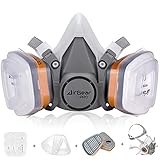
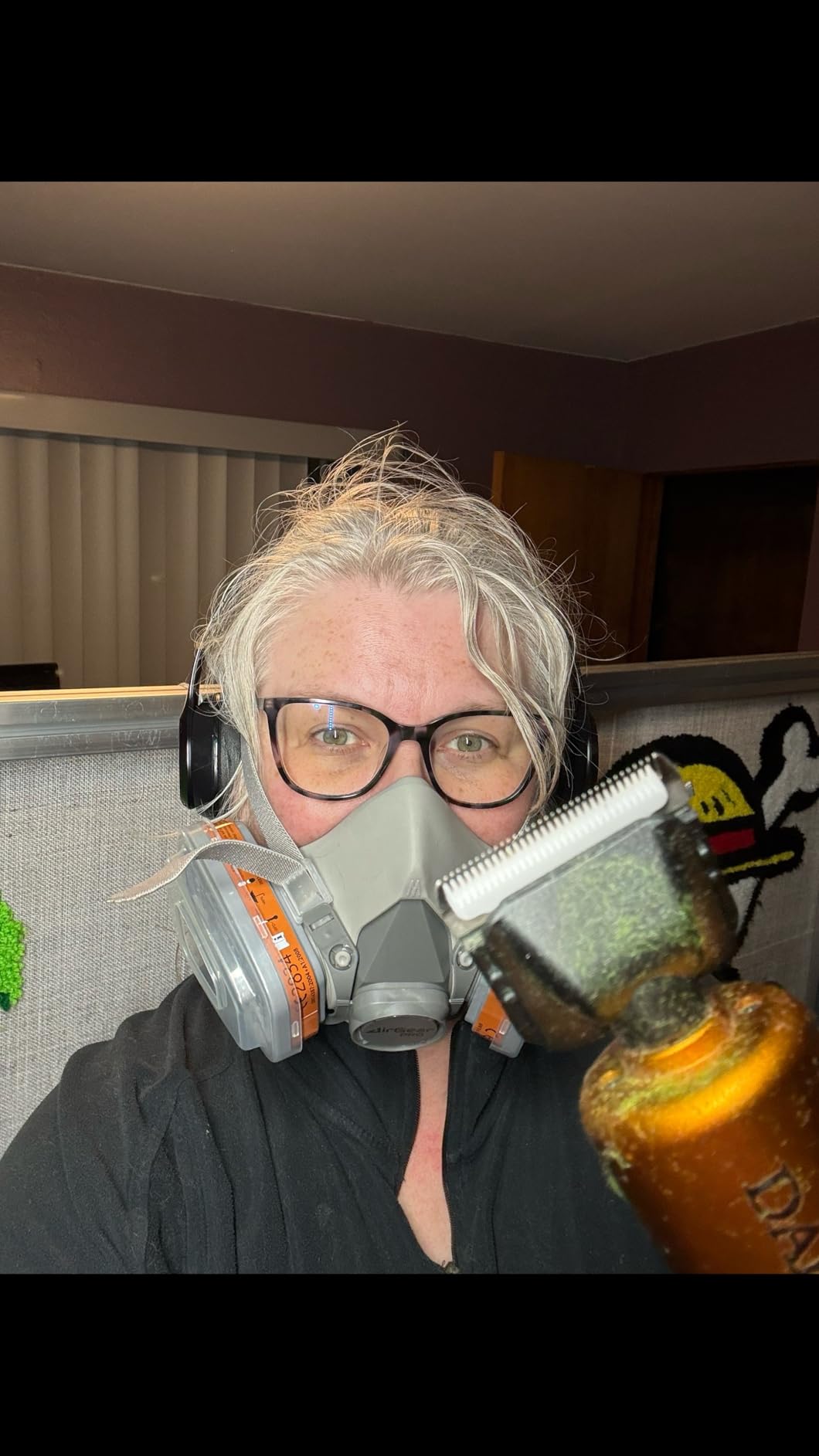
This is the slimmer sibling of the G-500 and shares most of its strengths: an A1P2 dual filtration setup, a 92 g body, replaceable gas and dust filters, and a two-year warranty. The difference is that it does not include the goggles and ear plugs, which keeps the kit simpler if you already have eye and ear protection you like.
Wearers with dust allergies report that it handles several hours of sawing wood effectively, and the head and neck strap arrangement is simple to put on and adjust, which matters more than it sounds when you are donning it several times a day. It also works well with safety glasses without pushing them out of position.
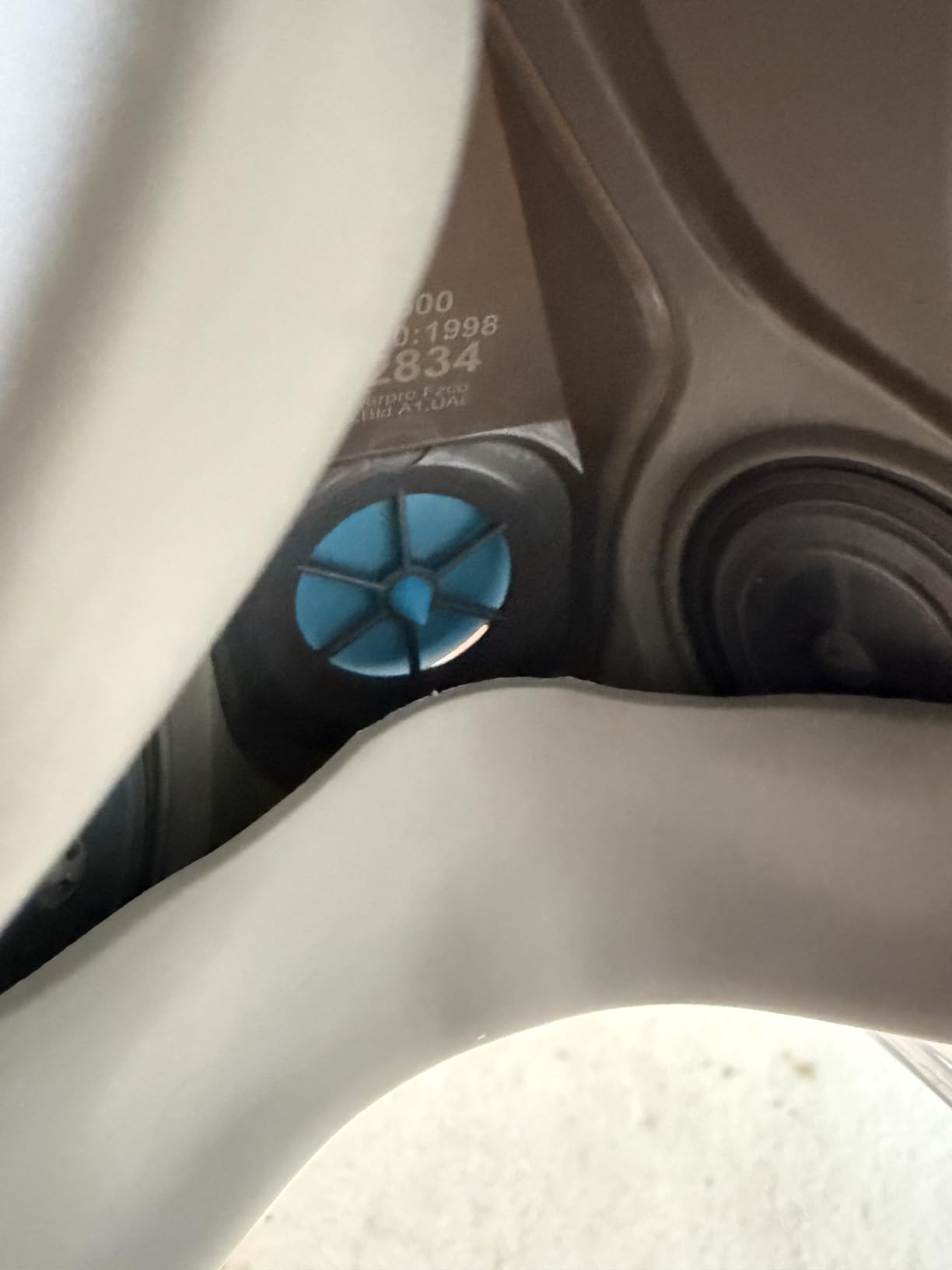
Replacement filters are inexpensive and use less plastic than competing masks, and that ongoing cost is where this style of respirator really earns its place. A facepiece you keep and a pair of filters you change is a fundamentally different economics from a mask you use once.
There is a rubber smell on the first few uses that needs to air out, and the seal, while good, is not perfect on every face. Some wearers report leakage around the seal surface, which is the same issue that limits any half mask worn without a fit check.
Where A1P2 beats a P100 half mask?
If your sanding is followed by spraying lacquer, spraying oil, or working with resin and epoxy, the anti-gas cartridge is the deciding feature. A P100 filter blocks the wood dust beautifully and passes solvent vapour straight through.
It is also the more comfortable option for a lot of people, because the fabric filter media loads in a way that is visible and intuitive, letting you judge when to change it rather than guessing.
Where it falls short of a P100?
The P2 particulate filter is rated at 95 percent, which is N95-equivalent rather than P100. That is a real gap for dense dust clouds from MDF or hard hardwood sanding, and it is the reason this is not our top pick for pure sanding.
It is also not strong enough to block all paint odours in an enclosed room. If ventilation is poor, assume you need a proper spray booth or a much larger space rather than relying on the cartridge.
8. Klein Tools 60552 P100 – The Best Dust Mask for Sanding With a Beard
Klein Tools 60552 Reusable P100 Half-Mask Respirator with Replaceable Filters for Dust, Metal Fumes, and Oil Mist, M/L
NIOSH P100 half-mask
Downward exhalation valve
Built-in fit-test sample port
M/L size
Pros
- P100 certification in a genuinely compact body
- Downward valve keeps safety glasses clear
- Seal holds for wearers with facial hair
- Filters change in seconds
Cons
- Replacement P100 filters are not included
- Harder to dial in a tight fit at first
- Heavier feel than a disposable mask
- M/L sizing only
Beards are the quiet safety problem in a lot of shops. Facial hair along the jawline breaks the seal, and people lose far more protection than they realise because the mask still looks like it is on. The Klein 60552 comes up repeatedly in reviews from wearers with facial hair who report the seal still holds, and that is worth more than another point of filtration efficiency.
The other thing it gets right is fogging. The exhalation valve faces downward, so air leaves below the frame of your glasses rather than rising into them. That is a simple engineering choice with a large effect, and wearers who combine it with prescription glasses rate it highly.
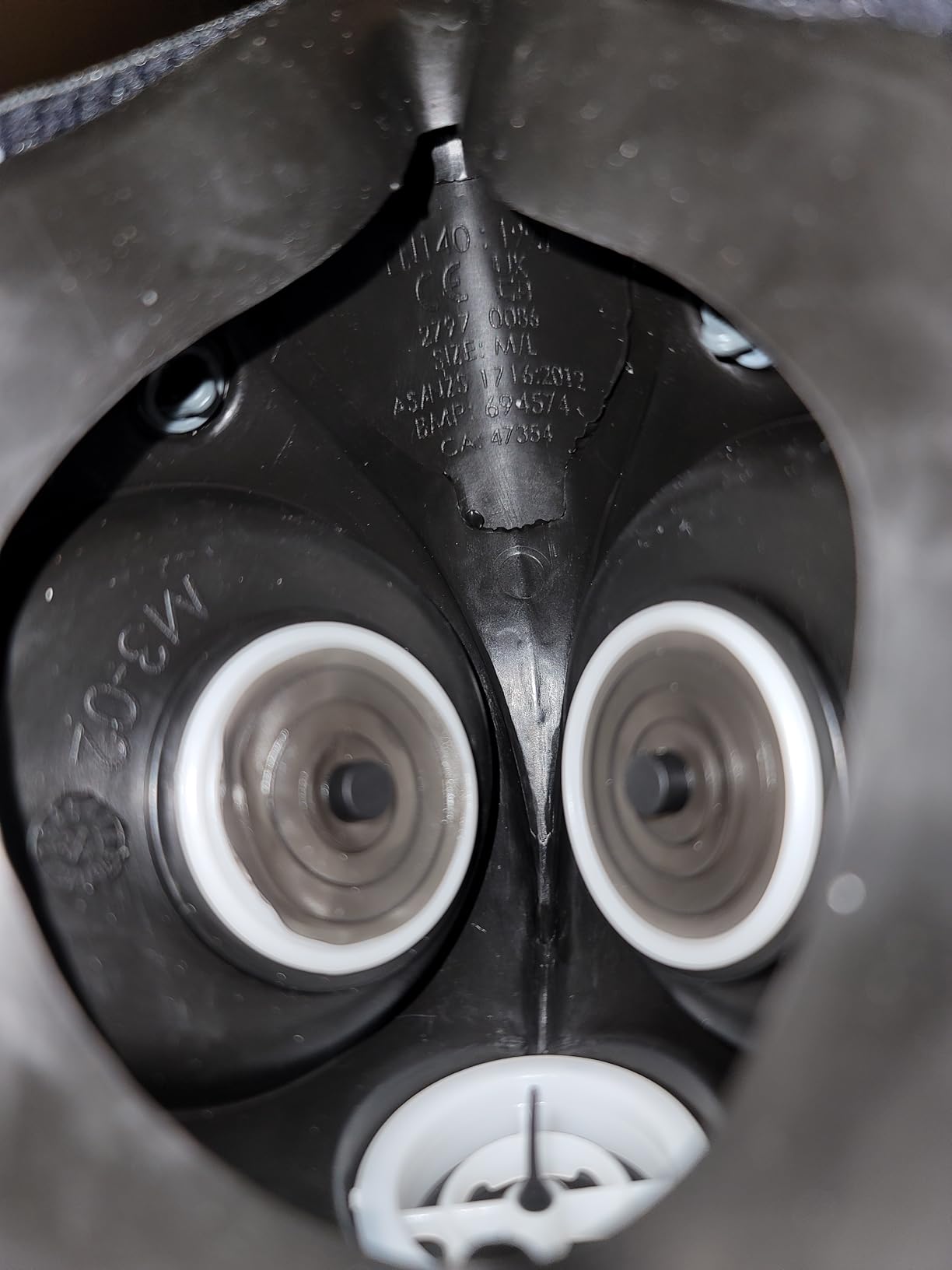
It is also the only certified half mask in this round-up with a built-in sample port for non-destructive face fit testing, plus a push-in mechanism for quick seal validation. You can check the seal in ten seconds before every session instead of guessing, which addresses the most common way people end up unprotected.
Comfort is good, with wearers reporting they breathe through the nose rather than falling into mouth-breathing, and the 6.4-ounce body stays out of the way of eye protection. Filters swap out quickly using the bayonet connection.
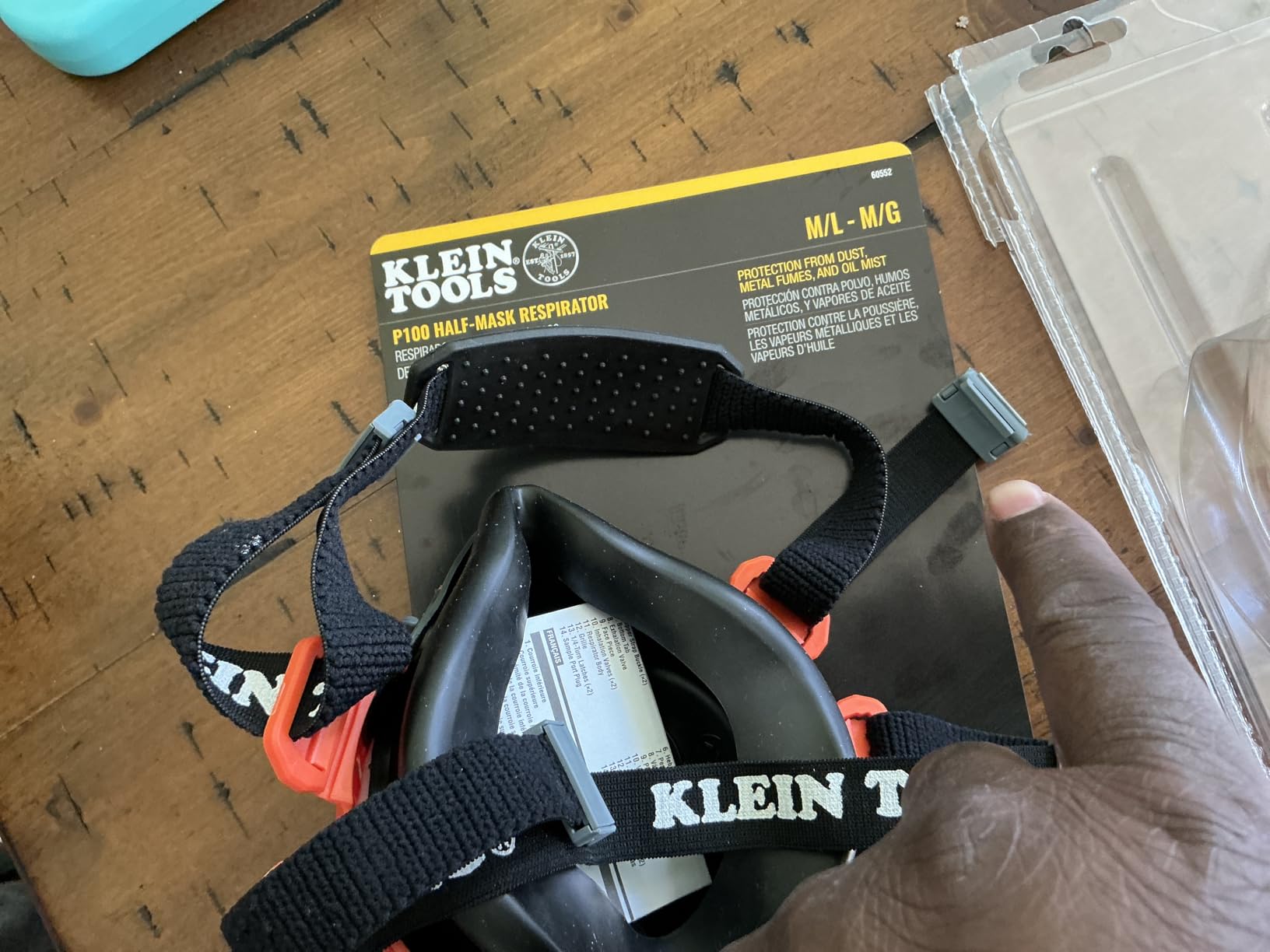
Two features that solve real shop problems
The fit-check sample port lets you verify the seal on the actual mask you are about to use, which is the single most valuable thing on this list for anyone whose face shape is unusual. Most competing masks ask you to learn the check by reading a manual.
The downward valve matters more than any amount of marketing on nose foam or carbon layers. If you wear glasses in the shop, fogging is what makes people take the mask off, and taking the mask off is the actual risk.
What to plan for?
Replacement P100 filters are sold separately under catalogue number 60554, so this is not a complete kit out of the box. Budget for a pair before your first long sanding day rather than discovering it mid-session.
Some users find the fit hard to dial in initially, which is exactly what the sample port exists to fix, so use it rather than assuming the mask is the wrong size. The elastomer body also feels heavier than a disposable and takes more effort to clean, which is the cost of having it at all.
9. North 5500 P100 Bundle – The Softest Facepiece for Long Sessions
North Honeywell 5500 Series Half Mask Respirator Medium and 2 P100 filters (Bundle Pack)
NIOSH P100 class
Two P100 filters included
Soft non-allergenic elastomer
Medium size
Pros
- Usable immediately with two P100 filters in the box
- Very soft facepiece suited to sensitive skin
- Simple half-mask design that is easy to adjust
- Long-standing industrial platform
Cons
- Medium size only
- Older bulkier styling
- No exhalation valve listed so it runs warm
- Replacement cartridges bought separately
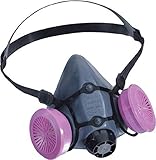
The 5500 series is an older industrial design and it shows in the profile, which is bulkier than the low-profile masks above it. What it has going for it is the facepiece material: an extremely soft, non-allergenic elastomer that does not mark or irritate the skin over a long day. If you have reacted to rubbery facepieces before, that softness is the reason to consider it.
The convenience bundle ships with two P100 particulate filters, so it is usable straight out of the package with no separate purchase. That removes the most common reason people delay getting a reusable respirator, which is realising they need to buy filters as well.
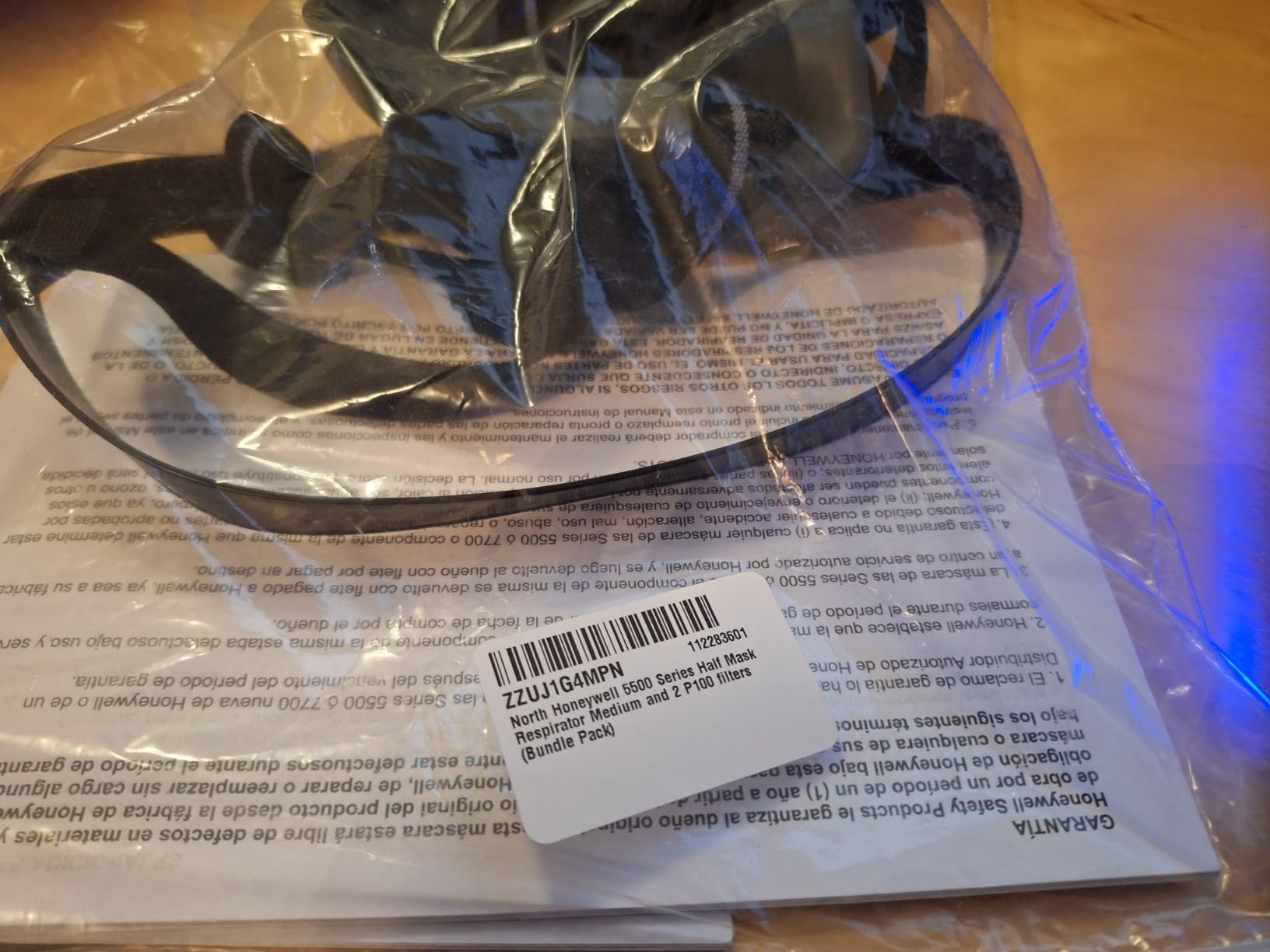
P100 filtration is the correct class for wood dust, including the fine dust from hard woods and the silica-containing dust you may pick up on shared equipment. The half-mask format is straightforward to don and adjust, with a simple strap arrangement that does not require learning.
The main drawbacks are that no exhalation valve is listed, so it can run warm during long sessions, and that it is medium sizing only. Both are consistent with a design that has been in production for a long time.
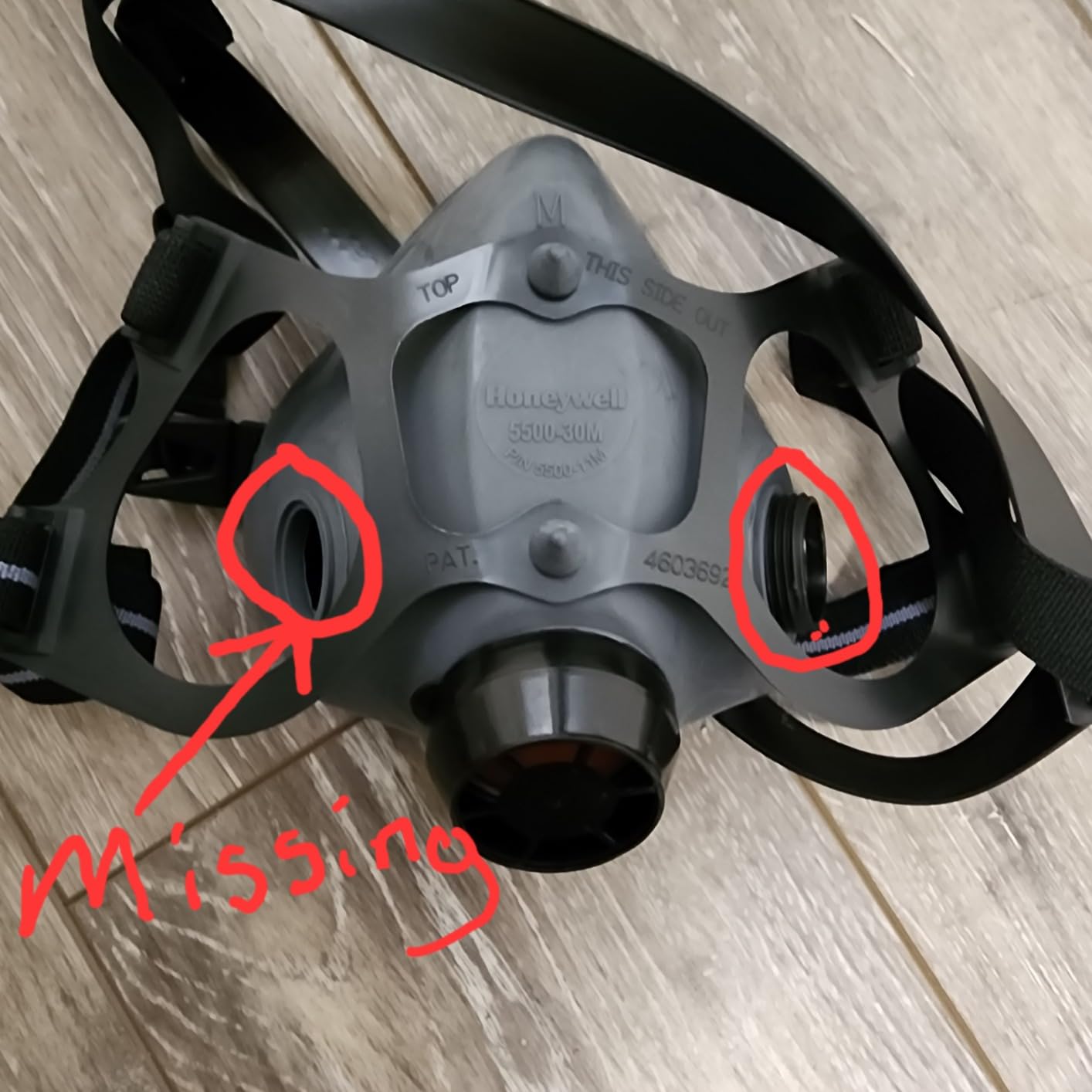
Why the soft facepiece matters more than the spec sheet?
Comfort failures are what lead to unprotected sanding. A mask that leaves marks on your face at the end of an hour is a mask you reach for less willingly, and that quietly undoes the protection you paid for.
A soft non-allergenic elastomer is one of the more underrated features in this category, and it is the reason the 5500 still has a following among people who wear a respirator all day.
Where it is outmatched?
If you wear safety glasses, the bulkier profile can interfere with the seal or the frame, and the lack of a downward valve means more fogging than the Klein or the GVS Elipse.
Replacement cartridges must be sourced separately, and being on an older platform limits your cartridge options compared with a modern multi-gas-mask system. If you are starting from scratch today and wear glasses, the picks above are a better fit.
10. Honeywell Nuisance Cup Mask – Best for Light Cleanup Only
Honeywell Nuisance Disposable Dust Mask, 5-Pack (RWS-54000)
Nuisance dust and pollen
Single strap
Lightweight cup style
5-mask pack
Pros
- Lowest cost per mask in the round-up
- Lightweight and humidity resistant
- One size fits most faces
- Handles outdoor dust and pollen
Cons
- Not NIOSH approved and not for silica or asbestos
- Glasses fog noticeably
- Limited breathability in heat
- Single strap gives a less secure fit
Be clear about what this is. The manufacturer states plainly that it is suggested for dust, dander and pollen, is not NIOSH approved, and is not for use against silica, asbestos or other harmful substances. It is a nuisance dust mask, and that is a genuinely useful category for sweeping the shop, cleaning up after a light sanding job, or yard work.
Within that category it does its job well. The polypropylene media is humidity resistant and latex-free with low breathing resistance for the class, the nose bridge is adjustable, and the single-strap cup fits most faces. Some wearers find it sits better on the face than cheaper alternatives, and the bright white colour makes it easy to see when it needs changing.
It is also a cheap way to keep masks in the shop at all, which matters more than it sounds. Keeping a certified mask in the car or the toolbag is a sensible habit, and giving a helper a nuisance mask for cleanup beats giving them nothing.
The negatives follow from the design being a single-strap cup. There is no second head strap to distribute tension, so the seal is less secure than the two-strap and harness designs above, and the listed complaints include noticeable glasses fogging and limited breathability on hot days of heavy work.
When this is the right mask for the job?
Sweeping, shop cleanup, handling dander, pollen exposure outdoors and light dust from non-sanding tasks. For all of those it is a sensible, low-cost choice, and a pack of five handles repeated small jobs easily.
It is also the one to keep on hand for visitors and helpers who are not doing the sanding itself but are in the room while it happens.
What it must never be used for?
Do not wear it while sanding. Fine wood dust from orbital or belt sanding is exactly the concentration and particle type that an uncertified nuisance mask is not rated for, and there is no certification behind the filtration.
If you handle concrete, stone, masonry or any material containing silica, this is definitively the wrong mask, and so is any other mask not certified for silica. The same applies to asbestos and lead paint, which is a separate hazard in pre-1978 homes and needs its own respiratory assessment rather than a dust mask.
Buying Guide: How to Choose a Dust Mask for Sanding Wood?
N95 vs P100 vs N99 and N100 decoded
NIOSH rates particulate filters on two axes: filtration efficiency, and whether the filter resists oil. The efficiency number is the percentage of airborne particles removed at the most-penetrating particle size, which is 0.3 microns. N95 removes at least 95 percent. N99 removes at least 99 percent. N100 removes at least 99.97 percent. P100 also removes at least 99.97 percent, and does it against both oil and non-oil aerosols.
Wood dust from dry sanding is a non-oil particulate, so the N series covers the hazard. The reason P100 exists alongside N100 is oil resistance, which matters for machining fluids, aerosols and spray finishes rather than for sawdust.
The practical ranking for sanding is straightforward. N95 sits at the bottom and is appropriate for light, short, occasional sanding. N99 and N100 are real improvements on paper but cost more and breathe harder. P100 is the class most experienced woodworkers land on because it is the highest efficiency that is not meaningfully harder to breathe through when the facepiece fits well.
Is N95 good enough for sanding? It is genuinely good enough for hand-sanding a few hours of softwood, where the dust concentration is modest and the mask is not worn continuously. It is not good enough for belt sanding, random-orbit sanding on hardwood, MDF cutting, or any session where you would describe the air as thick.
Is there a better filter than P100? No, not within the disposable and half-mask categories. The next step up is a powered air-purifying respirator, which does not improve the filter so much as the pressure: a fan pushes air through the filter so the wearer does not pull it through by inhalation, which reduces breathing resistance and improves the effective protection factor substantially. That is a significant step up in cost and equipment, and for wood dust alone it is usually unnecessary.
N series vs P series and why oil resistance matters
N means not resistant to oil. Once a filter has been exposed to oil, an N-series filter can degrade sharply in performance, which is why N95s are the wrong choice around mist, aerosols or oily finishes. P means oil resistant, which is why a P100 works in machining and spray environments as well as with dust.
For pure wood sanding this distinction matters less than most guides imply, because the hazard is not oily. It becomes relevant the moment your work moves from sanding to spraying or machining, and at that point a P100 half mask with replaceable cartridges handles both without changing facepieces.
Fit and the user seal check
This is the part that decides whether any of the ratings above matter. A facepiece is only as good as the seal it makes against your face, and total inward leakage is air that enters around the edges rather than through the filter. A well-fitted N95 can outperform a poorly fitted P100, and no rating printed on a box corrects for a strap that was never tightened.
Do a user seal check every time. On a valved mask you cover the valve with your palm; on a non-valved mask you inhale gently and hold it for a few seconds. The mask should collapse slightly against your face with no air leaking in at the edges, and it should not stay puffed out. If it stays puffed, you do not have a seal and you should adjust the straps and the nose clip before you start.
Facial hair along the jaw, chin or upper lip breaks the seal everywhere it crosses it. There is no strap adjustment that fixes this, because the obstruction is between the facepiece and the skin. The options are to accept a lower protection factor, use a PAPR with a loose-fitting hood that does not rely on a face seal, or choose a job setup that reduces airborne dust at the source.
Also check that the mask works with what else you are wearing. A facepiece that lifts the arms of your safety glasses every time you look down is a mask you will adjust constantly, and every adjustment is a chance to break the seal. This is why the low-profile shapes on the GVS Elipse and the Klein 60552 score well with people who wear glasses.
Disposable vs reusable cost of ownership
Disposables win on convenience and on total cost if your sanding hours are low. If you sand a few hours a month, a pack of N95s costs very little per mask and there is nothing to maintain, store or remember.
The crossover is in the volume of sanding hours. A reusable P100 half-mask with a pair of filter sets that are rated to last years pays for itself many times over once you are sanding regularly, because the recurring spend drops to filters only and the facepiece is a one-time purchase.
Comfort is the other half of that calculation and it is the one people underweight. Shop forums are full of people who abandoned disposables because they were hot and sweaty, and the mask they actually keep wearing is a washable mesh model even though it is technically uncertified. Choosing something you will genuinely wear beats choosing the highest number on a label.
Filter replacement and cleaning schedule
Replace a P100 filter when breathing starts to feel harder or when you can see dust loading on the media, whichever comes first. In heavy sanding dust, plan on something in the region of 40 to 60 hours of use before a filter needs replacing. In light hand-sanding, filters can run well over a hundred hours.
For organic vapour cartridges, the guidance is different and much shorter. Vapour cartridges saturate relatively quickly, often within 40 to 60 hours of use, and lose capacity without any visible change. Replace them on a schedule rather than on appearance, and swap cartridges that have been sitting unused for around six months.
Between sessions, clean a reusable facepiece with mild soap and water or the manufacturer-recommended wipe, let it dry fully, and store it in a clean bag or a closed container away from dust and sunlight. Storing a loaded filter in a dusty cabinet is how clean filters become loaded filters before you ever wear them.
Pairing the respirator with extraction and ventilation
A respirator is a last line of defence, not a substitute for source control. Local exhaust at the machine removes the dust before it reaches your breathing zone, and that is always more effective and more comfortable than filtering air you have already inhaled. Our guide to the best dust collectors for woodworking shops covers that side properly.
The combination that works is a sander with a working shroud and a connected collector, a shop with reasonable airflow, and a P100 half mask for whatever the extraction misses. If the dust cloud is still visible in the room, the extraction is not doing its job and no respirator compensates for that reliably over a full day.
Two hazards deserve separate mention. Silica dust from concrete, stone or masonry requires a respirator specifically certified for silica, and no wood-dust mask in this round-up is a substitute. Lead paint in pre-1978 homes is a separate assessment altogether and should be handled by someone qualified to evaluate it, not by swapping in a better dust mask.
And keep in mind that dust is not only a breathing problem. Airborne wood dust is combustible, so extraction and housekeeping matter for the fire risk as much as for your lungs. It is the same system doing two jobs.
Frequently Asked Questions
Should you wear a dust mask when sanding wood?
Yes, and most people underestimate how much dust is in the air while sanding. A random-orbit or belt sander generates far more fine airborne dust than a dust collector removes, and that fine fraction is the part that reaches your lungs. At minimum, sand with extraction running, and wear a NIOSH-certified respirator rated for wood dust while the sander is running.
Is N95 enough for wood dust?
For light hand-sanding of softwood, yes, an N95 is a legitimate rating for dry wood dust. For belt sanding, random-orbit sanding, hardwoods or MDF, no, you want a P100 half mask. The P100 removes at least 99.97 percent of particles versus 95 percent for N95, and that extra margin is what stops the filter loading within an hour.
Is P100 or N95 better?
P100 is better for anything beyond occasional light sanding, and N95 is better only in the sense that it costs less and needs no maintenance. P100 filters at least 99.97 percent of both oily and non-oily particles, and resists oil. If you only sand a few hours a month, an N95 is fine; if you sand regularly, buy the P100 half mask.
Is N95 good enough for sanding?
It depends entirely on the sanding. It is good enough for a few hours of hand-sanding softwood with extraction running. It is not good enough for dense dust clouds from belt sanding, hard maple, or MDF and particleboard cutting. The test is whether you can see dust hanging in the air; if you can, upgrade to a P100 half mask.
What is the best dust mask for woodworkers?
The best all-round choice is a NIOSH-approved P100 half-face respirator with replaceable filters, such as the GVS Elipse, because it is the highest filtration class that stays comfortable over a full session. For occasional sanding, a valved N95 such as the 3M 8511 is the easiest mask to actually keep wearing.
Is there a better filter than P100?
Not within disposable or half-mask respirators, P100 is the highest particulate filtration class available. The next step is a powered air-purifying respirator, which improves the protection factor by pushing air through the filter rather than pulling it, and reduces breathing resistance. That is a much larger investment and is rarely necessary for wood dust alone.
When to use N95 vs P100?
Use N95 for under a few hours a week of light hand-sanding and light cleanup. Use P100 for belt sanding, random-orbit sanding, hard hardwoods, MDF and particleboard, any session over an hour, and any sanding where dust stays visibly suspended in the air. When in doubt, upgrade, because the cost difference is small compared with the time you will spend wearing it.
How do I know my dust mask fits properly?
Do a user seal check before every session. Cover the exhalation valve with your palm if the mask has one, then inhale gently and hold for a few seconds. The mask should collapse slightly against your face with no air entering at the edges, and it should not stay puffed out. If it stays inflated, tighten the straps and adjust the nose clip until it collapses, and check for facial hair breaking the seal.
Can I reuse a dust mask for sanding?
Only if it is a reusable respirator with replaceable filters. Disposable N95 and cup masks are single-use, and reusing one once it has loaded reduces protection below its rating. A reusable half mask with P100 cartridges is designed to be worn session after session, and the filters are replaced when breathing gets harder or dust loading is visible.
Are mesh dust masks safe for sanding?
They are comfortable and reusable, but most of the popular ones are not NIOSH approved, and the manufacturer’s own descriptions often say so. They are reasonable for softwood, yard dust and light cleanup. For fine hardwood or MDF sanding, edge leakage rather than filter media becomes the limiting factor, so use a certified P100 half mask instead of a mesh mask.
Final Verdict on the Best Dust Masks for Sanding Wood
Buy the 3M 8511 if you are starting out or sanding a few hours a month. The valved N95 is comfortable, cheap to replace and the most-reviewed mask in this round-up, which is why it is our first pick. Buy the GVS Elipse P100 if you sand regularly, work with MDF, or want one respirator that stays comfortable through a full day. That is the pair that answers this question for almost everyone reading it.
The rest of the list covers the narrower cases: the 3M 8210 for bulk buying, the AirGearPro masks for when finishing follows sanding, the Klein 60552 for glasses and facial hair, the mesh models for weekend comfort, and the Honeywell cup mask for cleanup only. Whatever you choose, do the seal check every session and keep your extraction running. Check the current details for any of these through the links below, and follow our related guides on how dust causes equipment problems when you want the rest of your shop behaving the same way.