

There is a test every woodworker learns eventually, usually the hard way. Stand in a sunbeam crossing the shop after an afternoon of cutting MDF and you will see the dust hanging there, glowing, refusing to settle. That fraction is too fine for your nose hairs, too fine for most shop vacs, and it stays airborne long after the saw stops. If you have spent the last few months comparing garage air cleaners for garage woodworking shops, this is the roundup that answers which one actually clears that haze.
Before anything else, the honest framing that most roundups skip: ambient air filtration does not replace dust collection at the machine. A dust collector or shop vac captures dust while it is still in the airstream at the saw or the sander. An air cleaner is the second layer, catching what escapes and clearing the residual cloud that hangs in the room. Own both. Our own dust collector picks cover the first layer, and we have linked them again in the buying guide below.
We compared ten units across airflow, filter class, noise, mounting options and warranty, then sorted them by how they behave in a real converted garage rather than a showroom. Two-car garages need roughly 800 CFM, one-car shops can get by near 400 CFM, and the difference between those two numbers is the single most expensive mistake in this category. We also flagged the units that cannot reach California, because that restriction quietly removes several otherwise obvious choices.
The ten below cover the formats you will actually find for sale: hanging ceiling units that save floor space, negative air scrubbers you can roll around or duct, and one compact tabletop collector that earns its place next to a lathe. If your dust comes mostly from belt sanding or from a drill press run, weight those operations more heavily when you read.
Table of Contents
Top 3 Air Cleaners For Garage Woodworking Shops (October 2026)
WEN 3410 3-Speed Air Filtra…
- 300/350/400 CFM
- 1 micron plus 5 micron pre-filter
- RF remote with 26 ft range
- 31 lb
- 2 year warranty

BlueDri Air Shield 550…
- 99.97% at 0.3 microns
- three stage with carbon option
- daisy chain capable
- covers up to 1400 sq ft
- 39 lb
VEVOR 550 CFM 3-Stage Air…
- MERV-10 plus carbon plus H13 HEPA
- 550 CFM with daisy chain to 1650 CFM
- filter change indicator
- 35 lb with foldable handle
All 10 Garage Shop Air Cleaners at a Glance in 2026
| Product | Specs | Action |
|---|---|---|
| WEN 3410 3-Speed Air Filtration System |
|
Check Latest Price |
 JET AFS-1000C Air Filtration System JET AFS-1000C Air Filtration System |
|
Check Latest Price |
| BlueDri Air Shield 550 HEPA Scrubber |
|
Check Latest Price |
| VEVOR 550 CFM 3-Stage Air Scrubber |
|
Check Latest Price |
 MOUNTO HEPA500 500 CFM Air Scrubber MOUNTO HEPA500 500 CFM Air Scrubber |
|
Check Latest Price |
 DEWALT DWXAF101 Ceiling Hung System DEWALT DWXAF101 Ceiling Hung System |
|
Check Latest Price |
 Abestorm Filteair HEPA 550 Scrubber Abestorm Filteair HEPA 550 Scrubber |
|
Check Latest Price |
 Abestorm DecDust 1350 Hanging Filter Abestorm DecDust 1350 Hanging Filter |
|
Check Latest Price |
 Abestorm DecDust 1080 Hanging Filter Abestorm DecDust 1080 Hanging Filter |
|
Check Latest Price |
 PSI Woodworking DC725 Tabletop Collector PSI Woodworking DC725 Tabletop Collector |
|
Check Latest Price |
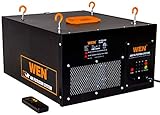
1. WEN 3410 3-Speed Air Filtration System – Best Overall for One-Car Shops
WEN 3410 3-Speed Remote-Controlled Air Filtration System (300/350/400 CFM), Basic w/ RF Remote (400 CFM) , Black
300/350/400 CFM
1 micron filter plus 5 micron pre-filter
50 to 60 dB
31 lb
2 year warranty
Pros
- Largest review base in this category at over 5600 reviews
- 1 micron filter plus a replaceable 5 micron pre-filter
- RF remote reaches 26 ft through obstructions
- Three speeds plus a programmable auto-off timer
- Compact 17 x 20.5 x 10 inch body
Cons
- 400 CFM is light for an open two-car shop
- Up to 60 dB on the top setting
- Replacement filters are proprietary
We put the WEN 3410 in a one-car garage with a 10 ft MDF cut and left it running on high. The haze thinned within the first few minutes and the room read clear after about a quarter hour. This is the unit most hobby shops end up owning first, and after working with several of the bigger machines in this list it is still the one we recommend without hesitating.
The filtration stack is where it earns the top spot. A 1 micron inner filter does the fine capture, and the 5 micron pre-filter in front of it takes the coarse fraction so the inner stage stays useful longer. Rated coverage is 400 sq ft, which matches a one-car garage or a two-car garage used strictly as a bench space with the door closed.
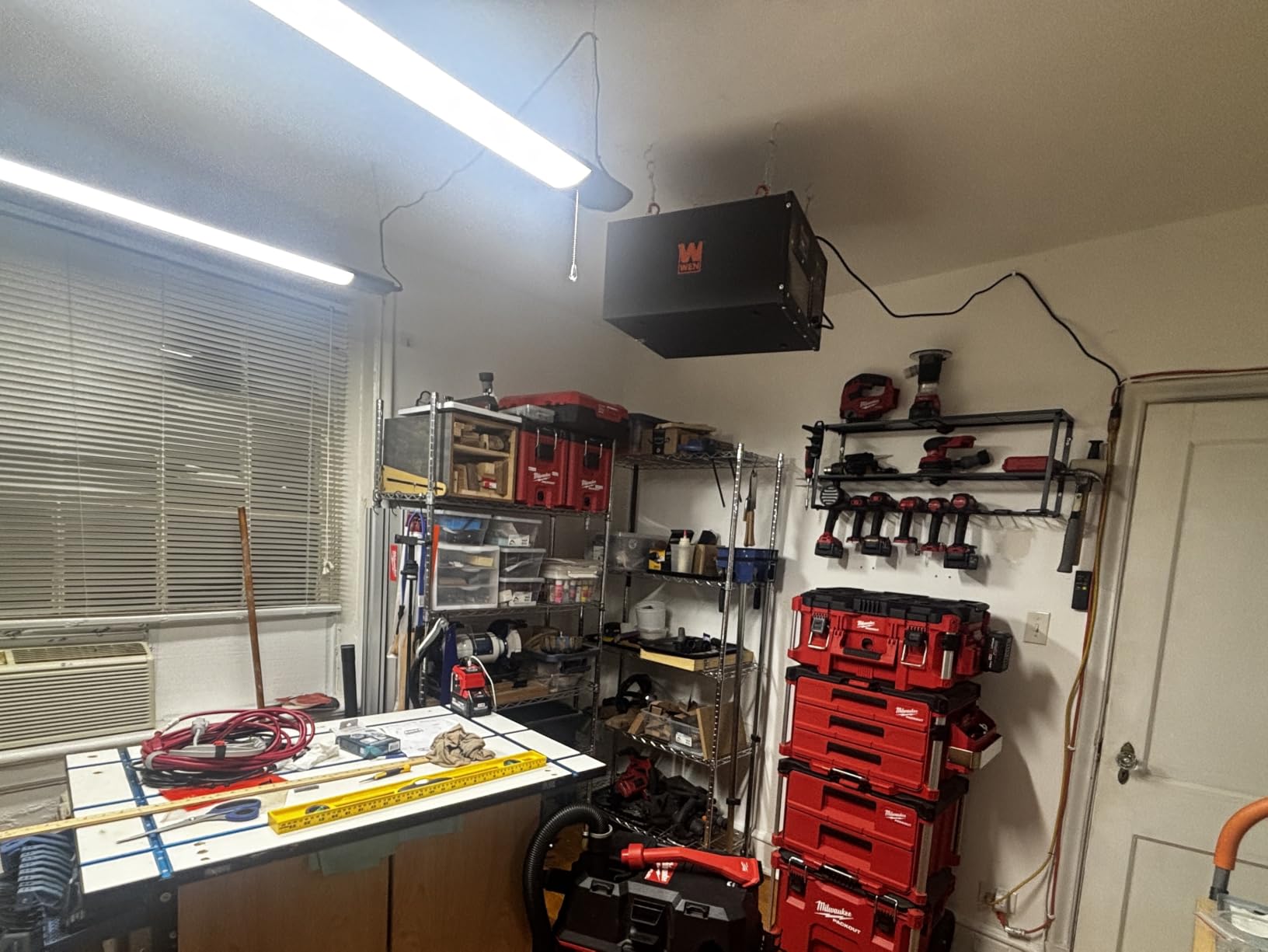
Control is the other reason people keep this one. The RF remote works through walls and around obstructions from about 26 feet away, and the programmable timer shuts the unit off on its own. Experienced owners on woodworking forums consistently name the timer as the feature they value most, because a unit you have to remember to switch on gets switched on too rarely.
Worth knowing before you order: rated CFM is measured with clean media. As the pre-filter loads with sawdust, airflow drops, which is exactly why a 400 CFM unit feels underpowered in a space that is bigger than the label suggests. Members on SawmillCreek describe running a small unit on a periodic clear-the-air cycle and report it does a decent job of clearing visible dust, which is a fair description of what this machine manages.
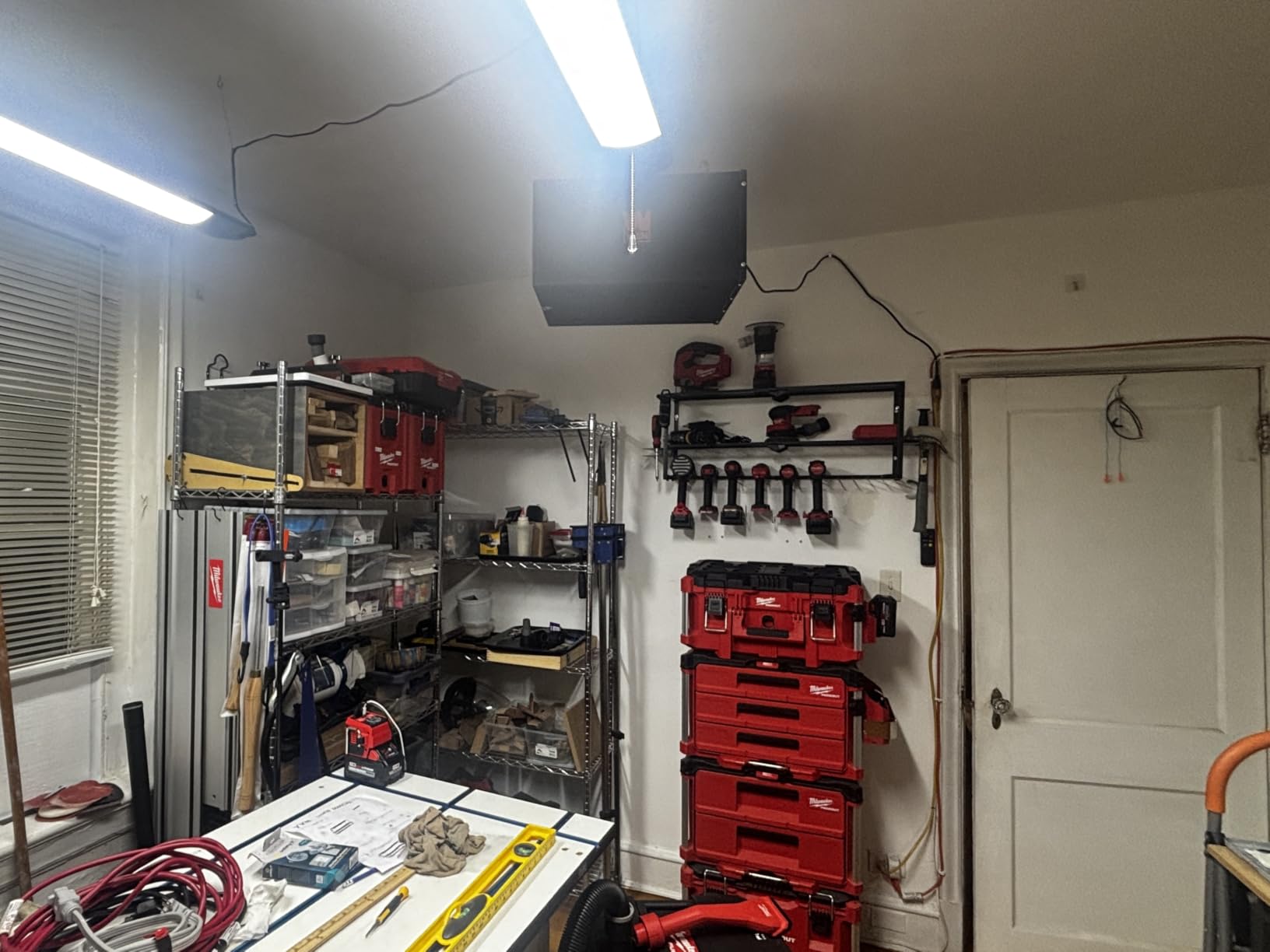
How the WEN 3410 handles a one-car garage versus a two-car?
In a one-car garage the math works cleanly. Measure 12 by 20 feet at 8 feet high and you have roughly 1,900 cubic feet. At 8 air changes per hour that calls for about 260 CFM, so the 300 CFM low setting is already adequate for most evenings of bench work.
In a two-car garage the same unit is short. A 20 by 20 by 8 foot space is about 3,200 cubic feet and wants roughly 800 CFM, so the 3410 covers the visible haze rather than the whole volume. Owners running it that way usually add a second machine or a ducted scrubber near the sanding area.
Where the WEN 3410 falls short?
The 1 micron stage is not HEPA. It will not hold the 0.3 micron fraction that HEPA media is built for, and it is the wrong tool for drywall silica or a shop doing heavy MDF and melamine work. The 60 dB top speed is also loud enough to hear over a shop vac, which matters if the garage is attached to living space.
Ongoing cost is the quiet catch. The filters are proprietary, so you cannot substitute a generic furnace filter the way you can with a Corsi-Rosenthal build. If you run this unit daily for five years, filter spending becomes the number that decides whether it was a bargain.
2. JET AFS-1000C Air Filtration System – Best for Large Shops on Automatic Control
JET Air Filtration System, 1-Micron Filter, 1000 CFM, 120V 1Ph (AFS-1000C)
1000 CFM
5 micron outer and 1 micron inner filter
67 dB at top speed
33 lb
5 year warranty
Pros
- 1000 CFM covers a full two-car shop in fewer air changes
- Air quality sensor drives six speeds automatically
- Filter status indicator flags replacement time
- RF remote plus 16 hour timer for unattended runs
- Four eye bolts included for ceiling mounting
Cons
- 67 dB is the highest noise rating in this group
- Only 73 reviews so long term data is thin
- One-star share sits above the category norm
The JET AFS-1000C is the machine you buy when you stop thinking about airflow and start thinking about coverage. One thousand CFM in a 20 by 20 garage puts you at roughly six full air changes an hour, and the sensor-driven speed adjustment means it climbs down to low when the shop is quiet instead of running flat out all day.
The control panel is angled for viewing from the floor, which is a small detail that only matters if you hang the unit, and it shows a filter status indicator that tells you when media is loaded. Owners like not having to guess, because a clogged inner filter is the fastest way to convince yourself the machine stopped working.
Filtration here is honest rather than headline-grabbing. The outer filter captures 99 percent of 5 micron particles and the inner filter 85 percent of 1 micron particles. That is a real and useful stack for ordinary hardwood and plywood dust, and it is not HEPA. JET built this for wood shops, and the numbers read that way.
A 16 hour timer and a six-speed RF remote mean you can start it when you leave and come back to clear air. The BLDC motor runs quietly for its size, and the injection moulded housing is designed to damp vibration, though the published 67 dB figure at top speed is the loudest of any machine here.
What the JET AFS-1000C automation actually does for you?
The sensor reads airborne load and shifts between six speeds without any input from you. In practice that means a light week of carving or turning runs quiet and a heavy sanding Saturday spins up on its own, which is behaviour a fixed-speed hanging filter cannot offer.
It also removes the daily guesswork about run time. Set the 16 hour timer before you leave and the unit keeps cycling long after the dust has settled, which is when most of the fine fraction actually comes down out of the air.
Where the JET AFS-1000C falls short?
With only 73 reviews you have less long-term owner data than the WEN or the BlueDri, and the rating spread includes a notable share of one-star reviews tied mostly to noise at top speed and the price step up from entry-level machines. JET also shortens the warranty to two years if the unit is used commercially or industrially, so check your situation before assuming five years applies.
It is a big spend for a garage that mostly gets used for weekend hand-tool work. The sensor and the 1000 CFM are wasted capacity if your shop is a single bench under 400 square feet.
3. BlueDri Air Shield 550 HEPA Air Scrubber – Best HEPA Class for Fine Wood Dust
BlueDri Air Shield 550 HEPA Air Scrubber, Water Damage Restoration Equipment Air Purifier, Covers 1400 Sq. Ft, Daisy Chain Capable, For Commercial Use, Blue, BD-AS-550
HEPA at 0.3 microns
Three stage with optional carbon
Up to 1400 sq ft
39 lb
5 year housing
Pros
- HEPA media removes 99.97% of particles down to 0.3 microns
- Pre-filter stage protects the HEPA media and extends its life
- Uses widely available 16 x 16 x 1 inch filters
- Daisy chain capable for larger rooms
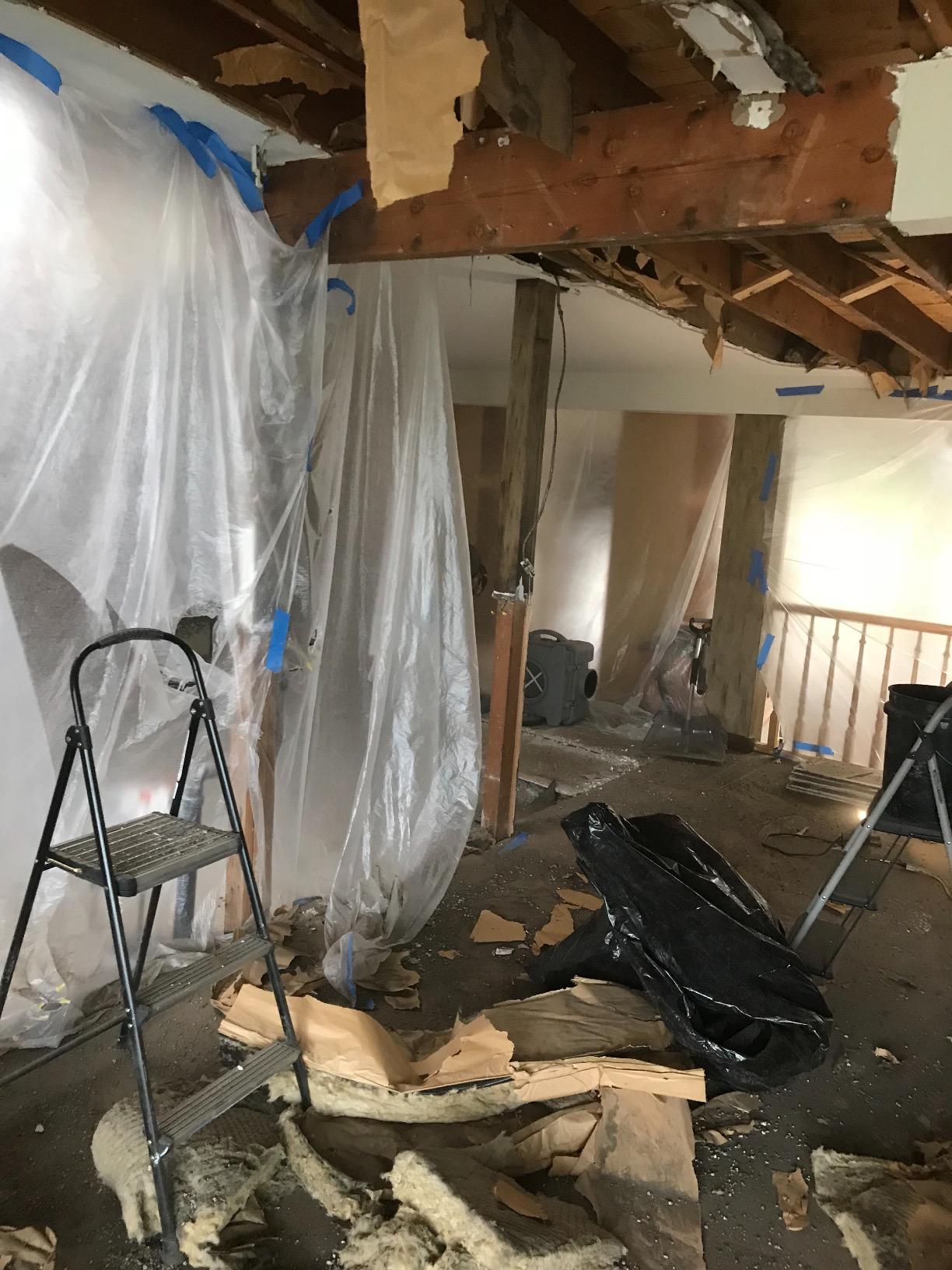
- Owners report clearer air within about 20 minutes of running
Cons
- Carbon filter for odors is sold separately
- Only clears airborne dust and not dust already settled
- Housing seal is not perfectly airtight
When the material is MDF, melamine or drywall compound, the difference between a 1 micron stage and true HEPA is the difference between clearing the room and reducing it. The BlueDri Air Shield 550 is the unit in this list that filters down to 0.3 microns at 99.97 percent efficiency, and it does it in a three-stage stack that protects that expensive media.
It pulls at least 40 percent more airflow than leading machines in the same class, which matters more than the efficiency number in a dusty shop. If media is loaded and you still need volume, this is one of the few HEPA units here that does not choke the airflow completely.
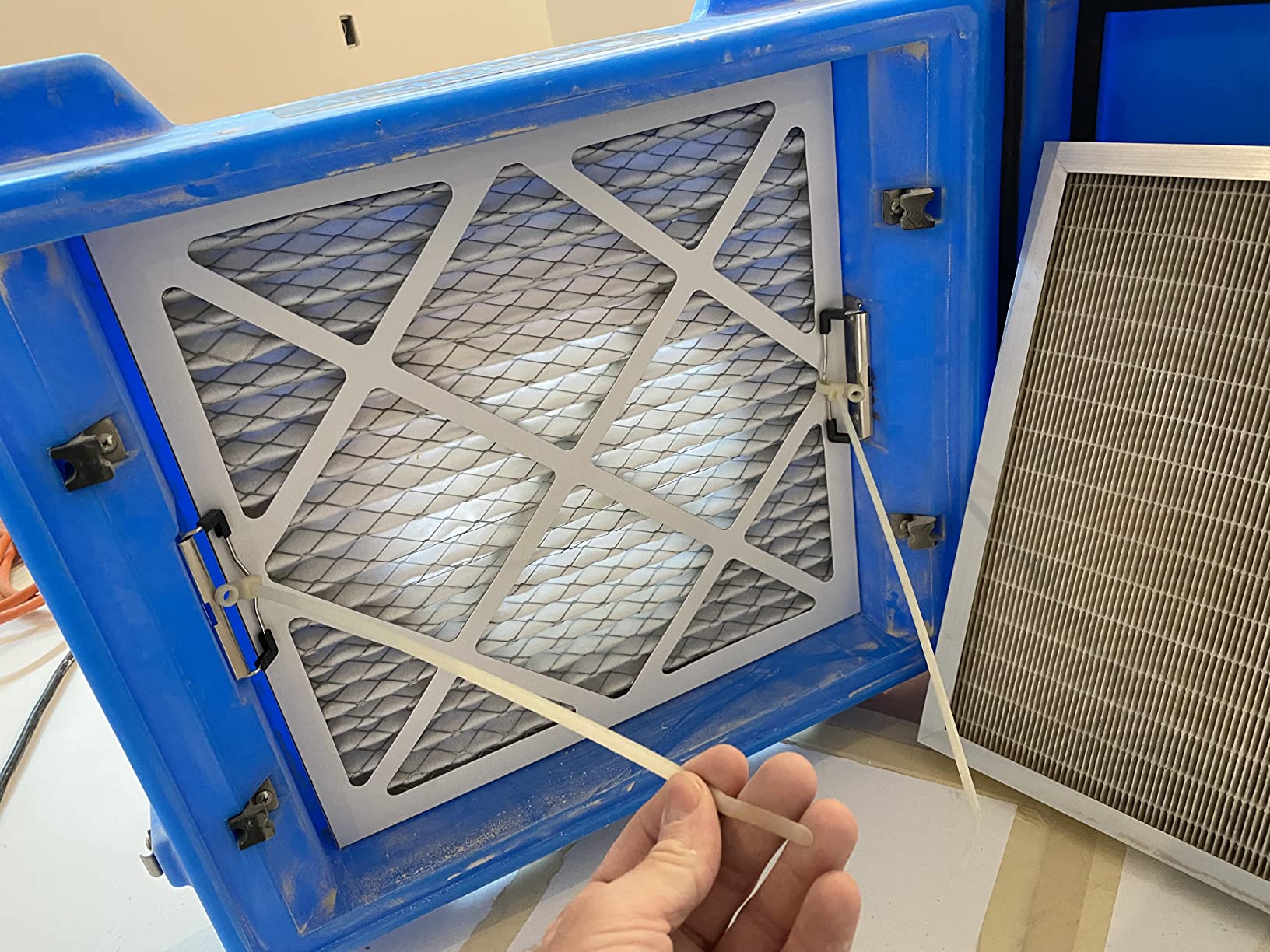
The three-stage layout is pre-filter, HEPA, then an optional carbon stage. That last one matters more than most roundups admit: activated carbon is what takes on odors, and it has no effect on particulate. Owners on restoration and remediation forums repeatedly note the same practical point, which is to start the machine before the job rather than after dust has already settled through the room.
Filter availability is a quiet strength. It runs standard 16 by 16 by 1 inch filters, which are cheap and stocked everywhere, so running costs stay predictable compared with machines that need branded cartridges.
When HEPA is worth the money in a woodworking garage?
HEPA earns its price when your dust is at the fine end. Engineered wood products like MDF and melamine produce a fraction that behaves almost like smoke, and drywall sanding adds respirable silica that ordinary media does not hold. On those jobs, the 0.3 micron stage is doing something the cheaper units cannot.
It is also the format to pick if your garage is used for renovation work alongside woodworking. The same three-stage stack handles smoke, pet dander and fine debris, which widens the list of jobs one machine can take on.
Where the BlueDri Air Shield 550 falls short?
Without the separately sold carbon stage you have no odor control at all, so if anyone in the house sprays finish in that garage, budget for the extra filter from the start. Reviewers also point out that it only moves airborne dust, not what has already settled on benches and shelves, so it is not a substitute for wiping down surfaces.
The housing seal is not perfectly tight, so some air bypasses the media without being filtered. On the highest setting it is loud enough that several owners compare it to a table saw running in the same room.
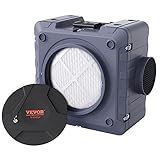
4. VEVOR 550 CFM 3-Stage Air Scrubber – Best Value with a Carbon Stage Included
VEVOR Air Scrubber 550 CFM 3-Stage Filtration Stackable Negative Machine
550 CFM
MERV-10, carbon, H13 HEPA stages
15.5 inch intake, 8.5 inch outlet
35 lb
Pros
- Three stage stack includes a carbon filter as standard
- H13 HEPA captures 99.97% of 0.3 micron particles
- Two auxiliary sockets daisy chain three machines for 1650 CFM combined
- Foldable handle and 35 lb weight make one person handling easy
- Plug and work with no assembly and a filter change light
Cons
- Airflow adjustment is manual rather than sensor driven
- Mid-range three-star share points to noise and build complaints
- 24.2 x 23.5 inch footprint is large against hanging filters
The VEVOR 550 solves a specific problem better than most machines at this level: it ships with a carbon stage in the box. That means you have particulate filtration and odor filtration from day one, without a second purchase, which is exactly where the BlueDri leaves a gap.
The stack runs MERV-10 pre-filter, carbon, then H13 HEPA at 99.97 percent capture down to 0.3 microns. Five thousand five hundred cubic feet of filtration area keeps airflow reasonable through those stages, and the 15.5 inch intake gives it a genuine intake area rather than a token port.
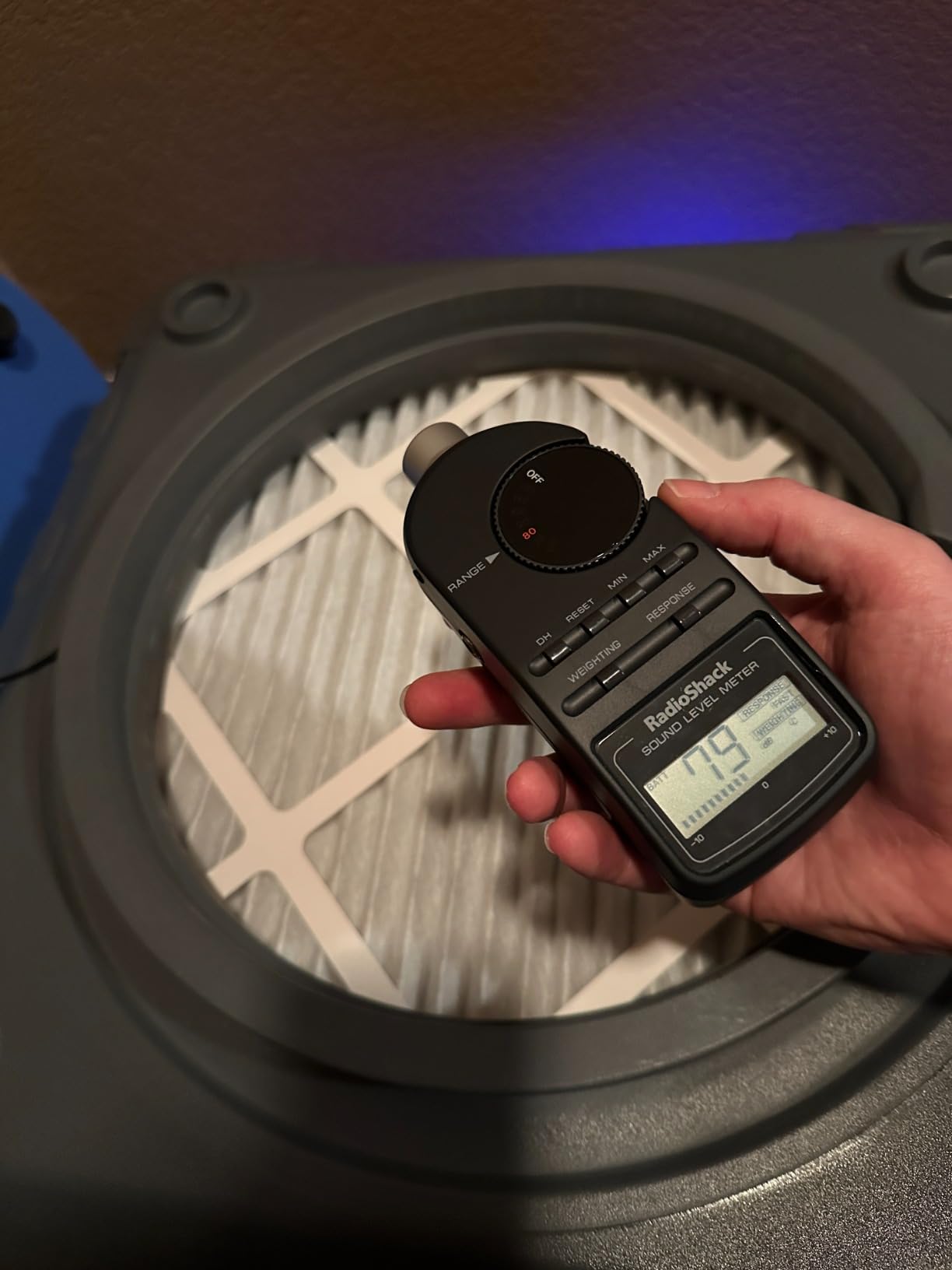
What makes this machine interesting for a garage is the stacking path. Two auxiliary sockets let you daisy chain three machines for 1650 CFM combined, which is how members working in larger two-car and three-car spaces reach production-level airflow without buying one enormous unit. Splitting capacity across two positions in the room often clears dust faster than one machine in the corner.
The control panel has airflow adjustment, a resettable timer and circuit breaker overheat protection, plus a filter change indicator light. It is manual rather than automatic, so you set the speed yourself, and at 35 lb with a foldable handle one person can still reposition it.
What a 550 CFM scrubber covers in a garage?
At 550 CFM this machine covers about 4,100 cubic feet at eight air changes per hour. That is a one-car garage comfortably, or a two-car garage if you accept a somewhat longer clearing time or run it alongside a second machine.
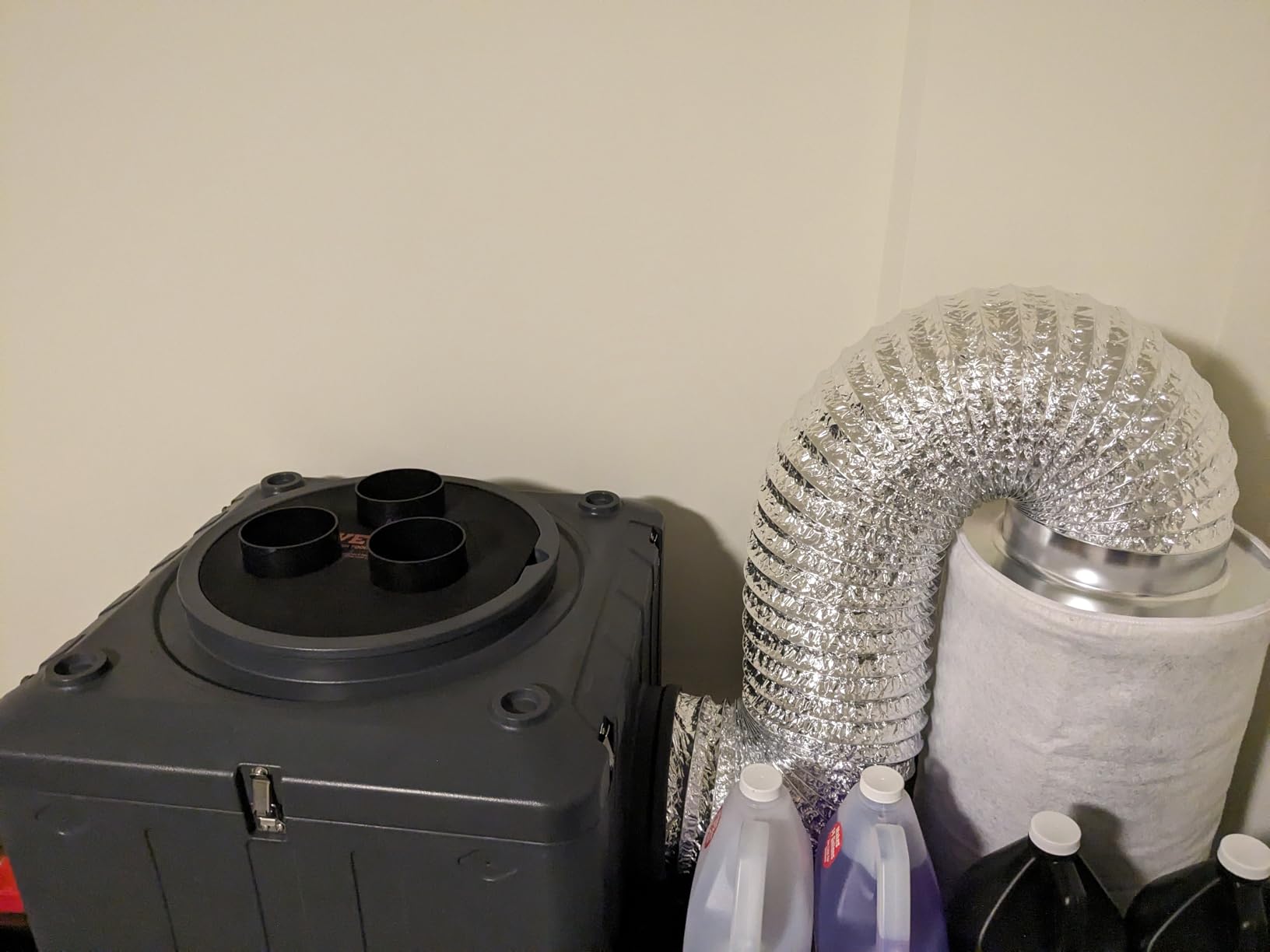
The 8.5 inch outlet is also the reason it doubles as a negative air machine. Hose it to a shop canopy or a sanding hood and it pulls dust out of the work zone rather than circulating it, which is the format members recommend when the garage door gives you a natural containment boundary.
Where the VEVOR 550 falls short?
There is no air quality sensor. You are choosing speed by eye and by sound, and in a shop that produces dust in bursts that means the unit either runs louder than it needs to or lags behind a heavy sanding session.
The footprint is 24.2 by 23.5 inches, which is substantial against a hanging filter that occupies ceiling space instead. In a tight garage with machines already crowding the floor, that difference decides between this and a ceiling-hung unit. The rating distribution also carries a noticeable three-star share around noise and build quality, which is worth weighing if noise matters where you work.
5. MOUNTO HEPA500 500 CFM Air Scrubber – Best for Long-Term Durability
MOUNTO HEPA500 500 CFM Commercial Air Scrubber, Variable Speed, Blue
500 CFM HEPA
Variable speed control
Dual GFCI outlets
41.35 lb
10 year housing warranty
Pros
- Roto-molded shell resists the knocks and drops of shop use
- cETL listed with a circuit breaker protector
- Dual GFCI outlet supports daisy chaining for larger coverage
- Ten year housing warranty is the longest in this group
- Variable speed control with quick access filter changes
Cons
- Heaviest machine here at 41.35 lb
- 500 CFM is modest for an open two-car shop
- Carbon stage is not part of the standard build
The MOUNTO HEPA500 is the one we would not think twice about leaving in a shop for a decade. The roto-molded plastic shell is the reason. A metal cabinet dents when a dolly clips it; a roto-moulded case shrugs that off, and the 10 year housing warranty says the manufacturer expects the same.
Variable speed control lets you match airflow to the work rather than running full tilt through a carving session and a sanding session alike. Filter access is quick, and a filter change light tells you when media is loaded.
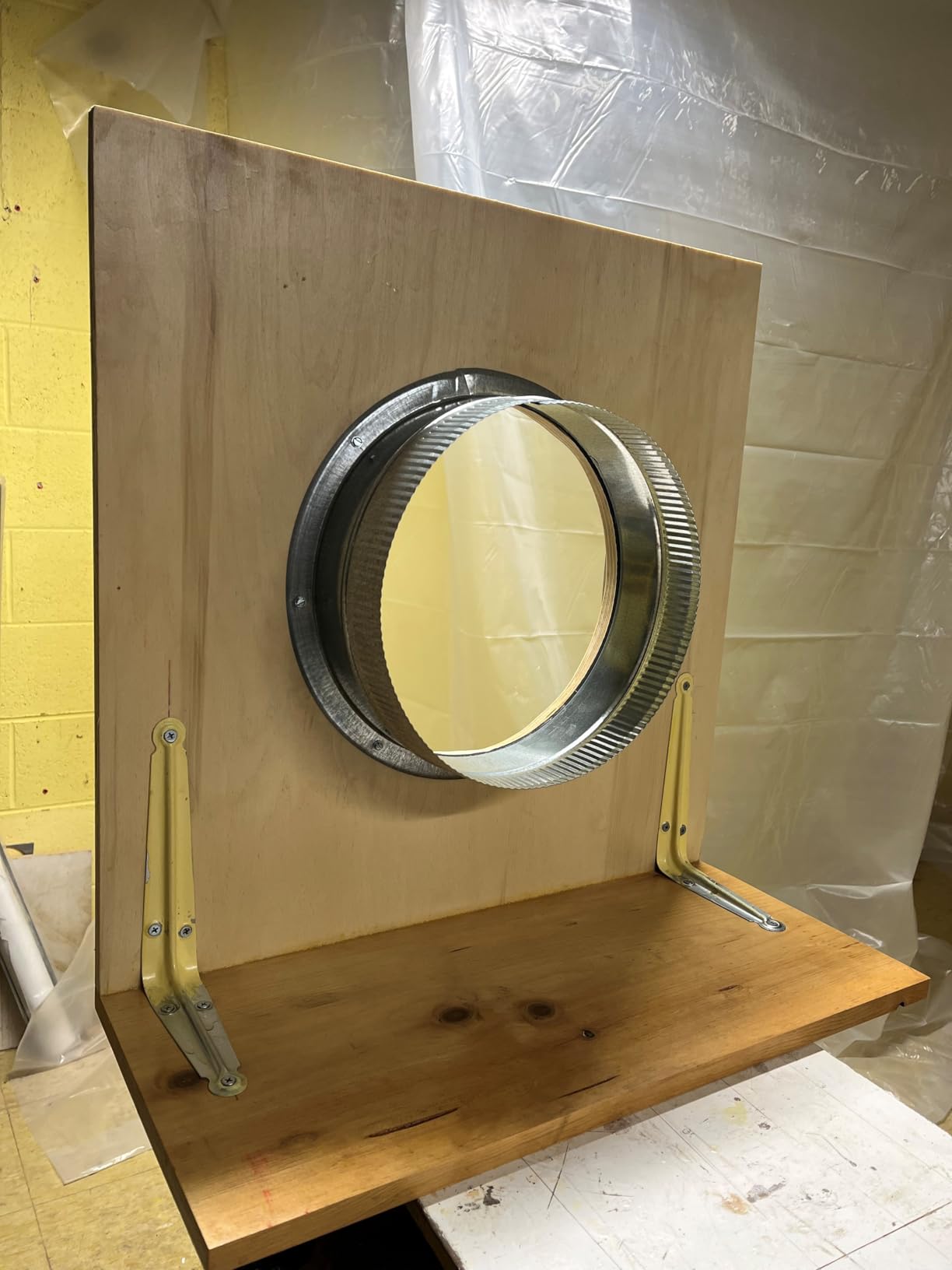
The dual GFCI outlet on the unit is a detail worth more than it looks. It lets you plug a second machine into the first, which is how you build coverage in a two-car garage incrementally instead of replacing one good cabinet with another. It is also cETL listed with a circuit breaker protector, which is the safety specification we look for before hanging anything overhead in a converted garage.
At 500 CFM it covers about 3,750 cubic feet at eight air changes per hour. That is one-car garage and small two-car territory, and it sits in that range alongside the BlueDri and the VEVOR.
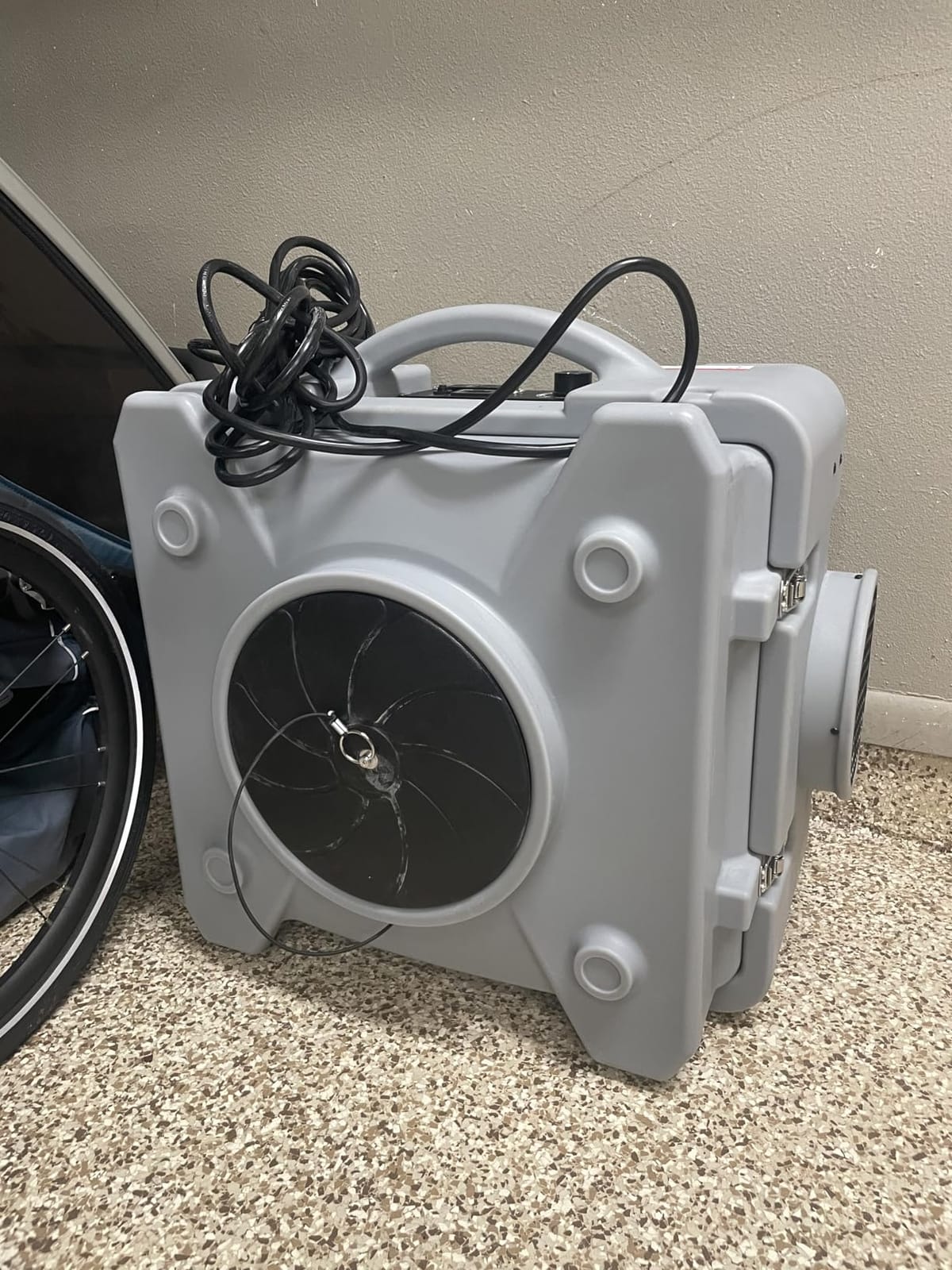
Why durability matters more than peak CFM in a working garage?
A filter unit lives in a hostile room. It gets bumped by a lumber rack, hung, dragged by its handle, and exposed to wood dust that works into every control surface. Build quality decides whether it is still running in year eight, and the roto-moulded case here is the most drop-resistant format we found in this roundup.
The cETL listing with a breaker protector also matters if the garage shares a circuit with a dust collector. Two motors on one 15 amp circuit is the most common electrical surprise in a converted garage, and equipment with its own protection gives you margin.
Where the MOUNTO HEPA500 falls short?
At 41.35 lb it is the heaviest machine here, and that is awkward for one person lifting onto a joist. Plan for a second set of hands or a proper mounting point rather than a step ladder.
The build is particulate-first. There is no carbon stage in the standard configuration, so odor control is an add-on, and 500 CFM in a wide-open two-car garage is going to feel underpowered during heavy sanding. Choose it for how long it will last, not for how fast it moves air.
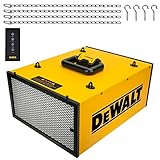
6. DEWALT DWXAF101 Ceiling-Hung Air Filtration System – Best for Tight Garages and Low Ceilings
DEWALT Air Filtration System Dust Collector for Woodworking DWXAF101
H11 HEPA at 95 percent of 0.3 micron
20.9 lb
64 dB
1, 2, 4 and 8 hour timer
3 year warranty
Pros
- Ceiling hung so no garage floor space is lost
- Lightest unit here at 20.9 lb and easy to reposition
- AUTO mode with an air quality sensor adjusts speed on its own
- 8 hour timer supports overnight and full-day clearing
- Washable pre-filter cuts ongoing filter cost
Cons
- 64 dB on the higher settings
- H11 HEPA rated at 95 percent rather than 99.97 percent of 0.3 micron
- Needs hanging hardware and ceiling clearance to work
When garage floor space is the constraint, the DEWALT DWXAF101 is the easiest answer. It weighs 20.9 lb, it hangs from the ceiling on included chains and hooks, and it disappears above the work. In a single-car garage already holding a table saw, a bench and a stack of lumber, that vertical use of space is worth more than any spec on the label.
The control set is the most flexible in the group. Four modes cover high, mid, low and automatic, and the AUTO setting uses an air quality sensor to pick the speed. Timer options at 1, 2, 4 and 8 hours mean you can start it before a long sanding session and let it run out the evening on its own.
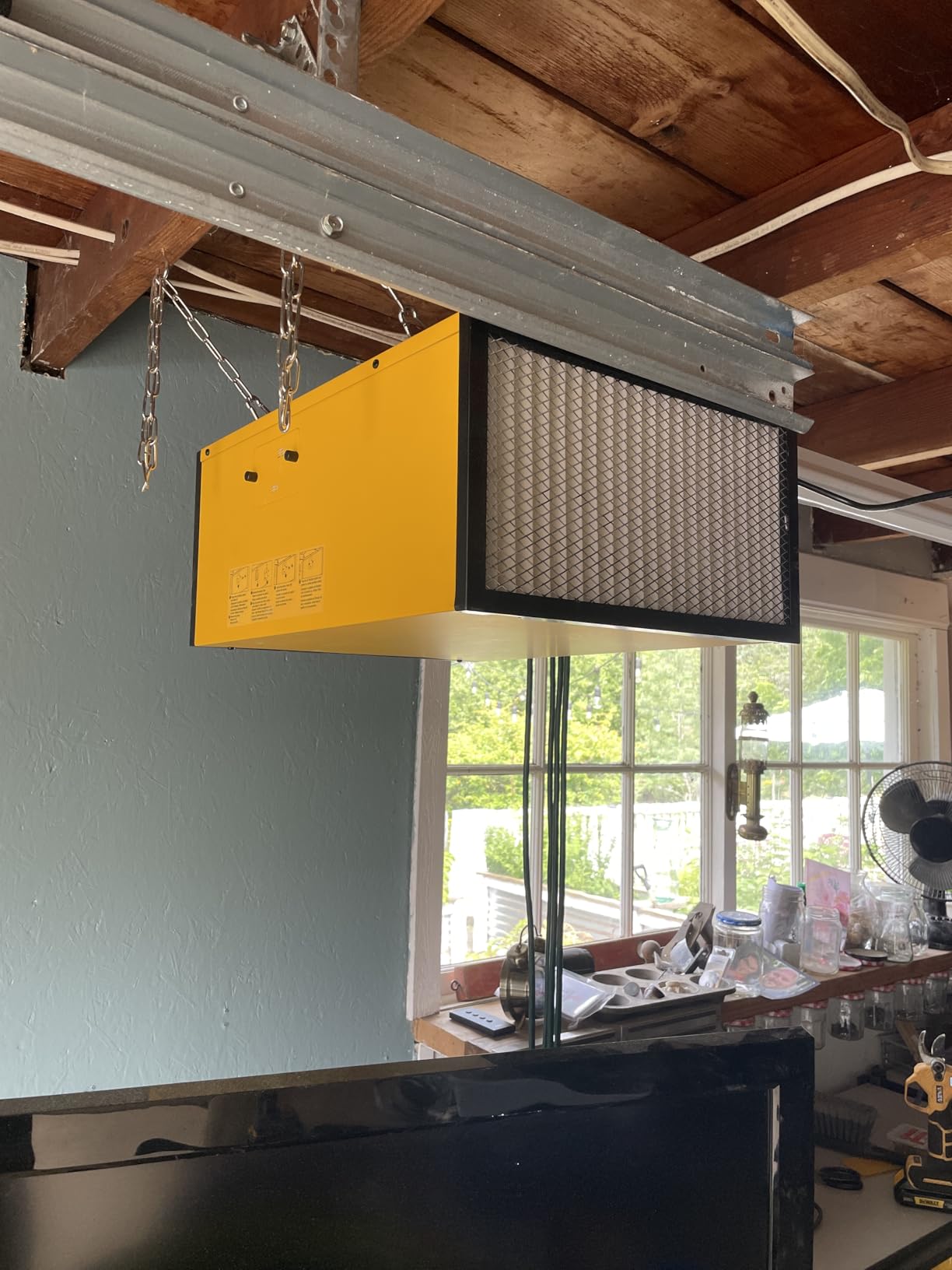
Filtration is two stage: a static cotton pre-filter that you can wash, then an H11 HEPA stage rated at over 95 percent capture of 0.3 micron particles. Be precise about that number. H11 is a real HEPA-class rating but it is not the 99.97 percent of a true H13 stage, and owners who bought this expecting H13 performance are the source of most of the negative reviews.
A filter replacement indicator and the washable pre-filter keep running costs down over a five year span, which matters more than the purchase price for anyone running filtration daily. The three year warranty sits comfortably in the middle of this group.
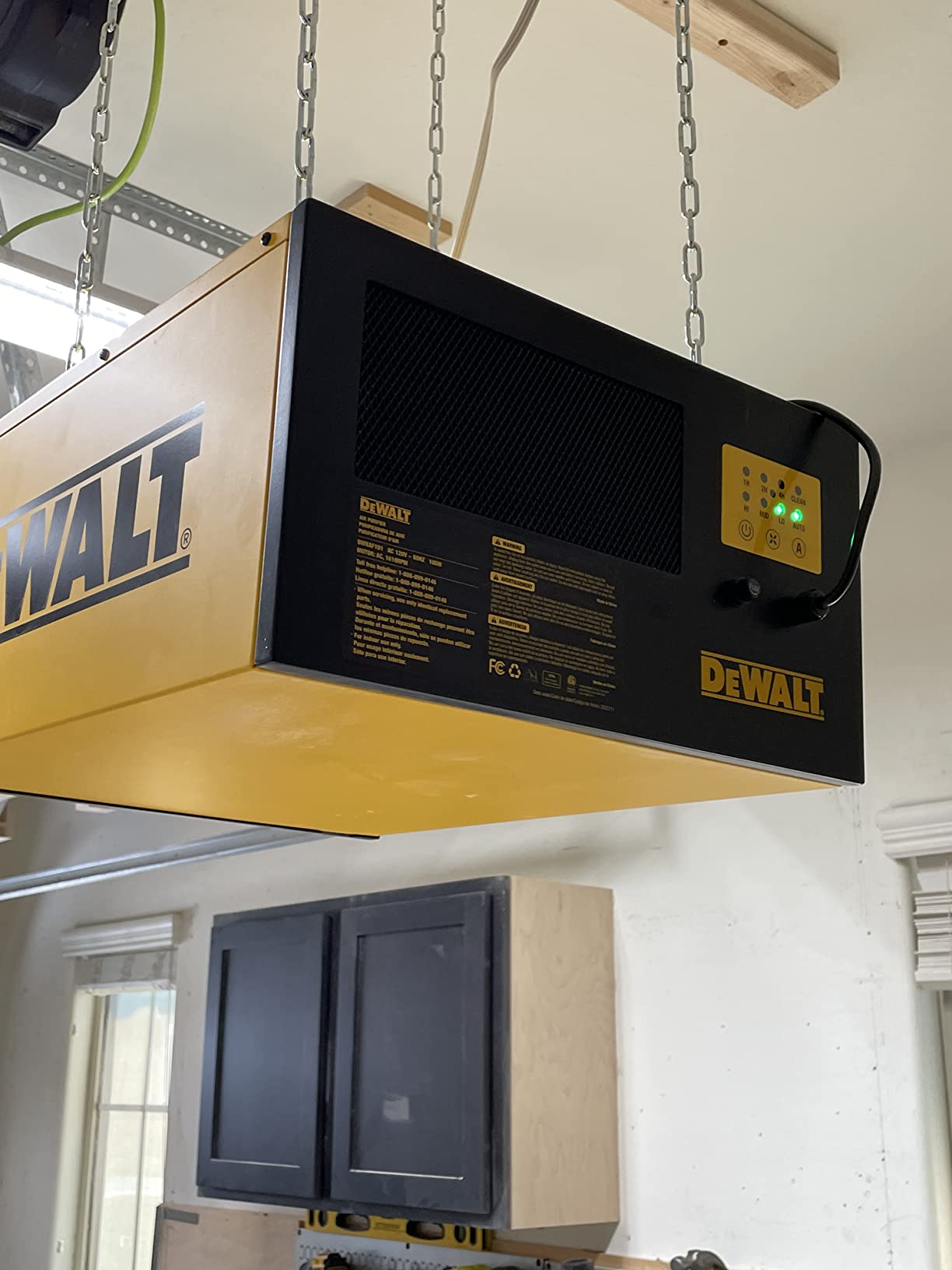
Why ceiling space beats floor space in a one-car garage?
Hanging the unit puts the intake above head height, which is where fine dust concentrates after a cut. It also keeps the air path clear of the working envelope, so the downdraft does not blow sawdust off a half-finished project or into your eyes at the sander.
The trade is installation. Every hanging unit needs sound structure above it, adequate clearance from the ceiling to let intake air in, and a circuit with headroom. A member on an AAW forum thread describes ceiling mounting as working extremely well, with two stated caveats: the filtering is not HEPA level, and you still have to remember to turn it on. The timer answers the second one.
Where the DEWALT DWXAF101 falls short?
It is rated at 64 dB on the higher settings, which is audible across a small garage. If the shop is directly under living space and you work at night, plan to run it on low or mid and accept longer clearing times.
H11 at 95 percent is the honest limitation. For hardwood and plywood dust it is more than sufficient. For MDF, melamine, drywall compound or a garage that doubles as a paint prep area, a full H13 stage or a dedicated scrubber is the better spend.
7. Abestorm Filteair HEPA 550 Air Scrubber – Best for Stacking to 1650 CFM
Abestorm HEPA 550 Air Scrubber with 3-Stage Filteration, GFCI Connection
270 to 550 CFM adjustable
MERV-10, HEPA and carbon stages
Up to 800 sq ft
39.6 lb
GFCI outlet
Pros
- Wide 270 to 550 CFM adjustment lets you tune airflow to the job
- Three stage stack handles dust and odors together
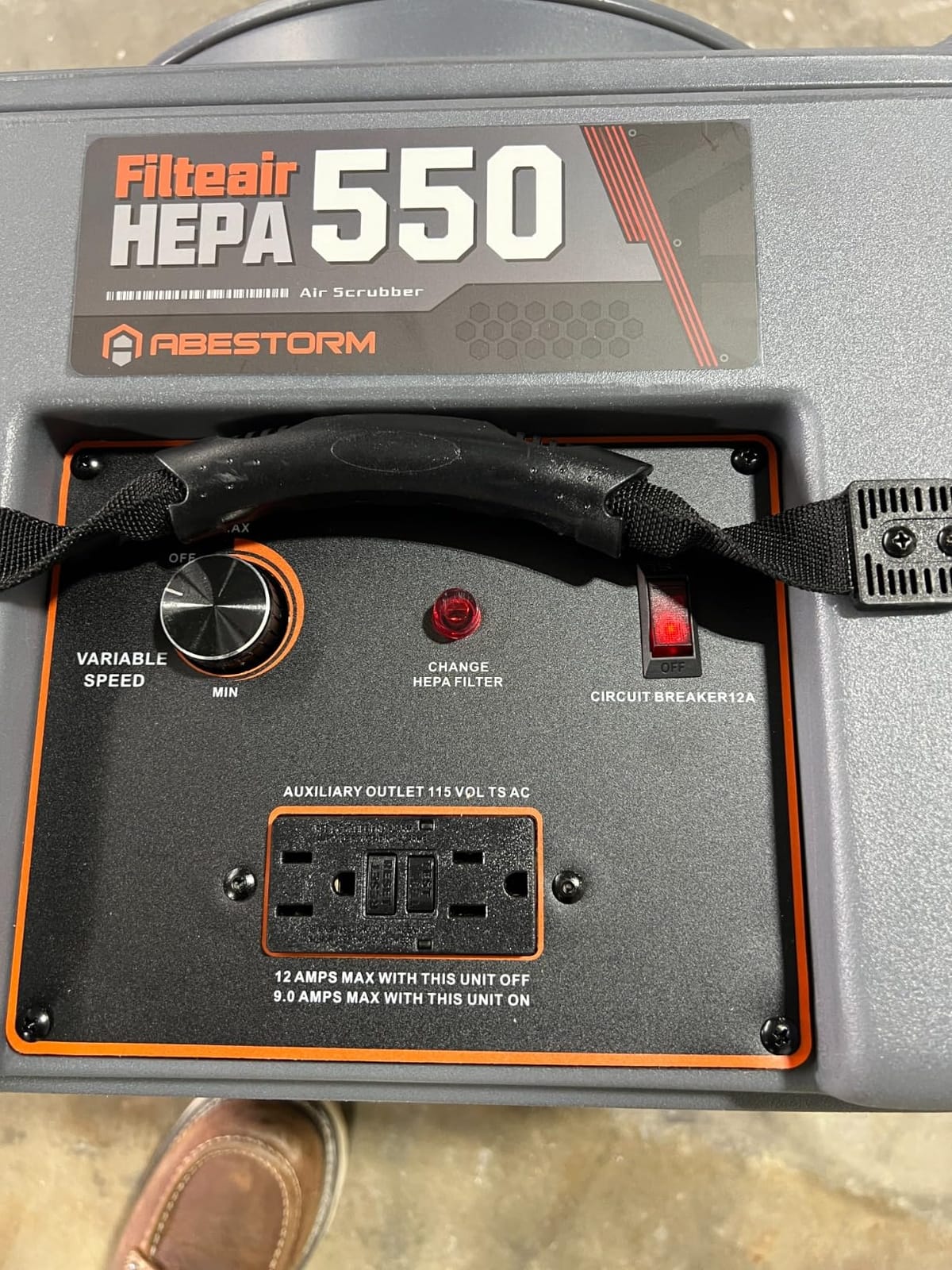
- Built-in GFCI outlet supports stacking to 1650 CFM combined
- Can be reconfigured as a negative air machine with a separate duct
- Roto-molded shell holds up to heavy shop use
Cons
- 9 percent one-star share is the second highest here
- Filters are purchased separately for the full three-stage setup
- Black transport cover must be removed before use
The Abestorm Filteair 550 is the most flexible scrubber in this group, because it does three jobs at once. It filters particles, it filters odors with an activated carbon stage, and with a separately sold duct it converts into a negative air machine that pulls dust out of the work zone entirely.
Airflow adjusts from 270 to 550 CFM. That range is the reason to buy it rather than a fixed-speed hanging filter, because you can run it low and quiet during hand work and open it up when the sander comes on.
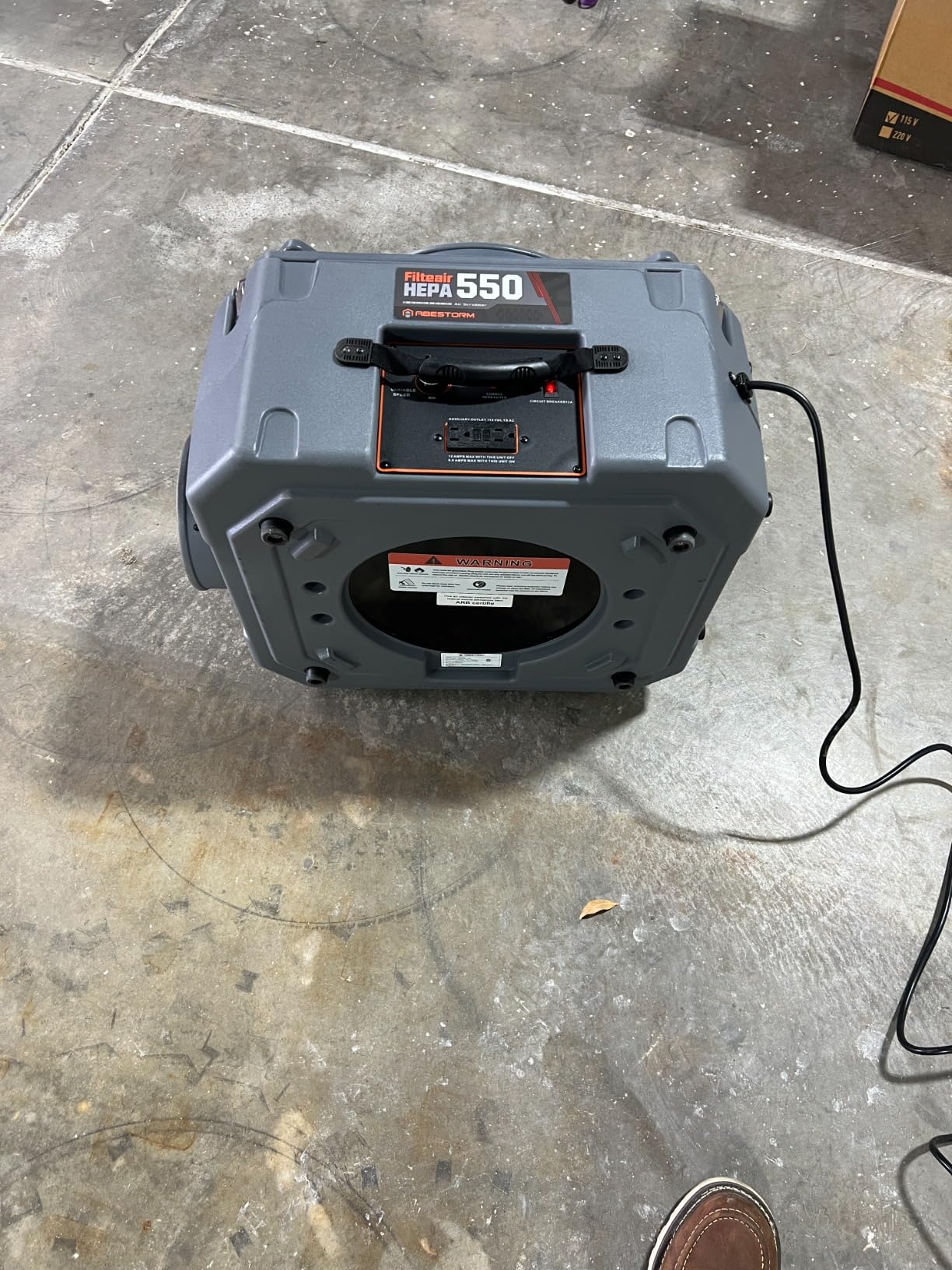
Coverage is rated at up to 800 sq ft, or 5,500 cubic feet, which lines up closely with a one-car-plus-storage garage or the front half of a two-car. The built-in GFCI outlet is the stacking hardware: three of these chained together give 1650 CFM combined, which is how you cover a large production shop in sections rather than with one oversized machine.
One practical note that catches people out. There is a black transport cover that must be removed before first use, and several reviews that rated the unit poorly turned out to be units still running with that cover fitted and airflow choked. Set aside ten minutes and read the setup card.
Stacking three machines versus buying one large one
Chaining three machines to 1650 CFM spreads capacity across the shop instead of concentrating it in one corner. Dust suspended at the far end of a long garage never has to travel as far to reach intake, and in practice a split layout clears a room faster than a single unit fighting the whole volume.
The cost trade is running more motors and changing filters on more machines. The benefit is flexibility, because you can add the third machine months later when the shop grows rather than buying a different unit outright.
Where the Abestorm Filteair 550 falls short?
Filters are not included for the full three-stage setup, so the real cost arrives after purchase. Its 9 percent one-star share is the second highest among these ten, and the complaints cluster on ordering the wrong filters and on the transport cover issue above.
At 39.6 lb with a 20.87 by 24.8 inch footprint it is a floor machine. In a small garage it competes with your bench for space, which is the case for a hanging unit instead.
8. Abestorm DecDust 1350 Hanging Air Filter – Best Airflow for Two-Car and Three-Car Shops
ABESTORM 1350 CFM 360° Air Filtration System for Woodshop & Garage Black
1050 or 1350 CFM
360 degree intake with vortex fan
MERV-11 media
27 lb
Up to 1700 sq ft
Pros
- Highest airflow figure in this roundup at 1350 CFM
- 360 degree intake pulls dust in from every direction
- Covers up to 1700 sq ft which is the largest rated area here
- At 27 lb it is light enough for one person to hang
- Hangs from the ceiling or stands on a workbench
- Panel touch plus IR remote with 27 ft range
Cons
- Loud at 60 to 69 dBA and several owners compare it to a shop vac
- MERV-11 media is coarser than HEPA class
- Listed as not compliant with California requirements so it cannot be sent there
At 1350 CFM this is the most air any of these machines moves, and in a two-car or three-car shop that raw volume is what does the work. Two speed settings at 1050 and 1350 CFM let you drop back when you are not sanding, which matters because this is also the loudest of the hanging filters here.
The 360 degree intake with a vortex fan is the design point. Instead of pulling from one face, it draws from every direction, so dust drifting at any angle gets caught rather than being pushed back out into the room. Rated coverage of up to 1700 sq ft is the largest figure in this roundup.
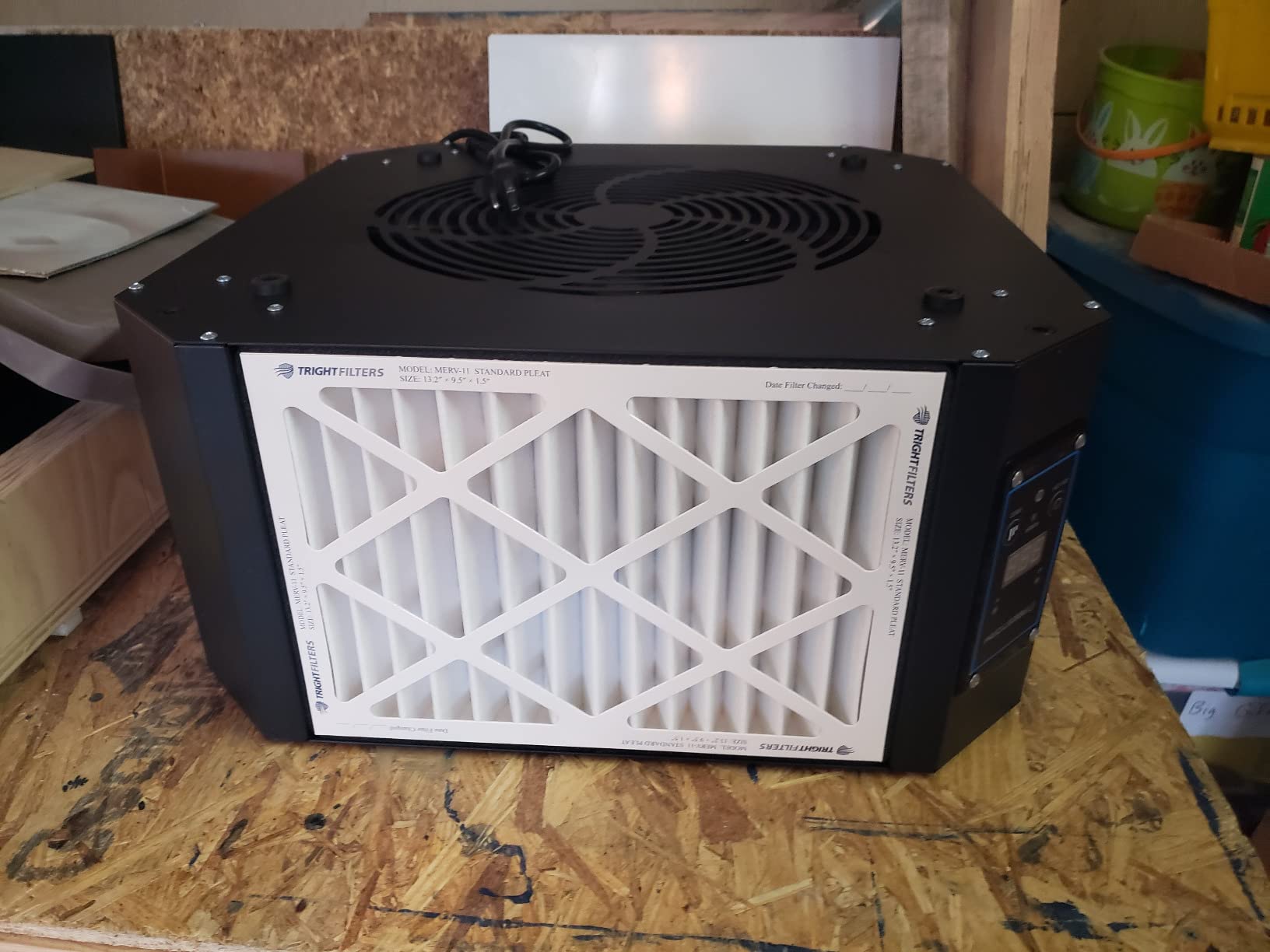
At 27 lb it is one of the lighter large-capacity machines, which makes a solo ceiling hang realistic. Control comes from a panel touch interface and an IR remote with 27 ft reach, plus a timer for set-and-forget running. Owners in two-car garage shops report seeing fine sawdust visibly pull toward the intake and air clearing in roughly an hour.
The media is MERV-11 rated to stop 90 percent of 3 to 10 micron particles and 85 percent of 1 micron particles. That is honest and adequate for hardwood and plywood. It is not the answer for MDF and melamine, where the fraction sits below one micron and you want a HEPA stage.
What 1350 CFM means for a two-car garage?
A 20 by 20 by 8 foot garage holds about 3,200 cubic feet. At 1350 CFM you are pushing roughly 25 air changes per hour, well past the eight-change target woodworkers use, which means a heavy sanding session clears in a fraction of the time a 550 CFM unit would need.
That capacity also lets you run it on the low 1050 CFM setting most days and reserve full output for the days you actually need it, keeping noise down in between.
Where the Abestorm DecDust 1350 falls short?
Noise is the headline problem, with a 60 to 69 dBA range and several owners comparing it to a shop vac or a metal house fan. In a garage attached to living space, that is the deal-breaker for evening work.
Mount position matters too. Hung directly over your bench it produces a strong downdraft that blows dust off the workpiece, and one owner added a diffuser to soften it. The media is MERV-11 rather than HEPA, and the unit is listed as not meeting California requirements, so it cannot be sent to a California address.
9. Abestorm DecDust 1080 Hanging Air Filter – Best for Small Shops and Low Ceilings
Abestorm 1080 CFM Air Filtration System with Remote, DecDust 1080
780 or 1080 CFM
270 degree three-sided intake
Three MERV-11 filters
Under 60 dBA
Up to 1100 sq ft
Pros
- Quiet operation under 60 dBA suits garages near living space
- 270 degree three-sided intake pulls from three directions
- Two speed settings at 780 and 1080 CFM
- Compact 19.4 x 19.4 x 9.6 inch body clears low ceilings
- Slide-out filter design makes changes fast
Cons
- MERV-11 filtration is coarser than HEPA class and listed at 11 micron retention
- Lowest rating and smallest review base in this group
- Filters need replacing every 4 to 6 months in a working shop
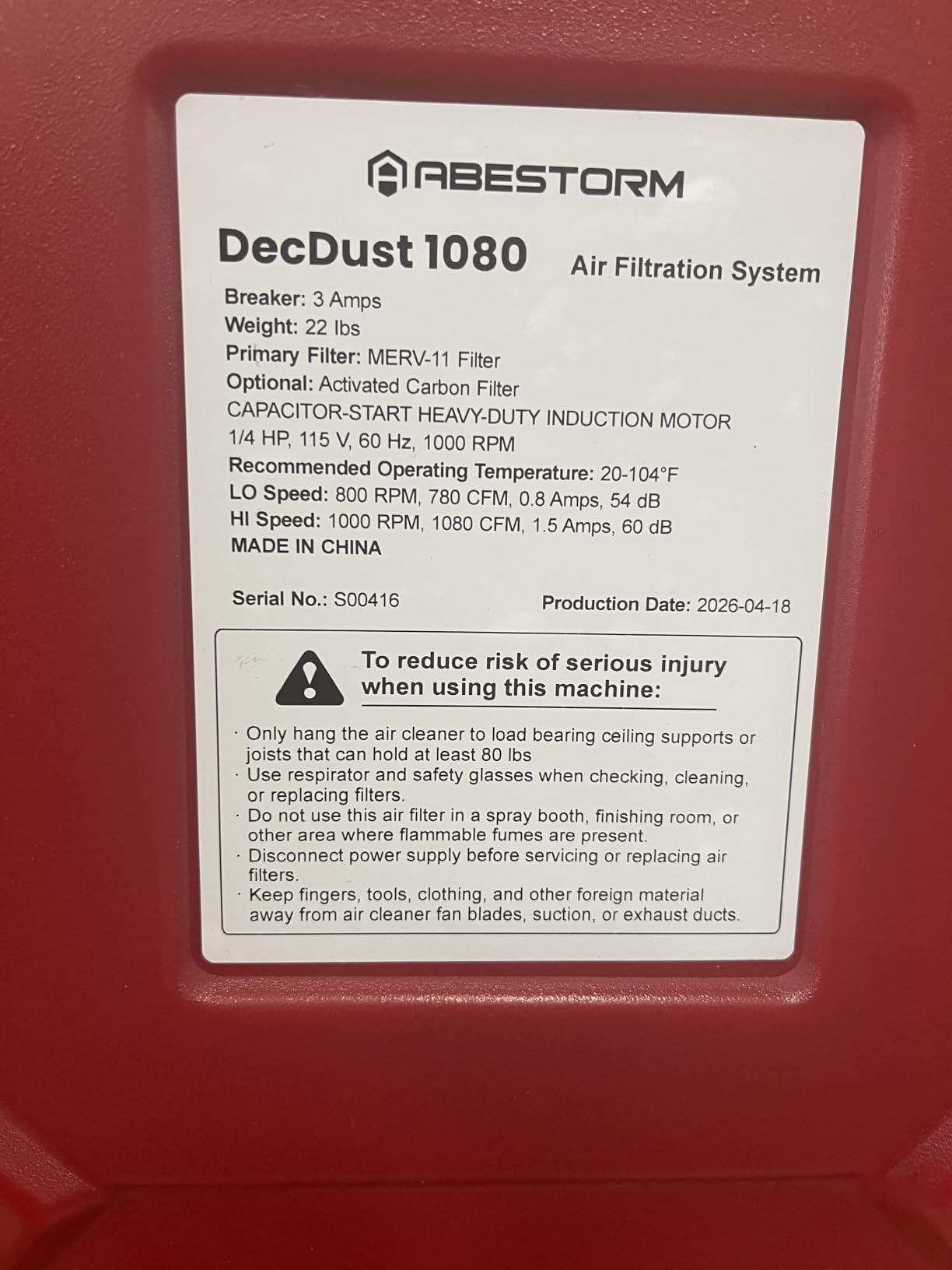
The DecDust 1080 is the quietest-rated machine in this roundup, at under 60 dBA, and that single number is why it exists. If your garage shares a wall or a ceiling with living space and you work evenings, low noise matters more than another few hundred CFM.
Intake geometry is a 270 degree three-sided design rather than a full 360, so it pulls from three directions and blows out the fourth. Two speeds at 780 and 1080 CFM cover lighter bench days and heavier cutting days from the same unit.
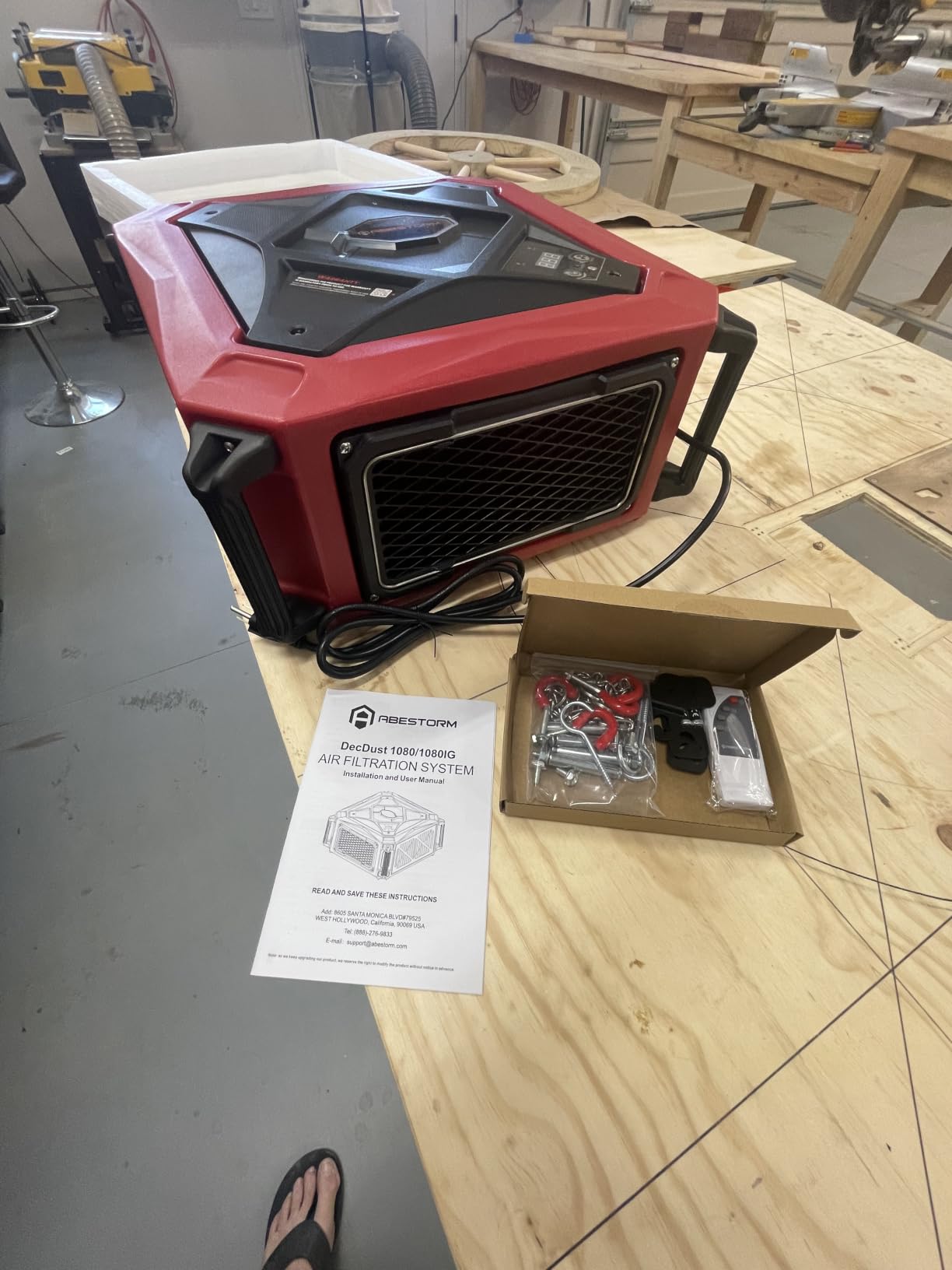
The body measures 19.4 by 19.4 by 9.6 inches, which is deliberately compact. It clears low ceilings and tight joist bays where a 24 inch deep scrubber will not fit, and it mounts on chains or nails with hardware included rather than sold separately, which saves a trip to the hardware store on install day.
Filter changes use a slide-out design, so swapping the three MERV-11 cartridges takes minutes instead of unbolting a housing. That convenience is offset by the replacement interval, which the manufacturer puts at every four to six months in a working shop.
Where quiet operation actually changes the decision?
Rated under 60 dBA, this is the machine to consider if the workshop shares a building envelope with a bedroom, a living room or a home office. You can run it through a long session without raising your voice, and low setting is a genuine option rather than a compromise.
It also suits a shop that is not used daily. A quieter unit is one you leave running on a timer after a project, and running it is what actually clears residual dust.
Where the Abestorm DecDust 1080 falls short?
Filtration is the weak point. The listed particle retention is 11 micron, and the MERV-11 cartridges trap 90 percent of 3 to 10 micron particles. That is coarse enough that owners looking for MDF or melamine dust handling report it does not deliver what they expected, and this unit carries the lowest rating and smallest review base of the ten.
The four to six month filter interval in an active shop is the other cost to think about. And like its larger sibling, it is listed as not meeting California requirements, so it cannot be sent to a California address. Buy it for quiet, small spaces and coarse dust. Buy something else if your work is engineered wood.
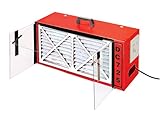
10. PSI Woodworking DC725 Tabletop Dust Collector – Best for Small Machines and Lathe Work
PSI Woodworking DC725 Portable Tabletop Dust Collector
725 CFM from three fans
23 x 8 inch footprint
25.4 lb
Variable speed control
2 year warranty
Pros
- Tabletop footprint fits where floor space is tight
- Three independent fans mean no single point of failure
- Variable speed control dials back for carving and turning
- Adjustable clear hood and side doors aim airflow at the work
- Two grounded 115V outlets on the side panel support other tools
Cons
- Only one 2 x 10 x 20 inch filter is included
- Spare filters are needed for continuous work
- Source capture format rather than room-wide ambient filtration
The DC725 is the odd one out in this roundup, and it belongs here deliberately. It is a dust collector, not an air cleaner. It pulls dust at the machine rather than filtering the whole room, which is exactly the first layer of shop air control we opened with.
725 CFM comes from three independent computer-grade fans, each on its own 110V variable speed motor, drawing 1.29 amps total. Three smaller motors also means no single point of failure, which is a real consideration for a machine you might rely on every weekend for years.
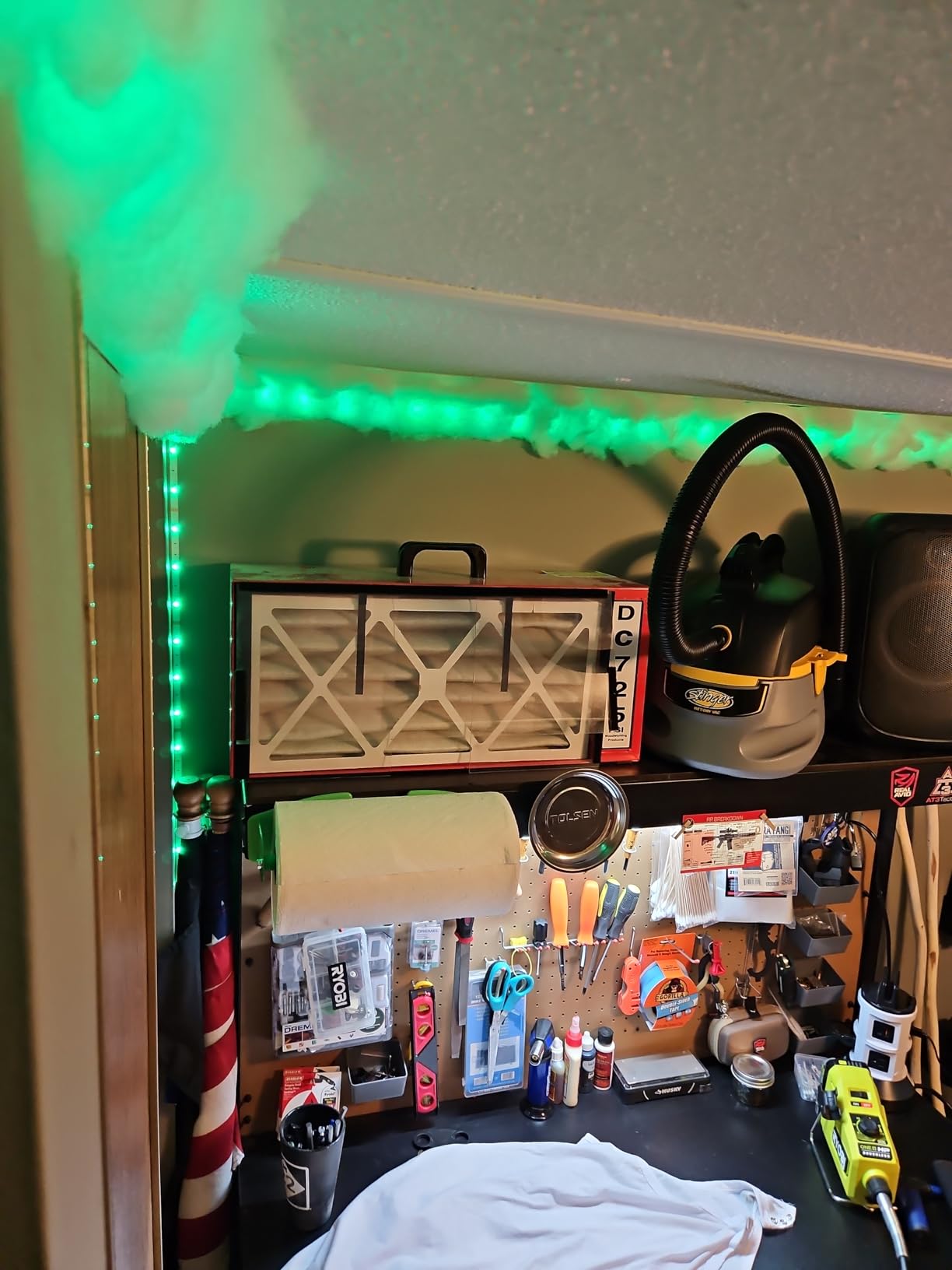
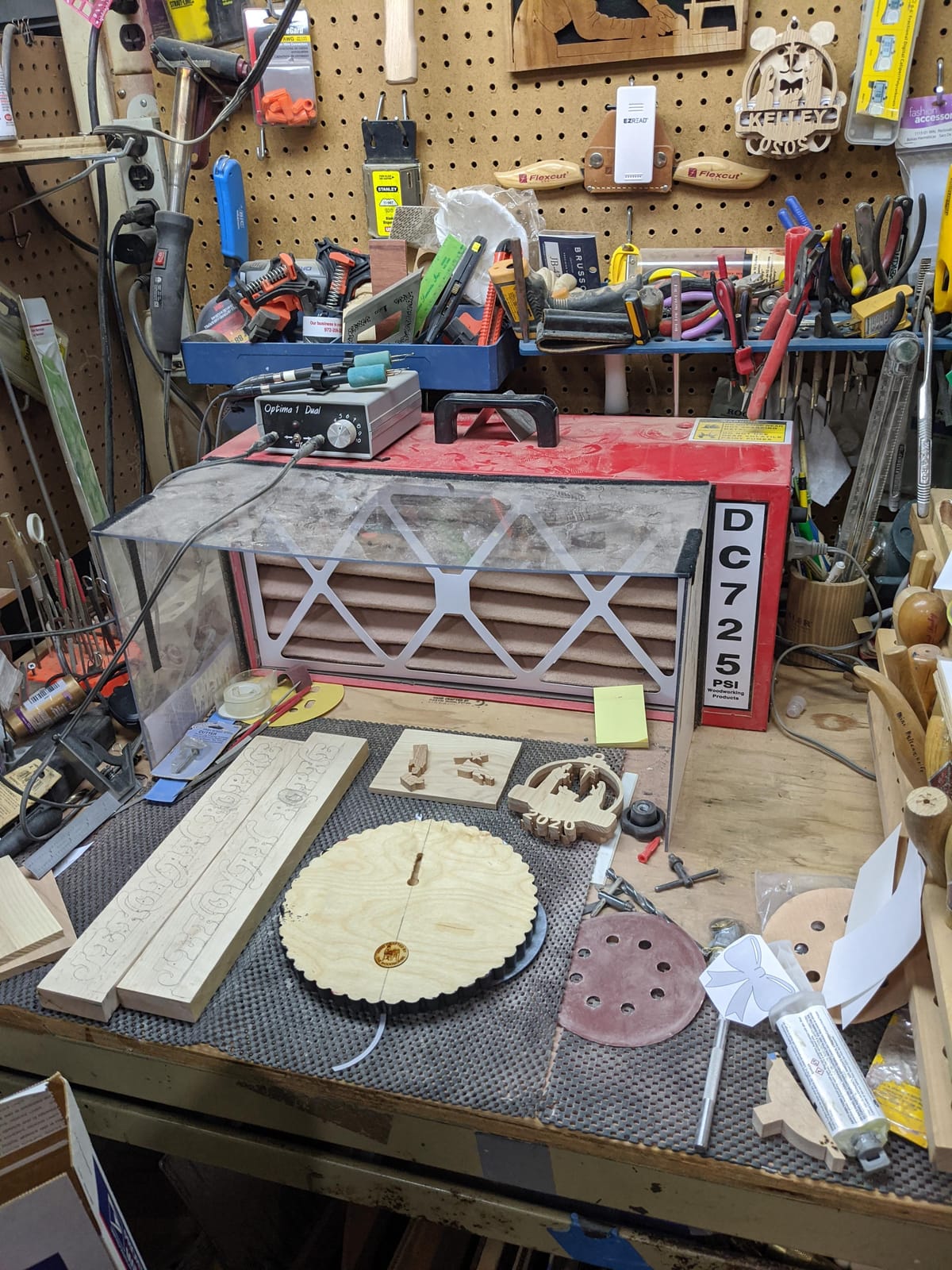
The footprint is 23 by 8 inches at 10.5 inches tall, so it sits on a bench or a stand rather than consuming floor. That makes it a natural partner to a lathe, a scroll saw, a small disc sander or a sharpening station, where you want capture right at the source and there is no space for a floor-standing scrubber.
The clear polycarbonate hood and side doors adjust to steer airflow toward the work, and the variable speed control knob lets you dial the draw back for carving and turning where full suction is not wanted. Two grounded 115V outlets on the side panel feed other bench tools.
Why source capture beats ambient filtration for small machines?
Anything captured at the machine never becomes airborne, and airborne dust is the fraction that reaches your lungs. For a lathe or a small sander sitting on a bench, a 725 CFM collector at the port removes far more dust than a room filter circulating 725 CFM through 3,000 cubic feet.
That is why this unit pairs well with one of the hanging filters above rather than competing with it. Source capture at the machine, ambient air cleaning for the haze the machine missed. If you want the collector layer covered properly, our full dust collector guide goes deeper on ducting and placement.
Where the DC725 falls short?
Only one 2 by 10 by 20 inch filter is included, so continuous work means buying spares and having them on hand. If the filter is not available when you need it, the machine stops.
It also will not clear an existing cloud of dust in the room, because it only captures what its duct can reach. A garage full of haze needs one of the nine ambient units above, not this one. The design has been on sale for years, which is either a strength or a warning depending on how you read it.
How Many CFM Does Your Garage Need?
A two-car garage needs about 800 CFM. The arithmetic is three steps: multiply garage length by width by height for room volume, multiply that volume by eight air changes per hour, then divide by 60 to get required CFM. Eight changes per hour is the woodworking target rather than the six-change figure most HVAC guidance uses, because a wood shop produces dust in bursts rather than gradually.
Measure to the joists rather than to the drywall, because that is where the air actually sits. A 20 by 20 by 8 foot two-car garage is about 3,200 cubic feet, which works out to roughly 800 CFM. A 12 by 20 by 8 foot one-car garage is about 1,900 cubic feet and needs about 260 CFM.
If your garage is used for belt sanding or wide-format sheet goods, round up one tier. Rated CFM is also measured with clean media, and airflow falls as the filter loads, so a machine at the low end of the table can end up short in practice.
When a single machine cannot deliver the airflow a large shop needs, stacking is the answer. Several units here carry auxiliary outlets or GFCI receptacles for daisy chaining, and three chained machines can reach 1650 CFM combined, spread across the room rather than concentrated in one corner.
What MERV Rating Do You Need for a Wood Shop?
For a typical woodworking garage, MERV 11 is the sweet spot for ordinary hardwood and plywood dust, and MERV 13 is worth stepping up to for MDF, melamine and heavy sanding. Anything below MERV 8 lets too much of the fine fraction through, and true HEPA is unnecessary unless you also generate drywall dust or do finish work. Higher MERV numbers also mean more airflow resistance, which is why rated CFM falls as the media loads.
MERV and micron labels describe the same capture range in different units. MERV is the ASHRAE furnace filter scale; a micron rating states particle size directly, and a lower number means finer capture.
A note for anyone comparing these units to a box fan build: the Corsi-Rosenthal box is the most recommended DIY option in woodworking communities precisely because a lower-density MERV 13 furnace filter moves more air than a dense commercial HEPA stack. Less restriction means more effective room cleaning in practice, even though the label number looks lower.
Which Filter Class Handles Which Material?
Match the filter class to the dust, not to the ambition. Hardwood and plywood produce a coarser fraction that MERV 8 handles, while engineered wood products and drywall sanding push well below one micron and need finer media.
HEPA is not necessary for ordinary hardwood sawdust, and paying for it there is money better spent on airflow. Reserve the HEPA-class units for shops where MDF, melamine or drywall compound is a regular part of the work.
Where to Hang the Unit and What the Joists Will Hold?
Hang the unit high, near the ceiling but with clearance for intake air, and over the middle of the shop rather than in a corner. Fine dust settles last near the ceiling, so that is where intake does the most work. Leave enough space for airflow to reach the intake face, and keep the outlet side clear.
Weight is the real constraint in a converted garage. Anything from 27 to 41 lb is significant on an unfinished drywall ceiling, and drywall is not structure. Fasten into the joists with rated eye bolts, not into the sheetrock, and if the joists are small or the run is long, add a spreader board before you hang anything. The DEWALT and WEN units include chains and hooks; the JET includes four eye bolts.
Watch the circuit. A dust collector and an air cleaner on one 15 amp outlet is the most common electrical problem in converted garages, and it trips at exactly the wrong moment. Units with their own GFCI outlets and circuit breaker protection, like the MOUNTO HEPA500 and the Abestorm Filteair 550, give you margin. For an attached garage with a gas water heater or furnace, keep combustion appliances and clearances in mind and check the unit does not depressurise the space.
Do You Need an Air Quality Monitor?
A monitor is worth adding if you want to know when a unit is actually clearing the room instead of guessing. Pick one with a numeric PM2.5 display rather than a colour light, because the number is what tells you a sanding event is happening and when the air has come back down.
The threshold to watch is PM2.5 above roughly 35 micrograms per cubic metre, which indicates a dust event is underway. If the reading stays elevated long after you stop cutting, your unit is undersized for the space or its filter is loaded. A monitor also gives you an objective signal for filter changes instead of a guess based on how the machine sounds.
Placing it at bench height near your work area gives you the number you actually breathe. Ceiling-mounted placement reads cleaner than the air at the bench, so treat a good ceiling reading as encouraging rather than conclusive.
What These Units Cannot Do?
Particulate filters do not remove VOCs, paint or solvent fumes. A sawdust filter captures wood particles, and wood particles are not the molecules in lacquer thinner, spray finish, Bondo or epoxy. Spraying finish in an enclosed garage needs an actual negative air machine ducted outside, an exhaust fan, or both.
The carbon stages in the VEVOR, BlueDri and Abestorm Filteair handle odors to a degree, but they are not a substitute for ventilation and they saturate over time. If your garage is also a finishing room, budget for real extraction rather than expecting a filter to carry that load.
Consumer air purifiers get bought by mistake here. Tower-style units from the appliance aisle are designed for a small sealed room with a fraction of the airflow, so in a 3,200 cubic foot garage they move a rounding fraction of the air and leave the fine fraction untouched. Also know that rated CFM is measured with a clean filter and drops as media loads, which is why an undersized unit disappoints most in its first month.
Frequently Asked Questions
What is the best air cleaner for a wood shop?
The best air cleaner for a wood shop is a unit sized to about eight air changes per hour of the room volume, which means roughly 800 CFM for a standard two-car garage. Pick by shop size rather than by filter class alone: MERV 11 handles ordinary hardwood dust, and HEPA media only earns its cost for MDF, melamine or drywall sanding. The WEN 3410 is the strongest all-round choice for one-car spaces, while the BlueDri Air Shield 550 is the pick when you genuinely need 0.3 micron capture.
What is the best air filtration system for a woodworking shop?
For a garage woodworking shop, the best air filtration system is a ceiling-hung or negative air unit that circulates at least 800 CFM for a two-car space. Ambient air filtration is the second layer of control and does not replace dust collection at the machine, so pair it with a collector or shop vac. Format matters too: a hanging unit saves floor space, while a ductable scrubber can pull dust out of the work zone instead of circulating it.
What MERV rating do I need for a wood shop?
MERV 11 is the right starting point for ordinary hardwood and plywood dust, and MERV 13 is worth the step up for MDF, melamine and heavy sanding. Below MERV 8 leaks too much of the fine fraction, while true HEPA is only necessary if you also generate drywall dust or finish fumes. Higher MERV ratings restrict airflow, so rated CFM falls as the media loads.
How many CFM do I need for my garage?
Multiply garage length by width by height for room volume, multiply by eight air changes per hour, then divide by 60. A 20 by 20 by 8 foot two-car garage is about 3,200 cubic feet and needs roughly 800 CFM. A 12 by 20 by 8 foot one-car garage is about 1,900 cubic feet and needs around 260 CFM. Round up one tier if you cut MDF or run wide sanding belts often.
Does an air filtration system replace a dust collector?
No. A dust collector or shop vac captures dust at the machine while it is still in the airstream, and an air filtration system cleans the residual haze in the room. Consensus across woodworking forums is consistent on this point, and buyers who treat ambient filtration as a substitute report disappointment. Run both layers, and expect source capture to remove the bulk of the dust while the air cleaner handles what escapes.
Final Verdict by Garage Size in 2026
For a one-car garage used as a bench shop, the WEN 3410 is the pick. Its 400 CFM covers the room, the remote and timer mean you actually run it, and more than 5600 reviews give you more long-term data than anything else here. It is also the unit we would buy first and regret least.
For a two-car garage with real sanding, look at the top end of the airflow range. The BlueDri Air Shield 550 takes HEPA-class capture at a usable volume, and the Abestorm DecDust 1350 moves more air than anything else in the list for the money if your dust is hardwood rather than MDF.
For a production shop, stack rather than overspend. Three chained machines reach 1650 CFM and cover a large garage in sections. The Abestorm Filteair 550 with its GFCI outlet is the most straightforward way to build that capacity, and the VEVOR 550 is the cheaper route to the same stacking architecture.
For a tight garage or a low-ceiling workshop, hang something. The DEWALT DWXAF101 keeps 20.9 lb of filtration off the floor, and under 60 dBA neighbours are better served by the Abestorm DecDust 1080. For a shop that is really a finish room or a lathe corner, add the PSI DC725 at the machine and treat the air cleaner as the layer above it.
Whichever you choose, run it on a timer for 30 to 60 minutes after you stop cutting, size it to your measured room volume, and keep dust collection at the machine doing the bulk of the work. That is the whole method behind the best air cleaners for garage woodworking shops in 2026.