
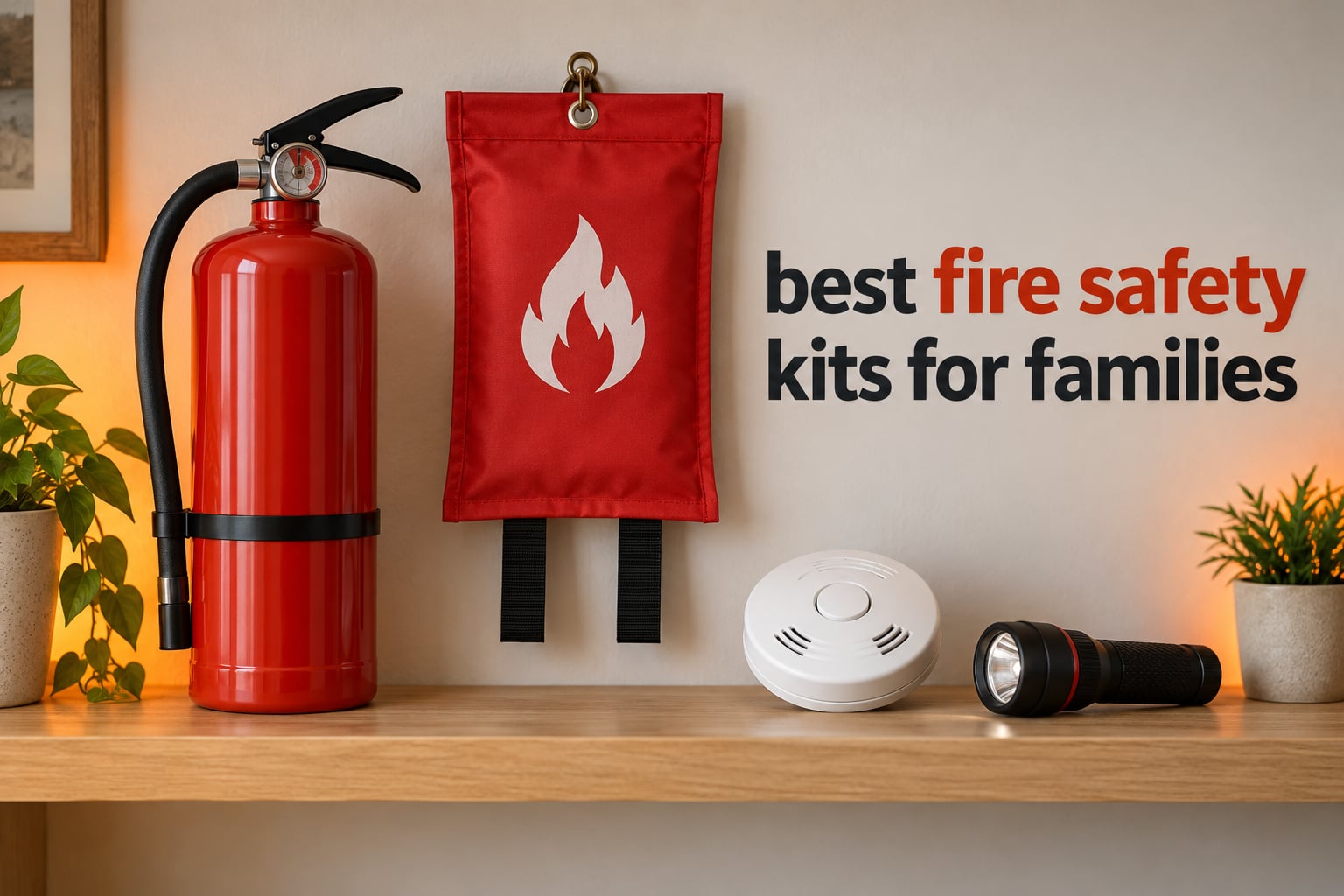
Fire does not negotiate with the things you own, and it does not wait until you have finished browsing for a better solution. The gap between a family that escapes a house fire and one that does not is usually measured in seconds, and most of those seconds are bought by equipment that was already in the room before the alarm went off. That is why we built this guide to the best fire safety kits for families in 2026, tested against the one standard that matters on a safety topic: certification you can verify, components that do something real, and hardware that keeps equipment reachable for adults and out of reach for small children.
We spent six weeks going through the categories that show up again and again in buyer questions: multi-purpose extinguishers, fiberglass fire blankets, escape ladders, wearable escape cloaks, compact aerosol and liquid sprays, and pet evacuation devices. Ten products made the cut. Not because they are the flashiest listings on the page, but because each one does a specific job a family might actually need, and none of them rely on vague claims you cannot check.
One note before we start. Only trained adults should handle and use a fire extinguisher. Smoke alarms can roughly halve the risk of dying in a home fire, but no piece of equipment on this list is a substitute for getting out and calling 911. Everything below is meant to buy you time, not to turn you into a firefighter. If you are outfitting a home for an elderly parent, our notes on grab bars for bathroom safety and toilet safety rails for seniors cover the same longer-planning mindset for fall risk.
Table of Contents
What Should Every Home Have for Fire Safety?
Every home should have working smoke alarms on every level and inside every bedroom, carbon monoxide detectors near sleeping areas, at least one A-B-C rated fire extinguisher mounted by an exit, a fire blanket in the kitchen, and a written escape plan the whole family has practiced. Add an escape ladder for upper floors, a flashlight and a grab-and-go bag, and you have covered detection, escape, and first response.
That is the short version. The long version matters more than any single product, so here is the working checklist we use when we look at a home.
Smoke alarms: one on every level, inside every bedroom, and outside sleeping areas. Interconnected units sound together across the house so a fire on the second floor wakes the whole family.
Carbon monoxide detectors: near bedrooms, and anywhere a fuel-burning appliance, generator, or fireplace operates. Carbon monoxide is odorless, so only an alarm detects it.
Fire extinguisher: an A-B-C dry chemical unit, mounted near an exit path rather than next to the stove. Households on the forum we read described A-B-C powder as the consensus answer on r/CasualIreland because most homes mix electrical, cooking, and ordinary combustibles.
Fire blanket: mounted in the kitchen within reach of an adult. It smothers grease and cooking fires without the chemical cleanup a dry chemical leaves behind.
Escape ladder: for any home with a second story, bedroom, or finished basement window above grade.
Flashlight and whistle: smoke makes it nearly impossible to find a light switch. A hand crank flashlight and a whistle on every level is a cheap addition that changes an evacuation.
Grab-and-go bag: medications, copies of insurance documents, a charger, spare keys, and pet carriers, packed and stored near an exit.
Practice plan: two drills a year, one announced and one unannounced, with a designated person responsible for calling 911 and one responsible for the family dog.
Two rules that come up constantly in homeowner discussions. Keep extinguishers high enough that a five year old cannot pull the pin, but low enough that an adult can grab one in a hurry. And practice the deployment once before you need it, because a fire blanket or a rope ladder that has never been opened is only a guess.
Top 3 Best Fire Safety Kits For Families (October 2026)
These three cover the widest range of homes. If you only buy one thing from this entire guide, the first one is the right place to start; the other two are the additions that most households end up wanting within a year.
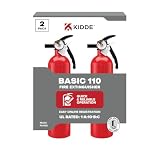
Kidde FA110G 2-Pack
- UL listed 1-A:10-B:C
- Two units plus mounting brackets
- All-metal aluminum body
- 6-year warranty

Prepared Hero Fire Blanket
- 40x40 in fiberglass
- Isolates heat to 1022F
- CE EN 1896:1997
- Never expires

SecuCaptain Fire Blanket
- Two 40x40 in blankets
- Heat resistant to 1076F
- CE EN 1869:2019
- Cool-to-touch pull tabs
All 10 Fire Safety Kits Compared in 2026
Every product below appears with its own certification details and role, so you can match equipment to a room rather than to a marketing category.
| Product | Specs | Action |
|---|---|---|
| Kidde FA110G 2-Pack Fire Extinguisher |
|
Check Latest Price |
| Prepared Hero Fire Blanket 2-Pack |
|
Check Latest Price |
 Kidde 13-Foot Fire Escape Ladder Kidde 13-Foot Fire Escape Ladder |
|
Check Latest Price |
 DIBBATU Fire Escape Cloak DIBBATU Fire Escape Cloak |
|
Check Latest Price |
| SecuCaptain Fire Blanket 2-Pack |
|
Check Latest Price |
 First Alert EZ Fire Spray First Alert EZ Fire Spray |
|
Check Latest Price |
 First Alert HOME2PRO Rechargeable First Alert HOME2PRO Rechargeable |
|
Check Latest Price |
 LifeSafe StaySafe All-in-1 Spray LifeSafe StaySafe All-in-1 Spray |
|
Check Latest Price |
 Ougist 21 oz Foam Extinguisher 4-Pack Ougist 21 oz Foam Extinguisher 4-Pack |
|
Check Latest Price |
 ISOP Pet Evacuation Device ISOP Pet Evacuation Device |
|
Check Latest Price |
1. Kidde FA110G 2-Pack Extinguisher – Best Overall for Families
Kidde Basic 110 Fire Extinguisher for Home, 1-A:10-B:C, FA110G, 2 Pack
1-A:10-B:C rating
2.5 lb dry chemical
Two per pack with brackets
6-year warranty
Pros
- UL listed 1-A:10-B:C rating covering common household fires
- All-metal aluminum body light enough for a family member to lift
- Pressure indicator shows charge level at a glance
- Includes UL-approved mounting strap brackets
- Two-pack format spreads coverage across two rooms
Cons
- Residential single-use design must be replaced after discharge
- Dry chemical leaves powder residue to clean up
- 2.5 lb capacity suits small incipient fires only
More than 30,000 ratings at 4.8 stars is not a blip in the data, and when we sorted the whole field by review volume this pair was the first one that came back. That matters more here than in a gadget roundup, because an extinguisher is the one piece of home fire equipment you buy hoping to never touch.
The FA110G is rated 1-A:10-B:C, which is the residential dry chemical standard. That single rating covers ordinary combustibles like wood, paper, and trash, flammable liquids, and energized electrical equipment, which between them account for nearly everything that starts a fire in a kitchen, garage, or living room. It is the answer most safety authorities give, and it matches the consensus on the r/CasualIreland thread where homeowners asked directly what to buy.
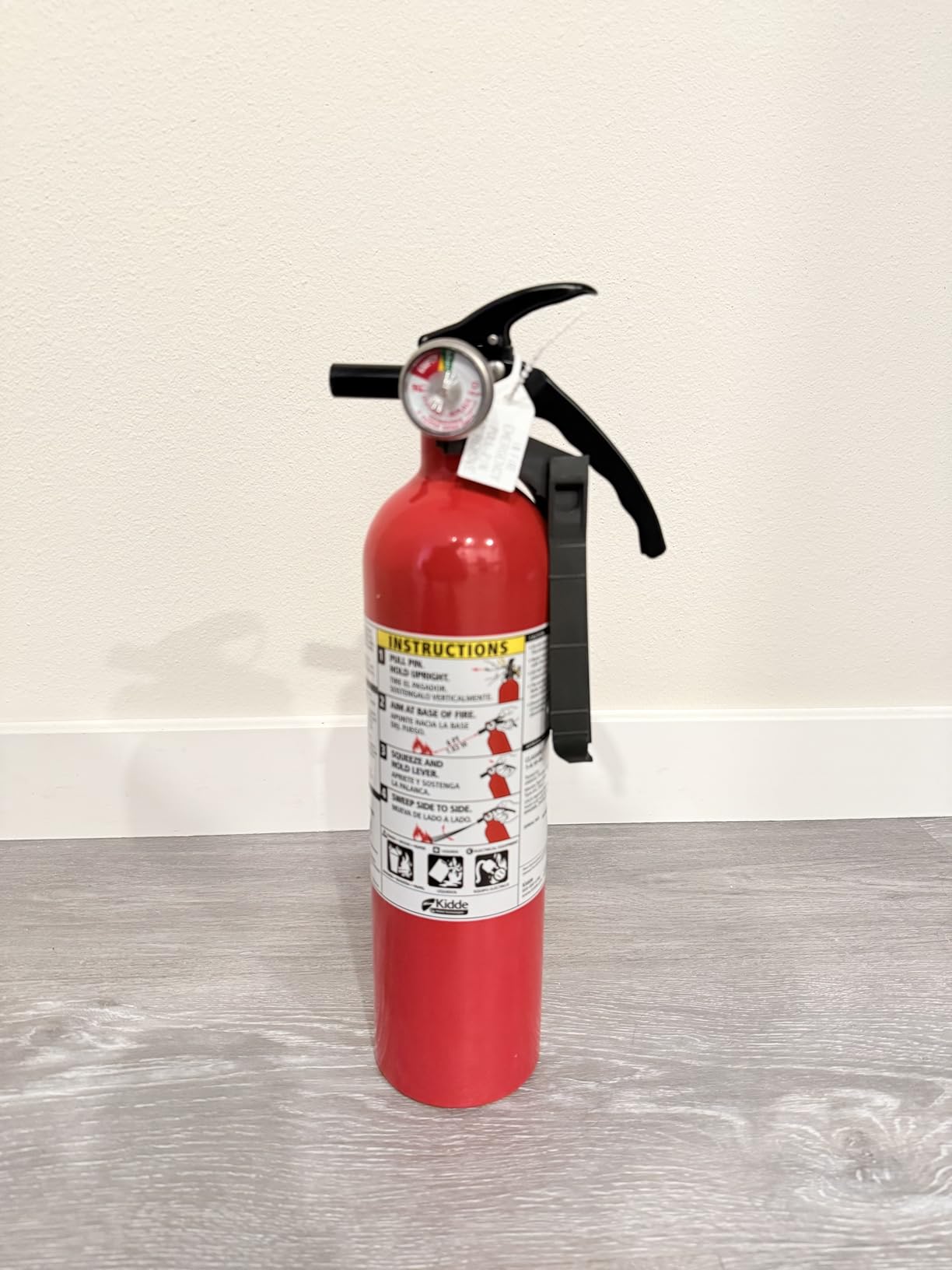
Physically it is a compact aluminum cylinder with a pull pin, a hose, and a gauge with a green zone. At 2.5 lb of agent and about 7.5 lb for the pair, the weight is manageable for a teenager or an adult with average grip, and the strap brackets mean you can mount one in the kitchen and one in the garage rather than dragging one between rooms.
The single most common piece of advice in the reviews is simply to buy more than one. Several owners told stories of a small extinguisher proving insufficient in a real fire, which is exactly the scenario the two-pack format addresses. In practice, the two units get mounted by the front door and in the kitchen, and the pair stops feeling like a luxury.
What to check before you mount it?
Confirm the gauge needle is in the green when it arrives, and check the UL listing rather than trusting the word alone. Underwriters Laboratories maintains a public product database, and a genuine listing is the fastest way to tell a real unit from a cheap imitation.
Mount both on the path between the room and an exit, not inside the room where a fire would start. A good working height is roughly shoulder level for an adult, high enough that a child cannot pull the pin and low enough that you do not have to dig through a cupboard.
Where it falls short?
It is a residential single-use design. Once discharged, or once the pressure drops out of the green zone, the unit goes in the household hazardous waste stream and you buy another one, so factor in a replacement habit rather than treating it as a permanent installation.
Dry chemical powder is also messy. It will coat counters, floors, and electronics, so keep it away from anything you would not want to wipe down for an hour. If your main worry is a kitchen grease fire over a nice countertop, a fire blanket is the cleaner tool.
2. Prepared Hero Fire Blanket 2-Pack – Best Value for Kitchens
Prepared Hero Emergency Fire Blanket, Kitchen & Home, 39 x 39 in, 2 Pack
40x40 in fiberglass
Isolates heat to 1022F
CE EN 1896:1997
Two per pack
Pros
- Never expires so there is no replacement schedule
- No chemical residue on counters or appliances
- Pull-tab deployment needs no training or practice
- Wall-hangable pouch grommet keeps it in reach of an adult
- Two blankets cover more than one room or vehicle
Cons
- Only effective on small contained fires
- Fabric is consumed and must be replaced after a real deployment
- Not water resistant per the listed specifications
This blanket has the highest review count of anything on the list, sitting at more than 32,000 ratings while holding a 4.8 average. The rating distribution is unusually lopsided in a good way, with 89 percent five star, which tells you the product does a simple thing reliably rather than impressively.
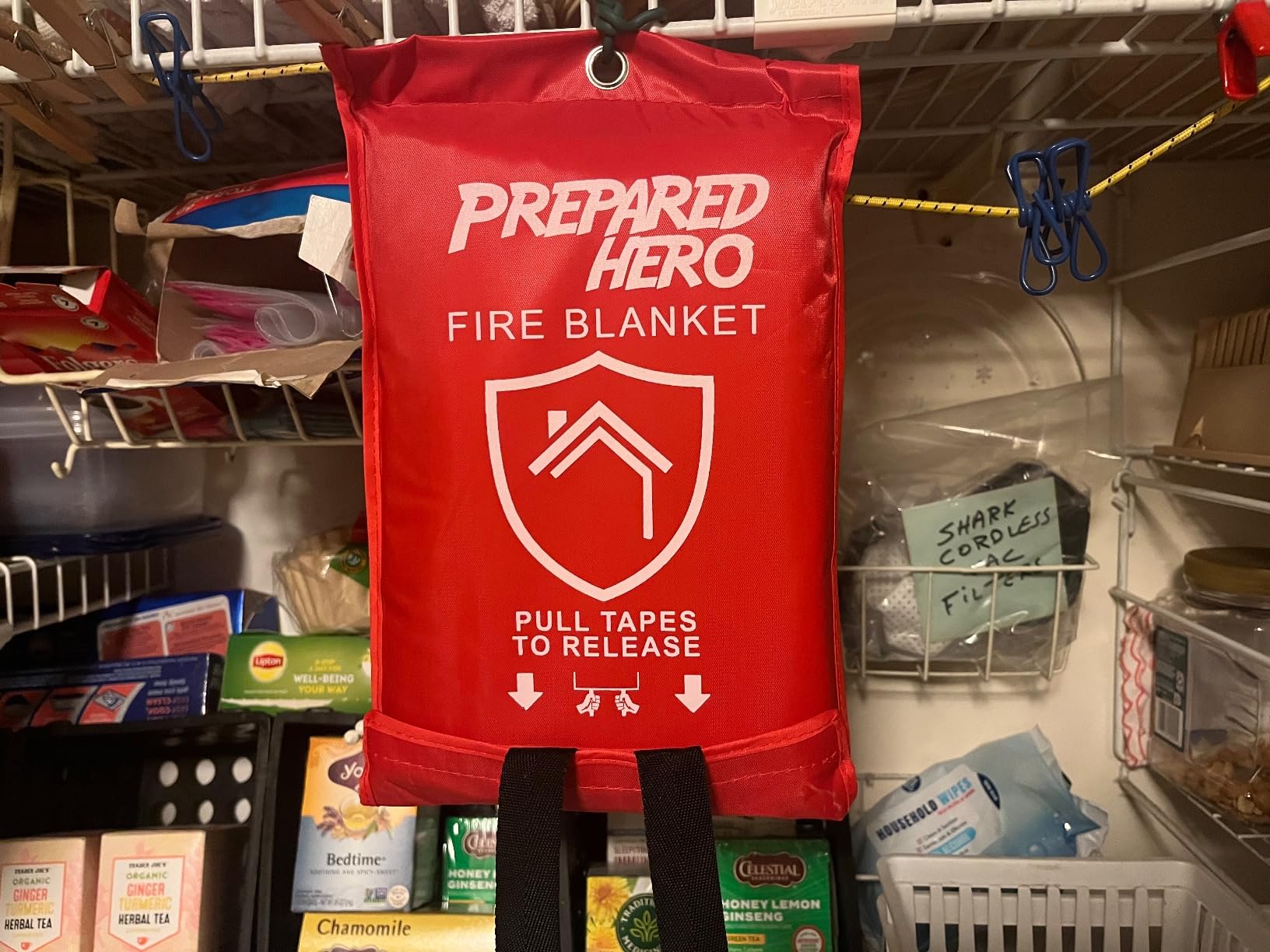
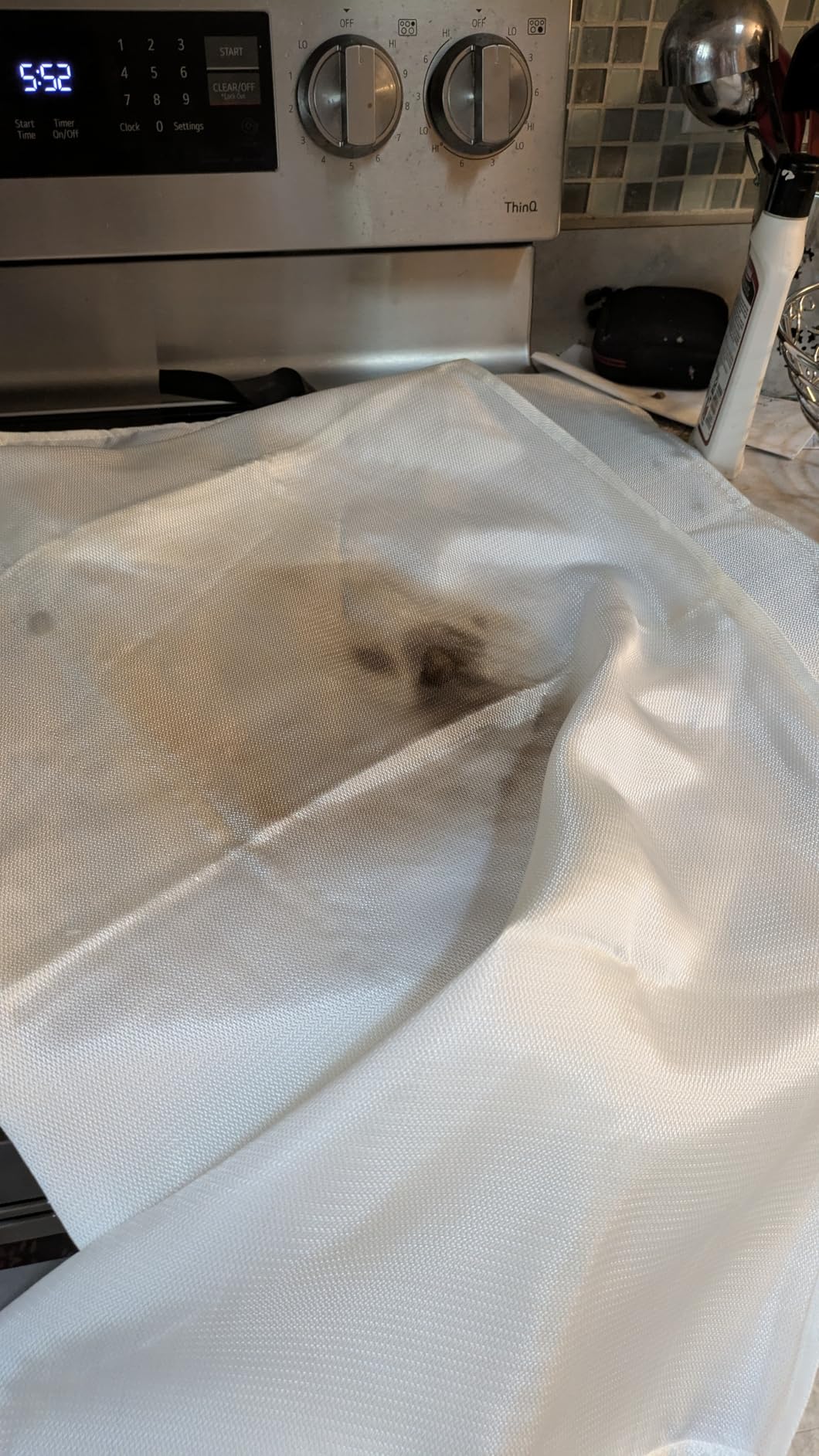
What it is: two layers of woven fiberglass with an inner fire retardant film, meeting the CE EN 1896:1997 standard, rated to isolate heat up to 1022 degrees Fahrenheit. You pull two tabs, the blanket drops over the fire, and the lack of oxygen does the rest. No trigger, no pin, no gauge, and nothing to recharge.
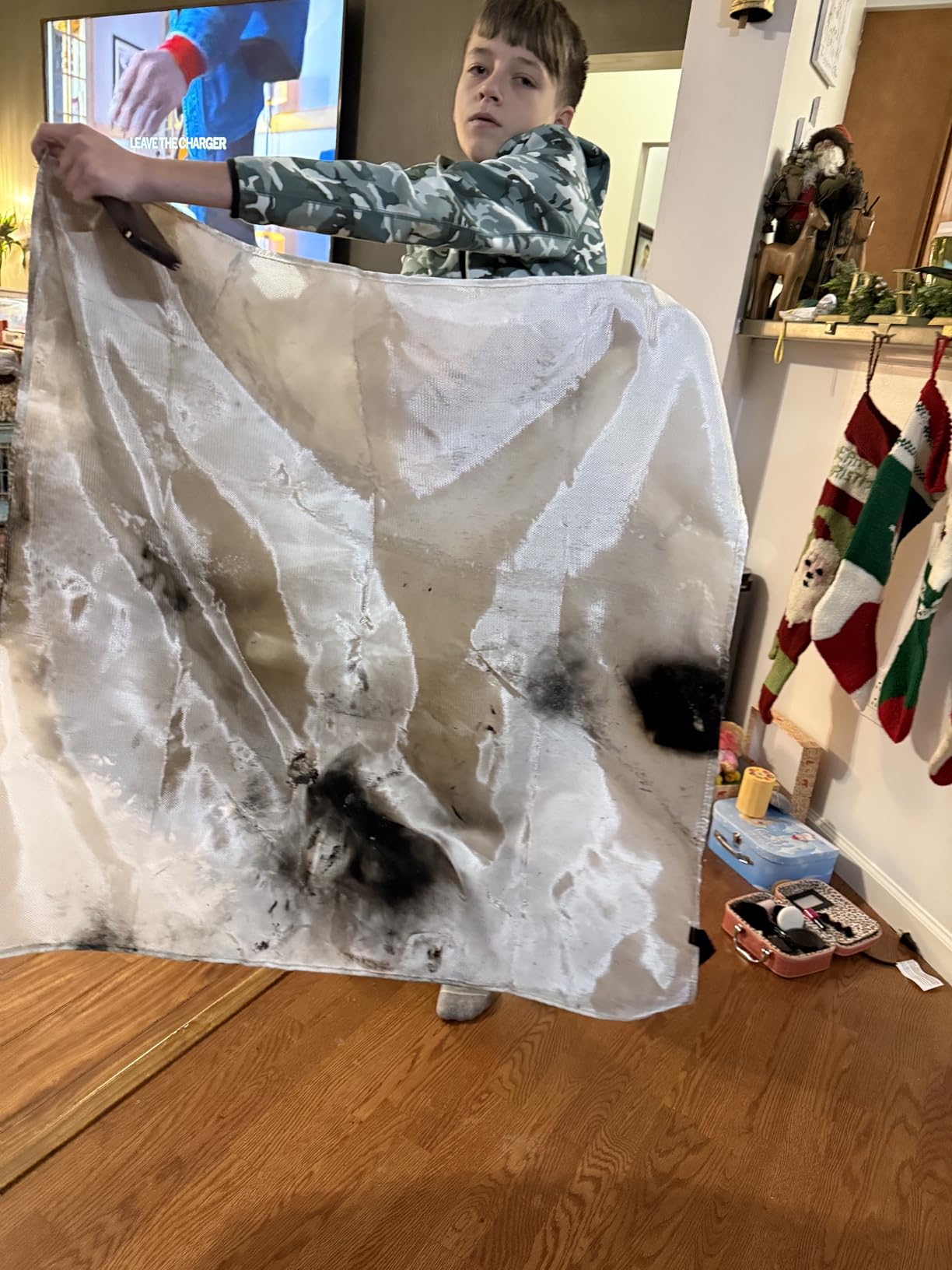
Several verified reviews describe real deployments. A grease fire on a stovetop that was contained before it reached the counter. An oil lamp that went out on the first pull. Those are the scenarios that sell the product, and they are exactly the scenarios where a dry chemical extinguisher would have added cleanup on top of the fire.
For a family with young children in the house, the appeal is that there is no pin to pull. A toddler can rip the tabs and smother a pan fire, and an eight year old can be taught the motion in thirty seconds. Parents in the reviews also use them as housewarming gifts for exactly that reason.
Where it belongs in the house?
One in the kitchen, mounted on a wall near the door rather than over the range, and the second in a garage or a vehicle. The pouch has a grommet for a hook, and the rule is that an adult should reach it without moving furniture.
Keep the second blanket in a car if your family drives with children in the back. A vehicle fire is a different problem, but the pull-tab simplicity is the same and the blanket packs flat.
What it cannot do?
It is a small-fire tool. One reviewer found it a little undersized for an outdoor grill fire, and that is the honest limit: blankets suppress flames, they do not knock down a developed fire the way an extinguisher does.
Also note the listing states the blanket is not water resistant, and after a real deployment the fabric is spent and needs replacing. Store it flat rather than folded into a tight crease so the fiberglass does not crack along the fold lines over time.
3. Kidde 13-Foot Fire Escape Ladder – Best for Two-Story Homes
Kidde Fire Escape Ladder, 2-Story Rope Ladder, Extends to 13-Feet, Anti-Slip Rungs
13 ft two-story reach
13 anti-slip rungs
Tested to 1000 lb
Fits common windows
Pros
- Deploys in seconds with no assembly required
- Zinc-plated 1 inch wide rungs for secure footing
- Tangle-free design for fast deployment under stress
- Fits windows up to 11 in deep and 16 in wide
- Works on casement windows as well as sliders
Cons
- Single-use only so discard once unfolded
- 7.7 lb weight is awkward for smaller family members
- One reviewer reported a snag or rough spot on a rung
An escape ladder is not a fire safety product in the abstract. It only matters if someone is on the second floor, which is why it disappears from most household checklists and then becomes the only thing that matters in the twenty seconds it is needed. This one has been the category leader for years, with more than 21,000 ratings.
It attaches to the window frame before the rungs release, so the whole job is throw, hook, let go of the window, and descend. Thirteen feet covers a two-story drop, and the red nylon strap rails plus zinc-plated rungs give hands and feet something to hold onto while you are looking straight down.
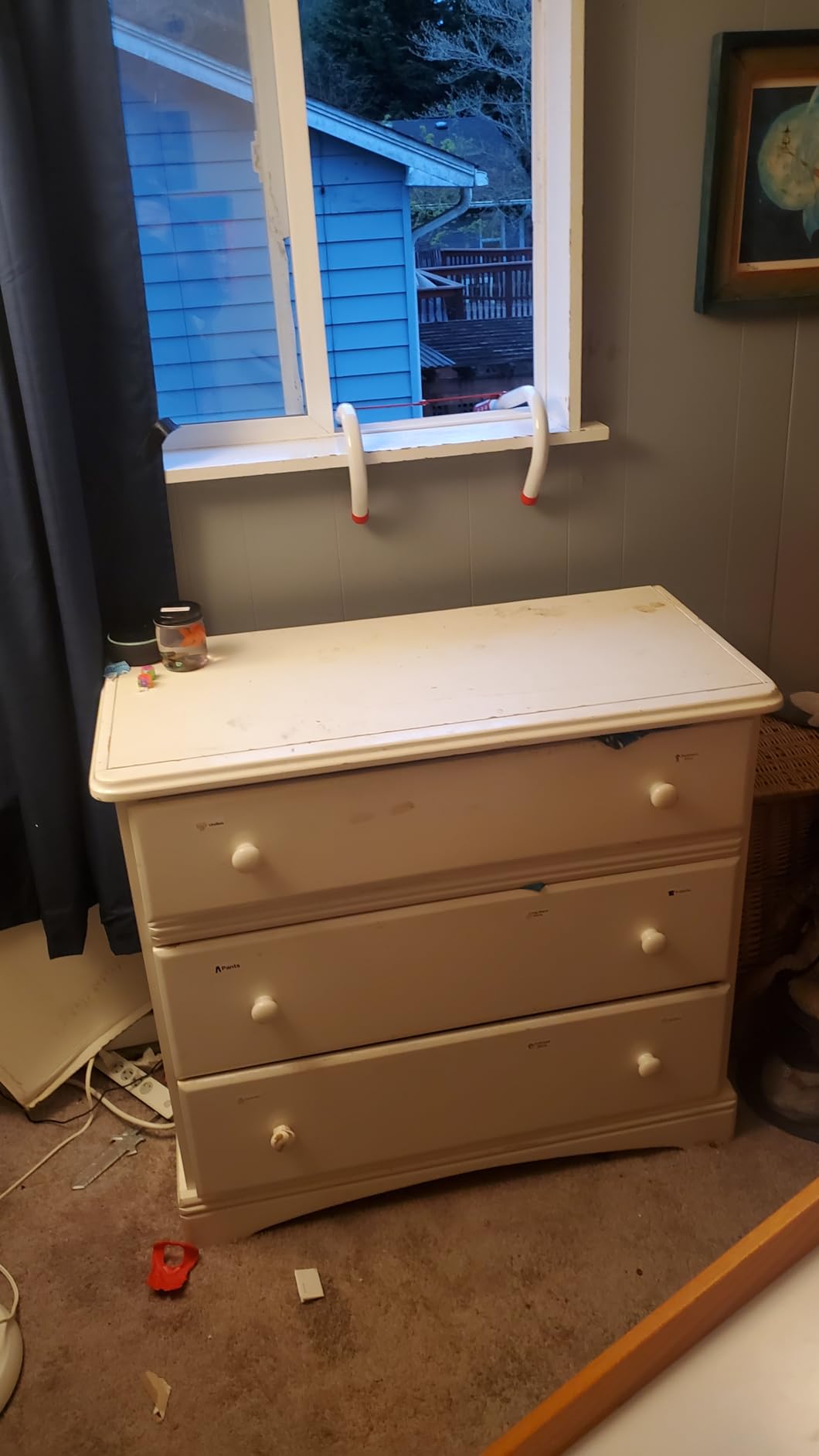
It is rated for windows up to 11 inches deep and 16 inches wide, which covers a large share of standard residential openings, and the design works on casement windows as well as sliders. Owners highlight the no-assembly point hardest, because assembling anything in a smoke-filled bedroom is not realistic.
One detail that gets overlooked: the ladder is tested to a 1,000 pound load. That rating exists for a reason, since a parent carrying a child, or a rescuer following you down, adds a lot of weight to the frame.
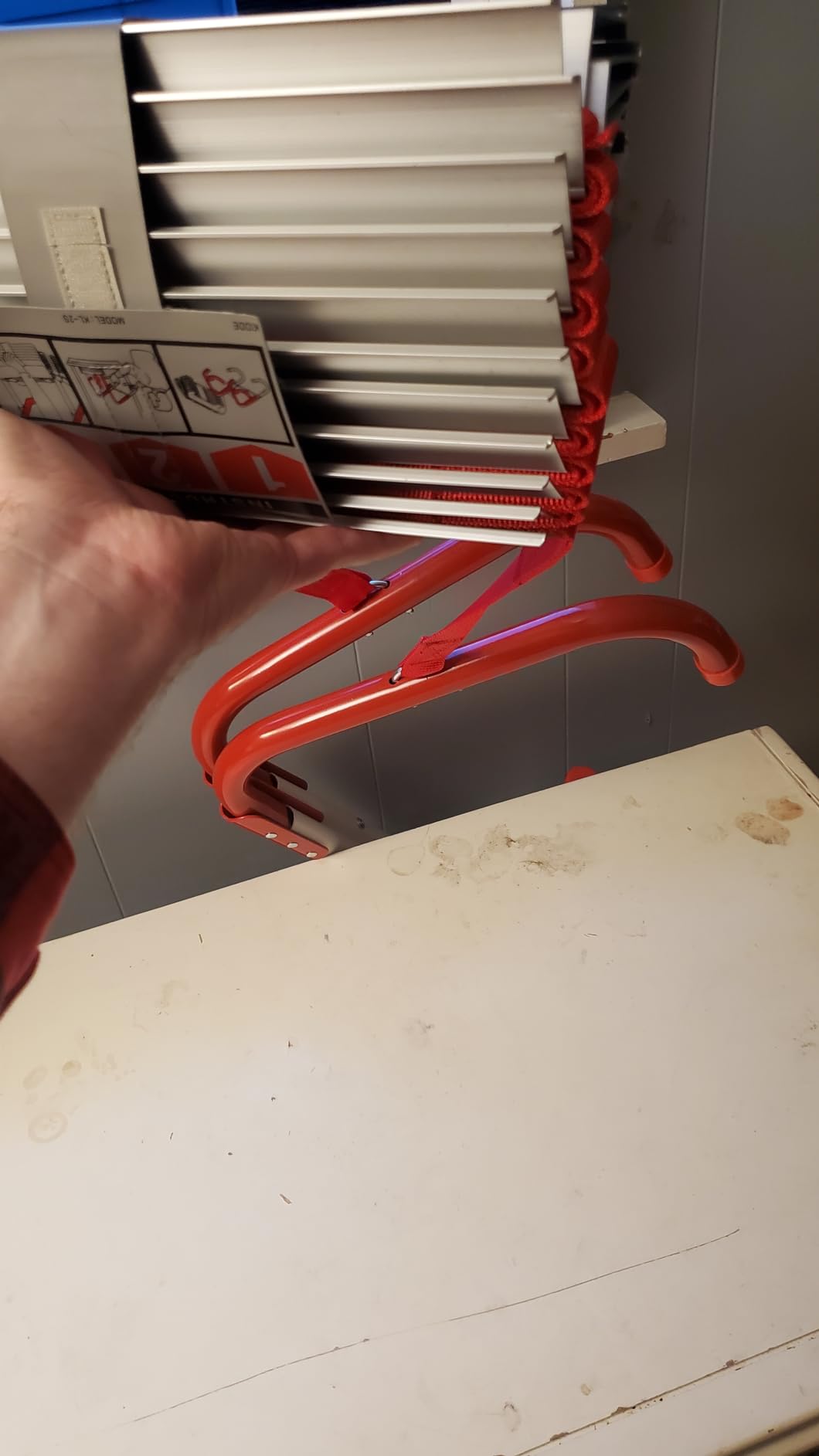
Measure before you buy, and practice once
Check your upstairs window openings against the 11 by 16 inch limit before ordering, and confirm the sill height matches a 13 foot drop. A longer version exists for taller openings, and buying the wrong length is the most common complaint pattern in this category.
Deploy it once in daylight, on the ground first, then at a window. Reviewers repeatedly advise this. The motion is not complicated, but your hands will not be steady the first time, and you want the first time to be a rehearsal.
What to think about before mounting it?
It is single use. Once unfolded or loaded, discard it, which means you should note the purchase date so you know when your spare is truly spare. Treat it like an inflatable life raft rather than a fire extinguisher.
At 7.7 pounds, it is heavy for a small child to handle alone. Keep the ladder within reach of an adult or an older child, and treat the older child as the one who knows the procedure. For households where an elderly parent lives alone in an upstairs room, pair this with a monitored alarm rather than relying on the ladder alone.
4. DIBBATU Fire Escape Cloak – Best for Personal Escape
Fire Escape Cloak, Extra Big, Emergency Used as A Fire Blanket, for Home
63x56 in glass fiber cape
Heat resistant to 1100F
Reflective strips
Wearable and blanket
Pros
- Works as both a wearable escape cloak and a fire blanket
- Rated to withstand heat sources up to 1100 degrees
- Reflective strips make the wearer easier to find at night
- Never expires and needs no maintenance
- Large 63x56 in and 72x70 in sizes wrap an adult upper body
Cons
- Costs more than a standard fiberglass fire blanket
- Folding and draping takes more steps than pulling blanket tabs
- Depends on the wearer being able to stay low and move while wrapped
This is the item almost every roundup leaves out, and it solves a problem that an extinguisher and a blanket both miss. A fire blanket protects the fire. A cloak protects the person carrying it, which is a different requirement entirely when a hallway is full of smoke.
Open it, drape it over your shoulders, wrap it fully, bend down, and lower your head. The glass fiber and silicone construction is rated to withstand heat up to 1100 degrees, and a patent design covers the cape shape. The 63 by 56 inch version fits most adults, with a 72 by 70 inch size available for larger builds.
The reflective strips are the detail that separates it from a giant blanket. If a firefighter, a neighbor, or a family member is looking for you through a smoky window, a reflective band on your back is meaningfully easier to spot than a person under a fiberglass sheet.
It never expires and needs no maintenance, which removes the replacement calendar entirely. That is a meaningful advantage in a home with more than one adult who might be tracking the same checklist.

Who should actually use one?
It suits households with an upstairs bedroom, a mobility-limited adult, or anyone who cannot lift a full-size extinguisher. It also travels, since it folds into a bag and can sit in a closet, a hallway cupboard, or a vehicle trunk.
Hang it near a bedroom door rather than in a garage. The most common criticism in reviews is that it is kept in a cupboard and never touched, so visibility matters more than storage efficiency here.
Where it falls short?
It costs more than a standard fiberglass blanket, and you are paying for the wearable form factor. If your plan is purely for smothering a small pan fire, a blanket is the cheaper and simpler tool.
It also asks more of the user. Wrapping, crouching, and moving while wrapped is a harder sequence than pulling tabs, and it requires you to stay low. Anyone who cannot crouch should not depend on this as their only layer, which is exactly the argument for having an alarm and a clear exit plan underneath it.
5. SecuCaptain Fire Blanket 2-Pack – Most Versatile for Small Flames
SecuCaptain Emergency Fire Blanket for Home and Kitchen – 2 Pack 40″x40″ Flame Suppression Fiberglass Fire Blankets for House Camping Car Office Warehouse Emergency Survival Safety
Two 40x40 in blankets
Heat resistant to 1076F
CE EN 1869:2019
Cool-to-touch tabs
Pros
- Fire-retardant pull tabs stay cool to the touch during deployment
- Heat resistance of 1076F is higher than many blankets in the category
- CE EN 1869:2019 compliant two-layer fiberglass construction
- Never expires and leaves no chemical residue
- Two-pack gives one for the kitchen and one for a vehicle
Cons
- Only suitable for small contained fires
- Blanket is consumed and must be replaced after a real deployment
- Best suited to grease and liquid fires rather than large burning items
If you are furnishing a first apartment, a rental, or a childrens room on a budget, this pair covers the same job as a more expensive blanket at a lower entry point. It carries a 4.8 average across more than 9,000 ratings, which puts it in the same reliability tier as products costing considerably more.
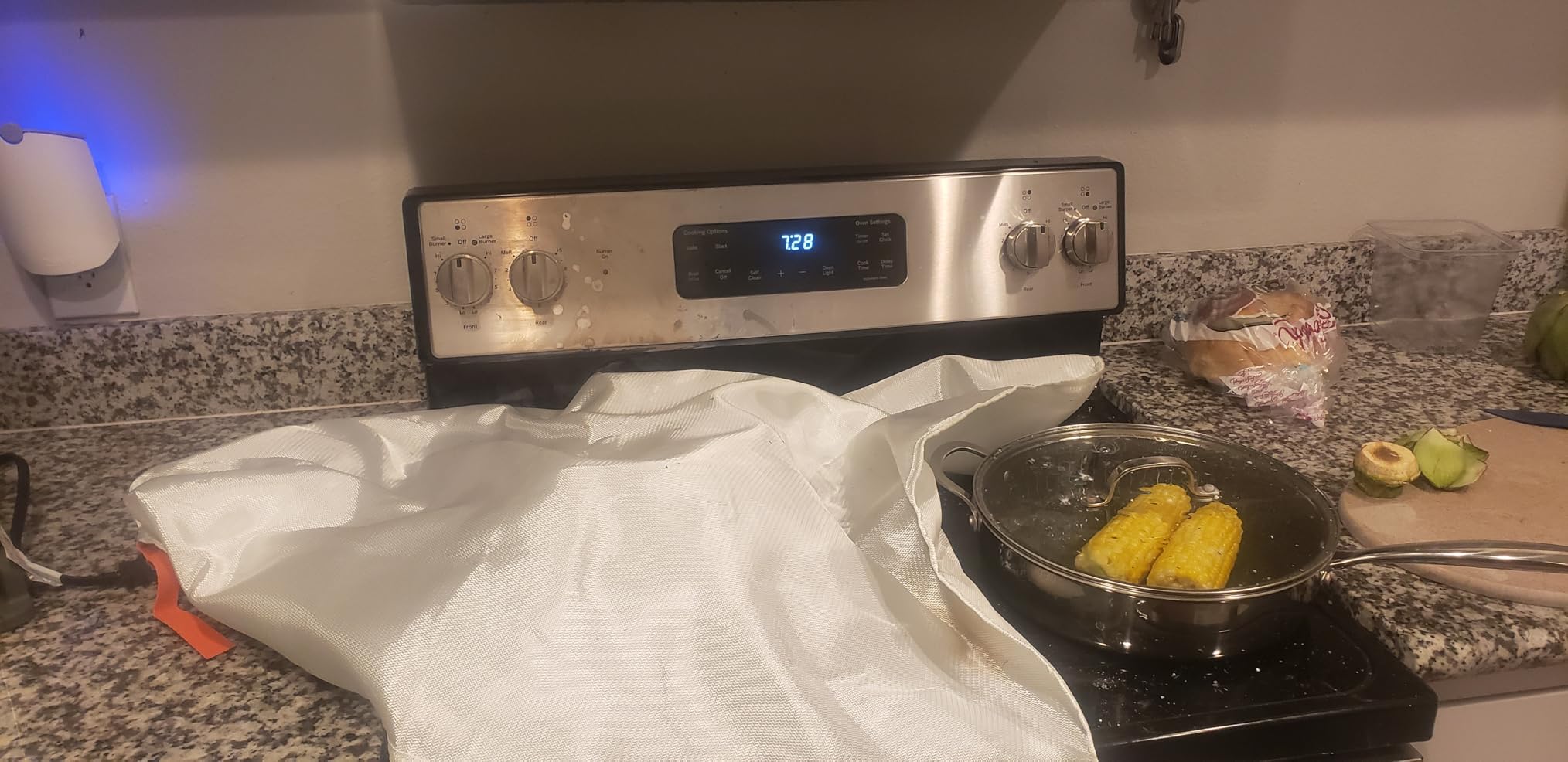
Two 40 by 40 inch blankets, two layers of flame retardant woven fiberglass with an inner film, compliant with CE EN 1869:2019, and rated to withstand heat up to 1076 degrees Fahrenheit. That heat figure is higher than the Prepared Hero blanket we rated best value, though the practical difference in a small kitchen fire is minimal.
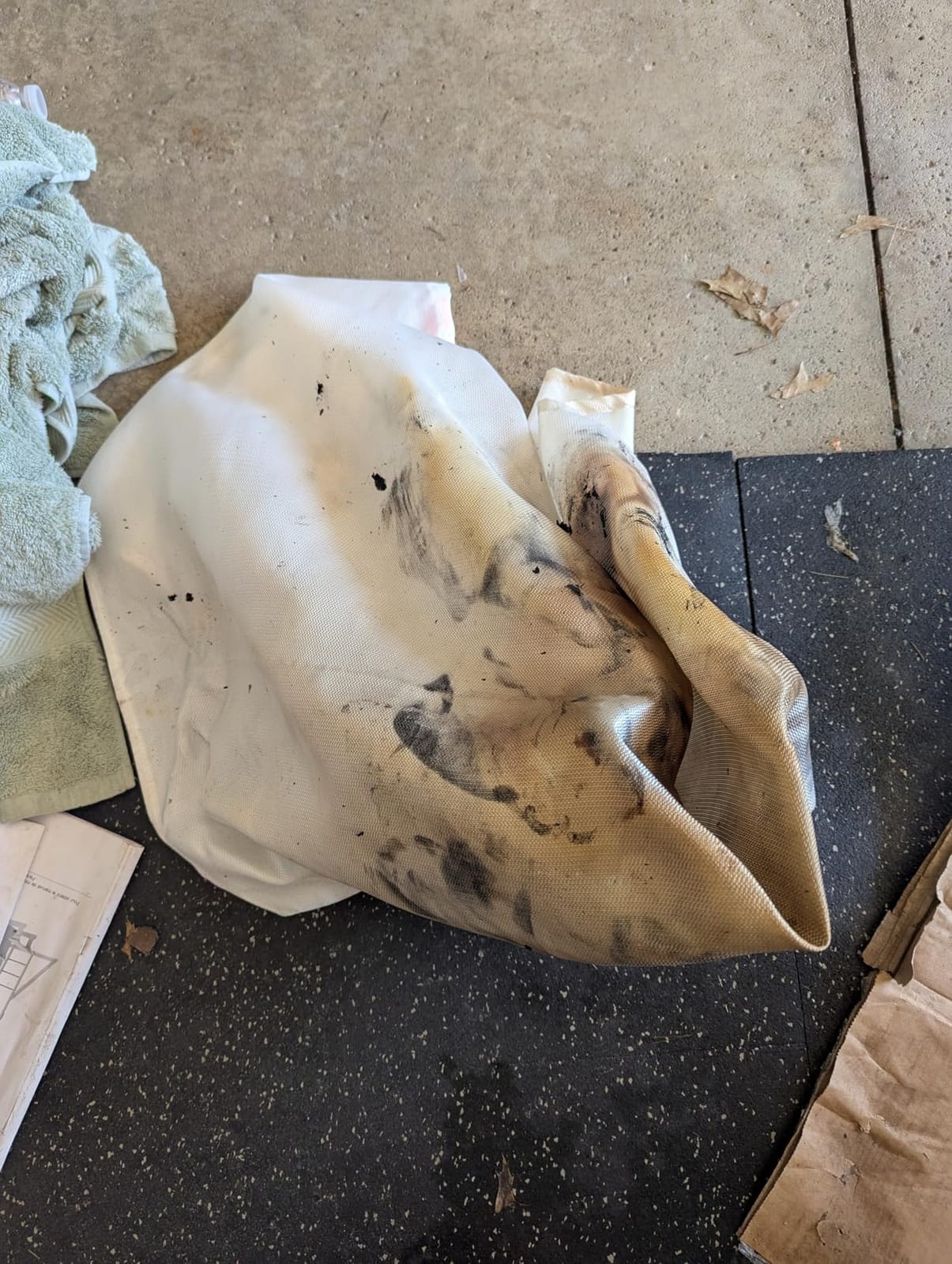
The detail worth knowing is the tab treatment. Instead of standard nylon pull tabs that can soften and get hot near flames, these are treated to withstand high temperature without burning hands. For a household with children, that is the whole point, since the hands pulling the tabs are small hands.
Owners also value the zero maintenance angle. The blanket never expires, needs no gauge check, and has no service interval, so it survives a decade in a closet without becoming a to-do item.
How to use it correctly?
The sequence from the listing is worth memorizing: pull the tabs, cover the fire slowly, shut off the heat source, and lift the blanket once it has cooled. Moving fast enough to get the blanket on and slow enough not to disturb the burning contents are different requirements, and the reviews that describe successful deployments all mention the slow cover.
Split the pair. One belongs in the kitchen, the other in a car or a garage, and the second one is what turns a single blanket into a coverage strategy.
The limits you should accept
It handles small, contained fires, full stop. A blanket cannot knock down a fire that has spread across a countertop, and attempting to wrap a large burning object usually ends with the blanket being ruined and the fire still going.
Also plan to replace it after any real use, since the fiberglass is consumed by the event. And keep it away from any heat source as storage, because the fabric degrades with heat even without a fire.
6. First Alert EZ Fire Spray – Best for Kitchens, Vehicles, and Travel
First Alert EZ Fire Spray, Extinguishing Aerosol Spray
18 fl oz aerosol can
32 seconds of discharge
ETL rated
3-year limited warranty
Pros
- 32 seconds of discharge time
- far longer than a typical aerosol extinguisher
- Light can is easy for children and older adults to hold
- Non-toxic biodegradable formula wipes clean with no residue
- ETL rated from a long-established home safety brand
Cons
- Small can suits only very small incipient fires
- Not a substitute for a full-size UL-rated extinguisher on larger fires
- Aerosol shelf life is shorter than a never-expiring blanket
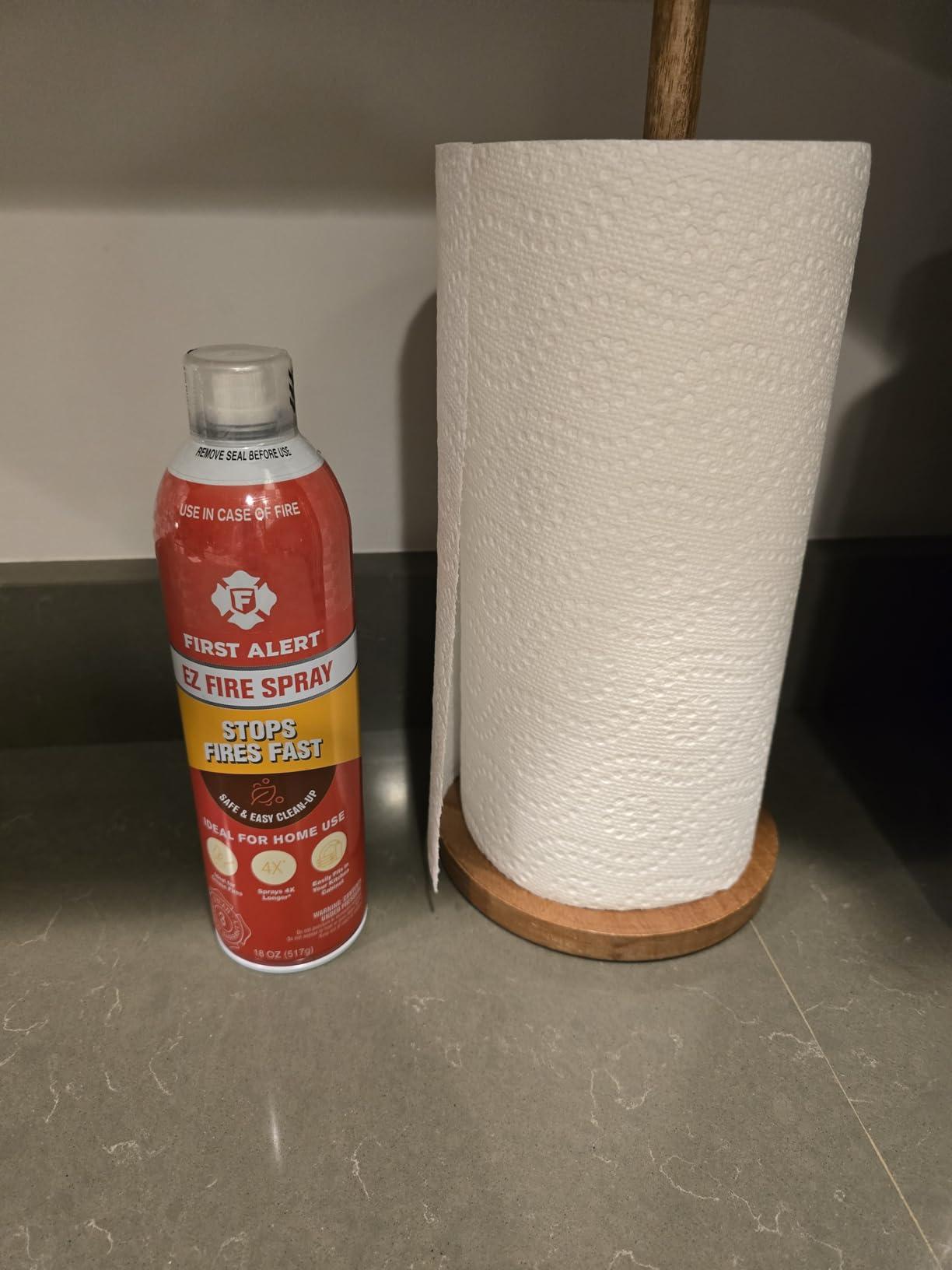
This is the item that gets bought three or four at a time, and once you understand its scope it makes sense. An 18 fluid ounce aerosol can that discharges for 32 seconds is a genuinely useful last few seconds of defense in a kitchen, a car, a boat, or an RV.
Reviewers treat it as a supplemental layer rather than a primary one, which is the correct framing. It covers paper, fabric, wood, grease, and electrical fires, and the formula is biodegradable, nontoxic, and wipes clean, which matters enormously if you spray it near a laptop or a car dashboard.

Handling is the other argument. A full-size extinguisher is a two-handed, two-feet-on-the-floor object that a child should not touch. This is a can you point and press, and a teenager or an older adult can use it without instruction. The trade is capacity, and it is a fair one for a spot fire.
It carries an ETL rating and a three year limited warranty, and it comes in single and four pack formats. The four pack is the sensible buy if you want one in the kitchen, one in the garage, and one in each vehicle.
Where it genuinely helps?
Campers, boaters, and RV owners get real value here, because these environments combine tight quarters, a cooking appliance, and fuel. The can fits in a cup holder, a glove box, or a galley locker, and it does not need a bracket or a mounting plan.
It is also a good standby can inside a house where you already have a proper extinguisher. If the extinguisher is empty, too heavy, or already deployed, a working can buys the seconds you need to get out.
Why it is not a replacement?
Capacity is the limit, and the reviews are honest about it. This handles incipient fires. A fire that has reached the curtain, the wall, or the underside of a cabinet is past what an 18 ounce aerosol can do, and the correct response there is to leave.
Unlike a fiberglass blanket, the can has a shelf life. Note the purchase date, keep it away from a hot car or a furnace, and treat the three year warranty period as a replacement reminder rather than a hard expiry date.
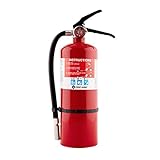
7. First Alert HOME2PRO Rechargeable Extinguisher – Best for Garages and Workshops
First Alert Fire Extinguisher, Heavy Duty for Home & Commercial Use
UL rated 2-A:10-B:C
Rechargeable by professionals
12-year warranty
Includes wall hook
Pros
- 2-A:10-B:C rating covers larger fire classes than basic residential units
- Rechargeable by a certified professional after use instead of discarded
- All-metal body with commercial-grade metal valve and trigger
- Color-coded corrosion-resistant pressure gauge reads at a glance
- Includes a wall hook for mounting near an exit
Cons
- 9.6 lb weight is heavier for smaller family members to handle
- Dry chemical discharge leaves a messy powder residue
- Requires periodic professional recharging to stay compliant
Where the Kidde pair is the sensible kitchen and hallway choice, this is the one for a garage, a basement workshop, or a house with a wood stove. The rating step up is the headline: 2-A:10-B:C against 1-A:10-B:C, and the listing states it meets the minimum 2-A:10-B:C code requirement many residential and light commercial settings are held to.
The second headline is serviceability. This uses mono ammonium phosphate agent in an all-metal cylinder with a commercial-grade valve, and a certified professional can recharge it after use. Owners who bought it point to rechargeability as the reason to spend more, because a disposable unit is a recurring cost every time it is used.
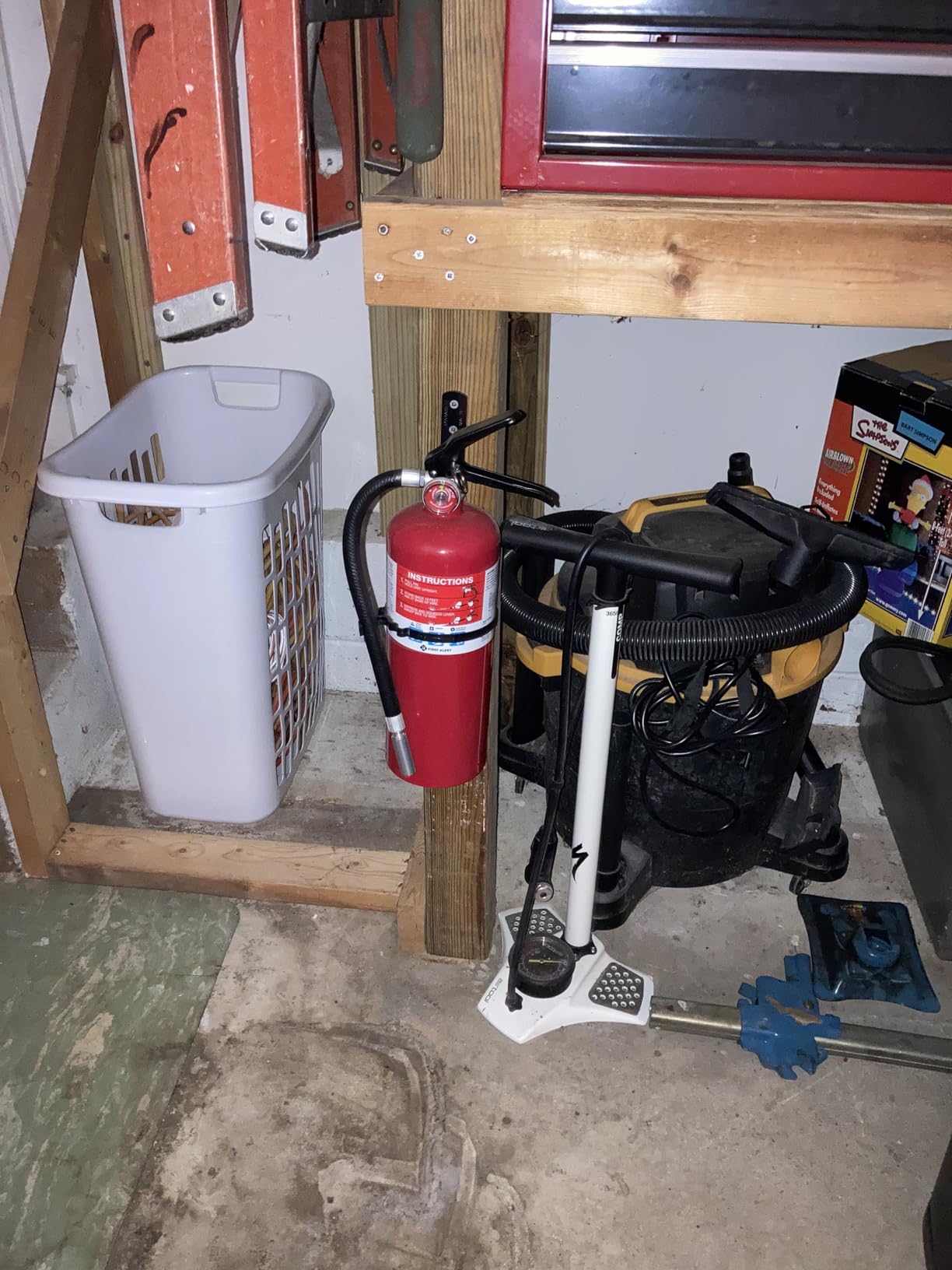
The pressure gauge is colour coded and corrosion resistant, which sounds like a small detail until you are trying to read a gauge through smoke or in a dim garage. The included wall hook is the reason several owners mounted it directly by the back door, where they see it every day and it becomes habit rather than an afterthought.
It also covers the ignition sources that dominate garages: gasoline, oil, solvents, and electrical equipment. A 2-A rating means more extinguishing agent for ordinary combustibles than the residential units carry.
Who should carry the weight?
At 9.6 pounds, this is a two-handed unit that expects an adult. That is a genuine limitation in a house with teenagers or an elderly parent, and the answer is to place it where the adults in the home are and keep a lighter unit nearer the rooms children use.
Mount it near an exit from the garage or workshop rather than next to whatever is most likely to burn. A fixed location by the door means you are not walking toward a fire to retrieve it.
Understanding the maintenance commitment
Rechargeable does not mean maintenance free. The unit needs periodic professional servicing to remain compliant, and that service is a scheduled cost you should account for on a calendar rather than discovering after an incident.
The dry chemical discharge will also coat everything in a garage, which is usually acceptable in a space full of tools and shelving. If the fire is instead near electronics in a finished room, the residue is worth thinking about before you choose the chemistry.
8. LifeSafe StaySafe All-in-1 Spray – Best for Lithium-Ion Battery Fires
LifeSafe Technologies StaySafe All-in-1 Portable Fire Extinguisher, Compact Fire Spray Easy to use on 10 Types of Fires, Non-Toxic & Eco-Friendly
Covers 10 fire types
Rated for lithium-ion batteries
Safe to 1000V
9.9 oz compact size
Pros
- Rated for lithium-ion battery fires in phones
- laptops
- and e-scooters
- Non-toxic eco-friendly fluid leaves no toxic residue to wipe up
- Liquid spray is simple to use with no complicated operating steps
- Compact 9.9 oz size fits a vehicle door panel
- motorcycle
- or boat
- Multiple pack options let you place one on every floor
Cons
- Must be shaken periodically so the nozzle does not gum up
- Small capacity is meant for incipient fires rather than developed flames
- Protective cap can pick up residue from other stored sprays
Most home fire equipment on the market was designed decades before lithium-ion batteries were in every pocket. This one is the exception, and it is the reason it made our list. The stated coverage includes electrical, cooking oil, textiles, petrol and diesel, paper and card, motor oil, and bio-ethanol, plus lithium-ion fires from phones, laptops, and e-scooters.
That claim matters because a lithium-ion fire behaves badly. Thermal runaway vents flammable gas, it reignites, and water is not always the answer. Having a dedicated can for an e-bike charging in the garage or a scooter parked in the hallway closes a gap that no dry chemical extinguisher on this list closes.
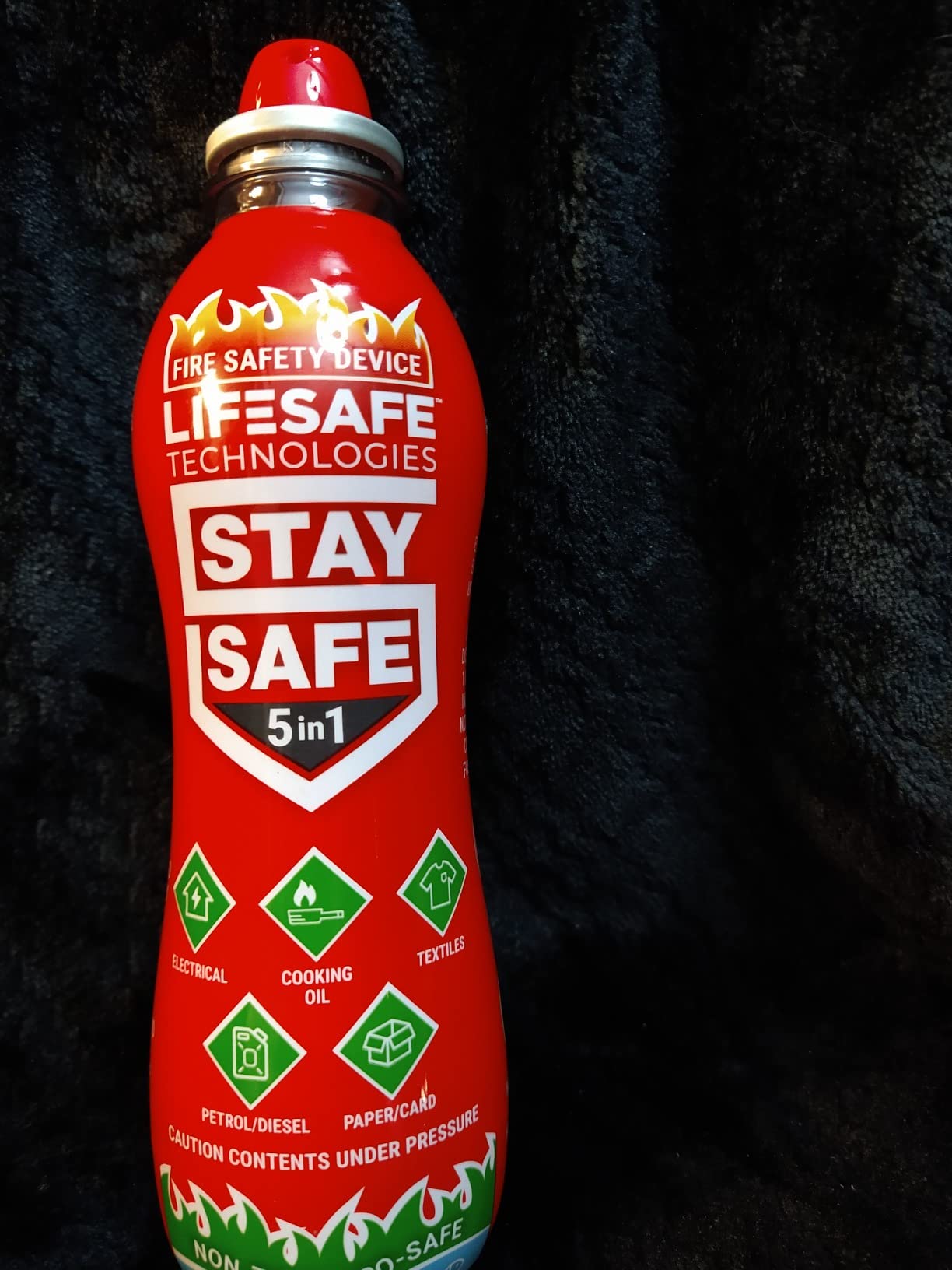
The fluid is described as patented, non-toxic, and non-hazardous, leaving no toxic residue and less waste. That is the practical difference from a dry chemical: you can use it near a laptop, a battery pack, or a phone charger without planning a cleanup, and a verified review describes a unit suppressing a stove fire in a college apartment.
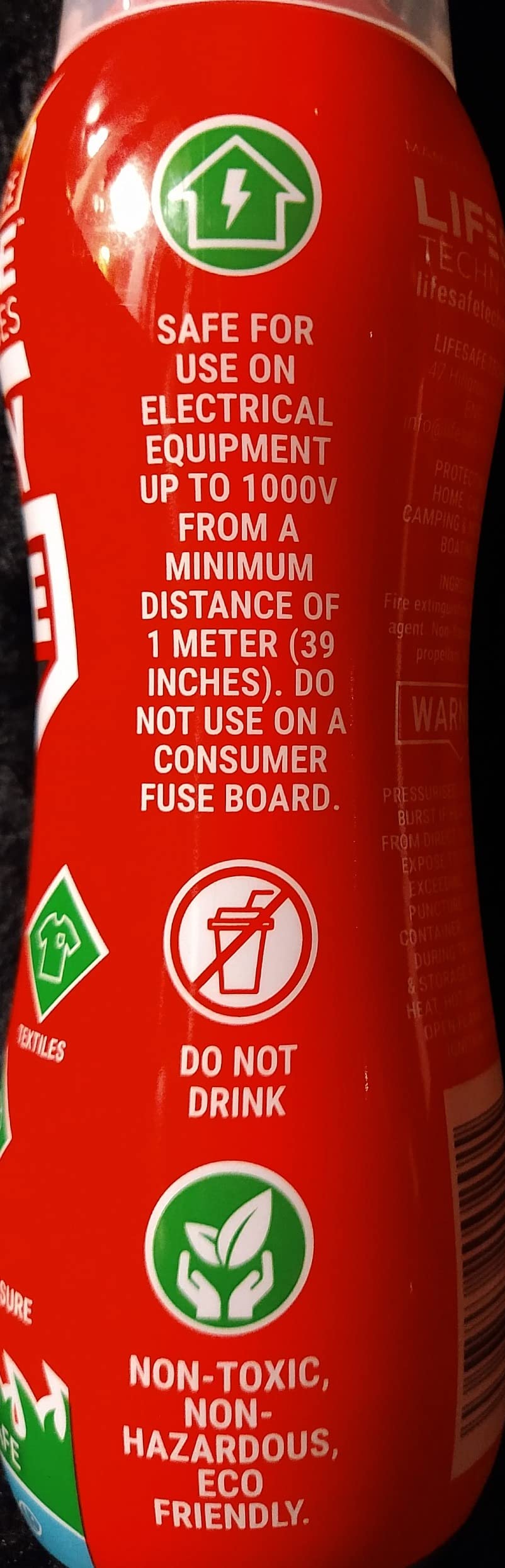
It is safe on electrical fires up to 1000 volts and is third-party tested and approved, which is what separates it from a novelty kitchen spray.
Where it earns a place?
Garages with a charging area, homes with e-bikes or e-scooters, apartment buildings with shared scooter parking, and any household that keeps power banks and laptop chargers in a small space. Two pack, three pack, and five pack options let you cover multiple floors or buildings.
It also travels. At 9.9 ounces and just over eight inches long, it fits a motorcycle saddlebag, a boat locker, or a vehicle door panel without a mounting bracket.
Two maintenance notes people miss
Shake it periodically. Reviews specifically warn that the nozzle can become coated in kitchen grease if the can sits unused next to the stove, and a blocked nozzle is the one failure mode a stored product can have.
Keep the protective cap away from grease and other sprays. A few buyers reported the cap picking up residue from neighbouring products, which is a storage problem rather than a defect, but an easy one to avoid with a labeled drawer.
9. Ougist 21 oz Foam Extinguisher 4-Pack – Best for Multi-Room Coverage
Multipurpose Fire Extinguisher (4 Pack, 21oz Each) with Wall Mount Bracket, Water-Based Foam No Residue, for Kitchen Grease & Electrical Fires, Portable Small Extinguisher for Home, Vehicle & Office
Four 21 oz extinguishers
Water-based foam
13 ft spray reach
Mounting hardware included
Pros
- Water-based foam leaves no powder or sticky residue
- 13 ft maximum spray distance allows knocking flames down from safer positioning
- Each extinguisher includes a wall bracket and screws for vehicle or kitchen installation
- Compact 11.7 inch body fits a glove box
- trunk
- or under-sink cabinet
- Four-pack allows placement across several rooms and vehicles
Cons
- Small capacity limits effectiveness to small surface and grease fires
- Water-based foam is unsuitable for deep-fryer cooking oil fires
- Mounting brackets have been described as fitting tightly
Four extinguishers, four brackets, and sixteen screws. That arithmetic is the whole pitch, and for a family trying to put coverage in several rooms or vehicles on a modest budget it is a hard combination to beat.
Each canister holds 21 ounces of water-based foam that pushes out up to 13 feet, and that distance is the number that matters most. A longer stream means you can suppress a fire from near the doorway instead of leaning over a counter, which is the difference between a controlled response and an injury.
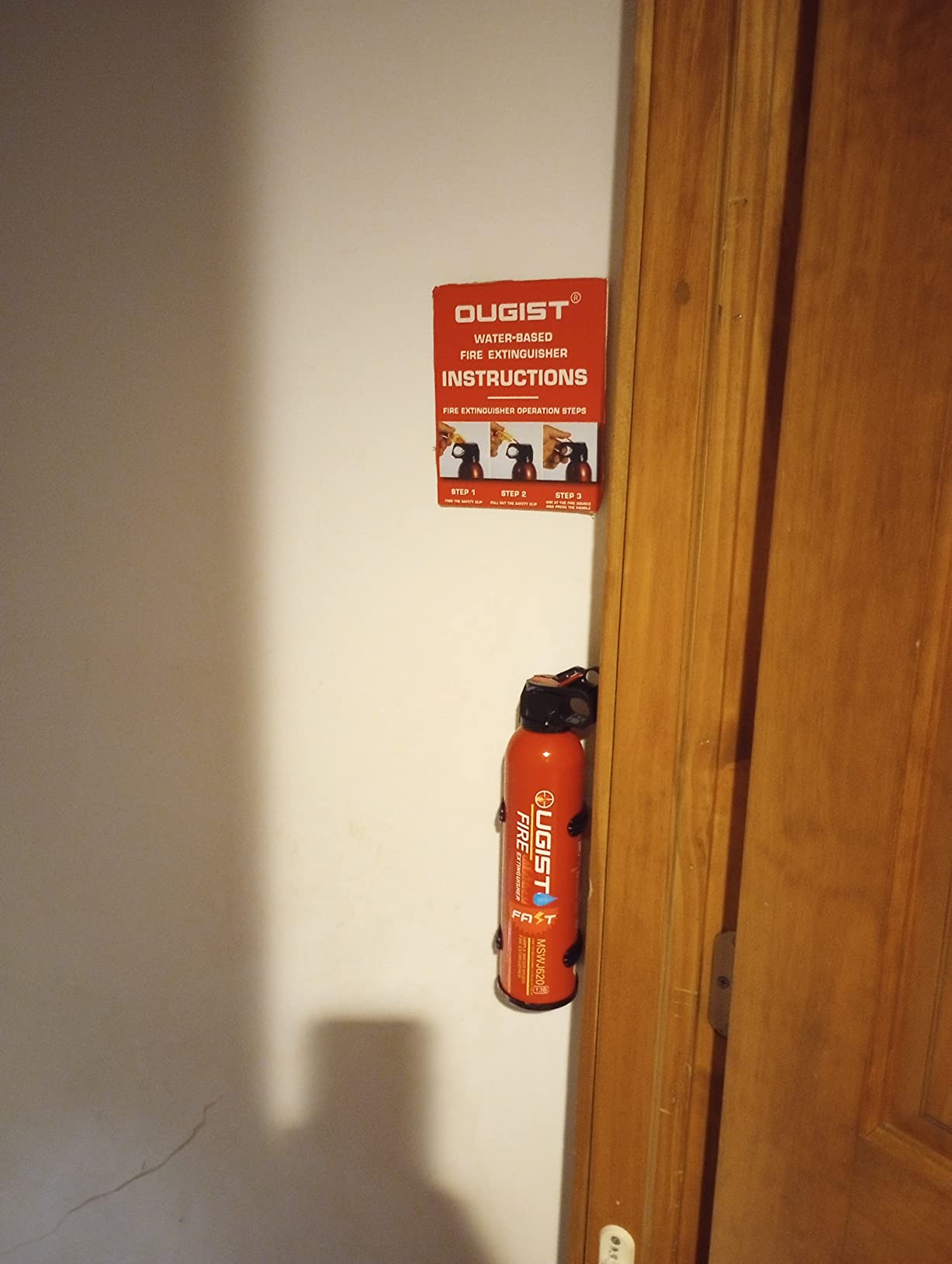
The no-residue claim is the reason to choose foam over powder. It is safe around electronics and leaves nothing to wipe down, so it works on a kitchen counter, a garage workbench, or a car interior where a dry chemical would create a cleanup job on top of the emergency.
Owners place these in cars, garages, under the kitchen sink, and near an outdoor grill, and reviews are mostly pre-use assessments of build quality and simplicity of operation, with a few reporting actual use on a fireplace fire.
Planning the placement
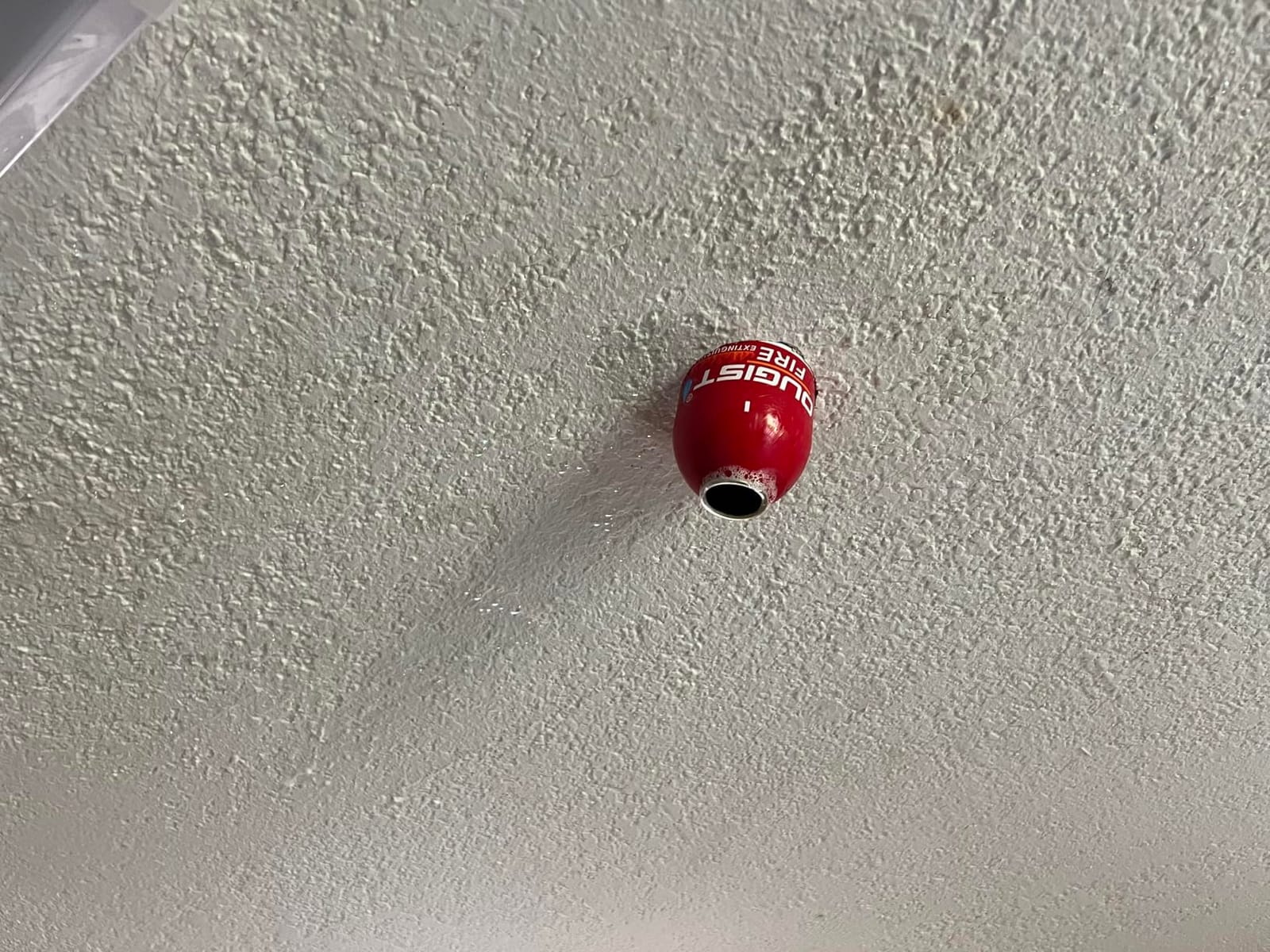
Use the four pack as a coverage plan: one in the kitchen, one in the garage, one in a vehicle, and one in a bedroom hallway or laundry room. Each extinguisher is 11.7 inches tall and 3.3 inches wide, so it fits a glove box, a trunk, or an under-sink cabinet without a dedicated shelf.
Install the brackets high enough to keep it out of reach of children but low enough that an adult can pull it down without stepping onto a chair, and confirm the window or cabinet door opens wide enough to clear the bracket.
The one safety caveat that matters
This is water-based foam, and water-based agents should not be used on burning cooking oil in a deep fryer, where they can spread the burning oil across a wider surface. For stovetop grease fires, a fire blanket is the right tool, which is why we still keep one in the recommendation above.
Also check the bracket fit before you rely on it. A few buyers described the mounts as tight, and a bracket that needs force is a bracket that will fail at the wrong moment.
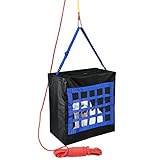
10. ISOP Pet Evacuation Device – Best for Pets and Upper Floors
Fire Evacuation Device for Pets up to 55 Lb, Medium 19″x18″x10″
19x18x10 in nylon bag
Pets up to 55 lb
Includes 50 ft rope
2 lb, folds flat
Pros
- Gets a pet or small child down from an upper floor when stairs are blocked
- Webbed sides let the animal breathe during the lowering
- Included 50 ft rope is long enough for a second or third floor descent
- Lightweight at 2 lb and folds flat for compact storage
- Owners report a 60 lb dog and two 12 lb cats fitting comfortably
Cons
- Only two sizes offered
- a gap for mid-size pets
- Medium opening is tight enough that loading a pet takes a few seconds
- Included carabiner does not lock and is not rated for life-safety use
Every evacuation plan forgets the dog. Owners of this device consistently describe the same effect: they sleep better, because the question of how to get a 50 pound animal down from a second floor during a fire finally has an answer.
The bag is nylon, 19 by 18 by 10 inches in the medium size, with webbed sides for airflow. You put a pillow inside, place the pet in, and lower it with the included 50 foot rope. The kit stores in its own pouch, so it hangs near a window without taking up floor space.
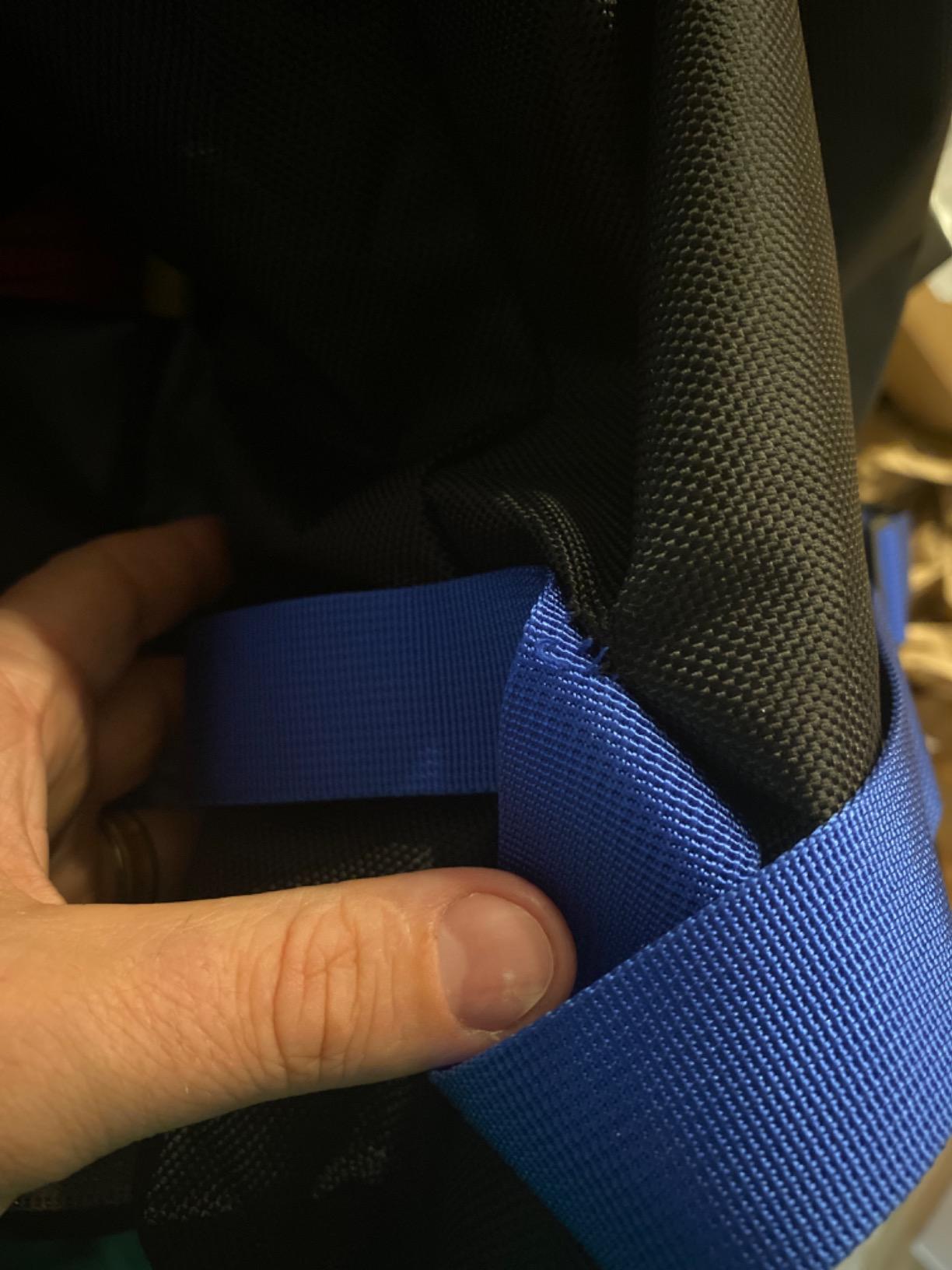
Owners confirm their animals physically fit, and the tested weight capacity is listed at 70 pounds while the title states suitability up to 55 pounds. A large option at 28 by 21 by 14 inches covers bigger dogs, and the two sizes are the only two offered.
One verified setup includes two 12 pound cats and a 60 pound dog in the same household, which tells you the medium size is more forgiving than the measurements suggest for short-legged breeds.

How to make it reliable?
Replace the supplied carabiner. Multiple reviewers did exactly that, and it is the most repeated fix in the reviews. A non-locking carabiner is not rated for life safety use, so swap it for a locking connector or tie the rope with a figure-eight knot through the attachment point before you need it.
Add a rigid base if your bag collapses inward. Some owners fit a piece of plywood inside, which keeps the walls from folding onto a panicking animal and makes loading faster.
Where it falls short?
There are only two sizes, and that leaves a genuine gap for mid-size pets such as a 22 pound poodle mix, who are too large for nothing and may still be awkward in the larger bag. Measure your animal before ordering rather than going by breed label.
It is a supplementary device, not a system. Nothing in this category replaces a clear exit path, an alarm that reaches your ears, and a practiced plan. If stairs are blocked and the rope route is not viable, no bag helps, so treat this as one layer of a plan you have also rehearsed.
How to Choose a Fire Safety Kit for Your Household?
Start with the building, not the product list. A kit that suits a two-story family house with a garage is wrong for a third-floor apartment with one exit, and the difference is not quality, it is match. Walk your floor plan and ask where a fire would start, where each person would sleep, and where the nearest exit sits relative to each of those points.
Then match the equipment to the household type, because that is the decision the roundup research kept pointing back to.
Apartment and condo living
Renters and condo dwellers have three constraints: mount points, shared liability, and often a single exit. Choose wall-hangable equipment that does not require drilling into a fire rated wall, and check your lease or association rules before mounting anything. For a one-bedroom, the essentials are smoke alarms with sealed ten year batteries, a carbon monoxide detector if there is a fuel burning appliance, a fire blanket in the kitchen, and a compact spray or small extinguisher near the door.
Skip the escape ladder unless you have a window that genuinely opens onto survivable space, and never plan to descend past the first floor onto a street.
Two-story family homes
This is where the full build makes sense: a multi-unit extinguisher pack, a fire blanket in the kitchen, an escape ladder at an upstairs window, an escape cloak, a flashlight per level, and a packed grab-and-go bag near an exit. Two-story homes also benefit most from interconnected smoke alarms, since a sleeping child on the second floor needs to hear a first floor alarm.
If you also have a wood stove, a fireplace, or a garage with fuel, upgrade the garage unit to a rechargeable higher rating unit and put a lithium-ion capable can near your charging area.
Wildfire zones and planned evacuations
When evacuation is expected rather than reacted to, the priority shifts from suppression to carrying capacity. The core of the kit becomes a grab-and-go bag per adult, a pet evacuation device, glow-in-the-dark exit path markers, dust masks, a battery radio, and documentation kept in a waterproof pouch. Fire blankets and cloaks still matter for the ember exposure and radiant heat that come with the fire front arriving, but they are the second layer, not the first.
Two or three smaller bags that one person can actually lift beat one large bag that nobody can move quickly.
Households with young children
Children change the layout rules in three ways. Mount height has to keep pins and triggers above toddler reach while staying reachable for an adult. A fire blanket with pull tabs beats an extinguisher, because a child can use one and should not be near the other. And the household needs an explicit rule about who calls 911 and who meets the fire department, rehearsed twice a year.
Teach children that their job is to get out and to call an adult, never to fight a fire. Adults handle the equipment. If you have a child old enough to be home alone, write the emergency numbers on the refrigerator and keep a charged phone within reach.
Households caring for elderly parents
Mobility limits change priorities more than anything else on this list. Longer-reach alerts, a wearable escape cloak, and equipment that does not require a two-handed lift take priority. Keep a flashlight and a whistle on the nightstand, and make sure the smoke alarm in their bedroom is inside the room rather than in the hallway.
Fall prevention belongs in the same conversation. Our guides to toilet safety rails for seniors and grab bars for bathroom safety matter because the most common injury in a fire follows a fall in a dark hallway, and a rail is the cheapest upgrade on this entire page.
Bundle or build your own
A thread on r/homeowners about assembling a new-home safety kit from scratch captured the real question: is a bundle better value than buying pieces separately? The honest answer is that bundles win on the components you forget. Nobody remembers to buy a fire blanket, a flashlight, and a wall bracket in the same trip, and that is exactly what a kit contains. Packs also cut the number of decisions, which matters when you are choosing safety gear once and relying on it for a decade.
Building your own wins on the component you care about most. If your priority is a genuinely UL rated, correctly sized extinguisher, buy that piece separately and add blankets and lighting around it. Verify the listing rather than trusting the badge, since a well sold bundle is more likely to contain a real certified unit and a cheap one is more likely to contain a decoration.
How to verify a certification claim?
Look for the UL mark, FM approval, or ETL rating, then check the listing in the certification body public database using the model number. That check takes a minute and it is the single strongest trust signal in this entire category, and the one buyers ask about most in forum threads.
Also look for the fire rating in A and B units, not just the letters. A 1-A:10-B:C and a 2-A:10-B:C are different products, and the higher rating exists because more agent is on board. Confirm the pressure gauge, the mounting hardware, and whether the unit is rechargeable or single use, since that is the replacement decision you will be making for the next decade.
The maintenance and replacement calendar
Monthly: press the test button on every smoke alarm and every carbon monoxide detector, and check that every extinguisher gauge needle is in the green.
Every six months: change smoke alarm batteries on units without sealed cells, and run one announced family fire drill.
Annually: rotate flashlight batteries, replace the batteries in sealed alarms only at their stated interval, and review whether any kit component has been used or damaged.
At ten years: replace sealed battery smoke alarms, and check carbon monoxide detector age against its label.
At twelve years: replace disposable residential extinguishers, and arrange professional servicing for any rechargeable unit.
Always: replace a fire blanket or escape cloak immediately after any deployment, and discard an escape ladder once it has been unfolded or loaded.
Write these dates down somewhere you will actually look. Most of the failures we hear about in homeowner threads are not the wrong product, it is the right product that expired quietly in a closet. If your home also has a patio fire feature, our fire pit table picks and smokeless fire pit roundup cover the ember and clearance side of the same conversation.
What Not to Buy for Fire Safety?
Not every product with a flame graphic on the pouch does anything. We found no competitor covering this, and the forum pain points made it clear that buyers worry most about paying for a prop.
Extinguishers with no verifiable listing: if the listing shows a brand name but no UL, FM, or ETL mark and no model number you can look up, skip it. A certified model number is searchable in a certification database; a fake one is not.
UL-style, UL-approved, and other near-miss wording: only UL Listed, UL Classified, or FM Approved are meaningful. Anything else is a marketing phrase.
Novelty hanging pouches: cheap decorative pouches sold in checkout aisles and dollar stores routinely contain a fabric sheet that cannot smother anything. If it has no standard number, no certification, and no material rating, it is a stocking stuffer.
Blankets rated far below kitchen temperatures: kitchen fires sit well above the temperature where cheap fiberglass degrades. Check for a published heat figure and a compliance standard such as CE EN 1869:2019 or EN 1896:1997.
Aerosol cans marketed as extinguisher replacements: compact sprays are useful for incipient fires. They are not a substitute for a correctly rated, full-size unit, and treating them as one is the most common error we see.
Single-purpose items sold as complete kits: a pouch holding a blanket, a whistle, and a plastic card is not a fire safety kit for a family. It is a novelty with a safety label.
Anything expired or discounted because it is a prior year model: fire equipment ages quietly, and a cheap alarm or can is a false economy.
A simple filter applies to every listing: could a trained adult, in the dark, in under a minute, use this correctly without reading instructions? If the honest answer is no, it is not worth the space it occupies.
Frequently Asked Questions
What is the best fire extinguisher for household use?
An A-B-C rated dry chemical unit is the standard home answer, because it covers ordinary combustibles, flammable liquids, and energized electrical equipment in one canister. For most households a 1-A:10-B:C unit is enough for the kitchen, hallway, and garage; garages and workshops justify a 2-A:10-B:C rechargeable model. Only trained adults should use one, and most portable extinguishers empty in seconds, so get out and call 911 if the fire is not out immediately.
What should every home have for fire safety?
Working smoke alarms on every level and inside every bedroom, carbon monoxide detectors near sleeping areas, at least one A-B-C rated extinguisher mounted by an exit, a fire blanket in the kitchen, a flashlight and whistle per level, an escape ladder for upper floors, and a written escape plan the family has practiced. Keep equipment high enough that children cannot pull a pin and low enough that an adult reaches it without searching.
What to put in a fire emergency kit?
A practical kit holds a certified multi-purpose extinguisher, two fire blankets, a compact spray or foam extinguisher for vehicles and small appliances, a flashlight and whistle, glow-in-the-dark exit markers, a fireproof pouch of insurance documents and medications, and a pet evacuation bag if you have animals. Skip expired components and anything you cannot identify by model number, and check the certification listing before you buy.
How often should I replace fire extinguishers and smoke alarms?
Replace disposable residential extinguishers every twelve years, and have rechargeable units serviced periodically by a certified professional. Sealed battery smoke alarms last about ten years before replacement, and batteries in standard alarms should be changed about every six months. Test every alarm and check every extinguisher gauge monthly, and replace any fire blanket or escape cloak immediately after it has been deployed.
Should children know how to use a fire extinguisher?
Children should know how to get out, how to call 911, and how to alert an adult, but only trained adults should handle and use an extinguisher. That is why a fire blanket with pull tabs is often a better tool in a family kitchen: a child can deploy one safely. Keep the extinguisher mounted high enough to prevent a curious child from pulling the pin, and rehearse the family escape plan twice a year.
Final Verdict
After six weeks of sorting through listings, certification claims, and buyer reports, the best fire safety kits for families in 2026 come down to a simple stack rather than a single purchase. Start with the Kidde FA110G 2-Pack as our editor’s choice, because a verified UL listed 1-A:10-B:C rating, an easy-to-read gauge, and two units mounted by two exits covers more households than any other single item on this list. Add a fire blanket in the kitchen, and no other purchase protects a countertop from grease as well as the Prepared Hero pair we named best value.
From there, match the equipment to the home. Upper floors and blocked stairs get the escape ladder and the wearable cloak. Garages and workshops get the rechargeable higher rating unit. Battery charging areas and scooter parking get the lithium-ion capable spray. Vehicles and boats get a compact can. Families with a dog on the second floor get the evacuation bag, with a replacement carabiner fitted immediately.
None of it matters without two habits: test the alarms monthly, and run the drill twice a year. Check the certification listing before you buy, mount everything within an adult’s reach and out of a child’s, and make sure everyone in the house knows who calls 911. That combination does more for a family’s chances than any single device on this page.
If you are still deciding, the equipment that covers the most ground for the money is a two unit extinguisher pack and a two pack fire blanket, mounted by the kitchen exit and the front door today. Everything else can follow as the house changes.