
The best smoke detectors for bedrooms are the ones that sense a slow-smoldering fire fast, wake you with something clearer than a bare beep, and never chirp you awake at 3 a.m. for a battery change. Our overall pick is the X-Sense SD2J0AX, a photoelectric alarm with a sealed 10-year lithium battery that you mount in minutes and forget for a decade.
That choice matters more than it first appears. Roughly half of home fire deaths happen while people are asleep, and a bedroom alarm has exactly one job: get you awake and moving. Sensor type, alarm volume, spoken alerts and where the unit sits in the room all decide whether it succeeds. Pick poorly and you get a unit that sleeps through a smoldering comforter, or one that screams at you every humid July night until you unplug it.
We compared 10 of the highest-rated smoke detectors and combination smoke and CO alarms currently on the market, weighing sensor technology, power source, interconnect options, night-time nuisance behaviour and the size of the body against a bedroom ceiling. Where long-term owner reports exist, we used them, and we flag them as owner reports rather than lab results.
If you are also covering the rest of the house, our guide to smart water leak detectors for basements covers the other half of the monitoring problem, and our picks for dressers for master bedrooms handle the furniture side of the room.
Table of Contents
Top 3 Bedroom Smoke Alarms for 2026


Those three cover most bedrooms. The X-Sense SD2J0AX is the one to install if you want a decade of silence between tests. The First Alert SMI100 carries the largest review base in this roundup and keeps the battery compartment accessible if you prefer replaceable cells. The Kidde 10SDR is the compact option for a small room where a 5.7 inch body would dominate the ceiling.
Quick Picks: 10 Best Smoke Detectors for Bedrooms (October 2026)
| Product | Specs | Action |
|---|---|---|
| X-Sense SD2J0AX Smoke Detector |
|
Check Latest Price |
 First Alert SMI100 Battery Alarm First Alert SMI100 Battery Alarm |
|
Check Latest Price |
 First Alert SM310 Dual Sensor First Alert SM310 Dual Sensor |
|
Check Latest Price |
| Kidde 10SDR Compact Detector |
|
Check Latest Price |
 Kidde 20SA10-V Hardwired Kidde 20SA10-V Hardwired |
|
Check Latest Price |
 eufy Security E10 eufy Security E10 |
|
Check Latest Price |
 X-Sense XP0H-SN Combo X-Sense XP0H-SN Combo |
|
Check Latest Price |
 X-Sense SC07 Combo X-Sense SC07 Combo |
|
Check Latest Price |
 First Alert SMI105-AC Hardwired First Alert SMI105-AC Hardwired |
|
Check Latest Price |
 Kidde 30CUD10 Combo Kidde 30CUD10 Combo |
|
Check Latest Price |
1. X-Sense SD2J0AX Review: The Best Smoke Detector for Bedroom Use Overall
X-Sense Smoke Detector, 10-Year Battery, UL 217 Certified, SD2J0AX, 1-Pack
Photoelectric sensor
Sealed 10-year lithium battery
ETL listed to UL 217
6.24 oz
Pros
- Sealed 10-year battery ends low-battery chirps
- ETL listed to the UL 217 standard
- Photoelectric sensor reduces steam and cooking false alarms
- No-wiring install with included screws and anchors
- Built-in self-test plus test and silence button
Cons
- Standalone only with no wireless interconnection
- 4.8 inch body is larger than ultra-compact designs
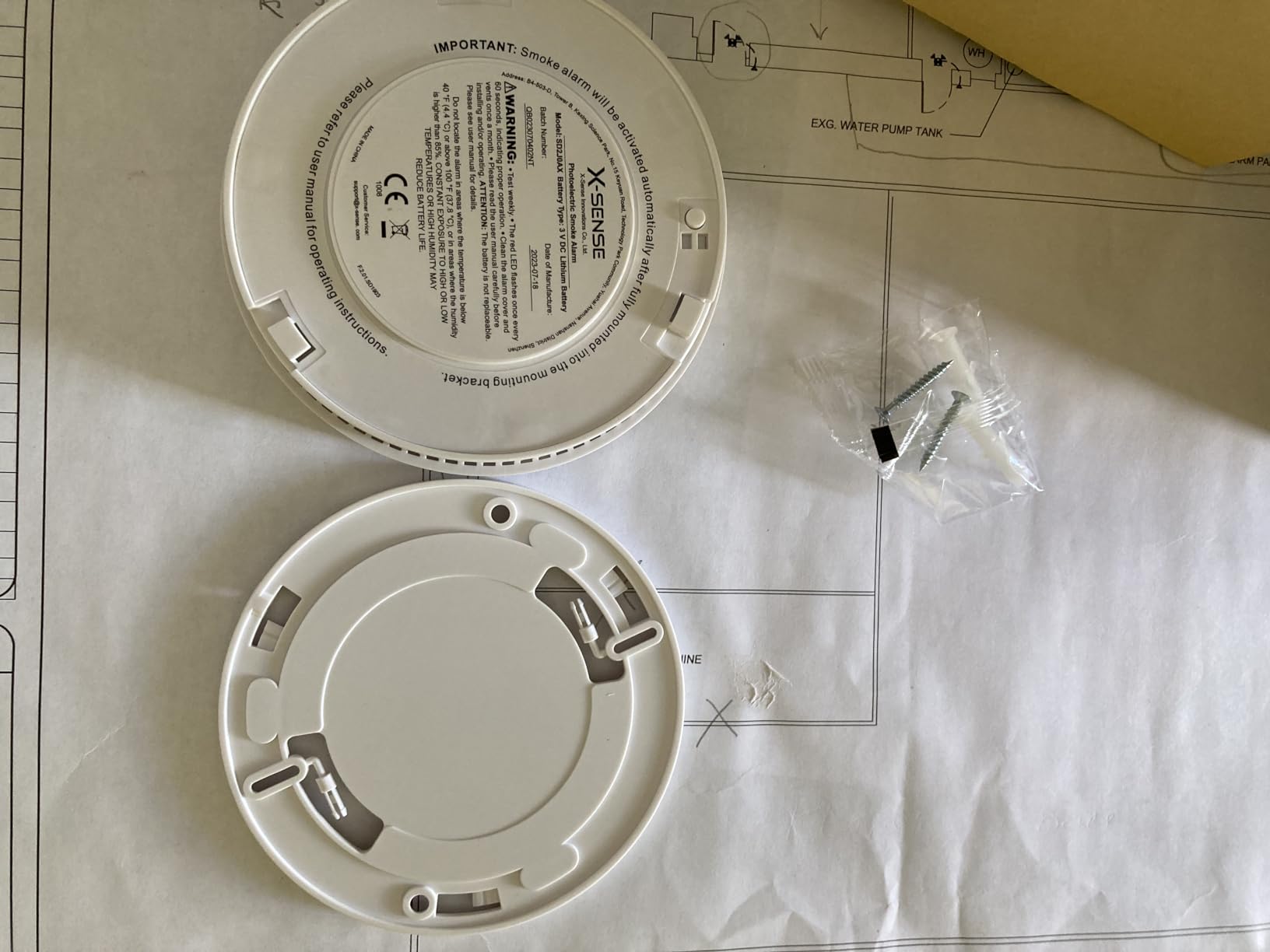
This is the unit we ended up recommending to family, and the reason is unglamorous: it simply asks nothing of you. The lithium cell is sealed for a decade, so there is no battery swap, no low-battery chirp at 2 a.m., and no end-of-life guesswork before the ten-year mark. The box contains the alarm, a manual, two screws and two anchor plugs, and the whole install takes about the length of a cup of coffee.
Sensing is photoelectric, which is the right call for a sleeping area. Bedding, curtains and upholstered furniture produce slow-smoldering fires full of fine particles, and a photoelectric chamber is built to catch that pattern. It is also markedly less twitchy around cooking vapour and bathroom steam, which is why this style of unit rarely interrupts your night for the wrong reasons.
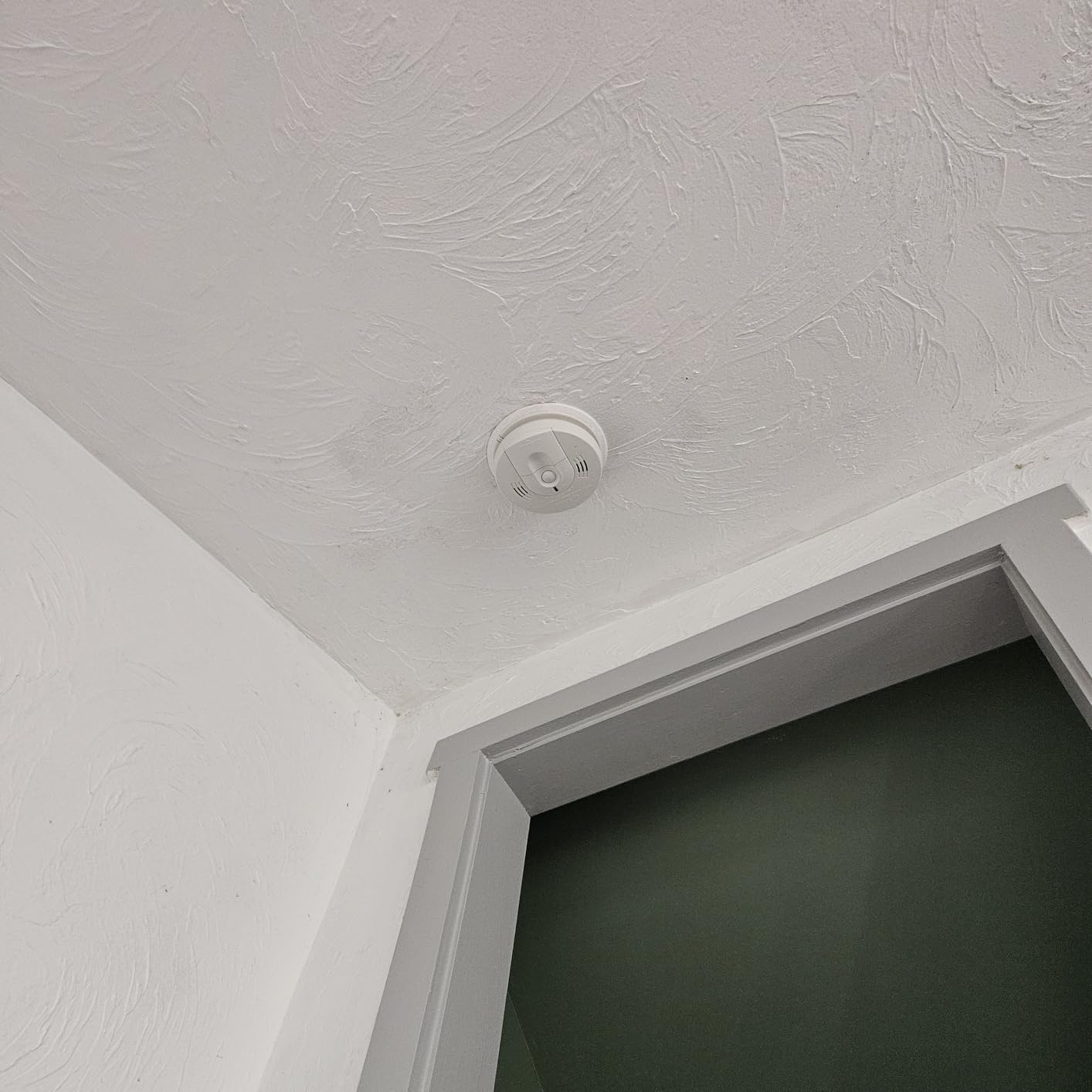
What you give up is integration. This is a standalone model, so it will not talk to a relay module or join a wireless network of other alarms. If your hallway alarms are interconnected and you want a bedroom unit that sounds with them, this is the wrong box. It is also a 4.8 inch body, which reads as a fairly traditional disc against a low ceiling.
Owners consistently rate the value highly, and reviewers across home improvement forums single out X-Sense for sealed 10-year batteries and voice-alert models as the sensible picks when cost per year of protection is the deciding factor. Across more than four thousand ratings, the praise lands on the same three things: the long battery life, quick installation and fewer nuisance alarms.
What this alarm does well in a sleeping room
The sealed battery is the feature that changes daily life. A bedroom alarm is the one you are least likely to service, so a unit that can go ten years without attention fits the room better than almost anything else here. Add the ETL listing to UL 217 and you have independent certification behind the sensing performance rather than a marketing claim.
The operating humidity range of 10 to 85 percent also matters in a bedroom, since that room is where humidity problems start. It will not cover the wettest corners of a badly ventilated room, but it handles ordinary seasonal variation without complaint.
Where it falls short for a bedroom
No interconnection and no phone alerts. If the fire starts in the kitchen, this alarm only helps you if the sound carries or another alarm in the house is shouting. That is a real gap for anyone who wants a whole-home system rather than a single room.
There is no voice alert either, so a heavy sleeper gets a 85 dB tone and nothing more. For most adults that is enough, but households with small children often prefer a spoken warning.
2. First Alert SMI100 Review: The Most Reviewed Alarm in This Roundup
First Alert Battery Smoke Alarm
Ionization sensor
Replaceable 9V battery
End-of-life warning
9.6 oz
Pros
- Largest review base in this roundup
- Front access battery compartment
- End-of-life warning signals replacement time
- Precision Detection sensing reduces cooking nuisance alarms
- 9V battery included and ready to mount
Cons
- Yearly 9V battery changes are required
- Ionization sensing is less suited to slow smoldering fires than photoelectric designs
When you are choosing a device whose entire job is to wake a sleeping person, review volume is worth more than almost any spec line. This alarm carries more owner ratings than anything else in our list, and the pattern in them is unusually consistent: simple installation, a clean low-profile look, an alert that carries through the house, and few false alarms.
It is an ionization design, and that is the honest catch. Ionization units respond faster to fast-flaming fires and are more sensitive to very small airborne particles, which is why they have historically been fussier around cooking and humidity. First Alert’s Precision Detection sensing is designed to blunt exactly that behaviour, and the review data suggests it does most of the work.
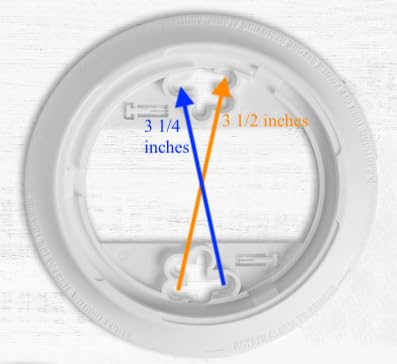
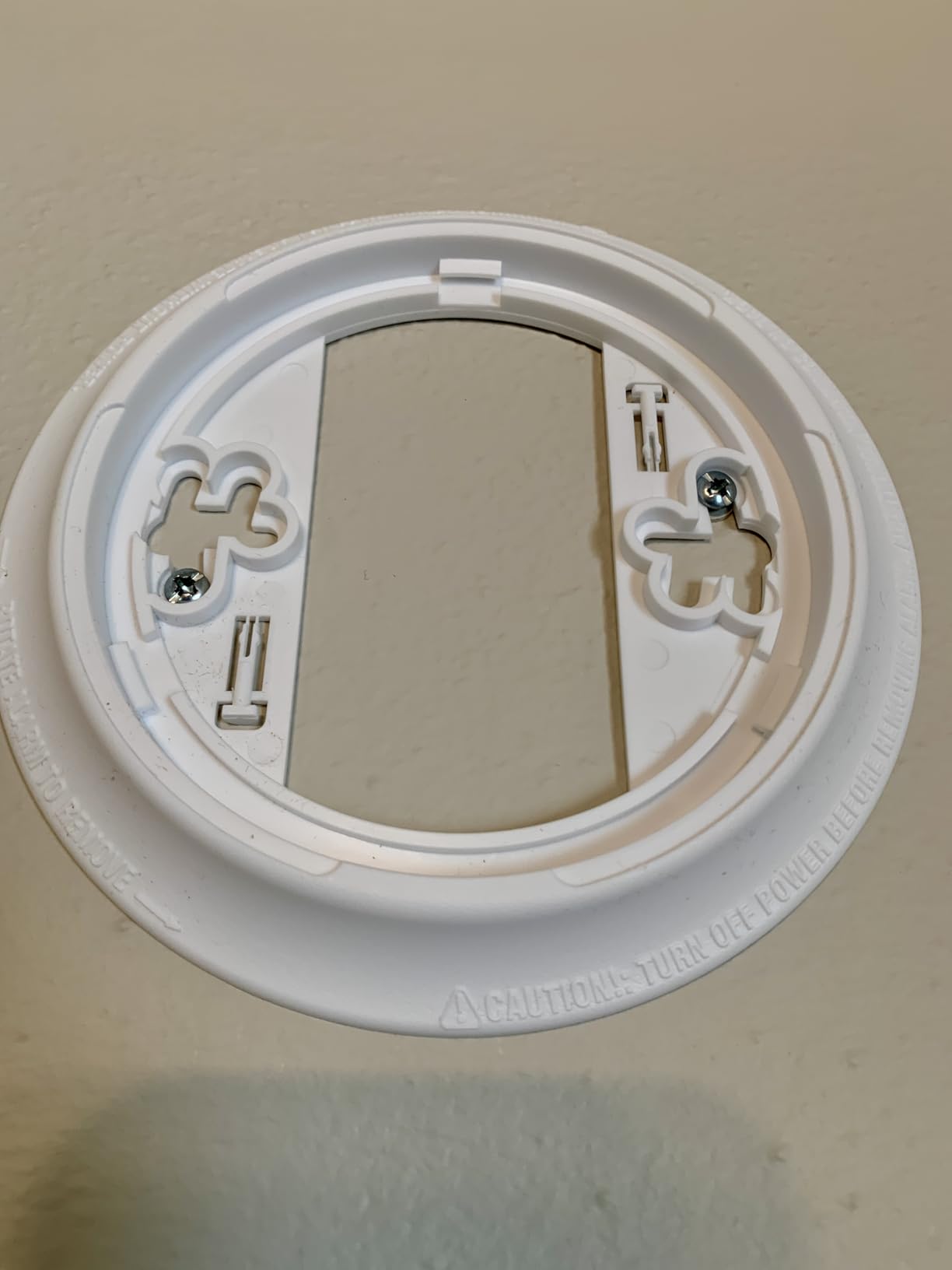
The mechanical design is the sleeper feature. The battery sits behind a front access door, so replacing the 9V cell takes seconds with no ladder and no twisting the unit out of its bracket. Owners who have fought with sealed units sometimes prefer exactly this, and the end-of-life warning tells you when the whole alarm, not just the cell, is finished.
It is also the plainest option here. No voice, no display, no network. At 5.6 inches across it is one of the larger bodies in the roundup, and a ceiling in a small bedroom will show it.
Note the practical detail: a 9V alkaline cell gives you roughly a year of service in normal use, so this is the one product here that asks for an annual reminder. Nobody will remind you. Set a calendar entry or the alarm will chirp at the worst possible hour to tell you.
Why this one earns its place in a bedroom
The evidence base is the argument. When thousands of owners describe the same loud, dependable alert with few false alarms, the risk of a bad surprise drops sharply, and that matters in a room you cannot leave quickly. The low profile and quiet look also keep it from feeling like a piece of hardware bolted above your head.
For a household on a tight budget that wants a proven, serviceable alarm, the yearly battery habit is an acceptable trade. It is the easiest unit here to test and to keep alive.
What to weigh before buying
Ionization sensing is the wrong instinct for a bed. A smoldering mattress or curtain fire produces the kind of smoke a photoelectric chamber reads more quickly, and a dual-sensor unit covers the gap without any change to your routine. Several owners running mixed fleets across a house keep ionization models in service, so this is a working setup, just not the most sensitive choice for bedding.
The replaceable battery is also a recurring cost and a recurring source of 3 a.m. chirps, which is precisely the failure mode people complain about most in bedroom units.
3. First Alert SM310 Review: A Dual Sensor Alarm with a Ten-Year Battery
First Alert 10-Year Battery Smoke Alarm, Dual Sensor
Photoelectric plus ionization
Sealed 10-year battery
Precision Detection
8.64 oz
Pros
- Dual sensors cover flaming and smoldering fires
- Sealed battery removes chirps and replacements
- Test and silence button for quick checks
- End-of-life warning marks replacement time
Cons
- Costs more than photoelectric-only 10-year models
- Combining both sensors can raise nuisance alarms
The SM310 answers an obvious question: why choose between a fast flame detector and a slow smolder detector when one alarm can be both. Two sensing elements sit in the same housing, one photoelectric and one ionization, so a fire that develops either quickly or slowly gets a response. For a bedroom where the likely fire is bedding catching, that redundancy is genuinely useful.
The sealed 10-year battery is the second argument. It behaves like the X-Sense in daily use, meaning no battery swaps and no low-battery chirps waking the room, while giving you wider fire coverage than a single-sensor unit. Test and silence controls sit on the face, and an end-of-life warning tells you when the alarm has reached the end of its useful life.
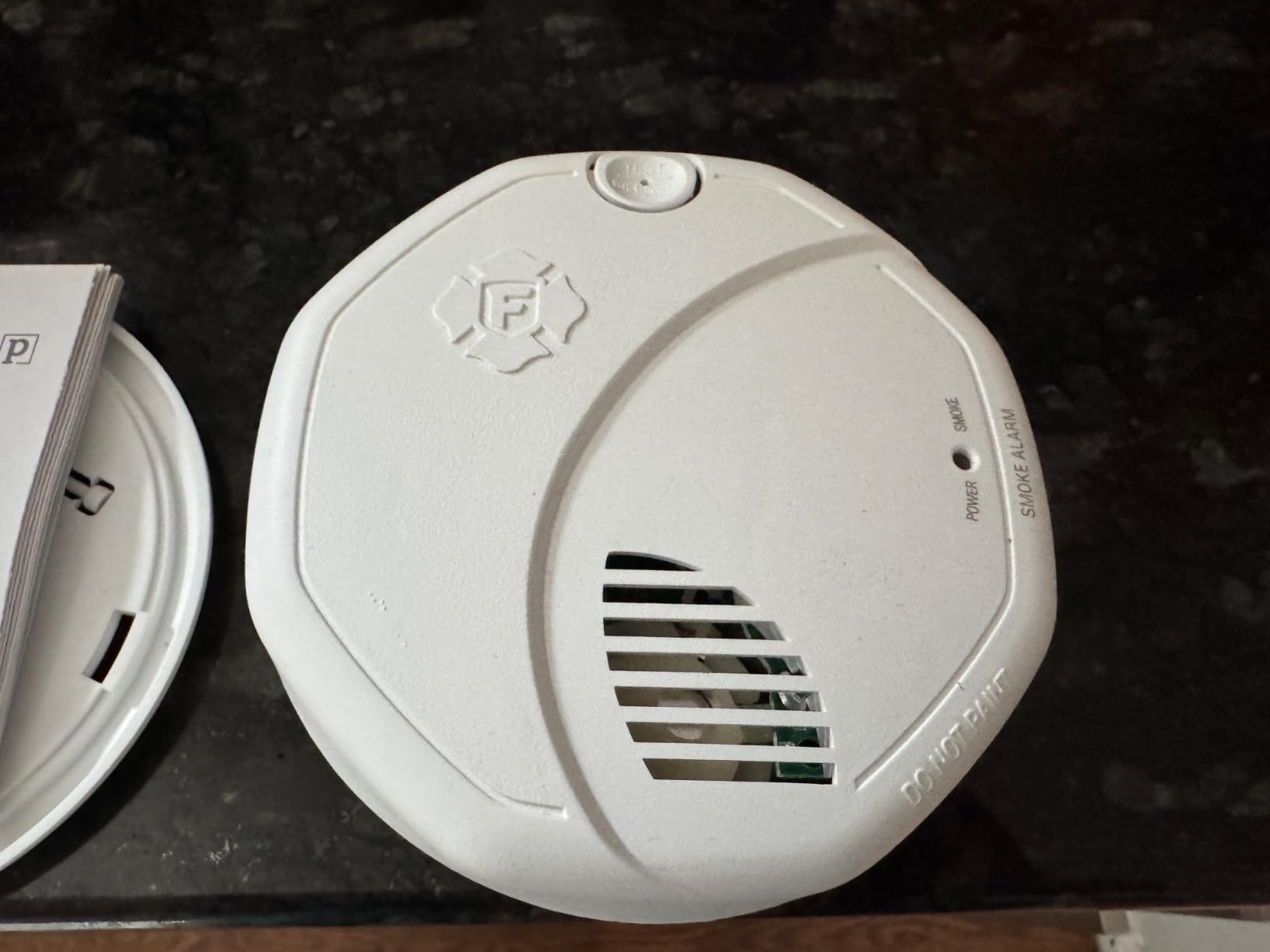
The drawback is that dual-sensor alarms are more sensitive to nuisance conditions by design. Two sensing elements means twice the opportunity to react to dust, cooking vapour or a humid night. In a kitchen-adjacent unit room that can be a real annoyance, and it is the trade you accept for the wider detection net.
Be honest about the evidence here too. This alarm carries a few hundred ratings rather than thousands, so you have a thinner picture of long-term behaviour than you do for the picks above. Buyers who have owned it tend to report satisfaction with the combination of detection types and the maintenance-free battery.
It also remains a standalone design, so it will not join an interconnected system. If your hallway alarms are wired together, this is a standalone voice in the corner rather than part of the network.
Where the dual sensor earns its place
If a fire starts in a bedroom, the two most likely paths are a smoldering duvet or a fast flame from a lamp or charger. A dual-sensor alarm covers both without you having to reason about which detection type suits which hazard. For a room where you sleep eight hours with the door closed, that is a fair amount of insurance for a sealed battery.
It is also a good upgrade path for households moving up from replaceable-battery ionization alarms and wanting to stop thinking about batteries entirely.
What to keep in mind
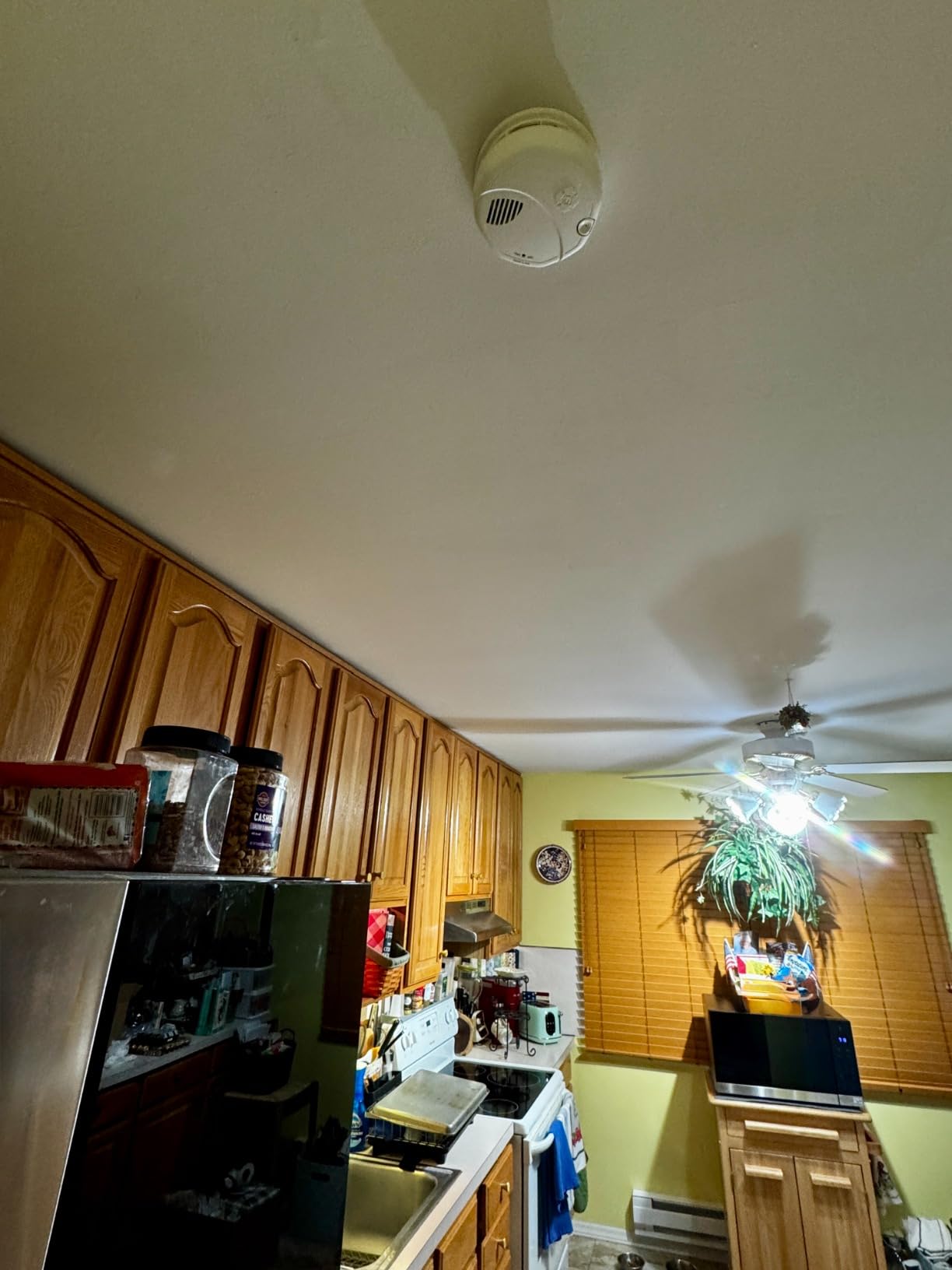
Nuisance sensitivity is the honest downside. If your bedroom collects dust quickly, or you run a humidifier nearby, a dual-sensor unit will react more often than a photoelectric-only model. Mount it away from air vents and returns and it will settle down.
The thinner review base means more uncertainty about long-term failure patterns than with the top picks. Treat it as a strong option rather than a proven one.
4. Kidde 10SDR Review: A Compact Photoelectric Alarm for Smaller Bedrooms
Kidde Compact Smoke Detector, AA Battery-Powered, 10SDR
Photoelectric sensor
Two AA batteries
4 inch diameter
85 dB alarm
Pros
- Compact 4 inch body suits small rooms
- Two AA batteries included for immediate setup
- Photoelectric sensing reduces cooking and steam false alarms
- Tested to UL 217 10th Edition with a 10-year limited warranty
- Operating humidity up to 95 percent
Cons
- AA batteries need periodic replacement rather than a sealed 10-year cell
- Photoelectric-only sensing is tuned for smoldering fires and is not a dual-sensor design
The 10SDR solves a problem the bigger bodies create: visual weight. At 4 inches across it is small enough to disappear on a low ceiling, and in a compact bedroom that reads as a less industrial object above the bed. It is photoelectric, which is the right sensing type for bedding fires, and it runs on two AA batteries that come in the box.
Owners point to three things repeatedly: the small footprint, the 85 dB alert, and the low cost of entry. With 75 percent of ratings at five stars, the pattern is consistent. The included cells and simple mount hardware mean an install today with nothing else on the shopping list.
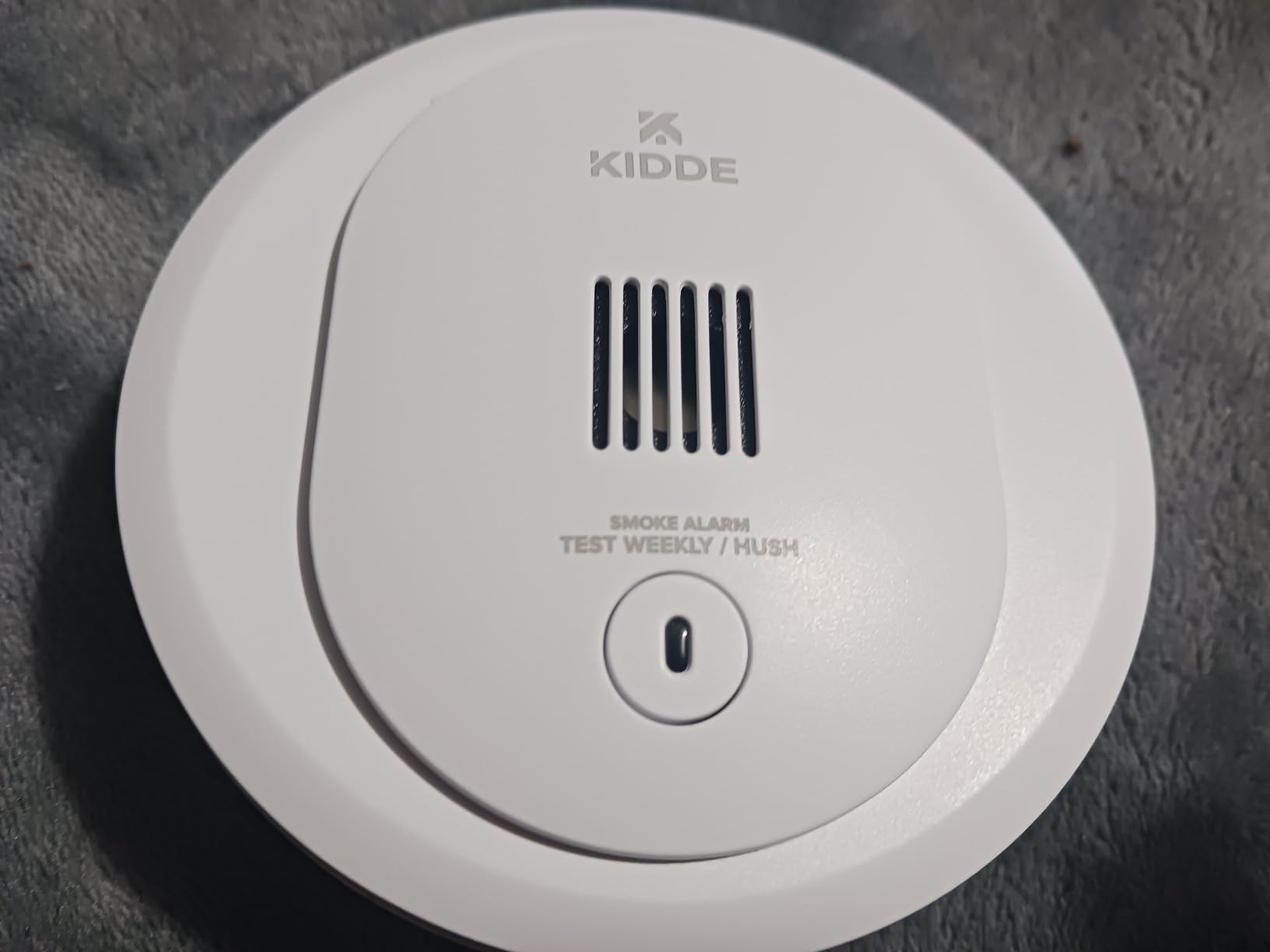
Two AA cells will not last a decade. Expect to swap them roughly every year, and expect the low-battery chirp that comes with it, which in a bedroom is the difference between a good night and a ruined one. If that bothers you, choose a sealed-cell model instead.
Two AA cells also means the alarm is only as good as your memory, and a sleeping occupant is the worst possible person to run a battery calendar. The operating humidity range of up to 95 percent relative humidity is one of the more forgiving ratings in this roundup, which matters in a humid bedroom.
It is a single-sensor photoelectric alarm, so it will not detect carbon monoxide, and it is a standalone design with no interconnection. Voice alerts are absent as well, so a heavy sleeper gets a tone and nothing more.
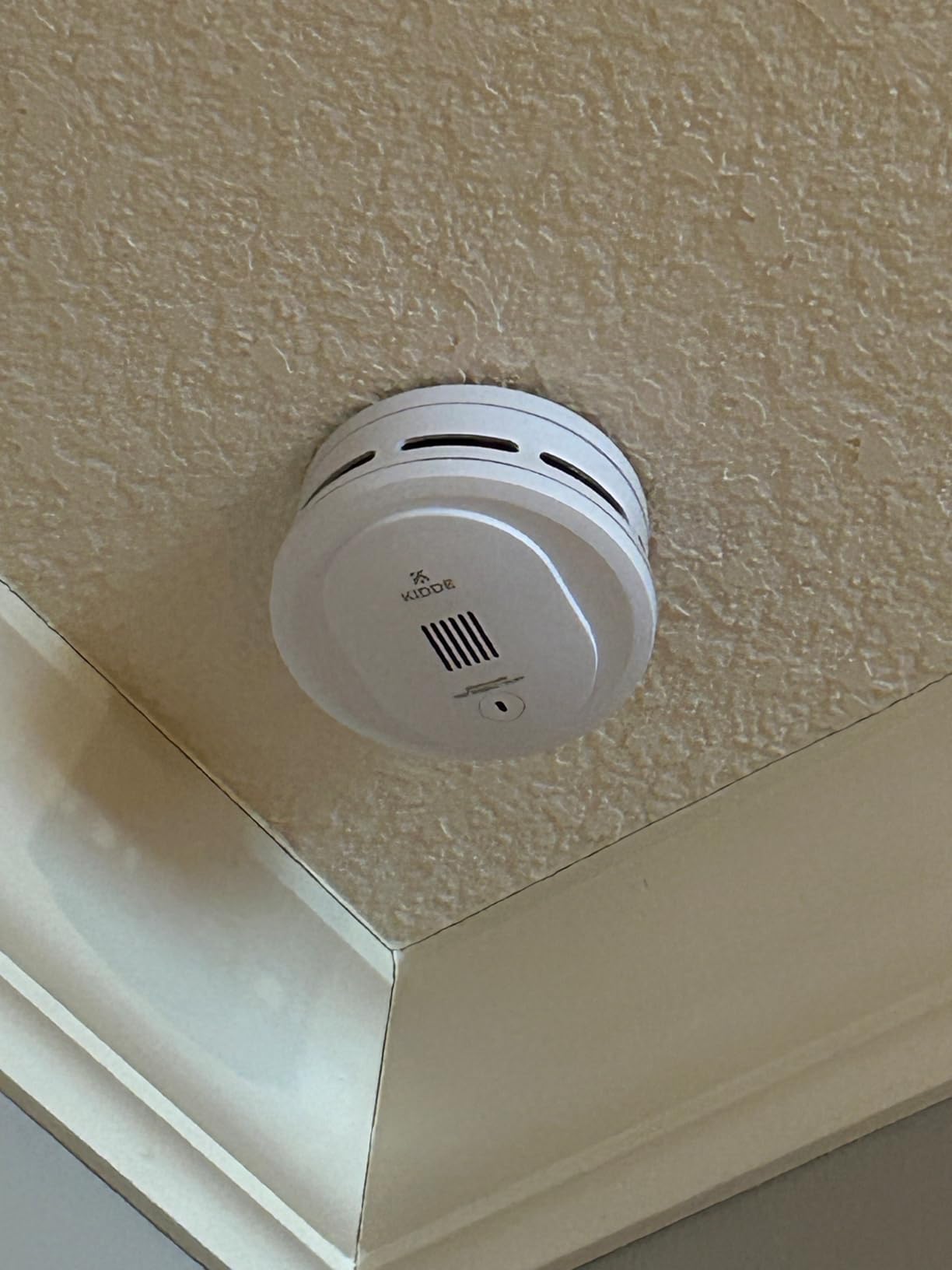
Why this compact alarm suits many bedrooms
Not every ceiling has room for a 5.7 inch disc, and not every sleeper wants a bright object hanging over the bed. This one solves both. Photoelectric sensing means it is tuned to the slow, smoldering fires a mattress or wardrobe produces, and the 85 dB alarm with a red LED is the standard wake-up pattern most people already know.
A 10-year limited warranty also means the manufacturer expects a long service life from the housing and electronics even though the cells are replaceable.
What it does not solve
Annual battery maintenance in a room where you sleep. That is the whole cost model, and it is the reason many households eventually move to a sealed cell even after starting here.
It also gives you no early warning from elsewhere in the home and no spoken alert. For a child who sleeps heavily, a tone alone may not be enough.
5. Kidde 20SA10-V Review: Voice Alerts That Wake Heavy Sleepers
Kidde Smoke Detector, Hardwired & 10-Year Battery Backup, 20SA10-V, 1 Pack
Hardwired 120V
10-year battery backup
Voice alerts
Photoelectric
Pros
- Spoken fire announcement cuts through sleep inertia
- Hardwired with a 10-year backup for outage protection
- Wired interconnect links alarms across the home
- Photoelectric sensing reduces cooking and steam false alarms
- 85 dB alarm with a red status light
Cons
- Requires AC wiring and some electrical skill
- Listed to 9th Edition rather than the newer 10th Edition
- Lowest rating in this roundup at 4.2 with 12 percent one-star feedback
Voice alerts are the feature that changes bedroom outcomes, and this is the alarm in the roundup that ships with them. Instead of only a tone, the unit announces fire, which gives a sleeping brain a spoken message to process rather than an abstract beep to interpret. For heavy sleepers, for children who have learned to sleep through a standard alarm pattern, and for anyone with hearing that has dulled at the high end, that is a real difference.
Power comes from 120V AC wiring with a built-in 10-year backup cell. That is the arrangement most current codes push toward, and it is the one that keeps working when the power goes out, which is when you most want an alarm that is not relying on a wall socket.
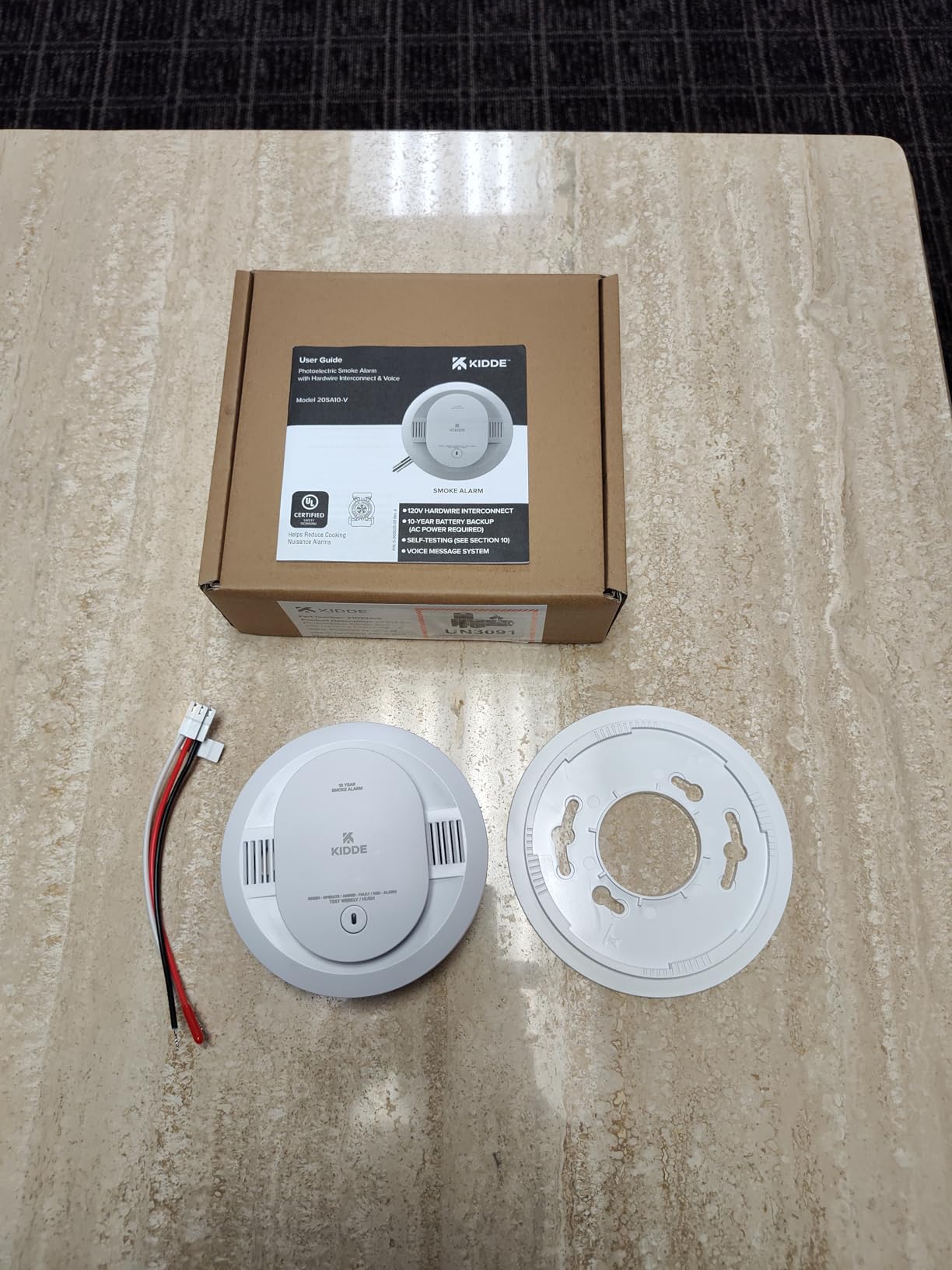
The interconnect capability is the second reason to look closely. When one alarm detects danger, the connected alarms sound together, so a fire that begins in the kitchen reaches the bedroom alarm without relying on how sound travels through an open door. For a lone smart alarm, that whole-home reach simply does not exist.
Sensing is photoelectric, so the slow-smoldering case is covered, and the operating range of 10 to 95 percent humidity is comfortable for a bedroom that gets warm in summer.
Now the honest part. This is a hardwired install, so someone has to open a box, work with AC wiring, and land on a code-compliant junction. If you are renting, or the ceiling has no alarm wiring, this is not a weekend project. It is also listed to the 9th Edition standard rather than the newer 10th Edition, and at 4.2 it carries the lowest average rating in this roundup with 12 percent one-star feedback, most often tied to installation difficulty or mixed results with wired interconnect compatibility.
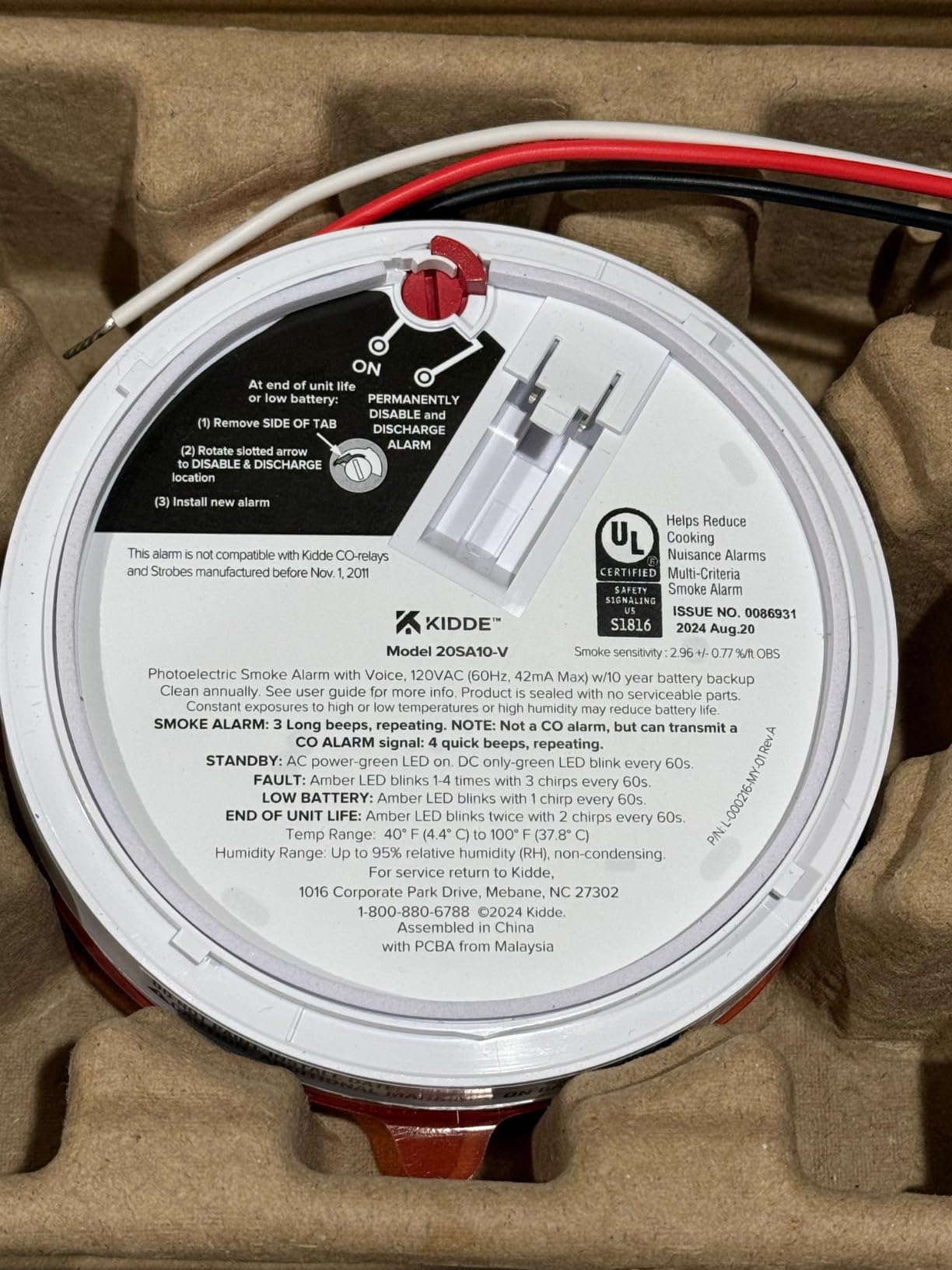
Why a spoken warning matters in a bedroom
Most people wake in stages, and a tone competes with a dream while a spoken instruction does not. Telling a sleeping person there is fire and to get up is a different message than a sound they have heard every night for years. That is the entire argument for voice alerts, and it is strongest in households with young children.
Add the 10-year backup and interconnect and this becomes the pick for anyone who has wiring available and cares about waking a whole house at once.
Where the compromises are
Installation is the barrier. AC wiring work is not a casual DIY task, and a bedroom that was never wired for an alarm will need a junction box brought in, which is electrician territory.
The 4.2 rating is not a failure signal, but it is a reminder that wired installs bring their own variable: interconnect compatibility with whatever else is on the circuit. Check before you commit, and expect to replace a mixed fleet eventually.
6. eufy Security E10 Review: A 70 Millimeter Alarm for Smart Homes
eufy Security Smoke Alarm E10, Smoke Detector, Ultra-Compact 70 mm Design
70 mm diameter
Wireless to eufy HomeBase
Sealed 5-year lithium battery
Pros
- Tiny 70 mm body roughly a third the size of traditional alarms
- Complies with UL 217 10th Edition
- Sealed lithium cell removes low-battery chirps
- Wireless range up to 656 feet from HomeBase with app alerts
- Loud siren plus phone notifications
Cons
- Requires a compatible eufy HomeBase to operate at all
- 5-year battery is shorter than the 10-year cells offered by rivals
- Smart features tie the alarm to one ecosystem
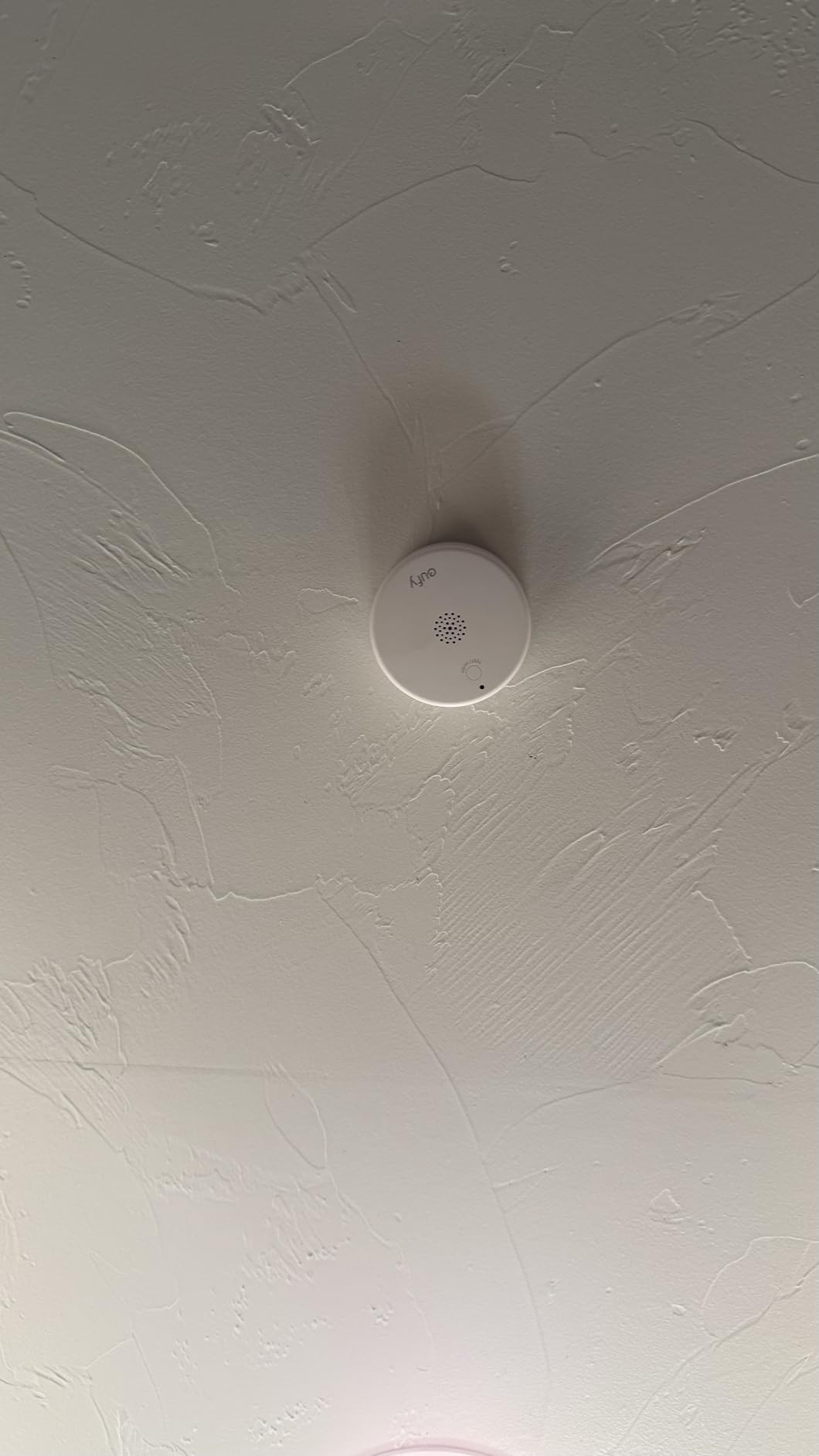
The E10 solves a problem no other alarm here addresses: looks. At 70 mm across it is roughly a third the diameter of a traditional unit, and in a bedroom that is the difference between a discreet object on the ceiling and a plastic disc you think about every time you look up. Owners single out the footprint first, then the integration with an existing eufy setup.
It is wireless, reaching up to 656 feet from a HomeBase, and it sends app notifications alongside its siren. That combination is genuinely useful in a bedroom: the unit is too small to wake a heavy sleeper on its own, but a phone on the nightstand can do the waking for you, and a notification tells you what is actually happening before you move.
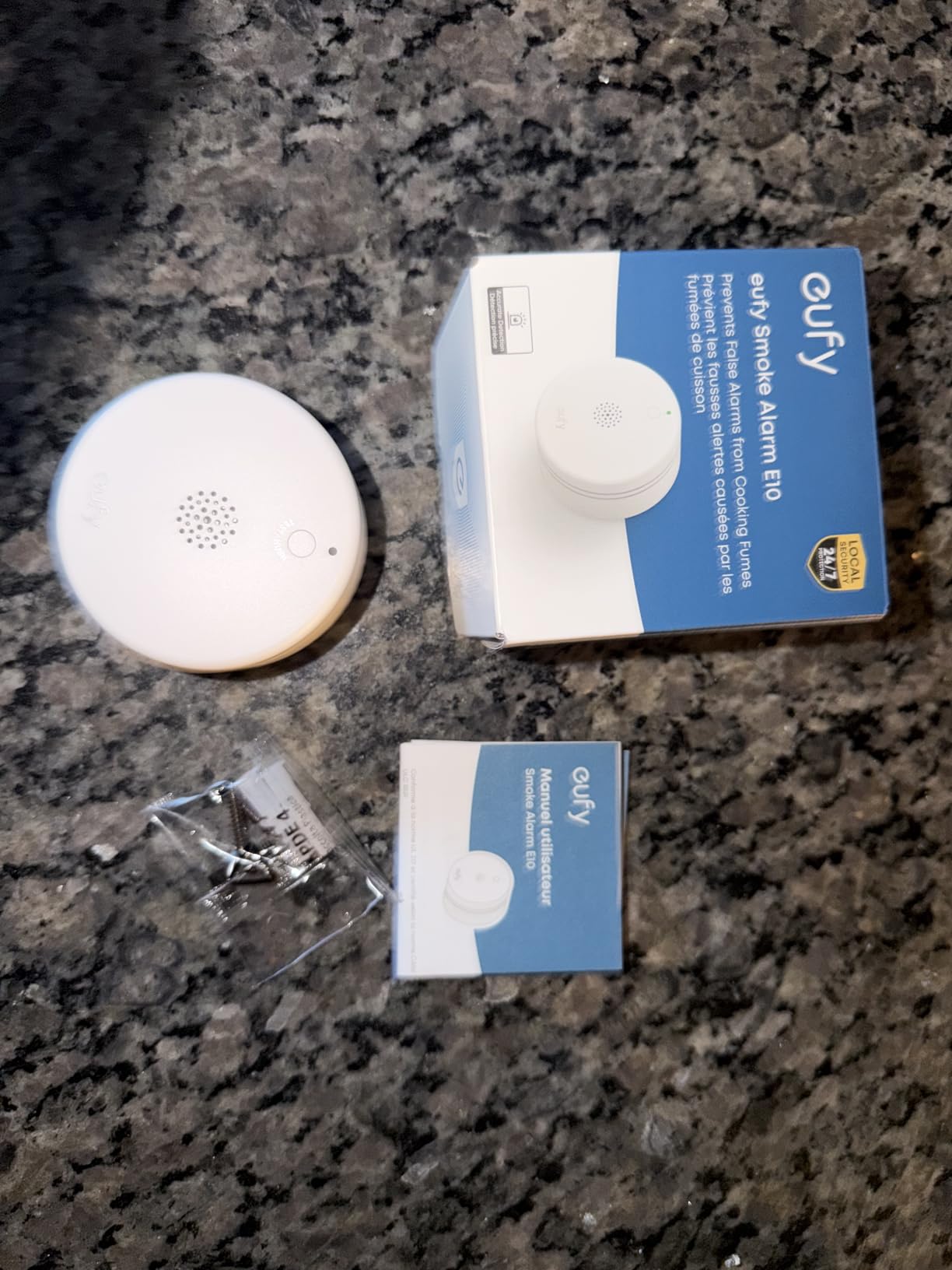
The catch is a hard dependency. A compatible eufy HomeBase, meaning the Mini, 2, 3 or Pro, is required for the alarm to operate at all. If you have no eufy ecosystem, this alarm does nothing. That also means your phone alerts and any remote silencing depend on one vendor’s hardware and firmware, which is the subscription-fatigue pattern smart-home owners tend to dislike.
The sealed lithium cell is rated at five years rather than ten, so you replace the whole alarm twice across a normal service life instead of once. The listed battery type is lithium metal, and 3.52 ounces makes it the lightest body in this roundup.
With 221 ratings, this is one of the smaller review bases here, and the recurring reservation in owner feedback is the HomeBase requirement rather than detection quality.
When the small body matters in a bedroom
Bedroom ceilings are often low and often the most visible surface in the room when you are lying down. A 70 mm alarm reads as a small detail rather than a device staring at you, and for light sleepers sensitive to a hardware presence, that is a real benefit. Add a sealed cell and the unit becomes something you mount once and stop seeing.
For a household already running eufy HomeBase hardware, the wireless range and app alerts make this the natural pick, and the UL 217 10th Edition compliance is the certification you would want.
What the ecosystem lock-in costs you
Without a HomeBase there is no alarm, and there is no way to add that function later with a different hub. If you later leave the eufy system, the alarm likely goes with it. That is a bigger commitment than a standalone unit asks of you.
Five years of sealed battery is also a shorter horizon than most of this list, so the long-run value is less impressive than the headline sealed-battery claim on competing models.
7. X-Sense XP0H-SN Review: A Combo Alarm with a Real-Time CO Display
X-Sense Smoke Detector Carbon Monoxide Alarm Combo, XP0H-SN, 1-Pack
Smoke plus CO sensing
Electrochemical CO sensor
Real-time LCD
10-year sealed battery
Pros
- Smoke and carbon monoxide in one device
- Real-time CO reading on an LCD that stays dark in standby
- Self-test checks sensors and battery every 60 seconds
- 10-year sealed lithium battery with no replacements
- Oversized mounting bracket covers older screw holes
Cons
- Standalone only with no interconnection
- Wi-Fi or base station support
- 5.7 inch diameter is wide for a bedroom ceiling
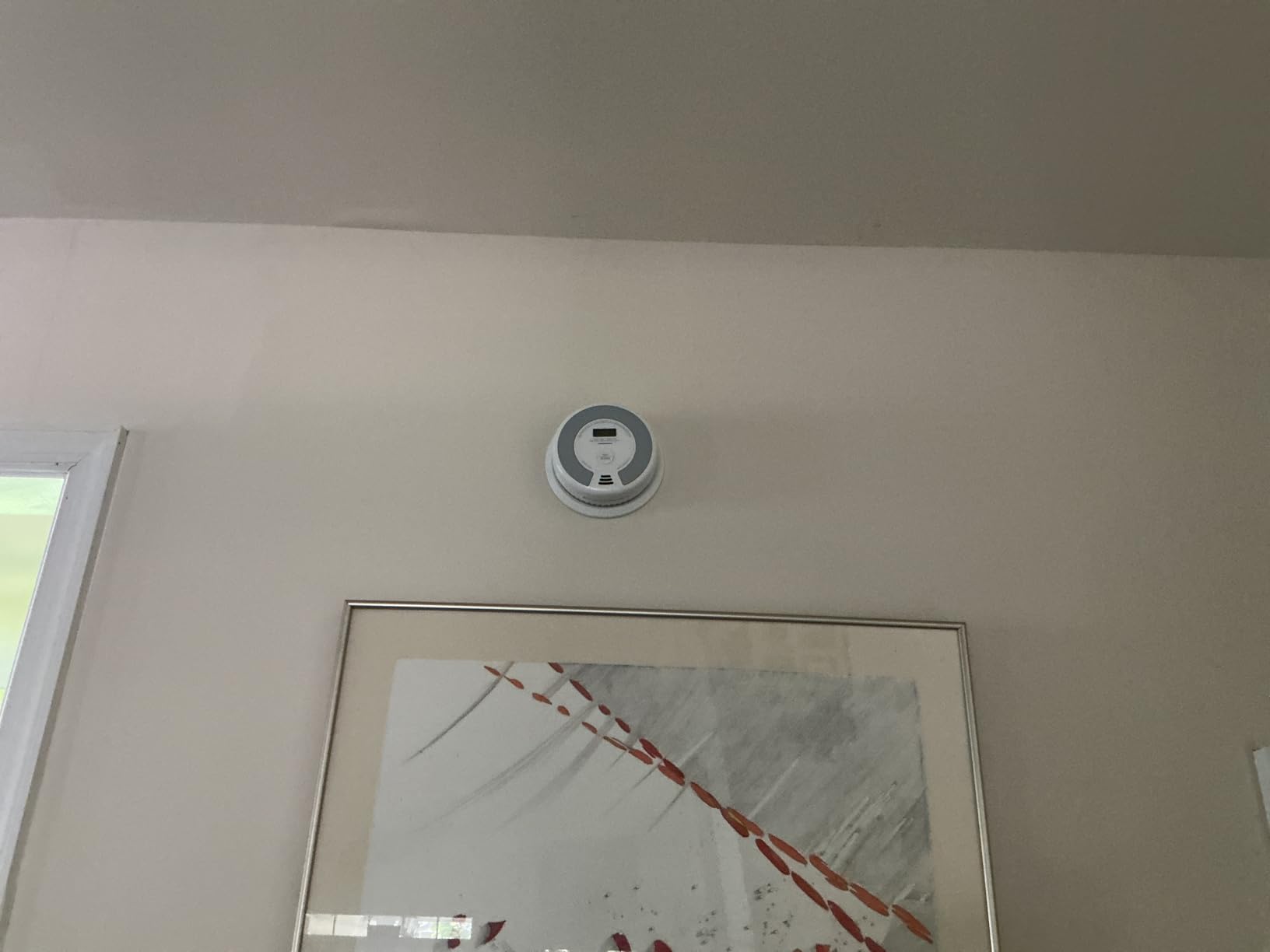
Most combo alarms hide their carbon monoxide sensor and show you a number only when something is wrong. This one keeps an LCD on the front that reports real-time CO levels and battery status, then goes completely dark during standby. That detail is what makes it a bedroom alarm rather than a utility-room alarm: no glowing panel over your head at 2 a.m., but a reading available the moment you want it.
Detection covers smoke and CO in a single body, with a photoelectric chamber and an electrochemical CO sensor, powered by a sealed 10-year lithium cell. A self-test runs every 60 seconds across the sensors, electronics and battery, which is one of the more thorough diagnostic routines in this roundup.

Owners often contrast this model with First Alert units specifically on false alarms, and the reports skew positive. Reviewers highlight build quality, how loud the alarm is, and the clarity of the display, with installers pointing to the oversized bracket as a practical touch when replacing an existing alarm and covering old screw holes.
The bracket is 5.7 inches across to match the alarm body, which also means a 5.7 inch disc on your ceiling. On a low bedroom ceiling that is noticeable, and it is larger than the compact models in this list.
It is a standalone device with no interconnection, no Wi-Fi and no base station support, which the manufacturer states plainly rather than burying. If you want a bedroom alarm joined to a network, this is not it.
Why the display matters more than it sounds
Carbon monoxide is the hazard people cannot smell, see or hear reliably, so a device that lets you check a reading on a quiet Sunday morning changes how you think about your own coverage. The screen staying dark until you need it keeps that utility without becoming a light source in a dark room, which is exactly the balance most combination units get wrong.
The 60-second self-test also means you are not guessing whether the sensor and cell are healthy. For a device meant to protect an unconscious sleeper, that is worth more than a feature list.
What it leaves out
No interconnection and no app. You get excellent standalone protection and an excellent readout, but no whole-home network and no phone alerts.
It is also a larger body than several alternatives here, and the standby indicator takes a few minutes to come back after you silence an alarm, which can look like a fault if you are not expecting it.
8. X-Sense SC07 Review: The Best Rated Smoke and CO Combination
X-Sense Smoke Detector Carbon Monoxide Detector Combo, SC07, 1-Pack
Photoelectric plus electrochemical CO
85 dB alarm
10-year sealed battery
16 oz
Pros
- Smoke and CO detection in one certified device
- 10-year sealed lithium battery with no late-night chirps
- Photoelectric sensor responds faster to slow-smoldering fires
- Independently tested to UL 217 and UL 2034
- Large review base signals established reliability
Cons
- Standalone design with no interconnection
- Wi-Fi or base station
- Heavier at 16 ounces than most plastic competitors
The SC07 is the alarm we would put in a bedroom that needs both hazards covered and does not want two devices on the ceiling. It is independently tested and certified to UL 217 for smoke and UL 2034 for carbon monoxide, which is the combination you want in a sleeping area near any fuel-burning appliance, furnace or attached garage.
Owners consistently emphasise the dual protection and the decade-long battery, and a large share report fewer nuisance alarms than the brands they switched from. The photoelectric chamber is the part that matters in a bedroom, since it responds faster to slow-smoldering fires and helps cut cooking-related false alarms that plague dual-sensor designs.
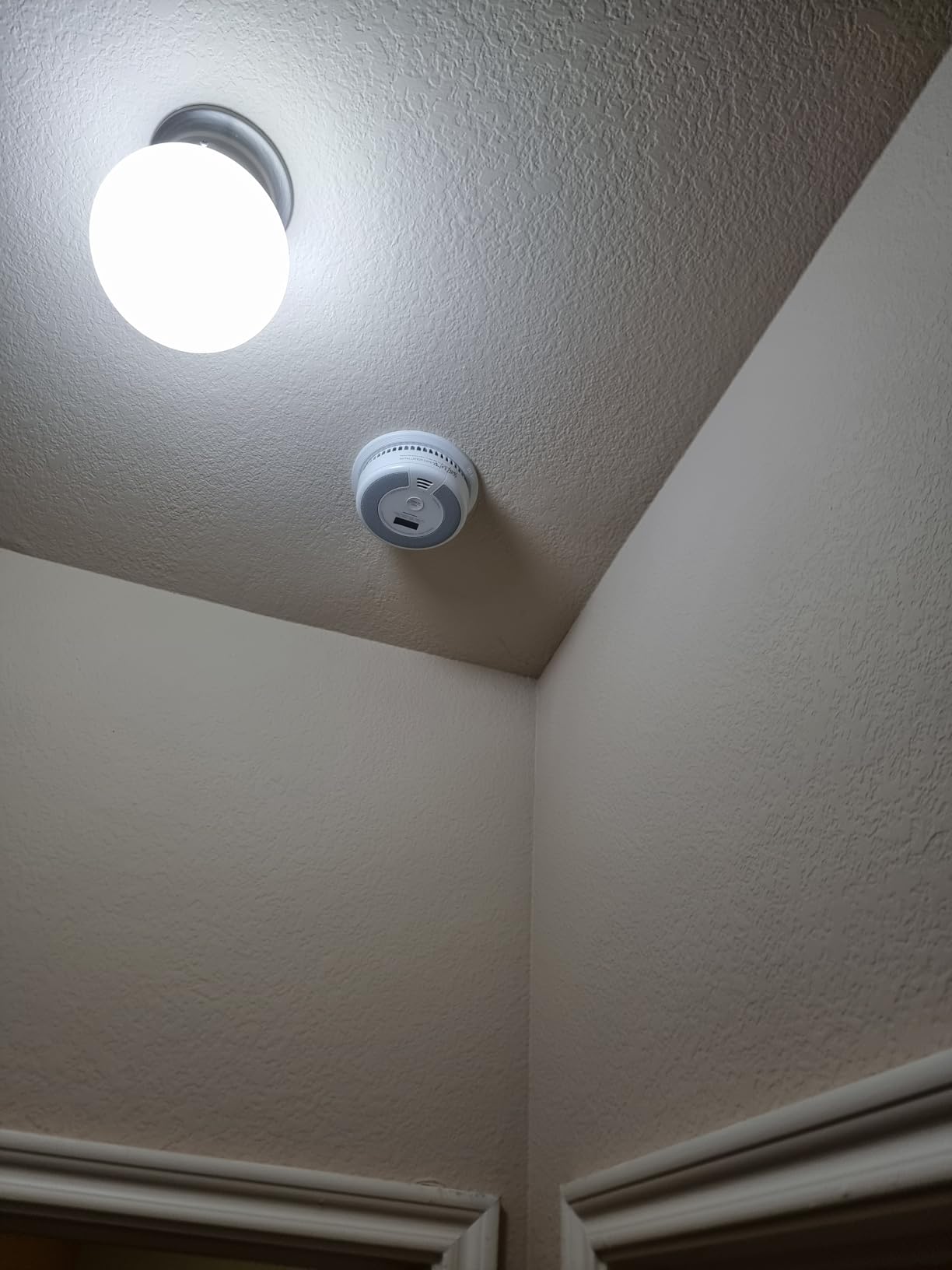
The alarm output is a full 85 dB, which is the figure that matters when you are trying to wake a sleeping adult. A built-in sealed lithium battery means no replacements and no low-battery chirps, which removes the single most common bedroom complaint we hear.
What you give up is everything connected. There is no wireless interconnection, no Wi-Fi, and no base station connection, and the manufacturer is upfront about it. At 16 ounces it is the heaviest body in this roundup, and while 16 ounces is trivial compared to a smoke alarm being knocked loose by a tall child’s toy, it is worth noting the unit is noticeably weightier than the plastic alternatives.
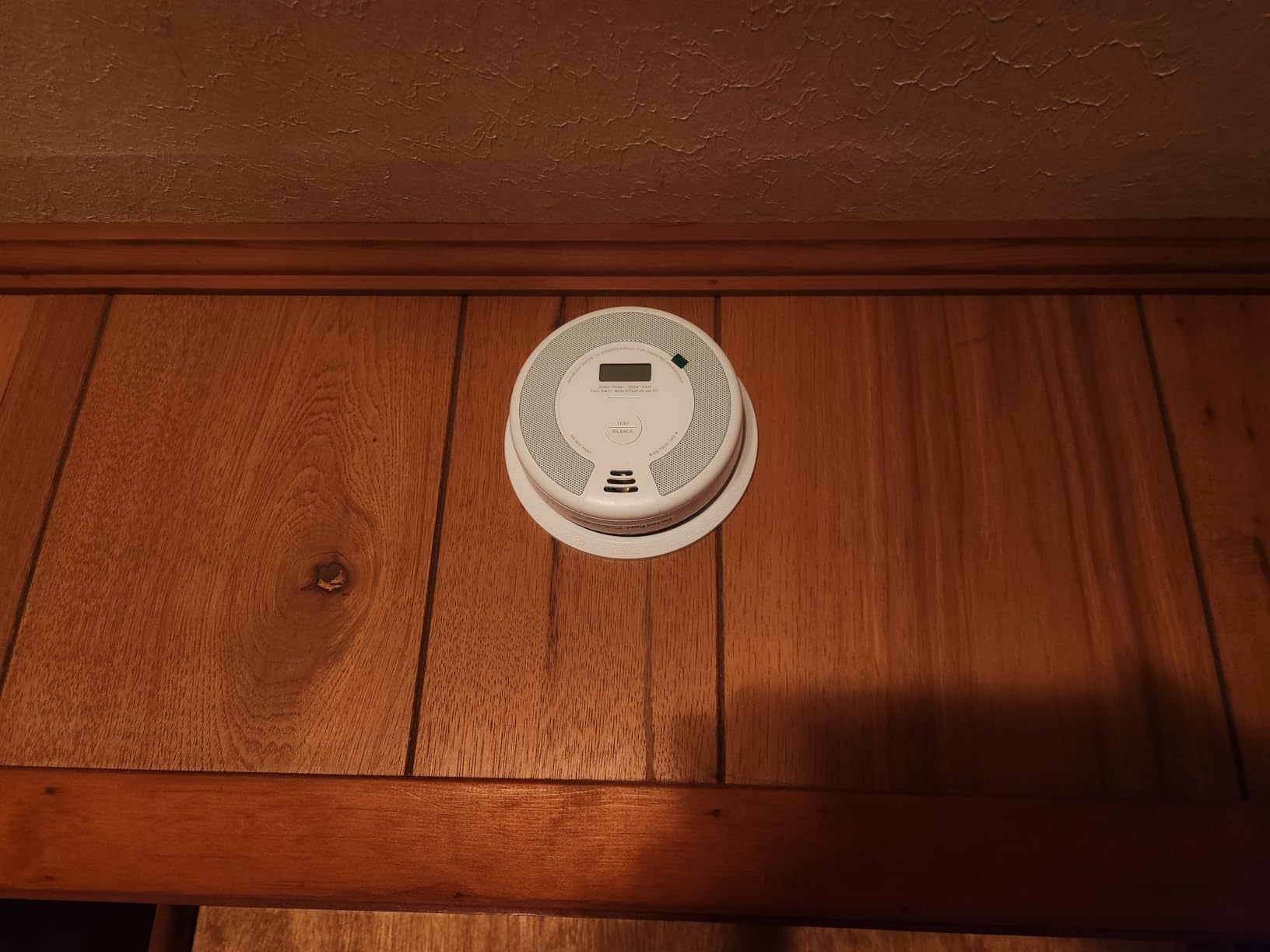
The LCD reads out during alarms and tests and stays unlit otherwise, so it will not light up your room while you sleep. That is a deliberate bedroom-friendly choice, but it also means there is no casual glance at a CO number on a quiet afternoon.
Why dual certification matters in a sleeping area
UL 217 and UL 2034 are separate standards for separate hazards, and a unit carrying both has been tested for each rather than marketed into the category. In a bedroom that sits near combustion equipment, that is the difference between a smoke alarm and a smoke and CO alarm that can actually do the second job.
Combine that with a sealed decade-long cell and an 85 dB output, and you have the fewest moving parts in this roundup: nothing to charge, nothing to replace, nothing that chirps.
What the standalone design takes away
If a fire starts in the hallway, this alarm only knows about it if the sound reaches the bedroom or someone calls out. There is no network to push an alert through the house for you.
For a household that already has interconnected alarms elsewhere and simply wants one strong, certified bedroom unit, that is an acceptable limitation. For a whole-home retrofit, it is not.
9. First Alert SMI105-AC Review: A Hardwired Alarm for Interconnected Homes
First Alert Hardwire Smoke Alarm with 10-Year Battery Backup
Hardwired 120V
10-year battery backup
Early warning interconnect
Ionization
Pros
- Backup cell keeps protection running through power outages
- Early warning interconnect sounds all compatible alarms together
- Alarm indicator light shows which unit started the event
- Precision Detection sensing reduces cooking nuisance alarms
- End-of-life warning marks the replacement date
Cons
- Hardwiring makes installation more involved
- Ionization-only sensing rather than a dual-sensor design
- Highest relative cost in this roundup
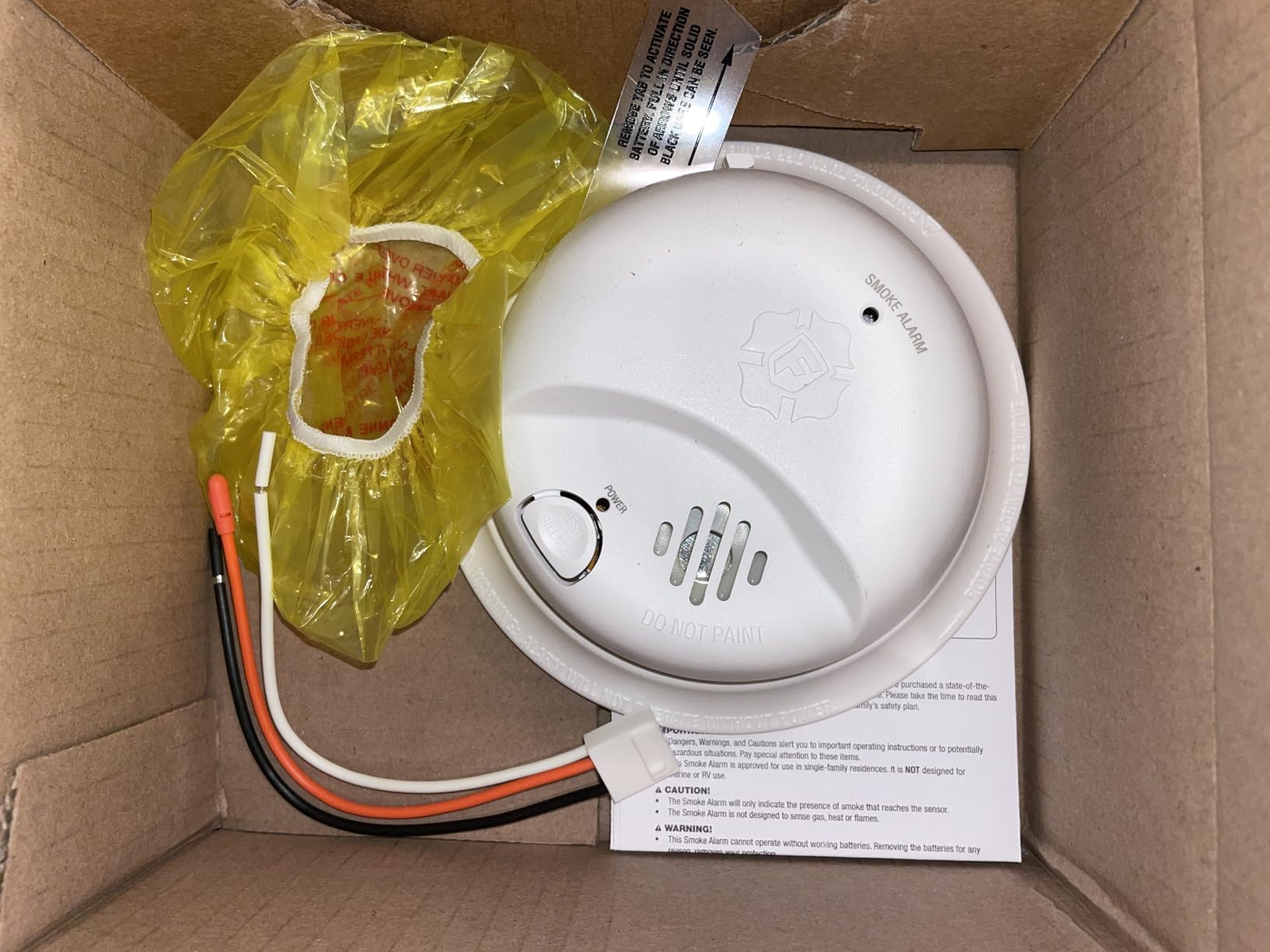
This is the alarm to buy when you are already committed to a wired system and want the bedroom to be part of it. Early warning interconnect means that when any compatible alarm detects danger, the rest sound too, so a fire that begins in the kitchen or the garage reaches the people asleep at the far end of the house without anyone having to hear it through two closed doors.
Power comes from 120V AC with a 10-year backup cell, so the alarm keeps working through an outage. The alarm indicator light is a small touch that matters in practice: in a house where five alarms went off at once, seeing which unit started it saves you guessing in a smoke-filled hallway.
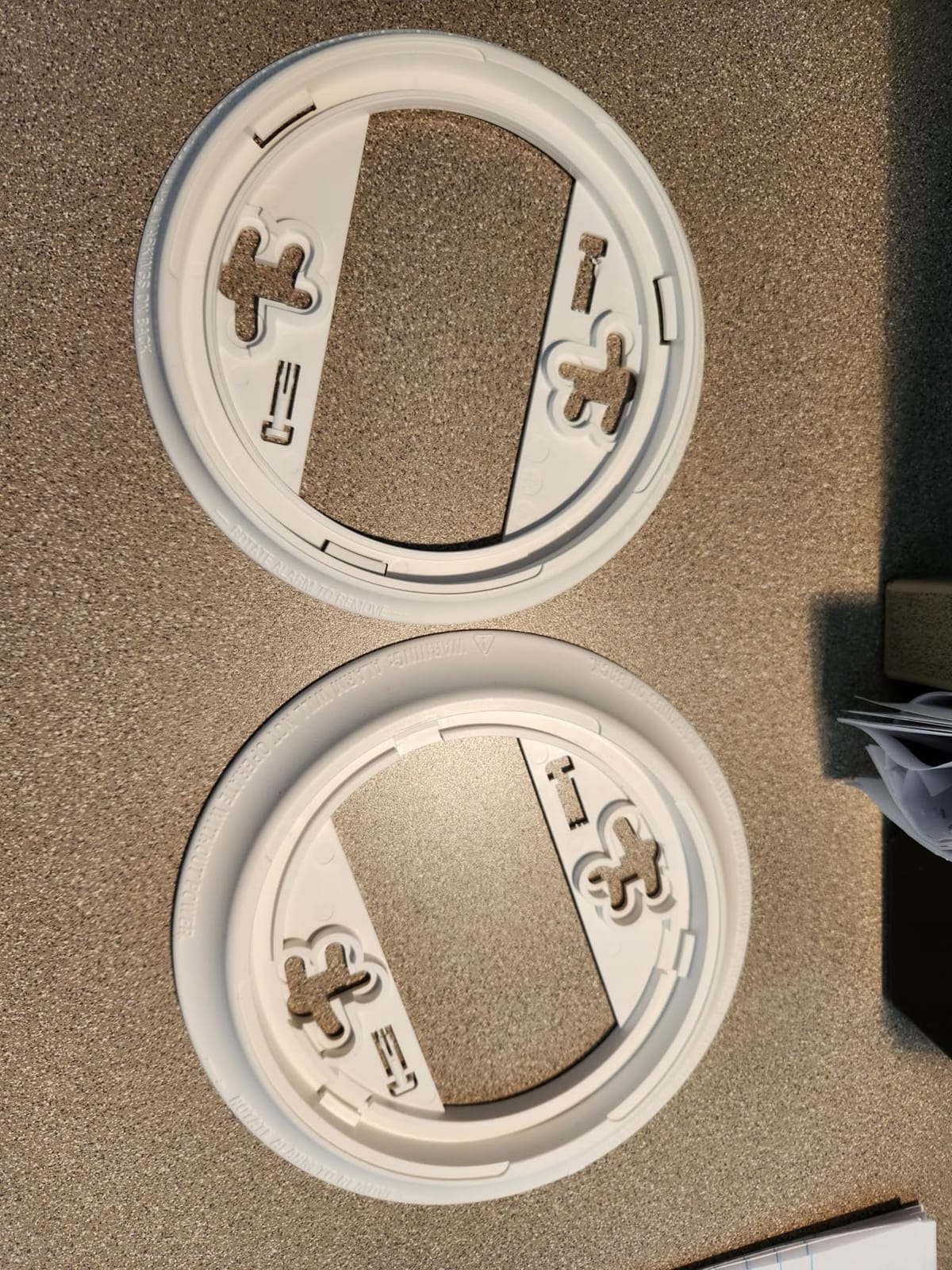
Owners value the interconnect system and the outage protection most, and across more than a thousand ratings the feedback is steady on both. The negative notes cluster around two things: installation complexity, and the cost of a wired alarm against a battery-only one for the same coverage.
There is a bigger issue than either of those. The sensing element is ionization, not dual-sensor, so in a bedroom where bedding is the most likely ignition source, this is not the sharpest available detector. First Alert’s Precision Detection technology is designed to reduce cooking nuisance alarms, and it is a capable alarm, but you are choosing here for system behaviour rather than raw sensitivity.
It is also a 5.5 inch body that needs a real junction box behind it. If the ceiling has no alarm wiring, this becomes a job rather than a purchase.
Why interconnection changes bedroom safety
A lone smart bedroom alarm is a much weaker proposition than it looks. It knows about its own room and little else, and a bedroom door is a surprisingly effective sound barrier. Interconnected alarms remove the acoustics from the equation entirely, which is why whole-home systems are the recommended direction in most guidance for households with more than one sleeping area.
With a 10-year backup cell, you also stop worrying about the outage case, where a hardwired alarm with no cell goes silent at exactly the wrong moment.
What you accept for the system behaviour
Ionization-only sensing is the real compromise in a sleeping area. It is a capable detector that many households rely on, but a photoelectric or dual-sensor model reads smoldering bedding fires faster.
Installation effort and relative cost are the other two. Both are the price of belonging to a wired network, and both stop making sense if the wiring is not already there.
10. Kidde 30CUD10 Review: A Dual Hazard Alarm with a Ten-Year Battery
Kidde Smoke & Carbon Monoxide Detector, 10-Year Battery, 30CUD10, 1 Pack
Smoke plus CO sensing
Sealed 10-year battery
UL 217 and UL 2034 tested
Pros
- Detects both smoke and carbon monoxide in one body
- Built-in 10-year battery removes chirps and replacement costs
- Photoelectric plus electrochemical sensing suits bedding fires
- Tested to UL 217 10th Edition and UL 2034 5th Edition
- 10-year limited warranty with a red status light
Cons
- Lowest average rating in this roundup at 4.0 with 19 percent one-star ratings
- No voice alerts unlike the Kidde 20SA10-V
- Higher relative cost than smoke-only models
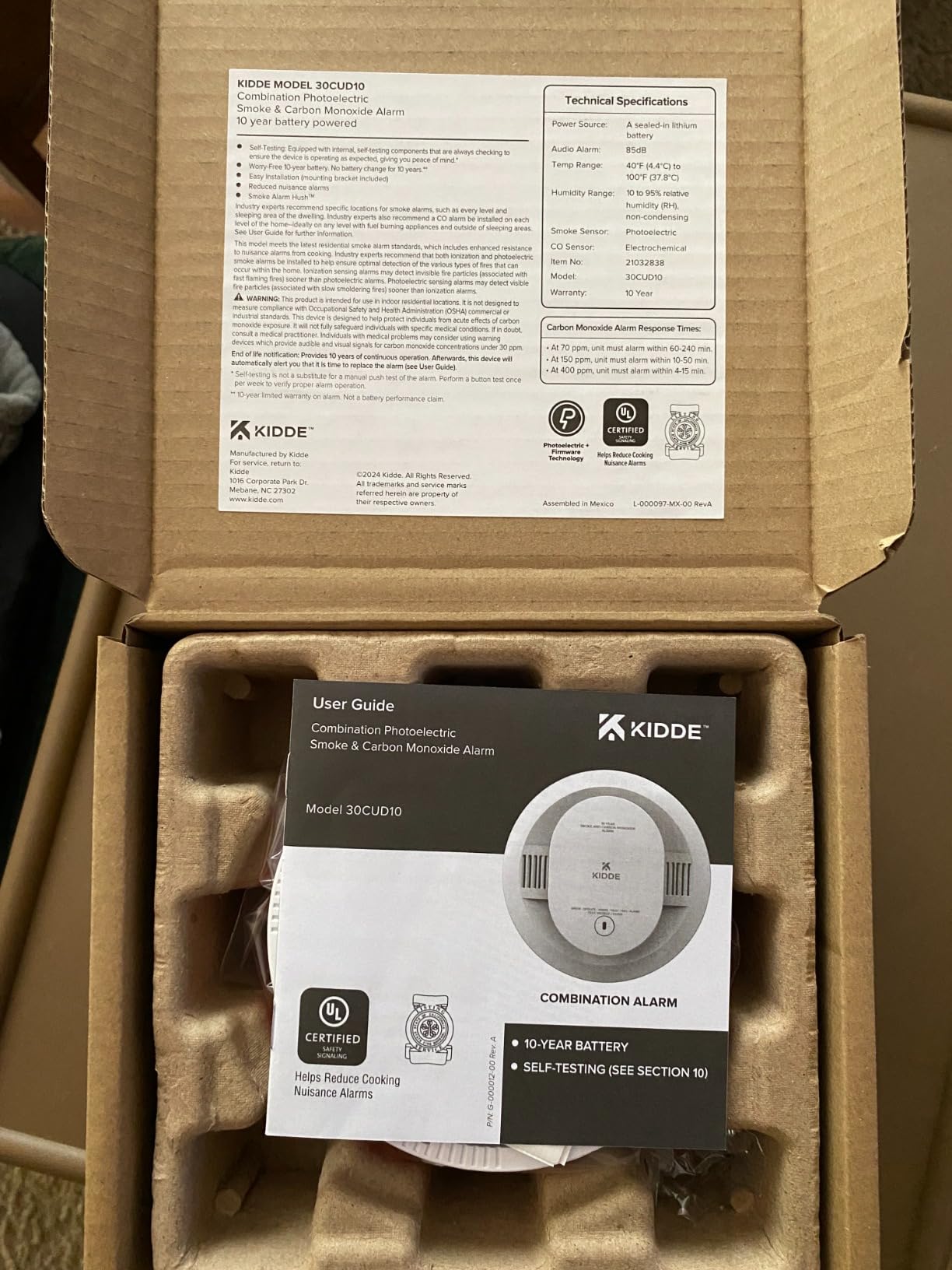
If your home has a furnace, a water heater, a gas range or an attached garage, the carbon monoxide question in a bedroom stops being theoretical. This alarm answers it in the same body as the smoke detection, with a photoelectric chamber for smoldering fires and an electrochemical sensor for CO, tested to UL 217 10th Edition and UL 2034 5th Edition.
The 10-year sealed battery removes the maintenance argument. No low-battery chirps at 2 a.m., no annual cell swap, and a red LED for status. The 10-year limited warranty matches the service life of the battery, which is the arrangement that makes long-term ownership simple.
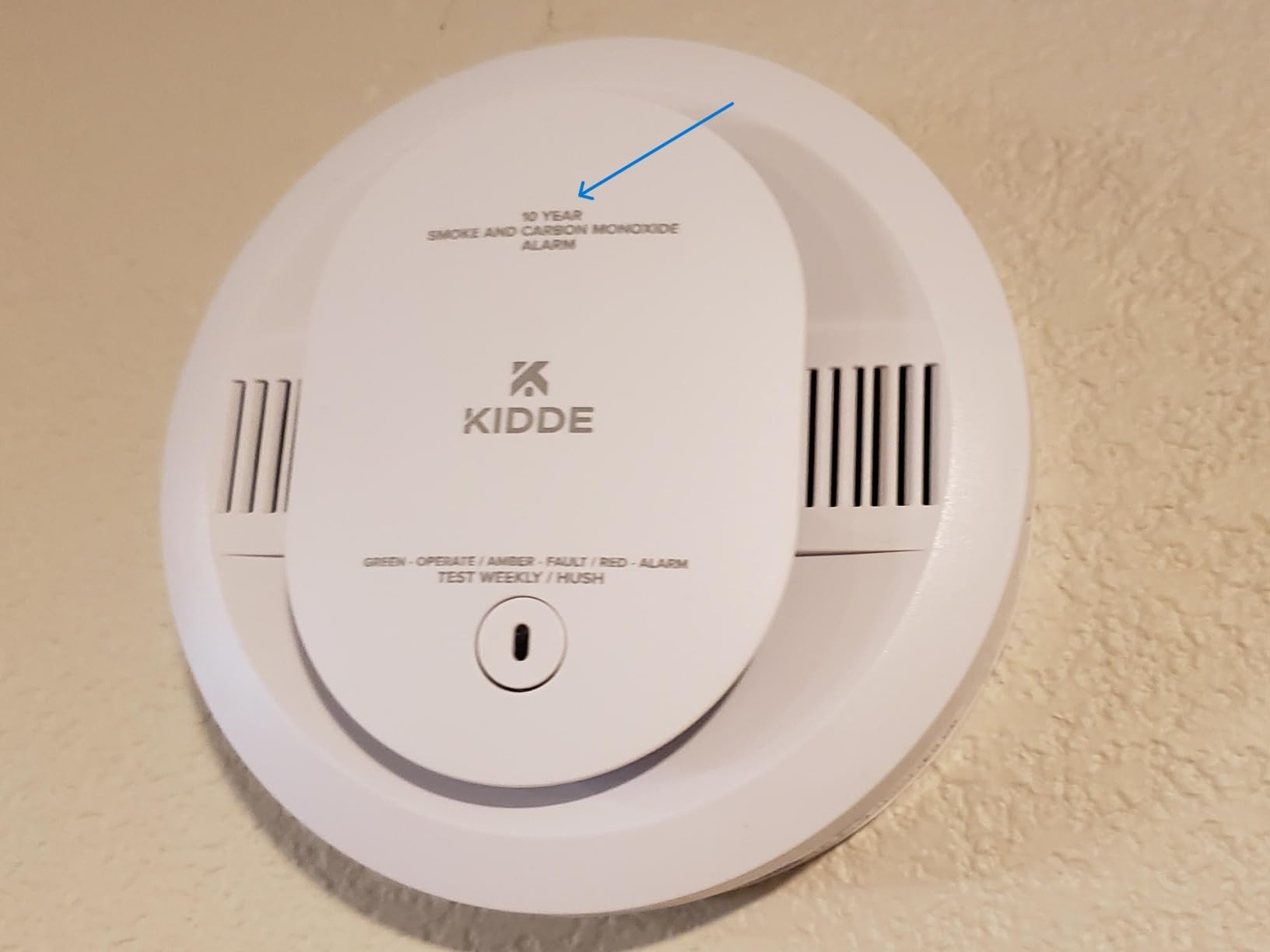
Here is the part that deserves attention. This is the lowest-rated pick in the roundup at 4.0 across a substantial review base, with 19 percent one-star feedback, which is the highest negative share of any alarm we looked at. Buyers who like it cite the dual detection and the sealed battery. Detractors commonly report early failures or nuisance alarms, and with more than a thousand ratings that pattern is too large to wave away.
There is no voice alert either, unlike the other hardwired Kidde in this list. In a household with young children or a genuinely heavy sleeper, that removes a feature you would otherwise consider essential.
It is also a standalone design, so like most of this list it will not join an interconnected network.
When dual detection is the deciding factor
CO is the hazard that justifies a combo alarm over a smoke-only model. Sleeping areas are where you spend the most hours with the greatest difficulty noticing a slow leak, and code guidance generally calls for CO alarms near sleeping areas when fuel-burning appliances are present. Having that sensor in the same certified unit as your smoke detection means one device, one mount, one battery.
The photoelectric half is the part that keeps it a bedroom alarm rather than a CO alarm in a utility room.
What the rating history tells you
A 4.0 average with 19 percent one-star feedback is a warning, not a disqualification. It suggests a unit where a minority have real problems, and where the brand is widely available with a long support history.
If you want the same dual coverage with a stronger review profile, the X-Sense SC07 earlier in this list is the safer comparison point.
What to Look for in a Bedroom Smoke Detector
The gap between a good bedroom alarm and a bad one is rarely the spec sheet. It is four decisions: sensing type, how it tells you there is danger, what happens when the power goes out, and whether it belongs to a system. Get those right and almost any reputable alarm will serve a bedroom well. Get them wrong and a unit can fail in exactly the situation you bought it for.
Photoelectric beats ionization for bedding fires
A photoelectric sensing chamber detects smoke particles using a light beam, which makes it fast on the slow, smoldering fires that start in mattresses, curtains and upholstered furniture. Ionization alarms use a small radioactive element to make an ion current, and they excel at fast-flamming fires but react more readily to small airborne particles, which is the source of many nuisance alarms from dust, steam and cooking.
For a bedroom, photoelectric is the better default. A dual-sensor alarm gives you both and is a sensible upgrade, with the caveat that it is more sensitive to nuisance conditions. Any ionization-only unit on your list today is a compromise we would not choose for a room with a bed in it.
Voice alerts versus a plain 85 dB tone
The standard residential alarm pattern peaks at 85 dB, which is loud enough to wake most adults. Heavy sleepers and young children are a different problem, and here voice alerts earn their place. Spoken warnings such as the Kidde model that announces fire give a sleeping brain a message instead of an abstract sound, and they also tell you the type of danger, which matters when a smoke alarm and a CO alarm are both in the room.
Against that, a voice alert in a shared wall at night is unpleasant, and you cannot quiet the speech as easily as a tone. If your household has light sleepers, a test-and-silence button is worth more than a voice.
Hardwired versus a sealed 10-year battery
Hardwired units with a 10-year backup cell are the most reliable option because they keep working during an outage, and most current residential codes point that direction for new construction. They also support interconnect, which means a fire anywhere can wake the bedroom. The cost is installation: you need a junction box, wiring, and often an electrician.
A sealed 10-year lithium battery is the right answer for renters, older homes without alarm wiring, and anyone who wants one purchase and no maintenance. Across a decade, a sealed cell also removes the recurring cost and recurring chirp of a replaceable 9V or AA battery, which is the single most common bedroom complaint we hear from owners.
Replaceable cells are still perfectly reasonable, and a few buyers in this roundup prefer them for serviceability. The cost is remembering.
Smoke only or smoke plus carbon monoxide
A smoke-only alarm detects one hazard. A combination alarm adds an electrochemical CO sensor, and that matters in a home with a fuel-burning appliance, a fireplace, an attached garage, or a bedroom on an outside wall near one. The honest limitation is that a smoke-only unit cannot sense CO at all, no matter how good its smoke sensing is.
On placement, CO alarms do not belong next to a fuel-burning appliance, where readings can be falsely elevated, or in a dead-air space such as a closet or under a staircase. Inside a bedroom, mounted on the ceiling or upper wall, is exactly where they belong.
Interconnect turns one alarm into a system
Interconnection is the feature most often skipped and most often regretted. When alarms are linked, one detection triggers every alarm in the house, so a bedroom occupant hears the alarm regardless of where the fire started and regardless of how many doors are closed. Wireless interconnection avoids rewiring; wired interconnection usually needs a relay module at the panel.
The trade-offs are honest. Interconnected alarms must be from compatible families, and mixing brands often means some units sit outside the network. But a lone smart bedroom alarm on its own is a weak safety proposition, so if you are already part way through a whole-home upgrade, buy the bedroom unit with interconnect in mind.
What the status LED does to a dark room
Most alarms flash a small status light roughly once a minute, and some are noticeably brighter than others. In a pitch-dark bedroom, that is a light source at eye level from the pillow, and light sleepers notice. Some units offer a dimmable or nightlight mode, some keep the display dark during standby like the X-Sense combo, and the rest leave you with no control.
This is a small detail that never appears on a spec sheet and reliably appears in owner complaints. If you are genuinely sensitive to light while sleeping, check the standby behaviour before you buy.
Which smart features are worth paying for
Phone notifications are the reason many people consider a connected alarm, and they are most useful in a bedroom precisely because the unit may not wake you. The catch is the fine print. Some smart alarms depend entirely on a branded hub, and some tie useful remote features to an account. Test the app before any trial period ends, and find out what the alarm does with no hub and no account at all.
Forum threads about smart alarms lean consistently toward integration concerns first and safety second, which is fair. Treat any unit that will not function without a single vendor’s hardware as a decision about the whole system, not about one alarm.
Where to Put a Smoke Detector in a Bedroom
Placement matters as much as the model you choose, and bedroom placement has rules that differ from the rest of the house because the fire is likely to start in the room itself. A perfect alarm mounted badly will lose to a decent alarm mounted correctly, every time.
Follow these steps for a bedroom install:
Mount on the ceiling, at least 4 inches from any wall or corner. Smoke rises and spreads along the ceiling, where air is hottest and moving most. Staying clear of corners avoids dead-air pockets where smoke can pool without triggering the chamber.
If you mount on a wall, place it 4 to 6 inches below the ceiling. Not down at picture-rail height. Smoke gathers high in the room and a low alarm sees very little of it.
Never mount directly above the bed. This is the most commonly repeated bedroom rule. If smoke from a smoldering mattress reaches the alarm, the alarm is already in the fire’s path, and falling debris or water from suppression can disable it.
Keep clear of air vents, returns and supply registers. A vent blowing dust or humidity past the chamber is a leading cause of nuisance alarms, and it is the reason many bedroom alarms get disconnected in frustration.
Keep the 10-foot rule from a kitchen or bathroom door. Cooking vapour and shower steam travel further than most people expect. The general guidance is to keep smoke alarms at least 10 feet from a cooking appliance, and to avoid placing the bedroom alarm where either can reach it.
Consider the walls for a bedroom on an upper floor or an exterior wall. These are common dead-air zones, which is another reason to keep the unit on the ceiling rather than tucked against an outside corner.
On how many alarms a home needs, the accepted guidance is inside every bedroom, outside every sleeping area, on every level including the basement, and near every kitchen. For a typical 4-bedroom house that works out to a minimum of roughly six or seven alarms depending on layout, and bedroom coverage is the part homeowners most often skip because the door was already open at the time someone checked.
Some of the products here, such as the storage ottomans for bedrooms we cover, are worth checking for clearance before you drill, since a low headboard or a tall wardrobe can change where the alarm can realistically go.
Matching a Bedroom Alarm to Your Household
Most people can narrow ten alarms to two or three in about a minute by answering three questions about their household. Below is the short version of that filtering, using only the picks in this roundup.
Renters, or any ceiling with no alarm wiring. You need a battery unit, and you want one that never chirps. That rules out every replaceable-cell model on this list and leaves you choosing between the X-Sense SD2J0AX, the First Alert SM310, the Kidde 30CUD10, and the combo units from X-Sense. The mounted-over-existing-screw-hole bracket on the XP0H-SN is worth noting if you are covering up marks left by a previous alarm.
Young children or anyone who sleeps heavily. Spoken warnings matter more than any other feature here. The Kidde 20SA10-V is the only alarm in this roundup that announces fire out loud, and it does it on a hardwired base with a 10-year backup. If wiring is not available, the next best thing is a smart unit with phone alerts on a nightstand, which is what the eufy E10 is built for.
Large homes or several bedrooms. Coverage count is the constraint, and interconnection decides whether it works. Wired options like the Kidde 20SA10-V and the First Alert SMI105-AC support early warning interconnect so one detection sounds every alarm. Budget the relay module and the electrician as part of the purchase, not as an afterthought.
Homes with a furnace, fireplace, water heater or attached garage. You need CO detection in the sleeping area, which means a combination alarm. The X-Sense SC07 and the Kidde 30CUD10 are the two that cover both hazards under a 10-year sealed battery, and the X-Sense XP0H-SN adds the live CO readout if you like to check the number yourself.
Already-running smart homes. The eufy E10 is the only connected alarm here, and it requires an eufy HomeBase to function at all. That is a reasonable trade if the hub is already on the shelf and an awkward one if it is not. For everyone else, the standalone alarms in this roundup have no subscription and no account, which is a genuine advantage rather than a limitation.
Humid bedrooms and humidifier use. Photoelectric-only units are the calmest choice here. The dual-sensor First Alert SM310 detects more fire types but reacts to more nuisance conditions, and vent-adjacent placement causes false alarms on any model. Keep the humidifier away from the alarm and dust the chamber a few times a year.
Testing and Replacing a Bedroom Alarm Without Waking the House
Maintenance is where most bedroom alarms fail, and the failure is always the same: a battery chirp at 2 a.m. that nobody can sleep past, followed by a unit that gets disconnected and stays disconnected for years. A few habits prevent all of that.
Test monthly, and quietly. Every alarm in this roundup has a test or test-and-silence button, and pressing it runs a self-test rather than simulating a full fire. On a wired interconnected system, test one alarm at a time so the entire house does not sound at once. If you want a diagnostic rather than a noise, units that self-test at set intervals, like the X-Sense combo that checks sensors and battery every 60 seconds, give you a quieter option.
Test while the room is unoccupied. A quick press of the test button on a door alarm at 11 p.m. will wake the whole bedroom, which is exactly the sleep disruption you were trying to avoid. Early evening, before anyone turns in, is the better window.
Know which sound means what. A single chirp every minute or so is a low battery or a failed self-test. A rapid series of sharp beeps, often with no button press, is an end-of-life signal, and it means the unit itself is finished rather than the cell. Swapping the battery on an end-of-life alarm does nothing, and the chirp will be back.
Match replacement to the unit. A sealed 10-year lithium cell is good for the life of the alarm, so you replace the whole device at the ten-year mark rather than rotating cells. A replaceable 9V or AA battery does not extend the life of the sensor, and most guidance still calls for replacing the entire alarm on a schedule well before the cell runs down. Manufacturers print the manufacture date and the replace-by date on the body; check both when you install.
Finally, if a bedroom alarm nuisance-alarms, resist the urge to disconnect it. Check the placement first, because vents and cooking vapour account for most repeat false alarms. Then check for dust on the chamber and confirm the unit is photoelectric or dual-sensor rather than ionization-only. Owners on home improvement forums report replacing whole fleets after repeat false alarms, and humid bedrooms and running humidifiers are the most common pattern behind those reports.
Finally, treat a bedroom as a room you also sleep in, not just a room you monitor. Our guides to wardrobes for bedrooms without closets and dressers for master bedrooms cover the furniture that shares that space, and the smoke alarm is the one object in the room that has to work when you cannot.
What Not to Buy for a Bedroom
There is no such thing as a bad smoke alarm, but there are several kinds that are wrong for a sleeping area, and the reasons are all bedroom-specific. This is the short list we would steer you away from before any brand comparison happens.
Ionization-only units in a room with a bed. Ionization sensing responds fastest to fast-flaming fires and is more reactive to small airborne particles. A bed produces slow-smoldering fires, which is the opposite profile. A photoelectric or dual-sensor alarm reads that pattern faster, and the two ionization picks in this roundup are included for completeness rather than as our first choice for a bedroom.
Hardwired alarms with no battery backup. A hardwired unit that loses power in the night goes silent at exactly the wrong moment, and an outage during a fire is not the scenario where you want to discover that your alarm was unplugged by the power company. Every hardwired model here ships with a 10-year backup cell for that reason.
Non-interconnectable smart alarms bought as a bedroom upgrade. A smart alarm that cannot join a network gives you phone alerts but no whole-home coverage, which is a narrower upgrade than most people assume. Check the interconnect method before buying: wired interconnect needs a relay module at the panel, and wireless interconnect needs compatible units throughout.
Units you have to plug into a socket that sits under the bed or behind furniture. Wall-mounted plug-in alarms are designed for kitchens and utility areas where CO readings can be skewed by proximity to appliances. In a bedroom they are the wrong shape and the wrong place at once.
Any alarm with a bright standby light, if you are a light sleeper. This is not a safety judgement but it is a survival judgment. A unit that flashes every minute at eye level from the pillow gets disconnected within a month, and a disconnected alarm protects nobody.
Devices with a very small review base and no clear certification. Newer connected models in this category arrive with a handful of ratings and no long service history. Certification marks to UL 217 for smoke or UL 2034 for carbon monoxide are the minimum bar; a branded hub requirement without certification is a warning.
Buyers on home improvement forums have also flagged unbranded devices sold disguised as safety equipment, including Wi-Fi cameras packaged to look like a smoke detector. Stick to a traceable brand and a listed certification, and check that the unit you received is the unit the listing described.
Frequently Asked Questions
Which brand of smoke detectors is the most reliable?
Reliability is best judged by false-alarm rate first, then certification to UL 217 or UL 2034, then long service life. In our roundup X-Sense scores best on owner-reported false-alarm behaviour and offers sealed 10-year batteries across most of its range. First Alert has the largest review base, which gives the clearest long-term picture, while Kidde offers the widest hardwired and interconnect range. In home improvement forums, Google Nest Protect is often reported as quiet and reliable, with some owners regretting a move away from it. No brand is flawless, so placement and maintenance matter as much as the label.
How many smoke alarms do I need in a 4 bedroom house?
Guidance calls for an alarm inside every bedroom, outside every sleeping area, on every level including the basement, and near every kitchen. For a typical 4-bedroom single-family house that usually means a minimum of six or seven alarms, and more if bedrooms are spread across wings or there is a finished basement. Each bedroom needs its own unit even when the door stands open, because a closed door and a closed fire door will both stop sound. Hallway units outside sleeping areas are what give you early warning when a fire starts elsewhere in the house.
Which smoke alarms are best for high humidity?
Photoelectric units are the safer choice in humid rooms because they react less to the fine particles that humidity and steam carry into a sensing chamber. Mount them away from bathroom doors, exterior walls and any supply vent or return, since those are the real sources of moisture and dust. Dual-sensor alarms cover more fire types but are more sensitive to nuisance conditions, so they need cleaner placement. If you run a humidifier in the bedroom, keep it away from the alarm and expect to check for dust build-up on the chamber every few months.
Where should I put a smoke detector in my bedroom?
On the ceiling, at least 4 inches from any wall or corner. If you prefer a wall mount, place it 4 to 6 inches below the ceiling rather than down at eye level. Never install directly above the bed, because smoke from bedding reaches the alarm only once the fire is already developing near you. Keep the unit clear of air vents and returns, and at least 10 feet from a cooking appliance, and avoid dead-air corners next to exterior walls.
Should bedroom smoke detectors be hardwired or battery powered?
Hardwired units with a 10-year backup battery are more reliable because they keep working during a power outage, and most current codes point that way for new homes. Sealed 10-year lithium battery units are the practical choice for renters, older homes with no alarm wiring, and anyone avoiding an electrician, and they remove both the annual battery swap and the low-battery chirp. Replaceable 9V or AA cells are still fine if you prefer easy servicing and are willing to set a reminder.
Do I need a carbon monoxide detector in my bedroom?
A smoke-only alarm cannot detect carbon monoxide, so it covers none of that risk. CO alarms are generally required near sleeping areas when the home has a fuel-burning appliance, a fireplace, a water heater or an attached garage, and a combination alarm handles both hazards in one body. Inside a bedroom, mount it on the ceiling or upper wall as you would a smoke alarm, and keep it away from the appliance itself, closets and other dead-air spaces where readings can be unreliable.
The Bedroom Alarm Worth Installing This Year
If you want one recommendation and nothing else, install the X-Sense SD2J0AX in each bedroom. It is photoelectric, ETL listed to UL 217, powered by a sealed 10-year lithium battery and installs in minutes. In a room where a slow-smoldering mattress fire is the realistic scenario, it is the most sensible balance of detection and silence we found.
Add the First Alert SMI100 where the review record matters more to you, the Kidde 10SDR where ceiling space is tight, and the Kidde 20SA10-V where a spoken warning and whole-home interconnection are worth the wiring work. If your home has fuel-burning equipment, the X-Sense SC07 or the X-Sense XP0H-SN covers carbon monoxide as well as smoke in a single certified unit.
Whatever you choose, mount it on the ceiling away from vents, never above the bed, test it monthly while the room is empty, and do not remove a battery in 2026‘s quieter months. That last habit is the reason bedroom alarms fail, and it is entirely avoidable.