
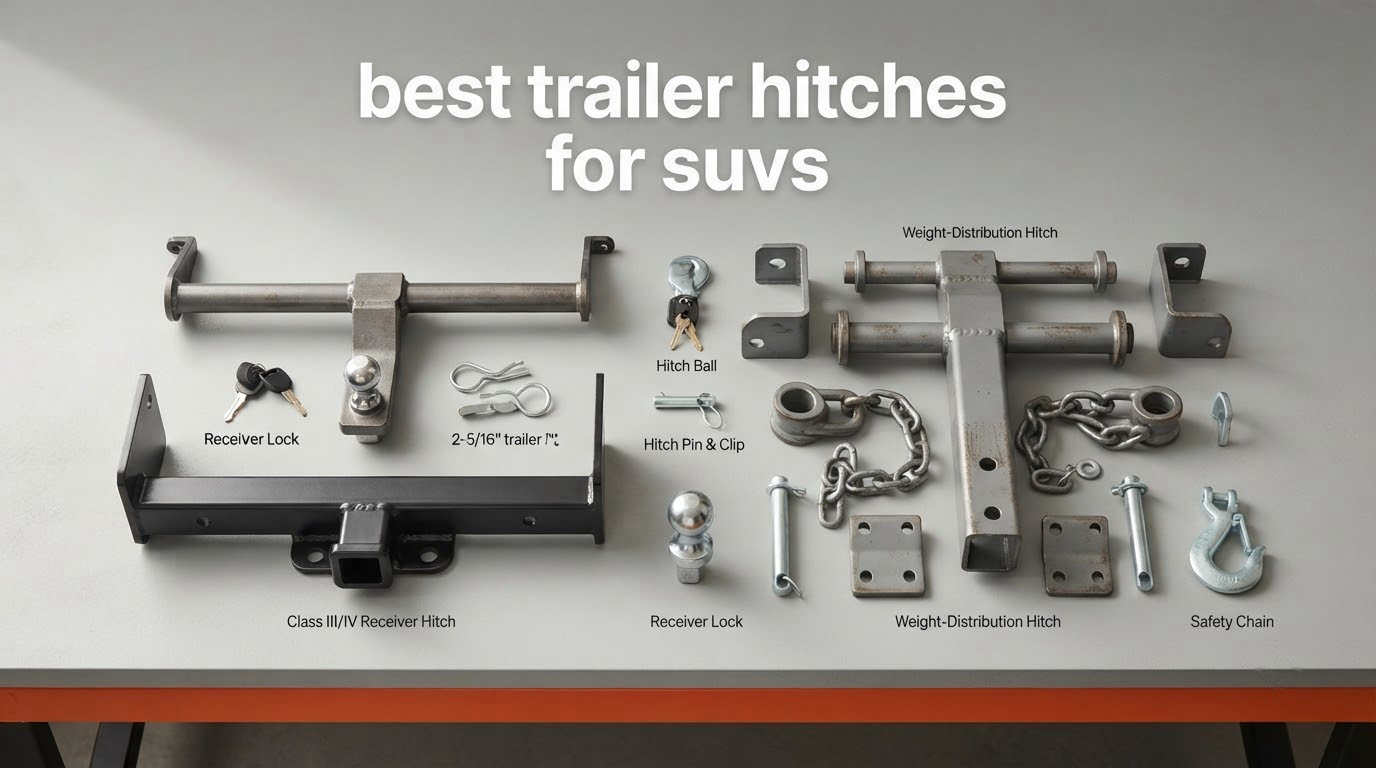
Most SUVs leave the factory with no towing receiver at all, and the ones that do usually come with a Class II stub that cannot carry a real trailer. That gap is why the best trailer hitches for SUVs have become one of the most searched accessory categories in the last few years. We spent weeks comparing the leading frame-mounted hitches, the adjustable ball-mount options, and the weight distribution systems that sit between a crossover and a travel trailer.
Here is the short version. For almost any SUV, a Class 3 hitch with a 2 inch square receiver is the right baseline, because that opening accepts ball mounts, bike racks, and cargo carriers without an adapter. If your SUV has a receiver opening that is already there, you can read the capacity stamped into the frame rail and match it.
Everything in this guide comes from published specifications and owner feedback: gross trailer weight ratings, tongue weight numbers, weight distribution capacities, SAE J684 testing, and warranty terms as manufacturers state them. We did not invent a single spec, so you can cross-check any figure against the listing before you buy. We also broke the picks into three paths, since a Wrangler owner, a RAV4 owner, and a three-row family hauler have genuinely different needs.
One note before we start. If you also carry gear, our guides to the best roof racks for SUVs and the best bike racks for SUVs cover the rest of the load-carrying picture, since most hitch receivers are easier to pair with a rack than a roof rail is.
Table of Contents
Top 3 Best Trailer Hitches for SUVs (October 2026)
Our three standouts cover three distinct jobs. The Editor’s Choice is the complete towing kit for anyone pulling a travel trailer. The Top Rated pick is the frame-mounted receiver for full-size and midsize SUV owners who want the highest capacity on a vehicle-specific hitch. The Best Value pick covers a huge slice of compact and midsize crossovers from a single part number.

Camco Eaz-Lift Elite 1000 lb Weight…
- 12000 lb GTW
- 1200 lb tongue weight
- Manual sway control
- Pre-installed ball

CURT 13182 for Durango and Grand Cherokee
- 6000 lb GTW
- 600 lb tongue weight
- 7500 lb WD capacity
- SAE J684 tested
CURT 13591 for Equinox, Terrain, Torrent, Vue
- 3500 lb GTW
- 350 lb tongue weight
- Covers four crossover lines
- Limited lifetime warranty
Best Trailer Hitches for SUVs in 2026 at a Glance
All seven picks appear below with their capacity, fitment, and the job each one is built for. The first five are frame-mounted Class 3 receivers, and the last two are weight distribution systems that bolt into a 2 inch receiver behind a trailer coupler.
| Product | Specs | Action |
|---|---|---|
| Camco Eaz-Lift Elite Weight Distribution Kit |
|
Check Latest Price |
| CURT 13182 Durango and Grand Cherokee Hitch |
|
Check Latest Price |
| CURT 13591 Equinox and Terrain Hitch |
|
Check Latest Price |
 YZONA Hitch Kit for Wrangler JL YZONA Hitch Kit for Wrangler JL |
|
Check Latest Price |
 CURT 13149 Toyota RAV4 Hitch CURT 13149 Toyota RAV4 Hitch |
|
Check Latest Price |
 ECOTRIC Class 3 2 Inch Receiver Hitch ECOTRIC Class 3 2 Inch Receiver Hitch |
|
Check Latest Price |
 Fastway Connect Weight Distribution Hitch Fastway Connect Weight Distribution Hitch |
|
Check Latest Price |
Two numbers decide most purchases. Gross trailer weight tells you the heaviest trailer you can pull. Tongue weight tells you how heavy the loaded trailer coupler can be, and that is the figure that matters most if you are mounting a bike rack or a folding cargo carrier rather than towing a trailer.
1. Camco Eaz-Lift Elite Weight Distribution Hitch Kit for Travel Trailer Towing
Camco Eaz-Lift Elite 1,000lb Weight Distribution Hitch Kit with Manually Adjusted Sway Control – Ready-to-Tow with Pre-Installed Hitch Ball, Sway Control Ball, U-Bolts, & Chain Package (48058)
12000 lb GTW
1200 lb tongue weight
Manual sway control
Pre-installed ball
Pros
- Pre-installed and torqued hitch ball cuts setup time
- Levels the tow vehicle and cuts trailer sway
- Spring bars mount on either side of the hitch head
- 12000 lb gross trailer weight and 1200 lb tongue weight rating
Cons
- Sway control bar growls during slow-speed turns
- Instructions confusing so many owners use a video walkthrough
- Needs a 3/4-inch torque wrench and 1-1/8-inch socket
This is the kit we would hand to someone whose SUV is sagging at the rear every time a travel trailer goes on the hitch. It is not a receiver, it is the bolt-on head that sits between the trailer coupler and a 2 inch receiver, and its job is to spread the tongue load across the tow vehicle axles instead of letting it hang on the rear springs and bumper.
Owners report the effect clearly. The rear of the vehicle sits level, the trailer tracks straighter, and crosswinds produce less fishtailing. With 2110 reviews averaging 4.7 stars, this is the most reviewed product in our lineup, and the feedback repeats that result more often than any marketing claim would.
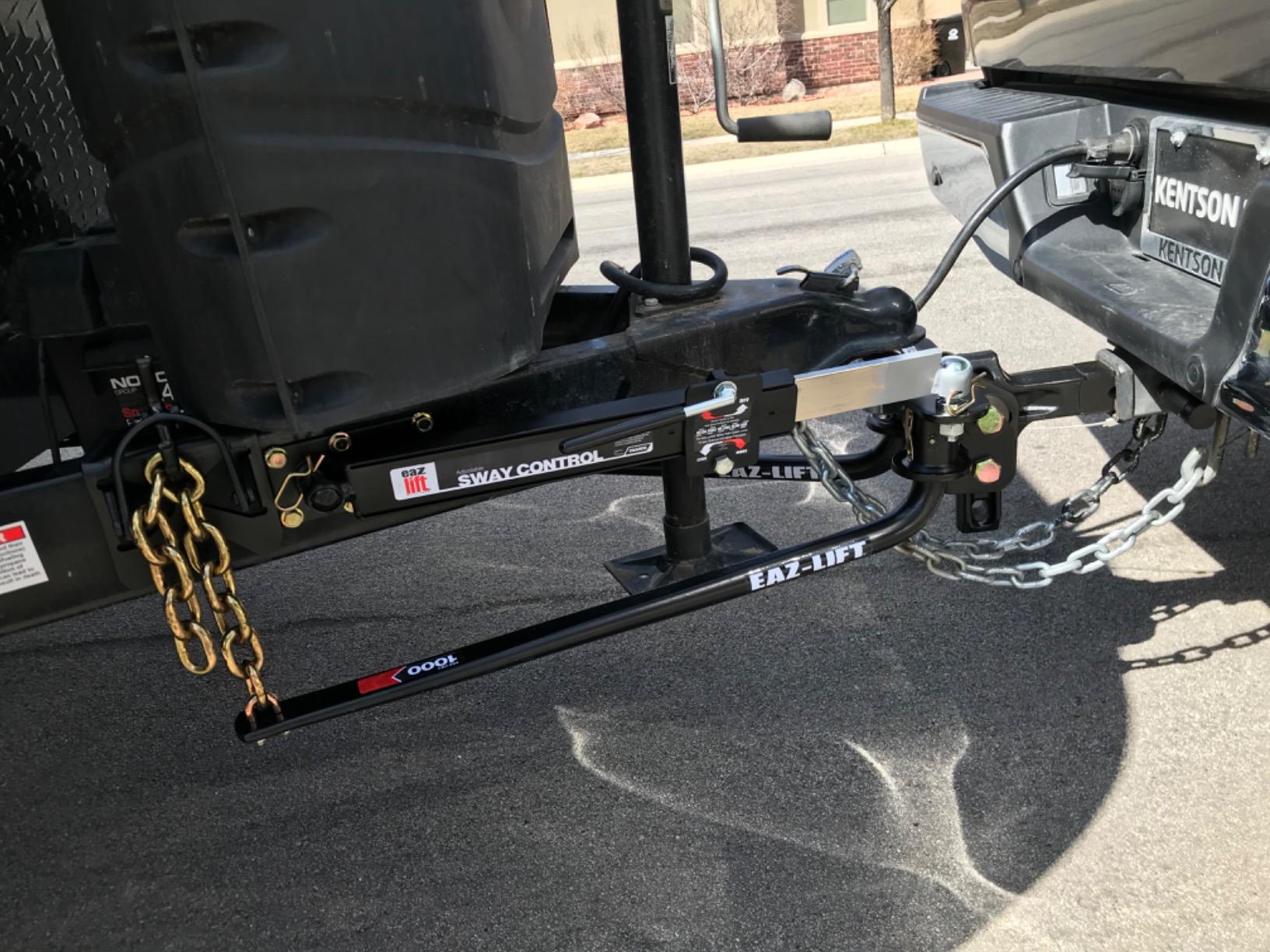
Capacity is the reason this kit leads our list. It is rated for 12000 pounds of gross trailer weight and 1200 pounds of tongue weight, which covers travel trailers in the 7000 to 9000 pound loaded range as long as your SUV is rated to pull it. The spring bars are interchangeable and can be mounted on either side of the hitch head, which is a small detail that saves an afternoon when the chain anchors on your trailer sit on an unexpected side.
The ball comes pre-installed and already torqued, along with the sway control ball, U-bolts, and chain package. That matters more than it sounds. The fiddly part of any weight distribution kit is getting the ball onto the threaded shank to a consistent torque, and Camco has already done that step for you.
Two things to plan around. The manual sway control needs a clamp adjustment in both directions, and a handful of owners report having to loosen it in town because the bar growls at parking speeds. Camco backs the kit with a limited 1 year warranty, which is shorter than the structural coverage on the major receiver brands.
Who this kit suits
If you tow a travel trailer over 5000 pounds loaded, or a cargo or toy hauler that makes your SUV squat on the rear axle, this is the fix. It works with essentially any trailer that has frame-mounted chain anchors, and it needs a 2 inch receiver behind it. Owners with three-row family haulers report the biggest improvement because the back seats stay usable and the ride stops bottoming out on ramp grades.
It is also the right pick if you have already noticed trailer sway that your steering wheel fights, since the manual sway control bar adds a second layer of resistance beyond the weight distribution itself.
Who should skip it
Skip it if you only carry a bike rack or a small utility trailer under about 2000 pounds. A plain Class 3 receiver handles that, and the extra hardware and setup time will not earn their keep. It is also the wrong tool for a boat on a single-axle trailer short enough that the manufacturer’s own tongue weight guidance already keeps the load light.
Be honest about tooling. Owners who do not own a 3/4-inch torque wrench and a 1-1/8-inch socket tend to end up improvising, and under-torquing the U-bolts is how a hitch head comes loose on a highway. Budget for a proper shop setup or those two tools before you start.
2. CURT 13182 Class 3 Trailer Hitch for Dodge Durango and Jeep Grand Cherokee
CURT 13182 Class 3 Trailer Hitch for Dodge Durango and Jeep Grand Cherokee
6000 lb GTW
600 lb tongue weight
7500 lb WD capacity
2 inch receiver
Pros
- Highest rated vehicle-specific hitch in this lineup
- 7500 lb weight distribution capacity for loaded trailers
- Carbon steel with gloss powder coat
- SAE J684 tested
- Limited lifetime warranty
Cons
- Fits only Durango and Grand Cherokee WK2
- Excludes SRT
- SRT8 and Trackhawk trims
- Powder coat finish carries a 1 year warranty
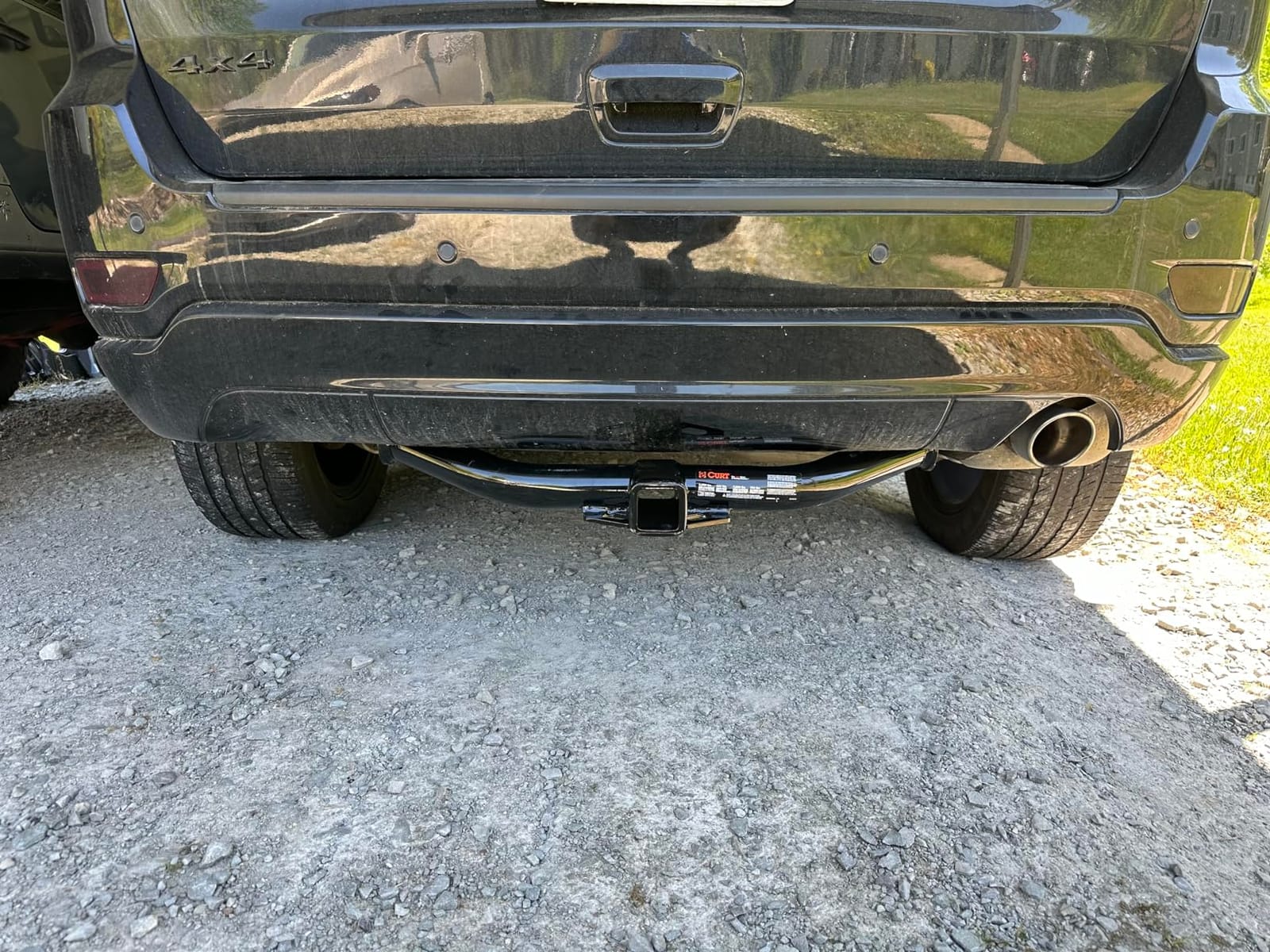
Vehicle-specific hitches look and feel different from universal bolt-on hitches, and the CURT 13182 is the clearest example. The main body welds into the shape of the frame rails on these two vehicles, so once it tucks behind the bumper there is no visible bracket and no gap you can catch a finger in. Owners on the Jeep forums call it indistinguishable from a factory hitch.
Where it separates from the field is capacity. At 6000 pounds gross trailer weight and 600 pounds tongue weight, this is the highest rated receiver in our lineup, and it stays usable with a weight distribution system at 7500 pounds WD and 750 pounds WDTW. That headroom is what lets you tow a small travel trailer on a Durango rather than a boat trailer.
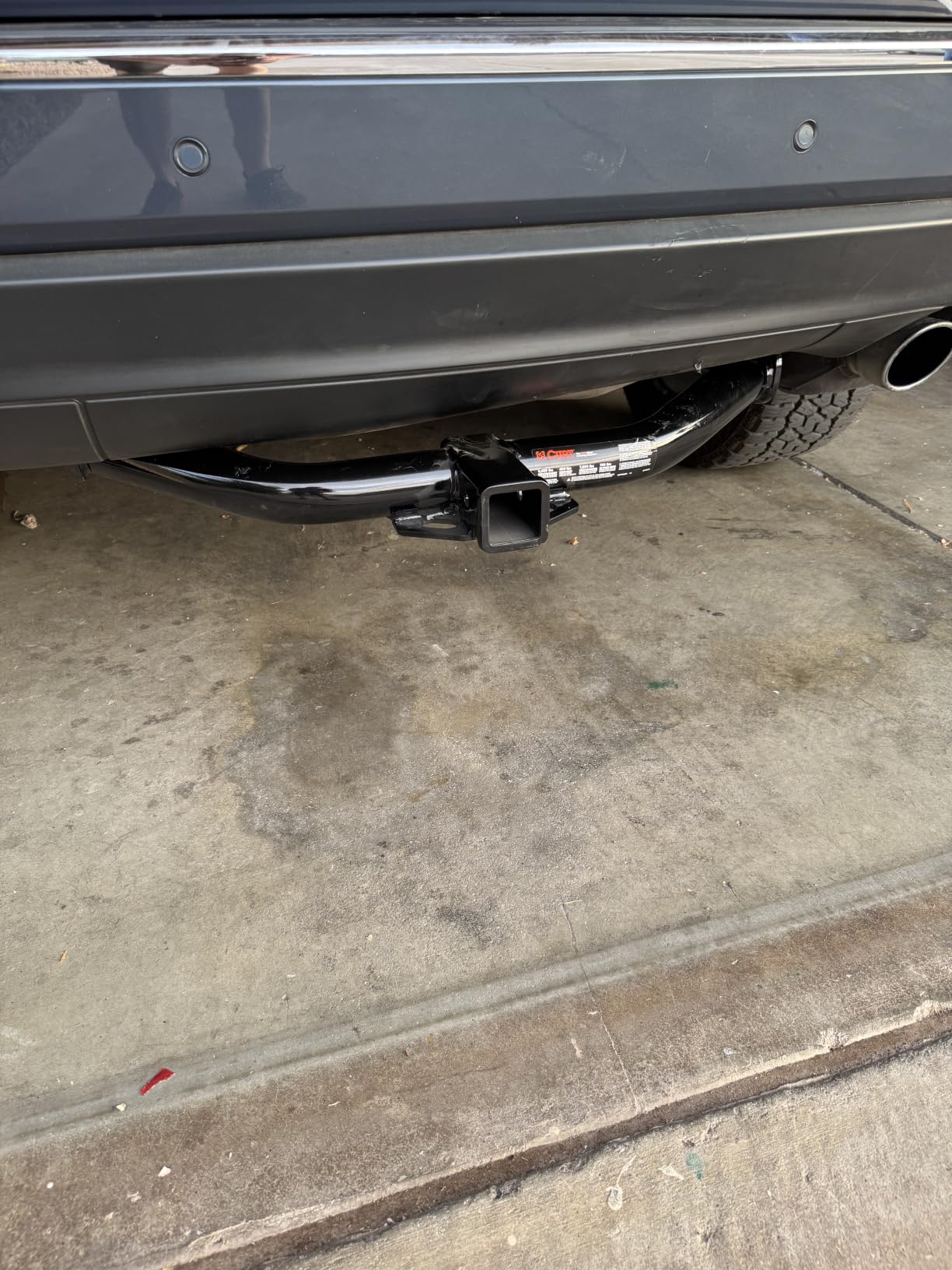
Build details are where CURT earns its reputation. The hitch is carbon steel, precisely welded rather than bolted from stamped plate, gloss powder coated, and tested to SAE J684, which is the standard that makes a GTW number mean something. The warranty is limited lifetime on the structure with 1 year on the finish, and roughly 86 percent of reviews sit at five stars.
Fitment runs 2011 through 2026 for the Durango and 2012 through 2022 for the Grand Cherokee WK2 body style. That is a long production run, which means parts availability stays good for owners of an older example, and it means the hitch you fit today is the same part across a decade of model years.
The tradeoffs are all consequences of the vehicle-specific design. It will not bolt to anything else without modification, so if you plan to move the hitch to another SUV later you will be shopping again. The SRT, SRT8, and Trackhawk trims are excluded, and the one-year finish warranty is the shortest term on any structural warranty in this guide.
When this is the right pick
Buy this if you own one of those two vehicles and you intend to do any towing at all. The 6000 pound rating covers a pair of water skis, a small bass boat, a motorcycle trailer, or a pop-up camper without you thinking about it. Owners who tow heavier report that the weight distribution compatibility means they could upgrade their trailer later without replacing the hitch.
It is also the right choice for someone who hates a visible hitch. The concealed main body is the whole point of the part, and once the plastic underbody trim goes back on there is nothing to announce your tow capacity at the curb.
When you should look elsewhere
If you swap vehicles often, a universal 2 inch receiver is a better investment. If you drive a SRT trim, this is the wrong part number and the manufacturer does not offer a substitute for that chassis. And if your plan is a 7000 pound travel trailer, the 6000 pound GTW is a real ceiling even with weight distribution, so check your door jamb sticker before you commit.
3. CURT 13591 Class 3 Trailer Hitch for Chevy Equinox, GMC Terrain, Pontiac Torrent and Saturn Vue
CURT 13591 Class 3 Trailer Hitch, 2-Inch Receiver, Select Chevy Equinox, GMC Terrain, Pontiac Torrent, Saturn Vue,Black
3500 lb GTW
350 lb tongue weight
4000 lb WD capacity
2 inch receiver
Pros
- One part number covers four crossover lines
- Limited lifetime warranty on structure
- Carbon steel with gloss powder coat
- SAE J684 tested and precisely welded
Cons
- 3500 lb and 350 lb ratings trail the heavy-duty hitches
- Fits only the listed crossover platforms
- Powder coat finish carries a 1 year warranty
This is the hitch we recommend to the largest group of owners in this guide, because a single part number covers the Chevy Equinox, GMC Terrain, Pontiac Torrent, and Saturn Vue. That family of crossovers shares the same frame holes, which means you can order by platform rather than by model year guesswork.
Ratings are 3500 pounds gross trailer weight and 350 pounds tongue weight, and it stays compatible with a weight distribution system at 4000 pounds WD and 400 pounds WDTW. That is more than adequate for a boat trailer, a small utility trailer, a motorcycle hauler, or a bike rack and cargo carrier combination.
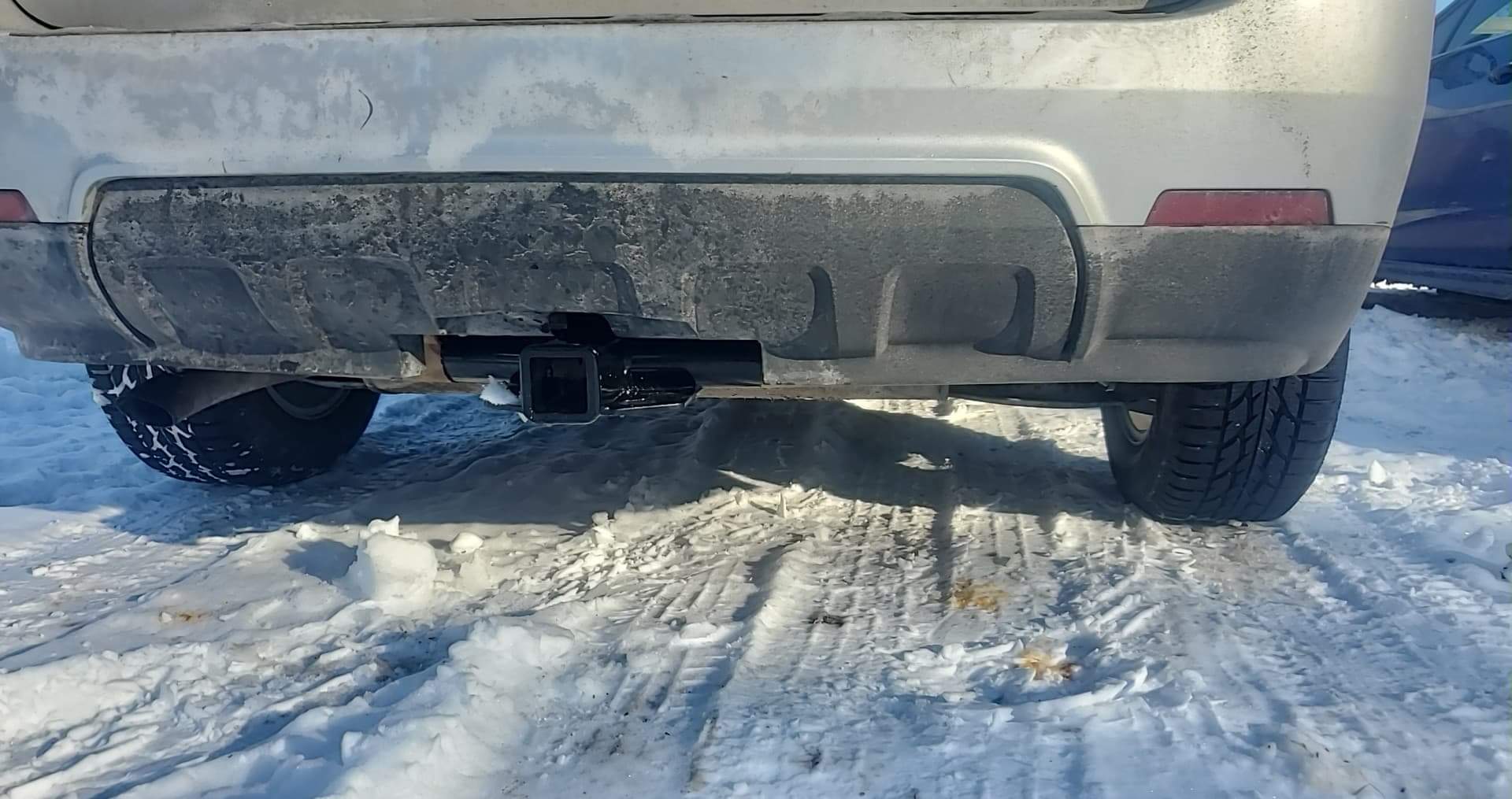
For 1856 owner reviews averaging 4.7 stars, the feedback is remarkably consistent: clean fit, straightforward bolting-on, and a powder coat that still looks right after a couple of winters. About 83 percent of reviews are five stars, and the product ranks in the top tier of the towing front mount receiver hitch category, which tells you how many owners have bought it.
It is precisely welded carbon steel and tested to SAE J684, and the warranty is limited lifetime on the hitch with 1 year on the finish. Owners with older crossovers point out that the same part number still covers model years going back a long way, so secondhand vehicle purchases stay easy to fit.
The limitation is capacity, and it is a real one. At 3500 pounds GTW, this is a compact-SUV-appropriate rating, so it will not carry a loaded travel trailer. And like every vehicle-specific hitch in this guide, it stays on those four platforms and nothing else.
Best for light-duty crossovers
Choose this if your towing consists of a bass boat, a jet ski trailer, a small dirt bike hauler, or a hitch carrier loaded for a road trip. Owners who use a folding cargo carrier and a two-bike rack together stay comfortably inside the 350 pound tongue weight figure, which is the number that actually governs that use.
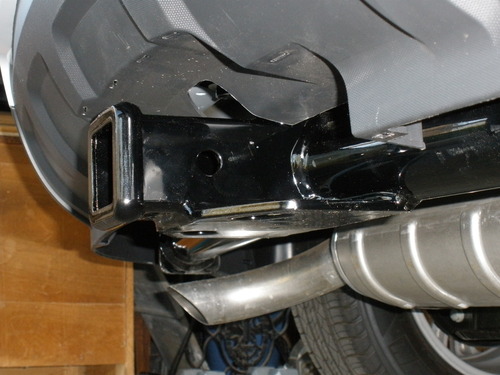
It is also a strong choice for a family hauler who wants a hitch that disappears. With the body concealed behind the fascia, the Equinox looks like a vehicle that never tows anything, and that matters to some owners more than the raw capacity.
Not for heavier trailers
Skip it if you plan a travel trailer in the 5000 pound loaded range or above, or if you intend to add a weight distribution system and push past 4000 pounds. The frame, the receiver, and your vehicle rating will all be working against you. Cross the shop for a 6000 pound rated hitch instead, and the price difference is small compared with a load you cannot safely carry.
Confirm your model year against the fitment list before ordering. Special editions and hybrid trims on these platforms occasionally carry different rear frame provisions, and a mismatch here is the most common reason a hitch returns.
4. YZONA 2 Inch Tow Hitch Kit for 2018-2026 Jeep Wrangler JL
YZONA Tow Hitch 2 Inch, for Jeep Wrangler Tow Hitch Trailer Kit Compatible for 2018 2019 2020 2021 2022 2023 2024 2025 2026 JL JLU Hitch Receiver with Cover, 2 Inch Rear Bumper Towing Combo, 2/4 Doors
3500 lb GTW
350 lb tongue weight
2 inch receiver
Bolt-on install
Pros
- Costs far less than name-brand hitches for the Wrangler
- Bolt-on using existing structure with no modifications
- Receiver cover included for the bumper cutout
- Powder-coated alloy steel resists corrosion
Cons
- 3500 lb and 350 lb ratings suit light loads only
- Vehicle-specific to Wrangler JL and JLU
- Lesser-known brand with a smaller independent review base
The Wrangler is a special case, because the rear bumper has a cutout that every hitch in this category has to deal with. The YZONA kit handles it in the easiest way available, by including a receiver cover that snaps into the factory bumper opening when you are not towing. Owners with a 2-door and a 4-door both use the same kit, which is unusual for a Wrangler part.
Installation is a direct bolt-on using existing vehicle structure, with no drilling and no permanent modification. For someone who leases a Wrangler or bought a modified one they want to keep reversible, that reversibility is worth a lot more than the extra capacity a heavier hitch would add.
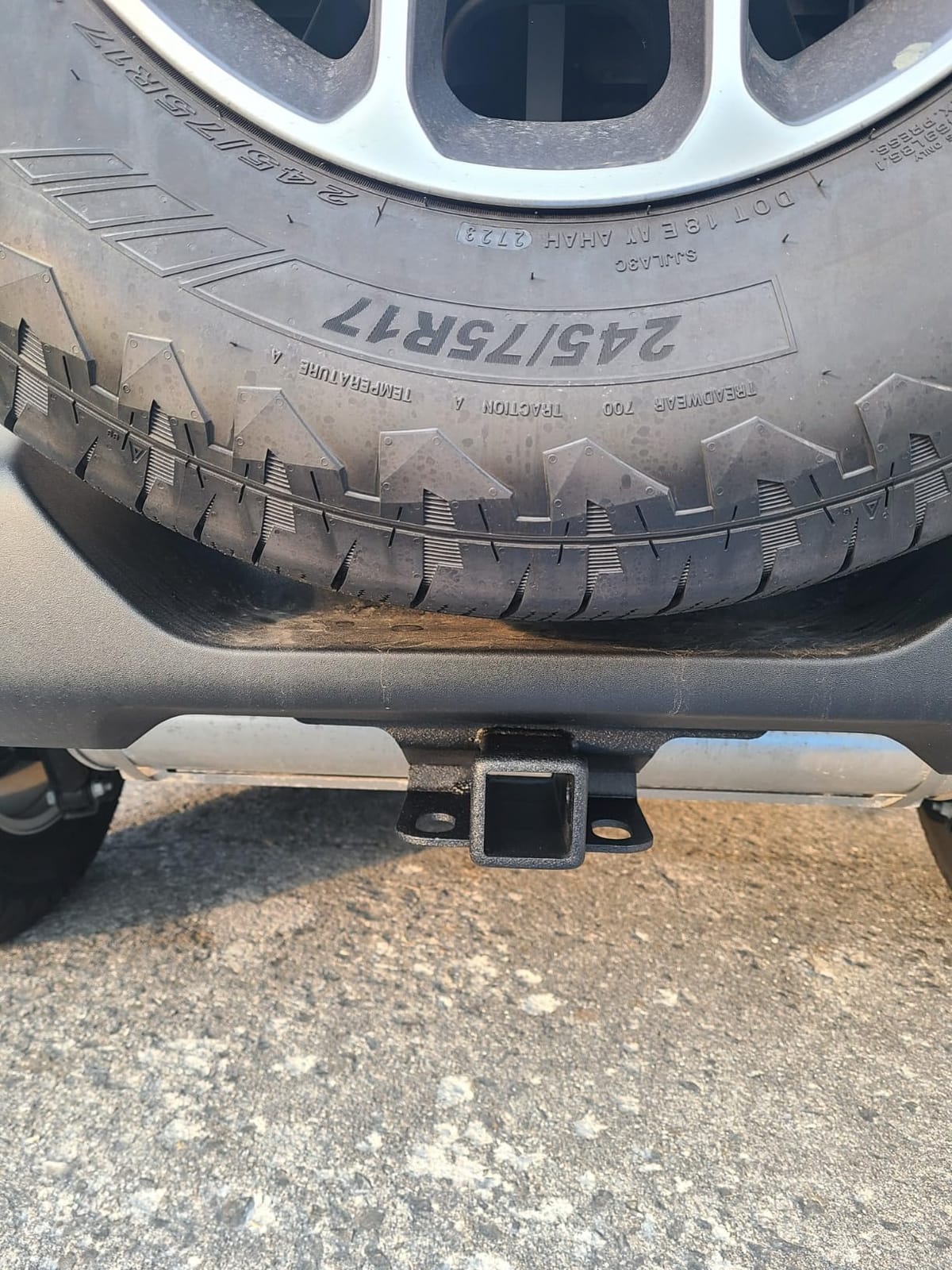
Construction is alloy steel with a black coating treatment for corrosion and weather resistance, and the receiving opening is the standard 2 inch square. That means bike racks, cargo carriers, and ball mounts from any other brand drop straight in, and it means you can upgrade to a better ball mount later without replacing the whole hitch.
The rating is 3500 pounds gross trailer weight and 350 pounds tongue weight. That is enough for a pair of dirt bikes, a small utility trailer, a kayak or bike rack on the back, and nothing heavier. Owners are clear-eyed about that, and the 450 reviews averaging 4.7 stars with 84 percent at five stars read like people who bought it for a light duty and got exactly what they paid for.
The honest caveat is brand depth. YZONA does not publish the same kind of engineering documentation you will find from a major receiver maker, and the independent review base is 450 rather than several thousand. We rate it on what it is: a competent, well-finished bolt-on for light loads on one specific platform.
Best for light loads and reversible mods
Buy this if your Wrangler carries bikes, a cargo box, a small trailer, or a motorcycle carrier rather than a camper. The included cover means the rear of the Jeep looks stock on weekdays, and the bolt-on design means you can remove the whole thing and plug the hole when you sell the vehicle.
It is also a sensible companion to our best bike racks for SUVs guide, since a 2 inch receiver accepts most clamp-style racks directly and you avoid adapters entirely.
Where it falls short
Do not tow a loaded travel trailer with it, and do not assume the 3500 pound figure carries over from a name-brand hitch on the same vehicle. Ratings differ between manufacturers for the same platform, and the difference is in the steel and the welds, not the label.
Also consider ground clearance. The receiver extends below the bumper, and a heavy tongue load adds weight exactly where the Jeep has the least room to absorb it. If you tow on steep trails or rough fire roads rather than highway, a lighter load keeps you well inside the rating.
5. CURT 13149 Class 3 Trailer Hitch for 2006-2018 Toyota RAV4
CURT 13149 Class 3 Trailer Hitch for 2006-2018 Toyota RAV4, 2″ Receiver
3500 lb GTW
525 lb tongue weight
4000 lb WD capacity
No-drill install
Pros
- No-drill install using factory weldnuts and supplied M12 bolts
- All hardware and illustrated instructions included
- A-coat inside and out plus gloss powder coat
- 86 lb-ft torque spec with SAE J684 testing
Cons
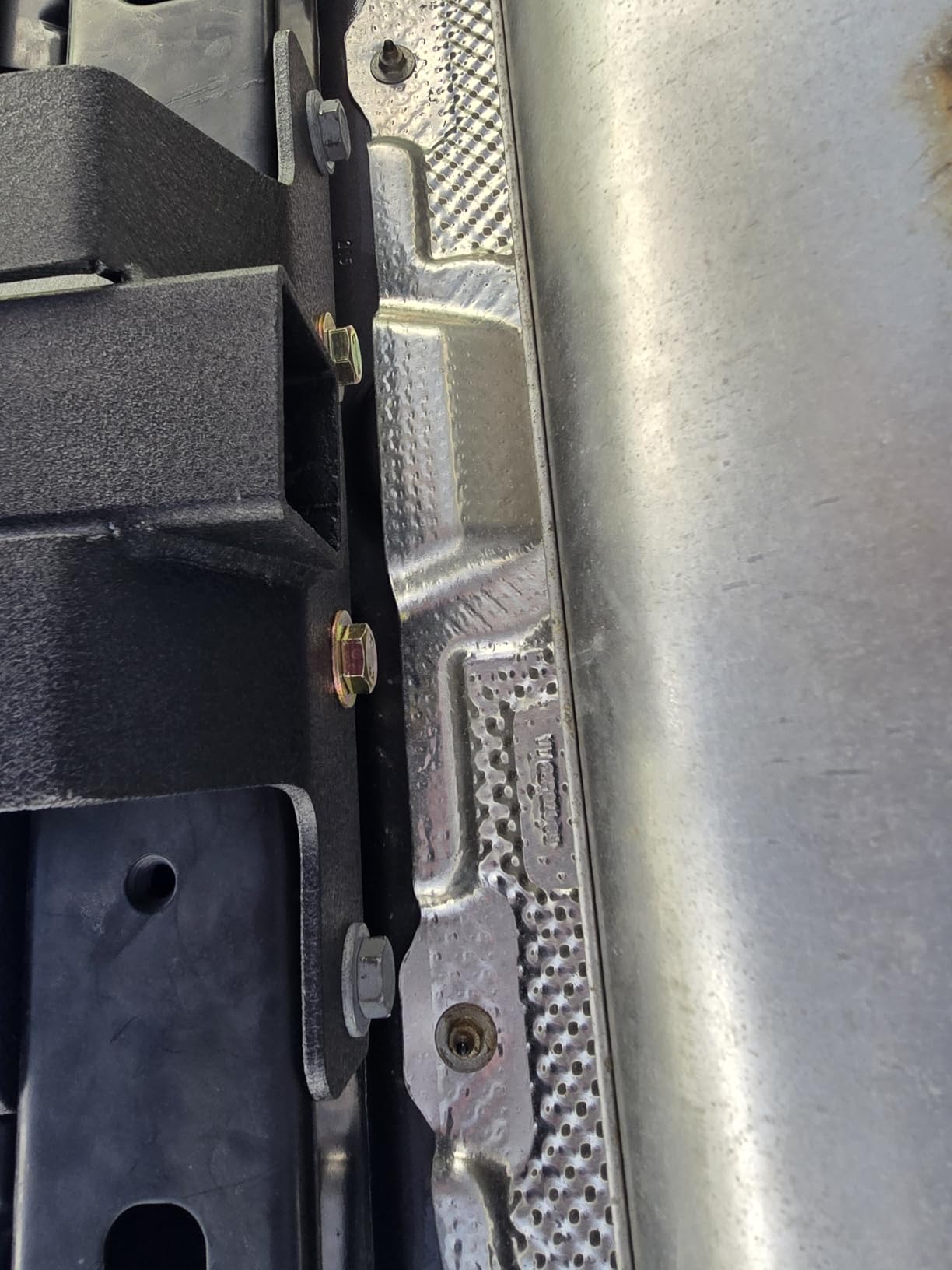
- Install usually means dropping the rear muffler and trimming a fairing
- Frame weldnuts corrode badly on older RAV4s
- A few owners report holes not lining up on certain years
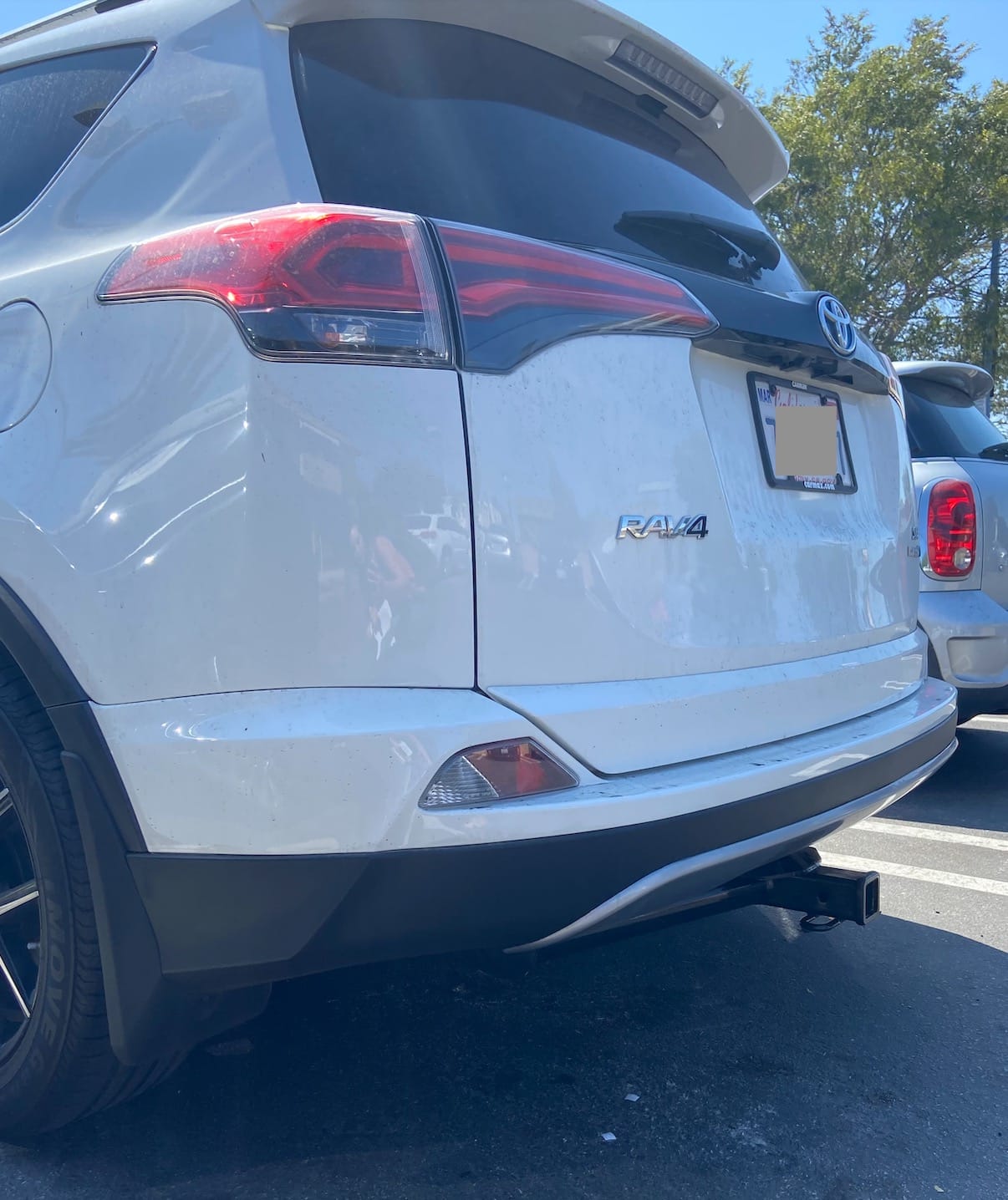
This is the most popular RAV4 hitch by a wide margin, and the reason is a genuinely easy installation. It uses the factory weldnuts on both frame rails with four supplied M12 bolts and conical-tooth washers, so there is no drilling into the frame. Owners report 20 to 30 minutes for a first-timer, which puts it in a different league than most vehicle-specific hitches.
Its 4.4 average is the lowest in our lineup, and the gap comes almost entirely from fitment complaints on specific model years and from a handful of reports of finish damage in packaging. The core install experience is the most frequently praised part of this product.
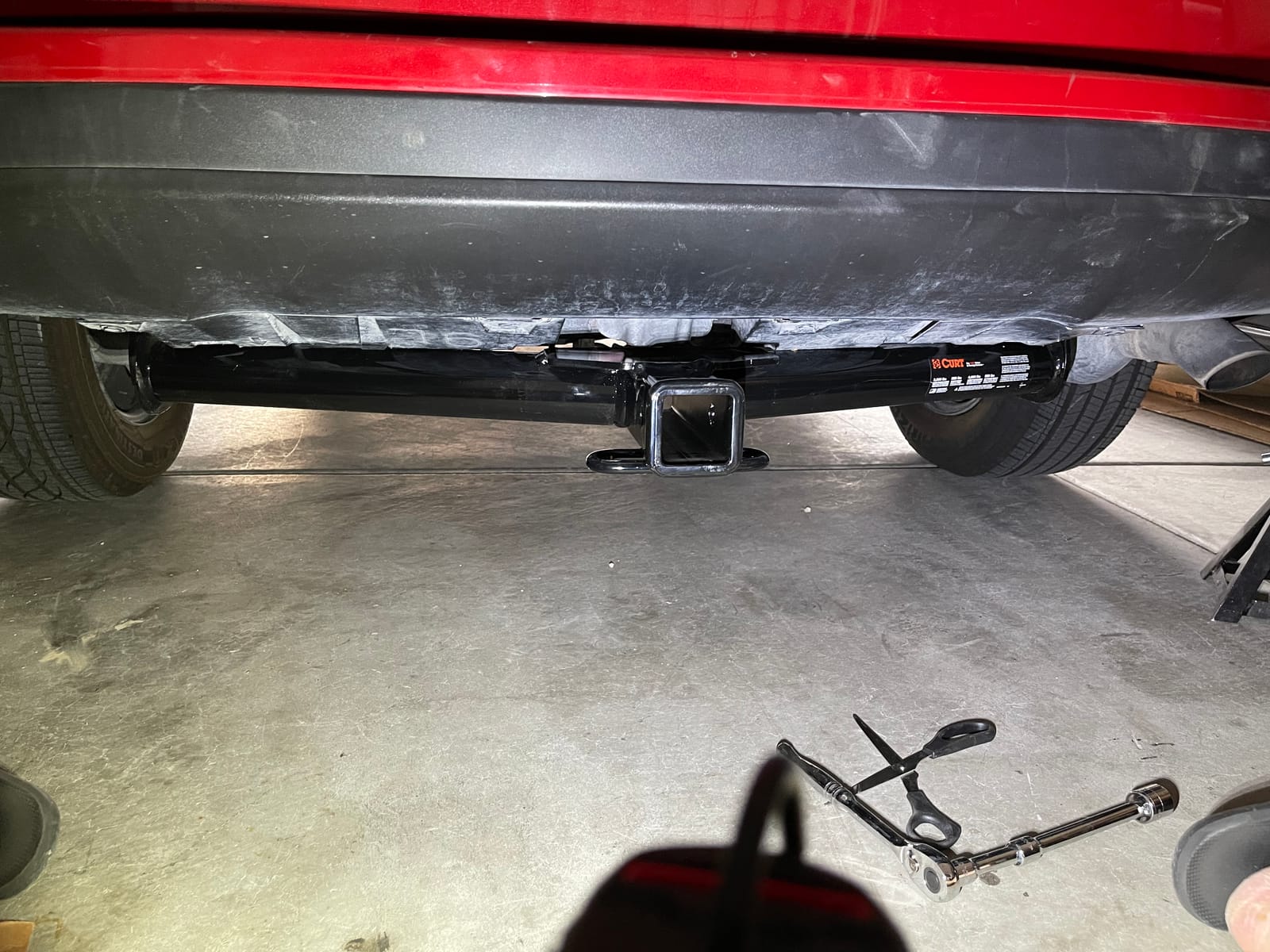
Capacity is 3500 pounds gross trailer weight and 525 pounds tongue weight, with weight distribution compatibility at 4000 pounds WD and 525 pounds WDTW. That tongue weight number is higher than the CURT 13591 in the same guide, which matters if you plan a multi-bike rack rather than a trailer.
Corrosion protection is the standout spec. The hitch is coated with liquid A-coat inside and out, then finished in gloss-black powder coat, which is a two-layer system that holds up much better in salt-heavy winters than a single powder pass. Owners in northern climates call this the reason their hitch still looks factory fresh after a few seasons.
Torque specification is 86 lb-ft, and CURT states it plainly, which is more than most listings bother with. Use a torque wrench rather than a breaker bar. If you over-torque an M12 bolt in a weldnut you can strip the threads and turn a 30 minute job into a frame repair.
What to check before you buy
Look at the frame weldnuts on both sides first. On a high-mileage RAV4 they often hold rust and road grime, and a bolt torqued into a dirty, pitted nut will never reach the specified 86 lb-ft. A wire brush, a thread chaser, and a spray of penetrant take ten minutes and prevent the single most common install failure on this hitch.
Also plan the physical access. On most model years in this fitment range, the install means dropping the rear muffler from its hangers and trimming a plastic under-fender fairing. That is normal work, but it is not a one-bolt job, and it is why we call this 20 to 30 minutes for someone comfortable with hand tools.
Where owners report problems
A small number of owners report the mounting holes not lining up on certain model years, and one low review describes a short fit with bracket overlap on a 2018 RAV4. That is a minority report, but it is worth matching your exact year and trim against the fitment listing before you start, because a returned hitch is a return plus a re-order.
Corroded holes can also cause bolts to bottom out before reaching torque, which is why a few owners add extra washers. Fish-wire hardware is included in the kit and it is the reason nobody is threading bolts into enclosed frame rails by hand. Use it.
6. ECOTRIC Class 3 Two Inch Square Receiver Hitch for Older Crossovers
ECOTRIC Class 3 III Tow Trailer Hitch 2 Inch Square Receiver
4500 lb GTW
675 lb tongue weight
2 inch receiver
Powder coat
Pros
- 4500 lb gross and 675 lb tongue weight beat the typical Class 3 spec
- Covers Vue
- Equinox
- Torrent and Terrain model years
- Powder coat resists rust and weather
- Standard 2 inch receiver fits most accessories
Cons
- Instructions not included and professional install recommended
- Not an all-welded structure design
- Fits a narrower list of vehicles than the CURT alternative
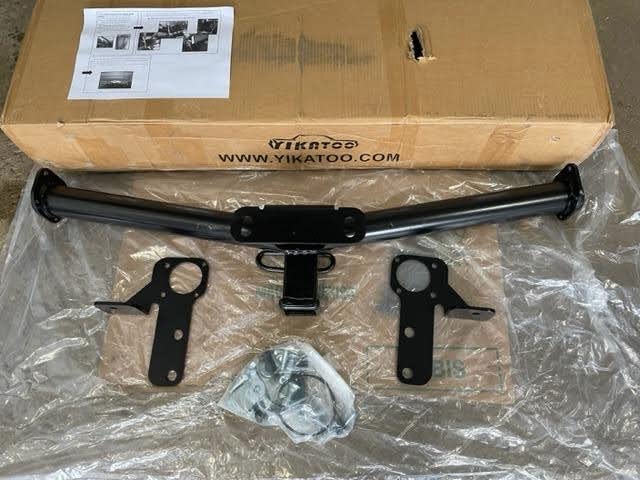
Older compact crossovers are where a factory hitch is rarest and where a universal bolt-on rarely fits cleanly. This ECOTRIC receiver covers the 2002 to 2007 Saturn Vue, 2005 to 2017 Chevy Equinox, 2006 to 2009 Pontiac Torrent, and 2010 to 2017 GMC Terrain, which is a range of model years the premium vehicle-specific hitches no longer cover.
The ratings are the interesting part. At 4500 pounds gross trailer weight and 675 pounds tongue weight, they exceed what most Class 3 hitches in this guide offer, and the max gross trailer weight with weight distribution is also listed at 4500 pounds. For a vehicle from that era, that is meaningful capability.
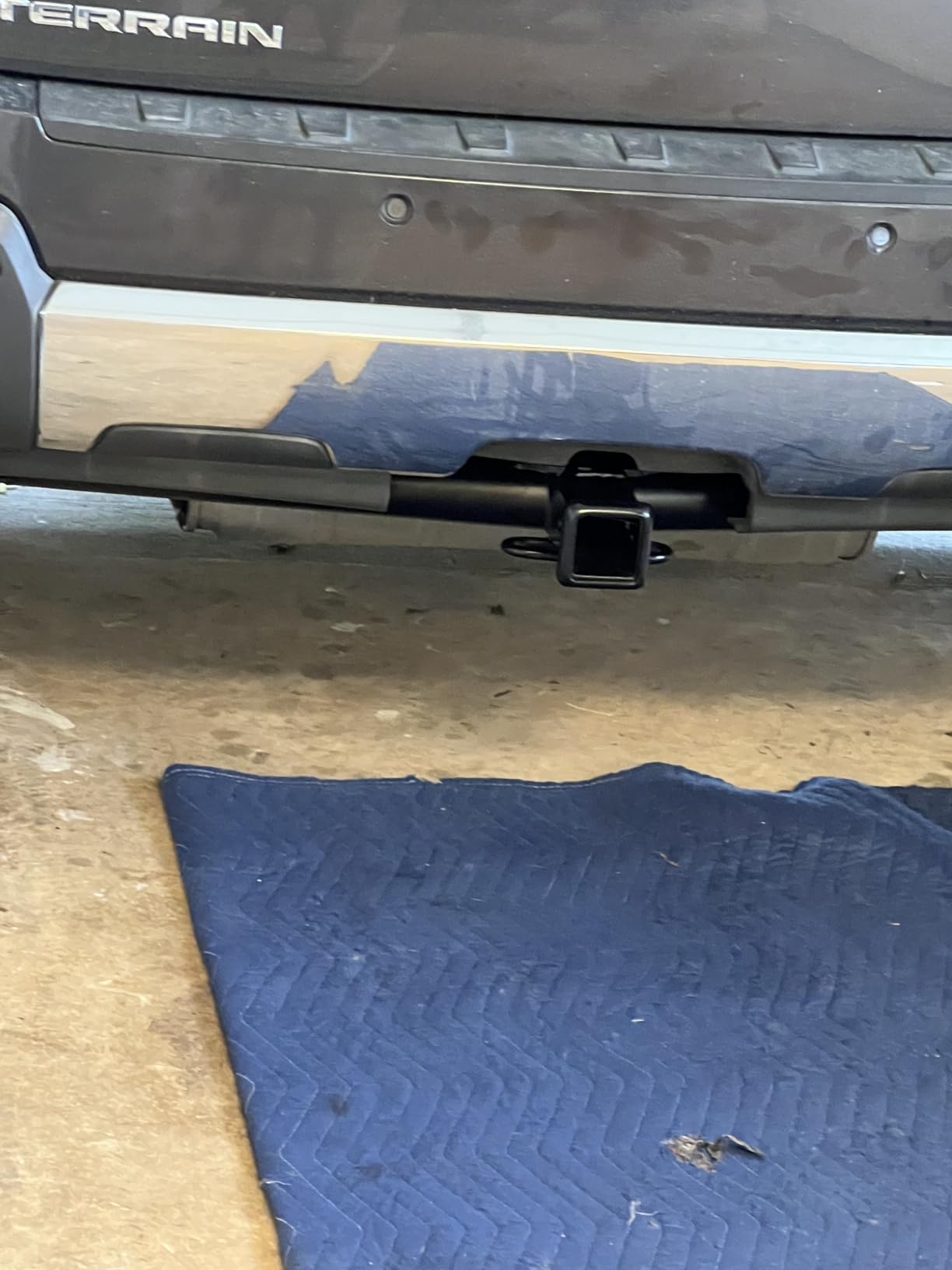
Owners treat it as a value alternative to the premium brand equivalent and cite the powder coat finish, the broad fitment, and the standard 2 inch receiver as the reasons. The receiver accepts a ball mount, bike rack, tow hook, or cargo carrier, so you are not locked into one accessory ecosystem.
Two design notes deserve attention before you commit. The manufacturer states that this is not an all-welded structure, and instructions are not included with the package, with professional installation recommended. On a hitch that carries a trailer, both points deserve more weight than usual.
The fitment list also excludes the Saturn Vue Redline trim. That is the kind of specific exclusion that catches people out, so confirm your exact trim rather than the model name.
Best for older vehicle ownership
This is a strong pick if you own one of those crossovers from an earlier generation and you need more than the Class II stub the factory gave you. The 675 pound tongue weight rating gives you real headroom for a folding cargo carrier and a bike rack at the same time, which is where most crossover owners actually use their hitch.
It also works for owners who plan to keep the vehicle for a long time. A hitch that fits a 2005 Equinox is still relevant a decade later, whereas a part number scoped to a current model year loses value as the vehicle ages.
Where the tradeoffs bite
The missing instructions are the biggest practical drawback. Owners recommend bringing the vehicle to a shop or following a walkthrough, and anyone who is going to work under a vehicle anyway should budget professional time. The non-welded construction is the second one, and for a hitch you will genuinely tow with, an all-welded design gives owners more confidence at the pin.
If you tow a loaded travel trailer rather than light gear, the 4500 pound figure is a ceiling and not a target. Match the loaded weight of your trailer against both the hitch rating and the door-jamb capacity of your vehicle, and take the lower of the two.
7. Fastway Connect Weight Distribution Hitch for Chain-Based Towing Setup
Fastway Connect™ Weight Distribution Hitch
10000 lb GTW
1000 lb tongue weight
Chain distribution
3 inch drop 7 inch rise
Pros
- Distribution adjusts by changing which chain link attaches
- Levels the tow vehicle and reduces sway
- Universal fit with no trailer frame drilling
- Pre-installed 2-5/16 inch hitch ball
Cons
- Weighs 89 pounds
- which is heavy to lift and load
- Factory instructions and videos are hard to follow
- Chain attachment is tool-intensive
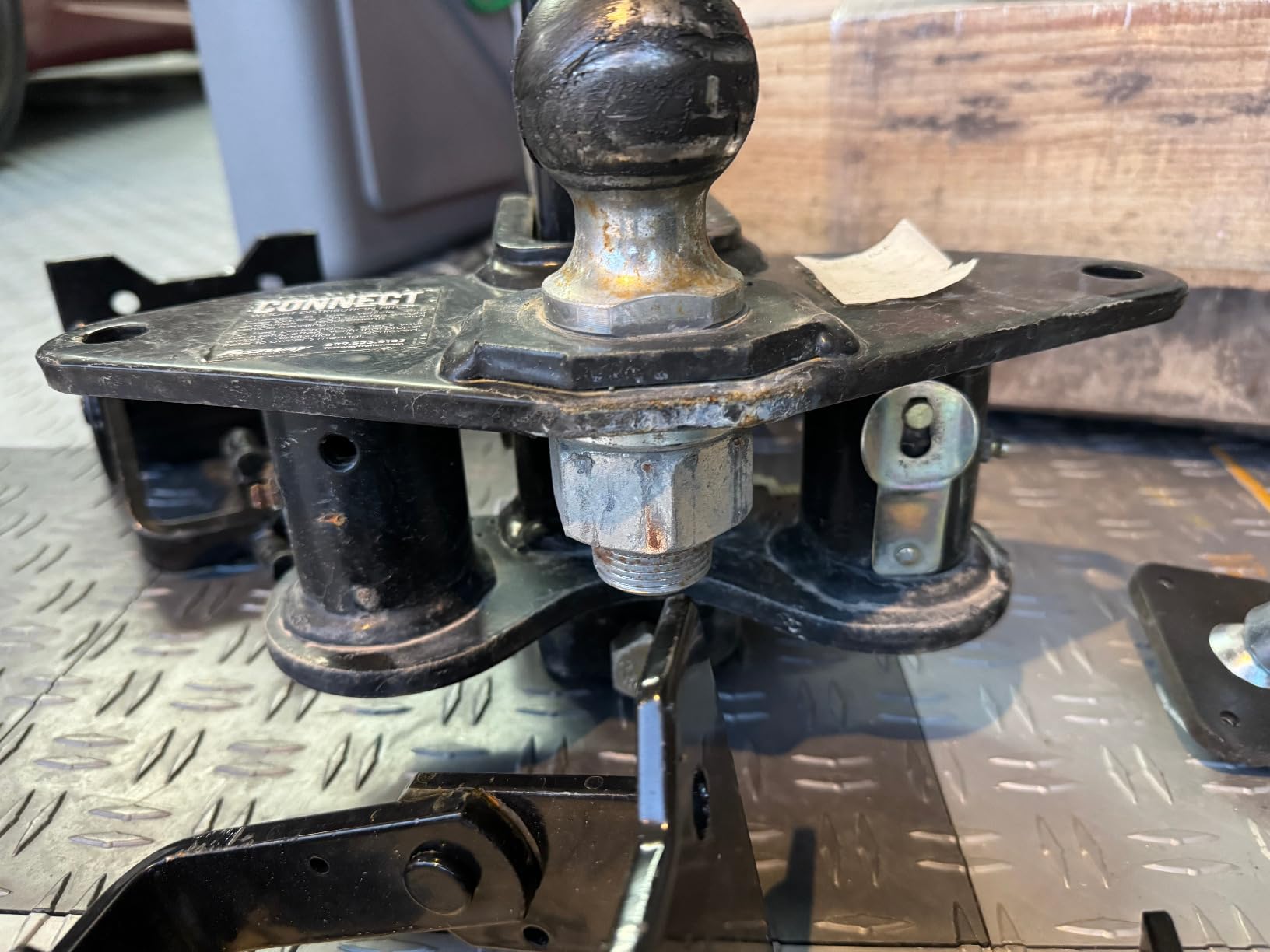
The Fastway Connect is the other weight distribution system in this guide, and it works on a completely different principle from the spring bar design in the Camco kit. Instead of spring bars that clamp to the trailer frame, it uses hardened steel chains running from the hitch arms to frame hooks on the trailer. You correct the weight distribution by moving to a different chain link, and that is the entire adjustment.
Ratings are 1000 pounds max tongue weight and 10000 pounds max trailer weight, with a 2-5/16 inch hitch ball already installed. The shank carries a 3 inch drop and 7 inch rise and fits a standard 2 inch receiver, so it is compatible with the same receivers as everything else in this guide.
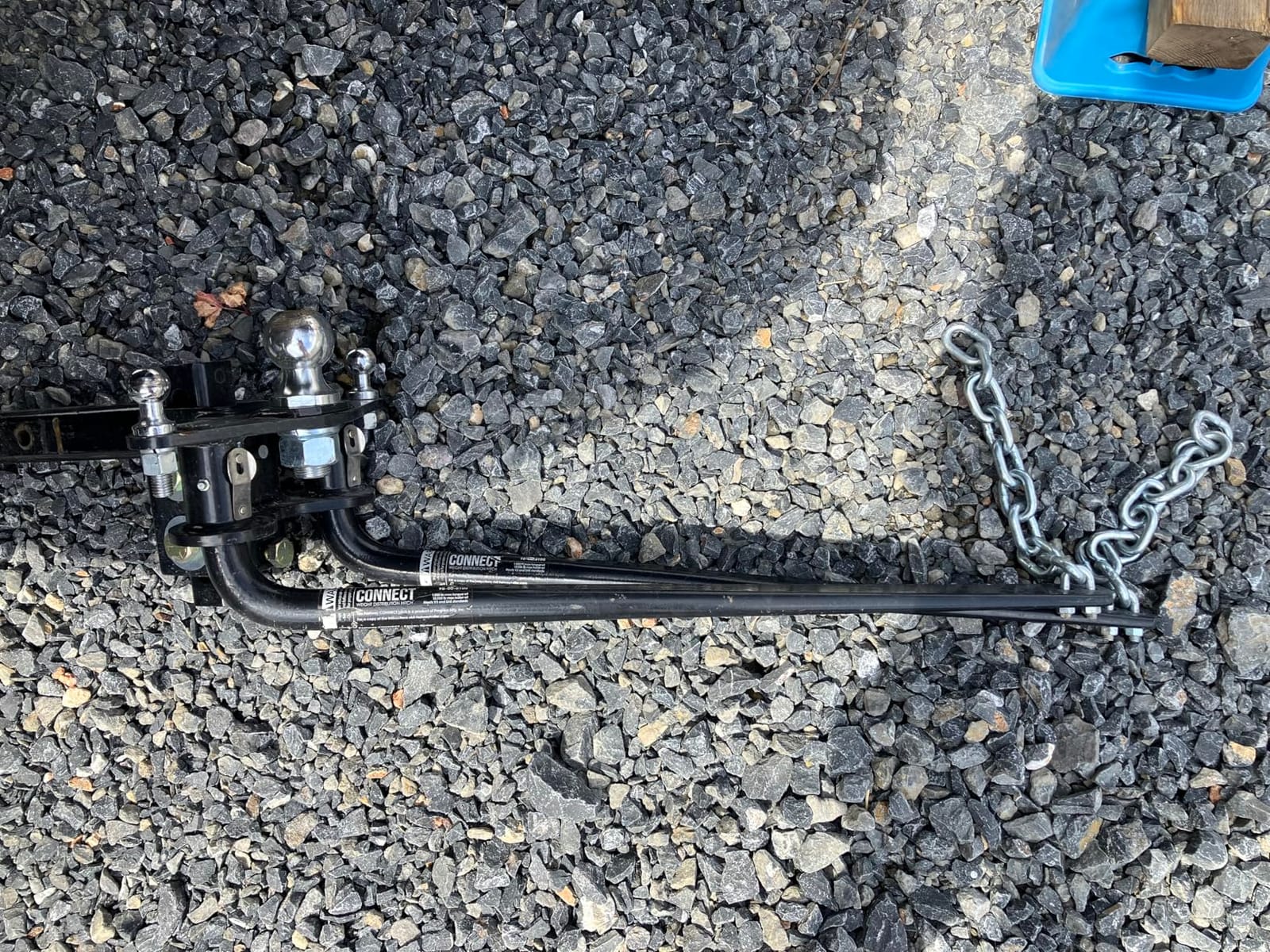
It is universal, installing on RV, cargo, utility, horse, and ATV trailers with no frame drilling on the trailer. That is a genuine advantage if you own more than one trailer or borrow a hitch head from a friend, and it ranks at the top of the towing weight distributing hitches category in retailer listings.
Owners confirm the two things they care about. The tow vehicle levels out and trailer sway drops. They also describe it as the most economical weight distribution hitch in its class, with a build that feels solid rather than thin, which matters on something that carries 10000 pounds.
It weighs 89 pounds. That is the headline drawback, and it is a practical one. Lifting it into a 2 inch receiver solo is a two-person job, and the extra weight on the tongue of a smaller SUV eats into the vehicle rating faster than you would expect.
Best for owners who tow more than one trailer
Pick this if you move between a travel trailer, a cargo trailer, and a horse or ATV trailer, because the universal fit with no trailer frame drilling means the same head works for all of them. It is also a good match for a midsize or full-size SUV where the 1000 pound tongue weight capacity is well within the vehicle rating and the hitch has room to absorb the head mass.
If your trailer already has frame-mounted chain anchors, this system drops in with very little work at the trailer end. If it does not, that is a separate drilling job at the trailer, and the manufacturer is clear that drilling is not required rather than that it is impossible.
Where it is not the right tool
Skip it for a small crossover. The 89 pound head is a large fraction of what a compact SUV should be carrying on a tongue, and the 10000 pound class is far more than the vehicle can pull. Reviews themselves make the point, calling the capacity excessive for a small SUV and travel trailer combination.
Also allow real time for setup. Owners criticize the factory instructions and the installation videos, and attaching the chains is described as tool-intensive. Budget an afternoon and work from a third-party walkthrough rather than the manual in the box, which is what most of these owners ended up doing.
How to Choose a Trailer Hitch for Your SUV
Choosing well means matching a hitch to a vehicle rather than picking the biggest number on a page. Here is how we break the decision down, and the order we would work through it in.
Class III with a 2 inch receiver is the standard for SUVs
Almost every SUV hitch falls into one of two classes. A Class II hitch uses a 1-1/4 inch receiver and is usually rated around 3500 pounds gross trailer weight on a light vehicle, which is fine for a small trailer but limits accessory choice. A Class III hitch uses a 2 inch square receiver and is rated from about 3500 pounds up to 6000 or more gross trailer weight with proportionally higher tongue weight.
Owners on towing forums consistently call the 2 inch opening the universally useful standard, and the reason is compatibility. A 2 inch receiver accepts ball mounts, bike racks, and cargo carriers directly with no adapter, and it is the size that weight distribution heads and sway control hardware are built around.
Find your real towing capacity before you pick anything
Your SUV has a towing capacity number printed inside the driver’s door jamb sticker, and that sticker governs. The owner’s manual explains whether the rating assumes a factory tow package, specific tires and suspension, or a brake controller. Add the weight of passengers, cargo, and any tongue weight over 100 pounds, and you have to stay under the lowest of those figures.
Then match. Never choose a hitch rated above your vehicle. The number that matters is the lowest of your vehicle rating, your hitch gross trailer weight rating, your trailer’s loaded weight, and any weight distribution capacity. A 6000 pound hitch on a vehicle rated for 3500 does not make you a better hauler. Whatever else you load, keeping soft cargo low and forward helps, and our best rooftop cargo bags for SUVs guide covers the rooftop half of that plan.
Check ground clearance and approach angle before you commit
The receiver tube hangs below the bumper, and on an SUV with a factory air or sport suspension the hitch can add several inches of drop. On a steep driveway that becomes a scrape, and on a trail with a breakover angle it can limit how far you can climb before the receiver grounds out.
Two ways to manage it. Pick a hitch with a short tube and a tucked-away crossbar, or keep your tongue weight well under the hitch rating so the rear stays firm. Anyone who tows off pavement should check the vehicle approach angle against the hitch tube before buying, because this is the criterion most roundups skip.
Ball mounts, drop and rise, and getting the trailer level
Hitch height is a common question and the answer is clear: a trailer that is level is correct, and if the ball mount has to be adjusted to get there, adjust it rather than the trailer. A ball that sits high pushes the trailer nose up, increases aerodynamic drag, and in a hard stop can try to lift the rear. A ball that sits too low gives you poor load visibility and risks trailer sway.
Adjustments come from a drop or rise position on the ball mount shank, from the drop and rise of the hitch shank itself, or from a torsion anti-sway component. Most ball mounts use a 2-5/16 inch ball for full-size trailers and 1-7/8 inch for smaller ones, and mixing the wrong ball size with a coupler is a common and avoidable failure.
Weight distribution and sway control for travel trailers
Tongue weight normally runs 10 to 15 percent of a trailer’s loaded weight, and a ball coupler handles that only up to a point. Once you are near the hitch’s tongue weight limit, a weight distribution hitch moves part of that load forward onto the tow vehicle’s front axle and back onto the trailer’s own axles, which restores steering feel, braking performance, and ride height.
Sway control is a separate mechanism that adds resistance to lateral trailer movement through a bar and a cam. The Camco kit in this guide combines a weight distribution head with manually adjustable sway control. The Fastway Connect achieves distribution with chains and sits in the same category. A hitch that lists a weight distribution capacity is the one you buy first; the sway bar is the refinement you can add later.
What actually separates the brands
The gap between manufacturers is not in the capacity number. It is in the documentation, the finish system, the hardware kit, and the warranty term. The four signals we would use are SAE J684 testing, a dual coat of liquid A-coat under powder coat, included fish-wire hardware with a complete bolt kit, and a limited lifetime warranty on the structure rather than a single year.
CURT and Draw-Tite are the mainstream choices, with the widest vehicle-specific catalogs and the strongest published specifications. Reese is the long-established alternative with comparable hardware. Camco and Fastway are specialists worth a look if you are specifically shopping for weight distribution rather than a receiver. Budget brands can do a light-duty job well, but they rarely publish torque figures, and finish wear in salt climates is the first thing owners report.
Trailer wiring is a separate project from the hitch
Installing the hitch is only half the job. Your trailer lights need a 7-pin connector, and most SUVs need a wiring harness to get one. Without it you have running lights, brake lights, and turn signals going nowhere, and no trailer brakes at all.
For anything over about 2000 pounds, a brake controller is effectively required, and many vehicles need a factory tow package or an aftermarket brake controller install to control it. A seven-pin harness with a separate four-pin adapter covers the common case of borrowing a trailer with a different connector, and it is worth adding when you order. The forums treat wiring as a major task separate from bolting on the receiver, and the hitch does not help you if the lights do not work.
DIY or shop: what to expect either way
Most of the hitches in this guide bolt to existing factory holes with no drilling, which puts a competent DIY install at well under an hour for the easy models and closer to two hours when the exhaust has to come down and plastic trim needs cutting. Add a wiring harness and you are at half a day.
Dealer and chain shop installation quotes for a hitch run far higher than the labor involved, and forum reports regularly describe quotes in the four-figure range for work that takes under an hour on an easy model. That gap is the single loudest complaint in owner threads. A general repair shop or a mobile mechanic is the middle path, and they are usually far more reasonable than a dealership. Whichever route you take, verify the torque figures with a torque wrench rather than a breaker bar, and confirm the hitch clears the bumper fascia before you tighten anything.
Does an aftermarket hitch affect your warranty
Short answer: no, and the Magnuson-Moss Warranty Act is the reason. That law limits what a manufacturer can do when aftermarket parts cause damage, and a vehicle manufacturer cannot simply declare a warranty void because a hitch was installed. What the manufacturer can do is decline a claim if the aftermarket part did cause the damage and you can prove it, and they can require that the part be installed according to its instructions.
That second point is where owner problems come from. Torquing bolts beyond spec, trimming a bumper in a way that damages a sensor, or ignoring an explicit torque figure gives a manufacturer a legitimate argument. Install to the published specification, keep the paperwork, and aftermarket installation is a non-issue.
While you are in the accessory aisle, the fittings that get skipped are worth pricing early: an anti-rattle clamp or a locking hitch pin if your receiver has play, a hitch cover if you tow only sometimes, and a 7-pin harness if you do not have one. Our all weather floor mat guide covers the interior half of prep for a tow rig.
Frequently Asked Questions
What is the best brand of trailer hitches?
For frame-mounted receiver hitches, CURT and Draw-Tite are the strongest all-round choices because they publish SAE J684 test results, torque specifications, dual-coat finishes, and limited lifetime structural warranties, and they have the widest vehicle-specific catalogs. If you specifically need weight distribution rather than a receiver, look at Camco and Fastway, which specialise in hitch heads and chain-based or spring-bar systems.
Can I put a trailer hitch on my SUV?
Almost always, yes. Most crossovers and midsize SUVs have frame rails with factory weldnuts or bolt holes that accept a vehicle-specific Class 3 hitch with no drilling. The exceptions are hybrid and special-edition trims that carry different rear frame provisions, so match your exact year and trim against the fitment listing before ordering.
Which SUVs have a factory hitch?
Full-size SUVs and pickup-based models are most likely to ship with a receiver, while compact and midsize crossovers almost never do. Common factory-equipped examples include larger Ford, Chevy, GMC, and Toyota models, and many factory hitches are Class II stubs with a 1-1/4 inch opening that cannot carry a full-size trailer. If your vehicle has a stub, you can often replace it with a Class 3 unit.
What class trailer hitch is the strongest?
Class IV and Class V hitches are the strongest, and they are designed for heavy-duty pickup towing packages and fifth-wheel or gooseneck use, not for SUVs. For any crossover or midsize SUV, a Class III hitch with a 2 inch receiver is the correct and strongest appropriate class, typically rated between 3500 and 6000 pounds of gross trailer weight.
How much does it cost to have a hitch installed on a SUV?
The part itself is a modest expense, and the labour is where the surprises come from. Forum reports describe dealer quotes in the four-figure range for an installation that takes under an hour on an easy model, while a general repair shop or mobile mechanic charges far less. If you do it yourself, budget the part, a torque wrench, a basic socket set, and a couple of hours that may include dropping the exhaust.
Is it better for a trailer hitch to be too high or too low?
Aim for a level trailer, because a high hitch ball pushes the trailer nose up, adds drag, and can try to lift the rear in a hard stop, while a low ball hurts rearward visibility and increases sway risk. Fix the height with a drop or rise ball mount, a drop and rise shank on the hitch, or a torsion anti-sway unit rather than altering the trailer coupler.
Final Verdict
The best trailer hitches for SUVs come down to one question: are you towing a trailer or carrying gear. Trailers above about 5000 pounds loaded want a weight distribution head, and the Camco Eaz-Lift Elite leads our list for that job with 12000 pounds of gross trailer weight capacity, 1200 pounds of tongue weight, and manually adjustable sway control. Everything lighter wants a Class 3 receiver with a 2 inch opening.
Among the receivers, the CURT 13182 is the strongest for the Dodge Durango and Jeep Grand Cherokee at 6000 pounds, the CURT 13591 is the value pick for the Equinox, Terrain, Torrent, and Vue family, and the CURT 13149 is the easiest install on a 2006 to 2018 RAV4. Whichever you pick, confirm your door jamb towing rating first, use a torque wrench, and add a 7-pin wiring harness to the order before you turn a wrench.