
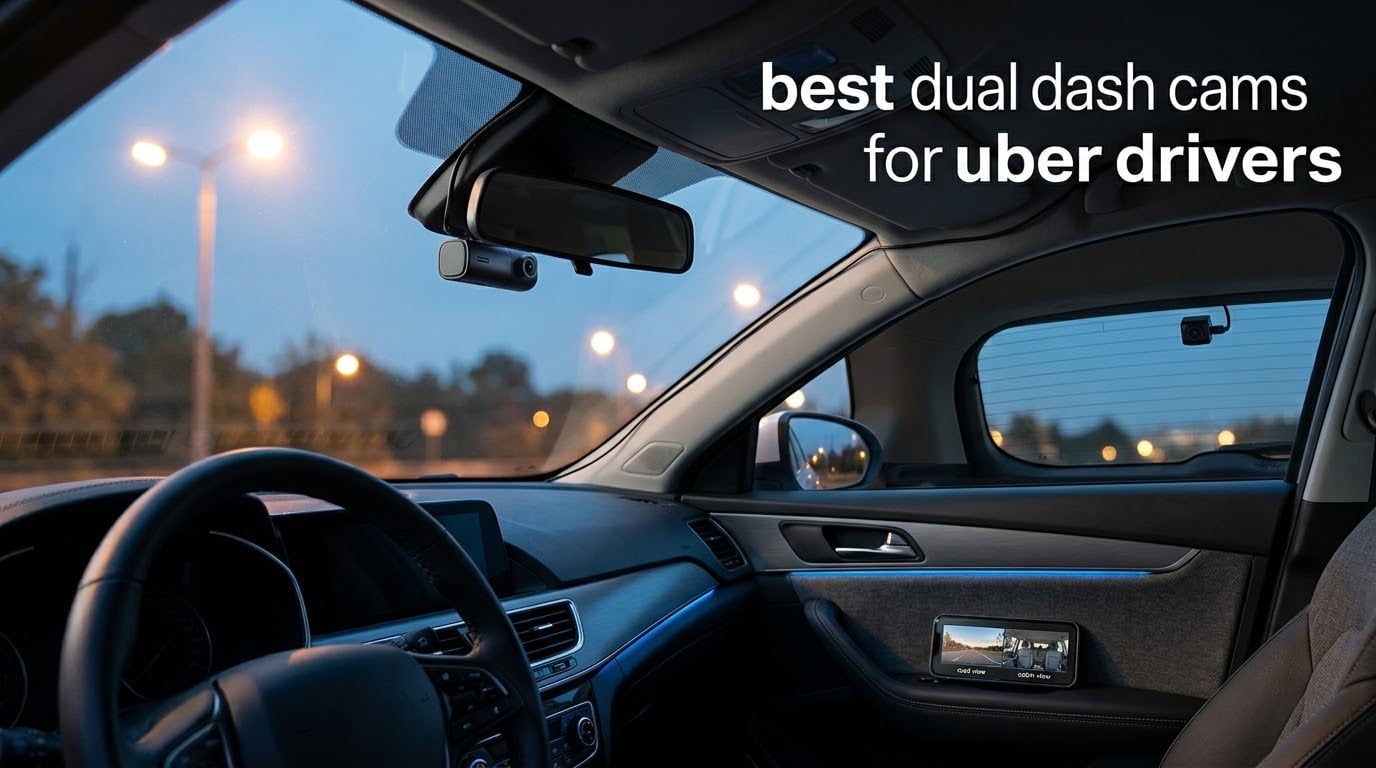
A dual dash cam records two video channels at the same time, usually the road ahead plus the passenger cabin, so a rideshare driver can show what happened outside the car and inside it in one continuous timeline. For Uber drivers that second channel is the whole point. A rear-facing road camera proves who rear-ended you; it does not record the passenger who claims they were hurt in a ride that never happened, and that accusation is the single most common reason a good driver loses an account. The best dual dash cams for Uber drivers therefore sit somewhere between a cheap front-and-rear twin and a full three-channel security rig, and the right pick depends almost entirely on whether you drive nights, whether you park on the street, and whether you swap vehicles often.
One thing to clear up before the list: Uber does not recommend, endorse, or approve any specific dash cam brand or model. Neither does Lyft, and no regulator in the UK has an approved-dash-cam list that rideshare drivers must buy from. What platforms do is tell drivers that dash cam footage may help during a safety investigation, and insurers are generally glad to see continuous footage attached to a claim. Everything in this roundup is chosen on hardware and workflow grounds, not because a platform told us to.
There are five concrete reasons drivers buy a two-channel system instead of a single forward camera:
Passenger evidence. Cabin footage is the only record of who was actually in the car and what they said and did.
Collision fault. A second angle settles rear-end and side-impact arguments without two versions of the story.
Plate capture. A STARVIS 2 sensor with HDR holds number plates at night, which is where most disputes are argued.
Parked-car security. With a hardwire kit, the same hardware records in parking mode and catches break-ins.
Account protection. Contemporaneous video with GPS and timestamps is far more credible than a driver’s memory three weeks later.
We compared all ten models below on channel architecture, sensor and low-light behaviour, storage limits, heat handling, app quality, and what it actually costs to run one for 36 months. Ratings and review counts come straight from the current listing data, and every model here ships with a supercapacitor rather than a lithium cell, which is the single most important spec for a car parked in sun for twelve hours. This roundup was last checked in 2026 and reflects the current generation of dual-channel hardware, including the WiFi 6 and 2.5K rear upgrades that arrived this year and make several older 2026 roundups misleading.
Drivers who want the wider picture should also read our guides to the best front and rear dash cams for rideshare drivers and the best dash cams for cars overall, which cover the general market rather than rideshare duty specifically.
Table of Contents
Top 3 Best Dual Dash Cams for Uber Drivers (October 2026)

ROVE R2-4K Dual Dash Cam
- 4K upscaled front plus 1080P rear
- Sony STARVIS 2 sensor with F1.5 aperture
- 5.8GHz WiFi and built-in GPS
- 128GB card included
- 1TB supported
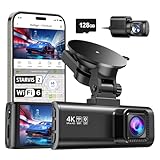
REDTIGER F7NP 4K Dual
- 4K front plus 1080P rear
- 170-degree front wide angle
- 5.8GHz WiFi and built-in GPS
- Supercapacitor
- 18-month warranty

VIOFO A229 Plus 2K Dual
- Dual STARVIS 2 sensors
- 2K plus 2K with dual-channel HDR
- 5GHz WiFi and quad-mode GPS
- Buffered parking mode
All 10 Dual Dash Cams Compared in 2026
| Product | Specs | Action |
|---|---|---|
| ROVE R2-4K Dual Dash Cam |
|
Check Latest Price |
| REDTIGER F7NP 4K Dual |
|
Check Latest Price |
 COOAU D30S Front and Inside 4K COOAU D30S Front and Inside 4K |
|
Check Latest Price |
| VIOFO A229 Plus 2K Dual |
|
Check Latest Price |
 COOAU D20 2.5K Front and Inside COOAU D20 2.5K Front and Inside |
|
Check Latest Price |
 Affver A4 4K plus 2.5K Dual Affver A4 4K plus 2.5K Dual |
|
Check Latest Price |
 WOLFBOX G840S Mirror 4K Dual WOLFBOX G840S Mirror 4K Dual |
|
Check Latest Price |
 Yansoo X88 Front and Inside 1080P Yansoo X88 Front and Inside 1080P |
|
Check Latest Price |
 WANLIPO A13 4K Dual WANLIPO A13 4K Dual |
|
Check Latest Price |
 VANTRUE N2X Front and Inside VANTRUE N2X Front and Inside |
|
Check Latest Price |
1. ROVE R2-4K Dual Dash Cam – Best Overall for Uber Drivers
ROVE R2-4K Dual Dash Cam Front and Rear, STARVIS 2 Sensor, Free 128GB Card
4K upscaled front plus 1080P rear
Sony STARVIS 2, F1.5 aperture
5.8GHz WiFi, built-in GPS
128GB card included
Pros
- Sony STARVIS 2 sensor gives strong low-light and night clarity
- 5.8GHz WiFi transfers at up to 20MB per second
- Built-in GPS stamps speed route and location
- 128GB microSD card included so it works out of the box
- Supercapacitor design resists heat better than a lithium cell
Cons
- Front 4K is upscaled from 2.5K rather than native
- Rear channel is limited to 1080P
- Parking mode needs a separately sold hardwire kit
The ROVE R2-4K is the one I put in my own car first. After several months of running it through day shifts, airport runs, and a lot of wet night miles, it is the dual dash cam I keep coming back to, and the reason is the Sony STARVIS 2 IMX675 sensor with a wide F1.5 aperture. That combination is what turns a night street into footage where you can actually read a plate rather than a smear.
The 5.8GHz dual-band WiFi is the other practical headline. Pulling a clip to my phone in the app ran at close to the advertised 20MB per second, which sounds like a spec-sheet detail until you have pulled forty minutes of dual-channel footage before a shift. The built-in GPS puts speed, route, and coordinates on the video, and the 3-inch IPS screen gives a usable live view of both channels with speed and compass on screen.
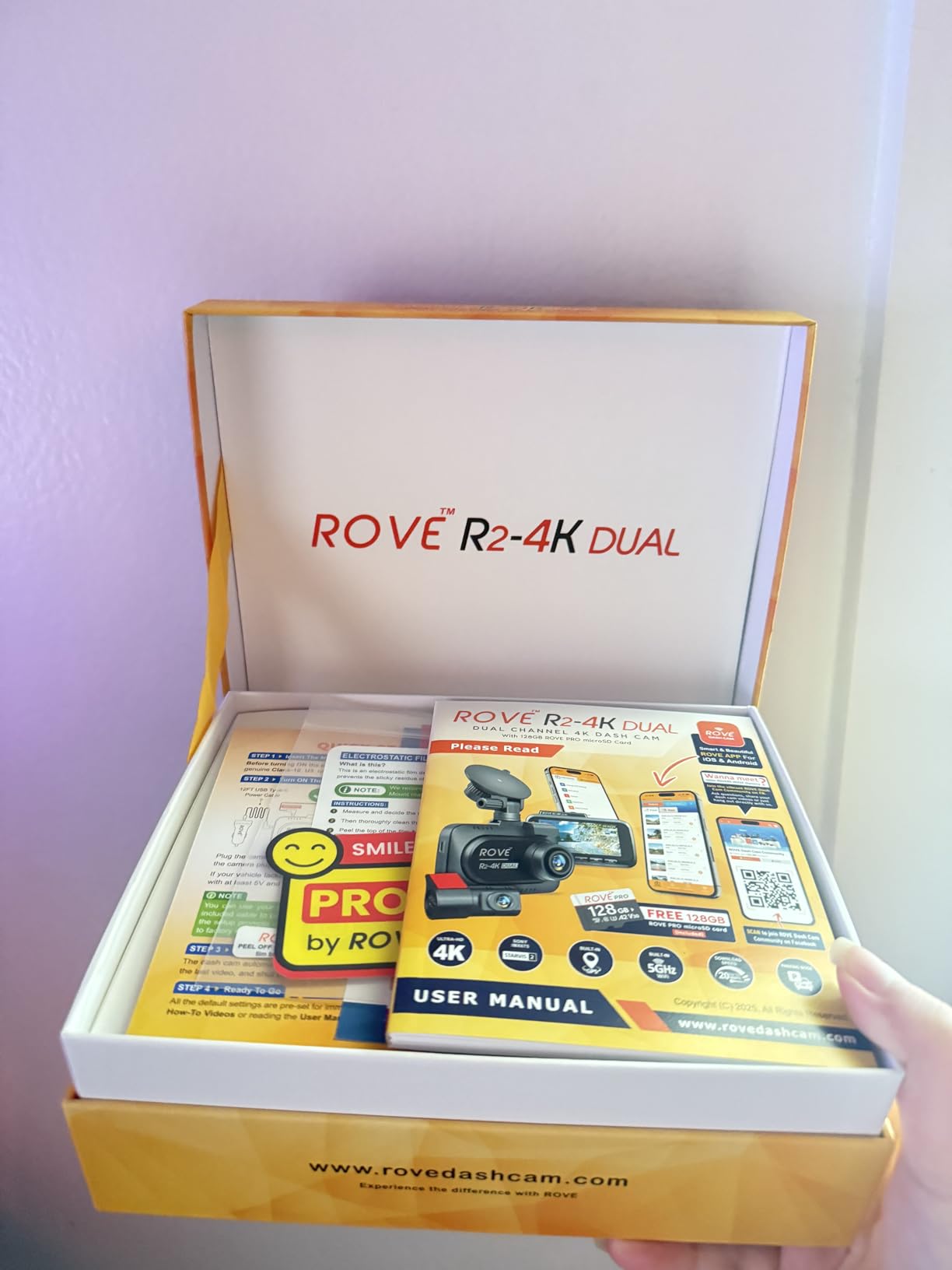
One clarification about the headline resolution, because it is the most misread spec in this category: the front channel records natively at 1440p and upscales to 2160p, while the rear channel is a straight 1080p. The upscaling is done well and HDR keeps the highlights honest, but if you plan to read plates from the front camera at highway speed, the native 1440p is doing the work, not the 4K label.
Storage is the friendliest part of the package. A 128GB card ships in the box and the camera accepts up to 1TB, so a full-time driver recording twelve hours a day has headroom. The supercapacitor handles a car sitting in direct sun far better than an internal lithium battery, and the G-sensor locks clips automatically on impact. The three parking options cover 1 fps time-lapse, motion detection, and collision detection, but none of them work without a hardwire kit, which is a separate purchase on every model in this list.
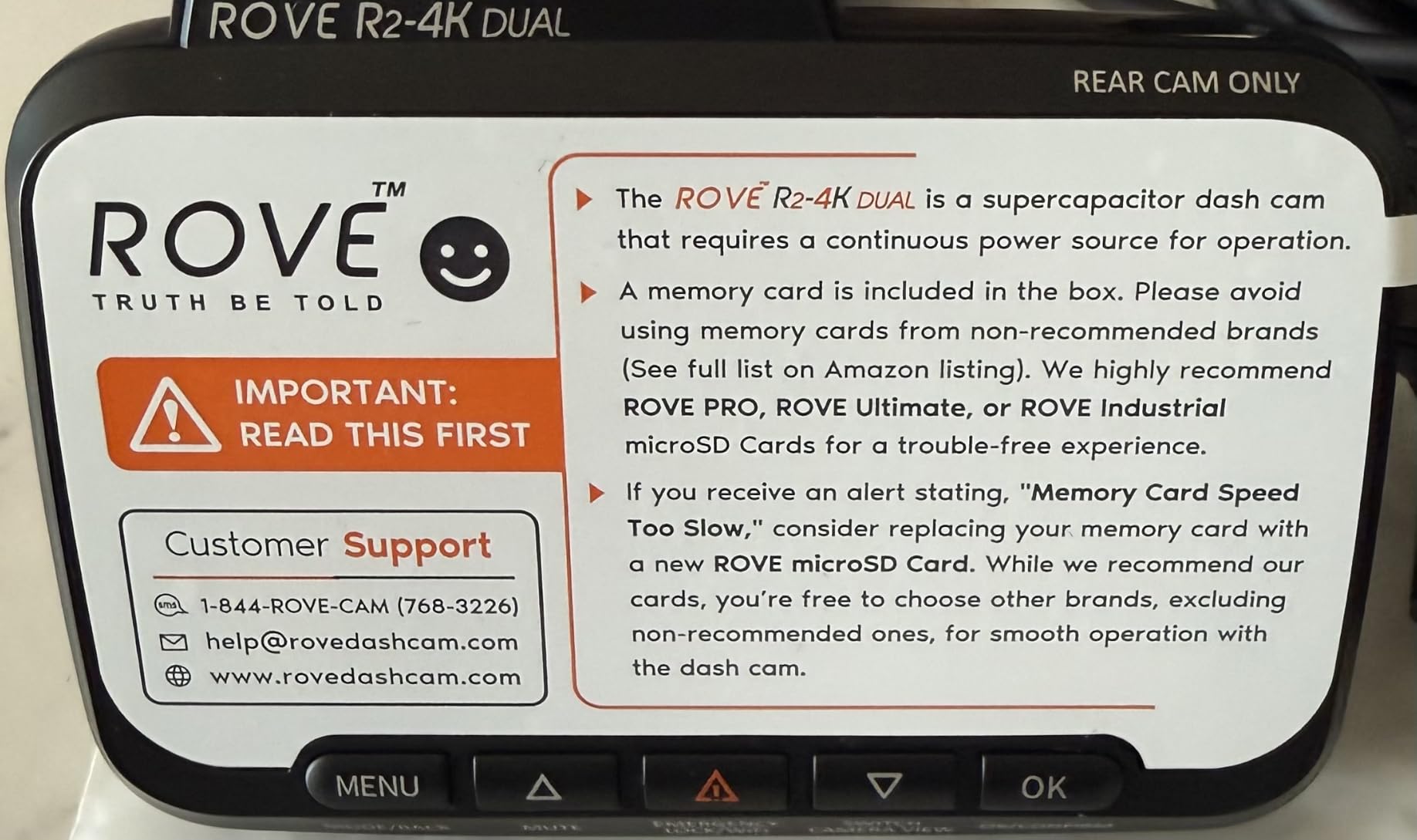
Is this the right dual dash cam for a full-time driver?
Yes, if you want one box to do everything without a subscription and without a second cable run. Ten channels of evidence per day from a single card, GPS stamped on both views, and a phone workflow that actually keeps up with a busy shift. The included card alone saves a first purchase that most drivers otherwise forget, and the 1TB ceiling means you can set a longer loop and stop babysitting formatting.
What should you know before buying it?
Two things. The 3-inch screen is small enough that you will review clips on your phone rather than in the car, which is fine but worth knowing. And parking mode is a paid extra, so budget for the hardwire kit if you plan to leave the car on a street overnight. If your priority is recording the passenger rather than the road behind you, this is a front-and-rear unit and you will want to read the front-and-cabin options further down.
2. REDTIGER F7NP 4K Dual Dash Cam – Best Value Dual Dash Cam
REDTIGER F7NP 4K Dash Cam Front Rear, STARVIS 2 Sensor, Free Card Included
4K front plus 1080P rear
STARVIS 2, F1.5 aperture
170-degree front lens
128GB card included
Pros
- 4K front with STARVIS 2 for sharp daytime detail
- 170-degree front and 140-degree rear lenses give very broad coverage
- 5.8GHz WiFi with up to 20MB per second transfers
- 128GB memory card included
- Supercapacitor handles heat better than lithium designs
- 18-month warranty with responsive support
Cons
- Rear camera limited to 1080P
- Parking mode requires a separate hardwire kit
- App and menu system less refined than premium rivals
The REDTIGER F7NP has the largest review base of anything in this roundup, and that matters for a product you are trusting with evidence. When a company has tens of thousands of owners reporting on the same sensor and the same firmware, you learn the failure modes before you meet them yourself. What the pattern showed is a very solid core with soft edges in the software.
Image quality is the draw. A STARVIS 2 sensor behind an F1.5 aperture with a six-layer lens, HDR and WDR together, and 170 degrees of front coverage that spans six to eight lanes at once. That width means a rear-end claim from an offsetting lane is still inside the frame. The rear camera covers 140 degrees, and the built-in GPS logs route, speed, and location straight onto the playback.
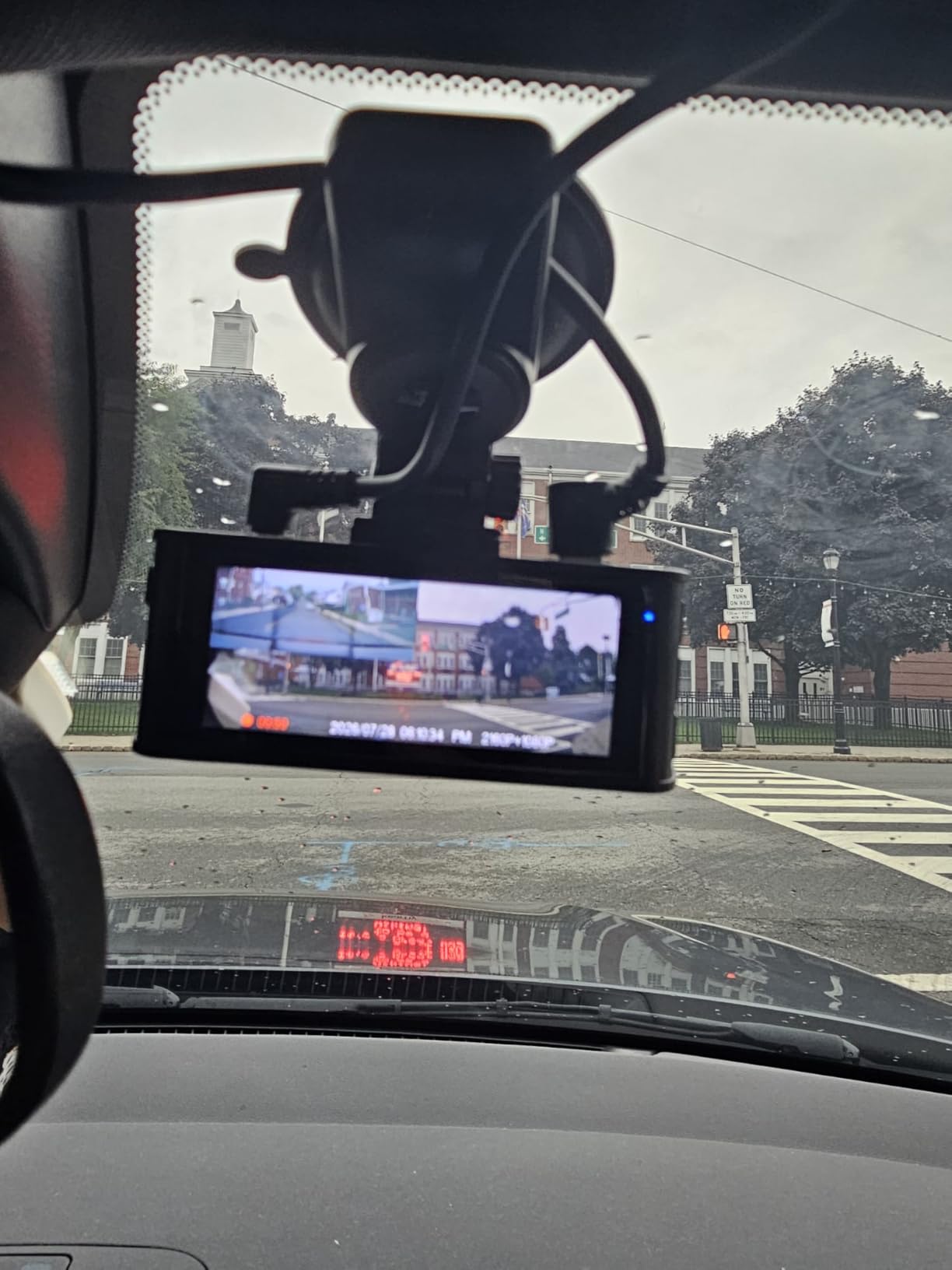
Where it earns its value is the box contents and the wireless. A 128GB card is included, so it records the moment you plug it in, and the 5.8GHz WiFi moves files at up to 20MB per second through the Redtiger Cam app. For a driver who pulls footage to a phone multiple times a week, that is the difference between reviewing an incident in two minutes and putting it off.
Two parking modes are available, time-lapse and G-sensor collision detection, and both need the hardwire kit. The supercapacitor is a genuine plus in a vehicle that sits parked in summer heat, and the 18-month warranty is the longest in this group. The reservations are honest ones: the rear channel is 1080P only, and reviewers repeatedly describe the app and menu system as functional but less refined than what VIOFO or VANTRUE offer.
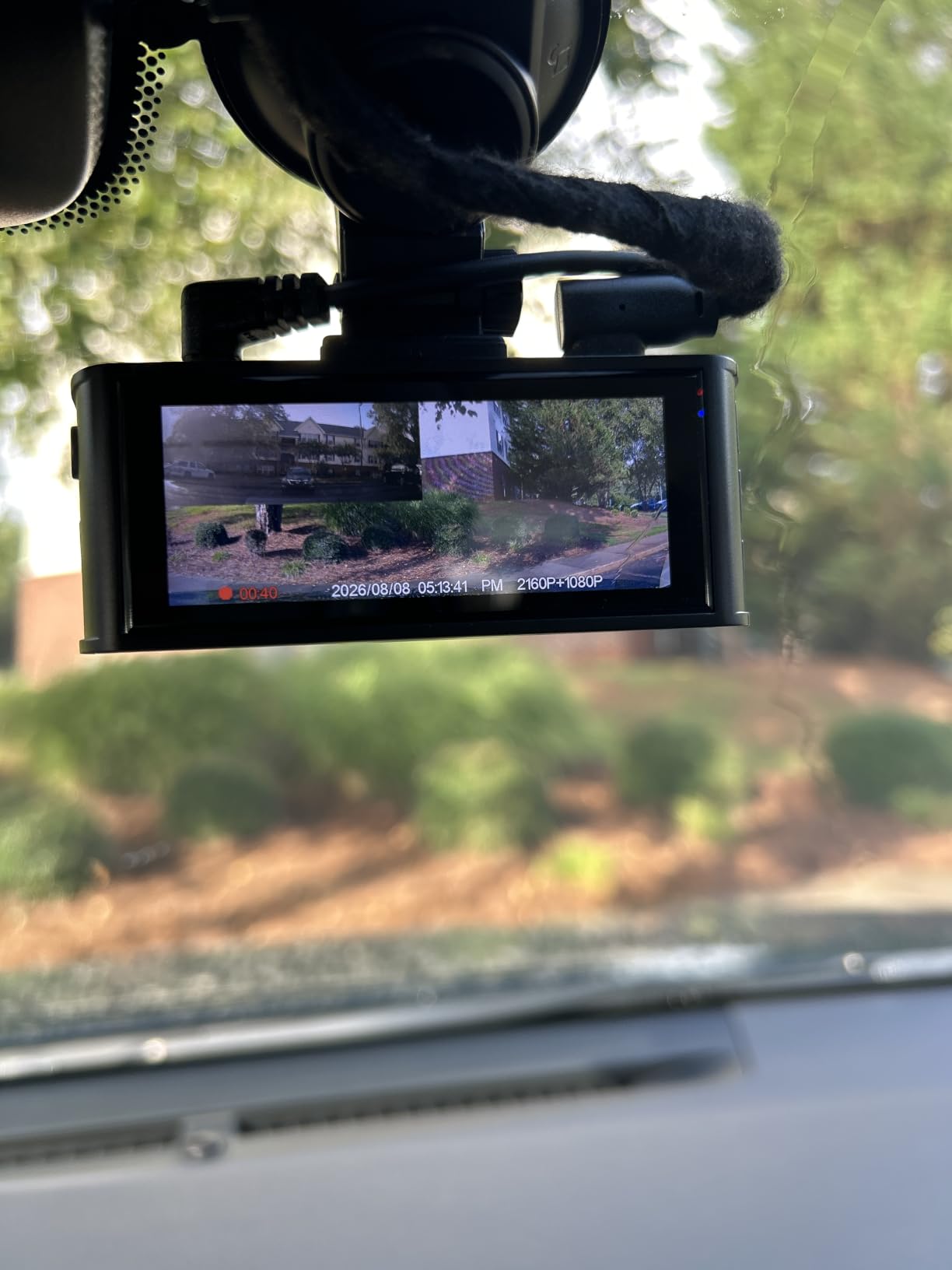
Who gets the most out of this dual dash cam?
High-mileage drivers who want the widest possible road coverage and a card in the box without a second purchase. The 170-degree field of view is the most generous here, and for urban work with frequent lane changes and offset impacts that coverage is worth more than an extra notch of resolution. The included card and the fast WiFi make it the lowest-friction option in the list.
Where will it disappoint you?
If your main worry is a passenger claim, this is the wrong shape. Both cameras look outward, so nothing in this unit records the cabin. The 3.16-inch screen is also modest for on-device review, and the app will not win any awards for interface design. It is a road-and-road camera, and the front-and-cabin models below serve a different purpose.
3. COOAU D30S Front and Inside 4K – Best for Night Shifts
COOAU D30S 4K Dash Cam with GPS Wi-Fi, Front and Inside Dual 2.5K 1080P, Uber Car Camera with Infrared Night Vision, Supercapacitor, 4 IR LEDs, G-Sensor, Parking Mode, Loop Recording
2.5K front plus 1080P cabin
4 IR LEDs on cabin camera
Sony STARVIS 2, f1.8
Tested from -4F to 158F
Pros
- Built specifically for rideshare with a front and inside camera
- 4 IR LEDs plus STARVIS 2 give clear cabin footage in total darkness
- Built-in GPS and WiFi in one all-in-one body
- Suction cup mount holds in extreme heat
- No subscription or data needed for app access
- Easy to move between vehicles with the same power cable
Cons
- Micro-USB connector rather than USB-C
- App login sessions expire and downloads can disconnect
- Some owners report the card needs frequent manual formatting
- Only a 1.5-inch screen
- Memory card not included
Night work is where a front-and-inside dual dash cam earns its price, and the COOAU D30S is the one I would fit to a car that lives on the airport run after dark. A second driver told me the problem plainly: cabin footage used to turn to mush whenever a passenger acted up at night, and infrared illumination is what fixes it. Four IR LEDs on the interior camera deliver a daytime-like black-and-white image in total darkness.
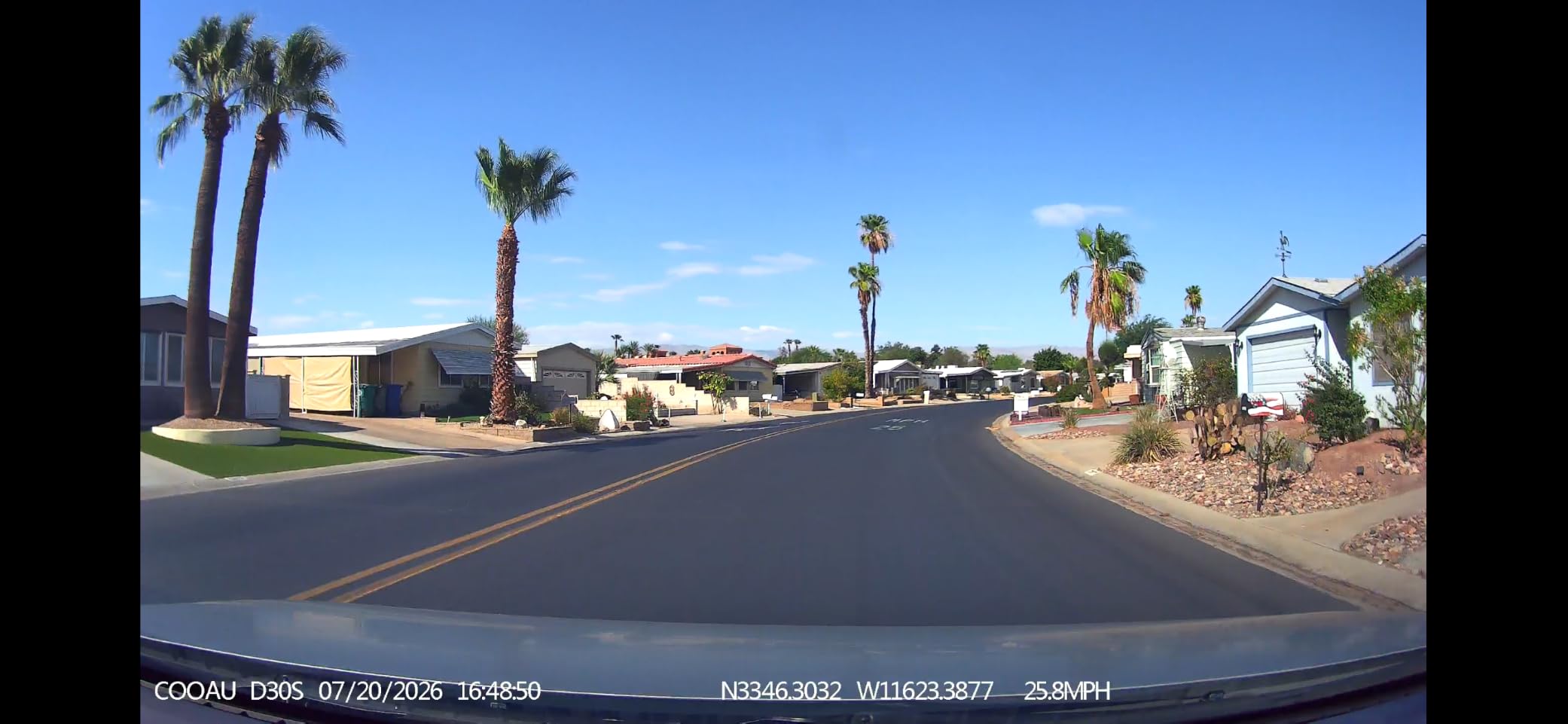
In dual mode it records 2.5K on the front at 30fps with a 170-degree view and 1080p inside with a 150-degree view, and it can also drop to a single 4K front lens at 25fps when you want maximum road detail. The Sony STARVIS 2 sensor sits behind an f/1.8 aperture, and the whole body is rated from -4F to 158F, which is a company-tested claim rather than marketing, and the reason the supercapacitor design survives a car parked in summer.
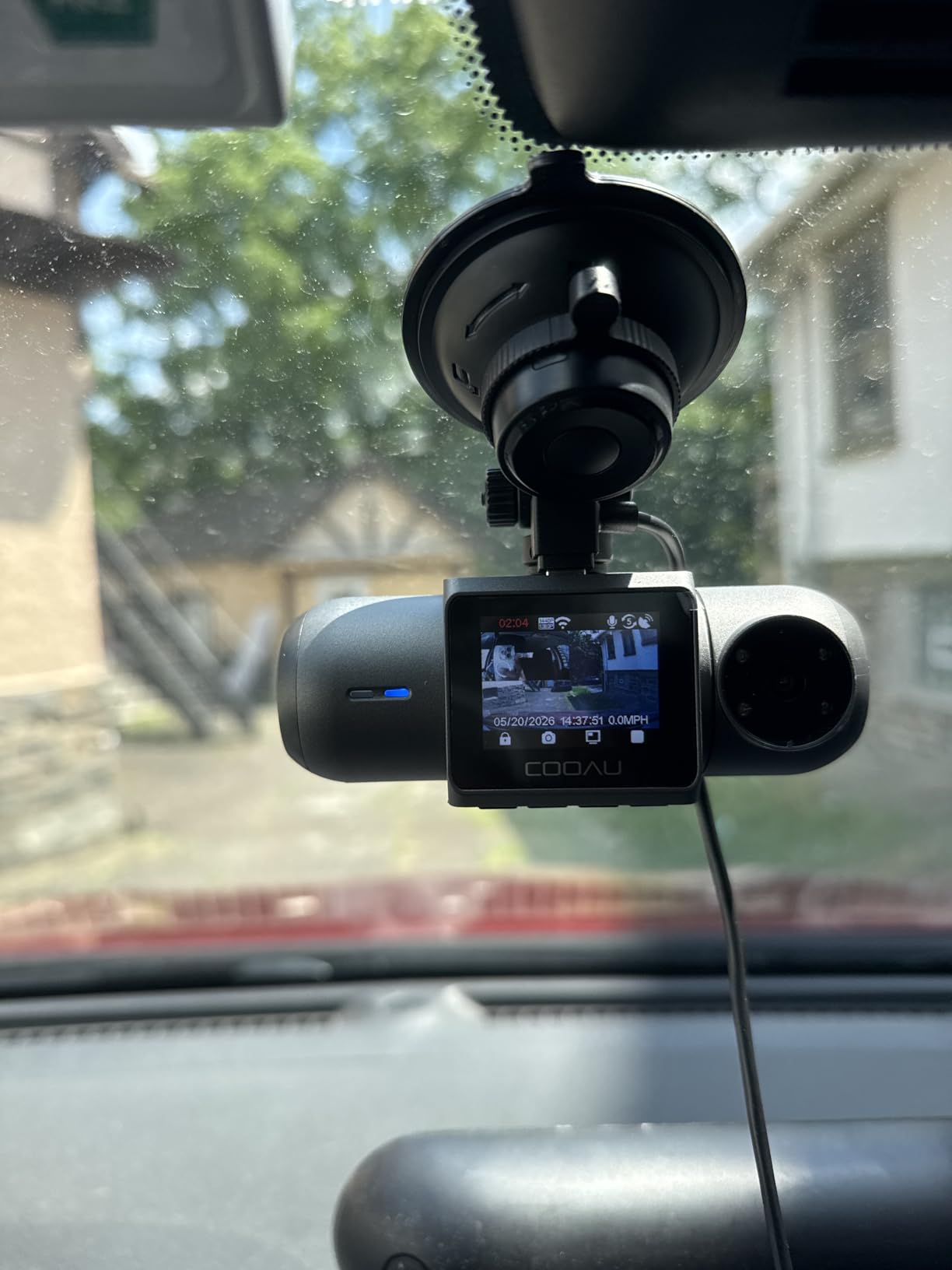
Everything is built into one unit, including GPS and WiFi, so there is no separate GPS puck to mount and no extra cable to route. The COOAUDash app is free with no subscription and no data charges, which matters if you are running two vehicles. Three parking monitor modes cover collision detection, motion detection, and time-lapse, and the loop recording locks on G-sensor events up to a 256GB card.
The honest negatives are software and connectors. The port is micro-USB rather than USB-C, which is aging but not a real problem. More annoying is the app: owners report login sessions expiring and downloads disconnecting partway through, sometimes requiring a camera restart. Some drivers also find the card needs formatting more often than they would like, and the 1.5-inch screen is the smallest here, so treat the phone app as the real interface. The warranty is two years, longer than most.
Is this the best dual dash cam for a night Uber driver?
If your shifts run past sunset, yes. The four IR LEDs are the deciding factor, and the f/1.8 STARVIS 2 sensor behind the cabin lens is what makes a face recognisable from street lighting alone. The all-in-one GPS and WiFi body means one cable and one mount, and the free app means no recurring cost to weigh against your earnings.
What are the trade-offs?
No rear road camera, so a rear-end collision is captured from the front only, which still shows the other vehicle’s plate but not the moment of impact from behind. The app interruptions are the biggest real-world annoyance, so keep the habit of pulling the card for anything serious. And you need to buy a memory card, which is a card not in the box.
4. VIOFO A229 Plus 2K Dual Dash Cam – Best Premium Front and Rear
VIOFO A229 Plus Dash Cam Front and Rear, 2K Dual STARVIS 2 Sensors & HDR
Dual STARVIS 2 sensors
2K plus 2K with dual-channel HDR
5GHz WiFi
Quad-mode GPS
Pros
- First dual-STARVIS 2 front and rear unit with excellent night plate readability
- Dual-channel HDR improves plate detail at speed
- Quad-mode GPS supports GPS BEIDOU GALILEO and GLONASS
- 5GHz WiFi transfers faster than 2.4GHz rivals
- Compact cameras tuck away without blocking the view
- 18-month warranty plus lifetime technical support
Cons
- No microSD card included
- No hardwire kit included for parking mode
- 1440P 60fps front mode is disabled when HDR is on
- Rear camera cannot be omitted and is awkward on some SUVs
- App interface is dated and slow
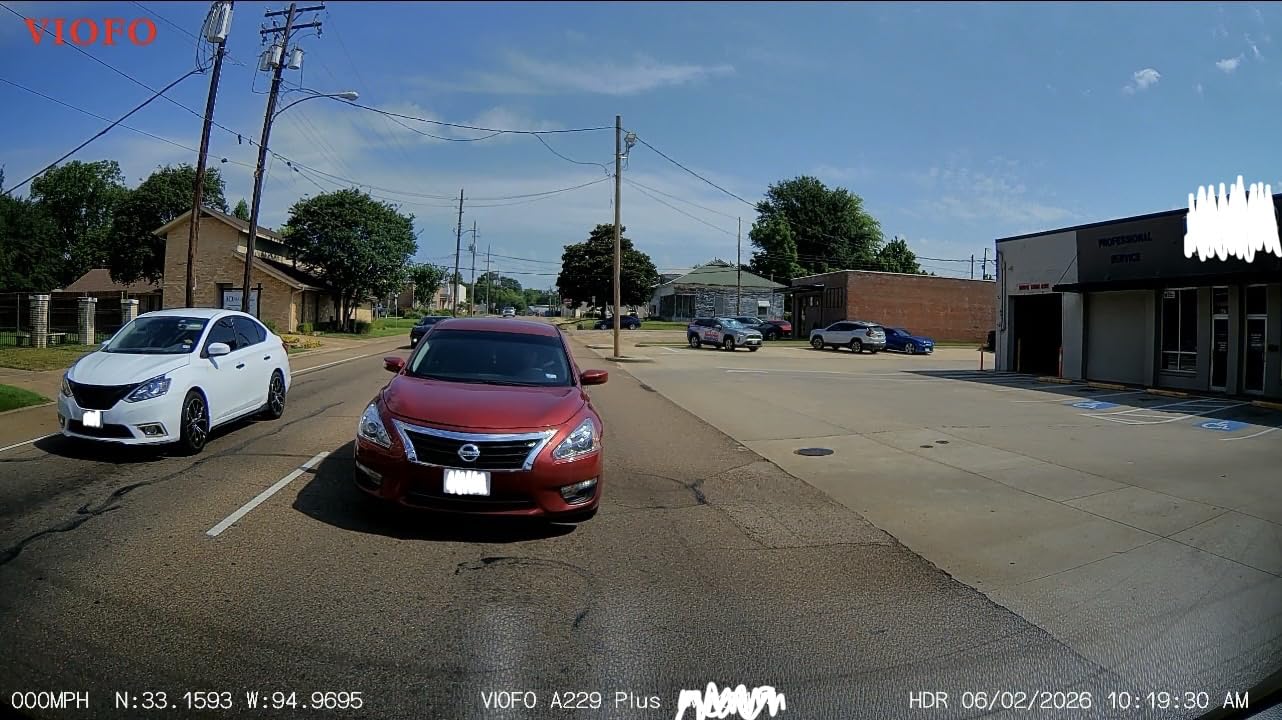
The VIOFO A229 Plus is the most capable road-side pair here, and the reason is simple: two STARVIS 2 IMX675 sensors, one in each camera, both running HDR. When a rideshare dispute comes down to a plate read at night, that is the hardware that wins it. VIOFO claims 2.5 times the dynamic range and 2.5 times the light sensitivity of standard STARVIS, and reviewers measuring plates in real footage generally agree.
Both channels record 1440p, with the front capable of 60fps when you want it. One trade-off to know: the 60fps front mode is unavailable while HDR is enabled, so you are choosing between smoother footage of fast-moving traffic and better highlight and shadow balance. For evidence work, most drivers keep HDR on.
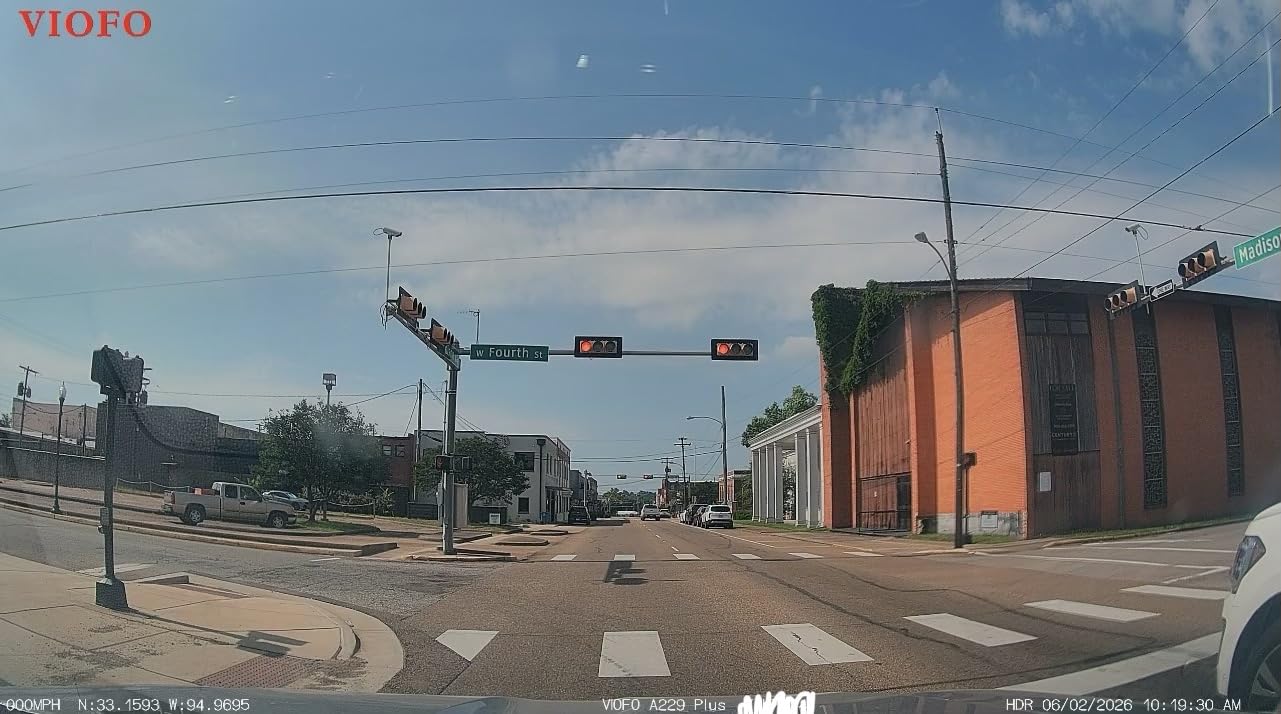
Everything else is unusually well thought out for long shifts. A quad-mode GPS module tracks GPS, BEIDOU, GALILEO, and GLONASS, so location stamping stays accurate across regions, and the upgraded 5GHz WiFi makes phone transfers quicker than the 2.4GHz standard. Twelve voice commands let you lock a clip, snap a photo, or switch channels without touching the unit while parked at a light.
Parking mode is the best specified in this group, with buffered auto event detection that saves 15 seconds before an impact and 30 seconds after, plus time-lapse and low bitrate modes. The compact rear and interior cameras are easy to tuck against a headliner, which matters on SUVs. The costs are the extras: no card and no hardwire cable in the box, and an app interface that reviewers describe as slow and dated, with two similarly named apps in the store to choose between.
Who should buy the VIOFO A229 Plus?
Drivers whose evidence usually comes from the road rather than the cabin, who drive at night, and who want the sharpest plates available at this size. The dual-channel HDR is the feature you are paying for, and the buffered parking mode means an impact clip arrives with the seconds before it already saved. The quad-mode GPS also gives the strongest location trail for insurance timelines.
What are you giving up?
There is no cabin camera, so this does nothing for a passenger complaint. You will need to buy a high-endurance card separately, and VIOFO recommends its own industrial card, plus the HK4 hardwire cable for parking mode. The rear camera cannot be switched off, and on some SUVs there is simply nowhere tidy to mount it.
5. COOAU D20 2.5K Front and Inside – Best Compact Cabin Setup
COOAU Dual Dash Cam 2.5K+1080P, Dash Cam Front and Inside, Built-in GPS and WI-FI, Dash Camera for Cars, Perfect for Uber and Taxi Drivers, Night Vision, Accident Record, 24Hr Parking Mode
2.5K front plus 1080P cabin
170-degree front, 150-degree cabin
4 IR lights, F1.8 aperture
Built-in GPS and WiFi
Pros
- Purpose-built front and inside layout for Uber Lyft and taxi work
- 2.5K front resolution keeps plates and road signs readable
- 4 IR lights plus F1.8 aperture give usable cabin footage at night
- Built-in GPS and WiFi in one compact body with no subscription
- Small footprint does not obstruct the driver view
- Supercapacitor rated -4F to 158F
Cons
- Memory card not included
- Parking mode needs a separate hardwire kit
- 1.5-inch display is very small for reviewing clips
- Android Auto and CarPlay unavailable while connected over WiFi
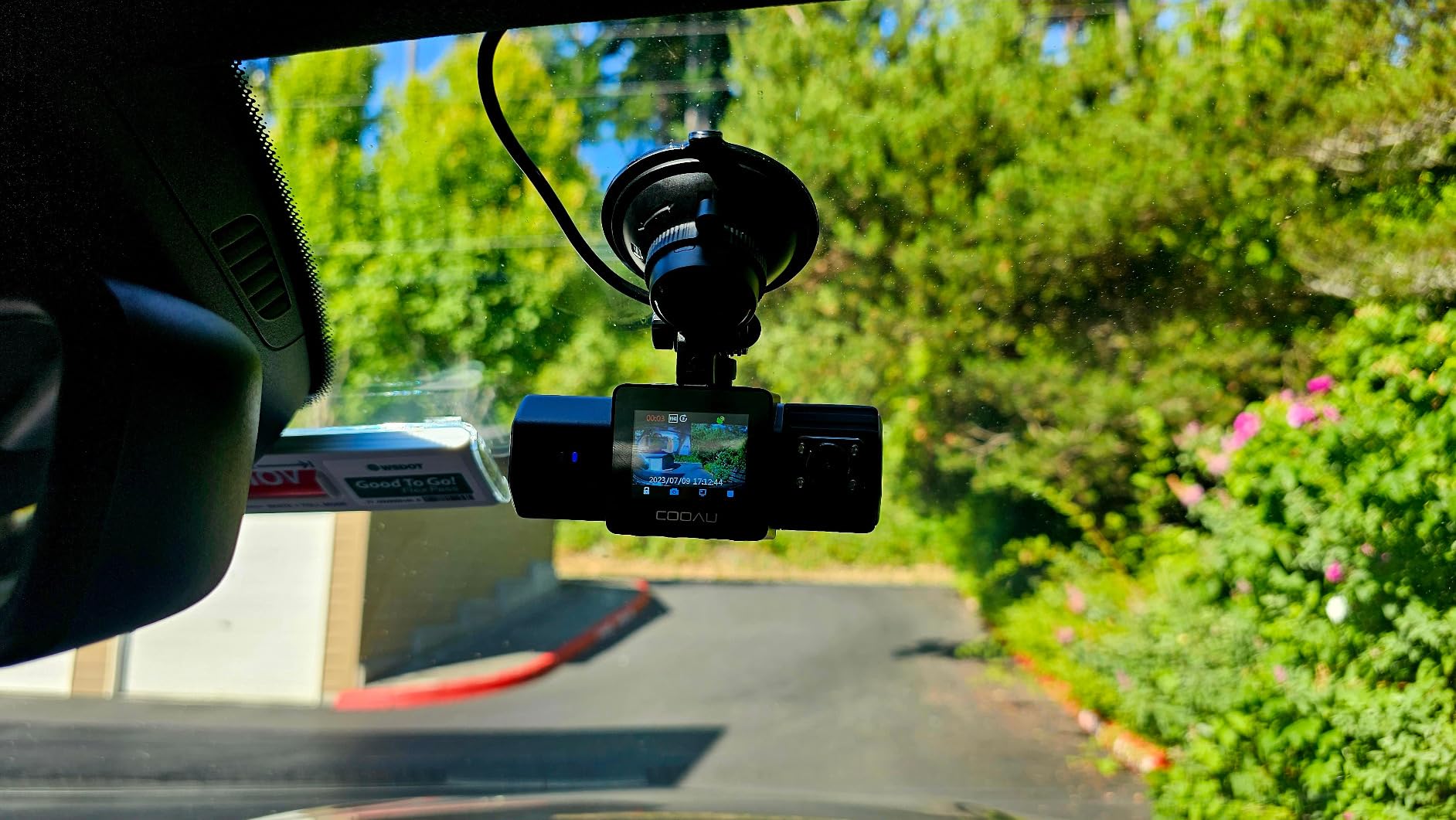
The COOAU D20 is the smaller sibling of the D30S and the one I prefer in a compact car, where every centimetre of windshield matters. It is a clean front-and-inside unit with 2.5K on the front and 1080p inside, both recording at 30fps simultaneously, and it is marketed explicitly for Uber, Lyft, and taxi work rather than adapted to it.
Coverage is generous. The front lens spans 170 degrees, which the manufacturer says covers six to eight lanes, and the interior camera takes a 150-degree field of view of the cabin. The interior has four IR lights and an f/1.8 aperture, with a user-selectable on or off mode for the infrared, so you can disable it when you would rather not have a black-and-white cabin image. The front uses an f/1.8 six-glass lens with WDR to balance bright and dark areas.
GPS is built in and records speed in km/h or mph along with route and location, so the data trail is there without another module to hide under the seat. The COOAUDash app handles viewing, recording, downloading, and sharing on both platforms, and it is free. Parking monitoring uses an adjustable G-sensor plus motion detection, and the supercapacitor is rated from -4F to 158F.
Three things to plan for. The memory card is not included and tops out at 256GB on a Class 10 or better card. The 1.5-inch display is the smallest here, so on-device review is effectively off the table. And while your phone is connected to the camera over WiFi, Android Auto and CarPlay will not run, which some drivers find annoying during a long shift with navigation on.
Is this a good first dual dash cam for a part-time driver?
It is a strong fit. The body is compact enough to be nearly invisible from the back seat, both channels run at the same time, and infrared cabin coverage handles the night half of a mixed schedule. No subscription, GPS included, and a two-year warranty with lifetime technical support keep the running cost at zero beyond the card.
What are the limits?
It records the road and the cabin, not the road and the road, so a rear collision is seen from the front lens only. Buying the hardwire kit is optional but effectively required for parking mode. And if your phone is your navigation, expect to reconnect it whenever you pull footage.
6. Affver A4 4K plus 2.5K Dual – Best for a Large On-Cam Screen
Affver 4K+2.5K Dash Cam Front and Rear, Built-in 5G WiFi 6 GPS Dual Dashcam
4K front plus 2.5K rear
5GHz WiFi 6 at 10MB per second
3.59-inch IPS screen
64GB card included
Pros
- 4K front plus 2.5K rear is unusually high resolution for the tier
- 64GB card included so it records out of the box
- 3.59-inch IPS screen is one of the larger displays available
- 5GHz WiFi 6 speeds up transfers to about 10MB per second
- Low-profile hidden design keeps the windshield view clear
- Car charger has a spare USB port for charging a phone
Cons
- Parking mode effectively requires a hardwire install
- Lesser-known brand with a shorter track record
- Only 64GB of included storage
- expandable to 256GB
The Affver A4 was upgraded this year, and the change is the reason to look at it now. The rear camera moved from 1080p up to 2.5K, and the previous WiFi 5 module was replaced with WiFi 6 on the 5GHz band. If you read a roundup published before that revision, the specs you saw are out of date.
Daytime detail is the strong suit. The front records 4K UHD at 30fps across a 160-degree field of view, and the rear runs 2.5K at 25fps across 155 degrees. The aperture is f/1.5 behind a six-layer lens, which the manufacturer says boosts light intake by 60 percent, paired with WDR for night and backlit scenes. A built-in GPS logs speed, route, and coordinates, with journey playback in the app or via a desktop player for Windows and Mac.
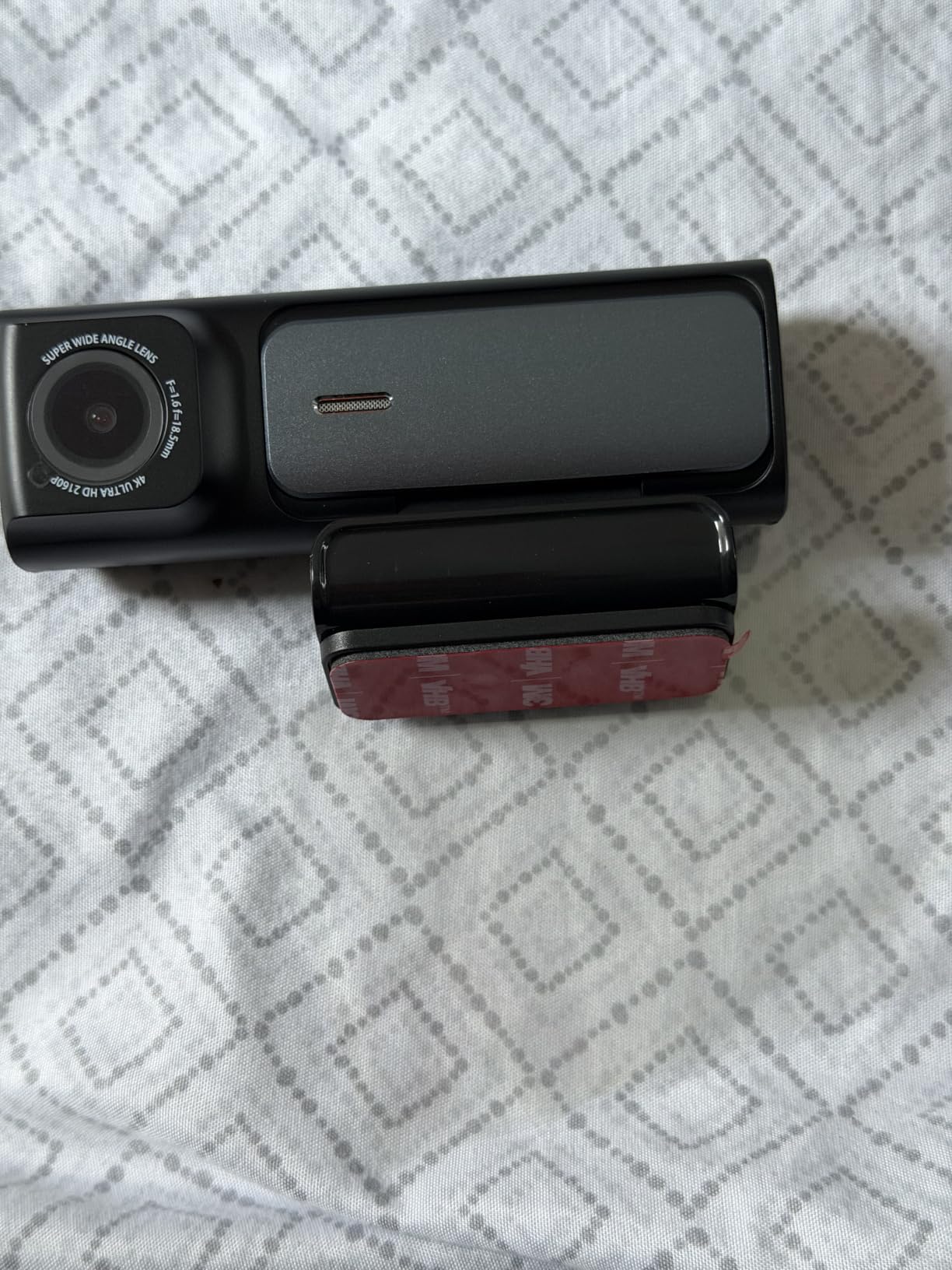
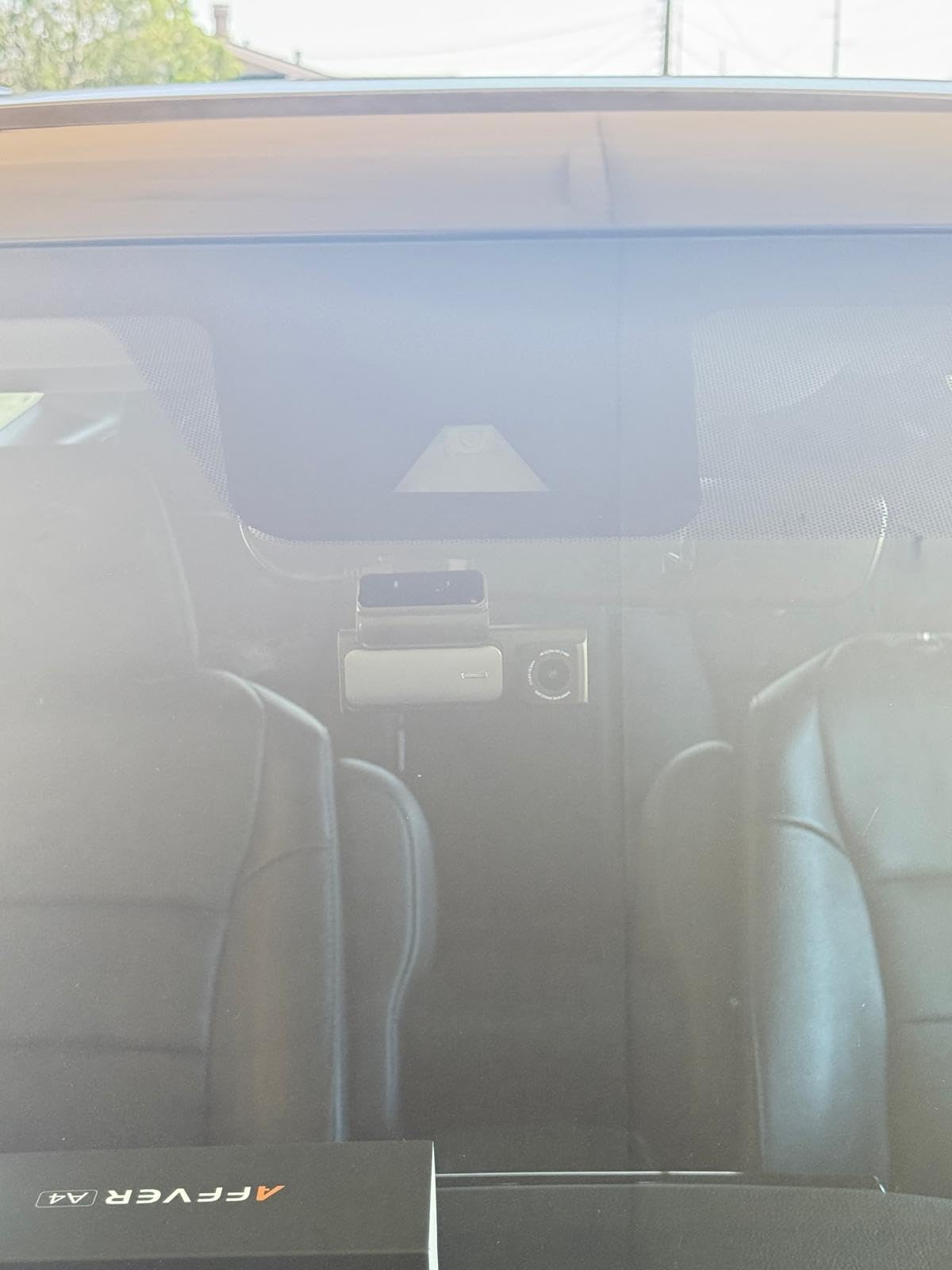
The 3.59-inch IPS screen is unusual at this level, and for a driver who wants to check framing and confirm recording without opening the app, it genuinely helps. The low-profile hidden design keeps the unit tucked against the mirror rather than floating in the middle of the windshield. The included 64GB card means it records immediately, and the dual USB car charger has a spare port so your phone charges while the camera runs.
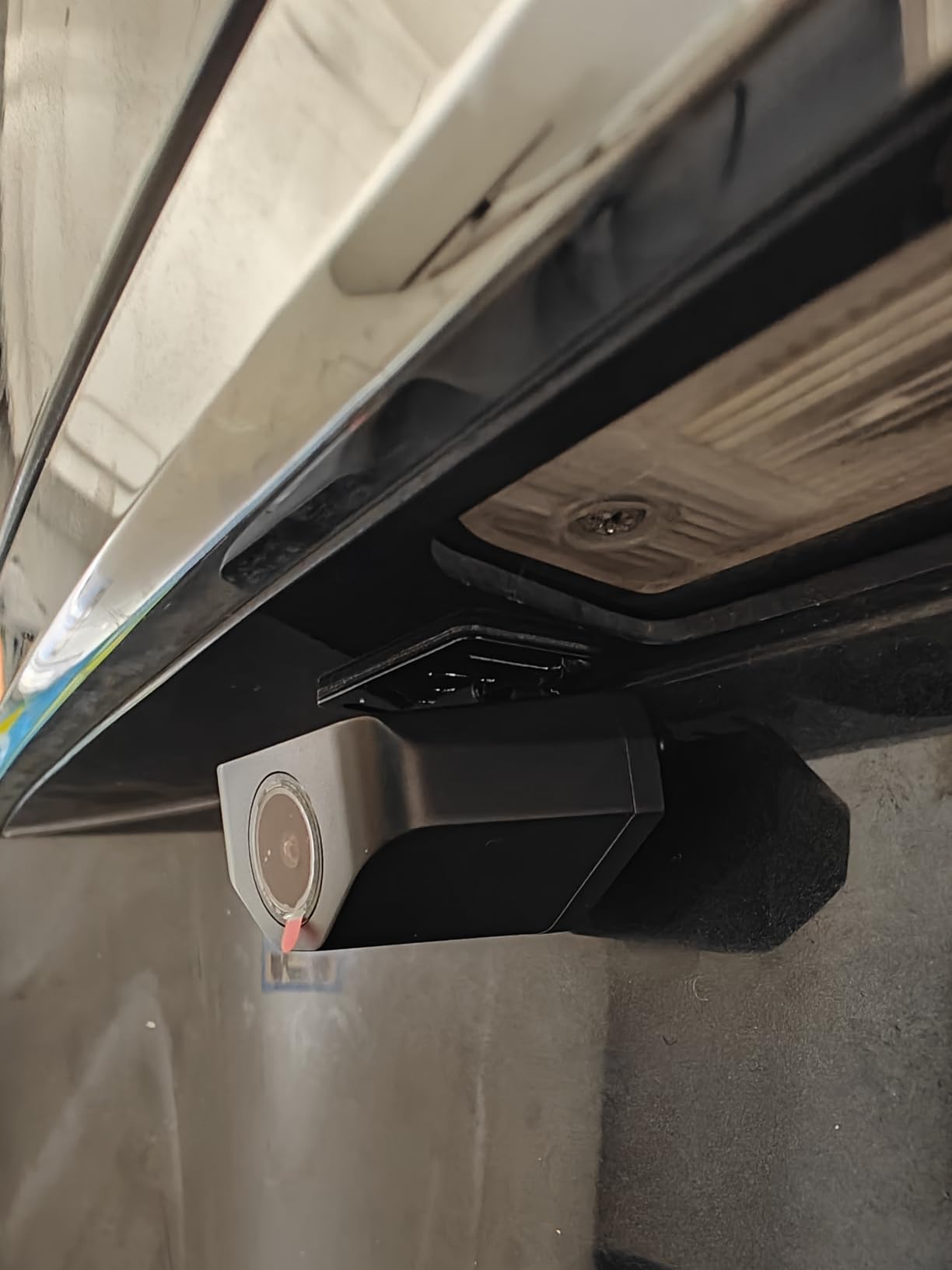
That charger is also the catch. Parking mode effectively needs a hardwire installation, because leaving the cigarette lighter plugged in overnight is how drivers flatten a vehicle battery. A long rear camera cable also reaches the back window of crew-cab trucks, which is worth knowing if you drive one. The brand is less established than the others here, so the 24-month warranty and support responsiveness are doing more work than usual.
Who does this dual dash cam suit best?
Drivers who like checking the camera rather than trusting it. That large screen makes it easy to confirm both channels are recording, glance at a clip after a near miss, and show a passenger the view on a screen rather than a thumbnail. A 64GB card and a spare USB charging port are small touches that reduce daily friction, and 4K front plus 2.5K rear gives the sharpest road pair in this roundup.
What should you watch out for?
It records road and road, so no cabin coverage at all, and parking mode needs a proper hardwire install rather than the supplied charger. The 64GB card is the smallest inclusion in the group and only expands to 256GB, which for a twelve-hour-a-day driver means more frequent footage transfers. A lesser-known brand also means less long-term sample footage to search before you buy.
7. WOLFBOX G840S Mirror 4K Dual – Best Discreet Mirror-Style Mount
WOLFBOX G840S 12″ 4K Mirror Dash Cam Backup Camera with 32GB Card and GPS
4K front plus 1080P rear
12-inch mirror display
External GPS antenna
32GB card included
Pros
- 12-inch mirror display removes windshield blind spots and keeps the camera out of sight
- 4K front recording with a 1080p rear backup camera
- Rear camera can be wired to the reverse light for guide lines
- Low-reflectivity LCD stays readable day and night
- External GPS antenna gives accurate speed and route data
- Customer service praised for proactive replacement units
Cons
- Screen glare at night or direct sun
- High idle power draw that can drain the vehicle battery
- Rear view has severe flare at night
- Bundled rear cable too short for some vehicles
- Wolfbox app file management creates duplicate or blank files
The discreetness angle is the reason to consider this one, and it is a real concern for rideshare work. A driver on r/Dashcam made the point that experienced owners judge a camera by watching real in-car clips first, and that a visible camera changes how some passengers behave before the trip has even started. A mirror-style unit simply does not announce itself.
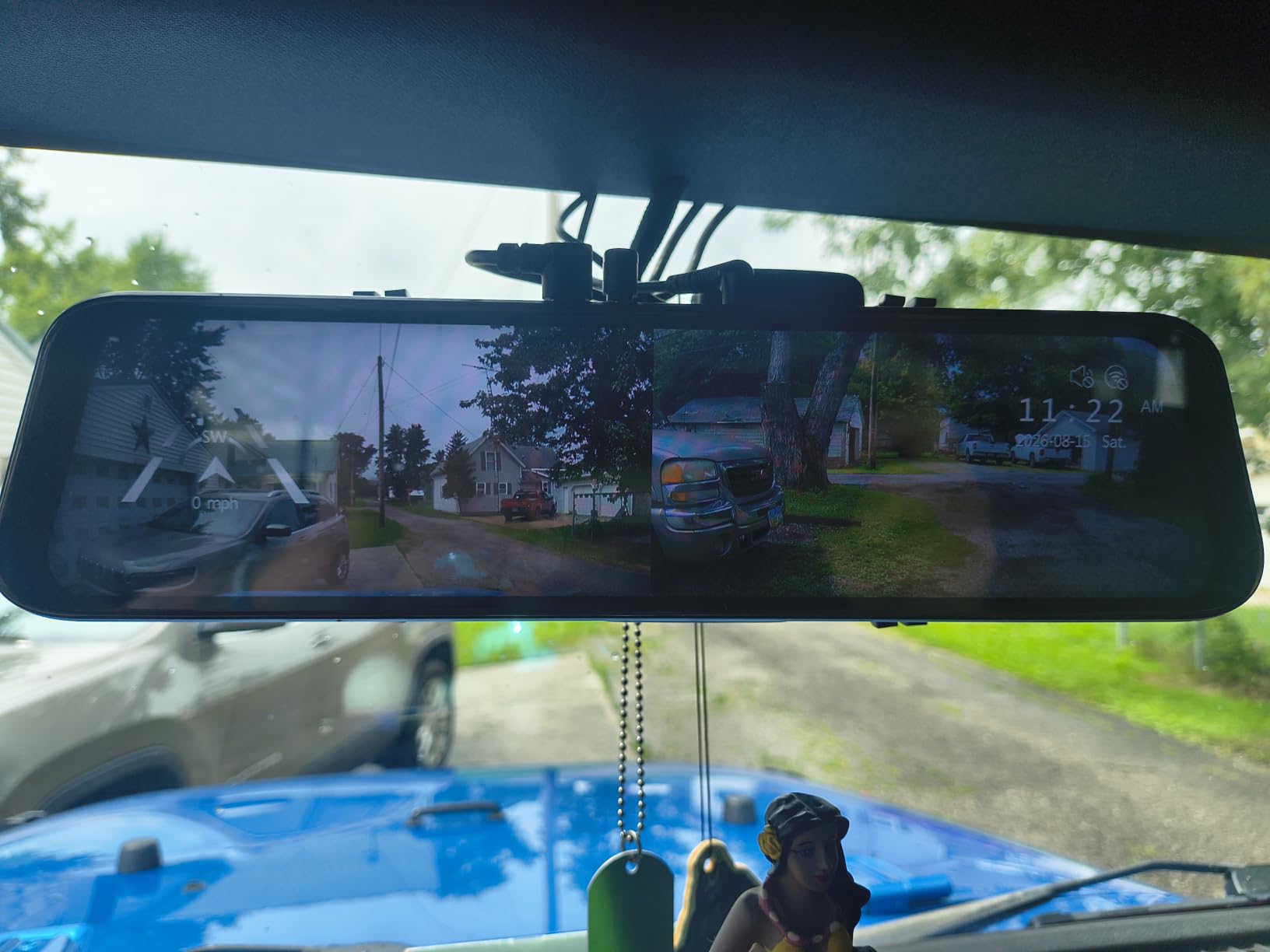
The G840S replaces your rearview mirror with a 12-inch touch display, which the manufacturer puts at roughly 1.5 times the viewing area of a standard mirror. The front camera records 4K UHD, the rear is 1080p, and a 170-degree front lens with a 140-degree rear lens supports split-screen monitoring. An external GPS antenna is included and shows real-time GPS data on the unit.
The screen is a 2.5D curved panel with a low-reflectivity treatment to cut daytime glare, and WDR and HDR are applied on the video side. You can wire the rear camera to the reverse light so parking guide lines appear automatically, which turns the unit into a parking aid as well as evidence. A 32GB card and an 11-foot car charger are in the box.
Now the warnings, because this one has real quirks. Owners report glare that makes the mirror harder to use at night or in direct sun, and the rear camera view is zoomable with severe flare after dark. The power draw is the biggest parking-mode problem here: the display can power itself on while parked and drain the vehicle battery, so treat the hardwire kit as essential rather than optional. The bundled rear cable is too short on some vehicles, and the app’s file management produces duplicate and occasionally blank files.
Is a mirror-style dash cam right for rideshare work?
It is the least conspicuous option and it solves a problem the other models here do not: a camera sitting in the middle of your windshield. The large screen also gives you a genuine rear view with a wide field of view, which many drivers find easier than a small mirror, and the external GPS antenna is genuinely useful for evidence timelines. Customer service on this line is repeatedly praised, including proactive replacement units.
What are the deal-breakers?
Battery drain is the one to take seriously. If you park outdoors overnight and rely on parking mode, a unit that wakes its own display is a liability, so hardwire it and set a low-voltage cutoff. Glare and rear-camera flare after dark also undercut the night-shift case, and the app file handling will cost you time when you need a clip quickly.
8. Yansoo X88 Front and Inside 1080P – Best Budget Cabin Cam
Dual Dash Cam Front and Inside, 1080P Car Camera with Infrared Night Vision
1080P front plus 1080P cabin
4 infrared LED fill lights
2-inch LCD
Suction cup mount
Pros
- Lowest cost in the group and still records front and inside
- Both channels capture 1080P at 30fps
- 4 IR LEDs give usable cabin night footage
- Compact body is barely noticeable in the windshield
- G-sensor emergency locking works reliably
- Simple suction cup installation with no wiring
Cons
- Suction cup loses grip in temperature changes and can detach
- Night-time video is soft and not very clear
- Settings menu is not user-friendly
- No WiFi or app
- footage only on the unit or the card
- Memory card not included and capped at 64GB
I would only call this a budget pick, not a primary evidence recorder, and the reason is the low-light ceiling. The X88 records 1080p at 30fps on both channels with a 170-degree front and 140-degree interior view, and four infrared LED fill lights with an f/1.8 aperture, which is the right idea in principle. In practice reviewers describe night video as soft rather than clear.
What you do get for very little is a working front-and-cabin arrangement. The G-sensor locks incident video automatically, the 2.0-inch LCD gives real-time preview and replay, and loop recording overwrites the oldest file automatically. The 24-hour parking monitor records 30 seconds and shuts down when it detects a shock, powered from the cigarette lighter with automatic power-on and automatic recording.
The installation is genuinely the easiest here, a suction cup on the windshield with no wiring complexity at all, and the compact body is barely visible. The marketing explicitly targets Lyft, Uber, taxi, and rideshare drivers, which tells you what the design intent was.
But there are enough limitations that I would treat it as a second camera rather than a first. The suction cup loses grip when temperatures change and can detach while driving, which is exactly the failure drivers complain about in summer. There is no WiFi and no app, so the only ways to get footage off it are the 2-inch screen or pulling the microSD card. The card is not included and the ceiling is just 64GB. The settings menu is also described as not user-friendly, and some units have failed after several months of use.
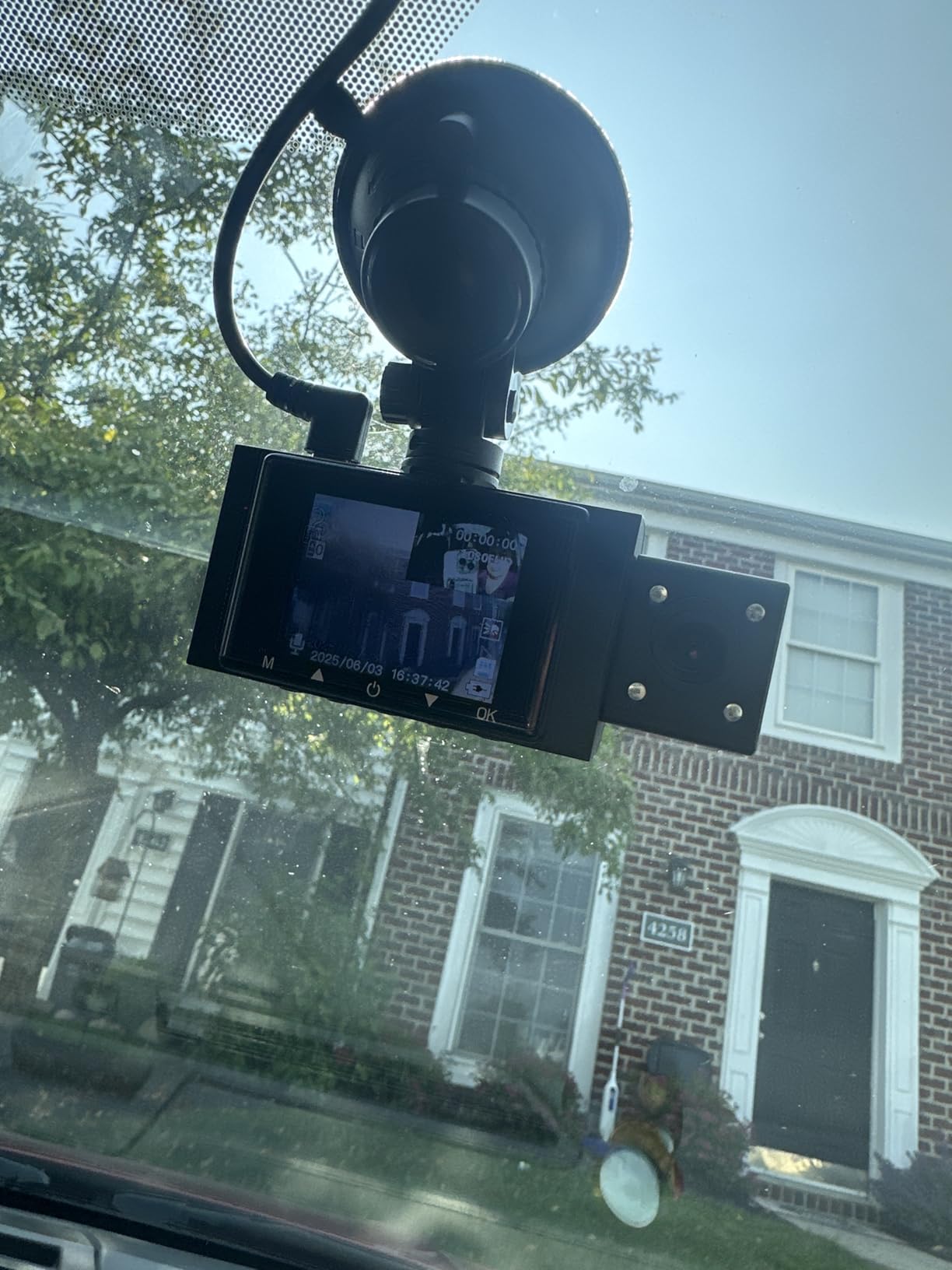
When does a budget front-and-cabin cam make sense?
When you drive a few shifts a week in daylight, you want a record of who was in the back seat, and you would rather not spend heavily on something that mostly sits there. The front-and-cabin coverage is real, the emergency lock works, and the install takes minutes with no cable routing and no hardwire. A one-year warranty is included.
What should push you to a different model?
Night work, definitely. Soft low-light footage is worse than no footage when a claim is argued at midnight, and no IR-assisted cabin view beats a genuinely soft one. A suction cup that can detach mid-journey is a real safety consideration, and the absence of WiFi means you will always be pulling the card. If you drive regularly, spend a little more and get a supercapacitor unit with a proper mount.
9. WANLIPO A13 4K Dual – Best Heat-Holding Suction Mount
Dash Cam Front and Rear: 4K Dual Channel Dash Cam – 5GHz WiFi, Dash Camera for Cars with 64GB Card, 2″ IPS, App Control, G-Sensor, Loop Recording, 170° Wide Angle, Night Vision, 24H Parking Mode
4K front plus 1080P rear
5GHz WiFi with Viidure app
64GB card included
F1.6 aperture with WDR
Pros
- 4K front plus 1080P rear at an entry-level price
- Suction-lock cup holds firmly in extreme heat and humidity
- 64GB card included and ready to record
- Small rear camera does not obstruct the rear view
- 5GHz WiFi app allows card-free review
- No VIP subscription needed for viewing playback or downloading
Cons
- Recording reliability is inconsistent and some clips save nothing
- Front camera audio is tinny and garbled
- 5GHz WiFi connection is unreliable
- G-sensor failed to lock incident video for some owners
- Rear clips sometimes freeze on a single frame
- Card needs regular formatting
- small 2-inch screen
I want to be straight about the WANLIPO A13. The hardware on paper is competitive: 4K front at 30fps, 1080p rear at 25fps, a 170-degree front lens and a 120-degree rear, a 64GB card in the box, and a suction-lock cup that owners praise for holding through heat and humidity. It is also the only unit here with a 3.9 average and a 17 percent one-star share, so read this section carefully.
The recurring complaint is not image quality, it is whether a recording exists at all. Several owners report the camera showing as recording while saving no footage, and others say the G-sensor failed to lock incident video after installation. That combination is disqualifying for a device whose entire purpose is evidence, because a missing file is the same as no camera at all.
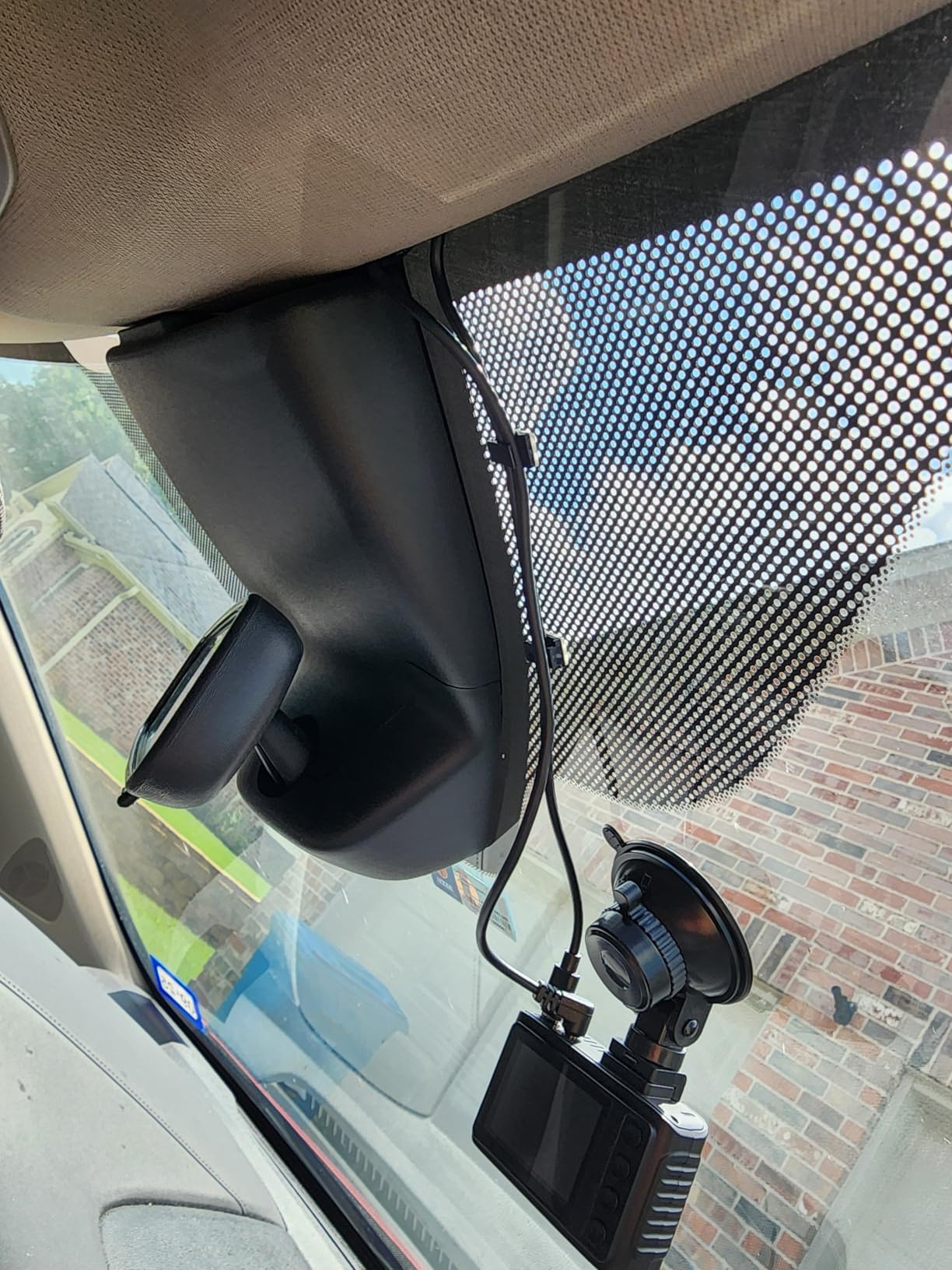
The app is the Viidure app on 5GHz WiFi, and the good news is that viewing, playback, downloading, sharing, and camera setup all work without a VIP membership. Speed adjustment, timeline viewing, and cloud uploads are the features behind the membership, which is a sensible split. The aperture is f/1.6 behind a six-layer lens with WDR, and the G-sensor is tuned to detect even minor impacts. Parking monitoring records a locked 15-second emergency clip on vibration, with the hardwire kit sold separately.
Then the negatives. Front camera audio is described as tinny, distorted, and garbled, so do not rely on this for a conversation-based complaint. The 5GHz connection is unreliable and often needs repeated attempts. Some rear clips freeze on a single frame and will not play, the card needs formatting regularly with a solid blue status light as the warning, and the screen is 2 inches. Sellers have replaced faulty units for some buyers, which has softened a few experiences, and the warranty is one year.
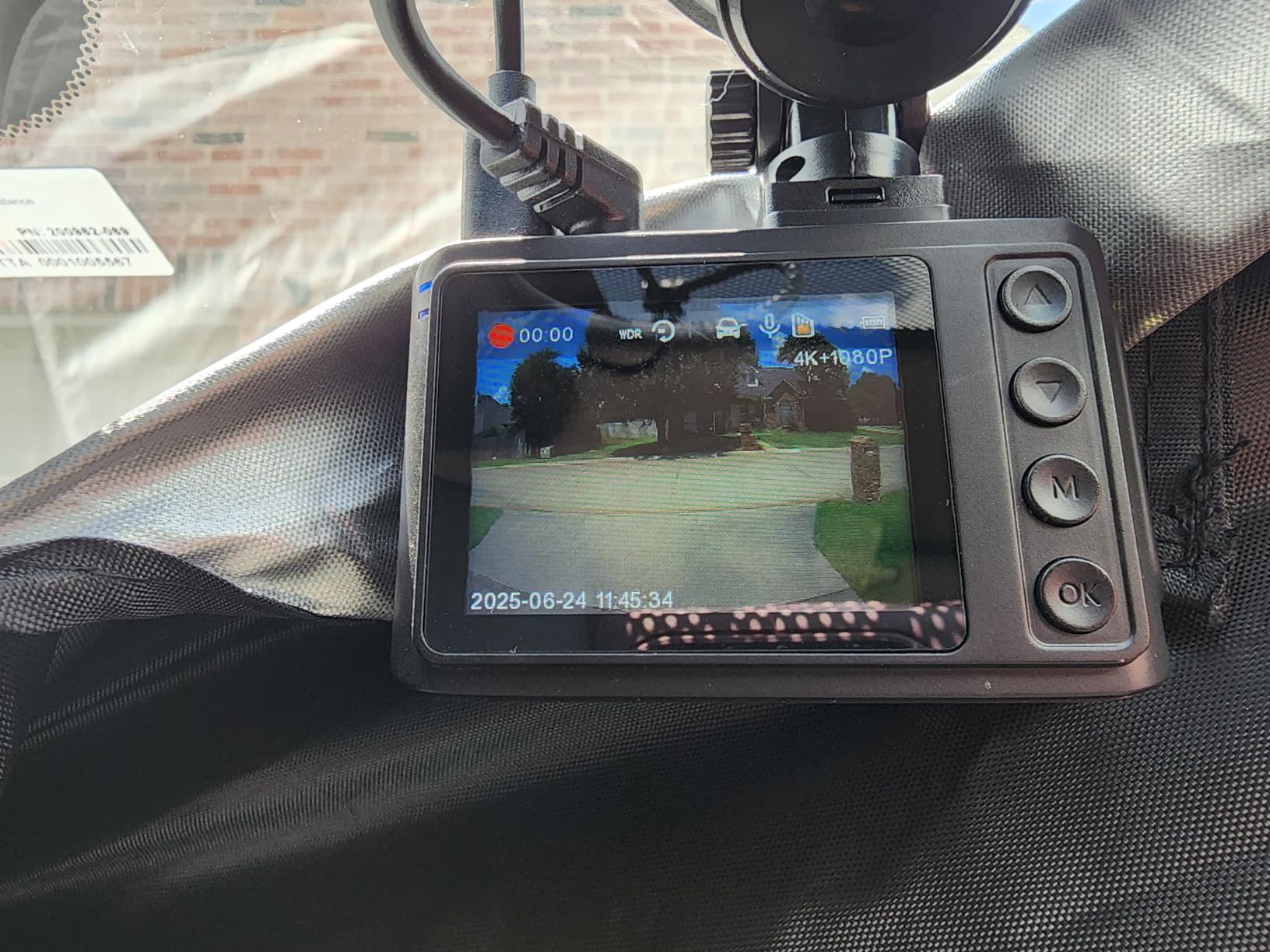
Who might still want this dual dash cam?
A driver who wants front and rear road coverage with no card purchase and no subscription, and who is comfortable checking that clips exist rather than assuming they do. The mount is the standout: a suction-lock cup that holds through heat and humidity is a genuine problem-solver, and the small rear camera keeps your rear view clear. Support has been responsive, including free replacements.
What should stop you buying it?
Any driver whose footage may be reviewed by a platform or an insurer should be cautious about inconsistent recording and an unreliable event lock. The garbled front audio removes a whole category of evidence, the 5GHz connection will frustrate you mid-shift, and frozen rear frames undermine the rear channel’s purpose. If you need dependable files, pick a model with a track record of consistent recording.
10. VANTRUE N2X Front and Inside – Best for Swapping Vehicles Weekly
Vantrue N2X 2.7K Dash Cam Front and Inside, STARVIS 2 PlatePix Car Camera
1944p front plus 1080P cabin
STARVIS 2 with 4 IR LEDs
Tool-free magnetic mount
5G WiFi and GPS
Pros
- STARVIS 2 with dual HDR gives readable plates day and night
- 4 IR LEDs give excellent cabin footage in complete darkness
- Tool-free magnetic mount makes repositioning quick
- No rear camera wiring to run
- Built-in GPS and 5G WiFi with a straightforward app
- Loop recording with G-sensor locking and 15-second pre-recording
Cons
- Does not stay powered after ignition off without the hardwire kit
- App disconnects repeatedly during downloads
- Requires a 12V DC source so USB ports alone will not work
- Back-seat voices nearly inaudible with heavy static
- Runs hot in direct sunlight and draws noticeable power
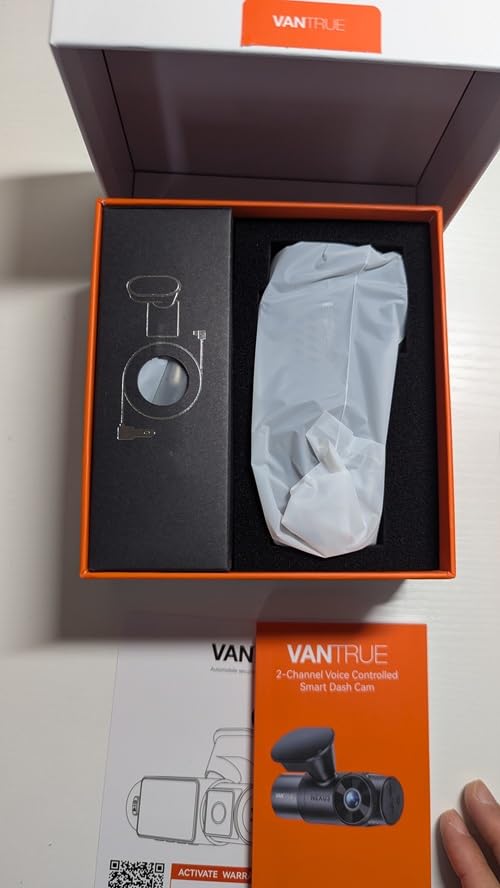
The VANTRUE N2X is the one I would recommend to a driver who moves between vehicles. The tool-free magnetic mount with a compact ball joint means the whole unit lifts off and clips into a different car in seconds, and because it is a front-and-inside pair with no rear camera, there is no cable to run along the headliner. Drivers on r/uberdrivers consistently name Vantrue as the value pick for multi-camera coverage, and this is the model that leans hardest into that.
Image quality is the strongest in the cabin-facing group. The front records 1944p with 1080p inside at 30fps, with the front also capable of 1440p at 60fps, and a 158-degree front lens paired with a 165-degree interior lens for very wide coverage. The Sony STARVIS 2 sensor with dual HDR produces the plate readability reviewers praise, and four IR LEDs on the cabin camera handle total darkness. The cabin lens rotates 45 degrees so you can aim it at the back seat rather than the roof.
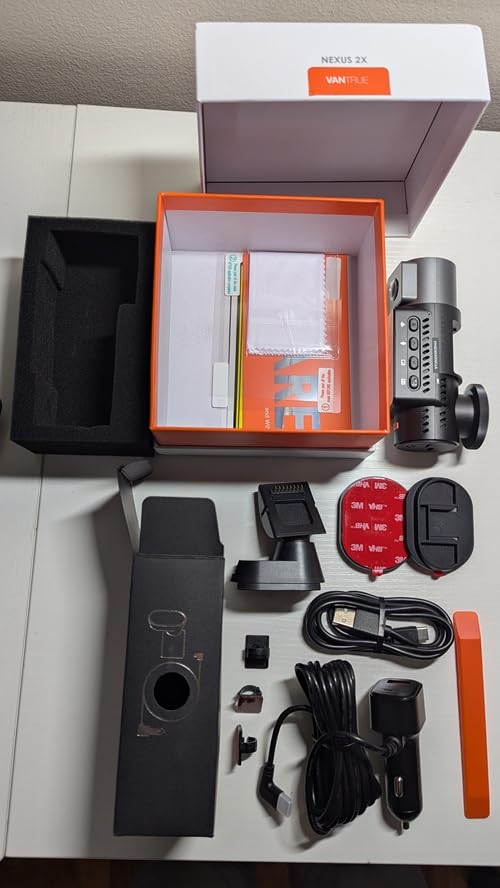
Two privacy and convenience details matter for rideshare. The interior camera and audio recording can both be switched off, which is a practical answer to the awkwardness of recording passengers. Integrated GPS logs time, date, location, and speed with driving reports, 5G WiFi handles preview, editing, and download through the free Vantrue app, and multi-language voice control starts or saves video, takes photos, and toggles WiFi. Parking mode offers 15-second pre-recording with customisable motion detection areas, and the supercapacitor is rated -4F to 158F with support up to a 512GB card.
The limitations are worth planning around. It will not stay powered after you switch the car off without the hardwire kit, it needs a 12V DC source so a USB port alone will not power it, and it is not compatible with Power Delivery fast chargers. The app disconnects repeatedly during WiFi downloads, back-seat voices are nearly inaudible with heavy static on the audio, and it runs hot in direct sun while drawing noticeable power. The card and the hardwire kit are both sold separately.
Is this the best dual dash cam for a driver who changes cars?
It is the most flexible option in the roundup. The magnetic mount, the absence of rear-camera wiring, and the single 12V plug mean one device can serve a rental car, a leased vehicle, and a second family car without tools. The 165-degree interior lens and 45-degree rotation give unusually complete cabin coverage, and the ability to disable the interior camera and audio is a real courtesy feature that other models here lack.
What are the trade-offs?
It records the road and the cabin, never the road behind you, and it needs a hardwire kit for parking mode. The card is not included, downloads over the app are the most interruption-prone of any model here, and if your case involves what a passenger said rather than what they did, the audio will not help you.
Which Dual Dash Cam Setup Do Rideshare Drivers Actually Need?
Short answer: a front-and-cabin two-channel setup, unless your risk is collision fault rather than passenger claims. The channel architecture is the decision, and getting it wrong is the most common expensive mistake. A front-and-rear pair records the road twice and the passenger zero times, which is why so many drivers end up replacing a perfectly good camera a year later.
1-channel front only. Enough for occasional drivers who mainly want proof of fault in a collision. Nothing records the cabin, so a passenger claim is unwinnable.
2-channel front plus rear. Best for proving rear-end and intersection collisions, and for plate capture from behind. Useless against a passenger allegation.
2-channel front plus cabin. The rideshare default. Records what happened on the road and what happened behind you at the same time, with IR handling night shifts. This is the right answer for most Uber drivers.
3-channel front plus rear plus cabin. Complete coverage for full-time drivers, but heavier, more cables, more storage demand, and a higher total cost. Worth it if you park on the street and drive twelve-hour days.
One community workaround does exist for the front-and-rear frustration: a driver on r/Dashcam noted that if you have a USB port in the back you can mount a regular dash cam looking back through the rear window as a makeshift cabin camera. It works, but it adds a second device, a second card, and a second app for evidence you need to be defensible.
What to Look for in the Best Dual Dash Cams for Uber Drivers
Night legibility comes first. A sensor name and an aperture number mean more than a resolution figure at 2am. Look for STARVIS 2 or a comparable low-light sensor, f/1.5 to f/1.8, HDR or WDR on the front channel, and infrared LEDs if the cabin camera is the one that matters to you. As one driver put it, IR interior cameras pick up faces clearly even under street lights, and that is the difference between a usable clip and a grey silhouette.
Supercapacitor over battery. Every model in this roundup uses a supercapacitor, and that is not a coincidence. A lithium cell in a car parked in summer heat degrades and can swell, taking the camera with it. A supercapacitor is rated for extreme temperature and only holds enough charge to save the file on impact.
Storage that matches your duty cycle. Card capacity, write endurance, and card support all matter. If the manual says a high-endurance or industrial card is recommended, use one. Regular consumers cards wear out under continuous write cycles, and a failing card produces corrupted files exactly when you need them.
App quality, honestly assessed. WiFi transfer speed decides whether you review footage on your phone or pull the card. Look for 5GHz or 5.8GHz rather than 2.4GHz, and check whether core features like playback and download sit behind a membership. Two models in this list suffer from app disconnects during downloads, which is the most common complaint across the category.
Hardwire kit and parking mode. No model here includes a hardwire cable, and every one of them needs it for parking mode. A 12V accessory that stays live while the car is parked will eventually flatten the battery, so either hardwire with a low-voltage cutoff or accept that the camera stops when you lock up.
Card and accessory costs. Four models here ship without a card and one includes only 32GB. Add a high-endurance card to your running cost, and expect to replace it every year or two rather than treat it as permanent.
And who should skip a dual cam entirely. If you drive a handful of hours a week, in daylight only, in a car you own outright, a single front-and-rear unit is enough and the money is better spent elsewhere. The cabin channel earns its keep when the accusation comes from the back seat, and if that is not your exposure, you are buying complexity you will not use.
Our related guide to the best dash cams with parking mode goes deeper on the hardwire decision if your car sits outside overnight.
Storage and Heat: Cards That Survive a 12-Hour Shift
Storage is where most driver-owned dash cams quietly fail, and it is the least discussed topic in this category. Every one of these cameras overwrites old files on a loop, so your real retention is a function of card capacity and bitrate, not on how good the camera is. Two channels at 4K and 1080p will fill a 64GB card well inside a working week of twelve-hour days.
The practical rule is to buy a card sized for several days, not one day. For a full-time driver, anything at or above 256GB gives you room to find a specific incident without sorting through footage the same evening, and VIOFO recommends up to 512GB on its 2K hardware. Two models here accept 1TB and 512GB respectively, which is genuine headroom rather than a theoretical figure.
Card type matters as much as capacity. Look for a high-endurance rating, and expect to format the card in the camera rather than on a computer, because cameras write in a format the operating system may not preserve. Three models in this roundup have owners reporting that the card needs regular manual formatting, with one using a solid blue status light as the prompt, so make formatting a monthly habit rather than a reaction to a corrupt file.
Heat is the other half. All ten products here use a supercapacitor rather than an internal lithium battery, and several quote an operating range down to -4F and up to 158F. That range is the one to compare, because a car parked at an airport in July is a 130F-plus interior and a parked vehicle is where heat damage actually happens, not during a shift.
Installation: Hardwire, Mount and Cabin Camera Placement
Three decisions make or break an install, and all three are cheap to get right. The first is power. Plugging into the cigarette lighter is fastest and completely reversible, which matters if you do not own the vehicle, but the camera stops when you lock up and parking mode never engages. A hardwire kit with a fuse tap gives you constant power, and you must confirm the kit has a low-voltage cutoff so the car battery is not drained during a long park.
The second is the mount. Adhesive mounts do not rattle and cannot fall off, but they are semi-permanent and will leave a mark or residue on a windscreen you do not own. Suction cups are removable and quick, but two models in this roundup have documented grip problems, one specifically in temperature swings, and one of them can detach while driving. For owned vehicles, an adhesive mount with a clean alcohol prep is the reliable choice. For rentals and leased cars, check what the hire agreement says before you stick anything down.
The third is cabin camera placement, and this is the step drivers rush. The point of an interior camera is back-seat legibility, so aim it at the rear bench rather than the headliner or the front seats. The COOAU D20 uses a 150-degree interior field of view and the VANTRUE N2X has a 45-degree rotatable cabin lens specifically so you can tune this. Mount high and central if you can, and check a night clip before you rely on it.
Finally, know how to use what you capture. Keep clips intact with the original timestamps and GPS overlay, do not trim or re-encode before you submit, and send the file as soon as a safety investigation or a claim arises rather than after the memory card has looped. Footage with intact metadata, unbroken files, and a visible route trail is far more defensible than a cropped clip, and drivers who back up their incident files off the card within a day are the ones who still have them months later.
Frequently Asked Questions
Does Uber recommend a dash cam?
No. Uber endorses no specific dash cam brand or model, and neither does Lyft. Platforms simply tell drivers that dash cam footage may help during a safety investigation. Choose on hardware grounds: channel architecture, night performance, storage support, and heat handling.
Is a dual dash cam worth it for Uber drivers?
For most drivers, yes, and the second channel should face the cabin. A dual setup records the road and the passenger area at the same time, which covers both collision fault and passenger allegations. It is worth it less if you only drive a few daytime hours a week, since a single front camera already covers the road.
Should I get a front and rear dash cam or just the front?
If your concern is collisions, front and rear beats front only because a second angle settles rear-end and side-impact disputes. If your concern is a passenger complaint, neither helps, because a rear-facing road camera never records the cabin. For rideshare work a front plus cabin pair is the more useful investment.
Do I need infrared on my cabin camera?
Yes, if you drive at night. Interior infrared LEDs produce a clear black-and-white image in total darkness, which is what makes a face and a seatbelt visible when street lighting is all you have. Without IR, night cabin footage is often too soft to be useful as evidence.
What resolution do I need for a dash cam?
1440p or 2.5K on the front channel is the practical sweet spot for reading number plates, and 1080p is enough for a secondary or cabin channel. 4K adds detail but only helps if the sensor behind it is good, and several models upscale a lower native resolution to a 4K label.
Will a dash cam drain my car battery?
Not if it is installed correctly. Hardwiring with a kit that includes a low-voltage cutoff is the safe route, because the cam shuts down before the vehicle battery drops. Leaving a cigarette lighter adapter plugged in overnight can drain the battery, and a few mirror-style models can power their own display while parked, so unplug or hardwire them.
Final Verdict for Rideshare Drivers in 2026
The ROVE R2-4K is our pick as the best dual dash cam for Uber drivers in 2026, because the STARVIS 2 sensor with an f/1.5 aperture gives you readable night footage, the 5.8GHz WiFi keeps up with a busy shift, GPS is built in, and a 128GB card comes in the box. Its one compromise is that the 4K front is upscaled from 2.5K, which is a detail most drivers never notice.
Buy the REDTIGER F7NP if you want the widest road coverage and the longest warranty in this group. Choose the COOAU D30S or the VANTRUE N2X if the passenger is the risk, since both record the cabin with infrared for night shifts, and the N2X is the one that moves between cars in seconds. The VIOFO A229 Plus is the premium answer for drivers whose disputes are about plates, and the WOLFBOX G840S is the only option that disappears into the mirror.
Whatever you pick, buy a high-endurance card, hardwire it with a low-voltage cutoff if you park outside, and pull your incident files off the card the same day. That last habit matters more than any spec on this list.