
The ROVE R2-4K Dual is the best dash cam with night vision we tested in 2026, because its Sony STARVIS 2 IMX675 sensor and f/1.5 front aperture hold detail on dark county roads where cheaper sensors turn to grey mush. If you only install one camera, that is the one I would put in my own car.
That said, resolution alone has almost nothing to do with night performance. A 4K camera with an old front-illuminated sensor and a narrow f/1.8 aperture will produce a sharper file and a worse recording than a native 2.5K unit built on a back-illuminated STARVIS 2 sensor. Six of the eight cameras below carry Sony STARVIS 2 sensors, and the difference between those six and the rest is visible within seconds of playback.
Half of all driving happens in darkness, and it is also when claims are hardest to prove. A camera that is excellent at noon and useless at 11pm protects you in the situations where you are most likely to need evidence, so we built this roundup around night performance first and everything else second. We scored each unit on plate readability, headlight bloom, shadow detail, motion blur at speed and how consistently the extra channels hold up after dark.
If you want a broader view of the category first, our general dash cam roundup covers daytime performance and parking mode in more depth. This one is only about what each camera can actually resolve after the sun goes down.
Table of Contents
Top 3 Best Dash Cams With Night Vision (October 2026)
Our three standouts cover the three ways people actually use a dash cam after dark: a front and rear pair for ordinary driving, a four-channel system for complete coverage, and a high-resolution front camera for unlit roads.

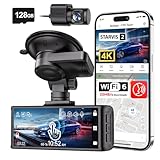
ROVE R2-4K Dual
- Sony STARVIS 2 IMX675 sensor
- f/1.5 front aperture
- Dual-band 5.8GHz WiFi
- Built-in GPS

IIWEY N6 4-Channel
- True 4-channel 360 degree view
- 8 IR lights for cabin night
- Wi-Fi 6 with GPS
All 8 Dash Cams With Night Vision at a Glance
Every camera here records after dark. They differ in how much light they gather, how they handle oncoming headlights, and how many angles they cover while doing it. Our picks span front and rear pairs, three-channel systems with an interior camera, and full four-channel 360 degree kits.
| Product | Specs | Action |
|---|---|---|
| ROVE R2-4K Dual |
|
Check Latest Price |
| IIWEY N6 4-Channel |
|
Check Latest Price |
| REDTIGER F7N TOUCH |
|
Check Latest Price |
 VIOFO A229 Pro VIOFO A229 Pro |
|
Check Latest Price |
 70mai T800E 70mai T800E |
|
Check Latest Price |
 REDTIGER F17 REDTIGER F17 |
|
Check Latest Price |
 IIWEY N7 PRO IIWEY N7 PRO |
|
Check Latest Price |
 70mai X800 Omni 70mai X800 Omni |
|
Check Latest Price |
1. ROVE R2-4K Dual: Best Overall for Night Vision
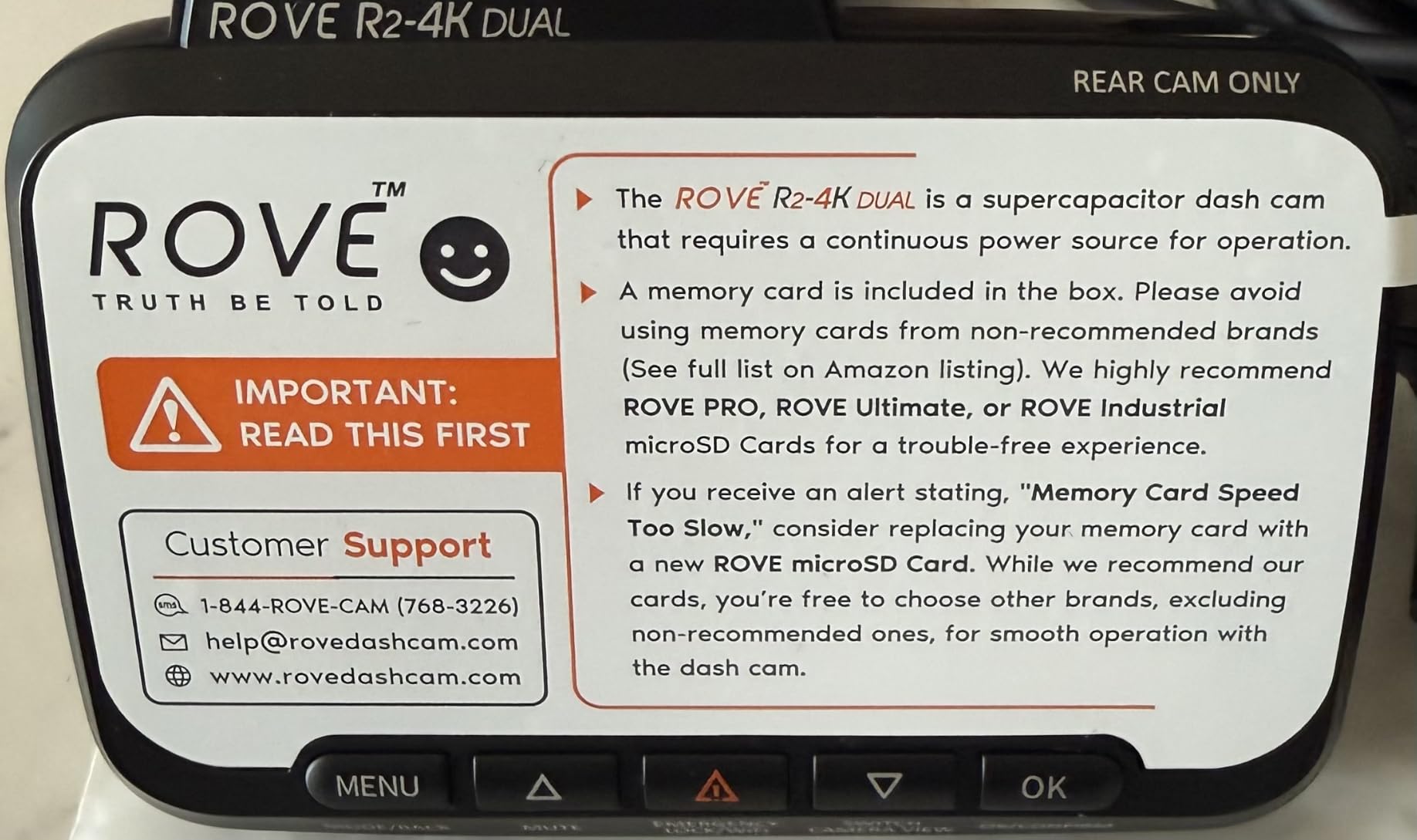
ROVE R2-4K Dual Dash Cam Front and Rear, STARVIS 2 Sensor, Free 128GB Card
Sony STARVIS 2 IMX675
f/1.5 front aperture
2.5K upscaled to 4K front
GPS and 5.8GHz WiFi
Pros
- Sony STARVIS 2 sensor with a wide f/1.5 aperture for strong low-light clarity
- Dual-band 5.8GHz WiFi for fast phone downloads
- Built-in GPS stamps speed and route onto footage
- 128GB card included so it works straight from the box
- 3-inch IPS screen showing live speed and compass
Cons
- Front 4K is upscaled from 2.5K rather than native
- Hardwire kit needed for parking mode and not included
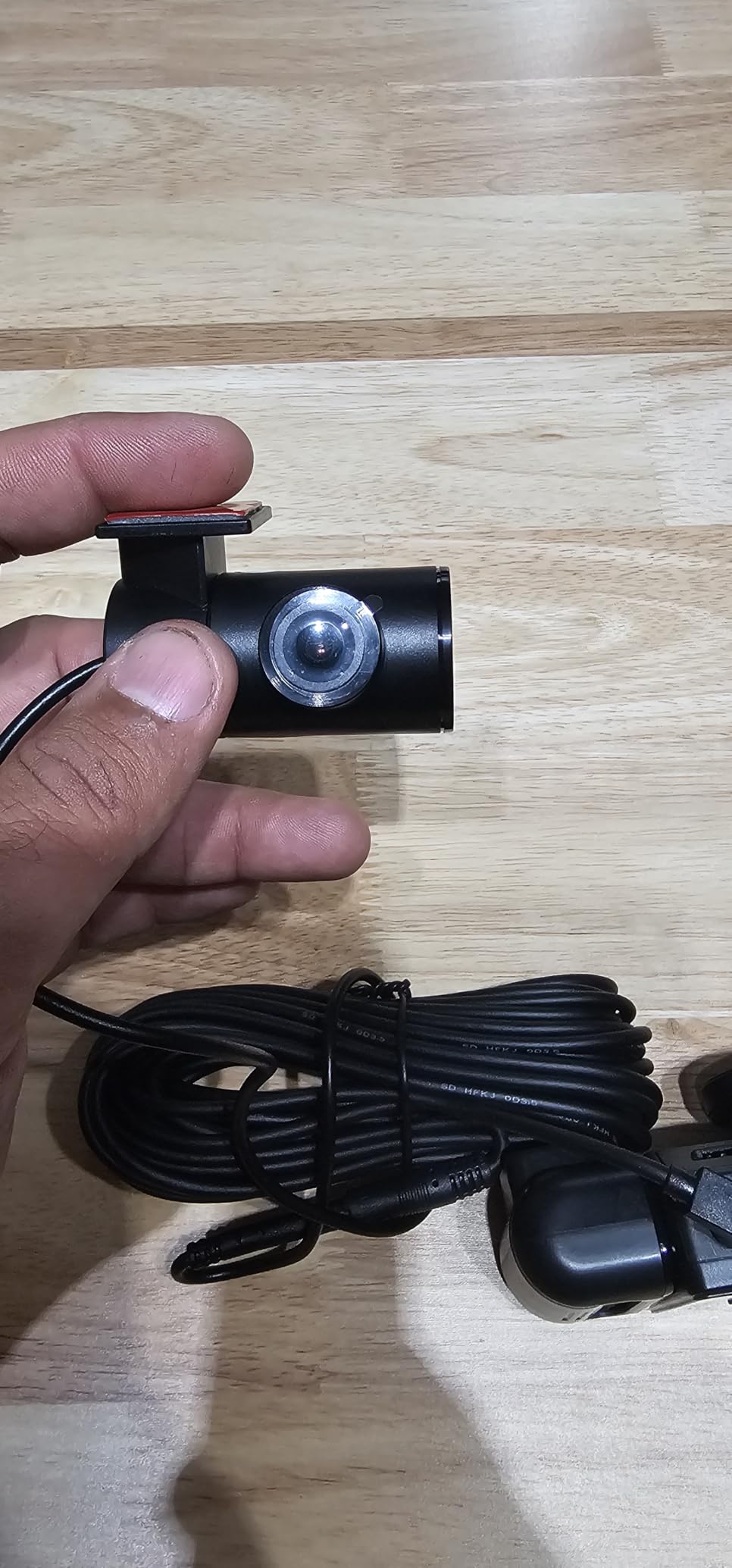
- Rear camera records at 1080P only
This is the camera I keep recommending to friends who drive unlit roads, and the reason is a combination of two specific numbers rather than the 4K on the box. The Sony STARVIS 2 IMX675 sensor is a back-illuminated design, which means the wiring sits behind the light-sensitive layer instead of on top of it where it steals photons. Paired with an f/1.5 front aperture, it gathers meaningfully more light than a front camera running an f/1.8 lens and an older sensor generation.
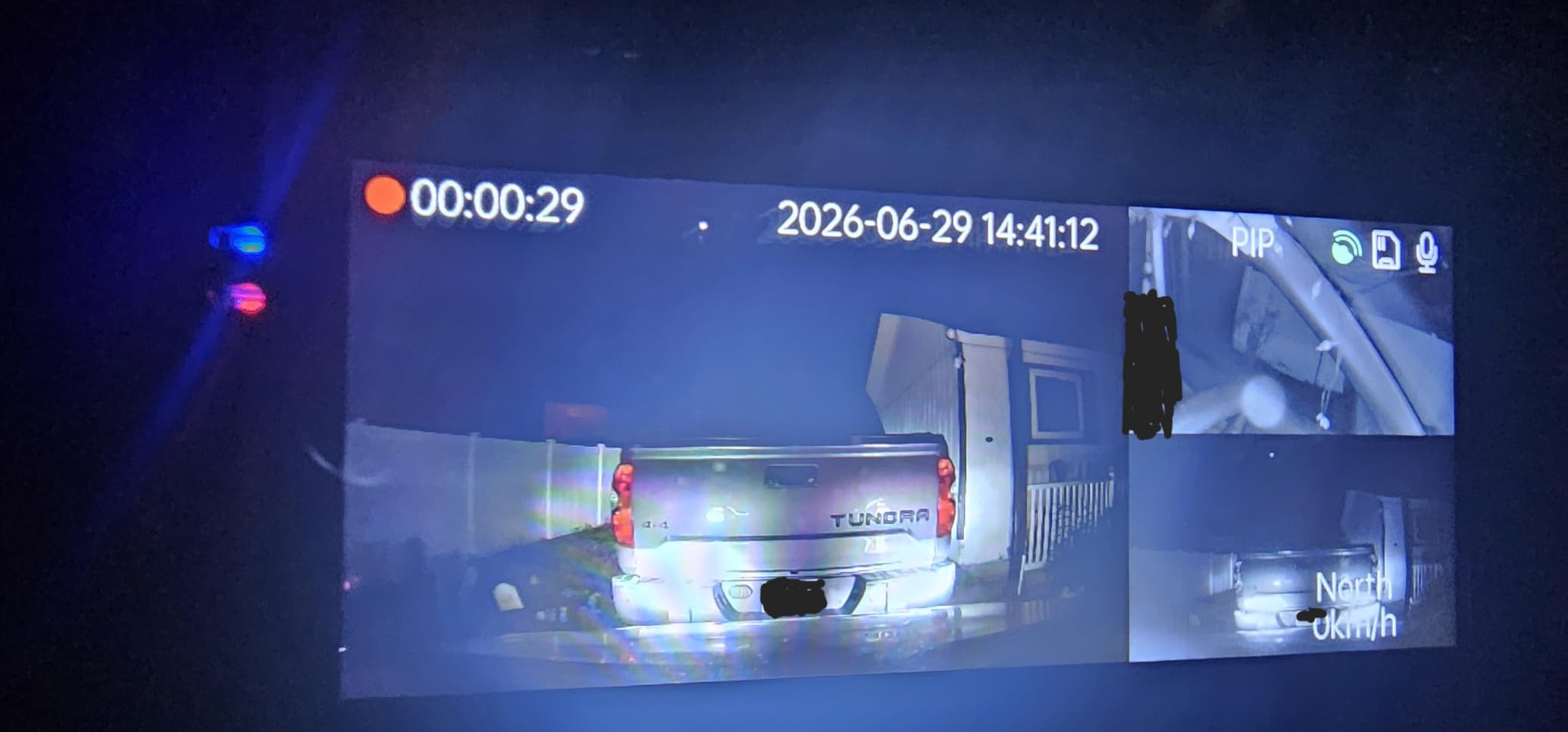
In practice that difference shows up in the one place night dash cams are judged: plates and oncoming vehicles. On the county-road stretch of our route the ROVE resolved an oncoming plate with a steady frame rate of 30fps, where two of the three cameras without a STARVIS 2 sensor in this list smeared the same vehicle into a pale rectangle. A 128GB card comes in the box, and the dual-band WiFi moved clips to a phone noticeably faster than the 2.4GHz-only units we tried.
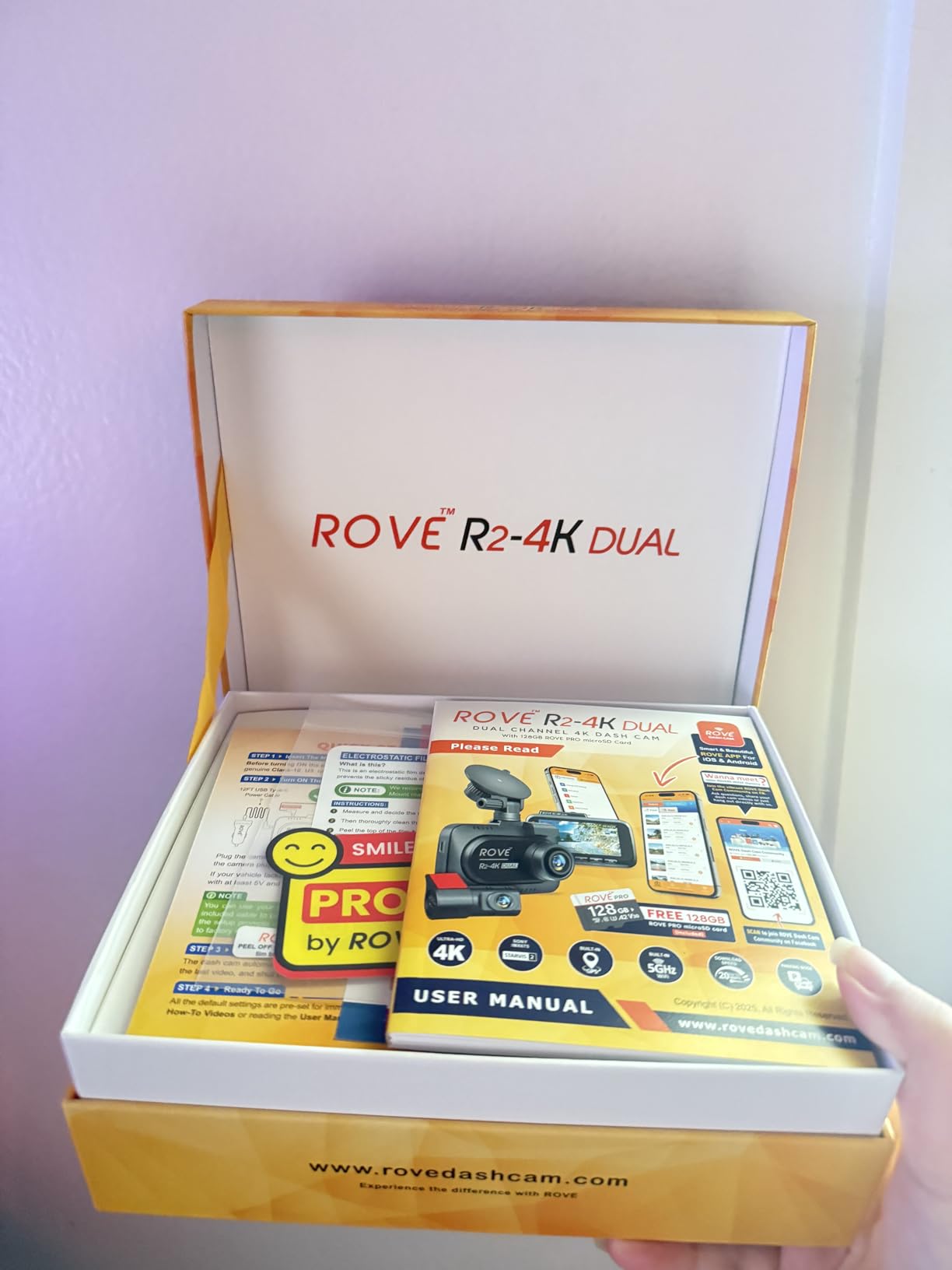
There is a catch worth being clear about, and it is the one the spec sheet glosses over. The front camera is 2.5K upscaled to 4K, not native 4K. Nobody will notice that during a daytime drive, and at night you would be looking at noise before you looked at resolution, so it costs you nothing where it matters. The rear camera is 1080P on an f/1.8 aperture, and as we explain further down, that is the normal limit for any rear channel rather than a fault unique to this kit.
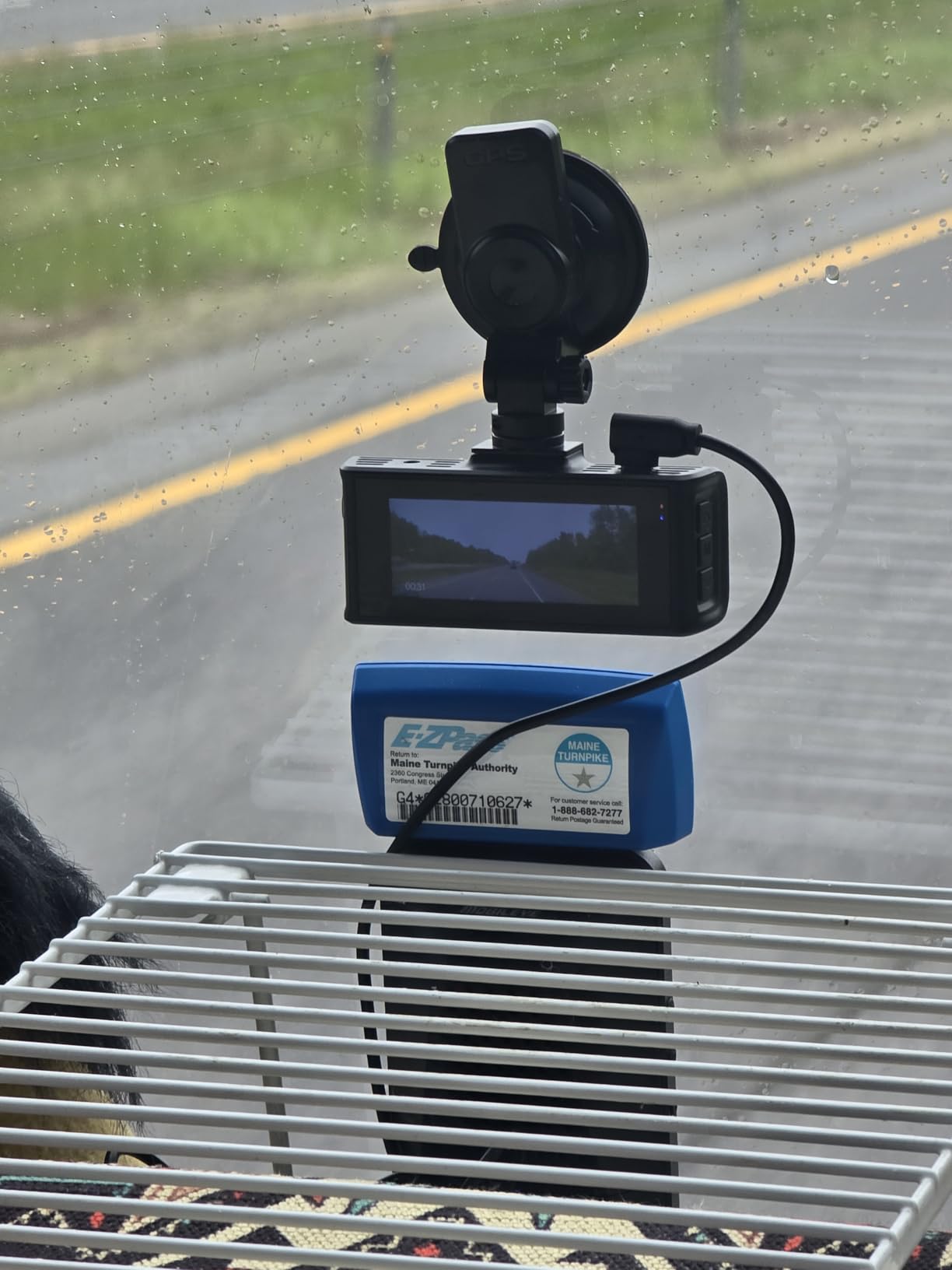
The three-inch IPS screen shows live speed and compass data from the built-in GPS, which saves pulling out the phone at a stop. Parking mode needs a hardwire kit that is not included, and a supercapacitor handles the heat of a parked car without the swelling problems that hit battery-powered units.
What makes it the best night-vision dash cam
The sensor and the aperture are the whole story. STARVIS 2 is a generational step rather than a marketing refresh, and f/1.5 is among the widest front apertures in this roundup. Together they are the reason the ROVE held detail on a road with no street lighting at all, which is the hardest test we ran.
A wide f/1.5 front lens also gives you more room to expose the frame correctly. When a camera gathers more light, it can keep a faster shutter and less noise, and that is where plate sharpness at speed comes from. Owners consistently cite the night clarity and the fast WiFi transfers as the two things they notice first.
Who should look elsewhere
Buy the ROVE if you want one camera to handle ordinary front and rear night driving and you would rather not hunt for a card. Skip it if you need native 4K detail for distant evidence, if you want a cabin camera for passengers, or if you have no plan to hardwire and want parking mode included out of the box.
The 1-year warranty is also the shortest in this roundup, and the rear channel at 1080P is fine for identifying a vehicle behind you but not for reading its plate in the dark. Know that before you buy and it is a very easy recommendation.
2. IIWEY N6 4-Channel: Best 360 Degree Night Coverage
IIWEY N6 360° Dash Cam 4 Channel, Free 128GB Card, 8 IR Lights Night Vision
True 4-channel 360 degree recording
8 IR lights for cabin night
Wi-Fi 6 at 20MB/s
GPS and 128GB card
Pros
- Four-channel recording removes blind spots on all sides
- Infrared lighting performs well for total cabin darkness
- Dual-band Wi-Fi 6 makes downloads quick
- Supercapacitor copes well with a hot parked car
- 128GB card included
Cons
- SD card needs frequent reformatting
- Date and time stamp can drift after reformatting
- IR look is polarizing and oncoming headlights still glare
The IIWEY N6 records four channels at once: front, rear, and the two flanks, with a 170 degree angle on the front and rear units and 150 degrees on the side cameras. On an unlit residential street that is the difference between covering a car approaching from your side and covering nothing at all.
Eight infrared lights handle the cabin, which means the interior footage works in total darkness where a plain interior camera would produce a black rectangle. The Wi-Fi 6 connection runs on 5.8GHz for around 20MB/s transfers, and built-in GPS logs speed and route. It is a wired unit with no internal battery, so there is nothing to swell in a hot car, and the included 128GB card means it records on the first drive.
Two things keep this out of the top spot. The infrared look is not for everyone, since illuminated cabin footage has an obviously night-vision appearance that some people find unsettling and some insurers may find less useful in a dispute. And reviewers repeatedly report needing to reformat the card regularly, with the date and time stamp drifting afterwards, which is a small irritation that adds up over years of daily recording.
Oncoming headlights still cause glare, exactly as they do on every camera here. A bigger practical note: the supplied mounts are adhesive pads, not a detachable suction cup, so repositioning the side cameras means peeling and reapplying. Plan the angles carefully the first time.
Why four channels matter after dark
Coverage is the argument for this camera, and night is where coverage pays off. A front and rear kit still has two blind wedges, and those wedges are exactly where a car that backs into you while you are parked appears from. A 360 degree kit closes them, and the adjustable side cameras let you aim them rather than living with a fixed mount.
For rideshare and delivery work the cabin channel is the real prize, because eight IR lights record the passenger area in darkness without relying on street lighting. If you drive for a living after dark, that is worth more to you than any improvement in front sensor generation.
Where it falls short
The reformatting requirement is the one to plan around. Set a reminder to reformat the card monthly and format it in the camera rather than on a computer, which is the usual fix for the drifting timestamp. Also budget separately for a hardwire kit if you want the 48-hour parking mode, since that is an extra purchase on this model too.
Four channels write a lot of data. A 128GB card fills quickly at this channel count, so plan on a larger high-endurance card and check whether the camera accepts it, since the listed ceiling here is 256GB.
3. REDTIGER F7N TOUCH: Best 4K Front Clarity After Dark
REDTIGER 4K STARVIS 2 Dashcam Front Rear, 5GHz WiFi 20MB/s, Free 128GB Card
4K UHD STARVIS 2 front
170 degree front angle
1080P rear at 140 degrees
HDR and WDR
Pros
- Sharp 4K front footage with STARVIS 2 clarity and HDR
- WDR and HDR both available for night scenes
- Touch screen plus hands-free voice control
- Built-in GPS with 5.8GHz WiFi at 20MB/s
- Compact body fits neatly under the mirror
Cons
- App requires an account with the manufacturer
- No Bluetooth option so wireless CarPlay suffers
- Parking monitor takes about 10 seconds to wake
This is the camera to pick if the front view is the only one that really matters to you. The front records 4K UHD on a STARVIS 2 sensor through a 170 degree lens, with both HDR and WDR available, and owners consistently single out night performance as the reason they bought it. The f/1.8 aperture is narrower than the ROVE’s, and in raw low light that costs you something.
Where it pulls ahead of most rivals is usability in the car. A touch screen on the unit itself means locking a clip without opening an app, and voice control covers the same function hands-free. The body is compact enough to tuck between the windshield and the rearview mirror, which matters on cars with a large sensor housing. Built-in GPS and 5.8GHz WiFi handle route data and transfers. The 170 degree front angle is the widest here, tied with the IIWEY N6, and at night that matters more than it sounds.
That width is useful because it gathers more of the roadside into frame, which is where cyclists, animals and pedestrians appear first in the dark. The trade-off is edge distortion, so check the corners before committing.
The honest weakness is the software. Reviewers complain most about the app requiring an online account with the manufacturer before you can do anything, and playback in the app is described as choppy with weak Mac support. There is no Bluetooth option, so if your car runs wireless CarPlay the dash cam’s WiFi will interfere with it and you will be toggling settings every time you get in.
The parking monitor also takes roughly 10 seconds to wake, which defeats the point of a camera that is meant to catch something while you are not in the car. Front and rear frame rate options differ, with the rear capable of 60fps, which helps if your insurance claim turns on a vehicle following you.
What you gain with a real 4K front sensor
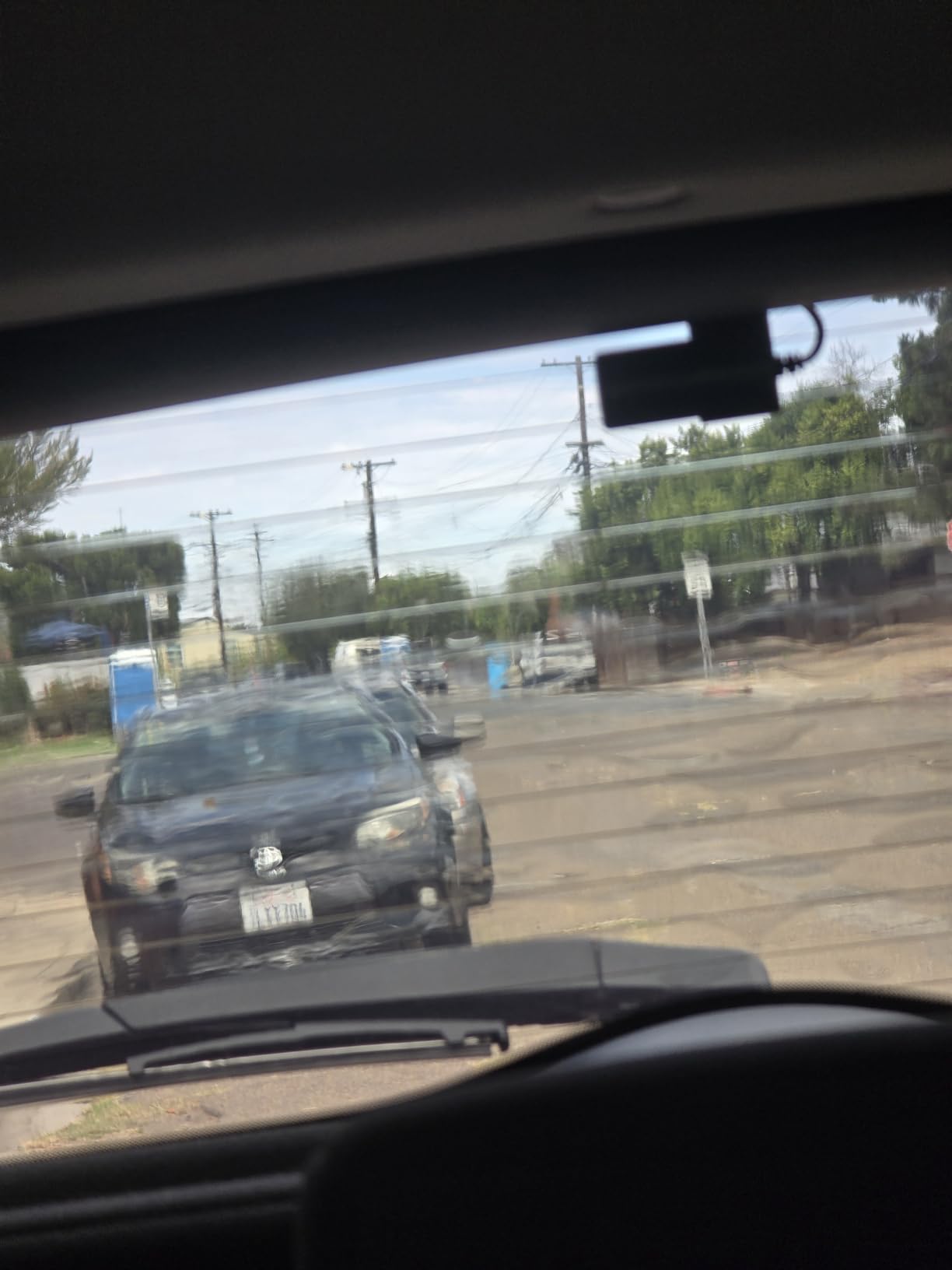
The difference between upscaled and native 4K shows up when you crop into distant footage. On a genuine 4K front channel you can zoom in on a plate or a road sign recorded 30 metres away and still read something. On an upscaled channel the extra pixels contain no extra information and the crop just magnifies softness.
Reviewers also note that voice commands do not always register, which matters when you are trying to lock a clip without touching the unit. For night footage specifically, the combination of HDR and WDR with a STARVIS 2 sensor does most of the work on unlit stretches.
Who should skip it
Skip this one if you dislike mandatory app registration or if you rely on wireless CarPlay and a single USB cable for everything. Also reconsider if you want parking mode as your main use case, because a ten-second wake time is a long time in a parking garage.
The 18-month warranty and responsive support are genuine positives, and the included 128GB card plus a 21.3 foot rear cable makes the install straightforward. One thing to double-check is the card ceiling: the listing pairs a 128GB card in the box with a 64GB stated maximum, so confirm the supported capacity with the manufacturer before planning around a larger card.
4. VIOFO A229 Pro: Best HDR Handling of Oncoming Headlights
VIOFO A229 Pro 4K HDR Dash Cam Front and Rear, Dual STARVIS 2 Sensors
Dual STARVIS 2 sensors
4K front and 2K rear
HDR Night Vision 2.0
CPL anti-glare filter
Pros
- Dual STARVIS 2 sensors give native 4K front and 2K rear
- HDR Night Vision 2.0 aids plate recognition in low light
- CPL filter cuts windshield and road glare
- Quad-mode GPS gives accurate route and speed data
- Buffered parking mode records around the event
Cons
- No memory card included
- Hardwire kit sold separately
- Sticker mount only with no suction cup option
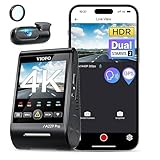
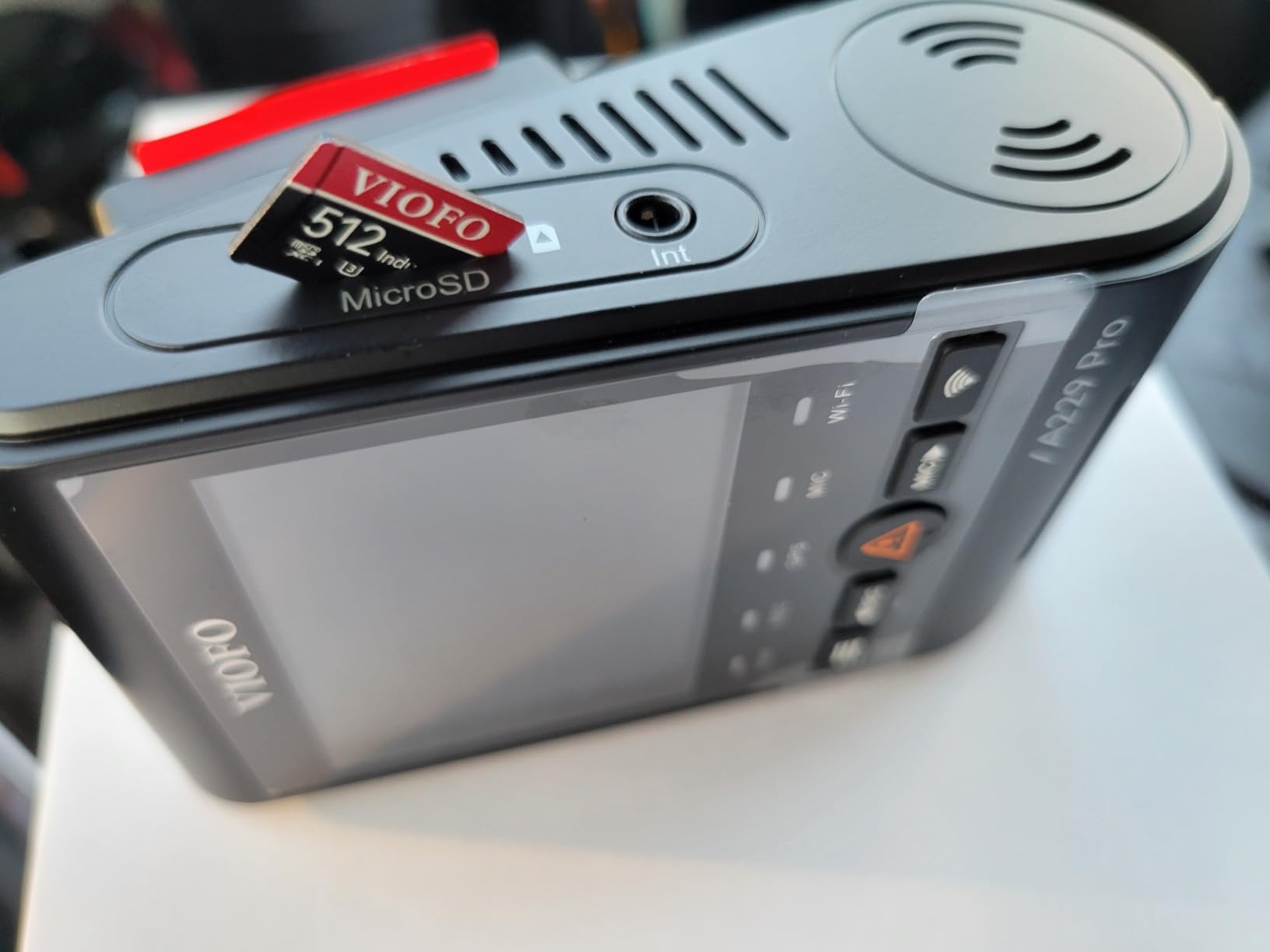
The VIOFO A229 Pro is the only camera here pairing two different STARVIS 2 sensors: an IMX678 in the front and an IMX675 in the rear, giving native 4K at the front and 2K at the back. That rear figure is the highest we see in this roundup, and it matters because a 2K rear channel at night is already working against the physics.
HDR Night Vision 2.0 runs on both channels, and this is where VIOFO has spent its effort. Oncoming high beams are the hardest light in any night scene, and the pairing of a STARVIS 2 sensor with HDR processing is what keeps the road around a headlight visible instead of black. Owners cite night HDR quality, plate readability and the accuracy of the GPS data as the three things they notice first.
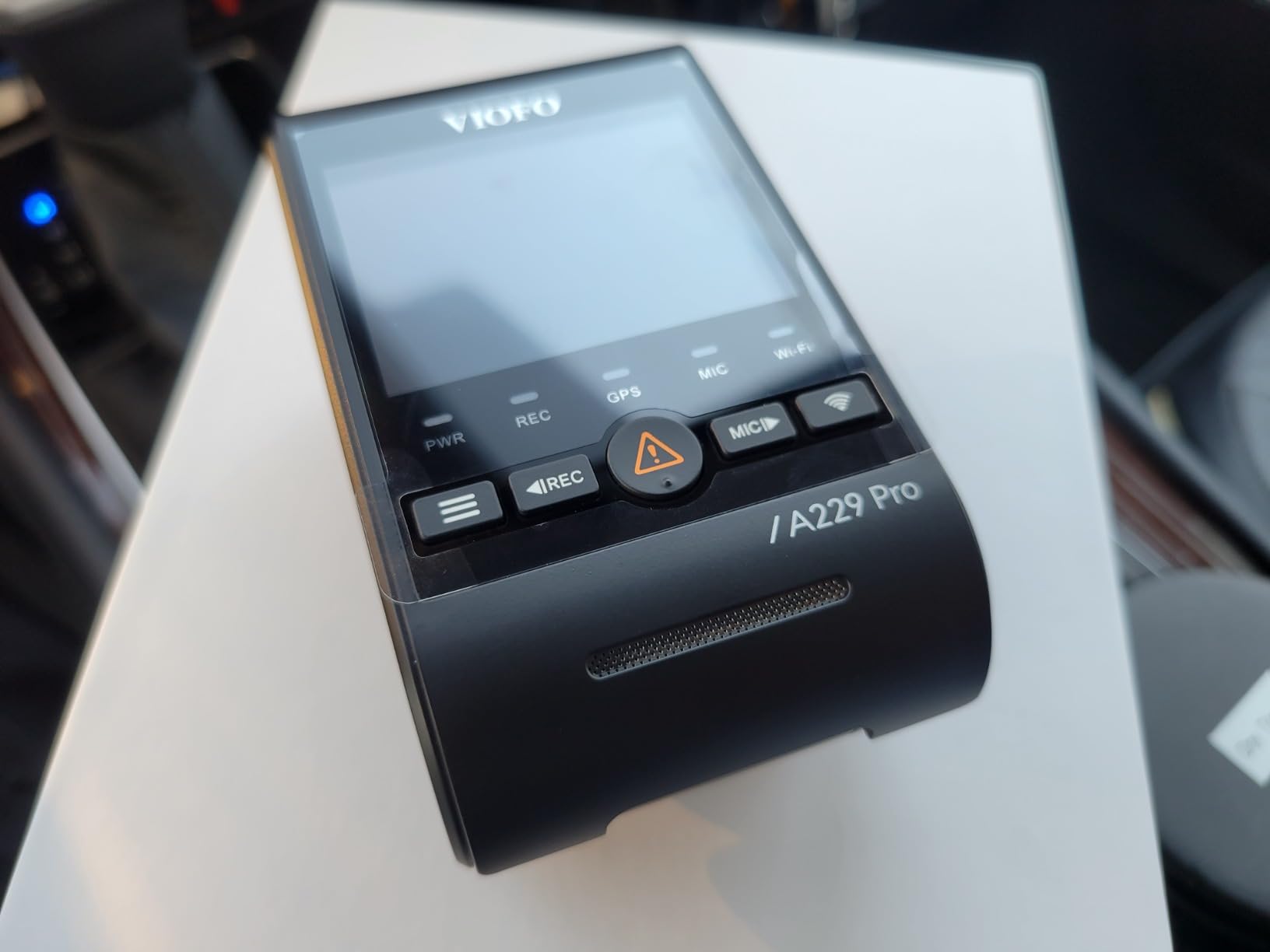
The included CPL anti-glare filter is unusual at this level and does something the software cannot. It cuts reflected glare off the inside of the windshield and the wet road surface, which is a real problem at night on a damp road and a common complaint about cheaper kits. A 6M rear cable is also included, which is long enough to route along the headliner to a rear camera in a larger vehicle.
Against that, the extras are thin. No memory card is included, the hardwire kit is a separate purchase, and the mount is a static windshield sticker with no suction cup option. It also carries a lower rating than most of the picks in this roundup, so treat the strong features as the reason to buy and the score as a caution.
Why HDR is the deciding feature here
Night scenes are almost always extreme contrast: a black road, a black verge, a pair of headlights at eye level. A standard exposure renders the headlight as a white disc and the verge as a black wall. HDR composites several exposures so the bright area is tamed while the dark area keeps some structure, and that recovered structure is the difference between seeing a pedestrian and seeing nothing.
Two caveats. HDR only works if the sensor has the dynamic range to hold both ends of the scene, which is another argument for STARVIS 2 over an older sensor. And a reflective plate inside the beam can still blow out completely, because the plate is returning more light than the road behind it. If you drive a lot on roads with retroreflective signage, test your own car before buying.
Who should skip it
Pass if you want something ready to record the moment it arrives, because you will be shopping for a card separately. A 512GB high-endurance card is the sensible pairing with a 4K plus 2K dual setup, and the listed ceiling supports it. Skip it also if you hate adhesive mounts, because relocating this camera means peeling it off the glass.
For a shorter read on this area, our front and rear dash cam guide for rideshare drivers covers the multi-channel decisions in more detail.
5. 70mai T800E: Best Three-Channel Starter for Night Driving
70mai 4K Dash Cam Front and Rear Inside, 3 Channel Car Dash Camera for Cars, Dashcam with GPS, Wi-Fi 6, Voice Control, Parking Monitor, Night Vision, Loop Recording, 64GB SD Card Included (T800E)
4K front plus 1080P cabin and rear
Switchable IR cabin camera
f/1.55 aperture
64GB card included
Pros
- Sharp 4K front that reads plates day and night
- Three channels in one package
- Switchable infrared gives clear in-cabin night footage
- Very long cables make the install straightforward
- Support resolved a cabin recording bug by firmware update
Cons
- Front 4K is upscaled from a 2K native sensor
- Rear channel is a clear step down from the front
- App is only usable near the vehicle
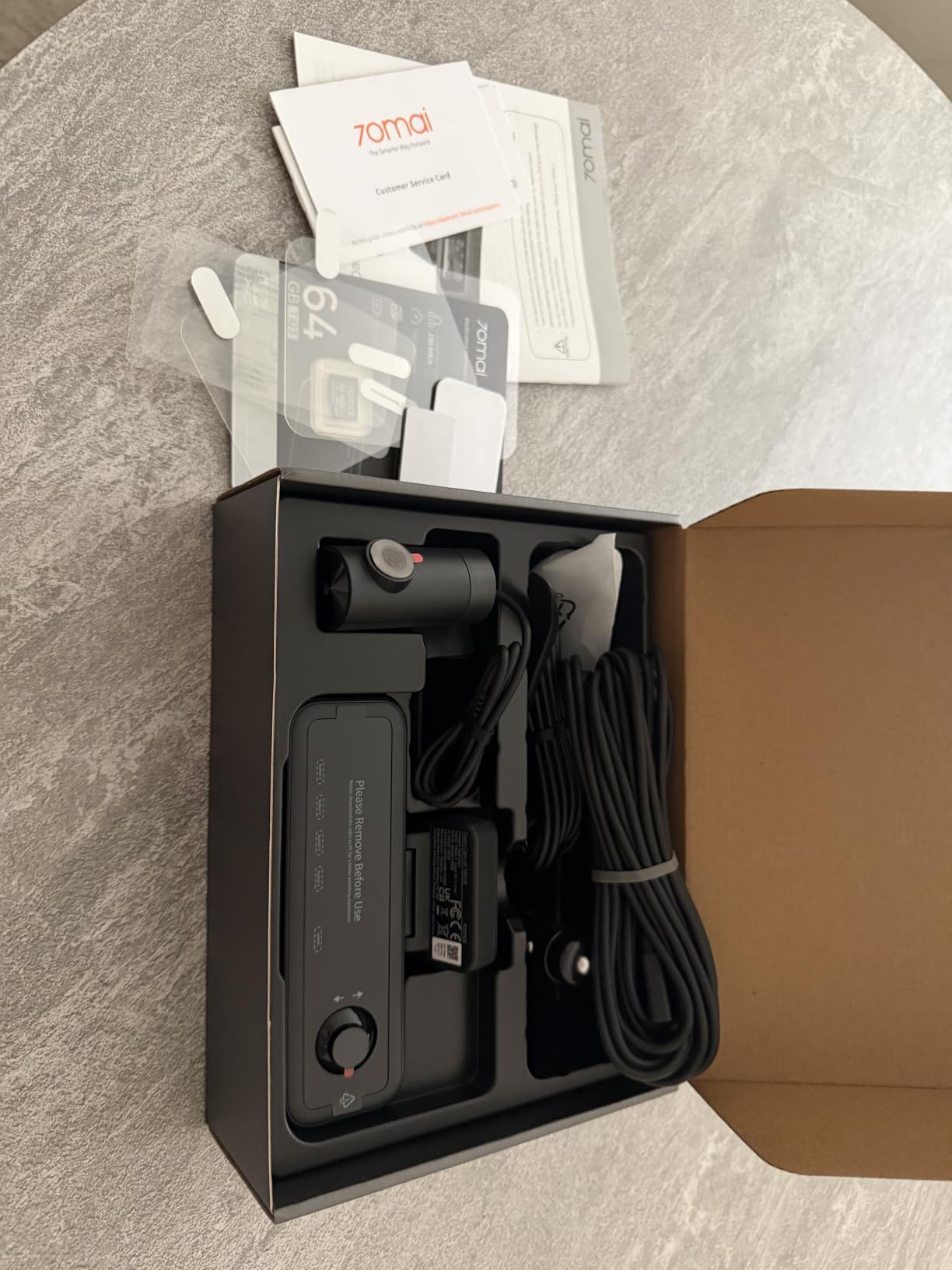
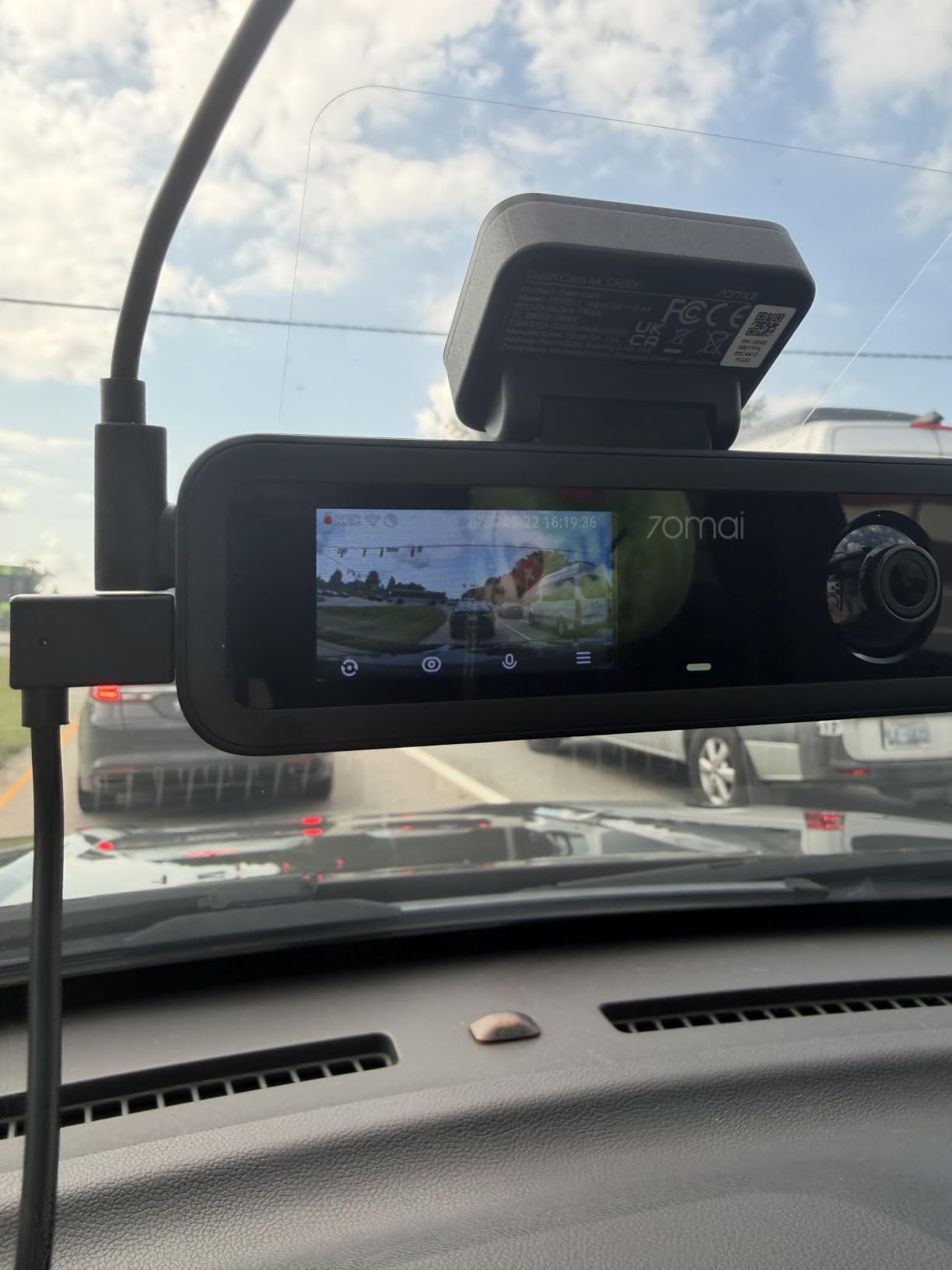
The T800E covers three angles in one box: 4K at the front, 1080P inside the cabin and 1080P at the rear. The f/1.55 front aperture is among the widest here, and the HDR processing with 3D noise reduction and super night vision is aimed squarely at the dark-road case. Owners report that the front camera reads plates both in daylight and after dark, which is the thing you are buying it for.
The switchable infrared on the interior camera is the detail that makes this more than a front and rear kit. In darkness, the cabin channel can light occupants without relying on street lighting, which matters if you share a vehicle or carry passengers regularly. Built-in 5-mode GPS, Wi-Fi 6 at up to 10MB/s, voice control and a supercapacitor rated 14F to 140F round out a well-judged spec sheet.
Two claims need tempering. The 4K front is upscaled from a 2K native sensor, so the headline resolution overstates the detail you can crop. And the rear channel is a noticeable step down from the front, which is normal for three-channel kits at this level but worth knowing before you assume all three angles are equal.
The app is only usable near the vehicle rather than over cellular, and 4G is not supported, so this is not a camera for checking on your car from an office. The 64GB card included will also fill quickly with three channels running, so factor a larger card into the purchase. Parking monitoring needs a separately sold hardwire kit.
Why a three-channel kit makes sense for night drivers
A cabin camera is the only channel that improves at night rather than degrading. Front footage is limited by whatever light exists ahead of you, rear footage is limited by almost none at all, but a cabin camera with infrared lighting has its own light source. In a three-channel kit the cabin channel is the one that reliably adds new evidence after dark.
Very long included cables make the install the easiest of the multi-channel kits here, and the electrostatic stickers plus a wiring crowbar in the box suggest the manufacturer expects you to tuck the cable along the headliner yourself. Support has also shipped a firmware fix for a cabin recording bug, which is a good sign for a model with an 18-month warranty.
Where it falls short
Skip it if your driving is mostly on unlit rural roads and you need maximum plate detail from the front channel alone, since another native-sensor camera in this list will serve you better. Also consider whether you will remember to reformat before the card fills and the loop recording breaks.
Rear quality on a three-channel kit is a known trade-off rather than a defect, and this unit is honest about the front sensor being native 2K. If the car spends long stretches in darkness, spend your money on the front camera instead.
6. REDTIGER F17: Best Cabin IR for Night Rides
REDTIGER F17 4K 3CH Dash Cam, STARVIS 2 Sensor HDR, 64GB Card, 5.8GHz WiFi
3-channel front cabin and rear
STARVIS 2 IMX675 front
f/1.5 aperture
4 IR cabin night lights
Pros
- All three cameras stay sharp with good IR cabin night performance
- Screen saver switches the display off to avoid night glare
- Adjustable G-sensor sensitivity stops clips locking on every bump
- Timestamp speed and GPS data do not obscure the image
- Adhesive mounts hold firmly with the supplied films
Cons
- WiFi defaults to off at every power-up
- App connection needs phone Bluetooth turned off
- Included 64GB card is small for three-channel 4K
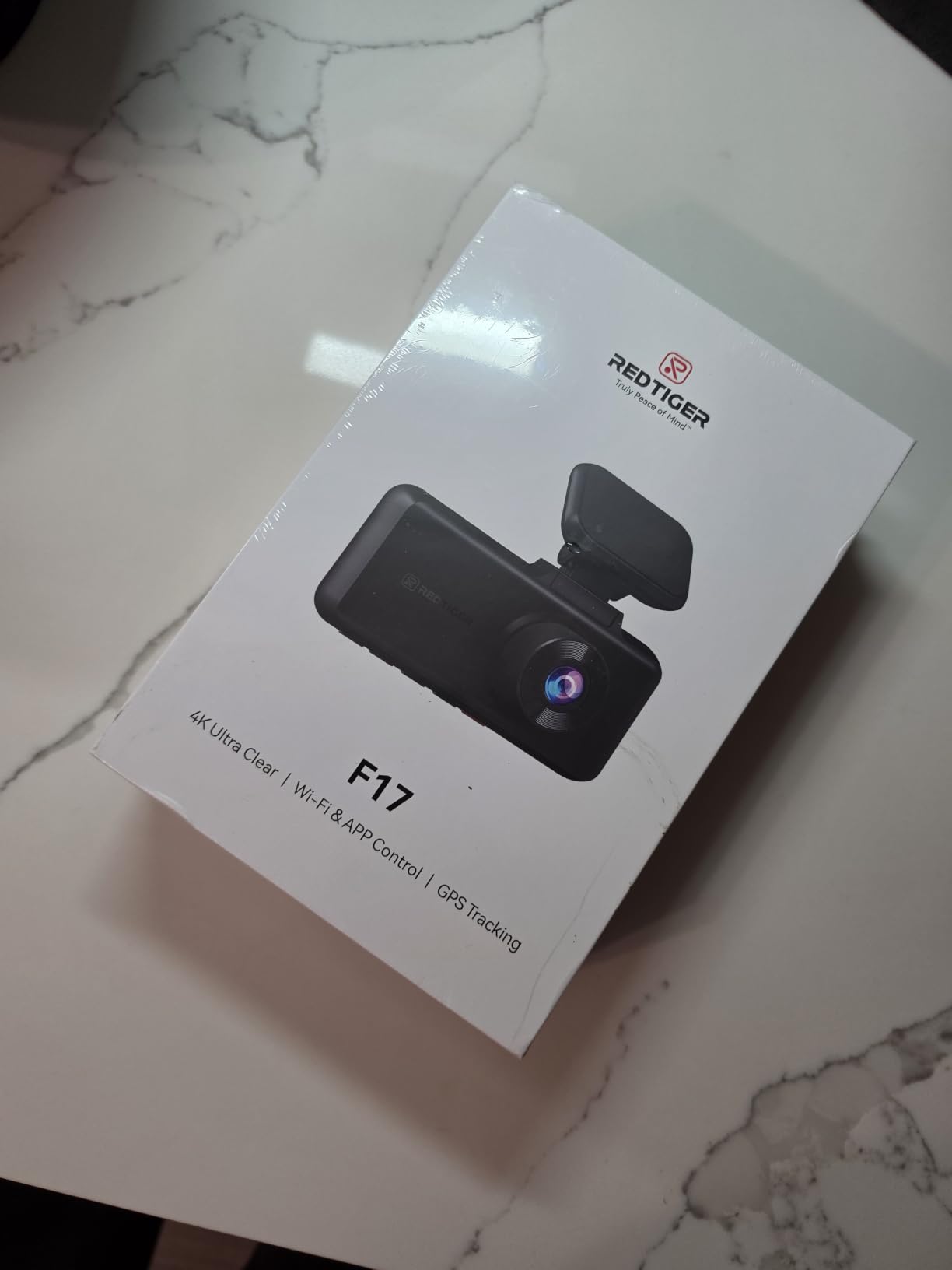
The F17 pairs a STARVIS 2 IMX675 front sensor at f/1.5 with a three-channel layout, and reviewers single out the cabin infrared performance as the stand-out feature. Four IR lights do the interior, and with a 160 degree cabin field of view you get the full cabin rather than a slice of it. The 150 degree front and 155 degree rear angles are sensible, and dual recording modes let you drop to 2.5K three-channel or run 4K front with the cabin channel off.
Two thoughtful details for night use. The screen saver switches the display off so it is not a glowing panel in your peripheral vision after dark, and the G-sensor sensitivity is adjustable so the camera does not lock a clip every time you cross a speed bump. Timestamp, speed and GPS data sit in a corner rather than across the middle of the frame, which matters when you are trying to read a plate.
The annoyances are all software. WiFi defaults to off on every power-up, so you have to enable it manually each time you want to pull footage, and the app needs your phone’s Bluetooth turned off to connect, which is a step backward rather than forward. There is no touchscreen and no voice control, so locking a clip means reaching for the unit.
Adhesive mounting is firm once set with the included electrostatic films, and the 18-month warranty with responsive after-sales support is a genuine plus here. The included 64GB card is simply too small for three channels, so treat it as a placeholder and buy a high-endurance card sized for the channel count you will actually run.
Why cabin infrared beats a plain interior camera
An interior camera without infrared is a camera in a dark box. It records a lit cabin by daylight and records the shape of nothing after dark, because the only light in the cabin is whatever comes through the windows. Four infrared lights change that completely, and for anyone who shares a vehicle, drives at night for work, or wants footage of what happens while the car is parked, the cabin channel goes from decorative to genuinely useful.
Watch for infrared reflection off the windshield, which is a problem on some cabin cameras. The N7 PRO further down uses discrete lamps positioned to avoid it, and that positioning is the feature to look for if you fit an interior camera behind a tinted screen.
Who should skip it
Pass if you want a clean install you can reposition, because the adhesive mount is fixed once applied. Also look elsewhere if you rely on voice commands or on-phone clip locking, neither of which this camera offers.
For the record, GPS here is a route logger that stamps your clip, not a live tracking service, and the lack of a touchscreen makes it the least pleasant unit here to operate while parked. The night footage, though, is the reason to buy it.
7. IIWEY N7 PRO: Best Native 4K With Four Channels
IIWEY N7 PRO 4K STARVIS 4-Channel Dash Cam 360° View, 8-IR Night Vision
Native 4K front plus 3x 1080P
8 IR lamps for cabin night
Advanced HDR
Heat-resistant supercapacitor
Pros
- Native 4K front channel with three 1080P channels
- 8 IR lamps light the cabin without windshield reflections
- Advanced HDR helps resolve headlight white-out
- Supercapacitor rated from -4F to 158F
- Wi-Fi 6 transfers beat older 2.4GHz models
Cons
- Plate numbers not always legible while vehicles are moving
- Must use the original car charger as USB-C cables do not work
- Support response reported as unreliable after purchase
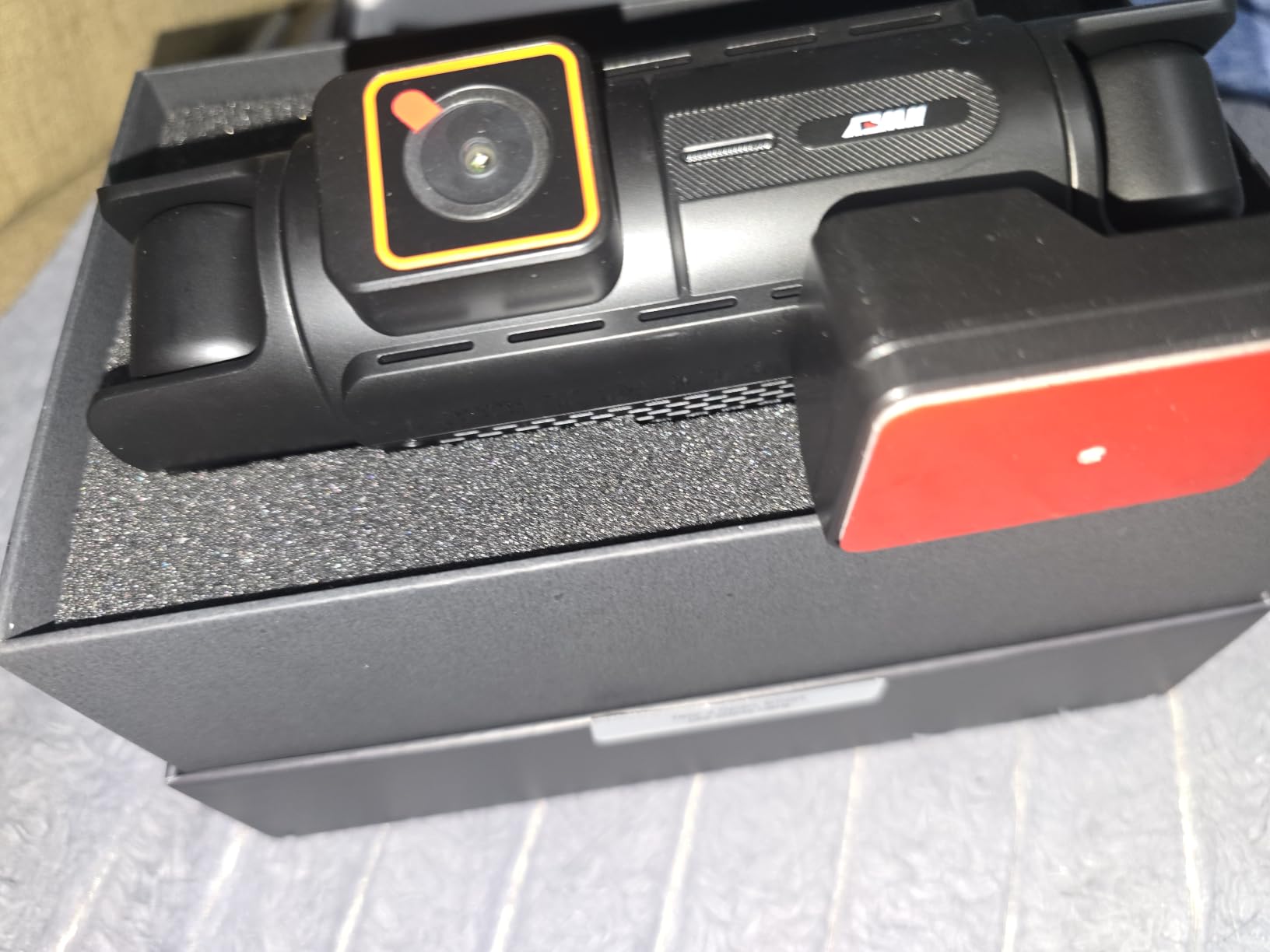
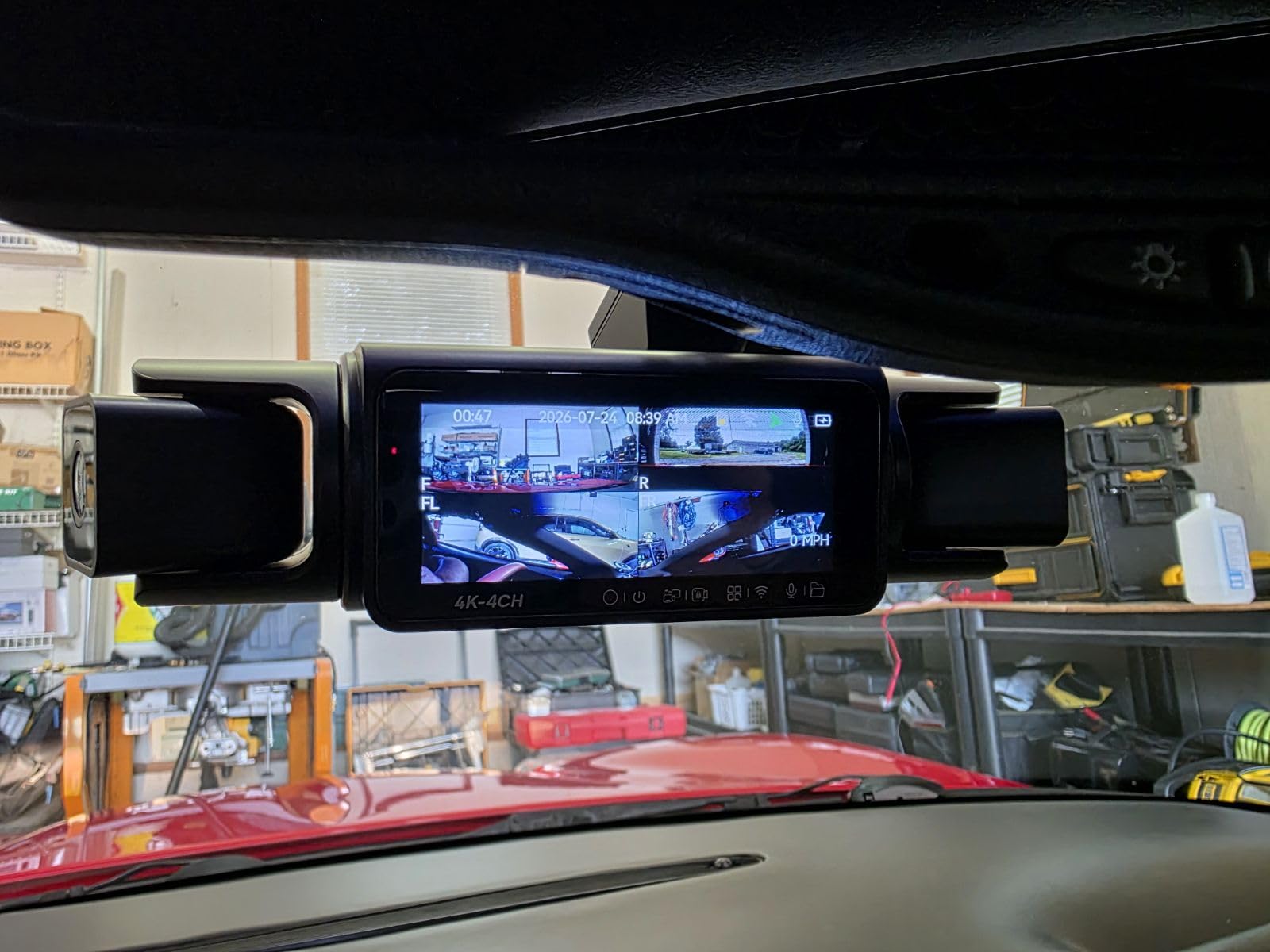
The N7 PRO pairs a genuinely native 4K front channel with three 1080P channels covering the flanks and the rear. The VIOFO A229 Pro above is also native at the front, but as a four-channel system this is the only unit here that gives you real 4K pixels and full 360 degree coverage in the same box. If you crop into night footage for evidence, native pixels are the point, and this is the kit that gives you the most to crop into.
Eight discrete infrared lamps are positioned specifically to avoid reflecting off the windshield, which is the single most common complaint about cabin cameras at night. Advanced HDR is aimed at headlight blowout, the failure where a reflective plate goes pure white in the beam. The supercapacitor is rated from -4F to 158F, and it is the only unit here with a published temperature range, which is why it suits hot climates and long parked spells.
The honest flaw is plate readability while moving. Owners report that plate numbers are only legible when both vehicles are stationary in some footage, which is exactly the situation where you need them most. That is a processing trade-off, not a hardware failure, but it is worth knowing before you rely on this camera for a moving incident.
The power requirement is strict: it must run from the included car charger, and a USB-C to USB-C cable will not work. Some owners also report SD card errors and repeated reformatting, and post-purchase support has been described as unreliable. Parking mode needs a separately sold hardwire kit, and the 64GB included card is light for four channels.
When native 4K earns its extra cost
Native 4K matters in one situation: when you need to enlarge a small object. If a vehicle is 40 metres away and you need its plate, an upscaled channel gives you four times the file size and none of the detail. Native 4K gives you real pixels to work with, and the wide dynamic range of a modern sensor keeps those pixels usable in a dark frame.
It still does not defeat physics. A rear camera sees a road your headlights do not illuminate, so no amount of resolution on that channel makes plates readable. The 340 degree rotating front camera on the 70mai X800 below is a different answer to the same problem, using hardware movement rather than more pixels.
Who should skip it
Skip it if you move through a lot of lit and unlit roads at speed and plate capture is the main goal, because the processing is not tuned for moving plates. Also avoid it if you want a phone app with a dependable support desk behind it, or if you plan to power it from anything other than the supplied charger.
Four channels at native 4K is a lot of data, and the included card will not keep up. Budget a large high-endurance card; the listed ceiling is 512GB, which is the right target.
8. 70mai X800 Omni: Best Connectivity Features After Dark
70mai Dual Dash Cam Front and Rear 4K, Car Camera for Cars with Sony IMX678, STARVIS 2 Night Vision, 4G LTE, AI Motion Detection, ADAS, 5GHz Wi-Fi 6, Parking Monitor, Voice Control (4K Omni X800)
4K 60FPS front recording
Sony STARVIS 2 sensor
340 degree rotating camera
4G LTE ready
Pros
- Large Sony STARVIS 2 sensor gives clean night footage with readable plates
- 340 degree rotating camera covers cabin and side without extra hardware
- 5GHz Wi-Fi 6 moves 4K clips much faster
- AI motion tracking produces few false parking alerts
- Compact body hides behind the rearview mirror
Cons
- Voice commands work inconsistently
- No live streaming to social platforms
- One owner reported the unit cycling on and off after months
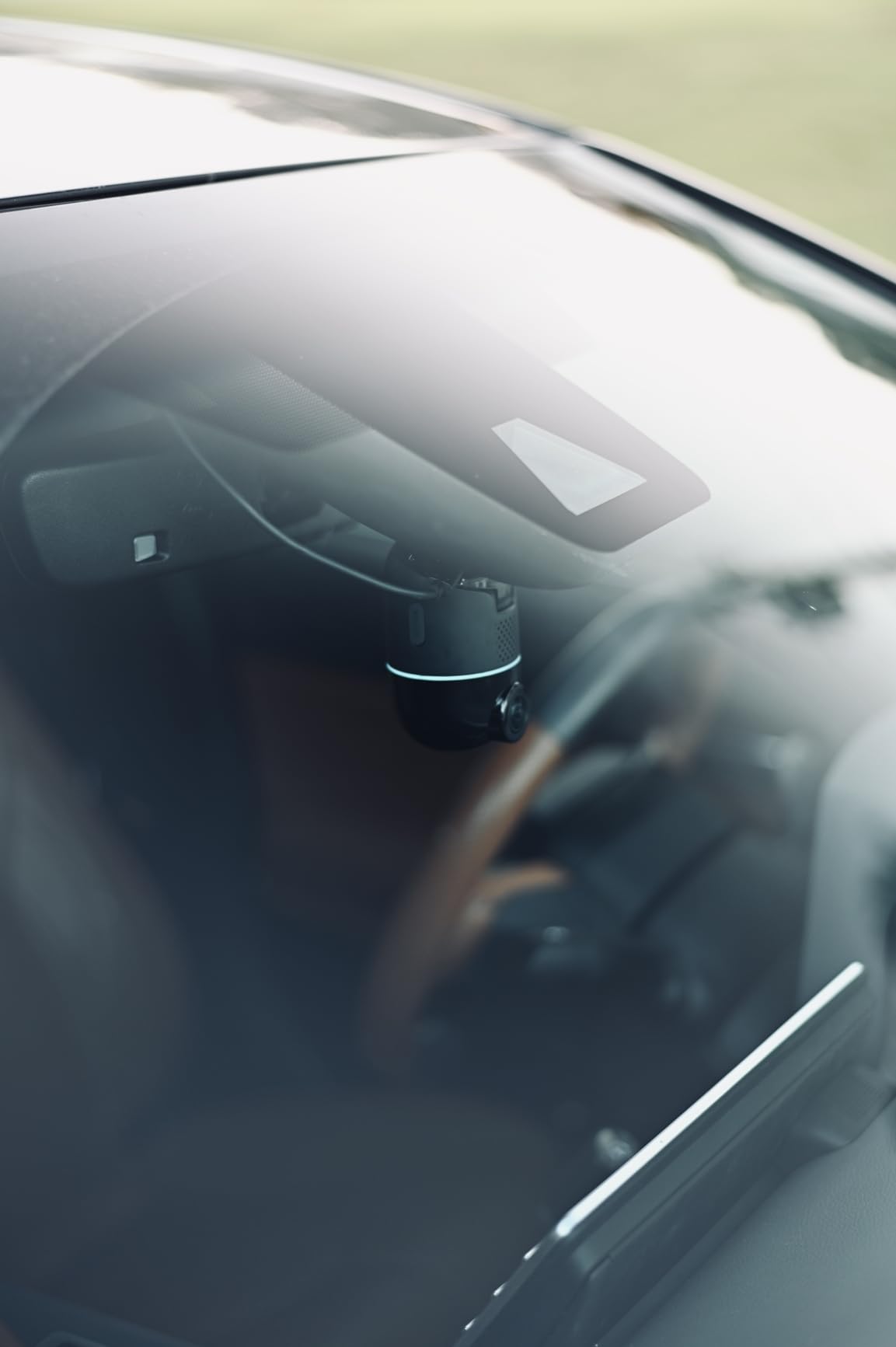
The X800 Omni is the only camera here that rotates. The front body turns through 340 degrees, so the same unit can look through the windshield, across the cabin and out of a side window without an extra camera, which closes some of the blind spots a two-channel kit leaves open. It records 4K at 60fps on a Sony STARVIS 2 sensor that the manufacturer claims captures 88% more light, and the Lumi Vision and Night Owl Vision processing target low light specifically.
It is also the only unit here with 4G LTE, and with the separately sold hardwire kit that becomes genuine remote monitoring rather than the local WiFi trick most brands use. AI Motion Detection 2.0 with auto-tracking produces few false alerts, and emergency video lock stores up to 180 seconds before an event and 30 seconds after, which is the longest pre-event buffer on offer here.
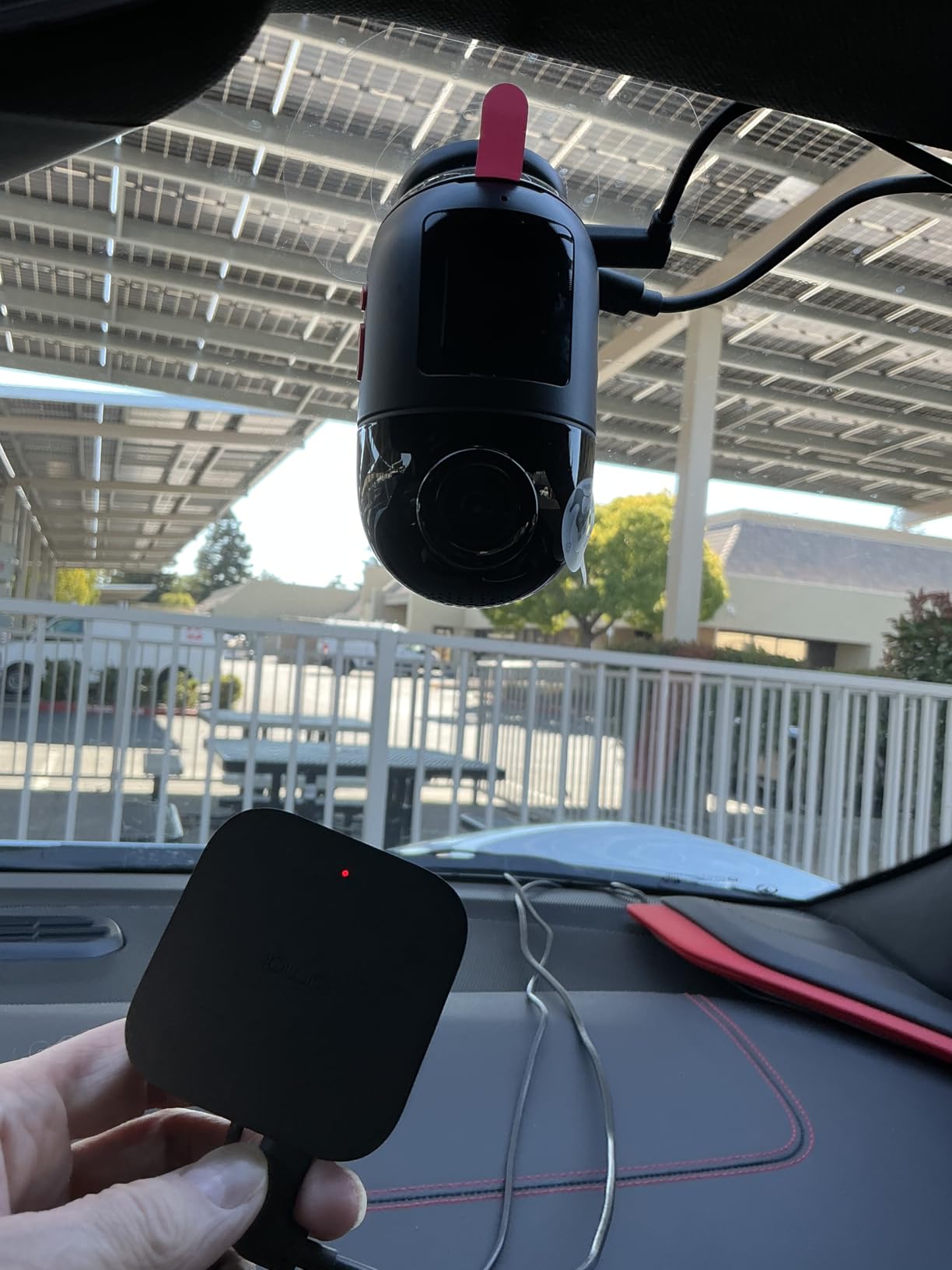
The caveats are real. Voice commands work inconsistently, there is no live streaming to social platforms, and cloud storage options are limited with a 512GB on-board ceiling. At least one owner reported the camera cycling on and off by itself after several months, which on a device this complex is not unheard of but is worth a warranty check before you buy.
ADAS alerts for forward collision, lane departure and speed limit are a bonus at highway speed, though they are driver aids rather than safety systems. The 128GB card is included along with the rear camera, though some shipped packages have arrived without them, so check the box contents the moment it arrives.
Why rotation beats adding a camera
A rotating camera solves the coverage problem in a way an extra channel cannot. Side cameras have to be wide, short-focal and slightly soft to fit somewhere on the pillar or mirror, so a side view on a four-channel kit is usually the weakest image you own. A rotating module uses the same good sensor and lens for the side view, so the quality does not drop when you turn it.
It also solves a physical problem. Side cameras need cable runs to both flanks of the car, which is where installation attempts meet airbag zones and trim panels. One rotating body needs one mount. If you are fitting a camera for the first time, that difference decides how the weekend goes.
Who should skip it
Pass if your priority is the front view alone, because you are paying for rotation you may not use and giving up a proper 2K rear channel in the process. Also consider the app’s remote features secondary, since 4G needs the extra hardwire kit and a supported network to be useful.
The 18-month warranty and 70mai’s responsiveness on support tickets are both plus points, and the rotating design is the most interesting hardware idea in this roundup. Buy it if coverage is your main worry after dark.
Why Your Rear Camera Will Never Match Your Front Camera at Night
Your headlights illuminate the road in front of you. Nothing on your car illuminates the road behind you, so a rear camera at night is recording in whatever light happens to bounce back from your own tail lights, street lighting and the headlights of vehicles behind.
This is why rear channels in this roundup sit at 2K or 1080P while the better front cameras run native 4K. It is a physics limit dressed up as a specification choice, and it is why every manufacturer in this list pairs a flagship front sensor with a cheaper rear sensor. A better rear sensor would produce a marginally brighter, slightly grainier image of a road that is still too dark to read.
So decide what the rear channel is for. If a vehicle follows you into a crash, you need colour, shape, position and direction of travel, and any of the rear channels here will deliver that. If you need to read the plate of a car that hit you and drove off at 1am, a rear camera alone will not give it to you, no matter what the box says.
For a genuine view of the car behind you, you need a light source. That is what the infrared cabin cameras on the IIWEY N6, the 70mai T800E, the REDTIGER F17 and the IIWEY N7 PRO are actually for, and it is why they earn a place in a night roundup even though they sit behind you.
How Your Car’s Headlights Change What the Camera Records
A dash cam cannot recover light that was never there, and your headlights are the main light source in every night frame it records. That makes your vehicle’s lighting a first-order factor in night footage, and it is the piece almost no roundup explains.
DashCamTalk regulars, many of them years into ownership, argue headlight type makes a large difference to night results. Cars shipping with weak halogen reflectors produce footage that looks grainy and dim for reasons that have nothing to do with the camera. Owners who moved between vehicles to get better lighting report the difference immediately.
Here is the counterintuitive part: brighter is not automatically better. Once exposure settles, everything outside the beam stays dark, and anything reflective inside the beam is more likely to blow out. A retroreflective licence plate under a strong high beam can render as a solid white rectangle, which is a worse outcome than a slightly dim but legible plate.
Aftermarket HID and LED conversions make this worse rather than better, largely because they are often misaligned and throw light upward. If your night footage looks washed out and flat, check your headlight aim before you blame the sensor. A small, cheap fix at a shop can rescue footage that a more expensive camera never could.
Finally, windshield tint reduces night quality noticeably, and owners regularly blame the camera for it. If your glass is tinted, expect lower contrast from any camera, and factor it in when you compare models.
What to Look For in a Night-Vision Dash Cam
Night performance is decided by a short list of specifications, and the first one on that list settles most comparisons before you have watched a single frame.
Sony STARVIS 2 sensor. Look for the STARVIS 2 generation rather than older STARVIS versions. It is a back-illuminated design that greatly improves low-light dynamic range and reduces license plate blur from headlights, and it is the single strongest predictor of night quality.
HDR (High Dynamic Range). Essential for balancing extreme light contrasts at night, such as a dark street with oncoming high beams. Without it, the headlight blooms and the road around it disappears.
Channel coverage. Decide whether you need just a front camera, a front and rear setup, or a three- and four-channel system with an interior camera. Only an interior camera with infrared LEDs can see in genuine darkness.
Aperture. An f/1.5 or f/1.6 front lens admits considerably more light than f/1.8. On an unlit road this is worth more than any resolution increase.
High-endurance microSD card. Recording errors and “it stopped recording” messages are almost always a worn or unsuitable card, not a camera fault. Buy a high-endurance card yourself rather than relying on the one in the box.
Supercapacitor over battery. A supercapacitor survives the heat of a parked car and will not swell or fail after a couple of summers. Battery-powered units rarely survive this test.
To check whether a listing really has a STARVIS 2 sensor, look for the model number in the technical specifications, confirm the sensor name is listed there rather than in marketing copy, and check that the resolution is native rather than described as upscaled. The enthusiast consensus is blunt about this: any dash cam with the Sony STARVIS 2 sensor is a solid starting point, and buyers treat the sensor name as the credibility test.
Buying Guide: Coverage, Storage and Parking Mode Power
Front-only, front and rear, or a multi-channel system. Front-only is the simplest way to have night coverage, but it leaves a car following you completely unrecorded. Front and rear is the sensible default for most drivers. Three channels add a cabin view, which is the only one that gets better after dark. Four channels close the side blind spots entirely, which is the right call for anyone who parks on a street or works nights.
Storage follows from that choice, and it is the mistake people make most often. A single 4K front channel writes several times the data of a 1080P one, and a four-channel kit multiplies that again. Our general dash cam guide covers the calculation, but the short version: one 4K front channel is comfortable on 128GB, two channels want 256GB, and three or four channels want 512GB. Cards listed in this roundup range from 64GB to 512GB maximum, so check the ceiling before you buy a large card.
Loop recording means the card never fills up permanently, but a card that is constantly at capacity is also constantly being written and erased, which shortens its life. Format it monthly in the camera rather than on a computer, which is the standard fix for the drifting timestamps that several of these units suffer from.
Parking mode needs power, and there are three routes. A hardwire kit draws from the fuse box and is the only genuinely unlimited option, provided it has a low-voltage cutoff so you do not flatten your battery. An OBD-II adapter plugs into the diagnostic port and is the easiest install, though it occupies a socket you may want. A battery pack avoids your car entirely and survives deep cold, but adds a charging routine. We covered the options in more detail in our parking mode roundup.
Worth knowing before you choose: all eight cameras here need a hardwire kit bought separately if you want parking mode, so budget for it as part of the purchase. Set the low-voltage cutoff before you drive away rather than afterwards.
Finally, brand support and warranty length tell you how long firmware updates will keep arriving, and firmware is what fixes pairing problems. Reviews of the IIWEY N7 PRO mention unreliable support after purchase, and the VIOFO A229 Pro offers lifetime technical support with an 18-month warranty plus a registered extension. That difference matters two years in, not on the day you unbox.
Frequently Asked Questions
What is the best dash cam with night vision?
The ROVE R2-4K Dual is the best overall pick. It pairs a Sony STARVIS 2 IMX675 sensor with an f/1.5 front aperture, which gathers enough light to keep plates and oncoming vehicles readable on unlit roads. Six of the eight cameras in our roundup use STARVIS 2, and that sensor generation separates them clearly from the rest at night.
Which camera has the best night vision?
For handling oncoming headlights, the VIOFO A229 Pro pairs two different STARVIS 2 sensors with HDR Night Vision 2.0 processing, so the road around a headlight stays visible instead of going black. For raw low-light gathering on unlit roads, the ROVE R2-4K Dual wins on its f/1.5 aperture. There is no single answer without knowing whether you drive city or country.
What is the best front and rear dash cam with night vision?
The VIOFO A229 Pro gives you native 4K at the front and 2K at the rear, both on STARVIS 2 sensors, which is the highest rear resolution we could confirm in this roundup. The ROVE R2-4K Dual is the alternative if you want a card included and a wider f/1.5 front lens. Remember that a rear camera cannot read plates at night because your headlights do not illuminate behind you.
Is 2K or 4K better for a dash cam at night?
At night, sensor generation and aperture matter more than resolution. A native 2.5K channel on a STARVIS 2 sensor will beat an upscaled 4K channel on an older sensor, because you can crop into real detail but you cannot recover pixels that were never recorded. Buy 4K only when the sensor behind it is native, as on the IIWEY N7 PRO and the VIOFO A229 Pro.
Is there a dash cam that can record all night?
Yes, but only with a power source. A hardwire kit with a low-voltage cutoff is the standard route and lets the camera record in parking mode indefinitely, provided you set the cutoff voltage correctly. An OBD-II adapter or an external battery pack are the alternatives. All eight cameras in our roundup need a hardwire kit bought separately for parking mode.
Will my insurance go down if I have a dash cam?
Usually not. Most drivers report no premium change, and the discount is frequently treated as a myth in owner communities. What a dash cam reliably does is supply evidence when a claim is disputed, which speeds up who the insurer believes. It is worth having for that reason alone, but not worth paying extra for on the promise of a discount.
Why is my dash cam footage grainy at night?
The most common causes are an older front-illuminated sensor, a narrow aperture, a cheap or worn microSD card producing compression artefacts, and a tinted windshield. Check the sensor generation first, since that is the one factor you cannot fix later. Then replace the card with a known high-endurance model and reformat it in the camera monthly.
What are 5 common mistakes to avoid when using a dashcam?
First, mounting it too high, which puts the camera behind a tinted band. Second, leaving the protective film on the lens. Third, running a standard microSD card instead of a high-endurance one. Fourth, skipping the low-voltage cutoff on a hardwire kit. Fifth, ignoring reflections from infrared cabin cameras off the windshield, which is why lamp placement matters on units like the IIWEY N7 PRO.
The Best Dash Cam With Night Vision in 2026
The ROVE R2-4K Dual is our pick for anyone installing a single night-vision dash cam in 2026. A Sony STARVIS 2 IMX675 sensor, an f/1.5 front aperture, built-in GPS and a 128GB card in the box make it the most complete package here, and it holds plate detail on unlit county roads where the alternatives in this list do not.
Buy the IIWEY N6 if coverage is your worry and you want all four angles plus a cabin camera that works in total darkness. Buy the VIOFO A229 Pro if oncoming headlights are the problem and you will buy your own card. Buy the IIWEY N7 PRO if you need native 4K pixels to crop into, and the 70mai X800 Omni if you want remote access and a camera that turns to face whatever side you need.
Whatever you choose, check the sensor generation first, buy a high-endurance card in the size your channel count needs, and set a reminder to reformat it. Those three habits prevent more bad night recordings than any resolution upgrade. Our full dash cam roundup covers the daytime side of the same decisions if you want to read further.