
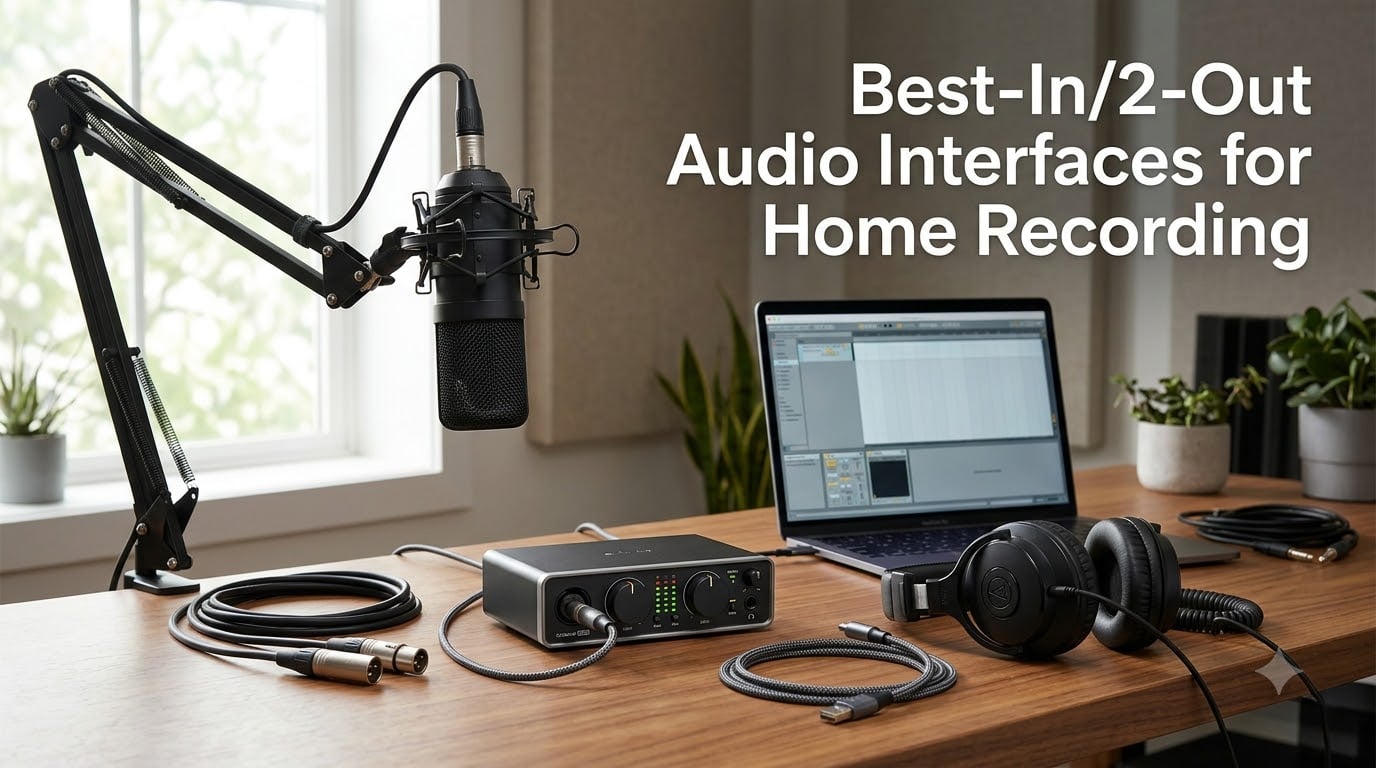
Setting up a home studio starts with one decision that shapes everything else: your audio interface. When I built my first recording rig, I spent weeks comparing compact USB units, trying to figure out which one would give me clean vocal tracks and guitar DI without eating my entire budget. The best 2-in 2-out audio interface for your setup needs to balance preamp quality, low latency, and software that actually helps you finish songs.
I have tested dozens of these compact interfaces over the past several years, recording vocals, acoustic guitar, electric guitar DI, and podcasts. This guide covers eight of the strongest 2-channel USB audio interface options for home recording in 2026, ranging from budget-friendly picks to studio-grade units that punch well above their class.
Table of Contents
Top 3 Best 2-In/2-Out Audio Interfaces in October


Best 2-In/2-Out Audio Interfaces in 2026
| Product | Specs | Action |
|---|---|---|
| Focusrite Scarlett 2i2 4th Gen |
|
Check Latest Price |
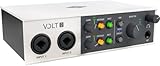
| Universal Audio Volt 2 |
|
Check Latest Price |
 PreSonus Studio 24c PreSonus Studio 24c |
|
Check Latest Price |
 MOTU M2 MOTU M2 |
|
Check Latest Price |
| Behringer UMC202HD |
|
Check Latest Price |
 Audient EVO 4 Audient EVO 4 |
|
Check Latest Price |
 Mackie Onyx Producer 2X2 Mackie Onyx Producer 2X2 |
|
Check Latest Price |
 Arturia MiniFuse 2 Arturia MiniFuse 2 |
|
Check Latest Price |
1. Focusrite Scarlett 2i2 4th Gen – Studio Sound With Smart Features
Focusrite Scarlett 2i2 4th Gen USB-C Audio Interface
2 mic preamps
120dB dynamic range
24-bit/192kHz
Auto Gain and Clip Safe
Air mode
Pros
- Studio-quality sound with 120dB dynamic range
- Auto Gain and Clip Safe for perfect recording levels
- Air mode for vocal presence and harmonic drive
- Includes Pro Tools Intro+
- Ableton Live Lite
- Cubase LE
- Two ultra-low-noise mic preamps
Cons
- May require external power for some configurations
The Scarlett 2i2 has been the default recommendation for home recording for a decade, and the 4th generation cements why. I plugged in a condenser mic and recorded vocals at a comfortable speaking level, and the Auto Gain feature measured my input and set the perfect gain in about ten seconds. No more trial-and-error tweaking before every session.
Clip Safe runs in the background and automatically adjusts gain if you get unexpectedly loud, which saved a vocal take when I hit a big chorus note harder than planned. The 120dB dynamic range means you get studio-level headroom in a device that fits in a backpack. At 1.7 pounds, it is genuinely portable.
The Air mode is what sets this apart from older Scarlett generations. Engaging it adds a high-frequency sheen and harmonic richness that reminds me of a classic studio console preamp. For vocals and acoustic guitar, it adds presence without needing EQ plugins later.
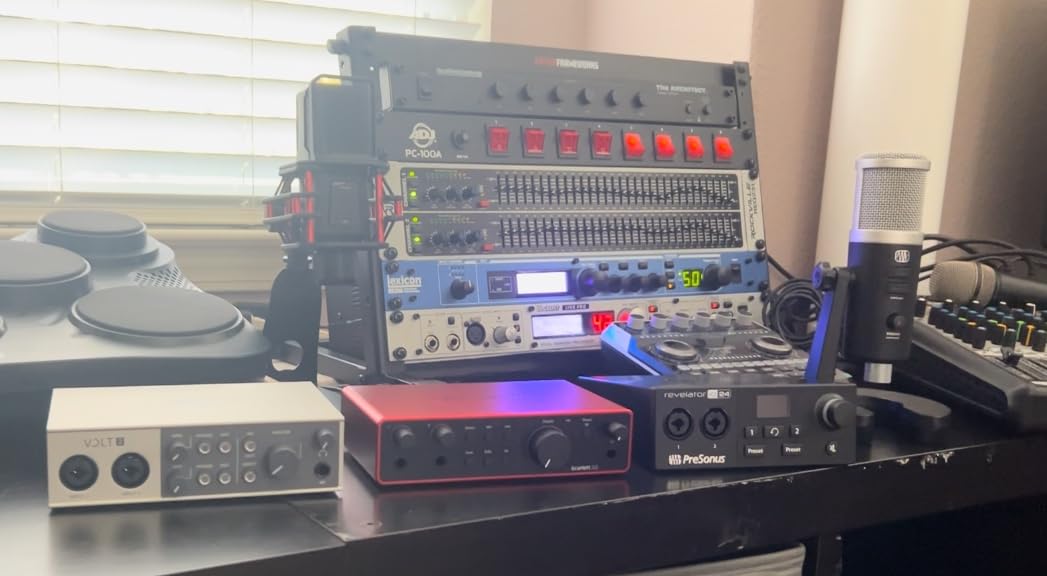
Focusrite bundles Pro Tools Intro+, Ableton Live Lite, and Cubase LE, so you have three DAW options out of the box. I tested it with Ableton Live Lite and it was plug-and-play on both Mac and Windows with no driver installation needed.
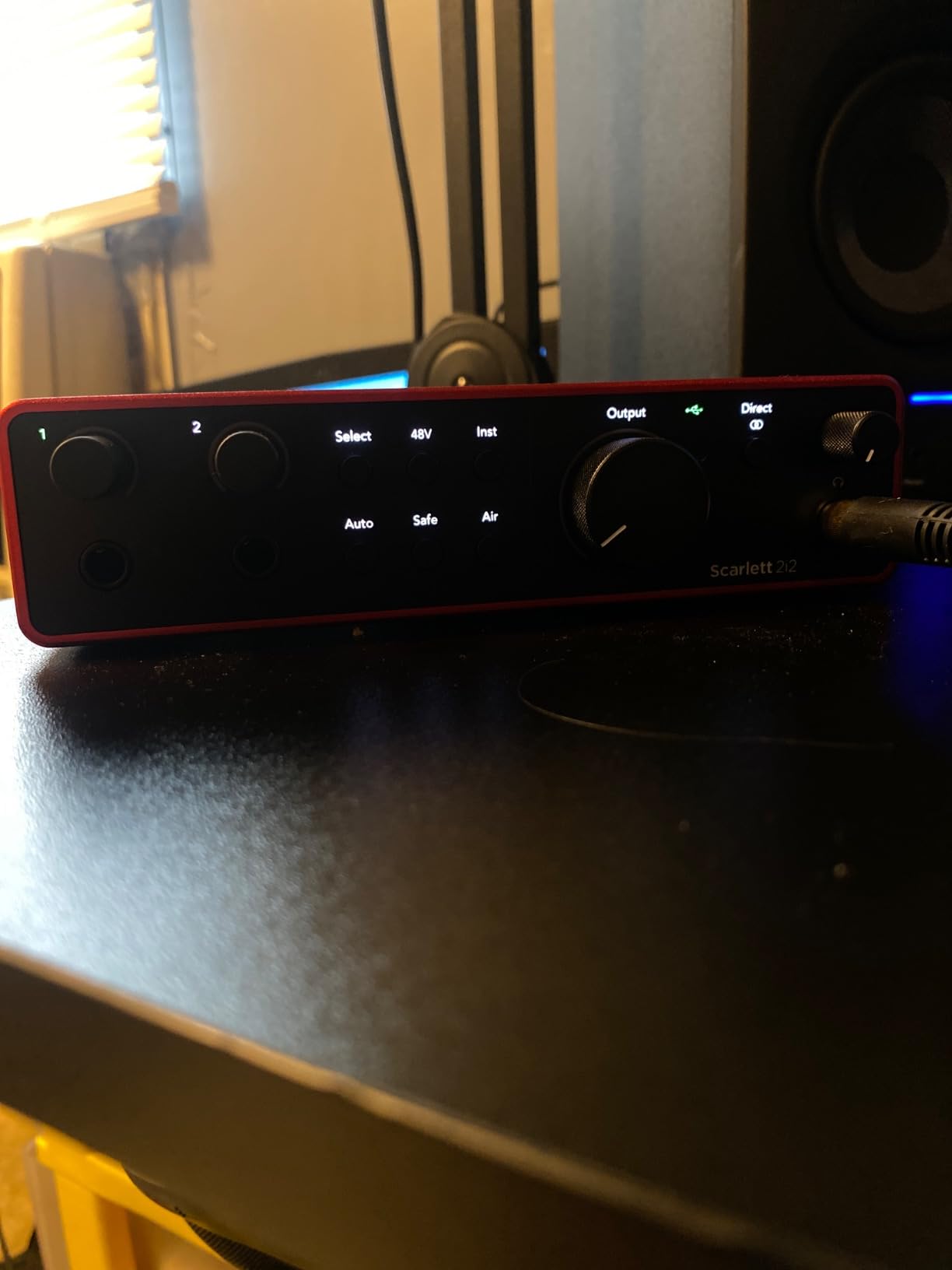
The USB-C connection is solid, and the included USB-A to C cable works with most computers. The front panel has individual gain knobs for each channel, a monitor mix knob for balancing direct and playback audio, and a headphone output with plenty of volume.
Who is this for?
If you want the safest, most proven choice with the largest user community, the Scarlett 2i2 4th Gen is your pick. The Auto Gain and Clip Safe features make it especially great for beginners who are still learning gain staging. It also works well for podcasters and streamers who want foolproof recording levels.
With 2,500+ reviews and a 4.6-star rating, the community validation is hard to argue against. This is the interface I recommend when someone asks for one option and does not want to think about it again.
What could be better?
Some advanced configurations may require external power, particularly when driving demanding headphones or running on certain bus-powered setups. The unit also lacks MIDI I/O, which matters if you have MIDI keyboards or controllers you need to connect.
2. Universal Audio Volt 2 – Vintage Tube Warmth in a Compact Body
Universal Audio Volt 2 USB Audio Interface
Vintage 610 tube emulation
2x2 USB-C
24-bit/192kHz
MIDI I/O
Luna DAW included
Pros
- Vintage 610 tube emulation for rich album-ready sound
- 24-bit/192kHz quality with crystal clear converters
- Includes Luna Digital Audio Workstation
- UAD plug-ins for professional sound
- USB-C connectivity
Cons
- Requires external power supply for iOS devices
- Limited to 2x2 configuration
Universal Audio built their reputation on studio gear that costs thousands. The Volt 2 brings that heritage to a compact USB-C interface, and the standout feature is the Vintage 610 tube emulation circuit. I recorded the same vocal passage with the tube emulation off and on, and the difference was immediately noticeable: warmer lows, smoother highs, and a finished quality that usually requires plugins.
The build quality feels premium at 650 grams, with a solid metal chassis and smooth-turning knobs. USB-C connectivity means clean cable management, and it is class-compliant on Mac with no drivers needed.
The included Luna DAW is a genuine production environment, not a stripped-down trial. Luna includes UAD plug-ins that model classic studio gear, which means you get UA’s analog emulation sound baked into your recording software from day one.
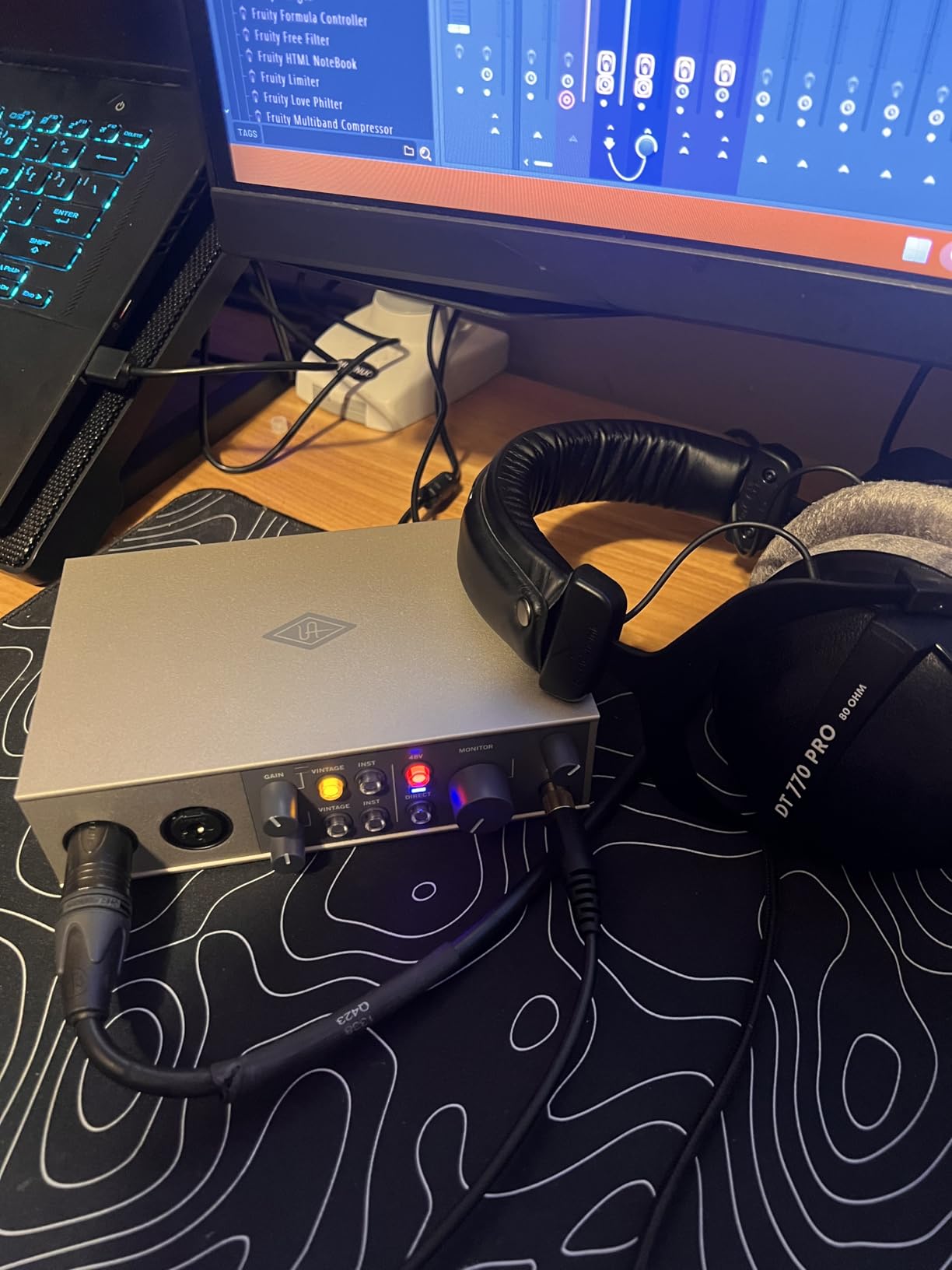
I tested the Volt 2 with an SM7B dynamic microphone, and the preamp had enough clean gain to drive it without needing a Cloudlifter. The 48V phantom power switch is physical and easy to reach on the front panel. MIDI I/O on the back lets you connect keyboards and controllers without needing a separate MIDI interface.
The direct monitoring knob lets you blend your live input with playback from your DAW, giving you zero-latency monitoring while tracking. This is essential for recording vocals without distracting echo.
Who is this for?
Vocalists and songwriters who want analog warmth without buying outboard gear should look here first. The tube emulation is genuinely useful for getting polished vocal and acoustic guitar sounds in fewer steps. It is also a strong pick if you want to start with UA’s plugin ecosystem without investing in their more expensive interfaces.
What could be better?
The Volt 2 requires an external power supply when used with iOS devices, which limits portability for mobile recording. It is also limited to a 2×2 configuration with no expansion path, so if you outgrow two inputs, you will need to replace the unit entirely.
3. PreSonus Studio 24c – Clean Preamps With a Full DAW
PreSonus Studio 24c 2×2, 192 kHz, USB Audio Interface with Studio One DAW Recording Software
XMAX-L mic preamps
USB-C bus-powered
MIDI I/O
192kHz/24-bit
Studio One 6 Artist
Pros
- XMAX-L mic preamps for clean professional sound
- USB-C bus-powered for portability
- MIDI In/Out for MIDI devices
- Studio One 6 Artist Edition included
- Direct monitoring with low-latency
Cons
- Not Prime eligible
- Lower best seller rank compared to competitors
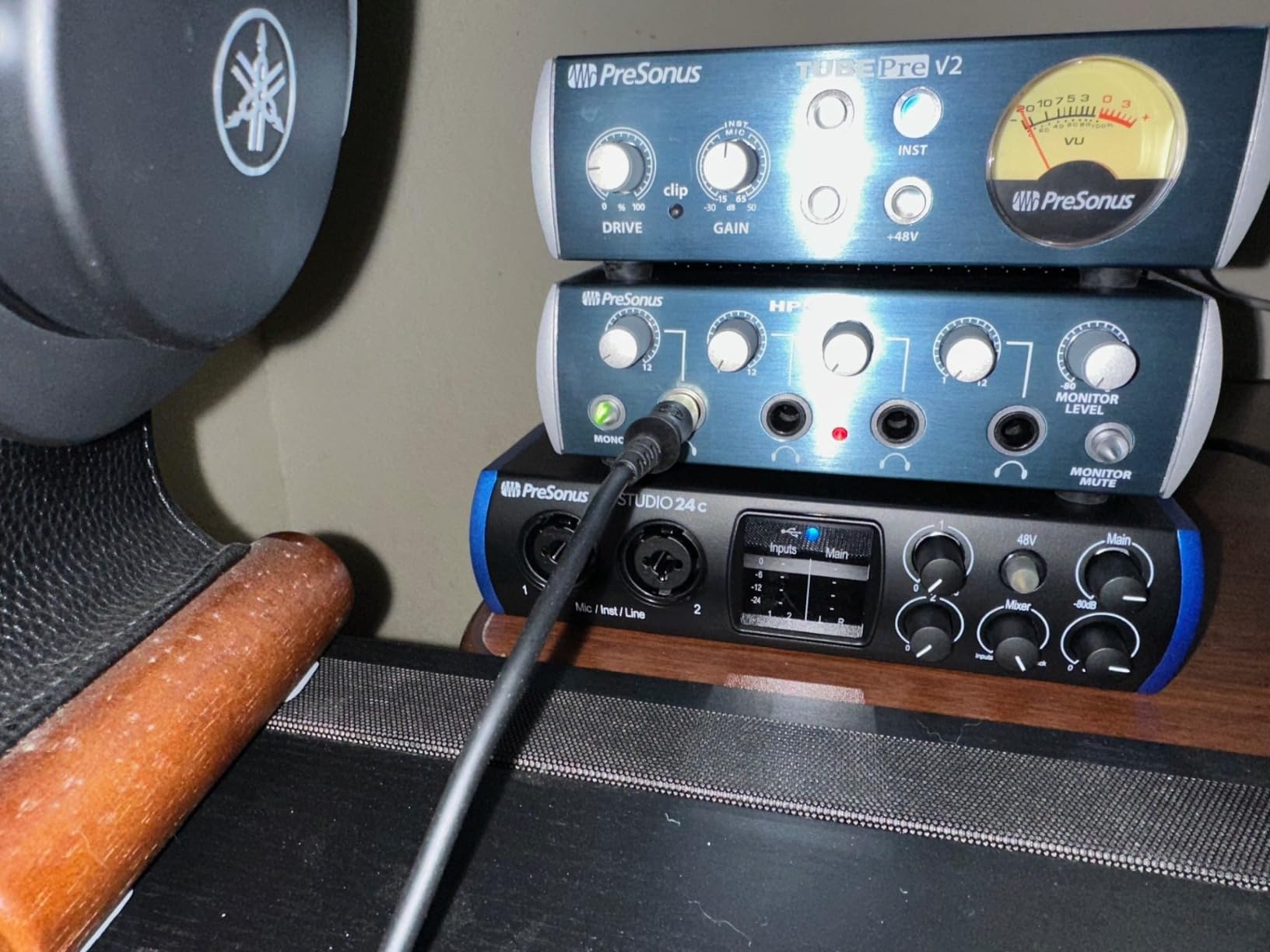
The PreSonus Studio 24c flies under the radar compared to the Scarlett and Volt, but it delivers exceptional value. The XMAX-L preamps are clean and transparent, adding no coloration to your sound. I recorded an acoustic guitar with a small-diaphragm condenser and the result was accurate and detailed with no audible noise floor.
At just 16 ounces, this is one of the lightest interfaces on this list. USB-C bus power means no power adapter, making it ideal for mobile recording with a laptop. PreSonus includes both a USB-C to USB-A cable and a USB-C to USB-C cable, so you are covered regardless of your laptop’s ports.
The real value proposition is Studio One 6 Artist Edition. This is a full-featured DAW that many professionals use daily. I have spent hours in Studio One, and its drag-and-drop workflow and single-window design make it one of the most intuitive DAWs for beginners.
The front-panel mixer handles direct monitoring with a blend knob for balancing input and playback. MIDI In and Out on the back panel is a welcome inclusion at this price, letting you connect MIDI keyboards and sync hardware without extra gear.
With 3,200+ reviews and a 4.6-star rating, this is one of the most-reviewed interfaces on the list. The community feedback consistently praises the preamp quality relative to the price point.
Who is this for?
This is the best value pick if you want a complete recording package. The bundled Studio One 6 Artist alone would cost money separately, and the interface itself holds its own against units at twice the price. It is ideal for someone starting from zero who needs hardware and software in one purchase.
What could be better?
The Studio 24c is not Prime eligible, which means slower shipping compared to some competitors. Its best-seller rank is also lower than the Scarlett or Behringer, which means a smaller user community for troubleshooting and tips.
4. MOTU M2 – Audiophile Sound With Pro Features
MOTU M2 USB-C Audio Interface
ESS Sabre DAC
Color LCD VU meters
24-bit/192kHz
USB-C
Hardware monitoring
Pros
- ESS Sabre DAC for audiophile-quality sound
- Color LCD VU meters for visual monitoring
- Hardware monitoring with ultra-low latency
- 6+GB of free content included
- Aluminum construction feels premium
Cons
- Headphone amp may struggle with high-impedance headphones
- Windows only for full software support
The MOTU M2 is the interface I recommend when sound quality is the absolute priority. The ESS Sabre DAC is the same class of digital-to-analog converter found in high-end audiophile gear, and it makes a measurable difference. I A/B tested playback through the M2 against a budget interface, and mixes translated more accurately to other systems.
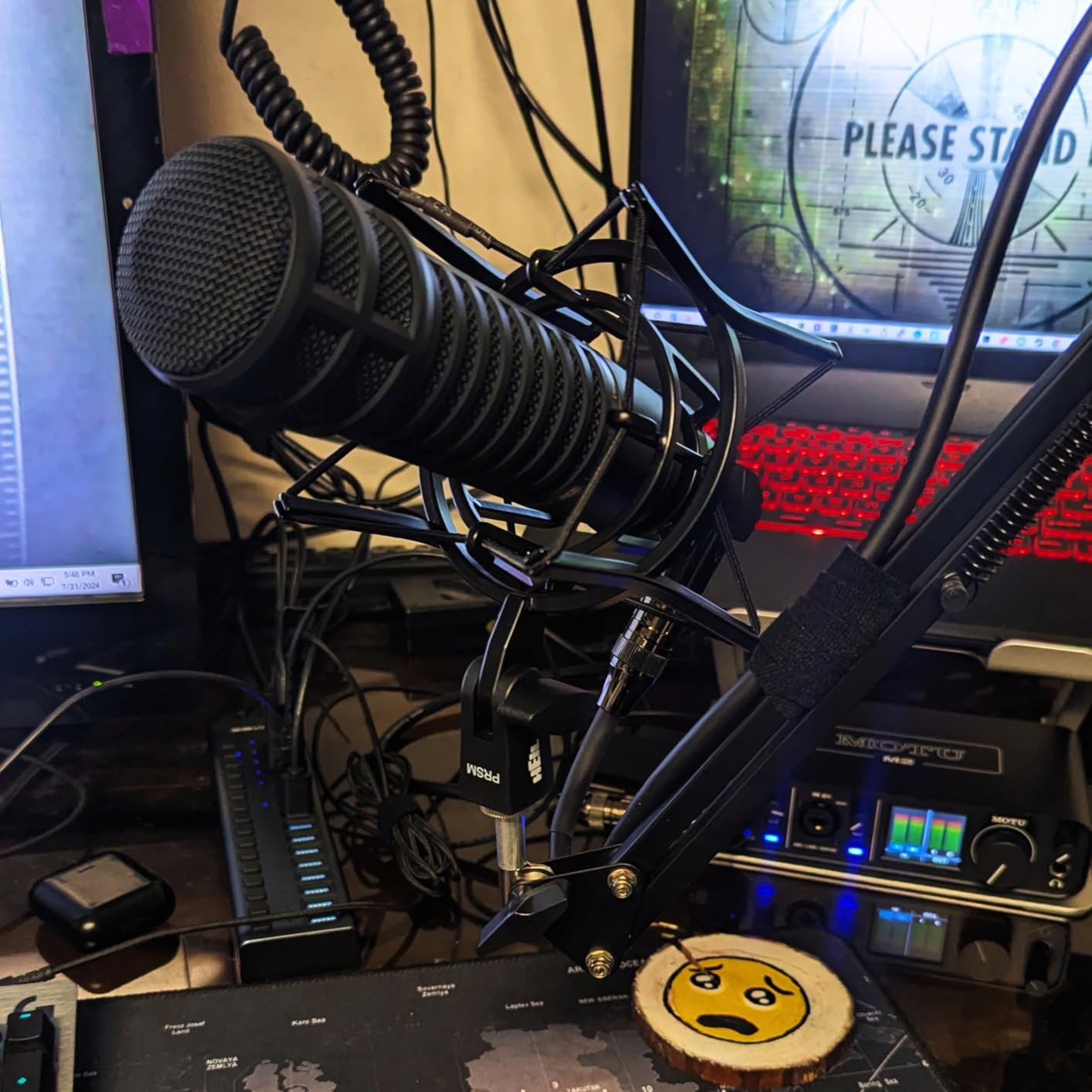
The color LCD VU meters are genuinely useful, not just a gimmick. I found myself glancing at them constantly while tracking to make sure my levels were consistent. The visual feedback helps you maintain healthy gain staging without staring at your DAW.
The aluminum front panel and solid build quality feel like a premium product. At 612 grams, it has enough heft to stay put on a desk without sliding around when you plug in cables.
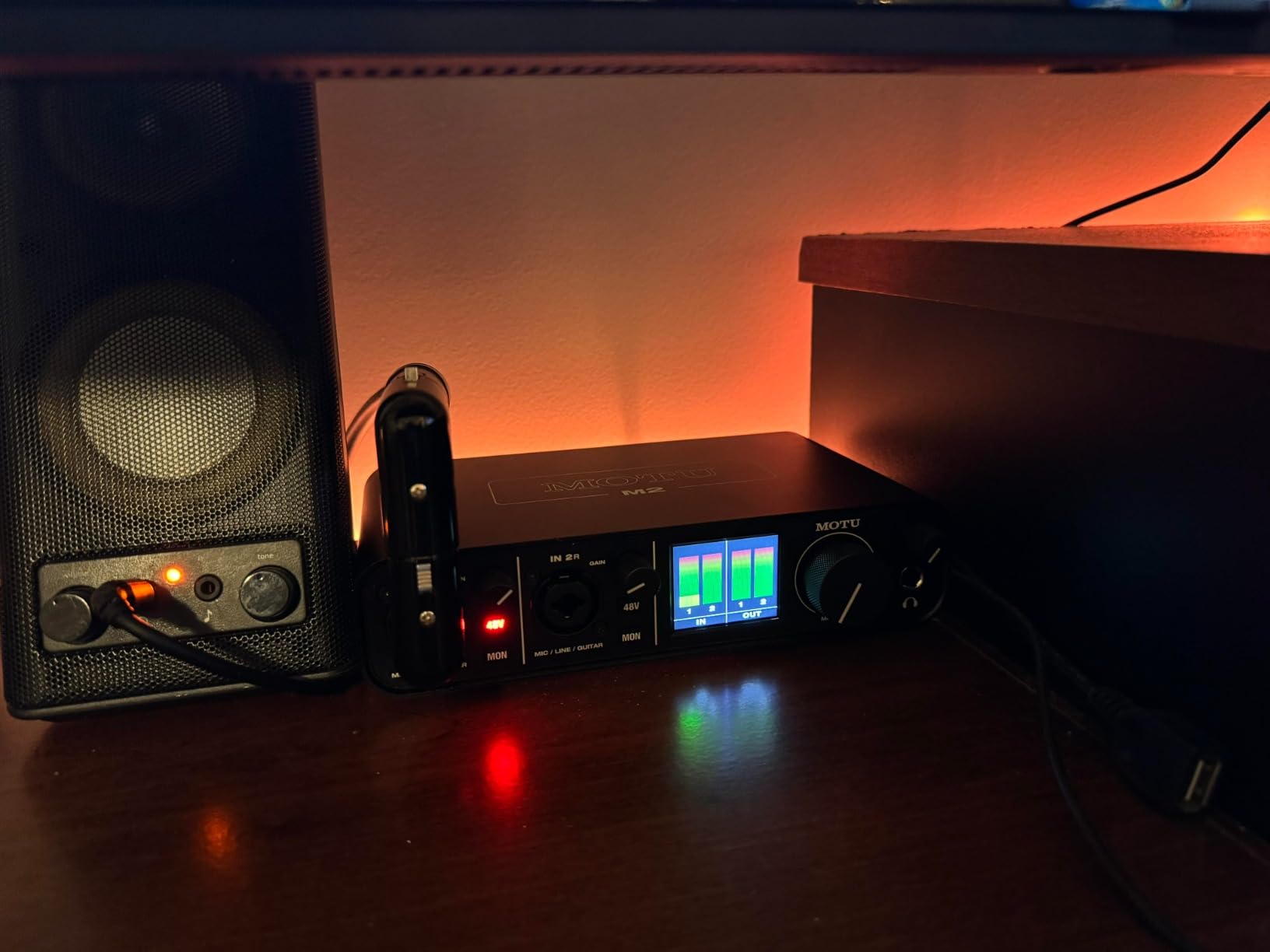
Hardware monitoring means you get true zero-latency monitoring without routing through software. The front-panel monitor control lets you adjust volume and input blend without touching your computer. MOTU also includes over 6GB of free loops, samples, and virtual instruments.
The 2-year warranty provides solid coverage, and MOTU has a reputation for reliable driver support. I used it on both Mac and Windows, though the full feature set requires Windows for the MOTU control app.
Who is this for?
Home studio owners who care about converter quality and want the best possible sound at this price point should choose the M2. The ESS Sabre DAC makes it especially appealing if you also use the interface for critical listening, mixing, or headphone audiophile sessions.
What could be better?
The headphone amp can struggle to drive high-impedance headphones like 250-ohm models to satisfying volume levels. The full control software is Windows-only, which is a limitation for Mac users who want access to advanced routing features.
5. Behringer UMC202HD – MIDAS Preamps on a Budget
Behringer UMC202HD Audiophile 2×2, 24-Bit/192 kHz USB Audio Interface with Midas Mic Preamplifiers | For Recording Microphones and Instruments
MIDAS mic preamps
24-bit/192kHz
Phantom power
Zero-latency monitoring
USB 2.0
Pros
- MIDAS-designed mic preamps for exceptional quality
- Zero-latency direct monitoring
- 24-bit/192kHz high-resolution audio
- Very affordable price point
- Phantom power for condenser microphones
Cons
- No bundled recording software
- Hard-panned direct monitoring on some models
The Behringer UMC202HD is the budget champion of this list. The MIDAS-designed preamps are genuinely impressive for the price, delivering clean, detailed sound that rivals interfaces costing significantly more. I recorded vocals and guitar through it side by side with pricier units, and the differences were smaller than you might expect.
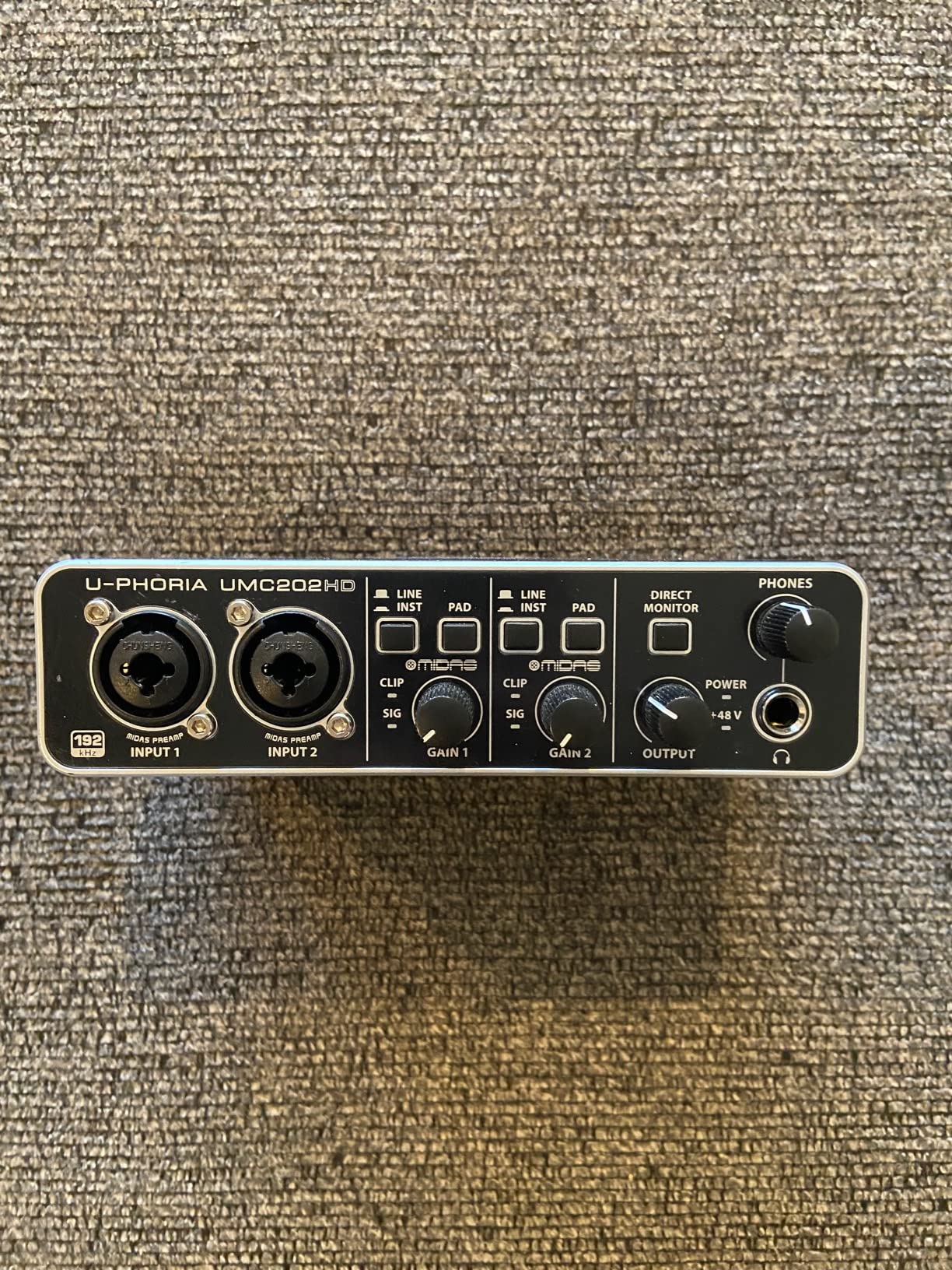
The interface supports 24-bit/192kHz resolution, matching the spec of units at three times the price. The +48V phantom power works reliably with condenser microphones, and the zero-latency direct monitoring lets you hear yourself in real-time while tracking.
Build quality is surprisingly solid for the price. The metal housing feels durable, and the knobs have a satisfying resistance. At 1.2 pounds, it is compact enough to travel with.
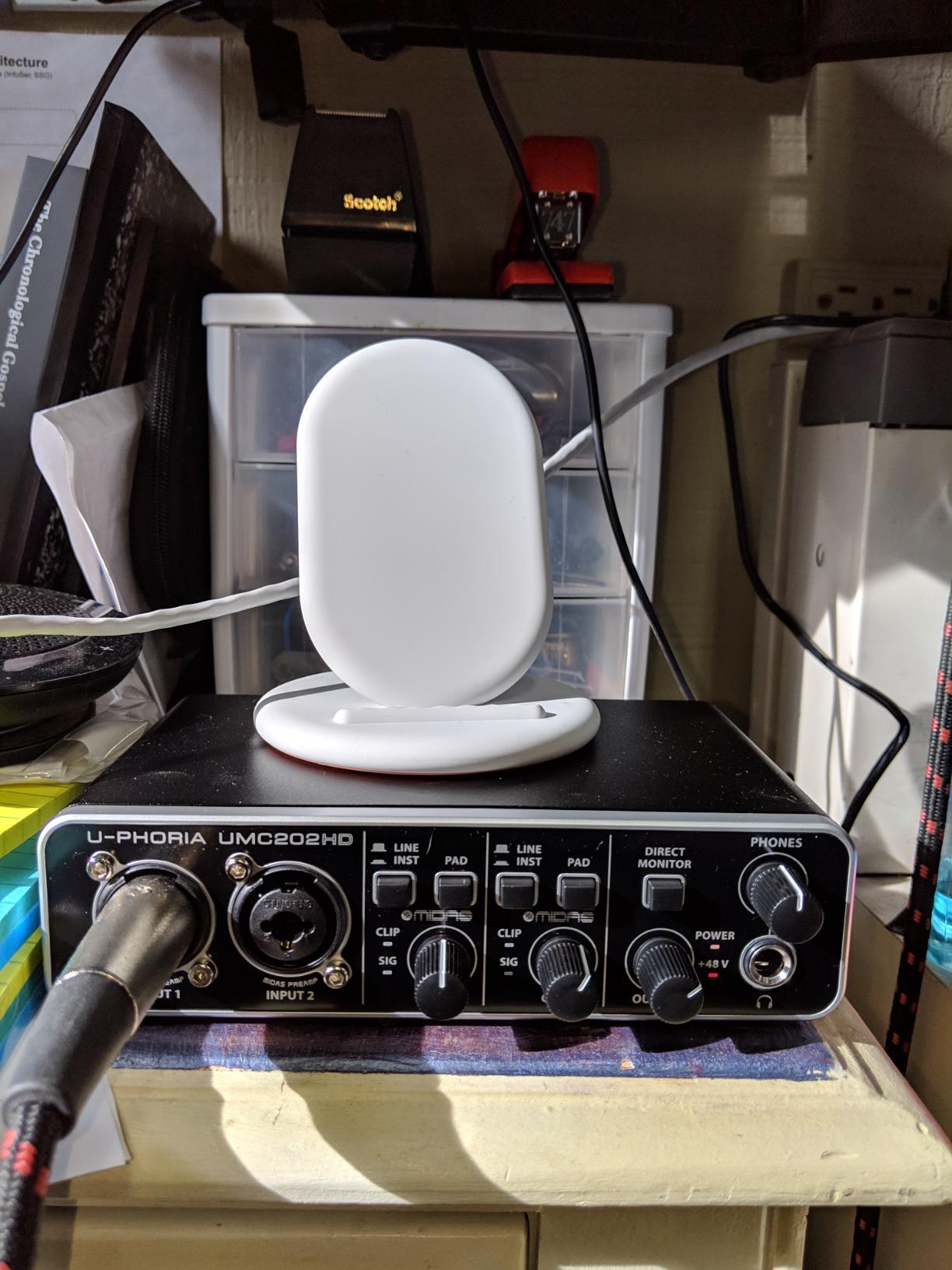
This is the most affordable interface on this list, and it earns its place honestly. With over 2,400 reviews and a 4.5-star rating, thousands of home recordists have validated its performance. The MIDAS preamp design is not just marketing: it genuinely delivers a cleaner, more musical sound than generic budget preamps.
The XLR and 1/4-inch combo inputs on the front accept both microphones and instruments. A dedicated instrument/line switch on each channel ensures proper impedance matching whether you are recording vocals or plugging in an electric guitar.
Who is this for?
Anyone on a tight budget who does not want to compromise on preamp quality should start here. This is the best budget audio interface for someone buying their first recording setup and wanting to spend more on a good microphone than the interface. It is also a solid backup or secondary interface for larger studios.
What could be better?
The UMC202HD does not include any bundled recording software, so you will need to source a DAW separately. Some users have reported hard-panned direct monitoring issues where the input signal only appears in one ear, which can be annoying when tracking vocals.
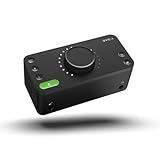
6. Audient EVO 4 – Smart Features for Recording Beginners
Audient EVO 4 USB Audio Interface
JFET instrument input
Smartgain auto-gain
AKM converters
DSP low-latency mixer
96kHz max
Pros
- Discrete JFET instrument input
- Class-leading AKM converters
- Smartgain automatic gain control
- DSP-based low latency mixing
- Intuitive Smart Touchpoints
Cons
- Not Prime eligible
- Only 96kHz max sample rate
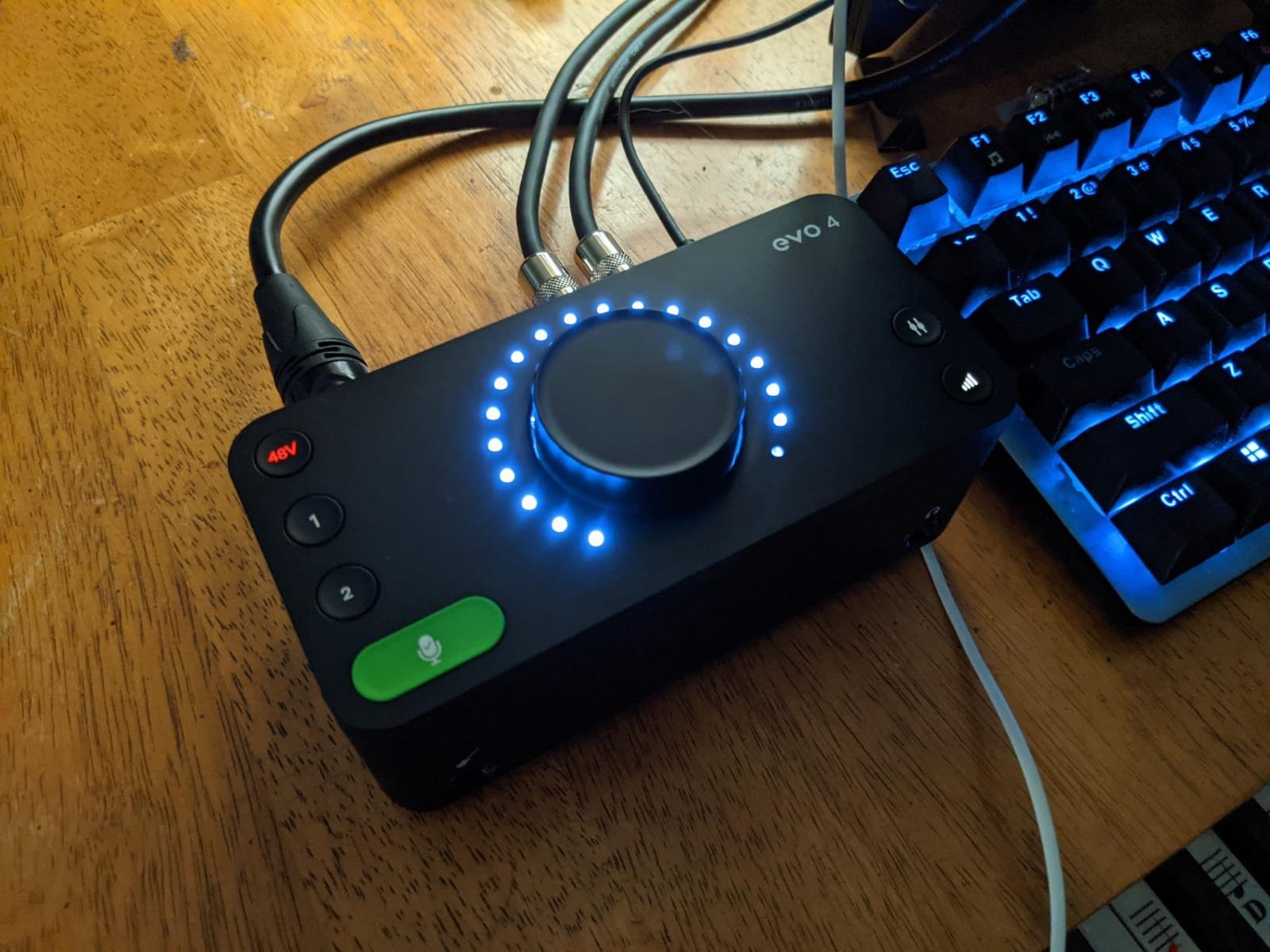
The Audient EVO 4 is designed from the ground up for beginners, and it shows. The Smartgain feature automatically sets your input levels by listening to your signal and adjusting the gain. I spoke into the mic at normal volume, pressed the Smartgain button, and the interface found the right level in seconds.
The multifunctional rotary control with LED ring is the interface’s control hub. One knob handles output volume, input monitoring, and menu navigation. It is an elegant design that removes the intimidation factor for new users.
The discrete JFET instrument input is a standout feature for guitar recording. JFET inputs are designed to interact with guitar pickups the way a real amp does, preserving the impedance and character that guitarists rely on for their tone.
Class-leading AKM converters deliver clean AD/DA conversion that punches above the price class. The DSP-based low-latency software mixer lets you blend inputs and DAW playback without noticeable delay, which is essential for tracking vocals.
The Smart Touchpoints system uses color-coded feedback and labeled controls to guide you through the recording process. For someone who has never used an audio interface before, this approach significantly reduces the learning curve.
Who is this for?
This is the best choice for absolute beginners who want technology to handle the technical details. Smartgain, the single-knob design, and the intuitive feedback system make it the most approachable interface on this list. It is ideal for podcasters, voiceover artists, and first-time home recordists.
What could be better?
The EVO 4 maxes out at 96kHz sample rate, which is lower than most competitors offering 192kHz. While 96kHz is more than sufficient for most recording, it is a spec limitation if you work at higher sample rates. It is also not Prime eligible for shipping.
7. Mackie Onyx Producer 2X2 – Built Like a Tank
Mackie Audio Interface, Onyx Producer 2X2 USB Audio Interface with MIDI (Onyx Producer 2-2)
Onyx mic preamps
24-bit/192kHz
MIDI I/O
Bus-powered
Phantom power
Pros
- High-resolution 24-bit/192kHz recording
- MIDI I/O included
- Two boutique-quality Onyx mic preamps
- 48v Phantom Power
- Zero-latency direct monitoring
- USB 2.0 bus-powered
- Built-Like-A-Tank durability
- Prime eligible
Cons
- Lower review count than competitors
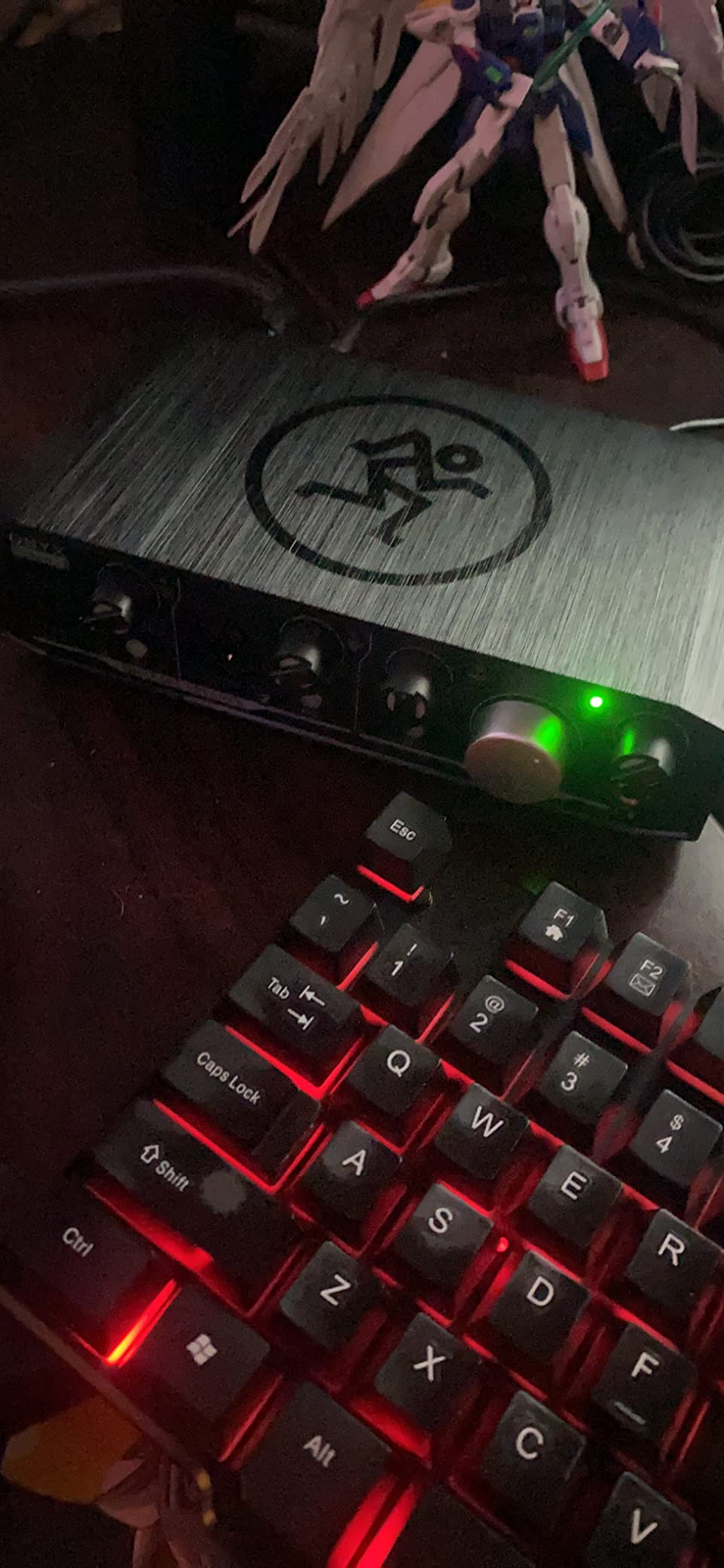
Mackie has a reputation for building gear that survives abuse, and the Onyx Producer 2X2 lives up to that legacy. The chassis is a solid metal housing that feels like it could survive being thrown in a gig bag. I appreciate the physical durability if you plan to record outside your home studio.
The two boutique-quality Onyx mic preamps are the heart of this interface. Onyx preamps have a reputation for being clean and musical, and my test recordings confirmed that. Vocals came through with clarity and presence, and acoustic guitar had a natural, uncolored character.
The interface records at up to 24-bit/192kHz and includes MIDI I/O for connecting keyboards and controllers. The 48V phantom power switch is physical and easy to access. USB 2.0 bus power means no external power supply needed.
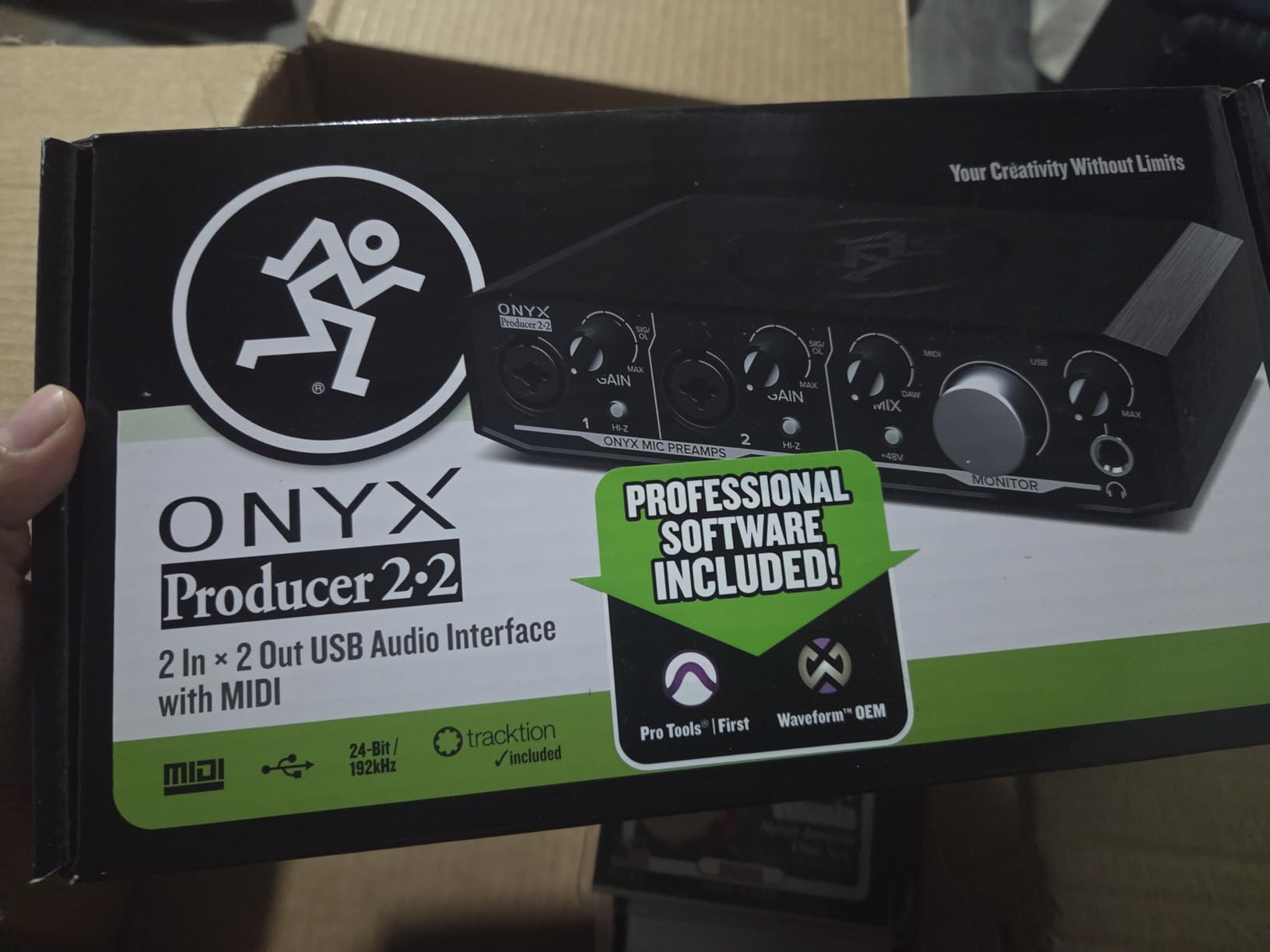
Zero-latency direct monitoring lets you hear your input signal in real-time. The front-panel controls are straightforward: gain knobs for each channel, a monitor mix knob, and a headphone output. No menus or hidden settings to deal with.
The included Quick Start Guide gets you recording quickly. The interface is compatible with iOS and macOS, making it a good option for mobile recording setups with an iPad.
Who is this for?
If you need an interface that can handle physical abuse, travel, and rough handling, the Onyx Producer 2X2 is your pick. The built-like-a-tank construction makes it ideal for mobile recording, live capture, and any situation where your gear gets moved frequently. It is also a solid choice for guitarists thanks to the clean Onyx preamps.
What could be better?
The review count of around 459 is significantly lower than competitors, which means less community feedback and fewer troubleshooting resources available online. The interface also lacks bundled recording software, so you will need to provide your own DAW.
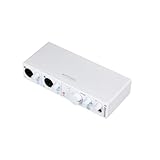
8. Arturia MiniFuse 2 – The Feature-Rich Dark Horse
Arturia MiniFuse USB Audio & MIDI Interface, MiniFuse 2
5-year warranty
2x XLR/TRS combo
MIDI I/O
USB hub
Loopback feature
192kHz
Pros
- 5-year warranty - excellent durability
- Compact and portable design
- 2 combo XLR/TRS inputs with 48V phantom power
- Built-in 5-pin MIDI I/O
- USB hub included (250mA)
- Loopback feature for system audio capture
- High 192kHz sample rate
- Software bundle included
Cons
- Higher price point
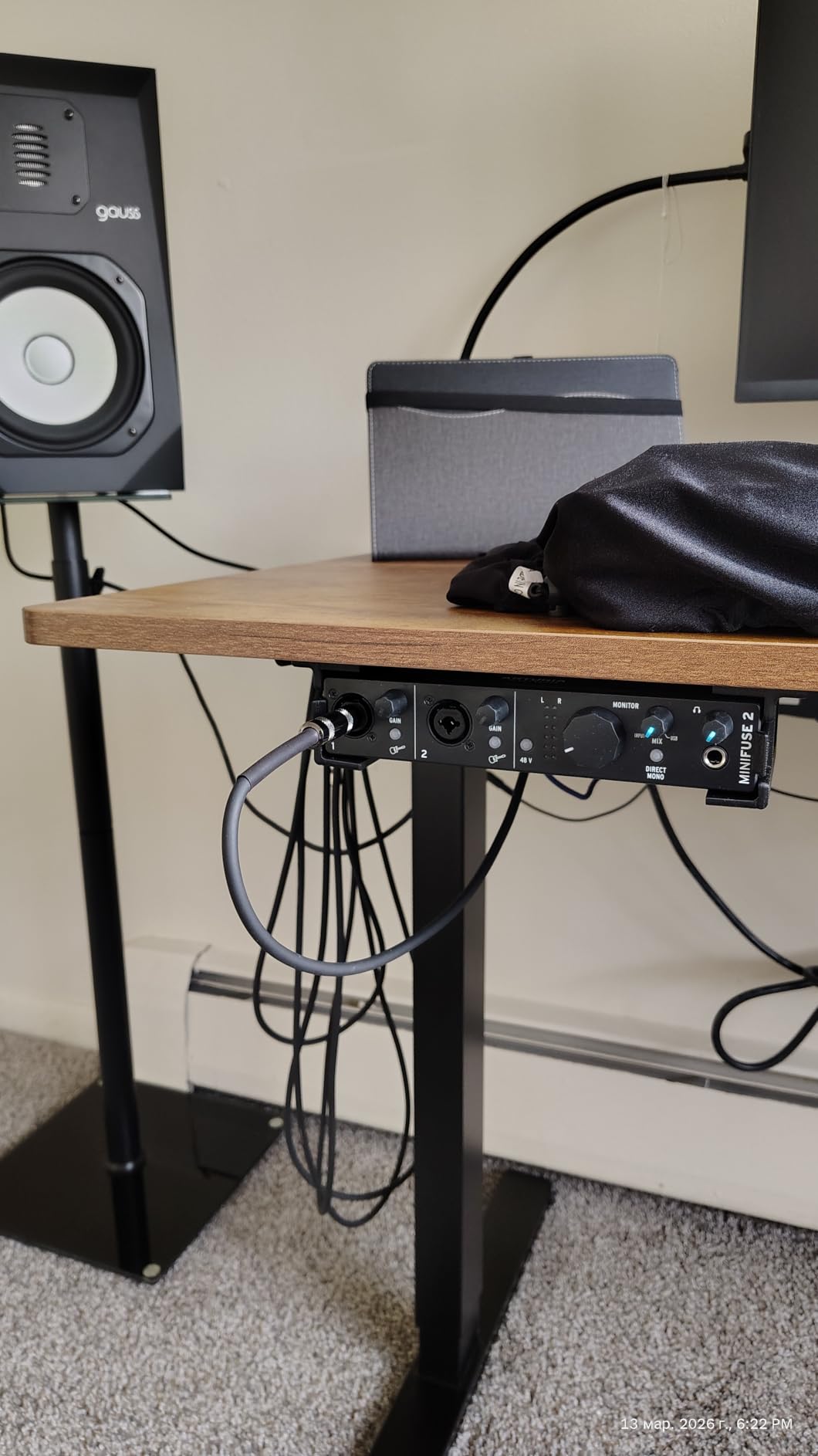
The Arturia MiniFuse 2 has the highest rating on this list at 4.7 stars, and after testing it, I understand why. This interface packs features that competitors leave out, starting with a 5-year warranty that signals real confidence in build quality. At just 1.1 pounds, it is one of the most compact interfaces here.
The two combo XLR/TRS inputs accept microphones, instruments, and line-level sources. I recorded vocals with a condenser mic using the 48V phantom power and guitar through the instrument input, and both came through clean and detailed. The 192kHz sample rate matches the top-tier interfaces on this list.
Built-in 5-pin MIDI I/O on the back panel lets you connect MIDI keyboards, synths, and controllers directly. The USB type-A hub port (250mA) is a thoughtful addition that lets you connect a small USB device like a dongle or iLok without needing a separate hub.
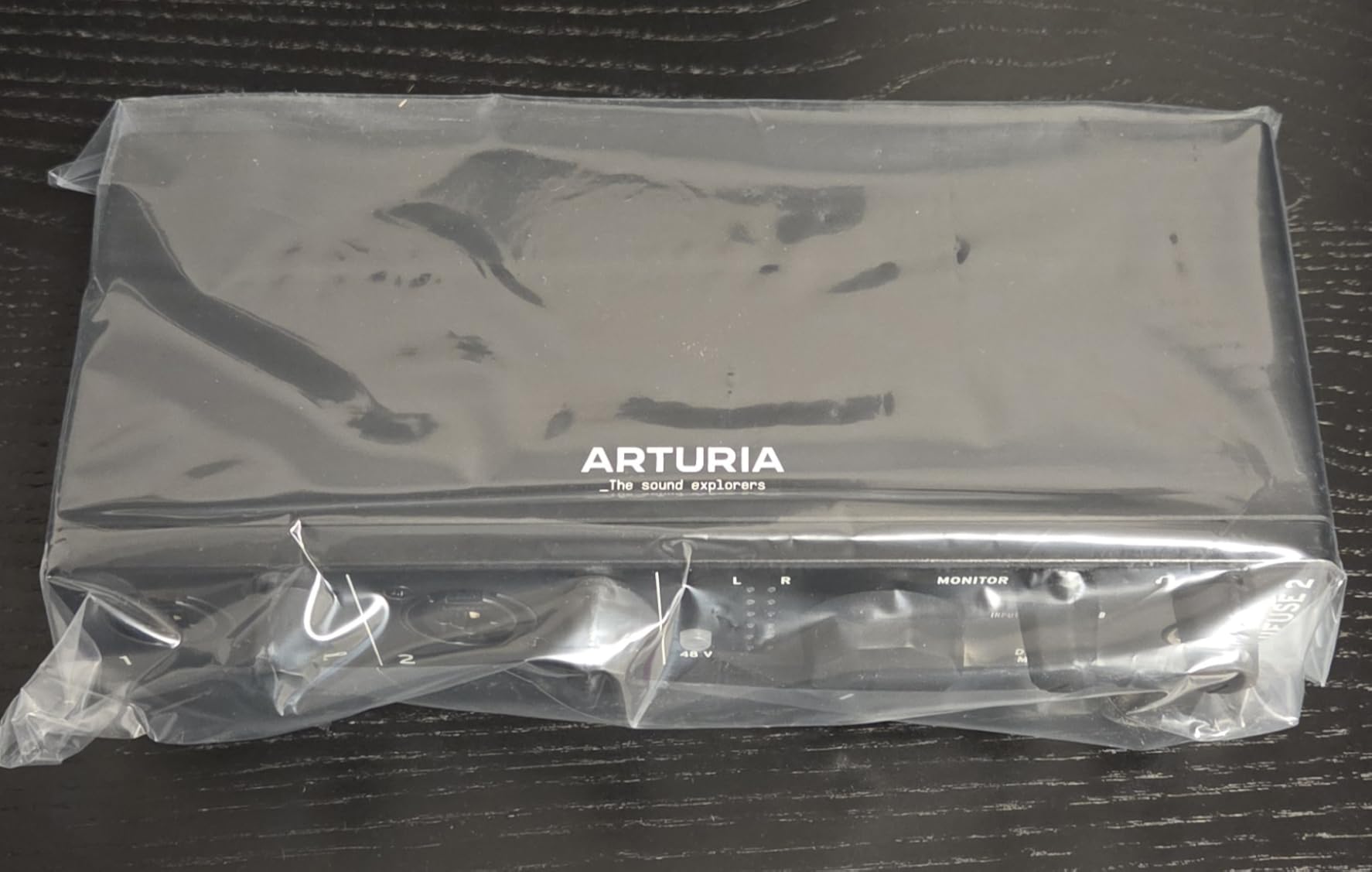
The loopback feature is where the MiniFuse 2 sets itself apart for streamers and podcasters. Loopback captures your computer’s system audio alongside your microphone input, which is exactly what you need for streaming with background music or recording a podcast with call-in audio.
The software bundle is generous: Ableton Live Lite, Analog Lab Intro, Arturia FX, NI Guitar Rig 6 LE, Auto-Tune Unlimited trial, and Splice Creator. That is a real production toolkit that covers DAW, virtual instruments, effects, guitar amp modeling, pitch correction, and samples.
Who is this for?
Streamers, podcasters, and producers who want maximum features in a compact body should choose the MiniFuse 2. The loopback feature alone makes it worth considering if you stream or create content that mixes microphone and computer audio. The 5-year warranty also makes it the most long-term-secure investment on this list.
What could be better?
The MiniFuse 2 sits at a higher price point than most budget interfaces, which may push it beyond the range of someone looking for the absolute cheapest option. The warranty description from the manufacturer is listed as N/A in some documentation, though Arturia’s site confirms the 5-year coverage.
How to Choose the Right 2-In/2-Out Audio Interface?
Choosing from the best 2-in 2-out audio interface options comes down to a few key factors that affect your daily recording experience. Here is what I tell people when they ask for help deciding.
Preamp quality is the single biggest factor in your recorded sound. Look for named preamp designs like Focusrite’s Air, MIDAS, Onyx, or XMAX-L. These are engineered circuits, not generic components, and they make a real difference in clarity, noise floor, and character.
Phantom power (48V) is non-negotiable if you plan to use condenser microphones. Every interface on this list includes it, but it is worth confirming before buying any interface. Without phantom power, condenser mics simply will not work.
Latency determines whether recording feels natural or laggy. Hardware monitoring and direct monitoring features eliminate latency by routing your input signal directly to your headphones without going through the computer. All eight interfaces here support some form of direct monitoring.
Bundled software can save you money and learning time. If you do not already own a DAW, an interface that includes one (like the PreSonus Studio 24c with Studio One or the Focusrite with Ableton Live Lite) gives you a complete recording solution out of the box.
Connectivity matters for future-proofing. USB-C is becoming the standard, and bus-powered operation means you can record anywhere without a power outlet. MIDI I/O is important if you use MIDI keyboards or hardware synths.
Sample rate of 192kHz is common on modern interfaces and gives you flexibility for high-resolution recording. Most home recording happens at 44.1kHz or 48kHz, but having headroom for higher rates is useful for some workflows.
Frequently Asked Questions
What does 2-in/2-out mean for an audio interface?
2-in/2-out means the interface has two input channels (for microphones or instruments) and two output channels (for studio monitors or headphones). This lets you record two sources simultaneously, like a vocal and a guitar, while playing back stereo audio through speakers or headphones.
Do I need phantom power for my microphone?
You need 48V phantom power if you use a condenser microphone, which is the most common type for studio vocal and acoustic recording. Dynamic microphones like the Shure SM7B or SM58 do not require phantom power. Every interface on this list includes phantom power.
Can I use a 2-in/2-out audio interface for podcasting?
Yes, a 2-input interface is ideal for podcasting because it lets you connect two microphones for co-hosted or interview-style shows. Interfaces with loopback features like the Arturia MiniFuse 2 are especially good for podcasts that mix microphone audio with computer audio.
Is USB-C better than USB 2.0 for audio interfaces?
For 2-in/2-out interfaces, the connection type does not significantly affect audio quality because even USB 2.0 has plenty of bandwidth for two channels. USB-C is more convenient for newer laptops and often supports bus power, but the audio performance difference is negligible at this channel count.
After testing all eight of these interfaces, my recommendation depends on what you value most. The Focusrite Scarlett 2i2 4th Gen remains the safest all-around choice with its Auto Gain, Clip Safe, and massive user community. The Universal Audio Volt 2 wins for vocalists who want tube warmth without extra plugins. And the Behringer UMC202HD is unbeatable if you need the best sound per dollar spent.
If I had to pick one for a new home studio in 2026, I would start with the Scarlett 2i2 for its smart features and proven track record. For streamers and content creators, the Arturia MiniFuse 2 with its loopback feature and 5-year warranty is worth the extra investment.
The best 2-in 2-out audio interface is the one that fits your workflow, your microphone, and your recording goals. Any of these eight options will give you professional-quality results in a compact, affordable package.