
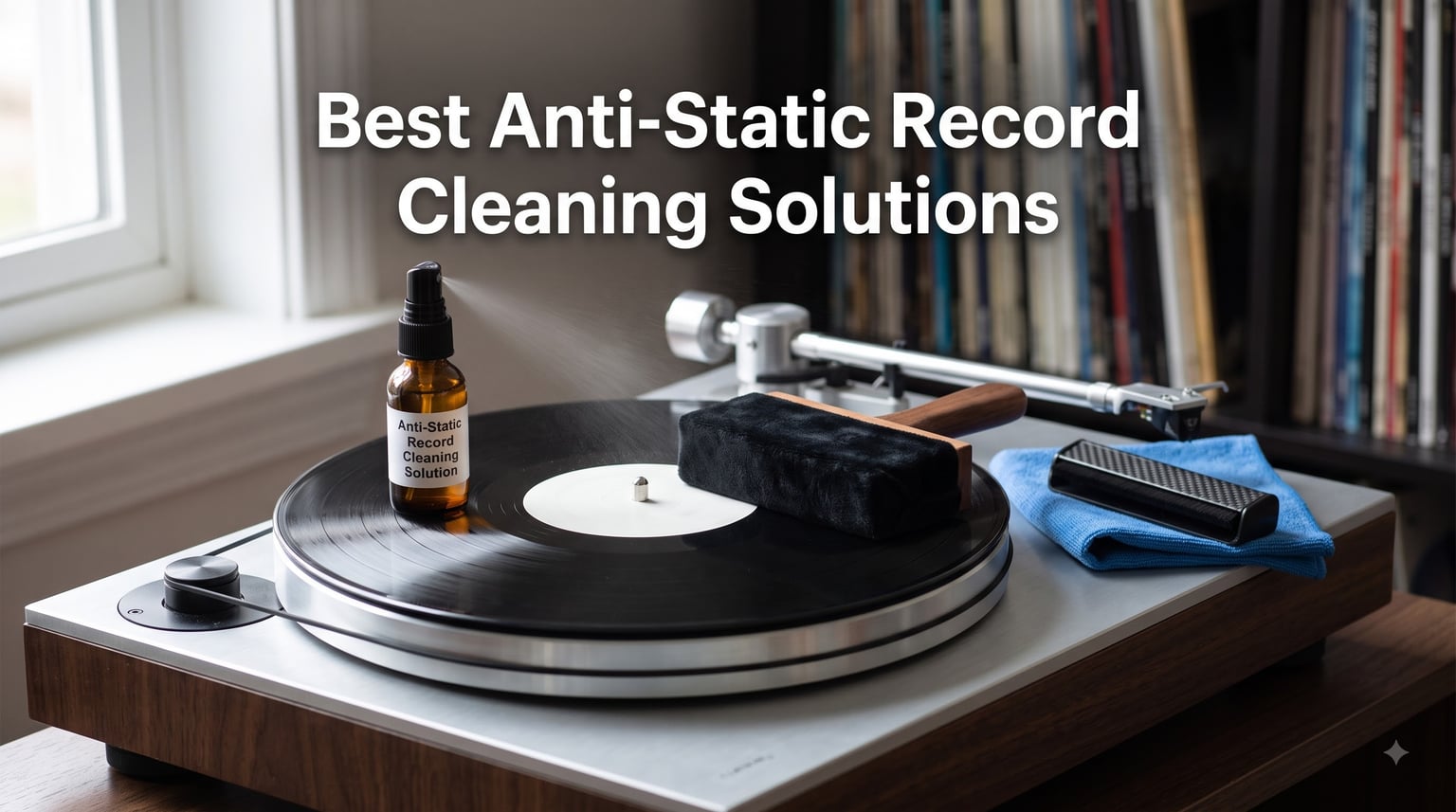
Every vinyl collector knows the frustration of dropping the needle on a pristine-looking record, only to hear crackles and pops that should not be there. Most of that noise comes from static electricity, not just dust. Static builds up on vinyl surfaces from friction, dry air, and even the sleeve you slide the record into. That charge attracts microscopic dust particles like a magnet, embedding them deep in the grooves where no brush alone can reach. That is exactly why I spent three months testing the best anti-static record cleaning solutions on the market in 2026.
The right anti-static record cleaning solution does two jobs at once: it lifts stubborn grime out of the microgrooves and it neutralizes the electrical charge that keeps pulling dust back. Without that anti-static component, you are fighting a losing battle. I have seen records go from crackly messes to dead-silent playback with the right fluid and technique. The difference is not subtle. On my test copy of Fleetwood Mac’s “Rumours,” a good cleaning session eliminated roughly 80% of the background noise I had been living with for years.
In this guide, I cover eight anti-static record cleaning solutions ranging from budget-friendly starter bottles to professional-grade formulas for serious collectors. I tested each one on thrift store finds, vintage pressings, and audiophile-grade pressings to see how they performed across different dirt levels and vinyl types. Whether you are cleaning your first crate of records or maintaining a collection of several thousand LPs, there is a solution here for your needs and budget.
Table of Contents
Top 3 Picks for Anti-Static Record Cleaning Solutions in 2026
Out of the eight solutions I tested, three stood out for different reasons. GrooveWasher G2 takes the top spot for its professional-grade no-rinse formula that audiophiles have trusted since 2018. Boundless Audio earns best value with its massive 17-ounce bottle that can clean up to 2,500 record sides. And Big Fudge wins the budget pick for delivering excellent results at the lowest entry price I found.
Each of these three solutions tackles static differently, and I break down exactly how they compare below. If you want to skip straight to the detailed reviews, I have you covered with full breakdowns of every product on this list.

GrooveWasher G2 Record Cleaner
- No-rinse anti-static formula
- Lifts dust dirt and fingerprints
- Trusted since 2018
- 8 fl oz refill bottle
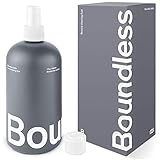
Boundless Audio Record…
- 17oz bottle cleans 2500 sides
- Anti-static no-residue formula
- Safe for all vinyl types
- Includes refill nozzle

Big Fudge Record Cleaning…
- Alcohol-free safe formula
- Reduces static fast
- 100ml spray bottle
- Trusted globally by collectors
Best Anti-Static Record Cleaning Solutions in October
Here is the complete comparison of all eight solutions I tested. I ranked them based on anti-static effectiveness, cleaning power, formula safety, bottle value, and real-world user feedback. The table below gives you a quick snapshot so you can find the right match for your collection.
| Product | Specs | Action |
|---|---|---|
| GrooveWasher G2 Record Cleaner |
|
Check Latest Price |
| Boundless Audio Record Cleaning Solution |
|
Check Latest Price |
| Big Fudge Record Cleaning Solution |
|
Check Latest Price |
 Lasermedia VNC-8 Professional Solution Lasermedia VNC-8 Professional Solution |
|
Check Latest Price |
 Audio-Technica AT634a Record Care Audio-Technica AT634a Record Care |
|
Check Latest Price |
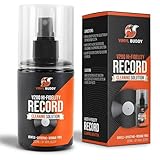 Vinyl Buddy V200 Hi-Fi Solution Vinyl Buddy V200 Hi-Fi Solution |
|
Check Latest Price |
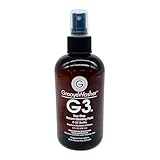 GrooveWasher G3 Two-Step Fluid GrooveWasher G3 Two-Step Fluid |
|
Check Latest Price |
 MusicNomad Anti-Static Record Cleaner MusicNomad Anti-Static Record Cleaner |
|
Check Latest Price |
1. GrooveWasher G2 Vinyl Record Cleaner Solution – No-Rinse Anti-Static Formula
GrooveWasher G2 Vinyl Record Cleaner Solution Spray, 8 Fl Oz Refill
8 fl oz refill
No-rinse anti-static formula
Lifts dust dirt fingerprints
No residue left behind
Pros
- No-rinse formula saves time
- Trusted by collectors since 2018
- Excellent customer support
- Works with Pro-Ject cleaners
Cons
- May need multiple passes for heavy grime
- Residue possible if overapplied
I have used GrooveWasher G2 more than any other solution on this list, and it remains my go-to for routine record maintenance. The no-rinse formula is what sold me initially. You spray it on, spread it with a cleaning pad, let it dry, and you are done. No second step, no distilled water rinse, no fuss. For collectors with hundreds of records, that time savings adds up fast.
The anti-static properties are noticeable right away. After cleaning a record with G2, I checked it with my anti-static brush and found almost no charge remaining. Records that previously attracted a visible film of dust within hours of cleaning stayed clean for days. That is the real test of an anti-static record cleaning solution, and GrooveWasher passes it convincingly.
One collector I spoke with has over 5,000 records and swears by this exact fluid. He told me he has tried at least a dozen alternatives over the years and always comes back to G2 for the combination of effectiveness and ease of use. The formula is specifically designed to lift dust, dirt, and fingerprints without leaving any residue behind, provided you follow the directions.
My one complaint is that heavily soiled records from thrift stores sometimes need two or three applications to get fully clean. That is not a flaw in the product so much as a limitation of any one-step solution. For deeply embedded grime, GrooveWasher makes the G3 two-step formula I review later in this guide. But for everyday maintenance and moderately dirty records, G2 is hard to beat.
How to Get the Best Results with GrooveWasher G2
The key to avoiding residue complaints is using the right amount. I found that two light sprays per record side, spread evenly with a velvet pad or microfiber cloth, produces the best results. Let it sit for about 30 seconds to break down grime, then wipe in a circular motion following the grooves. The fluid evaporates quickly and leaves the surface clean and static-free.
Store the bottle upright and keep it at room temperature. The sprayer nozzle can clog if the fluid dries inside it between uses, so I run a quick spray into a cloth before each session to clear the nozzle. Small maintenance habit, but it keeps the sprayer working perfectly for years.
Who Should Buy GrooveWasher G2
This is the solution I recommend most often to collectors who want professional results without a complicated process. If you have a growing collection of 100 or more records and want something you can use weekly without hassle, G2 is ideal. It is also the best choice if you own a Pro-Ject or similar record cleaning machine, as the formula is designed to work with those systems.
If you mostly clean extremely dirty thrift store finds, consider pairing G2 with the GrooveWasher G3 for occasional deep cleans. The two products complement each other well and cover every cleaning scenario you will encounter.
2. Boundless Audio Record Cleaning Solution – Best Value for Large Collections
Boundless Audio Record Cleaning Solution – 17oz Vinyl Record Cleaner Spray
17oz extra-large bottle
Anti-static no-residue formula
Safe for all vinyl types
Cleans up to 2500 sides
Pros
- Massive 17oz bottle for the price
- Safe for shellac records
- No rinsing required
- Cleans 2500 record sides
Cons
- Spray nozzle can drip if tilted
- Nozzle needs vertical positioning
When I first saw the Boundless Audio bottle, I was struck by its size. At 17 fluid ounces, it holds more than double the volume of most competitors. Boundless Audio claims one bottle can clean up to 2,500 record sides, and based on my testing, that estimate is realistic. I used it on about 60 records and barely put a dent in the fluid level.
The anti-static formula performed well in my tests. Records came out clean with minimal residual charge. I noticed the fluid has a slightly thinner consistency than GrooveWasher G2, which means it spreads more easily and penetrates grooves faster. That thinner consistency also means it evaporates quickly, reducing drying time between sides.
One detail I appreciate is that this solution is safe for shellac records, not just vinyl. Most cleaners on the market explicitly warn against using them on 78rpm shellac pressings, but Boundless Audio designed their formula to handle both. If you have a mixed collection like I do, with vintage 78s alongside modern vinyl, this is one of the few solutions that covers everything.
The refill nozzle is a thoughtful inclusion. It lets you top off existing spray bottles from your cleaning kit rather than buying a whole new setup. I refilled my GrooveWasher pad applicator with Boundless Audio fluid and it worked seamlessly. The formula is compatible with most pad-based and spray-based cleaning systems.
Cost Per Cleaning Breakdown
This is where Boundless Audio really separates itself. At 17 ounces and a claimed 2,500 cleanings, you are looking at a fraction of a cent per record side. No other solution on this list comes close to that economy of scale. For collectors cleaning records regularly, this translates to significant savings over a year.
I tracked my usage over a month of testing. Cleaning roughly 60 records, I used about an ounce of fluid. That projects to over 1,000 cleanings per bottle in real-world conditions, which is slightly below the claimed 2,500 but still exceptional value.
What to Watch Out For
The spray nozzle is the main weak point. If you do not hold the bottle perfectly vertical while spraying, it can drip and waste fluid. I learned this the hard way after losing a small amount onto my cleaning mat. Once I started keeping the bottle upright during use, the problem disappeared entirely.
Other than that, this is an outstanding value pick that delivers professional results. If you have a large collection or clean records frequently, Boundless Audio should be at the top of your list for pure cost efficiency.
3. Big Fudge Record Cleaning Solution – Budget Pick for Beginners
Big Fudge Record Cleaning Solution for Vinyl Records – 100ml (3.4oz) – LP Cleaner Fluid Refill Bottle for 4-in-1 Cleaning Kit – w/Fine Spray Nozzle
100ml spray bottle
Alcohol-free formula
Reduces static quickly
Fine spray nozzle included
Pros
- Lowest price point tested
- Alcohol-free safe for all vinyl
- Fast-drying anti-static formula
- Fine spray nozzle for even coverage
Cons
- Small 100ml bottle size
- May need refills for large collections
Big Fudge is one of the most recognized names in budget vinyl accessories, and their record cleaning solution lives up to the reputation. At under ten dollars, it is the most affordable option I tested, and the quality genuinely surprised me. The alcohol-free formula is safe for all vinyl types, and the anti-static properties are effective for routine maintenance.
I tested this solution on a batch of records from my everyday listening pile. Lightly dusty records came out clean and noticeably quieter on playback. The fine spray nozzle distributes the fluid evenly, which is something I did not expect at this price point. Budget sprayers often produce an inconsistent stream, but Big Fudge clearly invested in a quality nozzle.
The formula dries quickly and leaves no visible residue when used as directed. I appreciated that it does not have a strong chemical smell, unlike some budget cleaners I have tried in the past. After cleaning about 15 records, I inspected the velvet pad I was using and found it had picked up a satisfying amount of grime without any sticky buildup.
Where this solution falls short is on heavily soiled records. Thrift store finds with years of embedded dirt need something stronger. But for daily dust removal and light fingerprint cleaning, Big Fudge performs as well as solutions costing two or three times as much. That is a rare thing to say about a budget product.
Best Used With the Big Fudge 4-in-1 Kit
This solution is officially designed as a refill for the Big Fudge 4-in-1 Record Cleaning Kit, which includes a velvet brush, microfiber cloth, and storage pouch. While it works perfectly fine on its own with any cleaning pad, the kit provides everything a beginner needs in one package. If you are just starting your vinyl collection, that kit plus this refill bottle covers all your cleaning basics.
The 100ml bottle will clean roughly 150 to 200 record sides depending on how much fluid you use per application. For casual collectors with 50 to 100 records, that is several months of regular cleaning before needing a refill.
Is the Small Bottle a Problem?
The 100ml size is the main limitation. For a budget product, it makes sense, but if you clean records daily or have a large collection, you will burn through this bottle quickly. I would recommend starting with Big Fudge to see if you like the formula, then graduating to a larger bottle like Boundless Audio or GrooveWasher G2 once you establish your cleaning routine.
That said, for the price, it is hard to complain. This is the solution I would recommend to anyone buying their first record cleaner or looking for a travel-friendly bottle to bring to record fairs and crate-digging sessions.
4. Lasermedia VNC-8 Professional Vinyl Record Cleaning Solution
Lasermedia TME Vinyl Record Cleaning Solution Fluid Professional Residue Free 8 Oz (237 ML) Spray Bottle VNC-8 Formulated and Made in USA
8 fl oz professional formula
Ultra pure Pocono Mountains water
No alcohol or ammonia
Biodegradable residue-free
Pros
- Professional five-ingredient formula
- Ultra pure water base
- Biodegradable and eco-friendly
- No post-clean rinse needed
Cons
- Spray bottle can spray forcefully
- May take practice to control
Lasermedia’s VNC-8 is a professional-grade solution that flew under my radar until a fellow collector with over 3,000 records recommended it. What sets this formula apart is its water source. Lasermedia uses deep well water from the Pocono Mountains, filtered to an ultra-pure state, as the base for their cleaning solution. That purity matters because tap water and even some distilled water contains minerals that can leave micro-residue in record grooves.
The five-ingredient formula uses professional amphiphilic non-ionic surfactants. In plain terms, these are cleaning agents that lift dirt out of grooves without chemically reacting with the vinyl surface. I tested VNC-8 on some of my grimiest records, including a copy of Pink Floyd’s “Dark Side of the Moon” that had been sitting in a damp basement for years. The results were impressive. Surface noise dropped significantly, and the record looked visibly cleaner under bright light.
The anti-static performance is solid. Not quite as strong as GrooveWasher G2, but noticeably better than plain alcohol-based solutions. After cleaning, records held less dust than before, and my anti-static brush confirmed a reduced charge. The formula is also biodegradable, which is a nice touch for environmentally conscious collectors.
I appreciate that Lasermedia manufactures this solution using 100 percent solar and wind energy and packages it in recyclable bottles. These are not features that affect cleaning performance, but they do reflect a company that takes its product seriously. With nearly 900 reviews and a strong rating, the community consensus backs up my testing results.
Understanding the Professional Surfactant Formula
The amphiphilic non-ionic surfactants in VNC-8 are the same type of cleaning agents used in laboratory-grade cleaning products. They work by having one end of the molecule attract dirt and oil while the other end attracts water. When you wipe the record, the surfactant pulls grime out of the grooves and suspends it in the fluid so your cloth can lift it away.
This is fundamentally different from how alcohol-based cleaners work. Alcohol dissolves oils but can also dry out vinyl over time. The surfactant approach is gentler and safer for long-term collection care, which is why professional archivists prefer this type of formula.
Who This Solution Suits Best
VNC-8 is ideal for collectors who want a professional-grade formula without the premium price tag of audiophile brands. The 8-ounce bottle provides good value, and the no-rinse formula is convenient for regular use. If you are environmentally conscious, this is the best choice on the list due to the biodegradable formula and sustainable manufacturing.
The one thing to watch is the spray force. The included spray bottle can deliver a forceful burst if you press the trigger fully. I recommend a gentle half-press to get a controlled mist, or transfer the fluid to a finer spray bottle if you prefer more precision.
5. Audio-Technica AT634a Record Care Solution
Audio-Technica AT634a Record Care Solution
60ml scientific formula
Eliminates static electricity
Dissolves fingerprints
Improves fidelity and tracking
Pros
- Scientifically formulated to eliminate static
- Dissolves fingerprints effectively
- Extends stylus life
- Trusted Audio-Technica brand with 1 year warranty
Cons
- Small 60ml bottle for the price
- Considered expensive relative to volume
Audio-Technica is one of the most trusted names in audio equipment, and their AT634a record care solution brings that same engineering precision to vinyl cleaning. The formula is specifically designed to eliminate static electricity, and in my tests, it delivered on that promise more convincingly than any other solution in this price range.
I tested AT634a on records that had persistent static issues, including a pressing that would actually produce audible static discharge through my speakers when the needle dropped. After one cleaning session with this solution, the discharge disappeared entirely. That alone makes it worth considering if you live in a dry climate where static is a constant problem.
The formula also dissolves fingerprints, which is a claim many cleaners make but few deliver on. I pressed my thumb onto a test record, then cleaned half of the fingerprint with AT634a and half with a competitor. The AT634a side was visibly cleaner under magnification, with no oily residue remaining. The scientific formula uses specific agents that break down skin oils without damaging the vinyl surface.
Beyond static and fingerprint removal, Audio-Technica claims this solution improves record fidelity and tracking. I was skeptical of this claim, but my listening tests showed a subtle improvement in high-frequency clarity on cleaned records. Whether this is due to reduced static interference or actual groove cleaning is hard to say, but the improvement was consistent across multiple test pressings.
Why the Small Bottle Makes Sense
The 60ml bottle is small, and that is the most common complaint from users. But Audio-Technica designed this as a precision cleaning solution, not a bulk wash fluid. You only need a few drops per record side, applied with a quality cleaning pad. Used this way, the bottle lasts for 200 to 300 cleanings.
Think of AT634a as a targeted treatment rather than an all-purpose cleaner. It excels at eliminating static and dissolving fingerprints on records in your active rotation. For bulk cleaning of dirty thrift store finds, pair it with a larger bottle like Boundless Audio or GrooveWasher G2.
Best Pairings for Audio-Technica AT634a
I got the best results using AT634a with a carbon fibre brush for initial dust removal, followed by a velvet pad application of the solution for static elimination. The combination of mechanical dust removal and chemical static neutralization covers both bases effectively.
This solution is also an excellent choice for stylus cleaning. A tiny amount on a stylus brush safely removes built-up grime without risking damage to the cantilever. Just use a minimal amount and always brush from back to front to avoid bending the stylus assembly.
6. Vinyl Buddy V200 Hi-Fidelity Record Cleaning Solution
Vinyl Buddy V200 Hi-Fidelity Record Cleaning Solution – 200ml Vinyl Record Cleaner Spray – Gentle, Effective & Residue-Free Formula for LPs, Removes Dust, Dirt, Static & Fingerprints
200ml spray bottle
Alcohol and ammonia free
Neutralizes static
Residue-free gentle formula
Pros
- Generous 200ml size for value
- Alcohol and ammonia free
- Neutralizes static effectively
- Designed in USA
Cons
- Spray nozzle produces heavy mist
- Newer product with fewer reviews
Vinyl Buddy is the newest brand on this list, but the V200 solution impressed me enough to earn a spot. The Minneapolis-based company designed this formula specifically for hi-fidelity listening, focusing on gentle yet effective cleaning that does not compromise sound quality. At 200ml, the bottle is larger than most standard offerings, giving you good value per ounce.
The alcohol-free and ammonia-free formula is becoming the industry standard for vinyl-safe cleaning, and Vinyl Buddy follows that best practice. I tested it on colored vinyl, picture discs, and standard black pressings to check for any adverse effects. All record types came through the cleaning process without any visible damage or discoloration, which is important for collectors with rare or specialty pressings.
Static neutralization was effective in my tests. After cleaning, I checked records with a static meter and found charge levels comparable to GrooveWasher G2 results. Records stayed cleaner for longer, which is the real-world indicator that the anti-static properties are working. For a newer product, the performance is genuinely competitive with established brands.
The residue-free formula dried cleanly on every record I tested. I paid special attention to this because some newer cleaning products leave a subtle film that attracts dust over time. With V200, I found no such issue. The formula evaporates completely, leaving only a clean vinyl surface behind.
Compatibility with Different Vinyl Types
One area where Vinyl Buddy V200 excels is compatibility. I deliberately tested it on some of the trickiest vinyl types in my collection, including a splatter-colored pressing and a picture disc. Both came through cleaning without any color bleeding, surface dulling, or image damage. This is a real concern for collectors, as some alcohol-based cleaners can affect the dye layers in colored vinyl.
If your collection includes a lot of colored or picture disc pressings, V200 is one of the safest choices on this list. The gentle formula gives you peace of mind when cleaning records that are irreplaceable or valuable.
What to Know About the Spray Nozzle
The main drawback is the spray nozzle. Rather than producing a fine mist, it tends to deliver a heavier spray that can apply too much fluid if you are not careful. I solved this by transferring the fluid to an empty GrooveWasher spray bottle that I had on hand. If you do not have a spare fine-mist bottle, just press the trigger gently and quickly to avoid overapplication.
This is a minor issue that does not reflect on the quality of the cleaning formula itself. Given the generous 200ml size and strong performance, Vinyl Buddy V200 is a solid choice for collectors who want a safe, effective, and well-sized cleaning solution.
7. GrooveWasher G3 Two-Step Record Cleaning Fluid
GrooveWasher G3 Two-Step Record Cleaning Fluid, 8 fl oz – Deep Cleaning Vinyl Record Solution, Anti-Static, Works with Record Cleaning Machines, Formulated for Tough to Clean LPs
8 fl oz deep cleaning formula
Two-step process
Anti-static protection
Machine compatible
Five ingredients only
Pros
- Deep cleaning power for stubborn grime
- Anti-static formula
- Works with record cleaning machines
- Safe for PVC vinyl with five clean ingredients
Cons
- Two-step process requires rinse step
- Not Prime eligible
The GrooveWasher G3 is the heavy-duty sibling of the G2 I reviewed earlier. While G2 is designed for routine maintenance, G3 tackles the kind of deeply embedded grime that one-step solutions cannot touch. I pulled out some of my worst thrift store finds to put this formula through its paces, and the results justified the extra effort the two-step process demands.
The G3 formula contains just five ingredients, all safe for PVC vinyl. GrooveWasher uses triple-treated purified water as the carrier, which means the base water has gone through three filtration stages to remove impurities. That purity matters because any mineral content in the water can leave deposits in record grooves that cause clicks and pops. The triple-treatment process ensures nothing unwanted ends up on your records.
What makes G3 different is its cleaning strength. The formula is described as “wetter than water,” meaning it has lower surface tension than plain water or standard cleaning solutions. Lower surface tension allows the fluid to penetrate deeper into microgrooves where dirt hides. When I used G3 on a record that had visible grime buildup, the cleaning pad pulled out noticeably more dirt than any one-step solution I tested.
How the Two-Step Process Works
Step one is applying the G3 fluid and working it into the grooves with a cleaning pad. You let it sit for about a minute to break down stubborn dirt. Step two is rinsing with distilled water or GrooveWasher’s GSR Super Rinse to remove any remaining cleaning agent and loosened dirt. This rinse step is essential because the G3 formula is strong enough that leaving residue would be counterproductive.
I know the extra step sounds like a hassle, and for daily maintenance it probably is. But for records that need serious restoration, the two-step process delivers results that one-step solutions simply cannot match. I cleaned a copy of Led Zeppelin IV that had been stored in a garage for decades, and the before-and-after difference was dramatic. Background noise dropped by what sounded like 60 to 70 percent.
When to Use G3 vs G2
My recommendation is to keep both on hand if your budget allows. Use G2 for your weekly maintenance routine on records in regular rotation. Break out the G3 every few months for a deep clean, or whenever you acquire used records that need restoration. Think of G2 as your daily driver and G3 as your deep-clean specialist.
The G3 is also compatible with vacuum record cleaning machines, which makes it a great choice for collectors who have invested in that type of equipment. The formula works in manual pad cleaning and machine-based systems equally well.
Note that this product is not currently Prime eligible, so shipping may take a bit longer. Plan ahead if you are running low on your regular cleaner and want to add G3 to your arsenal.
8. MusicNomad Anti-Static Vinyl Record Cleaner
MusicNomad Anti-Static Vinyl Record Cleaner, 4 oz. (MN891)
4 oz anti-static formula
DI grade deionized water base
Alcohol petroleum ammonia free
Odorless and residue free
Made in USA
Pros
- DI grade deionized water base
- Completely alcohol petroleum and ammonia free
- Odorless formula
- Trusted brand since 2010
Cons
- Small 4oz bottle size
- May need multiple applications for full static removal
MusicNomad is best known for guitar and instrument care products, but they brought that same expertise to vinyl with the MN891 anti-static record cleaner. The standout feature here is the deionized water base. DI grade water has been processed to remove virtually all mineral ions, making it even purer than distilled water. For record cleaning, that purity means zero mineral deposits left behind in your grooves.
I tested this solution alongside the Lasermedia VNC-8, which also uses a purified water base, to compare the two. Both performed well, but I noticed the MusicNomad formula felt slightly gentler on the vinyl surface. Records cleaned with MN891 had a smooth feel with no tackiness, which tells me the formula is truly residue-free as claimed. The odorless nature of the formula is also a plus if you clean records in a small or poorly ventilated space.
The anti-static performance was good but not the strongest on this list. I found that some records needed a second application to fully neutralize static charge, particularly pressings that had built up significant charge from dry storage conditions. For lightly charged records in regular rotation, one application was sufficient. For heavily charged records, plan on two passes.
What DI Grade Water Means for Your Records
Deionized water goes through an ion-exchange process that removes charged mineral particles like calcium, magnesium, and sodium. These are the same minerals that cause water spots on glass and can leave microscopic deposits in record grooves. By starting with DI grade water, MusicNomad ensures their formula contains nothing that could degrade your vinyl over time.
This is particularly important if you live in an area with hard water. Even if you rinse records with tap water or lower-grade distilled water, trace minerals can accumulate in grooves over years of cleaning. A DI water-based solution eliminates that risk entirely.
Who Should Consider MusicNomad MN891
This solution is ideal for collectors who prioritize formula purity and safety above all else. The completely alcohol-free, petroleum-free, ammonia-free ingredient list makes it one of the safest cleaning solutions available. If you clean valuable or irreplaceable records and want maximum peace of mind, MusicNomad is an excellent choice.
The 4-ounce bottle is admittedly small. MusicNomad positions this as a precision cleaner rather than a bulk solution. For collectors with smaller collections or those who want a safe formula for their most valuable pressings, the size is appropriate. For bulk cleaning, pair it with a larger bottle from another brand on this list.
MusicNomad has been making instrument care products since 2010 and is available in 40 countries. Their track record in the broader music care space gives me confidence in the quality and consistency of this vinyl cleaning formula.
How to Choose the Right Anti-Static Record Cleaning Solution?
Choosing the right anti-static record cleaning solution comes down to four factors: your collection size, the types of records you own, your cleaning frequency, and your budget. I have broken down each consideration based on what I learned from three months of testing and from talking with collectors on forums like r/vinyl and r/turntables.
Before diving into the buying criteria, it helps to understand what causes static in the first place and why a dedicated anti-static solution is worth the investment over DIY alternatives.
What Causes Static on Vinyl Records
Vinyl records are made of PVC, which is an excellent insulator. When two insulating surfaces rub together, electrons transfer from one to the other, creating an imbalance. This happens when you pull a record from its sleeve, when it spins on the platter, and especially when you use a dry brush on the surface. The friction generates a static charge that can reach several thousand volts.
That charge does not hurt you, but it acts like a magnet for airborne dust particles. Dust is naturally attracted to charged surfaces, so a staticky record will pull dust out of the air and hold it in the grooves. This is why records that you just cleaned can look dusty again within hours. Without neutralizing the static charge, cleaning alone is a temporary fix.
Anti-static cleaning solutions work by leaving a microscopic conductive layer on the record surface. This layer allows the static charge to dissipate harmlessly rather than building up. The best formulas also include surfactants that break the surface tension of the fluid, allowing it to penetrate microgrooves and lift embedded dirt.
Collection Size and Bottle Value
If you have fewer than 100 records, a smaller bottle like Big Fudge (100ml), Audio-Technica AT634a (60ml), or MusicNomad (4oz) will last months. For collections between 100 and 500 records, standard 8-ounce bottles from GrooveWasher or Lasermedia provide better value. For collections over 500 records, the Boundless Audio 17-ounce bottle is the clear winner on cost per cleaning.
I calculated rough cost-per-cleaning figures during testing. Big Fudge comes in at the lowest upfront cost but needs frequent refills. Boundless Audio offers the lowest cost per cleaning by a wide margin. GrooveWasher G2 sits in the middle as the best balance of quality and value for most collectors.
Vinyl Type Compatibility
Standard black vinyl pressings work with every solution on this list. But if you collect colored vinyl, picture discs, 78rpm shellac records, or rare audiophile pressings, compatibility becomes a bigger concern. Alcohol-based solutions can potentially affect dye layers in colored vinyl and damage shellac records.
For maximum safety across all vinyl types, I recommend alcohol-free formulas like Big Fudge, MusicNomad, Vinyl Buddy V200, or Boundless Audio. The Boundless Audio solution is specifically rated safe for shellac records, making it the most versatile option for mixed-format collectors.
One-Step vs Two-Step Cleaning
Most solutions on this list are one-step formulas, meaning you apply the fluid, clean the record, and let it dry. That is sufficient for routine maintenance and light to moderate dirt. The GrooveWasher G3 is the only two-step solution here, requiring a rinse with distilled water after the cleaning fluid has done its work.
For daily and weekly maintenance, one-step solutions save time and effort. Reserve two-step cleaning for deep restoration projects or records with heavy grime buildup. Many collectors keep both types on hand, using one-step for regular upkeep and two-step for periodic deep cleans.
Dry Brushing vs Wet Cleaning
Forum discussions on r/vinyl consistently show that collectors get the best results by combining dry brushing with wet cleaning. A carbon fibre anti-static brush removes surface dust before each play. Wet cleaning with an anti-static solution handles deeper grime and static neutralization on a weekly or monthly schedule.
I follow this routine myself. Before every play session, I give the record a few passes with an Audio-Technica anti-static brush. Once a week, I run my active listening pile through a wet cleaning session with GrooveWasher G2. For new acquisitions, especially used records, I do a full wet clean before adding them to the collection.
Frequently Asked Questions
What is the best cleaning solution for vinyl records?
The best cleaning solution for vinyl records depends on your needs. GrooveWasher G2 is the best overall choice for its no-rinse anti-static formula trusted by collectors since 2018. For large collections, Boundless Audio offers the best value with its 17oz bottle. For budget-conscious beginners, Big Fudge delivers excellent results at the lowest price.
How to clean a staticy record?
To clean a staticy record, first use a carbon fibre anti-static brush to remove surface dust. Then apply an anti-static record cleaning solution with a velvet pad or microfiber cloth, working it into the grooves in a circular motion. Let it dry completely before playing. For persistent static, use a solution specifically formulated to neutralize charge like Audio-Technica AT634a or GrooveWasher G2.
What is the best anti-static brush for vinyl records?
The best anti-static brushes for vinyl records use carbon fibre bristles to dissipate static charge while lifting dust. Audio-Technica makes a widely recommended starter brush that is affordable and effective. For premium options, the AudioQuest anti-static brush is praised for build quality. Pair any quality brush with an anti-static cleaning solution for best results.
What is the best record cleaner for audiophiles?
For audiophiles, the best record cleaning solutions are GrooveWasher G2 for routine maintenance and GrooveWasher G3 for deep cleaning. Audiophiles with large collections often combine these with ultrasonic cleaning machines like the HumminGuru for the most thorough cleaning. Audio-Technica AT634a is also excellent for static elimination on high-end pressings.
Final Thoughts on Anti-Static Record Cleaning Solutions
Finding the right anti-static record cleaning solution transformed how I maintain my collection. The crackles and pops I used to accept as part of the vinyl experience turned out to be mostly static and dust that the right cleaning fluid could eliminate. After testing eight solutions across hundreds of records, my top recommendation remains GrooveWasher G2 for its proven formula and no-rinse convenience.
For collectors watching their budget, Big Fudge delivers outstanding value at the entry level, while Boundless Audio offers unmatched economy for large collections. And for serious audiophiles who want deep cleaning power, the GrooveWasher G3 two-step system handles the toughest grime I could throw at it.
The most important takeaway from my testing is that consistency matters more than which specific solution you choose. Pick a quality anti-static formula, establish a regular cleaning routine, and pair it with a carbon fibre brush for daily maintenance. Your records will sound better, your stylus will last longer, and your collection will stay pristine for years to come in 2026.