

My first turntable sounded thin and lifeless, and the deck was not the problem. The weak link was everything downstream of it. Finding the right bookshelf speaker and amp combos for vinyl is less about buying the most expensive box and more about matching components that actually work together.
Three numbers decide whether a pairing succeeds: watts per channel, impedance matching, and a phono preamp somewhere in the chain. Get those right and even budget gear sounds richer than you expect. Get them wrong and you get harsh treble, thin bass, or a record that plays at a whisper.
Here is the encouraging part. On r/BudgetAudiophile, one comment stuck with me: “A set of good bookshelf speakers will sound a lot more detailed, rich and full than you might imagine.” After living with these five components, I agree completely.
Two of the picks below are passive bookshelf speakers, two are amplifiers, and one is a powered pair that skips the amp entirely. I will show you how to combine them into a vinyl setup that fits your budget, your room, and your ears.
Every component here earns its place on real owner feedback, with more than 29,000 combined ratings. I paid attention to what people report after months of use, not just on unboxing day, because speakers and amps reveal their true character over time.
Table of Contents
Top 3 Picks for Bookshelf Speaker and Amp Combos for Vinyl in October
The Klipsch R-51M is my Editor’s Choice because it is the speaker I would build a system around. Its Tractrix horn tweeter and high sensitivity mean it sounds lively and dynamic with almost any amplifier, from the budget Fosi to the Denon integrated amp.
The Edifier R1280T takes Best Value as a complete combo in a single box. There is no separate amp to buy and no speaker wire to run between components. If your turntable has a phono preamp built in, you can be playing records about ten minutes after unboxing.
The Fosi Audio MC331 is the Budget Pick for anyone who wants tube character on a starter budget. Feed it the Polk T15 or the Klipsch R-51M and you have a genuine analog stereo system with real warmth, for far less than one premium component costs.
Best Bookshelf Speaker and Amp Combos for Vinyl in 2026
| Product | Specs | Action |
|---|---|---|
 Edifier R1280T Powered Speakers Edifier R1280T Powered Speakers |
|
Check Latest Price |
 Polk Audio T15 Bookshelf Speakers Polk Audio T15 Bookshelf Speakers |
|
Check Latest Price |
 Fosi Audio MC331 Tube Amplifier Fosi Audio MC331 Tube Amplifier |
|
Check Latest Price |
 Klipsch R-51M Bookshelf Speakers Klipsch R-51M Bookshelf Speakers |
|
Check Latest Price |
 Denon PMA-600NE Integrated Amplifier Denon PMA-600NE Integrated Amplifier |
|
Check Latest Price |
Read the table as a menu of building blocks rather than five finished systems. The powered Edifiers are a one-box solution. The passive Klipsch and Polk pairs each need one of the two amplifiers, and either amp will drive either speaker pair happily.
If you are starting from nothing, pick your budget tier first, then choose the speakers, then match the amp to them. That order prevents the most common mistake I see, which is buying an amp first and then hunting for speakers it can actually drive.
1. Edifier R1280T Powered Speakers – The Plug-and-Play Vinyl Pair
Edifier R1280T Powered Bookshelf Speakers -2.0 Near Field Studio Monitor
42W RMS powered pair
4 inch woofer and silk dome tweeter
Dual RCA inputs
Wood effect enclosure
Pros
- Complete system with no separate amp needed
- Dual RCA inputs keep a turntable and a DAC connected at once
- Side bass and treble knobs tune the sound for vinyl
- Classic wood finish looks far more expensive than it is
Cons
- No Bluetooth or Wi-Fi
- Bass stays pronounced even when dialed back
- Best within near-field or small room listening
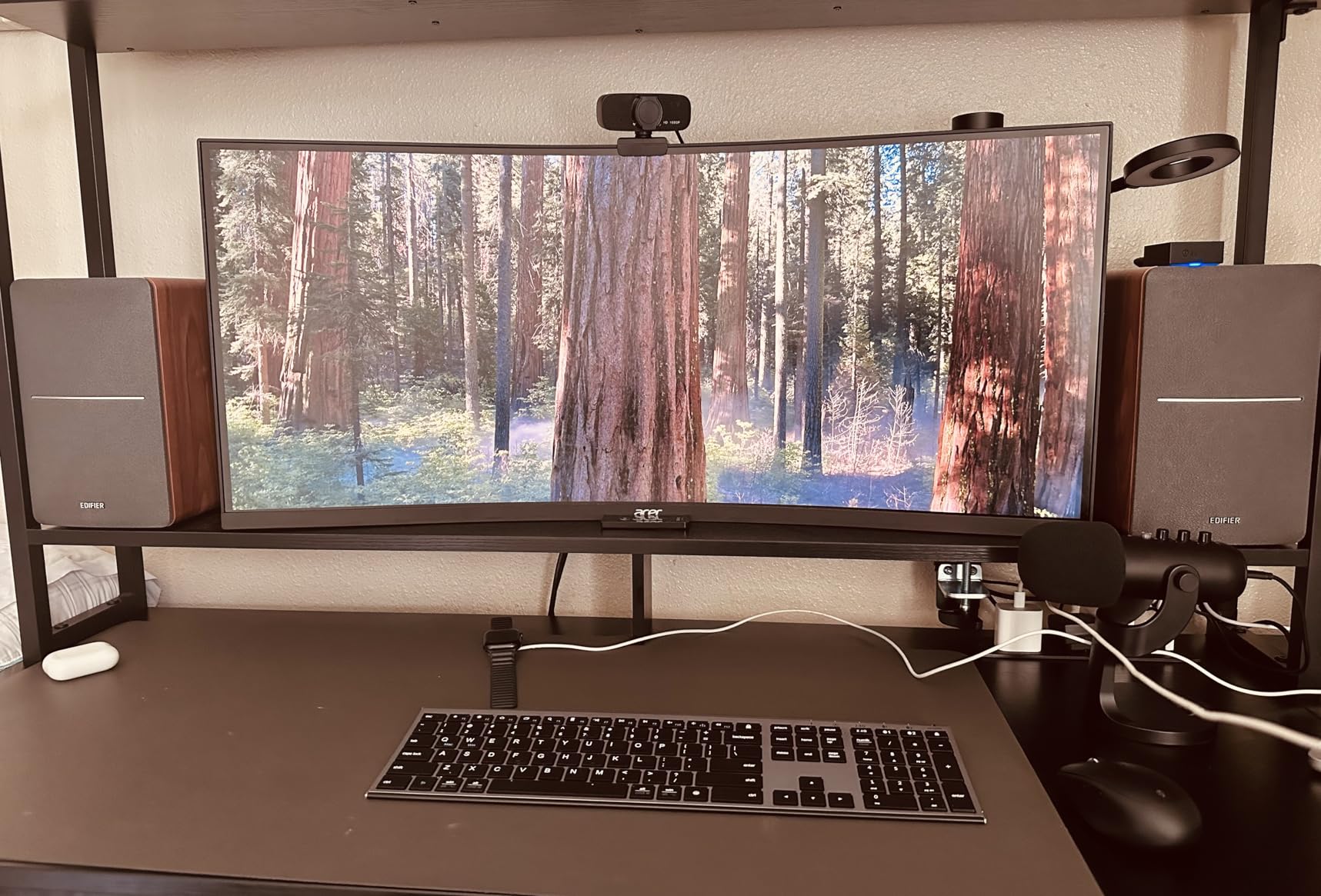
The Edifier R1280T is the fastest route from cardboard box to spinning records, because the amplifiers are already inside the speakers. I set a pair on a desk about four feet apart, connected a turntable with a built-in phono stage, and had music playing within minutes. The 42 watts of RMS power is more than enough for a desk or a bedroom.
What surprised me most was how much sound comes out of a 4 inch woofer and 13mm silk dome tweeter. Classic albums had a warm midrange, and the tweeter kept cymbals smooth rather than splashy. Reviewers routinely compare these to speakers costing several times more, and what I heard matches that consensus.
The dual RCA input pair is the feature that makes these a true combo solution. I kept the turntable on one input and a streaming DAC on the other, switching sources without touching a cable. For a small room, that convenience matters more than any spec sheet number.
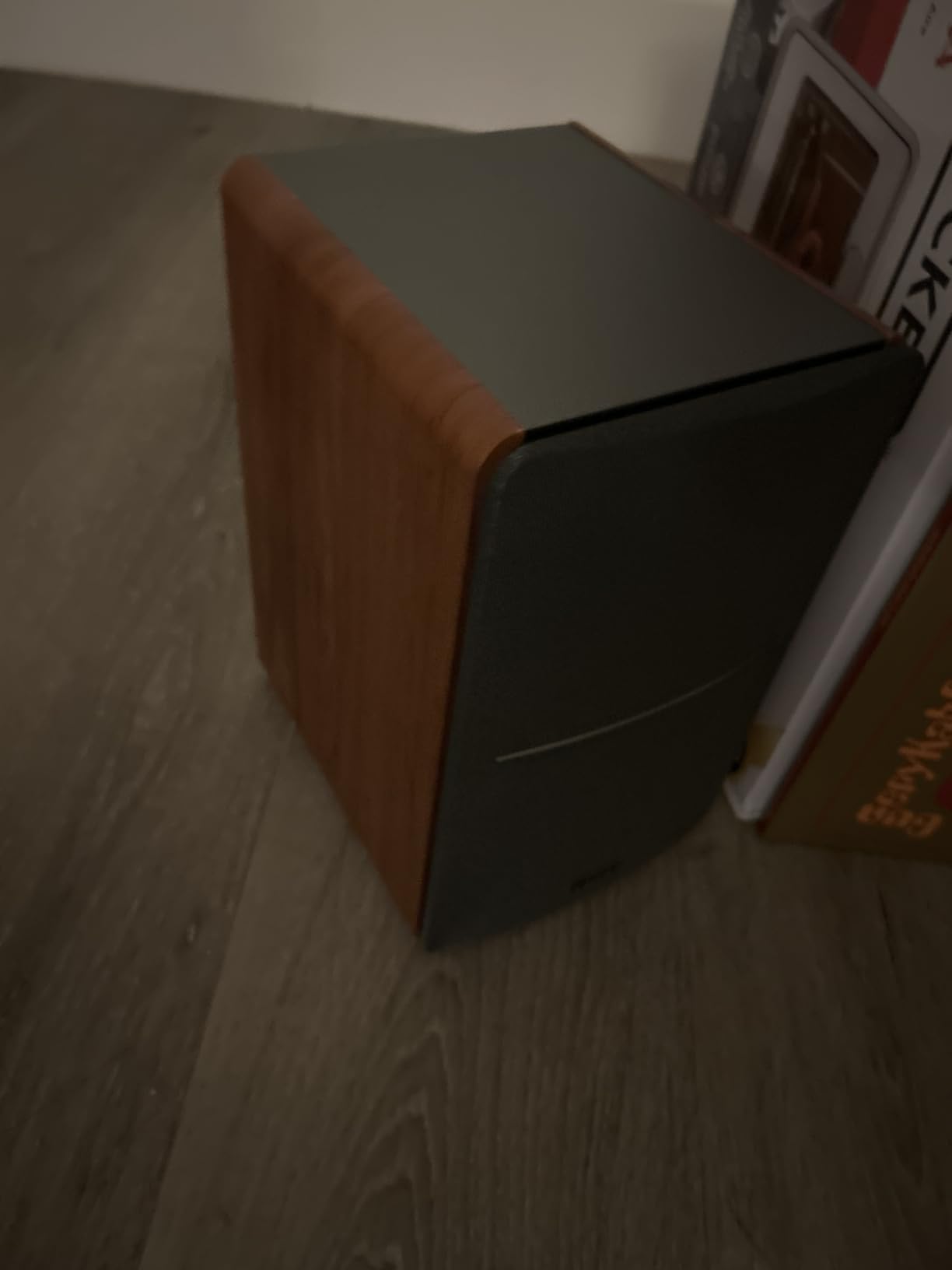
With more than 19,000 ratings and roughly 80 percent of them at five stars, the R1280T is one of the most purchased bookshelf speakers anywhere. Owners consistently report no hiss, no rattle, and no quality loss over extended use. That long-term reliability is rare at the budget end.
The tone controls on the side of the main speaker are genuinely useful for vinyl playback. I trimmed the bass slightly for a desk placement near a wall and lifted the treble a touch for older pressings. Small adjustments, but they make the difference between good and great.
The limitations are real but predictable. There is no Bluetooth, so this is a wired-only setup. The bass carries a baked-in emphasis that stays present even with the knob turned down. And in a large open room, the 42 watts run out of headroom before you reach true listening levels.
Do you still need a phono preamp with the R1280T?
Yes, unless your turntable already has one built in. The R1280T is a powered speaker, not a phono speaker, so its RCA inputs expect a line-level signal. If your deck lacks a phono stage, add a small external phono preamp between the turntable and the speakers and you are set.
The quickest check is your turntable’s rear panel. If you see a switch marked Phono or Line, set it to Line and connect straight to the Edifiers. If there is no switch, plan on an external phono preamp.
What room size suits the R1280T best?
Bedrooms, home offices, and small living rooms up to about 150 square feet are the sweet spot. In that space they are genuinely satisfying for vinyl playback, with plenty of detail and body.
In a bigger room they still work, but you will push the volume and lose the clean edge these speakers have at moderate levels. For near-field listening at a desk, they are close to ideal. Keep them angled toward your seat and a foot or more from the wall behind them.
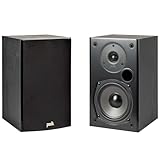
2. Polk Audio T15 – Budget Passive Speakers That Scale With You
Polk Audio T15 100 Watt Home Theater Bookshelf Speakers, Black, 1 Pair
8 ohm passive pair
5.25 inch Dynamic Balance driver
0.75 inch tweeter
100W maximum power
Pros
- Punches far above its price class
- Clean vocals and crisp highs for vinyl
- Banana plug compatible for easy wiring
- Wall-mountable with a keyhole slot
Cons
- Struggles below 60 Hz without a subwoofer
- Dialogue can muffle at very low volume
- Vinyl wrap finish looks plain up close
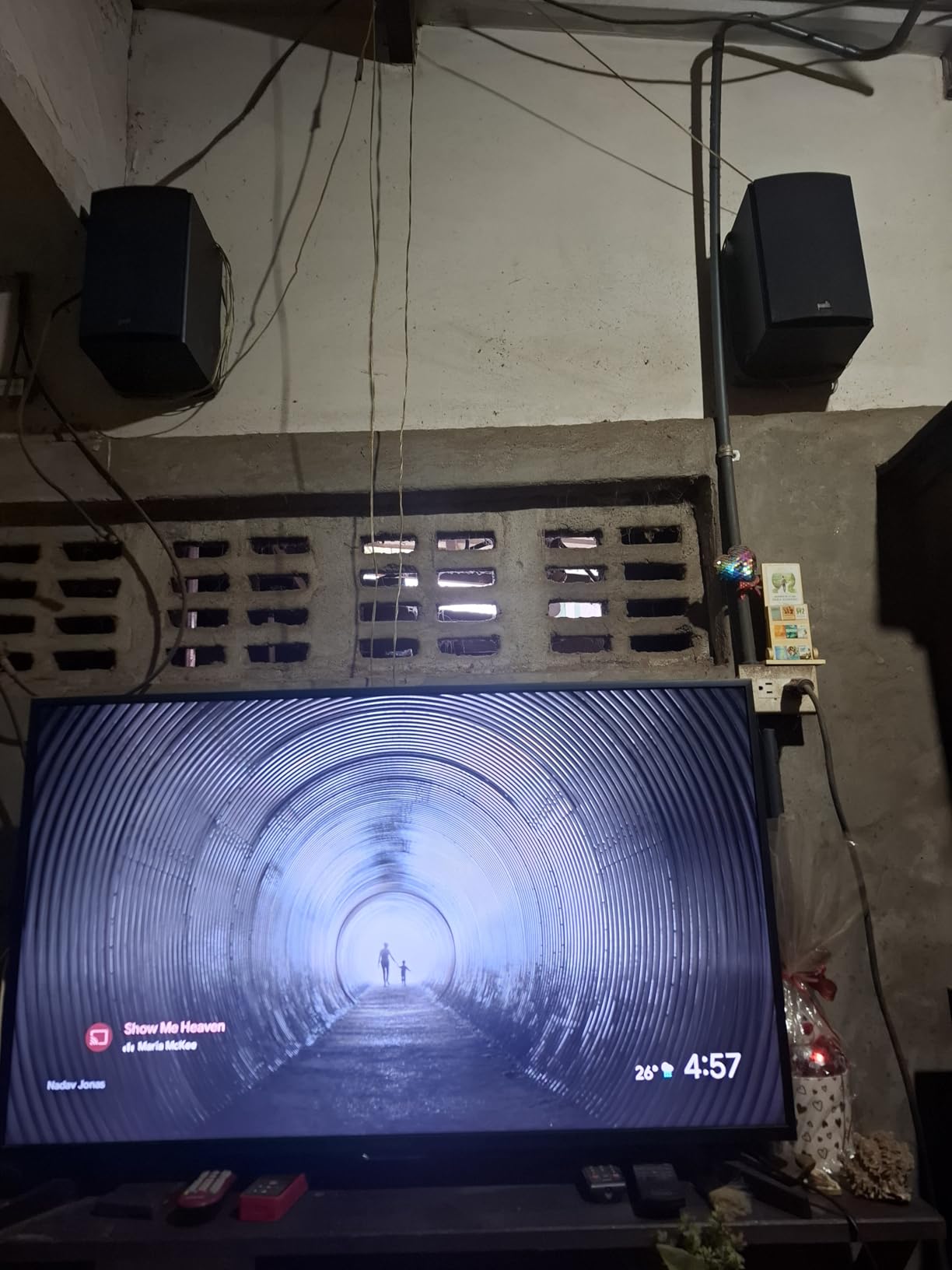
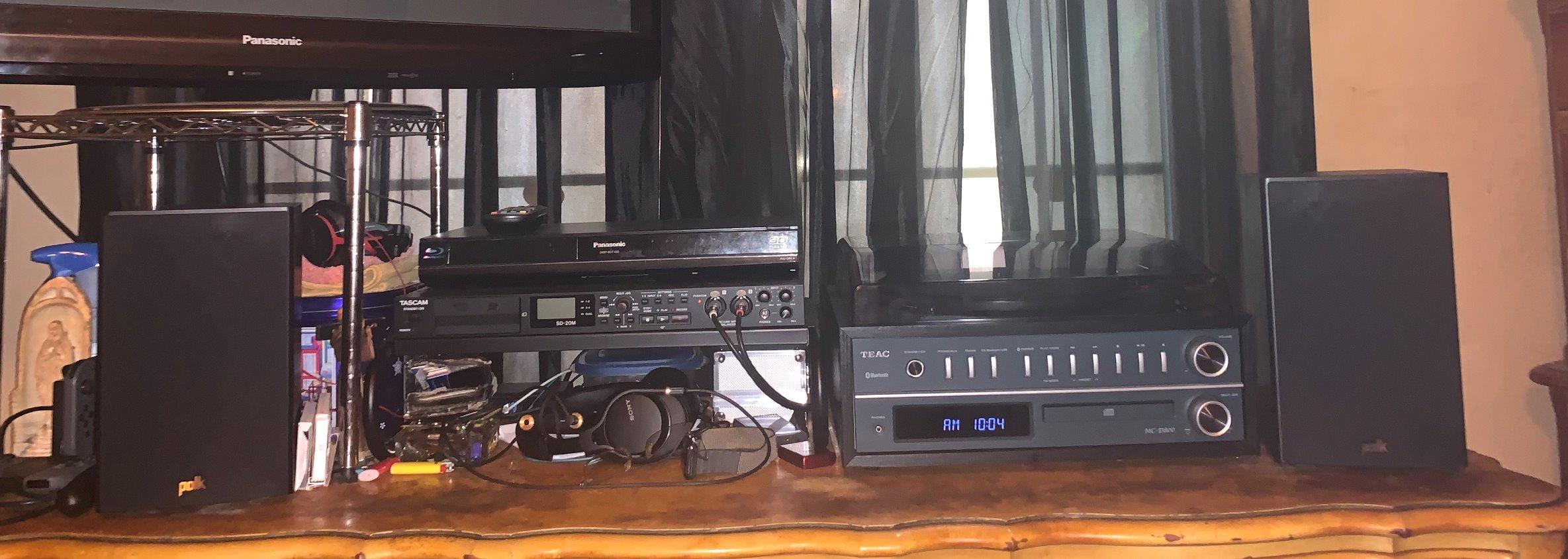
The Polk Audio T15 is the passive pair I recommend to first-time builders, because it sounds better than it has any right to and leaves room to grow. Connected to a compact integrated amplifier, the 5.25 inch Dynamic Balance driver produced taut, punchy bass rather than the boomy low end that plagues budget designs. Vocals on well-mastered pressings came through clean and forward.
Because these are passive bookshelf speakers, they need an amplifier, and that is a feature rather than a flaw. Start them on the Fosi MC331 and move to a bigger integrated amplifier later without replacing the speakers. That upgrade path is why I steer beginners here over powered options when they catch the vinyl bug.
Owners agree, giving the T15 a 4.7 rating across more than 7,300 reviews. The Polk house sound leans slightly bright and clear, which suits the dynamic swings of records. Many buyers also use these as surround channels in a 5.1 system, so there is a path to home theater too.
The honest weak point is deep bass. Below about 60 Hz these run out of range, so bass-heavy genres lose their foundation. Polk’s bass boost feature helps a touch, but a subwoofer is the real fix if you want that last octave.
They roll off gracefully rather than distorting, which is the best behavior you can ask for at this level. Acoustic bass and kick drums still sound convincing, so jazz, vocal, and classic rock records play with real authority.
Placement is flexible thanks to the integrated keyhole slot. I wall-mounted a pair in a small room and they sounded well balanced, a trick most bookshelf speakers at this level cannot manage. At 8.3 pounds each they are easy to position on stands or a shelf.
Are the Polk T15s a good match for a tube amp?
Yes, and the Fosi MC331 is a particularly nice pairing. The Polk’s slightly bright top end is softened by the tube stage, leaving a presentation that suits long listening sessions with records.
At 8 ohms and reasonable sensitivity, the T15s are an easy load that a small amplifier can drive without stress. Just keep the bass controls modest, because pushing the low-end EQ hard on small drivers produces muddy sound rather than bigger bass.
Should you add a subwoofer to the T15s?
If you love hip-hop, reggae, or film soundtracks, yes, plan on it. The T15s blend easily with a subwoofer because their midrange stays clean at higher volumes. Use the sub’s speaker-level inputs or your amplifier’s pre-out if it has one.
If your collection is mostly jazz, vocal, acoustic, or classic rock, you may never miss the deepest octave. I would run the T15s on their own first, then add a sub only if you notice the low end missing.
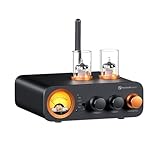
3. Fosi Audio MC331 – Tube Warmth Without the Tube Price
Fosi Audio MC331 Tube Integrated Amplifier with DAC, 2 Channel Home Audio Stereo Power Amp for HiFi Bookshelf Speakers/3.5mm Headphones, Vintage VU Meter Preamp with Bluetooth and USB/Opt/Coax/RCA
Tube amp with DAC
105W x 2 max at 4 ohms
5725W and 6J1 tubes
Bluetooth USB optical RCA
Pros
- Tube warmth that flatters vinyl pressings
- VU meter and vintage styling look great on a shelf
- DAC plus headphone amp in one compact box
- Bass and treble controls for quick tuning
Cons
- Remote has noticeable latency
- No power switch on the unit itself
- Tubes sit recessed and are hard to see
- Speaker terminals are small and close together
The Fosi Audio MC331 is the component that made me reconsider what a budget amplifier can do. The 5725W and 6J1 tubes sit in the preamp stage and add a gentle roundness to the midrange that suits records beautifully. Surface noise seems to recede and vocals gain a bit of body.
It is genuinely an all-in-one hub. There is a DAC with USB, optical, and coaxial inputs, Bluetooth for casual streaming, RCA line inputs, a subwoofer pre-out, and a 3.5mm headphone jack. On a desk or a small shelf, this single box replaces an entire stack of components.
Owners rate it 4.5 stars, and the recurring theme in reports is value. People describe sound comparable to equipment costing considerably more, and the metal chassis feels dense and well put together. For a first step into tube sound, the entry price is remarkably low.
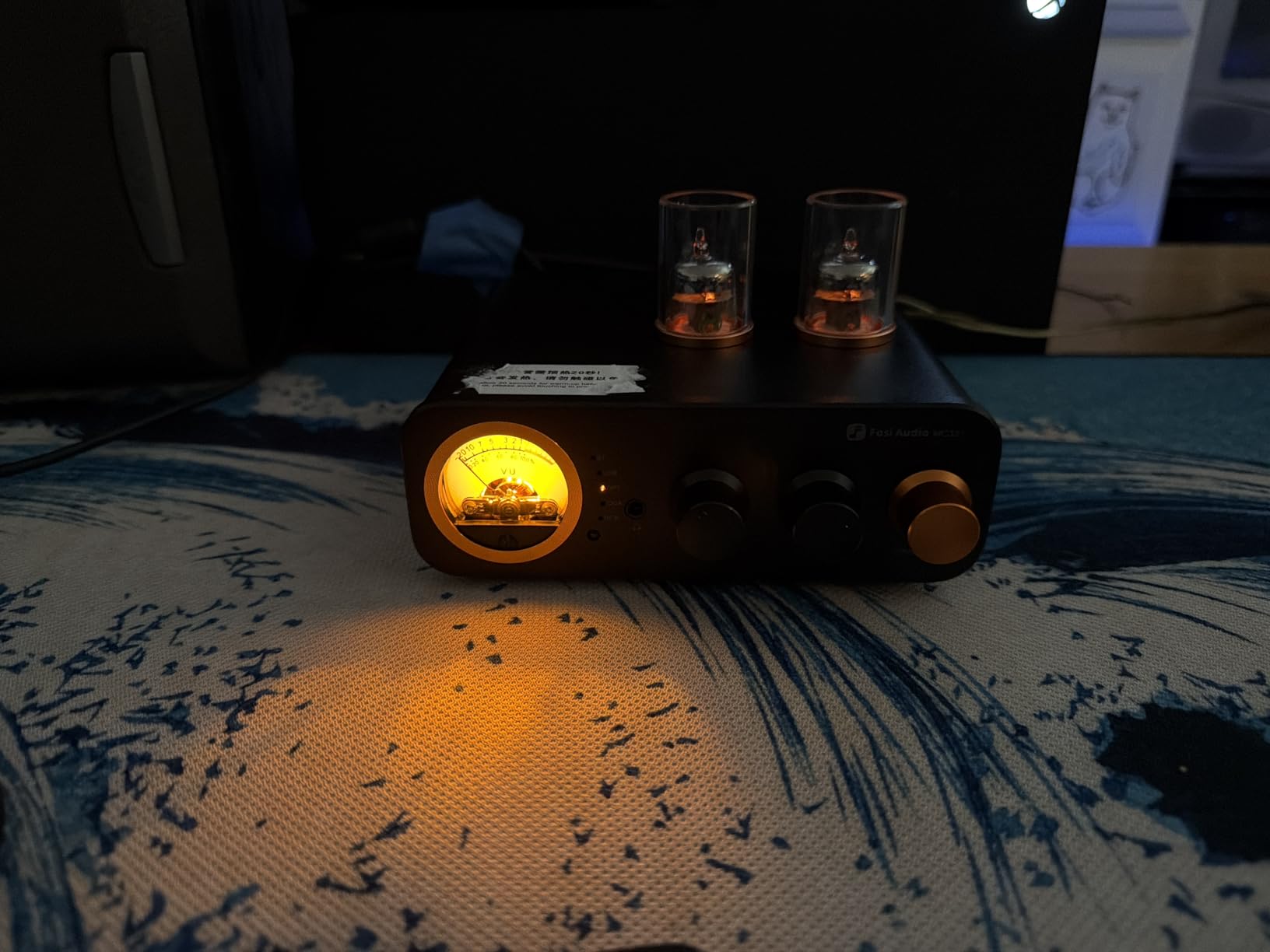
The quirks are worth knowing before you buy. The remote lags noticeably, which is annoying if you adjust volume often. There is no power switch on the unit itself, so the remote is mandatory for daily use.
The VU meter light cannot be dimmed, which matters if this lives in a bedroom. The tubes also sit recessed in the chassis, so the famous glow is harder to see from the front than the product photos suggest.
Heat is the other consideration. The chassis has no real ventilation, so give it a few inches of clearance above and never stack anything on top. The tubes are replaceable, which means you can roll in different tubes later to tune the sound to taste.
Does the MC331 have a phono input for a turntable?
No, it does not. The RCA inputs are line-level only, so a turntable needs its own phono preamp. Either use a deck with a built-in phono stage or add a small external phono preamp between the turntable and the amplifier.
This is actually a reasonable design choice at this level. A dedicated phono stage usually outperforms a cheap built-in one, and it keeps your upgrade path open when you want better vinyl playback later.
How much power does the MC331 really deliver?
The 105W x 2 figure is a maximum rating at 4 ohms, not the everyday working number. Into a typical 8 ohm speaker like the Polk T15 or Klipsch R-51M, real-world output is lower but still plenty for normal rooms.
Do not judge this amplifier by the wattage alone. The tube preamp stage shapes the character of the sound in a way raw numbers never capture, and that character is exactly why vinyl buyers keep choosing it.
4. Klipsch R-51M – High-Efficiency Horns for Lively Vinyl Playback
Klipsch R-51M Bookshelf Speaker (Pair), Black
8 ohm passive pair
1 inch LTS tweeter in Tractrix horn
Dual 5.25 inch woofers
340W maximum power
Pros
- High sensitivity works well with modest amps
- Dynamic and lively presentation that suits rock and jazz
- Horn tweeter delivers excellent detail
- Highest owner rating in this group at 4.8 stars
Cons
- Treble can sound bright to some listeners
- Needs break-in before it sounds its best
- Limited deepest bass without a subwoofer
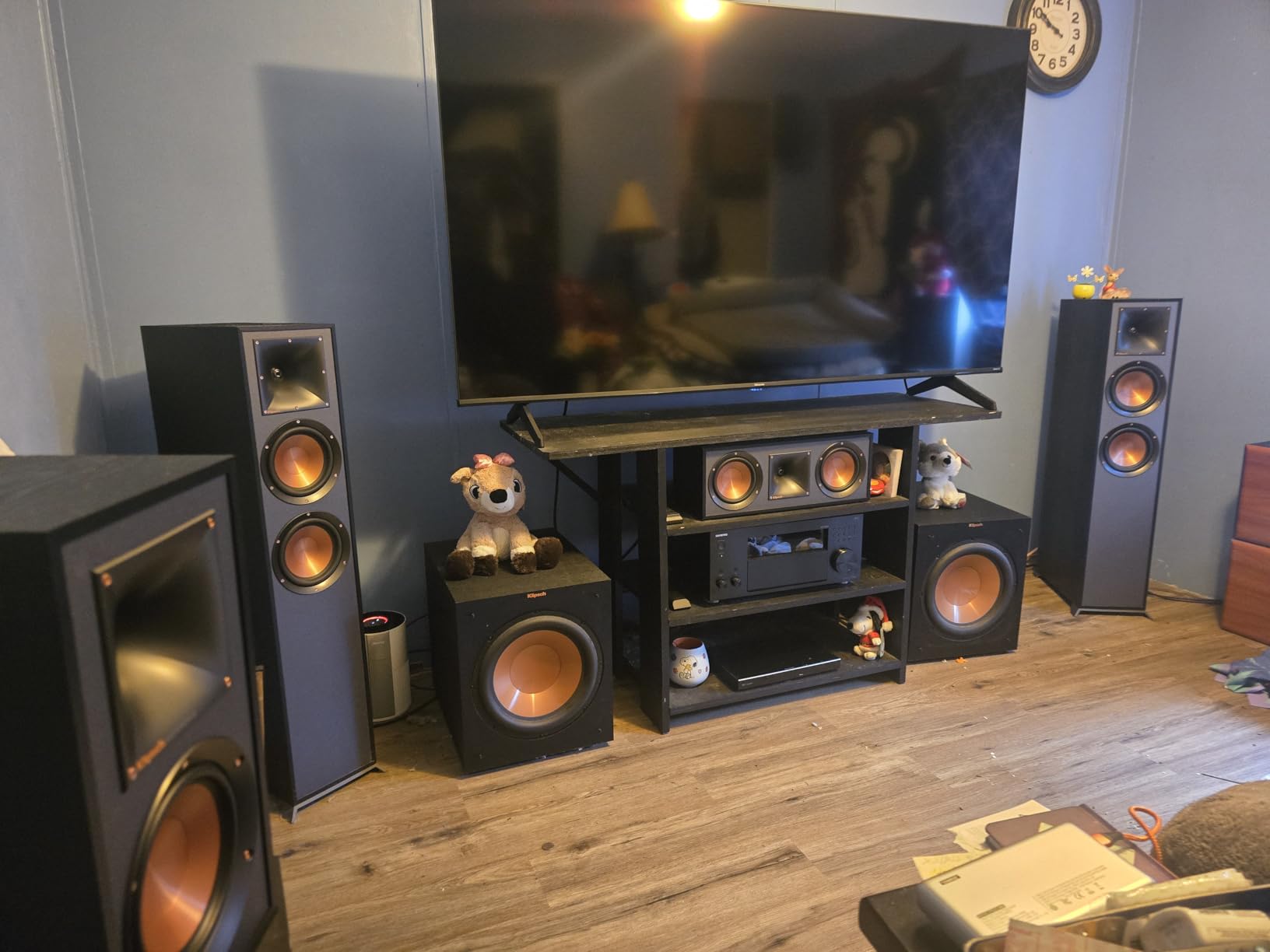
The Klipsch R-51M is the speaker I reach for when I want records to feel alive. The 90×90 Tractrix horn loads the 1 inch aluminum LTS tweeter, giving these speakers a direct, forward character. Horn sections on jazz records and strummed acoustic guitar have an attack that softer dome tweeters simply cannot match.
The specification that matters most here is sensitivity. Because the R-51M converts power into sound so easily, it reaches satisfying volumes from even a modest amplifier. Pair it with the Fosi MC331 and you get a lively, engaging system; pair it with the Denon below and you get headroom to spare.
Owners rate the R-51M at 4.8 stars across nearly 1,300 reviews, the highest rating in this group. Reviewers describe the classic Klipsch sound signature, dynamic and detailed, with strong bass from the dual spun-copper IMG woofers. The rear-firing bass-reflex port adds low-end support for a speaker of this size.
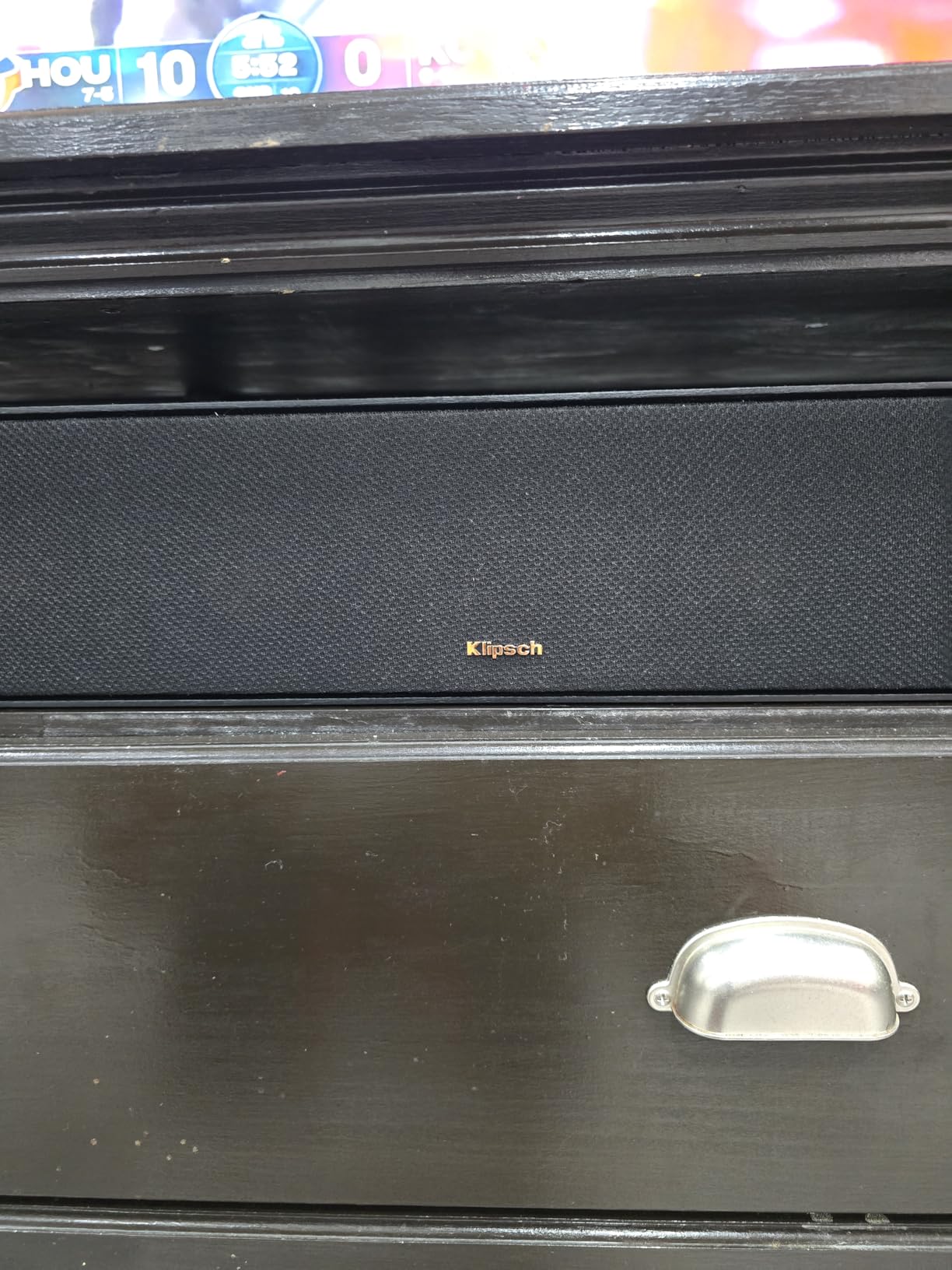
The one honest weakness is the treble. If your hearing is sensitive to forward highs, or your room is hard-surfaced and reflective, the horns can sharpen. A soft rug, curtains, or simply angling the speakers inward usually tames this.
Klipsch rates these at 340 watts maximum, which is about headroom rather than a requirement. They are 8 ohm speakers with an easy electrical load, so nearly any integrated amplifier can drive them happily. At 11 pounds each, they feel substantial and well built.
Give the rear port room to breathe. Keeping the back of the cabinet at least several inches from the wall prevents the bass from turning boomy and keeps the midrange clean.
What amp power do the R-51Ms actually need?
Far less than the 340W maximum suggests. With their high sensitivity, even 20 to 40 clean watts per channel fills a medium room. The Denon PMA-600NE at 70W per channel is a comfortable match with plenty of dynamic headroom for loud passages.
Match quality over quantity here. A lower-powered amp with a good power supply sounds better than a high-wattage amp with a weak one, and this speaker clearly rewards clean power.
How long does the Klipsch break-in period last?
Most owners report the suspension loosening up over the first 20 to 50 hours of play. Out of the box the bass can sound tight and the treble a bit sharp, which is exactly why some early reviews call these bright.
The easiest method is to simply play music at moderate volume while you go about your day. Skip the special burn-in tracks, and give them a couple of weeks of normal listening before forming an opinion.
5. Denon PMA-600NE – The Integrated Amp Built for Records
Denon PMA-600NE Bluetooth Stereo Amplifier, 2 Channel Amplifier Home Audio
70W x 2 at 4 ohms
Built-in DAC and phono preamp
Bluetooth and optical inputs
Analog Mode
Pros
- Built-in moving magnet phono preamp for turntables
- Analog Mode switches off digital circuits for vinyl playback
- DAC with two optical and one coaxial input
- Headphone amplifier and subwoofer output included
Cons
- Volume control via remote can feel laggy and coarse
- Input LED indicators are hard to read
- Some relay click noise when switching inputs
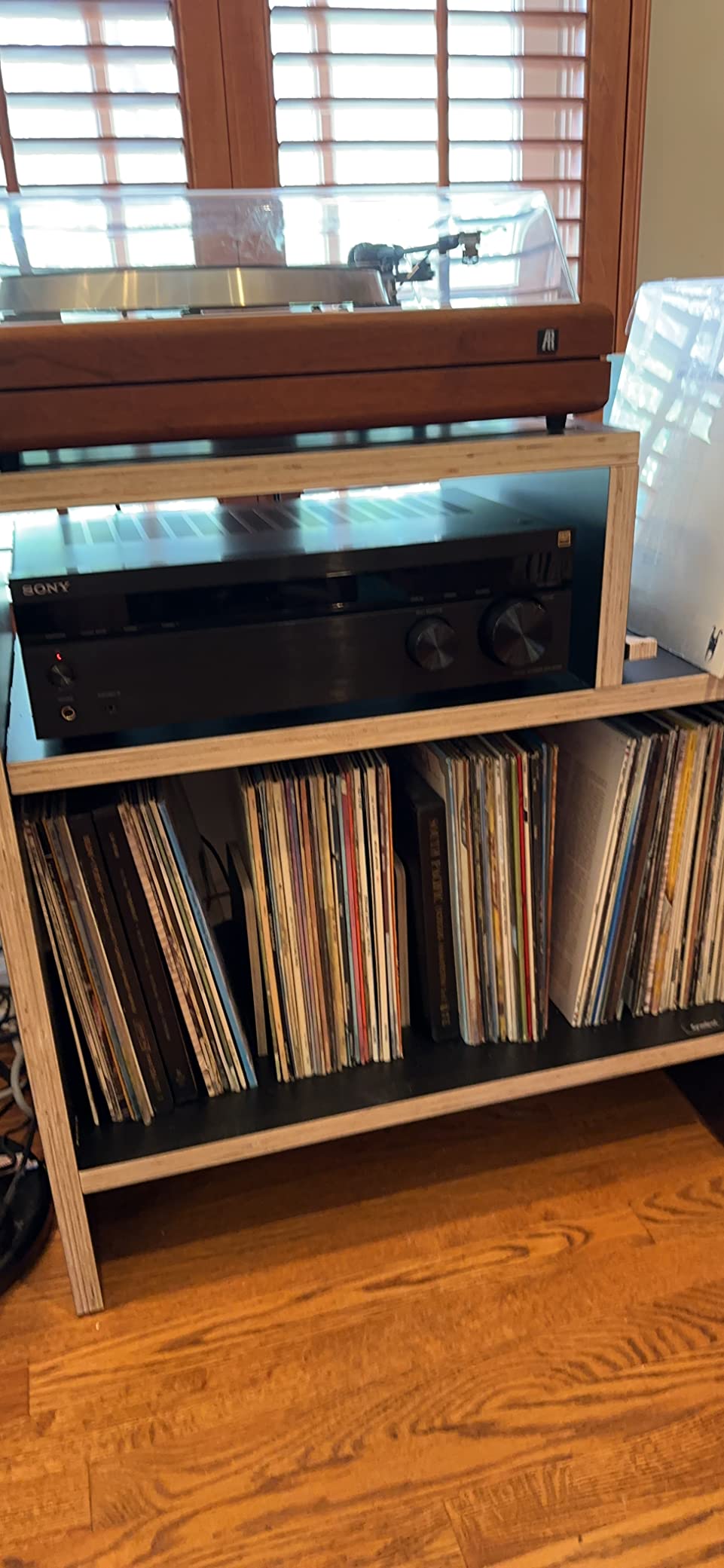
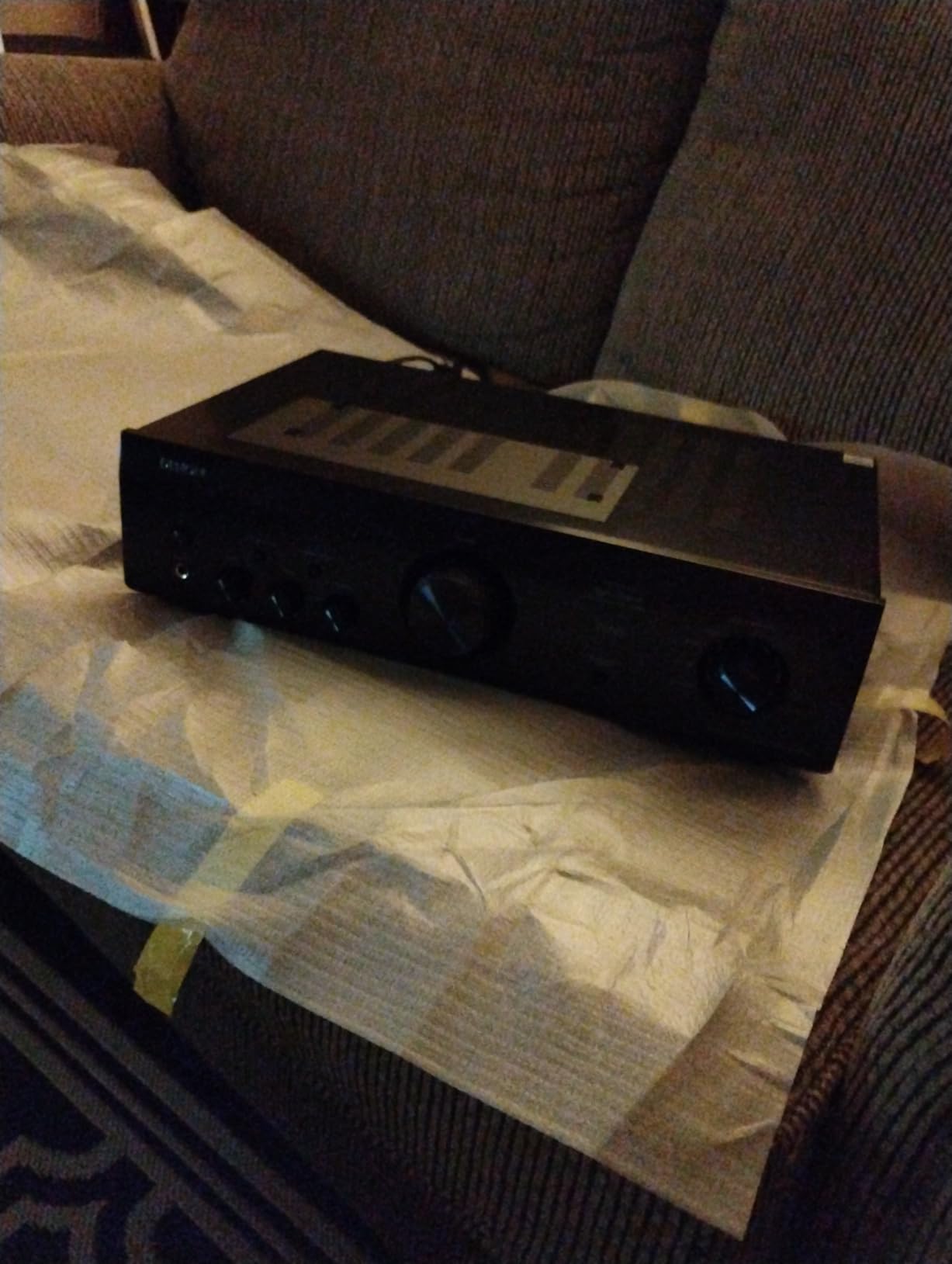
The Denon PMA-600NE is the integrated amplifier I would build a vinyl-first hi-fi system around. It has a dedicated phono input, so you connect a turntable directly with no external preamp. The Advanced High Current push-pull power supply delivers 70W per channel into 4 ohms with a grip on the bass that smaller amps cannot fake.
Analog Mode is the feature record lovers will care about most. It switches off the digital circuits, including Bluetooth and the DAC, so your vinyl signal travels the shortest possible path from input to speaker terminals. The noise floor drops and the music gains a little more space.
Owners rate it 4.7 stars with roughly 83 percent at five stars, praising the detailed, airy treble and a soundstage wider than the price suggests. The built-in DAC means one box handles your turntable, TV, streamer, and Bluetooth, which keeps the rack clean.
The complaints are small but consistent. The remote volume control steps coarsely and lags, so I found myself walking to the knob instead. The input indicator LEDs sit behind small holes and are awkward to read across a room.
Some owners also hear a relay click when switching sources. It is cosmetic rather than a fault, but it is worth knowing about before you buy.
None of that changes the fundamentals. The build is solid at 18 pounds, Denon covers it with a three-year manufacturer warranty, and the company has been building audio components for more than a century. This is an amplifier you keep while you upgrade speakers around it.
What is Analog Mode and does it matter for vinyl?
Analog Mode powers down the digital circuitry inside the amplifier, removing the DAC and Bluetooth from the signal path. Your record’s signal stays analog from cartridge to speaker terminals with no digital stages in between.
Whether you can hear the difference depends on your ears and the rest of your system. What is not in dispute is that it costs nothing to use, and it shows a design philosophy that treats analog as the priority rather than an afterthought.
Which speakers pair best with the PMA-600NE?
The Klipsch R-51M is my favorite match. The Denon’s clean power and the Klipsch sensitivity combine into a system that plays loud without strain, and the slightly bright Klipsch top end benefits from the Denon’s smooth treble presentation.
The Polk T15 works well if you want to spend less on speakers, and the amp’s subwoofer output lets you add a sub later for the low end the Polks give up. That flexibility is exactly why this amplifier earns the top spot in my recommended pairings.
Buying Guide: How to Match Bookshelf Speakers and Amps for Vinyl?
A great speaker-amp pairing comes down to four checks and one honest look at your room. Here is how I work through it before buying anything.
Power Matching and the 83% Rule
The 83% rule says your amplifier’s continuous output should stay at or below about 83 percent of your speaker’s rated maximum power handling. That margin lets dynamic peaks pass without stressing the drivers. The Klipsch R-51M rated at 340W maximum sits comfortably above the Denon’s 70W per channel, which is roughly a fifth of that ceiling.
Under-powering is the bigger danger than over-powering. When an amplifier runs out of power it clips, and clipping produces distorted high-frequency energy that kills tweeters. Clean watts at moderate volume beat strained watts at high volume every single time.
Impedance Matching in Plain English
Impedance, measured in ohms, is how much the speaker resists the amplifier’s current. The Klipsch and Polk pairs are both 8 ohm, the Edifiers are 4 ohm powered speakers with their own internal amps, and both amplifiers here handle 4 to 8 ohm loads without complaint.
The rule is simple: never connect a speaker with lower impedance than your amplifier is rated to drive. Pushing a 4 ohm speaker with an amp rated only for 8 ohms makes the amp run hot, work too hard, and possibly shut down.
Do You Need a Phono Preamp?
A cartridge puts out a tiny signal that also needs RIAA equalization, the curve applied when the record was cut. A phono preamp boosts that signal and reverses the curve. Without one, records sound quiet, thin, and wrong.
You have three routes. The Denon PMA-600NE has a phono input built in, which is the tidiest solution. Your turntable may already have a phono stage, in which case any line input works. Otherwise, add a small external phono preamp between the deck and any amplifier or powered speaker, including the Edifier and the Fosi.
Class D vs Class AB Amplifiers
Most compact modern amplifiers, including the output stage of the Fosi MC331, are Class D. They run cool, waste little power, and pack a lot of output into a small chassis. Modern Class D sounds far better than the early versions, and it is the reason small amps are so capable today.
Class AB, used in the Denon, draws more power and generates more heat, but it has a traditional signal character that many listeners prefer for analog sources. Neither is objectively better for vinyl, so let your ears decide.
Room Size and Speaker Placement
Small rooms reward small speakers and near-field setups, which is exactly where the Edifier R1280T shines. Medium rooms suit the Polk T15 and Klipsch R-51M on stands. Larger or open-plan spaces call for sensitive speakers like the R-51M and an amplifier with real headroom like the Denon.
Placement beats price. Pull the speakers away from the back wall, angle them toward your seat, and keep the tweeters at ear level. A modest pair placed well will outperform an expensive pair shoved into corners.
Break-In: What to Expect From New Speakers
New drivers have stiff suspensions that loosen with play, and most owners notice the biggest change in the first 20 to 50 hours. The Klipsch R-51M in particular is often described as bright out of the box and far more balanced after a few weeks.
Just play music normally and let it happen. If a new speaker disappoints you on day one, give it two weeks before judging, because your own hearing adapts over the same period.
Frequently Asked Questions
What are the best bookshelf speakers for vinyl playing?
The Klipsch R-51M is the top choice for vinyl thanks to its high sensitivity and lively horn-loaded sound, the Polk Audio T15 is the best budget option, and the Edifier R1280T is the best powered pair that needs no separate amplifier.
Are bookshelf speakers good for vinyl?
Yes. A good pair of bookshelf speakers sounds more detailed, rich, and full than most newcomers expect, and they image far better than soundbars or Bluetooth speakers for stereo records. Any of the three pairs in this guide will reveal more of your records than a turntable’s built-in speakers ever can.
What is the best amp and speaker combo for a turntable?
The Denon PMA-600NE paired with the Klipsch R-51M is the best overall combo, because the amplifier has a built-in phono preamp, DAC, and Analog Mode, while the efficient Klipsch speakers make the most of its 70 watts per channel. On a tighter budget, the Fosi Audio MC331 tube amp with the Polk T15 delivers warm, engaging vinyl playback for far less.
What is the 83% rule for speakers?
The 83% rule says your amplifier’s continuous power output should stay at or below about 83 percent of your speaker’s rated maximum power handling. This leaves a safety margin so musical peaks do not damage the speaker, while the bigger real-world risk of an under-powered amplifier clipping into distortion is avoided by choosing clean wattage over big wattage numbers.
Final Verdict: The Best Vinyl Combos for Your Turntable
If you want the best bookshelf speaker and amp combos for vinyl in 2026, start with the Denon PMA-600NE and the Klipsch R-51M. The phono input means no extra boxes, Analog Mode keeps your signal pure, and the efficient Klipsch horns turn 70 watts per channel into a room-filling, dynamic sound.
On a tighter budget, the Fosi Audio MC331 and the Polk T15 make a wonderfully warm starter system, and you can keep the speakers when you upgrade the amplifier later. If you want zero fuss, the Edifier R1280T is a complete powered solution that only needs a turntable with a built-in phono stage.
Whichever route you take, match the watts, check the ohms, and sort out the phono stage first. Do that, and your records will reward you every single time you drop the needle.