
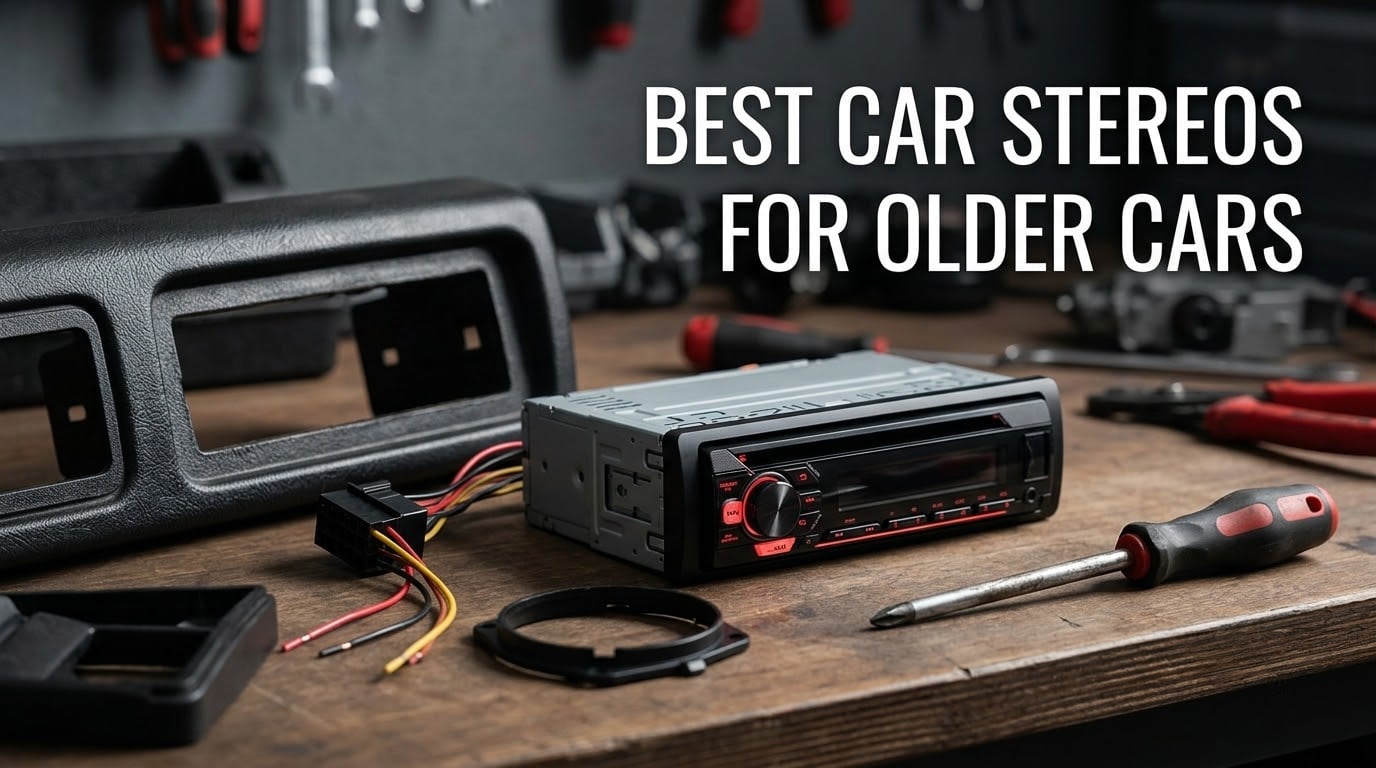
There is a specific moment in almost every older-car project. You pull the factory cassette deck, and what you find is a single-DIN opening full of dust, a bracket with two bent tabs, and a wiring connector with more pins than the unit you want to put in. Twenty minutes later the radio is on the bench and the car is quiet. Finding the best car stereos for older cars is not about raw power, because the limitation is physical, not electrical.
What actually decides the outcome is whether the head unit matches the standard 182 x 53 mm radio opening, whether you have a vehicle-specific dash kit to hold it, and whether the harness adapter speaks your car’s language. Get those three right and a modern receiver drops into a dashboard that was designed decades before Bluetooth existed. Get them wrong and you end up with a head unit that rocks in its cradle, a trim panel gap you can see from the sidewalk, and steering-wheel controls that stopped working the day you installed it.
So this roundup starts with fitment, then names ten receivers, ranked by the job each one actually does well. Every unit here is a single-DIN head unit, which is the format that covers most sedans, trucks and SUVs built from the 1980s through the mid-2000s. If you are still deciding on the format, our double-DIN roundup covers the touchscreen end of the market, and our Bluetooth stereo guide goes deeper on pairing behavior. The one-line version: the best car stereos for older cars are the ones that fit the hole you already have and add the connectivity your car is missing.
Table of Contents
Top 3 Best Car Stereos for Older Cars (October 2026)
Our three standouts cover three different older-car situations. The BOSS 616UAB is the safe, deeply proven default, the Pioneer MVH-S310BT is the one owners rate highest for sound, and the JVC KD-SX27BT is the one to buy when you want real amplifier power in the box.

BOSS 616UAB
- Bluetooth and USB
- Push-to-talk assistant
- Front and rear pre-amp outputs
- No-CD chassis

Pioneer MVH-S310BT
- 50W x 4 output
- Advanced Sound Retriever
- Pandora and Spotify
- Auto-dimming display
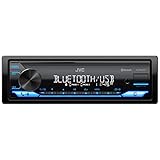
JVC KD-SX27BT
- 100W built-in amplifier
- 13-band EQ
- Time Alignment and Sound Lift
- Dual phone pairing
The 10 Best Car Stereos for Older Cars in 2026
All ten of these are single-DIN digital media receivers or CD receivers built for the standard ISO opening. Key Features below are drawn from each unit’s own specification sheet, so use this table to shortlist, then read the individual reviews for the install reality.
| Product | Specs | Action |
|---|---|---|
| BOSS Audio Systems 616UAB |
|
Check Latest Price |
 Jensen MPR210 Jensen MPR210 |
|
Check Latest Price |
 BOSS Audio Systems 508UAB BOSS Audio Systems 508UAB |
|
Check Latest Price |
 REAKOSOUND 820s REAKOSOUND 820s |
|
Check Latest Price |
| Pioneer MVH-S310BT |
|
Check Latest Price |
 Pioneer MVH-S322BT Pioneer MVH-S322BT |
|
Check Latest Price |
 Alondy CD/DVD Single DIN Alondy CD/DVD Single DIN |
|
Check Latest Price |
| JVC KD-SX27BT |
|
Check Latest Price |
 Pioneer DEH-S4220BT Pioneer DEH-S4220BT |
|
Check Latest Price |
 BOSS Audio Systems 750BRGB BOSS Audio Systems 750BRGB |
|
Check Latest Price |
1. BOSS Audio Systems 616UAB – The Best Overall Car Stereo for Older Cars
BOSS Audio Systems 616UAB Single DIN Bluetooth Car Stereo, No DVD, USB
50W x 4 max output
13W RMS measured per channel
No-CD chassis
Bluetooth with push-to-talk
Pros
- Most proven unit in the group
- 4.2 across 19k+ reviews
- Shallow no-CD chassis saves dash depth
- Front and rear pre-amp outputs for a later amplifier
- Push-to-talk assistant button
Cons
- No Bluetooth on/off switch so the connection cannot be dropped from the unit
- Display brightness ignores the vehicle illumination wire
- Internal amplifier runs hot at high volume
The 616UAB is the unit we keep coming back to, and the reason is volume of evidence rather than a single spectacular spec. It holds a 4.2 rating across more than 19,000 reviews, and when you read those reviews you keep running into the same sentence in different words: it made an old car feel new again. The feature set is deliberately plain, Bluetooth calling and streaming, USB, auxiliary input, AM/FM, and a push-to-talk button that hands off to your phone’s assistant.
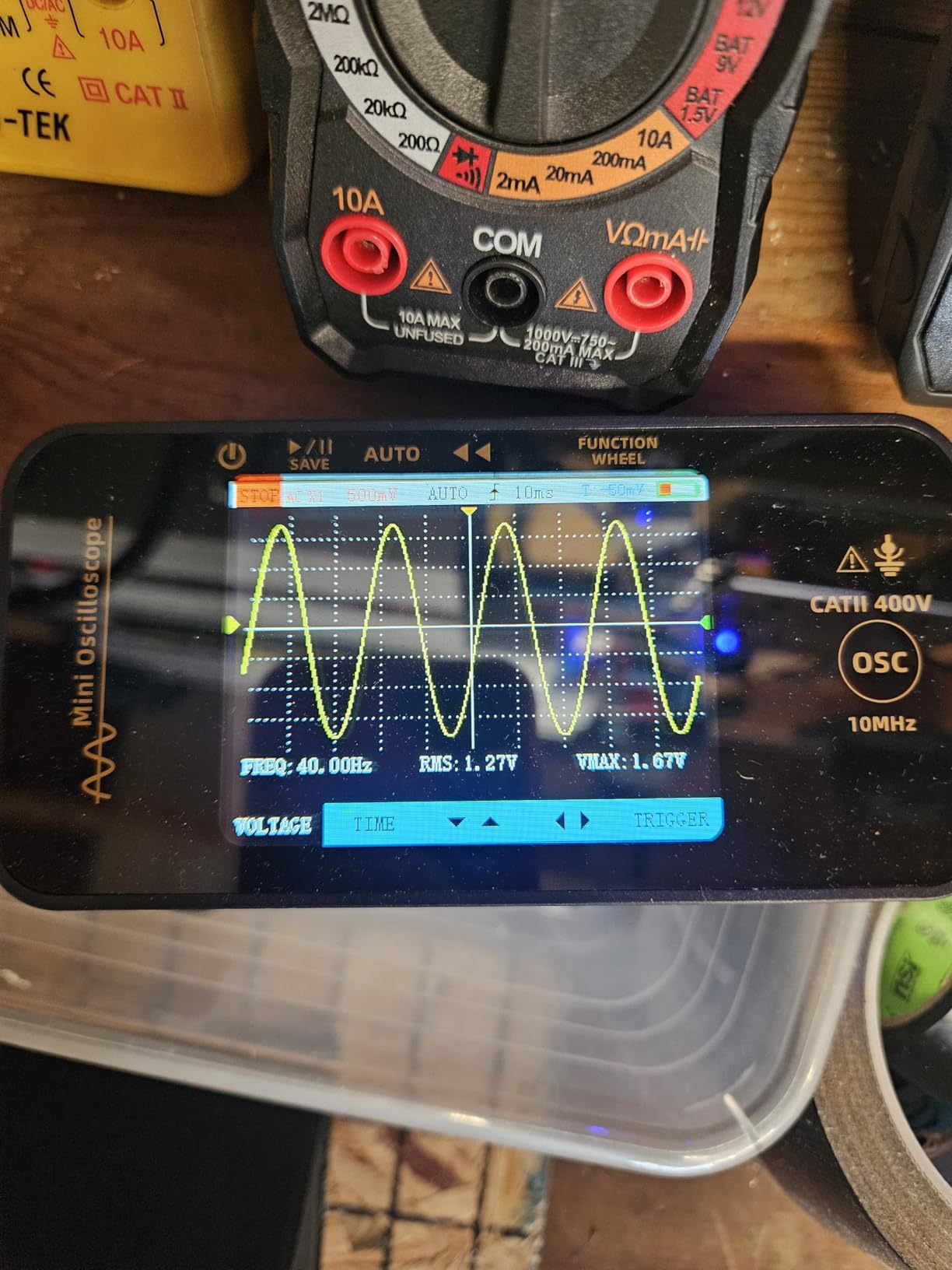
Measured testing noted in the reviews put real output at roughly 13 watts RMS per channel at 4 ohms and about 1.37V of unclipped signal from the pre-outs, which is well above what the manual claims and enough to drive a pair of efficient factory door speakers properly. The headliner’s 50W x 4 figure is a maximum, not a continuous number, and anyone who treats it as the latter will be disappointed.
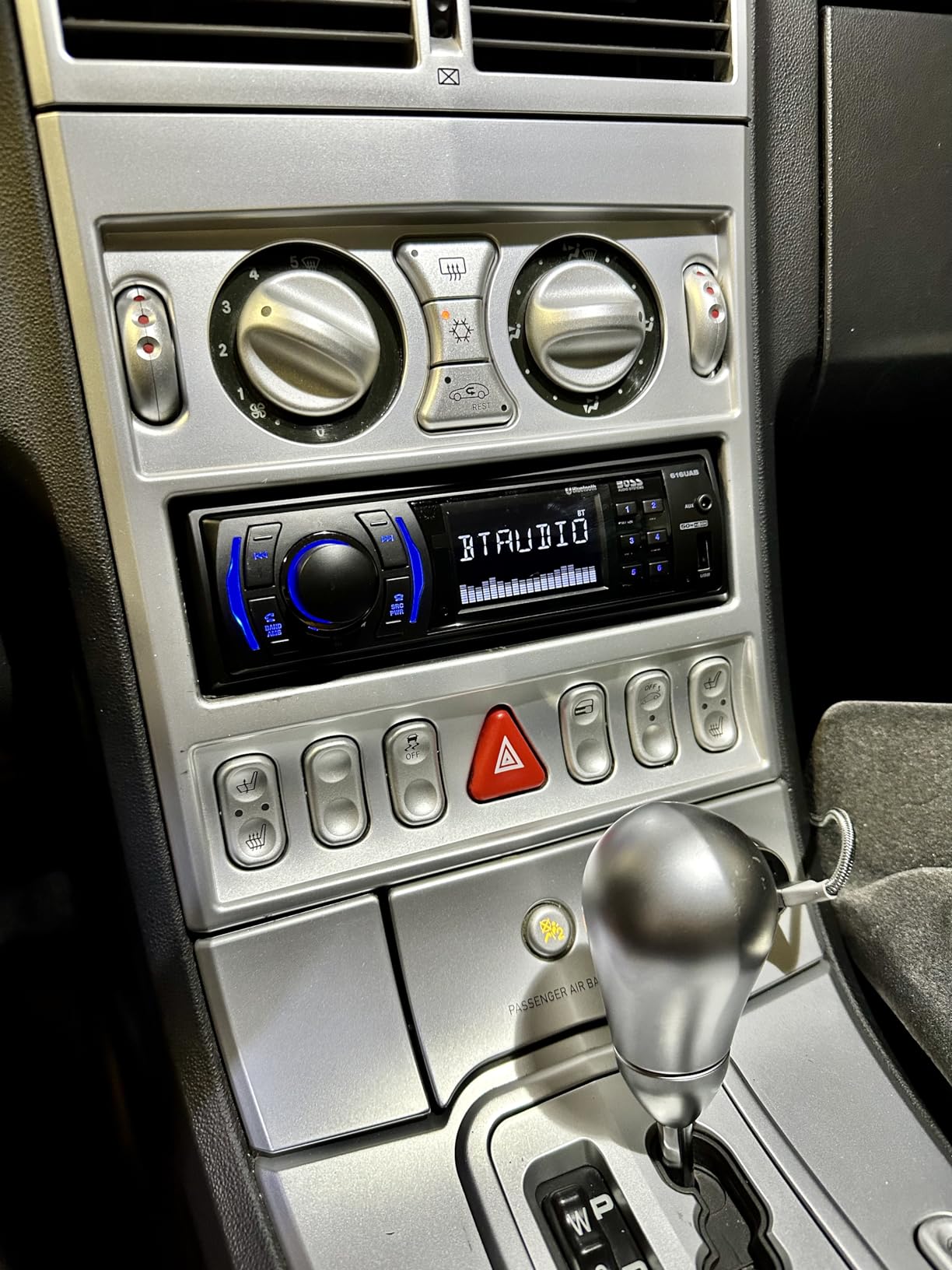
Mechanically it is a friendly install. At 1.1 pounds and 3.94 inch deep with no disc mechanism, the chassis is short enough to clear the brackets and wiring that fill the back of a factory radio cavity, which is exactly the space you do not have in a 1990s dashboard. Owners report fitting it into older Hondas, Accords and work vans with nothing more than a dash kit and a harness.
The complaints are consistent enough to plan around. There is no Bluetooth on/off control, so the connection cannot be disengaged from the front panel, and audio can clip the first words of a track after a silent passage. The dancing LED display cannot be disabled, and the display brightness ignores the vehicle illumination wire, so the screen stays bright at night.
Fit and wiring in a 1990s dashboard
Because there is no CD mechanism, the depth problem largely disappears, and the wiring is a plain four-speaker-plus-power block with front and rear pre-outs for later expansion. The accessory list is short: a Metra-style dash kit for your year and model, a wiring harness adapter, and a steering-wheel-control adapter if you want the wheel buttons to work.
One thing to check is speaker impedance. The measured power is modest, so a low-impedance aftermarket set will hit the ceiling sooner than the factory speakers do. If you plan new speakers, plan an amplifier in the same plan rather than as a later surprise.
When to step up instead
If your goal is the best sound quality available in this format rather than dependable everyday connectivity, the Pioneer MVH-S310BT and the JVC KD-SX27BT both have meaningfully better internal hardware. The 616UAB is the pick when the priorities are low cost, proven reliability and the shortest possible learning curve.
It is also the pick if you have never installed anything before. The included harness, simple knob-and-button layout and forgiving pre-outs make this the least stressful first upgrade.
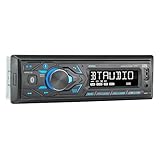
2. Jensen MPR210 – Straightforward Bluetooth With a Very Readable Display
Jensen MPR210 Single DIN Bluetooth Car Stereo, Hands-Free, AM/FM, USB
High-contrast 7-character LCD
Push-to-talk assistant
4 EQ presets
2-year warranty
Pros
- Very readable display in daylight and at night
- Dedicated Siri and Google assistant button
- Four EQ presets for quick tonal changes
- USB playback and phone charging
- Four-year warranty available on registration
Cons
- No CD or DVD drive
- Only 2-band tone adjustment limits sound shaping
- Budget-class power will not drive low-impedance speakers hard
The Jensen MPR210 is the antidote to feature anxiety. It does Bluetooth calling, Bluetooth streaming, USB playback with charging, AM/FM and a four-preset equalizer, and that is the whole list. For a daily driver whose factory radio is dead and whose owner wants their phone on the dash, that is enough.
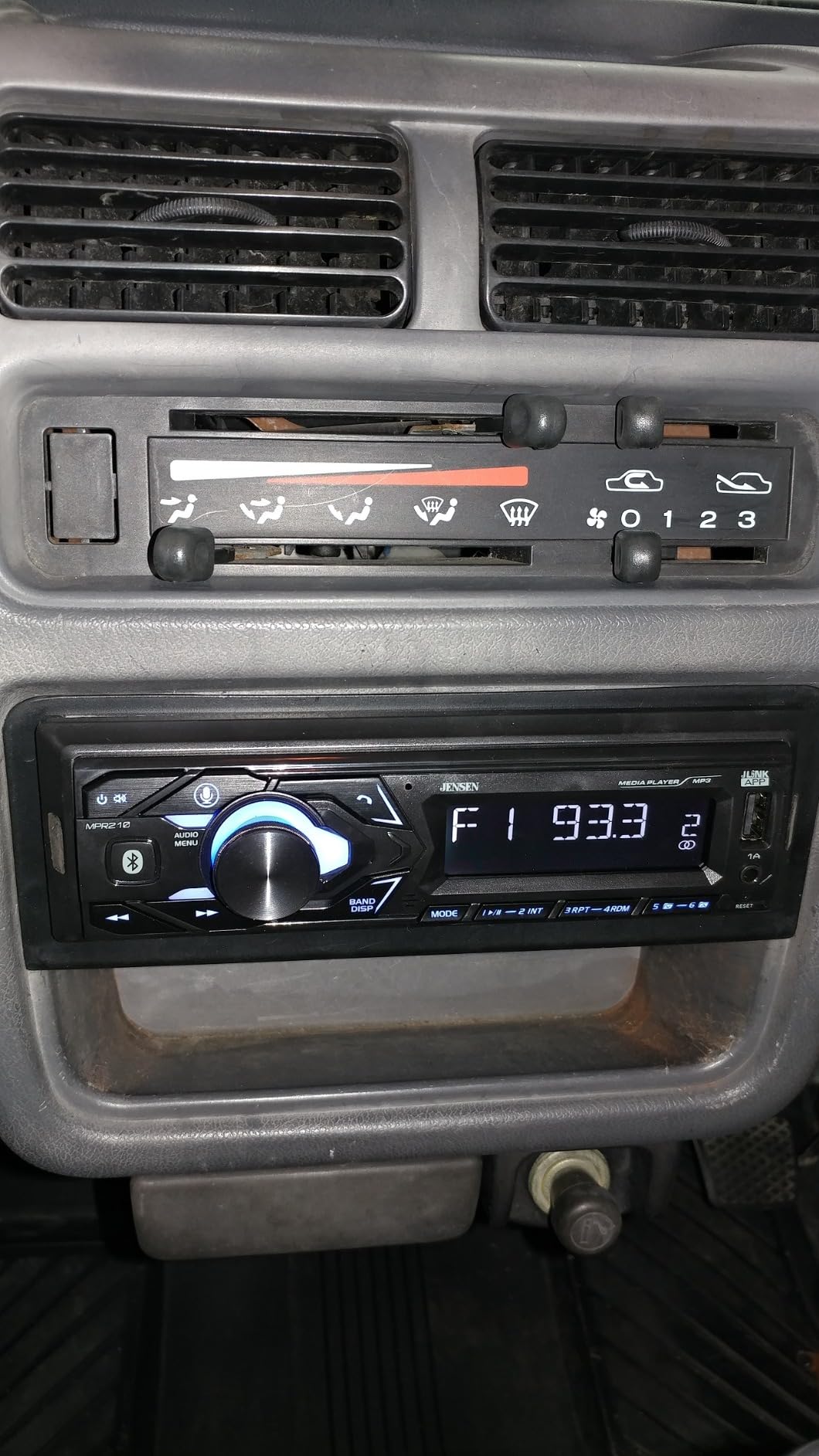
The display is the reason people like it. A high-contrast seven-character LCD stays readable in direct sun and does not turn into a mirror at night, and the dedicated push-to-talk button triggers Siri or Google Assistant without digging through a menu. The control layout is compact and physical, with no touchscreen to freeze up.
The 63% five-star share reflects satisfaction with value and legibility rather than with sound quality, and that distinction matters when you set expectations. Two-band bass and treble is all the tonal control you get. If you like to shape the sound, this is the wrong unit, and the Pioneer MVH-S322BT or the JVC KD-SX27BT are the right ones.
Power is budget-class, which pairs naturally with the original speakers still in the doors. Replace those paper-cone factory speakers with anything demanding and you will be asking a small internal amplifier for more than it has, which is how distortion gets into the system.
Best for a first Bluetooth upgrade
This suits a car that is otherwise stock and driven daily, where the goal is calls, music and radio without a learning curve. The warranty is a genuine plus in this category, two years as standard and extendable to four on registration.
It also suits older drivers or anyone who prefers a row of buttons to a glass panel. Nothing here is hidden behind an app, and nothing depends on a phone being connected.
What you give up by skipping the disc drive
There is no CD player, so if your music library lives on discs this is not the unit. Compact discs are also the most under-rated convenience in an older car, because a 20-year-old car in a parking lot is exactly where a detachable-face or disc-based deck earns its keep.
There is no RCA pre-out either, so this is a final system rather than a starting point. Decide now if this is the last head unit the car will ever get.
3. BOSS Audio Systems 508UAB – The One to Buy If You Still Play CDs
BOSS Audio Systems 508UAB Single DIN Bluetooth Car Stereo, CD Player, USB
CD drive plus Bluetooth
USB and auxiliary input
50W x 4 max output
Three-year warranty
Pros
- Keeps a working CD drive while adding modern Bluetooth and USB
- Front and rear pre-amp outputs support an external amplifier
- Simple installation with the included harness
- Three-year warranty coverage
Cons
- Older interface design compared with current single-DIN models
- Only two channels of output listed for the pre-amp section
- Basic tone controls with no multi-band EQ
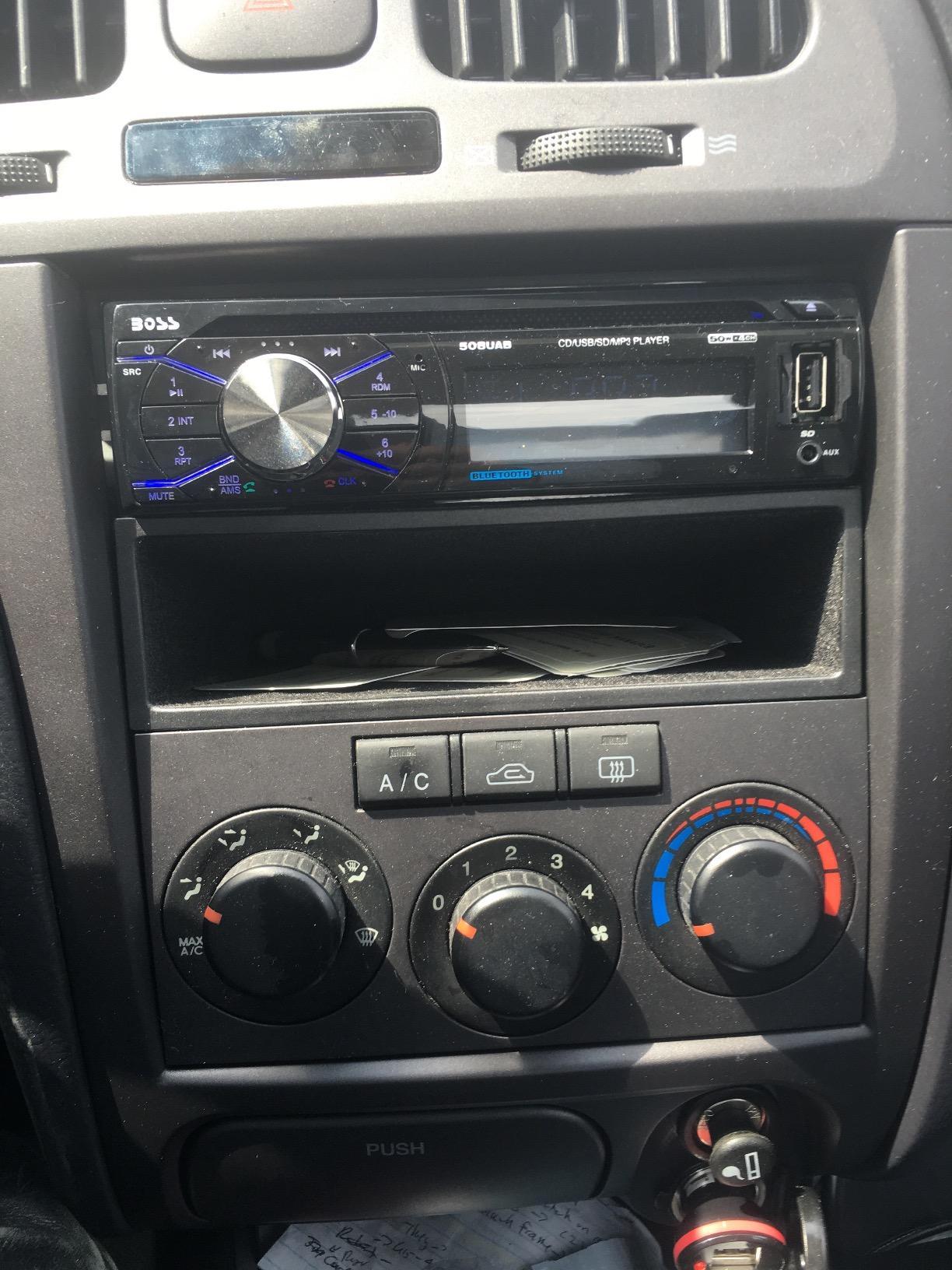
New single-DIN units have quietly dropped the disc drive, and for a lot of older-car owners that is the wrong feature to lose. The 508UAB keeps a real CD mechanism and layers Bluetooth, USB and an auxiliary input on top of it, which means the physical media in your glovebox keeps working.
At 64% five-star, the reviews describe a unit that does that job without drama. Bluetooth connectivity is reported as solid, hookup is straightforward, and the sound is described accurately as adequate rather than refined.
Note the depth. At 7 inch deep, this chassis carries a full disc mechanism, so it needs more room behind the dash than the no-CD units in this roundup. On a car with a deep factory cavity that is a non-issue, and on a car with a cramped bracket you may need the more flexible bracket included with the vehicle-specific kit.
Front and rear pre-amp outputs are present, which is unusual at this end of the market and gives you a path to an external amplifier. The specification lists two channels of output for that section, so check your amplifier’s channel needs before committing to a system build.
Who should buy the 508UAB
Buy this one if you have a stack of CDs you still use, or if you want the reassurance of a physical disc as a fallback when a phone battery dies. It is also a sensible middle choice for a car that is driven in winter, where a mechanical deck simply does not care about the temperature.
It suits anyone replacing a factory CD unit in a 1990s sedan and wanting Bluetooth without giving up what they already have.
Where the 508UAB falls short
Tone controls are basic, with no multi-band EQ, and the interface design looks dated next to current units even when it works perfectly. If sound quality is the reason you are opening the dash, this deck will not be the reason the system sounds better.
Its other limitation is physical. The disc mechanism makes it the deepest chassis here, so measure the depth behind your dash opening before you commit.
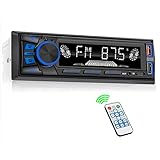
4. REAKOSOUND 820s – The Lowest-Cost Way to Modernize a Dead Radio
REAKOSOUND Car Radio Single DIN Car Stereo Bluetooth Digital Media Receiver
Dual USB with 2.1A charging
SD card and auxiliary input
7 LED backlight colors
Pros
- Lowest cost unit in this roundup with full connectivity
- Dual USB ports including 2.1A fast charging
- SD card support alongside USB and auxiliary input
- Seven LED backlight colors to match an older dashboard
Cons
- Low real-world amplifier power for driving aftermarket speakers
- No CD drive and no RDS
- 12V only so it will not work in 24V vehicles
The REAKOSOUND 820s is the pick when the factory radio is dead, the budget is nearly gone, and the car still deserves better than silence. At 67% five-star, the reviews reflect genuine appreciation for how much functionality arrives for the least money in this group.
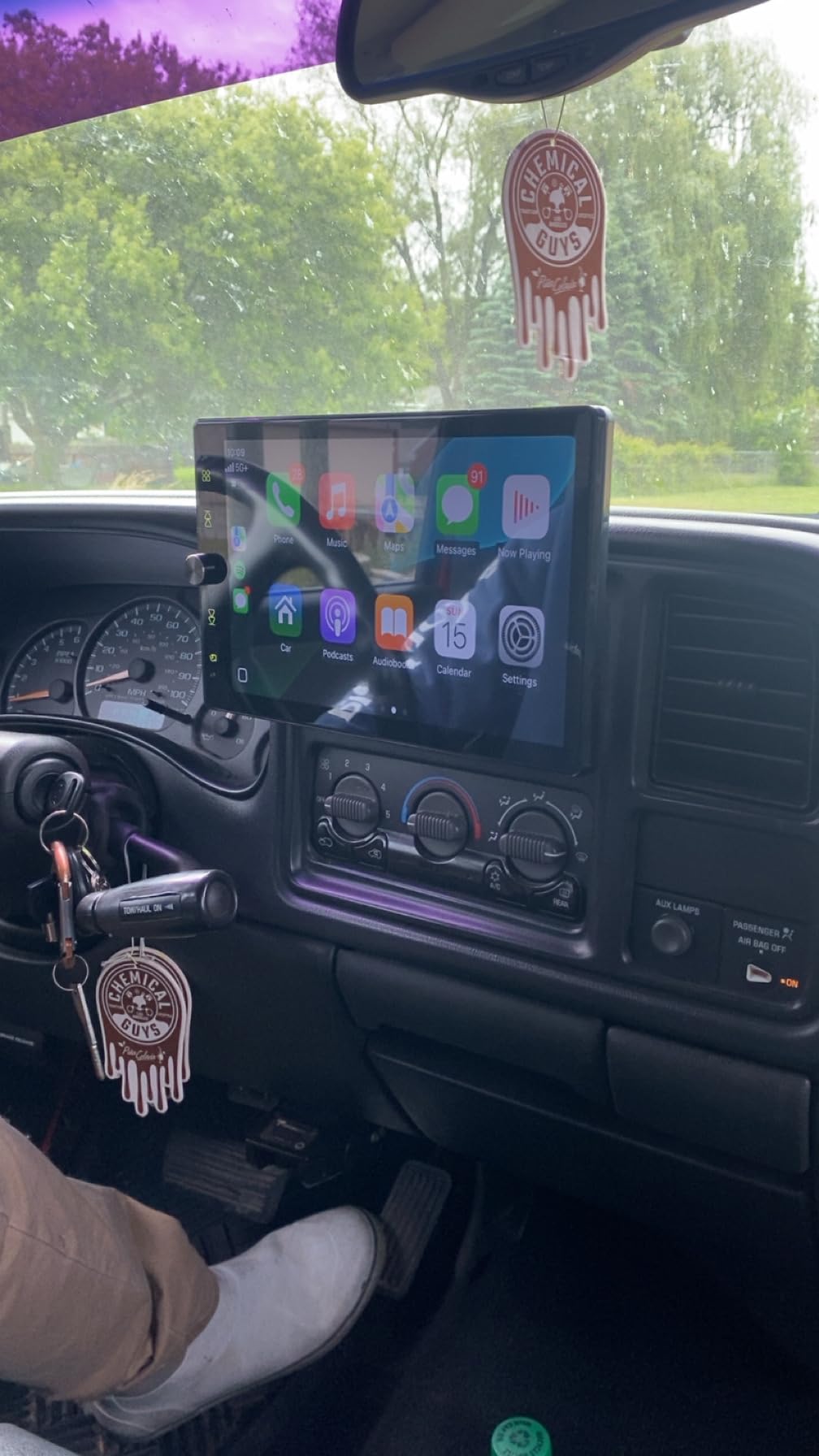
Feature-wise it is generous. Bluetooth calling and streaming with a voice assistant button, FM with 18 presets, dual USB ports including a 2.1A fast charging port, SD card playback, auxiliary input, app control for iOS and Android, a wireless remote, and seven selectable LED backlight colors. That color choice is more useful than it sounds, because it is one of the few ways to make a cheap unit blend into a 1990s dash instead of fighting it.
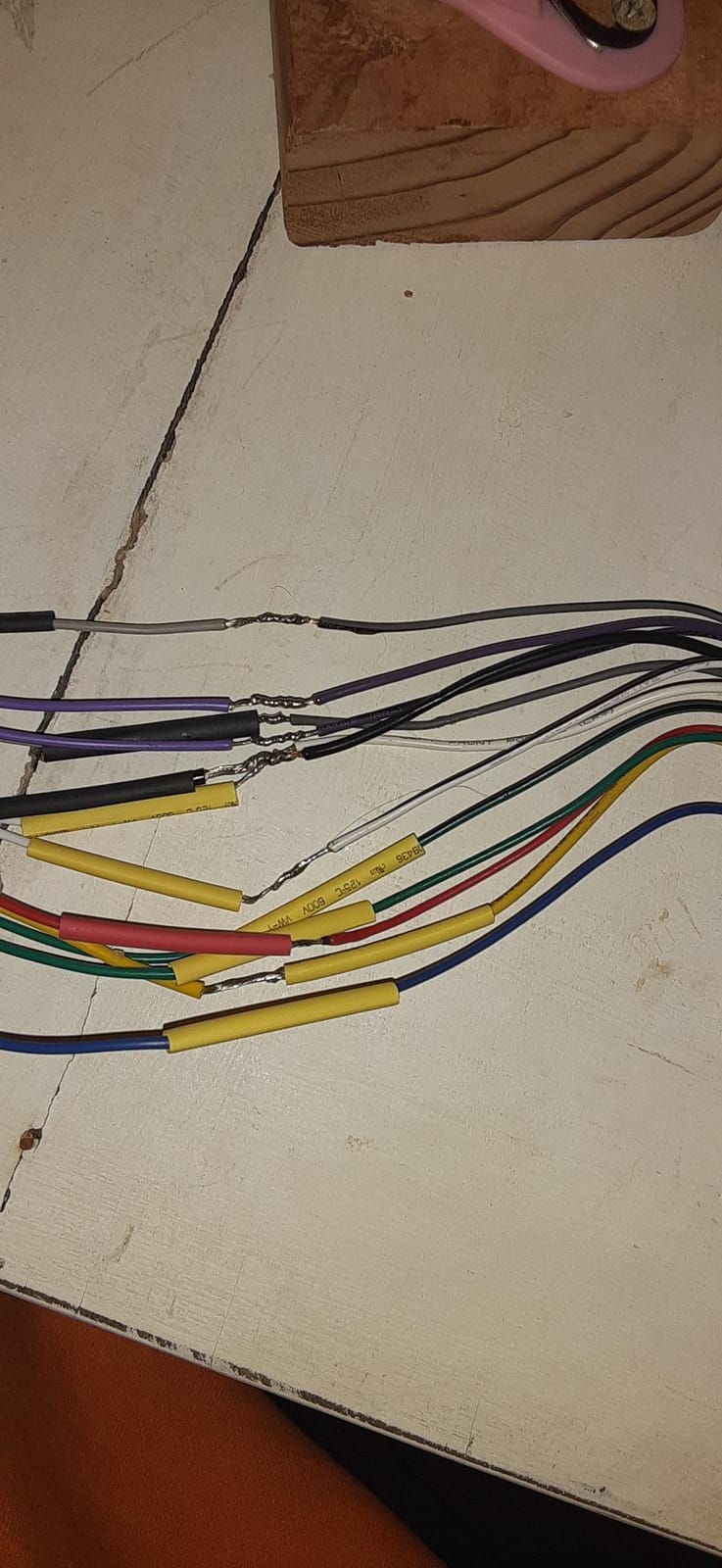
The install side is straightforward. It uses a color-coded harness with a detailed wiring diagram, it fits a standard single-DIN opening, and at 3.2 inch deep and 1.1 pounds it is one of the easiest chassis to get into a tight cavity.
Support for MP3, WMA, APE, FLAC and WAV covers most phone libraries, and the SD card slot is a genuine fallback when a phone is not in the car. Three EQ presets is coarse, but coarse is better than nothing at this level.
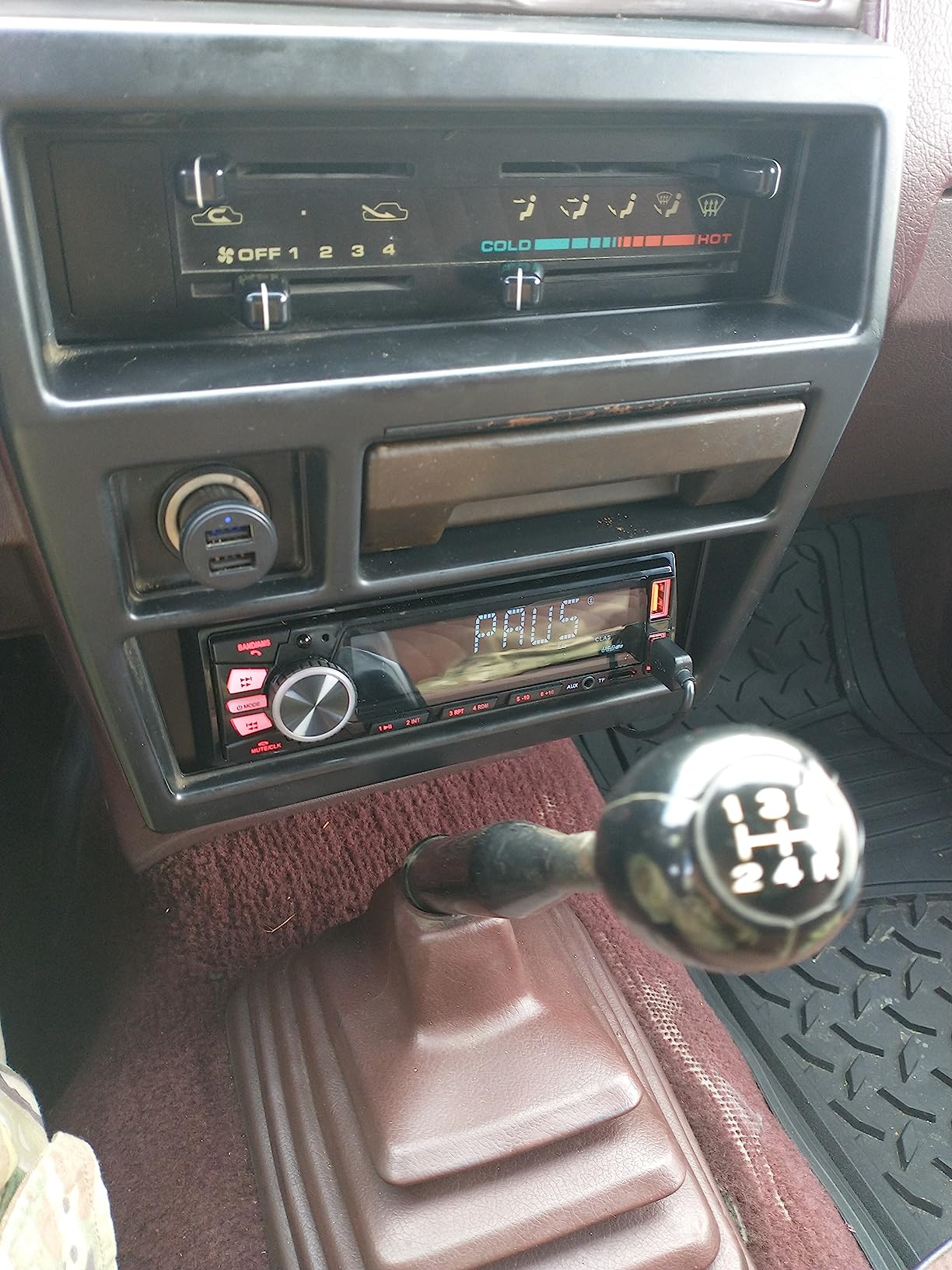
Fitting the cheapest possible upgrade
This is the unit for an old work van, a beater daily or a first project car where the goal is Bluetooth and USB rather than fidelity. Budget the dash kit and harness as separate line items, because the unit itself is only part of the install.
The included remote is a small but real benefit in a car with a long cabin, letting rear passengers control volume without reaching forward.
The output and voltage limits
The internal amplifier is weak, which means the right pairing is the original speakers or a set of high-efficiency aftermarket speakers. Push this unit with a low-impedance high-power set and you will get distortion long before you get volume.
It is also 12V DC only, so it will not work in a 24V truck or bus. Check your vehicle voltage before ordering if you are not certain.
5. Pioneer MVH-S310BT – The Top Rated for Sound Quality
Pioneer MVH-S310BT Single Din Built-In Bluetooth, MIXTRAX, USB, Auxiliary, Pandora, Spotify, iPhone, Android and Smart Sync App Compatibility Car Digital Media Receiver
50W x 4 MOSFET output
Advanced Sound Retriever
Pandora and Spotify
Shallow no-CD chassis
Pros
- Highest average rating in the group at 4.5 with 76% five-star
- Noticeably cleaner and more defined than a worn factory unit
- Shallow no-CD chassis simplifies installation in older dashboards
- Volume knob and buttons stay responsive
Cons
- Backlighting is fixed to blue on this model
- Bezel and harness wires feel thin for the price
- Not aimed at audiophile-grade sound quality
The MVH-S310BT is the pick when the reason you are replacing the radio is that it sounds bad. At 4.5 across more than 1,800 reviews with 76% five-star, it is the most consistently well-regarded unit here, and owners upgrading older Volvos, Civics and trucks consistently point to clarity and bass improvement over worn factory systems.
The technical reason is Advanced Sound Retriever, which restores detail lost to compression, combined with a 50W x 4 MOSFET amplifier and a full set of EQ, subwoofer, bass boost and loudness settings. Bluetooth reconnection is reported as fast and reliable every time without manual pairing.
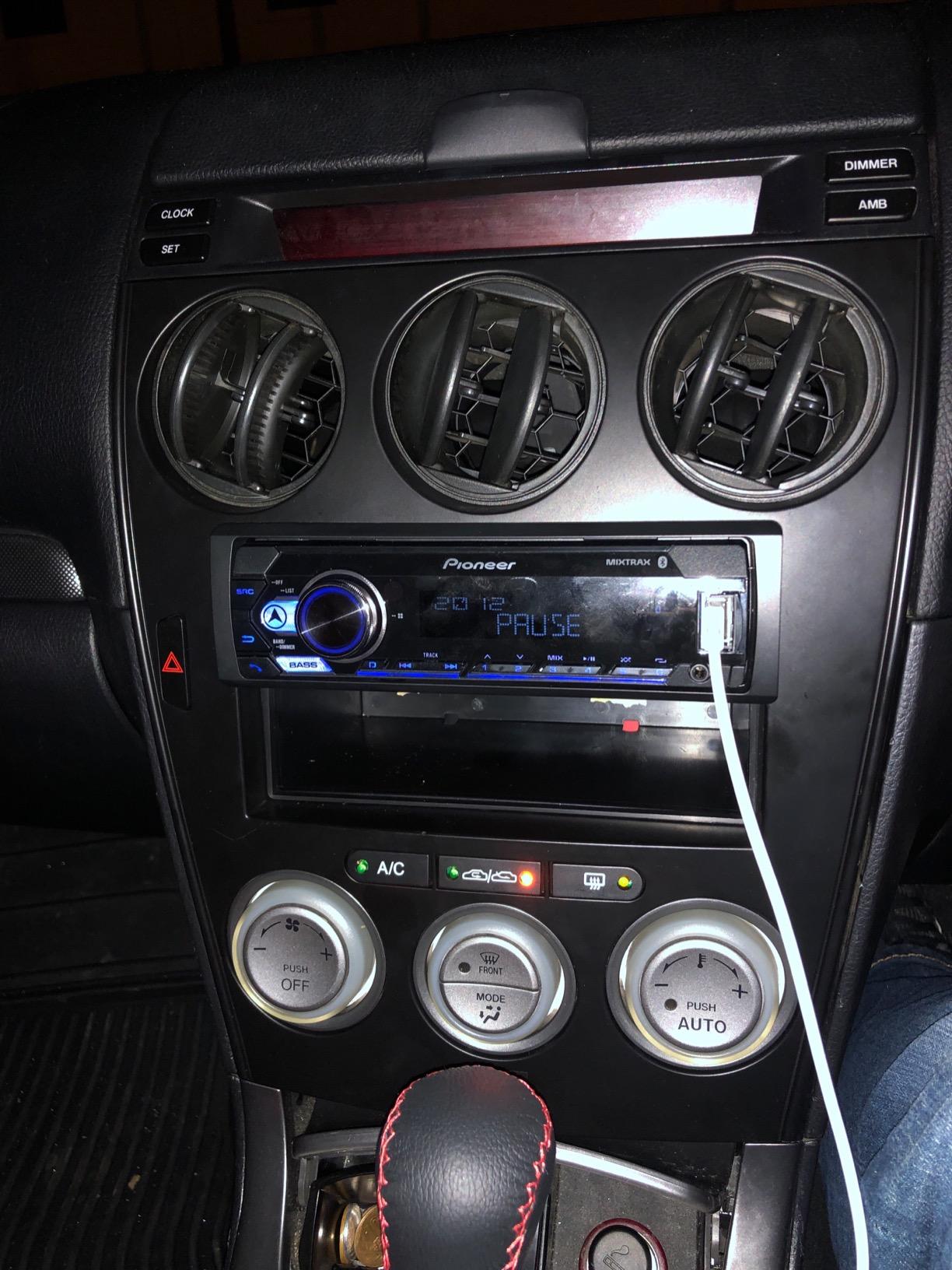
Pioneer Smart Sync app support for iOS and Android is there for control and settings, but it is not required to pair a phone, which matters in a car whose occupants are not all going to install anything. The microphone cord runs roughly 3 meter, long enough to route cleanly to the factory mic location in the A-pillar.
At 3.88 inch deep and 1.8 pounds, this is another short no-CD chassis, which is good news for a cramped dashboard. Volume knob and buttons stay mechanically responsive, and there is no touchscreen to fail after a few summers in a hot car.
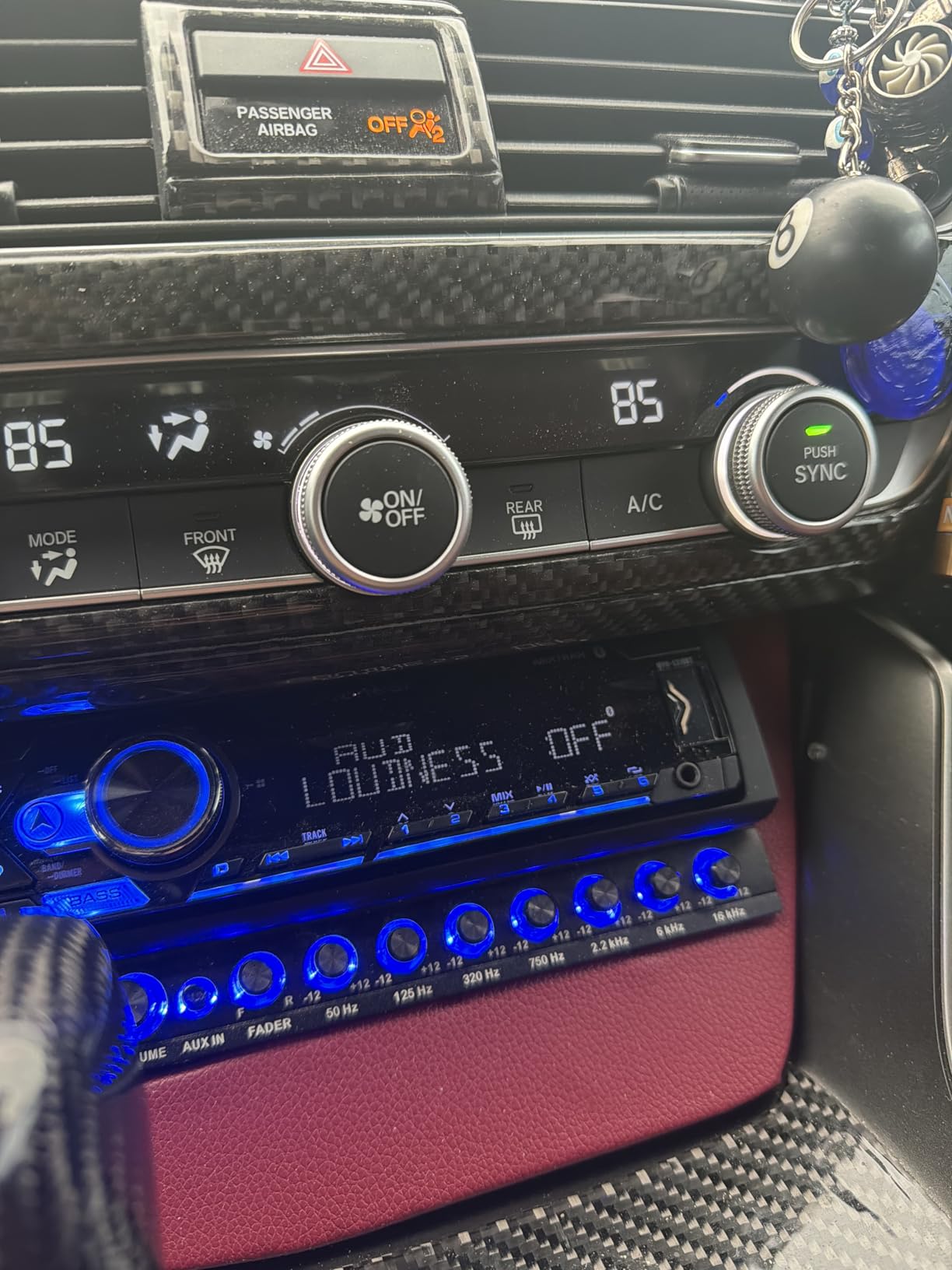
Why owners rate this one highest
The reviews point to one thing: clarity. A car with original paper-cone speakers and a 20-year-old deck sounds thin and undefined, and this unit restores the midrange detail that compression and age had flattened out. That improvement is audible on ordinary streaming, not just on carefully chosen source material.
The display auto-dims, which is a small detail that matters a great deal on a night drive and one that several cheaper units in this roundup get wrong.
When the fixed blue backlight is a problem
Backlighting on this model is not selectable, and only blue is offered. If your dashboard illumination is amber or green and you care about the factory look, either live with it or step up to the MVH-S322BT, which offers color-change illumination.
Some buyers also describe the bezel and the supplied harness as thin plastic and light-gauge wire. It fits fine, but if you are hands-on with the wiring, expect to replace the pigtail.
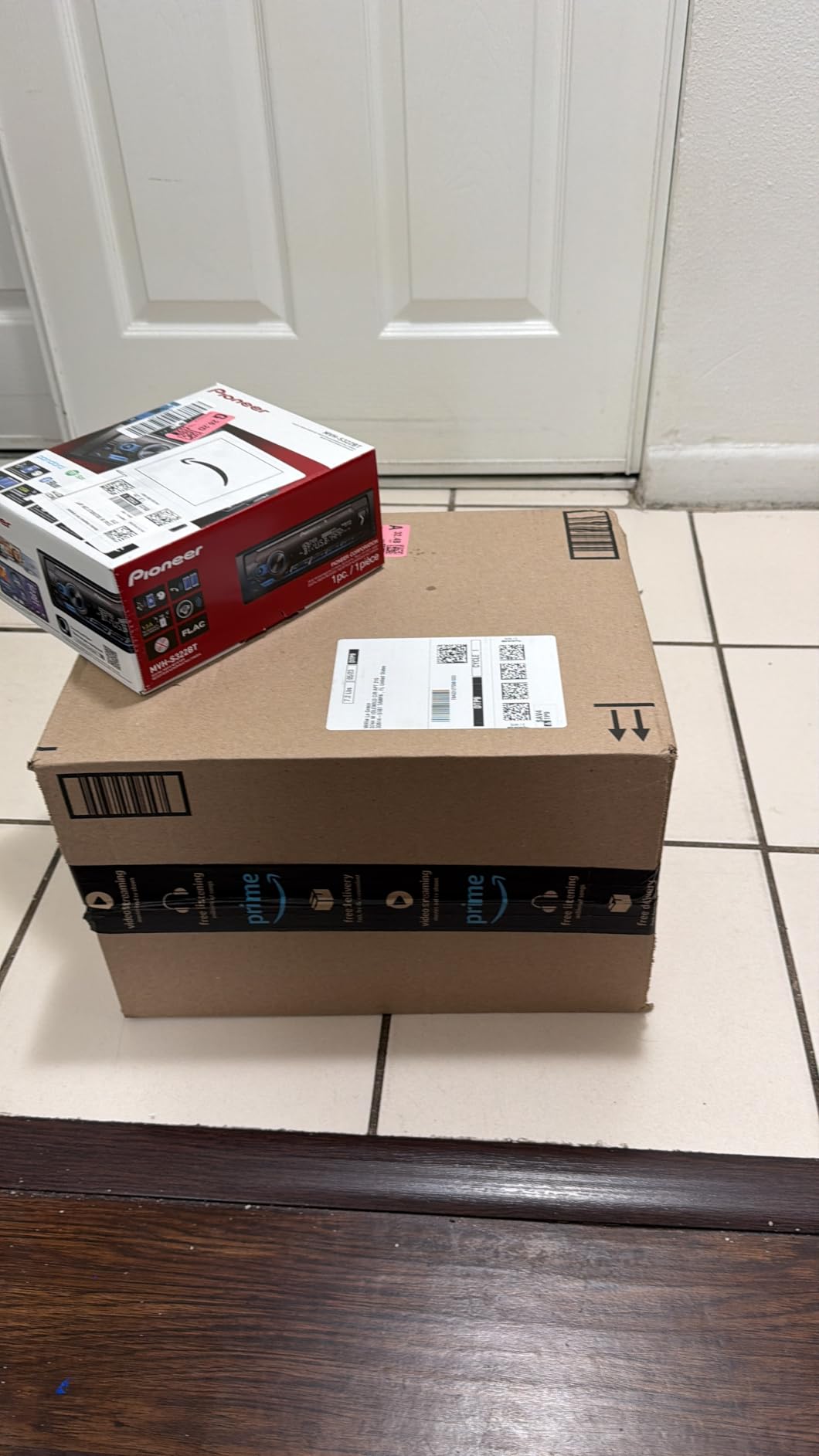
6. Pioneer MVH-S322BT – The Best Base for a System Build
Pioneer MVH-S322BT 1-Din Car Stereo with Bluetooth, USB, AM/FM Radio
13-band EQ with 50W x 4 output
Front and rear RCA preouts
Multi-color illumination
Pros
- Holds the number one best-seller rank in Car Audio Receivers
- 13-band EQ plus preamp level control
- Selectable front
- rear and sub RCA preouts for system expansion
- Clear Bluetooth microphone
Cons
- No weather sealing for open-air vehicle use
- Smart Sync app repeatedly prompts for contacts permission
- EQ adjustment through the app is less practical than on the unit
The MVH-S322BT is the most complete single-DIN receiver in this roundup, and it is the one to buy if you see an amplifier in your future. It holds the number one best-seller rank in Car Audio Receivers, sits at 4.5 with 78% five-star, and brings 13-band EQ, 50W x 4 output and selectable front, rear and sub RCA preouts with preamp level control.
That preamp filtering matters more than most buyers realize. When a pre-out is feeding a larger amplifier, the head unit’s own gain is the first thing that distorts if it is set too high. Buyers building systems cite the clean preamp signal as a main reason to pick this deck.
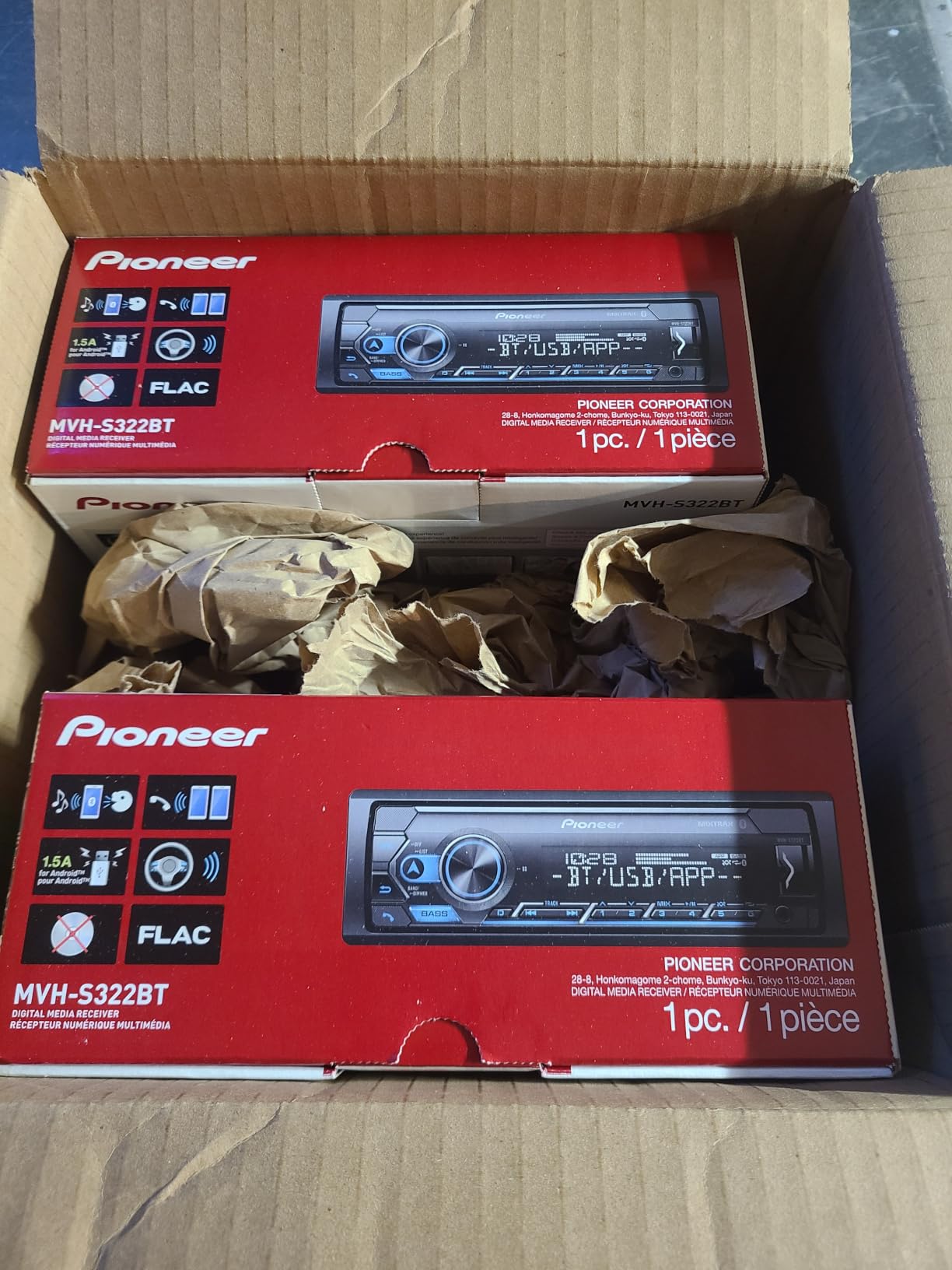
The Bluetooth microphone is called out repeatedly as clearer than the class average, which matters if you take calls in the car rather than only listening. Auto-reconnect and auto-resume of Pandora at startup are the small conveniences that owners notice daily.
Multi-color illumination with auto-dimming solves the fixed-color problem on the cheaper Pioneer, so if matching the factory dash glow is part of your goal, this is the Pioneer to buy.
Building toward speakers and an amplifier
Start here if the plan is speakers first and an amplifier later. The 13-band EQ gives you real control over how the system sounds in your specific car, and the pre-outs mean the amplifier step is a cable swap rather than a whole new head unit.
Enthusiasts on r/CarAV still describe the Kenwood eXcelon single-DINs as the best available in this format, and none of them appear in this roundup, so it is worth being clear that this list is oriented toward what you can actually buy and install without a specialist. Among these ten, this is the most capable system foundation.
App controls and open-air use
Two caveats. The Smart Sync app repeatedly prompts for contacts permission, which some owners find irritating, and EQ adjustment through the app is less practical than turning the knobs on the unit, so do it on the faceplate.
There is also no weather sealing, so this is a car unit, not one for an open-air boat or dune buggy dash.
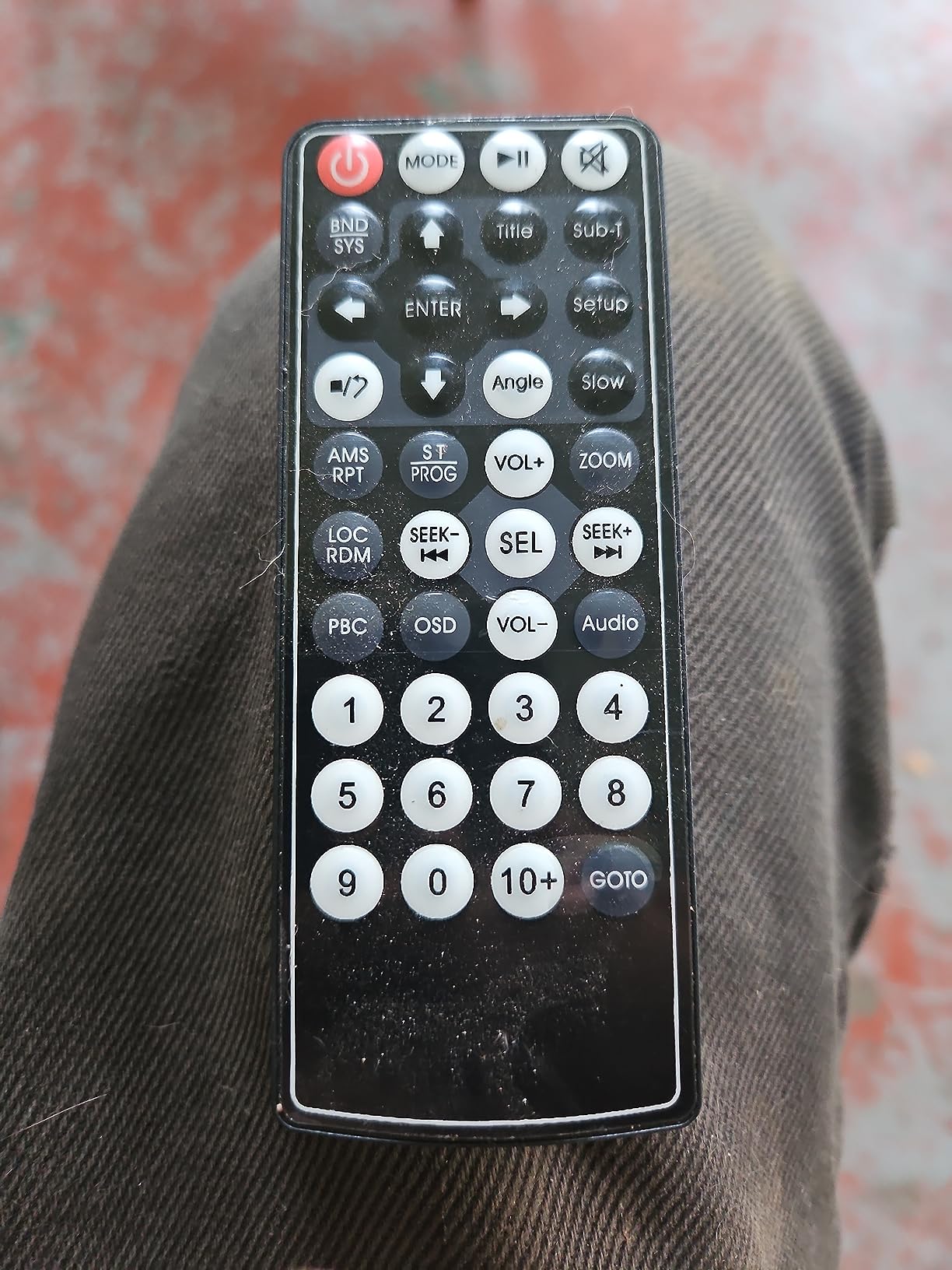
7. Alondy CD/DVD Single DIN – The One With a Retractable Screen
Alondy Single Din Car Stereo with CD/DVD Player Bluetooth USB AM/FM Radio
CD and video DVD playback
Retractable screen option
Rear camera input
178 x 50mm chassis
Pros
- Only unit here that still plays video DVDs
- Large retractable screen useful for navigation and camera viewing
- Rear camera input auto-displays in reverse
- TF card support up to 32GB
- Stock install size of 178 x 50mm with ISO plug
Cons
- Lowest rated in the group at 3.9 with 15% one-star reviews
- Reports of volume dropping to zero within the first few months
- Screen mechanism adds depth and is a tight fit in older dashboards
The Alondy is the odd one out, and it earns its place for one specific reason: it is the only receiver here with a retractable display, offered at 10.4 inch or 2 inch. If you want a screen in a single-DIN dash without cutting anything, this is currently how that gets done.
It also still plays video DVDs, along with MP3 discs and JPEG picture discs, and it accepts USB, TF card up to 32GB and auxiliary input. The rear camera input switches to the screen automatically when the vehicle is put in reverse, which is a genuinely useful behavior in a large older vehicle.
Now the honest part. At 3.9 with a 15% one-star share, this is the widest spread of any product here, and it is the only unit in this roundup we would not call a default recommendation. Happy owners fitted it into RVs, older motor homes and trucks and like the screen size and value, and the seller is credited repeatedly for replacing faulty units promptly.
The unhappy group describes volume dropping to zero on its own within the first few months, units that shut off randomly, and DVD playback that skips. That pattern is consistent enough that we would budget for a possible return.
Screen-based installs in older dashboards
There is a legitimate use case here. A large older vehicle with a factory screen-shaped cavity and a backup camera can use this unit to add a display without modifying the dash, and the auto-reverse switching makes it less fiddly than most adapters.
The install size is 178 x 50mm, slightly under the standard 182 x 53 mm opening, so it sits in the hole without a specific mounting cradle in many dashboards.
Reliability reports and what the rating means
A 3.9 with 15% one-star reviews is a reliability warning, not a dealbreaker, if you buy from a seller who handles returns. The mechanism-heavy design is the likely culprit, and the screen adds depth that is tight in older dashboards where space behind the opening is already scarce.
For anyone who does not need a screen, every other unit in this roundup is a safer long-term choice.
8. JVC KD-SX27BT – Best Value for Real Built-In Power
JVC KD-SX27BT Car Stereo with Bluetooth, 100W Digital Media Receiver, 1.5A USB, Single DIN Head Unit with AM/FM Radio & AUX-in, iOS/Android JVC Remote App, 13-Band EQ, Dual Phone Connection
100W built-in amplifier
13-band EQ with K2
Time Alignment and Sound Lift
Dual phone connection
Pros
- 100W built-in amplifier is unusually strong for a single-DIN
- 13-band EQ plus Time Alignment and Sound Lift
- Two phones connected full time plus up to five Bluetooth devices
- Short chassis eases installation in tight dashboards
Cons
- No CD or DVD drive
- Compact display cannot show much text
- Alexa compatibility is limited on this model
The KD-SX27BT is the hardware pick. Its 100W built-in amplifier delivers 50W per channel, which is a genuinely unusual amount of internal power for this format, and at 4.4 with 73% five-star it sits just behind the two Pioneer units on rating. You can run a decent set of replacement speakers with no external amplifier at all.
Sound shaping is where the enthusiast features live. The 13-band EQ runs on K2 audio technology, and Time Alignment plus Sound Lift let you move the perceived sound stage up into the dash and correct for the speaker positions an older car was designed around. These are the features owners mention first.
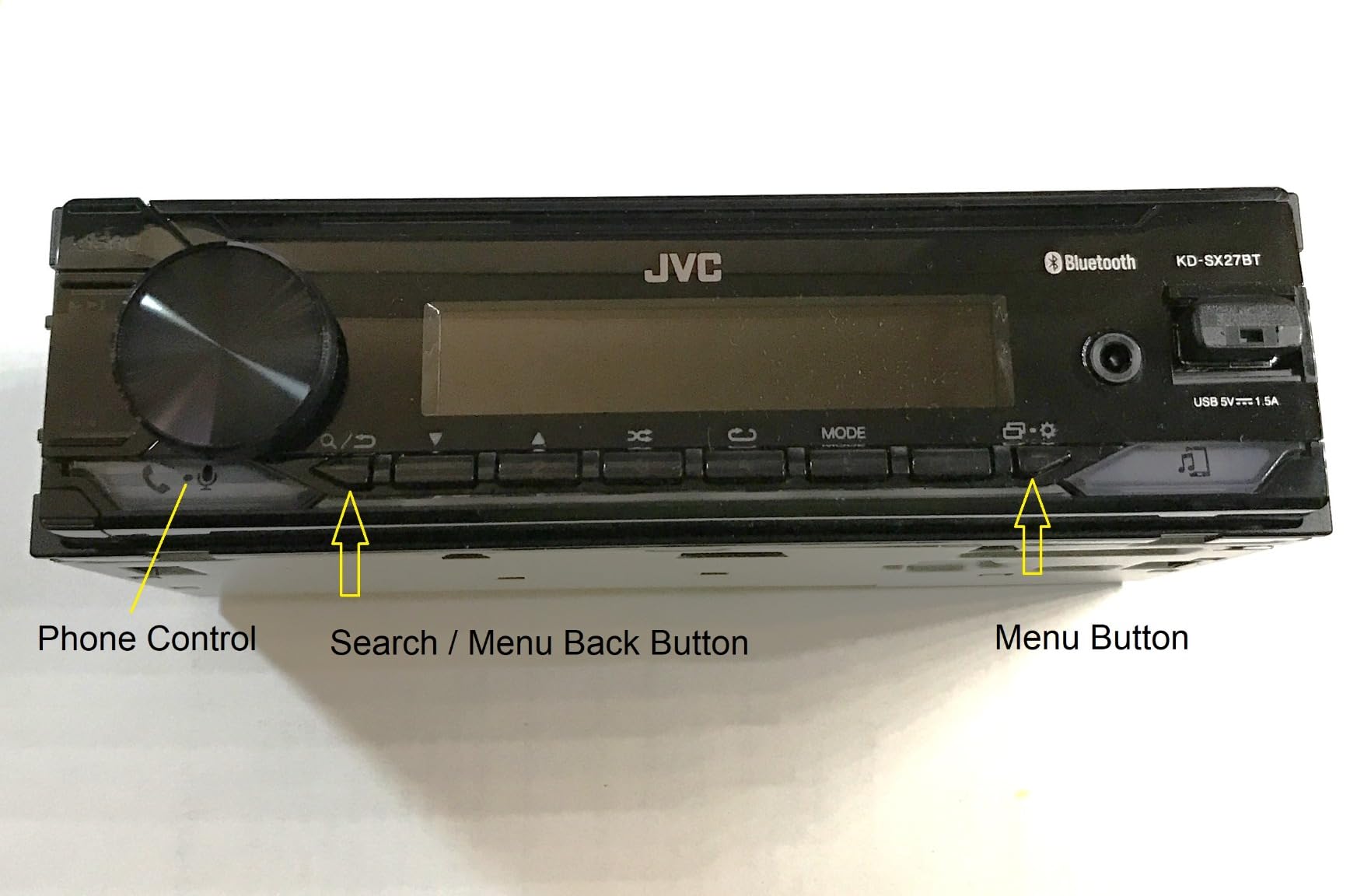
Connectivity is unusually generous. Two phones can be connected full time, with up to five Bluetooth devices remembered, the 1.5A USB port charges quickly, and FLAC playback is supported for anyone running a local high-resolution library.
At 3.94 inch deep and 7.17 inch wide, the short chassis is explicitly designed to reduce weight and ease installation, which is exactly what you want in a cramped factory cavity. A preamp-out is there for a subwoofer or amplifier when you outgrow the internal amp.
Powering factory speakers without an amplifier
This is the unit for a car with tired original speakers where the goal is more volume and more control without adding a separate amp to the install. The combination of real internal power and a 13-band EQ means you can compensate for an uneven cabin on the faceplate and hear the difference immediately.
It is also a good dual-phone fit for anyone who carries a work phone and a personal phone, since both stay connected rather than fighting over the slot.
Where the JVC runs out of room
The display is compact and can show only a small amount of text, which is a minor irritation for anyone who scrolls long song titles. There is no CD or DVD drive, so this is a digital-only deck.
Alexa compatibility is listed but limited on this model, so treat voice control as a phone-side feature rather than a head-unit one.
9. Pioneer DEH-S4220BT – Best Detachable-Face CD Receiver
Pioneer DEH-S4220BT 1-Din CD Car Stereo with Bluetooth USB/AUX
CD drive with detachable face
FLAC playback
Hi-Volt RCA preouts
Color change illumination
Pros
- Highest rated product in the group at 4.5 with 79% five-star
- Keeps a working CD mechanism as new units drop the drive
- Plug-and-play upgrade from older Pioneer decks using the same harness
- External microphone provides clear call quality
- Hi-Volt RCA preouts give a clean signal to external amplifiers
Cons
- Bluetooth range is limited
- Some users report a thin harness with light-gauge wires
- Not the ideal match for very high-power amplified systems
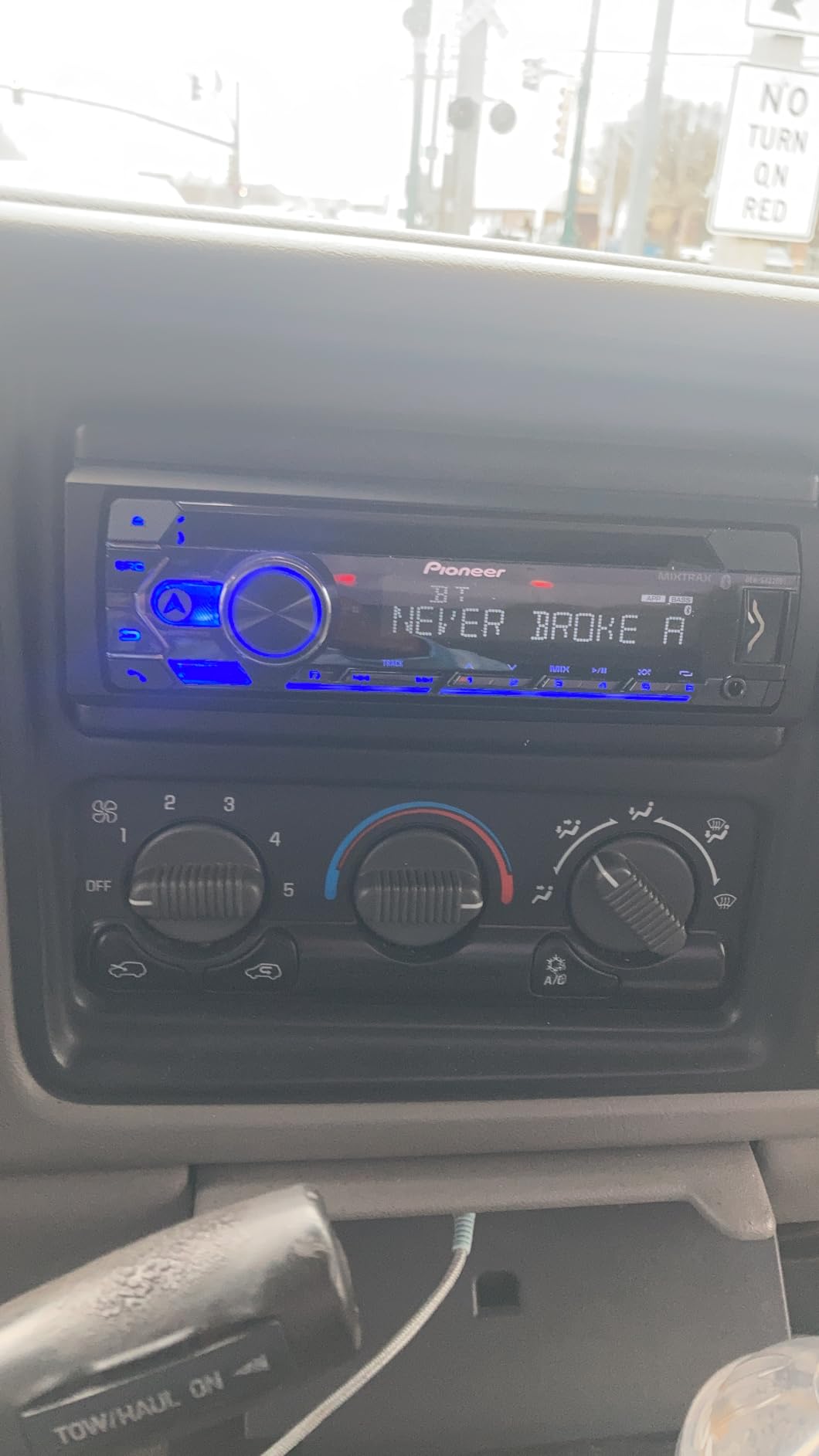
The DEH-S4220BT has the best review profile in the group at 4.5 with 79% five-star, and the reason is longevity. The reviews are full of long-term Pioneer owners replacing 20-year-old factory decks in older trucks, wagons and boats with the same physical fit, and their comments read like a testimonial for build quality and a familiar interface.
The detachable face is the detail that matters most here. You pull the front panel off and carry it with you, which is the single most effective theft deterrent available on a head unit and a genuine consideration for a car that lives on a street or in an uncovered lot.
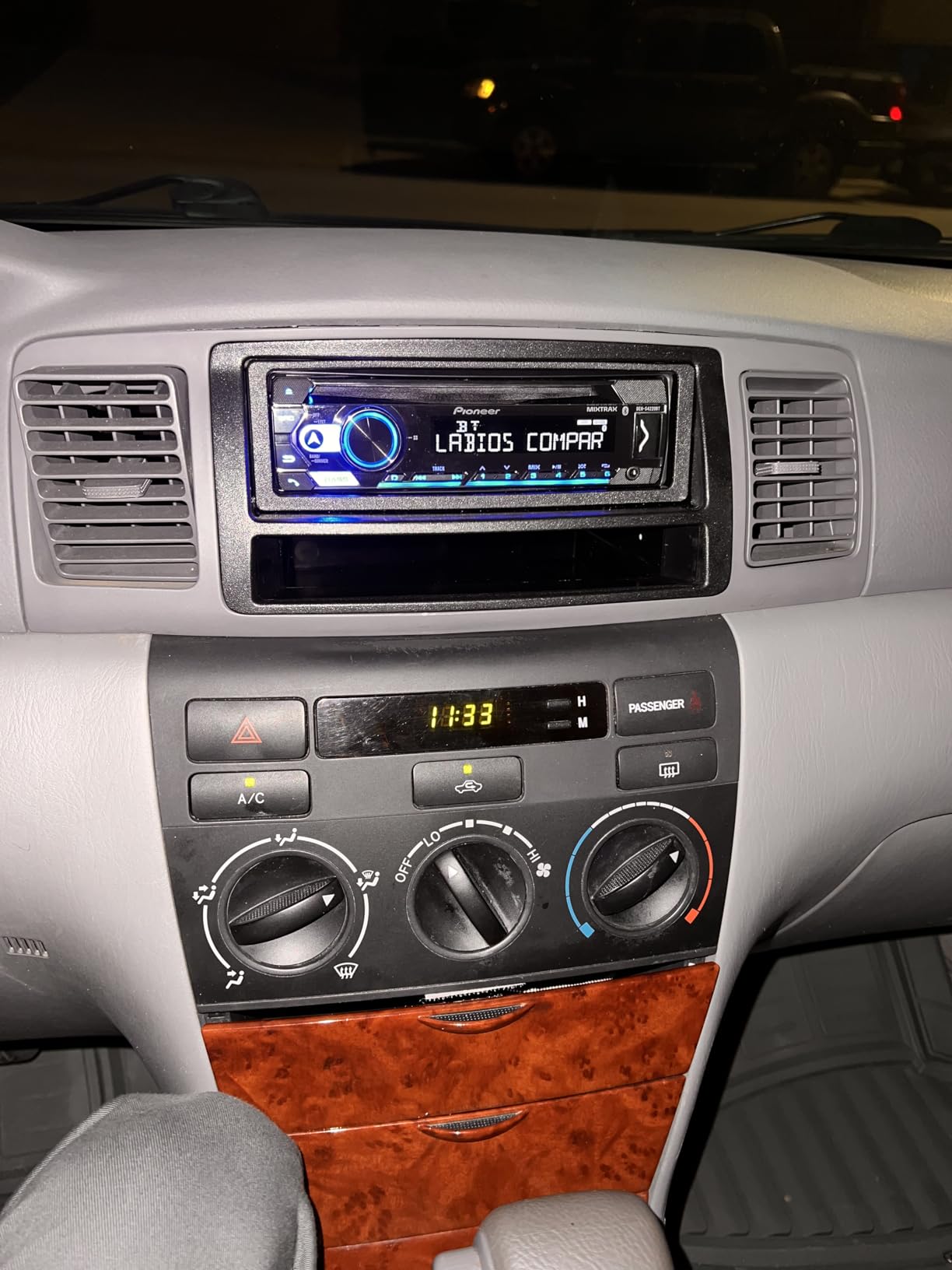
Many of those owners are upgrading from an older Pioneer deck using the same harness, so the install is close to plug-and-play. The external microphone gives clear call quality, USB handles audio and iPhone charging over a single cable, and FLAC playback is supported for local libraries.
Hi-Volt RCA preouts with 50W x 4 output are the system-build path, and MIXTRAX automatic track mixing is there if you want the deck to behave like a DJ.
Keeping a CD drive and deterring theft
If you are keeping discs in the car, this unit is the cleanest combination on the market: a real CD mechanism, a face that detaches for the walk to work, and a phone that still charges over USB. Color change illumination lets you match the factory dash glow.
Advanced Sound Retriever is present, which is the same compression-recovery feature that makes the MVH-S310BT sound notably clearer.
Wiring, range, and headroom caveats
Bluetooth range is the one recurring complaint, and it is limited compared with the units here with a more recent radio. In a large sedan with a rear seat, expect to resync as passengers move.
Some users report a thin or short harness with light-gauge wire, and this is not the deck for a very high-power amplified system. For massive power, the MVH-S322BT is a better foundation.
10. BOSS Audio Systems 750BRGB – Best for Matching an Old Illuminated Dash
BOSS Audio Systems 750BRGB Single DIN Bluetooth Car Stereo, USB, AUX Input
CD player with detachable faceplate
Multi-color illumination
60W x 4 max output
Included remote control
Pros
- Detachable-face CD player with fast Bluetooth pairing
- Multi-color illumination blends into older dashboards
- Sound output is clean and does not clip
- Pre-amp outputs support an external amplifier
- Remote control and mounting hardware included
Cons
- CD loading time is noticeably slow and LCD shows no track information
- Display cannot be dimmed and stays very bright at night
- USB playback is slow to index large libraries and later stopped recognizing drives
- Multiple reports of units failing within months
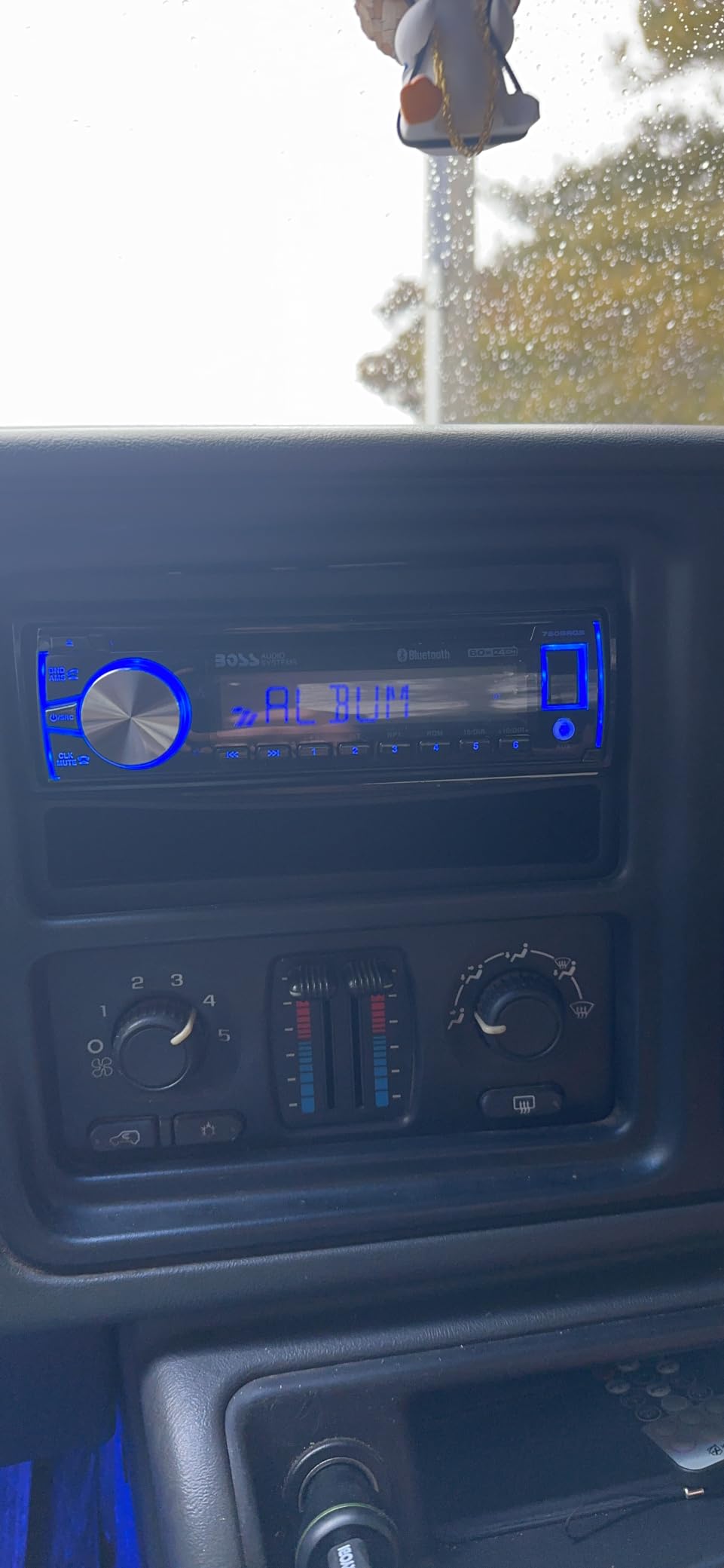
The 750BRGB exists to solve a specific cosmetic problem. Multi-color illumination with more than 16 million combinations lets you dial the display to match an amber or green factory dash glow, and for a car being restored rather than modernized, that single feature can be the whole point.
It also has a CD player with a detachable faceplate, front USB and auxiliary input, front and rear pre-amp outputs, and an included remote control and mounting hardware. Owners replacing a cassette-era deck report clear sound that does not clip the way their previous unit did.
At 4.1 with an 11% one-star share, this unit carries the second-lowest rating in the roundup, and the reviews explain why. Reliability is the recurring theme, with multiple reports of units failing within months, including one owner whose unit acted as though buttons were being pressed during a heat wave and failed again a year later.
Interface complaints are common too. The CD mechanism is slow to load, the LCD does not display song title, artist or album information, and the display cannot be dimmed, which makes it very bright at night.
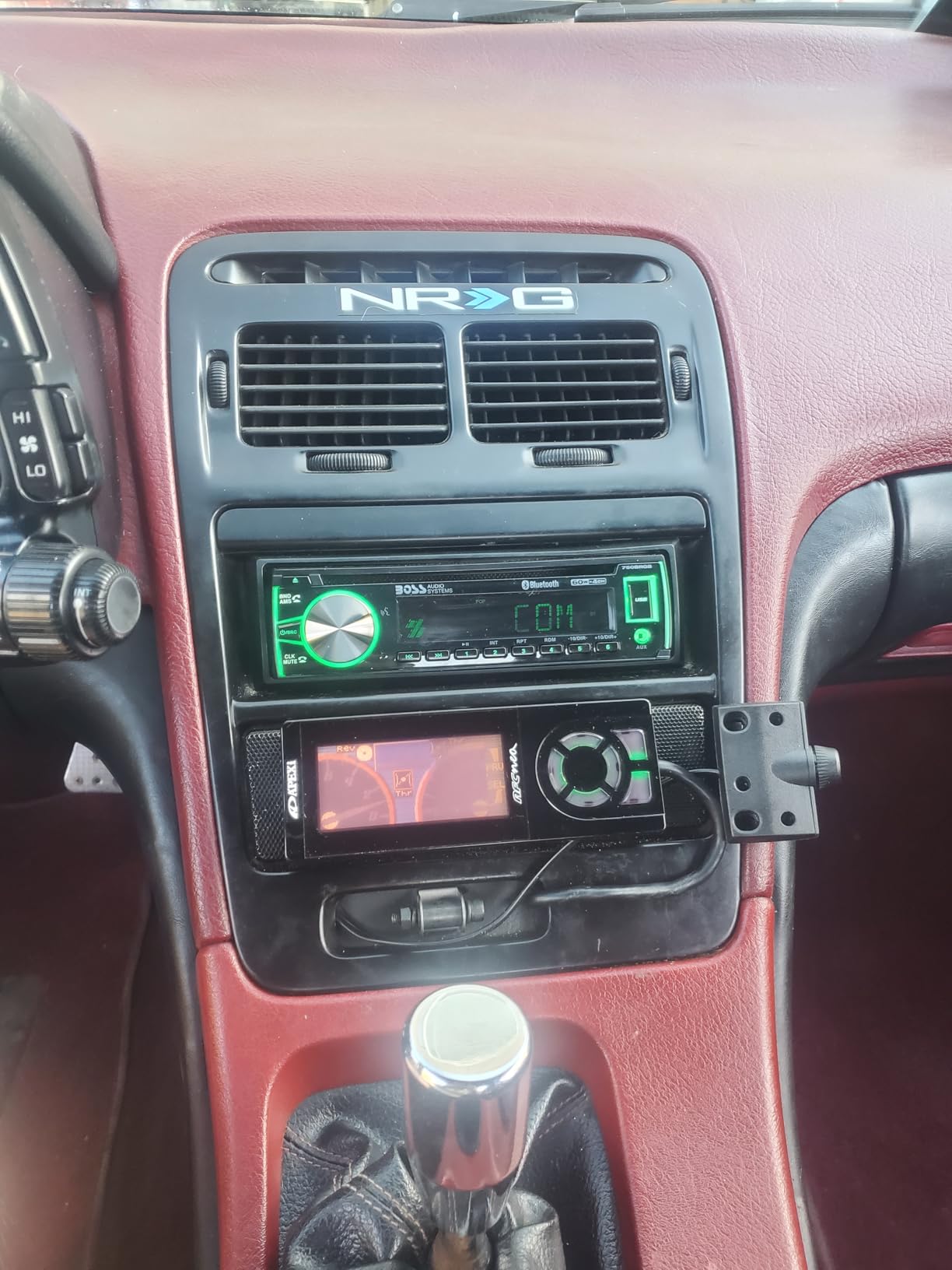
Color matching an old illuminated dash
This is the pick for a project car where the goal is to keep the factory interior looking factory. Detachable faceplate plus adjustable illumination plus a CD drive is a combination you will not find elsewhere in this format at a practical cost.
Pair it with a dash kit that matches your interior rather than a generic black sleeve, and the result reads as a period-correct upgrade rather than an add-on.
Reliability and interface trade-offs
USB playback is reported as slow to index large libraries, with some owners losing drive recognition after a few weeks. If your music lives on a USB stick, test it before you rely on it.
Combined with the undimmable display and the missing track information screen, this unit is a compromise in daily usability. The 616UAB is the safer BOSS choice for everyday driving, and this one makes sense when the appearance of the dash matters more than the interface.
What Else You Need Before the Radio Goes In
The head unit is the part people budget for and the smallest part of the job. Four accessories decide whether the install looks factory or looks homemade, and none of them are optional in an older car.
A vehicle-specific dash kit is the first. It is the part that fills the gap between the new faceplate and the old opening and locks the unit in place. Forum users describe generic sleeves as the reason their install has a visible gap or a head unit that protrudes from the dash, and Metra is the brand name that comes up most often in those threads.
A wiring harness adapter is the second. It converts your car’s factory connector into a standard block and carries the wires people forget, including the amplifier trigger and the steering-wheel-control lines. On a car with a factory amplifier, forgetting the amplifier trigger means the unit simply will not power up.
The third and fourth are situational: an antenna adapter when the new unit uses a different power connector, and a steering-wheel-control adapter when you want the volume and voice keys on your wheel to keep working. Speaker adapters come into play if you are also replacing the door speakers and the factory mounting depth does not match.
On labor, the honest expectation is that a straightforward single-DIN swap is a short job for someone who has done it, and a longer one for a first-timer working in a dashboard with brittle plastics. Add a shop’s labor charge to whatever the accessories and unit cost, and budget for the possibility that a brittle trim clip breaks during removal, because on a 30-year-old interior it often does.
Single-DIN vs Double-DIN: What You Give Up
A double-DIN head unit occupies twice the height, which is why it needs a larger opening than most older dashboards provide. That is the entire argument: the format is dictated by the hole, not by preference. Touchscreens, larger navigation displays and app-based interfaces all come with the double-DIN footprint.
What you give up in single-DIN is screen real estate. No touchscreen means no on-dash navigation map, no video playback while the car is moving, and no large-format reverse camera display unless you add a separate screen. The Alondy in this roundup is the exception, and it shows exactly how that exception is built: a motorized mechanism that adds depth and reliability risk to a shallow format.
There is a middle ground in the form of single-DIN units with a flip-out or telescoping screen, which give you a display when you want one and hide it when you do not. The trade is depth, cost and a moving mechanism in a dashboard that has to survive heat and vibration. If your car already has a double-height opening, our double-DIN picks are the better direction.
How to Choose a Single-DIN Head Unit for an Older Car
Start with the opening, not the feature list. Confirm the 182 x 53 mm ISO opening, then confirm your year, make and model has a dash kit available, because a unit you cannot mount is a unit you cannot use. This is the step the most forum threads skip and then regret.
Next, match the unit to the speakers. If the original door speakers are staying, almost anything here will drive them and internal power barely matters. If you are replacing them, power and pre-outs matter enormously, and that is where the JVC KD-SX27BT and the Pioneer MVH-S322BT separate from the rest. Remember that headroom is more useful than headline watts.
Then pick the feature that will annoy you if it is missing. Disc drive if you still use CDs. Detachable faceplate if the car lives somewhere visible. Detachable faceplate is genuinely the most effective theft deterrent available, and it costs nothing. Color-change illumination if the factory dash glow is part of the look you are keeping. App control if you tune the sound, and only then.
On brands, the honest summary from this roundup is that Pioneer and JVC build the most capable hardware here, with the MVH-S310BT, MVH-S322BT and KD-SX27BT leading on sound and control. BOSS and Jensen cover the value end competently. Worth knowing, though: enthusiasts on r/CarAV still point to the Kenwood eXcelon single-DINs as the best available in this format, and those units simply did not make this list.
Finally, upgrade in the right order. One answer in the search data put it plainly: if sound is weak or distorts at volume, add an amplifier first because factory speakers are usually underpowered, while if the sound is clean but dull, upgrade the speakers first. After that, sound deadening doors and trunk delivers more improvement per hour of work than any head unit. A Facebook car audio group post captures the mainstream goal better than most: a deck and speaker upgrade, nothing crazy.
Keep the Factory Radio and Add CarPlay Instead
If your car is a classic, a recent restomod or simply a car you do not want to cut, you do not have to replace the radio at all. Wireless CarPlay and Android Auto adapter dongles plug into the existing unit’s auxiliary input or USB port and put navigation, calls and messages on an aftermarket screen mounted to the dash or a suction mount on the windshield.
The trade is honest. You gain modern phone features with almost no install, no dash kit and no wiring. You lose the ability to see album art, you often keep an old head unit with no Bluetooth of its own, and the experience is a step below a native integration. Our CarPlay roundup covers the native side if you decide to commit to a real head unit.
Frequently Asked Questions
What size hole do I need for a single-DIN radio?
A single-DIN radio fits a standard ISO opening measuring 182 x 53 mm, which is roughly 7-1/8 inch wide by 2-1/16 inch high. Most cars built before roughly 2010 use that opening. You should still measure your dash before buying, and you will need a vehicle-specific dash kit to fill the gap and hold the unit securely.
Are single-DIN head units universal?
The head unit is universal but the install is not. Any single-DIN receiver fits the standard 182 x 53 mm opening, but you need a dash kit for your specific year, make and model to fill the opening without a visible gap, plus a wiring harness adapter to connect to your factory connectors.
Can you put a double-DIN radio in a single-DIN opening?
Not without a dash kit designed for it. A double-DIN head unit is twice the height of a single-DIN unit, so a single rectangular opening cannot hold it flush. Kits exist for some vehicles that add a stacked or floating housing, but the result protrudes from the dash and the fit varies by model.
What are the disadvantages of single-DIN head units?
The main disadvantages are a small display, no touchscreen navigation, no video playback while driving, and fewer app-based controls than double-DIN models. Some single-DIN units also lack RCA pre-outs needed to drive a separate amplifier. In exchange, they fit older dashboards without cutting anything.
What should I upgrade first in my car audio system?
Speakers and power come before the head unit if your sound is weak or distorts at volume, because factory speakers are usually underpowered. If the sound is clean but dull, replace the speakers first. Sound deadening on doors and trunk panels is the cheapest improvement per hour of work, and the head unit is what adds modern connectivity.
Final Verdict for Older Cars
The best car stereos for older cars in 2026 are the ones that fit the 182 x 53 mm hole you already have and add the connectivity your dashboard is missing. Our pick for most people is the BOSS Audio Systems 616UAB, the most proven unit here, with Bluetooth, USB, pre-outs and a shallow chassis that disappears into an old cavity. Buy the Pioneer MVH-S310BT if sound quality is the reason you are opening the dash, and the JVC KD-SX27BT if you want real amplifier power without adding an amp.
Whatever you choose, budget the dash kit, the wiring harness adapter and a steering-wheel-control adapter before you order, and measure the opening first. That thirty seconds decides whether the install looks factory. Our Bluetooth stereo guide goes deeper on pairing behavior if you want the details before you commit.