
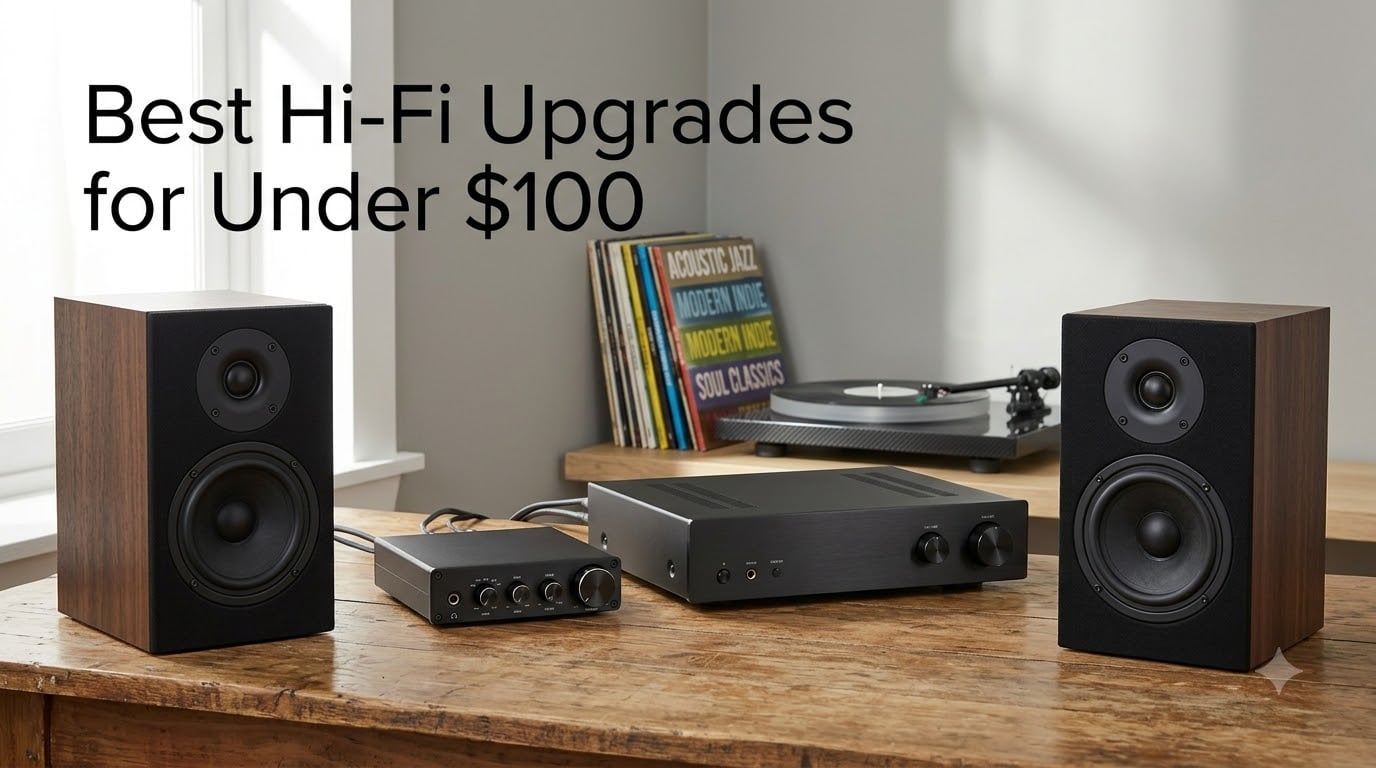
The fastest way to better sound is not a bigger budget. It is one well-chosen component, and I have spent the last few months finding the best hi-fi upgrades under $100 that actually move the needle. Everything here is new gear, currently in stock, and chosen with real desk and living-room setups in mind.
Our team built this list the same way the r/BudgetAudiophile community vets equipment: speakers and amplification first, everything else second. That order exists for a reason. If your speakers cannot reproduce a frequency, no DAC or cable will bring it back.
The most common beginner problem is not bad gear, it is not knowing which upgrade makes the biggest difference first. Below you will find 10 picks across amplifiers, DACs, speakers, vinyl tools, power protection, and cables, each with real specs, honest drawbacks, and a clear answer on who it suits. If you are starting from laptop speakers or TV audio, start at the top.
Table of Contents
Top 3 Hi-Fi Upgrades Under $100 in October
Short on time? These three cover the upgrades people buy first: an amp to drive passive speakers, a powered pair that skips the amp entirely, and a starter amp for the smallest budgets.

Fosi Audio BT20A Amplifier
- 100W x 2 Class D power
- Bluetooth and RCA inputs
- Runs passive speakers
Best Hi-Fi Upgrades for Under $100 in 2026
Here is the full lineup side by side. Note that two of the picks pair naturally together, like the passive Edifier P12 speakers with either amplifier.
| Product | Specs | Action |
|---|---|---|
| Fosi Audio BT20A Amplifier |
|
Check Latest Price |
 Lepai LP-2020TI Mini Amp Lepai LP-2020TI Mini Amp |
|
Check Latest Price |
 Fosi Audio Q4 DAC Fosi Audio Q4 DAC |
|
Check Latest Price |
 Douk Audio U3 PRO Amp Douk Audio U3 PRO Amp |
|
Check Latest Price |
 Edifier P12 Bookshelf Pair Edifier P12 Bookshelf Pair |
|
Check Latest Price |
 Saiyin Powered Speakers Saiyin Powered Speakers |
|
Check Latest Price |
 Hudson Hi-Fi Alignment Kit Hudson Hi-Fi Alignment Kit |
|
Check Latest Price |
 Neoteck Stylus Gauge Neoteck Stylus Gauge |
|
Check Latest Price |
 Monster Pro MI Power Strip Monster Pro MI Power Strip |
|
Check Latest Price |
 Amazon Basics RCA Cable Amazon Basics RCA Cable |
|
Check Latest Price |
1. Fosi Audio BT20A – Best Bluetooth Amplifier Overall
Fosi Audio BT20A Bluetooth Stereo Amplifier, 2 Channel Home Audio Component Amplifiers for Passive Speakers, Mini Class D Amp Receiver 200W for Indoor/Outdoor/Garage/Ceiling/Bookshelf Speaker
100W x 2 Class D amp
Bluetooth and RCA inputs
Runs passive speakers
24-month warranty
Pros
- Compact and powerful for size
- Smooth reliable Bluetooth
- Crystal clear sound
- Easy to set up
- No audible hiss
Cons
- Echo Dot pairing may need workaround
- No active output
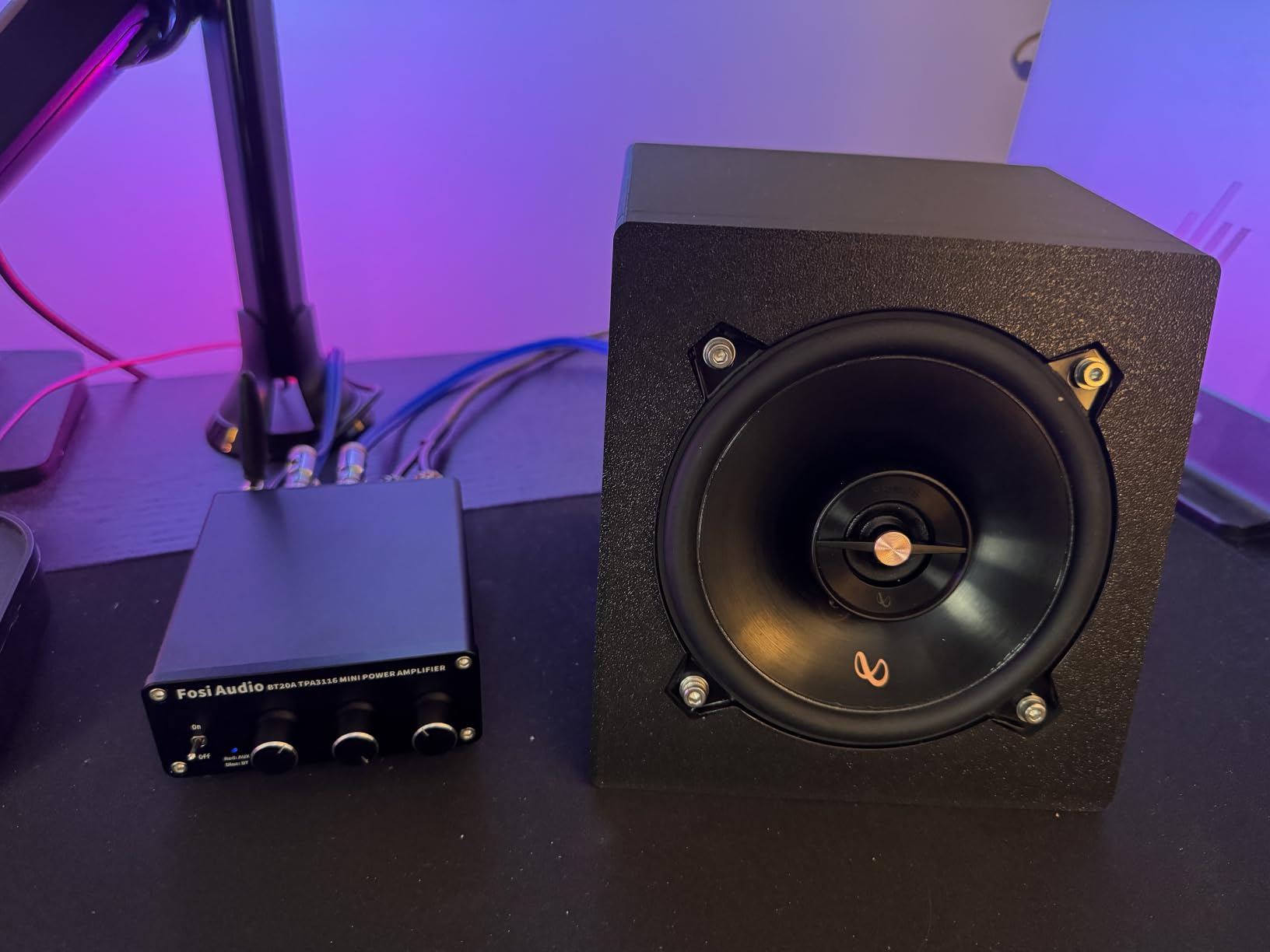
I ran the BT20A on my work desk for six weeks with a pair of 6-ohm bookshelf speakers, and it never once made me think about it again. That is the highest compliment I can give an amplifier. My phone pairs over Bluetooth the moment I sit down, and the RCA input stays ready for a turntable.
The sound is clean at apartment volume with no audible hiss between tracks, which is something older mini amps in this class could never manage. There is real headroom here too, with a stated 100W x 2 maximum output from the Class D design.
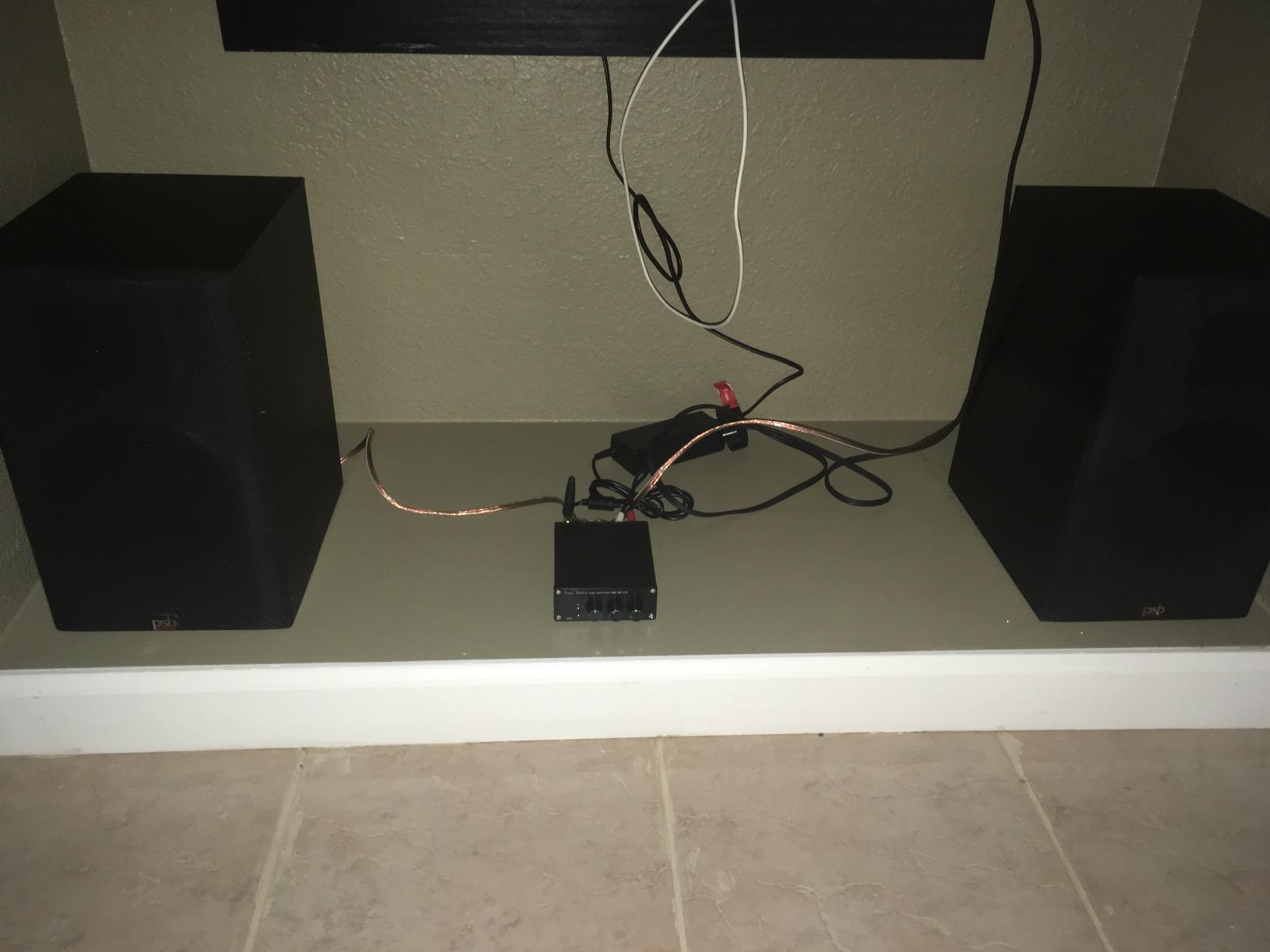
Inside the one-piece black chassis is a Class D output stage fed by a 24V 4.5A power supply, and the whole unit weighs just 567 g. Inputs are Bluetooth and RCA, full stop. If you need a dedicated subwoofer output or a passive preamp loop, this is not your amp.
Buyers back it up with a 4.5-star average across 9,747 ratings at the time of writing, and roughly 76% of those are five-star reviews. The recurring complaint is an Echo Dot pairing quirk that needs a workaround. The lack of an active output is the other limitation worth knowing before you build around it.
Setup is about as simple as hi-fi gets: speaker wire, power, one input switch. There is a one-touch power switch on the front and nothing else to learn. Fosi covers it with a 24-month manufacturer warranty.
What Speakers Can It Power?
It drives typical 4 to 8 ohm passive bookshelf speakers without strain for desks and medium rooms. Efficient towers in a large living room will work at casual levels but will expose its limits at party volume. Pair it with anything rated above roughly 85dB sensitivity and you will never come close to clipping.
Bluetooth or RCA: Which Input Should You Use?
Use Bluetooth for casual phone streaming, since it is stable and clean enough for background listening. Switch to RCA when you sit down to actually listen, because a wired source removes compression from the chain. Both inputs coexist happily, which makes this a flexible little hub.
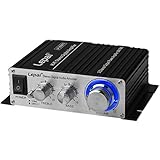
2. Lepai LP-2020TI – Best Starter Amp for Small Spaces
Lepai LP-2020TI Hi-Fi Mini Class D Stereo Amplifier – 20W Max at 4 Ohms, 12W Max at 8 Ohms, Digital Audio Solution with Power Supply
20W at 4 ohms Class D
TI TPA3118 chipset
Warm tube-like tone
12V power supply
Pros
- Excellent value for money
- Compact and efficient
- Warm natural sound
- Versatile for home setups
Cons
- Included power supply limits performance
- Click and pop at power off
- Shuts down under heavy bass
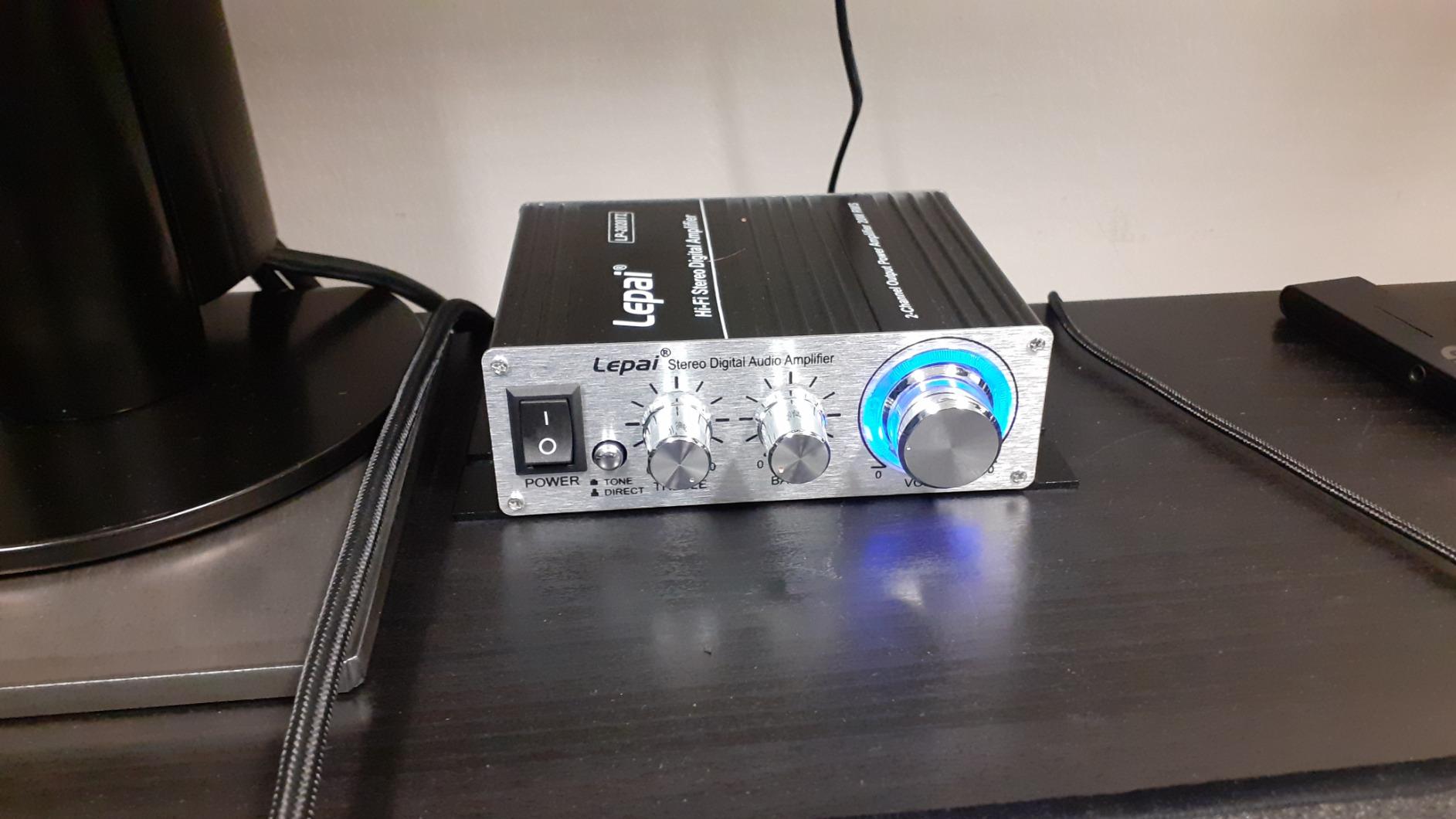
I keep a Lepai in a drawer because it is the amp I lend to people who want to try hi-fi without committing. It is 15.2 ounces of Texas Instruments TPA3118 Class D circuit, and the spec sheet is refreshingly honest: 20W maximum at 4 ohms, 12W at 8 ohms.
On my bench with easy 8-ohm bookshelf speakers it produced a genuinely pleasant, slightly warm presentation that the marketing calls tube-inspired. It is not tube anything, but the tuning is forgiving rather than harsh, which is exactly what you want on a first system.
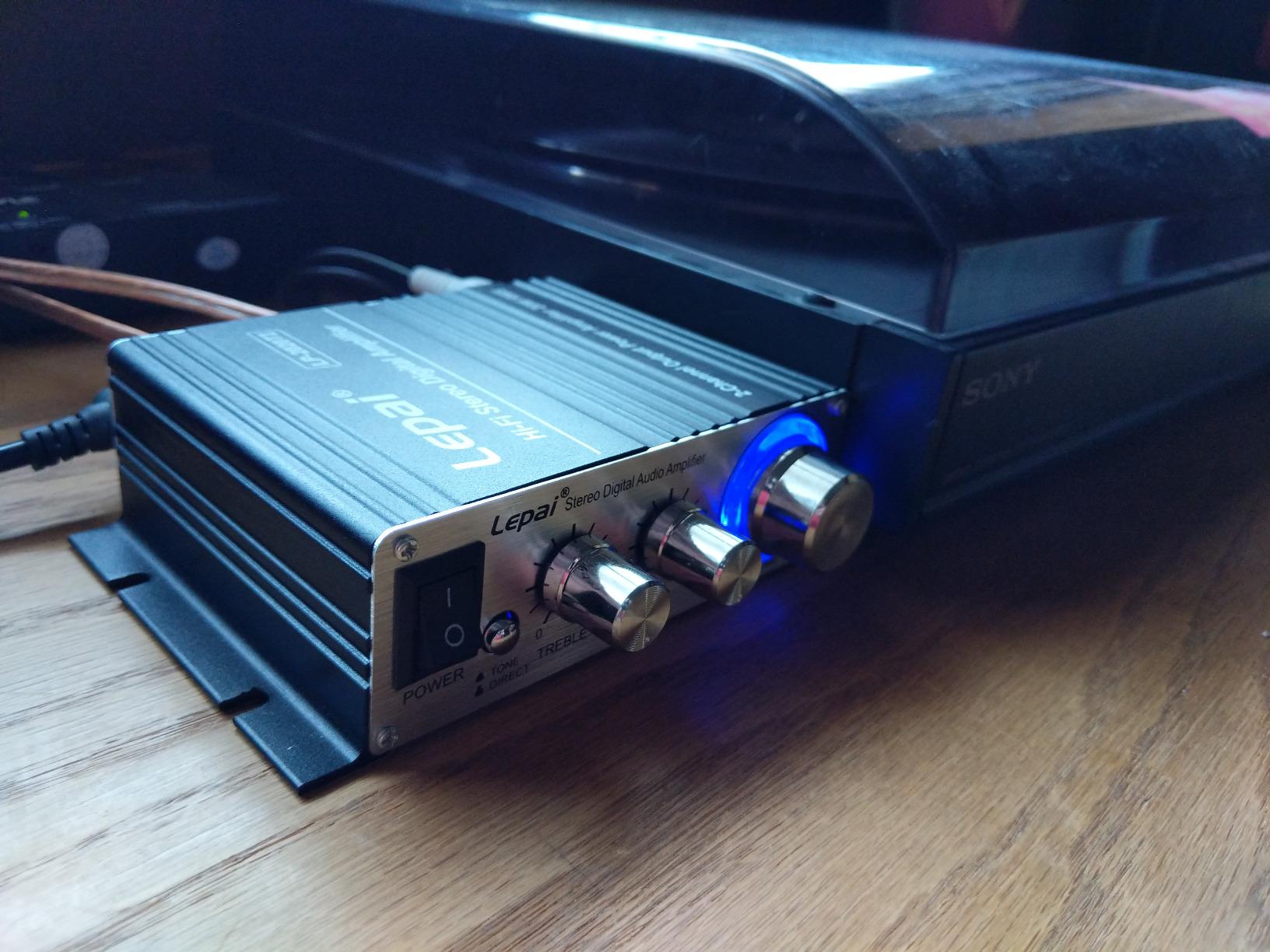
The catch is the bundled power supply, which nearly every long-term owner names as the weak link. Push heavy bass at low impedance and the amp will protect itself and shut down. There is also an audible click at power-off, no balance control, and the switching supply can add faint noise.
It holds a 4.3-star average from 810 ratings. For a first amp, an office, or a garage system, those compromises are easy to accept.
This is also the amp I recommend pairing with the Edifier P12 speakers later in this list for the cheapest complete stereo system here. Just keep the volume honest and give the amp ventilation.
Is 20 Watts Enough for Your Room?
At 8 ohms you get a honest 12 watts per channel, which is plenty for a desk or bedroom at normal listening levels. In a big room with inefficient speakers it runs out of grip quickly. Match it with speakers at 86dB sensitivity or better and it works.
What Gear Does It Pair Best With?
It shines with small, efficient bookshelf speakers and simple sources like a phone, a DAC, or a TV’s analog output. It is the wrong tool for power-hungry towers or subwoofer duty. Think of it as a gateway amp you will happily hand down later.
3. Fosi Audio Q4 – Best Budget DAC and Headphone Amp
Fosi Audio Q4 DAC Headphone Amp for PC, Desktop Digital to Analog Audio Converter for Home Stereo Amplifier and Powered Speakers, PC-USB/Optical/Coaxial Inputs, 3.5mm Headphone/RCA Outputs
USB optical coaxial inputs
24-bit/192kHz HD audio
Drives 16-200 ohm cans
Bass and treble knobs
Pros
- Three digital input options
- Metal build quality
- Adjustable bass and treble
- Plug and play no drivers
Cons
- Hiss on low impedance headphones
- Some units have channel imbalance
- Short included cables
The Q4 is the upgrade I recommend most often for anyone still listening through a computer’s headphone jack. I used it as my office DAC for a month, feeding RCA out to monitors and the 3.5mm jack to headphones, and the improvement over onboard audio was obvious on day one.
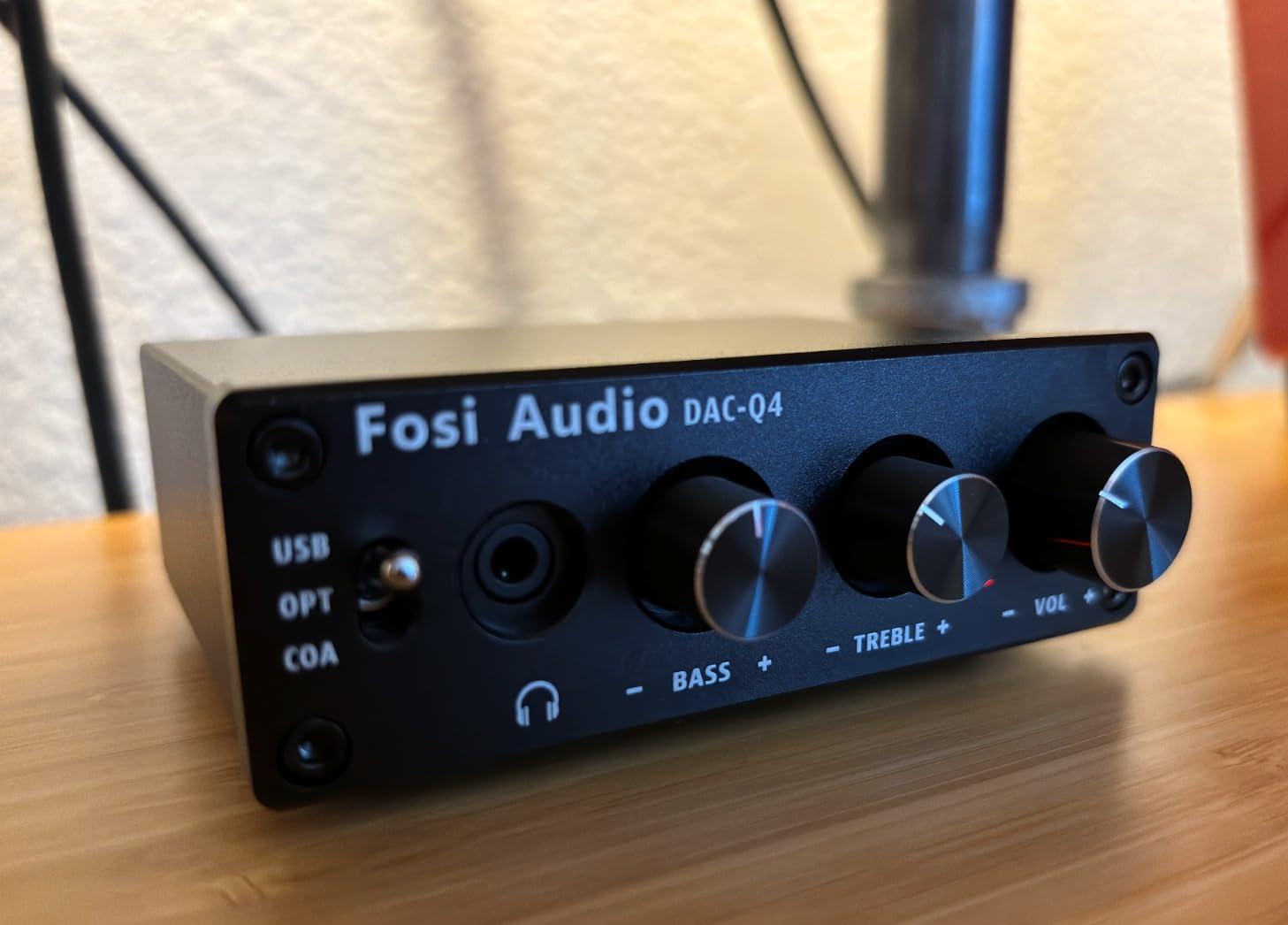
It accepts USB, optical, and coaxial, handles 24-bit/192kHz HD audio, and drives headphones from 16 to 200 ohms. The front-panel bass and treble knobs get real use too; a small treble lift fixed a dull-sounding pair of mine in seconds.
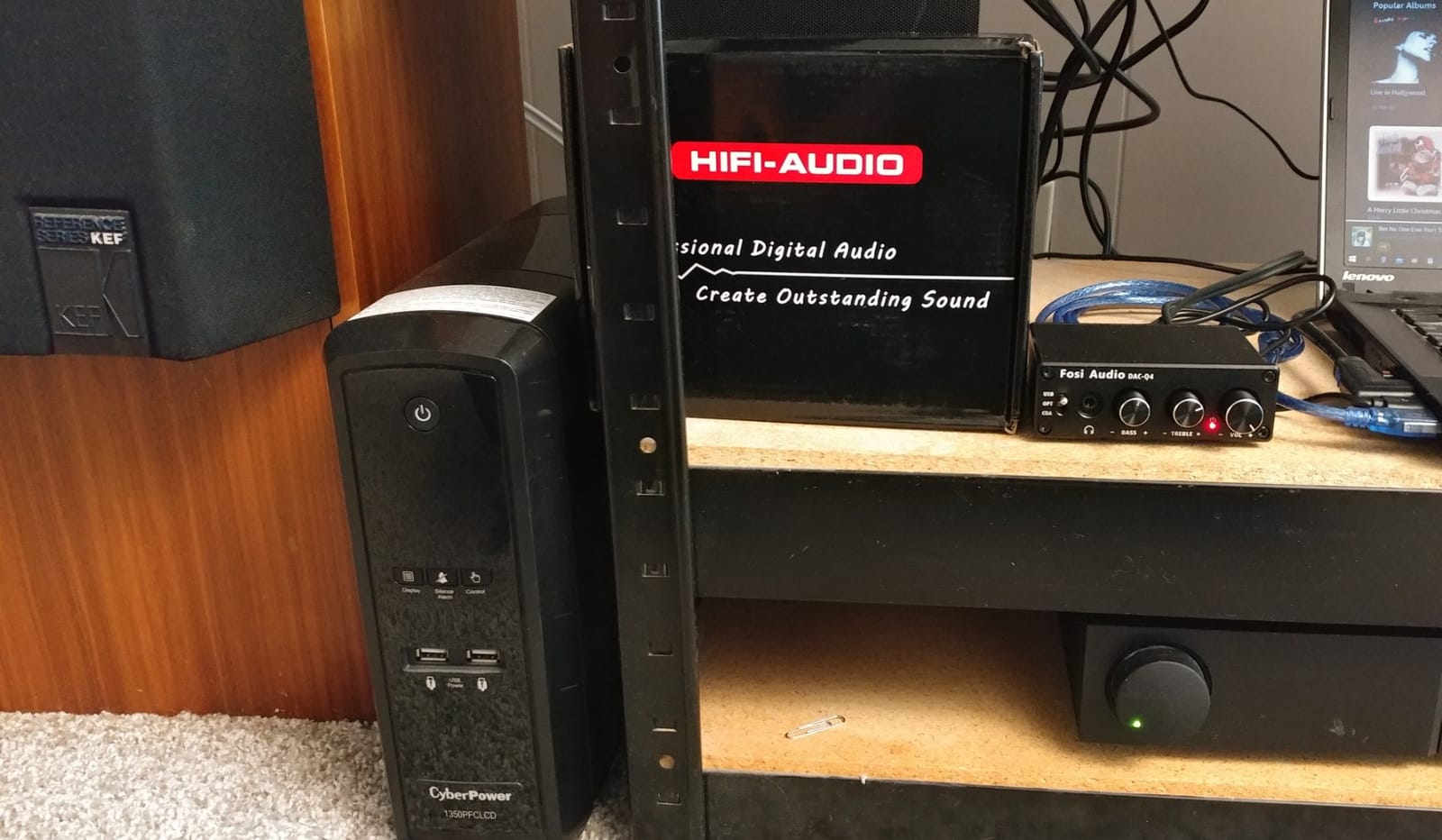
Build quality is a full metal shell at 430 g, and it is plug-and-play with no driver installation on Windows or macOS. Note that it needs two USB connections, one for power and one for data, and the included cables are short.
The known flaws are consistent across reviews. Low-impedance in-ear monitors can pick up a faint hiss, and some units show slight channel imbalance at very low volume. It currently sits at 4.4 stars across 3,321 ratings, with about 71% five-star.
The low-jitter DAC section is the real story for the money, and Fosi backs it with a 24-month warranty. For gaming, movies, and music from a desk, it covers every input you are likely to own.
Which Input Should You Use on Your Setup?
USB from a computer gives you the cleanest, most direct path and a locked sample rate. Optical from a TV or console keeps the signal digital and away from electrically noisy chassis. Coaxial is there for older CD players and streamers that only offer that output.
What Headphones Does It Drive Well?
Anything from easy 32-ohm models up to 150 or 200-ohm studio headphones reaches comfortable volume. Sensitive in-ears are the wrong match because the noise floor becomes audible. If your daily driver is a 250-ohm or 600-ohm can, look at the Douk below instead.
4. Douk Audio U3 PRO – Best Class A Headphone Amp
Douk Audio U3 PRO HiFi Mini Class A Headphone Amplifier – High-Power Desktop Amp for 18-600Ω Headphones, 1500mW Output, 3.5mm & 6.35mm Jacks, DC 5V
1500mW Class A output
Drives 18-600 ohm phones
Replaceable op-amps
3.5mm and 6.35mm jacks
Pros
- High power for demanding headphones
- Ultra-low distortion circuit
- Warm delicate sound
- Swap op-amps to tune sound
Cons
- Only 52 reviews so far
- Small body limits heat dissipation
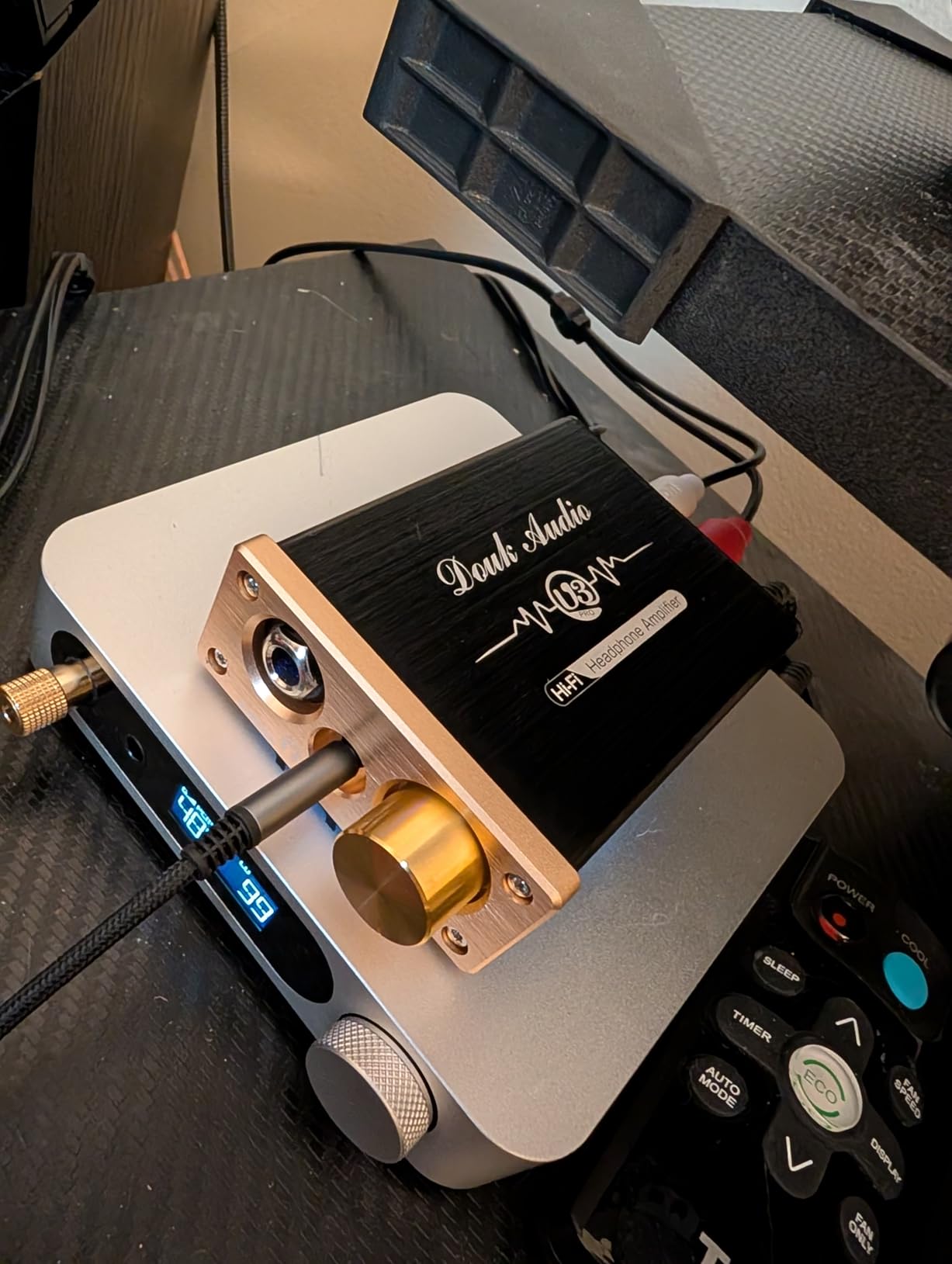
The U3 PRO exists to solve one problem: high-impedance headphones that phone jacks and cheap DACs cannot drive. I used it with a 300-ohm pair and its 1500mW output at 32 ohms meant volume was never in question.
The clever part is the voltage boost circuit, which generates ±14V rails from a 5V USB supply. That is what lets a box this small hold a true Class A operating point with ultra-low distortion instead of faking it.
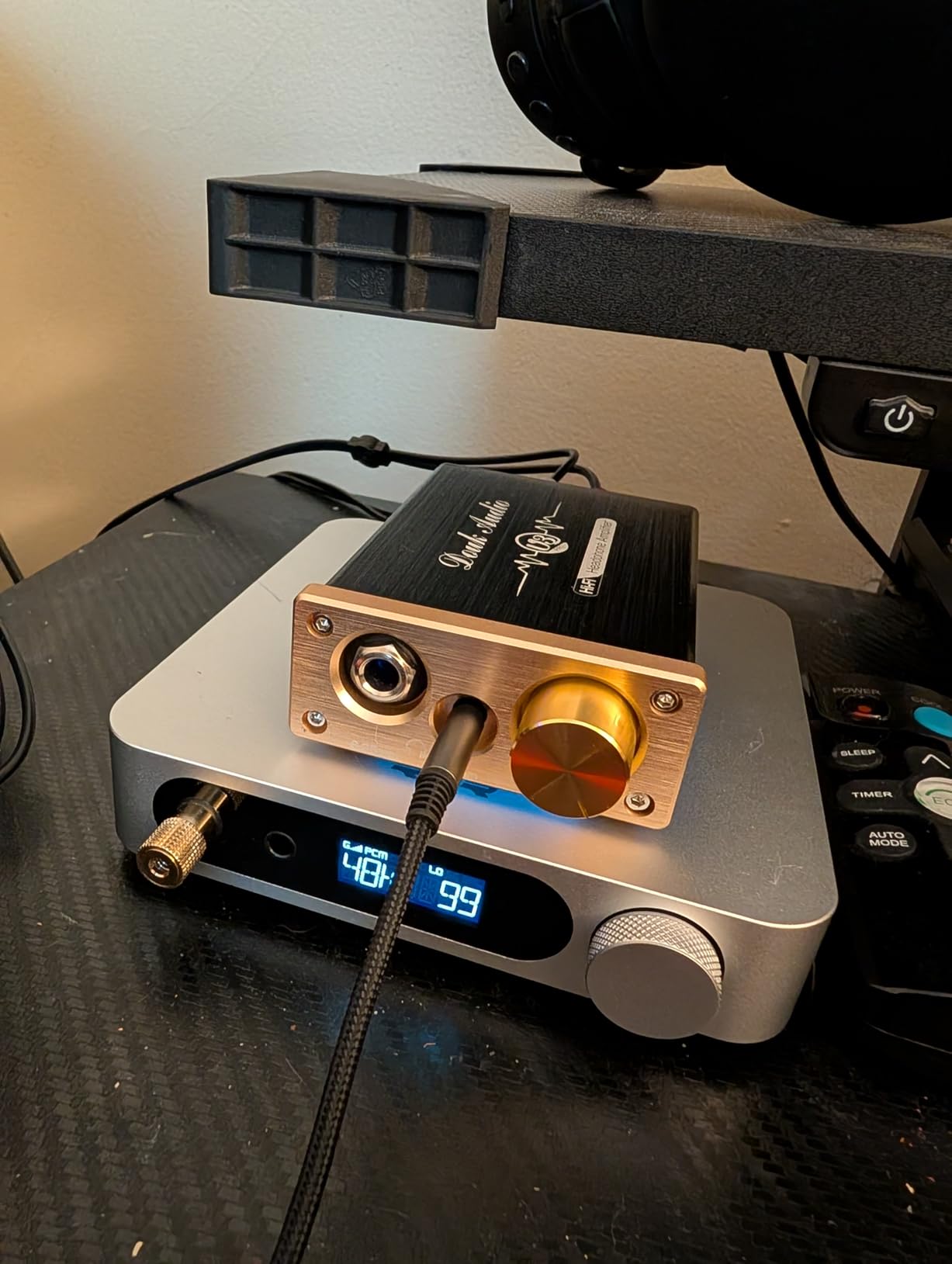
Connectivity covers stereo RCA and 3.5mm inputs plus 3.5mm and 6.35mm headphone outputs, so adapters stay in the drawer. The OP42 and BUF634 architecture uses socketed, replaceable op-amps, meaning you can retune the voicing later with chips like the AD797, AD843, or OPA627.
The sound signature is warm and delicate rather than aggressive, which suits long listening sessions. Two cautions keep it honest: it is a newer product with only 52 reviews so far, and the compact body has limited surface area to shed Class A heat, so do not stack things on top of it.
That small review pool averages 4.5 stars, and Douk covers it with an 18-month limited warranty. For stubborn headphones, it is the most capable thing I have found at this level.
Do You Need a Class A Headphone Amp?
If your headphones are 16 to 32 ohms and easy to drive, skip this and use a DAC like the Q4, which already has a headphone stage. If you own 150-ohm-plus headphones that sound thin even at full phone volume, this is exactly the tool. Class A trades efficiency for linearity, and that trade only pays off with demanding loads.
What Is Op-Amp Rolling and Does It Matter?
Op-amp rolling means swapping the socketed amplifier chips to change the character of the sound, and it is a genuine hobby around this amp. The stock OP42 configuration is already clean and slightly warm. Treat rolling as a free bonus later, not a reason to buy today.
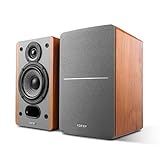
5. Edifier P12 – Best Passive Bookshelf Speakers
Edifier P12 Passive Bookshelf Speaker – 2-Way Speakers with Built-in Wall-Mount Bracket – Wood Color, Pair – Needs Amplifier or Receiver to Operate
2-way passive bookshelf pair
4 inch woofer with port
19mm silk dome tweeter
6 ohm 40W max
Pros
- Excellent sound for the size
- Real wood finish
- Wall-mount brackets built in
- Plays well with small Class D amps
Cons
- Needs an external amplifier
- Limited bass from 4 inch driver
- 79dB sensitivity needs power
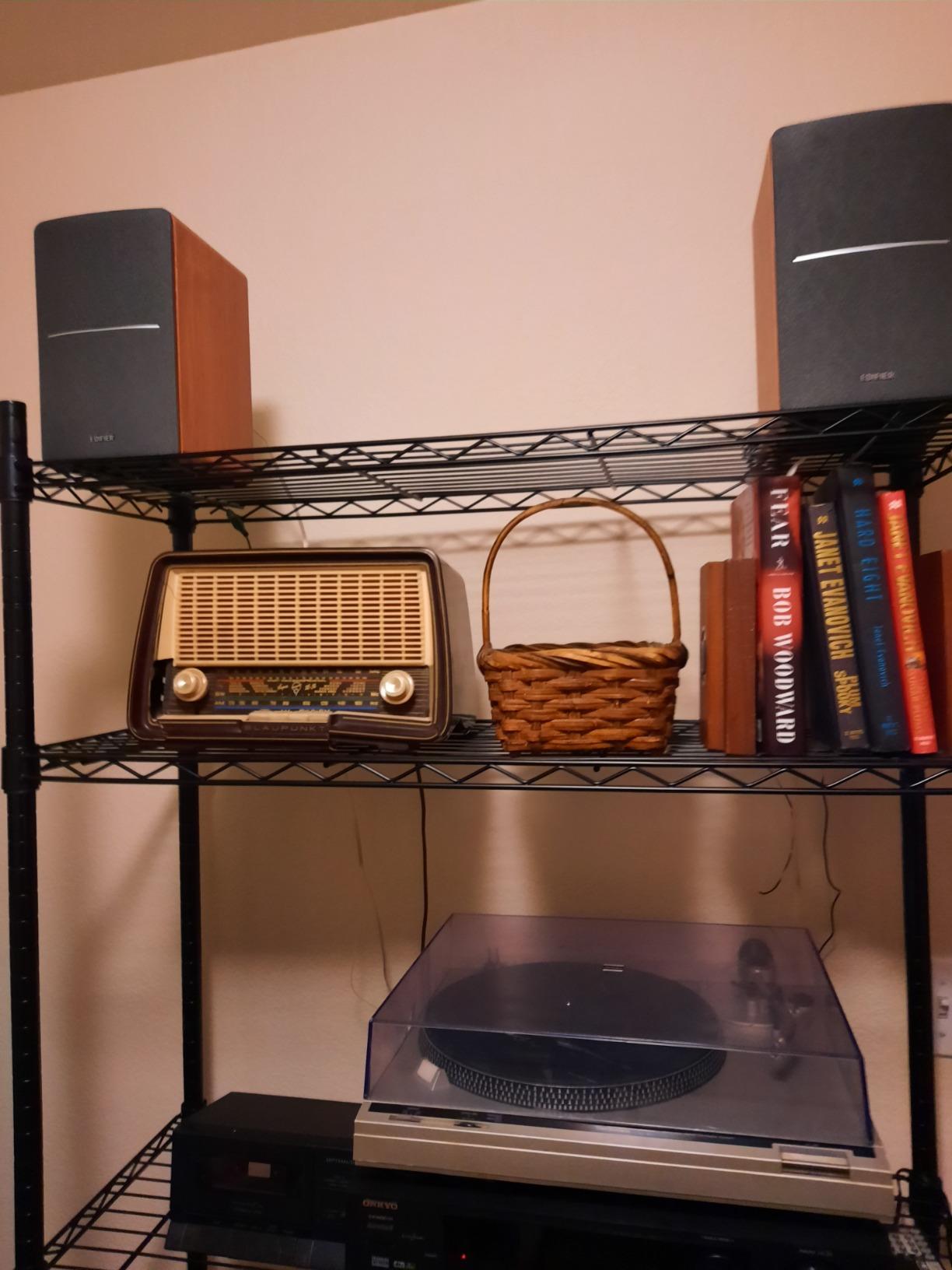
If you already own an amp, speakers are the upgrade that changes everything, and the P12 is the pair I point beginners toward. The 4-inch bass drivers with reflex ports and 19mm silk dome tweeters produce a balanced, natural tone that embarrasses plastic multimedia speakers.
I ran them on a desk with a small Class D amp and the sound was clear and crisp at both background and loud volumes. Each cabinet stands 9.37 inches tall, and the wood-grain finish looks far more expensive than it has any right to.
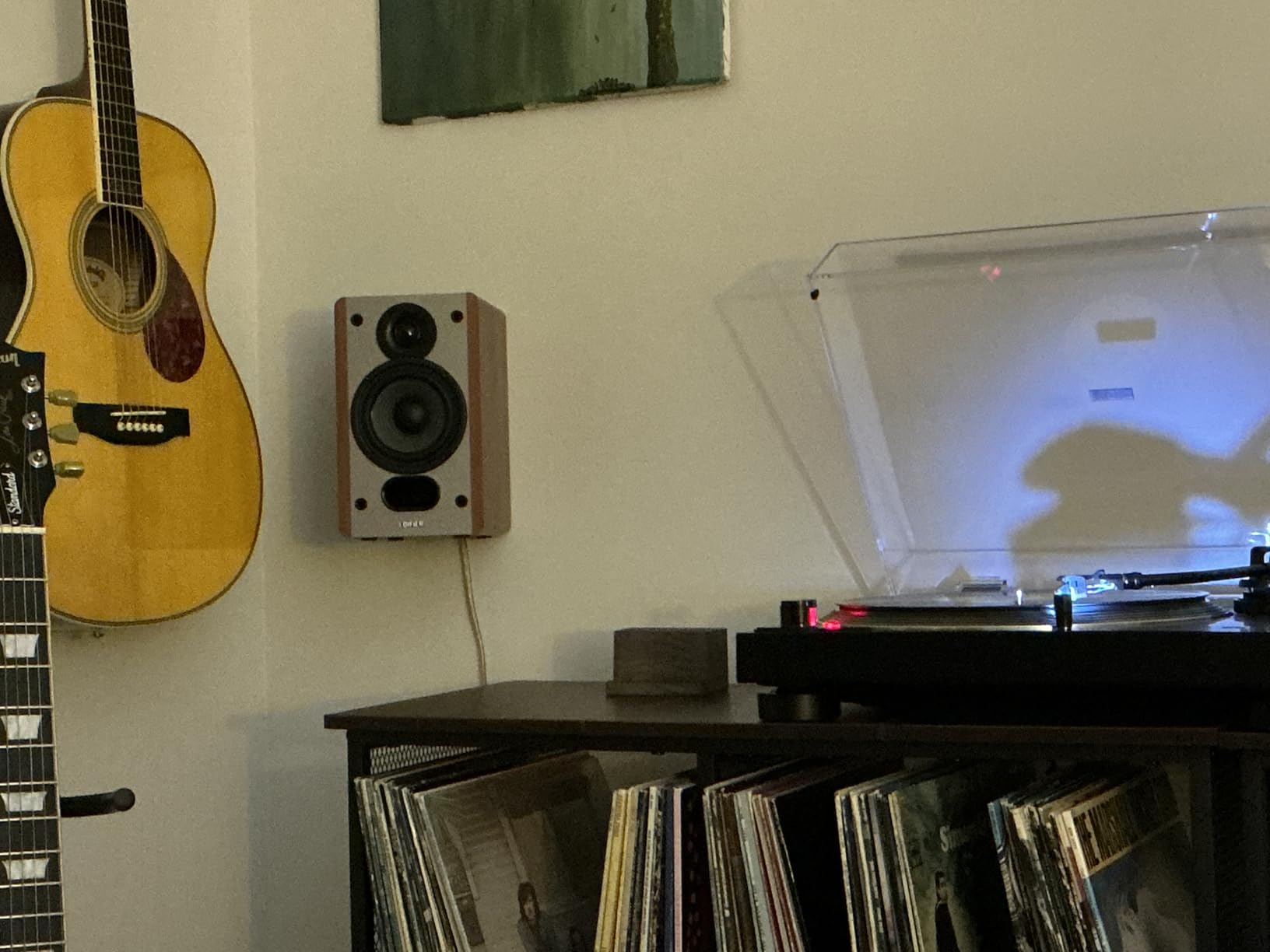
The specs that matter: a 2-way design, 6-ohm impedance, 40 watts maximum power handling, and 79dB sensitivity. That sensitivity number is the one to respect, because these are relatively inefficient and appreciate whatever power you give them.
Each cabinet has a built-in wall-mount bracket, so the pair doubles cleanly as rear surrounds in a home theater. Buyers rate them 4.7 stars across 1,705 ratings, with roughly 77% five-star.
Two practical notes from owners: the bass is naturally limited by the 4-inch driver, and the rear terminals are small, so thick speaker wire may not fit without trimming. Edifier covers them with a 2-year warranty.
What Amp Do These Speakers Need?
Anything delivering 20 to 40 clean watts per channel into 6 ohms, so the BT20A or the Lepai in this list both work. Because of the 79dB sensitivity, give them the more powerful amp for larger rooms. Skip tiny 10-watt boards if you want bass with body.
Bookshelf or Wall Mount: Where Should They Go?
On stands or a desk, pull them away from the wall and angle them toward your seat for the best imaging. The built-in brackets make them a strong pick as wall-mounted surround channels. Just avoid cramming them into a bookshelf cavity, which chokes the rear port.
6. Saiyin Powered Bookshelf Speakers – Best All-in-One Value
Saiyin Powered Bluetooth Bookshelf Speakers
30W x 2 powered pair
Bluetooth 5.3 optical RCA aux
3.75 inch woofer
Remote with EQ modes
Pros
- Deep bass beyond its size
- Four input options
- Remote with EQ modes
- No amplifier needed
Cons
- Bass can overwhelm without EQ
- Treble will not satisfy purists
- LED lights larger than needed
This is the best hi-fi upgrade under $100 for anyone who wants a single-purchase solution with no separate amp. One cabinet holds the amplification and the other is passive, so you connect the two, plug in power, and you are listening.
The bass from the 3.75-inch woofers genuinely exceeded what I expected from cabinets this size. Bluetooth 5.3 handles phone duty, and optical, coaxial, RCA, and 3.5mm aux cover everything else, including TVs and turntables with a built-in preamp.
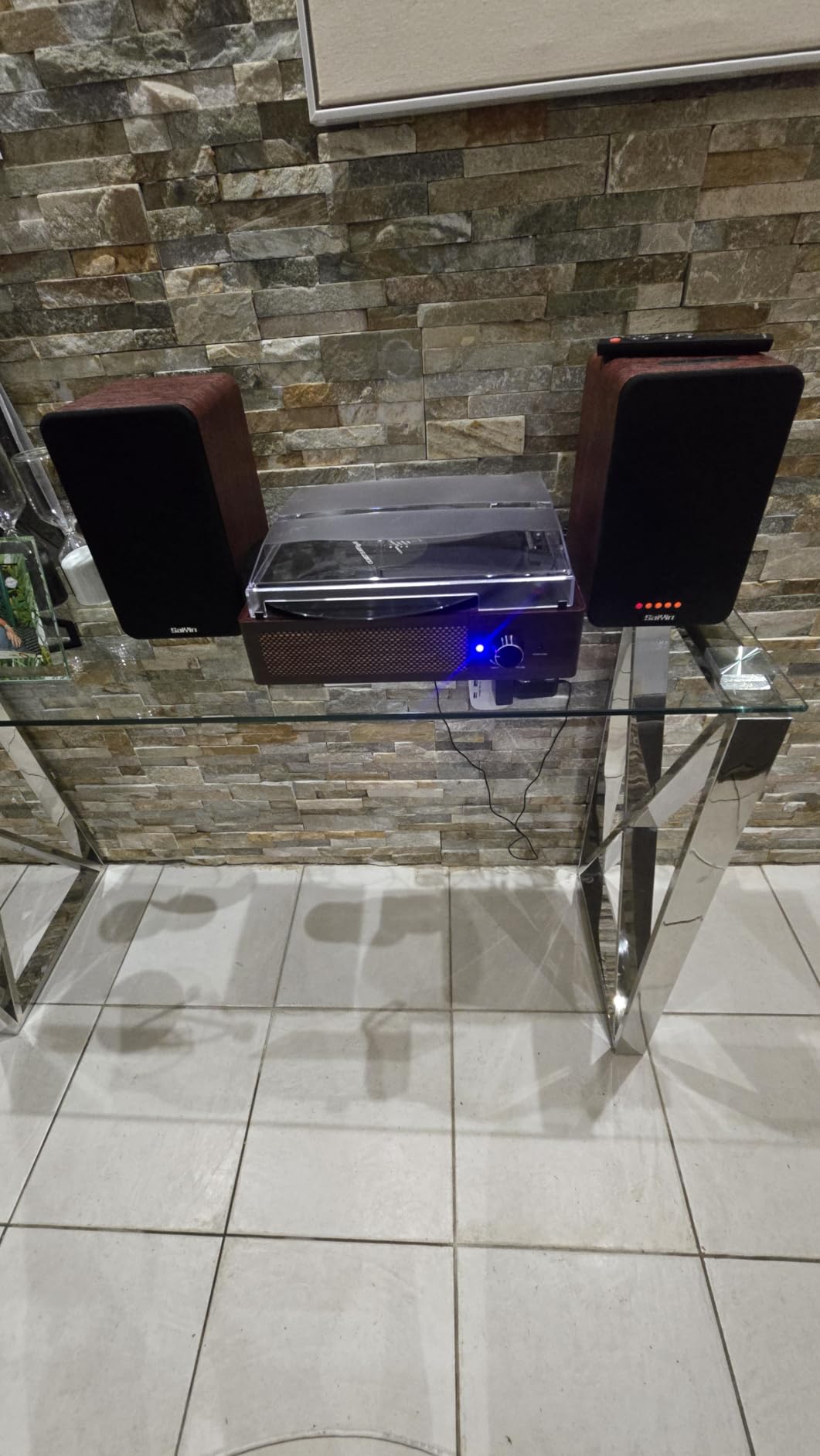
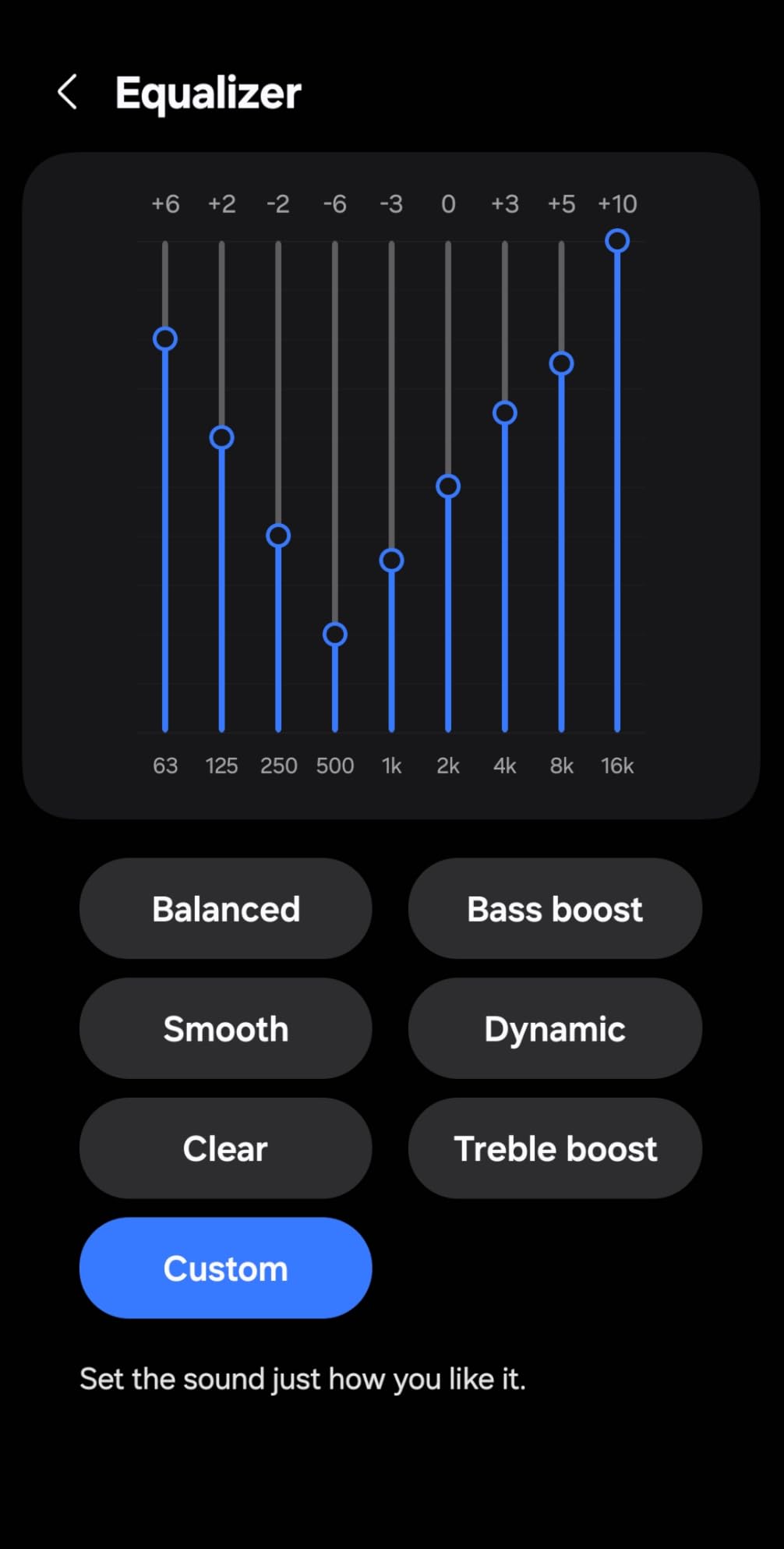
A remote with movie, music, and news EQ modes ships in the box, which is more control than anything else here offers. The 0.5-inch silk dome horn tweeters are pleasant, though treble purists will want more air at the top.
Community feedback across 2,117 ratings averaging 4.4 stars is consistent. The bass can overpower without EQ, the LED indicators are bigger than they need to be, and the grille pins can break if you pry the covers off carelessly.
Saiyin backs the pair with a 3-year manufacturer warranty, and their customer service gets repeated praise in reviews. For a first real stereo, that safety net matters.
Passive or Powered: Which Setup Suits You?
Powered speakers win when you want simplicity, a TV connection, and zero amp shopping. Passive speakers plus an amp win when you plan to swap and upgrade pieces over time. If you already see yourself replacing components, buy the P12 and an amplifier instead.
Which Inputs Will You Actually Use?
Optical is the one to plan around for a TV, since it carries clean digital audio over a single cable. Bluetooth covers phones and tablets for casual listening. Turntable owners need a model with a built-in preamp or a separate phono stage feeding RCA or aux.
7. Hudson Hi-Fi Cartridge Alignment Kit – Best Vinyl Upgrade
Hudson Hi-Fi Turntable Cartridge Alignment Kit – The Audiophile Purists Perfected 3-Piece LP Cartridge Setup Set. Accuracy Optimized Digital Scale, Azimuth Ruler, Protractor – Rich Pure Sonic Sound
3-piece cartridge setup kit
Digital VTF scale
Azimuth ruler
Alignment protractor
Pros
- Everything for cartridge setup in one kit
- Durable long-lasting print
- Protective EVA case
- Better tracking and separation
Cons
- Calibration weights stored inside scale
- Beginners may need extra guidance
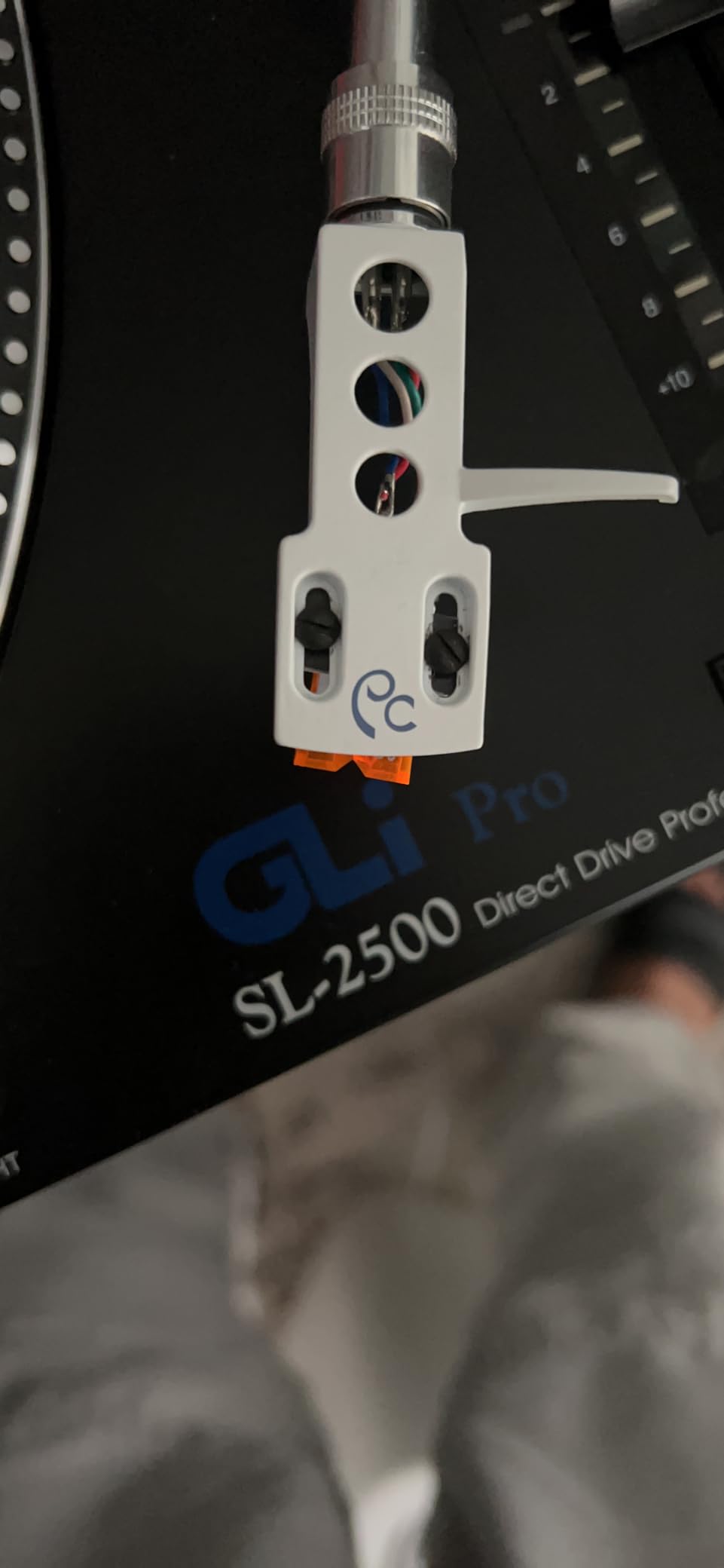
Vinyl owners get the most dramatic per-dollar improvement from setup, not from new gear. This 3-piece kit contains a digital vertical tracking force scale, an azimuth ruler, and an alignment protractor, which covers the three adjustments that decide whether your stylus tracks properly.
I used it to set up a fresh cartridge and the improvement in stereo separation was audible within one side of an LP. Proper alignment also reduces record wear, so the kit quietly protects the rest of your collection.
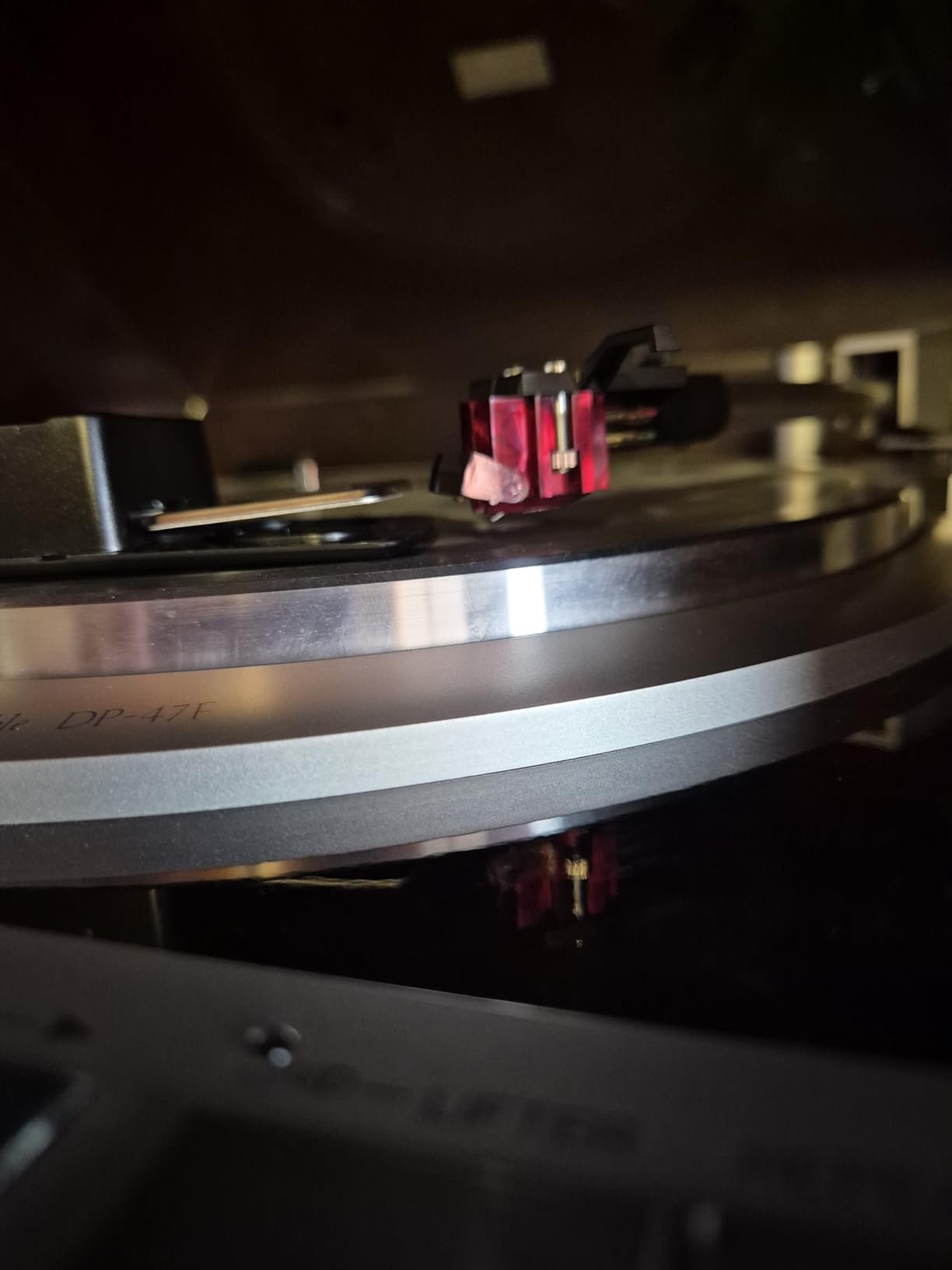
Everything fits inside the included protective EVA case, and the printed markings are the durable kind that will not crack or fade with use. It works with S-shaped tonearms and any half-inch mounted cartridge, which covers the majority of turntables people actually own.
The community response is strong: 4.7 stars across 826 ratings, with 83% giving five stars. The main gripe is that the calibration weights ship inside the scale’s weighing platform, so open that compartment before assuming something is missing.
Think of this as the setup tool that makes every future cartridge purchase better. Once your geometry is right, everything downstream improves for free.
Do You Need a Cartridge Alignment Kit?
If you have ever replaced a cartridge or plan to, yes, because even a millimeter of offset degrades tracking and channel balance. If your turntable has a factory-mounted cartridge you have never touched, a stylus force gauge alone is the simpler first step. Once you own two cartridges, the kit earns its keep every time you swap.
How Hard Is It to Use for a Beginner?
Expect a patient first hour, because alignment means small, iterative movements of the cartridge body in the headshell. The printed guidance assumes some familiarity, so pair the kit with a video walkthrough for your specific tonearm. After one full setup, the process takes minutes.
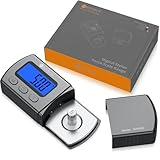
8. Neoteck Stylus Force Gauge – Best Budget Turntable Tool
Neoteck Digital Turntable Stylus Force Gauge 0.01g/5.00g with Blue LCD
0.01g stylus force gauge
5g range
Blue backlit LCD
Calibration weight included
Pros
- 0.01g resolution accuracy
- Backlit display for easy reading
- Calibration weight in box
- Leather case included
Cons
- Instructions are thin
- Decimal point is small
- Plastic housing feels light
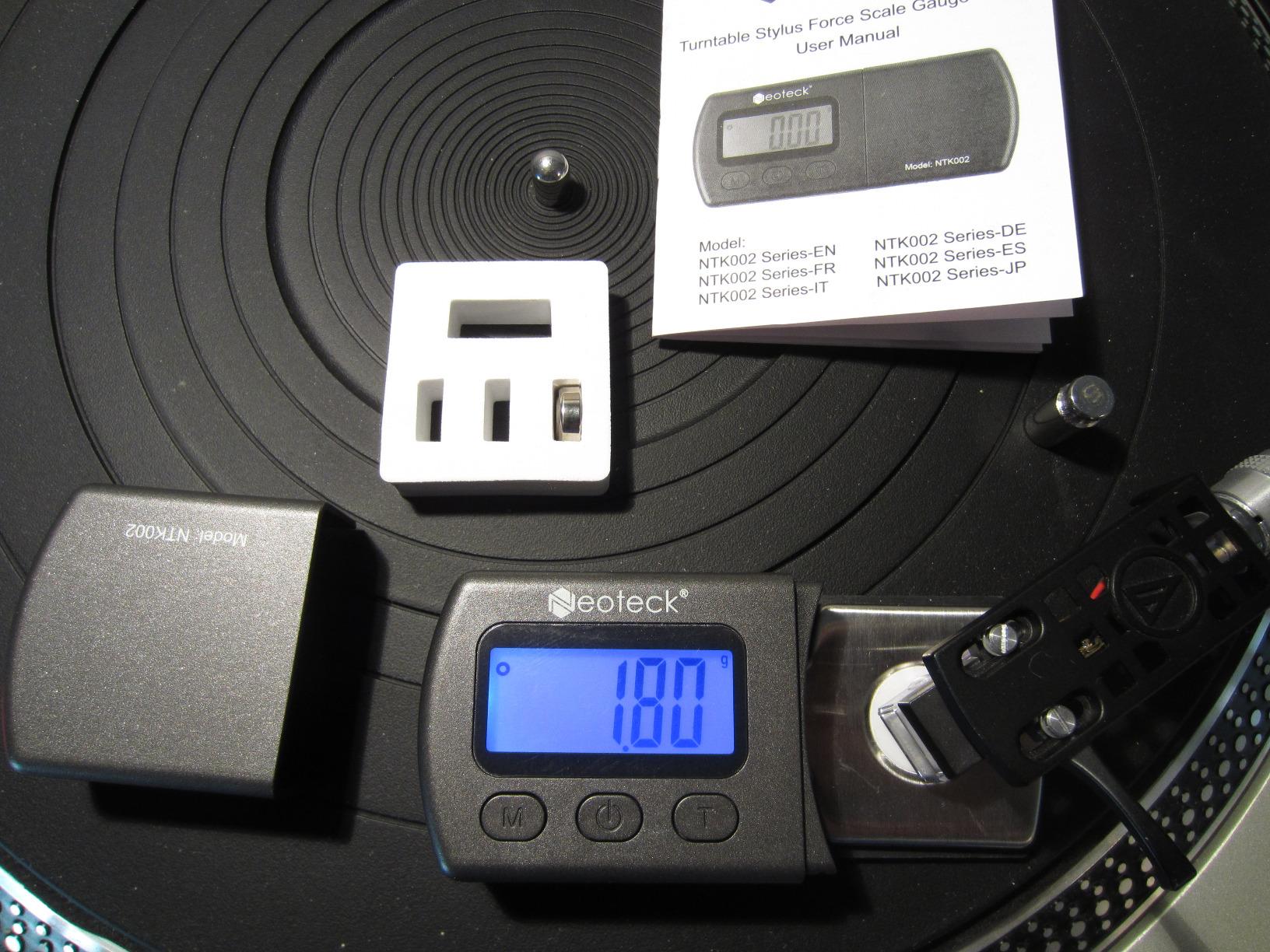
If your turntable’s tracking force is set by a spring dial or by guesswork, this is the cheapest meaningful upgrade in all of hi-fi. The Neoteck reads to 0.01g across a 5g range, which covers virtually every cartridge ever made.
I checked my tonearm against it and found the factory dial was off by nearly half a gram, which explained the inner-groove distortion I had been blaming on my records. Setting the correct force took under a minute and fixed it.
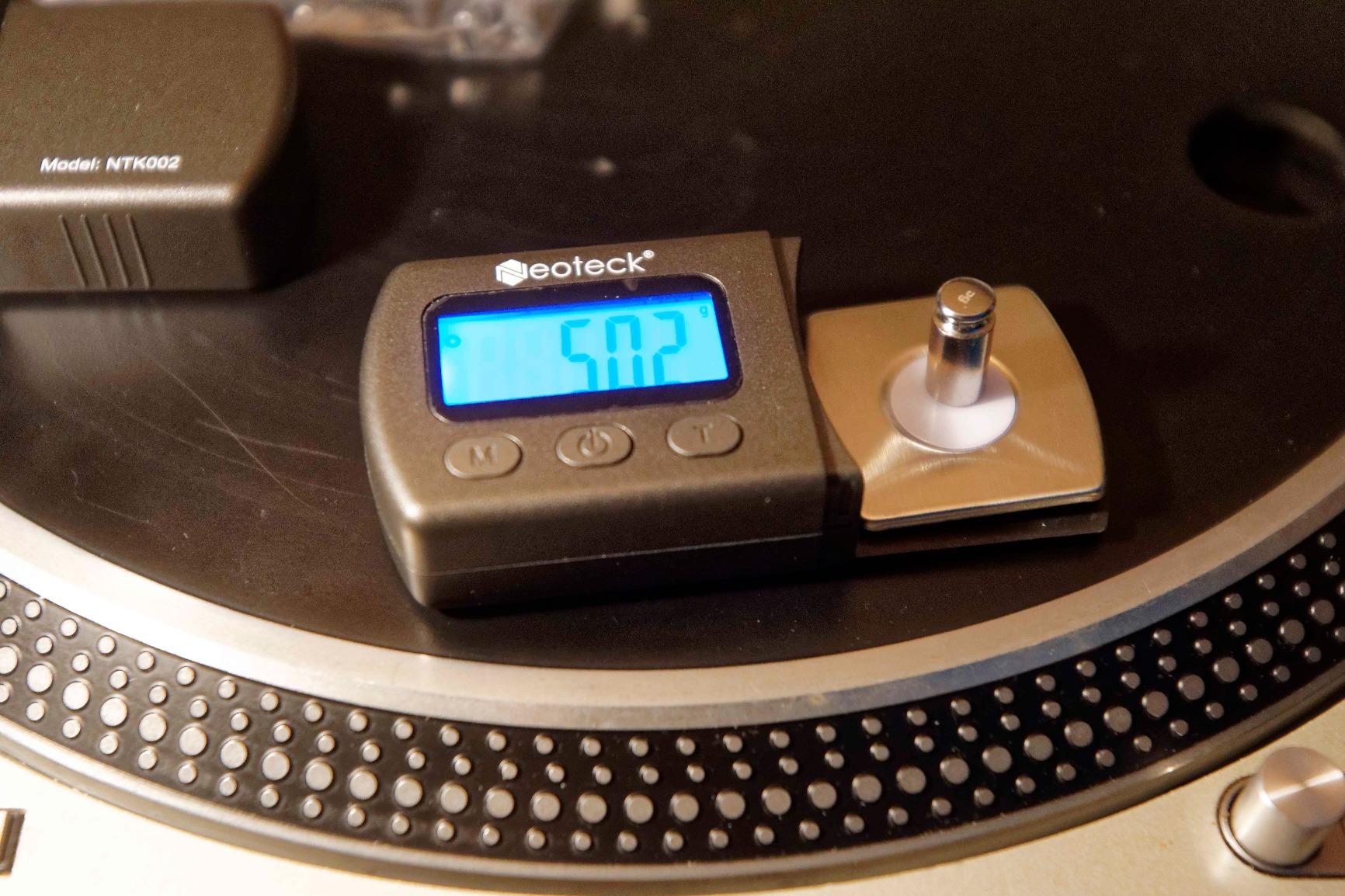
The blue backlit LCD is easy to read in a dim listening room, and the box includes a 5g calibration weight plus a leather case. It shuts itself off after two minutes to preserve the three lithium cells, and it converts across six units if you ever need them.
The drawbacks are modest but real. The instructions are minimal, the decimal point on the display is small, the plastic housing feels light, and battery direction is not clearly marked.
None of that stops it from holding a 4.7-star average across a huge 7,364 ratings, with 81% five-star. It is the best-selling gauge in its category for a reason.
Why Does Tracking Force Matter?
Too light and the stylus mistracks, jumping grooves and damaging records. Too heavy and you wear out both the stylus and the vinyl prematurely. Hitting the manufacturer’s specified force within about a tenth of a gram is the single most protective thing you can do for a record collection.
Gauge or Full Kit: Which Do You Need?
The gauge alone fixes tracking force, which is the most common setup error by far. The full alignment kit above also corrects azimuth and cartridge geometry, which matter once you start swapping cartridges. Start with the gauge, add the kit when a new cartridge arrives.
9. Monster Pro MI Surge Protector – Best Power Protection
Monster Pro MI Professional Surge Protector Power Strip with Fireproof MOV Technology for Computers, Amplifiers, Pedal Boards, and Pro Audio Gear
8 grounded outlets
1960 joule protection
2 USB-A ports
15 ft cord metal body
Pros
- Fireproof MOV technology
- 1960 joule surge rating
- Long 15 ft cord
- Durable metal enclosure
Cons
- Costs more than basic strips
- USB ports are 2.0 only
Every component in this article plugs into the wall, and one surge can take all of it out at once. The Monster Pro MI is the pro-audio answer: a metal-enclosed strip with fireproof MOV technology and a 1960 joule protection rating.
I use one behind my rack mostly for its eight grounded outlets, including one wide-spaced socket that fits a chunky wall adapter. The 15-foot cord with a right-angle plug solved a placement problem no basic strip could.
Specs worth knowing: eight outlets, two USB-A charging ports, an on/off switch, and a 2-year warranty. It is wall-mountable and weighs 2.82 pounds because the enclosure is metal rather than plastic.
It earns 4.7 stars from 252 ratings with an 87% five-star share. The honest criticisms are that it asks more than a basic strip, it is heavy, and the USB ports are 2.0 rather than USB-C.
Do Surge Protectors Affect Sound Quality?
A surge protector’s job is protection, not sound transformation, and any claim of dramatically improved audio belongs in marketing copy. What a clean power arrangement does deliver is freedom from ground-loop buzz and interference caused by daisy-chaining cheap strips. Treat audible gains as a bonus, not the reason to buy.
How Much Protection Do You Actually Need?
Look at the joule rating first. At 1960 joules this sits at the high end for home audio, while basic strips often sit near 200. If your rack holds an amp, DAC, and turntable together, anything above 1000 joules is sensible insurance for the whole chain.
10. Amazon Basics RCA Cable – Best Budget Interconnect
Amazon Basics 2 RCA Stereo Audio Cable for Hi-Fi System, Amplifier, Active Speakers or Subwoofer with Gold-Plated Plugs, Digital Audio Compatible, 4 Feet, Black
2-male to 2-male RCA stereo
24K gold-plated plugs
4 feet length
Color-coded channels
Pros
- Corrosion-resistant gold plugs
- Color-coded left and right
- Available in three lengths
- Clean signal with no noise
Cons
- Basic shielding without premium specs
- Not ideal for very long runs
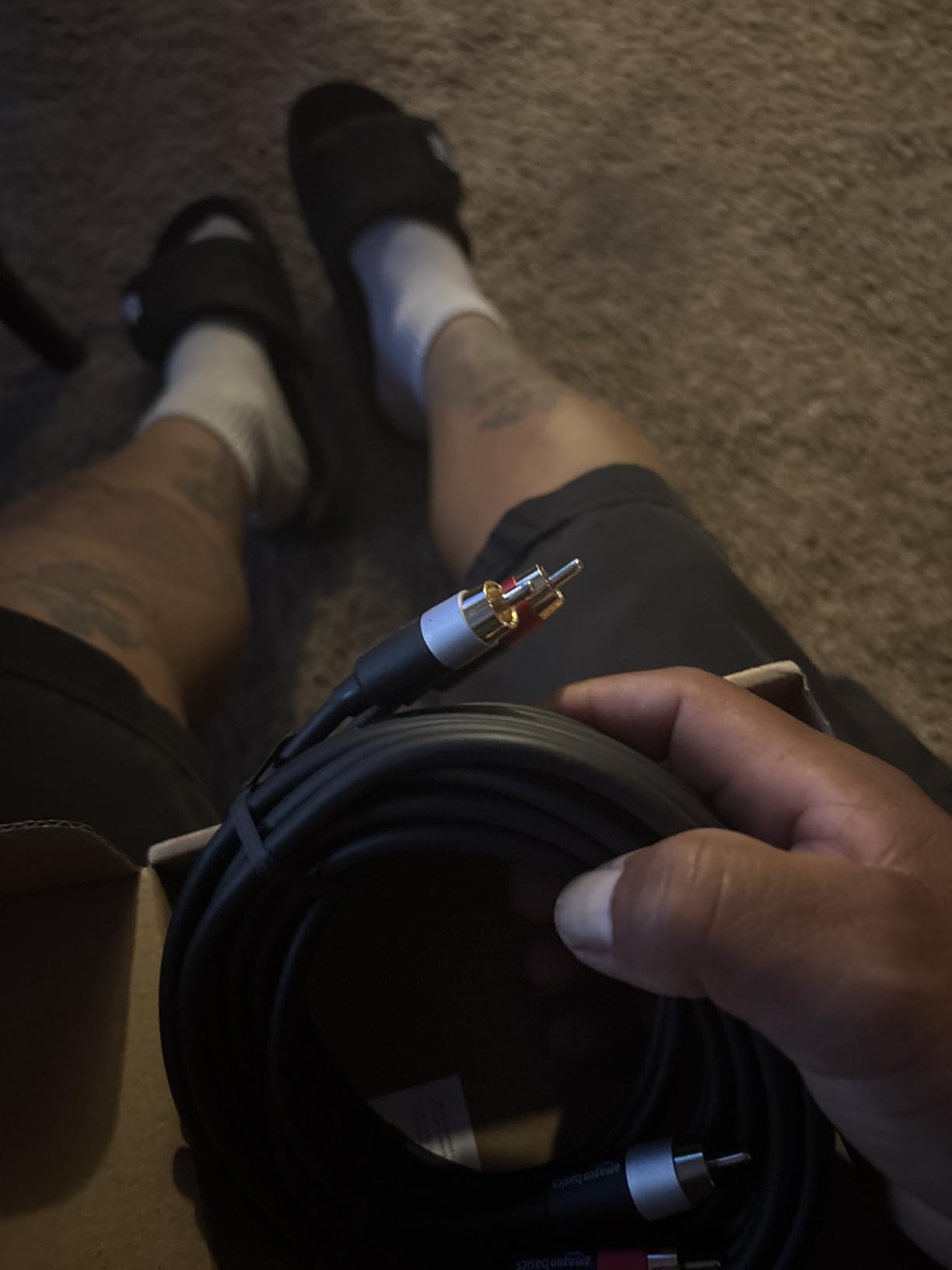
Every analog link in your chain needs an RCA cable, and this is the one I buy in multiples. It is a 2-male to 2-male stereo pair with corrosion-resistant 24K gold-plated connectors and color-coded red and white channels.
I have run these between DACs, amps, and powered speakers for years with zero noise or dropouts. At 4 feet they are the right length for a desk or compact rack without excess cable coiled behind it.
The full-metal connectors grip firmly and the pair is also available in 8 and 15-foot lengths for room-scale runs. Signal loss at line level over these distances is a non-issue.
Owners give it a 4.7-star average across a massive 36,098 ratings. The only cautions are the basic shielding design and the general advice to avoid unnecessarily long runs.
This is the cable I recommend people buy two of, because a spare has saved more than one listening session in my house. It does the one job an interconnect has: pass the signal cleanly.
Cable Length: Which Should You Buy?
Measure first and buy the shortest cable that reaches with a little slack, because excess length adds clutter and pickup area. The 4-foot version suits desks and small racks. Step up to the 8 or 15-foot options only for across-room runs.
Do Better Cables Improve Sound?
At line level over short runs, an RCA cable either passes the signal cleanly or it is broken, and this one passes it cleanly. Exotic interconnects asking far more do not audibly outperform it. Spend the difference on speakers or amplification instead.
Buying Guide: What to Look For in Budget Hi-Fi?
Before you spend anything, get the order right. The most common beginner mistake is upgrading the wrong component first, and no amount of DAC or cable spending fixes speakers that cannot reproduce the music. This is the same advice the BudgetAudiophile community gives over and over, and it holds up.
Upgrade in the Right Order
Speakers first. They set the ceiling on everything your system can do, and the jump from plastic PC speakers to real bookshelf drivers is the largest single improvement in audio. Match them to your room size or you will fight them forever.
Amplification comes second, matched to your speakers’ impedance and sensitivity. A DAC comes third, and only if you hear noise or your source lacks a clean output. Cables and accessories come last, bought for reliability rather than for sound.
Watts, Distortion, and Numbers That Matter
Trust RMS or continuous power ratings, not peak or maximum numbers, because peaks get measured under flattering conditions. An honest 20 watts per channel drives most bookshelf speakers to comfortable levels in most rooms.
Match impedance next. An 8-ohm speaker is an easy load, 4-ohm designs demand more current, and 6-ohm models sit in between. Sensitivity tells you how loud a speaker gets per watt, and anything below about 84dB wants a powerful amp behind it.
On distortion, lower THD is technically better, but anything under roughly 0.1% at listening level is already below what human ears resolve. Frequency response range matters more, and a stated 20Hz to 20kHz with a real bass driver behind it is the goal.
Common Mistakes to Avoid
Cable overkill tops the list of wasted spending, because a well-made basic interconnect is electrically fine. Buying a DAC before upgrading speakers, chasing maximum wattage, and trusting power conditioners to transform sound are the other classics.
Do not ignore placement either. Pulling speakers away from the wall and forming a triangle with your seat costs nothing, and it routinely beats a new component. Set the system up properly first, then upgrade whatever still bothers you.
Frequently Asked Questions
What is the best DAC under $100?
The Fosi Audio Q4 is the strongest DAC under $100 for most people. It offers USB, optical, and coaxial inputs, supports 24-bit/192kHz audio, drives headphones from 16 to 200 ohms, and includes bass and treble controls, all in a metal case with a 4.4-star average from more than 3,300 ratings.
Is a cheap amplifier worth it?
Yes, thanks to modern Class D chips from Texas Instruments. The Fosi Audio BT20A holds a 4.5-star average across about 9,700 ratings, and the Lepai LP-2020TI sits at 4.3 stars from over 800. Just pair them with reasonably sensitive speakers and keep expectations matched to the rated power.
What audiophile sound upgrades are a waste of money?
Exotic interconnects and speaker cables top the list, because a properly built basic cable passes line-level signals cleanly. Also skip resonance pucks, premium fuses, and power conditioners sold on sound-transformation claims. That money is always better spent on speakers, amplification, or room setup.
Is 200W twice as loud as 100W?
No. Doubling amplifier power only adds about 3 dB of output, which is barely audible. A perceived doubling of loudness needs roughly ten times the power, an increase of about 10 dB, which is why speaker sensitivity matters far more than big wattage numbers.
What are some must-have gadgets for an audiophile?
A stylus force gauge for vinyl setups, a cartridge alignment kit if you change cartridges, a quality surge protector for the whole rack, and spare gold-plated RCA cables. Each one protects or improves your system for less than the cost of a single mid-range component.
Final Thoughts on Budget Hi-Fi Upgrades
You do not need a big budget to build a system that sounds genuinely good in 2026. The Fosi Audio BT20A remains my overall pick for bringing passive speakers to life, the Saiyin powered pair is the fastest one-box fix, and the Lepai LP-2020TI is the simplest starting point for a first stereo.
These are the best hi-fi upgrades under $100 that hands-on use and thousands of buyer reviews actually support, chosen for value over absolute perfection. Pick the one that fixes your weakest link, set it up with care, and enjoy the fact that the biggest improvements in audio still cost the least.