
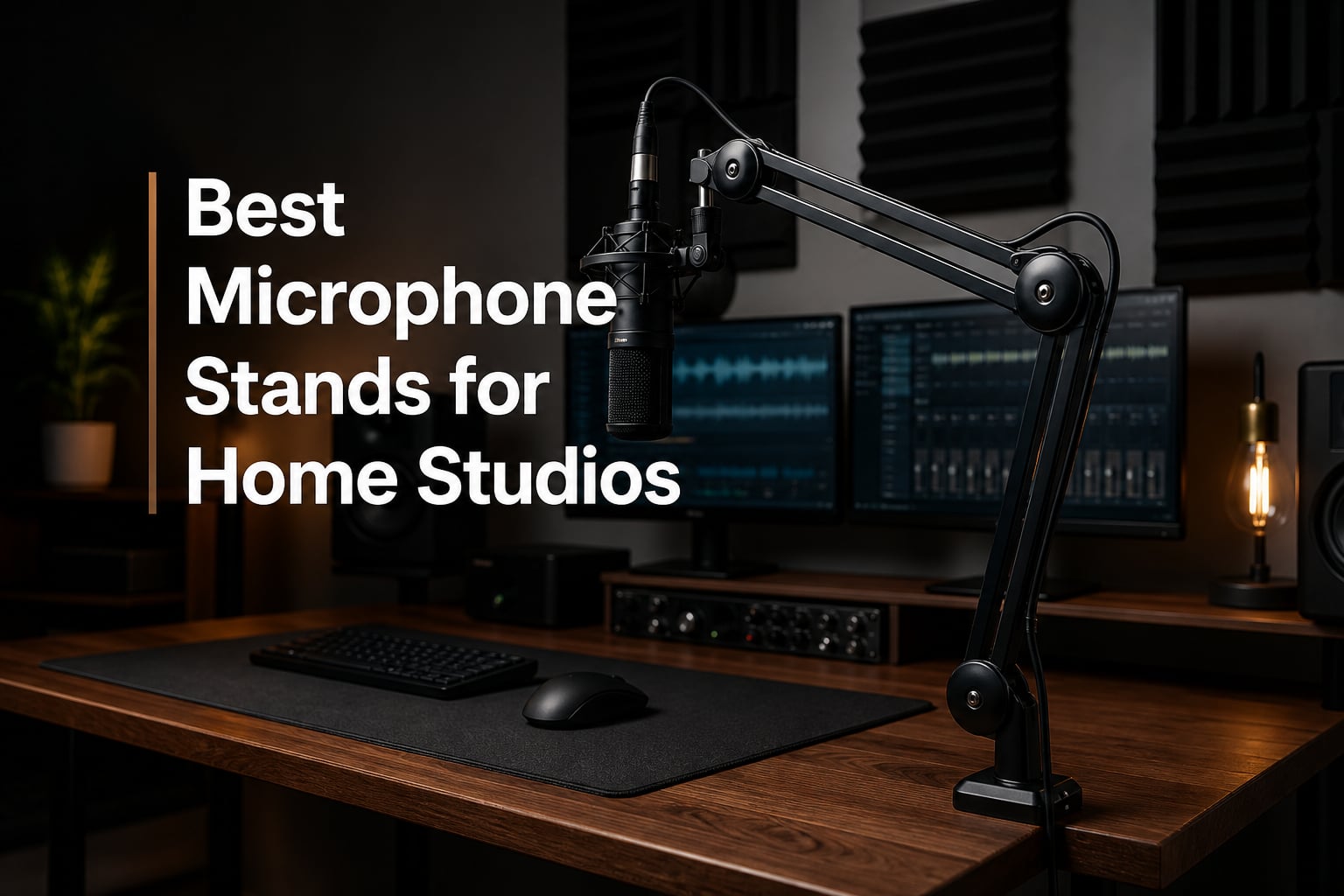
Setting up a home studio means making dozens of decisions, but few choices affect your daily recording experience as much as your microphone stand. A wobbly stand that droops mid-session or transmits desk vibrations into your recordings can ruin an otherwise perfect take. After testing microphone stands across podcasting, streaming, vocal tracking, and instrument miking scenarios, I have identified the models that actually deliver stability and flexibility for home studio use.
Finding the best microphone stands for home studios requires understanding the different types available. Boom arms mount to your desk and keep your workspace clear, tripod floor stands offer maximum height and portability, and weighted-base floor stands provide rock-solid stability for heavy microphones. Each type serves specific recording scenarios, and many home studio owners end up needing two or more.
In this guide, I break down 12 microphone stands that excel in home studio environments. From budget-friendly scissor arms to premium gas-spring boom arms and heavy-duty floor stands, every option here has been evaluated for stability, build quality, adjustability, and real-world usability. Whether you are recording vocals at a desk or miking a guitar amp across the room, these recommendations cover the full spectrum of home studio needs for 2026.
Table of Contents
Top 3 Picks for Best Microphone Stands for Home Studios in October
If you want to cut straight to the best options, here are my top three recommendations based on months of testing across different recording scenarios. These three stands represent the best combination of stability, build quality, and value I have found.
Rode PSA1+ Professional…
- Parallelogram spring design
- Fully damped silent operation
- Integrated cable management
- 360-degree rotation

FIFINE BM88 Low Profile…
- All-metal construction
- Low profile under-monitor design
- Hidden cable management
- Multiple thread adapters included

Amazon Basics Portable…
- Height adjustable to 85.75 inches
- Folds flat for transport
- Steel construction
- Cable management clip included
The Rode PSA1+ earns the top spot for its silent parallelogram spring design and professional build quality. The FIFINE BM88 delivers exceptional value with its all-metal low-profile construction and nearly 5,000 positive reviews. The Amazon Basics stand rounds out the top three as an incredibly popular budget option with over 18,000 reviews and a versatile tripod base that works for both standing and seated recording.
Best Microphone Stands for Home Studios in 2026
Here is a quick comparison of all 12 stands I reviewed. Each one earned its place through real-world testing in a home studio environment.
| Product | Specs | Action |
|---|---|---|
| Rode PSA1+ Professional Studio Arm |
|
Check Latest Price |
| FIFINE BM88 Low Profile Boom Arm |
|
Check Latest Price |
| Amazon Basics Portable Boom Arm Stand |
|
Check Latest Price |
 InnoGear Mic Arm Boom Arm InnoGear Mic Arm Boom Arm |
|
Check Latest Price |
 Elgato Wave Mic Arm LP Elgato Wave Mic Arm LP |
|
Check Latest Price |
 Elgato Wave Mic Arm Pro Elgato Wave Mic Arm Pro |
|
Check Latest Price |
 InnoGear Tripod Boom Arm Floor Stand InnoGear Tripod Boom Arm Floor Stand |
|
Check Latest Price |
 NEEWER Low Profile Mic Arm MS002 NEEWER Low Profile Mic Arm MS002 |
|
Check Latest Price |
 FIFINE CS1 Suspension Scissor Arm FIFINE CS1 Suspension Scissor Arm |
|
Check Latest Price |
 Shure by Gator Broadcast Boom Arm Shure by Gator Broadcast Boom Arm |
|
Check Latest Price |
 Elgato Wave Mic Arm MK.2 Elgato Wave Mic Arm MK.2 |
|
Check Latest Price |
 Oimlfus Floor Boom Arm Stand Oimlfus Floor Boom Arm Stand |
|
Check Latest Price |
1. Rode PSA1+ Professional Studio Arm – Best Overall Boom Arm
RØDE PSA1+ Professional Studio Boom Arm with Spring Damping, Black
Parallelogram spring design
Silent damped operation
Integrated cable management
94g to 1.2kg mic support
Pros
- Broadcast-style professional studio boom arm
- Innovative parallelogram spring design for smooth silent operation
- Fully damped springs isolate from keyboard mouse and desk noise
- Integrated cable management for USB and XLR cables
- Premium build quality with 2-year warranty
Cons
- Premium price point compared to basic alternatives
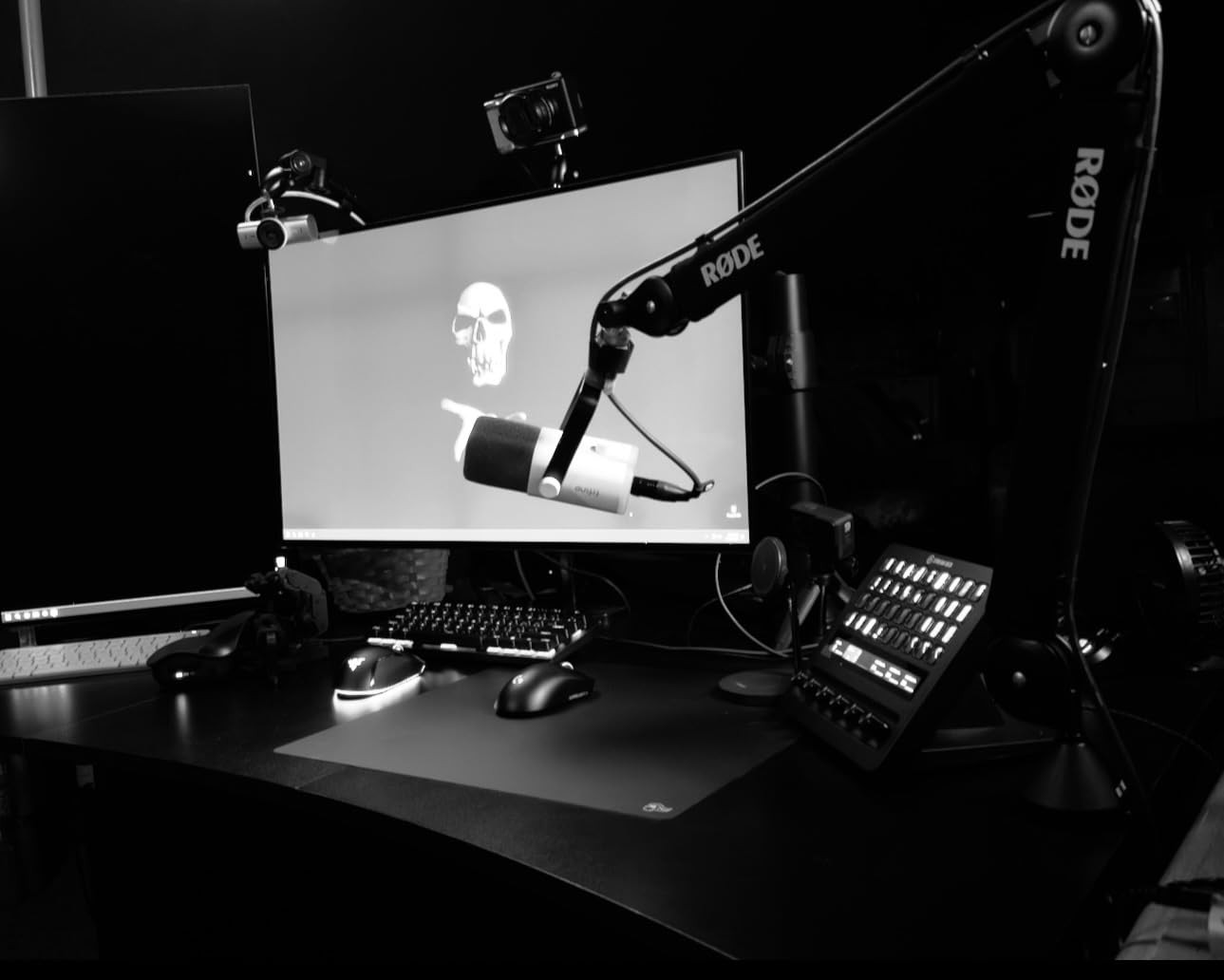
The Rode PSA1+ is the stand I reach for first when I want zero compromises in my recording chain. The parallelogram spring design is genuinely different from standard scissor arms, and you feel it the moment you move the mic. Instead of fighting spring tension at every joint, the arm glides to where you want it and stays put without any droop or drift.
What sold me on this arm was the silence. The fully damped springs mean you can reposition your microphone mid-recording without picking up mechanical noise. If you have ever ruined a vocal take because you bumped your boom arm, you understand how valuable this is. The isolation from desk vibrations is noticeably better than any spring-based scissor arm I have tested.
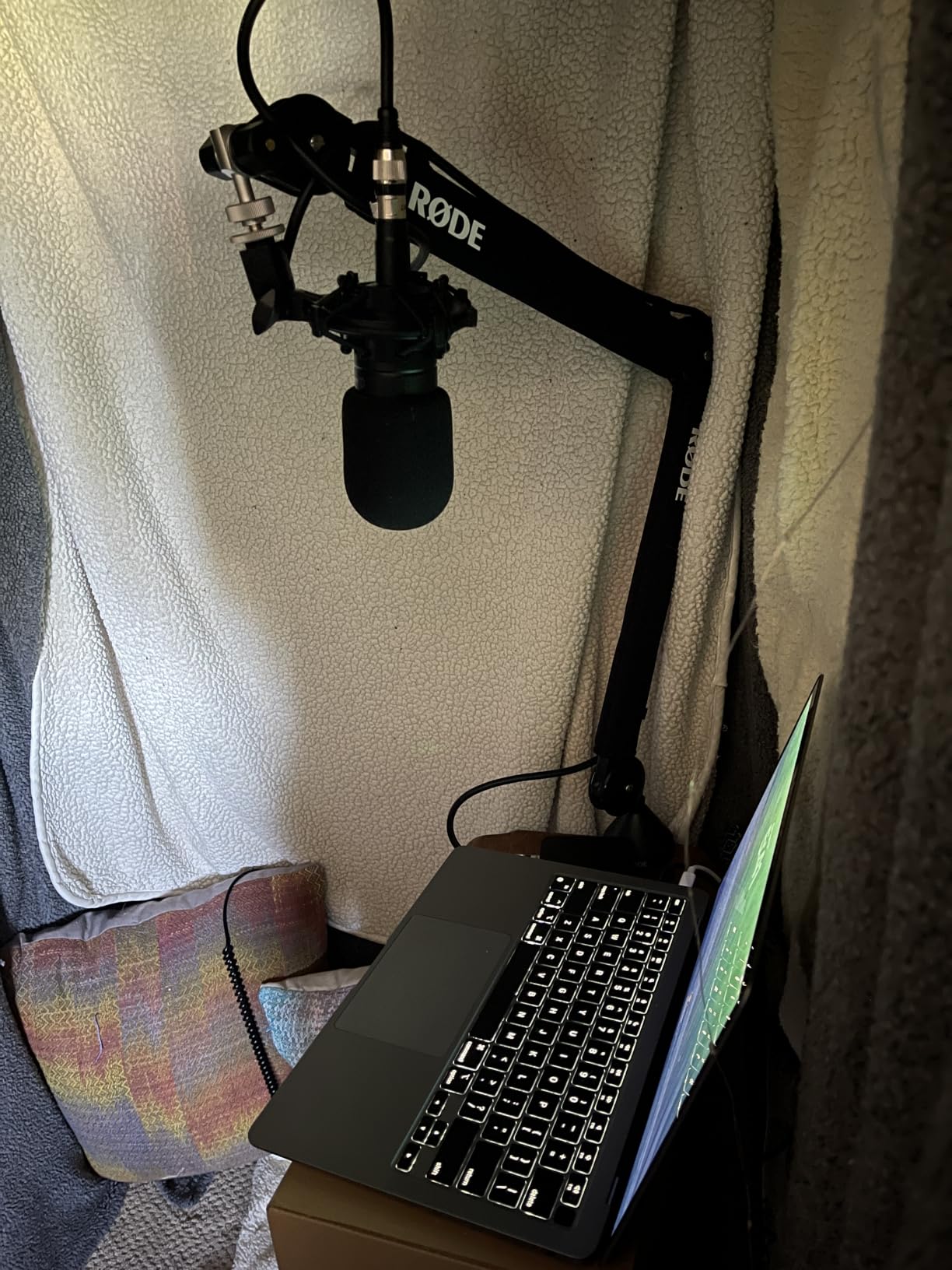
Cable management is integrated into the arm itself, with channels that accommodate both USB and XLR cables. I ran a standard XLR cable through the arm and it disappeared completely, leaving a clean professional look. The 360-degree rotation gives you full placement flexibility, and the arm handles microphones from 94 grams all the way up to 1.2 kg without strain.
The build quality is what you expect from Rode at this tier. Every joint moves with precision, the finish is clean powder-coated black, and the desk clamp holds firm on surfaces up to 55mm thick. The two-year warranty provides additional peace of mind for a piece of equipment you will use daily.
Who Should Buy This
Podcasters, streamers, and voiceover artists who record daily and need silent, precise microphone positioning will get the most value from the PSA1+. If your recordings are your income or your passion, this arm removes a variable you should not have to worry about.
Who Should Look Elsewhere
If you are just starting out and unsure whether recording will become a regular habit, the price point may be more than you need to spend. Budget-friendly boom arms cover the basics well enough for casual use.
2. FIFINE BM88 Low Profile Boom Arm – Best Value Boom Arm
FIFINE BM88 Low Profile Microphone Boom Arm Stand for Gaming Streaming
All-metal low profile design
Hidden cable management
29-inch total extension
220-degree vertical adjustment
Pros
- Low profile design extends under monitor without obstructing view
- All-metal construction provides excellent stability
- Hidden cable management system keeps setup clean
- Fully adjustable with 220-degree up and down rotation
- Includes multiple screw adapters for wide compatibility
- No exposed springs for clean aesthetic
Cons
- Base segment near clamp cannot adjust up and down
- Some users report screw hole placement inconvenient for certain desk setups
The FIFINE BM88 proved that you do not need to spend premium money to get a boom arm that performs like a premium product. The low-profile design was the first thing that impressed me, as the arm extends under my monitor without blocking any of the screen. For streamers and gamers who need their mic close but their screen visible, this design choice is a genuine advantage.
The all-metal construction gives this arm a solidity that surprised me given its price range. There is no flex or wobble during use, and the heavy-duty C-clamp grips my desk securely. With nearly 5,000 reviews and a 4.6 average rating, I am clearly not the only one who found this arm to punch above its weight class.
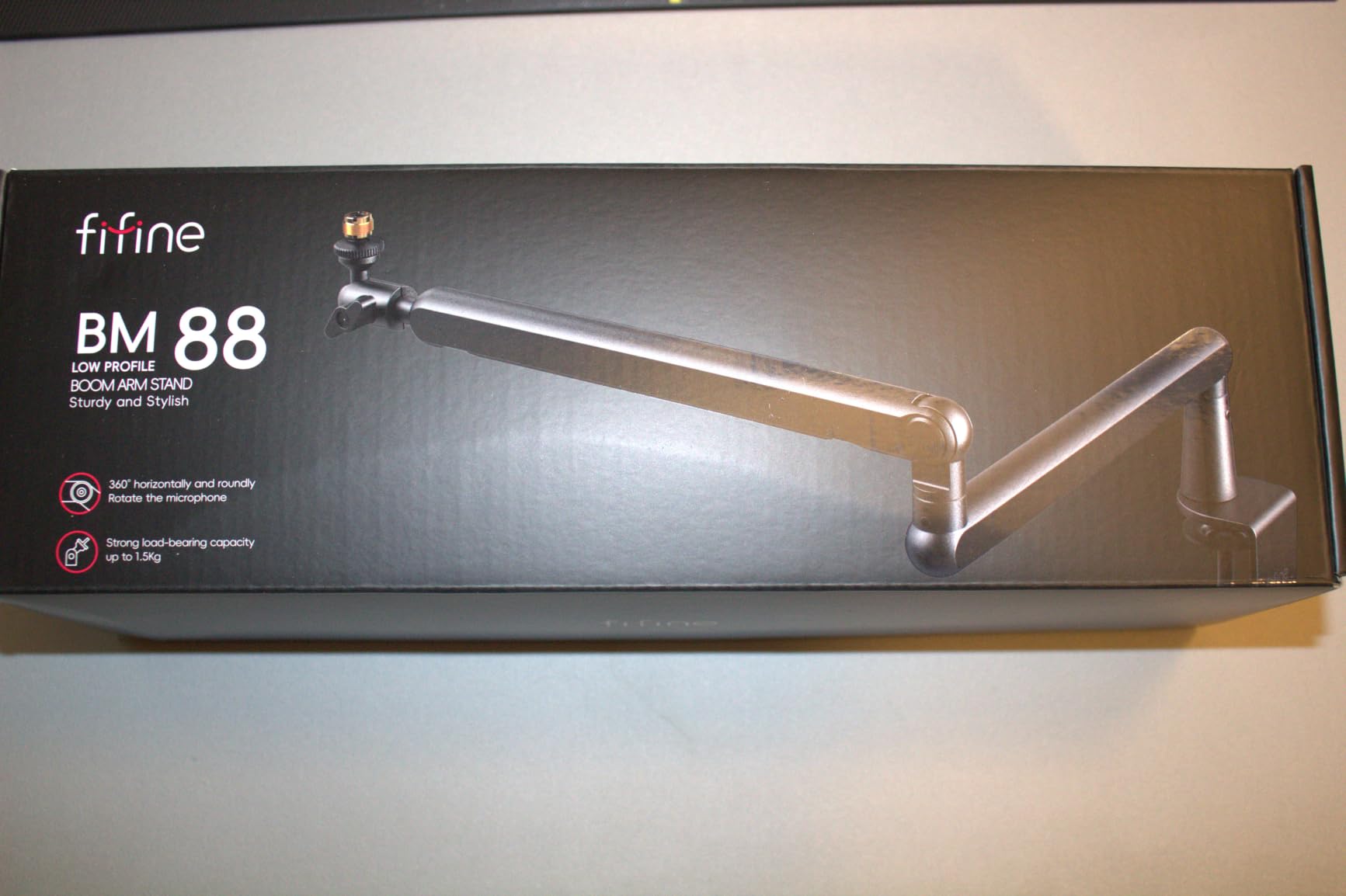
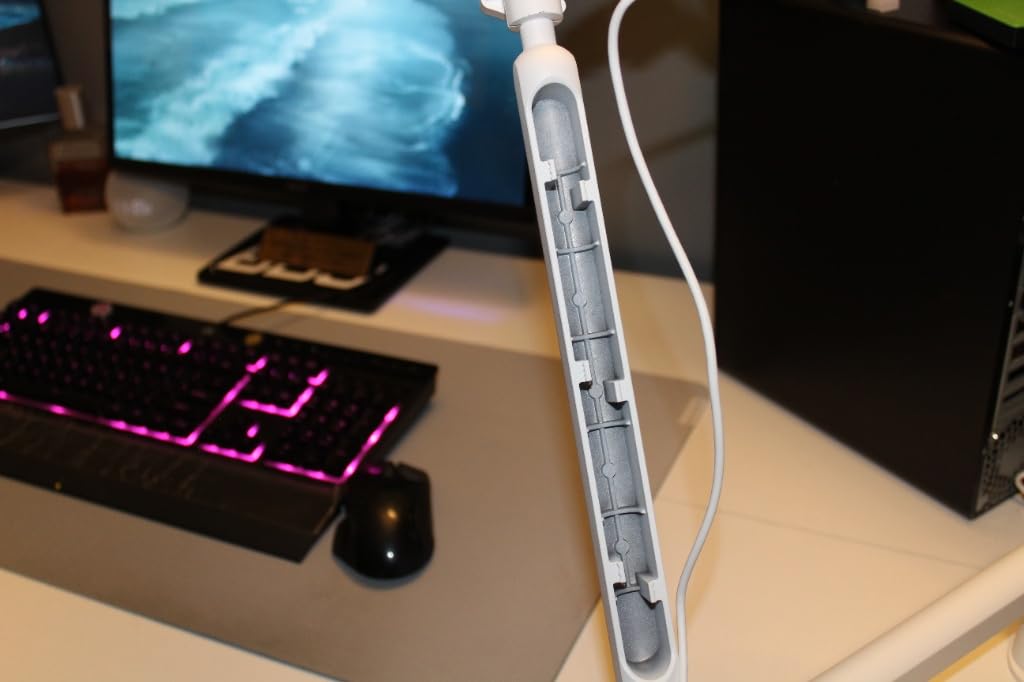
Cable management is hidden inside the arm, which keeps the visual profile clean and professional. I threaded both my XLR cable and a USB cable through the channels without difficulty. The 220-degree vertical and 360-degree horizontal adjustment range covers every positioning scenario I have encountered in daily use.
FIFINE includes 1/4-inch, 3/8-inch, and 5/8-inch thread adapters, meaning this arm works with virtually any microphone right out of the box. The desk clamp accommodates desktops from 0.8 to 2.4 inches thick, which covers most standard desks. The total extension of 29 inches provides plenty of reach for larger desk setups.
Who Should Buy This
Streamers, gamers, and home studio owners who want professional features without the premium price tag will find the BM88 hits the sweet spot. It is particularly well-suited for dual-monitor setups where a low-profile arm is essential.
Who Should Look Elsewhere
If you need your boom arm to reach above monitor height for standing vocal recording, the low-profile design may limit your positioning options. Consider a taller boom arm or floor stand for those scenarios.
3. Amazon Basics Portable Boom Arm Stand – Best Budget Floor Stand
Amazon Basics Sturdy Portable Microphone Boom Arm Stand, Height Adjustable with Cable Management, Foldable Tripod Base, Up to 85.75″, Black
Height to 85.75 inches
Folds flat for transport
Steel construction
Tripod base with counterweight
Pros
- Adjustable height for standing or seated use
- Sturdy steel construction with molded plastic counterweight
- Folds flat for easy transport
- Compatible with 3/8-inch to 5/8-inch adapter
- Cable management clip included
Cons
- Microphone clip sold separately
- Maximum microphone weight limited to 2 lbs
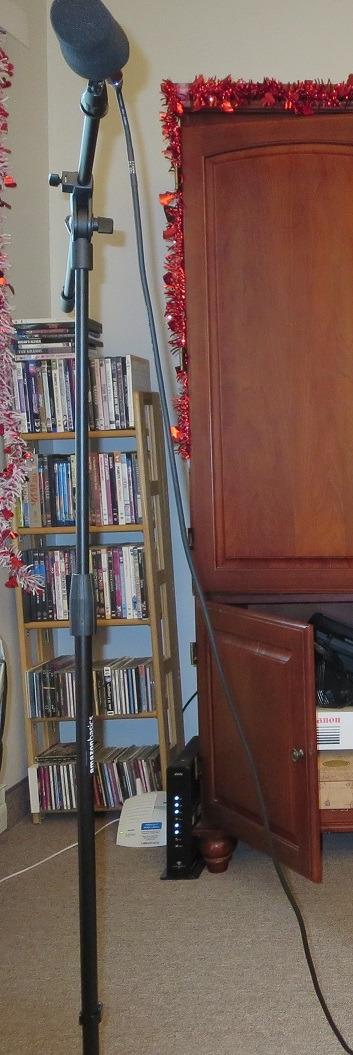
The Amazon Basics tripod boom stand is the workhorse of my studio for one simple reason: it does everything adequately and costs very little. With over 18,000 reviews and a 4.5-star average, this is the stand that most home studio owners start with, and many never feel the need to upgrade.
I use this stand primarily for instrument miking and as a second vocal position when I have a guest in the studio. The height range from seated to standing positions covers every recording scenario I need, and the boom arm with its molded plastic counterweight holds lighter microphones securely in position.
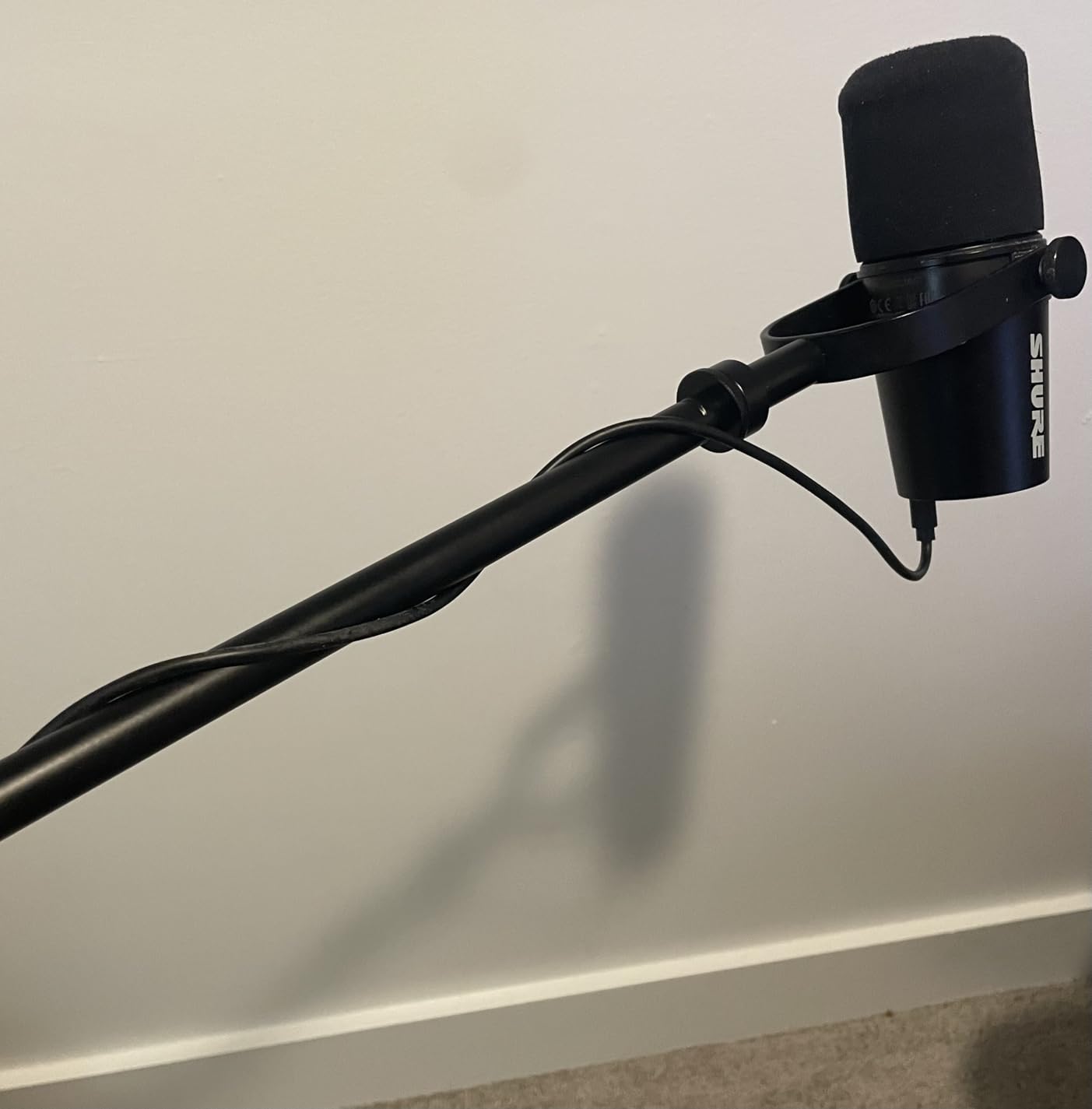
The steel construction feels solid for the price, and the stand folds flat for transport or storage. I have taken this stand to remote recording sessions without any issues. The 3/8-inch to 5/8-inch adapter means it works with standard microphone clips and shockmounts.
The main limitation is the 2-pound maximum microphone weight. This stand handles most condenser microphones and dynamic vocal mics without issue, but heavier microphones like the Shure SM7B with accessories will test its stability. The clip-on cable holder is basic but functional for keeping cords organized.
Who Should Buy This
Beginners building their first home studio and anyone who needs a portable, versatile floor stand for instrument miking or guest vocals will get tremendous value from this stand. It is the best entry point into home studio recording.
Who Should Look Elsewhere
If you use heavy broadcast microphones like the SM7B with cloudlifters and shockmounts, the 2-pound weight limit means you should look at heavier-duty options. Professional studios will also want something with more premium hardware.
4. InnoGear Mic Arm Boom Arm – Best Budget Desk Boom Arm
InnoGear Mic Arm Microphone Boom Arm Cable Management for Blue Yeti, Black
Cable management channels
32.3-inch horizontal reach
3.5 lb load capacity
Extension riser included
Pros
- Cable management channels keep setup clean and organized
- Adjustable angle with smooth 360-degree rotation
- Upgraded length with extension riser for extra height
- Built-in springs provide strong stability up to 3.5 lbs
- Universal 5/8-inch metal connector compatible with popular mics
Cons
- May require adjustment for heavier microphones
The InnoGear Mic Arm caught my attention with its extension riser, a feature rarely seen at this price point. The riser adds vertical height that most budget boom arms lack, making it easier to position your microphone at speaking height without hunching forward.
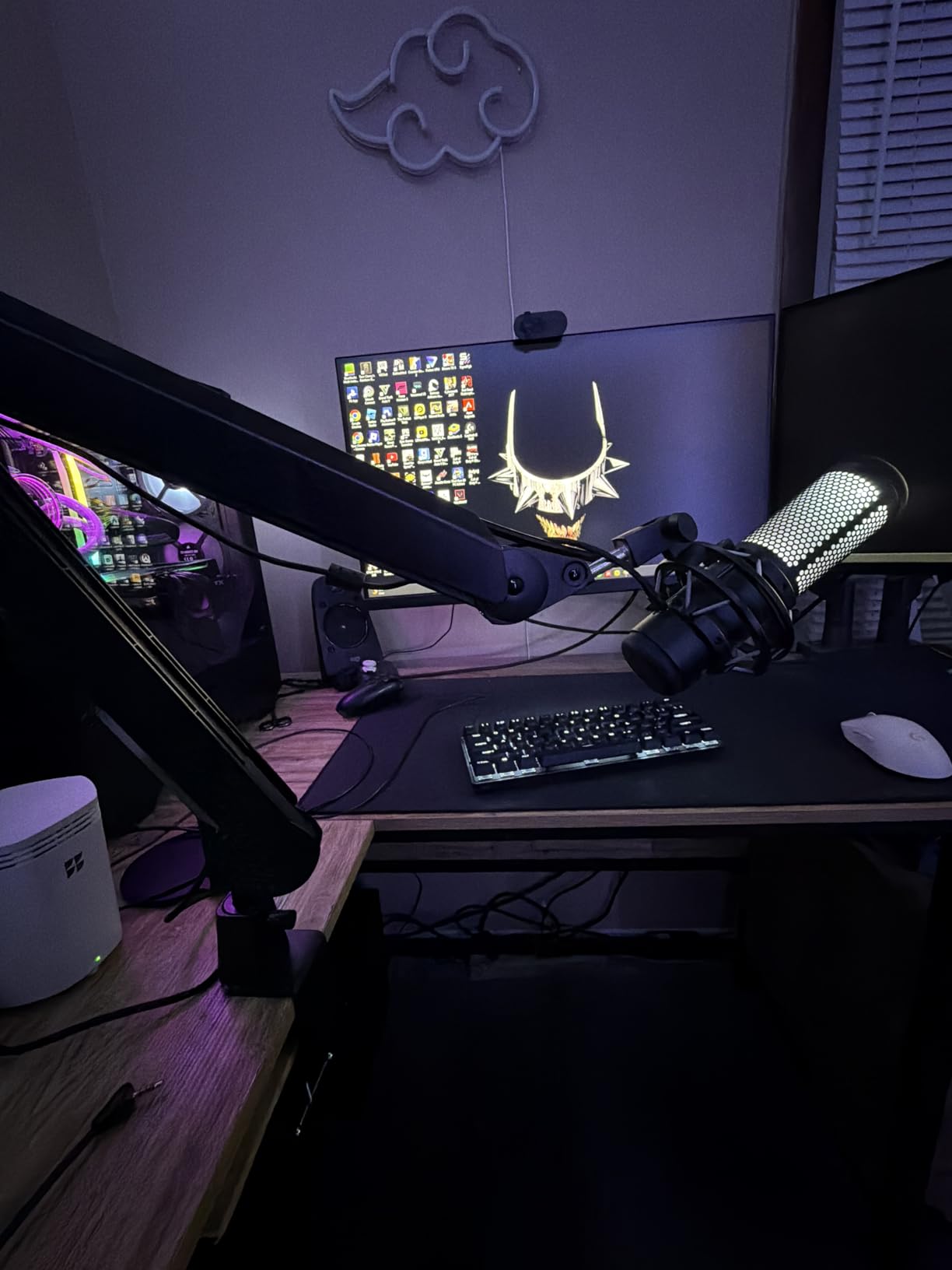
I tested this arm with a Blue Yeti and a Shure SM7B, and it handled both competently. The 3.5-pound load capacity is impressive for a budget arm, though the SM7B required occasional readjustment to maintain position. The cable management channels are well-designed and keep both USB and XLR cables tidy.
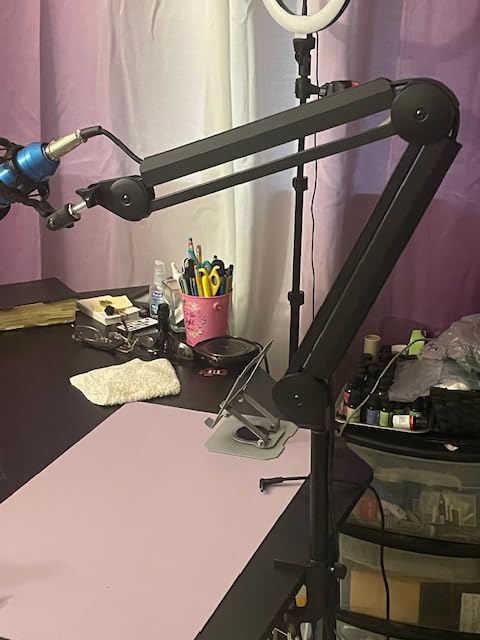
The 32.3-inch horizontal reach and 37.4-inch vertical reach give this arm plenty of extension for larger desks. The 135-degree back-and-forth and 180-degree up-and-down movement, combined with the 360-degree rotating base, covers every angle I needed during testing.
Build quality is solid alloy steel throughout, and the desk clamp fits surfaces up to 2 inches thick. The 12-month warranty is standard for this price range. At just 1.6 kg total weight, this arm is easy to reposition or remove when you need your desk space back.
Who Should Buy This
Home studio owners who need extra vertical height from a desk-mounted boom arm will appreciate the extension riser. This is an excellent choice for podcasters and streamers with larger desks who want cable management and solid reach without spending premium money.
Who Should Look Elsewhere
If you use a very heavy microphone with multiple accessories, the built-in springs may need frequent readjustment. Consider a gas-spring arm for heavier setups that need consistent positioning without adjustment.
5. Elgato Wave Mic Arm LP – Best Low Profile Streaming Arm
Elgato Wave Mic Arm Low Profile Microphone Boom Arm
All-metal anti-torsion build
Magnetic cable channels
Low profile below shoulder line
29.1-inch horizontal reach
Pros
- Premium all-metal anti-torsion construction
- Low profile design sits below shoulder line for unobstructed view
- Magnetic cable channels hide cables and provide easy access
- 360-degree horizontal and 90-degree upper vertical rotation
- Long reach covers large desks
Cons
- Limited stock available
- May require riser extension for certain desk setups
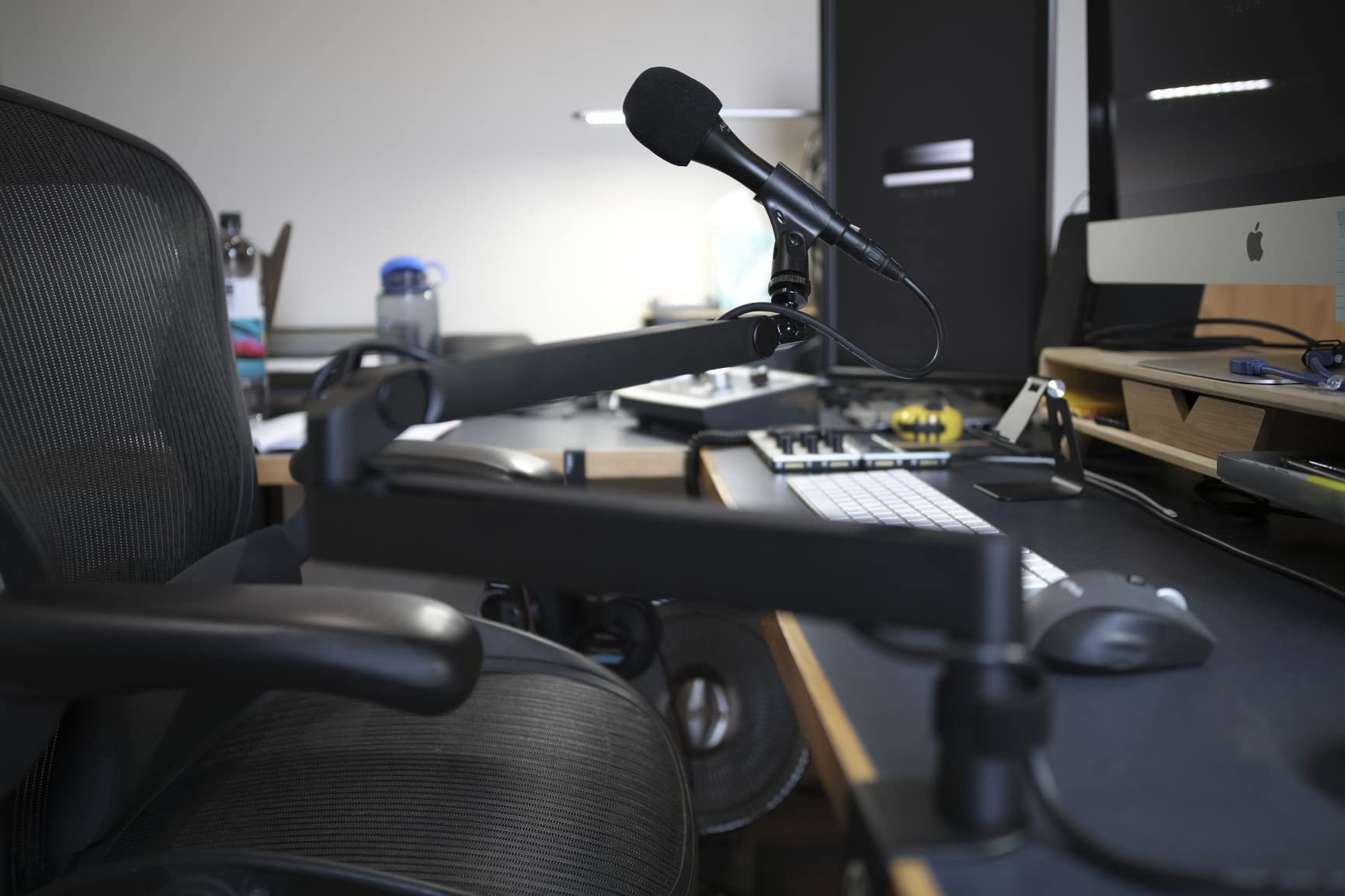
The Elgato Wave Mic Arm LP is the arm I recommend most often to streamers, and for good reason. The low-profile design keeps the arm below the shoulder line, meaning it never appears in camera frame and never blocks your monitor. For anyone who records video alongside audio, this is a meaningful advantage.
The magnetic cable channels are genuinely brilliant. Instead of threading cables through fixed channels, you pop the magnetic cover off, lay your cable in, and snap the cover back. This makes cable changes and adjustments trivial, which matters more than you might expect over months of daily use.
The all-metal anti-torsion construction means this arm does not twist or flex under load. I tested it with a range of microphones up to 2 kg, and positioning remained precise throughout. The 740mm horizontal reach covers even large corner desks comfortably.
With nearly 5,000 reviews and a 4.6-star average, this is one of the most popular premium boom arms on the market. The 2-year warranty reflects Elgato’s confidence in the build quality. The thread compatibility covers 1/4-inch, 3/8-inch, and 5/8-inch, ensuring universal microphone fitment.
Who Should Buy This
Streamers and content creators who need their microphone arm to stay out of camera frame will love the low-profile design. The magnetic cable management also makes this ideal for anyone who frequently swaps microphones or reconfigures their setup.
Who Should Look Elsewhere
If you need to position your microphone above shoulder height for standing recordings, the low-profile design is intentionally limited in vertical range. A traditional boom arm or floor stand would serve better for that use case.
6. Elgato Wave Mic Arm Pro – Best for Heavy Microphones
Elgato Wave Mic Arm Pro, Gas Spring Microphone Arm
Gas spring suspension
Supports up to 3 kg
Hidden magnetic cable channels
Padded desk clamp
Pros
- Supports up to 3 kg for heavy microphones with accessories
- Silent gas-spring adjustment without loosening screws
- Hidden magnetic cable channels for clean setup
- Padded clamp fits desks up to 2.4 inches thick
- Superior suspension technology for ultra-smooth adjustments
Cons
- Higher price point
- Cable channels may not fit Fethead inline preamps
- Joint covers are not keyed for perfect alignment
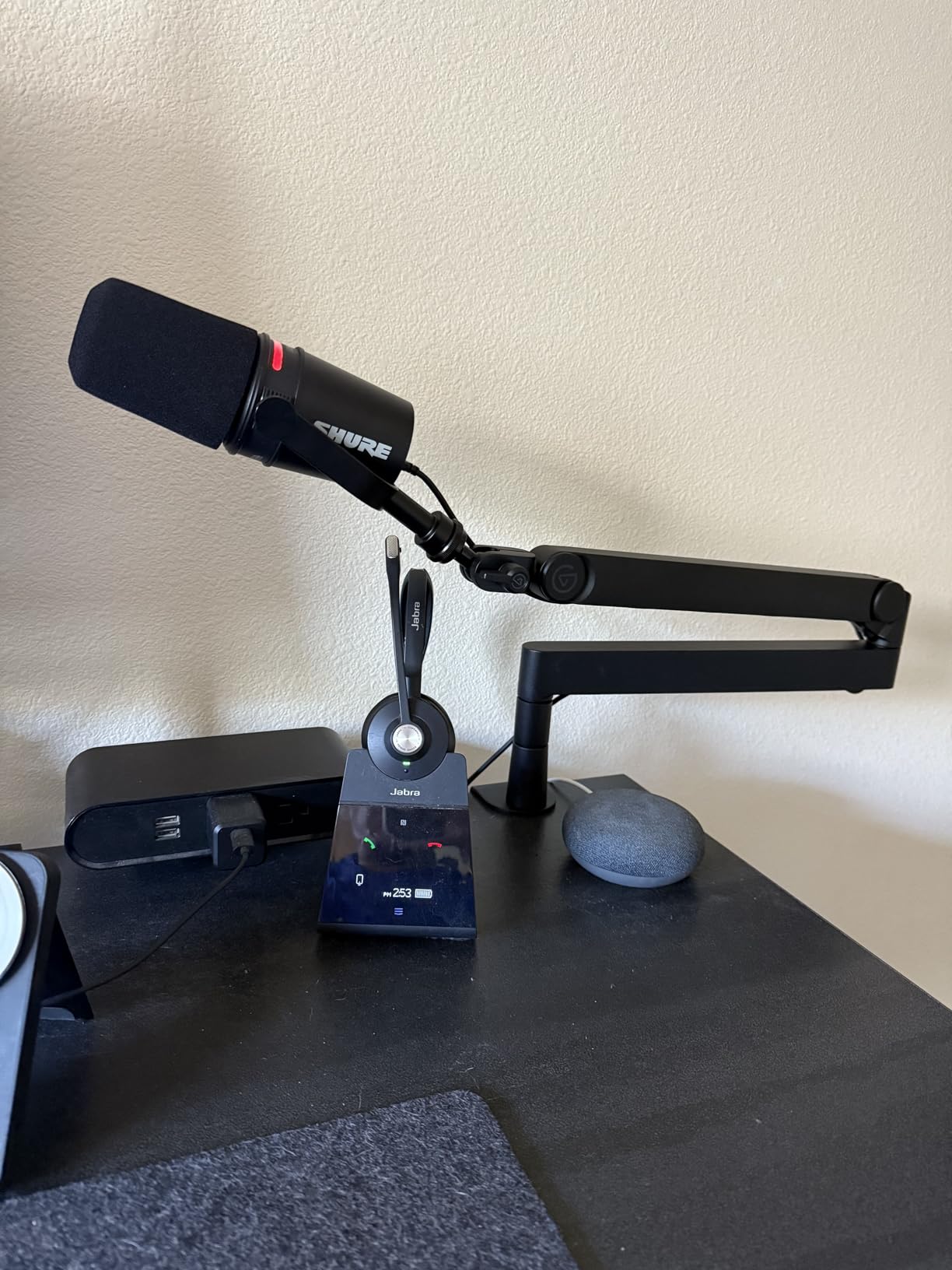
The Elgato Wave Mic Arm Pro solved a problem that plagued me with other boom arms: drooping under heavy microphone loads. The gas-spring suspension system supports up to 3 kg, which is enough for an SM7B plus cloudlifter plus shockmount without any sag. If you run a heavy broadcast chain, this is the arm that eliminates the constant readjustment cycle.
The gas-spring adjustment is a fundamentally different experience from spring-based arms. Instead of fighting mechanical tension, you move the microphone and it stays exactly where you place it. No knobs to loosen, no screws to tighten, no gradual drift during a recording session. The silence of the adjustment is also remarkable.
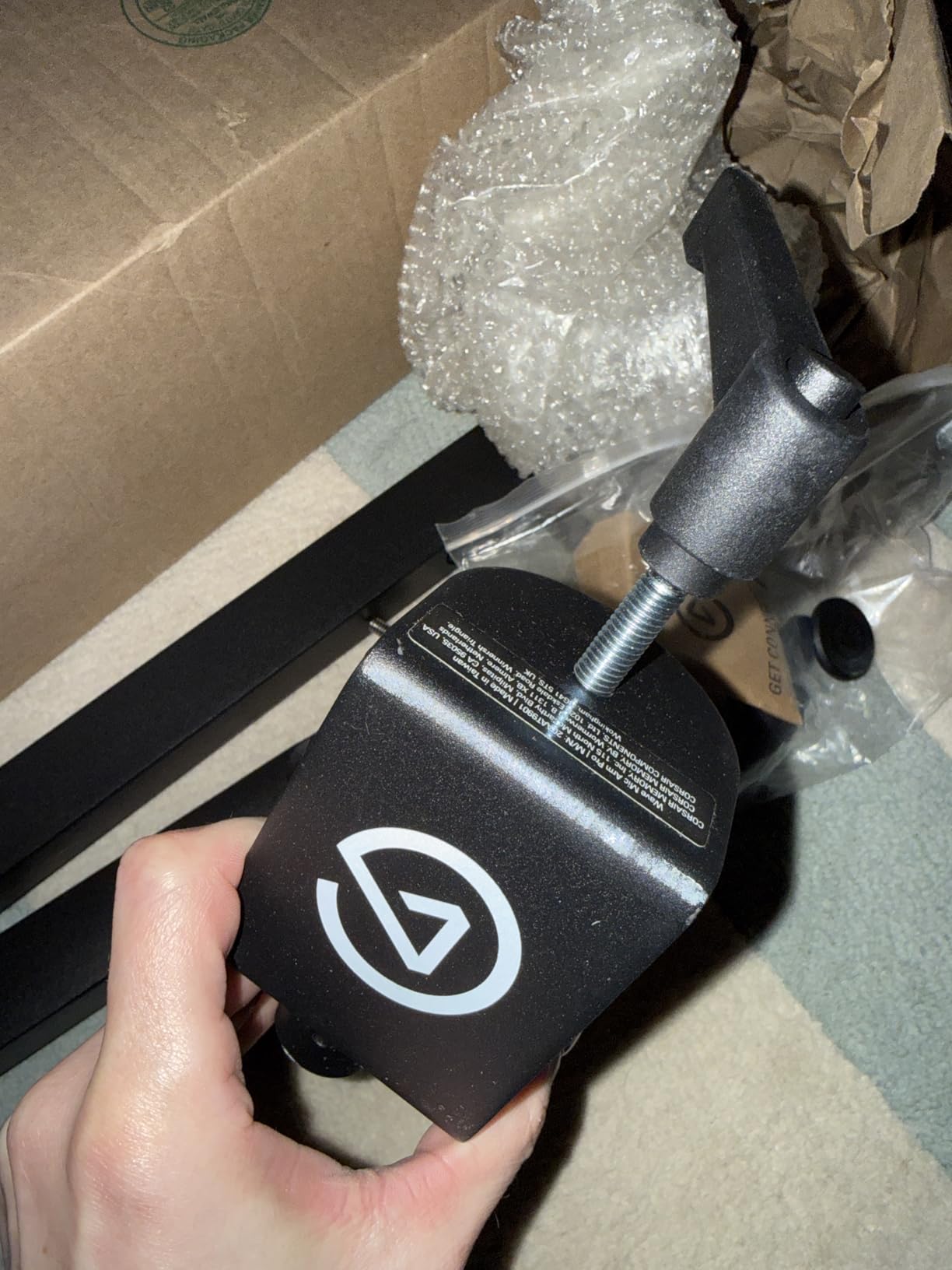
Hidden magnetic cable channels carry on the design language from the LP model, and they work just as well here. I was able to route both XLR and USB cables cleanly. The padded clamp accommodates desks up to 60mm thick, which covers virtually any desk surface.
The 2-year manufacturer warranty matches Elgato’s other premium offerings. At 2.04 kg, the arm itself has enough mass to feel substantial without being unwieldy. The matte black finish with minimalist branding fits modern streaming and studio aesthetics perfectly.
Who Should Buy This
Anyone using a Shure SM7B, Rode PodMic, or other heavy broadcast microphone with accessories should strongly consider this arm. The 3 kg capacity and gas-spring suspension solve the drooping problem that cheaper arms cannot handle.
Who Should Look Elsewhere
If you use a lightweight USB microphone under 500 grams, the gas-spring system may actually be overkill and the price difficult to justify. A standard spring-based arm will serve lighter setups perfectly well at a fraction of the cost.
7. InnoGear Tripod Boom Arm Floor Stand – Best Versatile Floor Stand
InnoGear Mic Stand Tripod Boom Arm Floor Microphone Stand Height Adjustable
Height 28.1 to 89.8 inches
Heavy-duty tripod base
Detachable boom arm 16-30 inches
Carrying bag included
Pros
- Adjustable height from 28.1 to 89.8 inches for all uses
- Heavy-duty tripod stand provides excellent stability
- Flexible boom arm rotates 360 degrees horizontally
- Comes with premium carrying bag for portability
- Includes 3/8 to 5/8 adapter for universal compatibility
Cons
- Some users report joints may wobble over time
- Carrying bag requires full disassembly to fit
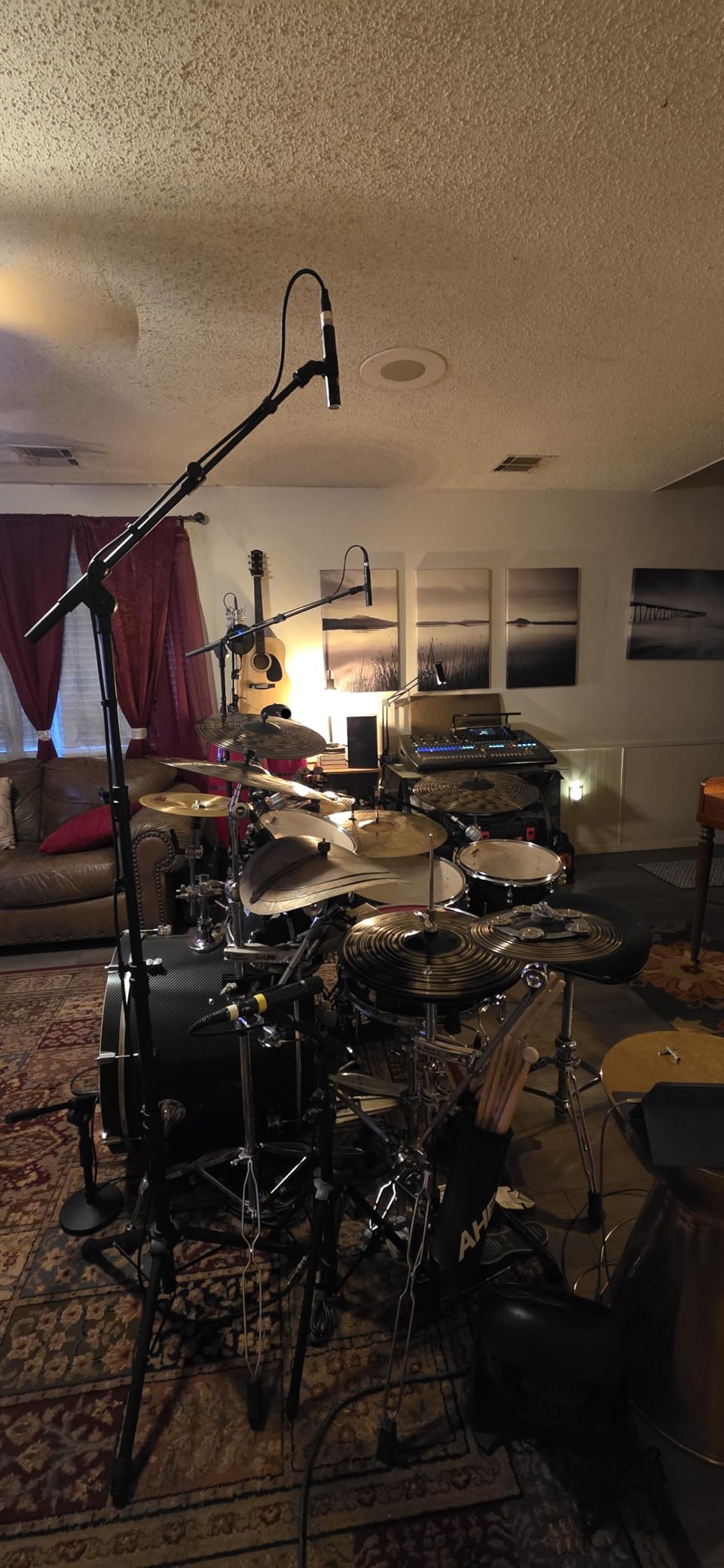
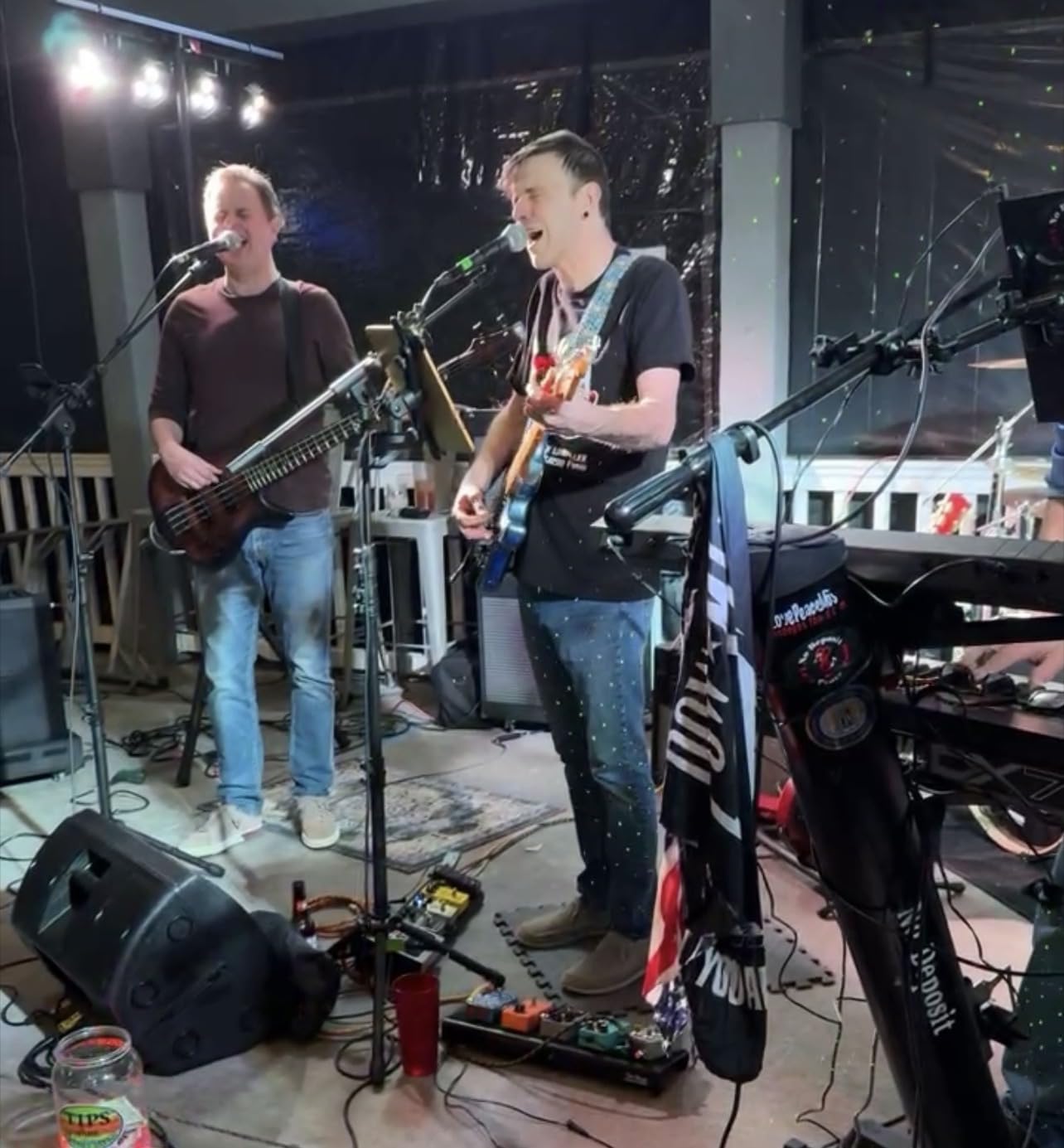
The InnoGear Tripod Boom Arm Floor Stand is the most versatile floor stand I tested. The height range from 28.1 to 89.8 inches means it works for seated instrument miking, standing vocals, and even overhead drum positioning. No other stand in this roundup matches that flexibility.
I was surprised by the stability given the affordable price point. The 4-pound tripod base provides a solid foundation, and the detachable boom arm extends from 16 to 30 inches. The boom rotates 360 degrees horizontally and 180 degrees vertically, giving you full directional control over microphone placement.
The included carrying bag is a thoughtful addition that adds genuine value. I have transported this stand to multiple recording locations, and the bag protects the stand while keeping all components together. The 3/8-inch to 5/8-inch screw adapter ensures compatibility with virtually any microphone clip or shockmount.
As the number one bestseller in microphone stands, this model has clearly resonated with the market. With nearly 2,000 reviews and a 4.5-star average, the consensus matches my experience: this is a reliable, versatile floor stand that punches well above its price point.
Who Should Buy This
Home studio owners who record both vocals and instruments will benefit most from the flexible height range and detachable boom arm. The carrying bag makes this ideal for musicians who record in multiple locations.
Who Should Look Elsewhere
If you exclusively record at a desk and never need a floor-standing position, a desk-mounted boom arm will save space and provide better desk integration. This stand is best when you need floor positioning flexibility.
8. NEEWER Low Profile Mic Arm MS002 – Best Pneumatic Damping Arm
NEEWER Low Profile Mic Arm Desk Mount, with Pneumatic Damping, 360°, MS002
Pneumatic piston damping
5.5 lb load capacity
30.2-inch horizontal reach
All-metal CNC construction
Pros
- All-metal desktop low profile stand with CNC technology
- Pneumatic boom arm with adjustable piston damping for heavy mics
- Extended reach with 30.2-inch horizontal and 11.9-inch vertical
- 360-degree pan and swivel with 160-degree tilt
- Hidden cable organizer for tidy workspace
- Wide compatibility with popular mic brands
Cons
- Shorter warranty compared to competitors
- Uses some plastic components
- May require careful adjustment for optimal damping
The NEEWER MS002 stands out for its pneumatic damping system, which is unusual at this price point. The adjustable piston damping lets you tune the arm’s resistance to match your microphone’s weight, and the 5.5-pound load capacity handles heavier microphones that budget spring arms struggle with.
I tested the pneumatic damping with microphones ranging from a lightweight AT2020 to a heavier SM7B setup. The adjustable piston made it possible to find the right resistance for each configuration, though it took some experimentation to dial in perfectly. Once set, the arm held position reliably.
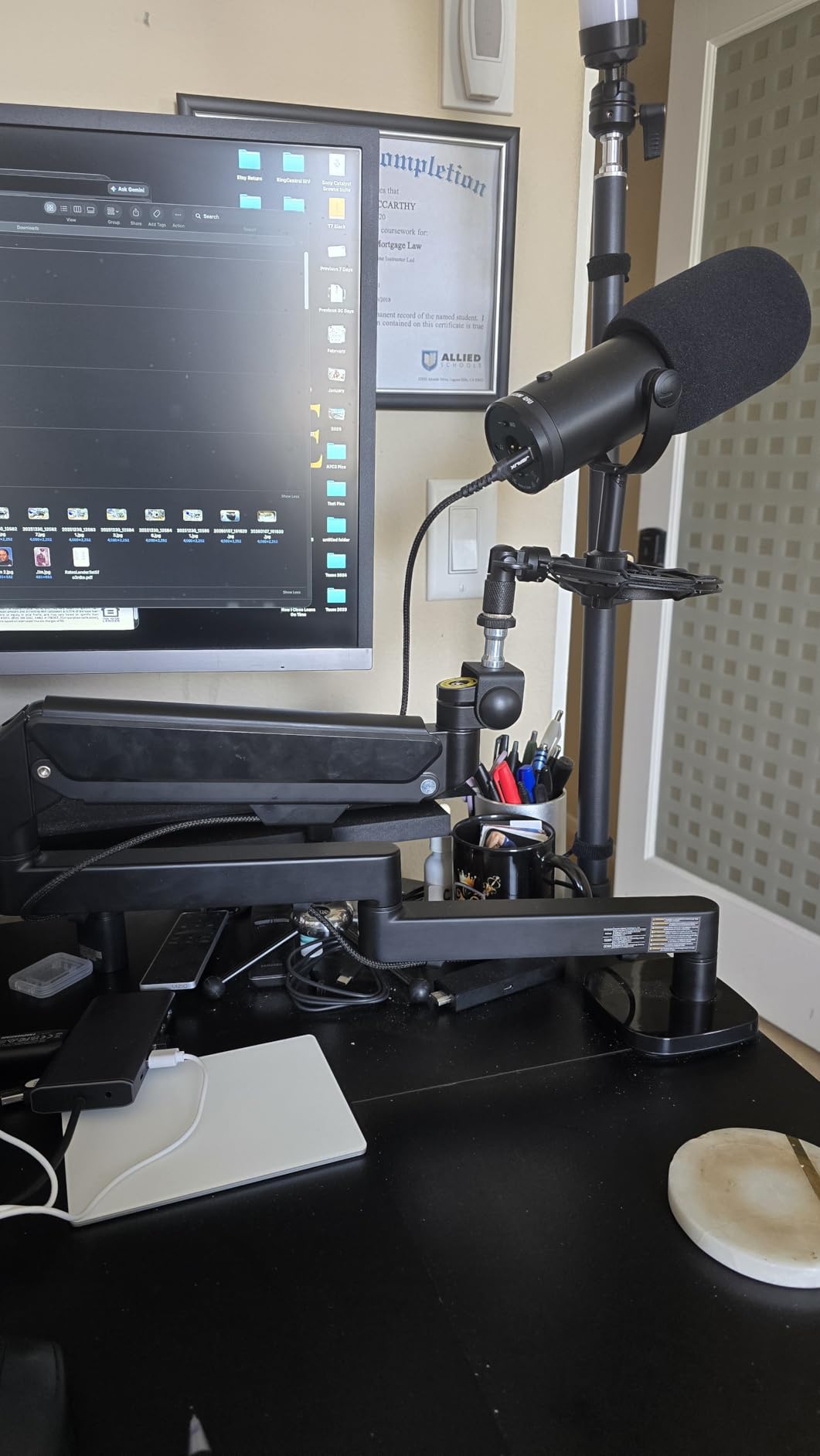
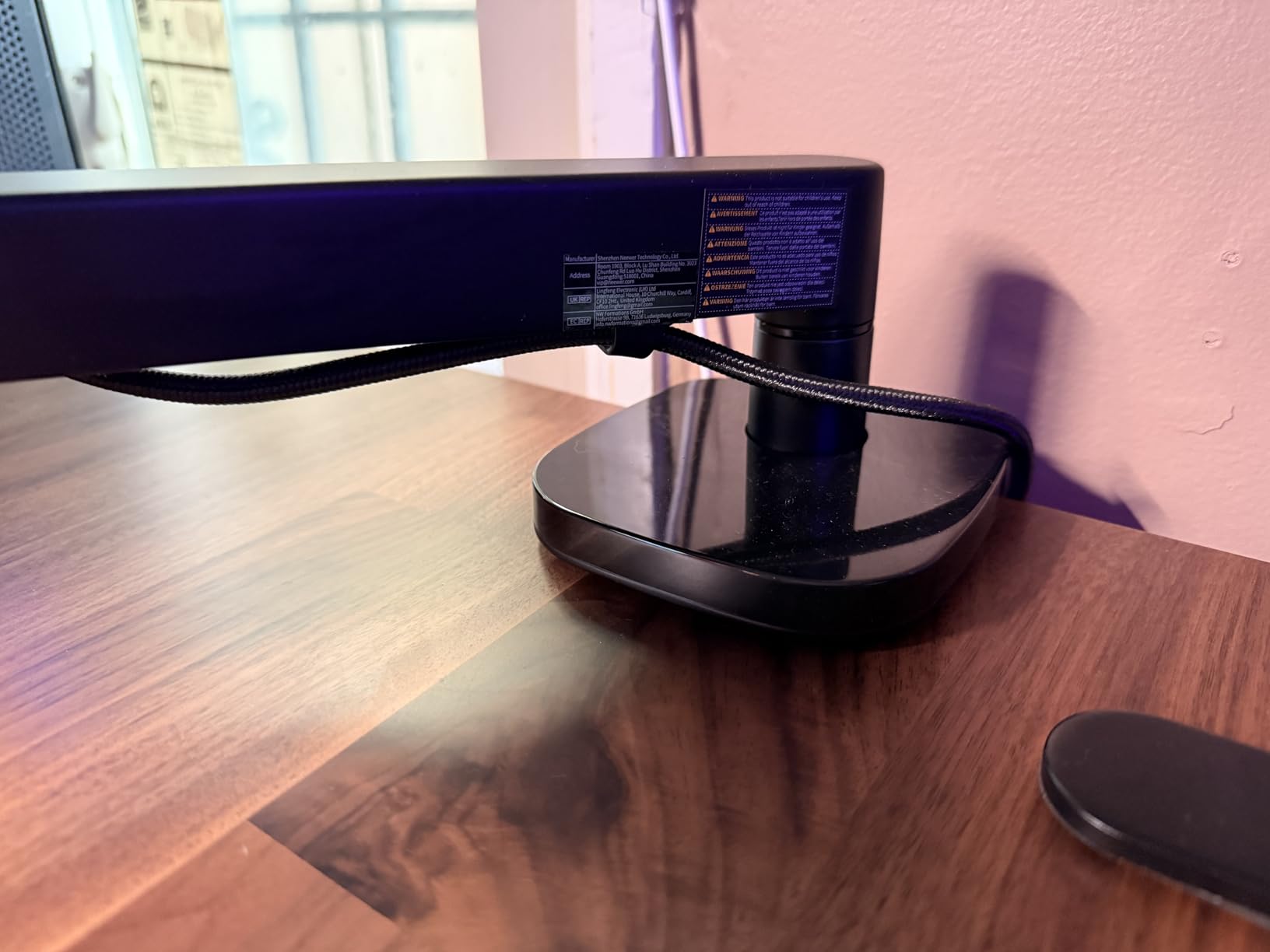
The 30.2-inch horizontal reach is among the longest in this category, and the low-profile design works well under monitors. The hidden cable organizer keeps your workspace clean, and the enlarged C-clamp with non-slip pads fits desk thicknesses from 0.4 to 3.1 inches.
NEEWER includes 1/4-inch to 3/8-inch and 1/4-inch to 5/8-inch screw adapters, ensuring compatibility with Blue Yeti, HyperX QuadCast, Shure SM7B, MV7, AT2020, and more. The all-metal construction with CNC machining gives this arm a premium feel despite its mid-range pricing.
Who Should Buy This
Home studio owners who want pneumatic damping technology without paying premium gas-spring prices will find excellent value here. The 5.5-pound capacity and adjustable piston make it suitable for heavier microphone setups.
Who Should Look Elsewhere
If you want a truly silent adjustment experience, the pneumatic damping is good but not as perfectly silent as the gas-spring systems on premium arms. Audiophiles who demand absolute silence may prefer the Elgato Pro or Rode PSA1+.
9. FIFINE CS1 Suspension Scissor Arm – Best Ultra-Budget Boom Arm
FIFINE CS1 Scissor Microphone Boom Arm Stand for Gaming Recording
Foldable scissor design
180-degree rotation
Anti-scratch desk clamp
500g lightweight build
Pros
- Upgraded desk clamp with anti-scratch pad and wider mouth
- 180 degree up and down rotation for full range of motion
- Sturdy metal construction with strong elastic springs
- Foldable and portable design saves desktop space
- Includes adapter for wide microphone compatibility
Cons
- Microphone not included
- Desktop clamp limited to 2 inch thickness
- Shorter maximum height at 13 inches
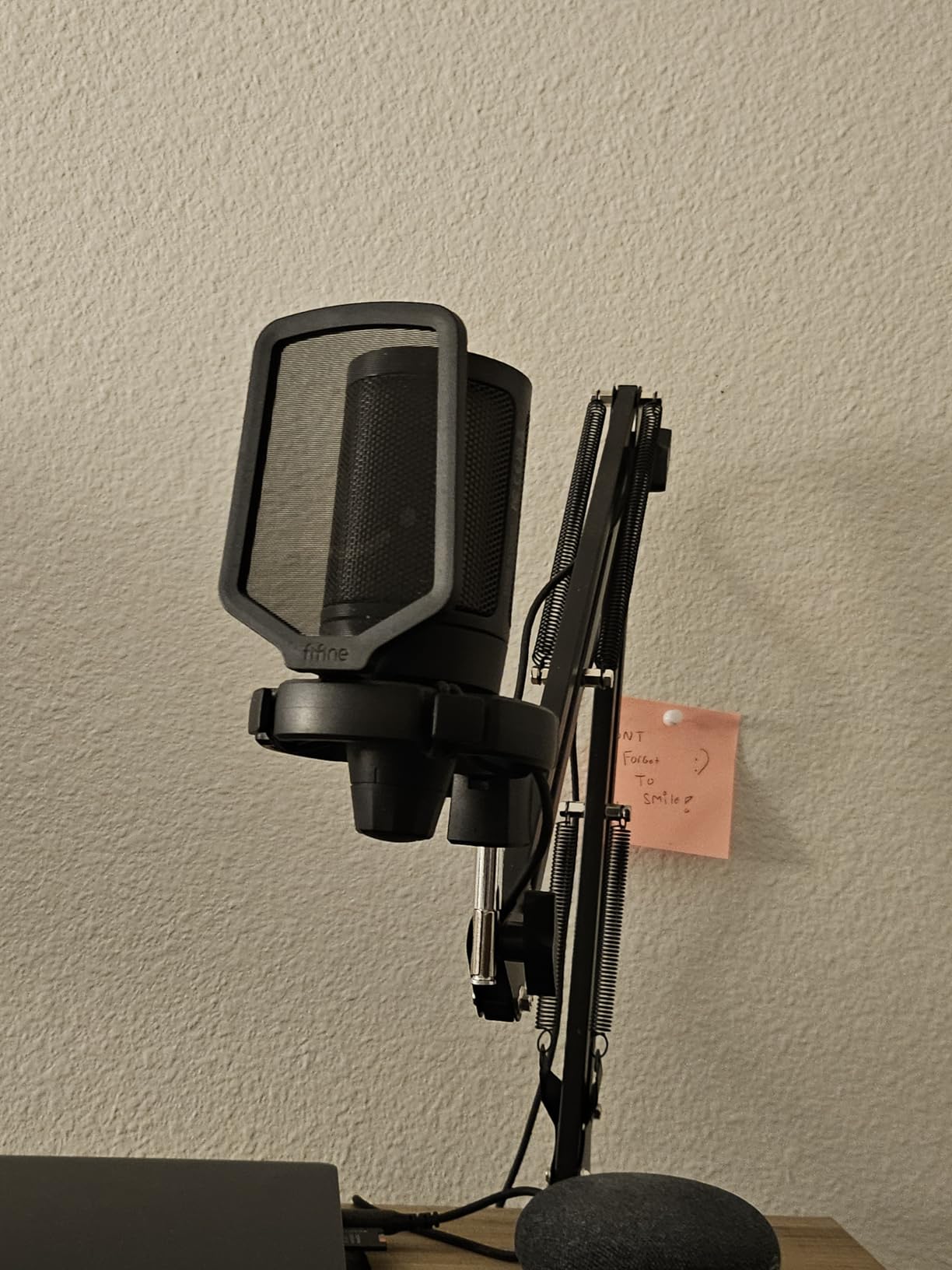
The FIFINE CS1 is the most affordable boom arm in this roundup, and I was honestly impressed by how well it performs for the price. The scissor arm design folds compactly for storage, making it ideal for small home studios where desk space is at a premium.
The upgraded desk clamp features an anti-scratch pad that protects your desk surface, and the wider mouth accommodates desktops up to 2 inches thick. The fixed knob locks the swing arm in place securely, preventing the free movement that plagues cheaper scissor arms.
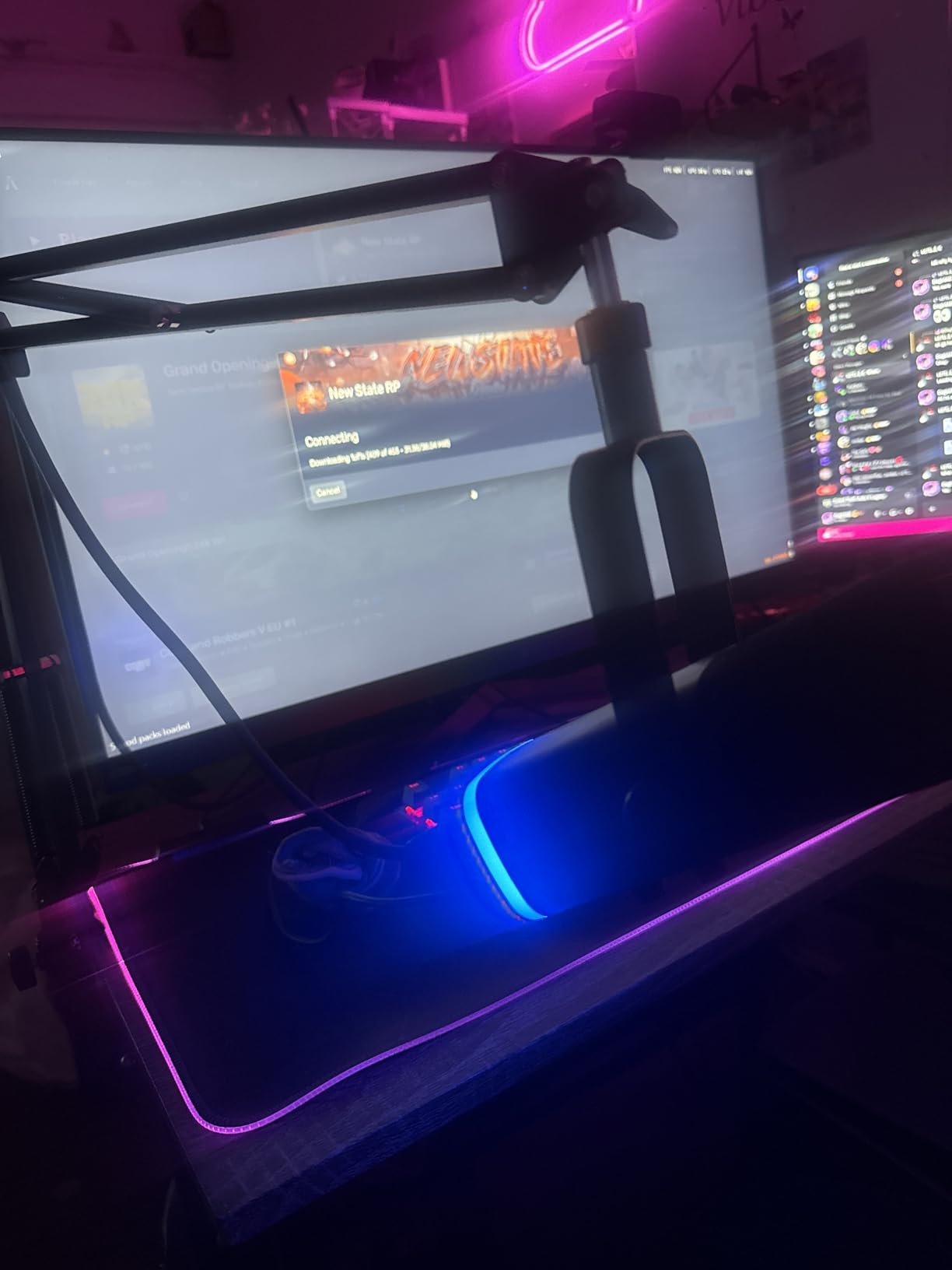
The 180-degree up-and-down rotation provides a decent range of motion for positioning. While it does not match the multi-axis flexibility of more expensive arms, it covers the essential adjustments for podcasting, gaming, and basic recording.
The metal construction with elastic springs provides reasonable stability for the price. At just 500 grams, this arm is incredibly lightweight and easy to reposition or transport. The included 5/8-inch to 3/8-inch adapter ensures compatibility with popular FIFINE microphones and other brands.
Who Should Buy This
Beginners and casual users who need a basic functional boom arm for podcasting, gaming, or light recording will find everything they need here. This is the lowest-cost entry point into desk-mounted microphone positioning.
Who Should Look Elsewhere
If you use a heavy microphone, need precise multi-axis positioning, or record professionally, the limited 13-inch height and scissor mechanism will frustrate you. Invest in a more capable arm for serious recording work.
10. Shure by Gator Broadcast Boom Arm – Best for Shure Microphones
Shure by Gator Deluxe Broadcast Desktop Mic Boom Arm (SH-BROADCAST1)
Designed for Shure vocal mics
32.25-inch arm extension
Quiet 360-degree rotation
Cable management channel
Pros
- Designed specifically for Shure and other vocal mics
- Clamps to desks up to 2.17 inches thick
- Threaded extension adapter provides XLR cable clearance
- Compatible with Shure SM7B MV7 and similar models
- Quietly rotates full 360 degrees
- Provides up to 32.25 inches of mic arm extension
- Cable management channel for XLR or USB cables
Cons
- Lower rating compared to other options
- Some users report durability issues
The Shure by Gator Broadcast Boom Arm is purpose-built for the Shure microphone ecosystem, and that specialization shows. The threaded extension adapter is specifically designed to provide XLR cable clearance for SM7B and MV7 setups, solving a real problem that generic boom arms often create.
I tested this arm with an SM7B and the fit was excellent. The 32.25-inch extension provides generous reach for larger desks, and the quiet 360-degree rotation allows smooth repositioning during recording. The cable management channel handles both XLR and USB cables without cramping.
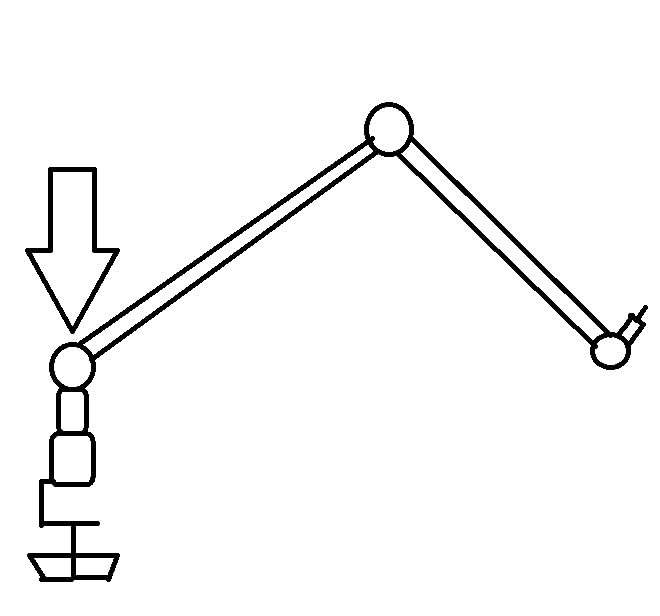
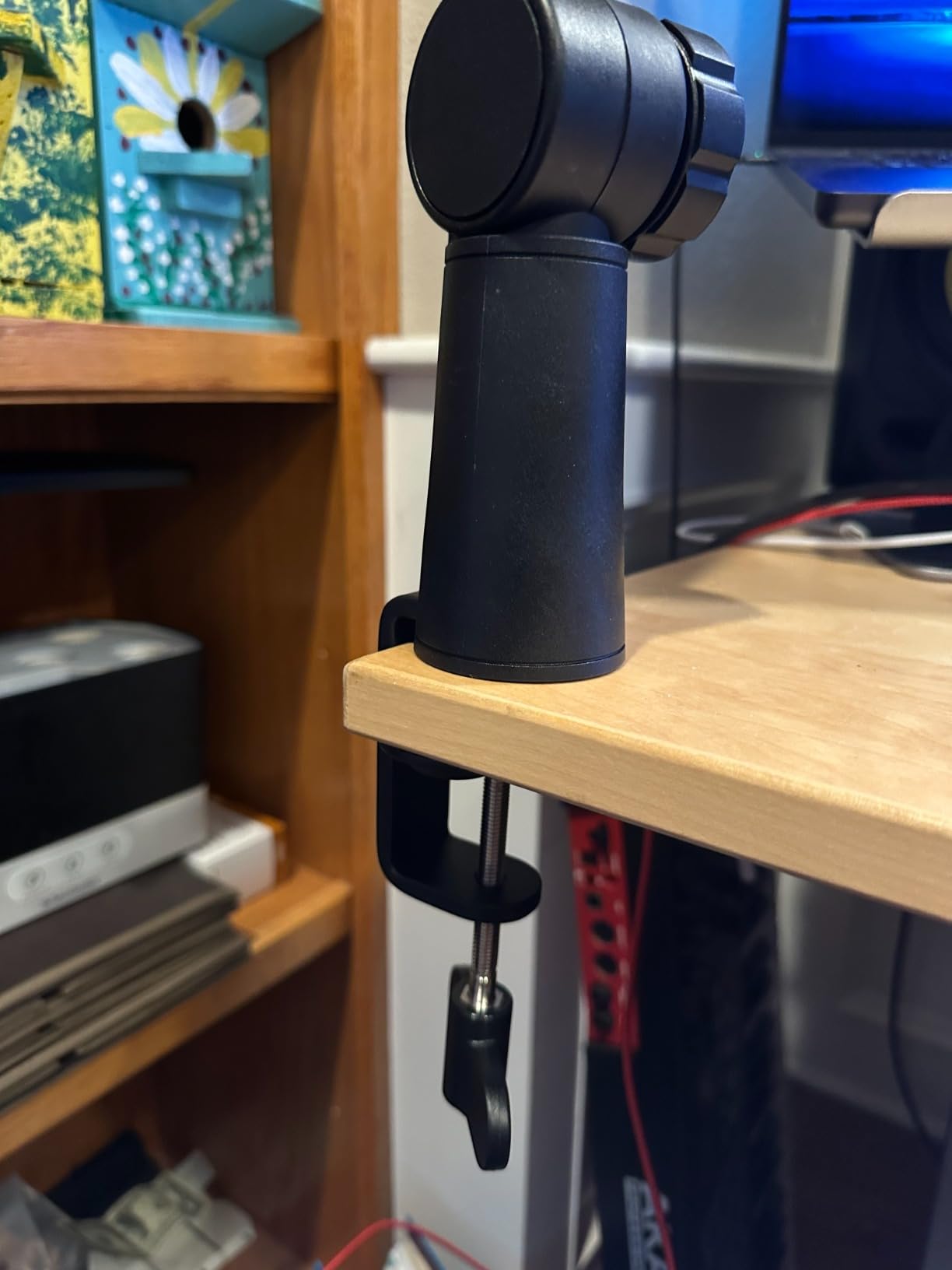
The desk clamp accommodates surfaces up to 55mm thick, which covers most standard desks. The powder-coated finish matches the professional aesthetic of Shure microphones, creating a cohesive look for broadcast and podcast setups.
The limited lifetime manufacturer warranty is a standout feature at this price point. However, the 4.2-star average rating is lower than competing options in this roundup, and some users have reported durability concerns over extended use. The design is solid, but quality control appears inconsistent.
Who Should Buy This
Shure SM7B and MV7 owners who want a boom arm specifically engineered for their microphone will appreciate the thoughtful design details. The XLR cable clearance adapter alone solves a common frustration for Shure users.
Who Should Look Elsewhere
Given the durability concerns reported by some users and the lower overall rating, those seeking maximum reliability may prefer the Rode PSA1+ or Elgato options, which have stronger track records for long-term build quality.
11. Elgato Wave Mic Arm MK.2 – Best Flexible Premium Arm
Elgato Wave Mic Arm MK.2, Studio Boom Arm for Microphones
Rises above monitors or stays low profile
Silent operation
Slim all-metal design
Padded clamp for tight spaces
Pros
- Ultra flexible rises above tall monitors or stays below shoulder level
- Precise control to angle and rotate mic in virtually any direction
- Smooth and silent operation
- Sleek all-metal design with no distracting logos
- Padded clamp fits almost any desk edge even tight spaces
- Holds heavy microphones like SM7B without sagging
Cons
- Some plastic used in cable track covers may eventually crack
- Lacks mid-point pivot seen on proprietary low profile arms
- May require larger desk for lower configuration
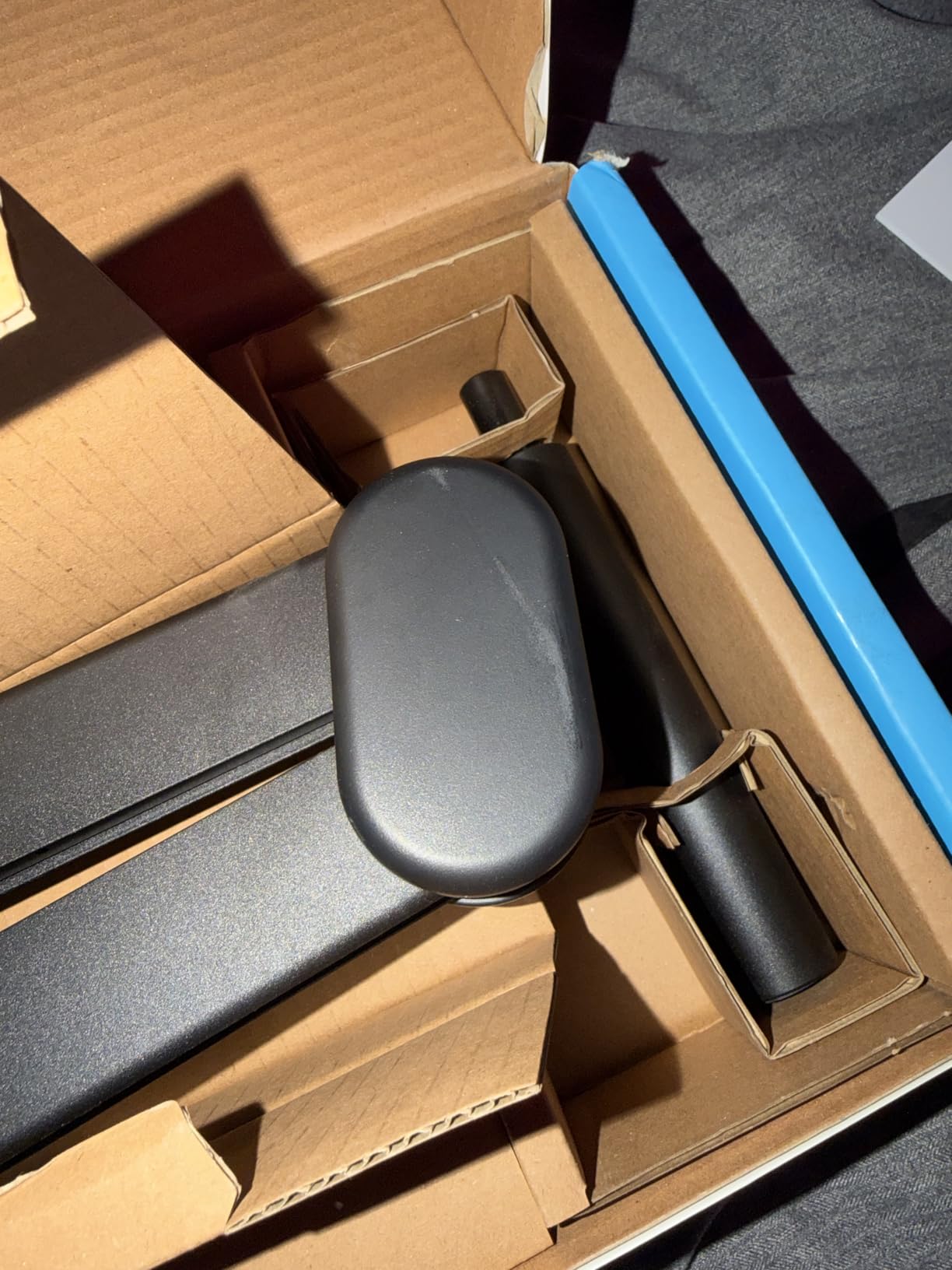
The Elgato Wave Mic Arm MK.2 is the most flexible boom arm I have tested. The ability to rise above tall monitors for standing recording or drop below shoulder level for seated streaming makes it genuinely versatile in a way that dedicated low-profile or high-profile arms are not.
The silent operation is exceptional. I repositioned the microphone during active recording sessions without picking up any mechanical noise in the audio. The slim all-metal design with no distracting logos gives it a clean, professional appearance that fits any studio aesthetic.
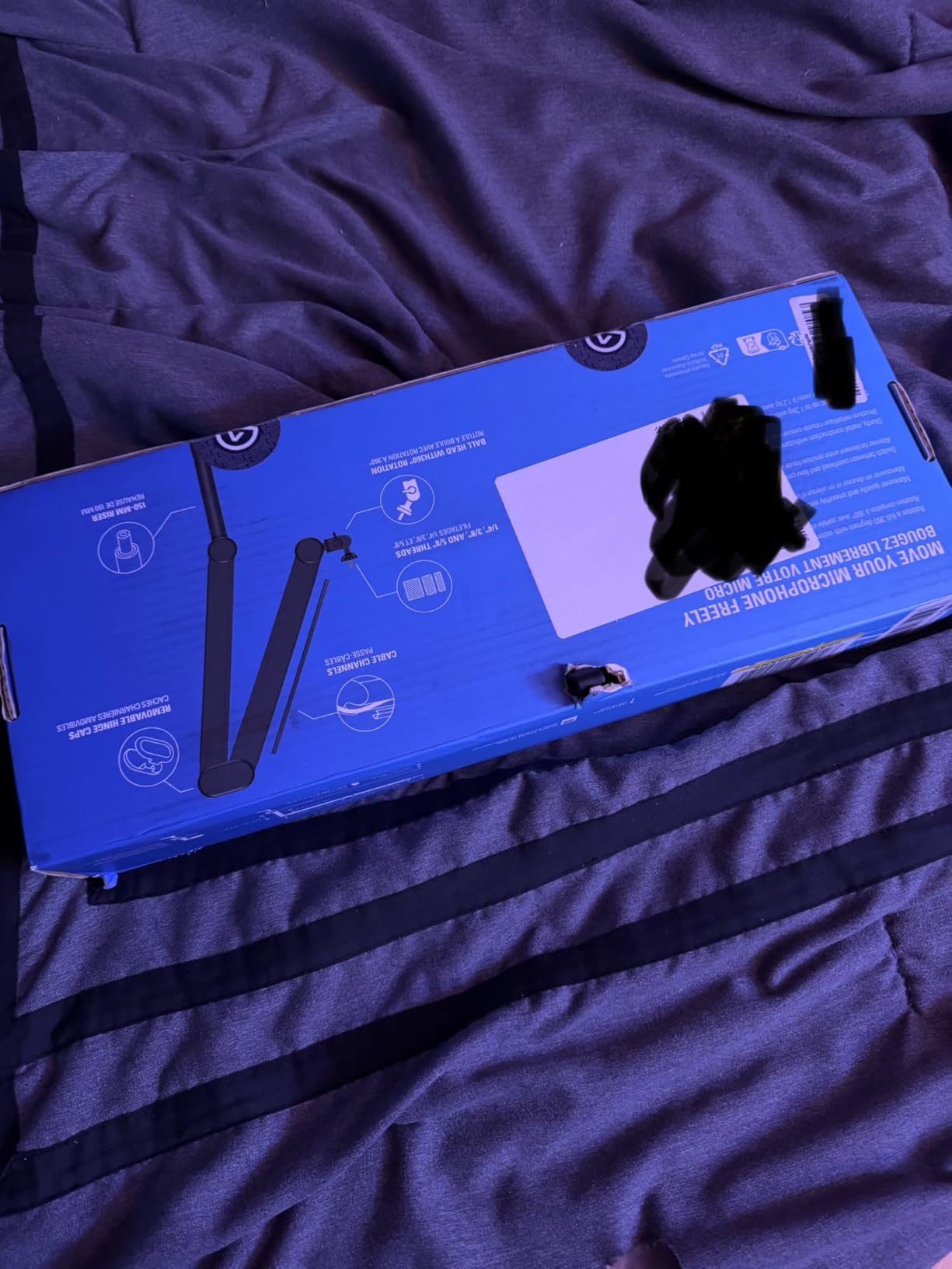
I tested this arm with a Shure SM7B, and it held the weight without any sagging or drift. The padded clamp fits securely on tight desk edges where other clamps struggle. The 2-year manufacturer warranty provides confidence in the long-term investment.
The main trade-off is the lack of a mid-point pivot, which means achieving a true low-profile configuration requires a larger desk footprint. The cable routing is well-designed, though some plastic components in the cable track covers may show wear over time.
Who Should Buy This
Home studio owners who alternate between standing and seated recording will benefit from the unmatched flexibility. The ability to hold heavy microphones without sagging also makes this ideal for broadcast setups.
Who Should Look Elsewhere
If your desk is smaller than 150x70cm and you primarily need a low-profile configuration, the lack of a mid-point pivot means you may not achieve the ideal positioning. The Elgato LP model is better suited for compact desk low-profile use.
12. Oimlfus Floor Boom Arm Stand – Best Weighted Base Floor Stand
Mic Stand Floor Boom Arm with 6.6lbs Weighted Base for Blue Yeti, SM7B, MV7
6.6 lb weighted square base
Height 26.7 to 67.7 inches
Double pop filter included
Foldable arm design
Pros
- Heavy 6.6 lb weighted square base provides excellent stability
- Height adjustable from 26.7 to 67.7 inches
- Includes double pop filter for improved audio quality
- Comes with multiple screw adapters
- Foldable arm for easy storage and transport
Cons
- Some users report stability issues with very heavy microphones
- Lower review count suggests newer product
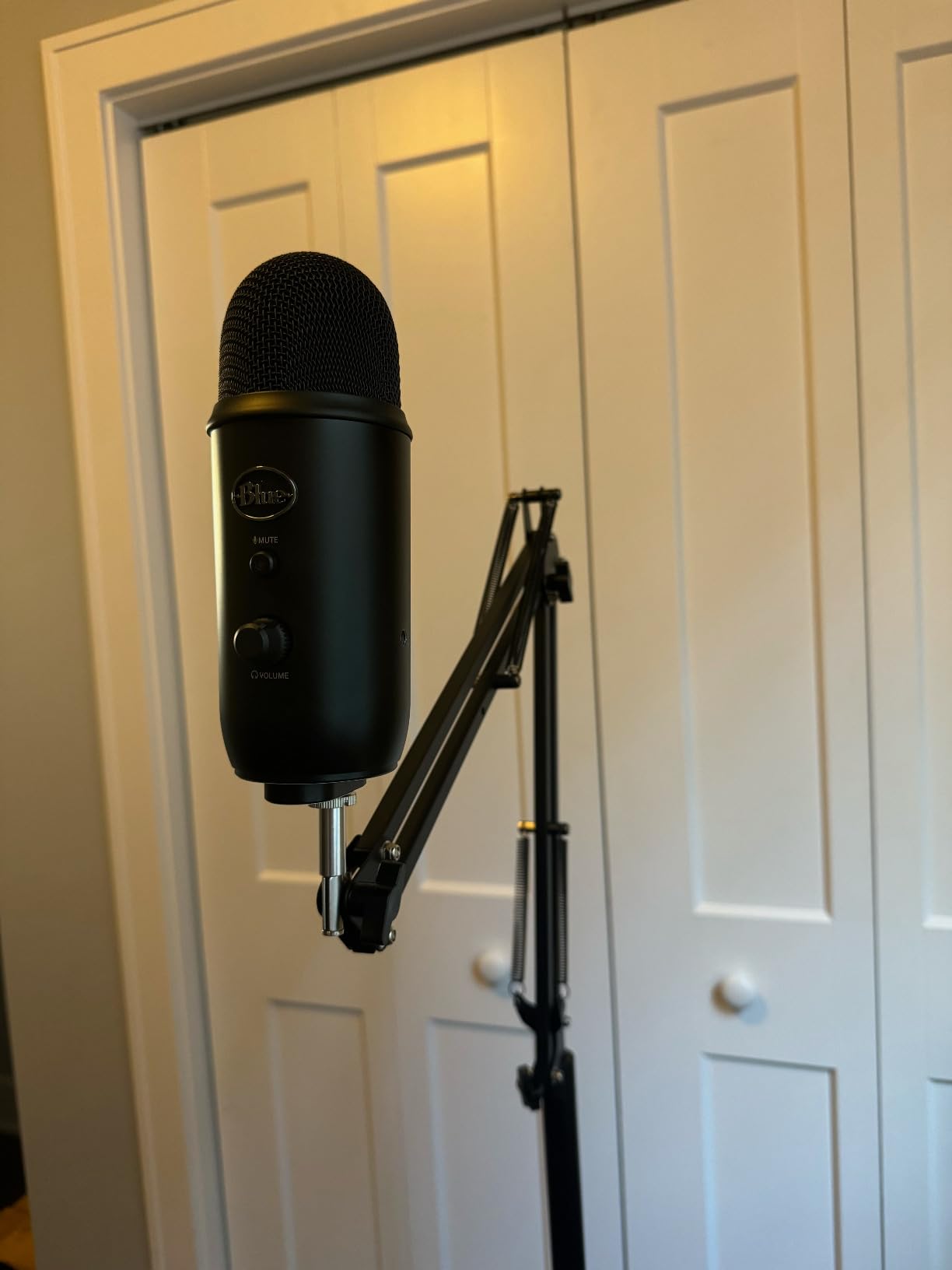
The Oimlfus Floor Boom Arm Stand distinguishes itself with a 6.6-pound weighted square base that provides a level of stability most tripod stands cannot match. The weighted base eliminates the tripod leg footprint, making it ideal for tighter studio spaces where floor area is limited.
I found the height range from 26.7 to 67.7 inches covers most home studio recording scenarios, from seated podcasting to standing vocals. The extra-strong springs prevent the microphone from dropping, and the foldable arm design makes storage straightforward when the stand is not in use.
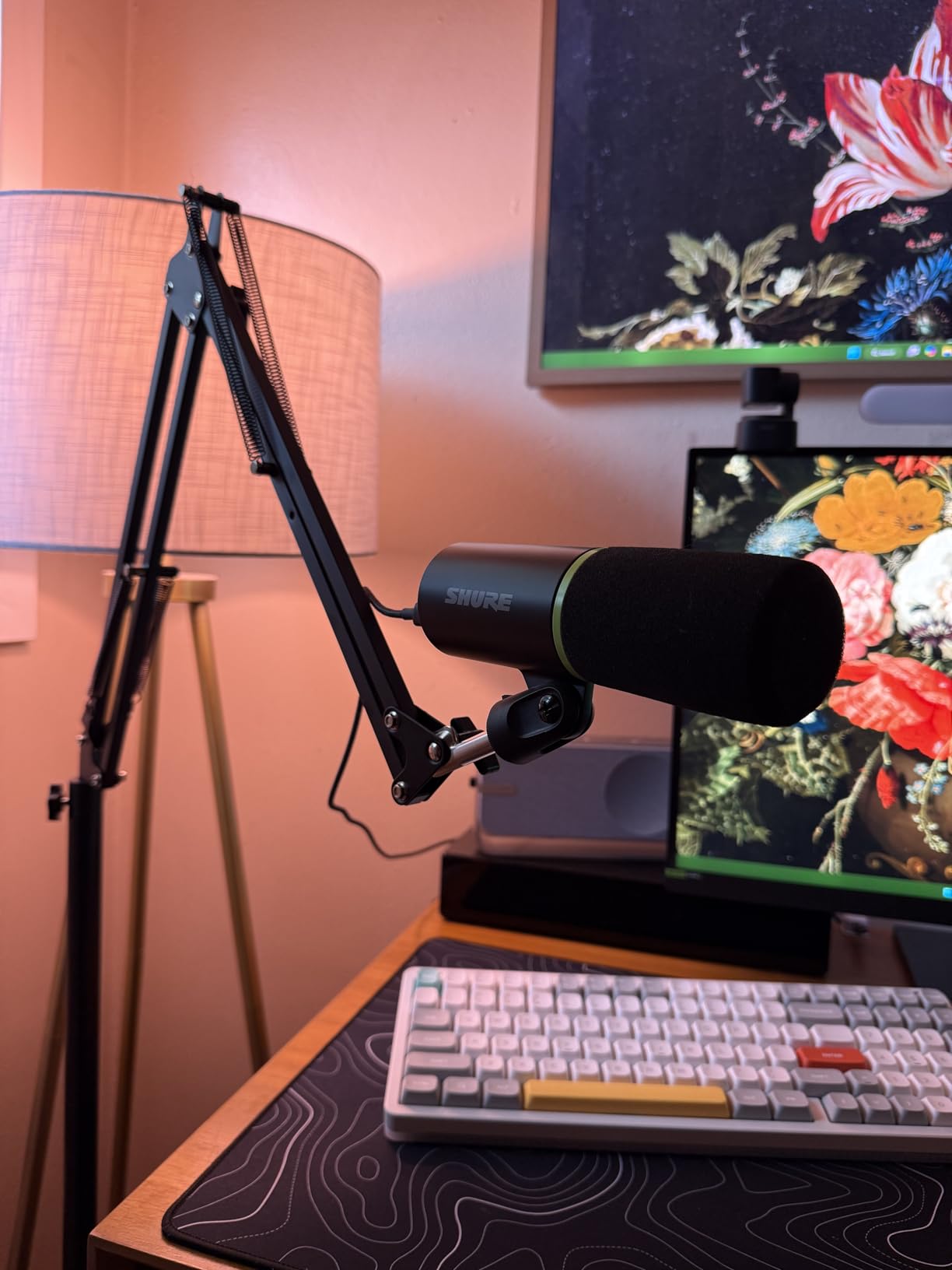
The inclusion of a double pop filter is a welcome addition that adds value to the package. The stand comes with both 3/8-inch to 5/8-inch and 3/8-inch to 1/4-inch screw adapters, ensuring compatibility with a wide range of microphones including Blue Yeti, SM7B, MV7, and HyperX QuadCast.
With a 4.4-star average rating from nearly 400 reviews, this is a newer product that is building a positive reputation. Some users note that very heavy microphone configurations can test the stability, so this stand is best suited for standard microphones rather than maximum-weight broadcast setups.
Who Should Buy This
Home studio owners who want a floor stand with a smaller footprint than a tripod will appreciate the weighted base design. The included pop filter and screw adapters make this a complete package for vocal recording.
Who Should Look Elsewhere
If you use a heavy broadcast microphone with a cloudlifter and shockmount, the stability may not match a dedicated heavy-duty stand. Consider the InnoGear tripod or a premium floor stand for maximum-weight configurations.
How to Choose the Right Microphone Stand for Your Home Studio?
Choosing among the best microphone stands for home studios comes down to understanding your recording style, your space constraints, and your microphone weight. The right stand disappears into your workflow, while the wrong one becomes a constant source of frustration. Here are the key factors I evaluate when recommending stands.
Stand Types and Their Best Uses
Desk-mounted boom arms are the most popular choice for home studios because they free up desk space and position the microphone close to your mouth. They are ideal for podcasting, streaming, voiceover work, and any recording done while seated at a desk. The trade-off is that they require a desk edge for clamping and have limited height range.
Tripod floor stands offer maximum height flexibility and portability. They work for standing vocals, instrument miking, and any scenario where you need to position a microphone away from your desk. The tripod base provides solid stability but takes up floor space, and the legs can be a tripping hazard in tight quarters.
Weighted-base floor stands split the difference between boom arms and tripods. The compact weighted base has a smaller footprint than tripod legs while still providing floor-standing stability. These are excellent for vocal booths and dedicated recording spaces where aesthetics and footprint matter.
Weight Capacity and Microphone Compatibility
This is the factor that causes the most problems. A stand that cannot support your microphone’s weight will droop, drift, and eventually fail to hold position. As a general rule, I recommend choosing a stand rated for at least 50 percent more than your microphone’s actual weight to account for accessories like shockmounts, cloudlifters, and pop filters.
The Shure SM7B is the microphone that most frequently exposes underpowered stands. At roughly 1.65 lbs alone, adding a cloudlifter and shockmount pushes the total weight past what budget boom arms can handle. For SM7B setups, look for arms with gas-spring suspension or heavy-duty spring systems rated for at least 3 lbs.
Thread Size Compatibility
Microphone stands use one of three standard thread sizes: 5/8-inch, 3/8-inch, and 1/4-inch. The 5/8-inch thread is the US standard for microphone stands and is what most professional microphones and shockmounts use. The 3/8-inch thread is the European standard, and the 1/4-inch thread is used for camera mounts and some lighter accessories.
Most quality stands include thread adapters, but it is worth verifying before purchase. A stand that only offers 3/8-inch threads without an adapter will not work with standard US microphone clips without a separate adapter purchase. I always check the included components list to confirm adapter availability.
Cable Management
Cable management is the difference between a professional-looking setup and a tangled mess. Stands with integrated cable channels route your XLR or USB cable inside the arm, keeping it invisible and preventing accidental pulls. External cable clips work but are less elegant and more prone to snagging.
For recording environments where appearance matters, such as video podcasts or streaming, internal cable management is worth paying extra for. The magnetic cable channels on Elgato arms and the integrated channels on the Rode PSA1+ represent the gold standard for cable routing.
Desk Clamp vs Permanent Mount
Most desk boom arms use a C-clamp that attaches to the edge of your desk. This is the most flexible option because you can reposition or remove the arm without tools. Check the maximum desk thickness the clamp accommodates, as some budget arms only fit desks up to 2 inches thick.
Permanent mounts that screw into your desk or a wall provide a cleaner look but require commitment and tools to install. For most home studio owners, the flexibility of a C-clamp mount is the better choice unless you are building a dedicated studio space.
Frequently Asked Questions
What is the 3 to 1 rule for microphones?
The 3 to 1 rule is a microphone placement guideline stating that the distance between two microphones should be at least three times the distance from each microphone to its sound source. Following this rule minimizes phase cancellation and comb filtering when using multiple microphones, resulting in clearer recordings with fewer interference artifacts.
What mic stands are used in studios?
Professional studios typically use heavy-duty boom stands from brands like Ku0026amp;M, Hercules, and Ultimate Support for floor positioning, and broadcast-style boom arms from Rode and Elgato for desk-mounted applications. The specific stand choice depends on the microphone weight, recording scenario, and whether the engineer needs floor-standing or desk-mounted positioning. Round-base stands are common in vocal booths for their stability and small footprint.
Are expensive mic stands worth it?
Expensive mic stands are worth the investment if you record daily, use heavy microphones like the SM7B, or need silent repositioning during recording. Premium stands from brands like Rode, Elgato, and Ku0026amp;M offer superior build quality, better weight capacity, and features like gas-spring damping and integrated cable management that budget stands cannot match. For casual or occasional use, budget stands provide adequate performance at a fraction of the cost.
How do I stop my mic stand from drooping?
Mic stand drooping is usually caused by using a stand with insufficient weight capacity for your microphone. To fix this, tighten all adjustment knobs firmly, ensure your microphone is within the stand’s rated weight capacity, and consider upgrading to a gas-spring arm or heavy-duty spring arm for heavier microphones. Adding a counterweight or using a shockmount can also help distribute weight more evenly and reduce drooping.
Final Thoughts on the Best Microphone Stands for Home Studios
After testing all 12 stands across months of daily recording, the lesson is clear: the best microphone stands for home studios are the ones that match your specific recording style and microphone weight. There is no single stand that is best for everyone, but there is a best stand for your situation.
For professional podcasting and voiceover work, the Rode PSA1+ remains my top recommendation for its silent operation and parallelogram spring design. The FIFINE BM88 delivers the best value with its all-metal low-profile construction and hidden cable management. And for those building their first home studio on a budget, the Amazon Basics tripod stand provides reliable versatility at an unbeatable price point.
If you use a heavy broadcast microphone like the SM7B, invest in the Elgato Wave Mic Arm Pro with its 3 kg gas-spring capacity. For streaming setups where the arm must stay below camera frame, the Elgato LP or FIFINE BM88 are purpose-built for that scenario. Whatever your recording needs in 2026, one of these 12 stands will provide the stability and positioning your home studio deserves.