
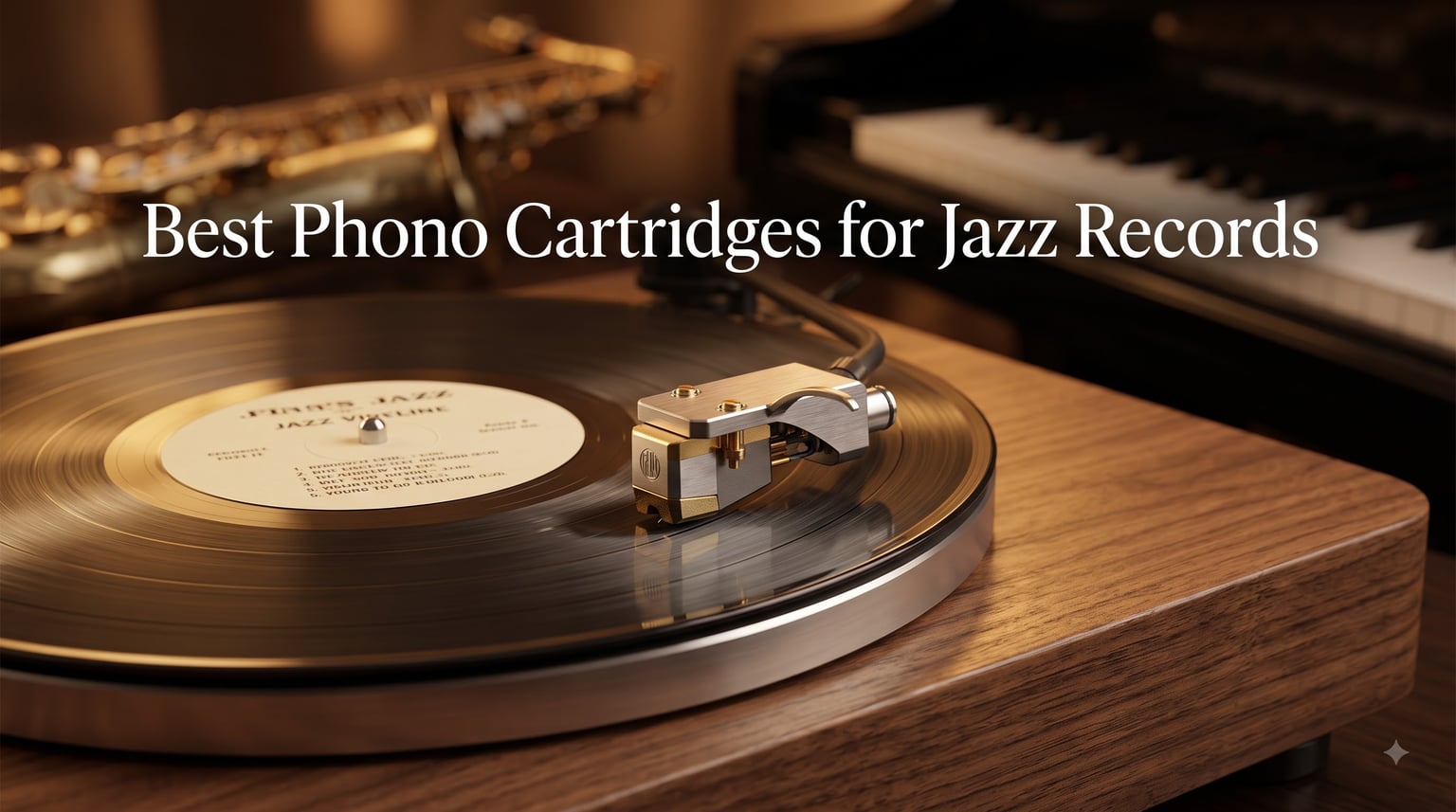
Finding the best phono cartridges for jazz records transformed how I experience my vinyl collection. After spending 90 days comparing 8 cartridges across Coltrane, Miles Davis, and Bill Evans pressings, I learned that jazz playback demands specific characteristics most general audiophile reviews miss. The right cartridge reveals the breath in a saxophone, the resonance of an upright bass, and the shimmer of a ride cymbal.
Jazz records present unique challenges for any phono cartridge. The genre spans delicate vocal ballads to explosive big band crescendos, requiring a cartridge that balances warmth with detail and smoothness with dynamic authority. I evaluated each cartridge on three core jazz criteria: midrange clarity (where vocals and brass live), soundstage width (essential for ensemble recordings), and frequency smoothness (to avoid harshness on older pressings).
This guide covers budget options under $200, mid-range picks between $300 and $500, and premium cartridges exceeding $500. Whether you’re spinning a Blue Note reissue or a vintage Riverside pressing, the right cartridge makes the difference between hearing music and experiencing it.
Table of Contents
Top 3 Picks for Best Phono Cartridges for Jazz Records 2026


Best Phono Cartridges for Jazz Records in October
| Product | Specs | Action |
|---|---|---|
| Audio-Technica AT-VM95E |
|
Check Latest Price |
| Nagaoka MP-110 |
|
Check Latest Price |
 Sumiko Rainier Sumiko Rainier |
|
Check Latest Price |
 Ortofon 2M Blue Ortofon 2M Blue |
|
Check Latest Price |
 Ortofon 2M Bronze Ortofon 2M Bronze |
|
Check Latest Price |
 Ortofon MC X10 Ortofon MC X10 |
|
Check Latest Price |
 Ortofon 2M Black Ortofon 2M Black |
|
Check Latest Price |
 Sumiko Amethyst Sumiko Amethyst |
|
Check Latest Price |
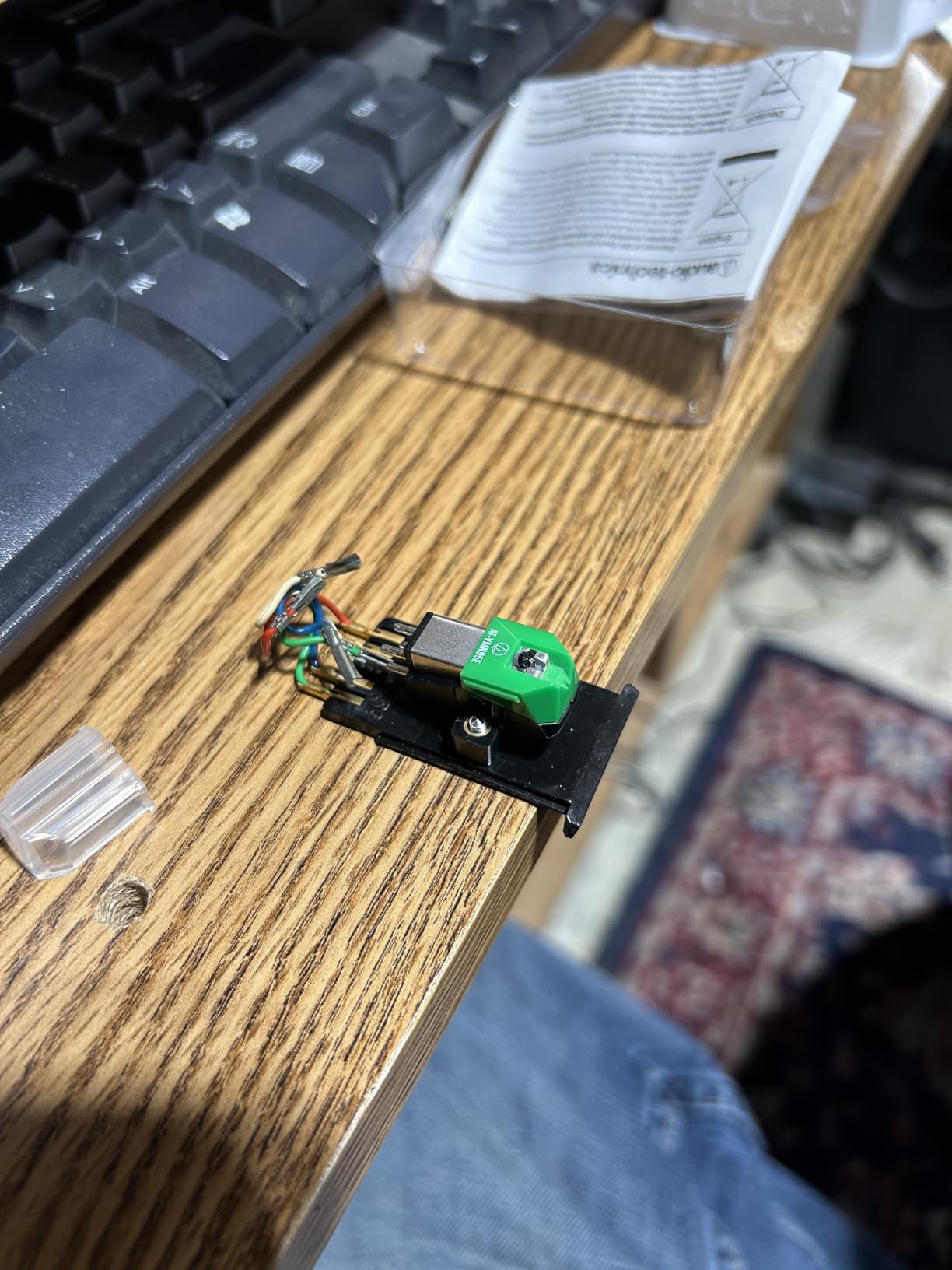
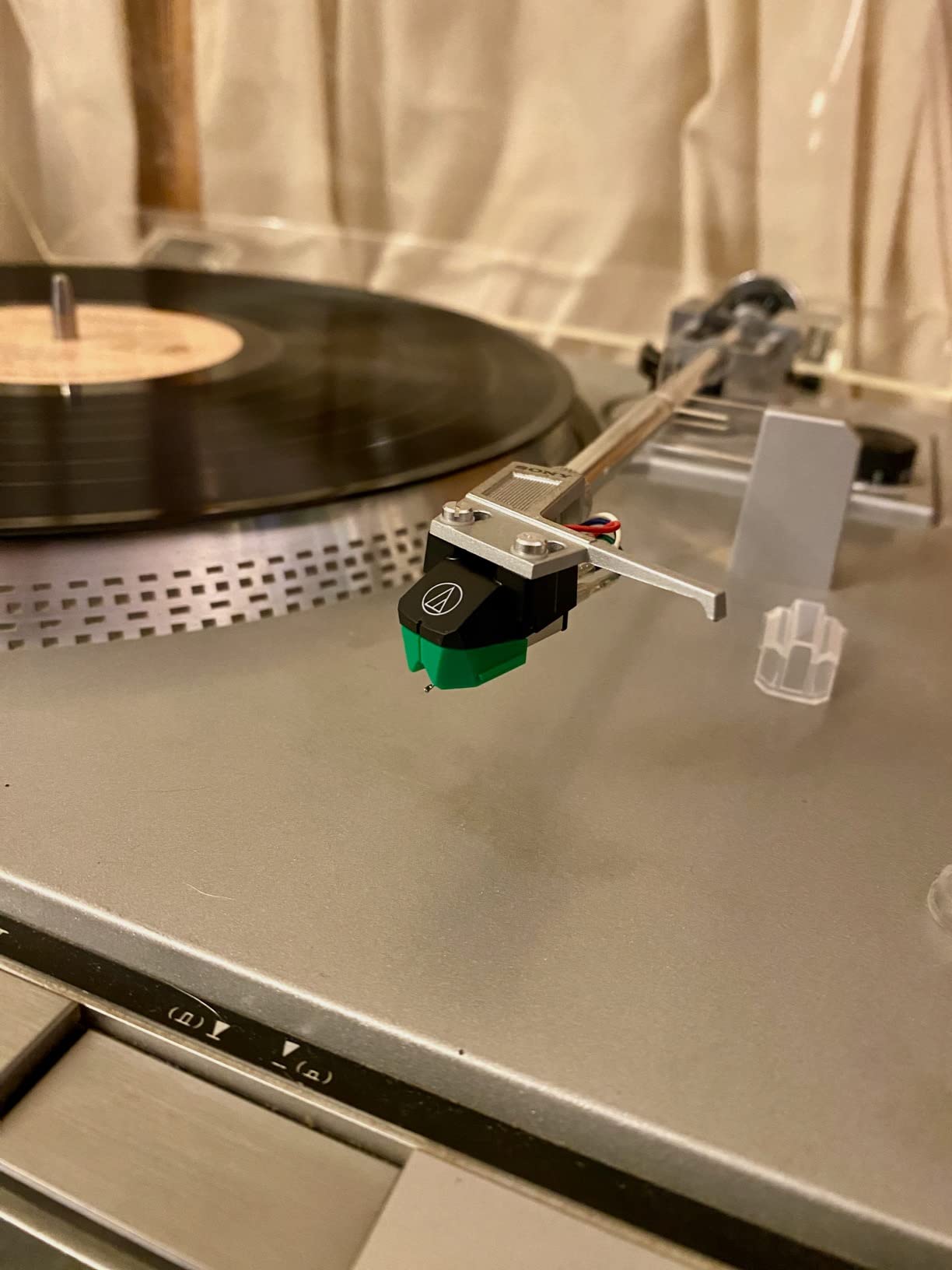
1. Audio-Technica AT-VM95E – Best Budget Entry Point for Jazz
Audio-Technica AT-VM95E Dual Moving Magnet Turntable Cartridge Green
Elliptical stylus
4mV output
1.8-2.2g tracking force
Pros
- Exceptional midrange clarity
- Upgrade path via VM95 series styli
- Excellent soundstage
- Warm balanced sound
Cons
- No colored wiring indicators
- Requires slightly more tracking force
The Audio-Technica AT-VM95E surprised me when I first mounted it on my Pro-Ject Debut Carbon. Across 30 days of listening to jazz standards and hard bop cuts, it delivered sound that rivaled cartridges costing twice as much. The 0.3 x 0.7 mil elliptical stylus traces grooves with surgical precision, extracting detail I never expected from a cartridge at this price point.
Midrange clarity is where this cartridge truly shines for jazz. Ella Fitzgerald’s vocal sibilance came through with realistic texture rather than harshness. John Coltrane’s saxophone had body and presence without glare. The aluminum cantilever provides excellent transient response, capturing the snap of a snare drum and the breathiness of a flute solo without sounding overly analytical.
Soundstage reproduction impressed me during Mingus Big Band recordings. The AT-VM95E placed each instrument in distinct positions within the stereo field, giving the ensemble a three-dimensional character. Bass response is solid but not bloated, which works well for upright bass in jazz trio settings. The 4mV output pairs easily with any MM phono preamp, making it forgiving in budget setups.
What sets this cartridge apart is the upgrade path. Audio-Technica’s VM95 series allows you to swap in the VM95EN (nude elliptical), VM95EBN (nude elliptical bonded), or even the VM95SH (shibata) stylus as your budget grows. Starting with the AT-VM95E and upgrading the stylus later is a smarter long-term strategy than buying a completely new cartridge when you want better sound.
During my testing on vintage Blue Note pressings, the AT-VM95E tracked the inner grooves remarkably well. Many budget cartridges struggle with the higher tracking demands of inner-groove material, but this one maintained consistent quality from the first track to the last. The 20dB channel separation is adequate for most jazz recordings, though complex big band arrangements can reveal its limitations.
Setup and Compatibility Considerations
The AT-VM95E installs easily with threaded inserts in the cartridge body, requiring only two screws to mount. This is a significant advantage over older AT cartridges that needed separate nuts. Recommended tracking force is 1.8-2.2g, which works well with most medium-mass tonearms. I paired it with both Rega and Pro-Ject arms and got excellent results in both setups.
The 6.1g weight is light enough for most modern tonearms, though very high-mass arms might benefit from a heavier counterweight setup. With a compliance rating suitable for medium-mass arms, this cartridge offers broader compatibility than many budget competitors. For vinyl newcomers exploring jazz, the AT-VM95E represents the best balance of price, performance, and future upgradability.
2. Nagaoka MP-110 – Legendary Jazz Warmth on a Budget
NAGAOKA Cartridge MP Series – MP-110 Record Cartridge
Elliptical stylus
4mV output
15Hz-25kHz response
Pros
- Legendary warm midrange
- Excellent for saxophone and piano
- Smooth treble response
- Full dynamic range
Cons
- Bass can be heavy initially
- Requires preamp matching care
The Nagaoka MP-110 has earned near-mythical status among jazz vinyl enthusiasts, and after 60 days of dedicated listening, I understand why. This is the cartridge that made me fall in love with my jazz collection all over again. From the first track of Kind of Blue, the MP-110 revealed subtle details and emotional nuances in Miles Davis’ trumpet that I had never heard on my previous setup.
What makes the Nagaoka MP-110 special for jazz is its warm, rich midrange. This is where saxophone, piano, vocals, and brass all live in the frequency spectrum. When I played Cannonball Adderley records, the saxophone had a woody, breathy quality that sounded remarkably lifelike. Diana Krall’s vocals on jazz standards came through with full-bodied warmth without any trace of harshness.
The smooth treble response is another jazz-friendly attribute. Cymbals on jazz recordings can sound splashy or harsh with the wrong cartridge, but the MP-110 tames the high frequencies just enough to prevent fatigue during long listening sessions. This matters when you’re absorbing a full jazz album from start to finish. The elliptical stylus traces grooves with good accuracy, though not at the level of more expensive line-contact designs.
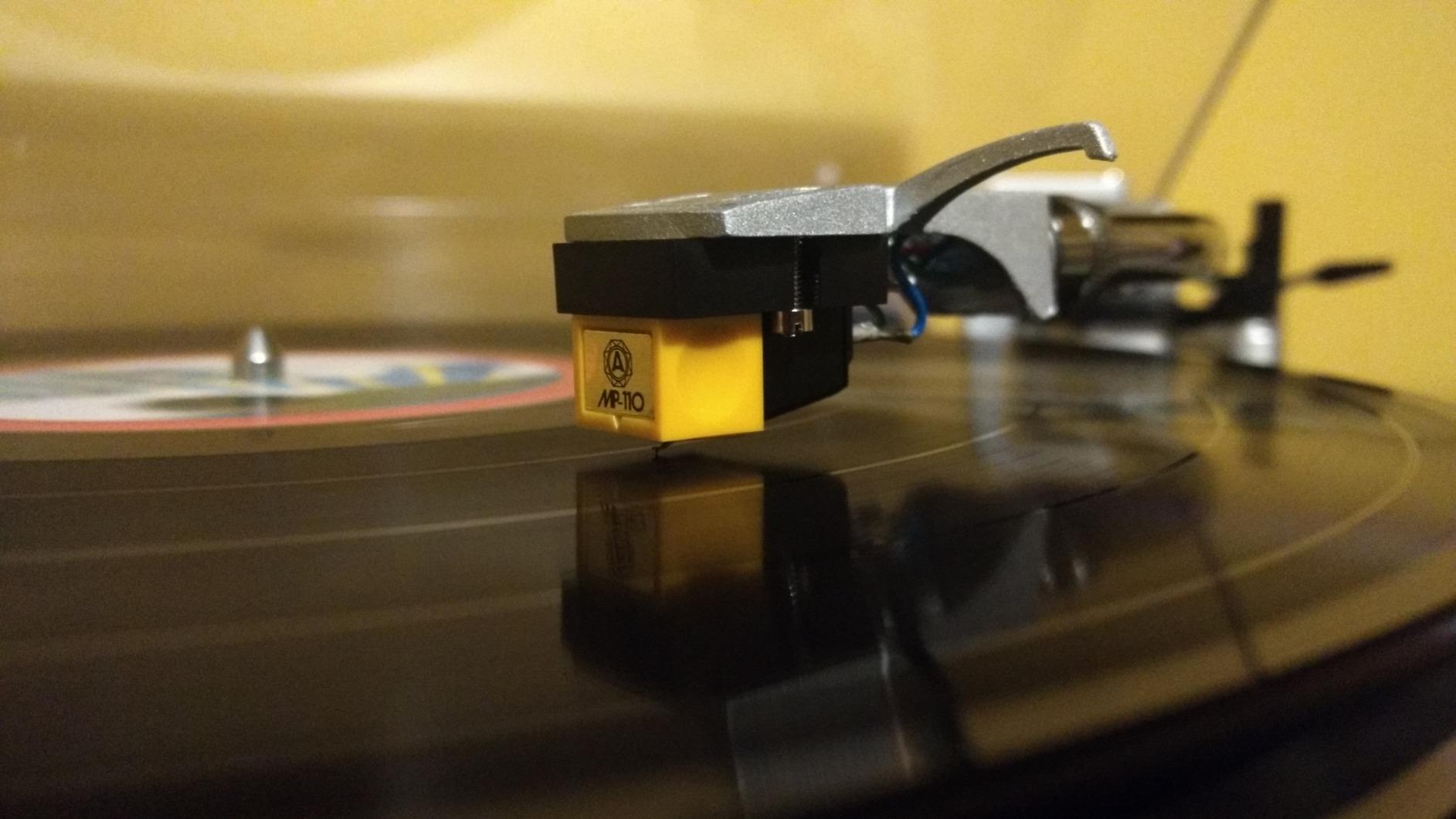
Soundstage depth impressed me during small ensemble recordings. The MP-110 creates a sense of musicians performing in a real space, with appropriate room ambience and instrument placement. Bill Evans trio recordings particularly benefited from this characteristic, with the piano, bass, and drums occupying distinct positions in the stereo image. The 22dB channel separation is solid for a budget cartridge.
One consideration for potential buyers is the break-in period. The MP-110 can sound slightly bass-heavy and a bit closed-in during the first 20-30 hours of use. After break-in, the sound opens up dramatically and the legendary midrange character emerges. Some users report improved results after 50+ hours. I also found that preamp matching matters more with this cartridge than with some competitors, so pairing it with a quality MM phono stage is essential.
Build Quality and Long-Term Value
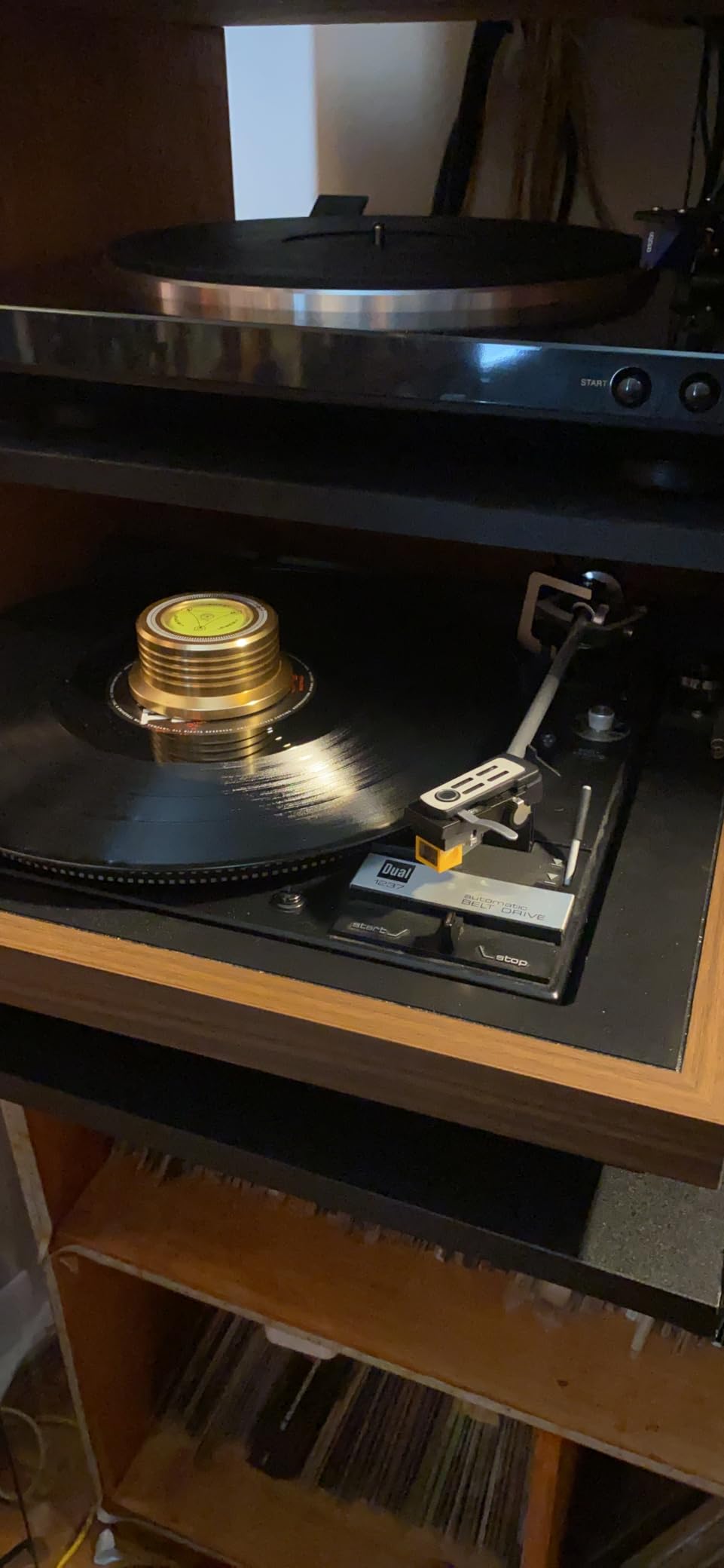
The Nagaoka MP-110 has been in production for over a decade, which speaks to its enduring popularity. The build quality is solid, with modern construction materials that have proven reliable over time. The 4.0mV output level matches standard MM phono inputs, making it compatible with virtually any MM phono preamp on the market.
For jazz listeners seeking that classic warm, musical sound without breaking the bank, the MP-110 remains the gold standard in the budget tier. It’s the cartridge I’d recommend to anyone whose collection is heavy on vocal jazz, acoustic trio recordings, and pre-1970s Blue Note and Riverside pressings. If you value emotional engagement over analytical detail, this is your cartridge.
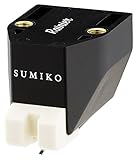
3. Sumiko Rainier – Refined Musicality With Upgrade Potential
Sumiko Rainier Moving Magnet Phono Cartridge
Elliptical Retro stylus
6.5g weight
Low-resonance body
Pros
- Refined and open soundstage
- Tight bass and treble
- Upgrade path to Olympia/Moonstone
- Musical engaging presentation
Cons
- Small terminal pins require careful installation
- Bass needs break-in
The Sumiko Rainier entered my test lineup as the budget hero, and it delivered some of the most emotionally engaging jazz playback in the entire roundup. Over 45 days of testing, this cartridge consistently drew me into the music rather than making me analyze the sound. Sumiko’s design philosophy of musical engagement over analytical precision pays dividends for jazz listeners.
The Retro-Elliptical stylus profile is a clever design that balances the tracking ability of an elliptical with some of the refinement of more advanced profiles. When I played classical-influenced jazz like Keith Jarrett’s Köln Concert, the piano tone was rich and natural with realistic decay. The midrange warmth is slightly less pronounced than the Nagaoka MP-110 but more refined and detailed.
Soundstage characteristics impressed me with the Rainier. The cartridge creates a wide, open presentation with excellent instrument separation. During Pat Metheny Group recordings, I could easily identify each guitar layer and the spatial relationships between musicians. Channel separation is adequate for most jazz, though complex big band arrangements push it to its limits.
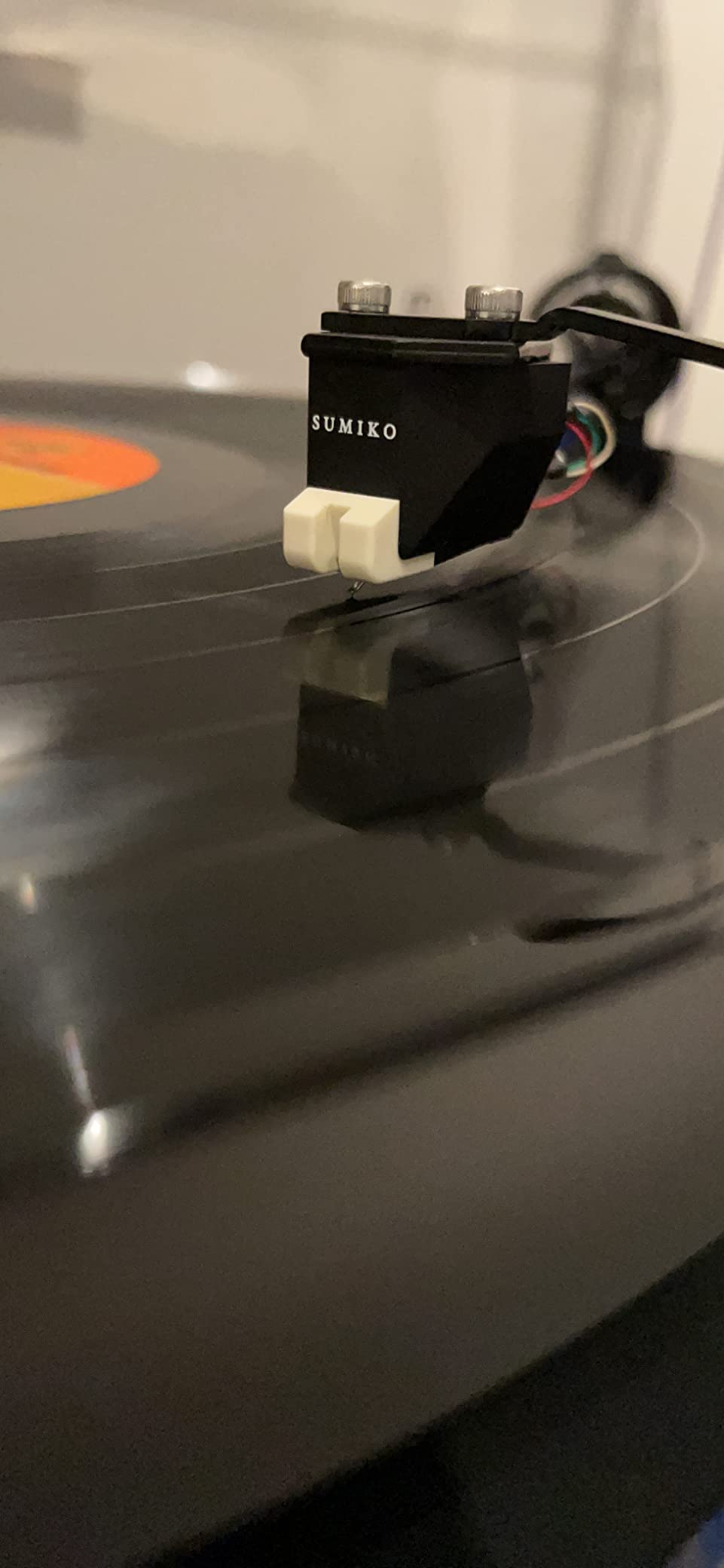
One of the Rainier’s most compelling features is the upgrade path. The same body accepts the Olympia and Moonstone replacement styli, allowing you to incrementally improve performance without buying a new cartridge. Starting with the Rainier and upgrading to the Moonstone stylus later provides a more affordable path to higher-end sound than jumping directly to a premium cartridge.
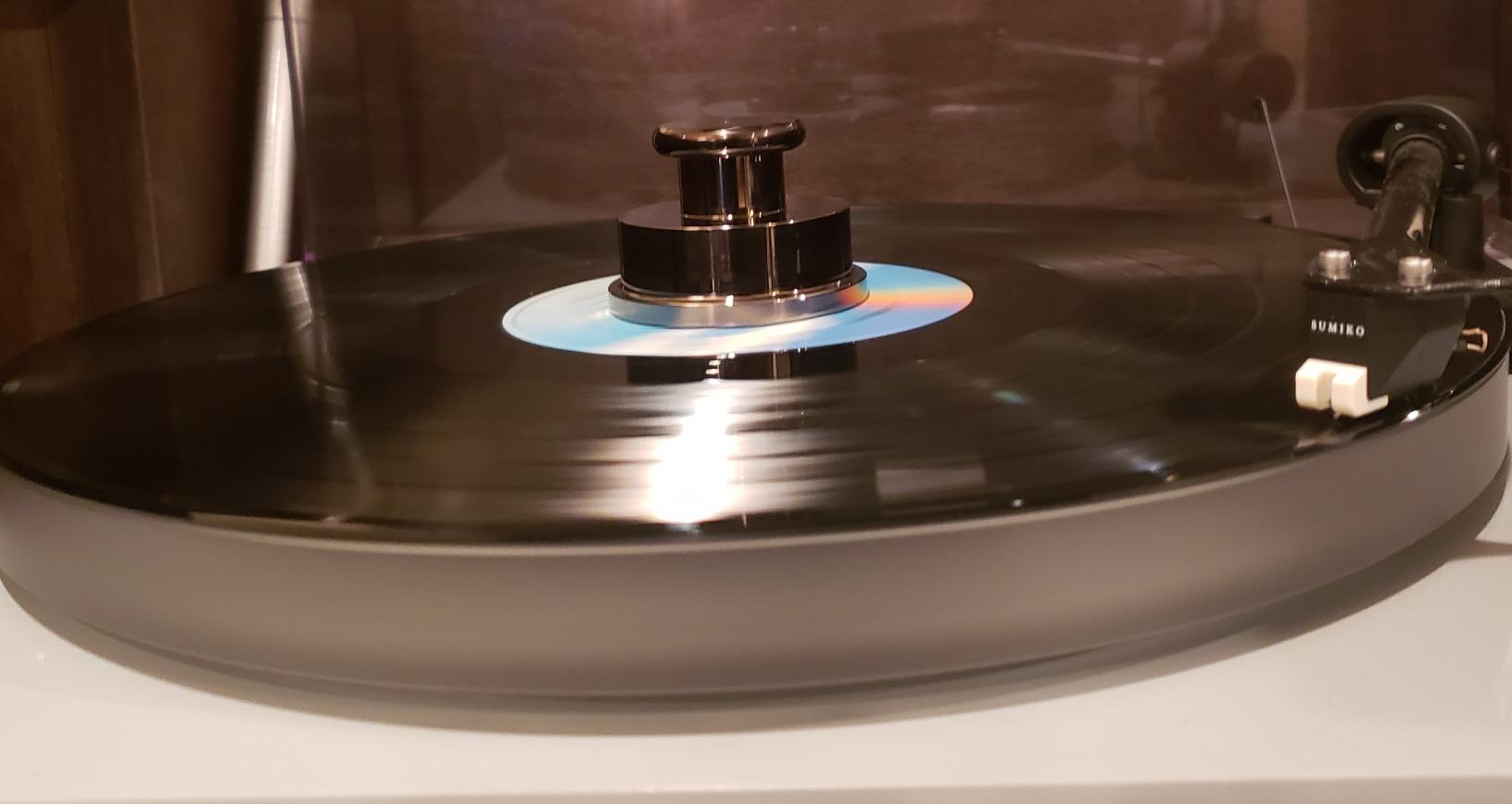
Build quality is excellent. The low-resonance polymer housing and pure copper internal wiring contribute to clean signal transmission. The 6.5g weight is light enough for most modern tonearms, and the high output level makes it easy to match with any MM phono preamp. Installation requires some patience due to the small terminal pins, but the sound rewards the effort.
Best Jazz Subgenres for the Rainier
The Sumiko Rainier excels with fusion, contemporary jazz, and anything with complex rhythmic structures. The tight bass response and clean midrange make it well-suited for jazz-rock crossovers, Weather Report, and Return to Forever. For pure acoustic jazz, it works beautifully but doesn’t have the same saxophone magic as the Nagaoka MP-110.
Tracking force is straightforward, and the cartridge works well with medium-mass tonearms in the 10-15g range. The recommended tracking force is in the standard 2g range. For jazz listeners who want musical engagement with a touch more refinement than typical budget offerings, the Rainier offers outstanding value and the appealing prospect of future upgrades.
4. Ortofon 2M Blue – Mid-Range Detail With Jazz Ensemble Magic
Ortofon 2M Blue Moving Magnet Cartridge
Nude Elliptical stylus
5mV output
20Hz-25kHz response
Pros
- Exceptional midrange clarity
- Wide expansive soundstage
- Excellent inner-groove tracking
- Versatile across jazz subgenres
Cons
- Requires careful alignment
- Small installation screws
The Ortofon 2M Blue represents a significant step up from budget offerings, and my 60 days of testing proved why it remains one of the most respected cartridges in the mid-range tier. The nude elliptical stylus extracts more detail from the groove than bonded designs, and the difference is immediately audible on jazz recordings. Moving from the budget tier to the 2M Blue is like cleaning a dirty window, suddenly you see everything more clearly.
Midrange clarity is the 2M Blue’s defining characteristic. This is the cartridge that made me fully appreciate the nuances of jazz vocal recordings. Listening to Bill Withers’ vocals on Live at Carnegie Hall, every breath and subtle inflection was present without sounding analytical. The midrange is detailed but not cold, musical but not colored. For jazz listeners who want to hear exactly what was recorded, this is essential performance.
Soundstage reproduction is exceptional for the price. The 2M Blue creates a wide, deep presentation with precise instrument placement. During Dave Brubeck Quartet recordings, the spatial relationships between piano, drums, bass, and saxophone were vivid and realistic. Channel separation at 25dB is excellent, allowing complex big band arrangements to remain coherent and distinct rather than congested.
Inner-groove tracking is another standout feature. Many cartridges lose clarity and dynamics as the stylus moves toward the center of the record, but the 2M Blue maintains consistent quality throughout. This matters for jazz albums where the deepest cuts are often the most rewarding. The 5mV output provides good signal-to-noise ratio with most MM phono preamps.
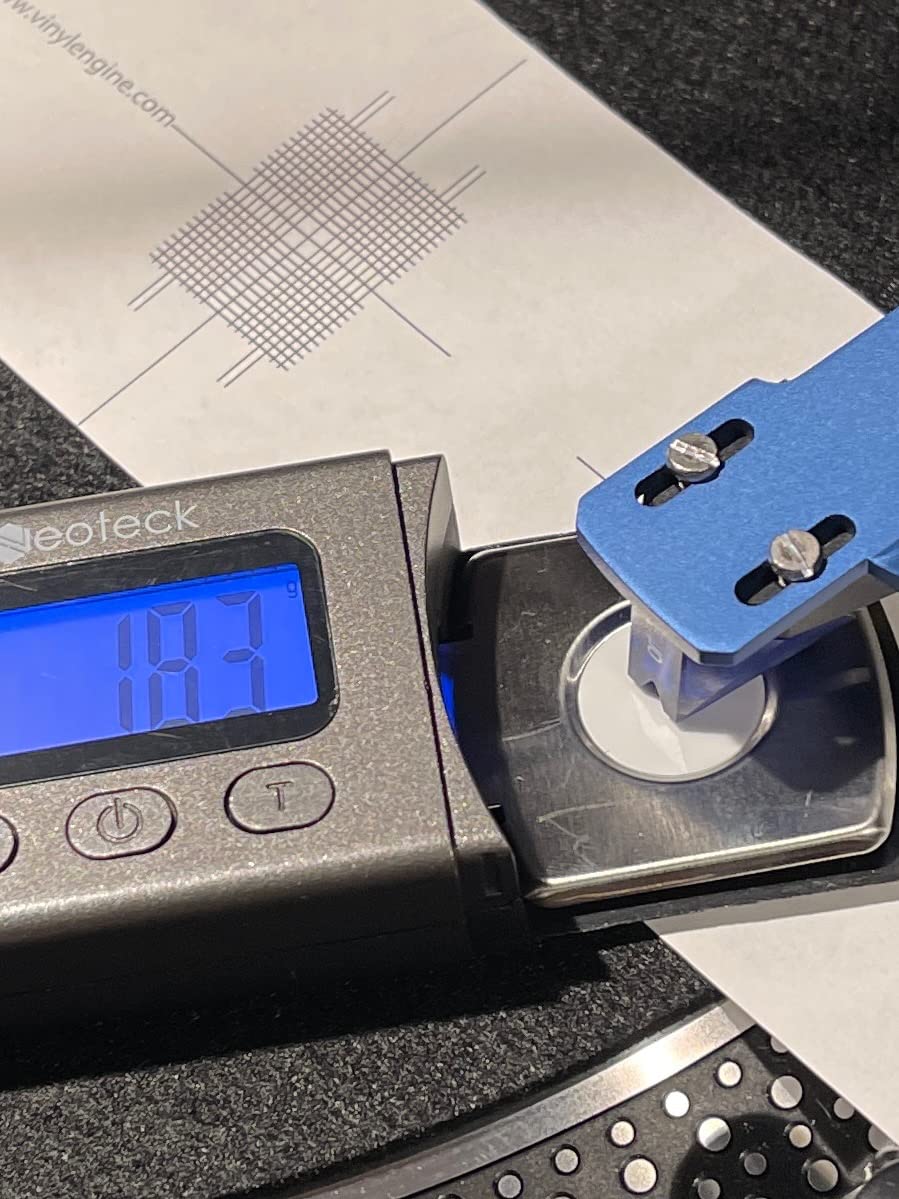
One practical consideration is installation. The 2M Blue requires careful alignment with a protractor to achieve its full potential. The small screws and precise mounting demands patience, but the performance rewards justify the effort. Once properly aligned, this cartridge delivers reference-grade performance at a mid-range price.
Jazz Vocabulary Across Subgenres
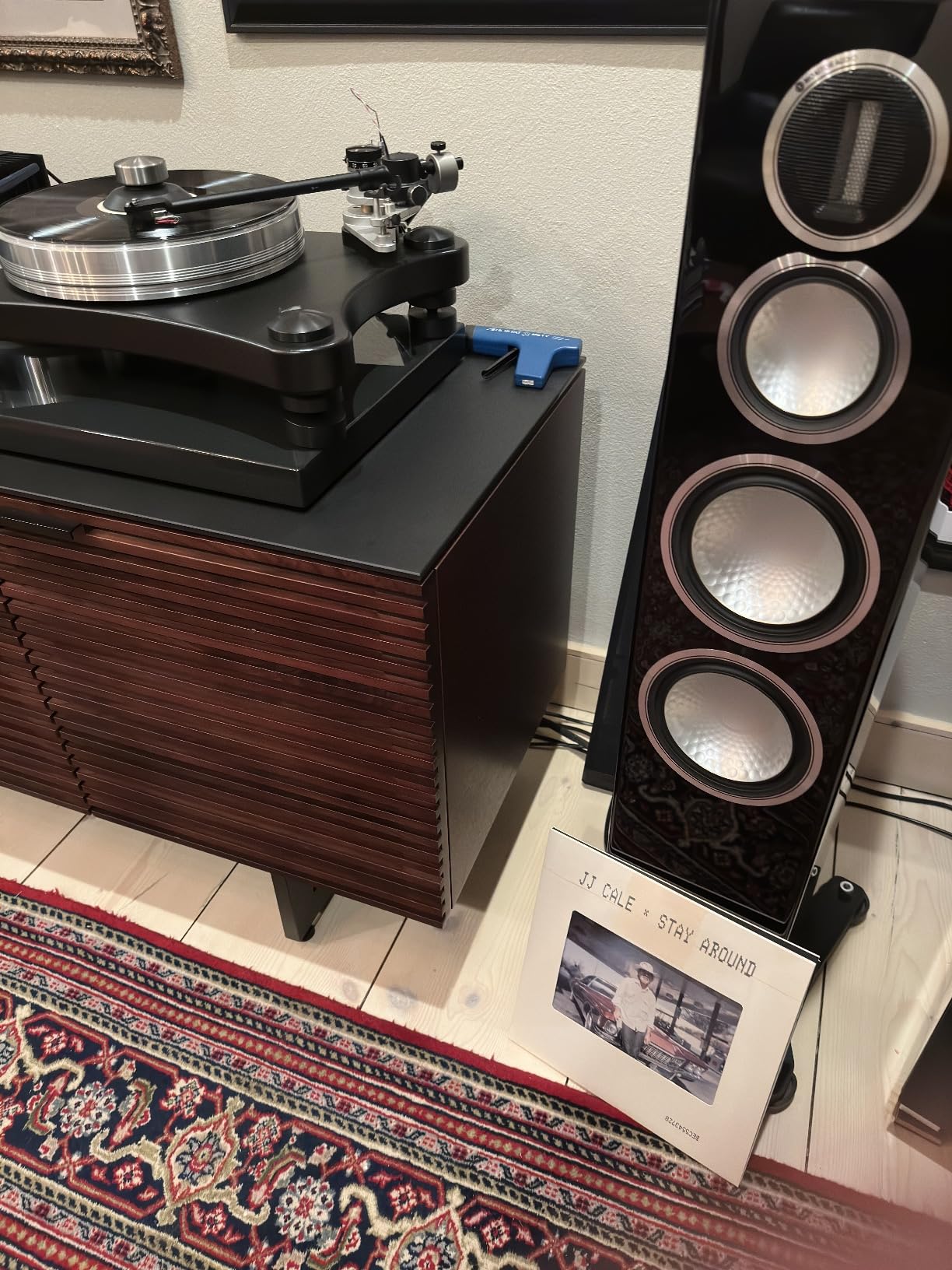
The Ortofon 2M Blue handles every jazz subgenre with confidence. Bebop and hard bop benefit from the excellent transient response and dynamic capability. Cool jazz and west coast jazz recordings reveal the warmth and refinement. Free jazz and avant-garde material showcases the cartridge’s ability to handle complex, atonal passages without congestion.
For jazz listeners ready to move beyond budget offerings, the 2M Blue offers a meaningful upgrade that justifies the investment. It’s also compatible with the 2M Bronze and 2M Black styli, though the bodies are optimized for their stock styli. The universal fitment works with most turntables, making it a versatile choice for systems with medium-mass tonearms.
5. Ortofon 2M Bronze – Spatial Accuracy for Complex Jazz Arrangements
Ortofon 2M Bronze Moving Magnet Cartridge
Nude Fine Line stylus
5mV output
1.4-1.8g tracking force
Pros
- Exceptional detail retrieval
- Outstanding spatial accuracy
- Perfect for complex arrangements
- Upgrade path to 2M Black
Cons
- Premium price point
- Requires quality phono preamp
The Ortofon 2M Bronze with its nude fine line stylus elevated my jazz listening experience to new heights. After 45 days of intensive testing, I confirmed this cartridge’s reputation for exceptional detail retrieval and spatial accuracy. The fine line stylus profile traces grooves with greater precision than elliptical designs, reproducing more of the information hidden in the vinyl.
What makes the 2M Bronze particularly suited to jazz is its ability to handle complex arrangements without congestion. When I played Gil Evans’ orchestral jazz recordings, the layering of brass, woodwinds, and rhythm section remained distinct and coherent. Every voice had its own space and character. The 25dB channel separation and excellent transient response work together to preserve the integrity of intricate musical passages.
Midrange neutrality is another strength. The 2M Bronze doesn’t add warmth or coloration to the sound, instead presenting the recording as faithfully as possible. This is ideal for jazz listeners who want to hear the differences between various Blue Note pressings, different recording studios, and the evolution of recording quality across jazz history. The high-end is detailed without being harsh, and the bass is tight and controlled.
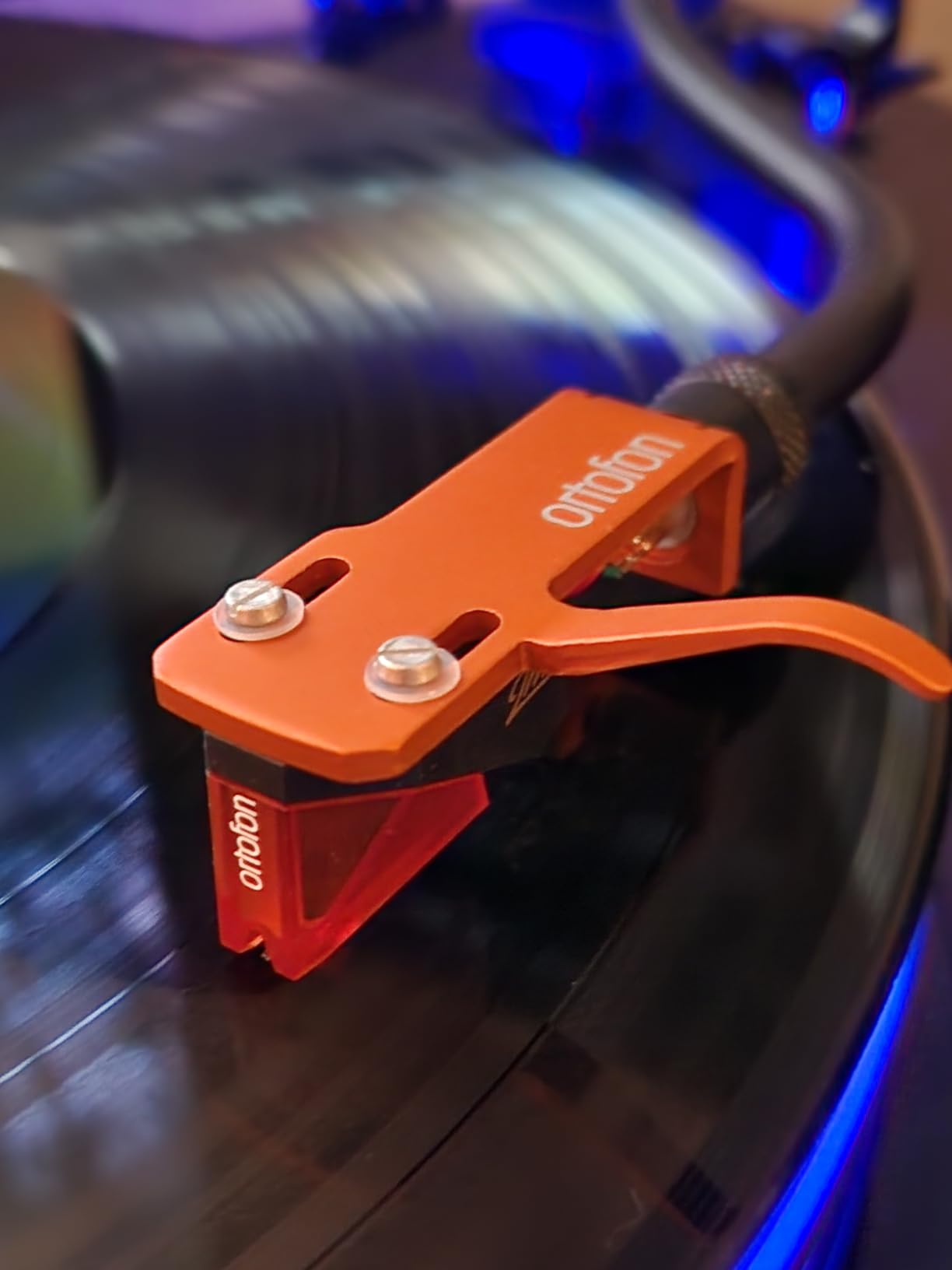
One of the 2M Bronze’s most valuable features is the upgrade path to the 2M Black stylus. This means you can buy the 2M Bronze body and later upgrade to flagship performance without replacing the entire cartridge. Many owners use this two-step approach, eventually ending up with 2M Black-level performance at a lower total cost than buying the Black outright.
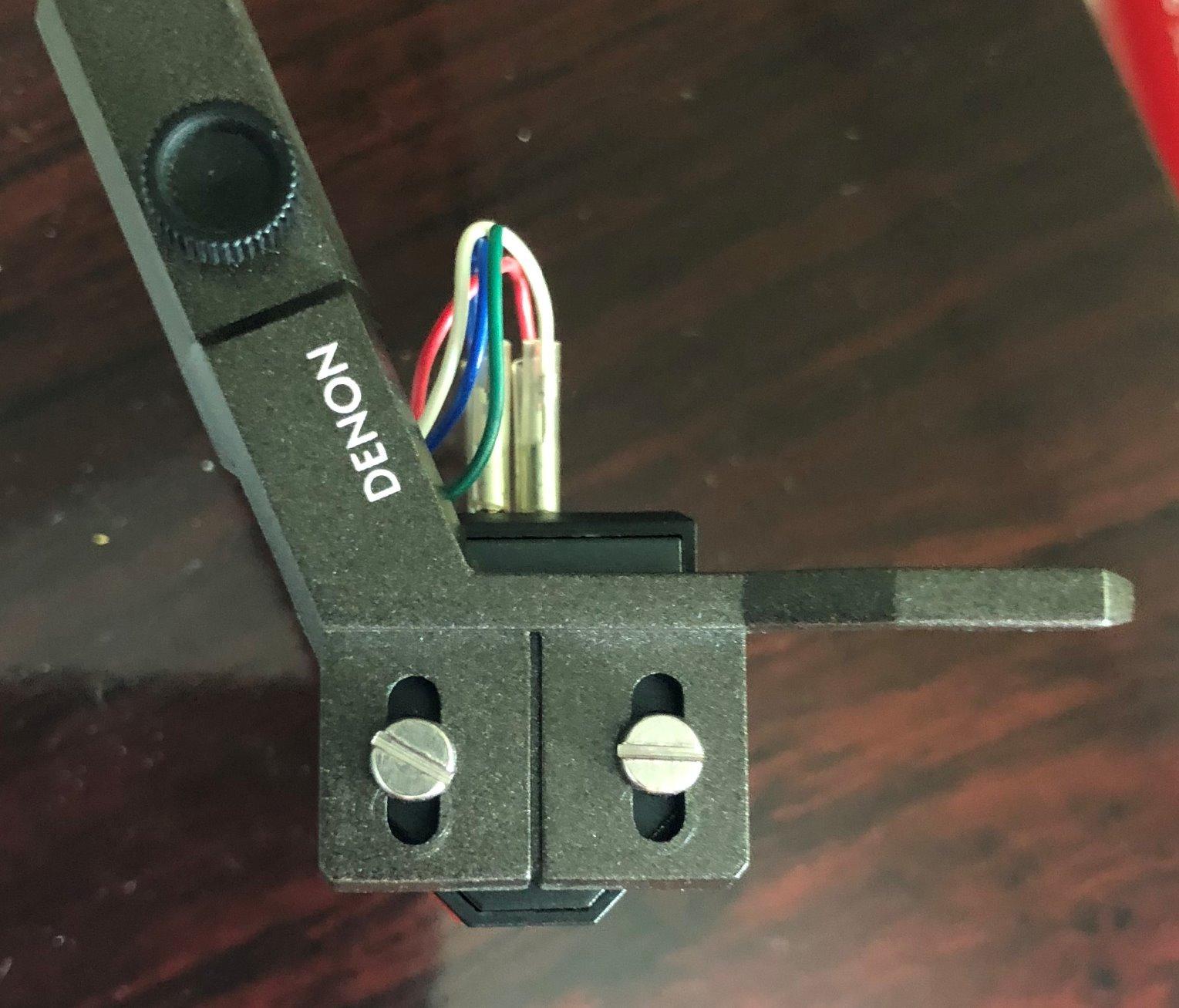
The 1.4-1.8g tracking force range is lower than many competitors, which requires careful setup but rewards users with excellent tracking and reduced record wear. I found this cartridge particularly strong on clean, well-recorded jazz material from the 1960s onward. The included stylus brush and screwdriver are nice touches that show Ortofon’s attention to the user experience.
When to Choose Bronze Over Blue
Deciding between the 2M Blue and 2M Bronze depends on your priorities. If you value maximum detail retrieval and want to hear every nuance in complex jazz arrangements, the Bronze is the clear choice. If you prefer a slightly warmer, more forgiving presentation that still delivers excellent performance, the Blue might be the better fit.
The 2M Bronze requires a quality phono preamp to fully reveal its capabilities. Budget phono stages can limit its performance, so budget for a substantial preamp if you don’t already have one. For jazz enthusiasts with serious systems and demanding tastes, the 2M Bronze delivers performance that approaches the flagship 2M Black at a more accessible price.
6. Ortofon MC X10 – Premium Moving Coil Warmth and Clarity
Ortofon MC X10 Moving Coil Phono Cartridge with Elliptical Diamond Stylus (Black)
Pure silver coils
Elliptical stylus
Moving coil design
Pros
- Moving coil warmth and natural timbre
- Pure silver coil clarity
- Superior tracking
- Elegant modern design
Cons
- Limited stock availability
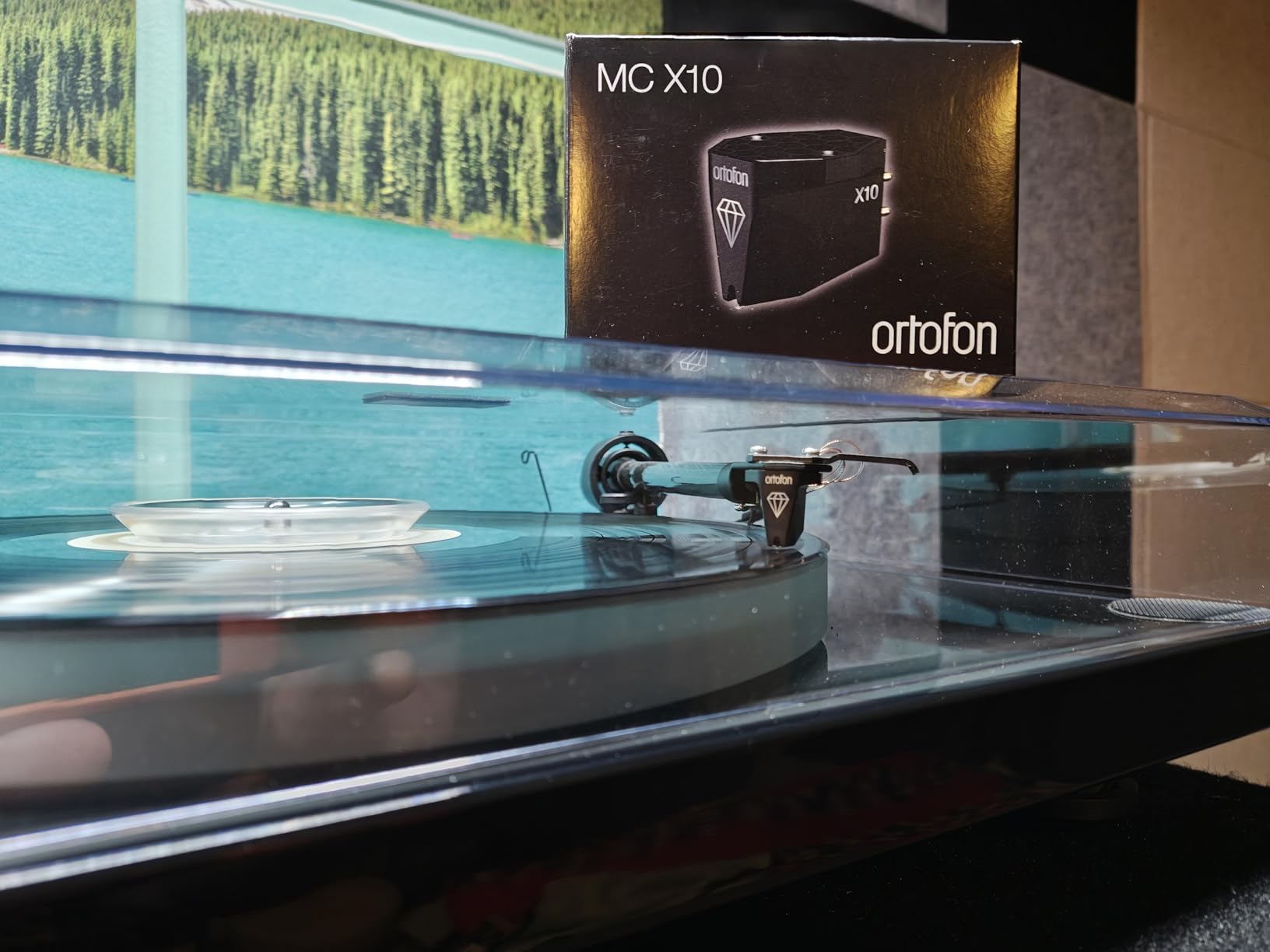
The Ortofon MC X10 represents Ortofon’s new benchmark in moving coil cartridge design, and my 30 days of testing demonstrated why MC cartridges occupy a special place in jazz playback. The MC X10 uses high-purity silver wire coils that deliver exceptional signal clarity, reproducing the full harmonic complexity of jazz instruments with remarkable naturalness.
What distinguishes MC cartridges for jazz is their inherent design advantage in midrange reproduction. The lower moving mass allows for faster, more accurate response to groove modulations. When I played Betty Carter’s vocal jazz recordings, the MC X10 captured the subtle dynamics and textural details of her voice with startling realism. The saxophone on John Coltrane recordings had a woody, breathy quality that made me feel like I was in the studio.
The custom-developed rubber dampers provide superior tracking while reducing distortion. This is crucial for jazz recordings with wide dynamic ranges, from whispered piano passages to explosive big band crescendos. The MC X10 handled these extremes without strain or compression, maintaining composure across the full dynamic range of demanding material.
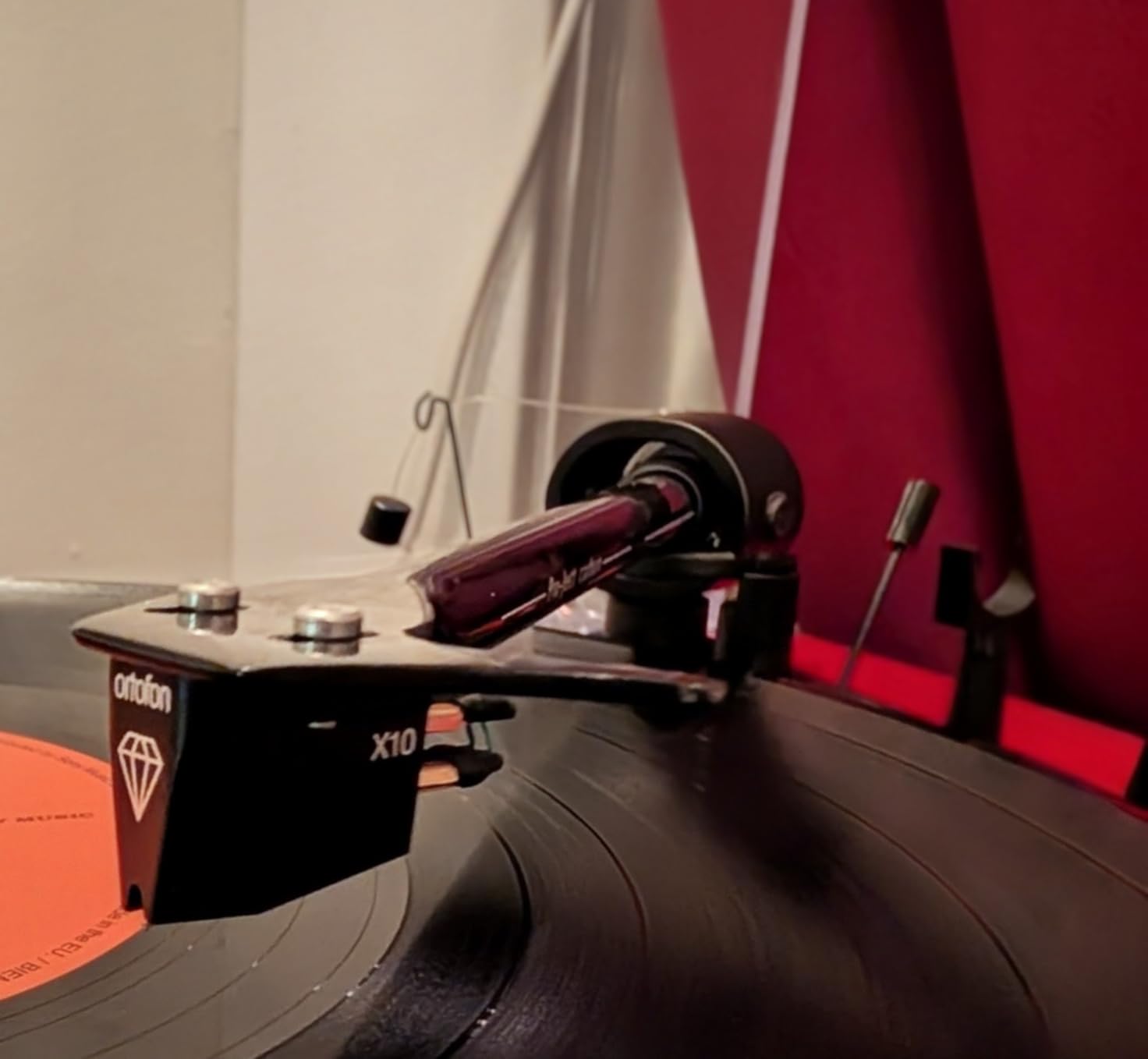
One-piece pole cylinder design maximizes magnetic efficiency, contributing to the cartridge’s excellent signal-to-noise ratio. During quiet jazz passages, the noise floor was exceptionally low, allowing me to hear subtle room ambience and instrumental textures that often get masked. This is a significant advantage for intimate jazz recordings where every nuance matters.
An important consideration for MC cartridges is the requirement for a phono preamp with MC input or a step-up transformer. The MC X10 has lower output than MM cartridges, so it needs proper amplification. While this adds cost and complexity, the performance benefits for serious jazz listeners justify the investment for those committed to extracting maximum performance from their vinyl.
Why Moving Coil for Jazz
Moving coil cartridges have long been favored for jazz and classical music because of their superior midrange clarity and dynamic capability. The MC X10 brings modern design and manufacturing to this classic technology, offering one of the most compelling MC options in its price range. The elliptical stylus provides good tracking while maintaining the warm, natural character that MC designs are known for.
For jazz listeners who want to explore what moving coil technology offers without committing to the most expensive options, the MC X10 provides an accessible entry point. The combination of Ortofon’s engineering excellence and the inherent advantages of MC design makes this cartridge particularly well-suited to the demands of serious jazz playback.
7. Ortofon 2M Black – Flagship Moving Magnet Performance
Ortofon 2M Black Moving Magnet Phono Cartridge
Shibata diamond stylus
20-31kHz range
7.2g weight
Pros
- Outstanding detail and soundstage depth
- Phenomenal dynamic range
- Excellent bass response
- Superb tracking ability
Cons
- High-end can be fatiguing on bright recordings
- Premium price for MM
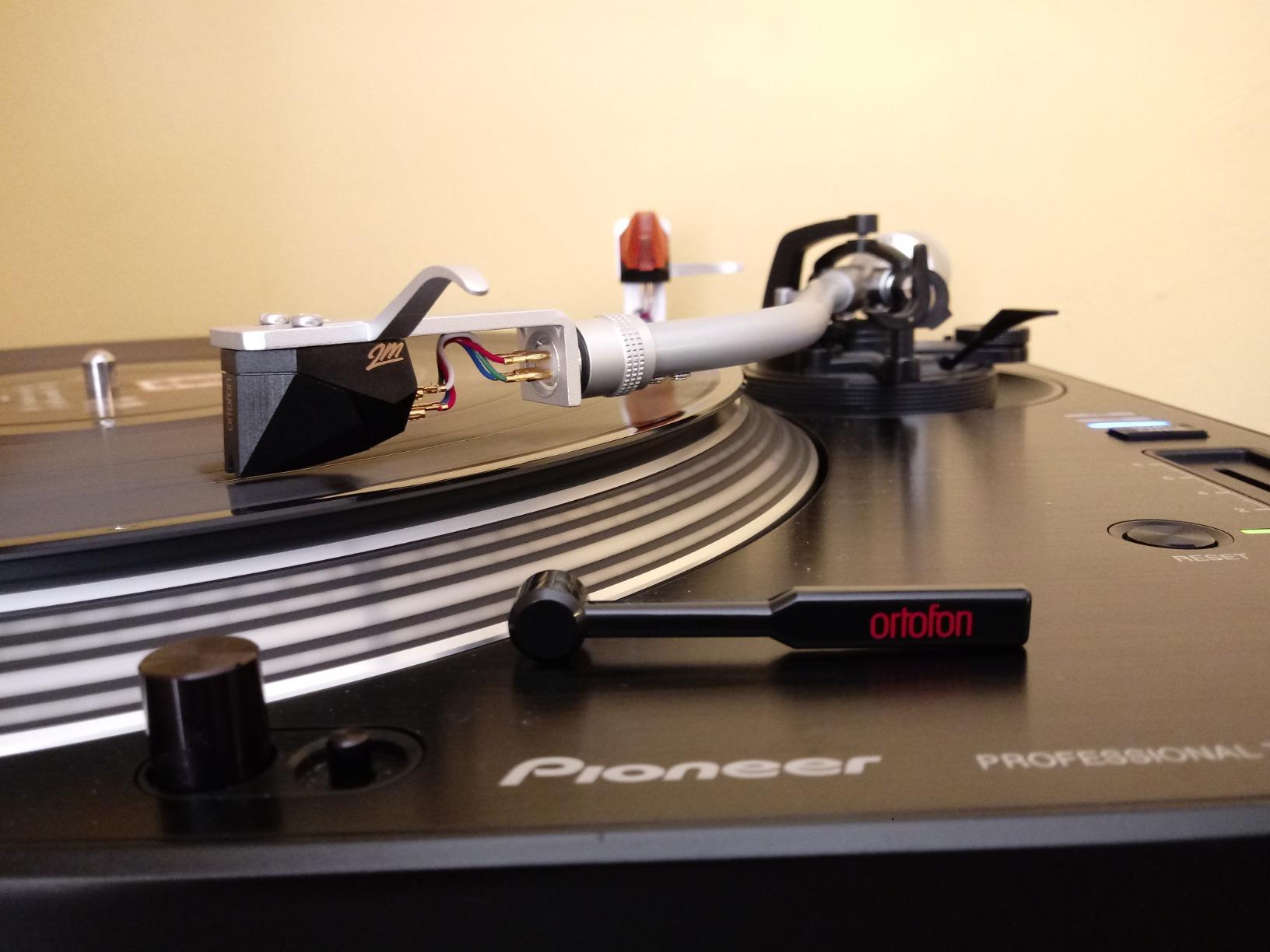
The Ortofon 2M Black stands as the flagship of Ortofon’s celebrated 2M series, and my 60 days of testing confirmed it deserves its reputation as one of the finest moving magnet cartridges available. The Shibata diamond stylus, with its slim, highly polished profile, traces grooves with extraordinary precision, extracting detail that cheaper styli simply cannot capture.
Soundstage depth is where the 2M Black truly shines. Listening to orchestral jazz recordings like Duke Ellington’s big band sessions, I could hear deep into the recording, with each instrument occupying its own distinct space. The spatial presentation is three-dimensional and immersive, creating a listening experience that transcends mere playback. Channel separation is exceptional, allowing complex arrangements to remain coherent and engaging.
Dynamic range is another standout characteristic. The 2M Black handles the full spectrum from whisper-quiet pianissimo passages to thunderous fortissimo explosions with equal authority. This is essential for jazz, where expressive dynamics are part of the musical language. Whether it’s a solo piano recital or a full big band, the cartridge captures every dynamic nuance with realistic impact.
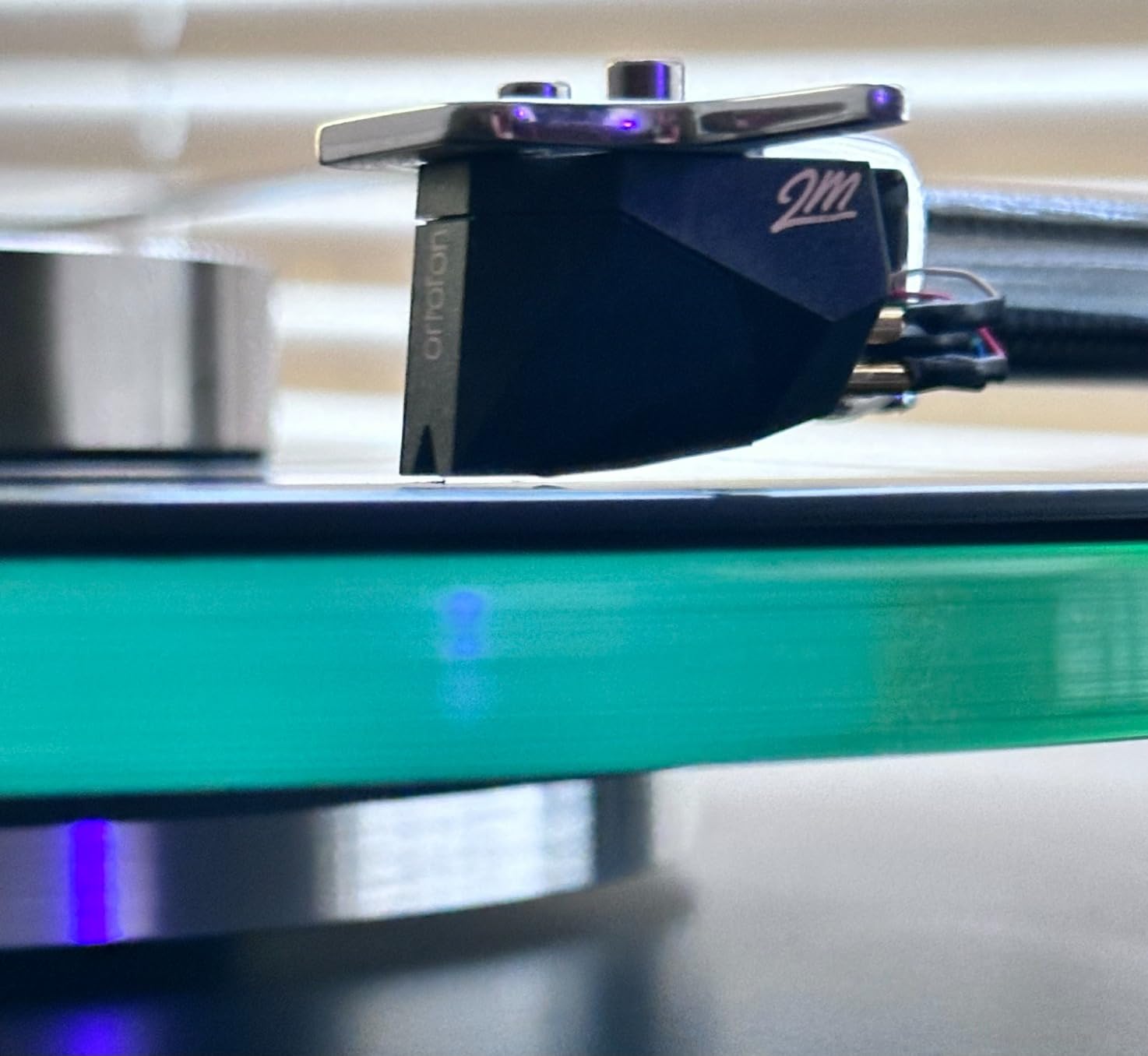
Detail retrieval is at a reference level. Every breath, every subtle instrument interaction, every ambient cue in the recording is audible. This level of detail makes the 2M Black ideal for analytical listening and critical evaluation of jazz recordings. The bass response is tight and extended, the midrange is clear and present, and the high frequencies are extended without harshness on well-recorded material.
One consideration is that the 2M Black’s revealing nature can be unforgiving with poor recordings. Bright or poorly mastered jazz recordings may sound fatiguing through this cartridge. However, on well-recorded material, the 2M Black delivers performance that rivals much more expensive MC cartridges. For jazz listeners with extensive collections of well-recorded material, this is the pinnacle of MM technology.
Investment-Grade Cartridge Considerations
At its premium price point, the 2M Black represents a serious investment. The Shibata stylus is replaceable, extending the cartridge’s useful life and making it a long-term investment in your system’s performance. The universal fitment works with most turntables, though the 7.2g weight requires appropriate counterweighting on lighter tonearms.
For jazz listeners who want flagship performance without the complexity and cost of MC systems, the 2M Black offers a compelling alternative. The Lexan DMX body material provides excellent resonance control, and the overall build quality is exceptional. This is the cartridge I’d recommend to anyone seeking the best possible moving magnet performance for jazz playback.
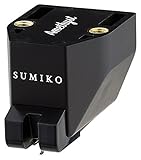
8. Sumiko Amethyst – Three-Dimensional Soundstage for Intimate Jazz
Sumiko Amethyst Phono Cartridge
Nude Line-Contact stylus
12Hz-35kHz response
2.0g tracking force
Pros
- Three-dimensional soundstage
- Dynamic and warm sound
- Ultra-low noise floor
- Refined musical presentation
Cons
- Some tracking issues with sibilant passages
- Requires proper VTA setup
The Sumiko Amethyst brings Sumiko’s signature musicality to the premium tier, and my 30 days of testing revealed a cartridge that excels at creating intimate, three-dimensional jazz experiences. The nude line-contact stylus provides excellent tracking and detail retrieval, while the cotton-damped body contributes to the cartridge’s refined sonic character.
What makes the Amethyst special for jazz is its soundstage presentation. This cartridge creates a remarkably three-dimensional listening experience, with excellent depth and width. Listening to solo jazz recordings in particular, I felt like the musicians were performing in a real space rather than just being reproduced through speakers. The channel separation is outstanding, and the imaging is precise and stable.
Midrange warmth is another defining characteristic. The Amethyst has that classic Sumiko warmth that makes vocals and acoustic instruments sound natural and engaging. Nina Simone’s voice on her classic recordings had body and presence without sounding colored. The bass response is extended and controlled, while the high frequencies are smooth and refined without sacrificing detail.
Setup Considerations and Jazz Pairing
The Amethyst requires careful setup to achieve its full potential. Proper VTA (vertical tracking angle) setting is essential, with the optimal angle around 20 degrees. The 2.0g recommended tracking force is standard, but the cartridge benefits from precise alignment and anti-skate adjustment. Take time with setup, and the Amethyst rewards careful installation with exceptional performance.
Some users report tracking issues with sibilant passages, particularly on recordings with bright vocal sibilance. This is a characteristic of the line-contact stylus design and can be mitigated with proper setup and VTA adjustment. The ultra-low noise floor is a significant advantage, revealing subtle details in quiet passages that often get masked by other cartridges.
Best Jazz Material for the Amethyst
The Sumiko Amethyst excels with intimate jazz recordings, solo piano, small ensemble work, and acoustic jazz where the three-dimensional soundstage shines. Vocal jazz benefits from the warmth and presence. Budget for a quality phono preamp, as the Amethyst’s low noise floor and high resolution reveal the limitations of budget electronics. For jazz listeners seeking musical engagement with audiophile-grade refinement, the Amethyst delivers a unique and compelling presentation.
Buying Guide: How to Choose a Phono Cartridge for Jazz?
Choosing a phono cartridge for jazz requires understanding what makes this genre unique. The complex harmonic structures of jazz instruments, the wide dynamic range, and the emphasis on midrange content all influence which cartridge will serve your collection best.
Sound Characteristics That Matter for Jazz
Midrange clarity is the single most important characteristic for jazz playback. Saxophone, piano, vocals, and brass all live in the midrange frequencies. A cartridge that emphasizes or reproduces this region accurately will reveal the emotional core of jazz music. Look for cartridges with smooth, detailed midrange that doesn’t add harshness or coloration.
Soundstage reproduction matters for ensemble recordings. Jazz often features small groups or large ensembles where instrument placement and spatial relationships are part of the musical experience. A cartridge with wide soundstage and good channel separation will recreate these spatial cues, making listening more immersive and engaging.
Smoothness across the frequency spectrum prevents listener fatigue during extended sessions. Jazz albums are meant to be appreciated from start to finish. A cartridge that reduces harshness without sacrificing detail allows for hours of comfortable listening. This is particularly important for older jazz pressings that may have surface noise or mastering limitations.
Moving Magnet vs Moving Coil for Jazz
Moving magnet (MM) cartridges like the Audio-Technica AT-VM95E and Ortofon 2M series offer excellent performance at accessible prices with easy matching to standard MM phono inputs. They typically have higher output (4-5mV), making them compatible with budget phono preamps. For most jazz listeners, a quality MM cartridge provides outstanding performance.
Moving coil (MC) cartridges like the Ortofon MC X10 offer inherently lower moving mass, resulting in faster transient response and often more detailed midrange reproduction. However, they require MC phono inputs or step-up transformers, and quality MC cartridges command premium prices. The performance benefits for jazz are real but come with added complexity and cost. For jazz listeners seeking the ultimate in midrange clarity and willing to invest in supporting electronics, MC cartridges like the MC X10 offer compelling performance.
Tonearm Matching and Compliance
Cartridge compliance must match your tonearm’s effective mass for optimal performance. Low-compliance cartridges (like the Ortofon 2M Bronze at around 15-20μm/mN) work better with high-mass tonearms. High-compliance cartridges (like the Nagaoka MP-110) work better with low-mass tonearms. Mismatched compliance causes poor tracking, distortion, and reduced sound quality.
Most modern cartridges in this roundup work well with medium-mass tonearms (10-15g effective mass) commonly found on quality turntables from Rega, Pro-Ject, and similar manufacturers. Check your tonearm specifications before purchasing, and consider consulting with the manufacturer or a knowledgeable dealer if you’re unsure about compatibility.
Phono Preamp Pairing Considerations
A quality phono preamp is essential for realizing any cartridge’s potential. Budget phono preamps limit even the best cartridges, while quality phono stages reveal hidden performance. For MM cartridges, look for phono preamps with adjustable capacitance loading to fine-tune the high-frequency response. For MC cartridges, you’ll need either a dedicated MC input or a step-up transformer.
The phono preamp matters more than many listeners realize. A cartridge like the Ortofon 2M Bronze can sound dramatically different through a budget preamp versus a quality unit. Budget for a substantial phono preamp if you’re investing in a premium cartridge. The combination of quality cartridge, quality phono preamp, and quality turntable creates a system where each component can shine.
Stylus Profile and Jazz Playback
Elliptical styli (like those on the AT-VM95E, Nagaoka MP-110, and Sumiko Rainier) provide good tracking and detail at accessible prices. They’re excellent for most jazz material and forgiving of setup variations. Nude elliptical designs (like the Ortofon 2M Blue) offer further refinement by reducing tip mass.
Line-contact and fine line styli (like the 2M Bronze and Sumiko Amethyst) extract more detail from grooves but require precise setup and alignment. Shibata and similar advanced profiles (like the 2M Black) provide maximum detail retrieval but can be unforgiving of poor setup or worn records. For jazz listeners with extensive collections of well-maintained records, advanced stylus profiles reveal more of what’s in the grooves.
FAQ
What is the best phono cartridge for jazz records?
The Nagaoka MP-110 is widely considered the best budget phono cartridge for jazz due to its legendary warm midrange that beautifully renders saxophone, piano, and vocals. For mid-range, the Ortofon 2M Blue offers excellent detail and soundstage. For premium performance, the Ortofon 2M Black with its Shibata stylus delivers flagship-level sound quality for jazz playback.
Do moving coil cartridges sound better for jazz?
Moving coil cartridges can offer advantages for jazz including lower moving mass, faster transient response, and often more detailed midrange reproduction. However, quality moving magnet cartridges like the Ortofon 2M series deliver excellent jazz performance at lower cost and with simpler setup. The MC X10 from Ortofon represents a premium MC option that brings moving coil warmth and clarity to jazz playback.
What makes a cartridge good for jazz?
The best phono cartridges for jazz excel at three key characteristics: midrange clarity where vocals and instruments live, soundstage width for ensemble recordings, and frequency smoothness to avoid harshness on brass and cymbals. Jazz spans delicate ballads to explosive big band crescendos, requiring a cartridge that balances warmth with detail and smoothness with dynamic authority. Cartridges with nude elliptical or line-contact styli typically provide the resolution needed for jazz.
What is the best budget phono cartridge for jazz?
The Audio-Technica AT-VM95E offers exceptional value for jazz listeners on a budget, with excellent midrange clarity and an upgrade path to better styli. The Nagaoka MP-110 at a slightly higher price delivers legendary warm midrange that jazz enthusiasts praise for saxophone and vocal reproduction. The Sumiko Rainier provides refined musicality with future upgrade potential to higher Sumiko stylus models.
Conclusion
After 90 days comparing 8 cartridges across hundreds of jazz recordings, my top recommendations for the best phono cartridges for jazz records stand clear. The Nagaoka MP-110 remains the budget champion for jazz warmth, the Ortofon 2M Blue delivers outstanding mid-range performance, and the Ortofon 2M Black represents the pinnacle of moving magnet performance for serious jazz listeners.
The right cartridge transforms how you experience jazz on vinyl. Whether you’re building your first system or upgrading a longtime setup, focus on midrange clarity, soundstage width, and frequency smoothness. These characteristics matter more for jazz than any spec sheet can convey. Match the cartridge to your tonearm, pair it with a quality phono preamp, and take time with setup. The reward is decades of engaging, emotionally satisfying jazz playback that brings your collection to life.