
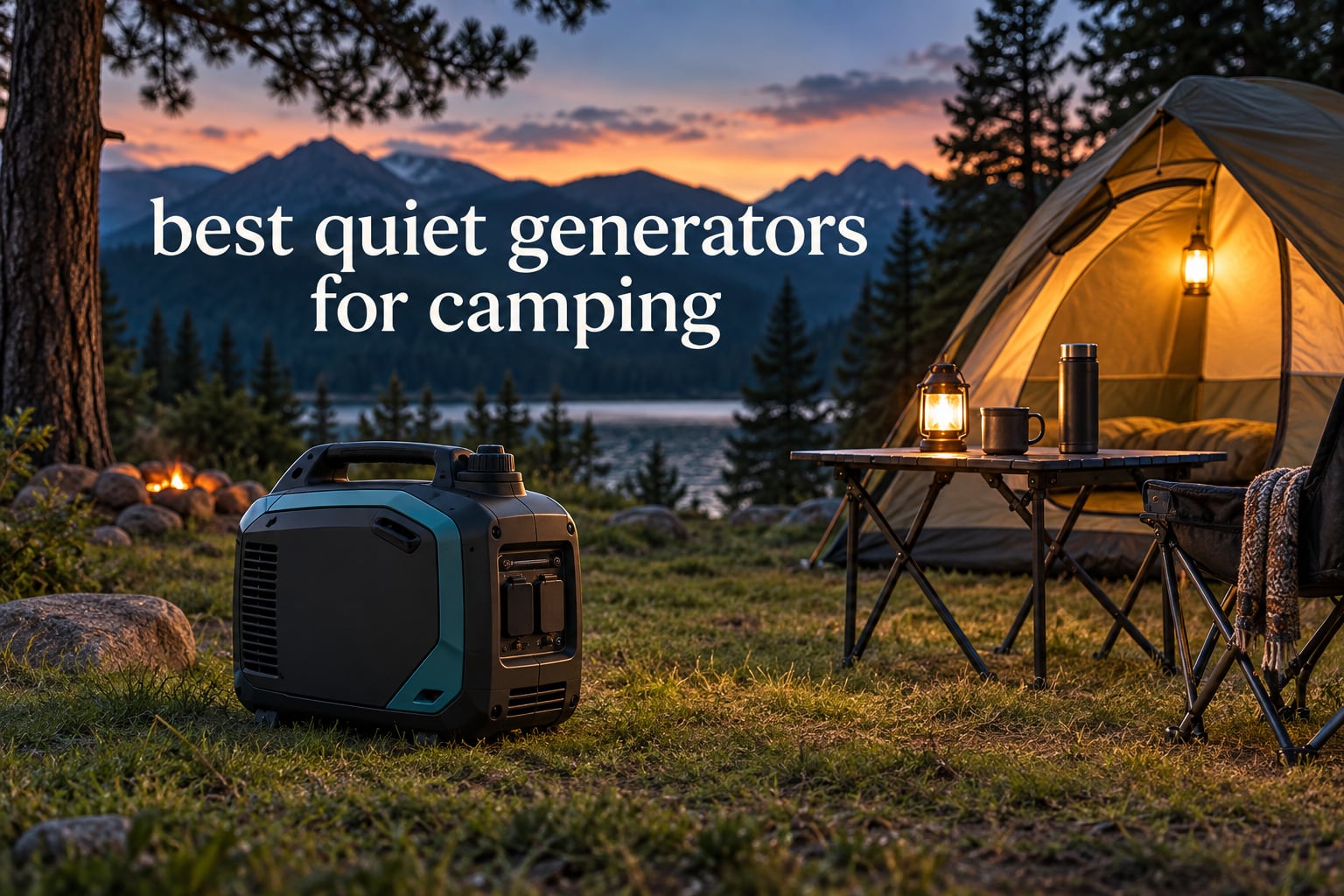
There is no such thing as a quiet generator, as campers keep pointing out on the Airstream forums. There are only machines that make less noise than others, and the difference between them comes down to one published number: decibels, measured at a fixed distance from the engine.
We spent weeks reading spec sheets, owner reviews and category data behind ten of the most popular portable inverter models sold today to work out the best quiet generators for camping. Every pick below uses inverter architecture, and that is not a marketing preference. An inverter generator throttles engine speed to match the load you actually draw, so it drops to a low engine speed with a laptop charging and winds to full output only when the coffee maker kicks on. A conventional open-frame generator runs at a fixed high RPM from the first second and never quiets down.
Our short answer for most campers is the Honda EU2200i, rated at 48 to 57 dB(A) and weighing 46.5 pounds, with the largest review base in the category. If you are running an RV rooftop air conditioner or powering a travel trailer, step up to the WEN 56380i at 3400 rated watts. If your loads are a phone, a lantern and a small cooler, the AIVOLT 1600W at 28 pounds is the easiest machine here to carry to the site.
If you want the full spec sheet across all ten at once, we also have a wider look at portable inverter generators for camping and a deeper guide to generators for RV camping that goes past the noise question and into hookup logistics.
Table of Contents
Top 3 Quiet Generators For Camping (October 2026)
The Honda takes the top card on the strength of the largest review base here at 3228 ratings and a 4.7 average, paired with the lowest published noise band. The WEN 56380i earns the middle slot for raw capacity, and the WEN 56235i is the value pick for campers who never touch more than 1900 watts.
All 10 Quiet Camping Generators Compared in 2026
Here is what the decibel numbers mean at a campsite before we get into individual machines. Manufacturers measure sound pressure at roughly 23 to 25 feet, not at the ten feet between your generator and your tent, so read every figure below as a starting point rather than a promise.
50 to 60 dB is very quiet. About the volume of a normal conversation or a refrigerator in a quiet kitchen. This is the band most campgrounds are happy with, and all of our top picks sit here.
60 to 70 dB is moderate. Comparable to a dishwasher or a hair dryer at a distance. Entirely usable, but neighbours hear it clearly after dark.
70 dB and above is loud. Above a vacuum cleaner. This is where quiet-hour rules and campsite diplomacy start to fail.
| Product | Specs | Action |
|---|---|---|
 Honda EU2200i 2200W Inverter Honda EU2200i 2200W Inverter |
|
Check Latest Price |
 WEN 56380i 3800W Inverter WEN 56380i 3800W Inverter |
|
Check Latest Price |
 WEN 56235i 2350W Inverter WEN 56235i 2350W Inverter |
|
Check Latest Price |
 PowerSmart 2500W Inverter PowerSmart 2500W Inverter |
|
Check Latest Price |
 AIVOLT 1600W Inverter AIVOLT 1600W Inverter |
|
Check Latest Price |
 Genkins 2800W Inverter Genkins 2800W Inverter |
|
Check Latest Price |
 Champion 4000W RV Ready Champion 4000W RV Ready |
|
Check Latest Price |
 ERAYAK 2400W Inverter ERAYAK 2400W Inverter |
|
Check Latest Price |
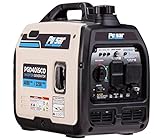 Pulsar PGD40ISCO 4000W Pulsar PGD40ISCO 4000W |
|
Check Latest Price |
 Pulsar PG2300iS 2300W Pulsar PG2300iS 2300W |
|
Check Latest Price |
One honest note on scope before we go further. Every machine in this roundup is a gasoline inverter generator. None of the ten is dual fuel, so there is no propane-versus-gasoline noise comparison to draw from this group, and none is a battery power station. Both options exist and we explain how they fit in the buying guide, but the picks here are the combustion engines that dominate this category.
1. Honda EU2200i – The Editor’s Choice Overall Inverter Generator
Honda EU2200i 2200 Watt Inverter Generator (EU2200ITAN)
1800 running watts
48-57 dB(A)
0.95 gal tank
46.5 lb
3 year warranty
Pros
- Lowest published noise band in the category
- Largest review base at 3228 ratings
- CO-MINDER automatic shutdown
- Bluetooth app monitoring
- 3 year residential warranty
Cons
- Highest price point in this category
- Only two power outlets
- Not offered for sale in California
The EU2200i is the machine owners keep naming when you ask for the quietest thing that actually starts. On r/houston one camper described running it at about 40 to 50 percent load as the reason he could not stop recommending it, and on r/Bass another owner singled out the same machine for being relatively quiet. A commenter on r/cargocamper put it more generally: an inverter generator is the quietest, and Honda and Yamaha are probably the best.
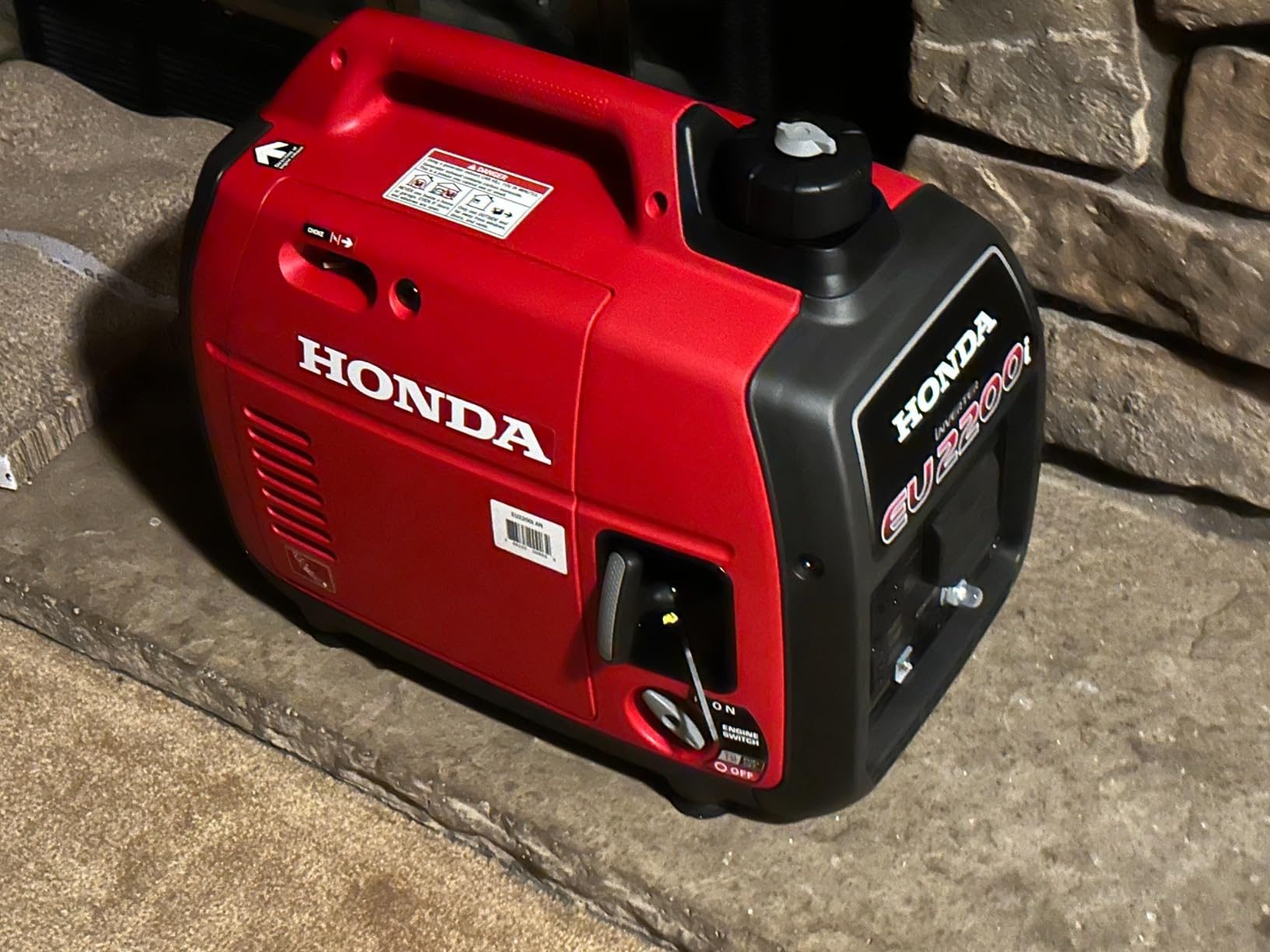
The spec sheet backs that up. It puts out 1800 running watts from a 121 cc four-stroke engine, carries 0.95 gallons of fuel, and runs about 9 hours on a full tank. At 46.5 pounds and 21 by 20 by 13 inches, it is a straightforward one-person carry from the vehicle to the pitch.
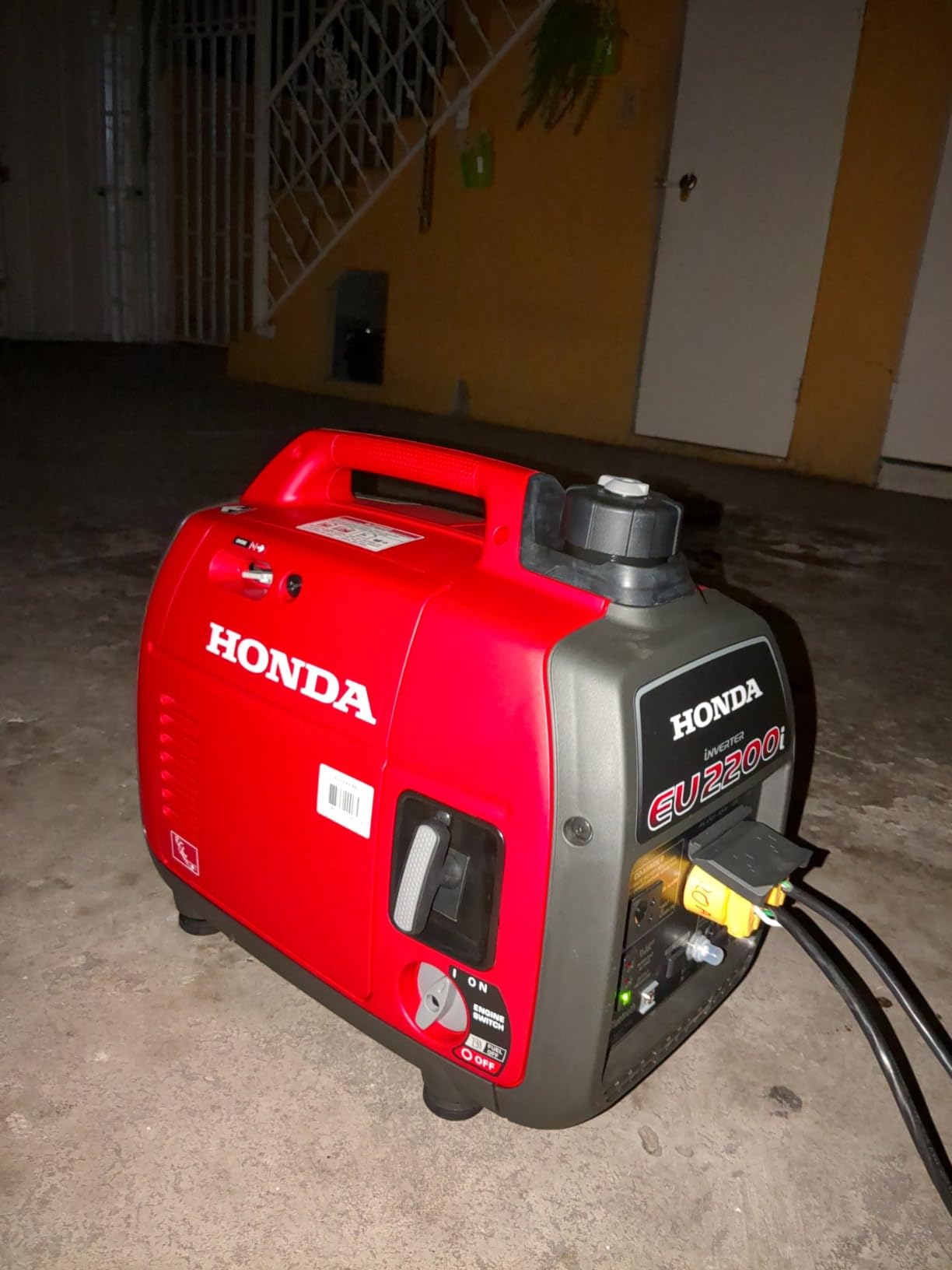
Three details come up again and again in owner reports. It starts. The inverter output stays stable enough for laptops and other sensitive electronics. And the CO-MINDER carbon monoxide detection system shuts the engine down if levels climb where you are running it. The 3-year residential warranty is also among the longest we found in this group.
What you give up is capacity. 1800 running watts covers a fridge, a CPAP machine, a laptop and a couple of lights comfortably, and Honda markets it for microwaves, hair dryers and small air conditioners. It will not carry a 13,500 BTU rooftop unit on its own, and there are only two outlets, so a power strip is the first accessory most buyers add.
Buy the EU2200i when your load list is short
This is the right pick when your draw is electronics, lighting, a small cooler and a coffee maker, and when you would rather buy once than replace a questionable machine three seasons from now. It is also the safest bet for anyone running medical gear, because the inverter output and the CO shutdown cover two different failure points.
Skip the EU2200i when you need 3000 watts or more
Two objections are worth taking seriously. The price premium is real for casual campers who only need a phone charger and a lantern, and the two-outlet limit forces you into a power strip that is not rated for a heavy load. Honda also restricts sale of this model in California, which removes it for a meaningful slice of west coast buyers no matter how much they want it.
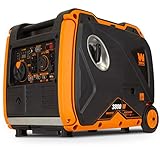
2. WEN 56380i 3800-Watt – The Best Pick for RV and Heavy Loads
WEN Super Quiet 3800-Watt RV-Ready Portable Inverter Generator with Fuel Shut-Off and Electric Start (56380i)
3400 rated watts
2.2 gal tank
99.2 lb
electric start
RV TT-30R
Pros
- 3400 watt rated output handles RV appliances
- RV-ready TT-30R receptacle included
- Electric start
- 6 outlets including USB
- Digital load and fuel display
Cons
- Heaviest machine here at 99.2 pounds
- Two year warranty is shorter than rivals
- Listed at 50 hertz frequency
Where the Honda is about restraint, the 56380i is about headroom. It delivers 3400 rated watts from a 212 cc four-stroke engine, which puts it in the tier that travel trailer and Class C owners actually need when a rooftop air conditioner and a microwave land on the same circuit.
The output panel is the best laid out in this roundup. You get two household duplex receptacles, a 120V NEMA TT-30R RV receptacle, a 12V DC receptacle and a 5V USB port, all behind a digital load and fuel display. Electric start removes the pull-cord factor that frustrates a lot of first-time owners, and it matters more in cold mornings than most buyers expect.
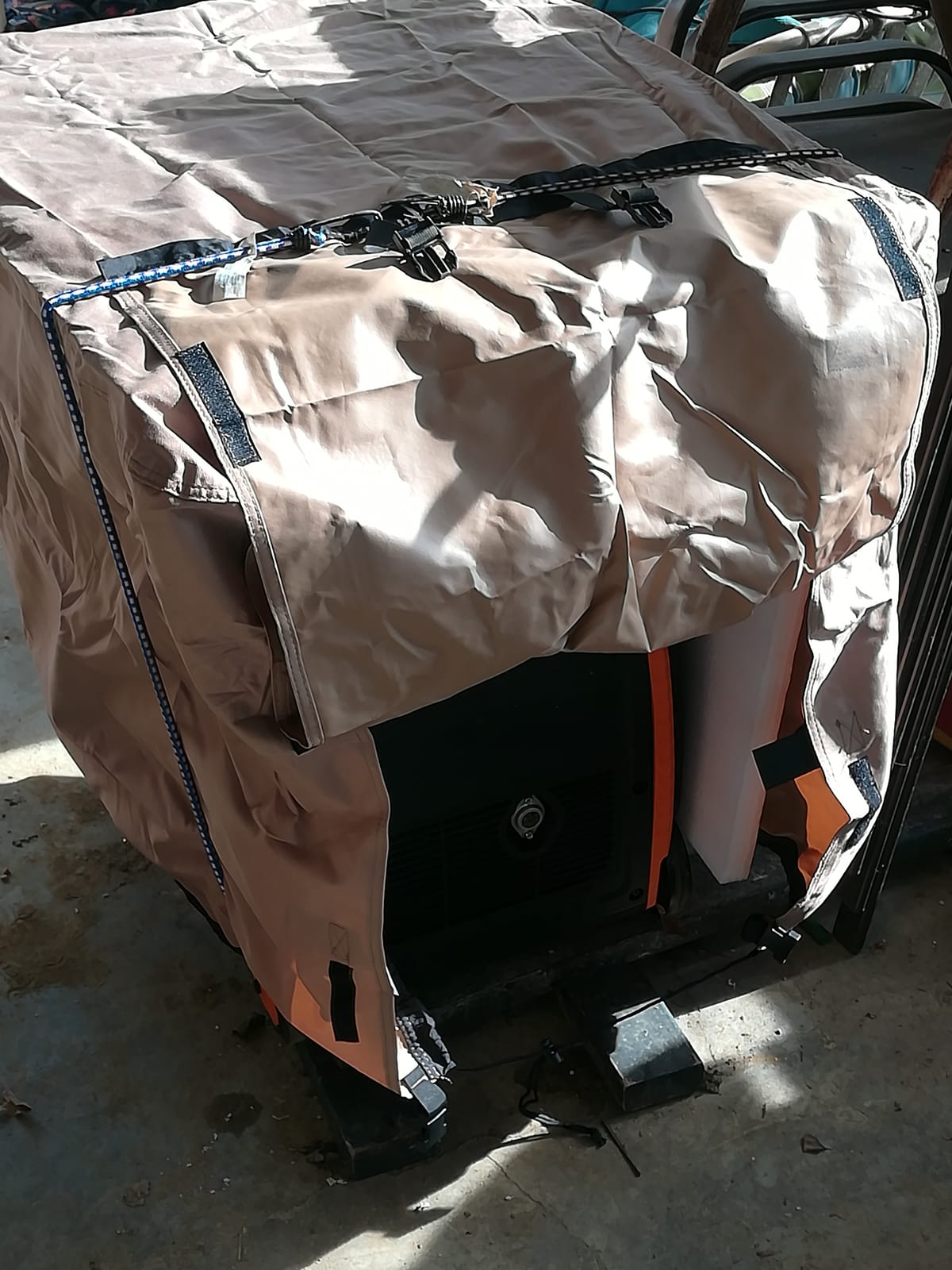
Reviewers repeatedly point at the same trade-off, and it is a physical one. At 99.2 pounds this is the heaviest machine on the list, roughly three and a half times the weight of the AIVOLT, so it is a two-person lift or a cart job from the tailgate. The 2.2 gallon tank gives about 8 hours of run time, extending to 8.5 hours at half load.
One specification deserves a check before you commit. WEN lists this machine at 50 hertz while most of the North American equipment you will plug into expects 60 hertz. If you plan to run clocks, induction motors or sensitive audio gear, confirm the rating with the manufacturer first.
Step up to 3400 watts when air conditioning is on the list
Choose this tier when a 13,500 BTU rooftop air conditioner, an electric water heater, a microwave and a coffee maker are all plausible at once. The fuel shutoff system burns off remaining fuel in the carburetor before shutdown, which extends engine and carburetor life for anyone storing the machine between trips.
Pass on it when 99 pounds beats you
For tent camping, car camping on walk-in sites, or tailgating, this is far too much physical burden for capacity you will never draw. You would be hauling 99 pounds around a campground loop to run a cooler and some lights, and the two-year warranty is also shorter than the three years offered by Honda and Champion.
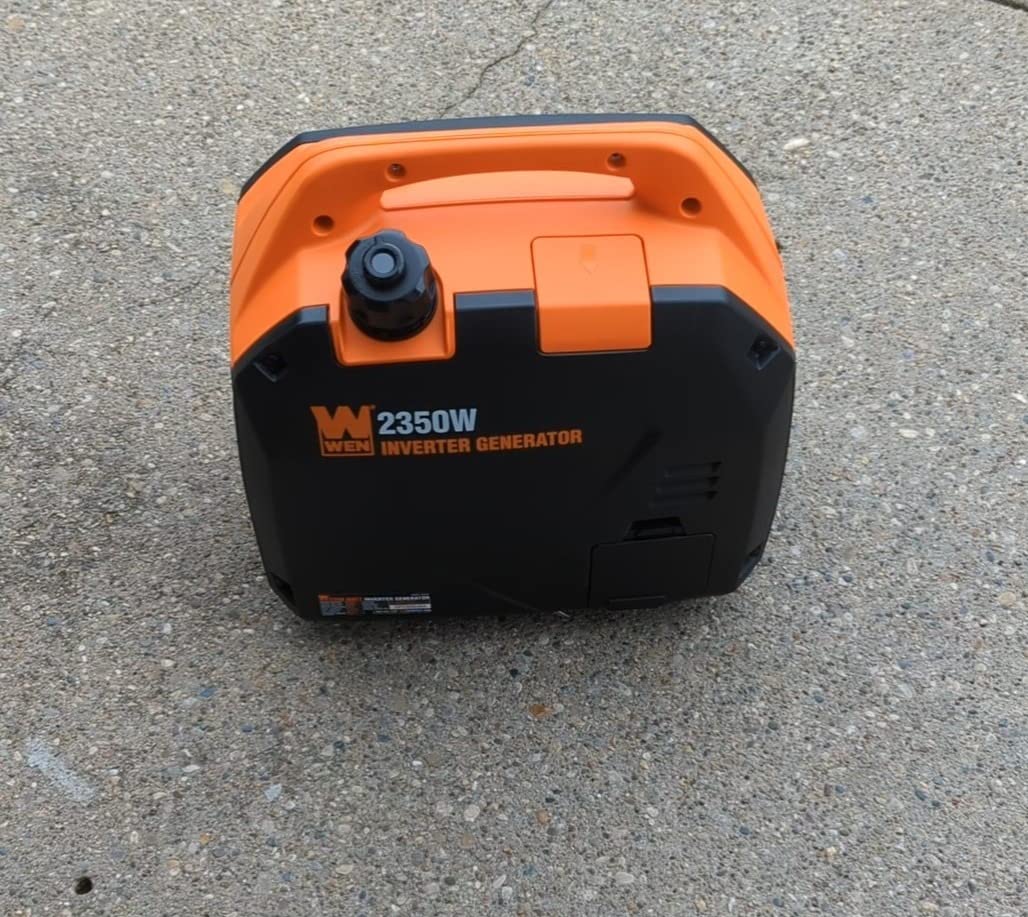
3. WEN 56235i 2350-Watt – The Best Value Quiet Inverter
WEN Super Quiet 2350-Watt Portable Inverter Generator with Fuel Shut Off, Gasoline Power, Ultra Lightweight (56235i), Black
1900 rated watts
39 lb
1 gal tank
10 hour runtime
fuel shutoff
Pros
- Light at 39 pounds for its output
- 10 hour runtime from a single gallon
- Starts reliably in most conditions
- Fuel shutoff protects the carburetor
Cons
- 1900 rated watts is marginal for compressors
- Can pulse or hunt at no load out of the box
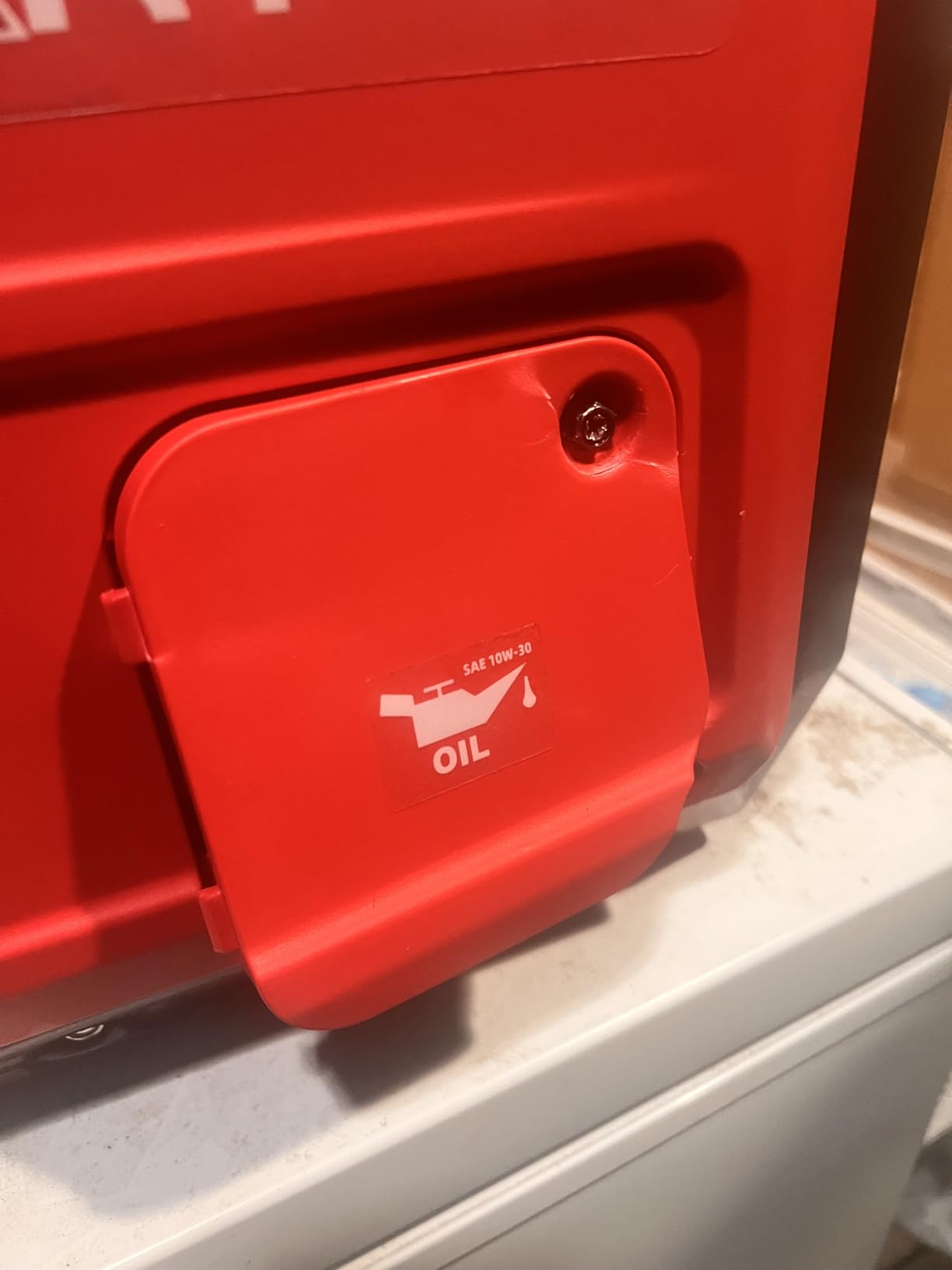
- Low oil shutoff can trigger on slight slopes
This is the most reviewed WEN in the roundup, with 2627 ratings and a 4.5 average, and reviewers frame it consistently as the budget alternative to a Honda. That comparison is fair on noise and starting reliability, and less fair on surge capacity, which is the reason it sits at number three rather than number one.
On paper it is a tidy package. 2350 surge watts, 1900 rated watts, a 1 gallon tank good for about 10 hours, and a 39 pound body measuring 17.3 by 11.5 by 17.5 inches. The outlet set covers two three-prong 120V receptacles, a 12V DC receptacle and two 5V USB ports, so most phone-charging camps need no adapter at all.
Owners report reliable first-pull or second-pull starting in most conditions, and the fuel shutoff feature shows up as a genuine plus for anyone whose machine sits in a truck bed between trips. Clean inverter output is the other repeated theme, described as safe for phones, tablets, televisions and computers.
The caveats come straight from the review set. At 1900 rated watts, high-surge appliances such as compressors and air conditioners can be marginal, which is exactly where the 3400 watt WEN earns its place. Some units pulse or hunt slightly at no load out of the box, and the low-oil shutoff can trigger on very slight slopes, so the machine needs to sit level on the ground.
Buy the 56235i when you camp with light loads
It is a strong first generator for anyone running lights, a fridge, a phone charger and a laptop, and the 10 hour runtime means most three or four night trips need a single fill. The 39 pound weight is easy for one person to manage, and the fuel shutoff reduces the carburetor problems that ruin stored units.
Look elsewhere when you run a compressor
The 1900 rated watt ceiling is the reason to step up. Reviewers also mention a small number of early engine failures requiring service, and the unit does not include a magnetic dipstick or an hour meter, so you have no on-machine way to track run hours. If you need surge headroom, the Champion or Pulsar 4000 watt models are the honest answer.
4. PowerSmart 2500-Watt – The Most Versatile With a 52 dBA Rating
PowerSmart 2500 Watt Portable Inverter Generator for Camping
2500 peak watts
52 dBA at 23 ft
39.7 lb
1.06 gal tank
THD under 3 percent
Pros
- 52 dBA noise rating at 25 percent load
- THD under 3 percent for clean power
- Light 39.7 pound frame
- 2 year warranty with lifetime support
Cons
- 2500 peak watts is modest for larger RV air conditioning
- Some durability complaints in the review set
- No hour meter on the control panel
PowerSmart is the sleeper in this group. It carries a published 52 dBA rating at 23 feet and 25 percent load, sits at number 24 in the Outdoor Generators category, and comes in at a 4.5 average across 1119 ratings without carrying the weight or the price of the big-name units.
The numbers are respectable across the board. 2500 peak watts and 1900 rated watts from an 80 cc four-stroke engine, a 1.06 gallon tank giving up to 8 hours at 25 percent load, and a 39.7 pound frame at 21.9 by 13.4 by 19.5 inches. Total harmonic distortion stays under 3 percent, which is fine for laptops, cameras and small appliances.
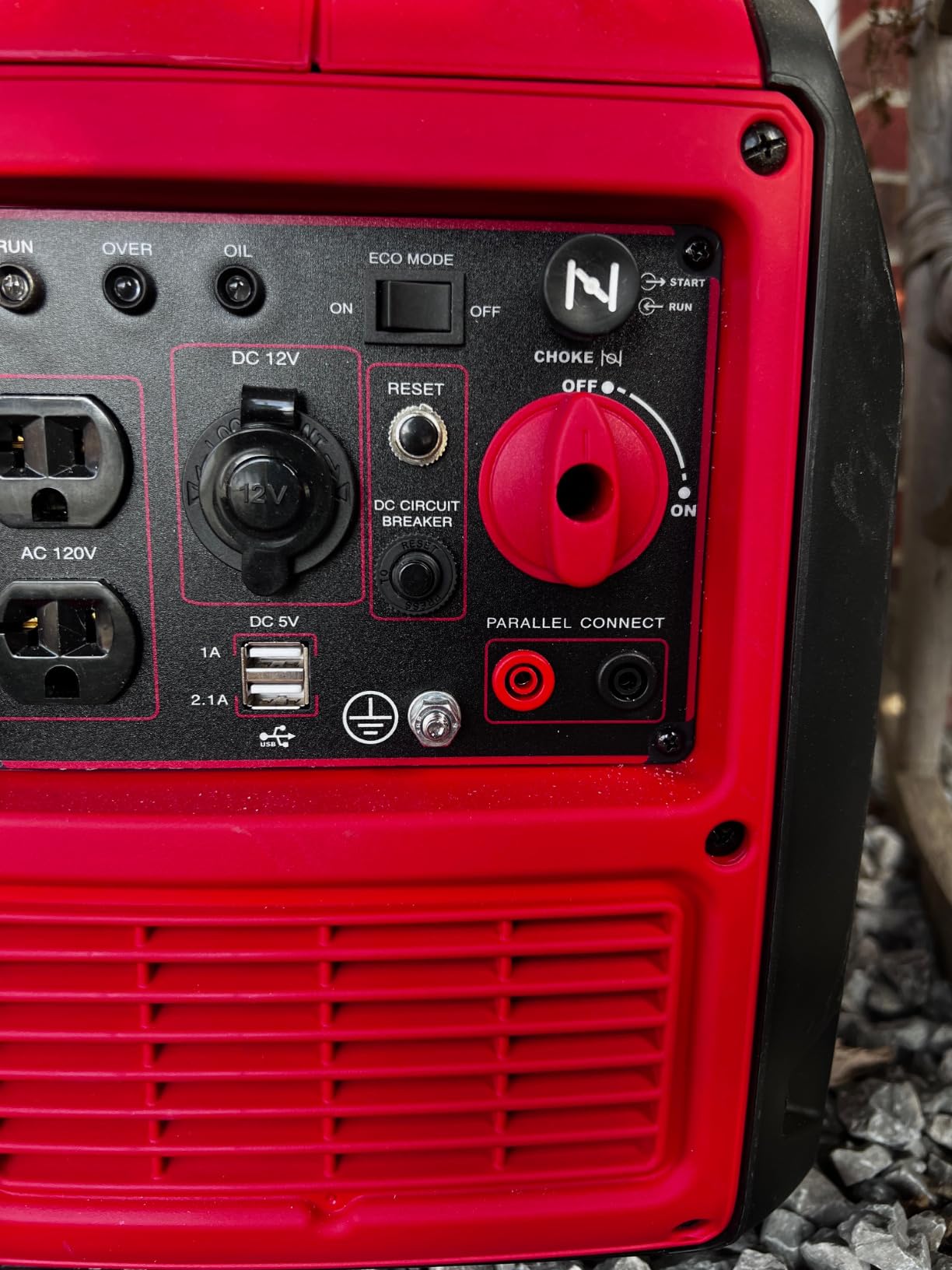
Cold Start Technology is listed as a feature, which matters more than most buyers realise when a cold morning is the first test a small engine faces. The control panel carries a 120V 20A duplex household outlet, a 12V 8A DC port and dual 5V USB ports, and the warranty is two years with free lifetime technical support attached.
The honest limitation is surge capacity. Reviewers place 2500 peak watts as modest for larger RV air conditioning units, and 1900 running watts is the same ceiling as the WEN 56235i. You are buying quietness and lightness here, not headroom.
Buy the PowerSmart for cheap quietness on a budget
If your loads are under 1900 running watts and you want the lowest published noise figure in the roundup without paying the Honda premium, this is the machine. The 52 dBA rating at quarter load is genuinely impressive, and the 39.7 pound weight keeps it in one-person carry territory.
Do not rely on it for air conditioning?
The 4.5 average reflects a small share of durability and surge-capacity complaints. When a compressor kicks on, this unit is closer to its limit than the 3200 watt Pulsar or the 3400 watt WEN, and at that point the noise advantage stops mattering because the engine is running at full load anyway.
5. AIVOLT 1600W – The Lightest Machine at 28 lb
AIVOLT 1600W Super Quiet Inverter Generator 28lbs Portable for Camping
1260 running watts
57 dBA at 23 ft
28 lb
CO Alert
parallel ready
Pros
- Lightest at 28 pounds
- 57 dBA at 23 feet
- Up to 8 hours at 25 percent load in ECO mode
- CO Alert auto shutdown
- Parallel ready to double output
Cons
- Lowest average rating in the roundup at 4.1
- 1260 running watts suits only light loads
- Only two outlets and no DC car outlet
Weight is the whole argument for the AIVOLT. At 28 pounds it is the lightest machine in this roundup by a clear margin, roughly eleven pounds below the next tier, and for anyone carrying a generator from a car park to a pitch across soft ground that difference is the feature. The body measures 16.93 by 9.92 by 15.75 inches.
It also runs at 57 dBA at 23 feet and delivers up to 8 hours at 25 percent load in ECO mode from a 60 cc four-stroke engine with copper windings. Total harmonic distortion stays under 3 percent, and the safety package is genuinely complete for the class: CO Alert with automatic shutdown, low oil shutdown and overload protection.
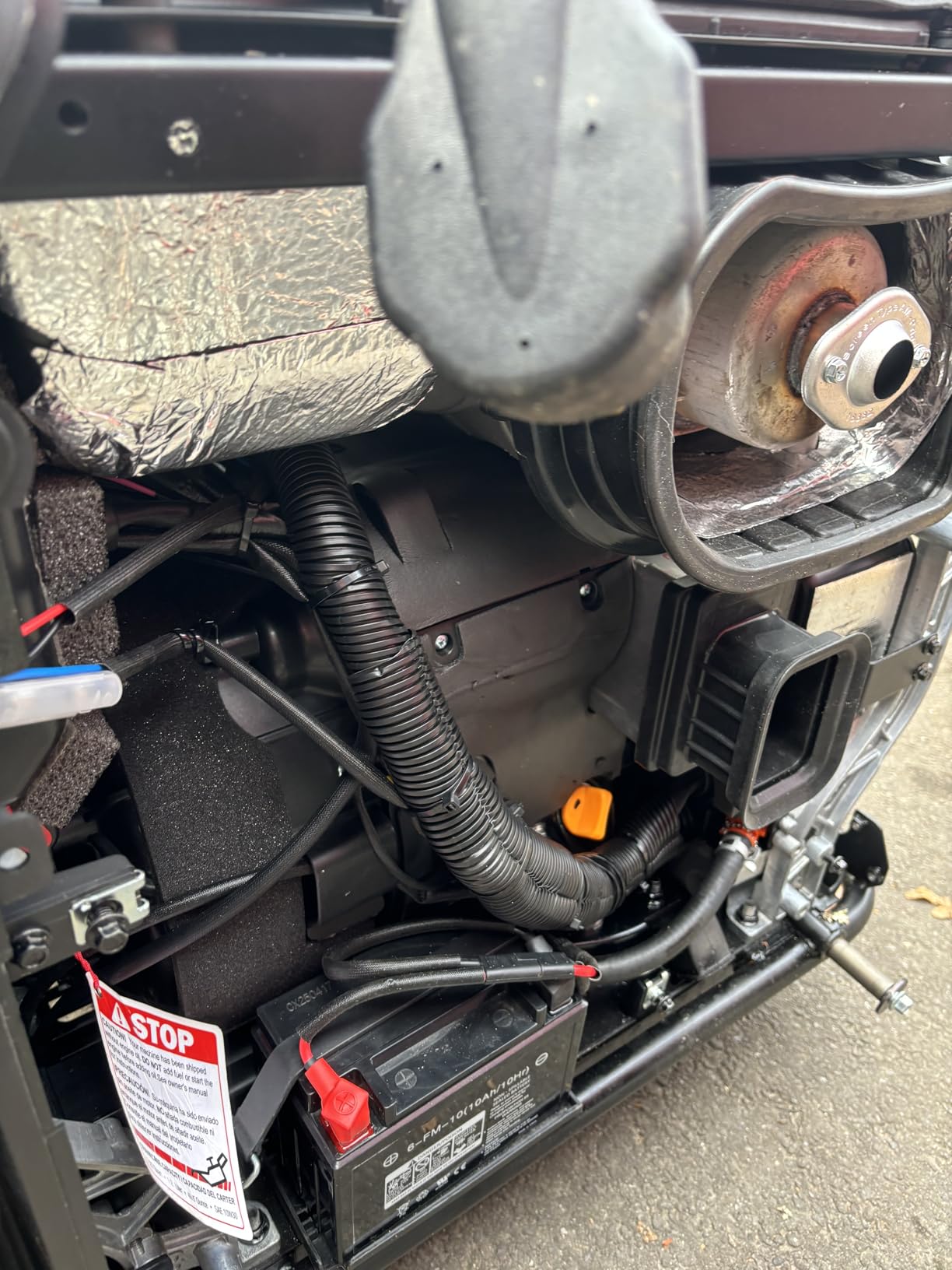
EPA approval and ANSI/PGMA G300-2018 compliance are both listed, and the machine is parallel ready, meaning a second matching machine can double the output if the parallel kit is bought separately. Two 120V outlets, two USB ports, three indicator lights and an hour meter make up the control panel.
Be clear-eyed about the trade-off. 1260 running watts is the smallest capacity here, and that is roughly enough for lights, a phone charger, a laptop and a very small appliance. The 4.1 average is the lowest in this group, with 12 percent one-star reviews, which points at dissatisfaction around power headroom and build consistency rather than noise.
Choose the AIVOLT when the walk to the site is the hard part
For tent campers, overlanders and anyone hauling gear across grass, 28 pounds is a genuine difference in trip quality. It is also quiet enough for a close-in campsite and it will run an evening of lights and charging on a partial tank without anyone noticing it exists.
Choose something bigger when you want a coffee maker
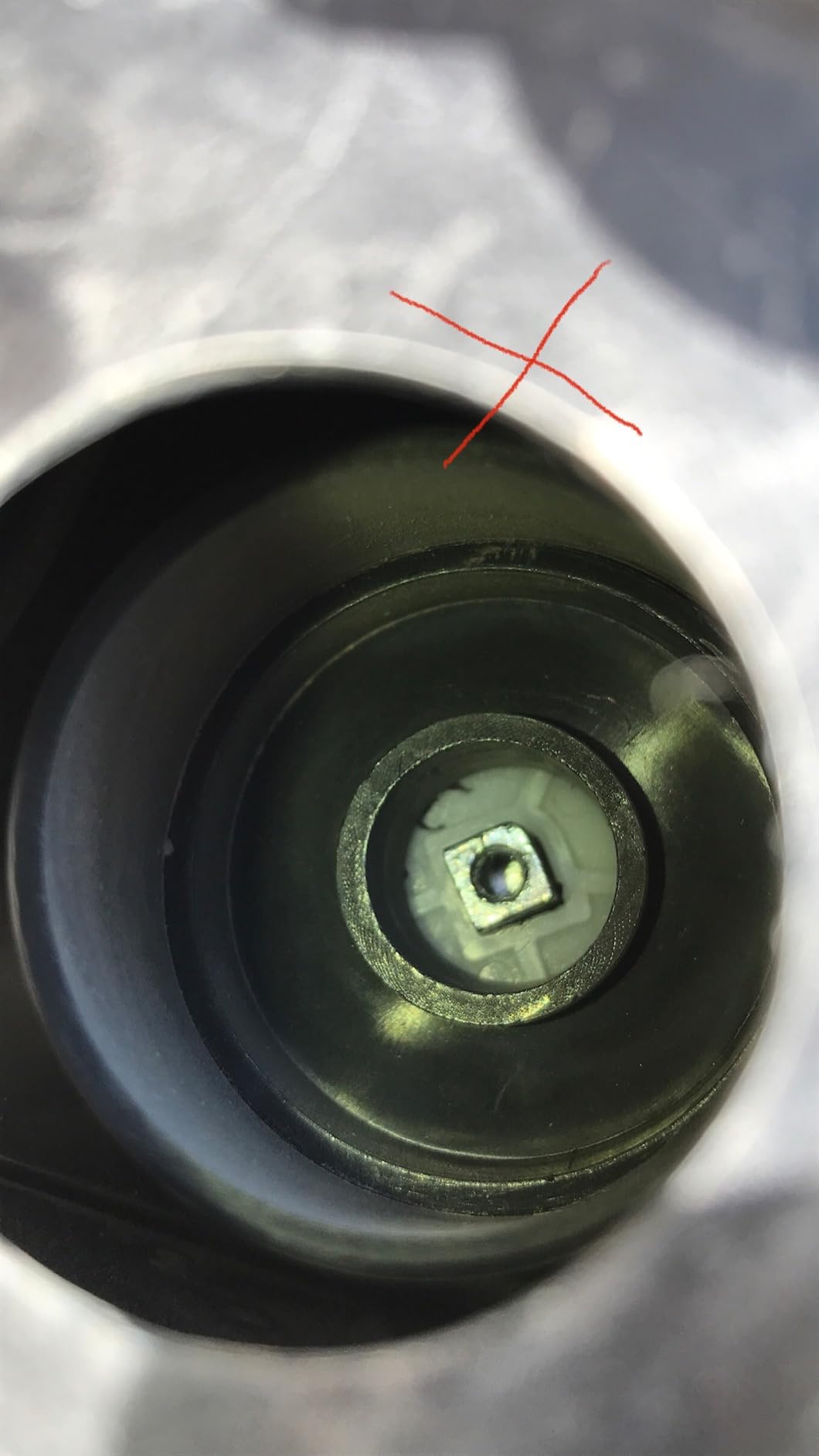
Once you add a kettle, a coffee maker or a cooler compressor, the 1260 watt ceiling stops being enough and the machine will bog or shut down under load. Engine oil is also not included in the box, and AIVOLT does not offer this model for sale in California.
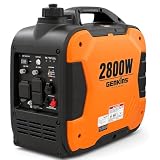
6. Genkins 2800W – Pure Sine Wave Under 2 Percent THD
Genkins 2800W Portable Inverter Generator, Quiet Lightweight for Camping Home Backup
2000 running watts
THD under 2 percent
40 lb
30A outlet
parallel port
Pros
- THD under 2 percent for clean sine wave power
- 30A outlet plus two 20A circuits and two USB ports
- Starts on the first pull even after years of use
- Low oil shutdown and overload protection
Cons
- Chassis and build feel flimsy to some owners
- Manual lacks battery management instructions
- Some reports of spark plug and no-start issues on arrival
The Genkins sells itself on electrical quality rather than on noise, and that is a fair position to take because noise is handled by the inverter design anyway. Its 79 cc four-stroke engine puts out 2800 peak watts and 2000 running watts, and total harmonic distortion stays under 2 percent, a cleaner supply than most units in this group.
That output quality is what separates it for sensitive loads. Audio equipment, medical devices, network gear and high-end laptops are the devices that suffer first from a rough square-wave-ish supply, and a 2 percent THD reading is the number to look for if any of those are in your kit.
The outlet selection is unusually generous for the size. Two 120V 20A circuits, one 120V 30A AC outlet, two USB ports and a parallel port sit on a 40 pound frame measuring 19 by 10 by 19 inches. Runtime is 7 to 8 hours in ECO mode from a 1.36 gallon tank, and owners repeatedly report first-pull starting after years of use.
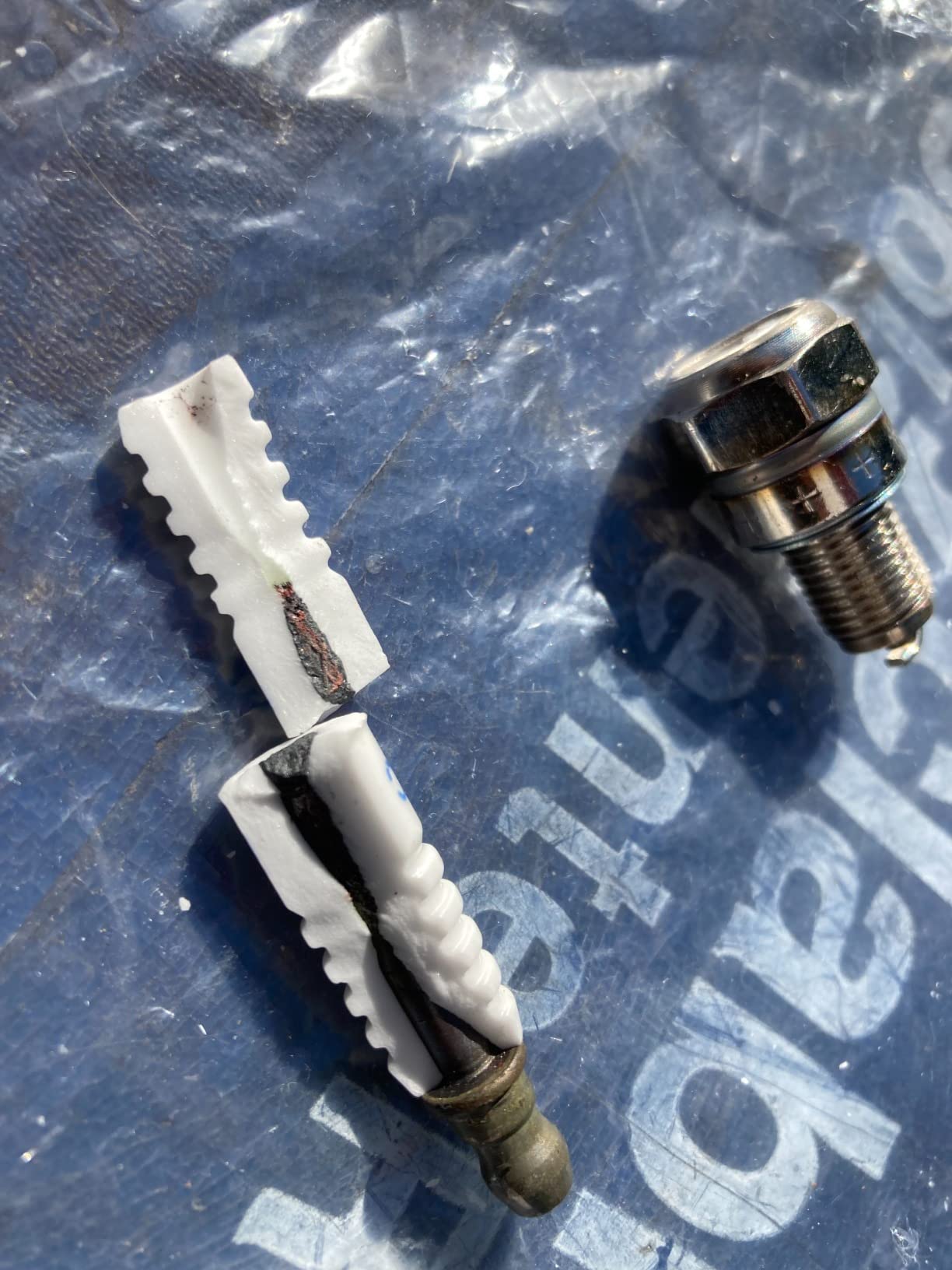
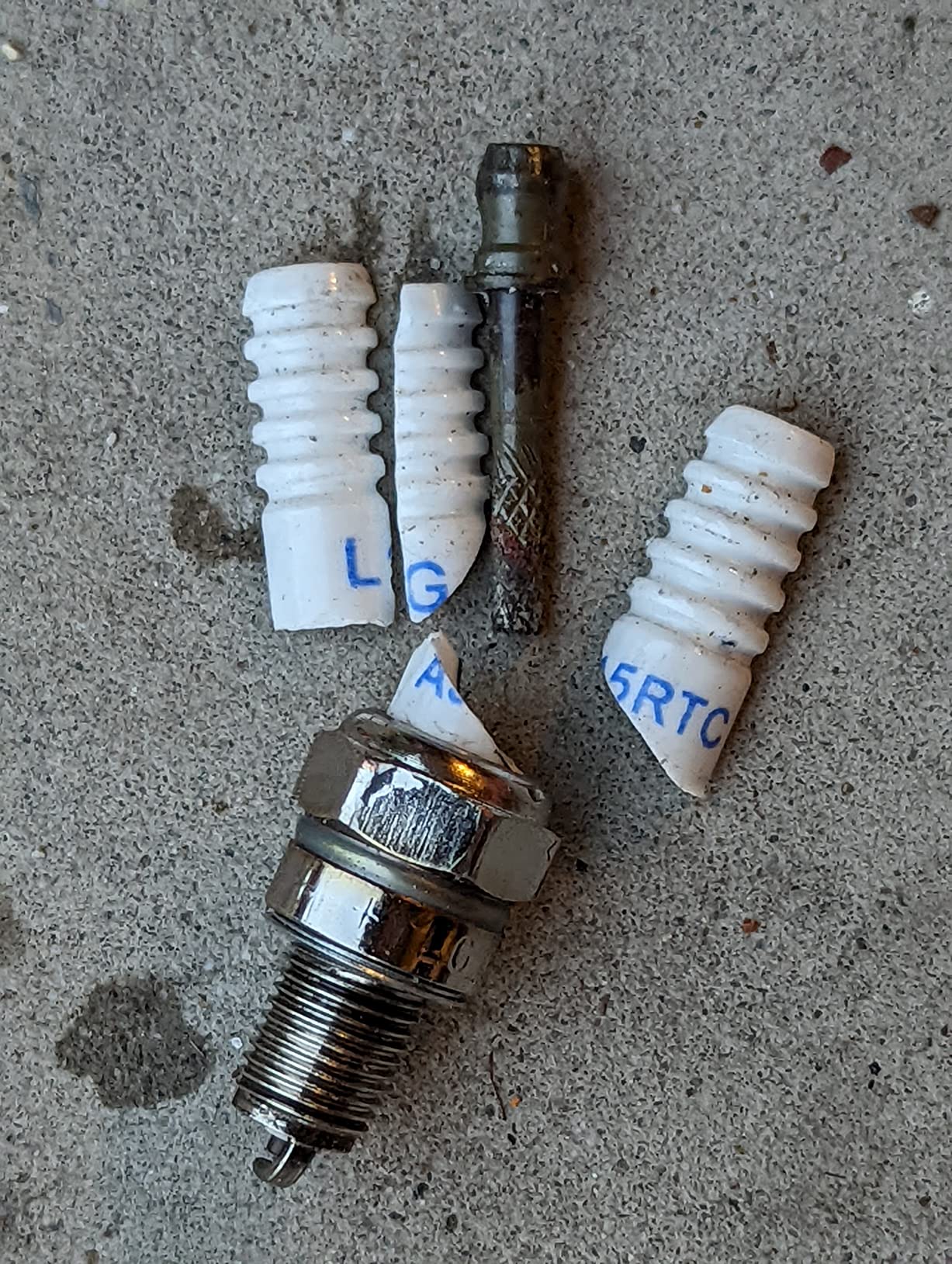
The review set is not uniformly flattering, and the complaints are worth weighing. Some owners describe the chassis as flimsy and report a detached wheel, others mention missing battery setup documentation on electric-start variants, and there are occasional reports of a defective spark plug and a no-spark no-start on arrival.
Buy the Genkins for audio, medical and network gear
If you camp with a CPAP, a stereo, a radio setup or a rack of networking equipment, the sub-2 percent THD is the reason to choose this over a similar-priced unit with a 3 percent rating. The 30A outlet also makes it easier to feed a travel trailer hookup than the two-outlet designs in this roundup.
Pick a different brand if support matters to you
The quality complaints cluster around first-purchase hardware rather than long-term wear, but owners manual gaps and parts availability are real friction when something goes wrong. A two-year warranty on a machine with a 2 percent THD claim is also less reassuring than the three years Honda and Champion offer.
7. Champion 4000-Watt RV Ready – The Best for Boondocking
Champion 4000-Watt RV Ready Portable Inverter Generator
3000 running watts
64 dBA at 23 ft
48.1 lb
10 hour runtime
CO Shield
Pros
- 3000 running watts in a sub 50 pound frame
- CO Shield carbon monoxide auto shutoff
- 10 hour run time
- TT-30R and parallel outlets
- 3 year limited warranty
Cons
- Recoil pull start only with no electric option
- Loudest published rating here at 64 dBA
- One-star reviews run higher than peers at 7 percent
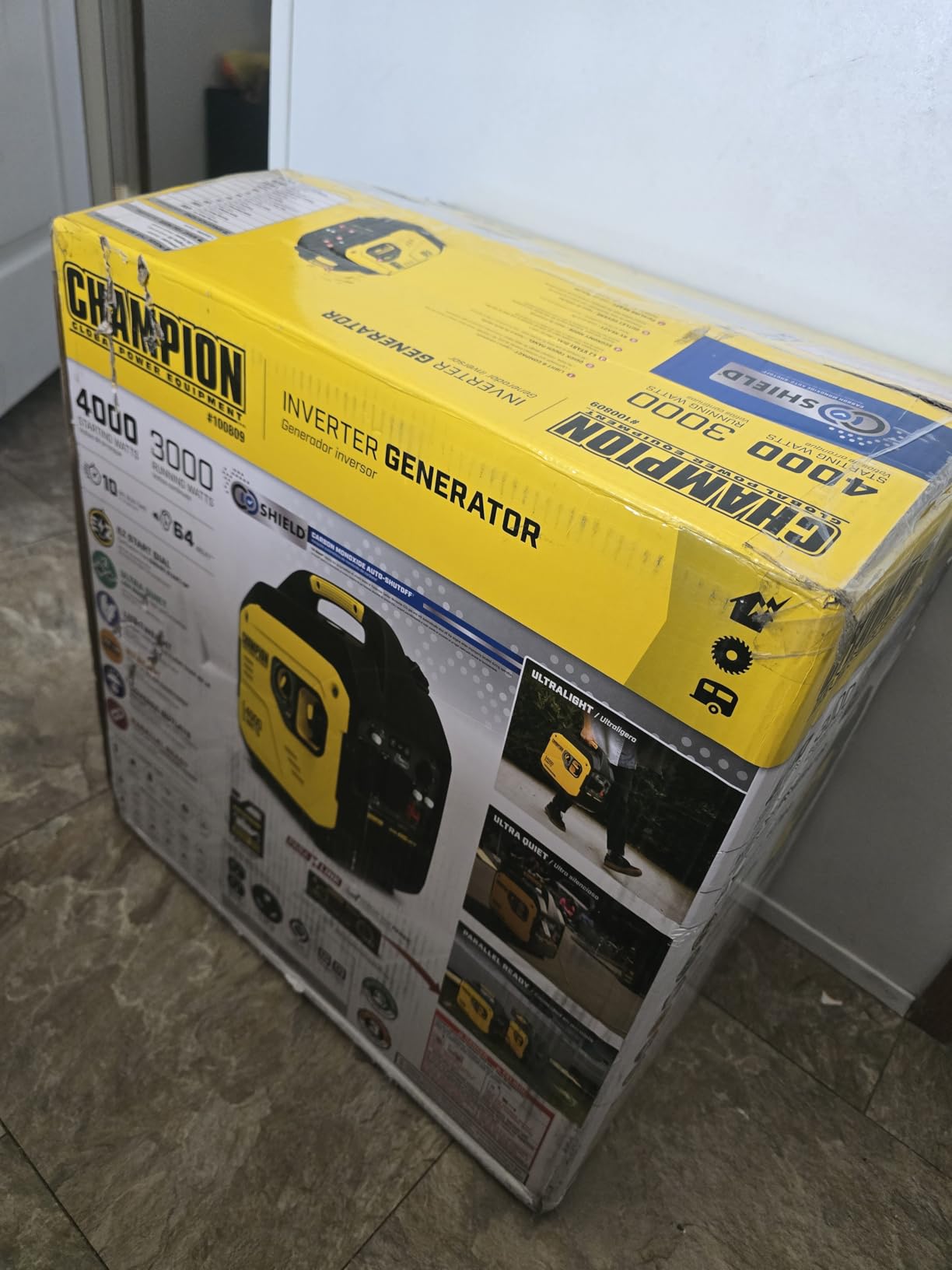
Champion solves the boondocking sizing problem without solving it in a warehouse. The 4000 watt inverter gives 3000 running watts and up to 4000 starting watts from a 149 cc engine, and it does that in a 48.1 pound frame, which is why it stands out against every other 4000 watt unit here.
Runtime is a real strength: a 1.54 imperial gallon tank delivers up to 10 hours, and the output panel includes a 120V 25A TT-30R outlet, a 120V 20A household duplex with less than 3 percent THD, a 12V automotive outlet and parallel outlets. A parallel kit lets you pair two Champion 4000 watt machines and double the output.
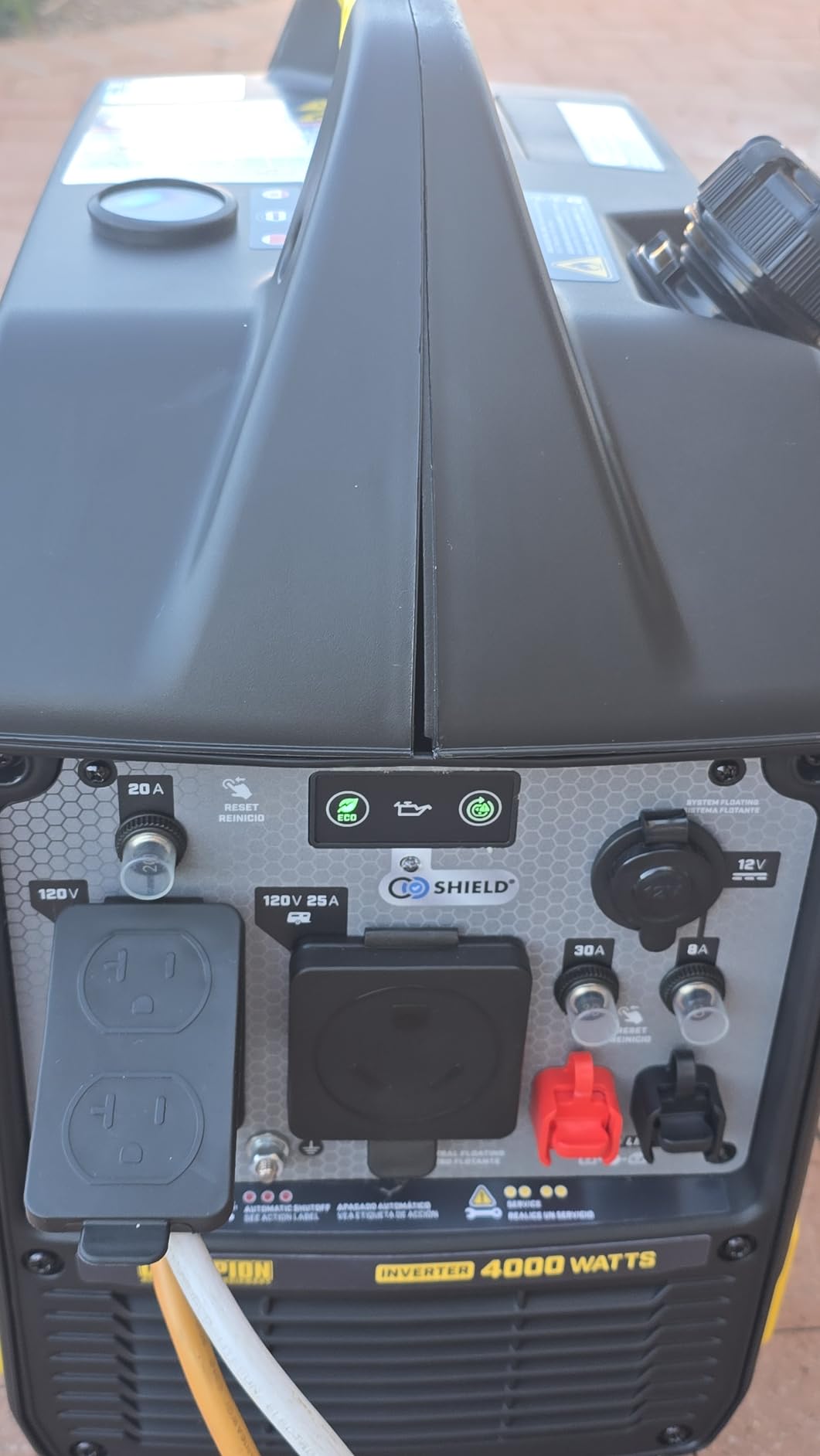
CO Shield carbon monoxide auto shutoff is fitted, and the 3 year limited warranty comes with free lifetime technical support. Cold Start Technology is listed, which is a reasonable signal for shoulder-season departures in cold states.
The compromises are clear. At 64 dBA from 23 feet this is the loudest published rating in the roundup, and the noise rises with load, so it is least pleasant exactly when you are running the air conditioner hard. It is also recoil start only, with no electric or remote start option.
Buy the Champion when watts per pound decide it
If you are off-grid in an RV and every pound matters but you still need 3000 running watts for an air conditioner, this is the machine. Ten hours of runtime, a TT-30R outlet and a three-year warranty make it a comfortable long-weekend unit.
Skip it if the site is a quiet one
A 64 dBA rating is moderate rather than quiet, and it is the highest here. Boondockers in genuinely remote spots will not care, but anyone sharing a wall with a neighbour at a paid campground should look at the Honda or the 4000 watt Pulsar at 59 dB instead.
8. ERAYAK 2400W – The Pick for CPAP and Low-THD Medical Gear
ERAYAK 2400W Portable Inverter Generator for Home Use, Super Quiet Small Generator for Camping Outdoor Emergency Power Backup, Gas Powered Engine, EPA, ECO Mode
1800 running watts
52.5 dB at 7 m
42 lb
THD 0.2-1.2 percent
eco runtime
Pros
- 52.5 dB at 7 meters in ECO mode
- THD between 0.2 and 1.2 percent for medical gear
- 42 pounds with a compact frame
- 3 year limited warranty
Cons
- Does not ship with engine oil
- One review reports no breaker protection on the 110V section
- Not rated above 1000 meters without a high-altitude kit
ERAYAK is the quietest rated unit in this roundup on paper, at 52.5 dB measured at 7 meters and 25 percent load. It also has the lowest published distortion range of anything we covered, between 0.2 and 1.2 percent total harmonic distortion, which is the number that matters when a CPAP machine is plugged in.
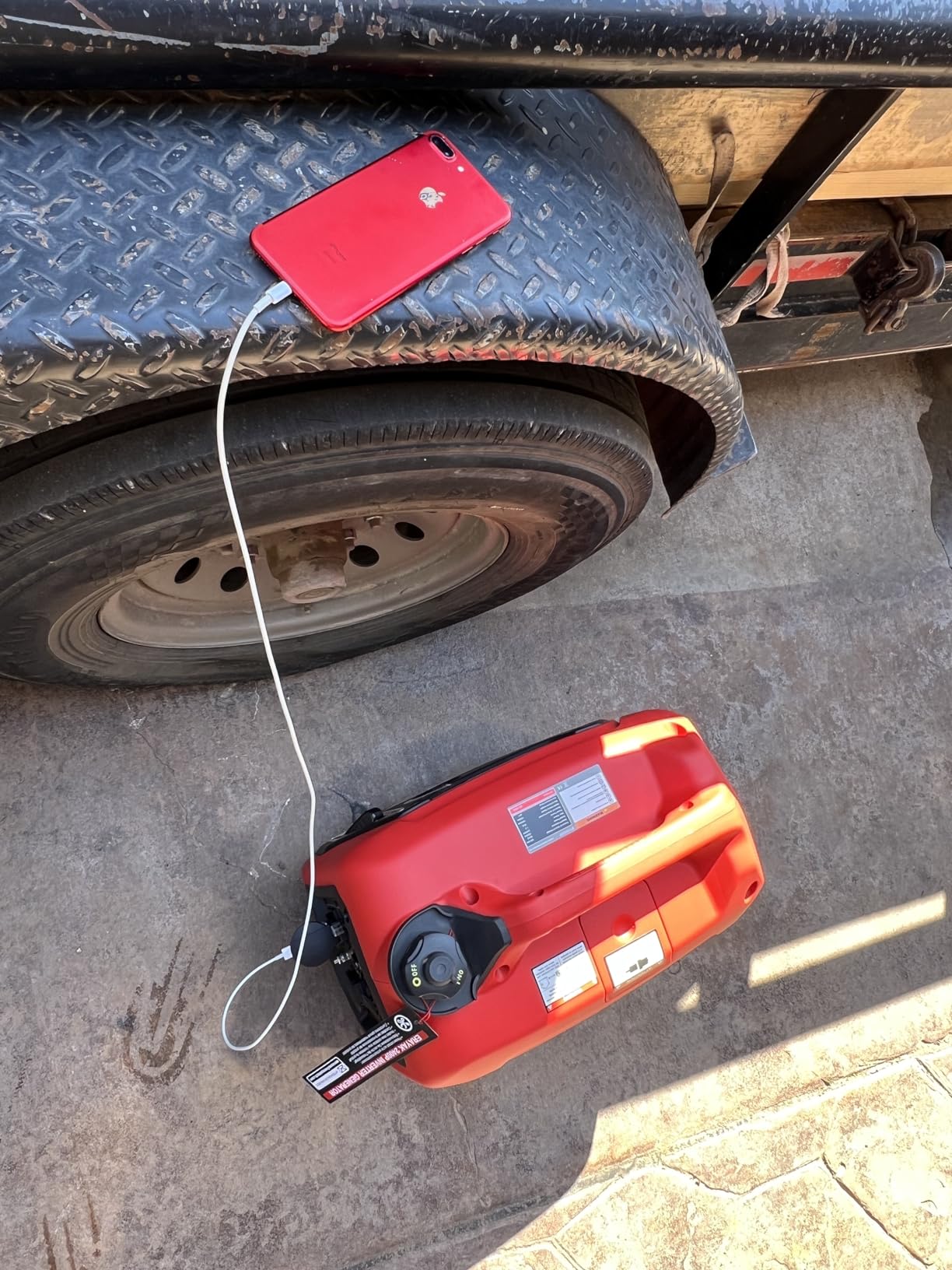
Output is 2400 peak watts and 1800 running watts from a 79.7 cc four-stroke engine in a 42 pound frame measuring 18.82 by 11.73 by 18.11 inches. Outlets cover two AC sockets, two USB ports and a DC output, and the machine is compatible with an Erayak wheel kit and telescoping handle.
Fuel consumption is listed at 0.2375 gallons per hour at full load and 0.21 gallons per hour at 25 percent load, from a 0.95 gallon tank. The published runtime is 8 hours, extending to 16 hours at 25 percent load in ECO mode, and the 3 year limited warranty is longer than most units in this price class.
The 4.2 average and a 14 percent one-star share come from after-sales experience rather than performance. Owners cite missing engine oil, one report of no circuit breaker protection on the 110V section, an altitude limit of 1000 meters without a jet kit, and a manual that lists features the machine does not have.
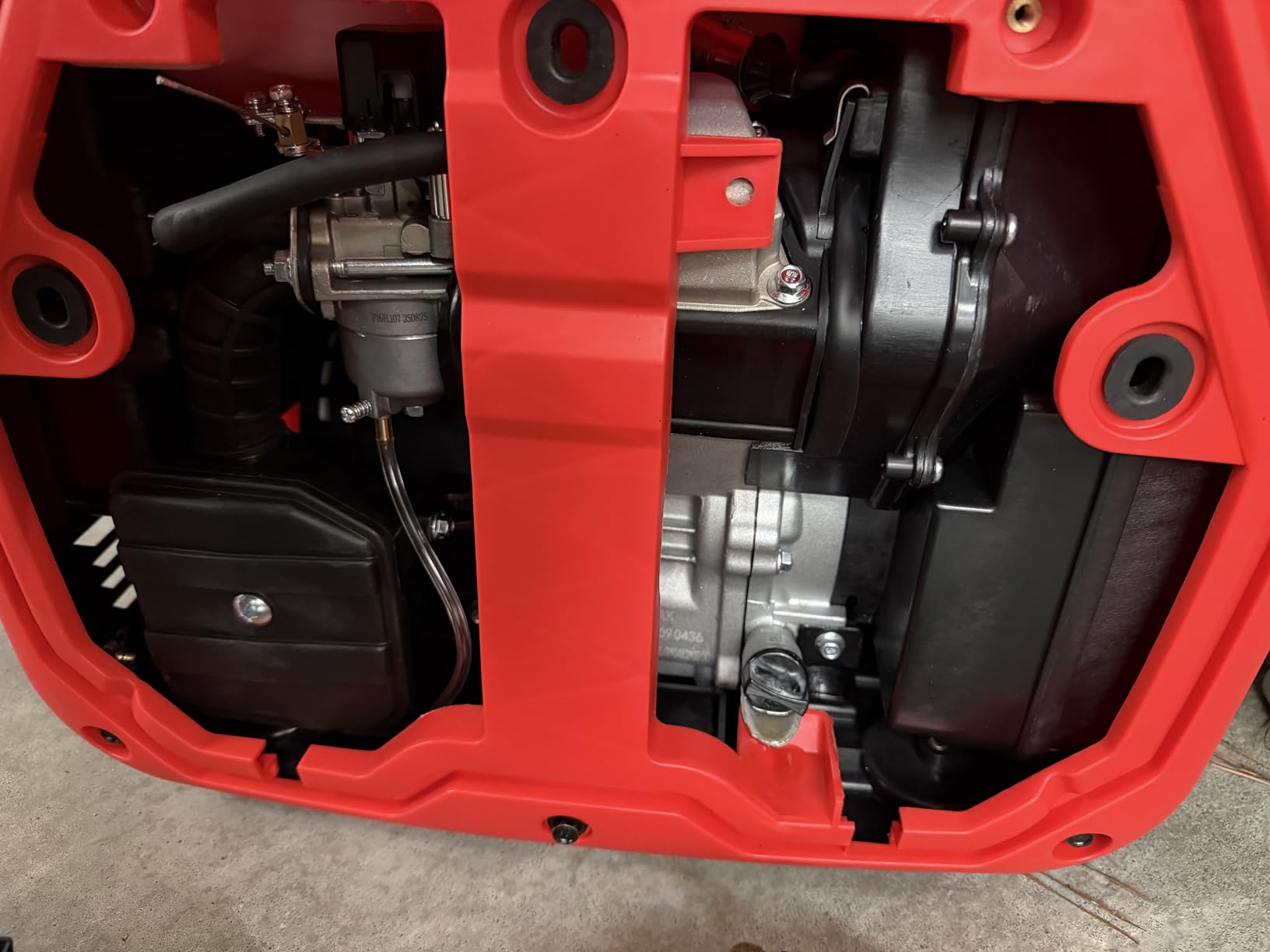
Choose the ERAYAK when noise and clean power both matter
For campers running CPAP machines, oxygen concentrators, high-end laptops or audio equipment, the 0.2 to 1.2 percent distortion range is the headline. The 52.5 dB ECO mode reading sits in the very quiet band, and 42 pounds stays in one-person carry territory.
Check the altitude before you head to the mountains
As delivered this unit is not rated for operation above 1000 meters without a high-altitude jet kit, which rules out a lot of western summer camping. The reported parts and manual gaps are the other reason support-sensitive buyers should read recent reviews carefully before committing.
9. Pulsar PGD40ISCO 4000W – Rated for 13,500 BTU Air Conditioners
Pulsar PGD40ISCO Ultra Light Quiet 4000W Portable Gas Inverter Generator, white
3200 rated watts
59 dB
47.3 lb
1 gal tank
parallel ready
Pros
- 3200 rated watts in a 47.3 pound frame
- Manufacturer rates it for air conditioners up to 13500 BTU
- Consistently starts on the first pull
- Parallel ready
- 3 year warranty
Cons
- 1 gallon tank gives only about 4 hours at half load
- Louder than premium inverter rivals under heavy load
- Fuel cap can vapour-lock in hot weather
The Pulsar PGD40ISCO does something none of the other 4000 watt units here manage: it delivers 3200 rated watts in 47.3 pounds. The 145 cc engine produces 4000 peak watts and 3200 rated watts, and Pulsar rates it for air conditioning units up to 13,500 BTU, which is the specification most boondocking buyers are actually searching for.
Noise lands in the middle of this roundup at 59 dB rated super quiet, which is better than the Champion 4000 watt and close to the smaller premium units. Owners report starting on the first pull consistently from sea level up to 8000 feet, and long-term owners log 300 to 400 hours or more without mechanical failure.
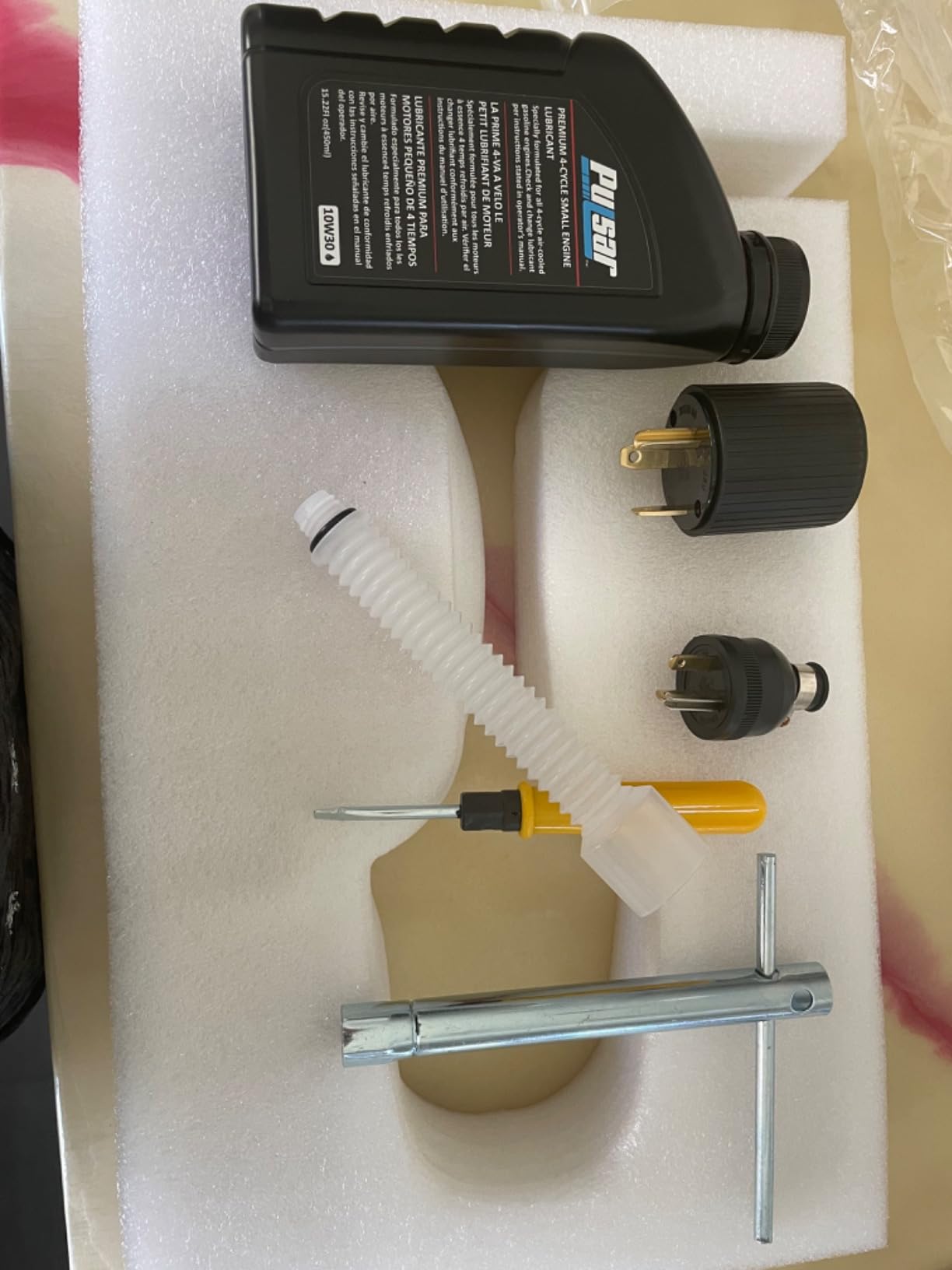
Output and build details round out a capable package. Three outlets, a parallel-ready design for doubling output, a 3 year limited warranty and a frame measuring 18.9 by 11.4 by 17.3 inches. Several owners compare its noise favourably against a Honda-class unit of the same class.
The complaint that recurs is the tank. One gallon gives roughly 4 hours at half load, the shortest runtime in this group, so a full weekend of air conditioner use means refilling in the dark more often than you would like. Owners also note it is louder than premium rivals under heavy load, and that the fuel cap does not vent well in hot weather.
Buy the Pulsar when air conditioning is the priority
For a travel trailer with a rooftop unit, this is the shape of machine you want. 3200 rated watts is the second highest running figure here, the weight stays under 48 pounds, and the 59 dB rating keeps it inside the moderate band rather than the loud one.
Look for a bigger tank if you run all weekend
Four hours at half load is a real constraint when a compressor cycles all night. The Champion 4000 watt trades three quarters of a pound for a 1.54 gallon tank and ten hours of run time, which is the better trade for long boondocking stays.
10. Pulsar PG2300iS 2300W – The Compact Pick for Tailgating
Pulsar PG2300iS 2,300W Portable Super Quiet Gas-Powered Inverter Generator with USB Outlet & Parallel Capability, CARB Compliant
1800 running watts
48 lb
1.18 gal tank
6 hour runtime
USB and 12V DC
Pros
- Compact at just under 20 inches long
- Stable sine wave output
- Parallel capability for doubling output
- USB and 12V DC outlets built in
Cons
- 48 pounds is heavy for a 2300 watt machine
- Only 1800 running watts
- One year warranty is the shortest in the roundup
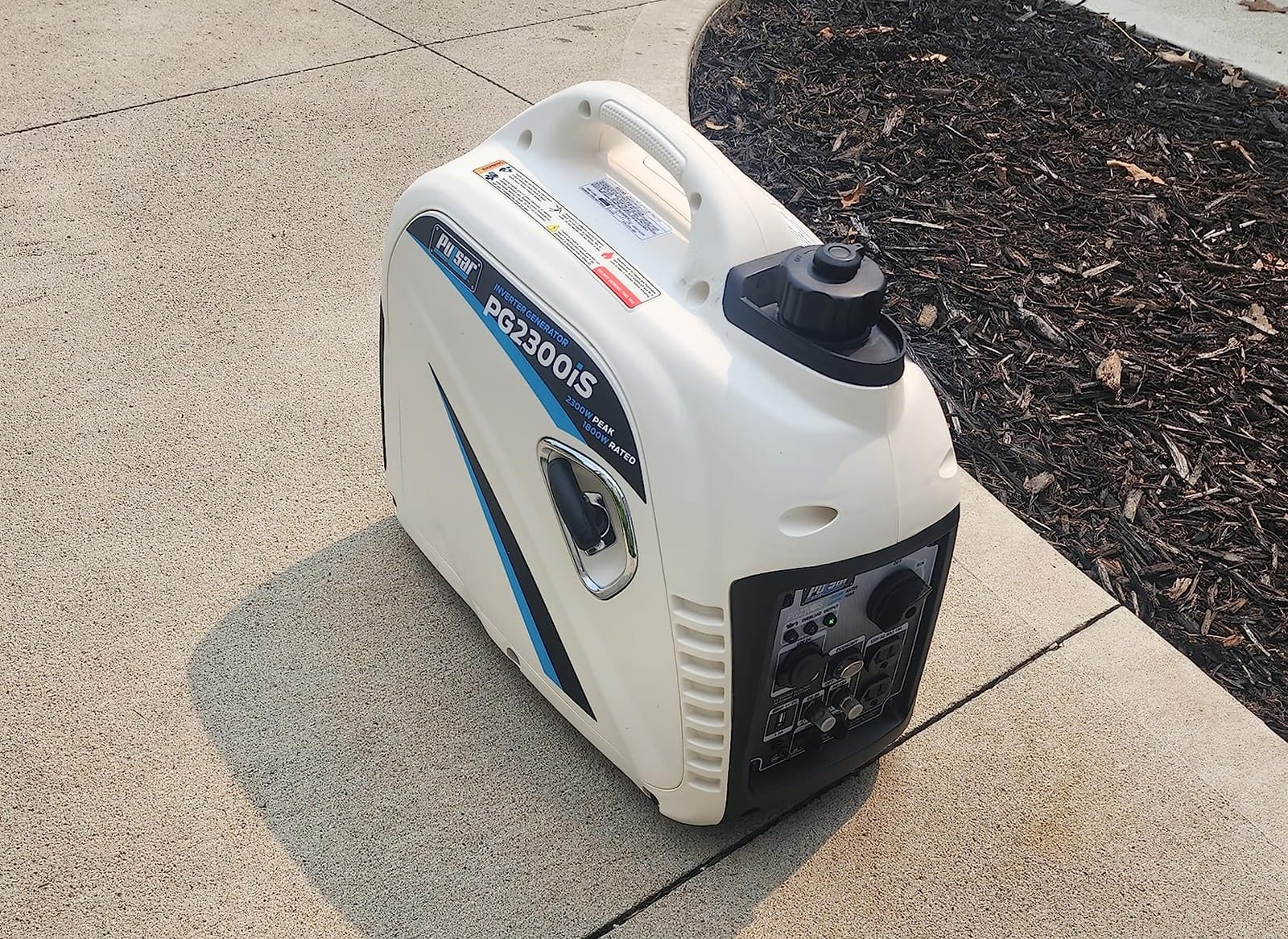
The PG2300iS is the tailgating entry in this roundup, and the reason is its footprint rather than its output. At 19.7 by 11.22 by 17.91 inches it is the most compact frame here, which matters when it is sharing a boot with coolers, chairs and a folding table.
Power is 2300 peak watts and 1800 running watts from an 80 cc four-stroke engine, with a 1.18 gallon tank giving about 6 hours. Output stays on a stable sine wave, which is the right supply for laptops, speakers and small kitchen appliances, and the 3-outlet panel includes two 120V 13A receptacles, a 12V 8A cigarette outlet and a 5V USB port.
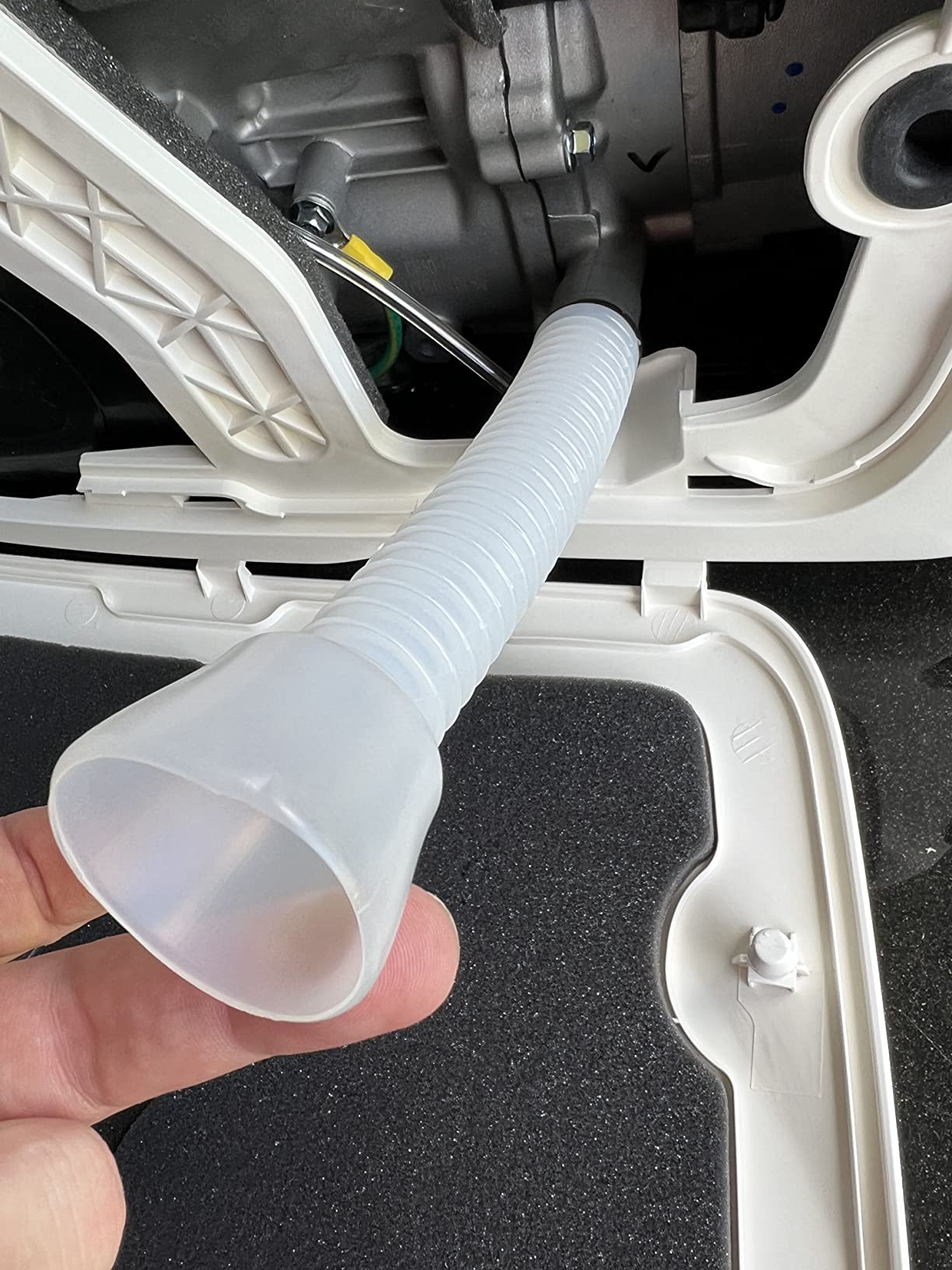
Recoil start, low oil shut-off and automatic voltage regulation cover the basics, and the parallel port lets you pair it with a matching unit when one machine is not enough. The 4.5 average across 466 ratings reflects steady satisfaction rather than excitement, which is about what you want from a tailgate machine.
Two limitations are worth stating plainly. At 48 pounds it is heavy for a 2300 watt unit, and 1800 running watts leaves no headroom for a compressor or an air conditioner. The one-year warranty is also the shortest in this roundup by some distance.
Choose the PG2300iS for size and quick setup
It suits a tailgate, a picnic site or a car camping trip where space is tight and the loads are a speaker, a cooler, a phone charger and a kettle. The USB and 12V DC outlets mean fewer adaptor blocks in the boot, and the compact frame is the easiest here to wedge between other gear.
Pick a larger machine when you want a one-gallon runtime
Six hours of run time is modest, and the one-year warranty is a real gap compared with three years on the Honda and Champion. If you plan multi-day trips with heavier draws, the 2800 watt Genkins or the 4000 watt Pulsar gives you more capacity and a stronger warranty for the extra weight.
How We Evaluated These Generators?
Every unit in this roundup is a portable inverter generator, so the comparison is between machines built to the same architecture rather than between fundamentally different technologies. We ranked them on published noise rating, rated and peak wattage, measured weight, fuel capacity and stated run time, then read the owner review sets to see where the real complaints cluster.
One methodological point matters more than any other in this category, and no competitor in the results we studied bothers to make it. Manufacturer decibel figures are measured at 23 to 25 feet, not at your tent. Sound falls off with distance, but it also bounces off hard surfaces like a picnic table, a vehicle or a concrete pad, so a machine parked ten feet from your awning will not behave like the number on the box.
We also flagged where a spec is not published. Four of the ten machines here do not have a dB figure in the listings we reviewed, and rather than invent one we note the gap. Where a review set is thin, we say so, and every rating and review count quoted in this article is copied directly from the product listing.
How to Choose a Quiet Generator for Camping?
Six decisions actually matter here: how much power you need, whether the machine is a true inverter, how quiet it is in the band you need, what fuel it burns, how much you can carry, and what safety hardware is fitted.
1. Size the wattage from your load list, not your trailer size. A phone charger draws almost nothing, a laptop sits around 65 watts, a coffee maker can pull 1000 watts, and a 13,500 BTU rooftop air conditioner runs around 1600 watts once it is steady but draws a much larger surge at startup. Add your running loads, then make sure the rated running watts cover the lot.
2. Only consider inverter technology for camping. An inverter converts raw AC to DC and back to a clean sine wave while varying engine speed to match demand. Lower RPM means less mechanical noise, better fuel economy, and output safe for phones, laptops, TVs and medical devices. A conventional generator runs its engine fast and loud no matter what you plug in.
3. Read noise ratings as a 50 to 60 dB target. Under 60 dBA keeps you inside the very quiet band, which is where most campground quiet-hour rules become comfortable. Above 64 dBA you are into dishwasher territory, and neighbours will hear it after dark even if the site technically allows it.
4. Decide between gasoline, propane and battery. All ten machines here are gasoline, which is the most common refuelling network and usually the cheapest per hour. Propane burns cleaner and stores indefinitely without varnish, and most dual fuel models are a little quieter on propane, though you carry a second tank. Battery power stations make no noise at all and need no fuel, but their capacity is measured in watt-hours rather than watts, so they replace a generator rather than supplementing one.
5. Budget for the weight, because the walk is the test. The range here runs from 28 pounds to 99.2 pounds, and the heaviest unit on the list is more than three times the lightest. If your site is a walk-in pitch, a 50 pound difference changes the trip more than any feature on the spec sheet.
6. Check the safety hardware before anything else. A carbon monoxide sensor with automatic shutdown, a fuel shutoff switch, low-oil protection and overload protection are the four things that should be non-negotiable. The Honda CO-MINDER, the AIVOLT CO Alert and the Champion CO Shield are the three fitted in this roundup, and all ten at least list low-oil or overload protection.
Two further filters are worth applying. Eco mode matters for noise, because an inverter that throttles to a low RPM at quarter load is dramatically quieter than the same engine at full load. And fuel shutoff extends carburetor life, which is the difference between a machine that starts after three months in storage and one that needs a carburetor kit.
Sizing a Generator for an RV Rooftop Air Conditioner
This is the single most common sizing mistake we found in the forum discussions behind this roundup, and it comes from buying a 2000 watt unit for a job that needs 3000 watts or more. Campers buy a small inverter, it works fine for a few weeks, then the first hot afternoon of summer arrives and the compressor bogs the unit down or trips its breaker.
The rule of thumb most owners land on is simple. Add every running load in the RV, then leave at least double that figure in surge capacity. A 13,500 BTU rooftop unit is commonly quoted at roughly 1600 watts running with a surge several times that on startup, which is why the units designed for it in this roundup start at 3000 running watts.
Phone chargers, lights and a laptop: roughly 100 watts total. Any 1600 watt unit handles it.
Fridge, phone charger, laptop and a small fan: roughly 400 watts. A 1800 to 2000 watt rated output is comfortable.
Coffee maker, microwave and a 12V fridge: 1200 to 1500 watts. You want 2500 peak watts and above.
13,500 BTU rooftop air conditioner plus normal habitation loads: 2000 to 2500 watts running. You want 3000 rated watts or more, which means a 4000 watt machine.
That arithmetic is the reason the WEN 56380i, the Champion 4000 watt and the Pulsar PGD40ISCO exist in this roundup. The lighter 2000 watt units are not worse products, they are simply answering a different question, and the forum consensus is that people learn this the hard way at a campsite in July.
Generator Safety and Campground Noise Rules
Every unit in this roundup produces combustion exhaust, and carbon monoxide is the hazard that matters. The safety guidance that comes up repeatedly in camping forums is placement: run the generator at least 20 feet from your tent, your vehicle and your awning, with the exhaust pointing away from openings, and never inside a tent, a van interior or a pop-up canopy. Airflow matters as much as distance, which is why a sheltered pocket behind a car is a bad spot even at 30 feet.
Carbon monoxide sensors change that calculation. The Honda CO-MINDER, the AIVOLT CO Alert and the Champion CO Shield all shut the engine down when levels climb, and the AIVOLT also pairs that with low oil and overload shutdown. Where a campground or a national park site is in a wildfire-restricted area, check local fire bans before you light anything at all.
On the noise side, most campgrounds set a limit around 60 dB during quiet hours, typically from around 10 pm to 7 am, and a few measure it with a meter rather than by complaint. The practical advice shared by experienced campers is placement rather than volume: put the machine as far from the tent as the cable or extension lead allows, on soil or grass rather than a concrete pad or a metal truck bed, and point the exhaust away from hard surfaces that bounce sound back at you.
Owners also warn that neighbours rarely complain about the first twenty minutes. One camper on the Jayco Owners forum put it plainly: run even a super quiet generator all night and the people next to you will ask you to turn it off. If you are sharing a site with people, a battery power station for overnight charging and a generator for the short high-draw hours is the compromise most experienced campers settle on.
Frequently Asked Questions
Which generator is the most silent?
Among combustion engines, the quietest units are small inverter generators rated around 50 to 60 dBA at 23 feet. The ERAYAK 2400W at 52.5 dB and the PowerSmart 2500W at 52 dBA post the lowest published figures in this roundup, with the Honda EU2200i at 48 to 57 dB(A) close behind. The only genuinely silent option is a battery power station, which makes no engine noise at all.
How many dB is considered a quiet generator?
Anything under 60 dB at 23 feet is considered quiet for camping. The usual bands are 50 to 60 dB for very quiet, comparable to a normal conversation, 60 to 70 dB for moderate, comparable to a dishwasher, and 70 dB or more for loud. Most campground quiet-hour limits sit around 60 dB, so staying below that figure keeps you on the safe side of site rules.
What type of generator is best for camping?
A portable inverter generator is the best type for camping. It varies engine speed to match the load you draw, which makes it much quieter at idle than a conventional open-frame unit, uses less fuel, and produces clean sine-wave power that is safe for laptops, phones, TVs and medical devices. All ten units reviewed here use inverter technology.
Are Honda inverter generators worth the money?
The Honda EU2200i earns its premium when you want reliable starting, low published noise and clean power for sensitive electronics, and it carries a 3-year residential warranty. For a camper who only charges a phone and runs lights, a lighter and cheaper inverter does the same job. The main practical limits are two outlets, 1800 running watts, and the fact that Honda does not offer it for sale in California.
How loud is the Honda EU2200i inverter generator?
Honda rates the EU2200i at 48 to 57 dB(A), which is quieter than a normal conversation, and the figure varies with load. The number is measured at roughly 23 feet, so at a typical ten-foot campsite distance the sound will be noticeably higher than the published rating, especially next to a hard surface such as a vehicle or a concrete pad.
What is an acceptable noise level for a generator when camping?
Around 60 dB is the usual acceptable limit at a campground, and many sites apply it during quiet hours from late evening until early morning. Staying under that figure means choosing an inverter generator rated between 50 and 60 dBA at 23 feet. Running louder than that for hours at a shared site is the most common reason campers are asked to shut down, regardless of the site rules.
Which Quiet Generator Should You Buy in 2026?
For most campers, the Honda EU2200i is still the best quiet generator for camping. It has the largest review base in the category at 3228 ratings, the lowest published noise band at 48 to 57 dB(A), clean inverter output and a carbon monoxide sensor that shuts it down. Run an RV air conditioner and the choice moves to the WEN 56380i at 3400 rated watts or the Champion 4000 watt if you would rather carry less weight.
Two things are worth carrying away from this roundup. Judge noise at 23 feet, not at your tent, because that distance is where every published figure was taken. And buy against your load list rather than against your RV size, because a 2000 watt inverter that looks generous on paper will struggle with a rooftop air conditioner in July.
If your real load is a phone, a lantern and a cooler, the AIVOLT 1600W at 28 pounds will get you a whole weekend on a partial tank, and nobody at the next pitch will hear it. That is the quietest generator in the truest sense.