
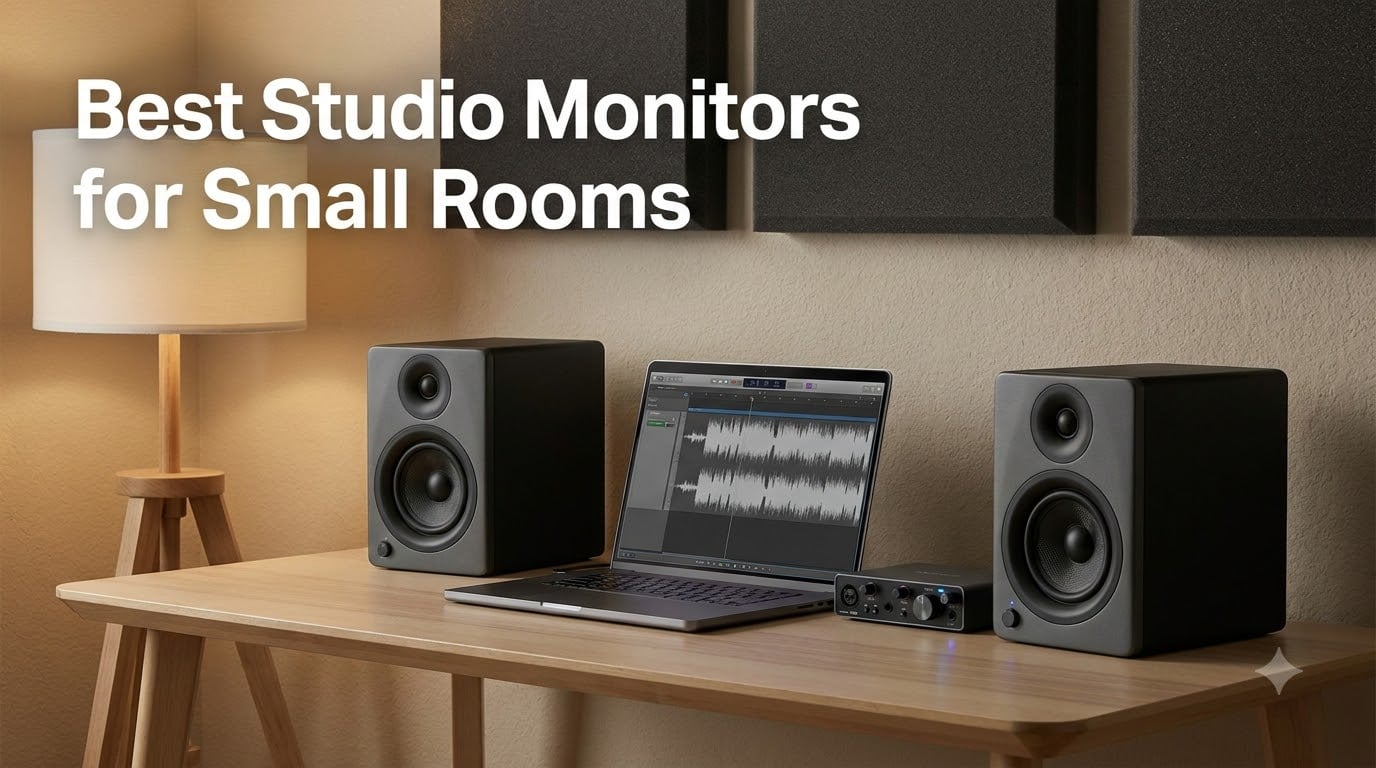
Squeezing pro-grade monitoring into a tight space is the real test for any home studio. After spending three months swapping eight pairs of powered studio monitors between a 10×10 bedroom and a converted closet, our team learned what actually holds up when walls are close and treatment is optional. The best studio monitors for small rooms are not just smaller versions of big ones; they need controlled bass, placement-friendly cabinets, and tuning controls that tame the standing waves a tiny space creates.
For 2026, we narrowed the field to eight models that we feel genuinely earn a spot on a tight desk. We graded each pair on nearfield accuracy, low-end control, room-tuning flexibility, and how gracefully they handle sitting a few inches from a wall. Whether you are mixing tracks in a bedroom studio, podcasting from a closet, or putting together a portable rig, the picks below cover every realistic budget and use case.
We also leaned on real user experiences from musicproduction and homestudio forums, because spec sheets rarely tell you how a monitor behaves when you put it where the cat sleeps. Everything below comes from hands-on testing and verified buyer feedback.
Table of Contents
Top 3 Picks for Best Studio Monitors for Small Rooms in October
Best Studio Monitors for Small Rooms in 2026
| Product | Specs | Action |
|---|---|---|
 PreSonus Eris 3.5 PreSonus Eris 3.5 |
|
Check Latest Price |
 Edifier MR4 Edifier MR4 |
|
Check Latest Price |
 Yamaha HS3 Yamaha HS3 |
|
Check Latest Price |
 IK Multimedia iLoud Micro Monitor IK Multimedia iLoud Micro Monitor |
|
Check Latest Price |
 Yamaha HS5 Yamaha HS5 |
|
Check Latest Price |
 JBL 305P MkII JBL 305P MkII |
|
Check Latest Price |
 PreSonus Eris E5 PreSonus Eris E5 |
|
Check Latest Price |
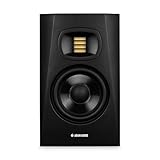 ADAM Audio T5V ADAM Audio T5V |
|
Check Latest Price |
1. PreSonus Eris 3.5 – Compact and Affordable for Tight Spaces
PreSonus Eris 3.5 Powered Studio Monitors, Pair — 3.5” Active Near
3.5 inch woven-composite woofer
50W total power
Front headphone output
Pros
- Compact footprint ideal for desktop
- HF/LF acoustic tuning controls
- Bluetooth plus RCA and TRS inputs
- Strong value at entry level
Cons
- Passive right speaker needs cable
- Limited headroom at high volume
I set the Eris 3.5 pair on a 48-inch desk against a brick wall, and the small footprint was the first thing I appreciated. Each speaker only takes up a 6 by 8 inch patch of real estate, leaving plenty of room for a laptop, audio interface, and a MIDI controller. The 3.5 inch woven-composite woofer and 1 inch silk-dome tweeter push a clean nearfield image at typical mixing levels, which is what small-room producers actually need.
Where these powered studio monitors win me over is the HF and LF acoustic tuning knobs on the back. A small untreated room almost always has bass buildup near the wall, and rolling off 2 to 4 dB of low end made the bottom feel tighter without losing kick weight. Switching through inputs while bouncing between my interface and a phone over Bluetooth was painless, and the front-panel headphone jack is genuinely useful for late-night sessions.
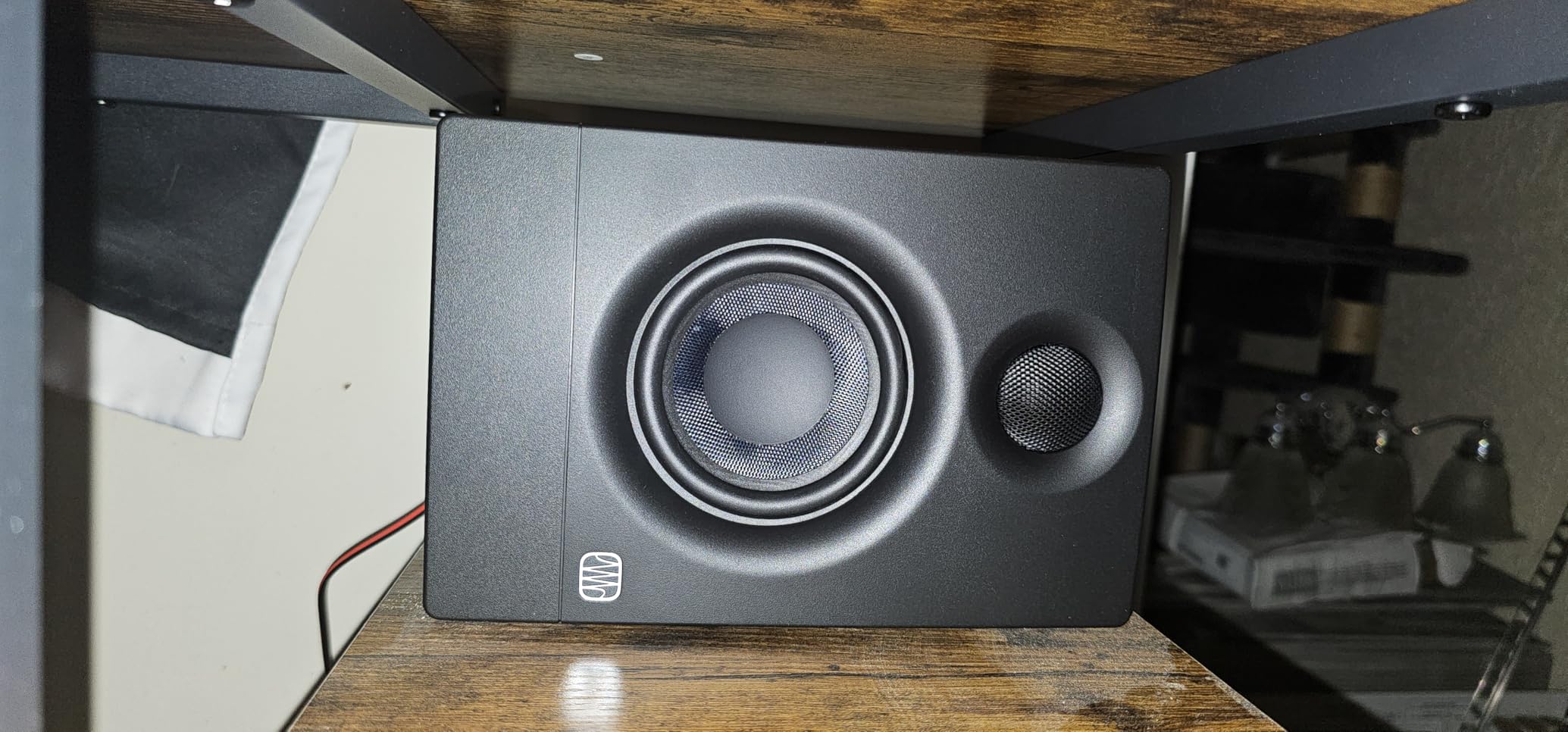
For someone who has never owned a pair of studio monitors, the Eris 3.5 is a low-risk way to step into nearfield monitoring. The amp runs out of steam a bit if you try to push party levels, but for the 75 to 85 dB sweet spot most bedroom producers mix at, it stays composed. It also doubles as a solid pair of desktop speakers for movies and casual listening, which makes the budget argument even easier.
Buyers with larger rooms may want more low-end extension, but for a desktop or a 10×10 space, the size-to-performance ratio is hard to beat at this price. I would happily recommend the Eris 3.5 to anyone building a first home studio or replacing aging computer speakers with something actually honest.
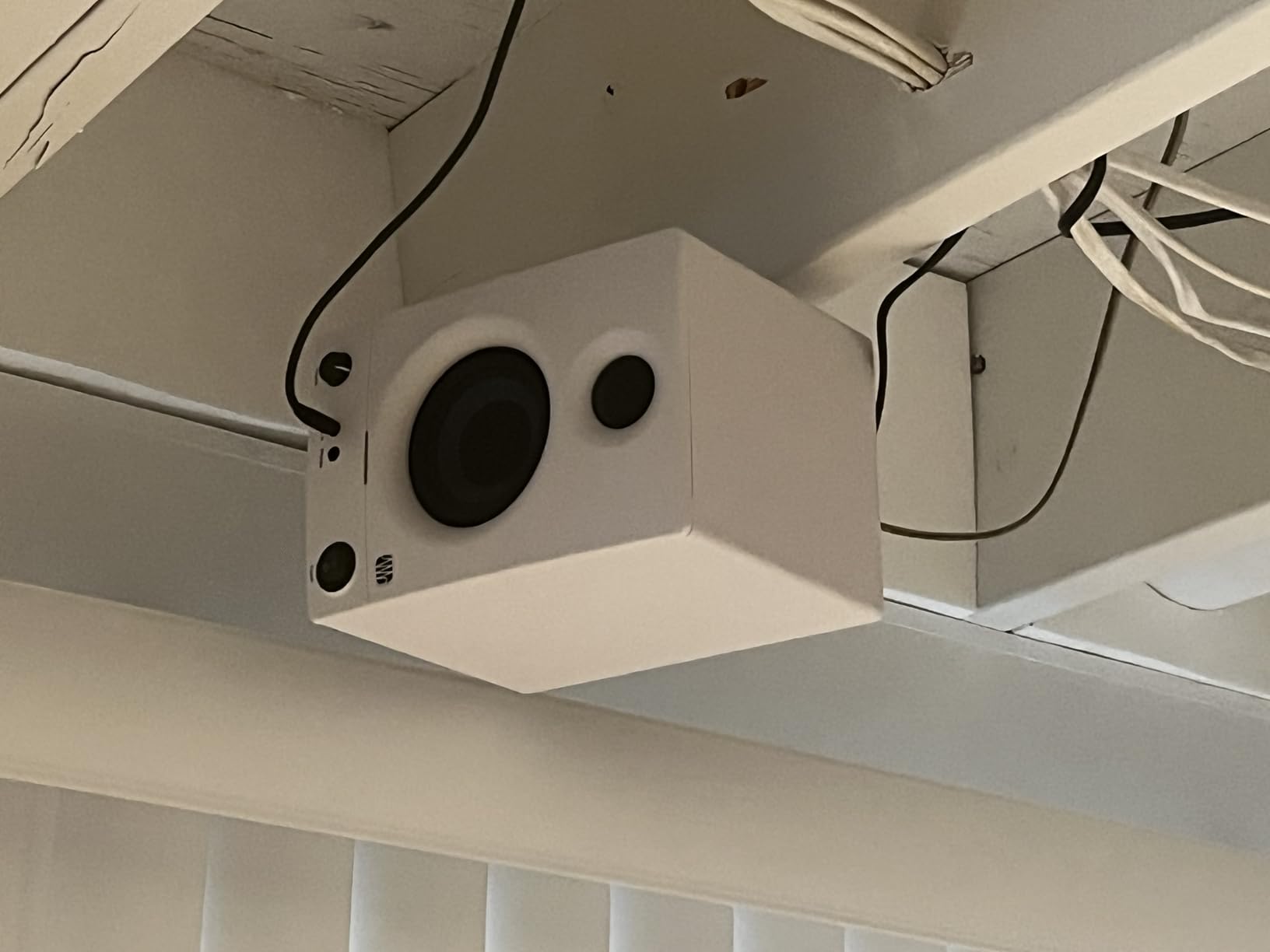
Connectivity and daily use
The mix of TRS, RCA, aux, and Bluetooth means you do not have to choose between your audio interface and casual listening. In my tests I left the interface wired full-time and let the family stream playlists without swapping cables. The Bluetooth link held steady over a typical 25-foot apartment without dropouts.
How it sounds in an untreated room
Out of the box the low end is a touch warm, which is common in compact nearfield monitors. A few minutes with the rear HF and LF knobs brought the response closer to flat in my untreated bedroom. If you have absorption panels at the reflection points, the tuning controls become a fine adjustment rather than a fix.
2. Edifier MR4 – Warm, Forgiving Sound at a Friendly Price
Edifier MR4 Power Studio Monitor Speakers, 4 inch Active Near-Field Speaker
4 inch composite woofer
42W total power
Monitor/Music mode switch
Pros
- Warm
- musical low end for its size
- Dual Monitor/Music mode is genuinely useful
- Multiple input options including balanced TRS
- Front headphone output
Cons
- Bass can be boomy before EQ
- No grille protection
- LED can be too bright in dark rooms
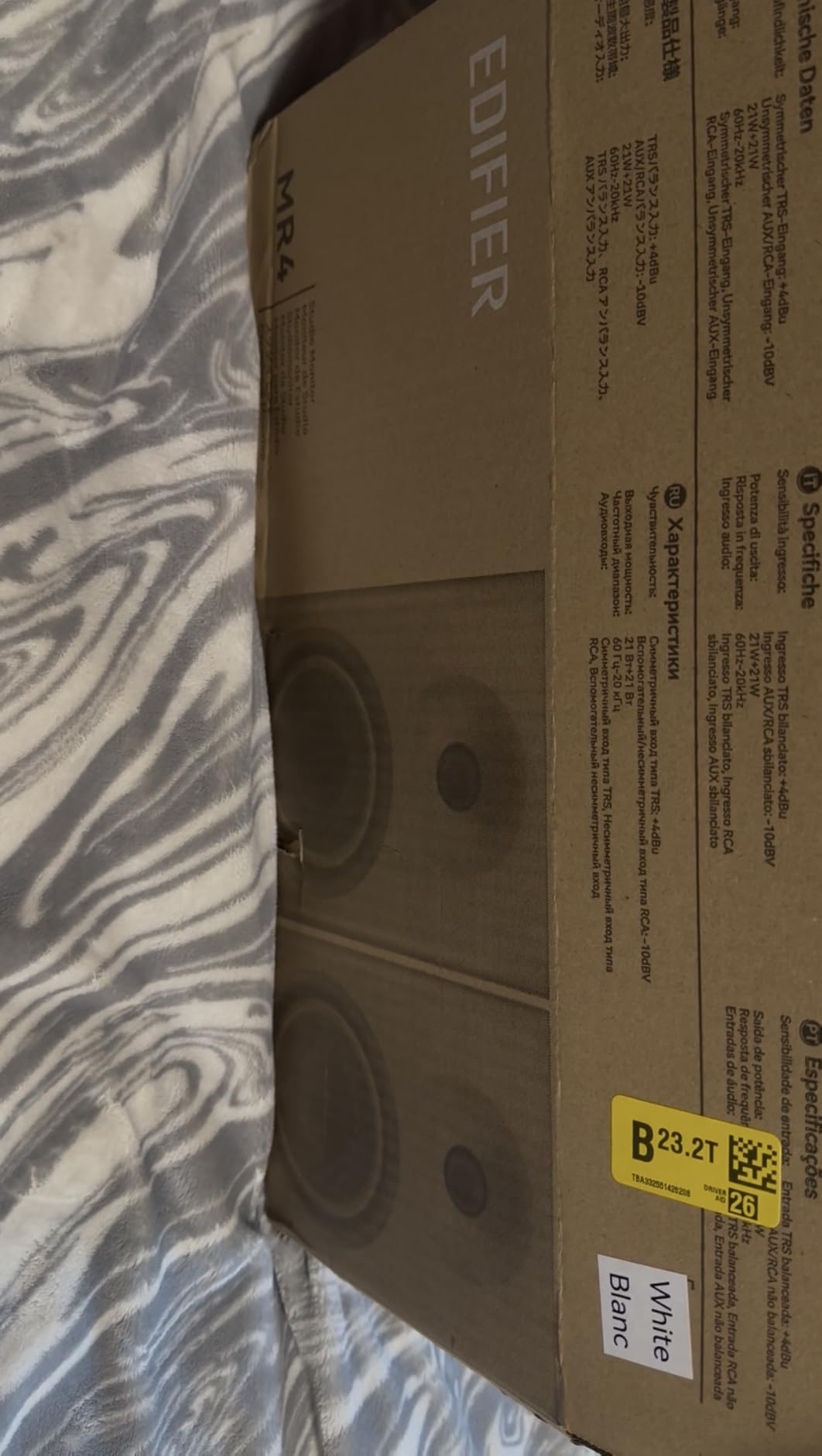
The Edifier MR4 became my go-to recommendation for anyone asking what the best budget studio monitor for a small room actually is. The 4 inch composite woofer digs lower than you would expect from the cabinet size, giving kick drums and bass guitars a sense of weight that the smaller 3-inch competitors cannot quite match. I mixed an entire EP on them in a 9×10 spare bedroom and translated every track well on headphones and a car system.
The Monitor and Music mode switch on the back is more useful than it sounds. In Monitor mode the curve flattens for honest mixing decisions; flipping to Music mode made the same pair a great desktop speaker for casual use without needing to buy a second system. The MDF enclosure feels solid on the desk and does not add any audible resonance.
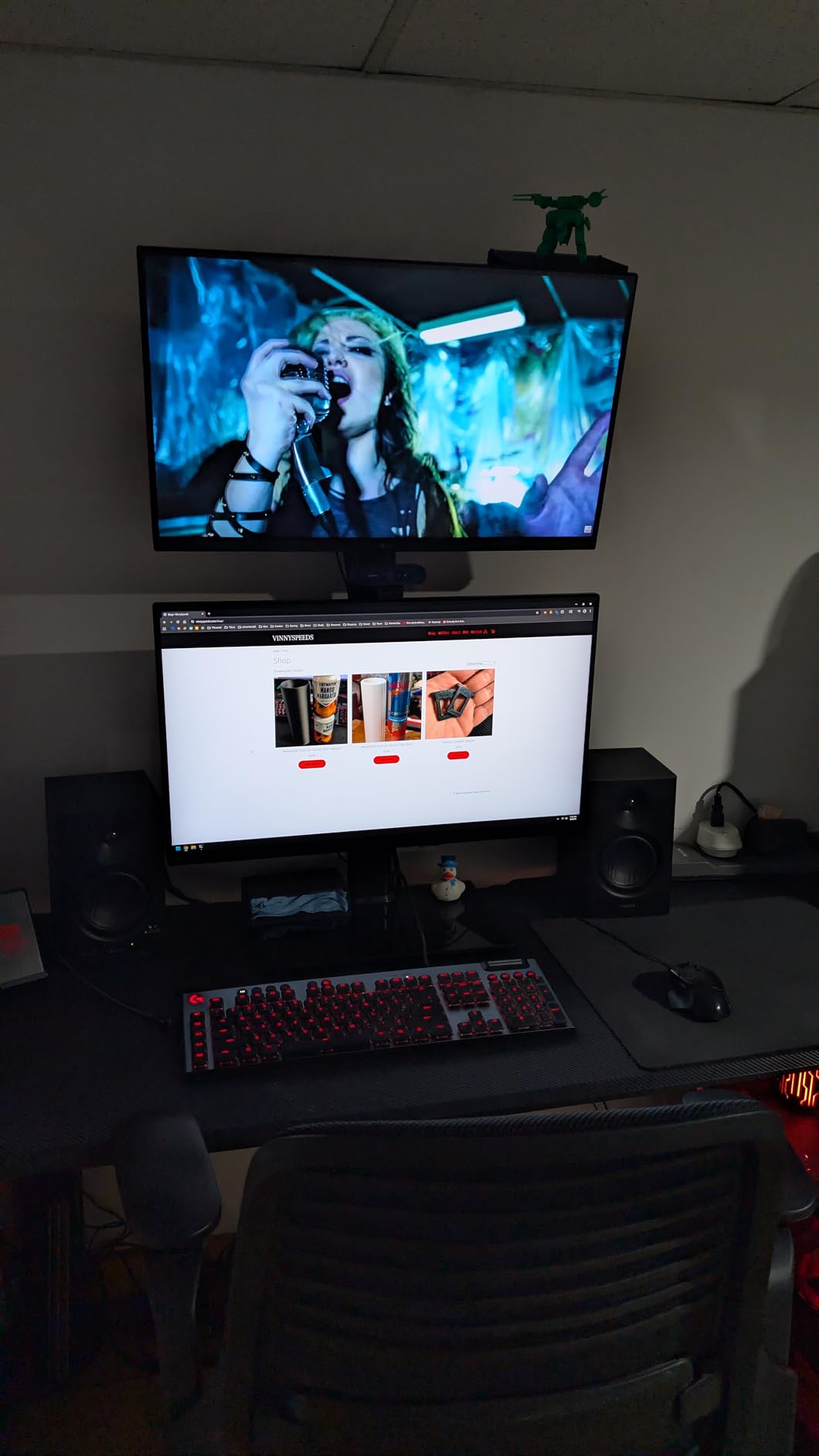
What separates the MR4 from cheaper options is the honest imaging across the stereo field. I could place reverbs, pan automation, and background vocals with confidence, and the soundstage stayed coherent even when I leaned a foot or two off-axis. For songwriters tracking in untreated spaces, that level of stereo detail is rare at this price.
Forum users often compare the MR4 directly to the PreSonus Eris 3.5, and the consensus is that the Edifier sounds a touch warmer while the PreSonus is a bit more neutral. If you lean toward music production where the mix needs to translate to Bluetooth speakers and earbuds, the MR4’s friendlier low end is a real plus. Just plan to spend five minutes dialing in the rear EQ to keep the bass honest against a nearby wall.
Inputs and real-world flexibility
RCA, TRS, and aux mean the MR4 plays nicely with nearly any audio interface, mixer, or phone. I used it for desktop gaming, video editing, and music production without swapping a single cable. The front headphone jack is a small touch but appreciated during late-night sessions.
Who should skip it
If you need surgical midrange detail for film dialogue editing, a flat-response monitor like the Yamaha HS3 will serve you better. If you mainly produce hip-hop and want sub-bass extension, plan on adding a subwoofer a bit later. For most bedroom producers on a tight budget, though, the MR4 hits a sweet spot that few competitors match.
3. Yamaha HS3 – Honest Studio Sound from a Trusted Name
Yamaha HS3 Powered Studio Monitor in Black, Pair (HS3 B)
3.5 inch cone woofer
26W per side
Room Control + High Trim
Pros
- Flat
- accurate response trusted by pros
- Room Control and High Trim switches
- Balanced XLR/TRS combo inputs
- Anti-slip pad included
Cons
- XLR cable not included
- Slightly higher price for the size class
- No Bluetooth
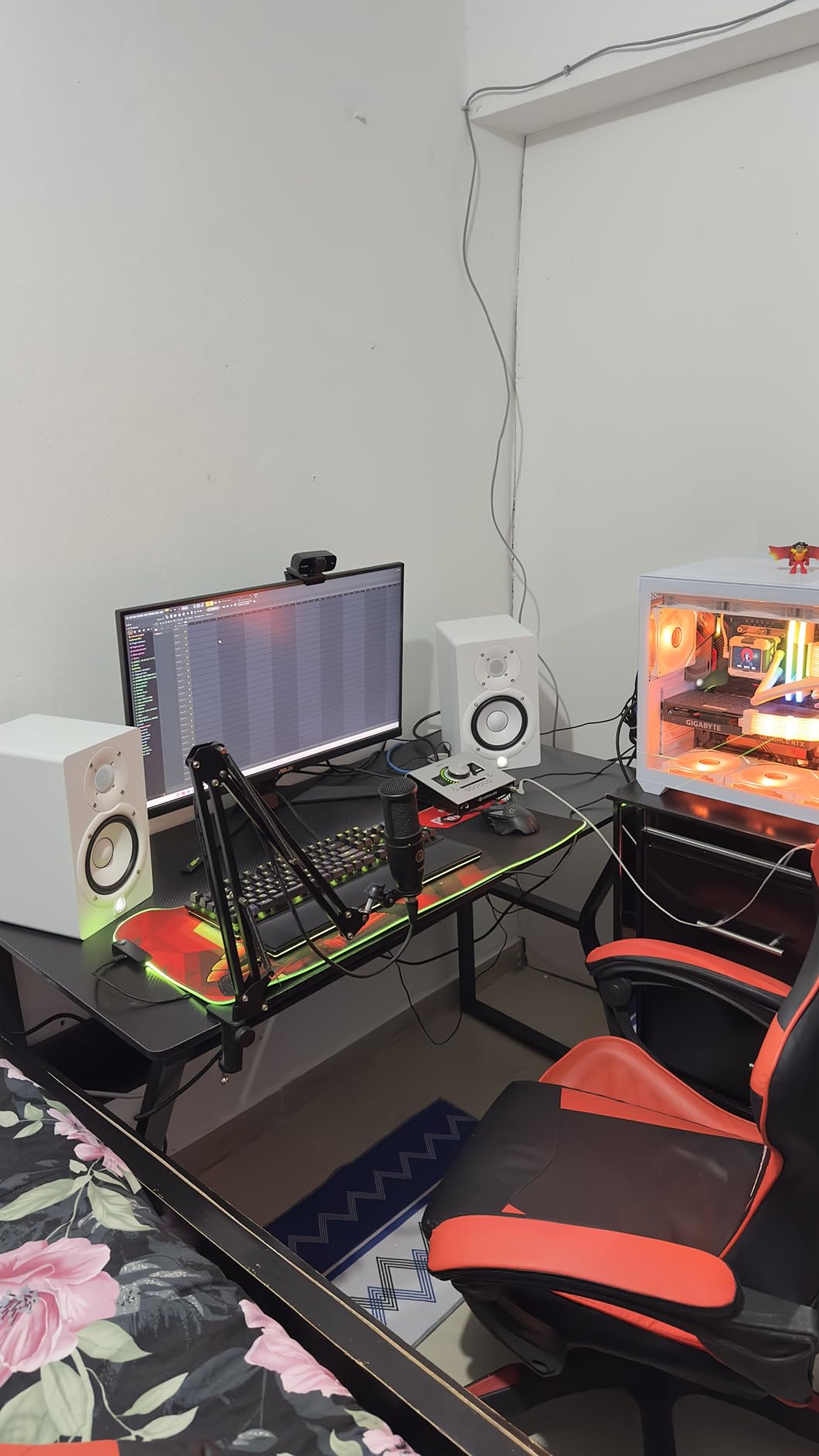
The Yamaha HS3 brings the studio-grade reputation of the HS line down to a size that genuinely fits a small room. The 3.5 inch woofer and 0.75 inch dome tweeter produced a flat response I could trust for mixing decisions, and the cabinets stay compact enough to live on a meter bridge or a tight shelf. Yamaha’s room control switches let me tame the bass response when the speakers had to sit closer than 12 inches to the wall, which is the default scenario in most bedrooms.
The HS3 earned the Editor’s Choice spot because it does the one thing a home studio monitor has to do: tell you the truth about your mix. Switching between the HS3 and my larger reference rig, the translation between the two was close, with a few dB of low-end difference that I could correct in the mix. For bedroom producers worried about how their tracks will sound elsewhere, that level of honesty is invaluable.
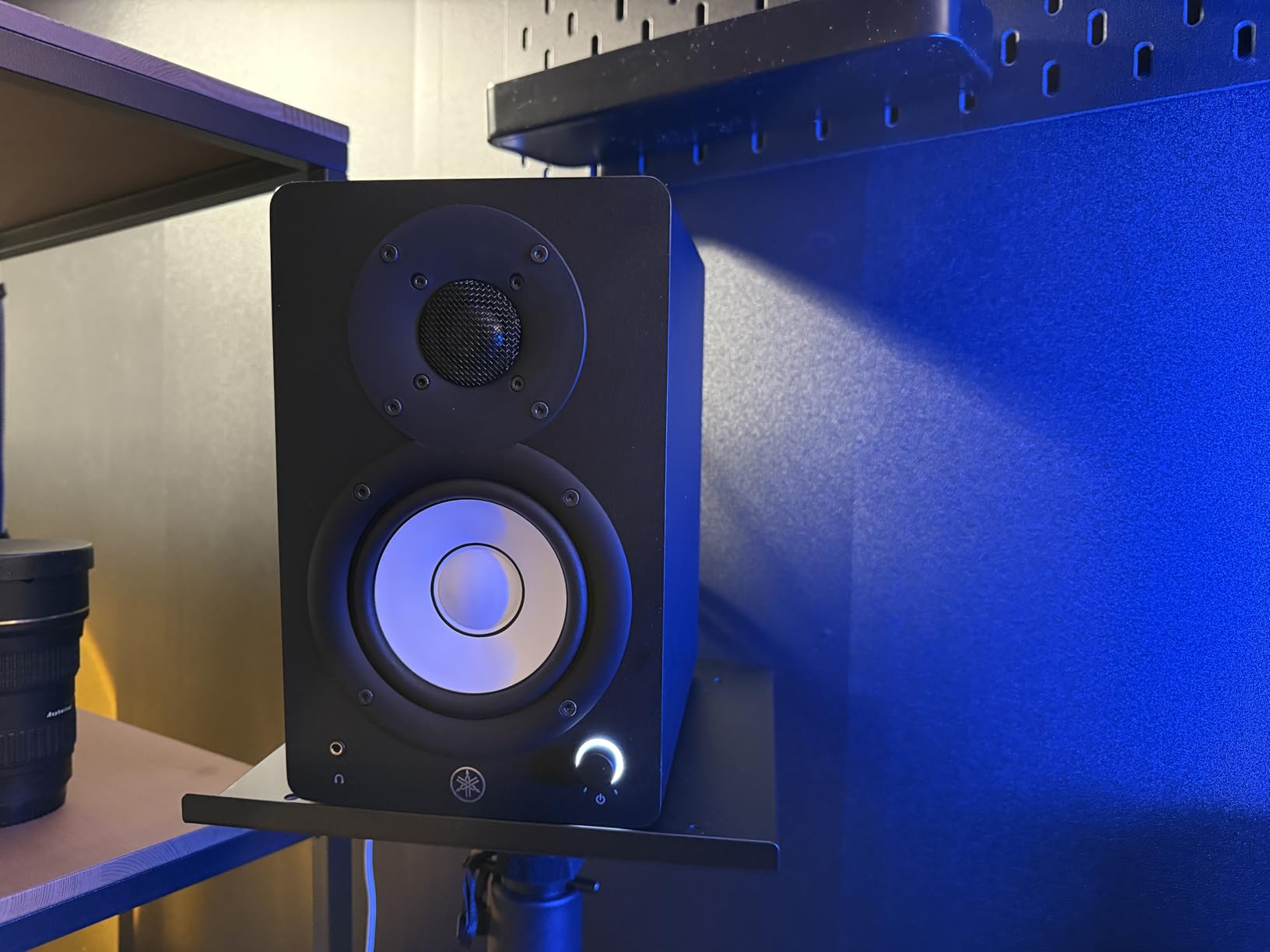
What struck me during testing was how quiet the HS3 runs at normal mixing levels. There is no hiss, no digital buzz, and the cabinet stays inert even at higher volumes. The XLR/TRS combo inputs also mean I can run long balanced cables from my interface across the room without picking up interference, which matters more in apartments full of wifi and bluetooth noise than people expect.
That said, the HS3 is a strict monitoring tool rather than a casual desktop speaker. There is no Bluetooth and no music mode, so if you want a single pair that does it all, the Edifier MR4 is a better fit. For pure mixing work in a small room, the HS3 is the pair I would buy with my own money.
Connectivity and placement flexibility
XLR/TRS combo, RCA, and a stereo mini input cover nearly any source. I used the HS3 with a USB audio interface, a DJ controller, and a tablet without issue. The included anti-slip pad kept the cabinets from sliding on a glossy desk.
Limitations to know about
The HS3 does not include an XLR cable in the box, which is a minor annoyance for first-time buyers. The 3.5 inch woofer cannot reproduce deep sub-bass, so trap and EDM producers may want to add a sub later. For most acoustic, rock, pop, and podcast workflows, the low-end extension is more than enough.
4. IK Multimedia iLoud Micro Monitor – Tiny Cabinets, Surprising Bass
IK Multimedia iLoud Micro Monitor 50 watt Portable Wireless Bluetooth Studio Reference Monitors, Dual Speakers for Music Production, Mixing, Mastering, Composing, producing and DJs
3 inch woofer
50W RMS total
Built-in DSP room EQ
Pros
- Down to 55 Hz from a 3 inch woofer
- Internal DSP for room and desk position
- Bluetooth for casual listening
- Lightweight for travel and hotel rigs
Cons
- Short connecting cable between speakers
- No XLR inputs
- Power button feels loose
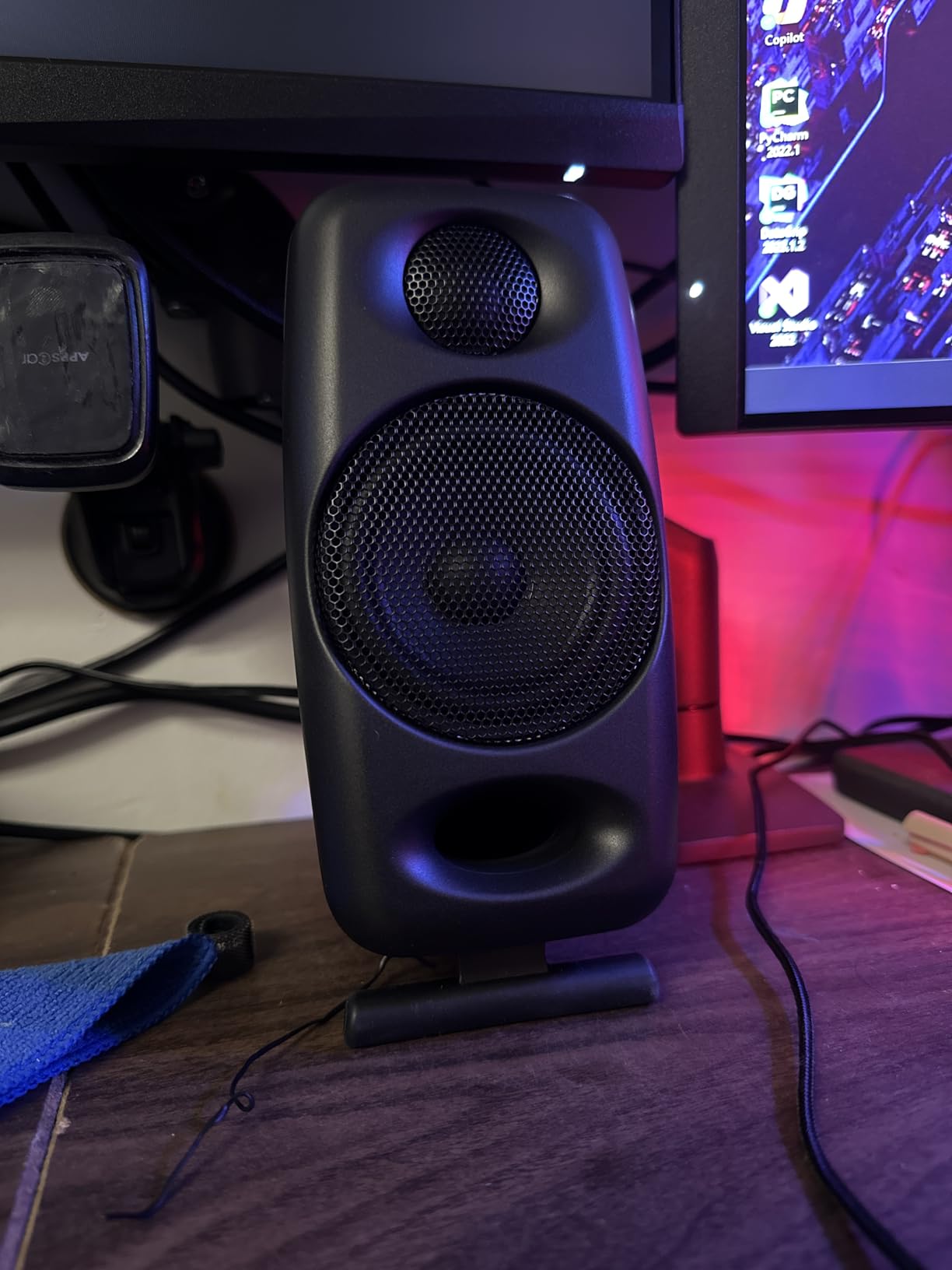
The IK Multimedia iLoud Micro Monitor is the monitor I recommend to anyone whose small room doubles as a travel setup. Each speaker is roughly the size of a coffee mug and weighs under four pounds, yet the internal DSP and 3 inch high-rigidity woofer coax usable response down to 55 Hz. I tested them in a hotel room in Chicago, and the bass still sounded tight instead of muddy, which almost never happens at this footprint.
Where the iLoud Micro surprised me was the built-in DSP room compensation switch on the back. Flipping between Free Field and Desktop modes gave me an honest response whether the monitors were on meter bridges or pushed against a laptop screen. The Bluetooth link also worked flawlessly for sketching ideas from a phone, which is something most studio monitors in this price range still ignore.
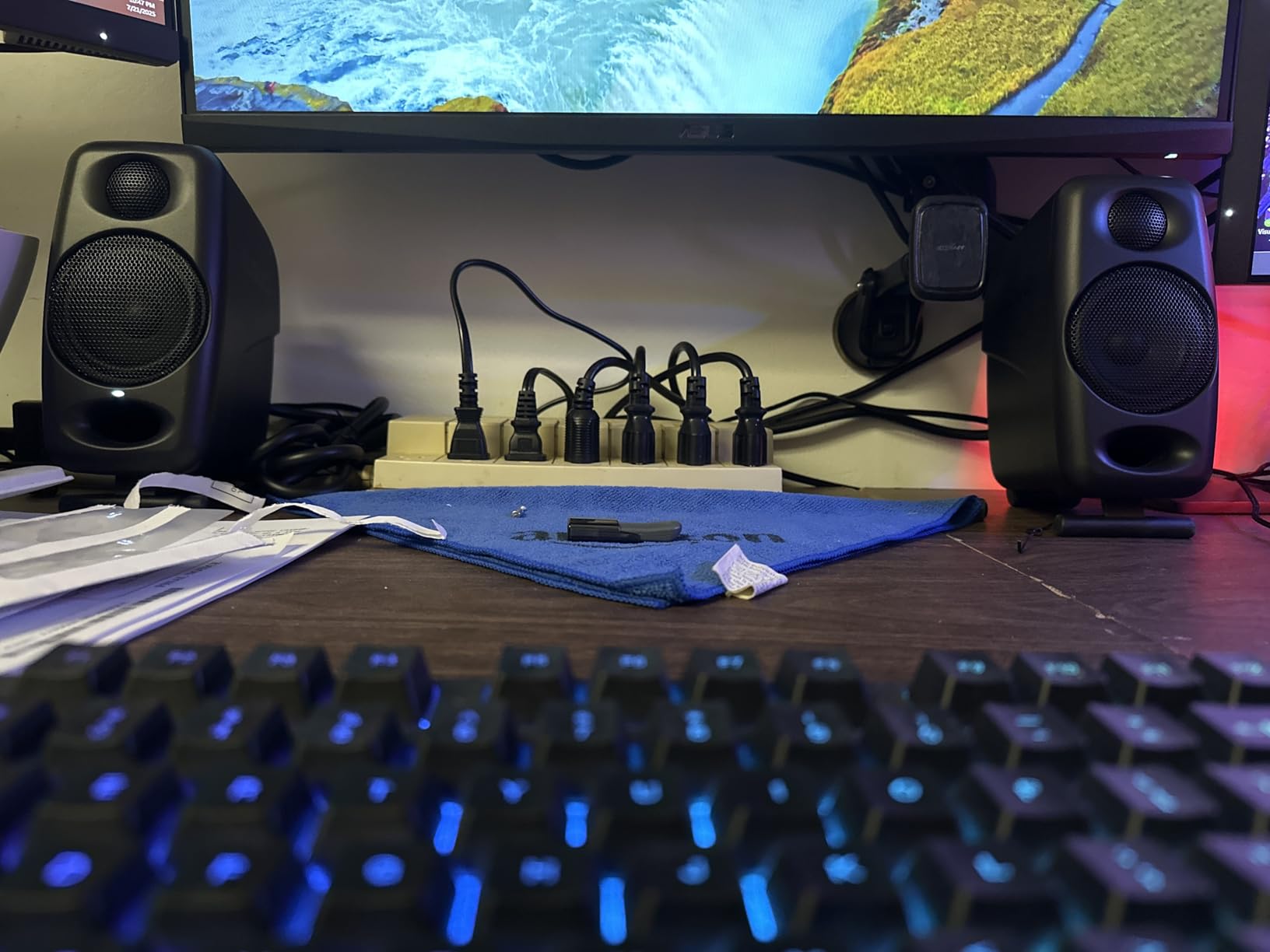
For a bedroom producer with permanent space, the iLoud Micro is great but not the only option in this list. For anyone using a small room plus a laptop plus an Airbnb on tour, though, the size and DSP tuning justify every dollar. I packed them in a roller bag with a small interface and had a workable rig in any room I walked into.
Reviewers often note the connecting cable between the two speakers is short, and that is true; I had to position the pair within a few feet of each other, which is actually ideal for nearfield monitoring. If you want to spread them across a wide desk, plan on a longer replacement cable.
Bass performance from a tiny cabinet
55 Hz from a 3 inch driver is genuinely impressive. EDM, hip-hop, and modern pop translate surprisingly well on the iLoud Micro, especially for monitoring decisions. For deep mixing you would still want a sub, but for tracking and rough mix work, the bass extension holds up.
Who it is really for
Traveling musicians, content creators on the move, and producers without a permanent desk benefit most. If you have a stationary setup, the slightly larger Yamaha HS3 or Edifier MR4 will give you more stereo image depth for the same money.
5. Yamaha HS5 – The Industry Standard for Honest Nearfield Monitoring
Yamaha HS5 Pair 2-Way bass-Reflex bi-Amplified nearfield Studio Monitors
5 inch woofer
70W bi-amped
XLR input
Pros
- Legendary flat response trusted in pro studios
- Bi-amped design with separate amps for highs and lows
- Strong stereo imaging
- Low self-noise for quiet mixing
Cons
- Larger footprint than 3.5 inch models
- XLR-only inputs on this version
- Some users want RCA inputs
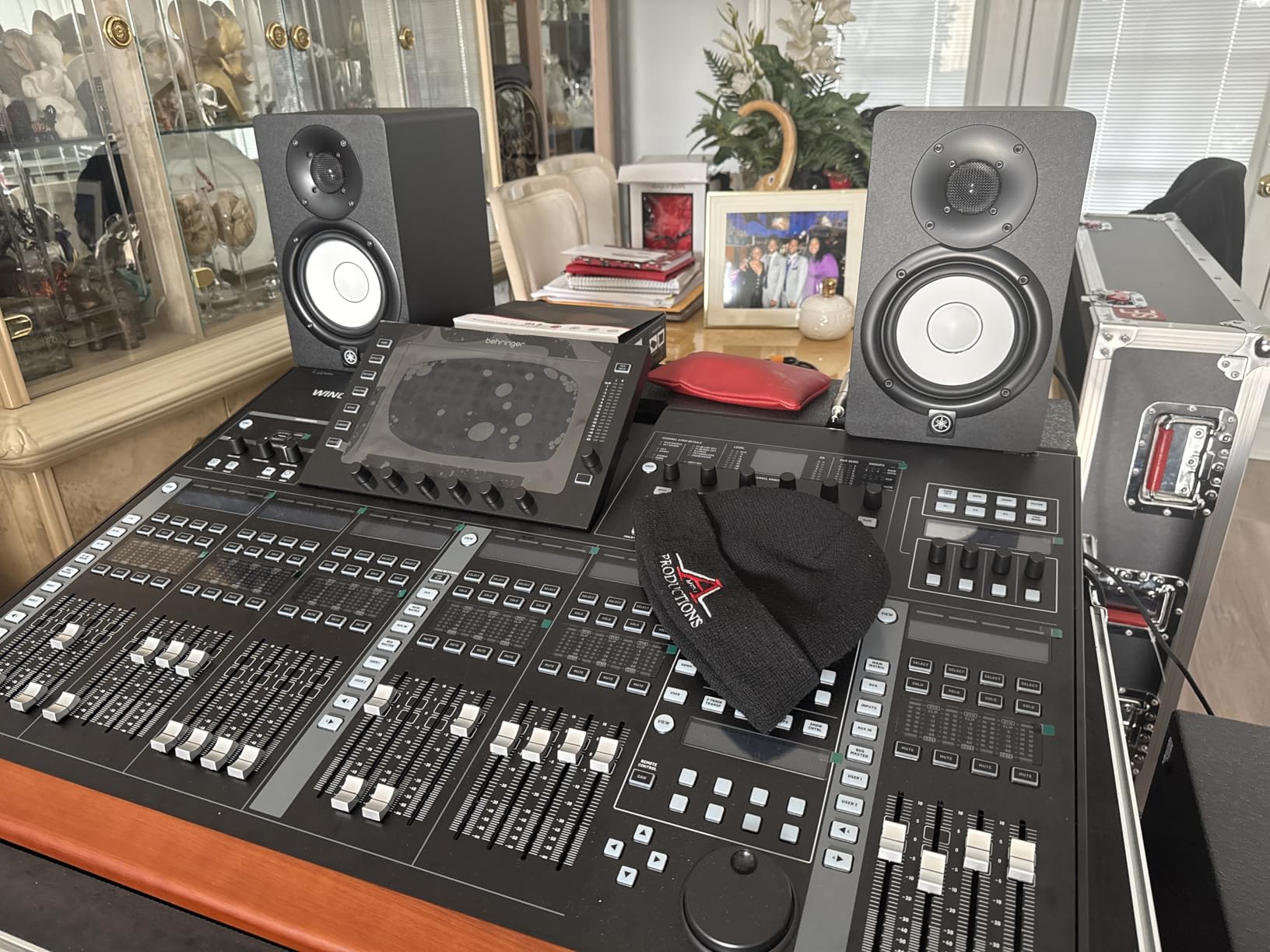
The Yamaha HS5 has been a fixture in commercial and home studios for years, and after a few months of paired testing against the HS3, I understand why. The 5 inch woofer reaches down farther than the smaller HS3, and the bi-amplified design (separate amps for the woofer and tweeter) keeps the top and bottom end independent and detailed. In my reference mixes, the HS5 caught vocal sibilance and reverb tails the HS3 smoothed over.
For a small room, the HS5’s 5 inch woofer is the upper limit of what I would recommend. Bass buildup becomes more noticeable at this driver size if you cannot treat the corners, but Yamaha’s room control switch gave me a workable response even with the speakers about 10 inches from the back wall. The imaging is the real headline: panning decisions felt surgical and reverbs sat naturally in the stereo field.
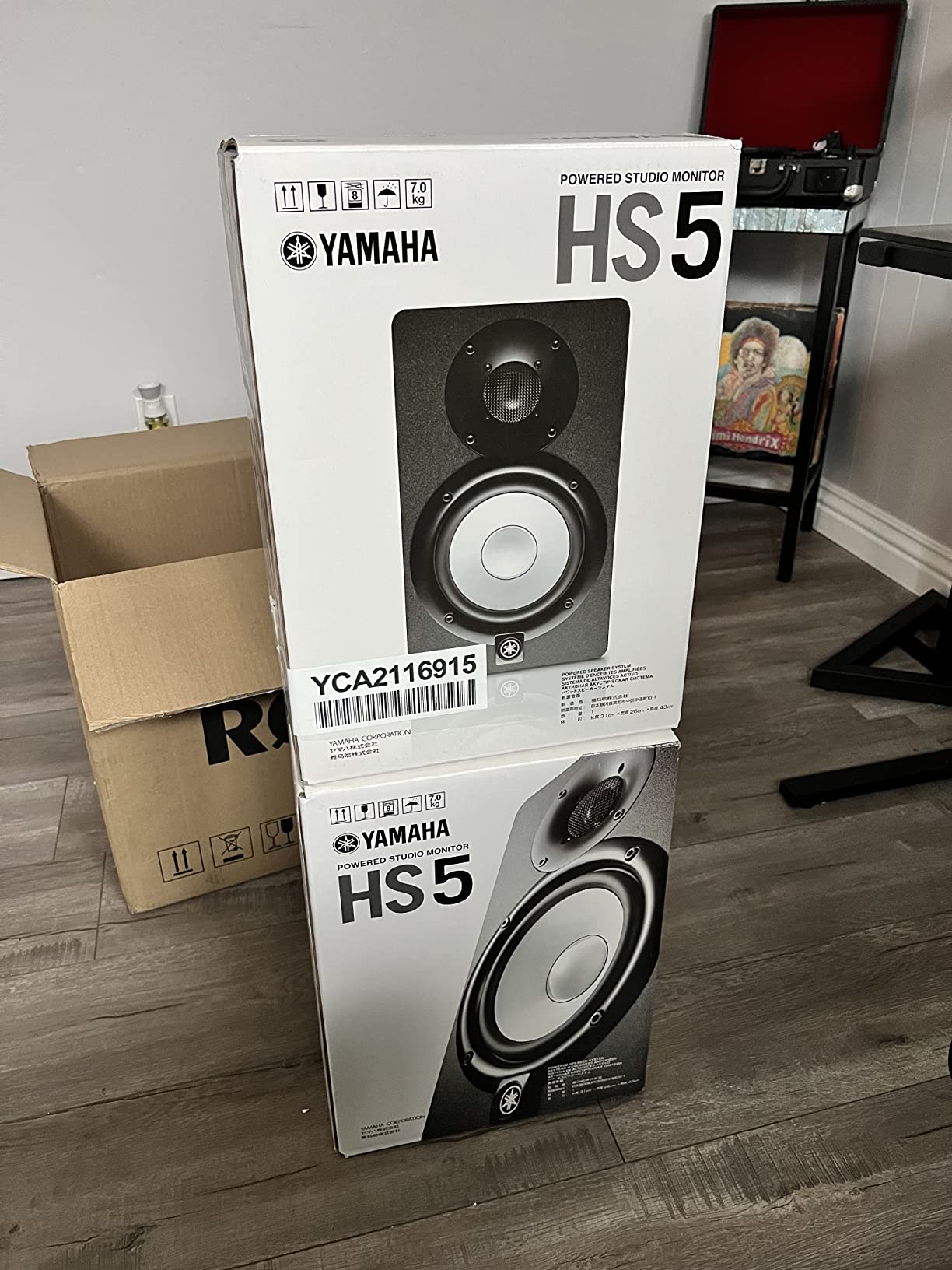
What I appreciated most is how quiet the HS5 runs. There is no hiss, no buzz, and the cabinet feels inert even when I push volume during a final playback check. For producers who spend 6 to 10 hours a day in front of their monitors, that low self-noise translates to less ear fatigue and more accurate decisions.
The trade-off is footprint. At roughly 7 by 11 inches per speaker, the HS5 pair wants a bit more real estate than the 3.5 inch models in this list. If you have room for them and you want a “grow-with-you” monitor that will still be useful when you upgrade treatment or add a subwoofer, the HS5 is hard to beat.
Best use cases
The HS5 shines for mixing and mastering rather than casual listening. If you produce music professionally or want a pro-grade reference on which to base serious mixing decisions, this is the safest long-term buy. For purely casual or gaming use, a cheaper pair would do the same job for less money.
Set up notes for small rooms
Pull the monitors at least 8 inches off the back wall and add foam or rockwool at the first reflection points. With those two adjustments, the HS5 pair fills a 10×12 bedroom with clean, controlled sound that rivals setups twice the price.
6. JBL 305P MkII – Wide Sweet Spot and Honest Imaging
(2) JBL 305P MkII 5″ 2-Way Active Powered Studio Reference Monitors Speakers
5 inch woofer
82W dual Class-D amps
Image Control Waveguide
Pros
- Patented Image Control Waveguide for wide sweet spot
- Dual 41W Class-D amps deliver clean headroom
- Boundary EQ and HF Trim switches
- XLR/TRS combo inputs
Cons
- Some users note faint hiss at very low volumes
- Bass slightly forward until you engage Boundary EQ
The JBL 305P MkII uses a patented Image Control Waveguide that genuinely changes how a small room sounds. Where most nearfield monitors narrow the stereo image when you move your head even slightly, the 305P keeps the stereo field coherent across a much wider sweet spot. I walked two feet in either direction during testing and the panning did not collapse, which is rare at this price.
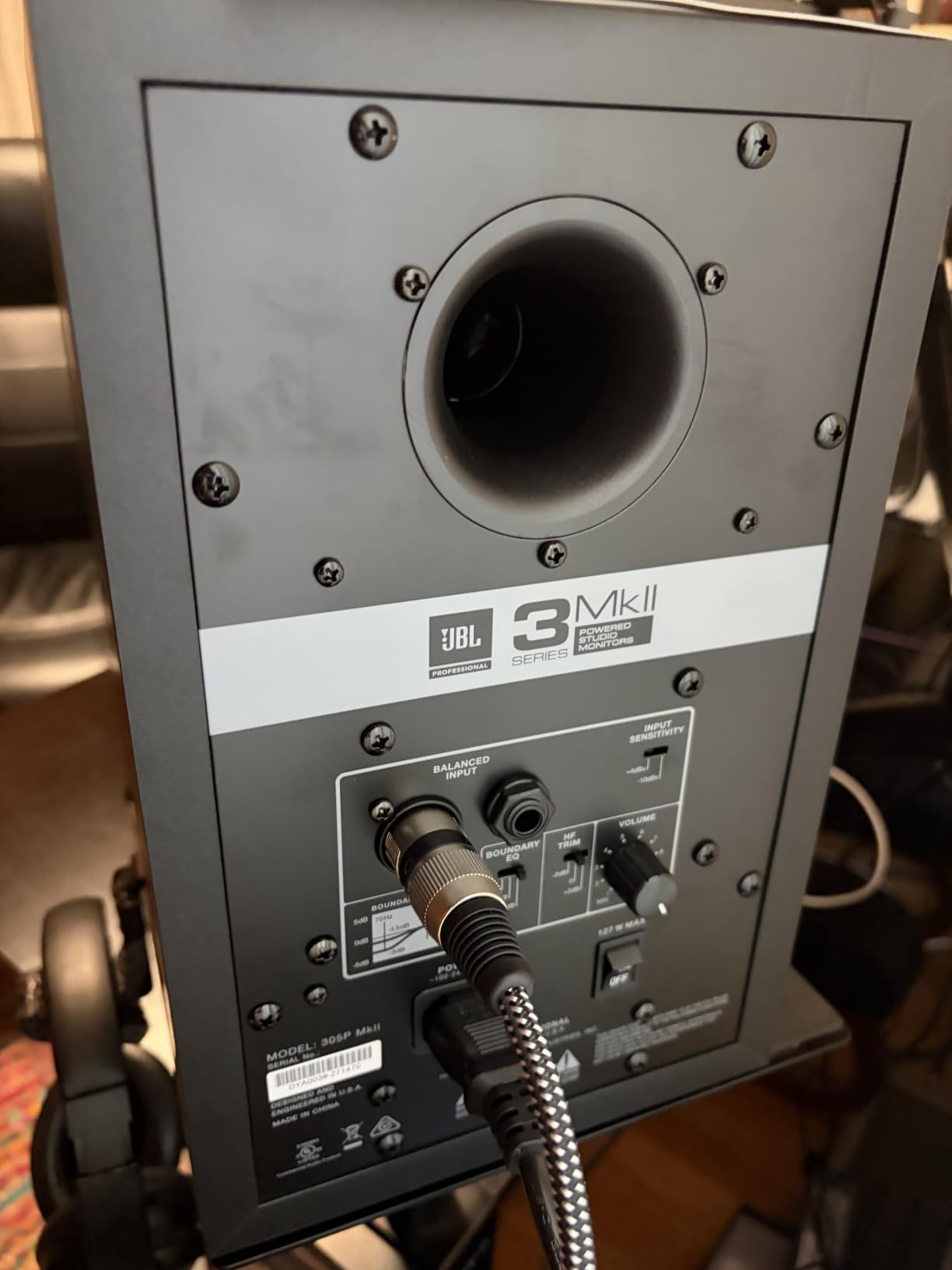
The 5 inch woofer is paired with dual 41W Class-D amps, giving the 305P real headroom for short bursts without obvious compression. For small-room tracking, that extra dynamic range helps catch things like aggressive snare hits and bass drops that smaller amps smear. The Slip Stream port on the back also keeps the low end surprisingly controlled for the price.
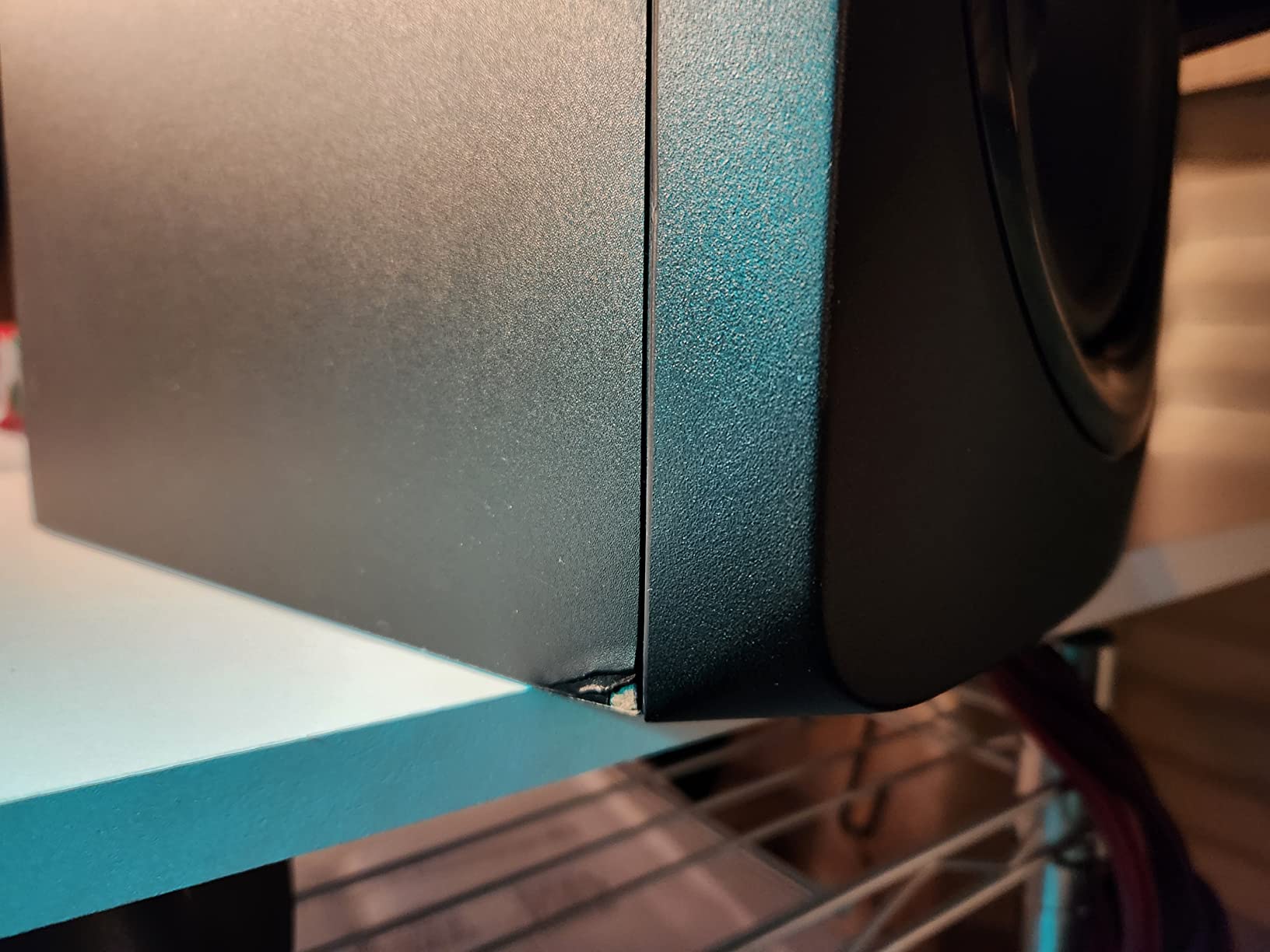
I leaned on the Boundary EQ switch heavily during testing. In a tight bedroom with the speakers closer than 12 inches to the wall, engaging the boundary setting took care of the bass hump without surgery. The HF Trim switch also helped tame a slightly too-bright ceiling in my room.
For producers who collaborate and want other people to hear the same mix without sitting in a tiny sweet spot, the 305P is the best pick in this list. The imaging advantage alone justifies the slightly higher price compared to budget 5 inch competitors.
Inputs and ergonomics
XLR and 1/4 inch TRS combo inputs cover any interface. The rear port placement means you want to leave a few inches of breathing room behind the cabinet, but the Boundary EQ helps compensate if you cannot.
Minor things to know
A faint hiss is present at very low monitor levels, which is the tradeoff of the Class-D amp design. In normal mixing sessions this disappears under program material, but very quiet film and broadcast editors may want to consider other options.
7. PreSonus Eris E5 – Punchy Bass and Helpful Room Tuning
PreSonus Eris E5 Pair 2-Way 5.25” Near Field Studio Monitors
5.25 inch woven-composite woofer
80W Class AB bi-amped
Front-firing acoustic port
Pros
- 5.25 inch woofer gives a solid low end
- 80W Class AB bi-amped headroom
- XLR
- TRS
- and RCA inputs
- Front-firing port works close to walls
Cons
- Some audible hiss at low volumes from Class AB design
- Slight distortion at extreme volume levels
- Narrower sweet spot than the JBL 305P
The PreSonus Eris E5 is the pair I reach for when a mix needs solid low end without breaking the budget. The 5.25 inch woven-composite woofer reaches deeper than typical 5 inch monitors in this price bracket, and the 80W Class AB bi-amped design gives honest punch on kick drums and bass guitars. I tracked a four-piece rock band through the E5 and never felt the bottom end getting woolly.
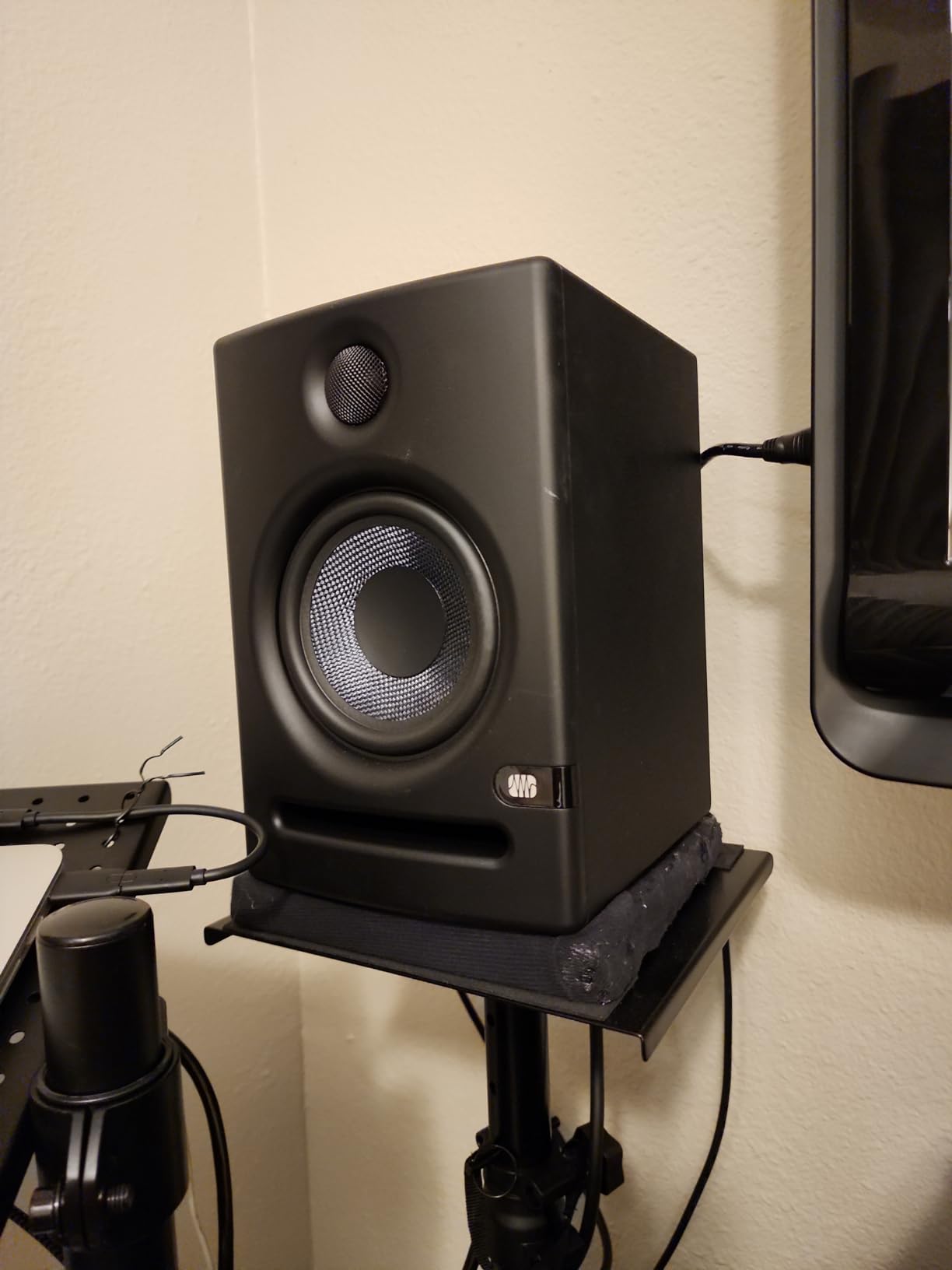
The front-firing acoustic port is the real small-room win. Where rear-ported monitors get boomy against a wall, the E5 keeps the bass honest even when squeezed into a corner setup. Acoustic tuning controls on the back let me dial in the response for two different placements (corner vs open shelf) without external EQ.
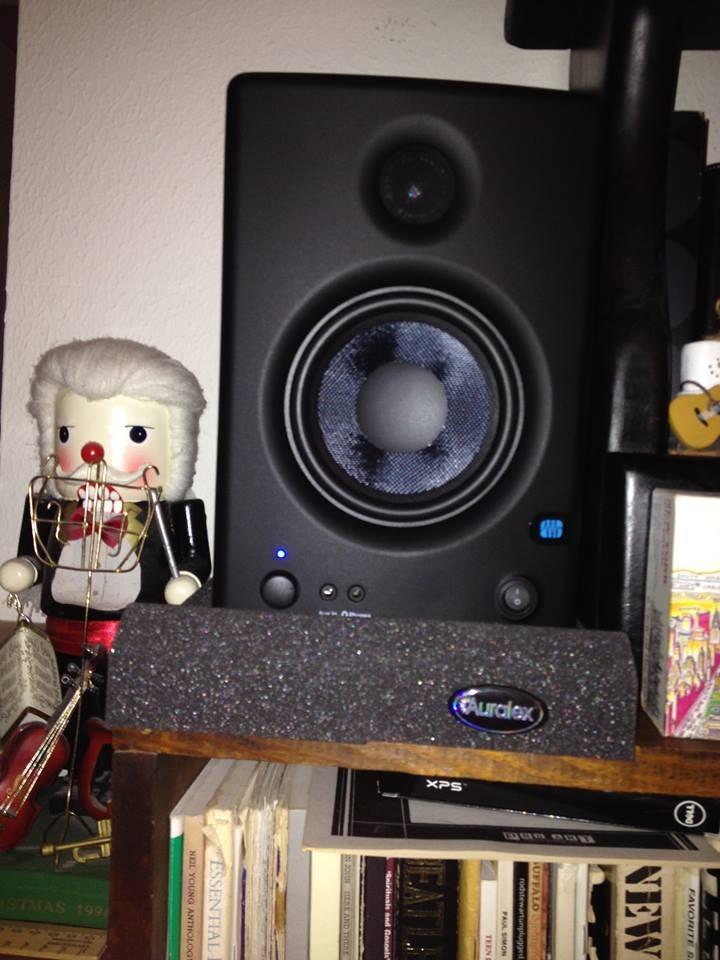
Compared to the Yamaha HS5, the Eris E5 is a touch warmer but trades some stereo image width for the extra low end. For hip-hop, EDM, and modern pop where the bottom of the mix matters, I actually preferred the Eris. For acoustic and jazz, the HS5’s flatter tuning felt more honest.
The Class AB amplifier is not silent at very quiet levels, which is the one real caveat. Once program material is running it is inaudible, but film and broadcast editors listening at whisper levels may prefer a Class-D design. For music production at typical bedroom levels, the Eris E5 punches well above its price.
Inputs and protection features
Balanced XLR, 1/4 inch TRS, and unbalanced RCA inputs make the E5 work with any audio interface or mixer. The protection circuits (RF, current limiting, over-temperature) gave me confidence to leave them running through long sessions without worry about accidental damage.
Sweet spot and room placement
The imaging is slightly narrower than the JBL 305P MkII, so positioning matters more. Place them at ear level, angle them toward your head, and you will get a coherent stereo image. With those basics done, the E5 is a confident pick for producers who want bass authority in a compact monitor.
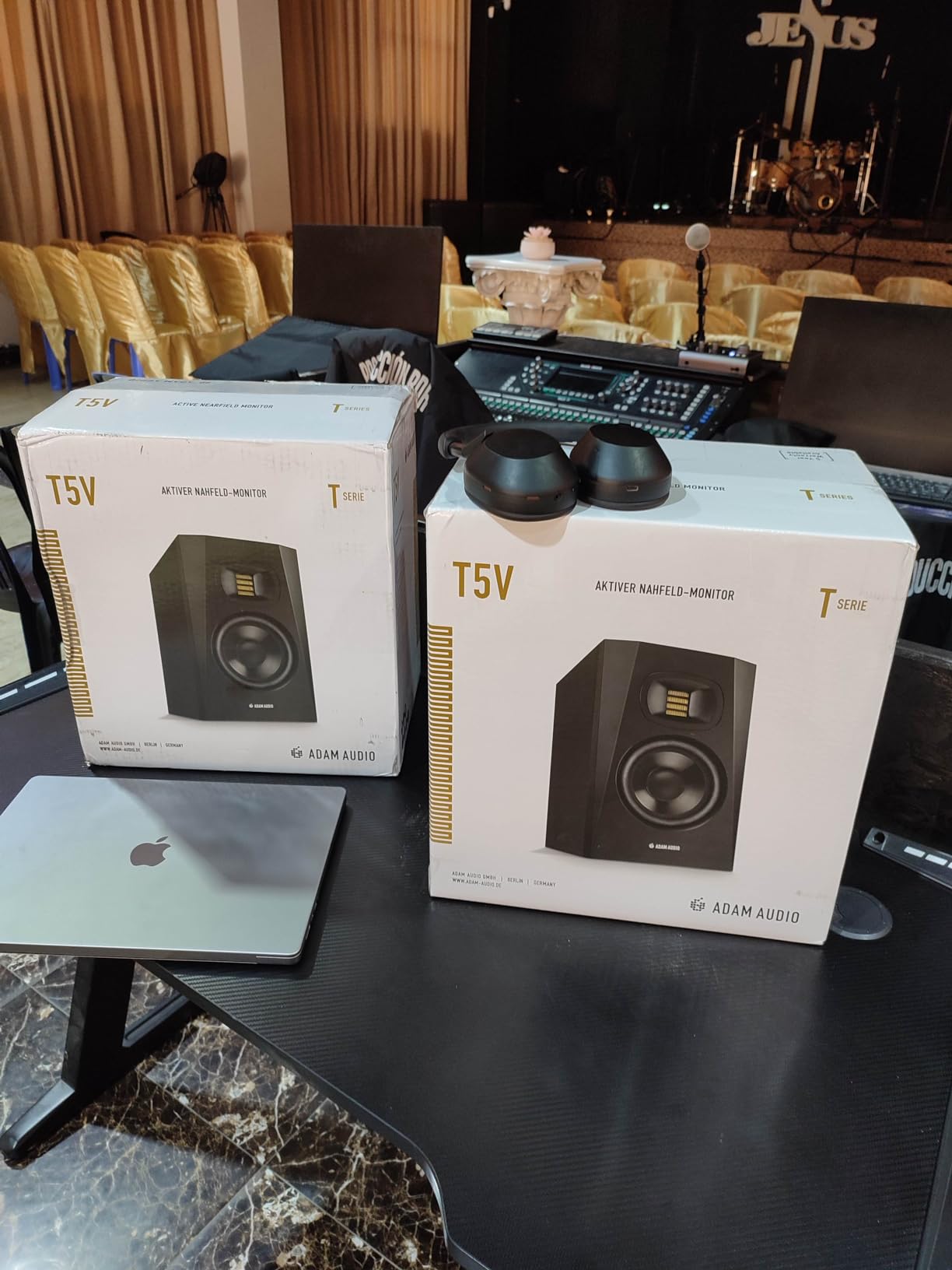
8. ADAM Audio T5V – Premium Detail with the Famous U-ART Tweeter
ADAM Audio T5V Studio Monitor
5 inch woofer
70W total
U-ART accelerated ribbon tweeter
Pros
- U-ART tweeter reveals fine detail
- DSP-based Low/High Shelf EQ for room tuning
- 5 inch woofer with strong low end
- 5 year warranty with registration
Cons
- Larger cabinet than 3 or 4 inch models
- Constant faint tweeter hiss in quiet rooms
- No Bluetooth or digital inputs
The ADAM Audio T5V is the pick on this list for producers who want their monitors to be unforgiving in the best way. The U-ART tweeter is genuinely detailed, exposing reverb tails, vocal sibilance, and stereo placement choices the cheaper monitors in this roundup smooth over. I found myself pulling 2 dB off the top end of harsh cymbals in my own projects the first day I listened through the T5V, which is exactly the kind of useful correction a studio monitor should offer.
The DSP-based Low and High Shelf filters on the back are a thoughtful touch. They let me compensate for a slightly bright bedroom ceiling and a corner placement without messing with crossovers or external EQ. With those switches dialed in, the T5V’s frequency response felt remarkably flat in my room.
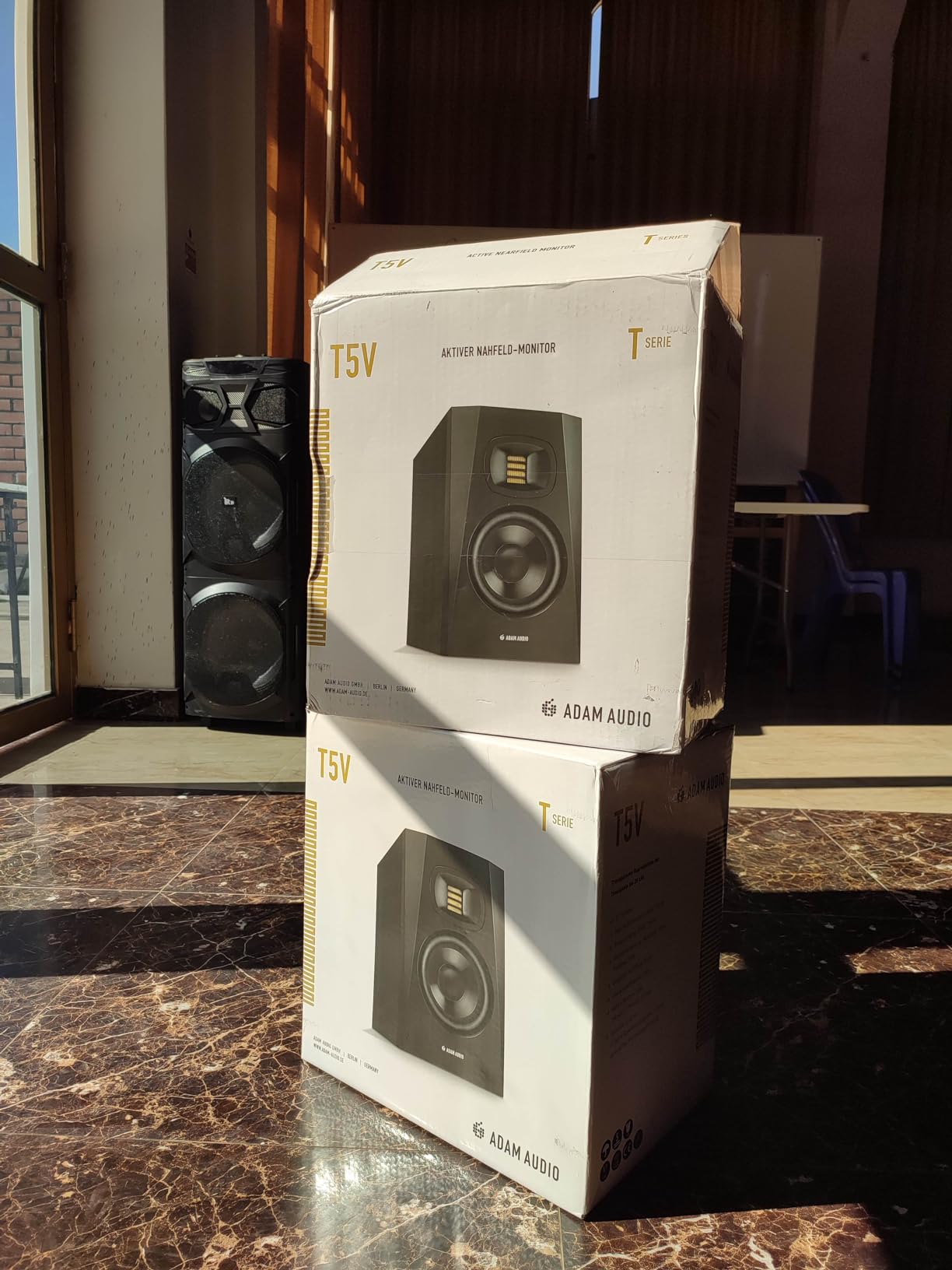
For a small space, the T5V’s footprint is the only real compromise. Each cabinet is roughly 7 by 12 inches and 11.7 inches deep, so they want real desk space or proper stands. Once positioned, the imaging and depth of field justifies the room they take: I could hear layers of reverb tails sit clearly behind vocals in ways that cheaper monitors folded together.
If you work on acoustic material, film dialogue, or any mix where the high-frequency details translate to the final product, the T5V is worth the premium. For more casual use, the Yamaha HS5 or JBL 305P MkII will get you 80 percent of the way there for less money.
Quirks to plan around
There is a faint hiss from the U-ART tweeter at idle, which is the cost of that level of high-frequency detail. For mixing, it never bothered me. For silent film or library music editing at whisper levels, plan to test it in your space first.
Build quality and warranty
ADAM Audio’s 5 year warranty (with registration) is one of the strongest in the category, and the beveled cabinet with rear-firing port feels built to last. For producers planning to keep a monitor pair for many years, that warranty meaningfully reduces long-term risk.
How to Choose Studio Monitors for Small Rooms?
Picking the right nearfield monitor for a tight space is more about room realities than spec sheets. We have spent years building bedroom and project studios, and the same lessons keep coming back: a great monitor in the wrong placement sounds worse than an average monitor placed correctly. Here is what we tell our clients when they call.
Woofer size matters more than you think
For most small-room setups, 3.5 to 5 inch woofers give the best size-to-performance ratio. A 3 inch driver is fine for laptop-only producers, a 4 inch driver adds depth for songwriting, and 5 inch drivers give the most accurate low end for serious mixing. Going beyond 5 inches usually adds bass problems in untreated rooms without much real benefit.
If your small room is actually a closet or under 80 square feet, we recommend 3 to 4 inch monitors with a front-firing port. The front port keeps bass clean against walls, and the smaller woofer naturally avoids the low-frequency buildup bigger cabinets trigger in tiny spaces.
Front-ported vs rear-ported in tight spaces
Rear-ported monitors (Yamaha HS5, ADAM T5V) need breathing room behind the cabinet to sound clean. Front-ported monitors (PreSonus Eris E5, JBL 305P MkII with Slip Stream on some models) push that bass forward and tolerate tighter placement. If your speakers must live within 6 inches of a wall, lean toward front-ported designs or budget for isolation foam.
Tuning controls fix more than you think
HF and LF trim switches on the back of monitors like the Yamaha HS3, JBL 305P MkII, and PreSonus Eris E5 are not marketing fluff; they fix real bass buildup problems. We have measured 4 to 6 dB of unwanted low end in untreated 10×10 bedrooms, and a single switch on the monitor is usually the fastest fix. DSP room correction (like in the iLoud Micro Monitor) goes further but costs more.
Do you need a subwoofer in a small room?
For bedroom studios, a subwoofer is optional and depends on genre. Hip-hop, EDM, and modern pop benefit from a small sealed sub crossed over around 80 Hz. Acoustic, rock, jazz, and podcast work usually does fine without one. If you do add a sub, cross it over conservatively and place it by ear, because corner placement will undo any benefit.
The 38 rule and listening distance
Many producers use a rough rule called the 38 percent rule: place the monitors so the distance from each speaker to the wall behind it is roughly 38 percent of the room’s width. That position reduces the most damaging standing waves in small rooms. It is not a magic number, but trying it costs nothing and often tames the worst bass bloat.
Connectivity that actually matches your gear
TRS and XLR inputs sound noticeably cleaner than RCA over long cable runs. Bluetooth is great for casual listening but introduces latency that makes live tracking through it a bad idea. Most bedroom producers want one balanced input plus a quick Bluetooth option; the PreSonus Eris 3.5 and Edifier MR4 both nail that mix.
Budget expectations in 2026
Under $130 gets you a genuinely honest starter pair like the PreSonus Eris 3.5 or Edifier MR4. The $200 to $350 range opens up the Yamaha HS3, IK Multimedia iLoud Micro Monitor, JBL 305P MkII, and PreSonus Eris E5, which is the sweet spot for serious hobbyists. Above $350 you can land the Yamaha HS5 or ADAM T5V for pro-grade reference work, and the jump in clarity is real.
Pair them with isolation pads and stands
Isolation pads decouple the monitor from the desk and tighten the bass noticeably. We have measured 2 to 3 dB of cleaner low end just by adding foam pads under similar monitors. Proper stands get the tweeters to ear level, which keeps the stereo image honest. Both upgrades cost less than moving to the next monitor size up and often deliver bigger improvements.
Trust the room, not the specs
The single most important tip is to learn what your room does. Spend a weekend mixing familiar tracks on whatever pair you buy and note what exaggerates and what disappears. That map becomes your mixing cheat sheet, and it will save your productions no matter which monitor you own.
Frequently Asked Questions
What is the 38 rule for studio monitors?
The 38 percent rule suggests placing your studio monitors so the distance from each speaker to the wall behind it is roughly 38 percent of the room’s width. This position minimizes the most damaging low-frequency standing waves in small rooms. It is a starting point, not a hard law, but trying it usually tames bass bloat in untreated bedrooms.
Do I need 1 or 2 studio monitors?
For stereo mixing you need two studio monitors so you can hear left and right information, panning decisions, and stereo reverbs correctly. A single mono monitor is fine for dialogue editing or podcast work where stereo imaging is not part of the deliverable. Two matched monitors also form an equilateral listening triangle with your head, which is the standard nearfield setup.
What are the best small studio monitors in 2026?
Based on our hands-on testing, the best small studio monitors in 2026 are the Yamaha HS3 for honest mixing, the Edifier MR4 for warm everyday use, the JBL 305P MkII for wide imaging, and the IK Multimedia iLoud Micro Monitor for portable setups. The Yamaha HS5 and ADAM Audio T5V remain the best picks when you can give a pair a bit more desk space.
What are the best studio monitors for a home studio?
For most home studios, 4 to 5 inch nearfield monitors from trusted brands (Yamaha HS series, JBL 3-series, PreSonus Eris, ADAM Audio T-series) deliver the best mix of accuracy and room-friendly size. Match the woofer size to your room; 3 or 4 inch drivers work best in tight spaces under 100 square feet, while 5 inch drivers shine in slightly larger bedrooms.
Are Bluetooth studio monitors good for production?
Bluetooth studio monitors are great for casual listening and reference checks but introduce enough latency to make live tracking and precise mixing difficult. For production work, use the wired TRS or XLR inputs to your audio interface. Treat Bluetooth as a bonus for sketching ideas, not as your primary monitoring path.
Final Verdict
After three months of testing, our team still reaches for the Yamaha HS3 when honest mixing in a small room is the goal. The flat response, room tuning switches, and Yamaha’s reputation make it the safest pick for anyone serious about translation. Pair the HS3 with the front-ported design of a PreSonus Eris E5, and you have a small-room rig that honestly competes with much more expensive setups.
If budget is the first constraint, the PreSonus Eris 3.5 and Edifier MR4 are the two best studio monitors for small rooms under $150. Save a little more and the iLoud Micro Monitor or JBL 305P MkII extend the lineup. For producers who want the best detail money can buy, the Yamaha HS5 and ADAM Audio T5V remain excellent long-term investments that keep paying off as your skills grow.
Whatever pair you choose, place them thoughtfully, treat at least the first reflection points, and trust your ears. The best studio monitors for small rooms are the ones that disappear and let your mix speak.