
Ask anyone who picked up a racket again at 65 after a 20-year break and you will hear the same thing: the frame they used at 30 now sends a dull ache into the elbow after one set. Strength, stamina and grip strength all change, and equipment that felt effortless in your thirties can quietly work against your joints. That is why finding the best tennis rackets for seniors is less about chasing the newest frame and more about matching head size, weight and strings to a body that is not 30 anymore.
A senior tennis racket is an oversized, lightweight frame, usually 105 to 116 square inches and roughly 255 to 290 grams unstrung, built to generate power with less swing effort and to reduce impact stress on aging joints. The oversized head enlarges the sweet spot and the trampoline effect, so a contact point a few centimetres off centre still produces a usable shot. A lighter unstrung weight reduces how hard your shoulder and forearm work over a two-hour doubles match. And a frame with some flex plus a softer string bed absorbs vibration before it reaches the elbow and wrist.
That combination is not the same as buying the smallest, lightest thing you can find. We will get into why super-light is not automatically the safest choice further down, because it is the most common mistake we see among players over 60. For now, the short version: prioritize a forgiving head, a weight you can swing without thinking, and a soft string setup.
We spent October 2026 comparing 12 frames that come up again and again for older players, weighing the published specs, the unstrung and strung weights, head sizes, balance points, grip sizes and string patterns against what buyers actually report after months of play rather than a few sessions out of the box. If you are starting completely fresh, our beginner racket guide covers the fundamentals. If you already play and want more precision, see our intermediate player picks.
One note before we start, because it matters. Nothing here is medical advice, and no racket prevents injury. If you have persistent elbow, wrist or shoulder pain, or a history of arthritis in your hands, knees or hips, talk to your doctor or a physiotherapist before changing your equipment, and ask them about whether your swing mechanics need attention first. Gear helps. It does not substitute for a clear diagnosis and a rehab plan.
Table of Contents
Top 3 Best Tennis Rackets For Seniors (October 2026)
These three cover the widest range of older players. The Wilson Federer is the all-rounder we would put in most hands, the HEAD Ti S6 is the lightest and most forgiving, and the Wilson Hyper Hammer 5.3 has the biggest sweet spot on this list. All three have the four-digit review counts you want to see before committing.

All 12 Senior Tennis Rackets Compared in 2026
Every racket below appears in the table with its headline specs, followed by a full review. Weight figures are the unstrung weight unless the manufacturer lists it as a strung weight, which is common on frames that ship pre-strung. Where a manufacturer did not publish a head size, we say so rather than guessing.
| Product | Specs | Action |
|---|---|---|
| Wilson Federer Adult Recreational Racket |
|
Check Latest Price |
 HEAD Ti S6 HEAD Ti S6 |
|
Check Latest Price |
 Wilson Tour Slam Wilson Tour Slam |
|
Check Latest Price |
 Senston 27 Inch Two Racket Set Senston 27 Inch Two Racket Set |
|
Check Latest Price |
 HIRALIY 27 Inch Racket Set HIRALIY 27 Inch Racket Set |
|
Check Latest Price |
 HEAD Ti. Conquest HEAD Ti. Conquest |
|
Check Latest Price |
 Wilson Hyper Hammer 5.3 Wilson Hyper Hammer 5.3 |
|
Check Latest Price |
 Layway Two Player Recreational Set Layway Two Player Recreational Set |
|
Check Latest Price |
 LUNNADE 27 Inch Carbon Fiber Racket LUNNADE 27 Inch Carbon Fiber Racket |
|
Check Latest Price |
 Teloon Recreational 27 Inch Racket Teloon Recreational 27 Inch Racket |
|
Check Latest Price |
 HEAD Geo Speed HEAD Geo Speed |
|
Check Latest Price |
 OPPUM Two Racket Starter Set OPPUM Two Racket Starter Set |
|
Check Latest Price |
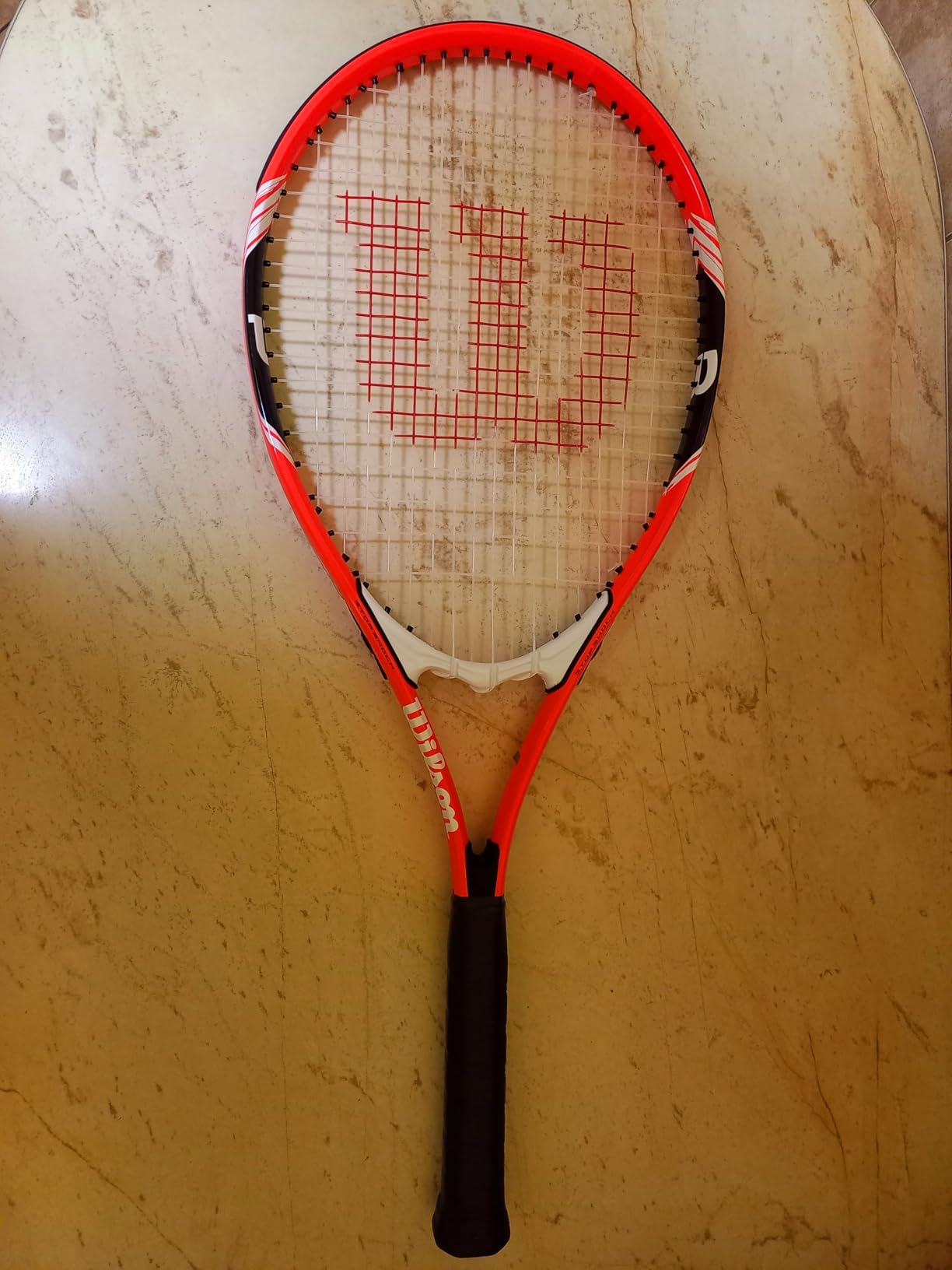
1. Wilson Federer Adult Recreational Racket – Best All-Rounder for Seniors
Wilson Federer Adult Recreational Tennis Racket – Grip Size 3 – 4 3/8″, Red/White/Black
295 g unstrung
Graphite frame with Stop Shock Pads
4 3/8 inch grip
Pre-strung
Pros
- Light 295 g frame is easy on the shoulder over long sessions
- Stop Shock Pads soften impact on off-center contact
- Enlarged midplus sweet spot rewards mistimed returns
- Pre-strung so you can walk on with no stringer visit
Cons
- Less stable than a true oversize frame on badly mistimed hits
- Midplus head gives less margin than a 110 sq in model
This is the frame we hand to friends and family who ask us to just pick one. At 295 grams unstrung it is not the lightest frame here, but it is light enough for most players over 60 while keeping enough stability that struck balls do not wander. That middle ground is exactly what a returner needs, and it is why this frame has collected more reviews than anything else on our list.
Two details do the comfort work. The Stop Shock Pads sit where the throat meets the hoop, which is precisely where impact energy from an off-centre hit concentrates, and the enlarged midplus sweet spot gives you a bigger target than the traditional midplus frames most of us grew up with. Neither feature is flashy, and both are the reason this racket keeps scoring well with arthritic hands.
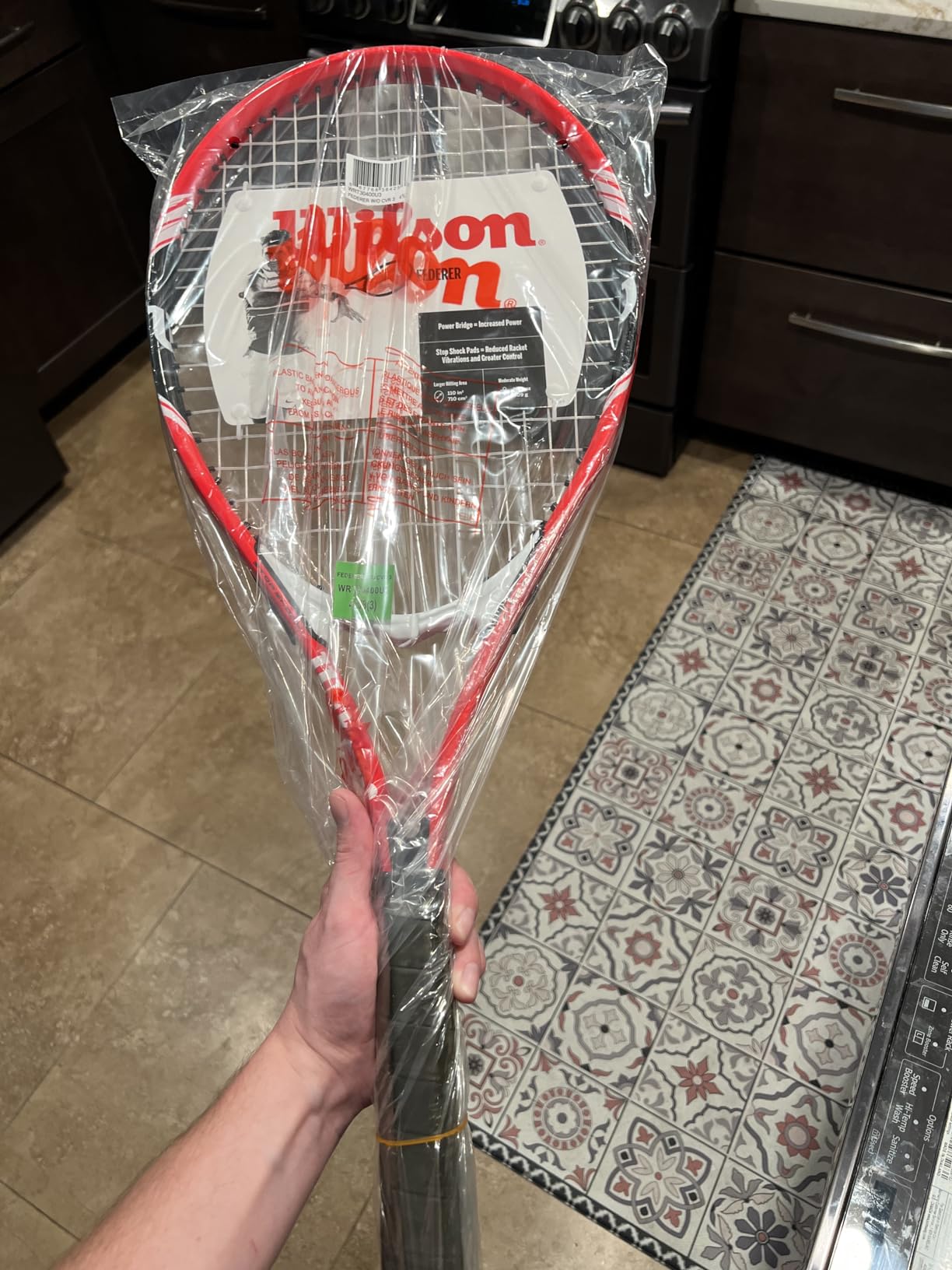
The graphite frame with an AirLite Alloy build is the step up from the aluminum recreational rackets most clubs hand beginners. It does not feel as damped as a dedicated arm-friendly performance frame, but it feels solid and quiet in a way that aluminum does not. Owners repeatedly note the light feel and the enlarged sweet spot, with most ratings sitting in the four and five star range.
The honest limitation is head size. This is a midplus frame, not an oversize one, so a badly struck ball two inches from the frame will still send it off target. If your biggest worry is inconsistency rather than comfort, look at the Hyper Hammer further down this list. If your biggest worry is your elbow, this frame is a safe, proven choice.
Check the grip size before you commit
The 4 3/8 inch grip is one of the larger adult grips and it suits a lot of aging hands, which is a genuine plus. But grip sizes do not stay constant, and a grip that felt perfect at 55 can feel thin at 70. Take the eastern forehand grip, line your index knuckle along the bevel, and check that there is roughly a fingertip of space between the base of your index finger and the palm. If there is no gap, you need a larger handle or an overgrip.
Know where it sits against the alternatives
It is not the biggest sweet spot available and it is not the lightest frame either, so if you are starting from a 320 gram adult racket it will still feel like a change, just a gentler one. Players who push hard and flat often find the midplus head less stable than they would like. For pure forgiveness, the Hyper Hammer and the Ti S6 both beat it. For an easy first step down in weight, it is hard to argue with.
2. HEAD Ti S6 – Lightest Big-Head Frame on the List
HEAD Ti S6 Tennis Racket, 4 3/8″ Grip
115 sq in head
8.6 ounces strung
16x19 pattern
27.7 inch length
Pros
- Very light at 8.6 oz strung for long sessions
- 115 sq in head is the most forgiving here
- Open 16x19 pattern lifts topspin and slice easily
- Extended length adds reach without much extra weight
Cons
- Factory strings can break earlier than expected
- Head-heavy feel takes a short adjustment period
The Ti S6 has been the frame we recommend most often to people asking what to do after a long layoff, and it is easy to see why. At 8.6 ounces strung it is genuinely light, and the 115 square inch head is the largest on this list by a wide margin. When your technique is rusty and your contact is late, that much extra margin does more for your score than any amount of technique work.
Length is 27.7 inches, which adds a little reach on wide balls and helps you cover the court without sprinting. That matters more than most buyers expect at 70, because the difference between covering the court and chasing it is often the difference between a good day out and a sore knee at the end of it.
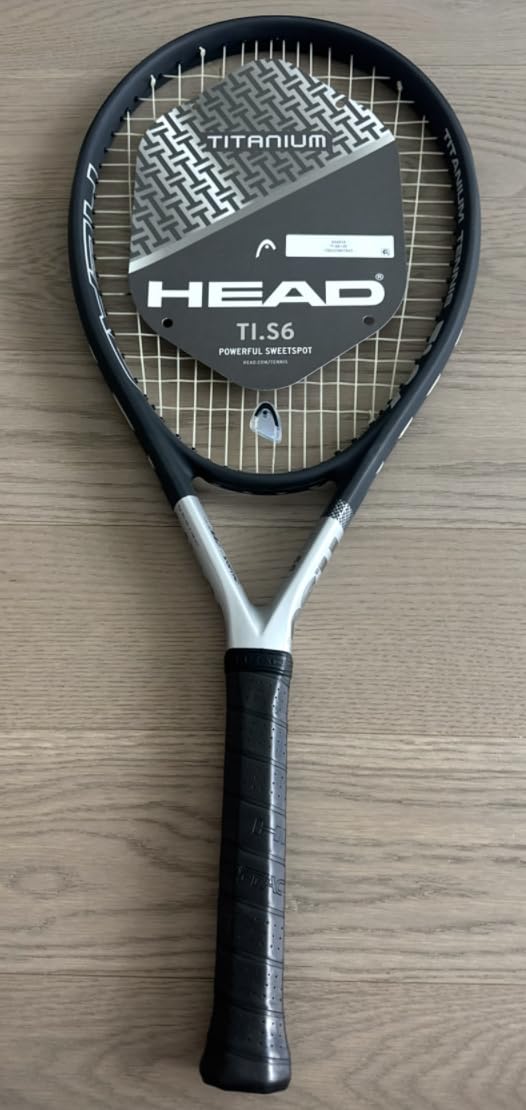
Reviews describe reduced arm fatigue and easier swing mechanics far more often than they describe power or feel, and that is exactly the right reaction to this frame. It is a beginner and returning-player favourite by design, marketed at the beginner level. The trade is simple: you give up control at the net and the ability to shape a ball, and in exchange almost any stroke you hit comes back.
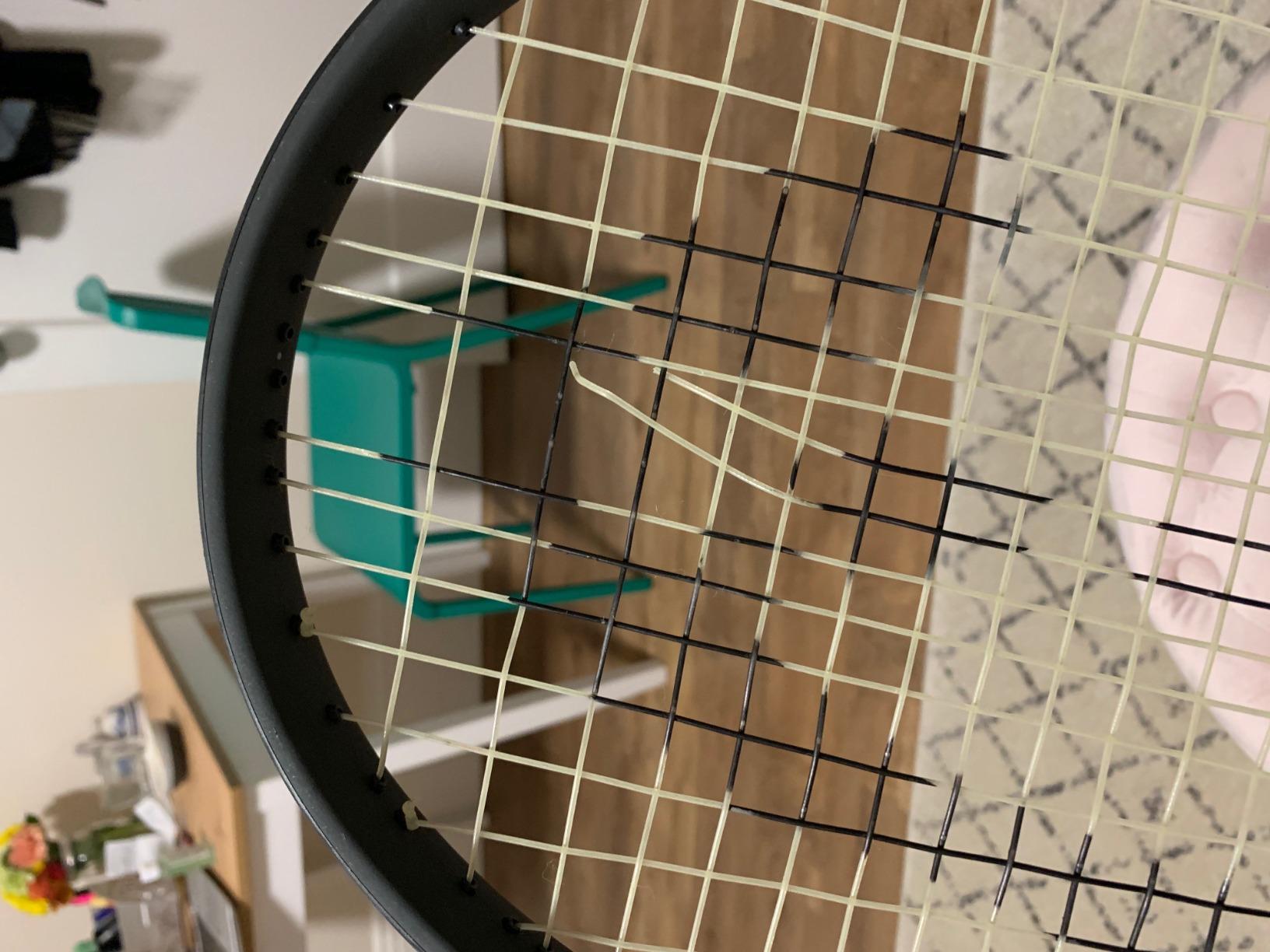
The one complaint that comes up repeatedly is string durability. Factory strings on this frame do not last forever, and the open 16×19 pattern snaps more readily than a dense bed. That is a feature rather than a flaw if your stringer fits a soft multifilament at a moderate tension, which is exactly what we would do with it.
Why the head size does the heavy lifting?
A 115 square inch head gives you roughly twice the area of a 95 square inch player frame, which means far more of the ball lands inside the sweet spot. On a good day that feels easy. On a tired day, when your legs are heavy and your timing is off, that margin is the reason rallies continue. If you want the largest, most forgiving target available to a senior player, this is the frame.
Where the extra lightness costs you?
Very light frames transmit more energy into the arm than heavier dampened ones, because there is simply less mass absorbing the hit. For most players that trade is worth it. If you already have a diagnosed elbow or wrist problem, pair this frame with a genuinely soft string setup and consider a dampener, or look at a heavier option further down the list.
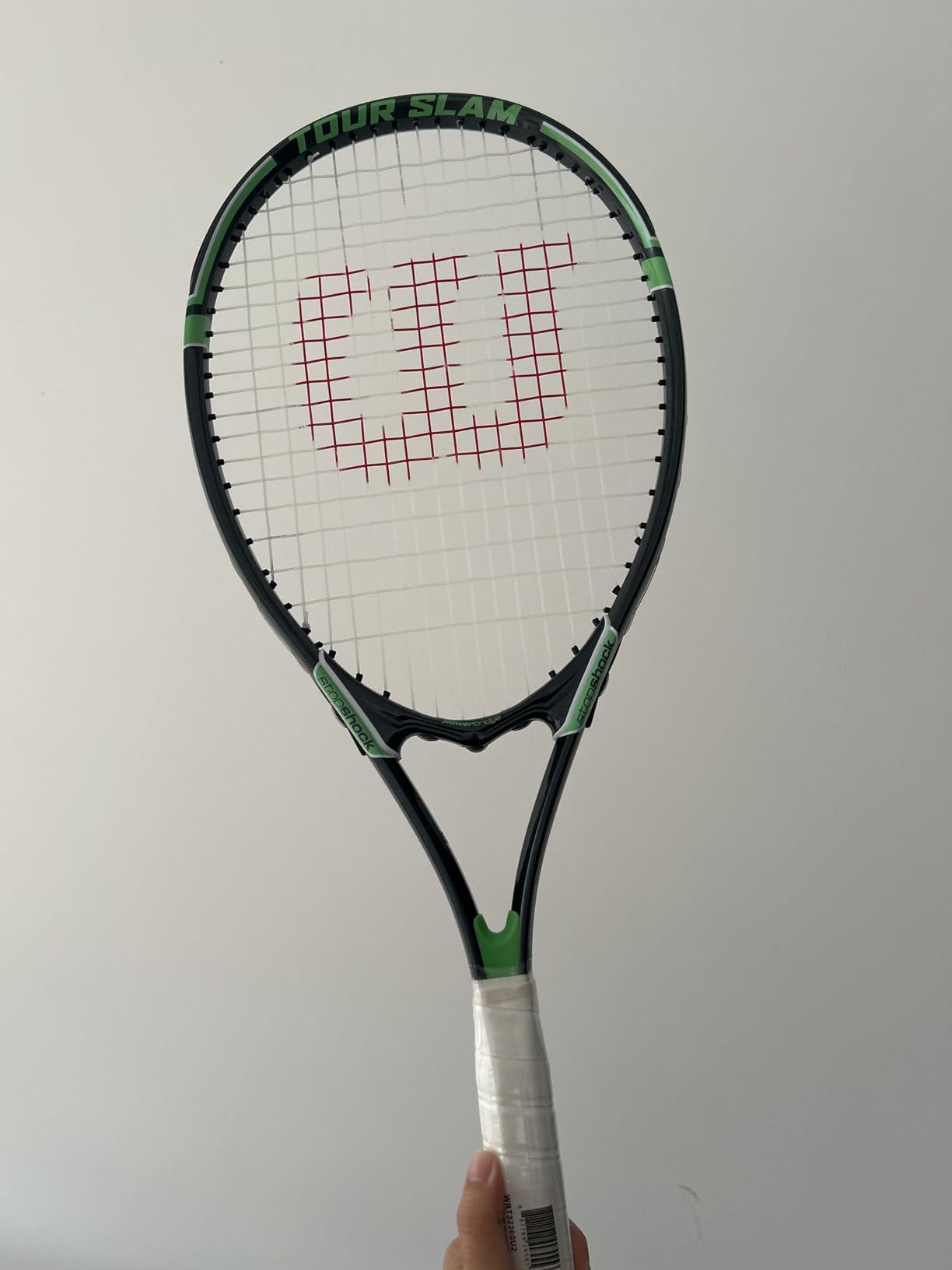
3. Wilson Tour Slam – Best Budget Frame for Lessons and Clubs
WILSON Tour Slam Adult Recreational Tennis Racket – Grip Size 2-4 1/4″, Pink/Grey
Aluminum frame
V-Matrix larger sweet spot
Stop Shock Pads
4 1/4 inch grip
Pros
- V-Matrix technology enlarges the sweet spot
- AirLite Alloy keeps the frame light and durable
- Stop Shock Pads take the sting out of the frame
- Pre-strung and playable straight away
Cons
- Aluminum gives less feel than graphite or titanium
- 4 1/4 inch grip is smaller than most senior hands prefer
The Tour Slam is what most public tennis centres hand a first-timer, and for a club that runs lessons three times a week for beginners over 60 it is a genuinely good choice. It is forgiving, it is durable enough to survive being dropped in a car park, and the Stop Shock Pads take the sharp edge off mis-hit balls.
What it is not is a frame that will grow with a strong player. The aluminum construction gives you power and a large target but very little feel, so a player who develops a proper swing and wants to shape the ball will quickly outgrow it. Treat it as a two or three year frame that buys you time while your technique settles.
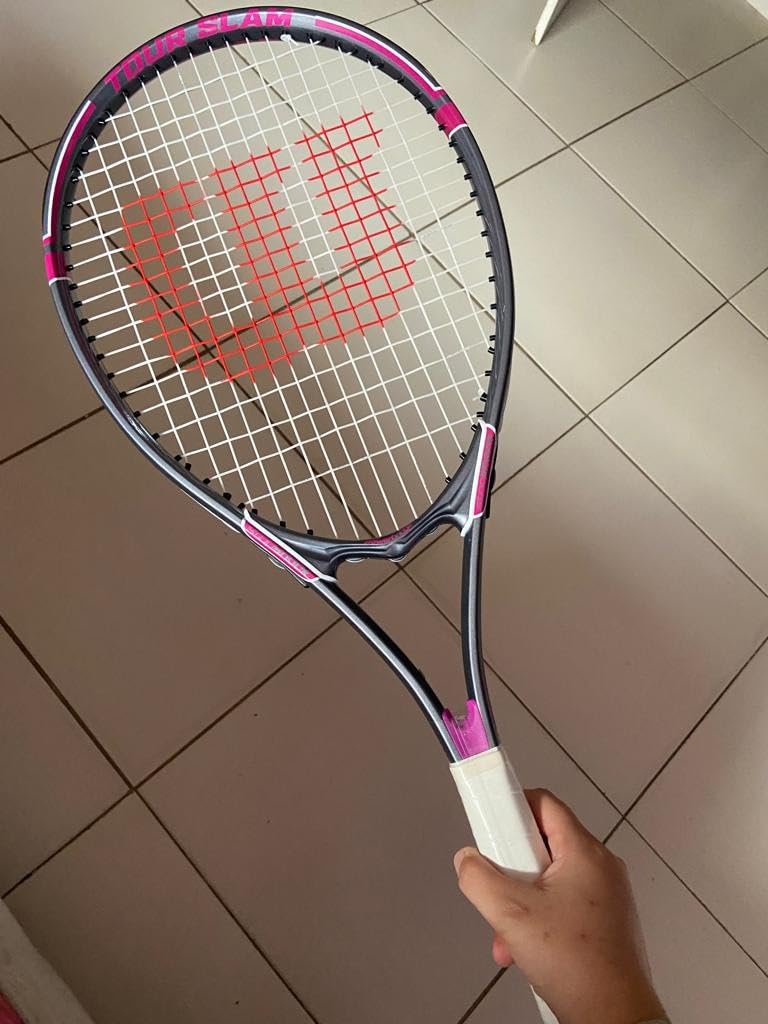
Buyers consistently highlight the forgiving sweet spot, the lightweight feel and the easy handling for casual play and lessons. Durability is the quiet strength here, and it is worth more than most reviewers realise: a racket that survives being dropped and abandoned in a hot car is worth a great deal in a club setting.
Volcanic frame technology and longer mainstrings do the power work, so short swings still produce a ball that clears the net. That is a real advantage for players with shoulder limitations, because you do not need a full extension to get the ball away.
Check the grip size first, it is the deciding factor
This frame lists a 4 1/4 inch grip, which is smaller than the 4 3/8 inch most senior players end up with. Hands often lose bulk in the fingers and around the palm with age, and arthritis compounds it. If you have ever found yourself with finger calluses or a grip slipping mid-rally, a thin handle is the likely culprit. Ask whether the model is offered in 4 3/8 inch before you commit.
When a cheaper frame is the right call?
If the plan is two sessions a week of social doubles and nothing more, this frame does everything you need. The moment you want to take lessons seriously, enter a club ladder event, or play with partners who hit properly, the lack of feel and stability becomes obvious. That is not a flaw, it is simply the ceiling of the design.
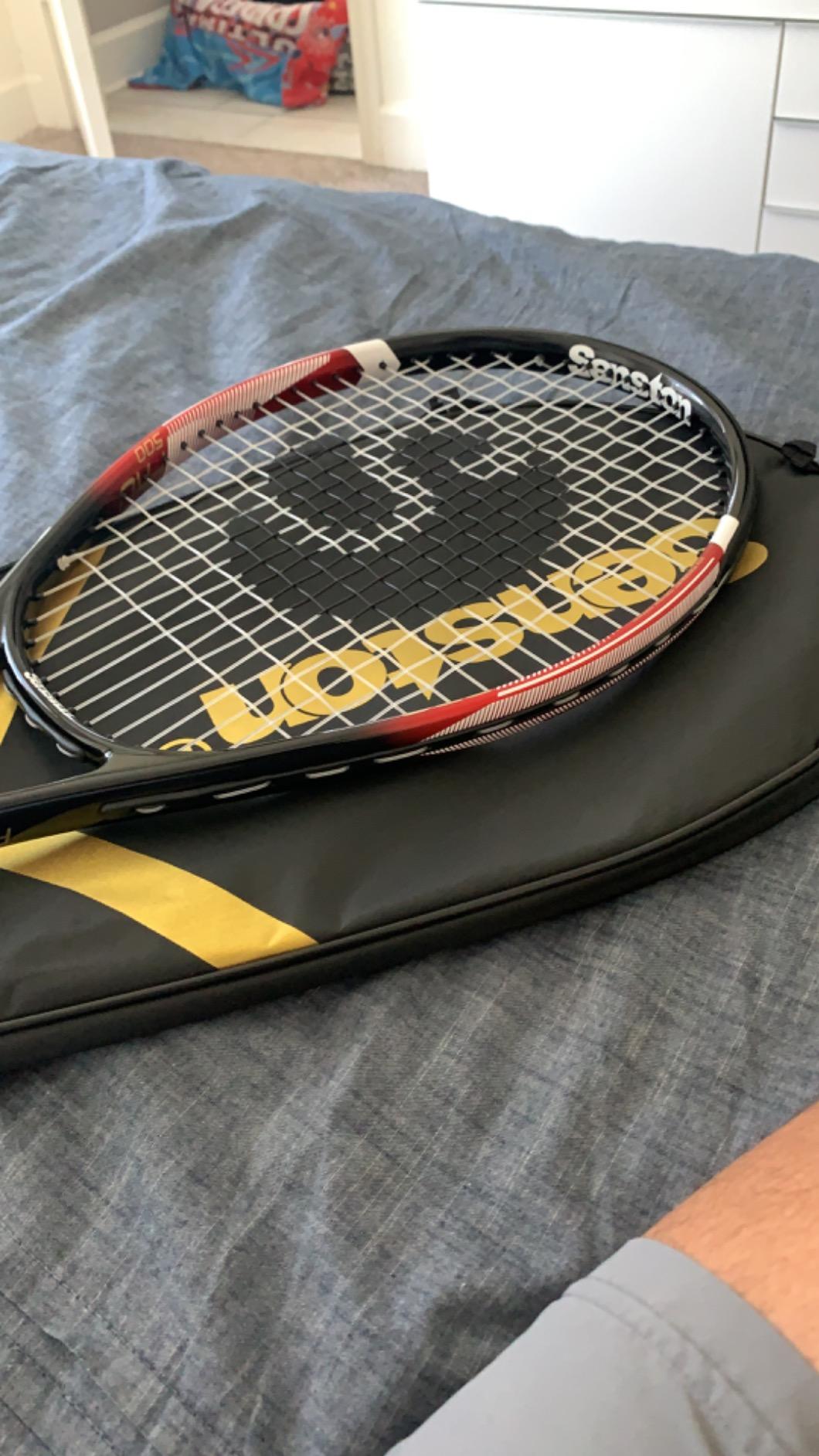
4. Senston 27 Inch Two Racket Set – Best Value Set for Doubles Partners
Senston 27″ Adult Tennis Racket Set Durable Lightweight Vibration Dampening
Set of two 27 inch rackets
Aluminum alloy frames
Overgrips and dampeners included
Pros
- Two rackets plus bag
- balls
- overgrips and dampeners in one pack
- Light aluminum frames are easy on the arm in casual play
- Dampeners already fitted
- useful for a sensitive elbow
- Good choice if you play with a regular partner
Cons
- Included tennis balls wear out quickly
- Overgrip quality is inconsistent
- Bags and straps are not heavy duty
Buy one frame and you have one frame. Buy a set and you have a matched pair, which is the single most common piece of advice on senior tennis forums and the reason this pack sells. Two identical rackets mean a broken string does not change your timing or your weight in hand, and senior doubles players tell us that consistency matters more to them than anything else in the equipment bag.
The frames themselves are 27 inches and aluminum alloy, designed for beginners and recreational players. The manufacturer does not publish a unstrung weight, so we will not invent one, but reviewers consistently describe them as light and easy on the arm in casual rallies.

The pre-installed overgrips and dampeners are a real bonus for older hands. An overgrip builds the handle size up a fraction, which helps if your grip has shrunk, and the fitted dampeners take the edge off impact without you having to think about it. Recurring complaints in reviews centre almost entirely on the accessories rather than the rackets.
The most repeated negatives are thin tennis balls and overgrips that need replacing within months. Both are cheap to sort out, and neither affects how the racket plays. If you are buying for two people, expect to buy your own balls and grips anyway.
Why two identical rackets genuinely help?
Timing is calibrated to a specific weight and balance. String a new frame at a different tension or a different string and the response changes, and older players notice that change as discomfort long before they notice it as a loss of control. A matched pair removes the variable entirely, which is why coaches running senior leagues push two of a kind so strongly.
When one frame would have been enough?
If you play alone most weeks and only occasionally with a partner, you do not need the second racket, and you could put the money into a single better frame and a proper string job instead. Also be realistic about the bag and strap, which are not built for a decade of weekly use. Many buyers replace the bag and keep the rackets.
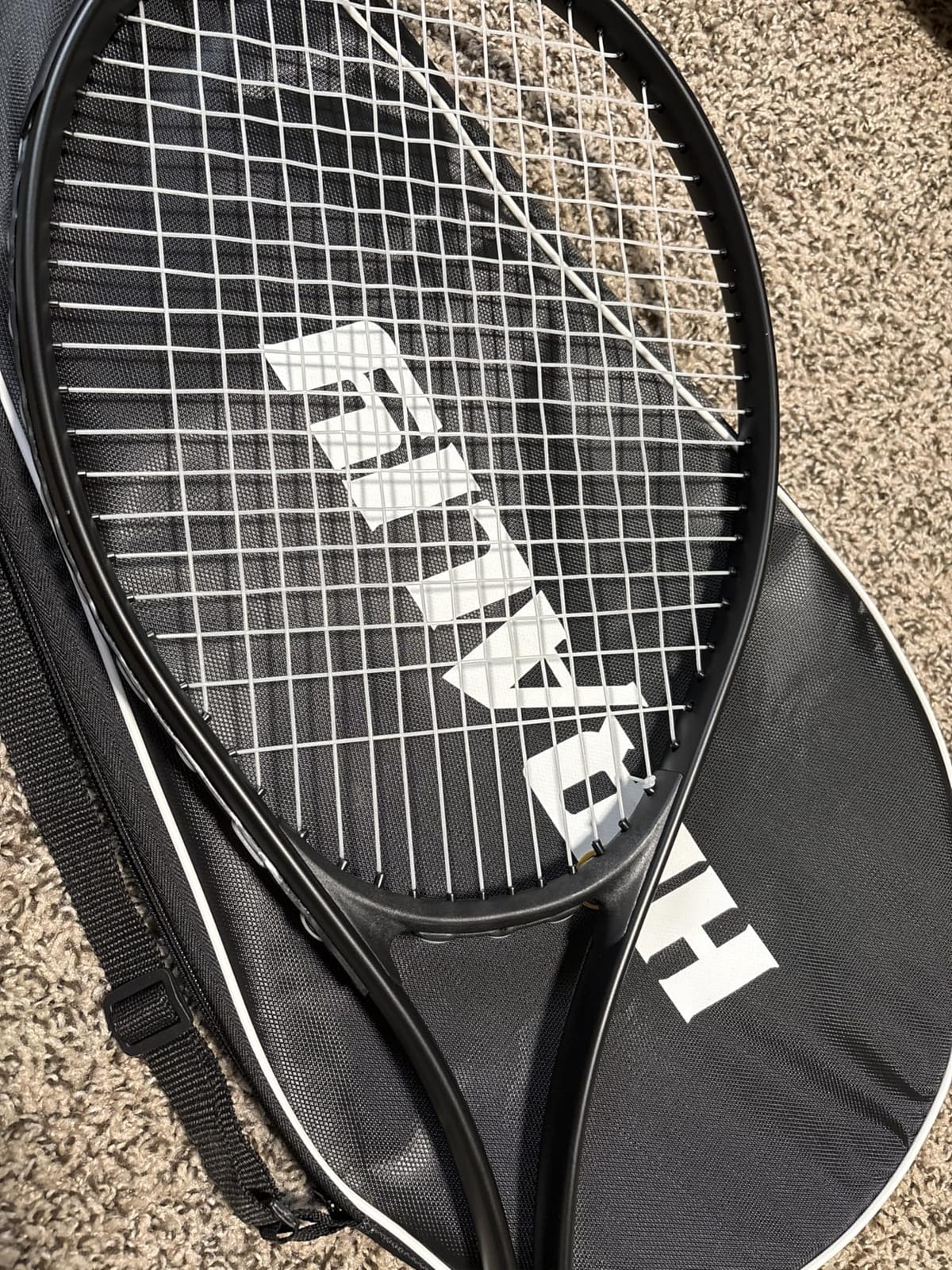
5. HIRALIY 27 Inch Racket Set – Lightest Option for Tired Arms
HIRALIY 27-Inch Tennis Rackets, 2 Pack with Balls, Overgrips and Bag, Black
About 260 g per racket
Thickened aviation aluminum
Y-Joint shock absorption
27 inch
Pros
- Around 260 g
- among the lightest frames here
- Thickened aluminum resists warping
- Y-Joint reinforcement absorbs shock at the throat
- Set includes rackets
- balls
- overgrips and a bag
Cons
- Carry bag and strap can tear quickly
- Grip tape slides or peels when sweaty
- Some arrive with mould or tape defects
At roughly 260 grams per racket, this is one of the lightest frames we looked at, and it is the one we would suggest to a player whose elbow or shoulder is already complaining. Low mass means low swing weight, which means less work per shot across a long session. The thickened aviation aluminum body is built so that saving grams does not mean a frame that wobbles or kinks.
The triangular Y-Joint reinforcement at the throat is the detail that matters most here. It is the structural weak point of every frame, and reinforcing it improves both stability and shock absorption. Reviews single it out as a reason the frame feels settled rather than hollow when you strike a ball with confidence.
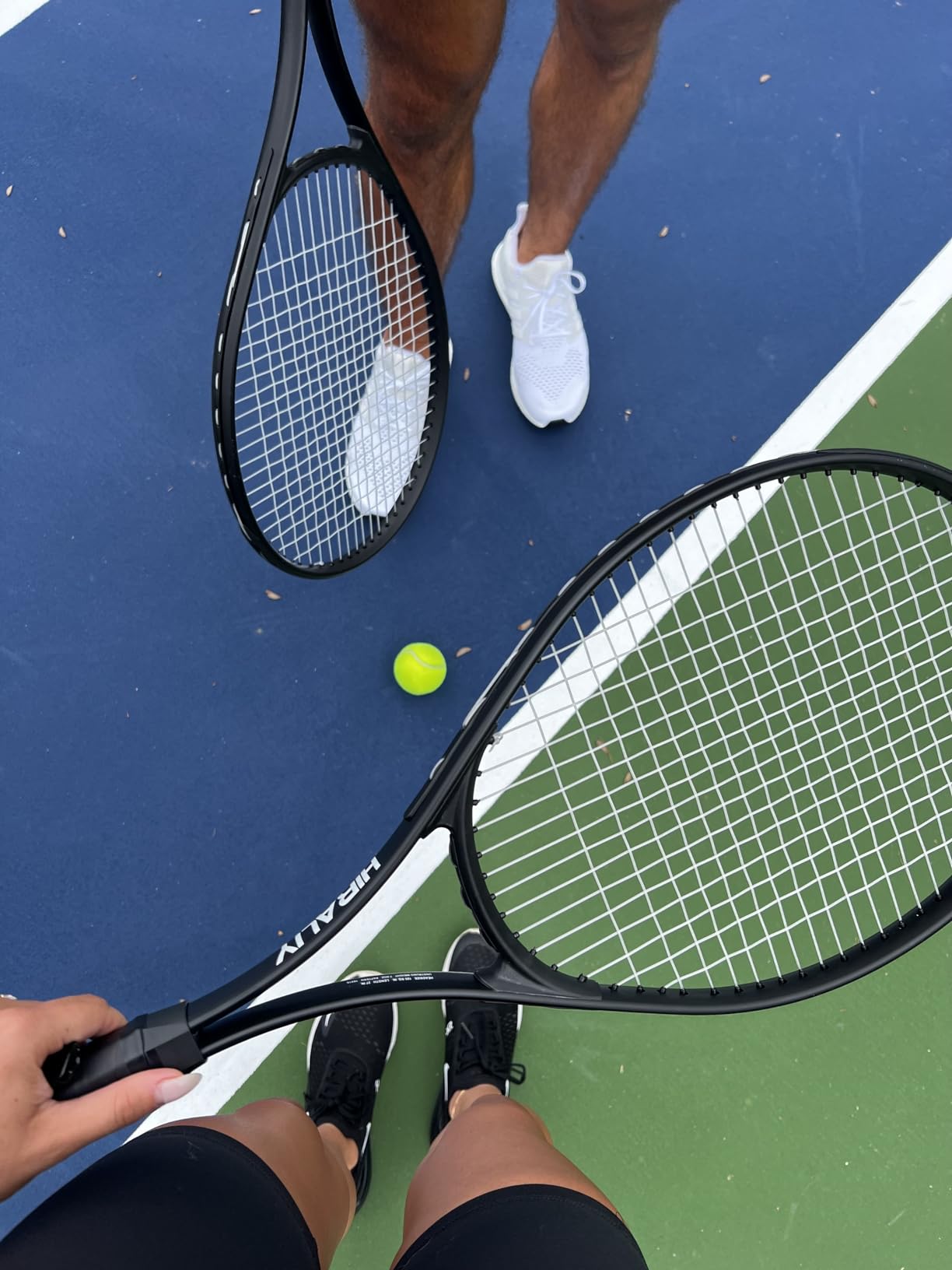
This is a favourite with first-time and returning players precisely because of the weight. The most common complaint is not the racket at all, it is the carry bag, and second is grips that loosen with sweat. Both are solvable, and the grip issue matters more for older hands than it would for a 30-year-old, so plan to re-wrap or replace the grips within a season.
Colour options include pink, black and blue, which sounds trivial but tells you a lot about the intended market. This is a set built for casual play, doubles with a friend, and a first season back on court.
Is the grip size going to be a problem for you?
This frame lists a 4 1/8 inch grip, which is the narrowest handle in this roundup. If you have a decent hand span you will manage, but if you have a history of tennis elbow, arthritic fingers or a grip that has visibly shrunk, you are already going to want an overgrip on it from day one. Check the measurement before ordering, because a handle that is too thin forces the hand to grip harder, and gripping harder is what tightens the forearm.
Where the savings show?
The bag and the shoulder strap are the weak points, and they give way long before the frames do. A small number of reviews also report mould or tape defects on arrival, so inspect the frames and grips before you play. For a casual player who practises a couple of times a week, none of this matters much. For a regular club player, replace the bag early.
6. HEAD Ti. Conquest – Best Lightweight Frame for Quick Volleys
HEAD Ti. Conquest Tennis Racquet, 4 1/4″ Grip
108 sq in head
9.7 ounces
O-Beam frame
27 inch length
Pros
- Oversized 108 sq in head forgives off-centre shots
- Ultra-light O-Beam frame reduces fatigue
- Head-light balance improves control at the net
- Pre-strung and ready to play out of the box
Cons
- Titanium construction feels less solid than graphite
- 108 sq in gives less margin than 115 sq in frames
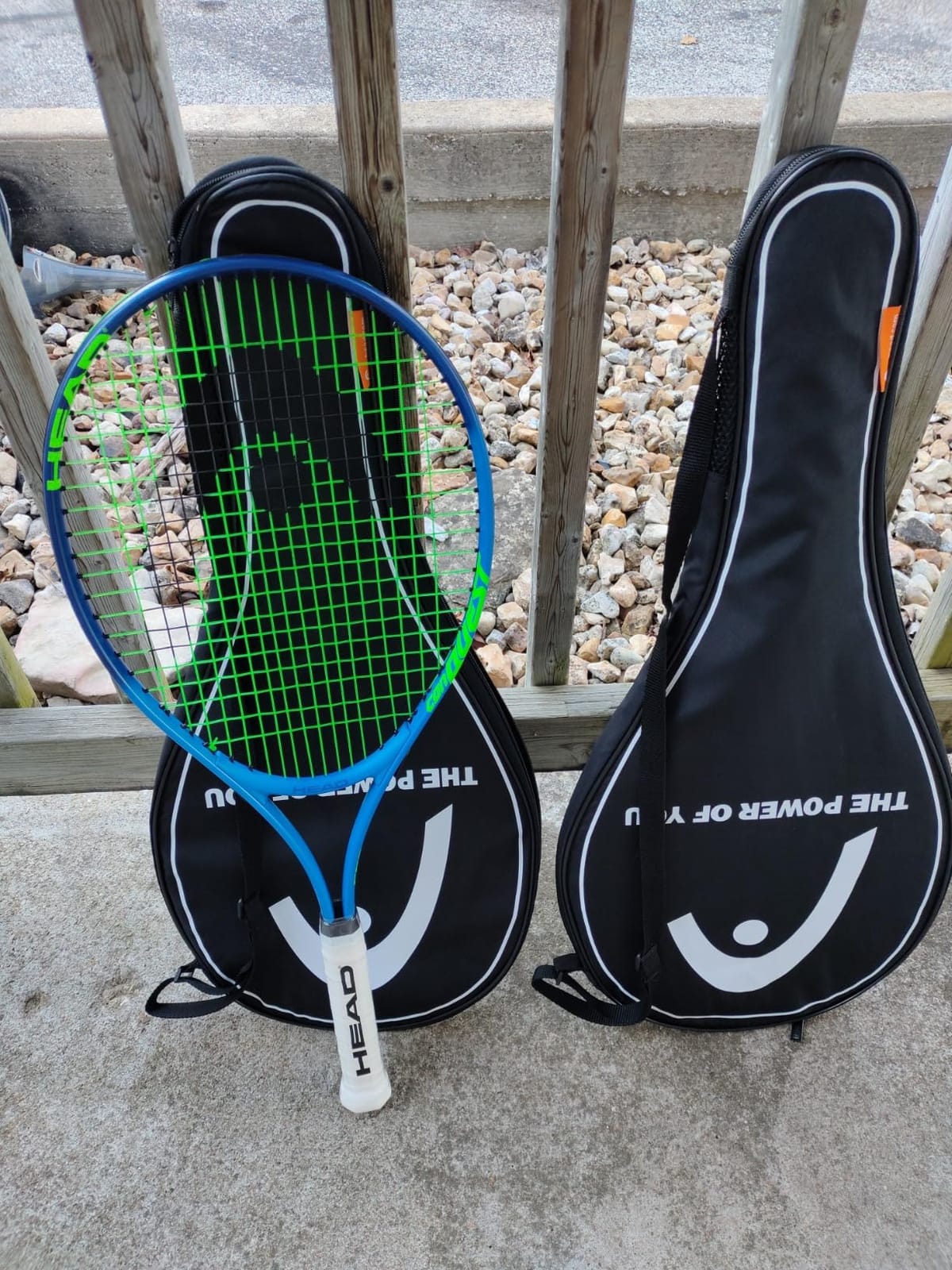
Most frames in this roundup are built for the baseline, and the Ti Conquest is the one that is genuinely happy at the net. Its head-light balance pulls the weight down toward your hand, which is what you want for quick reactions and short swings, and that is the single most valuable trait for senior league doubles where points are decided at the net.
At 9.7 ounces and 27 inches it is a light, conventional adult length. The 108 square inch head is a sensible middle ground: big enough to forgive a mistimed volley, small enough that you can still feel the ball when you make clean contact.
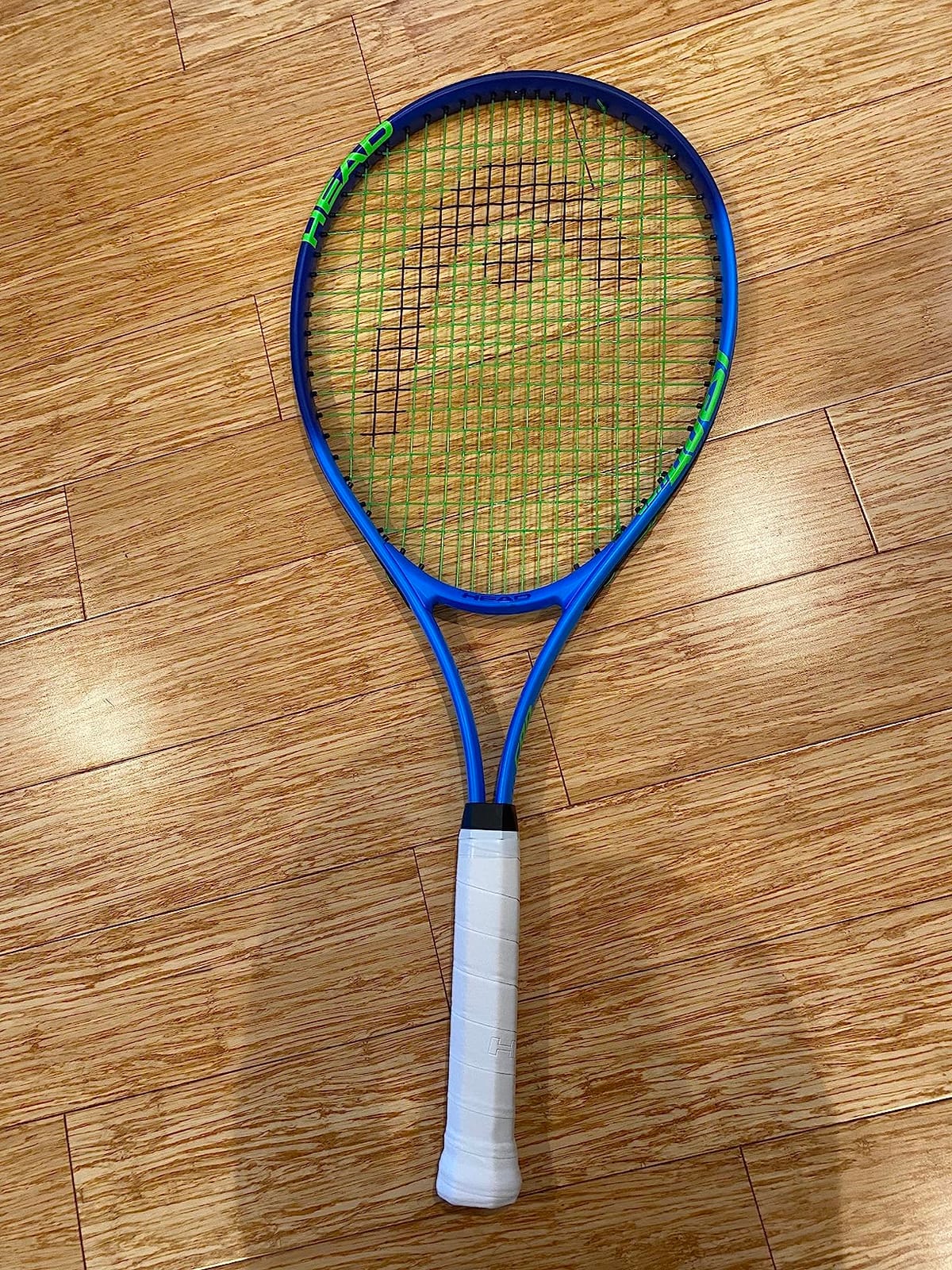
Buyers describe it as easy to swing and comfortable for casual rallies, and the O-Beam frame is consistently credited with making a slower swing speed viable. That is the point of it. If you are not generating racquet head speed, a frame that rewards a compact swing is worth more than a frame that rewards a full one.
What you give up is solidity. Titanium construction here does not feel as firm under a hard hit as a graphite frame, and reviewers note limited praise for power or premium feel. It is a racket for keeping the ball in play, not for finishing points with pace.
When head-light balance is the right call?
A head-light frame puts more of the mass in your hand, which improves control and reduces the twisting that causes off-centre shots to send the ball wide. It is the correct choice for doubles players who volley, for anyone who reacts to a fast ball rather than setting up for it, and for players whose shoulder struggles with a long lever above the head. If you mostly play baseline tennis and never come forward, a head-heavy frame will give you more power instead.
The grip size trade-off
It lists a 4 1/4 inch grip, which is the most common handle in tennis and fine for most adult hands, but on the narrow side for a shrinking senior grip. Budget for an overgrip. Also expect to add a replacement grip early, because factory grips on frames in this class wear through faster than players expect, and a slick grip makes a player grip harder than they need to.
7. Wilson Hyper Hammer 5.3 – Largest Sweet Spot for Forgiving Play
Wilson Hyper Hammer 5.3 Strung Tennis Racket (Black/White, 4 3/8)
110 sq in head
Head-heavy balance
About 8.5 oz
27.5 inch length
Pros
- Oversize 110 sq in head gives a very large sweet spot
- Head-heavy balance adds stability on compact swings
- Light frame is easy on the arm over longer sessions
- Open string pattern lifts power and spin with less effort
Cons
- Noticeable string vibration on hard shots without a dampener
- Factory tension can be uneven in the lower mains
- Large head takes getting used to at the net
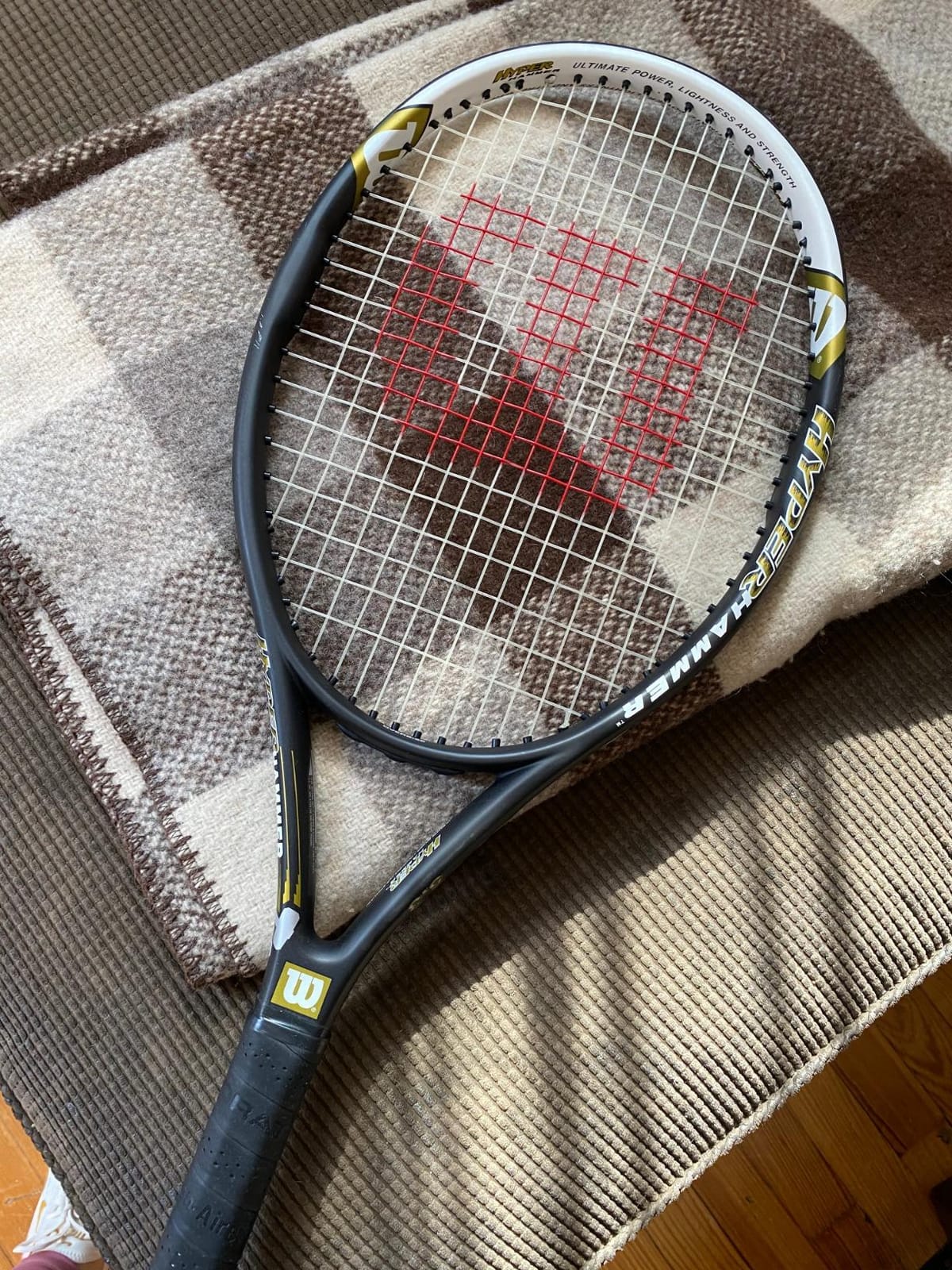
The Hyper Hammer 5.3 is the frame most often recommended to seniors who are returning after an injury, and the reason is the head-heavy balance. When you drop weight, you normally lose power, and head-heavy balance is how you put it back: the mass sits at the end of a lever above your hand, so a compact swing still moves a lot of mass through the ball. You get the stability of a heavier frame without carrying a heavier frame.
At 110 square inches it also has one of the largest sweet spots in this roundup, and multiple owners describe it as a strong pick for seniors coming back to play. Several mention needing a short adjustment period for the oversized head before it felt natural at the net.
Reviewers consistently praise easy power, a very forgiving sweet spot and a light frame. It is a long-standing club and lesson favourite for good reason, and the fact that it is offered in grip sizes from 4 inch to 4 1/2 inch means you can actually get a handle that fits an aging hand properly rather than settling for whatever comes standard.
The most common complaint is string vibration on hard, flat shots, and the second is uneven factory tension in the lower mains. Both are stringing problems rather than frame problems, and both disappear with a decent string job at a moderate tension.
Why head-heavy beats heavy for most seniors?
Power comes from mass moving fast. You can get that by making the whole racket heavier, which tires the arm, or by concentrating mass in the head, which mostly does not. That is why players stepping down from a 300 gram adult racket are usually steered toward a head-heavy frame instead of a head-light one, because it preserves their power while the total weight drops. It also resists twisting on off-centre contact, which is a common source of elbow strain.
Plan for a dampener and a restring
With a large open-pattern head and a head-heavy balance, the strings carry more of the load and the string bed becomes the comfort control. Ask for a soft multifilament or a synthetic hybrid at roughly 22 to 26 kg and fit a dampener if vibration bothers you. If you have never had a racket strung to your own tension, this is the frame to do it with, because a large head hides a mediocre string job better than a small one.
8. Layway Two Player Recreational Set – Lightest Doubles Pair
Tennis Rackets 2 Players Recreational for Beginners,Pre-Strung 27 Inch Light Adult Racquet Set for Women Men with Tennis Balls,Overgrips and Carry Bag (Green)
105 sq in head
About 0.57 lb per racket
27 inch length
Two rackets included
Pros
- Very light at about 0.57 lb per racket
- 105 sq in head gives a large forgiving target
- Pack includes rackets
- balls
- grips and a cover
- Durable enough for a full season of casual hits
Cons
- Bag strap tears after a few outings
- Included balls wear out quickly
- Not built for competitive play
This is the lightest set we reviewed, at about 0.57 lb per racket, and that number is the whole argument for it. If your partner also finds that heavy frames leave your shoulder aching after an hour of league doubles, a matched pair at this weight means neither of you has to compromise. Reviews describe it as a good value, lightweight beginner set that holds up well for doubles and family play.
The 105 square inch head is a good compromise between forgiveness and control, and the pack comes with rackets, balls, handle grips and a portable cover. The strings are pre-strung at a standard tension, so there is nothing to do before your first hit.
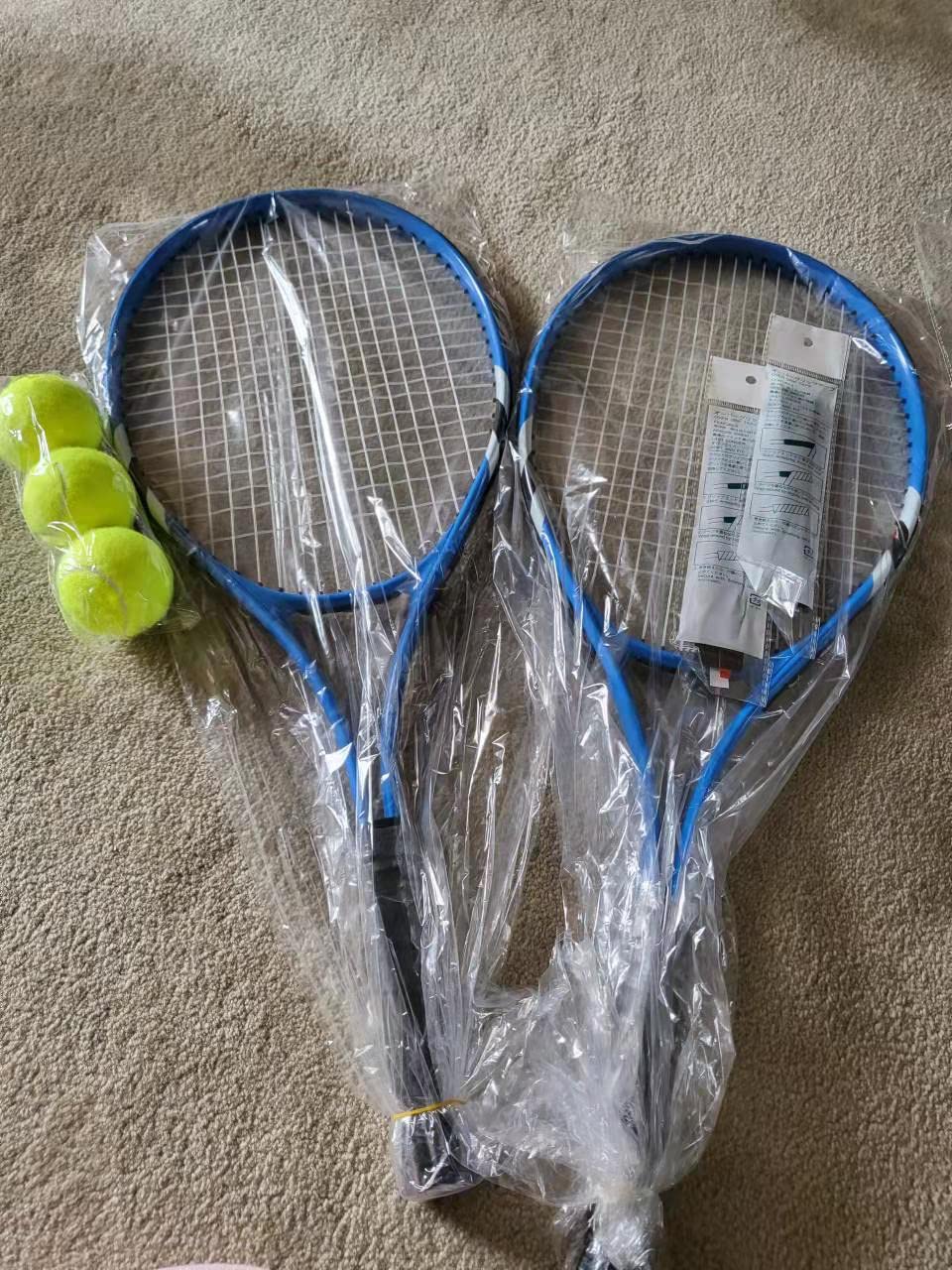
What reviewers like is the balance: light enough to swing without thinking, forgiving enough that a good rally does not end on one stray ball, and durable enough for regular weekly use. The comfortable overgrip also absorbs some vibration, which matters more for older forearms than most buyers credit.
The recurring negatives are the same two things we see on most budget sets: a thin carry strap and balls that need replacing quickly. Neither reflects on the rackets. Recurring praise for the frames themselves is steady and there are no durability complaints worth worrying about.
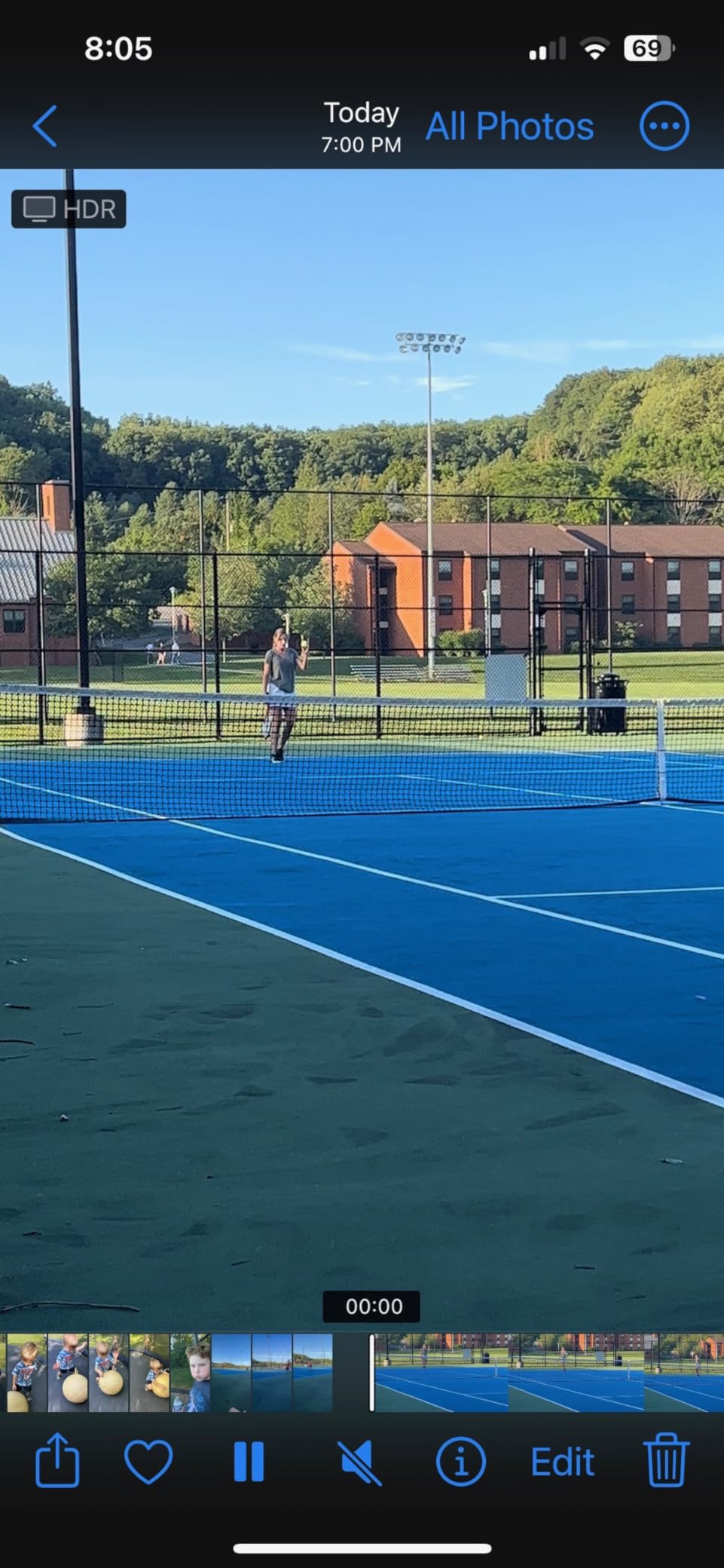
Best pick if you play doubles twice a week
Two players, one bag, no arguments about who is carrying what, and both rackets weigh the same. That is the practical appeal, and for senior social leagues it is a large part of the value. Just be realistic about what the frame is: it is built for rallies and enjoyment, and anyone who wants to compete seriously will want a graphite frame with more feel within a season or two.
The grip size is worth thinking about
The 4 1/4 inch grip is standard but on the narrow side for aging hands. Because the pack includes handle grips, adding one is the first thing you should do when the box arrives. Also plan to replace the balls before your first session, because the included ones are the most commonly criticised part of a set at this level.
9. LUNNADE 27 Inch Carbon Fiber Racket – Best All-Round Lightweight Value
LUNNADE Adults Tennis Racket 27 Inch, Shockproof Carbon Fiber Tennis Racquet Light-Weight, Pre-Strung and Regrip, Suitable for Beginners to Intermediate Players
280 g frame
27 inch length
Cushioned ergonomic grip
Pre-strung with spare overgrip
Pros
- 280 g frame stays comfortable in long sessions
- Ergonomic cushioned grip reduces hand fatigue
- Balanced weight distribution improves accuracy
- Pre-strung and supplied with a spare overgrip
Cons
- Feels basic next to graphite or titanium frames
- No bag or balls included
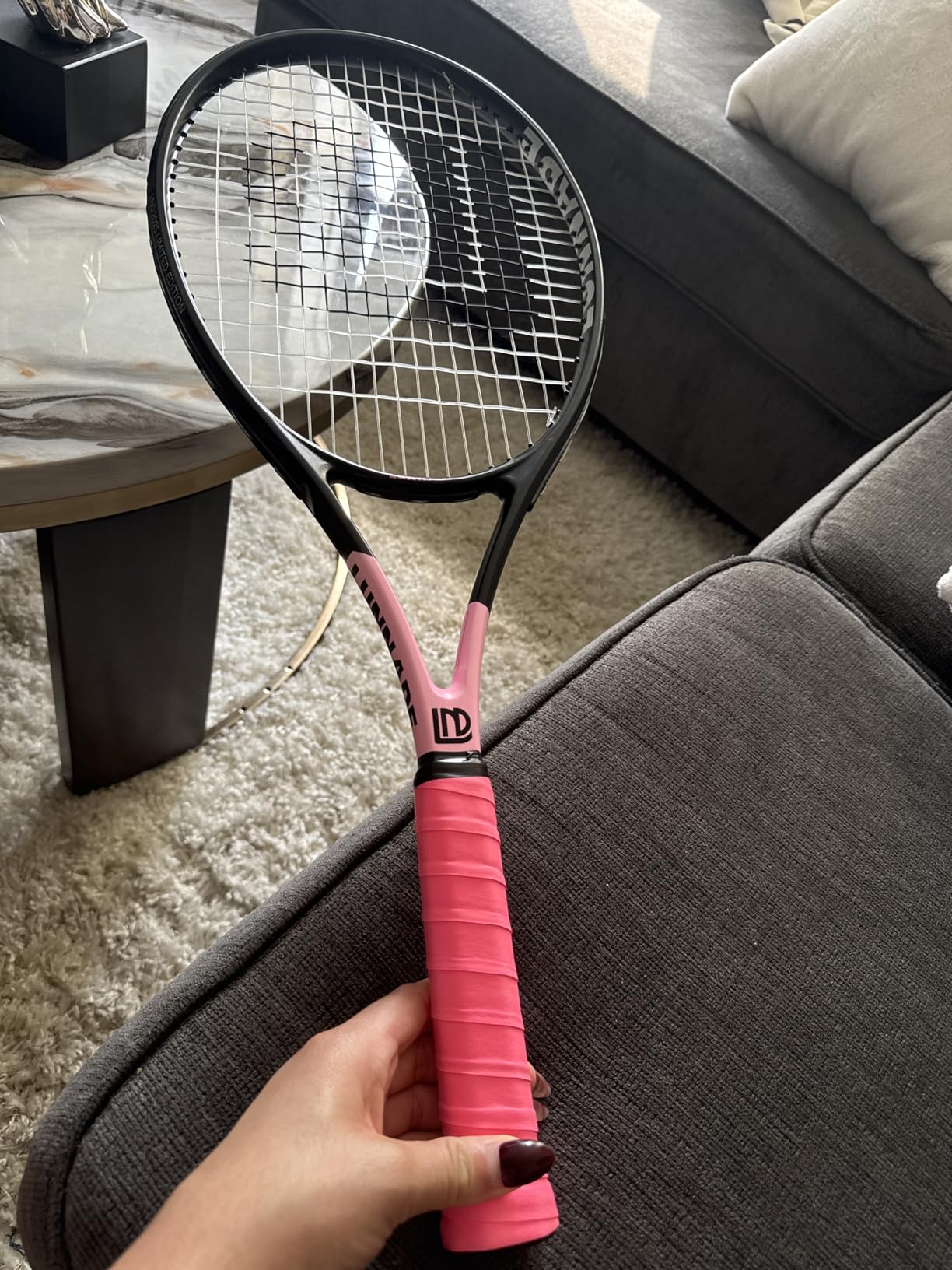
At 280 grams this frame sits in the middle of the range we would call ideal for a senior player: light enough for long sessions, heavy enough to stay stable on off-centre contact. That middle band is where we would put most players in their seventies, and it is why this frame keeps showing up as a recommendation for a spouse or a parent starting out.
The cushioned grip is the detail we would highlight. Hand fatigue is a bigger deal than most buyers expect over a season, and a grip that stays comfortable on a two-hour session is worth as much as any dampening technology. The frame arrives pre-strung with a spare overgrip, so you can size the handle immediately.
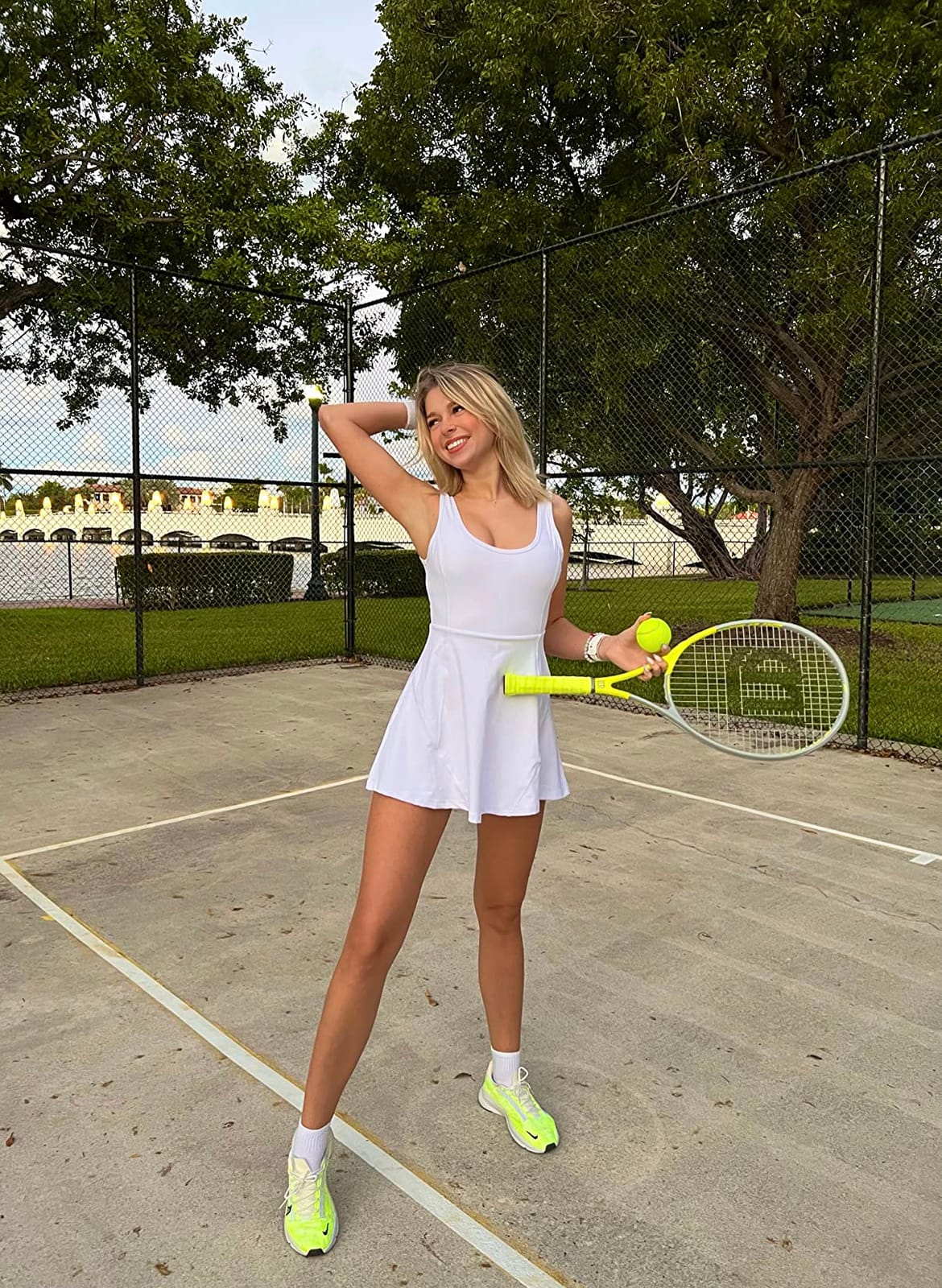
Buyers rate it as a light, well-built and comfortable affordable racket, often bought as a gift, and there are no meaningful durability complaints in the reviews. The feedback frames it correctly as a solid recreational option rather than a performance racquet, which is exactly the expectation you should bring to it.
What you do not get is a distinctive feel. The frame is designed for beginners through intermediates, and it delivers consistent, predictable shots rather than anything remarkable. For most senior league players that is the right trade, because consistency is what wins recreational matches.
Why the middle weight band suits most players?
Frames under roughly 260 grams feel great for two sets and then feel unstable when a partner takes the ball early. Frames over 300 grams start asking the shoulder to do work that takes longer to build up than most players expect. Between about 270 and 295 grams, the racket is light enough to swing late and heavy enough to survive a flat drive. If you are unsure where to start, this is the band, and this frame sits in the middle of it.
What to add after you buy it?
There is no bag and no balls in the box, so budget for those separately, along with a spare overgrip once the supplied one wears. Our guide to racket bags is worth a read if you plan to play travel or league fixtures. For a single-racket purchase this is a clean, uncomplicated setup.
10. Teloon Recreational 27 Inch Racket – Full Specs, Best for Midplus Players
Teloon Recreational Adult Tennis Rackets-27 inch Tennis Racquet for Men and Women College Students Beginner Tennis Racket. (Mark-III)
102 sq in midplus head
280 g unstrung
16x19 at 50 plus or minus 5 lbs
27 inch
Pros
- Publishes full specs including balance and tension
- Standard 27 inch length with a familiar grip
- Light 280 g frame is easy for beginners
- One-piece moulded construction holds together well
Cons
- Arrives without grip tape
- 102 sq in head is less forgiving than oversize
- Aluminum gives limited power against graphite
Most frames hide their specifications. This one publishes the unstrung weight at 280 grams plus or minus 10, the balance at 335 millimetres, the pattern at 16×19 and the tension at 50 pounds plus or minus 5. That transparency is genuinely useful when you are trying to work out how a racket will feel before you commit, and it is the reason this frame belongs in a roundup that is mostly built on published specs.
At 102 square inches it is a midplus frame rather than an oversize one, which is the trade. You get a more connected feel and better control than a 115 square inch hoop, and you give up some of the forgiveness that makes the beginner frames so easy to play.
The build is one-piece moulded aluminum at 27 inches, aimed at beginner and recreational players, with ten colour options in the X-BLADE range. It is a straight, uncomplicated frame that does a basic job properly.
Who should choose a 102 square inch head?
Midplus is the right call for a player who has a reliable contact point, plays mostly from the baseline, and wants to feel the ball rather than simply survive the swing. It is the wrong call for someone whose timing has gone since a layoff, or who is learning to serve, because every small miss gets punished harder. One thread on a senior forum captures the honest version of this: some players hold onto small heads for decades, others move to oversized frames and adjust within a season. Both paths are fine, they suit different bodies.
Fit an overgrip before your first hit
This frame arrives without grip tape, so it is not playable straight from the box. A roll of overgrip is included to wrap, and we would do it immediately. The listed 4 1/4 inch grip is standard adult size, which is narrower than most senior players prefer, so two layers is not unreasonable. Aluminium construction also gives less power than graphite, which is the main reason we would not make this your only racket if you play competitively.
11. HEAD Geo Speed – Softest Impact of the Smaller Heads
HEAD Geo Speed Tennis Racquet, 4 3/8″ Grip
105 sq in head
10.4 ounces
Head-light balance
Factory-strung synthetic gut
Pros
- Light 10.4 oz frame is easy to swing
- Head-light balance reduces vibration and aids control
- Comes strung with synthetic gut for a soft feel
- Standard 4 3/8 inch grip suits many adult hands
Cons
- 105 sq in head is less forgiving than oversize frames
- Basic titanium build offers limited power for aggressive hitting
If your priority is a soft, quiet impact rather than maximum forgiveness, the Geo Speed is the frame to shortlist. The head-light balance pulls mass toward your hand, and combined with the factory synthetic gut strings it produces a muted feel that reviewers describe as noticeably low on vibration. Synthetic gut is a genuinely soft string, and it is the single biggest reason this frame feels gentle on an older arm.
At 10.4 ounces and 27.5 inches it is light and slightly long, and the 105 square inch head is a sensible compromise. The 4 3/8 inch grip is one of the better choices in this roundup for a typical senior hand.
Geo Power Technology shaft geometry is credited with improving both power and control, which is a fair description of how the frame plays. Feedback is positive but measured, with owners placing it squarely in casual and learning play rather than demanding performance.
Why the string matters more than the frame?
You can make almost any frame feel softer with the right string at the right tension. Synthetic gut and multifilament strings absorb far more energy than polyester, and pulling them down two or three kilograms reduces impact further. If you have a sensitive elbow, ask your stringer for a soft multifilament or synthetic hybrid at roughly 22 to 26 kg and treat that as your first comfort upgrade before buying a more expensive racket.
Where it runs out of margin?
105 square inches is not a huge head, and buyers note it is less forgiving than oversize frames. Titanium construction here also offers limited power for players who hit aggressively, so if you like to flatten the ball you will want a graphite or oversize frame instead. The light balance and soft strings will not rescue a contact point that is consistently a centimetres wide.
12. OPPUM Two Racket Starter Set – Best Kit for a Complete Beginner
OPPUM Adult Tennis Racket Set of 2, 27 Inch Pre-Strung for Beginners
300 g per racket
Even 335 mm balance
100 sq in head
16x19 pattern
Pros
- Even 335 mm balance gives a steady
- predictable feel
- 4 3/8 inch grip suits beginner adult hands
- Bag insert stops the two rackets rubbing together
- Vibration-dampening fibres in the alloy frames
Cons
- Included balls have poor bounce and wear fast
- 100 sq in head is less forgiving than oversize
- Can arrive with minor finish imperfections
The OPPUM set closes our list because it solves a problem nobody else does: the bag. The carry bag has an insert that stops the two rackets rubbing together, which sounds like trivia until you have had a nice frame destroyed by string burn against another frame in a car boot. For a couple who play together, that detail is worth more than a marginal spec difference.
The rackets are 27 inches, 300 grams each with an even 335 millimetre balance and a 100 square inch head on a 16×19 pattern. Even balance at that weight is a stable, uncomplicated setup that suits a beginner who has never thought about balance at all, and the 4 3/8 inch grip is a sensible size for most adult hands.
Aluminium alloy frames with vibration-dampening fibres draw steady praise in reviews, and the set is often bought as a gift. It includes two rackets, two balls, a shoulder-strap bag and two spare overgrips, which makes it a complete first kit rather than a starting point.
Is 300 grams too heavy for a senior?
It is at the upper end of the range we would suggest, and we would only pick it if you value an even, planted feel and you already have some confidence in your swing. If you are brand new or returning after a long break, one of the lighter frames earlier in this list will serve you better. The stable balance does soften the experience, but you are still asking the shoulder to move more mass than a 260 gram frame does.
What nearly every reviewer mentions?
The balls. Almost every reviewer notes that the included balls are poor and should be replaced, so treat them as a placeholder and bring your own. Some buyers also report cosmetic imperfections on arrival, which matters more than usual on a racket you can see in your hand every week. Inspect before you play.
How to Choose a Tennis Racket After 60?
Head size and the sweet spot: how big is oversized?
Head size is measured in square inches and it is the most important single spec for a returning player. A standard adult player frame sits around 95 to 100 square inches. An oversize frame runs from about 105 to 115 square inches. A super oversize frame is 116 square inches and above. For a player over 60 who is starting again or who struggles with contact, we would aim for 105 square inches or more, because the extra area is what turns a mistimed shot into a rally instead of an error.
Most forgiving simply means the largest sweet spot relative to the ball. That is the 115 square inch HEAD Ti S6 in this roundup, with the 110 square inch Hyper Hammer close behind. If you already strike well and simply want more comfort, a 105 square inch frame such as the Geo Speed gives you most of the benefit in a more conventional shape.
One caution from the forums, and it is a good one. Moving to a big head changes your contact feel, and older players who have used a small head for twenty years sometimes miss a few balls in both directions for the first few sessions. That is a normal adjustment, not evidence that the frame is wrong.
Weight, and the light versus dampening trade
Unstrung weight is the frame alone. Strung weight adds the strings, dampener and grip, usually adding 10 to 15 grams. Listings mix the two, and that is where most confusion comes from, so check which figure is being quoted. For seniors, 255 to 290 grams unstrung is the working range, with 280 grams a sensible default for most players in their seventies.
Here is the counterintuitive part. The lightest frame is not automatically the safest one. A light frame has less mass to absorb impact, so it can transmit more energy into the elbow and wrist even while feeling easy on the shoulder. The shoulder often prefers light; the elbow often prefers a little mass and a soft string bed. If you have a diagnosed joint problem rather than general fatigue, the sweet spot is a middle-weight frame with a genuinely soft setup, not the lightest frame you can find.
Balance is the other half of the weight question. Head-heavy balance keeps power when you drop weight, head-light balance gives you control at the net, and even balance is predictable. Players stepping down from a 300 gram adult racket should almost always go head-heavy rather than head-light, and that is why the Hyper Hammer works so well for people making that exact move.
Grip size for aging hands
This is the detail we would fix before anything else, because a handle that is too thin makes a player grip harder than they need to, a tighter forearm leads to a tired elbow, and a tired elbow is the problem most players are trying to avoid. The self-check takes ten seconds. Take an eastern forehand grip, line the index knuckle along the top bevel, and look for roughly a fingertip of space between the base of your index finger and your palm. Too much space means the handle is too big, no space means too small.
Standard adult grips are L2 at 4 1/4 inch, L3 at 4 3/8 inch and L4 at 4 1/2 inch. Most senior hands end up at L3 or L4, and several frames in this roundup only come with an L2 handle. If your hand has shrunk, build the grip up rather than trying to find a thicker frame, and build it with an overgrip rather than a replacement grip. A replacement grip is thinner because it replaces what is there, while an overgrip layers on top. If you like a full handle, two overgrips is normal. Grip up before you judge whether a frame fits.
Strings, tension and dampeners
This is the biggest comfort lever you control, and no racket purchase changes anything as much as a good string job. If you have elbow, wrist or shoulder sensitivity, start here before you spend on a more expensive frame.
First, pick a soft string. Multifilament and synthetic gut strings absorb far more energy than polyester, which is stiff and designed for control. Polyester in a lighter frame is the classic cause of a sore arm. Second, lower the tension. Around 22 to 26 kg is a comfortable working range for most senior players, and dropping from a high string factory tension can make more difference than changing frames.
Third, add a dampener if vibration bothers you. It will not fix an elbow problem and it is not a substitute for soft strings, but it takes the high-frequency buzz out of impact. Fourth, change the frame if the strings are already soft and low, because the frame is then all that remains to absorb the impact. Fifth, restring on a schedule: a common rule of thumb is to restring as many times a year as you play per week, so a twice-a-week player restrings roughly twice a year and a once-a-week player once.
Do not buy an expensive frame and restring it at maximum tension. Have the strings fitted, play with it for a season, and only then decide whether the frame suits you. Forum consensus is unusually consistent on demoing several frames before committing, and on avoiding high tension if the arm is already sore.
Six signs your racket is working against your joints
Your elbow or wrist aches after a session that used to be fine.
Your shoulder tires during the serve but not during rallies from the baseline.
Your grip slips or you callus the base of your fingers more than you used to.
The frame twists and sends off-centre balls wide.
The ball flies long and you have lost control of your depth.
You finish a two-hour match and feel it the next morning.
Numbers one, two and three are solved by strings, tension and grip size respectively, in that order of cost. Numbers four and five point to head size and weight. Number six is the one to take to a doctor rather than a shop, because whole-body fatigue after exercise at your age is a health question, not an equipment question.
If you want to keep the conversation going while you shop, our picks for ball machines for solo practice cover the other half of independent training, and the beginner racket guide linked earlier is a good companion read if you are starting from zero.
Frequently Asked Questions
What is a senior tennis racket?
A senior tennis racket is an oversized, lightweight frame, usually 105 to 116 square inches and roughly 255 to 290 grams unstrung, built to generate power with less swing effort and to reduce impact stress on aging joints. A larger head enlarges the sweet spot so off-centre contact still produces a good shot, a lighter weight reduces strain on the shoulder and arm, and a flexible frame with soft strings absorbs vibration before it reaches the elbow and wrist.
What is the most forgiving tennis racket?
The most forgiving racket has the largest sweet spot relative to the ball, which in this roundup means the HEAD Ti S6 with a 115 square inch head, closely followed by the Wilson Hyper Hammer 5.3 at 110 square inches. Forgiving means off-centre contact still returns a usable ball, so bigger heads, lighter weights and more flexible frames all increase forgiveness.
What is the easiest tennis racket to use?
The easiest racket to use is a light, oversize frame that generates power without a fast swing. The HEAD Ti S6 at 8.6 ounces strung with a 115 square inch head is the clearest example here, and the Layway and Senston two-racket sets are the most approachable for a complete beginner who wants everything in one purchase.
What is the best tennis racket for shoulder problems?
Shoulder comfort is mostly a weight and balance question, so look for a light frame with head-light or even balance that you do not have to accelerate through at the top of the swing. The HEAD Ti Conquest at 9.7 ounces and the HEAD Geo Speed at 10.4 ounces suit that pattern, and adding a lighter overgrip reduces the load on the forearm. See a doctor about persistent shoulder pain rather than treating it with equipment alone.
How light should a senior tennis racket be?
Most players over 60 do best somewhere between 260 and 290 grams unstrung, with about 280 grams a sensible starting point. Frames under 260 grams can feel unstable to players with a late contact point, and frames over 300 grams ask the shoulder to do work that takes time to build. The lightest option is not automatically the safest, because less mass can mean more impact reaching the elbow.
Should a senior buy two identical rackets?
Yes, if you play regularly or play doubles, and this is the most consistent piece of advice on senior tennis forums. A matched pair means a broken string does not change the weight, balance or timing in your hands, and two identical frames remove the guesswork from doubles teams. Buy one higher-quality frame instead if you play alone and rarely break a string.
The Verdict on the Best Tennis Rackets for Seniors
After working through twelve frames, the honest answer is that the best tennis rackets for seniors are not the ones with the biggest names, they are the ones that match your head size, weight and string setup to your body this season. The Wilson Federer Adult Recreational Racket is our top all-round pick at 295 grams with a graphite frame and dampening pads, and it carries more real-world reviews than anything else here. The HEAD Ti S6 is the choice for maximum forgiveness and minimum effort, and the Wilson Hyper Hammer 5.3 is the frame to buy if you are coming down in weight and want to keep your power.
Before you order, check your grip size, get a soft string job at a moderate tension, and demo two or three frames if you can. If you have persistent elbow, shoulder or wrist pain, speak to your doctor or physiotherapist first. The best tennis racket for seniors in 2026 is the one that lets you keep playing next year, and keeping playing is the whole point.