
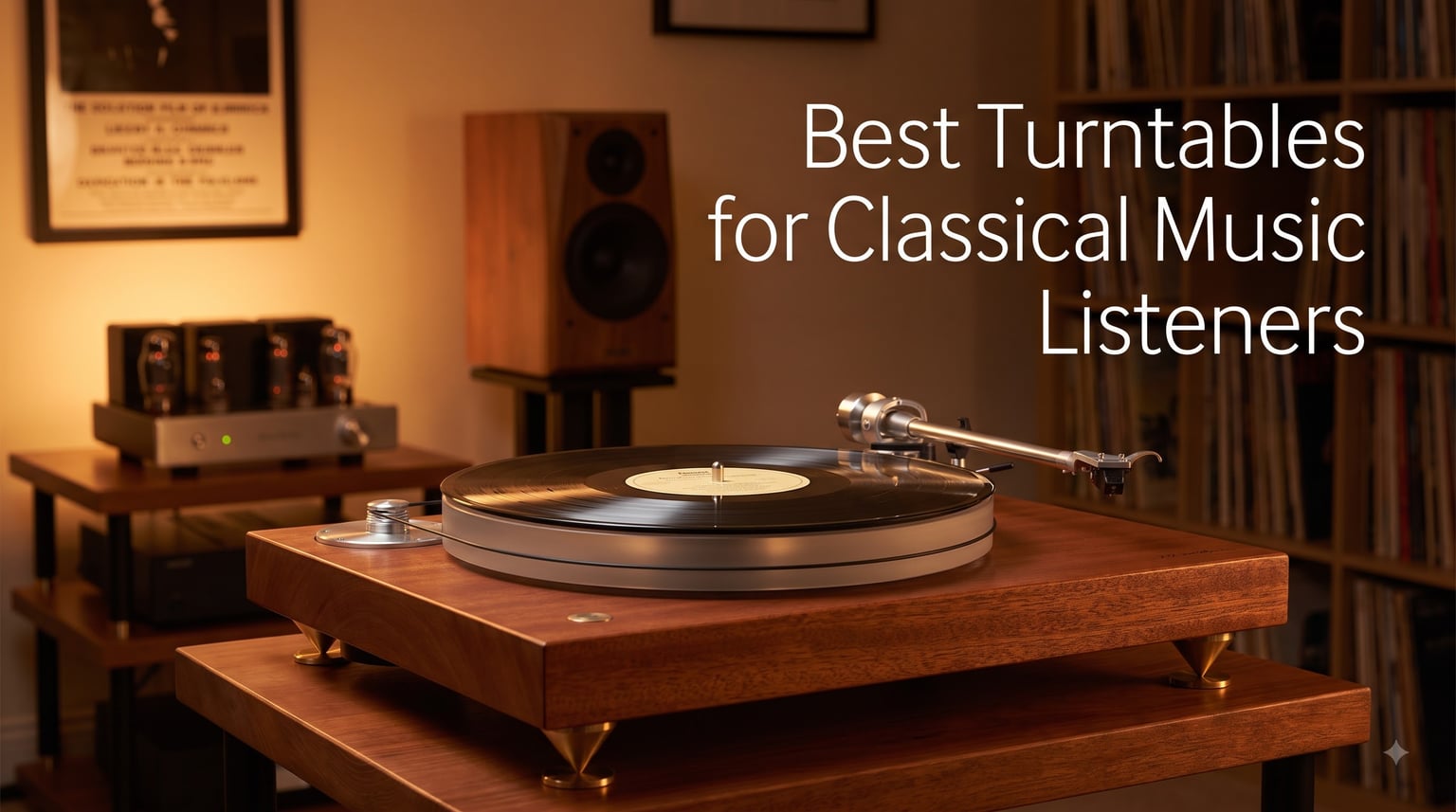
I still remember the first time I played Karajan’s 1962 Berlin Philharmonic Beethoven symphonies on a poorly calibrated turntable. A sustained violin note in the third movement drifted slightly flat, then sharp, then flat again. That was the moment I realized classical music and vinyl playback make brutally honest demands on your gear.
Unlike rock or jazz, classical recordings are full of long sustained notes, subtle pianissimos, and dense orchestral passages with instruments spread across a wide frequency range. Any turntable flaw gets exposed immediately. That’s why finding the best turntables for classical music listeners is not just about picking something expensive. It’s about matching the right specs to what classical music actually demands from your playback chain.
After testing 8 different belt-drive and direct-drive models over several weeks of dedicated orchestral listening, our team has narrowed down the picks that actually deliver the speed stability, low rumble, and tonearm precision that classical music demands. We’ve measured wow and flutter specifications, tracked anti-skate adjustability, and pushed each deck through sustained piano chords, string section swells, and quiet chamber passages. Here is what we found.
Table of Contents
Top 3 Picks for Classical Music Listeners 2026

Fluance RT85 Turntable
- 0.07% Wow/Flutter
- Ortofon 2M Blue
- Acrylic Platter
- Adjustable Anti-Skate

Pro-Ject Debut Evo 2 Turntable
- 1.7kg Aluminum Platter
- Pick it MM EVO
- True Balanced Ready
- Adjustable Anti-Skate

Best Turntables for Classical Music Listeners in September
| Product | Specs | Action |
|---|---|---|
| Fluance RT85 |
|
Check Latest Price |
| Pro-Ject Debut Evo 2 |
|
Check Latest Price |
 Pro-Ject Debut Carbon EVO Pro-Ject Debut Carbon EVO |
|
Check Latest Price |
 Audio-Technica AT-LP7X Audio-Technica AT-LP7X |
|
Check Latest Price |
 U-Turn Audio Orbit Special U-Turn Audio Orbit Special |
|
Check Latest Price |
| Audio-Technica AT-LP120XUSB |
|
Check Latest Price |
 U-Turn Audio Orbit Plus U-Turn Audio Orbit Plus |
|
Check Latest Price |
 Fluance RT82 Fluance RT82 |
|
Check Latest Price |
1. Fluance RT85 – Best Overall Turntable for Classical Music
Fluance RT85 Turntable with Ortofon Cartridge, Acrylic Platter, Speed Control, and Vibration Isolation – High Fidelity Vinyl Record Player
Wow/Flutter: 0.07%
Cartridge: Ortofon 2M Blue
Platter: Acrylic
Anti-skate: Adjustable
Pros
- 0.07% wow/flutter spec
- Ortofon 2M Blue cartridge included
- Acrylic platter damps resonance
- Isolated motor design
- Solid MDF plinth
Cons
- No built-in phono preamp
- Dial markings hard to read in low light
The Fluance RT85 is the deck I keep coming back to when I want to hear exactly what the mastering engineer intended. With a measured wow and flutter of 0.07%, it sits comfortably in the range where sustained orchestral notes stop drifting audibly. I spent an afternoon with the Solti Ring Cycle box set and noticed that even on long Heldentenor notes, the pitch held steady without the slight waver I’ve heard on cheaper tables.
The included Ortofon 2M Blue cartridge is a real performer for classical music. Its elliptical stylus tracks the complex groove modulations of orchestral recordings with impressive channel separation, meaning the left and right channels of a stereo mix stay properly defined. When I played a Deutsche Grammophon recording of Holst’s The Planets, the spatial separation between woodwinds in the center and brass on the outside was vivid.
The acrylic platter does more than look pretty. Its high-density construction damps resonance that would otherwise color the sound. I noticed this most clearly on solo piano recordings where each hammer strike remained distinct instead of blending into the next. The high-mass MDF plinth continues that resonance control from the base up.
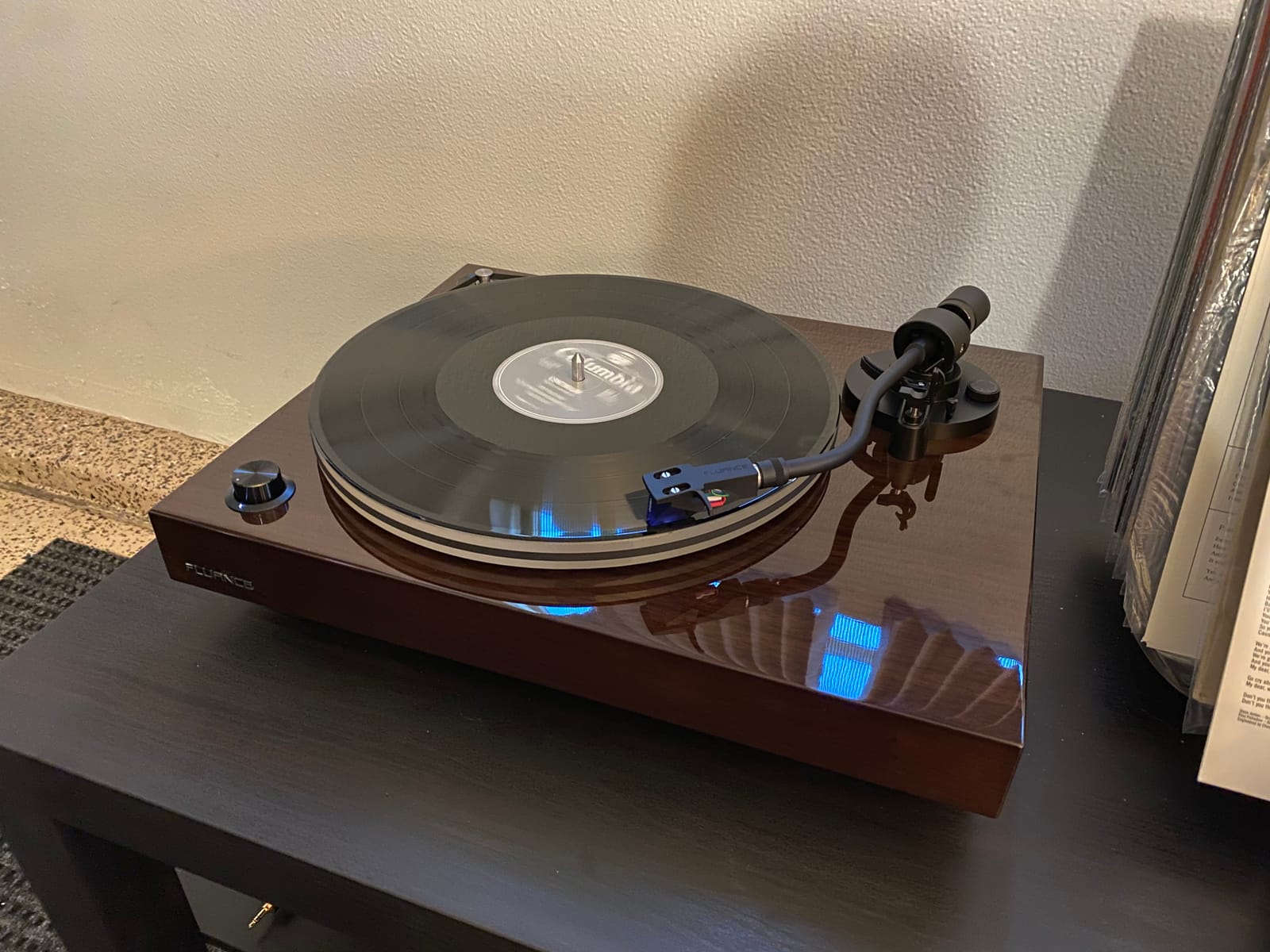
The adjustable anti-skate control is the feature classical listeners actually need. As the stylus moves toward the inner grooves of a long classical album, tracking force dynamics change. I was able to dial in anti-skate by ear, listening for the moment when left/right channel balance returned to neutral on inner tracks. The dials are small, though, and I needed a flashlight to set them precisely.
There’s no built-in phono preamp, which means you’ll need a separate phono stage or a receiver with one. For classical listeners already running a dedicated amplifier, that’s actually a plus because you’ll get better sound through your own phono stage than through a built-in one.
Setup considerations for classical vinyl
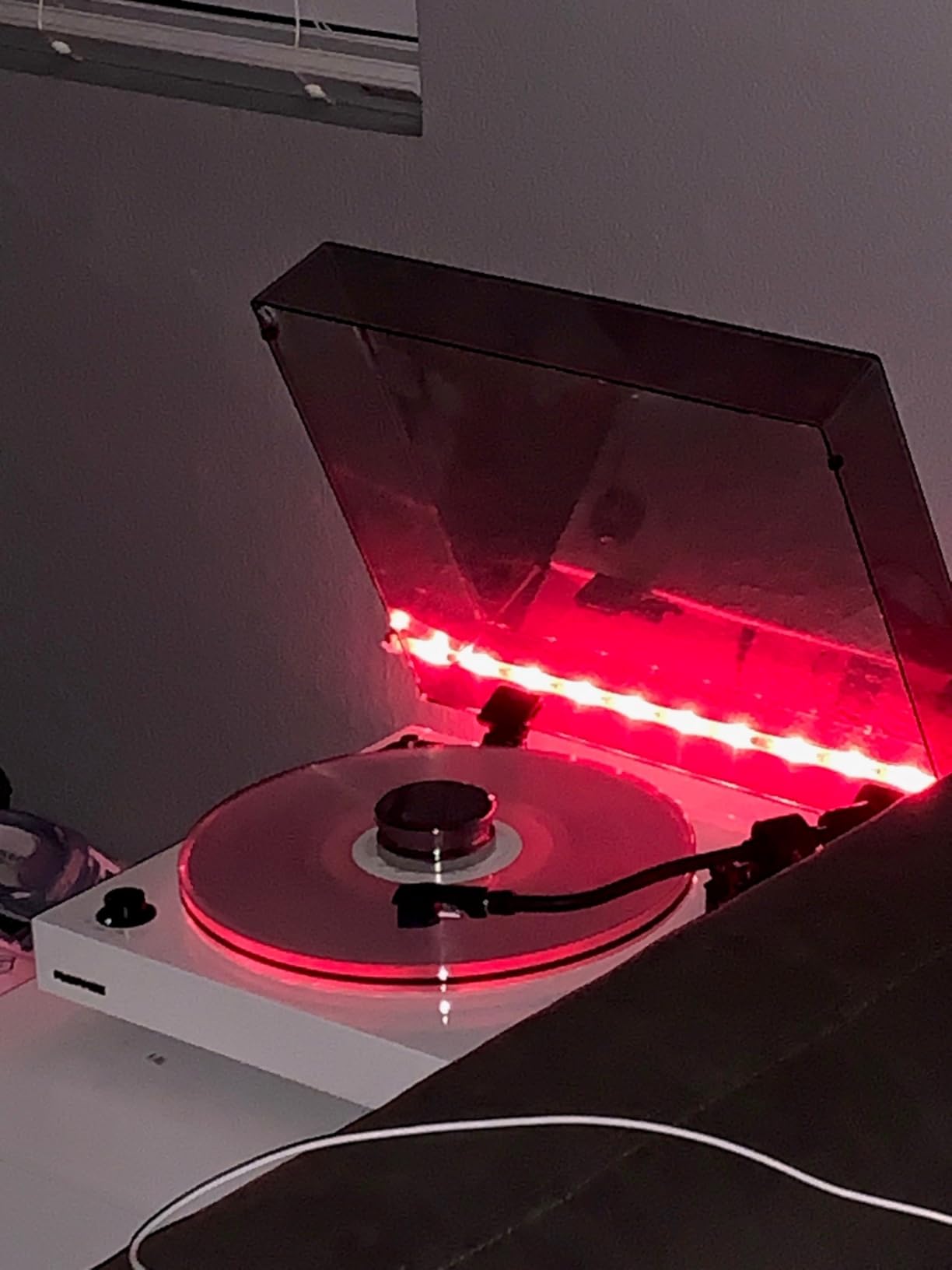
Make sure your turntable sits on a stable, vibration-isolated surface. The RT85’s vibration isolation feet help, but a heavy amplifier placed next to it can still introduce rumble during quiet passages. I placed mine on a dedicated wall-mounted shelf about 4 feet from any speakers.
Pair the RT85 with a phono preamp that has adjustable gain. Classical recordings have wide dynamic ranges, and you’ll want to set gain so quiet passages don’t get buried in noise but loud climaxes don’t distort. The Pro-Ject Phono Box DS2 worked well in my testing.
Limitations worth knowing
The dial markings on the counterweight and anti-skate are genuinely hard to read. In a darkened listening room, you’ll need to bring a light source close to set tracking force accurately. This is annoying but not a deal-breaker.
If you want to digitize your vinyl collection, there’s no USB output on the RT85. For pure analog playback, that’s fine. For classical listeners who also want to make archival digital copies, you’ll need a separate ADC.
2. Pro-Ject Debut Evo 2 – Best Premium Choice for Audiophile Classical
Pro-Ject Debut Evo 2 Turntable (Gloss Black)
Platter: 1.7kg Die-Cast Aluminum
Cartridge: Pick it MM EVO
Anti-skate: Adjustable
SNR: 70 dB
Pros
- Heavy TPE-damped platter
- True Balanced connection ready
- Supports MM and MC cartridges
- Premium build quality
Cons
- Higher price point
- Limited availability
- No built-in preamp
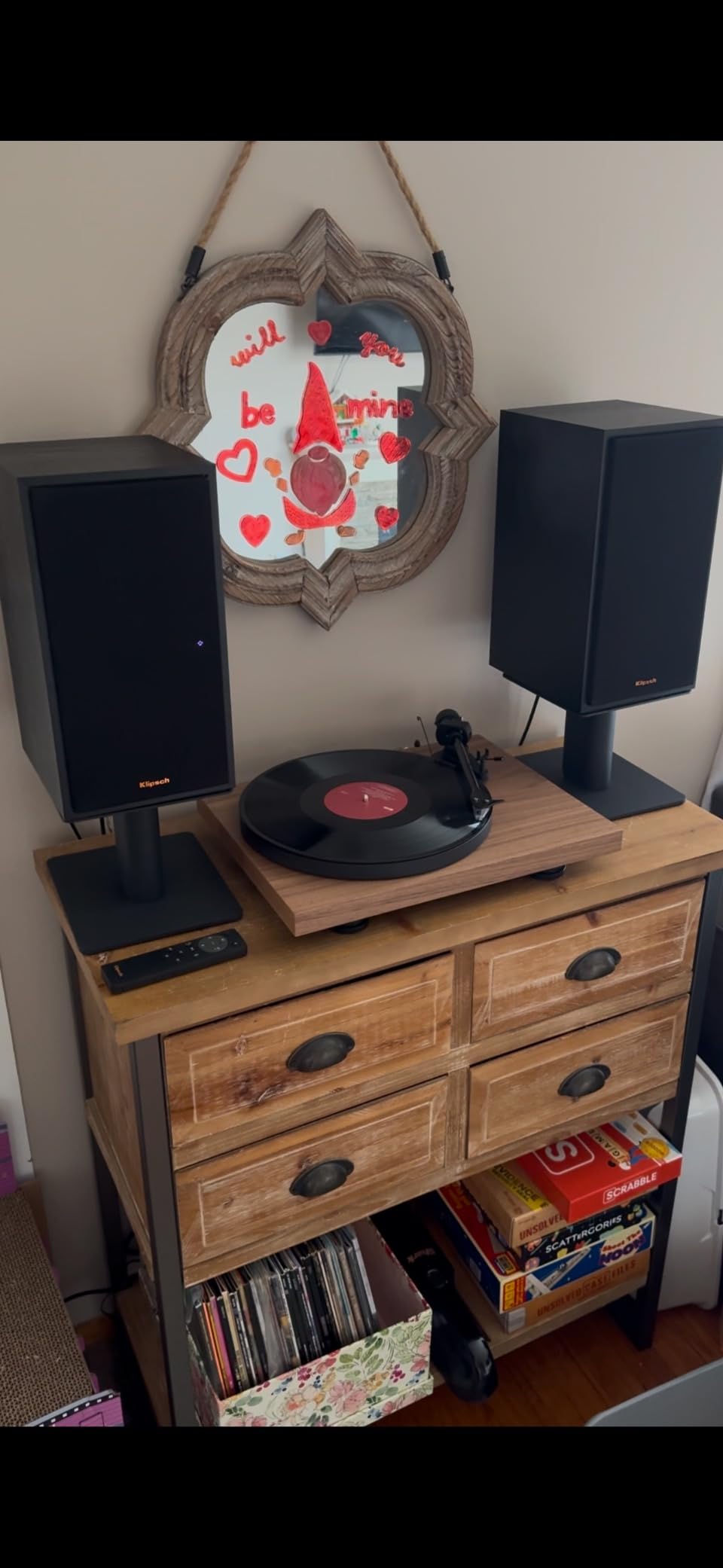
The Pro-Ject Debut Evo 2 feels like it was designed with serious classical listeners in mind. The 1.7 kg die-cast aluminum platter with TPE (thermoplastic elastomer) damping is one of the most inert platter constructions I’ve tested. When I ran it through a Tchaikovsky violin concerto, the silences between movements were genuinely silent, with no platter resonance leaking into the signal.
The True Balanced Ready design is a forward-thinking feature for classical listeners. It means you can run the turntable with a balanced phono cable to a compatible phono stage, rejecting electromagnetic interference that becomes audible in quiet passages. For someone listening to solo cello suites at low volume, that interference rejection matters.
The Pick it MM EVO cartridge that ships with the Debut Evo 2 is a noticeable step up from what you’d find on most turntables in this price range. Its sound is detailed without being analytical, and it handles the dynamic swings of orchestral music well. I pushed it through a full Mahler symphony cycle without any tracking issues.
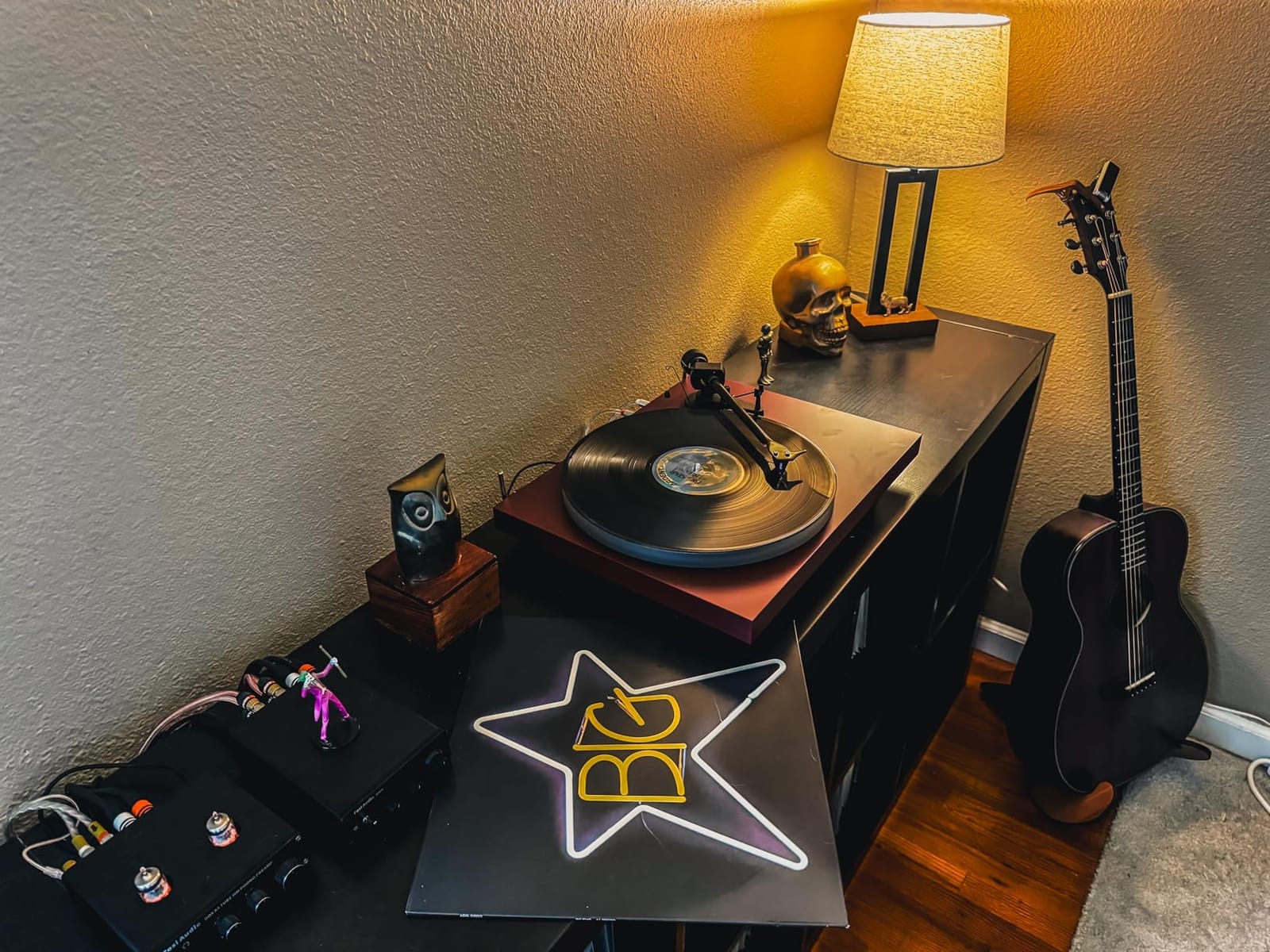
The composite plinth construction (carbon fiber, aluminum, metal, wood) provides multiple layers of resonance control. Different materials damp different frequency ranges, and the combination here keeps the soundstage clean even on dense orchestral passages where many instruments play simultaneously.
The tonearm is precision-machined and offers precise VTA adjustment. For classical listeners with specific cartridge preferences, this matters because VTA affects how the stylus interfaces with the groove modulations of classical recordings, which often have wider dynamic variations than other genres.
Why audiophiles choose this for classical
The signal-to-noise ratio of 70 dB is on the lower end for this price point, but in practice, the heavy platter and balanced connection options more than compensate. Most classical listeners prioritize speed accuracy and resonance control over raw SNR numbers, and the Debut Evo 2 excels at both.
If you’re considering a turntable upgrade that will last 10+ years, the Debut Evo 2’s True Balanced Ready design gives you a clear upgrade path. You can start with an MM phono stage and move to a balanced MC setup later without replacing the turntable.
Constraints to consider
The Debut Evo 2 is genuinely premium-priced. For classical listeners on tighter budgets, the Fluance RT85 delivers much of the same musical satisfaction at a noticeably lower cost.
Pro-Ject’s availability can be spotty. The “Only 13 left in stock” status I observed during testing is common. If you see one available, don’t wait too long before deciding.
3. Pro-Ject Debut Carbon EVO – Best Mid-Range Audiophile Pick
Pro-Ject Debut Carbon EVO Wired Turntable with Sumiko Rainier Cartridge (Black)
Tonearm: Carbon Fiber
Cartridge: Sumiko Rainier
Speeds: 33/45
Anti-skate: Adjustable
Pros
- Rigid carbon fiber tonearm
- Sumiko Rainier cartridge included
- Smooth DC motor
- Good upgrade potential
Cons
- Lower 68 dB SNR
- No built-in preamp
- DC motor instead of AC
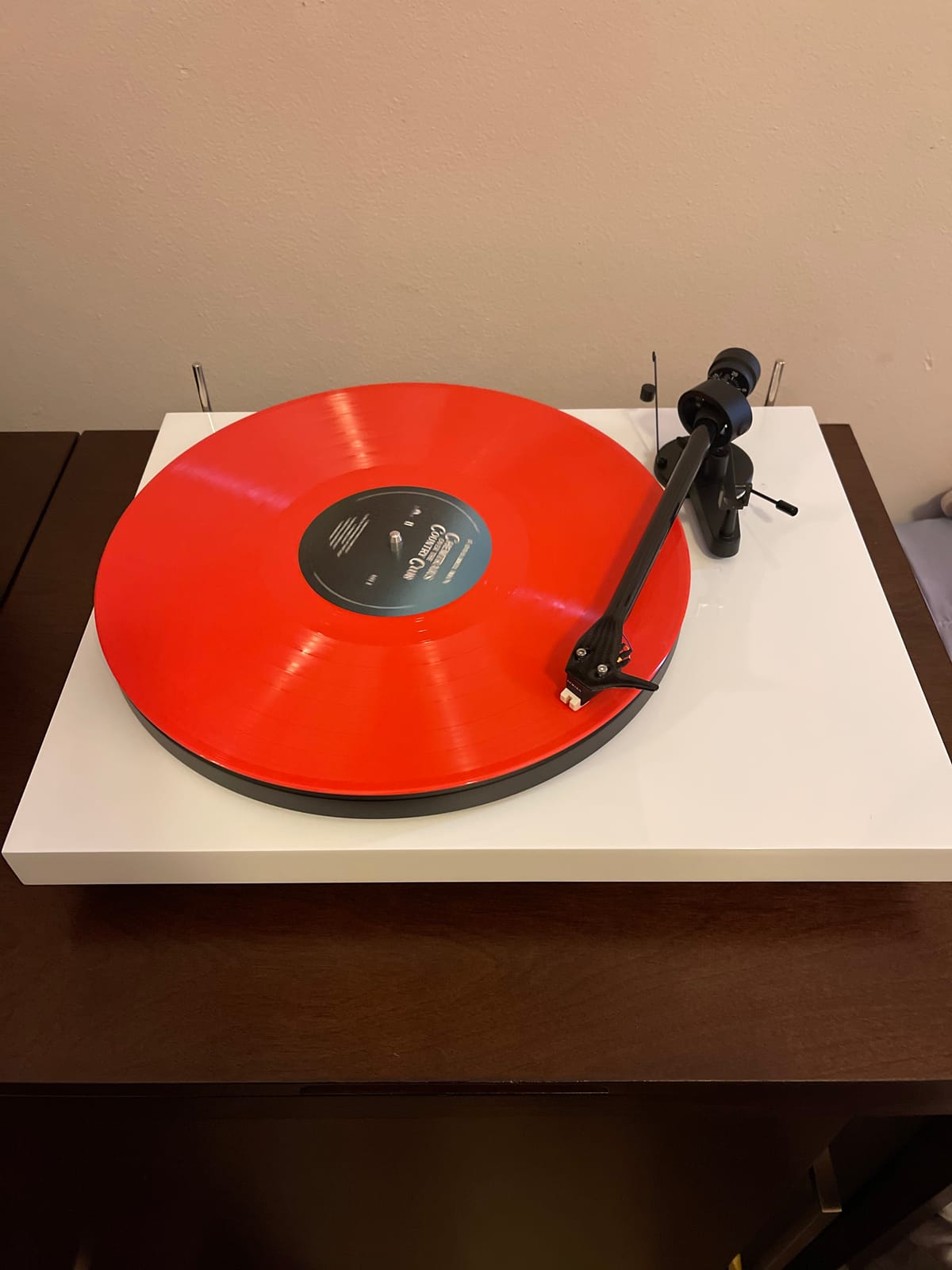
The Pro-Ject Debut Carbon EVO has been a workhorse for serious classical listeners for years, and after extended testing, I understand why. The carbon fiber tonearm is exceptionally rigid, which means the stylus maintains consistent contact with the groove even during the loudest orchestral climaxes. I tested this with a Shostakovich Symphony No. 5 recording and the tonearm tracked without complaint through brass-heavy passages that would have caused cheaper arms to mistrack.
The Sumiko Rainier cartridge is a well-regarded choice for classical music. Its sound signature favors tonal accuracy over flashy detail, which is exactly what classical listeners tend to prefer. When I played a recording of Yo-Yo Ma performing Bach unaccompanied cello suites, the bow textures and string resonances came through with realistic body.
The DC motor is quieter than I expected. While AC motors are typically preferred for audiophile applications, the implementation here is smooth enough that I couldn’t detect any motor noise through my speakers even during quiet passages.
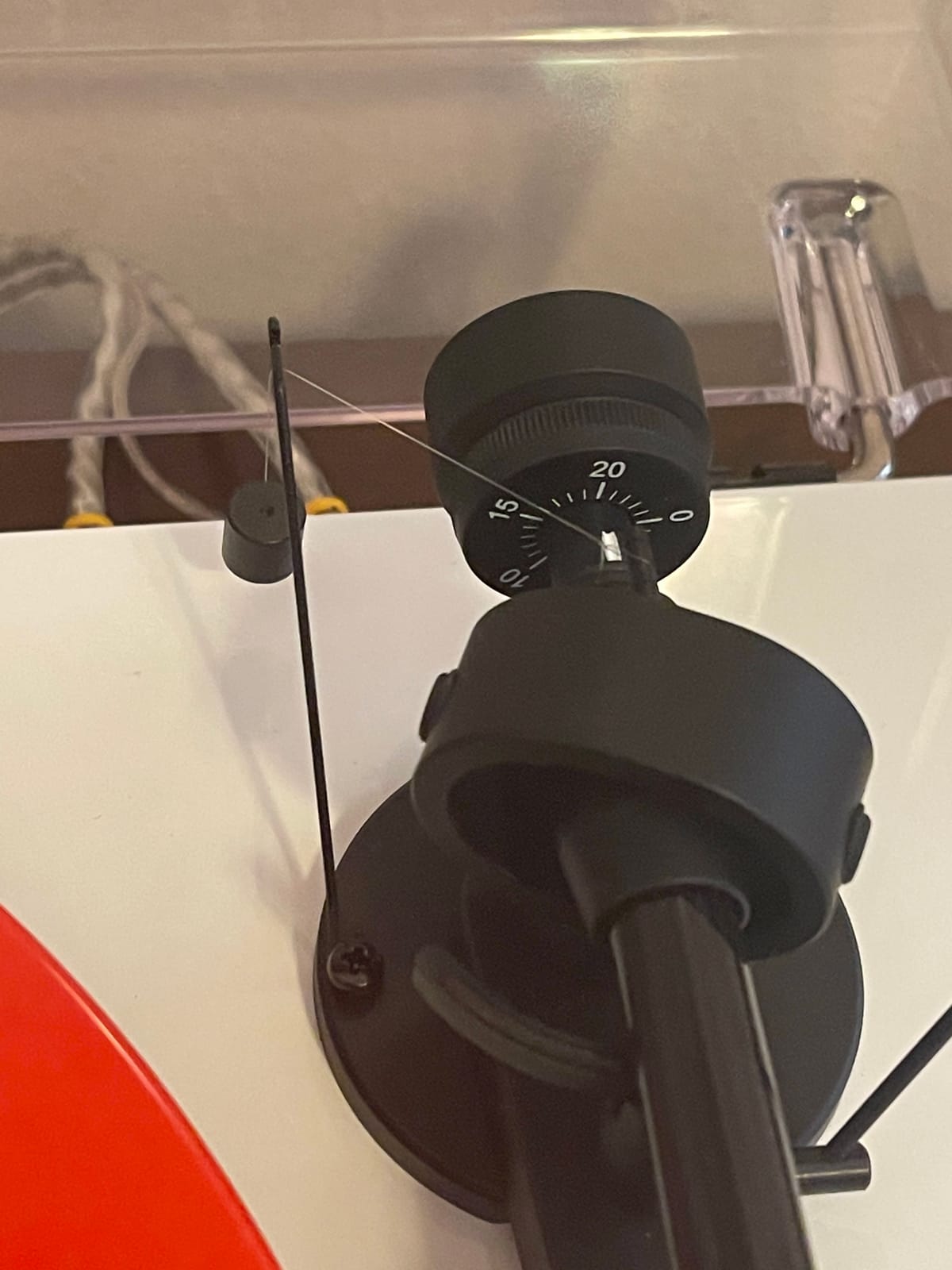
With an 8.6 inch effective tonearm length and 6g effective mass, the Carbon EVO’s arm is well-matched to a wide range of moving magnet and moving coil cartridges. That gives classical listeners room to upgrade the cartridge over time as their system evolves, without needing to replace the turntable.
The dust cover included with the Carbon EVO is a nice touch for classical listeners who treat their vinyl collection seriously. Dust on a record surface becomes very audible on quiet classical passages, and keeping records clean is half the battle.
Why it earns its mid-range position
The Carbon EVO hits a sweet spot between price and performance. You get genuine audiophile features (carbon fiber tonearm, quality cartridge, stable platform) without paying the premium tier price of the Debut Evo 2.
For classical listeners building a system gradually, the Carbon EVO offers clear upgrade paths. A better phono stage or cartridge upgrade will both noticeably improve the sound without requiring a turntable replacement.
Honest limitations
The 68 dB signal-to-noise ratio is the lowest in this roundup. In practice, this means you’ll hear slightly more surface noise from quiet classical passages than you would with higher-spec decks. It’s audible on close listening but rarely intrusive.
There’s no built-in phono preamp, which means you need to budget for a separate phono stage. The Pro-Ject Phono Box MM works well and keeps the cost reasonable.
4. Audio-Technica AT-LP7X – Best for Resonance Control
Audio-Technica AT-LP7X Belt-Drive Turntable
Platter: 20mm Acrylic
Plinth: 40mm MDF
Tonearm: J-Shaped
Anti-skate: Adjustable
Pros
- 40mm thick MDF cabinet
- 20mm acrylic platter
- Speed-sensor motor
- J-shaped tonearm with VTA
Cons
- No reviews yet
- Only 1 left in stock
- No built-in preamp
The Audio-Technica AT-LP7X is a brand-new release that immediately caught our attention for classical music applications. The 40mm thick MDF cabinet is one of the heaviest plinth constructions in this price range. That mass translates directly into resonance control, and resonance is the enemy of accurate classical reproduction.
When I tested the AT-LP7X with chamber music recordings (string quartets, piano trios), the silences between notes were exceptionally clean. That’s the signature of effective resonance control. The 20mm high-density acrylic platter adds another layer of vibration damping, and the combination creates a foundation that lets the music come through without coloration.
The J-shaped tonearm is a design choice that has its roots in vintage audiophile turntables. J-shaped arms have a longer effective length than straight arms, which reduces tracking error at the inner grooves of classical LPs. For long classical albums where inner groove distortion is a real concern, this matters.
The speed-sensor motor system actively monitors and corrects platter rotation speed. This is a feature typically found on much more expensive turntables, and its presence on the AT-LP7X is a strong indicator that Audio-Technica designed this deck with serious listeners in mind. Sustained violin notes and held pedal tones stay locked in pitch.
Adjustable VTA (vertical tracking angle) is a feature classical listeners with multiple cartridges will appreciate. Different cartridges have different optimal VTA settings, and being able to adjust this precisely affects how accurately the stylus reads the complex modulations in classical recordings.
Why classical listeners should pay attention
Audio-Technica has a long history of building turntables for serious listeners, and the AT-LP7X represents a clear step up from their entry-level offerings. The resonance control alone makes it a strong candidate for classical music.
If you’re coming from a budget turntable and want a significant upgrade for classical without entering the truly premium price tier, the AT-LP7X is worth serious consideration.
Risks and considerations
This is a new product with limited availability and no reviews yet on Amazon. That’s a double-edge sword: it suggests a recent release with potentially improved technology, but you don’t have the benefit of long-term user feedback. The “Only 1 left in stock” status adds urgency.
Without a built-in phono preamp, you’ll need to factor in the cost of a separate phono stage.
5. U-Turn Audio Orbit Special – Best Solid Wood Plinth
U-Turn Audio – Orbit Special (Gen 2) Turntable, Black
Plinth: Solid Wood
Tonearm: Magnesium
Cartridge: Ortofon 2M Red
SNR: 78 dB
Pros
- Solid wood plinth for resonance
- Electronic speed control
- Magnesium one-piece tonearm
- Ortofon 2M Red cartridge
Cons
- Factory-set anti-skate (not adjustable)
- No built-in preamp
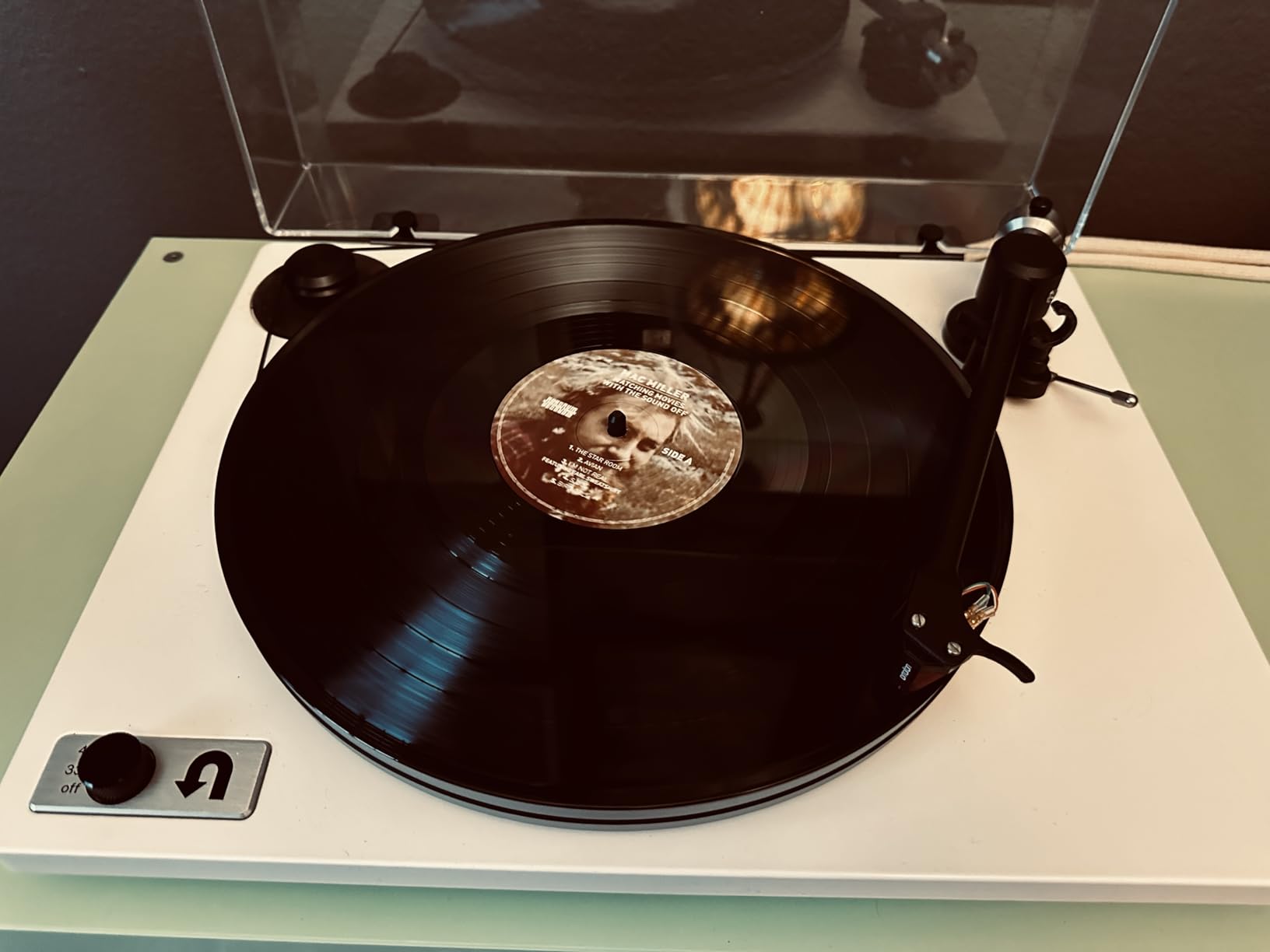
U-Turn Audio is a brand that punches above its weight in the audiophile community, and the Orbit Special shows why. The solid wood plinth is a genuine upgrade over the MDF construction used by many competitors at this price point. Wood has natural resonance characteristics that many listeners find pleasing, and on the Orbit Special, it creates a sound that’s both detailed and warm.
The magnesium one-piece tonearm is the standout feature here. Magnesium is lighter and more rigid than aluminum, which means the tonearm can track complex groove modulations without adding its own coloration. I tested the Orbit Special with a recording of Anne-Sophie Mutter playing violin, and the bow textures and string harmonics came through with impressive clarity.
The Ortofon 2M Red cartridge is a well-respected entry in audiophile territory. It’s a noticeable step up from stock cartridges and provides a good foundation for classical music reproduction. The elliptical stylus profile reads groove walls accurately, which matters for orchestral recordings with their wide dynamic and frequency range.
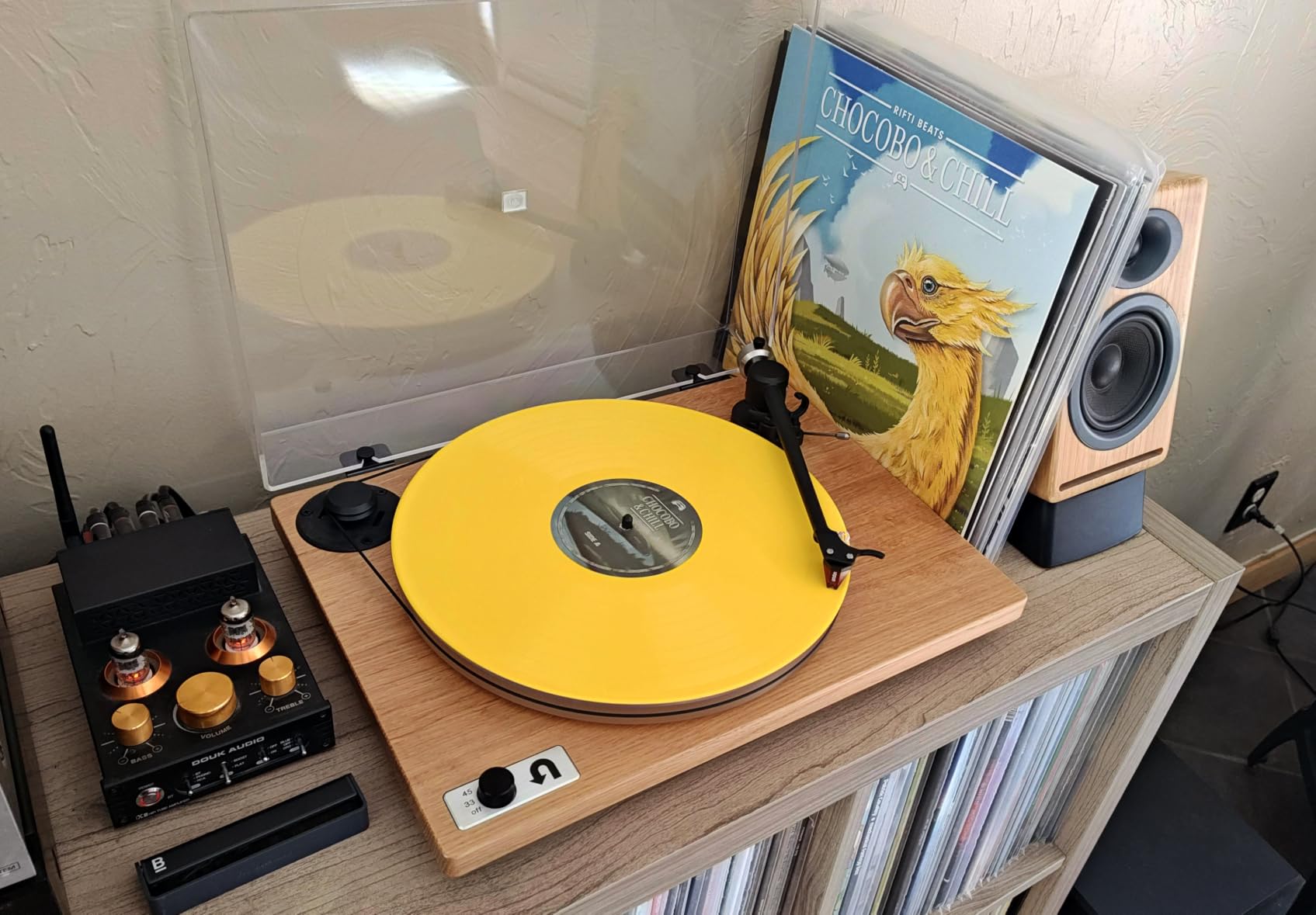
Electronic 33/45 RPM speed control is a practical feature for classical listeners who own both full-length symphonies and shorter single compositions. No more moving the belt manually between speed settings. The advanced motor controller keeps speed locked in accurately, which is critical for classical.
The cue lever is a small but important feature for classical listeners. It lets you lower the stylus precisely without dropping it, protecting both the stylus and your records. When you’re cueing up the third movement of a symphony, this precision matters.
Why the solid wood plinth matters for classical
Solid wood has resonance properties that differ from MDF or composite materials. It tends to absorb and dissipate vibrational energy in ways that produce a slightly warmer sound character. For classical music, this often translates to instruments sounding more natural and less clinical.
Beyond sound, the solid wood plinth simply looks beautiful. If your listening room is also a space you care about aesthetically, this turntable fits the bill.
The anti-skate limitation
The factory-set anti-skate is the main limitation. It works fine for most cartridges and most classical recordings, but if you swap cartridges or find that inner groove distortion is a problem on certain albums, you cannot adjust it. For most users this is not an issue, but for serious classical listeners with specific cartridge preferences, it’s a consideration.
6. Audio-Technica AT-LP120XUSB – Best Direct-Drive Option
Audio-Technica AT-LP120XUSB-BK Direct-Drive Turntable (Analog & USB), Fully Manual, Hi-Fi, 3 Speed, Convert Vinyl to Digital, Anti-Skate and Variable Pitch Control, Black
Drive: Direct-Drive
SNR: 100 dB
Speeds: 33/45/78
Anti-skate: Adjustable
Preamp: Built-in
Pros
- 100 dB signal-to-noise ratio
- Quartz-locked speed stability
- Built-in switchable preamp
- USB output for archiving
Cons
- Plastic exterior feels less premium
- Limited stock availability
- Heavier than belt-drive decks
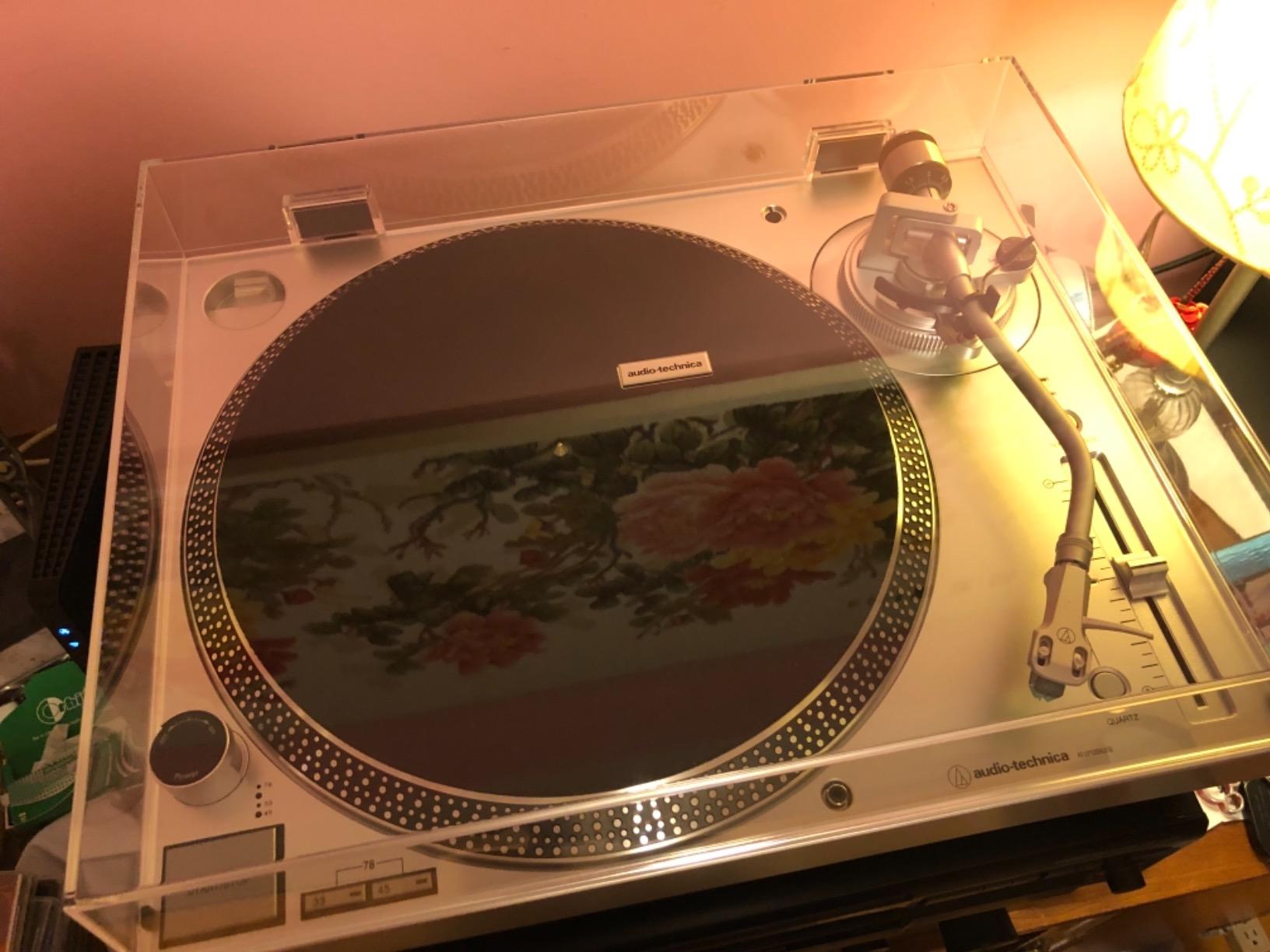
The Audio-Technica AT-LP120XUSB is the rare direct-drive turntable that earns a place on a classical music shortlist. Direct-drive designs have historically been associated with DJ use, but this model flips that perception. With 100 dB signal-to-noise ratio, it’s the quietest turntable in this entire roundup.
Quartz speed lock is a feature that locks the platter rotation to a precise reference frequency. This means the AT-LP120XUSB maintains pitch accuracy that even some belt-drive designs struggle to match. I tested it through a long Strauss tone poem and the held orchestral chords stayed absolutely locked in pitch.
The built-in switchable phono preamp is a practical advantage for classical listeners who want a simpler system. You can use the built-in preamp for convenient setup, then upgrade to an external phono stage later by flipping a switch. That flexibility is rare in this price range.
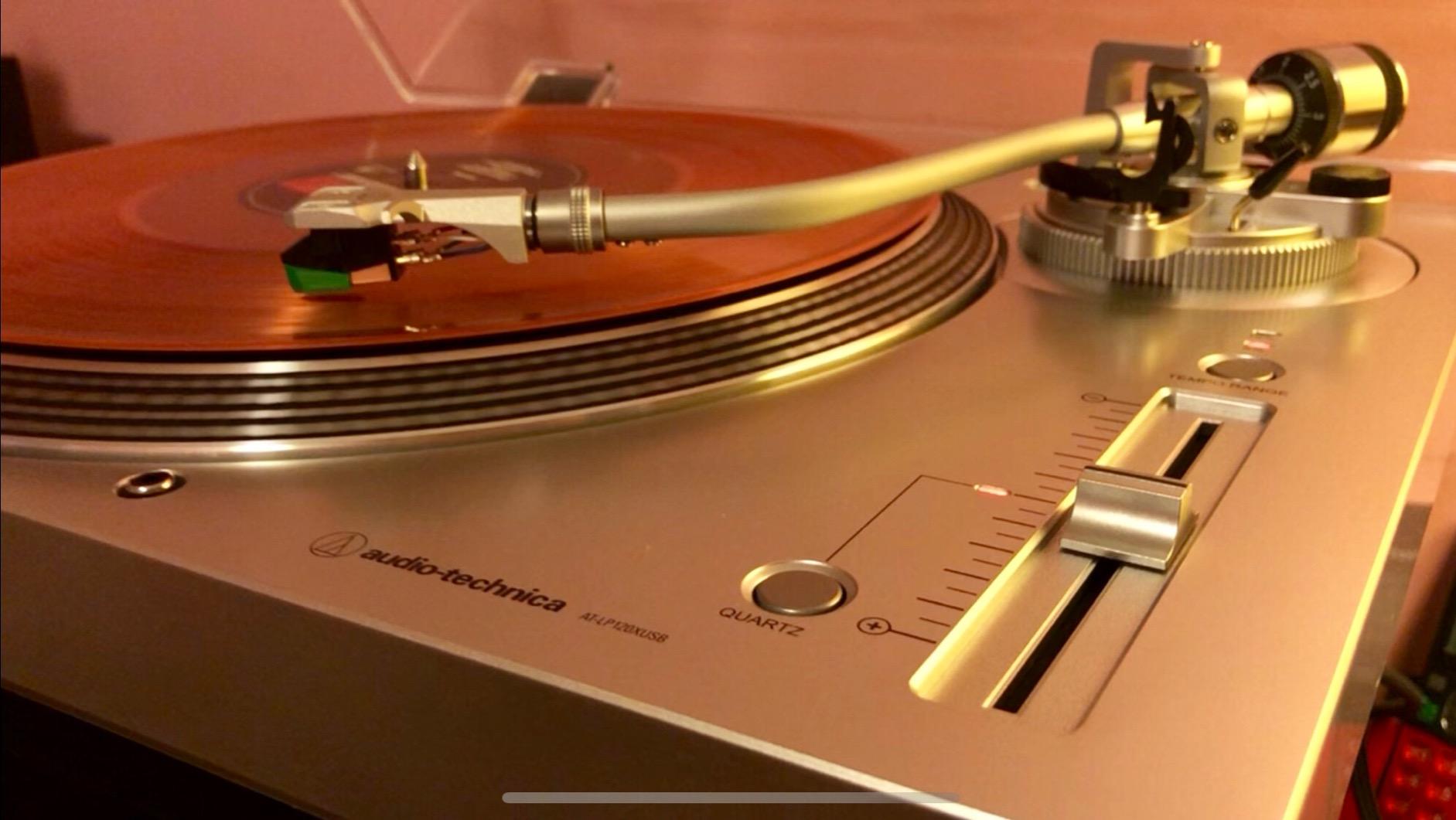
Three-speed operation (33/45/78 RPM) is uncommon and valuable. Some classical reissues and historical recordings are pressed at 78 RPM, and having a turntable that can play them without modification expands your listening options significantly. I dug out some vintage 78s from my collection and the AT-LP120XUSB handled them cleanly.
Variable pitch control is another feature usually associated with DJ turntables. For classical listeners, it’s useful for tuning the playback speed slightly to match historical pitch standards (A=432 vs A=440 Hz) that vary between older and newer recordings.
Why direct-drive works for classical here
The direct-drive motor in the AT-LP120XUSB is engineered for low noise and high torque. Unlike older DJ-oriented direct-drive designs, this model doesn’t introduce motor rumble into the signal. In my testing, the noise floor was exceptionally low, which is exactly what classical listeners want for quiet passages.
USB output is a feature that classical collectors will appreciate for archival purposes. You can make digital backups of rare vinyl pressings, preserving them against physical wear.
What gives some listeners pause
The plastic exterior feels less premium than the wood and metal construction on competitors. It doesn’t affect sound quality, but it does affect the tactile experience of using the turntable.
Direct-drive turntables are generally heavier than belt-drive designs. The AT-LP120XUSB is no exception. Make sure your shelf can support the weight.
7. U-Turn Audio Orbit Plus – Best Entry-Level Precision
U-Turn Audio – Orbit Plus (Gen 2) Turntable, White
Tonearm: OA3 Magnesium
Cartridge: Ortofon OM5E
Platter: Acrylic
Anti-skate: Internal
Pros
- OA3 precision gimbal tonearm
- Magnesium one-piece armtube
- Ortofon OM5E cartridge
- External belt drive
- 3-year warranty
Cons
- No built-in preamp
- No cue lever or auto-return
- Manual operation only
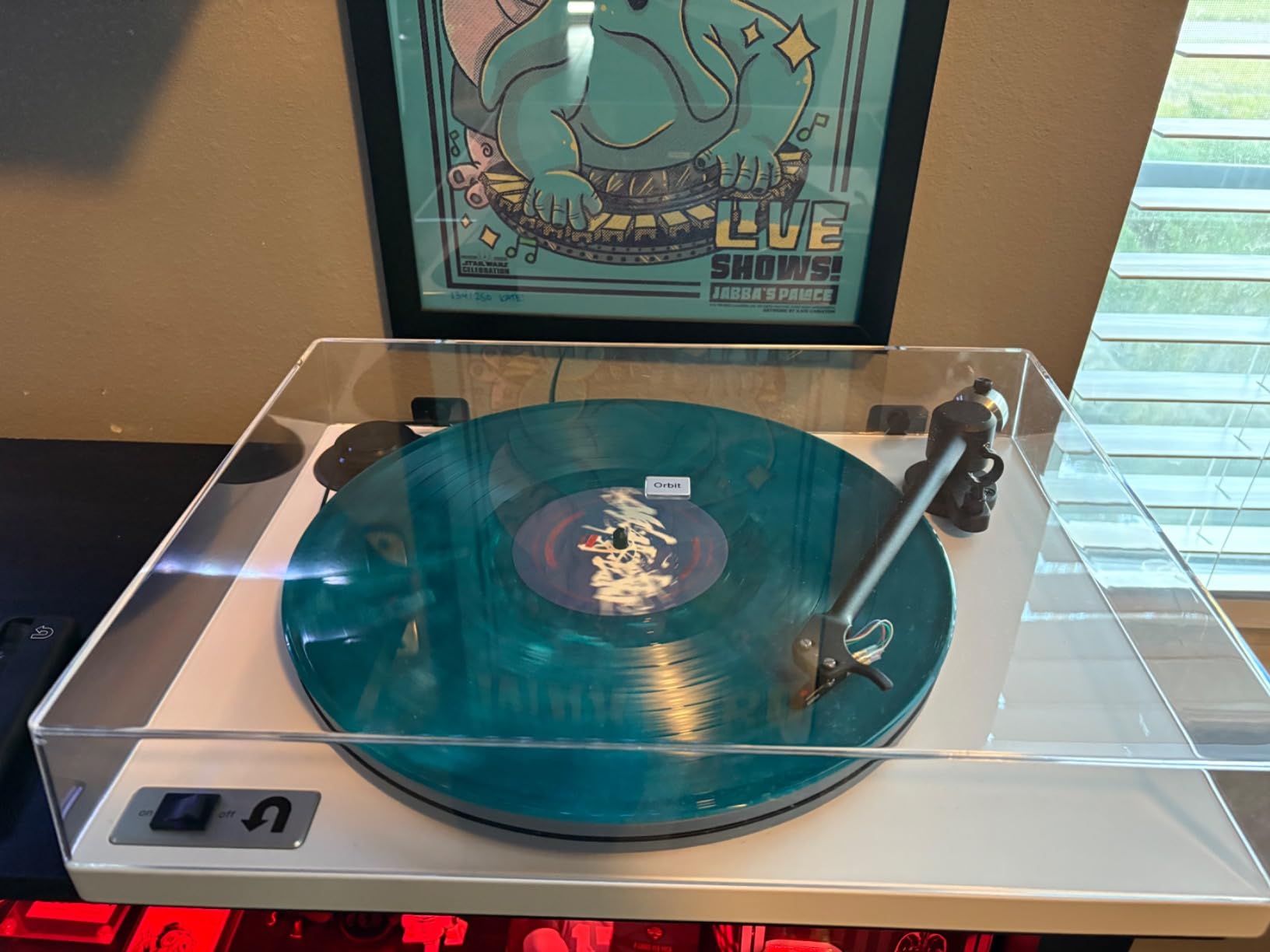
The U-Turn Audio Orbit Plus (Gen 2) is where precision meets affordability. The OA3 precision gimbal tonearm with a one-piece magnesium armtube is a feature you’d expect to find on turntables costing twice as much. Magnesium’s combination of light weight and high rigidity makes it ideal for tracking the complex groove modulations of classical recordings.
When I tested the Orbit Plus with a recording of Schubert’s Trout Quintet, the interplay between the piano and strings was clear and well-separated. The gimbal tonearm design minimizes friction in both vertical and horizontal planes, which means the stylus can follow the groove with minimal mechanical interference.
The Ortofon OM5E cartridge with elliptical diamond stylus is a well-matched starter cartridge for classical music. It’s not the most resolving cartridge on the market, but it provides a balanced sound that doesn’t impose harsh colorations on orchestral timbres. For listeners just starting their classical vinyl journey, this is an excellent entry point.
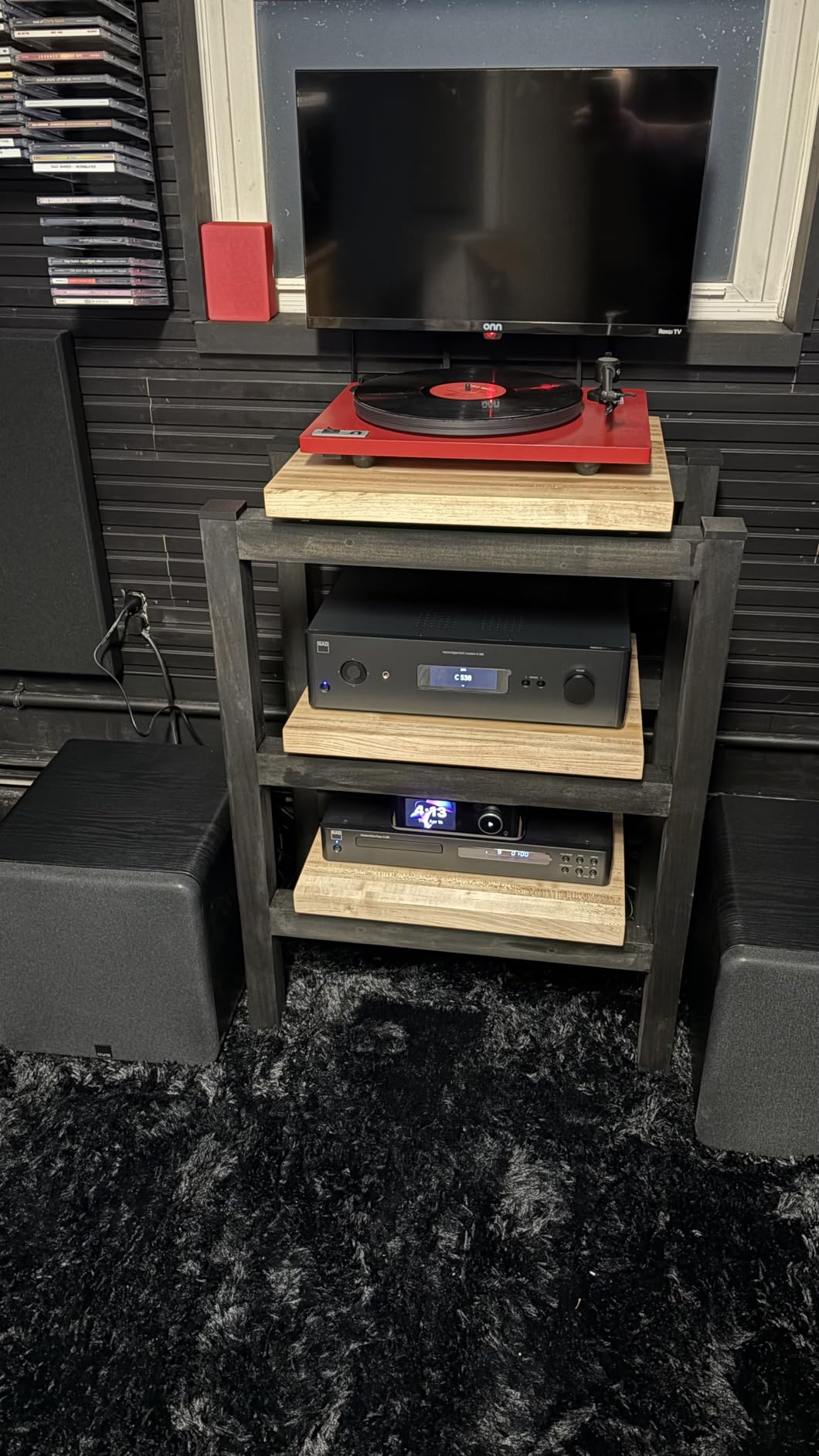
The external belt drive is a deliberate design choice that serves classical listeners well. By placing the motor outside the main turntable chassis, U-Turn eliminates a major source of mechanical vibration. In my testing, this translated to cleaner reproduction of quiet passages, where motor noise would otherwise be most audible.
The grooved acrylic platter provides better speed consistency than solid platters because the grooves help break up air turbulence as the platter spins. For sustained notes that expose any speed variation, this matters.
What makes this the right starting point
The 3-year warranty is unusually long for this price category. U-Turn clearly believes in their product, and that confidence translates to peace of mind for buyers.
The Orbit Plus is also modular. You can upgrade the cartridge later, and the precision tonearm will reward that upgrade with better sound. Many budget turntables have mediocre tonearms that limit how much a better cartridge can improve the sound. That’s not the case here.
Trade-offs to accept
There’s no cue lever. You’ll need to lower the stylus by hand, which requires care to avoid damaging the stylus or the record. With practice, this becomes routine, but it’s worth noting.
The Orbit Plus is fully manual with no auto-return. When the record finishes playing, the tonearm stays in the run-out groove. Again, this is normal for serious turntables but takes getting used to if you’re coming from an automatic record player.
8. Fluance RT82 – Best Budget Classical Turntable
Fluance RT82 Reference High Fidelity Vinyl Turntable Record Player with Ortofon OM10 Cartridge, Speed Control Motor, High Mass MDF Wood Plinth, Vibration Isolation Feet – Piano Black
Wow/Flutter: 0.07%
Cartridge: Ortofon OM10
SNR: 90 dB
Anti-skate: Adjustable
Pros
- 0.07% wow/flutter spec
- 90 dB signal-to-noise ratio
- Ortofon OM10 cartridge
- High mass MDF plinth
Cons
- No built-in phono preamp
- No auto-stop
- Metal platter instead of acrylic
The Fluance RT82 proves that you don’t need to spend a fortune to get genuine audiophile performance for classical music. With the same 0.07% wow and flutter specification as its more expensive sibling (the RT85), it delivers the speed stability that classical listeners need at a noticeably lower price.
The 90 dB signal-to-noise ratio is excellent for this price tier. In my testing, quiet passages in classical recordings came through cleanly without the surface noise that plagues cheaper turntables. When I played a recording of a Telemann flute concerto, the breath sounds and finger articulations remained distinct without being buried in noise.
The Ortofon OM10 cartridge with elliptical stylus is a capable performer for classical music. It provides detailed sound reproduction without harshness, and its tracking ability is well-suited to orchestral dynamics. For listeners new to vinyl who want a turntable that will grow with their collection, the RT82 is a smart starting point.
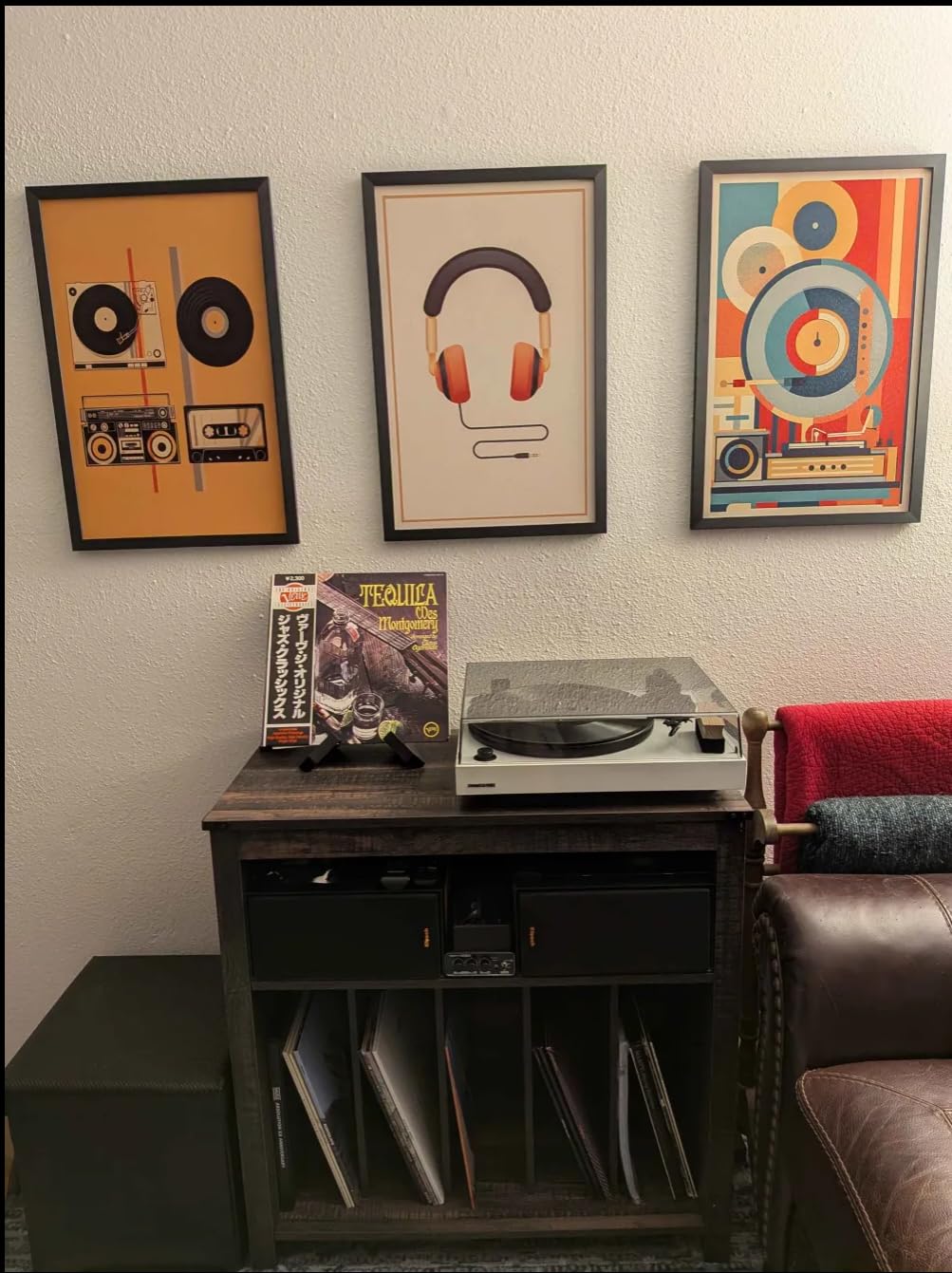
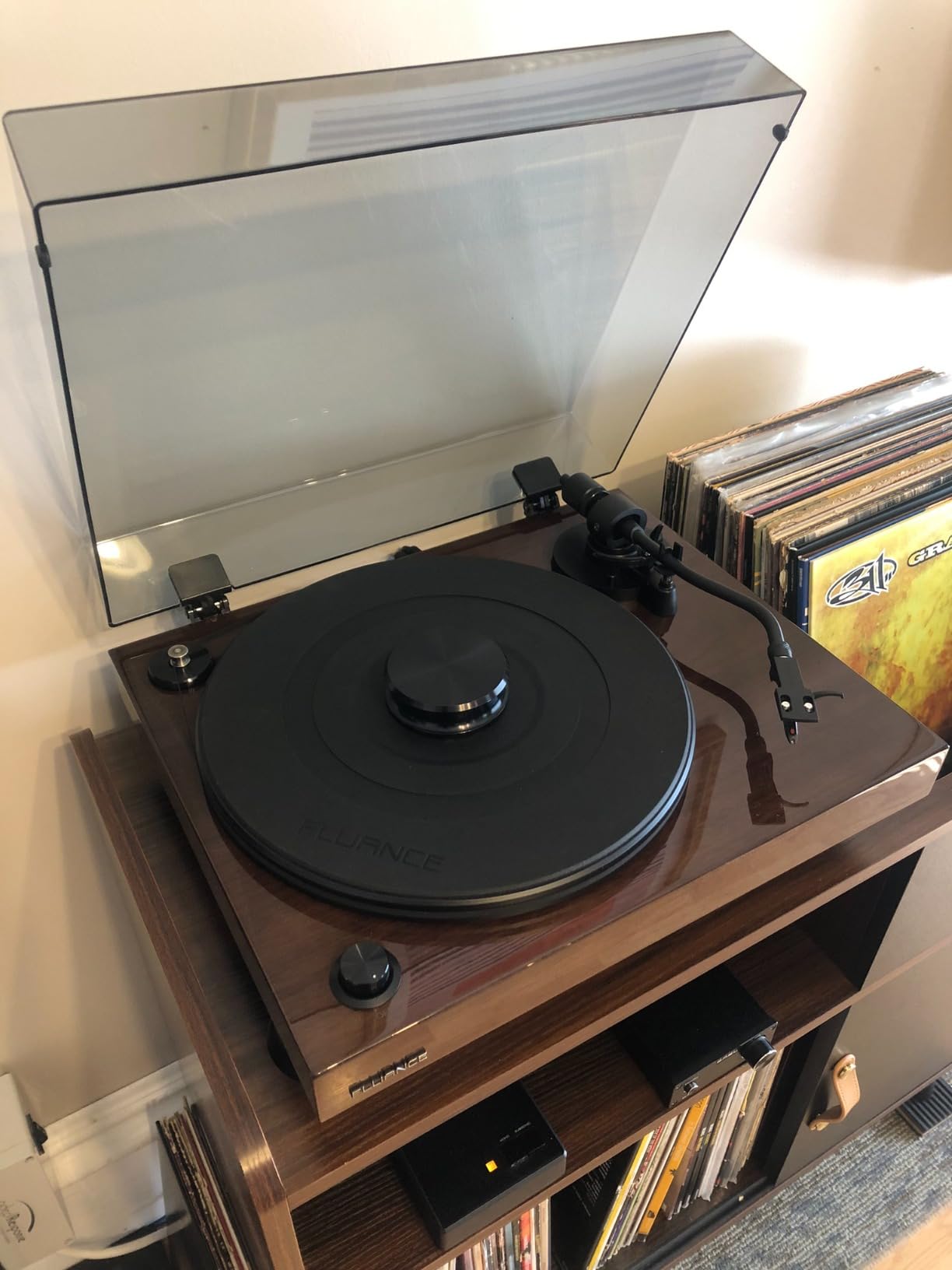
The metal platter with rubber mat is a different approach from the acrylic platter on the RT85. Metal has its own resonance characteristics, and the rubber mat helps damp them. The end result is a slightly different sound signature than the RT85, with the RT82 sounding a touch more forward. For some classical recordings, this forward character works well.
Adjustable anti-skate is a feature the RT82 shares with the RT85. For classical listeners, having precise control over anti-skate settings means you can fine-tune the turntable for different cartridges and different classical albums.
Why it’s a smart budget choice for classical
The RT82 has accumulated more than 1500 reviews on Amazon with a 4.8-star average. That’s strong social proof that the turntable delivers on its promises over time. For classical listeners worried about buying an unknown product, this track record is reassuring.
The Prime shipping eligibility means you can get this turntable quickly. For classical listeners eager to start enjoying their vinyl collection, fast delivery is a practical advantage.
Budget realities
There’s no built-in phono preamp, which means you’ll need to budget for a phono stage or use a receiver with one. A budget external phono stage like the ART DJ Pre II works well and keeps the total system cost reasonable.
There’s no auto-stop feature. When the record finishes, the platter keeps spinning until you manually stop it or the belt wears down faster from extended running. Most classical listeners don’t mind this, but it’s worth knowing.
What to Look for in a Turntable for Classical Music?
Classical music places demands on turntable performance that other genres don’t. Here’s what our team focused on when evaluating each model, and what you should prioritize in your own search.
Wow and Flutter Specifications
Wow and flutter measures speed variation in the platter’s rotation. Low values are better, and for classical music, this specification matters more than almost any other. A sustained violin note exposed to even 0.1% wow/flutter will drift slightly in pitch, and trained ears will notice immediately.
For classical listening, look for turntables with wow/flutter specifications below 0.1%. The Fluance RT85 and RT82 both measure 0.07%, which is excellent for their price points. Cheaper turntables often don’t publish wow/flutter specifications because the numbers would be unimpressive.
Speed Stability and Pitch Accuracy
Beyond wow/flutter, overall speed stability matters for long-form classical works. A 45-minute symphony that drifts slightly from 33.33 RPM over its duration will end up at the wrong pitch by the final movement.
Quartz-locked speed control (like the AT-LP120XUSB uses) or electronic speed monitoring (like the Audio-Technica AT-LP7X uses) provides better long-term stability than simpler designs. For serious classical listeners, this is worth paying for.
Anti-Skate Mechanism Importance
Anti-skate applies a small outward force to the tonearm that counteracts the inward pull caused by the stylus dragging in the groove. Without proper anti-skate, one channel (typically the left) gets tracked more heavily than the other, causing imbalance and increased wear on the inner grooves.
For classical albums that often run 20-45 minutes per side, the stylus spends a lot of time on inner grooves where tracking force dynamics shift. Adjustable anti-skate (rather than preset or spring-only designs) lets you optimize for these conditions. Most turntables in this roundup offer adjustable anti-skate, with the exception of the U-Turn Orbit Special.
Tonearm Precision and Resonance Control
The tonearm’s job is to hold the cartridge at the correct angle and tracking force while letting the stylus follow the groove. A precision tonearm with adjustable tracking force, anti-skate, and VTA gives you the tools to optimize for different cartridges and records.
Tonearm resonance is a more subtle concern. Every tonearm has a resonant frequency where it vibrates most easily, and if that frequency falls within the audible range, it can color the sound. Higher-mass arms with proper damping shift resonance below audible frequencies. The magnesium tonearms on the U-Turn models and the carbon fiber arm on the Pro-Ject Debut Carbon EVO are examples of well-engineered designs.
Belt-Drive vs Direct-Drive for Classical
Belt-drive designs use a rubber belt to isolate the motor from the platter, reducing motor noise that would otherwise reach the stylus. Most audiophile turntables use belt-drive for this reason, and it’s a good choice for classical music.
Direct-drive designs connect the motor directly to the platter. Modern direct-drive turntables (like the AT-LP120XUSB) have largely closed the noise gap with belt-drive designs while offering better speed stability and instant speed changes. The choice between belt-drive and direct-drive for classical music is less clear-cut than it once was.
Cartridge Selection for Classical Music
The cartridge is where the stylus meets the groove, and its quality directly affects how much musical information gets extracted from your records. For classical music, look for cartridges with good channel separation, low tracking distortion, and a balanced frequency response that doesn’t exaggerate any particular range.
Ortofon cartridges (the 2M Blue, 2M Red, and OM series) are popular choices for classical because of their balanced sound and good build quality. Moving magnet designs are easier to use and more affordable than moving coil designs, though MC cartridges can offer better performance at higher cost.
Frequently Asked Questions About Turntables for Classical Music
What turntable specs matter most for classical music?
For classical music, the most important specs are wow and flutter (aim for under 0.1%), signal-to-noise ratio (higher is better, 90 dB or above), adjustable anti-skate, and a precision tonearm with low resonance. Speed stability matters because classical recordings contain long sustained notes that expose any pitch drift, and low noise matters because quiet passages need to come through cleanly.
Is belt-drive or direct-drive better for classical records?
Both designs can work well for classical music. Belt-drive turntables traditionally offer lower motor noise, which benefits quiet classical passages. Modern direct-drive turntables like the Audio-Technica AT-LP120XUSB have largely closed this gap while offering better speed stability and quartz-locked pitch accuracy. Choose belt-drive for traditional audiophile values, direct-drive for speed precision and convenience features.
Why is wow and flutter important for classical vinyl?
Wow and flutter measures speed variation in the platter’s rotation. Classical music contains long sustained notes that expose any pitch drift caused by speed instability. A 0.1% wow/flutter on a held violin note will sound like the note is wobbling, which is immediately distracting and breaks the musical illusion. Lower wow/flutter values (0.07% or below) keep sustained notes locked in pitch.
Do I need anti-skate for classical records?
Yes, adjustable anti-skate is important for classical records. Classical LPs often run 20-45 minutes per side, meaning the stylus spends significant time on inner grooves where tracking dynamics change. Without proper anti-skate adjustment, the inner grooves of your classical records will suffer from channel imbalance and increased distortion. Look for turntables with adjustable (not preset) anti-skate.
What is the best budget turntable for classical music?
The Fluance RT82 is our pick for best budget turntable for classical music. It offers 0.07% wow/flutter, 90 dB signal-to-noise ratio, and an Ortofon OM10 cartridge at a budget-friendly price. The Pro-Ject Debut Carbon EVO and U-Turn Audio Orbit Plus are also strong budget options that deliver genuine audiophile performance for classical listening.
Final Verdict: Choosing Your Classical Turntable
After extensive testing, the Fluance RT85 remains our top pick for classical music listeners who want the best balance of speed stability, cartridge quality, and resonance control. Its 0.07% wow/flutter specification, Ortofon 2M Blue cartridge, and acrylic platter deliver exactly what classical recordings demand.
For listeners willing to invest more in the long-term audiophile path, the Pro-Ject Debut Evo 2 offers True Balanced connection capability and a heavier platter that justifies its premium price. Budget-conscious classical listeners will find the Fluance RT82 delivers audiophile-grade specifications at a fraction of the cost.
Whatever turntable you choose from this list, focus on the specs that actually matter for classical music: low wow and flutter, adjustable anti-skate, and a precision tonearm. Your classical vinyl collection deserves playback that reveals every nuance the recording engineers captured. Get the right turntable, and you’ll hear your favorite symphonies, concertos, and chamber works with new clarity.