

The first time a brand new record crackled under the needle, I learned the lesson every collector learns eventually: the turntable is only half the setup. Vinyl accessories are the other half, and they protect both the records you just bought and the ones you have not bought yet.
Dust settles into the grooves, static builds up on dry winter days, and a dirty stylus drags all of that noise straight into your music. None of it is the record’s fault, and almost all of it is fixable with a handful of inexpensive tools.
I have been collecting for years and made every beginner mistake there is, from leaning LPs against a shelf to playing dusty records with a needle that had never once been cleaned. This guide covers the 12 accessories I would buy first in 2026, in the order I would buy them, based on what our team still uses weekly and what thousands of other collectors report.
Here is the short version of what every new vinyl collector needs:
An anti-static carbon fiber brush for a quick clean before every play
A vinyl cleaning kit with solution and a velvet brush for deeper washes
Anti-static inner sleeves to replace the paper sleeves your records ship in
Clear outer sleeves to protect the album jackets
A stylus cleaner, safe upright storage, and a record weight once the basics are covered
Table of Contents
Top 3 Picks for New Vinyl Collectors in 2026
If you only buy three things this month, buy these. A cleaning kit, a carbon fiber brush, and archival inner sleeves attack the three problems that damage records fastest: ground-in grime, surface dust, and scratched vinyl.

Big Fudge Record Cleaning Kit
- 4-in-1 cleaning kit
- Ultra-soft velvet brush
- Stylus brush included
- Zippered storage pouch
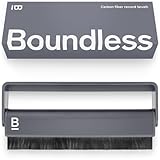
Boundless Audio Record Brush
- Carbon fiber bristles
- Anti-static design
- Dual-row cleaning
- No liquids needed

Hudson Hi-Fi Inner Sleeves
- 100 rice paper sleeves
- Acid-free archival grade
- Anti-static protection
- Fits 12 inch LPs
The Big Fudge kit is the best starting point because it bundles the brush, the fluid, and a stylus brush in one box. The Boundless Audio brush is the cheapest meaningful upgrade in this hobby, and the Hudson Hi-Fi sleeves protect the collection you are about to build.
Together they cost less than a handful of new pressings and they keep every record you own sounding quieter for years. Everything else on this list can wait a few paychecks.
The 12 Best Vinyl Accessories for New Collectors in October
Here is the full lineup side by side. Every product below earned its spot through review scores, build quality, and how well it suits a first-year collection rather than an audiophile showroom.
| Product | Specs | Action |
|---|---|---|
| Big Fudge Record Cleaning Kit |
|
Check Latest Price |
| Boundless Audio Record Brush |
|
Check Latest Price |
 Audio-Technica AT6011 Brush Audio-Technica AT6011 Brush |
|
Check Latest Price |
| Hudson Hi-Fi Inner Sleeves |
|
Check Latest Price |
 Invest In Vinyl Master Sleeves Invest In Vinyl Master Sleeves |
|
Check Latest Price |
 Invest In Vinyl Outer Sleeves Invest In Vinyl Outer Sleeves |
|
Check Latest Price |
 FEMELI Record Weight FEMELI Record Weight |
|
Check Latest Price |
 Victrola Storage Case Victrola Storage Case |
|
Check Latest Price |
 LOAKEKEL Record Player Stand LOAKEKEL Record Player Stand |
|
Check Latest Price |
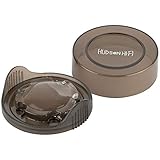 Hudson Hi-Fi Stylus Gel Hudson Hi-Fi Stylus Gel |
|
Check Latest Price |
 Fluance Rubber Turntable Mat Fluance Rubber Turntable Mat |
|
Check Latest Price |
 Boundless Audio Stylus Brush Boundless Audio Stylus Brush |
|
Check Latest Price |
Jump to any review with the numbered headings below, or read straight through. The order roughly matches the priority a new collector should follow: clean first, protect second, upgrade third.
1. Big Fudge Vinyl Record Cleaning Kit – The Complete 4-in-1 Starter Set
Big Fudge Vinyl Record Cleaning Kit – 4-in-1 Vinyl Record Cleaner Kit for Records Includes Ultra-Soft Velvet Brush Cleaning Liquid Stylus Brush and Storage Pouch – Pro Records Care
4-in-1 vinyl cleaning kit
Velvet brush plus XL solution
Stylus brush included
Zippered storage pouch
Pros
- Everything a beginner needs in one box
- Ultra-soft velvet brush will not scratch
- Anti-static cleaning action
- Stylus brush for needle care
- Portable storage pouch
Cons
- Solution bottle could be bigger
This is the kit I hand to every friend who just bought a first turntable. You get an ultra-soft velvet brush, a bottle of cleaning solution, a stylus brush, and a zippered pouch that holds it all next to the player.
It ranks #1 in its category with more than 25k ratings behind it. My routine with it takes about 90 seconds per record, and it is the first of the vinyl accessories on this list I would actually order.
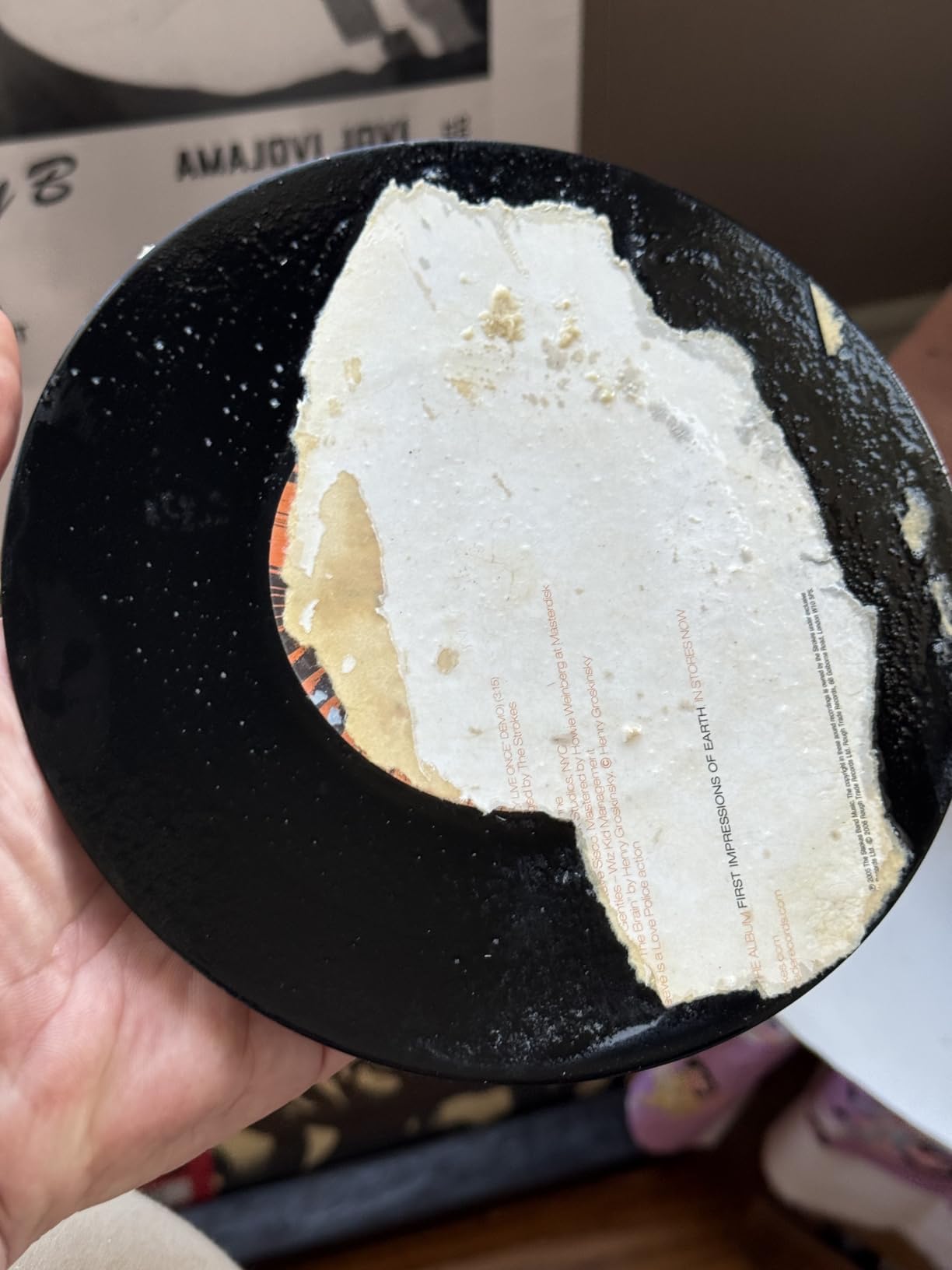
The velvet brush is the star. It is soft enough that it will not scuff the grooves, and a few sprays of the solution lift fingerprint film and old grime that dry brushing alone leaves behind.
The stylus brush is a smart inclusion, because most beginners never think about the needle at all. A few gentle strokes from back to front and the accumulated gunk comes right off.
The pouch earns its keep more than you would expect. Everything stays in one place by the turntable instead of scattered across a shelf, which is half the reason the kit actually gets used here.
The one complaint I share from the reviews is that the solution bottle runs out faster than you want it to. Refills exist, so it is a minor annoyance rather than a dealbreaker.
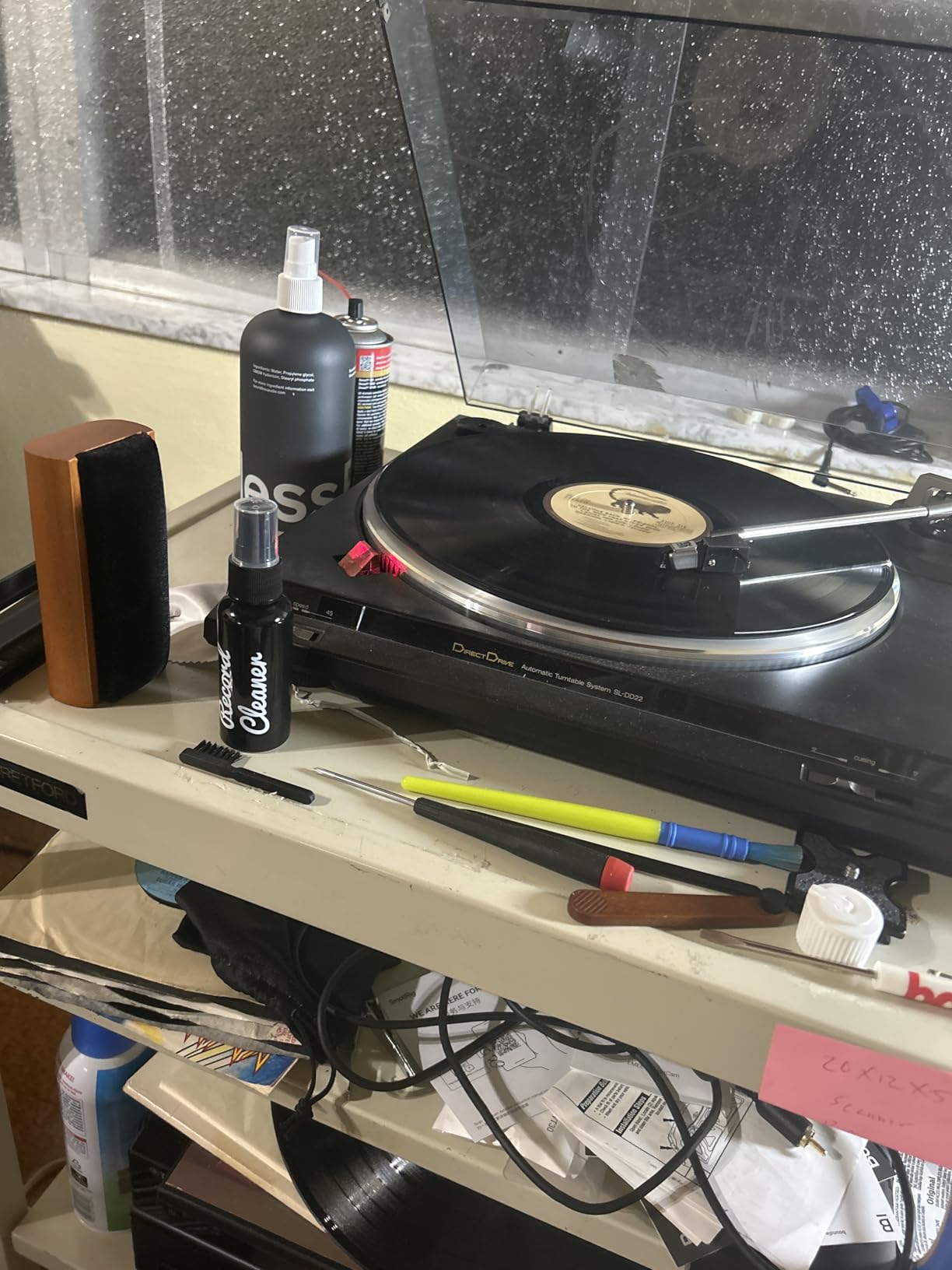
How often should you deep clean your records?
Dry brush before every play, and give records a wet clean with this kit every five to ten plays.
Used records from a crate store get a full bath the day they come home, no exceptions.
Is the cleaning solution safe for all vinyl?
Yes, it is formulated for records, and the velvet pad spreads it thin enough to dry streak-free.
Keep fluid away from the paper label, and never substitute household cleaners.
2. Boundless Audio Record Cleaner Brush – The Carbon Fiber Anti-Static Workhorse
Boundless Audio Record Cleaner Brush – Carbon Fiber Anti-Static Vinyl Brush
Carbon fiber anti-static brush
Dual-row conductive bristles
Static discharge through handle
Rounded safe corners
Pros
- Dual-row carbon fiber bristles
- No cleaning liquids required
- Patented static discharge design
- Rounded corners protect vinyl
- Self-cleaning handle
Cons
- So light it can feel insubstantial
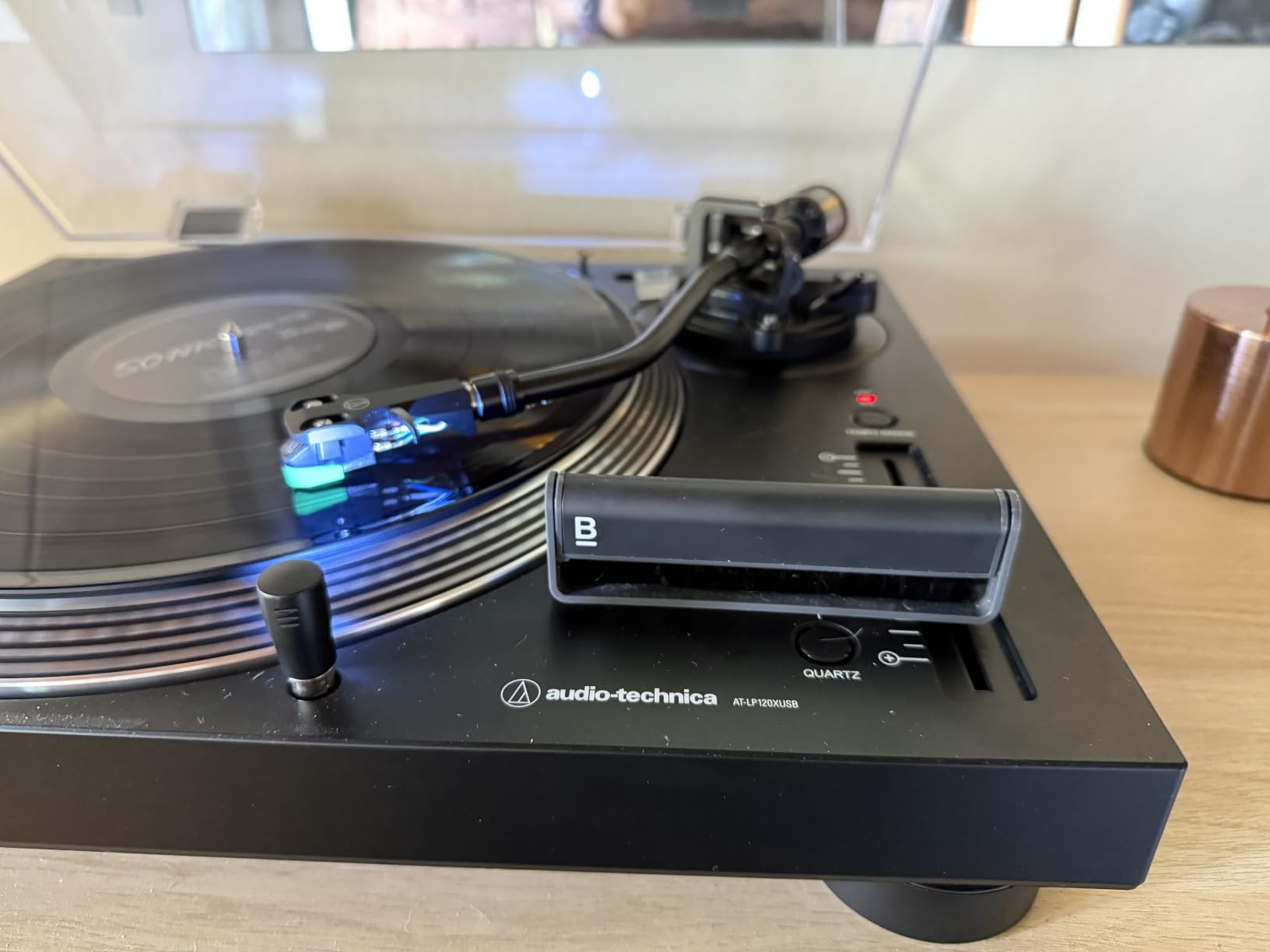
This is the least expensive accessory on the list and the one I reach for most often. Carbon fiber bristles pull dust off the spinning record while the conductive handle bleeds static away through your hand.
It ranks #2 in its category with over 11k ratings, and it needs no liquid at all. Mine lives on the spindle between plays.
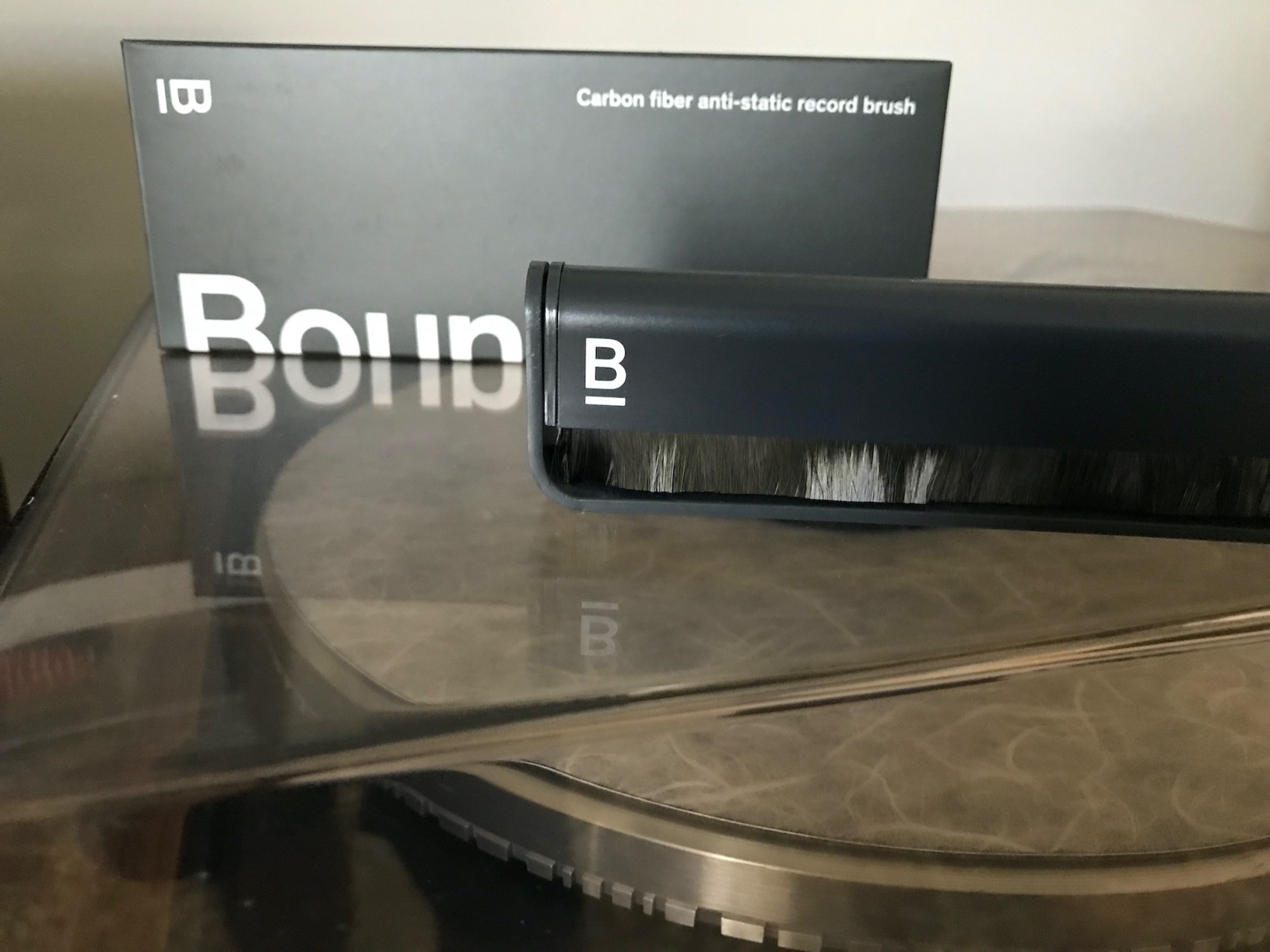
The dual-row bristle layout is what separates it from cheap clones. The leading row catches big dust while the trailing row sweeps fine particles out of the groove walls.
The patented static discharge path matters more than beginners expect. Without it, the charge that attracts dust simply stays on the record and pulls fresh dust back within minutes.
The rounded corners are a small safety detail worth mentioning, because a slip with a square-cornered brush can nick the playing surface. The self-cleaning handle lets you swipe the bristles clean between sides.
It weighs almost nothing, which some people dislike. I find the lightness useful, because you let the record spin under the brush and add no downward pressure of your own.
How do you use a carbon fiber brush correctly?
Hold the bristles over the spinning record for a few rotations, then angle the handle toward the edge and let the dust ride off the lip.
Never press down, and never scrub against the direction of rotation.
Will it work with 7 and 10 inch records?
Yes, the brush head is under five inches long and works on any disc size.
It also doubles as a quick duster for the plinth and the inside of the dust cover.
3. Audio-Technica AT6011 Anti-Static Record Brush – The Trusted Brand Pick
Audio-Technica AT6011 Anti-Static Record Brush
Anti-static record brush
Conductive synthetic fibers
Cuts surface noise
1 year limited warranty
Pros
- Conductive fibers dissipate static
- Noticeably reduces surface noise
- Helps extend cartridge life
- Backed by a 1 year warranty
- Trusted Audio-Technica brand
Cons
- Very simple feature set
- No fluid or gel cleaning
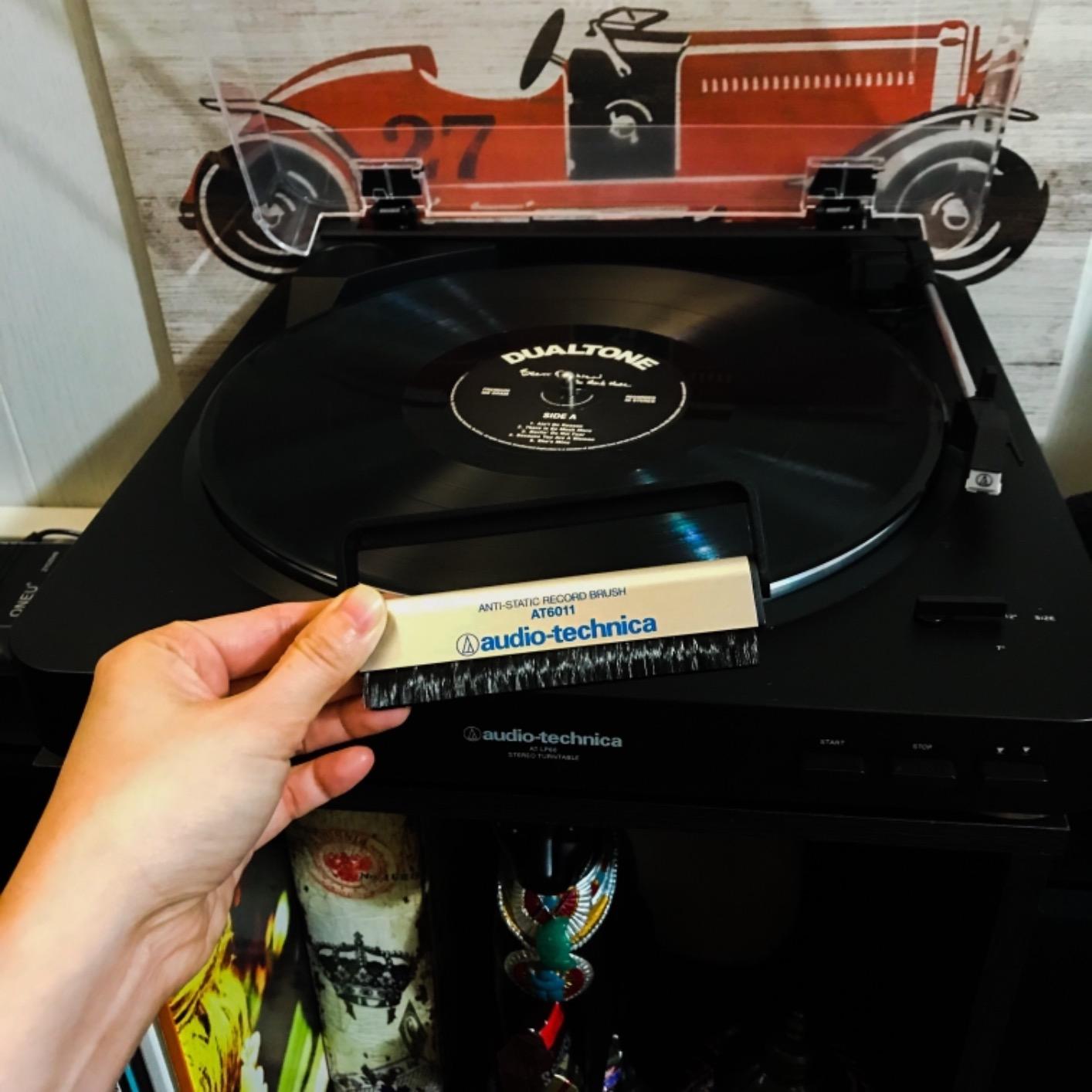
If you would rather buy audio gear from a name you already know, the AT6011 is the safe choice. Audio-Technica has built cartridges for decades, and the company knows exactly what static does to a stylus.
I ran one for a full year before trying the dual-row Boundless, and the results were close. The conductive synthetic fibers do the same job of knocking down static before the needle drops.
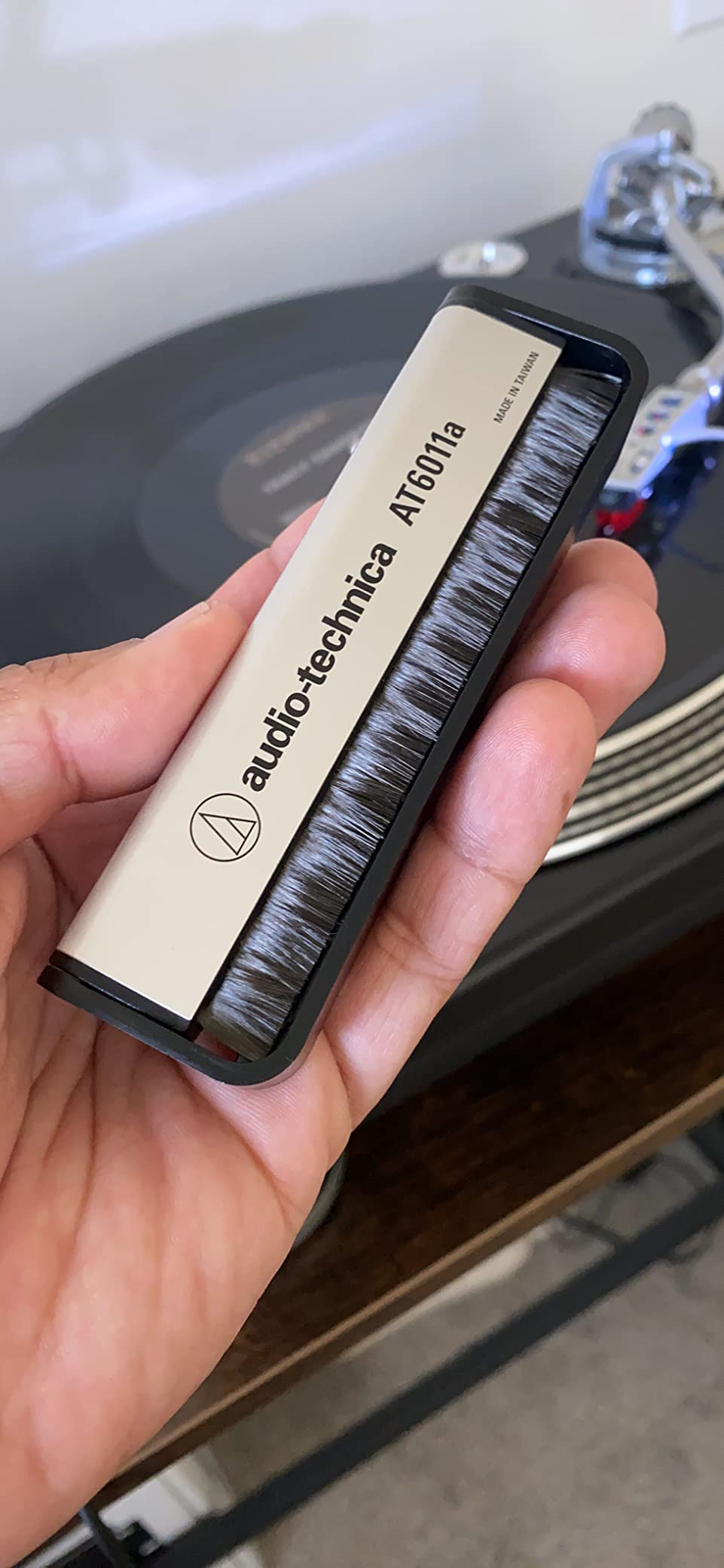
In practice it reduces the pops you hear between tracks and in quiet passages. That is where static noise shows up most, and a brush removes it for a fraction of a cent per use.
Audio-Technica also credits the brush with extending cartridge life, and that tracks with my experience. A clean stylus tracks lighter and drags less grit through the grooves on every rotation.
With around 1.6k ratings it is the smaller name here in review volume, but the score matches the bigger sellers at 4.6 stars. Buyers consistently mention the same thing: it just works, quietly, for years.
It is a simple tool with no extras, and the one-year warranty reflects that. If you want a bare-basics anti-static brush from an established audio brand, this is the one.
How does it compare to a full cleaning kit?
A brush is dry maintenance for every play, while a kit with solution handles the deeper clean every few plays.
Most collectors end up owning both within the first year.
How long do the conductive fibers last?
Years, as long as you keep the bristles clean and store the brush away from dust.
Avoid touching the bristle row with your fingers, because skin oils kill the conductivity.
4. Hudson Hi-Fi Rice Paper Inner Sleeves – Archival Protection for 100 Records
Hudson Hi-Fi Anti-Static Vinyl Record Sleeves – Durable Clear Disc Sleeves- Protect Your LP Albums from Scratches, Dust & Dirt – Acid-Free Rice Paper Disc Covers, 100x Inner Sleeves
100 rice paper inner sleeves
Acid-free HDPE build
Anti-static protection
Fits 12 inch LPs
Pros
- Acid-free rice paper construction
- Anti-static lining repels dust
- Smooth-slide design prevents scratches
- Archival grade for decades
- Fits standard 12 inch LPs
Cons
- Pricier than basic paper sleeves
The paper sleeves inside most new records are quietly damaging them. They shed fibers, they generate static, and they scratch the vinyl every single time you slide the disc in or out.
Swapping every record into a rice paper sleeve is the most boring, most effective upgrade I have made to my collection. This 100-pack from Hudson Hi-Fi is the one I keep reordering.
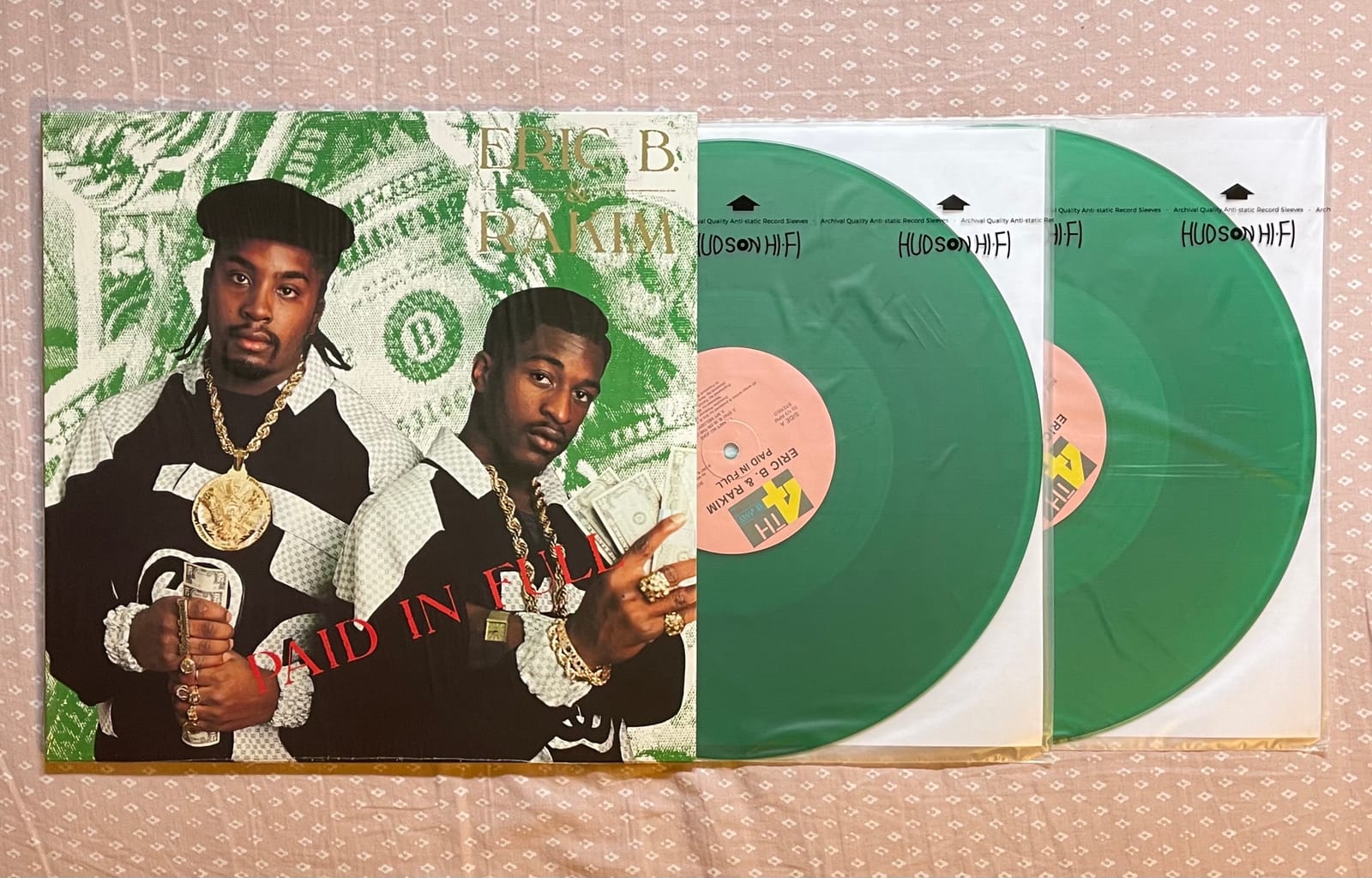
The three-layer build sandwiches rice paper between layers of anti-static HDPE. A record slides in with almost no friction, so the playing surface never picks up micro-scratches during handling.
The acid-free part matters more than beginners realize. Acidic paper slowly breaks down and can deposit residue on the vinyl, which is why archival sleeves are the standing recommendation on every collector forum I have read.
It does cost more per sleeve than plain polyethylene, and I think that premium is worth it for anything you plan to keep. Ninety percent of buyers rate it five stars, the highest mark on this list.
Rice paper or pure HDPE sleeves?
Rice paper sleeves are stiffer and easier to slide records into, while pure HDPE is cheaper and thinner.
Both are anti-static and acid-free, so the difference is mostly convenience and feel.
How many sleeves do you actually need?
Count your records and add 20 percent, because collections grow faster than anyone expects.
A 100-pack covers most first-year collections with room to spare.
5. Invest In Vinyl Master Inner Sleeves – The Affordable 50-Pack
Invest In Vinyl 50 Master Sleeves Rice Paper Anti Static LP Inner Sleeves for Vinyl Records Provide Your LP Collection with The Proper Protection
50 rice paper inner sleeves
Anti-static lining
Acid-free archival build
Thicker than stock sleeves
Pros
- Archival rice paper construction
- Acid free for long-term storage
- Anti-static lining keeps dust away
- Thicker than standard sleeves
- Snug fit for 12 inch records
Cons
- Thin poly layer divides opinion
Same idea as the Hudson Hi-Fi sleeves, smaller commitment. You get 50 rice paper sleeves at a lower cost per sleeve, which makes them perfect for re-sleeving a collection in batches.
I use these for all of my thrift store finds, where the original sleeves are often torn or missing entirely. More than 5k collectors rate them 4.8 stars, so the quality is consistent.
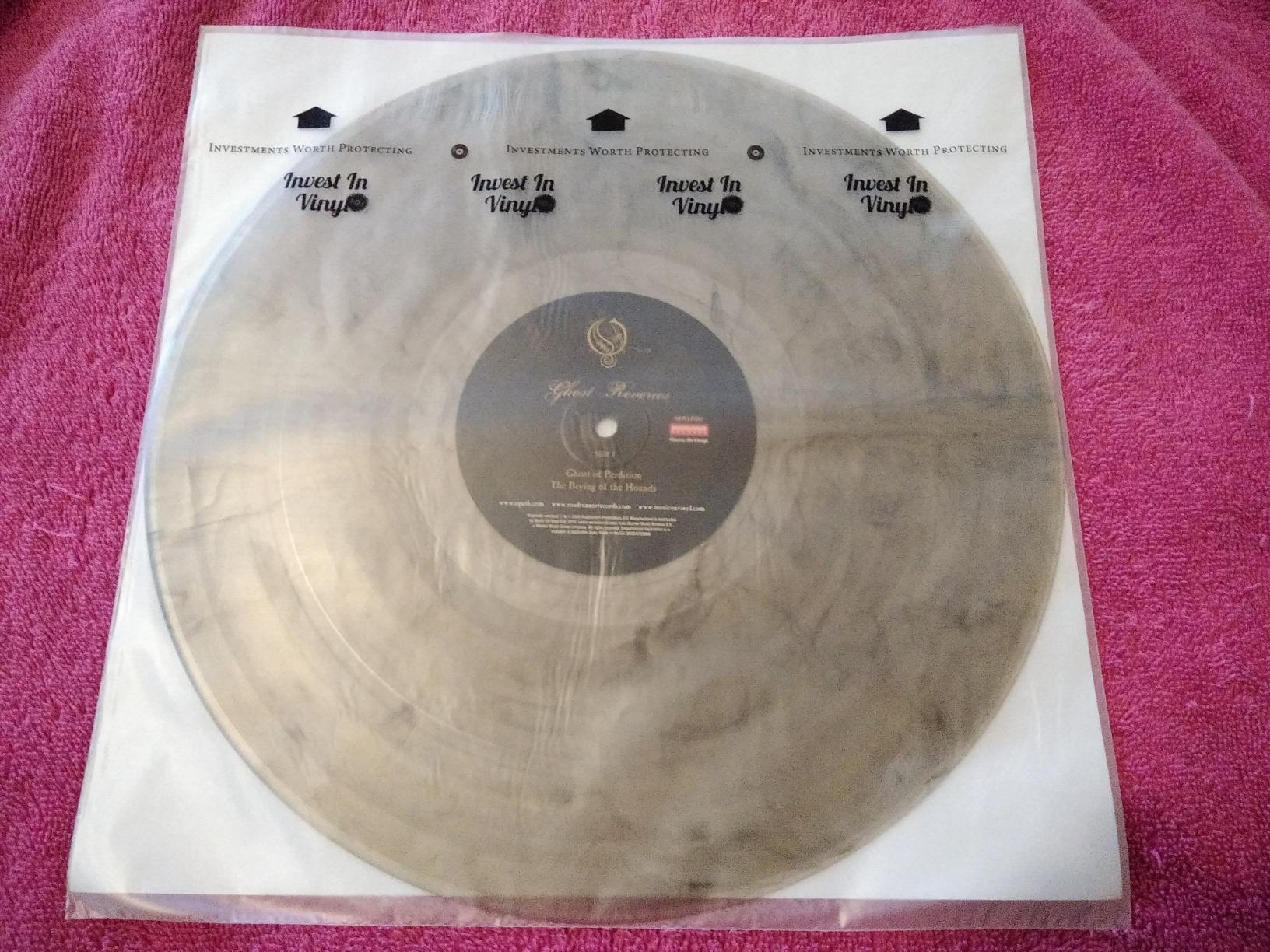
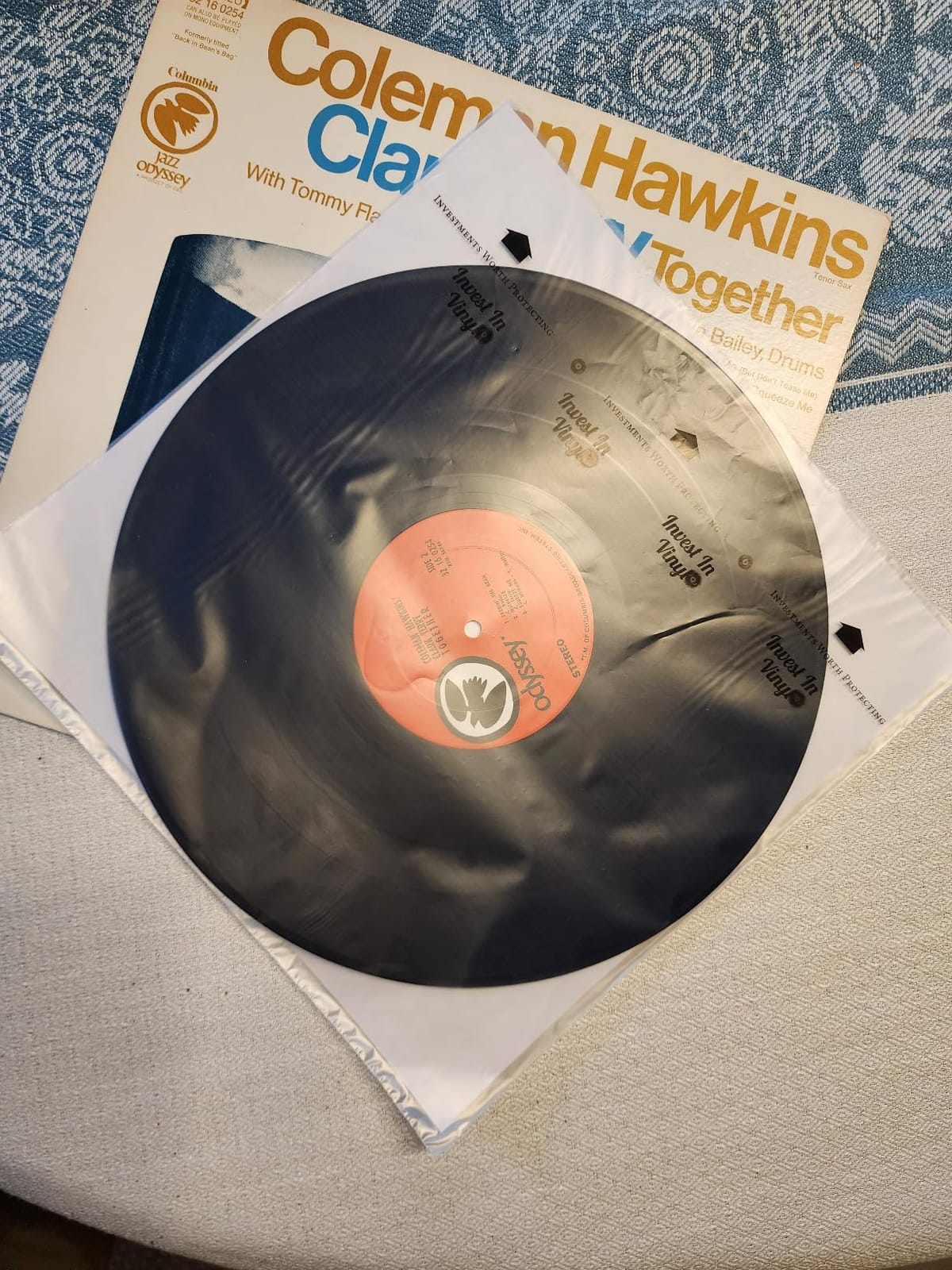
They are slightly thicker than the generic sleeves most records ship with, and the anti-static lining does real work. Records I re-sleeved six months ago still come out clean and dust-free.
The fit is tuned for a single 12 inch record, so the disc does not shift around inside the jacket. That snug fit is a feature, not a flaw.
Some reviewers find the poly layer a little thin compared to premium brands. I have not had one split yet, but I load them by the edges rather than jamming a record in corner-first.
Are these thick enough for long-term storage?
Yes, they hold up for decades of normal upright storage.
If you own valuable first pressings, the thicker Hudson Hi-Fi sleeves add extra peace of mind.
Do they fit gatefolds and printed inserts?
They sleeve the record itself, which then slides back inside the gatefold jacket as usual.
Original printed inner sleeves can be stored flat behind the record if you want to keep them.
6. Invest In Vinyl 3 Mil Outer Sleeves – Jacket Protection at Scale
Invest In Vinyl 100 Clear Plastic Protective LP Outer Sleeves 3 Mil. Vinyl Record Sleeves Album Covers 12.75″ x 12.5″ Provide Your LP Collection with The Proper Protection
100 clear outer sleeves
3 mil polyethylene
Acid-free and PVC-free
12.75 x 12.5 inch fit
Pros
- Guards jackets from scuffs and tears
- Keeps out dust dirt and liquid
- 3 mil thickness beats most rivals
- Acid-free so covers never discolor
- High clarity for easy viewing
Cons
- Occasional cloudy sleeve
- Tight fit on some gatefolds
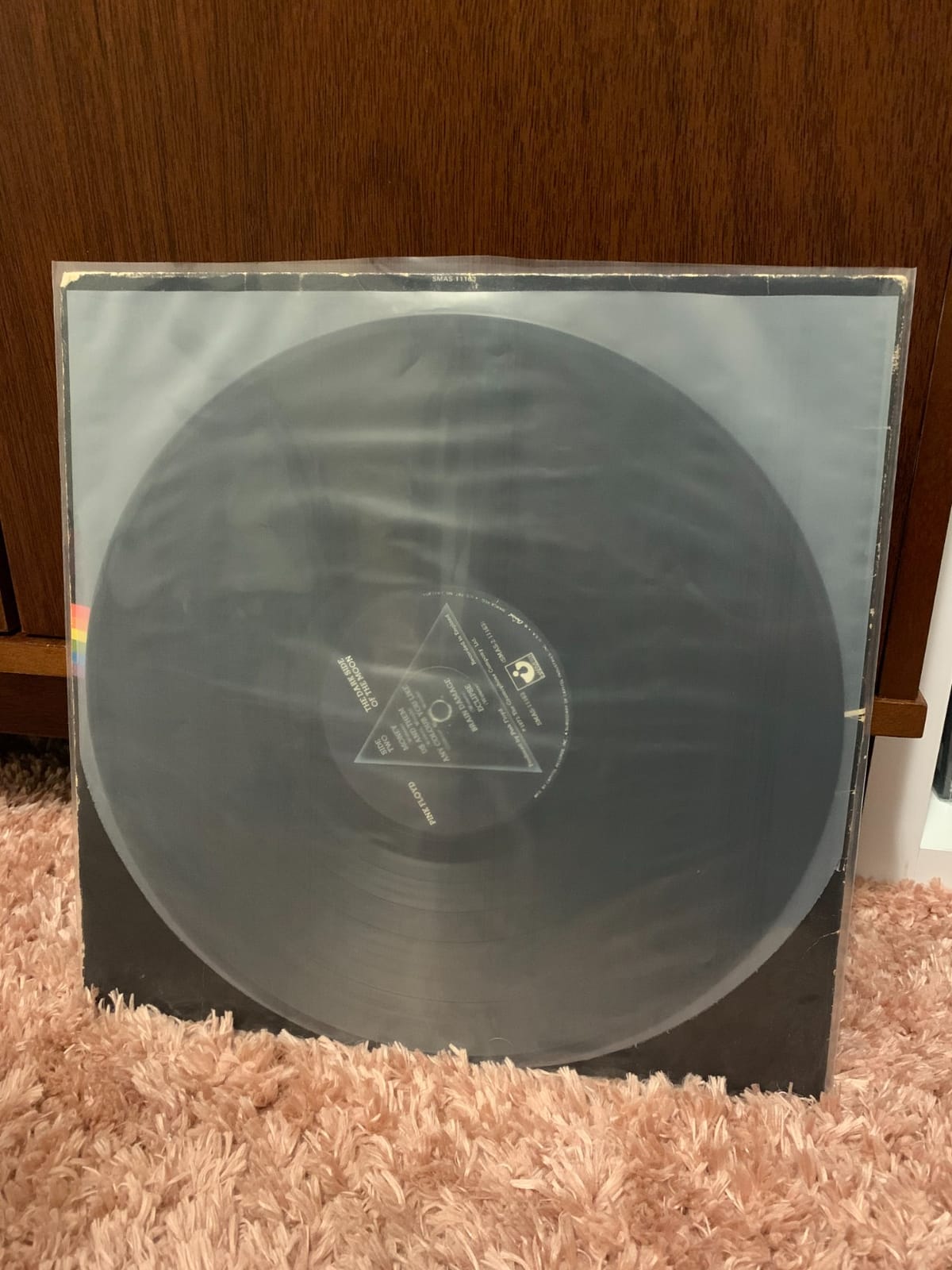
Inner sleeves protect the record, while outer sleeves protect the jacket, and the jacket is often half the value of a collectible pressing. This 100-pack of clear 3 mil sleeves is the best-selling option for good reason.
I sleeve every jacket that enters the house now. Ring wear, shelf scuffs, and split seams all start with bare cardboard rubbing against bare cardboard.

At 3 mil these are thicker than the flimsy sleeves some shops use, and the difference is obvious the first time you handle one. They hold their shape and do not wrinkle along the seams.
They are acid-free and PVC-free, so there is no risk of the plastic discoloring the cover over time. The clarity is high enough that I can read shelf spines straight through the sleeve.
Two honest notes from the reviews: an occasional sleeve arrives cloudy, and double LP gatefolds are a snug fit. I have sleeved plenty of both, and a gentle stretch gets them seated.
Is 3 mil thick enough for outer sleeves?
Yes, 3 mil is the sweet spot for everyday protection without making jackets hard to shelve.
Thicker 4 to 6 mil sleeves exist, but they eat shelf space fast.
Will they fit double LPs and gatefolds?
Most gatefolds fit with a firm slide, and the flush-cut opening gives you room to work.
Boxed sets and heavy tip-on jackets may need an oversized sleeve instead.
7. FEMELI Record Weight Stabilizer – Vibration Control for Uneven Records
FEMELI Record Weight Stabilizer, 10.8oz Vinyl Weight for Turntable (Black)
10.8 oz aluminum record weight
Low profile clears dust covers
Centered spindle hole
Damps platter vibration
Pros
- Low profile fits under the dust cover
- Centered spindle hole prevents wobble
- Dampens vibration without straining bearings
- Keeps the cartridge clear of the weight
Cons
- May not suit every turntable
- Too light for some setups
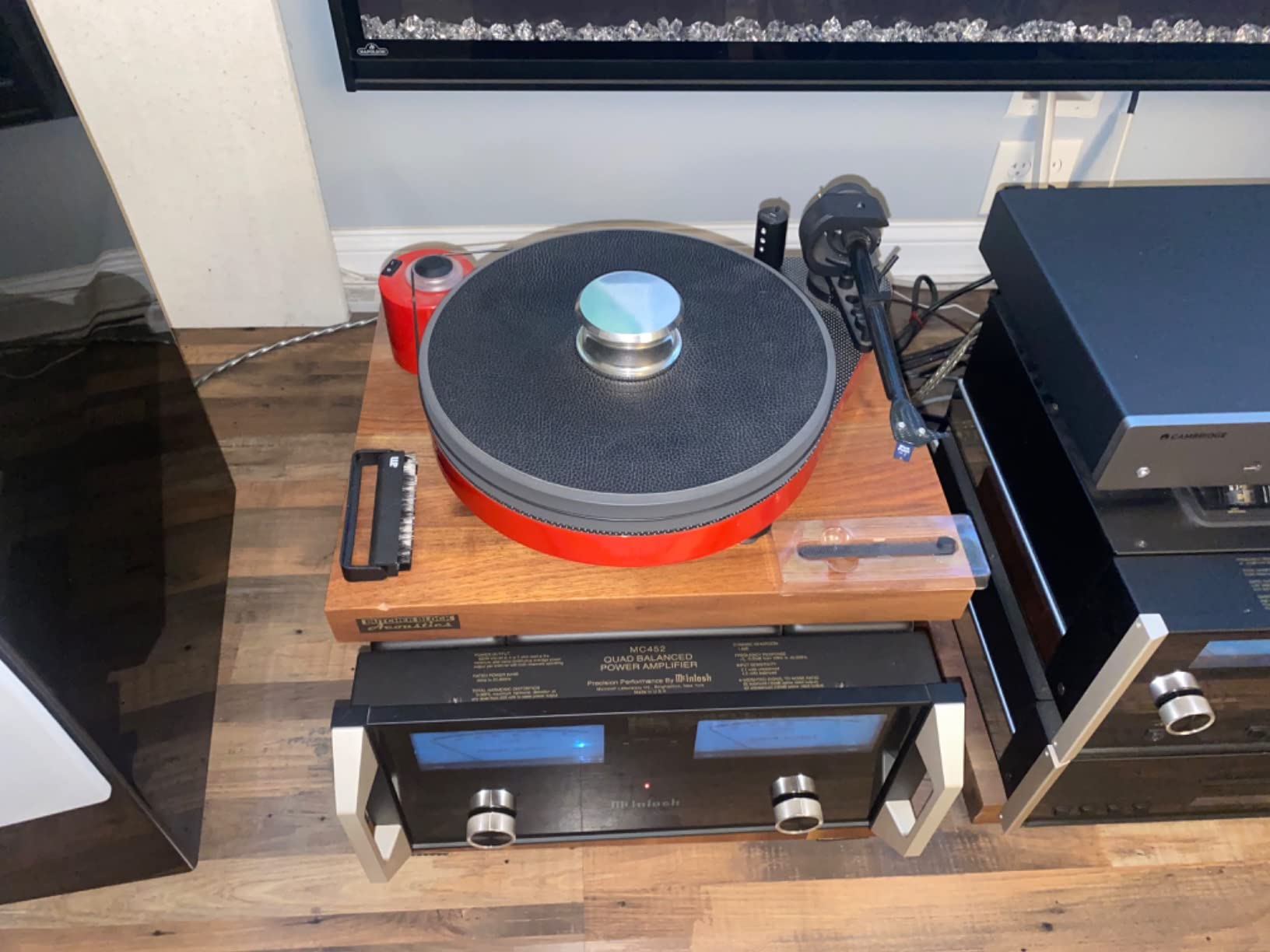
A record weight sits on the spindle and couples the record to the platter. The payoff is reduced vibration, tighter bass, and far steadier playback on slightly dished records.
The FEMELI weighs 304 grams, which is enough to settle light warps without straining a budget turntable motor. That balance is exactly why I recommend it over heavier pucks for beginners.
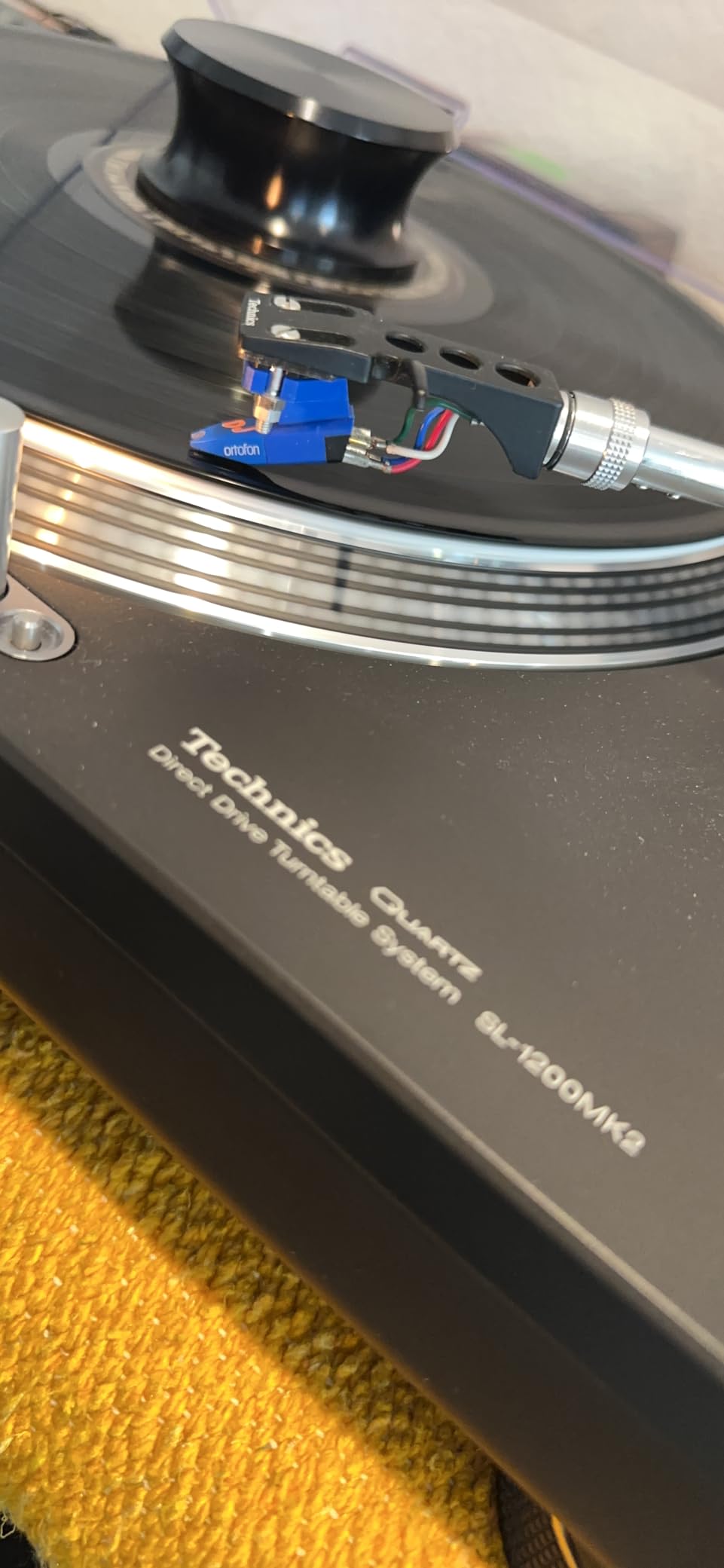
The low profile is the detail that sold me. It clears the dust cover on my player with room to spare, which matters if you actually close your lid while records spin.
The spindle hole is sized correctly so the weight sits dead center. A wobbly weight is worse than no weight at all, and this one does not wobble.
The centered mass also keeps pressure off the record label, and the height stays clear of the cartridge in the dead wax at the end of each side. Both details show up repeatedly in buyer feedback.
Be aware that it will not rescue badly warped records, and suspended turntables can react poorly to added mass. If your table uses a sprung chassis, check the manual first.
Will a record weight damage your turntable?
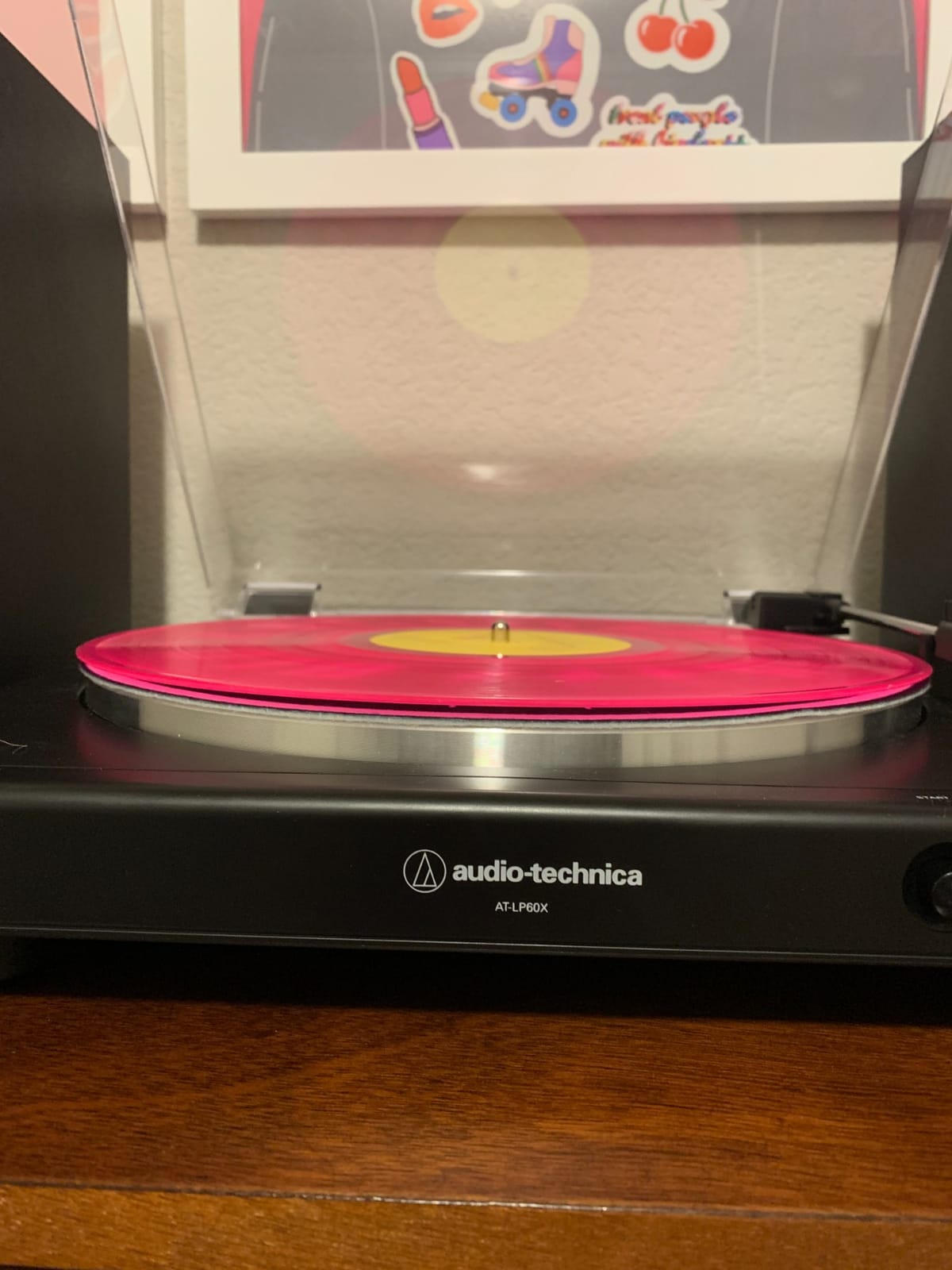
Not on most belt-drive and direct-drive tables at this weight.
Skip the weight on suspended sub-chassis designs, and stop using it if the platter slows down.
Does a record weight fix warped records?
It flattens light dish warps and edge lifts during playback, which is usually all you need.
Deep creases and heat damage need proper flattening or are simply permanent.
8. Victrola Collector Storage Case – Portable Protection for 30+ LPs
Victrola Collector – Vinyl Record Storage Case, Holds 30+ LPs – White
Holds 30+ LPs
Corner guards and lock
Felt interior lining
Fits all three record sizes
Pros
- Sturdy hard-shell build
- Felt lining cushions your records
- Corner guards and secure lock
- Solid top handle for carrying
- Five color options
Cons
- Occasional lock quality complaints
- Faint odor when new
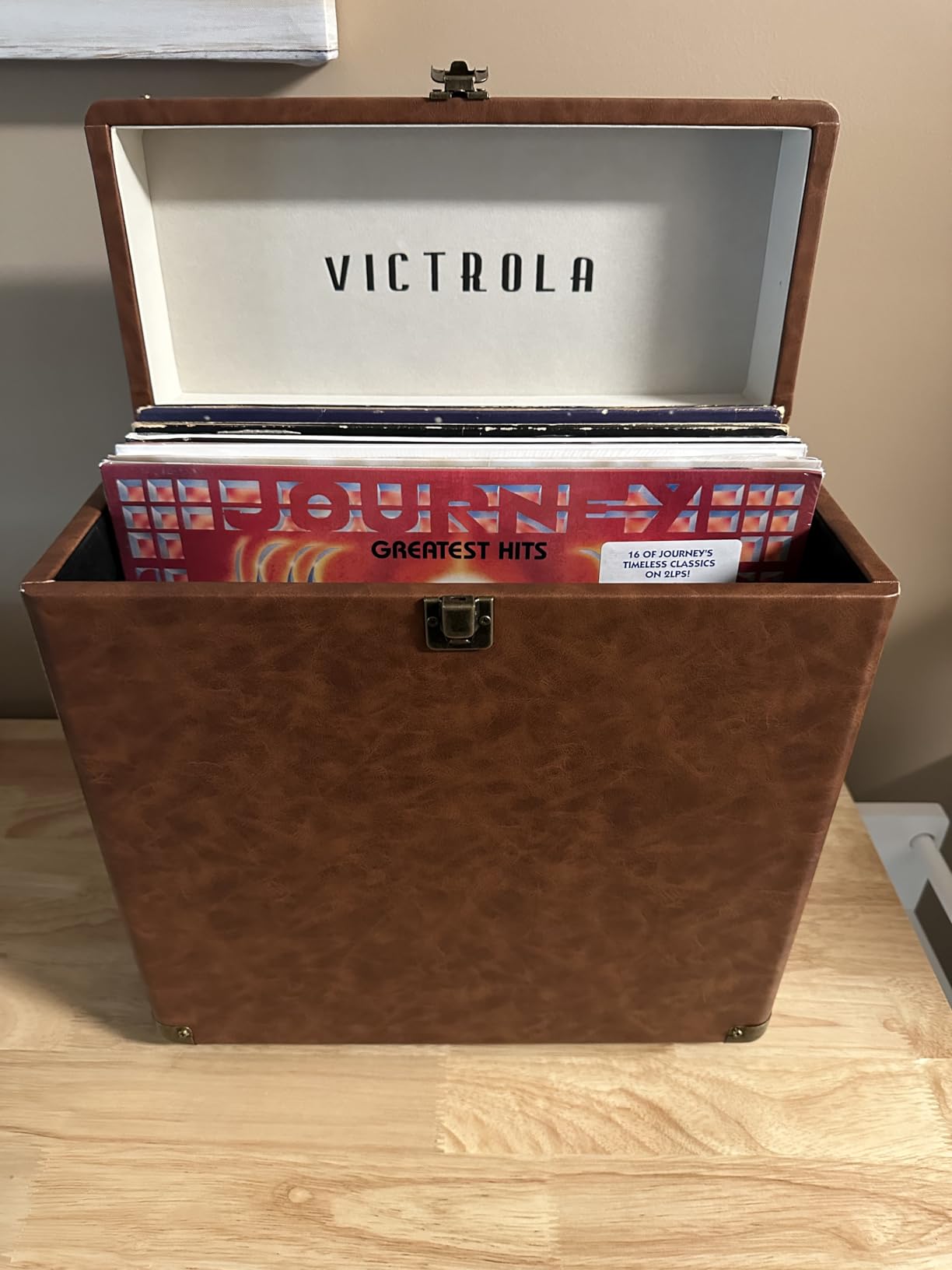
At some point you will want to carry records to a friend’s house, and a cardboard box is how corners get destroyed. This hard case from Victrola holds 30-plus LPs behind a felt-lined shell.
I have used mine for record store trips and two apartment moves. The corner guards and heavy-duty hinges have taken real hits without passing them along to the records inside.
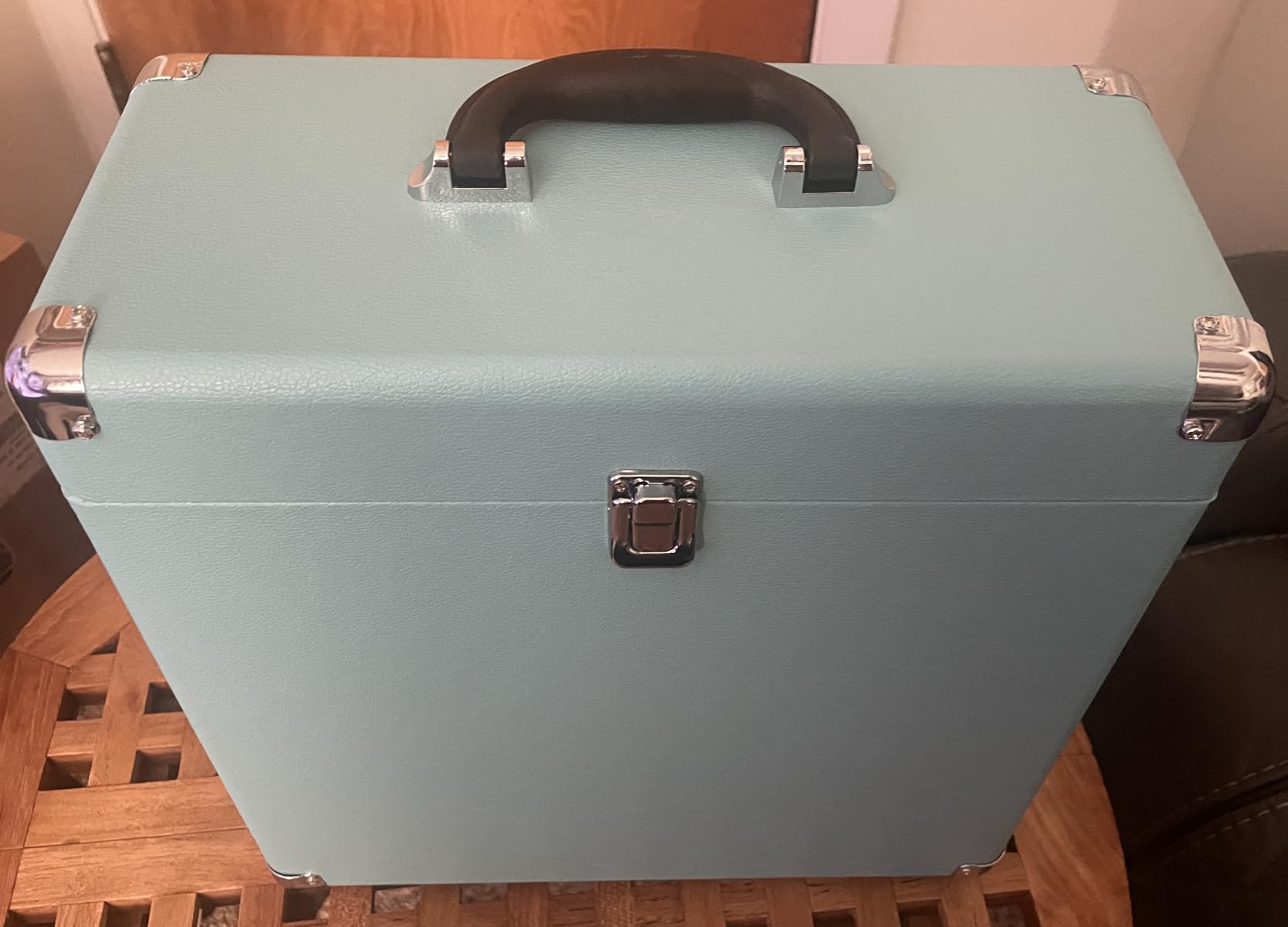
Inside, the felt lining keeps sleeves from scuffing, and the top handle stays comfortable even fully loaded. It fits 7, 10, and 12 inch records, so your singles ride along too.
In practice, plan on 25 to 30 records depending on how thick your outer sleeves are. Gatefolds eat space fast.
Victrola has been building record gear for over a century, and the fit and finish here reflects it. The white version photographs beautifully next to a wood console, and it comes in four other colors.
Reviews mention occasional lock issues and a faint odor when new, and both matched my experience. The smell faded within a week, and the lock is a convenience rather than real security.
How many records fit in real-world use?
About 25 to 30 LPs once they are in outer sleeves, and a few more if you store them bare.
Single LPs in thin sleeves get you closest to the 30-plus claim.
Is it better for moving or everyday storage?
It shines as a transport case and as a holding pen for new arrivals.
For permanent storage, a shelf or stand keeps records upright and much easier to browse.
9. LOAKEKEL Record Player Stand – Display and Storage for 200 Albums
LOAKEKEL Record Player Stand, Turntable Stand with Vinyl Record Storage
3 tier record stand
Holds up to 200 albums
Removable dividers
Steel frame with wood shelves
Pros
- Stores up to 200 albums
- Removable dividers give 5 layouts
- Pre-labeled parts speed assembly
- Steel frame supports a record player
- Works as a living room side table
Cons
- Assembly takes patience
- Only 309 reviews so far
Once you pass 50 records, floor stacks become a real problem. This three-tier stand holds up to 200 albums and carries a turntable on top at the same time.
I set one up over a weekend. The steel frame and wood panels go together with pre-labeled parts, and the finished piece looks far more expensive than it has any right to.
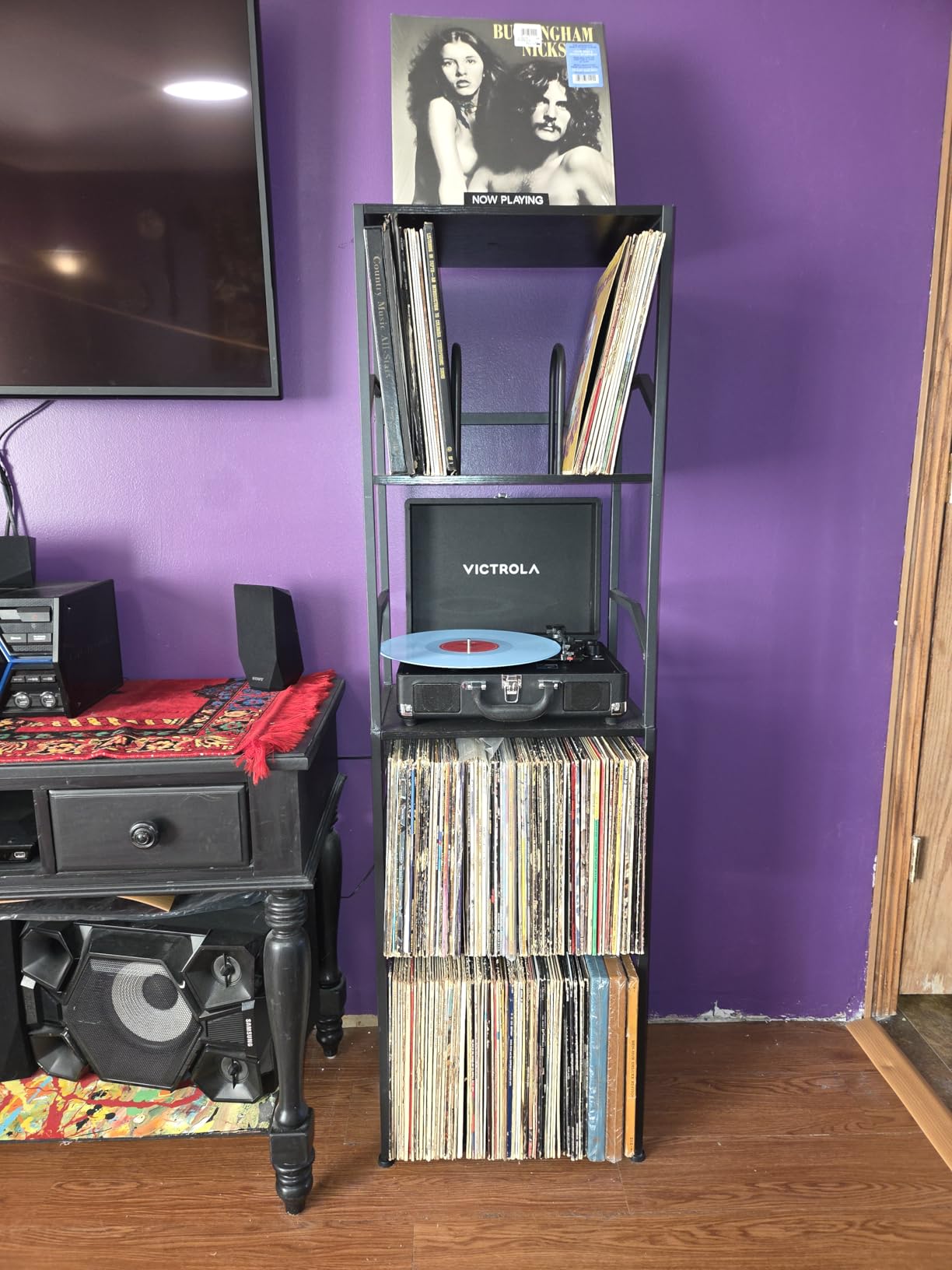
The removable dividers are the clever part. Five layout options let you split the cubbies by genre, by format, or by how often you actually play something.
The top surface measures just under 17 inches wide, which fits most compact and mid-size turntables. If you run a large deck, measure before ordering.
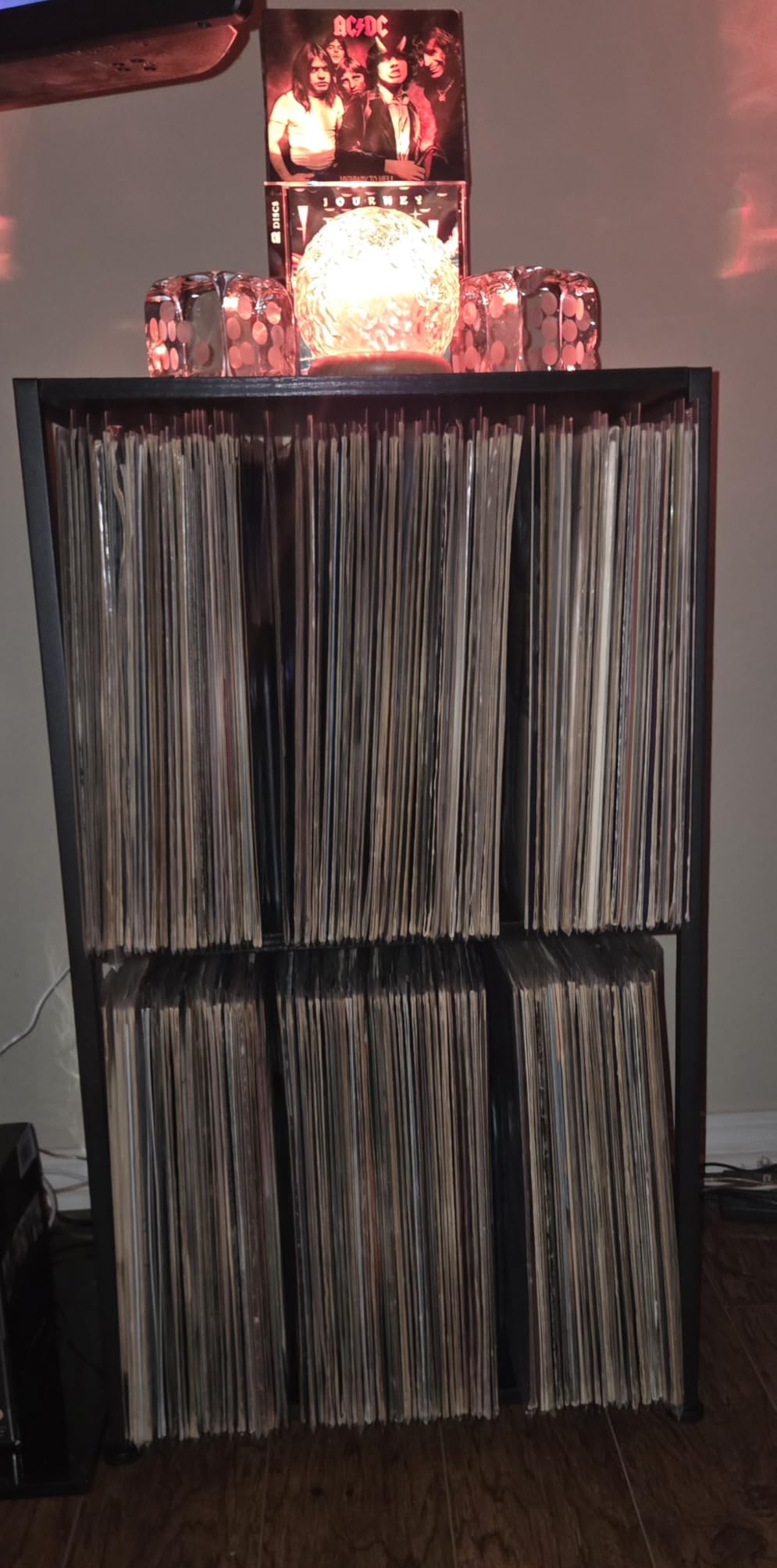
Vertical storage is the real point here. Records leaned at an angle for months develop a permanent warp, and a stand like this keeps every spine straight and browsable.
With roughly 309 reviews it is the newest product here, and stock comes and goes. Assembly ran me about an hour once I stopped rushing the instructions.
How hard is the assembly?
About an hour with the pre-labeled hardware and the included tools.
A second pair of hands helps when you attach the frame to the shelves.
Will the top shelf hold a heavy turntable?
Yes, the steel frame carries a typical belt-drive table without flexing.
Keep the heaviest items on the bottom tier so the stand stays stable.
10. Hudson Hi-Fi Stylus Cleaner Gel – Two Seconds to a Cleaner Needle
Hudson Hi-Fi Stylus Cleaner Gel – Restores Sound Quality – Anti-Static, Zero-Dust Record Player Needle Cleaner – Reusable Gel Bubble – Safe for All Turntable Record Players
Reusable stylus cleaning gel
Anti-static zero-dust formula
Safe for all cartridges
2 year warranty
Pros
- Lower the stylus and you are done
- Hear the noise floor drop
- Reusable for months of cleaning
- Safe for every cartridge type
- 2 year warranty included
Cons
- Needs a rinse and air dry monthly
- Not Prime eligible
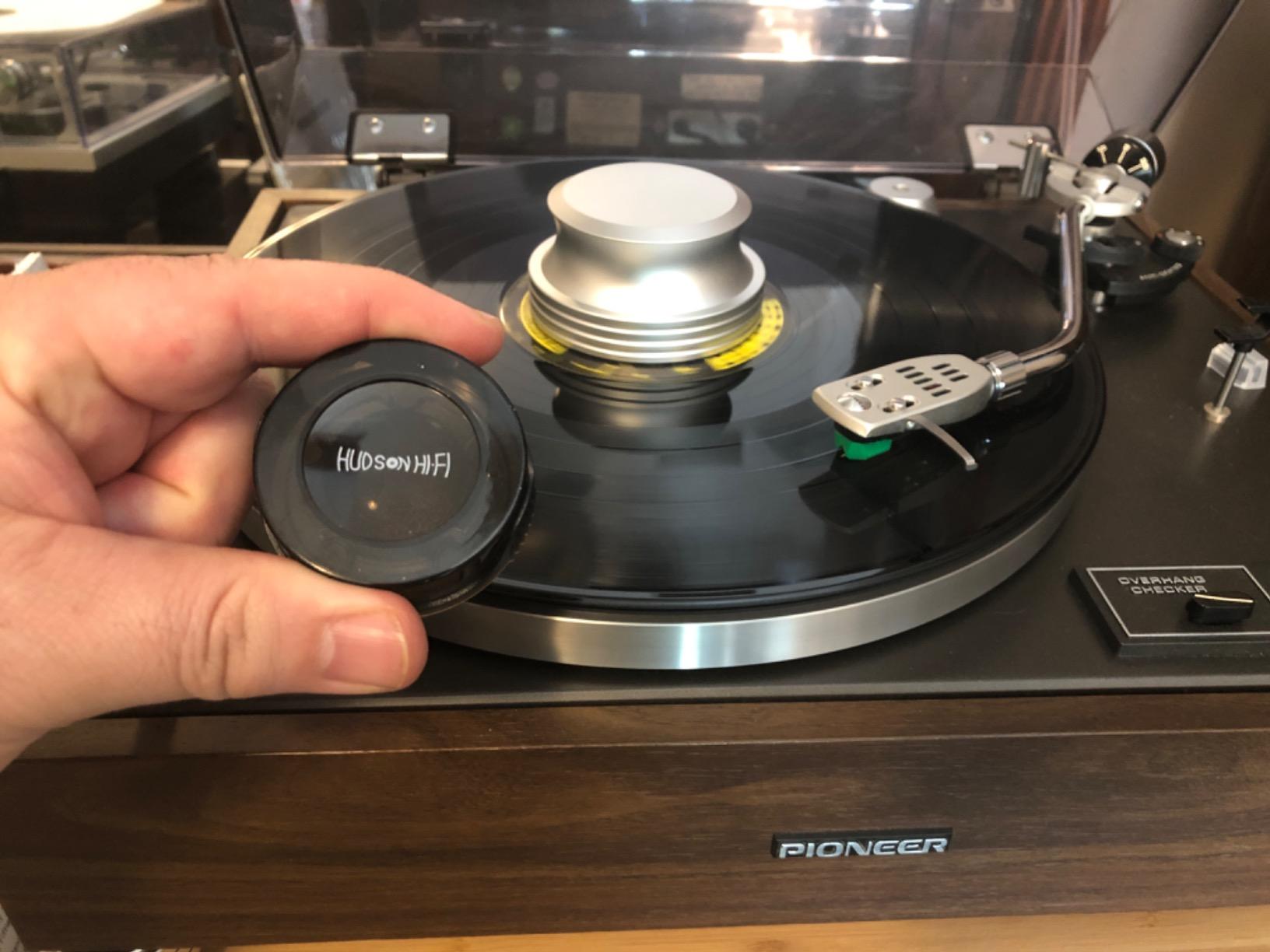
A dirty stylus is the fastest way to ruin records, because the needle grinds trapped dust straight into the grooves. This gel bubble is the laziest possible fix, and I mean that as a compliment.
You gently lower the stylus onto the gel a few times and lift. Done. There is no brushing direction to worry about and no stray bristles to leave behind.
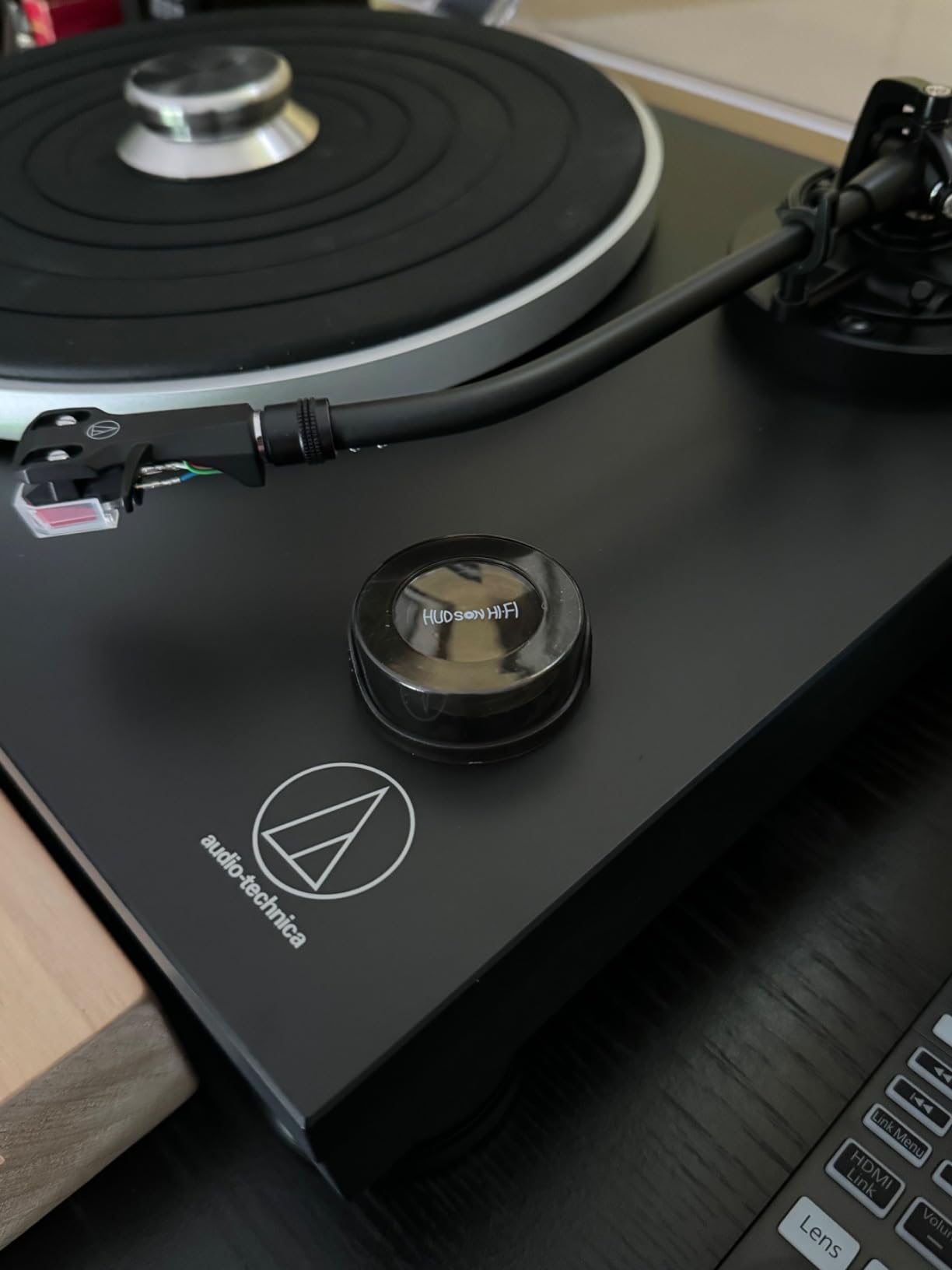
The improvement is audible on quiet pressings. I cleaned a needle that looked perfectly fine and heard the background noise drop on the very next side I played.
The anti-static formula also stops the needle from collecting fresh dust, which slows the whole cycle down. A single container stays usable for months of regular cleaning.
Hudson Hi-Fi backs it with a 2-year warranty, which is longer than most accessories in this price range carry. That says something about how long the gel is expected to last.
Care is simple: rinse with water and air dry for half an hour whenever the surface turns gray. The only real downside is that it does not ship with Prime delivery.
How often should you clean your stylus?
Every few plays, or any time you can see dust on the tip under a flashlight.
A stylus that goes months without cleaning is quietly shaving life off your records.
How do you keep the gel working?
Rinse it under water and let it air dry for 30 minutes when it turns gray.
Keep the lid on between uses so the gel does not collect dust on its own.
11. Fluance Rubber Turntable Mat – A Dampening Upgrade for Your Platter
Fluance Turntable Platter Mat (Rubber Black) – Durable Audiophile Grade Silicone Design for Vinyl Record Players (PFHTRP)
Silicone rubber platter mat
11.75 inch universal fit
Recessed center for flat playback
Damps platter vibration
Pros
- Durable silicone rubber surface
- Isolates records from platter vibration
- Recessed center lets LPs sit flat
- Fits all standard 12 inch platters
- Lifetime customer support
Cons
- Felt fans may prefer a warmer mat
The felt mat that ships with most turntables looks nice but does very little. A rubber mat like this one damps vibration between the platter and the record, and the change is easy to hear.
I swapped one onto an entry-level table and the first thing I noticed was tighter bass. Surface noise on worn records dropped a touch as well.
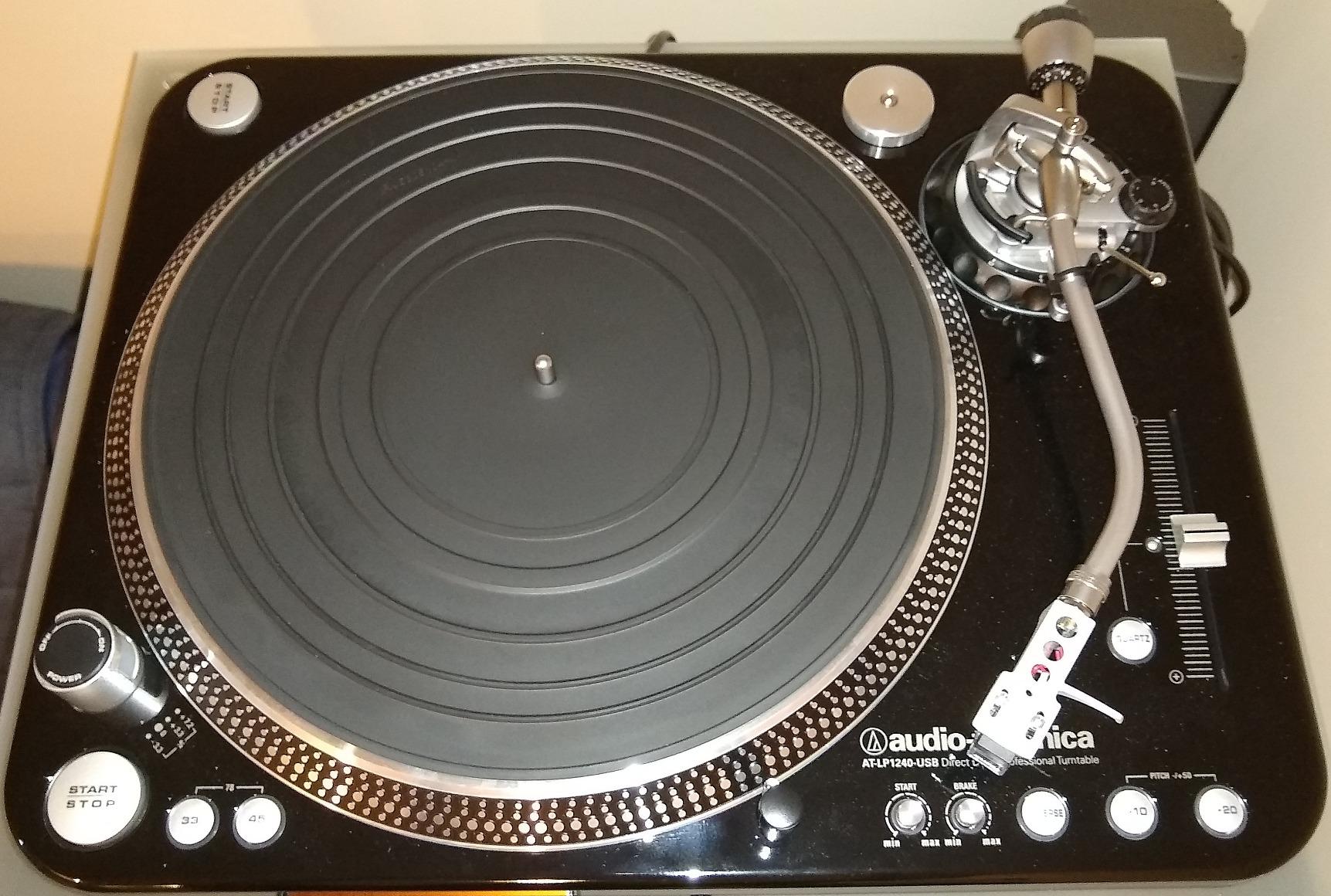
The silicone rubber surface is perfectly flat and non-scratch, and it grips the record so the disc does not slip during cueing. It fits all standard 12 inch platters.
The recessed center is a thoughtful touch. Records sit flat regardless of label thickness, which quietly helps the slight wobble you get on some modern pressings.
Fluance includes a 1-year warranty and lifetime customer support, which is generous for a slab of rubber. It pairs natively with the RT80 and RT81 but works on anything with a standard platter.
Felt loyalists argue that rubber sounds duller, and that is a fair taste preference. If you want warmth, keep the felt; if you want control and grip, switch to rubber.
Rubber, felt, or cork mats?
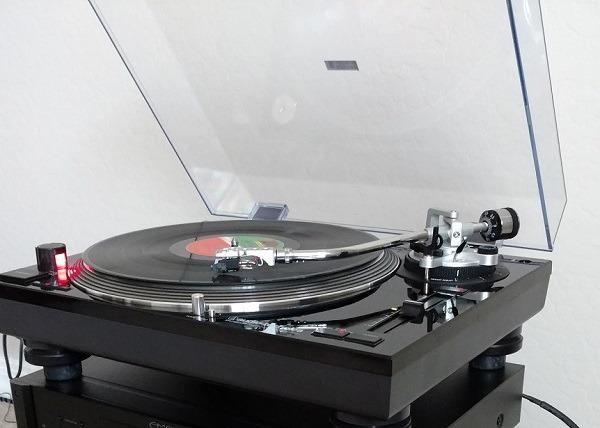
Rubber damps vibration and tightens bass, felt adds warmth and makes cueing easier for DJs, and cork splits the difference.
For pure home listening, rubber is the safest first upgrade.
Will it fit your platter?
It measures 11.75 inches and fits any standard 12 inch platter.
Check that your spindle is not taller than the recess before you order.
12. Boundless Audio Stylus Brush – Gel-Free Needle Maintenance
Boundless Audio Carbon Fiber Stylus Brush Anti-Static Record Needle Cleaner
Carbon fiber stylus brush
Wool and carbon bristles
Conductive handle
Long handle for control
Pros
- Carbon fiber and wool bristles
- Conductive handle fights static
- Long handle gives precise control
- Extends stylus life
- Gel-free cleaning
Cons
- Tiny brush needs a careful hand
If a gel bubble feels like too much commitment, this little brush does the same job for less. Carbon fiber and wool bristles sweep the stylus clean without any fluid at all.
I keep one inside the turntable lid so it is always within reach. The conductive handle bleeds static off while you work.

The long handle gives you real control, which matters because the stylus is the most fragile part of the entire setup. You are working millimeters from a cantilever that does not forgive clumsy fingers.
Used before each session, it extends stylus life and keeps dust from being dragged through the grooves. Nearly 1.5k collectors rate it 4.7 stars, and it sells as a top product in its category.
The gel-free design means nothing sticky ever touches the needle. Some gels leave residue if the stylus is dipped too deep, and a brush removes that variable entirely.
It is genuinely tiny, so store it somewhere you will not lose it. That is the only complaint I have after months of daily use.
Which direction do you brush the stylus?
Always back to front, matching the direction the record travels under the needle.
Never brush side to side, because that can snap the cantilever.
Brush or gel – which should you buy first?
The brush, because it costs less and covers daily dusting in seconds.
Add the gel later for the deeper clean that brushing alone cannot manage.
Buying Guide: How to Choose Vinyl Accessories?
Buy protection first and playback upgrades second. Anything that prevents damage pays for itself, while anything that only tweaks the sound can wait until you can hear the difference it makes.
What to buy in your first month
Three items cover 90 percent of the damage that happens to new collections:
A carbon fiber anti-static brush for use before every single play
A cleaning kit with solution for records that arrive dirty or noisy
Anti-static inner sleeves, plus outer sleeves once the budget allows
This trio costs about the same as three new records and protects all the rest. Every collector forum I researched repeats the same three items to beginners, which is about as close to consensus as hobbyists get.
What can wait until year two
Nothing bad happens if you delay these, and some of them depend on gear you may not own yet:
A record weight, which only matters once your turntable and cartridge are decent
An upgraded platter mat, which is a taste decision more than a repair
A storage stand or carrying case, which becomes urgent around the 50-record mark
Two upgrades sit outside this list entirely: a phono preamp if your amplifier lacks a dedicated phono input, and a tracking force gauge if your tonearm settings look suspect. Both are turntable upgrades rather than record care, and both are worth a dedicated guide of their own.
Budget versus premium: where the money matters
Sleeves are the one category where spending more is always justified, because cheap sleeves can shed, stick, or scratch. Rice paper from a known brand costs a little more per sleeve and removes an entire class of risk.
Brushes are the opposite. A basic carbon fiber brush from any reputable brand does the job, so pay for build quality and good bristles, not for a fancy handle.
For storage, spend according to how much your collection is worth to you. A sturdy stand that keeps records vertical is the functional baseline, and looks are a bonus.
A simple maintenance schedule
Before every play: two rotations with a carbon fiber brush
Every five to ten plays: a wet clean with solution and a velvet brush
Every few plays: a stylus dip in cleaning gel or a back-to-front brush
When a used record arrives home: a full wet clean before it touches the platter
Once a year: check sleeve condition, dust the dust cover, and level the turntable
That schedule takes minutes a week and keeps records sounding the way they did on day one. I have records bought a decade ago that still play quietly because none of these steps were ever skipped for long.
Frequently Asked Questions
What does every vinyl collector need?
Every vinyl collector needs an anti-static carbon fiber brush, a record cleaning kit with solution, anti-static inner sleeves, and clear outer sleeves. Add a stylus cleaner and upright storage as the collection grows.
What are some good accessories for vinyl records?
The most useful vinyl accessories are carbon fiber anti-static brushes, cleaning kits with velvet brushes and solution, rice paper inner sleeves, 3 mil outer sleeves, stylus cleaners, record weights, and turntable mats. Storage cases, crates, and stands protect the collection between plays.
What to get someone who collects vinyl?
A record cleaning kit is the safest gift because every collector uses one. A 50-pack of anti-static inner sleeves, a stylus cleaning gel, or a hard storage case are all strong choices. Avoid buying actual records unless you know their taste well.
What vinyl records are must haves?
Must-have records depend entirely on personal taste, which is why accessories make safer gifts than vinyl itself. Classics like Fleetwood Mac’s Rumours or Miles Davis’s Kind of Blue appear on most collector lists, but a gift card to a local record shop usually wins.
How often should I clean my vinyl records?
Dry brush every record before every play, wet clean with solution every five to ten plays, and fully clean any used record the day it arrives. Clean the stylus every few plays to keep dust from being ground into the grooves.
Final Verdict: Build Your Starter Kit One Paycheck at a Time
You do not need all 12 of these vinyl accessories in a single order. Start with the Big Fudge cleaning kit and the Boundless Audio brush, sleeve your records as the Hudson Hi-Fi packs arrive, and add the weight, mat, and storage once the collection earns them.
The order matters far less than starting. A brushed, cleaned, sleeved, and properly stored record will still sound quiet and clear in 2026 and decades after it. Pick up the brush first, and the rest of the routine builds itself.