
I learned the hard way about vinyl record warping the summer I left a box of LPs in my garage. Two weeks of 95F heat turned a stack of jazz classics into wavy coasters. That mistake pushed me to research every detail of proper vinyl storage. If you want to know how to store records to prevent warping in a hot or humid room, this guide breaks down exactly what I do now and what I wish I had known sooner.
Vinyl records are mostly PVC (polyvinyl chloride), a plastic that softens when heated. Above a certain temperature the disc loses its flat shape and stays bent. Heat is the real enemy. Humidity is more of an accomplice, attacking sleeves, jackets, and the cardboard inner layer. Together they can ruin a collection in a single bad season. The good news: prevention is straightforward once you understand the science.
Table of Contents
What Causes Vinyl Records to Warp?
Vinyl records warp because heat softens the PVC they are made from. The glass transition temperature of PVC sits around 140F (60C), but records begin to soften well before that. Exposure to 120F (49C) and above is enough to cause visible bending, especially when the heat is prolonged or uneven.
Heat sources in a home are sneaky. Direct sunlight through a window can push a shelf past 120F in under an hour. Attics regularly hit 130F+ during summer afternoons. A closed car interior can climb to 138F in minutes. Even records leaning against an exterior wall can absorb enough radiant heat to deform over weeks.
Cold itself rarely damages vinyl. The myth that records become brittle in winter is largely overstated for indoor storage. What cold does do is make vinyl slightly stiffer, which can exaggerate the appearance of an existing warp. Focus your worry on heat, and you have already solved 80 percent of the warping problem.
Ideal Temperature and Humidity for Vinyl Record Storage
The safe zone for vinyl storage sits between 65F and 75F (18C to 24C). Relative humidity should stay between 45 percent and 50 percent. Anything outside these ranges for long periods creates risk. The chart below summarizes what happens at each level.
Below 65F: Generally safe. Vinyl becomes slightly stiffer but does not warp.
65F to 75F: Ideal range. No warping risk under normal storage.
75F to 90F: Caution zone. Prolonged exposure can soften PVC. Vertical storage is critical.
90F to 120F: High risk. Records left flat can begin to deform.
Above 120F: Warping will occur. Time to move records to a cooler space.
Humidity matters most for the paper components. Sleeves, jacket art, and inner sleeves absorb moisture. Above 60 percent relative humidity, mold can colonize cardboard and paper within days. Vinyl itself rarely warps from humidity alone, but the sleeves and jackets can pass moisture to the record surface and trap it against the grooves.
How to Store Records So They Don’t Warp?
Follow these seven steps in order. Each builds on the previous one, and together they create a storage system that protects records even in tough climates.
Store records vertically, never flat. Stacking is the single biggest mistake collectors make. The weight of the discs above presses down and slowly bends the lower records. Vertical storage also lets air circulate around each sleeve.
Keep them away from direct sunlight. UV heats vinyl quickly and fades jacket art. A shaded interior wall is best.
Avoid exterior walls, attics, garages, and basements. These spaces swing in temperature with the seasons. Interior closets on the main living floor are ideal.
Upgrade to anti-static inner sleeves. Paper sleeves shed fibers that attract moisture. HDPE or poly-lined inner sleeves resist humidity and protect grooves.
Add outer poly sleeves. A clear outer sleeve keeps dust and moisture off the jacket without trapping it against the vinyl.
Maintain 45 to 50 percent humidity. Run a dehumidifier in humid months or a small humidifier in dry winter months to keep RH stable.
Monitor with a hygrometer. A $10 digital hygrometer tells you instantly if your room has drifted out of the safe range.
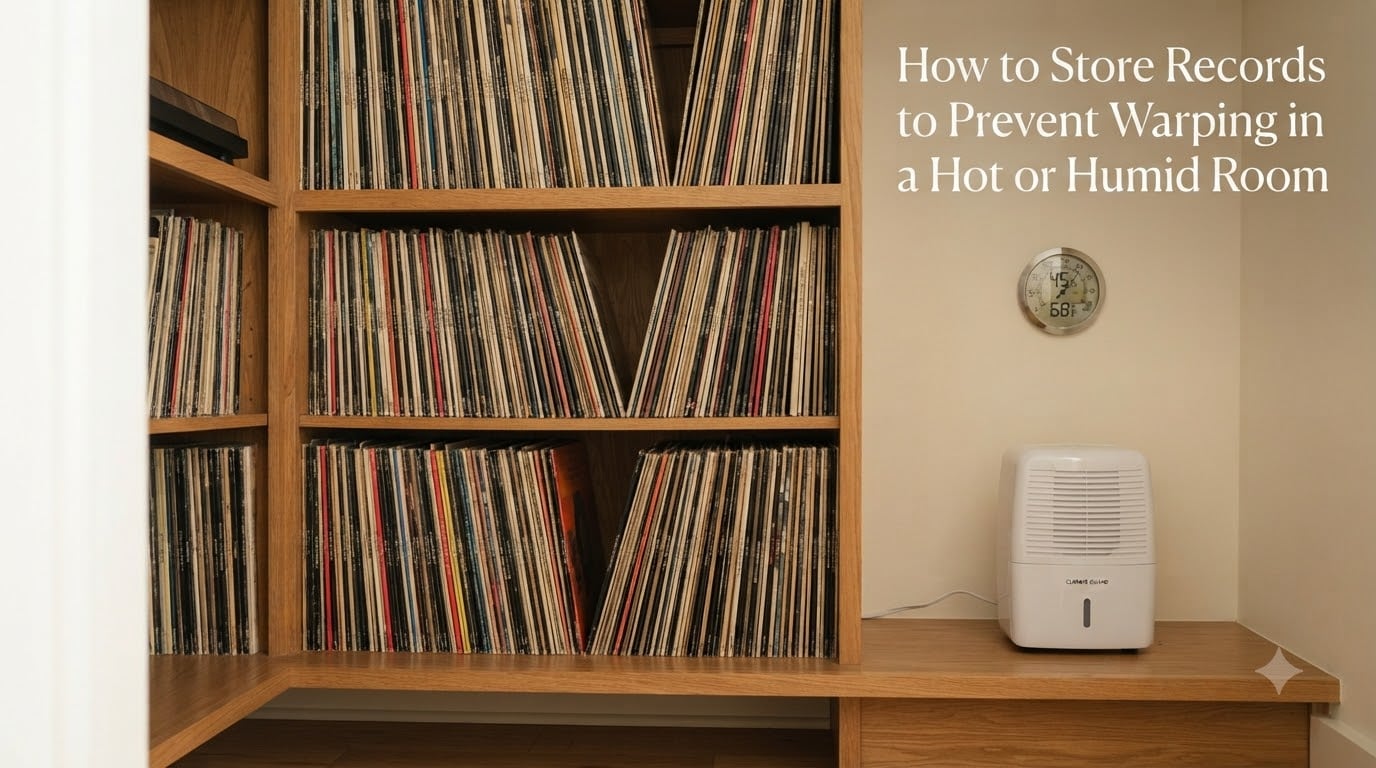
At my home in the Southeast US, I run a small dehumidifier set to 50 percent in the closet where my collection lives. The unit costs about 8 cents a day in electricity and has eliminated every humidity issue I used to fight.
Best Room Locations for Storing Vinyl Records
Where you place your shelf matters as much as how you fill it. The best location is an interior closet on the main living floor, away from exterior walls, plumbing, and windows. Closets stay cooler in summer and warmer in winter than the rooms they sit inside, and the lack of direct light protects both vinyl and artwork.
Living room shelves against exterior walls are common but risky. In summer, afternoon sun can bake an exterior wall to over 100F. Move the shelf at least 12 inches away from the wall and out of the direct sun line. A bookshelf-style unit with a closed back works better than open cube storage against a hot wall.
Avoid attics, garages, and crawl spaces entirely. These spaces experience the largest temperature swings in any home. Basements can work if they stay below 60 percent humidity year-round and never flood. If your basement smells musty, it is too damp for vinyl.
Protecting Vinyl Records From Humidity Damage
Humidity is mostly a paper problem, but it spreads. Once mold colonizes a paper sleeve, spores transfer to the vinyl surface and grow inside the groove walls. Cleaning these records requires a wet-vac system and risks damaging the grooves further. Stopping humidity before it starts is far easier.
Three tools handle humidity well. A small thermo-hygrometer costs under 15 dollars and tracks temperature and relative humidity on a digital display. A 30-pint dehumidifier covers a small room or large closet for around 200 dollars. Silica gel packets inside storage crates absorb local moisture without electricity. Replace or recharge silica gel packs every two months in humid climates.
Sleeve upgrades are the cheapest humidity fix. Replace paper inner sleeves with HDPE-lined sleeves that have a microporous layer on one side. These sleeves wick moisture away from the record surface while resisting mold growth. Add a poly outer sleeve to protect the jacket. A full sleeve upgrade for 100 records costs less than 30 dollars.
Signs Your Records Already Have Heat or Humidity Damage
Heat damage is visible. Place the record on a flat surface and look across it like a CD on a table. Any rocking, wobble, or visible bend means the disc has warped. Minor warps (under 1 mm lift) often play fine on a quality turntable. Moderate warps cause skipping and tone arm skating. Severe warps make the record unplayable.
Humidity damage shows up on the sleeves first. Look for yellowing, brown spots, or a musty smell on paper inner sleeves or jackets. Visible mold appears as white, green, or black powdery patches, usually along the sleeve edges or seam. If the jacket feels soft or spongy instead of crisp, the cardboard has absorbed moisture.
Check the vinyl surface itself in good light. A hazy or foggy film on the groove walls can indicate mold residue. Light dust on the vinyl is normal and brushes off. Sticky or waxy residue is more serious and signals contamination from a degrading sleeve. Always inspect a record before sliding it back into a sleeve.
Common Vinyl Storage Mistakes to Avoid
I have made most of these mistakes myself, so I can confirm they cost real money. Here are the top errors collectors make and how to sidestep each one.
Stacking records flat. The weight above bends the records below. Always store vertically.
Using original paper inner sleeves long-term. They shed paper fibers and absorb moisture. Upgrade to anti-static poly sleeves.
Storing near speakers or amplifiers. Electronics generate heat. A receiver on the same shelf as your records can raise local temperature 10 to 15 degrees.
Leaving records in a car. Even 30 minutes in summer can warp a disc. Always carry records inside within minutes.
Storing in a basement because it feels cool. Cool does not mean safe. Basements often have humidity above 70 percent, which feeds mold growth.
Ignoring the windows. A shelf that looks fine in January can bake in June sun. Reassess your layout seasonally.
Emergency Measures During a Heat Wave
When a heat wave hits and your AC fails, act fast. The first 24 hours are critical. Move your most valuable records to the coolest available interior space, ideally a basement closet or interior bathroom with no windows. Spread the records out so air can move between them. Do not seal them in plastic bags, which traps heat.
If you have access to a cooler with ice packs, line it with a towel and place records on edge. This buys a few hours but is not a long-term solution. A friend with central air can host a small box of records during an emergency. Many collectors also rotate a small emergency bag of 20 to 30 favorite records that they can grab on the way out during any evacuation.
For longer outages, a window AC unit and a small generator can keep a closet under 80F. Some collectors in hot climates install mini-split heat pumps dedicated to their storage room. The installation costs around 1,500 dollars but protects a collection worth many times that. Insurance riders on valuable collections can offset part of the cost.
Can You Fix a Warped Vinyl Record
Most warps cannot be fully reversed. Severe warps where the disc has folded or creased are permanent. Mild warps, where the disc has a gentle curve under 2 mm, can sometimes be flattened with patient effort.
The safest home method uses weight and time. Sandwich the warped record between two pieces of clean glass, with a microfiber cloth on each side. Stack heavy books on top and leave it in a climate-controlled room for two to four weeks. This rarely restores a perfect flatness but can reduce skipping on marginal warps.
Specialty services use hydraulic presses designed for vinyl flattening. These cost 50 to 150 dollars per record and work well on moderate warps. I have used one for a rare soul 45 that had bent in a hot car. The result was about 80 percent improvement, which was enough to play it without skipping. Avoid the oven method you may find online. Heating a warped record makes the warping worse, not better.
Frequently Asked Questions
How hot is too hot to store vinyl records?
Any temperature above 90F held for hours creates real warping risk. Above 120F (49C), vinyl begins to soften and bend. The safe target is 65F to 75F year-round.
Does humidity actually warp vinyl records?
Humidity alone rarely warps vinyl. It attacks paper sleeves, jackets, and inner sleeves, and can grow mold that contaminates groove walls. Heat is the direct cause of warping.
Is it better to store vinyl standing up or laying flat?
Always store vinyl standing up vertically. Flat stacking presses weight onto the lower discs and slowly bends them out of shape. Vertical storage also lets air flow around each sleeve.
What is the best humidity level for vinyl records?
Keep relative humidity between 45 percent and 50 percent. Anything above 60 percent invites mold growth on sleeves and jackets. A $10 digital hygrometer lets you monitor your room accurately.
Can you fix a warped vinyl record at home?
Mild warps can improve with weight and time. Sandwich the record between two pieces of glass with microfiber cloths and leave heavy books on top for two to four weeks. Severe warps are usually permanent.
Will records warp in a hot room overnight?
A single night below 90F is generally safe if records are stored vertically and away from direct sunlight. Above 90F for several nights, move records to a cooler interior space or run a fan and AC.
Final Thoughts on Vinyl Storage
Learning how to store records to prevent warping in a hot or humid room comes down to three habits. Keep records vertical, keep them cool, and keep humidity in check. The setup costs less than 50 dollars for most collectors and prevents thousands in lost music. Start with a hygrometer, a sleeve upgrade, and a smart shelf location. Add a dehumidifier if your climate runs damp. Your records will outlast every format that came after them.