
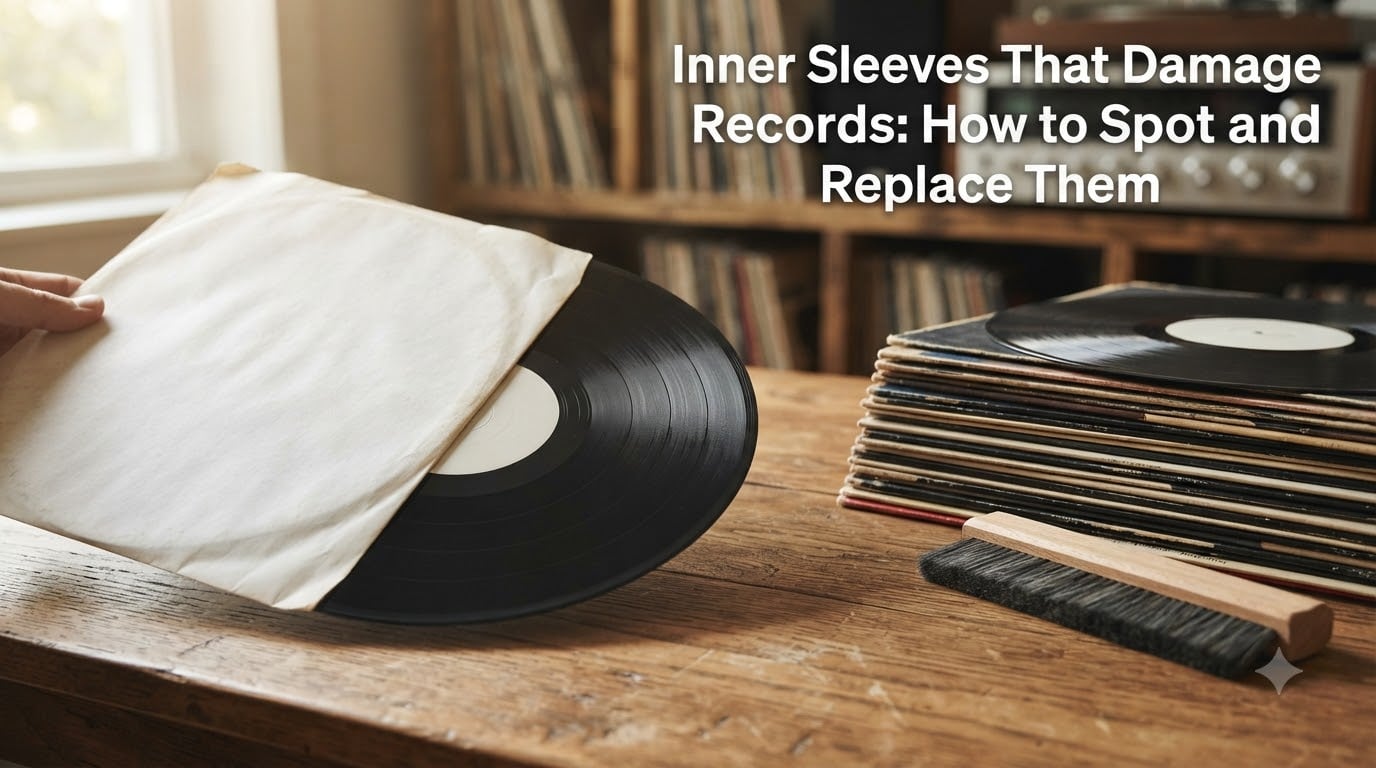
Most vinyl collectors focus on turntables, cartridges, and cleaning routines. But the humble inner sleeve, the layer sitting right against your record, can quietly destroy your collection from the inside out. Inner sleeves that damage records are more common than you might think, and the worst part is the damage often goes unnoticed until it is too late.
I have seen records develop a permanent milky haze, micro-scratches from abrasive paper, and chemical residue that no cleaning can fix. In every case, the culprit was the sleeve. The good news is that identifying problematic sleeves and replacing them is straightforward once you know what to look for.
This guide covers the types of sleeves that cause damage, the science behind why it happens, seven warning signs to watch for, and a step-by-step process for replacing them with archival-grade alternatives.
Table of Contents
Types of Inner Sleeves That Damage Records
Not all inner sleeves are created equal. Three categories cause the vast majority of damage: PVC sleeves, low-quality acidic paper sleeves, and old degraded polyethylene sleeves. Knowing which type you have is the first step in protecting your records.
PVC Sleeves (The Worst Offender)
Polyvinyl chloride, or PVC, is the single most damaging material you can put near a vinyl record. PVC sleeves are thick, stiff, and often have a rubbery texture. They were popular in the 1970s and 1980s as premium outer covers, but some found their way into inner sleeve use as well.
The danger comes from plasticizer chemicals added to make PVC flexible. Over time, these plasticizers leach out as a gas and deposit on any nearby surface, including your records. Collectors call this “misting” or “bag rash.” The result is a permanent chemical haze that cannot be washed off.
You can identify PVC sleeves by smell. If a sleeve smells like a new shower curtain, pool toy, or inflatable pool furniture, it almost certainly contains PVC. Throw it away immediately.
Low-Quality Paper Sleeves
The plain paper sleeves that ship with most mass-produced records are another common source of damage. These sleeves are abrasive at a microscopic level. Every time you pull a record out, the paper fibers drag across the vinyl surface and leave tiny scratches.
Over years of storage, acidic paper also breaks down and releases acid that migrates into the record surface. This is the same acid migration process that destroys old photographs and documents. Records stored in original paper sleeves for decades often show visible degradation along the edges where contact is heaviest.
Static is the third problem with paper sleeves. They generate static electricity that attracts dust like a magnet. That dust then gets ground into the grooves every time the record is played.
Degraded Polyethylene Sleeves
Polyethylene is generally safe for records, but even good materials break down over time. Old polyethylene sleeves from the 1980s or earlier can become sticky, brittle, or cloudy as the plastic ages. Once a sleeve starts to feel tacky or leaves residue on your fingers, it is actively depositing that residue onto your record.
Check for stiffening, yellowing, or any change in texture. A sleeve that has lost its smooth, slippery feel should be replaced regardless of its original quality.
The Science Behind Sleeve Damage
Understanding why sleeves damage records helps you make better storage decisions. Three mechanisms are responsible for almost all sleeve-related damage: plasticizer leaching, acid migration, and static buildup.
Plasticizer leaching occurs when PVC sleeves release chemical additives over time. These additives are gases at room temperature, meaning they can travel through the air and settle on records stored nearby. The leaching process accelerates in heat and humidity, which is why records stored in attics or basements often show the worst damage.
Acid migration happens when acidic paper breaks down and transfers acid compounds to adjacent materials. Lignin, the natural binding compound in cheap paper, is the primary culprit. Acid-free and archival-grade papers are specifically manufactured to stop this process.
Static buildup is the most overlooked mechanism. Paper and certain plastics generate significant static charge when records are inserted or removed. This charge attracts dust particles that then act as abrasives against the groove walls during playback.
7 Warning Signs Your Inner Sleeves Are Damaging Records
If you are wondering whether your sleeves are causing problems, these seven warning signs will tell you. I have compiled this list from forum discussions on r/vinyl, Audiogon, and the Steve Hoffman forums, where collectors share real-world damage reports.
1. Milky or cloudy haze on the record surface. This is the signature sign of PVC damage. The haze is deposited plasticizer that has off-gassed from the sleeve. It cannot be removed with standard cleaning fluids.
2. Visible paper fibers stuck to the record. If you see tiny fibers clinging to the vinyl, your paper sleeve is shedding. These fibers cause micro-scratches every time the record spins.
3. Crackling sounds that were not there before. Static buildup from paper or degraded sleeves attracts dust into the grooves. If your records suddenly sound crackly after being stored, the sleeve is likely the cause.
4. Sticky or tacky residue on the record surface. Run a clean finger along the edge of a stored record. If it feels sticky, the sleeve is leaching chemicals onto the vinyl.
5. Yellowing or discoloration of the sleeve itself. A sleeve that has changed color from its original white or clear state is chemically breaking down. That breakdown is transferring to your record.
6. Difficulty sliding the record in or out. A sleeve that has become stiff, brittle, or tight is degrading. The increased friction during removal causes physical abrasion damage.
7. Visible tears, cracks, or mold spots on the sleeve. Physical deterioration means the sleeve is no longer providing protection and may be actively introducing contaminants.
How to Identify Problematic Sleeves: The Touch and Smell Test
You do not need lab equipment to identify dangerous sleeves. A simple touch and smell test works reliably. The Library of Congress uses a similar practical approach for its archival screening, and the vinyl community has adopted it as a standard rule of thumb.
The touch test: Good sleeves feel smooth, slippery, and slightly frosted. Bad sleeves feel sticky, stiff, or rubbery. If a sleeve clings to your fingers or resists being handled, it is degrading and should be replaced.
The smell test: PVC has a distinct chemical odor similar to pool toys, shower curtains, or new car interiors. If you detect this smell, the sleeve contains PVC and must be removed immediately. No amount of airing out will stop the off-gassing process.
The visual test: Hold the sleeve up to a light. Clear, consistent material is fine. Cloudy patches, yellowing, or a thick rubbery appearance all indicate degradation or PVC content.
How to Replace Your Inner Sleeves (Step by Step)
Replacing inner sleeves is simple, but doing it carefully prevents accidental damage during the process. Here is the method I use for my own collection, refined over hundreds of re-sleeving sessions.
Step 1: Gather your materials. You will need archival-grade replacement sleeves, a clean microfiber cloth, a carbon fiber anti-static brush, and a flat clean surface. Wash and dry your hands thoroughly before starting.
Step 2: Remove the record from the old sleeve. Hold the record by its edges and label area. Slide it out gently without touching the grooves. If the record sticks, do not force it. Flex the sleeve slightly to break the static seal, then try again.
Step 3: Inspect and clean the record. Use a carbon fiber brush to remove surface dust. For records with visible residue, use a record cleaning solution and microfiber cloth. Let the record air dry completely.
Step 4: Insert the record into the new sleeve. Hold the new sleeve open with one hand and guide the record in edge-first. Anti-static polyethylene or rice paper sleeves will accept the record smoothly without resistance.
Step 5: Store the old sleeve separately if it has value. Original printed inner sleeves with lyrics, artwork, or liner notes have collectible value. Keep them in a separate acid-free envelope behind the jacket rather than discarding them.
Step 6: Place the re-sleeved record back in the jacket. Store vertically with no more than slight side pressure. Overcrowded shelves cause warping and sleeve compression.
Best Replacement Sleeve Materials
When choosing replacement sleeves, three materials stand out for their safety and performance. Each has specific strengths depending on your priorities.
High-density polyethylene (HDPE) sleeves are the gold standard for record contact. They are anti-static, acid-free, and will not leach chemicals. Mobile Fidelity Sound Lab popularized this type, and HDPE sleeves from Sleeve City, Acoustic Sounds, and Bags Unlimited are widely trusted by collectors.
Rice paper sleeves combine multiple layers of anti-static paper with polyethylene. They offer excellent static dissipation and a classic feel. The layered construction reduces the scratching risk of plain paper while maintaining a traditional aesthetic.
Poly-lined paper sleeves feature a paper exterior with a thin polyethylene inner lining. These are a solid middle ground, offering the look and feel of paper sleeves with the protective properties of polyethylene against the record surface.
Avoid any sleeve marketed as “heavyweight” or “rigid” unless the material is explicitly listed as polyethylene or polypropylene. When in doubt, contact the manufacturer and ask about PVC content. Reputable suppliers will confirm their products are PVC-free.
As a general timeline, replace inner sleeves every 3 to 5 years and outer sleeves every 5 to 7 years. Records stored in humid or warm environments may need more frequent replacement.
Frequently Asked Questions
Are paper inner sleeves bad for records?
Plain paper sleeves cause micro-scratches from abrasive fibers, generate static that attracts dust, and can leach acid into the vinyl surface over time. Acid-free paper or poly-lined sleeves avoid these problems, but standard paper sleeves that ship with mass-produced records should be replaced with archival alternatives.
Should I replace vinyl inner sleeves?
Yes, you should replace inner sleeves every 3 to 5 years, or immediately if you notice any warning signs like cloudiness, stickiness, or static buildup. Records stored in original paper sleeves for decades are especially at risk and should be re-sleeved as soon as possible.
What sleeves are bad for vinyl records?
PVC sleeves are the most damaging because they release plasticizer gases that permanently haze the record surface. Acidic paper sleeves cause scratches and acid migration. Degraded polyethylene sleeves that have become sticky or brittle also damage records by transferring breakdown products onto the vinyl.
How to fix damaged vinyl sleeves?
Damaged sleeves cannot be repaired and must be replaced. Remove the record carefully, clean it with a carbon fiber brush or record cleaning solution, then insert it into a new archival-grade HDPE or rice paper sleeve. Keep original printed sleeves separately for collectible value.
What is the best inner sleeve for vinyl records?
High-density polyethylene (HDPE) sleeves are the best choice for record contact because they are anti-static, acid-free, and chemically inert. Rice paper sleeves and poly-lined paper sleeves are also excellent options. Look for PVC-free products from reputable suppliers like Sleeve City, Acoustic Sounds, or Bags Unlimited.
How do I identify PVC sleeves?
PVC sleeves have a thick, stiff, rubbery texture and a chemical smell similar to pool toys or shower curtains. They are often clear but have a denser, heavier feel than polyethylene. If a sleeve smells chemical or feels sticky and rigid, assume it contains PVC and remove your record immediately.
Conclusion
Inner sleeves that damage records are a silent threat to any vinyl collection, but they are entirely preventable. PVC sleeves leach permanent chemical haze, paper sleeves scratch and acid-degrade, and aged polyethylene sleeves leave sticky residue. None of these problems will fix themselves.
The solution is straightforward: learn to identify dangerous sleeves using the touch and smell test, replace them with archival-grade HDPE or rice paper alternatives, and maintain a replacement schedule of every 3 to 5 years for inner sleeves. Your records will sound quieter, look cleaner, and hold their value for decades to come.
Start by checking the records you play most often. Those are the ones where sleeve damage shows up first. A few minutes of inspection and re-sleeving today can save a prized pressing from irreversible damage tomorrow.