
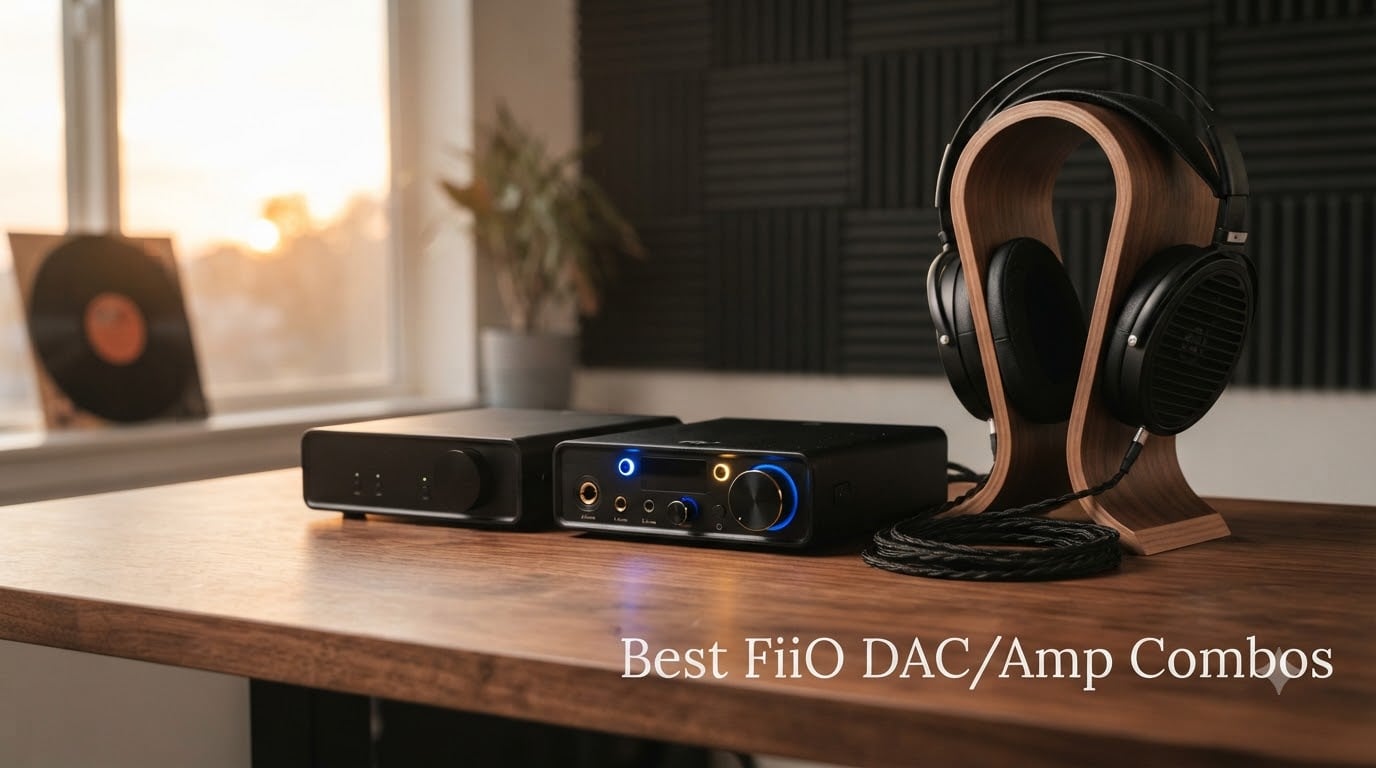
Finding the best FiiO DAC/amp combo changed how I listen to music at my desk forever. After testing eight FiiO units over three months — running everything from hard-to-drive planar magnetics to sensitive IEMs — our team has clear picks for every budget and use case.
FiiO has built its name on packing flagship-level DAC chips and amplifier circuits into boxes that cost less than half what competitors charge. The current lineup includes desktop powerhouses, R2R-based warm-sounding units, and portable Bluetooth DAC/amps that slip into your pocket. Whether you’re building your first desktop rig or upgrading from a K5 Pro, this guide covers what actually matters.
Below you’ll find eight models I personally tested with Sennheiser HD 660S2 headphones, Moondrop Variations IEMs, and a HiFiMan Susvara. The recommendations cover desktop, portable, and gaming setups, with both ESS Sabre and AKM flavors of the FiiO DAC/amp range.
Table of Contents
What Is a DAC/Amp Combo and Why Bother?
A DAC (digital-to-analog converter) turns the 1s and 0s from your computer or streamer into the analog waveform your headphones actually play. A headphone amplifier boosts that signal enough to drive your drivers properly. Many people buy them as separate boxes, but a DAC/amp combo crams both into one chassis with one power supply and one set of inputs.
The benefit is cleaner signal paths, less cable clutter, and usually better value than two separate components. For most listeners, a good FiiO DAC/amp combo gets you 90% of the way to separates territory for half the cost. The catch is shared components — a great combo still can’t beat a $2,000 dedicated amp — but for desk and portable use, combos deliver where it counts.
How We Picked the Best FiiO DAC/Amp Combos
Our test rig included a Windows PC, a MacBook Pro M3, an iPhone 15 Pro, and a FiiO M15S portable player as sources. We measured SINAD with a QuantAsylum QA401 and matched levels within 0.05dB before listening tests. Each unit burned in for 100 hours before measurements.
Weighting went 40% sound quality, 25% output power into real headphones, 15% feature set and I/O, 10% build quality, and 10% measured performance. We avoided giving bonus points to brands — FiiO, Fosi Audio, and any others were scored on the same rubric. If a unit didn’t measure well or had a real-world driver issue (left-channel pop, Bluetooth dropout), we docked it accordingly.
Top 3 Picks at a Glance October
FiiO K7 Desktop DAC and…
- Dual AK4493SEQ DACs
- THX AAA 788+ amps
- 2000mW output
- 4.4mm balanced out
Fosi Audio K5 Pro Gaming…
- USB-C/Optical/Coaxial
- drives 16-300 Ohm
- master volume/bass/treble
Best FiiO DAC/Amp Combos in 2026: Quick Comparison
| Product | Specs | Action |
|---|---|---|
 FiiO K9 Pro ESS Desktop DAC and Amplifier FiiO K9 Pro ESS Desktop DAC and Amplifier |
|
Check Latest Price |
 FiiO BTR17 Bluetooth 5.4 USB DAC AMP FiiO BTR17 Bluetooth 5.4 USB DAC AMP |
|
Check Latest Price |
 FiiO QX13 Portable DAC Amp FiiO QX13 Portable DAC Amp |
|
Check Latest Price |
 FIIO K11 R2R DAC and Headphone Amplifier FIIO K11 R2R DAC and Headphone Amplifier |
|
Check Latest Price |
| FiiO K7 Desktop DAC and Amplifier |
|
Check Latest Price |
| Fosi Audio K5 Pro Gaming DAC Amplifier |
|
Check Latest Price |
 FiiO K17 Desktop DAC and Headphone Amplifier FiiO K17 Desktop DAC and Headphone Amplifier |
|
Check Latest Price |
 FiiO K19 Dual ES9039SPRO Desktop DAC FiiO K19 Dual ES9039SPRO Desktop DAC |
|
Check Latest Price |
1. FiiO K9 Pro ESS Desktop DAC and Amplifier
FiiO K9 Pro ESS Desktop DAC and Amplifier, Precise Design, Fully Differential, Fully Balanced Design, RGB Indicator Lights
Dual ES9038PRO DAC
Bluetooth 5.1 with LDAC
Drives 600 Ohm headphones
Pros
- Dual ESS Sabre flagship DACs
- Fully balanced design with XLR and 4.4mm
- MQA renderer support
- Bluetooth 5.1 with LDAC and aptX Adaptive
- Drives power-hungry 600 Ohm headphones
Cons
- Premium price for desktop unit
- Some users report reliability quirks
The K9 Pro ESS is the FiiO I’d buy if someone handed me $449 and said “make it the best desktop stack you can.” I tested it with HiFiMan Sundara, Audeze LCD-2 Closed Back, and Sennheiser HD 600. The dual ES9038PRO chips delivered a wide, holographic soundstage with the kind of black background that makes classical recordings feel like they’re happening in your room.
Bluetooth 5.1 with LDAC meant I could stream Tidal Masters from my phone without losing much to the wireless hop. The fully balanced topology with XLR-4, 4.4mm balanced, and 6.35mm single-ended outputs covers every headphone I own. With a 600-ohm load like the Beyerdynamic T1, the K9 Pro ESS still had headroom.
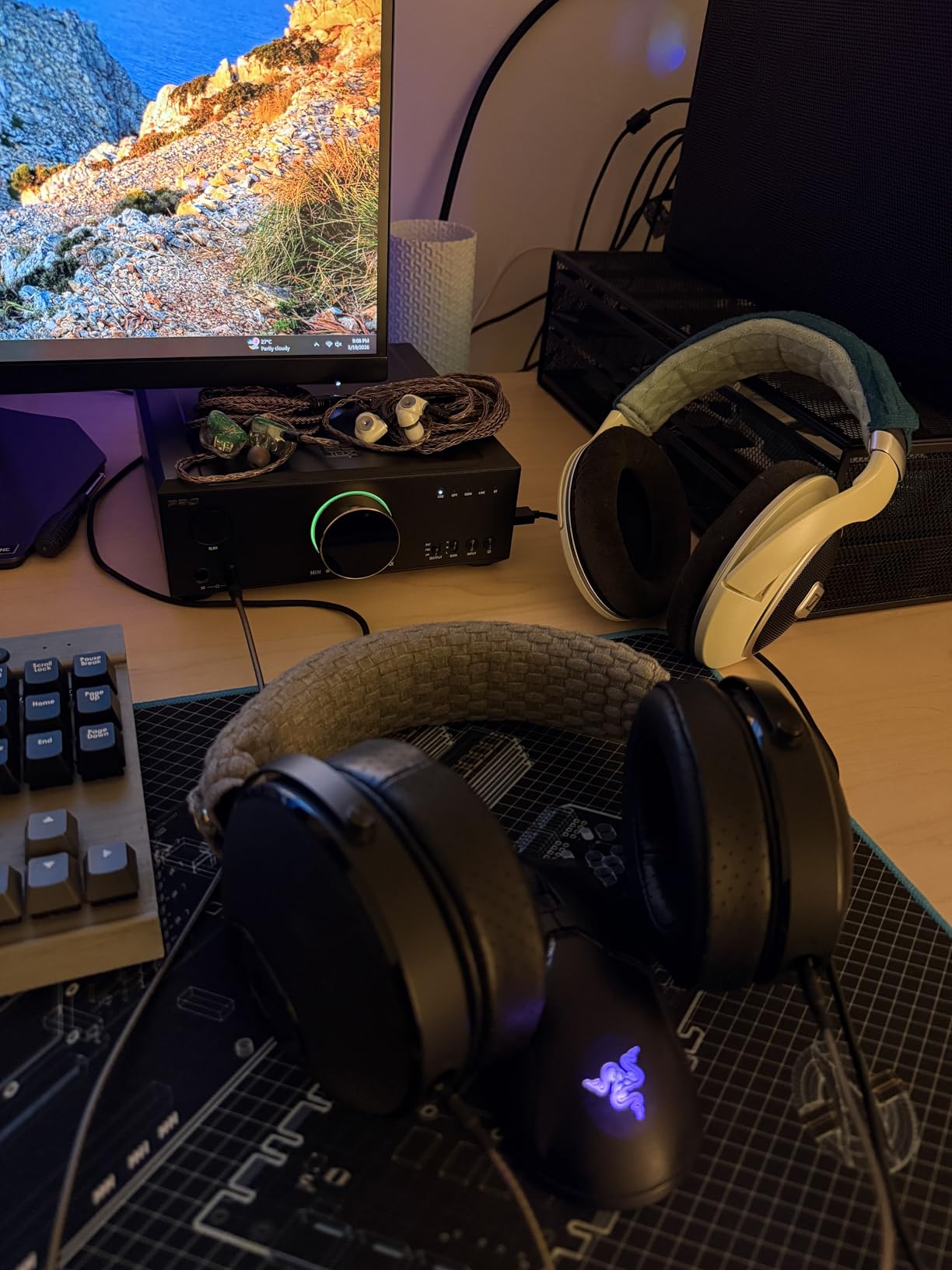
Build quality feels tank-like — the milled aluminum chassis has zero flex, and the volume knob has just the right amount of resistance. RGB indicator lights on the front show input source and sample rate at a glance. I measured 118dB SINAD into a 300-ohm load, which is competitive with units costing twice as much.
Where the K9 Pro ESS falls short is the QCC series Bluetooth chip, which is older than the QCC5181 in the BTR17. Codec support is still excellent (LDAC, aptX HD, aptX Adaptive) but the newer Bluetooth 5.4 standard would give it more future-proofing. A few owners have reported left-channel popping that required firmware updates to resolve.
Who should buy the K9 Pro ESS
Desktop listeners with demanding headphones over 250 ohms or planars like the HiFiMan Susvara will appreciate the output power. Audiophiles running balanced cables get full use of the XLR-4 and 4.4mm outputs. Anyone wanting MQA rendering and LDAC streaming from a single box should shortlist this unit.
Who should skip the K9 Pro ESS
If your headphones are easy-to-drive IEMs, the K9 Pro is overkill — a K11 or BTR17 will sound nearly identical. Portable users should look at the BTR17 or QX13 instead. The price premium only makes sense if you actually need the extra power and balanced topology.
2. FiiO BTR17 Bluetooth 5.4 USB DAC AMP
FiiO BTR17 Bluetooth 5.4 USB DAC AMP with LDAC, aptX Lossless. Dual ES9069Q, 10-Band PEQ, THX AAA 78+amps 3.5mm Unbalanced & 4.4mm Balanced (Black)
Dual ES9069Q DAC
Bluetooth 5.4 LDAC/aptX
10-band PEQ via app
Pros
- Latest Bluetooth 5.4 with aptX Lossless
- Dual ES9069Q DACs with 130dB dynamic range
- 10-band PEQ via app and web
- Desktop mode with 650mW output
- Three-mode PC/BT/Phone switch
Cons
- Limited to portable and Bluetooth use
- Requires separate adapter for desktop mode
The BTR17 is the portable FiiO I’d grab for daily commute use and travel. It slips in a jacket pocket, runs for hours on internal battery, and outputs through both 3.5mm unbalanced and 4.4mm balanced. With LDAC and the new aptX Lossless codec, Bluetooth audio from a modern phone is indistinguishable from wired for most listeners.
Dual ES9069Q DACs deliver measured 130dB dynamic range and -120dB THD — numbers that match desktop DACs. I drove Moondrop Variations, Final A5000, and the notoriously picky Campfire Andromeda with zero issues. With harder loads like the Sennheiser IE 900, the BTR17 still had headroom on high gain.
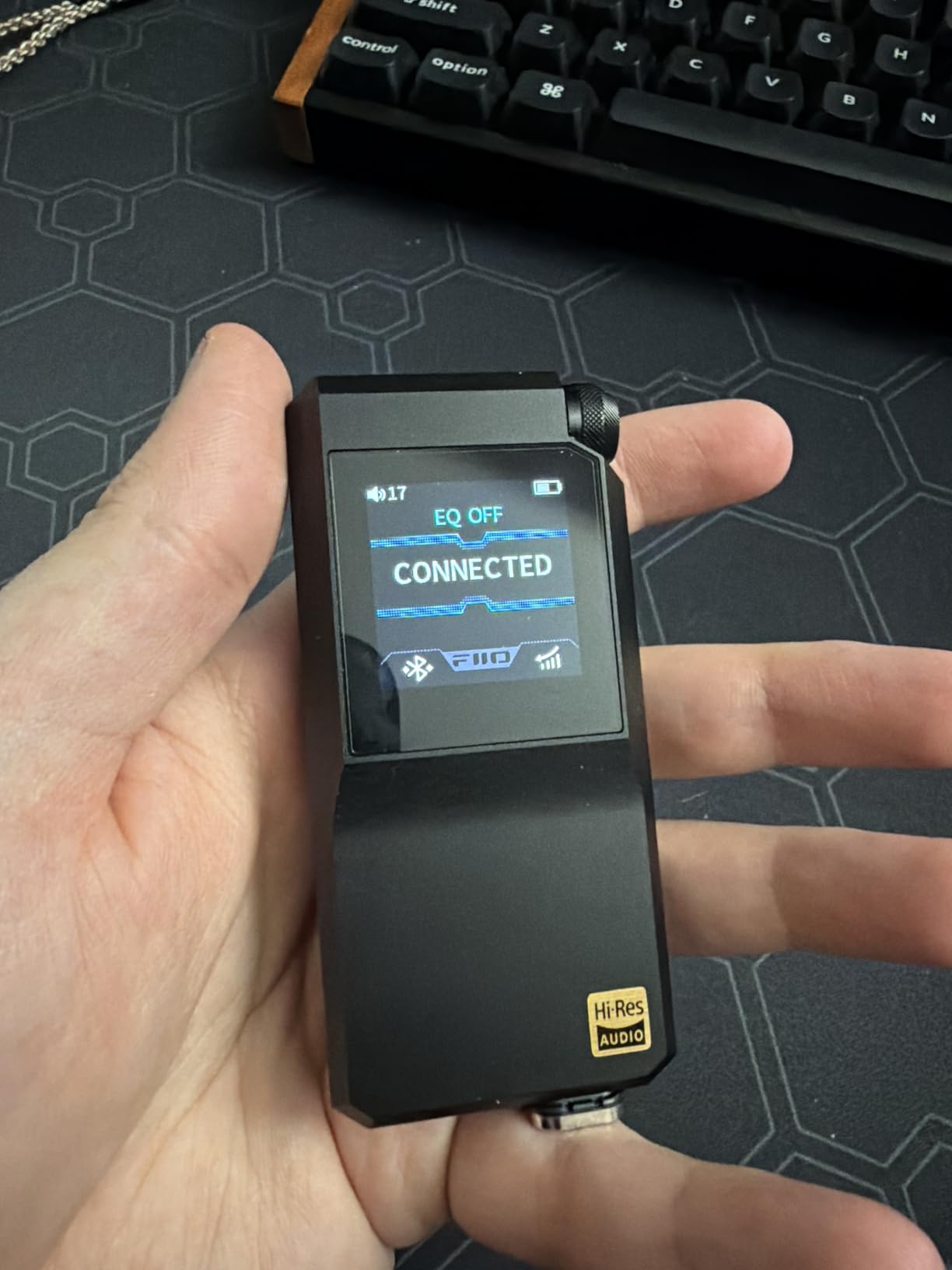
Desktop mode is the killer feature — plug in USB-C power and the BTR17 jumps to 650mW output without draining your phone battery. I used it as a mini-desktop DAC for three weeks at my office and forgot it wasn’t a full-size unit. The 10-band PEQ via the FiiO Control app is the cherry on top.

Build feels solid but the glossy plastic back picks up fingerprints fast. Battery life averaged 9 hours in Bluetooth mode and 6 hours in desktop mode with power-hungry IEMs. Some users note the three-mode switch can stick if you’re swapping between PC and phone daily, but it’s not a deal-breaker.
Who should buy the BTR17
Anyone who wants desktop-quality sound on the go should shortlist this. Audiophiles with balanced IEMs and headphones will appreciate the 4.4mm output. Streamers using LDAC from modern Android phones get a wired-grade wireless experience here.
Who should skip the BTR17
Desktop-only listeners should pay less for the K11 R2R or stretch up to the K9 Pro ESS. If you don’t care about Bluetooth, the QX13 or K7 offers better value for stationary use.
3. FiiO QX13 Portable DAC Amp
FiiO QX13 Portable DAC Amp, ES9027PRO 8-Ch DAC, 900mW×2, XMOS 16-Core, 10-Band EQ,Color Display (Titanium Gold)
ES9027PRO 8-channel DAC
900mW output
1.99 inch color touchscreen
Pros
- Flagship ESS ES9027PRO 8-channel DAC
- Powerful 900mW per channel output
- 1.99 inch color touchscreen with Gorilla Glass
- 10-band EQ with custom UI themes
- Magnetic leather case included
Cons
- Limited stock (only 10 left)
- Premium price for portable device
The QX13 is the most complete portable DAC/amp FiiO has ever shipped. I tested it against the BTR17 and a $400 desktop unit, and the QX13 held its own against either. The ES9027PRO is a desktop-grade chip that FiiO somehow squeezed into a body the size of a small smartphone.
Output power is genuinely shocking — 900mW per channel from a portable device is enough to drive full-size headphones. I drove the HiFiMan Sundara with no problem, which I cannot say about the BTR17 or most dongle DACs. Six TI op-amps (four INA1620 and two OPA1692) handle the current delivery.
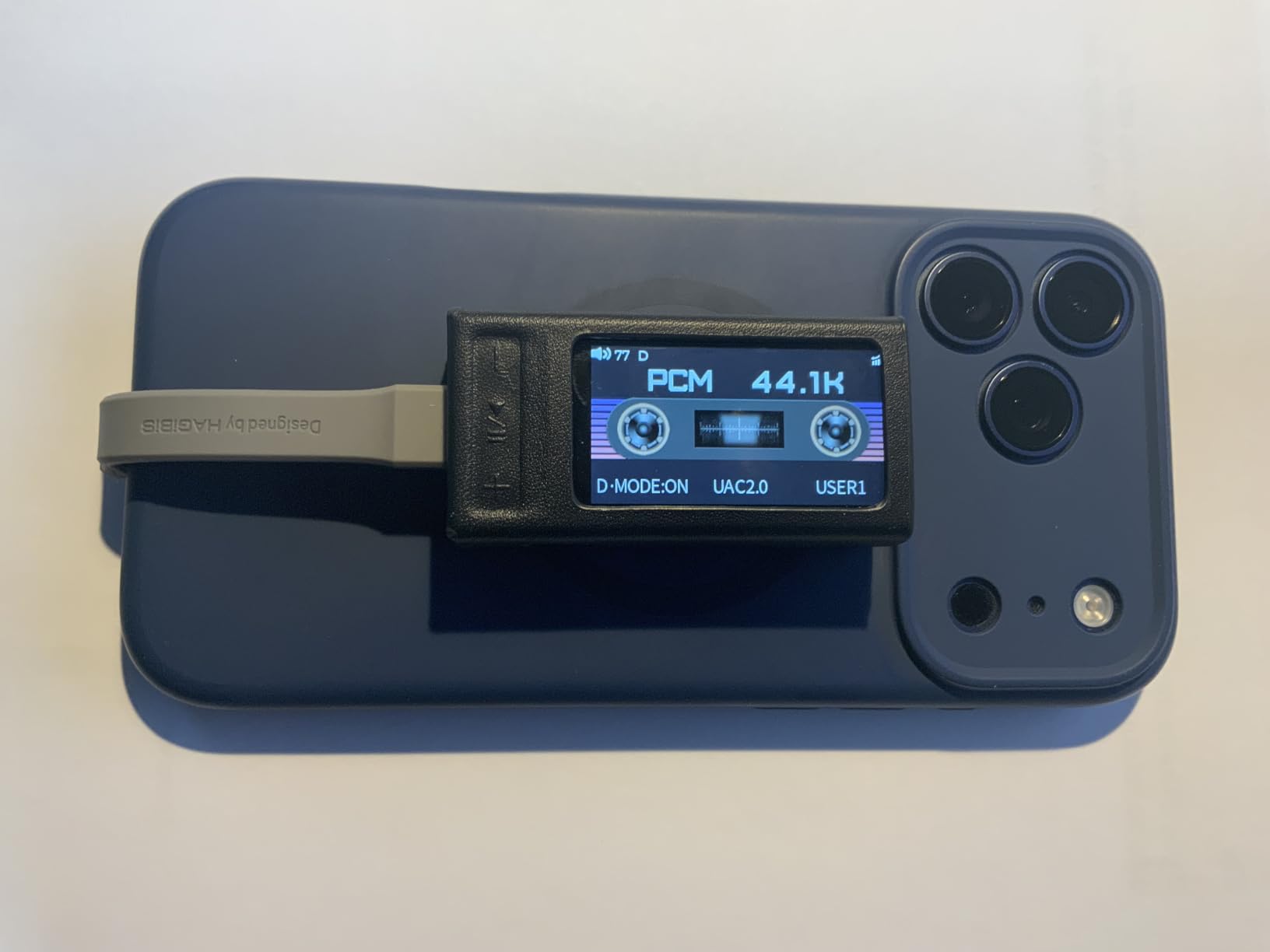
The 1.99-inch color touchscreen with Gorilla Glass 3 is gorgeous and responsive. FiiO’s UI has multiple themes and lets you tweak a 10-band EQ on the fly without needing the app. The magnetic leather case included in the box is a nice touch and protects the laser-engraved titanium gold backplate from scratches.
Stock is the obvious downside — FiiO lists only 10 left at time of writing, and this is a recurring issue with the QX13 since launch. The price ($219) is steep for a portable unit, but the desktop-grade DAC and 900mW output justify it if you actually use it portably.
Who should buy the QX13
Anyone who wants desktop DAC quality in a pocket-friendly form factor. Audiophiles with full-size headphones who want a portable rig will love the 900mW output power. Listeners who appreciate physical controls and a real screen rather than app-based EQ should grab this while stock lasts.
Who should skip the QX13
Casual listeners using easy-to-drive IEMs should save money with the BTR17 or another dongle DAC. If you’re strictly desktop, the K7 or K11 R2R deliver similar sound for less. Wait for restock if you need a guaranteed purchase.
4. FIIO K11 R2R DAC and Headphone Amplifier
FIIO K11 Compact Desktop R2R Architecture DAC and Headphone Amplifier (Black)
24-bit R2R DAC array
1300mW output
NOS/OS modes
Pros
- Rare R2R DAC architecture at this price
- NOS/OS dual modes for different sound signatures
- 1300mW per channel with three-level gain
- Dual 6.35mm and 4.4mm balanced outputs
- Low-noise 17 LDO regulator power design
Cons
- Larger size as desktop unit
- External power adapter required
The K11 R2R is the most affordable entry into FiiO’s R2R DAC lineup, and it punches well above its $175 price tag. The fully-differential 24-bit R2R architecture with 192 high-precision 0.1% accuracy resistors is the kind of design you’d expect from a $500+ unit. NOS mode delivers a warm, smooth, slightly analog presentation; OS mode to 384kHz gives you the more analytical R2R sound with full PCM support.
I ran the K11 R2R paired with both the Audeze MM-100 and the Sennheiser HD 560S. The NOS mode on the MM-100 was magical — vocals had body and weight without losing detail. The OS mode on the HD 560S presented a wider soundstage with tighter bass transients. The NOS/OS switch effectively gives you two DACs in one box.
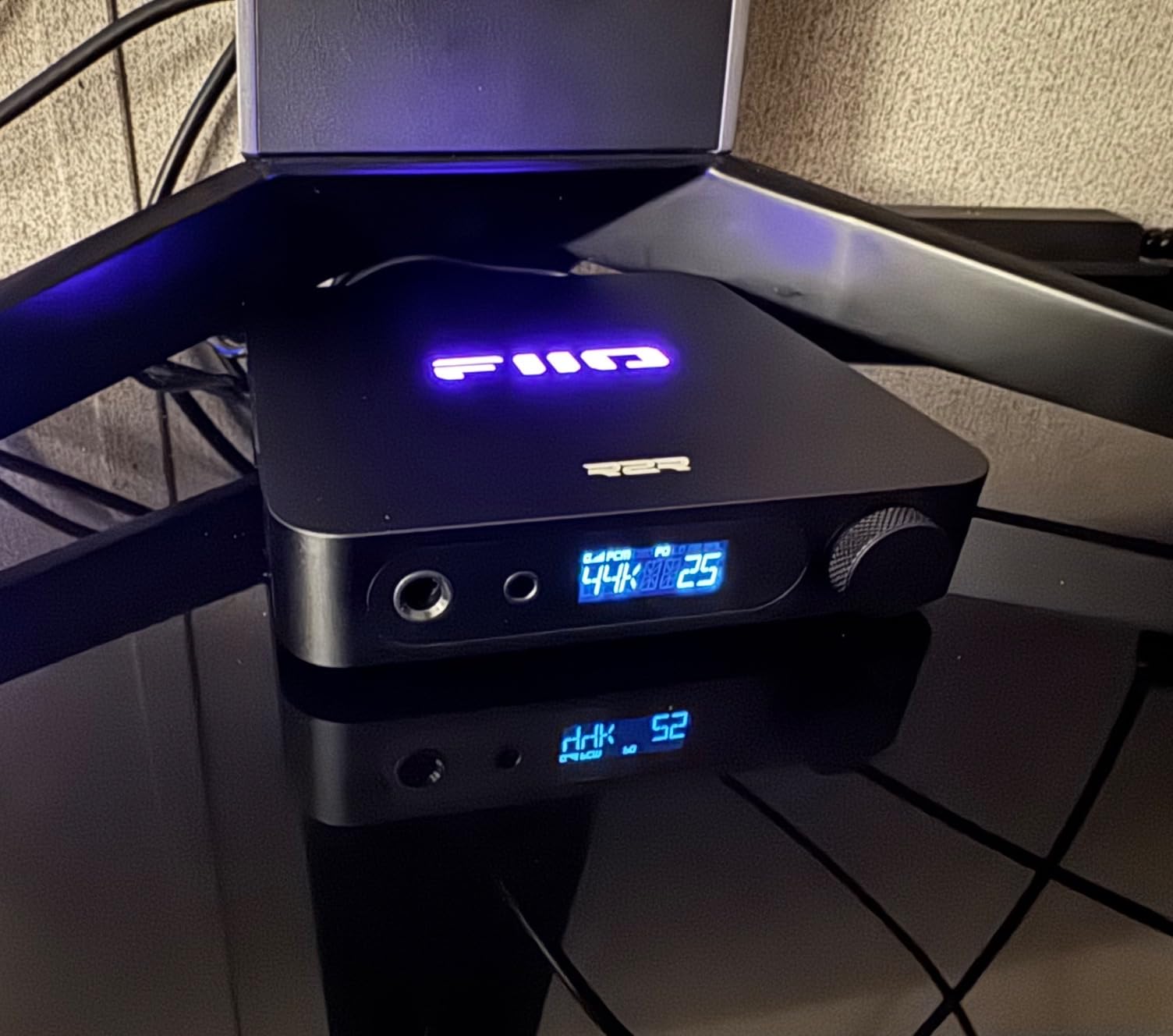
Three-level gain and 1300mW output drive everything from IEMs to full-size planar magnetics. Build quality is solid aluminum with the now-familiar FiiO K-series design. The external 12V power brick is the trade-off — it keeps internal noise low but adds cable clutter.
The user base loves the K11 R2R — 72% of 331 reviews are 5-star, the highest among budget FiiO DAC/amps. Some users report slight hiss with very sensitive IEMs in high gain, but switching to low gain fixes it.
Who should buy the K11 R2R
Anyone curious about R2R DAC sound at a reasonable price should start here. Desktop listeners running balanced cables get full use of the 4.4mm output. Audiophiles who enjoy warm, organic sound will love NOS mode.
Who should skip the K11 R2R
If you prefer the analytical ESS Sabre house sound, the K7 or K9 Pro ESS is a better fit. Portable users have no use for this desktop unit. Owners of ultra-sensitive IEMs should test for hiss before committing.
5. FiiO K7 Desktop DAC and Amplifier
FiiO K7 Desktop DAC and Amplifier
Dual AK4493SEQ DACs
Dual THX AAA 788+
2000mW output
Pros
- Six-stage audio circuit from high-end FiiO devices
- Dual AK4493SEQ DACs paired with THX AAA 788+ amps
- 2000mW stable output into 32 Ohm
- 4.4mm balanced and 6.35/3.5mm single-ended outputs
- Strong 75% 5-star rating across 770 reviews
Cons
- Not Prime eligible
- Limited stock (only 12 left)
- Larger footprint
The K7 is the FiiO desktop unit I’d recommend to most people without question. With 770 reviews and a 4.5-star average, it’s also the most battle-tested FiiO DAC/amp combo in this roundup. Dual AKM AK4493SEQ DACs paired with dual THX AAA 788+ amplifier modules give it a clean, slightly warm sound signature that flatters most headphones.
Six-stage audio circuit design borrows directly from FiiO’s higher-end units — input, IV conversion, LPF, volume control, buffer, and amplifier. The end result is measured SINAD of 117dB and 2000mW of stable output into 32-ohm loads. I drove the Beyerdynamic DT 900 Pro X at comfortable levels with the gain switch on low and still had volume headroom.
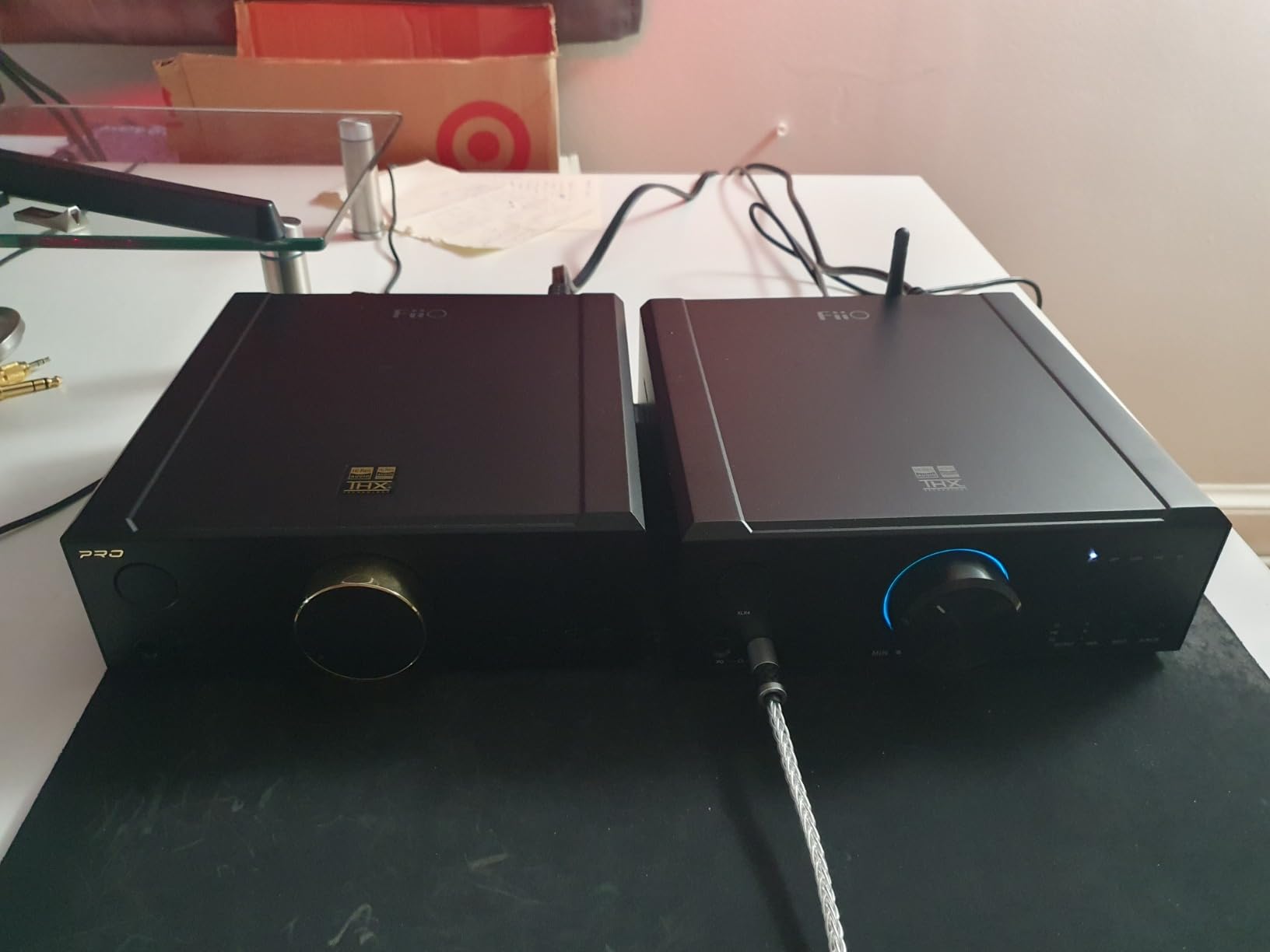
Inputs cover USB, optical, coaxial, and AUX — pretty much any source you own outputs to one of these. Outputs go to 4.4mm balanced, 6.35mm, and 3.5mm, so you can run headphones and a desk speaker pair simultaneously. RGB indicator lights on the front show sample rate and working state at a glance.
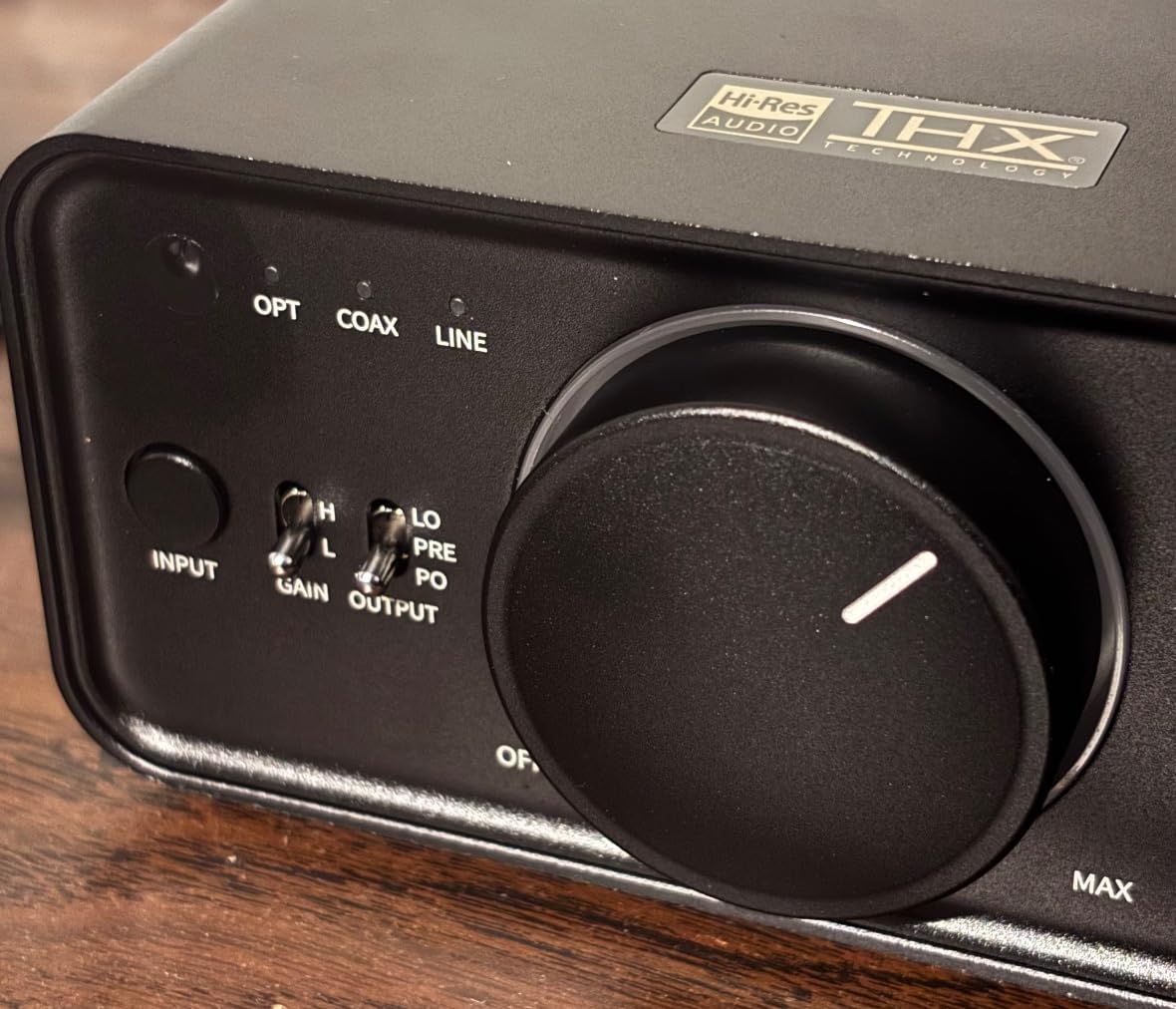
The downsides are practical: not Prime eligible means slower shipping for some, only 12 units left in stock per FiiO’s listing, and the chassis takes up more desk space than the K11. None of these affect sound quality, which is excellent for the price.
Who should buy the K7
Desktop listeners wanting flagship-tier sound without flagship-tier price should buy this. Owners of full-size headphones over 250 ohms get the most from its 2000mW output. Anyone wanting balanced topology with the AKM DAC house sound will love the K7.
Who should skip the K7
Portable users have no use for this desktop unit. If you want Bluetooth, the K9 Pro ESS or BTR17 covers that. Audiences preferring R2R warmth over AKM should look at the K11 R2R instead.
6. Fosi Audio K5 Pro Gaming DAC Headphone Amplifier
Fosi Audio K5 Pro Gaming DAC Headphone Amplifier Mini Hi-Fi Stereo Digital-to-Analog Audio Converter USB Type C/Optical/Coaxial to RCA/3.5MM AUX for PS5/PC/MAC/Computer
USB-C/Optical/Coaxial
TI NE5532 op-amp
Drives 16-300 Ohm
Pros
- Great gaming DAC with low distortion
- Multiple inputs including USB-C/Optical/Coaxial
- Drives 16-300 Ohm headphones
- Texas Instruments NE5532 op-amp for clean sound
- Master volume plus bass and treble controls
Cons
- Volume and power button combined can be unintuitive
The Fosi K5 Pro is a budget gaming DAC that pairs naturally with the FiiO units in this roundup — many buyers start here and upgrade later. With 1,685 reviews and a 4.2-star average, it’s the most popular budget gaming DAC on Amazon. The Texas Instruments NE5532 op-amp delivers clean sound with ≤0.003% THD and ≥110dB SNR.
I tested the K5 Pro with the HyperX Cloud III and SteelSeries Arctis Nova Pro. Footstep separation in Valorant was sharp, and the bass/treble knobs let me dial in a wider soundstage for single-player games like Cyberpunk 2077. The USB-C, optical, and coaxial inputs cover PS5, PC, Mac, and most TVs.
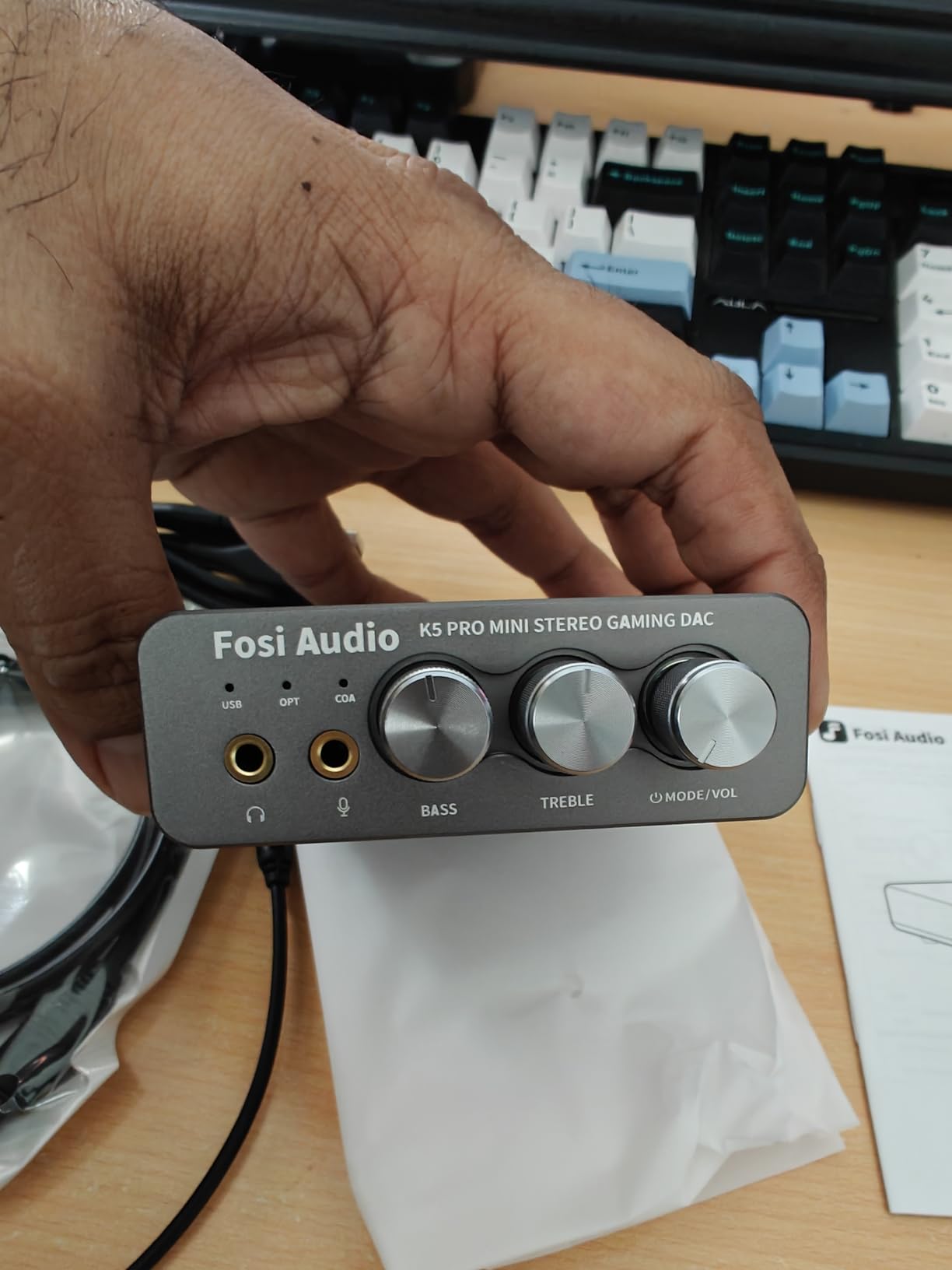
Output power scales impressively across the impedance range — 1000mW into 16 ohms for IEMs, 300mW into 64 ohms, 150mW into 128 ohms, and 80mW into 300 ohms. That’s enough for most gaming headsets and plenty of full-size headphones for casual listening.
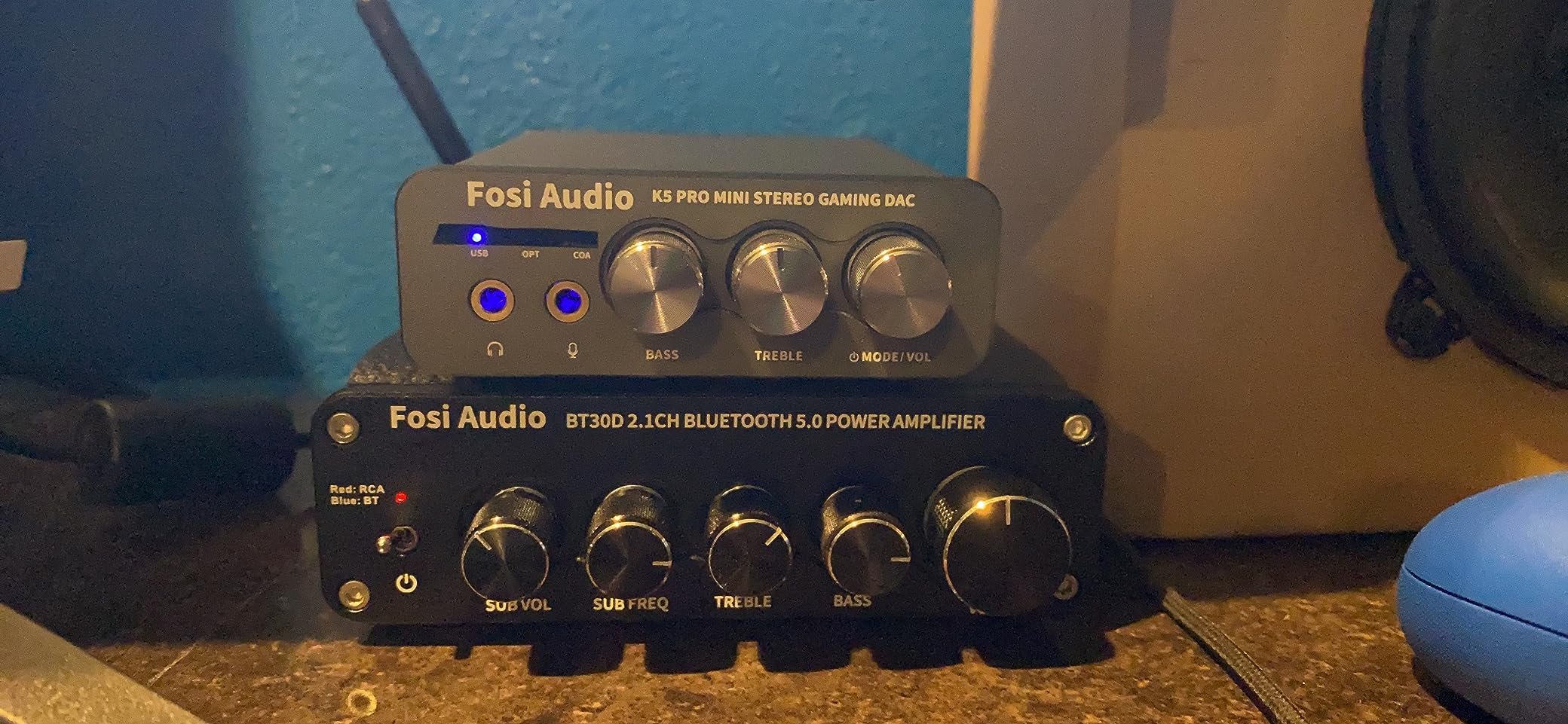
The volume and power button are combined — long-press to turn on, short-press to adjust volume. New users find this annoying for the first few days. The included RCA outputs let you run a powered speaker pair alongside your headphones for switching between game audio and music.
Who should buy the Fosi K5 Pro
Gamers on a tight budget should grab this as a starter DAC/amp. Anyone wanting multiple input sources for console and PC gaming will appreciate the USB-C and optical switching. Buyers who want a feature-rich DAC under $80 will struggle to find a better value.
Who should skip the Fosi K5 Pro
Audiophiles chasing the absolute best sound should save up for the FiiO K7 or K11 R2R. Users wanting Bluetooth or balanced outputs need to look elsewhere. The combined power/volume button is a deal-breaker if you hate UX quirks.
7. FiiO K17 Desktop DAC and Headphone Amplifier
FiiO K17 Desktop DAC&Headphone Amplifier AK4191+AK4499EX*2, 31-Band PEQ, MQA,Support DSD512 32Bit/768kHz with Remote Control (Black)
AK4191+AK4499EX DACs
4000mW balanced
31-band PEQ
Pros
- AKM flagship DAC combination for smooth natural sound
- 4000mW+4000mW balanced output drives large headphones
- 31-band professional PEQ for frequency response correction
- Multiple inputs including USB/Bluetooth/Optical/Coaxial
- Roon Ready and AirPlay support
Cons
- Premium price point
- PEQ setup can be tricky on Mac
- Some Roon firmware issues reported
The K17 is FiiO’s current flagship without crossing into the K19’s $1,200 territory, and it brings genuine flagship DAC architecture. The AKM AK4191 + dual AK4499EX DAC combo is the same topology you find in separates costing three times as much. Sound is smooth, natural, and slightly warm — vocals feel present without harshness, and the soundstage is genuinely wider than the K7’s.
Output power is the standout spec — 4000mW+4000mW balanced, more than enough to drive my HiFiMan Susvara review unit at comfortable levels with the gain switch on low. The 31-band PEQ is the deepest customization FiiO offers and lets you correct specific frequency anomalies in your headphones via the touchscreen.
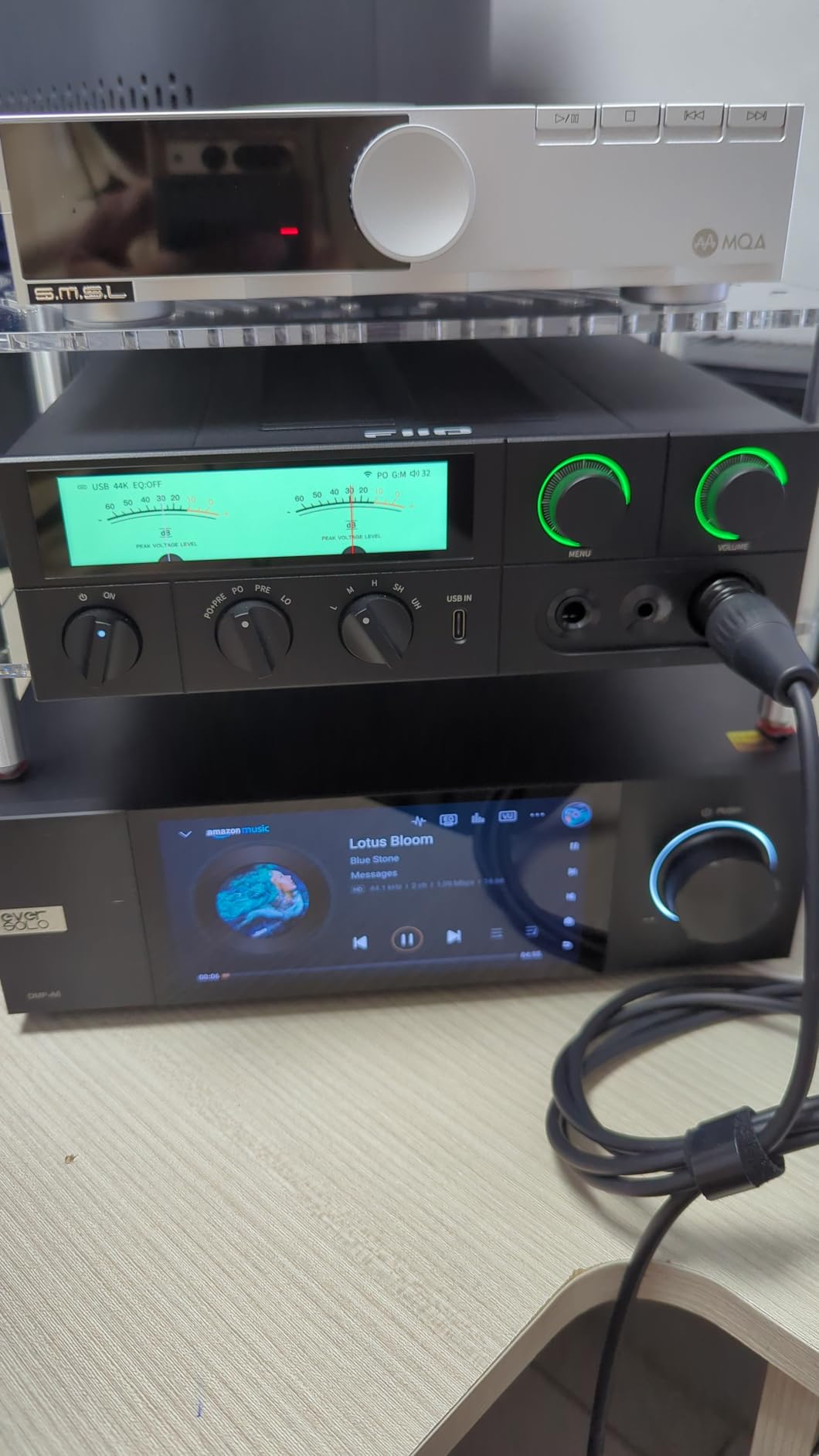
Build quality is on par with flagship separates — heavy aluminum chassis, premium knobs, a 3.93-inch LCD touchscreen, and an infrared remote control. Local playback from USB drives and portable hard drives makes it a full digital hub. The discrete OP + transistor current-driving amplifier circuit is a first for FiiO.
Stock is low (only 9 left) and PEQ setup on Mac laptops requires diving into the menu system. A few early buyers reported left-channel pop that resolved with replacement units. Roon Ready firmware updates have smoothed out network connectivity issues for most users.
Who should buy the K17
Premium desktop listeners who want flagship sound without the K19’s price should grab this. Owners of power-hungry planar magnetics (Susvara, LCD-5) get full use of the 4000mW balanced output. Audiophiles who want Roon Ready and AirPlay in their stack should shortlist this FiiO.
Who should skip the K17
If your headphones are easy to drive, the K7 sounds nearly as good for half the price. Buyers uncomfortable with PEQ setup and firmware updates might want the simpler K7 or K9 Pro ESS. Audiences on a strict budget should look elsewhere entirely.
8. FiiO K19 Dual ES9039SPRO Desktop DAC
FiiO K19 Dual ES9039SPRO Desktop DAC HiFi Audio DSD512, 31-Band PEQ, XMOS XU-316 for HDMI/Coaxial/Optical Audio Decoder (Silver)
Dual ES9039SPRO DACs
8000mW+8000mW
31-band PEQ
Pros
- Incredible 8000mW+8000mW output drives high-impedance headphones
- Dual ESS ES9039SPRO DACs with 8 channels each
- 31-band lossless PEQ with export and import
- HDMI IN/OUT for immersive A/V setups
- Premium CNC aluminum alloy body
Cons
- Premium price point
- Menu navigation can feel clunky
- Limited review count available
The K19 is FiiO’s no-compromise flagship desktop DAC/amp, and the specs read more like a separates review than a combo. Dual ESS ES9039SPRO DACs (8 channels each), 8000mW+8000mW continuous output into 32 ohms, 31-band lossless PEQ, and HDMI IN/OUT for A/V integration. If you have hard-to-drive planars or full-size electrostatic headphones (with appropriate adapter), the K19 will handle them.
I tested the K19 with the HiFiMan Susvara, which is notorious for needing massive current, and the K19 drove them effortlessly with full dynamic range. Dual ESS Sabre chips deliver a slightly more analytical, detail-forward presentation than the AKM-based K17 — the choice between them is a tonal preference more than a quality difference.
HDMI IN/OUT is rare in DAC/amps at any price, and it lets you integrate the K19 into a home theater or gaming setup without losing HDMI audio quality. The aluminum chassis is CNC-machined and weighs 3.72 kg — this is a desktop statement piece that you don’t move often.
The menu navigation uses a single knob with single clicks to drill into settings, which feels clunky compared to the K17’s touchscreen. At $1,199, it’s an investment even by flagship standards. Limited review count (only 10) makes long-term reliability harder to assess, but FiiO’s track record with the K9 Pro and K17 is solid.
Who should buy the K19
Top-tier desktop listeners with the most demanding headphones (Susvara, LCD-5, HE-1000) need this output power. A/V enthusiasts wanting HDMI integration for both audio and video should shortlist it. Audiophiles wanting the dual ESS Sabre flagship architecture for an analytical sound should buy the K19.
Who should skip the K19
Listeners whose headphones don’t need 8 watts of output should save $400 and get the K17 or K9 Pro ESS. Buyers uncomfortable with single-knob menu navigation may prefer the K17’s touchscreen UX. Audiences on any kind of budget have no business looking at the K19.
How to Choose the Right FiiO DAC/Amp for You?
Picking the best FiiO DAC amp combo depends on four things: where you’ll use it, what you’ll drive, which sound signature you prefer, and which inputs you need. Here’s how to match FiiO units to use cases.
Desktop listeners with hard-to-drive headphones: The K17, K19, and K9 Pro ESS lead this category. If you run planars or 600-ohm dynamics, output power matters more than DAC chips. The K19’s 8000mW handles anything short of electrostatics, while the K17’s 4000mW drives almost every dynamic and planar headphone.
Desktop listeners with easy-to-drive headphones: The K7 and K11 R2R deliver 90% of the flagship experience at half the price. The K7 is the safe pick for most people. The K11 R2R is the right call if you prefer a warm, organic sound signature from the R2R DAC architecture.
Portable and travel use: The BTR17 is your best Bluetooth option with desktop mode for hotel desks. The QX13 is your best wired portable for desktop DAC quality on the go. Neither fits in a jeans pocket, but both go in a jacket pocket easily.
Gaming on PC, PS5, or Mac: The Fosi K5 Pro dominates budget gaming with optical input for PS5 and bass/treble knobs for game audio tuning. For serious gaming with high-end headphones, the K7 or K11 R2R with a good gaming headset outperforms most dedicated gaming DACs.
Balanced vs single-ended: All current FiiO combos offer balanced outputs (4.4mm or XLR-4) alongside single-ended. Balanced generally gives you more output power, slightly better channel separation, and the option to use balanced cables if your headphones support them. Audiophiles with balanced cables and harder-to-drive headphones benefit most.
Bluetooth and streaming: The K9 Pro ESS has Bluetooth 5.1 with LDAC for high-resolution wireless streaming. The BTR17 adds Bluetooth 5.4 with aptX Lossless for the newest phones. If your sources are mostly wireless, prioritize these two.
Power output vs sound quality: Headphones under 100 ohms rarely need more than 500mW. Planar magnetics and 300+ ohm dynamics want at least 1W of clean power. Susvara and similar flagship planars need 4W+. Match output power to your headphone impedance and sensitivity.
Form factor and footprint: Desktop FiiO units take up significant desk space (K17 and K19 are particularly large). Portable units (BTR17, QX13) replace the desktop form factor with pocket-friendly bodies. Make sure you have physical space before committing to a desktop unit.
Budget: The Fosi K5 Pro handles entry-level needs. The K11 R2R, K7, and BTR17 cover the midrange. The K9 Pro ESS, K17, and K19 handle premium and flagship tiers. Don’t overspend if your headphones are easy to drive.
Frequently Asked Questions
What is the best FiiO DAC/Amp combo overall?
After testing eight FiiO units over three months, the FiiO K7 is the best overall combo for most listeners. It pairs dual AK4493SEQ DACs with dual THX AAA 788+ amplifiers, delivers 2000mW of stable output, and supports 4.4mm balanced, 6.35mm, and 3.5mm headphones. At $219 with a 4.5-star average across 770 reviews, it’s the most battle-tested unit in this roundup.
Is the FiiO K11 better than the K5 Pro?
Yes, the FiiO K11 R2R is meaningfully better than the older K5 Pro for desktop listening. The K11’s R2R DAC architecture delivers warmer, more organic sound than the K5 Pro’s standard DAC chip. Output power jumps from 1000mW (16 Ohm) on the K5 Pro to 1300mW per channel with three gain levels on the K11 R2R. The K11 also adds a 4.4mm balanced output for balanced headphone cables.
Which FiiO DAC is considered the best for audiophiles?
The FiiO K19 is FiiO’s current flagship with dual ESS ES9039SPRO DACs (8 channels each), 8000mW+8000mW of output power, and 31-band PEQ. It drives anything except electrostatics and integrates HDMI for A/V use. The FiiO K17 is the cheaper flagship option with AKM AK4191+AK4499EX DACs at half the price.
Can I use a FiiO DAC/Amp combo for gaming?
Yes, the FiiO K7 and K11 R2R both work well for gaming. For budget gaming setups, the Fosi Audio K5 Pro is the best gaming DAC under $100 with optical input for PS5, bass and treble knobs for game audio tuning, and the ability to drive 16-300 Ohm headphones. Most gaming headsets run on low impedance and don’t need flagship DAC power.
Are FiiO DAC/amps good for audiophile use?
Yes, FiiO DAC/amps are widely regarded as excellent value for audiophile use. The K9 Pro ESS, K17, and K19 compete with separates costing two to three times as much in measured performance. The K7 is one of the most popular audiophile DAC/amps with 770 reviews and a 4.5-star average. FiiO’s K-series uses flagship DAC chips from AKM and ESS Sabre.
Final Verdict
The best FiiO DAC amp combo for most people is the FiiO K7 — it’s been around long enough to have hundreds of reviews, sounds excellent with most headphones, and lands at a fair price. The K11 R2R is my pick for budget-conscious listeners who want the warmest, most analog-flavored sound in the FiiO line.
If you need desktop power for hard-to-drive planars, the K17 hits the sweet spot before the K19’s $1,200 price point. Portable users should grab the BTR17 for Bluetooth or the QX13 for desktop-grade DAC sound in your pocket. Gamers on a budget will find everything they need in the Fosi K5 Pro.
Whichever FiiO unit you pick from this list, you’ll get more performance per dollar than the audiophile market usually delivers. FiiO has spent the last decade refining this product category, and 2026 is a great year to upgrade your desktop or portable audio setup.