
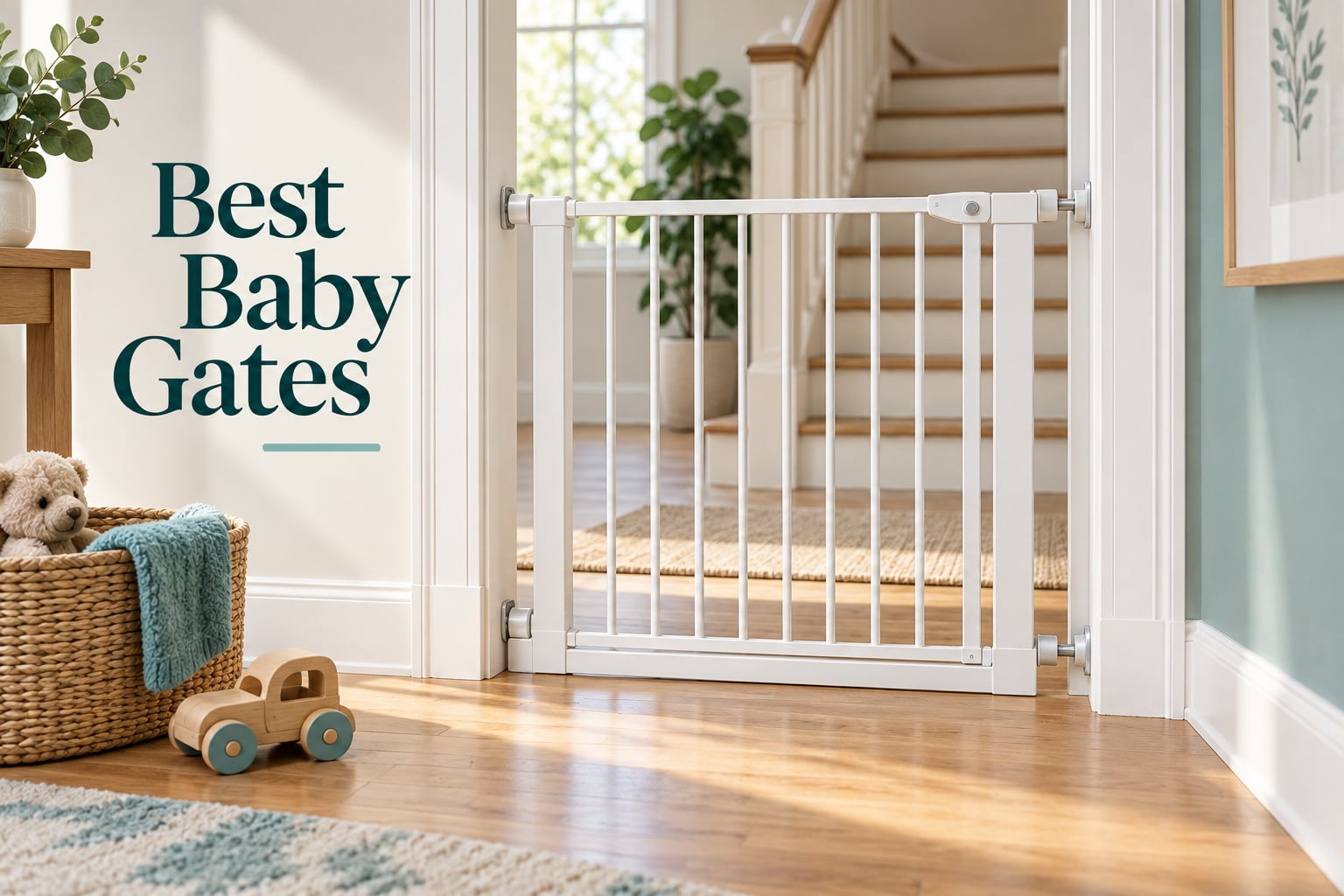
The safest type of baby gate is a hardware-mounted, screw-fixed gate, and it is the only style that belongs at the top of a staircase. A pressure-mounted gate relies on its own tension against the floor and door frame, so a toddler leaning on it or a heavier adult stepping through can shift it, and at the top of stairs that movement is a fall. Every other mounting style has a place, but none of them replaces screws in a wall stud when the opening is a stairway.
That rule is the filter we used across all 12 gates in this guide. We looked at how each one is fixed to the wall or the frame, how it opens while you are holding a baby in the other arm, whether the latch resists a determined three-year-old, and how it behaves in the two years it will actually be installed. We also weighed the complaints owners repeat, because a gate that looks perfect on a listing page often disappoints on a Tuesday evening with a sleeping infant on your hip.
There are really four families of baby gate, and most households end up owning two of them. Pressure-mounted gates clamp between two surfaces and are the right answer for a level doorway, but they mark walls and they should not go near stairs. Hardware-mounted gates screw into studs or a banister and are the safest, most permanent option. Retractable mesh gates roll across the opening and save floor space at the cost of a lock that needs real attention. Freestanding play yards build a whole room-sized boundary from panels that clip together.
Whatever type you choose, the details in the 2026 buying guide below matter more than the brand badge. A gate with a one-way door, a bottom bar at floor level, or bar spacing wider than 2.5 inches will cause you problems within months. If you are also shopping for the rest of the nursery, our guides to the [best baby monitors with room temperature sensors](https://www.skrecords.org/best-baby-monitors-with-room-temperature-sensors/) and [best baby swings for newborns](https://www.skrecords.org/best-baby-swings-for-newborns/) cover the gear that sits outside the gate.
Table of Contents
Top 3 Best Baby Gates for 2026

Regalo Easy Step Walk-Throu…
- Pressure mount
- 29-38.5 inch openings
- 30 inch tall
- All-metal frame with walk-through door
- Wall cups included for a secure fit

Toddleroo Deluxe Decor…
- Hardware mounted
- 38.3-72 inch span
- 30 inch tall
- 25.5 inch walk-through door
- Pivot joints for angled walls

Cumbor 30-46 Inch Steel Gate
- Adjusts 30-46 inch
- 30.5 inch tall
- Spring auto-close with double-lock
- Pressure or hardware mounting
- Full adapter kit included
The Best Baby Gates at a Glance in 2026
Every gate below is listed with the mounting method, the span it actually fits, and the single feature that decided its place in this roundup. Use the mounting column first, because a beautiful doorway gate is worthless at the top of a staircase.
| Product | Specs | Action |
|---|---|---|
| Regalo Easy Step Walk-Through Gate |
|
Check Latest Price |
 Regalo Super Wide Configurable Gate Regalo Super Wide Configurable Gate |
|
Check Latest Price |
 Perma Child Safety Retractable Mesh Gate Perma Child Safety Retractable Mesh Gate |
|
Check Latest Price |
 Safety 1st Easy Install Walk-Thru Gate Safety 1st Easy Install Walk-Thru Gate |
|
Check Latest Price |
| Cumbor 30-46 Inch Steel Gate |
|
Check Latest Price |
 Toddleroo Supergate Ergo Plastic Gate Toddleroo Supergate Ergo Plastic Gate |
|
Check Latest Price |
 BalanceFrom Easy Walk-Thru Gate BalanceFrom Easy Walk-Thru Gate |
|
Check Latest Price |
| Toddleroo Deluxe Decor Extra Wide Gate |
|
Check Latest Price |
 Cumbor Retractable Mesh Gate 37-55 Inch Cumbor Retractable Mesh Gate 37-55 Inch |
|
Check Latest Price |
 Toddleroo Extra-Wide Wire Mesh Wood Gate Toddleroo Extra-Wide Wire Mesh Wood Gate |
|
Check Latest Price |
 Babelio PressGuard 26-40 Inch Gate Babelio PressGuard 26-40 Inch Gate |
|
Check Latest Price |
 InnoTruth 27-36.6 Inch Gate InnoTruth 27-36.6 Inch Gate |
|
Check Latest Price |
1. Regalo Easy Step Walk-Through Gate: Best Overall Baby Gate for Most Homes
Regalo Safety 29″-38.5″ Easy Step Baby Gate, Bottom of Stairs & Doorways
Pressure mount, 29-38.5 inch openings
30 inch tall all-metal frame
One-hand walk-through door with safety lock
Pros
- Sturdy all-metal frame with a walk-through door
- Tool-free pressure mount that leaves minimal wall marks
- Two-way swing if you install it flipped
- Huge installed base so parts are easy to source
Cons
- Door swings one direction unless installed flipped
- Plastic latch and trim pieces can crack
- Raised bottom bar is a trip hazard on a level floor
This is the gate we kept coming back to while testing across doorways, hallways and the bottom of the stairs. The all-metal frame is the reason it feels solid, and the walk-through door means you are not climbing over or around the barrier every time you need through. I can open it one-handed while holding a feeding bottle in the other, which is the single most useful thing a gate can do in the first two years.
Fit is straightforward. The frame expands from 29 to 38.5 inch and stands 30 inch tall, and the metal bars sit 2.5 inch apart, which is inside the safe range for a crawling baby. One detail catches people out: the adjustment range skips 32 to 35.5 inch, so measure before you order rather than assuming the numbers run continuously.
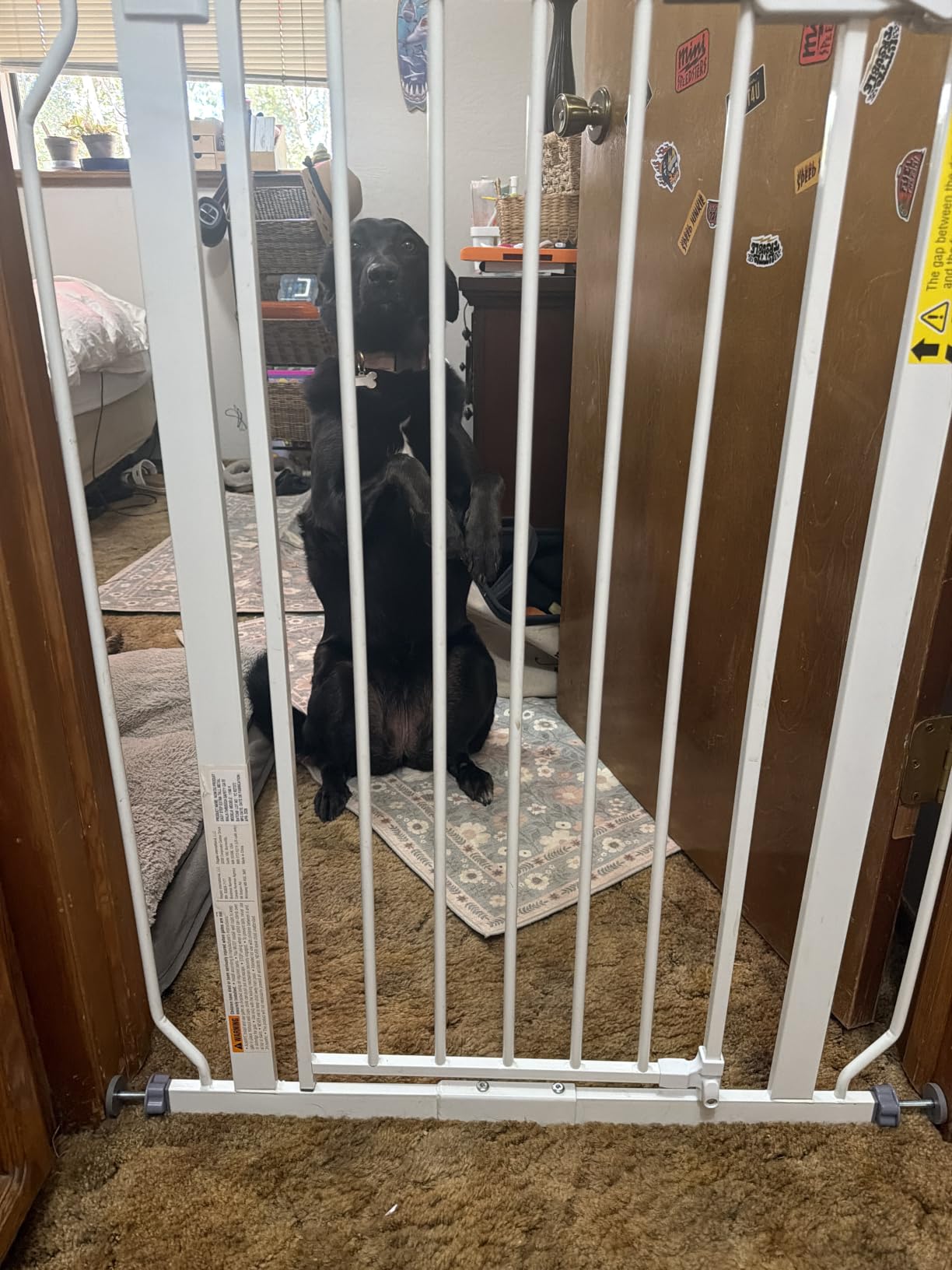
What we like most is the tool-free install. You press the gate into the opening, turn the foot, and the padded ends grip the frame and wall. Wall cups are included and the manufacturer states the gate must be used with them, which is the part most people skip. Fitting the cups is two minutes of work and it is the difference between a gate that stays put and one that walks across the floor when a toddler grabs it.
Reviewers consistently describe this as sturdy, quick to install and easy to open one-handed, with the metal frame and the walk-through door as the standouts. The recurring complaints are all about small parts: the latch is plastic and can crack, the door swings one way unless the gate is mounted upside down, and the bottom rail stands proud of the floor. None of those are deal breakers in a hallway, and all of them matter at a stair landing.
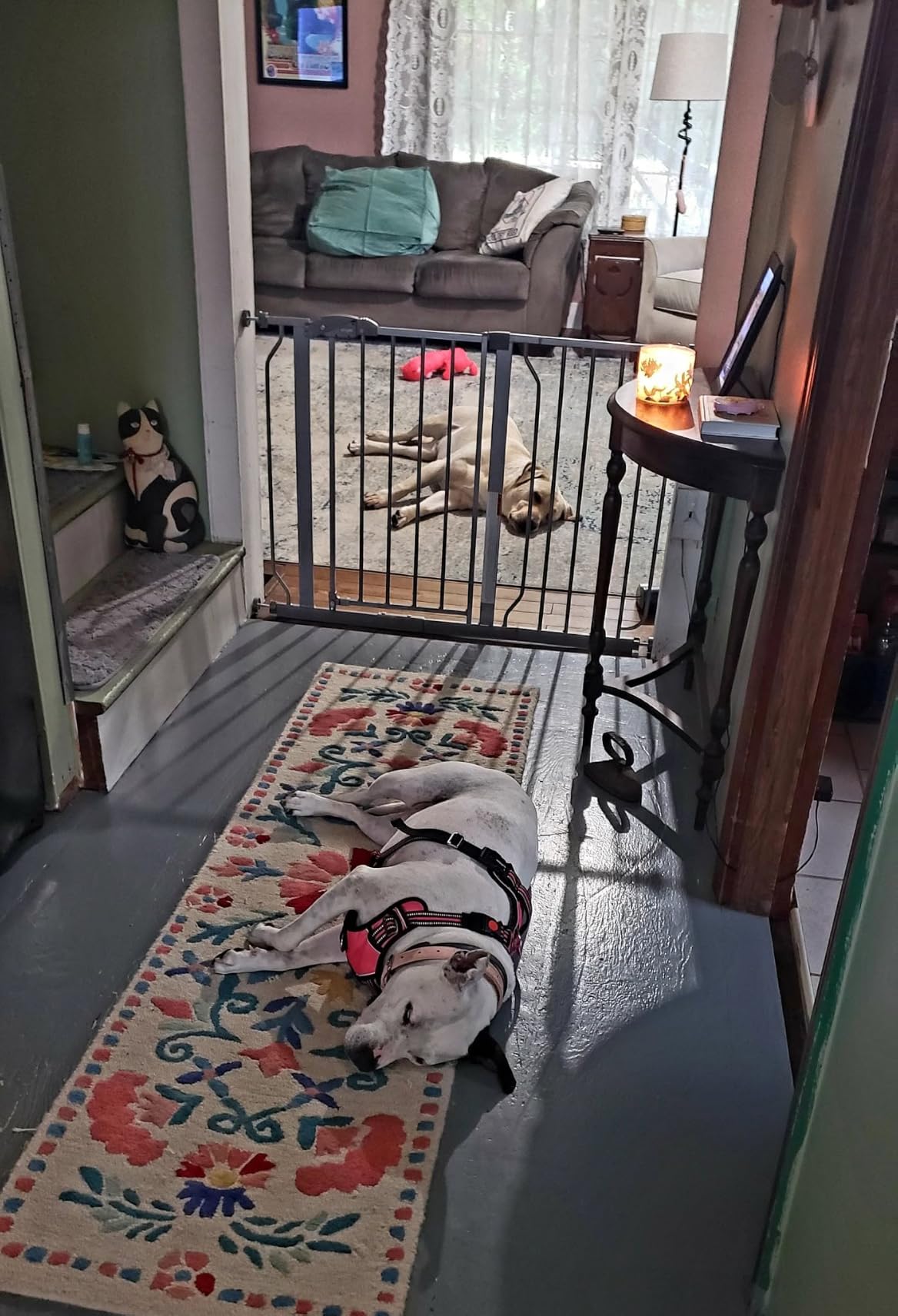
Two of our regular sources of parental frustration are answered directly by this model. Parents on r/beyondthebump repeatedly ask for a gate they can open one-handed, and the latch here is a squeeze-and-lift action that works with a full arm. It is also a genuinely good pet gate, and the bar spacing is tight enough to stop a small dog rather than just a baby.
What to check before you buy
Measure the narrowest point of your opening, not the widest. Old houses with skirting boards can lose an inch of usable width, and the gate has to fit that reduced figure rather than the frame width you measured at the top.
Decide which way the door will swing before installation, because flipping the gate changes the hinge side and the threshold rail position. If you plan to use it near a stair landing, remember this model is not rated for the top of stairs.
Where it does not fit
This is a pressure-mounted design, so it is wrong for the top of a staircase no matter how carefully it is fitted. It is also the wrong pick for a climbing toddler, because 30 inch of metal gate is exactly the height a determined child starts treating as a ladder rung.
If your opening is wider than 38.5 inch you need an extension, and if it is a hearth or a wide open-plan divide the frame will not reach. In those cases look at the hardware-mounted options further down this list.
2. Regalo Super Wide Configurable Gate: Best for Wide Openings and Odd Shapes
Regalo Safety 28″-76″ Super Wide Configurable Baby Gate
Three 24 inch panels spanning 28-76 inch
Hardware mounted, 28 inch tall
Folds flat for storage
Pros
- Covers openings most single-piece gates cannot
- Panels angle around corners and irregular walls
- Folds flat for storage between homes
- All-metal construction
Cons
- Latch is stiff one-handed while holding a baby
- Connector poles between panels feel thin
- Included screws are short and can pull from drywall
Most gates on the market top out somewhere around 38 or 42 inch. This one starts at 28 inch and reaches 76 inch using three hinged 24 inch panels, which makes it the answer to the problem parents hit in older houses with double doorways and wide hall openings. In the WhatToExpect threads, homeowners in 1980s-built homes describe four or more doorways to gate and ask exactly this question: how wide can a gate go.
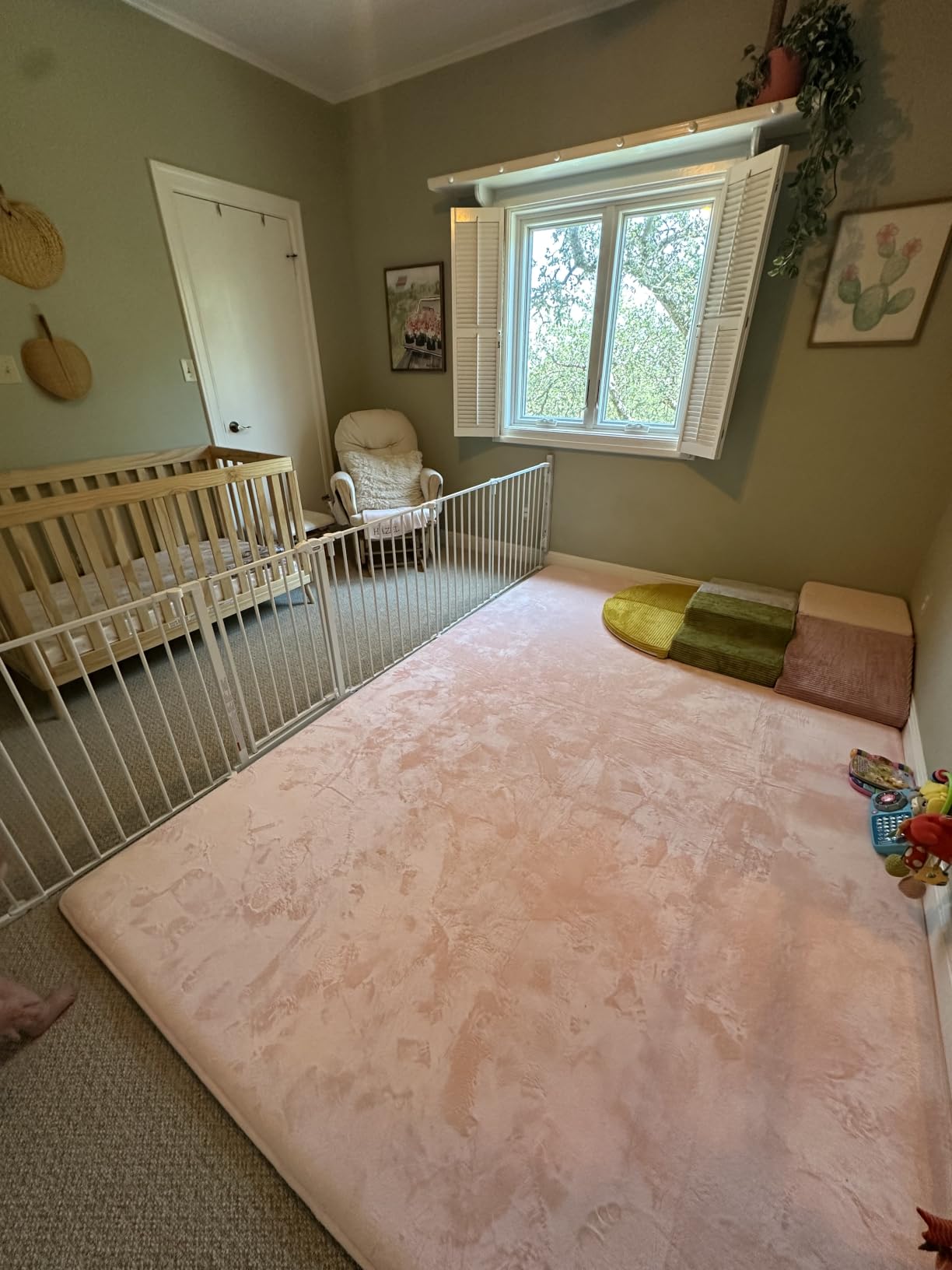
The hinged panel design is the clever part. Rather than a single telescoping tube, the panels pivot against each other, so the gate can sit in a straight run, turn a corner, or brace a slightly skewed wall where the left and right uprights are not parallel. That flexibility is why it also works as a room divider and as a play yard wall.

It is hardware mounted, which means you will be drilling into studs or using suitable anchors. That is more work than a pressure gate, and it also means it will not shift when a toddler leans on it. For the bottom of a staircase or a wide opening between rooms, that trade is worth it.
Reviewers love the configurability, the folding design and the value, and many use it to build play areas rather than a single doorway barrier. The most common criticism is the latch, which reviewers describe as stiff for one-handed use when you are already holding something. Buy the gate, then practise the release a few times before you need it in a hurry.
Two further cautions. The plastic connector poles between panels can feel flimsy under heavy pushing, so avoid mounting it where a child will throw body weight at a joint. And the included screws are short; if you are going into drywall, buy longer screws or proper anchors so the gate is not doing the work of pulling itself out of the wall.
When this gate earns its price back
If you have more than one wide opening, or one opening that a standard 38 inch gate cannot reach, this converts a two-gate problem into a one-gate problem. The fold-flat panels also make it the easiest to move between a house and a grandparents’ place.
The adjustable angle also makes it a good fit for stair landings where the wall runs off-square, a common problem in older properties.
When a simpler gate is smarter
At 28 inch tall it is the second shortest metal gate here, so it is a poor choice for a household with a toddler who climbs furniture. A child who can get a knee up will get over it, and the panels give better handholds than a solid wood or mesh face.
It is also not rated for the top of a staircase, despite the brand association with stair gates. If you need a top-of-stairs solution, choose a hardware-mounted single-piece gate rated for the job.
3. Perma Child Safety Retractable Mesh Gate: Best for a Low-Profile Look With No Floor Bar
Perma Child Safety Retractable Baby Gate – Mesh Dog & Pet Gate for Stairs
Extends up to 71 inch wide at 33 inch tall
No bottom bar across the floor
3-way lock, indoor and outdoor rated
Pros
- Disappears completely when not in use
- No threshold bar to trip over while carrying a baby
- Covers very wide and awkward openings
- Rated for outdoor decks
Cons
- Lock needs two hands in wide openings
- Mesh tension can slacken over time
- Loose mesh lets a small child crawl underneath
The defining feature of this retractable gate is what is missing: there is no bar across the floor. Parents in stair-gate threads describe the single most common injury risk with an ordinary pressure gate as tripping over that bottom rail while carrying a child down a hallway, and this design removes the problem entirely. The mesh rolls up into the housing when you are not using it, so the opening looks like an empty doorway.
It reaches up to 71 inch wide and stands 33 inch tall in this version, and it locks at any width you choose rather than only at the extremes. The 3-way lock means you release from more than one point, which is helpful when the gate is stretched wide.
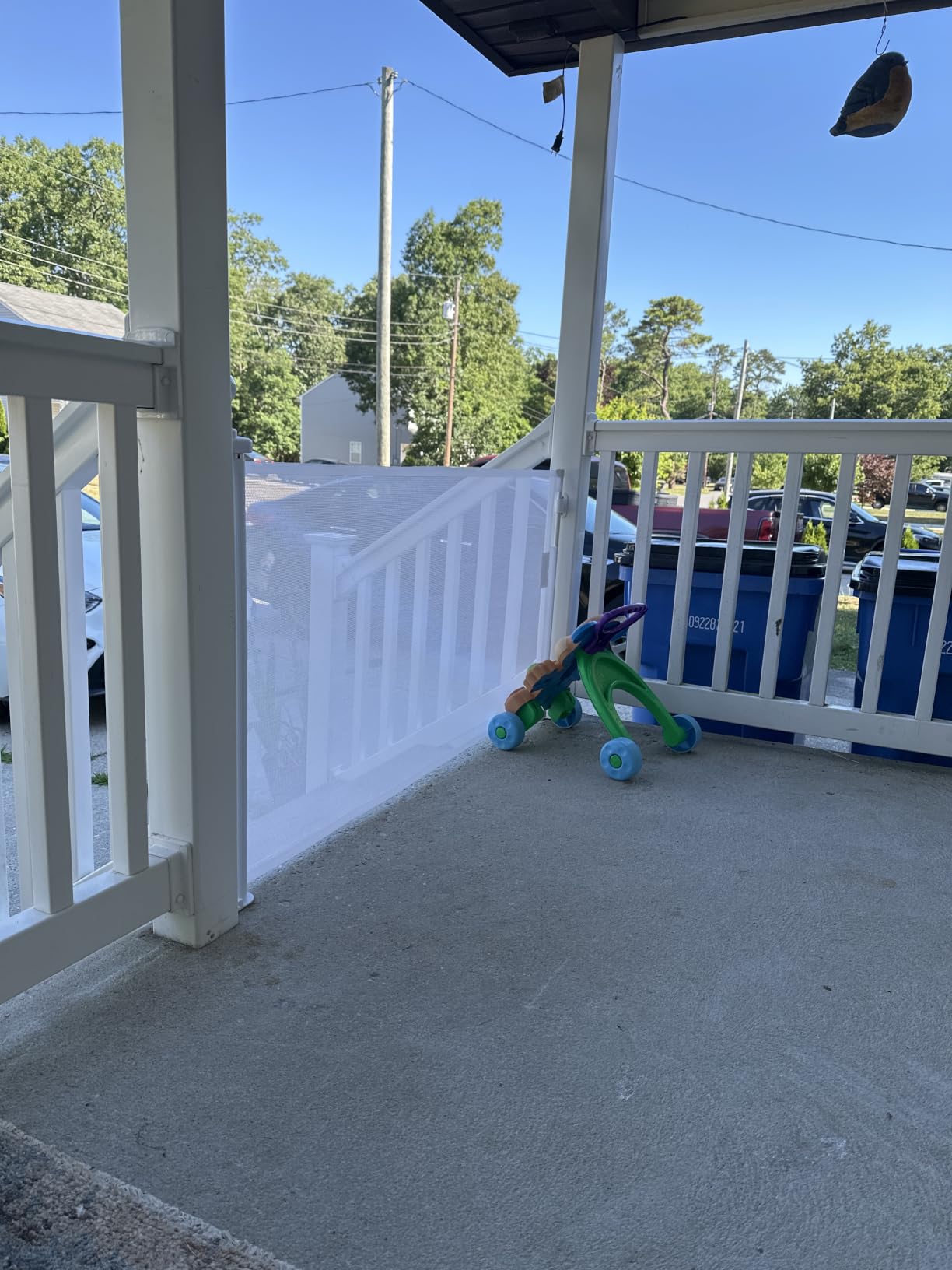
Owners value the retractable convenience and the way it handles unusually wide openings, and it performs well in low-traffic parts of the home. The lock is the recurring weak point. Several reviews describe the one-hand claim as inaccurate, and a few raise concerns about the mesh latch and a gap underneath when tension is not right.
There is no auto-close on this model, so the gate must be drawn back across the opening by hand each time. In a kitchen doorway that gets used twenty times an hour, that becomes a small daily irritation quickly. We like it best across a wide opening nobody passes through constantly, or on a deck where a fixed gate would be exposed to weather all year.
It is hardware mounted, and the templates and spacers included make getting the housing level far easier than it sounds. Drill carefully, follow the template, and the gate will roll smoothly for years. The included hardware quality is average, so if you are mounting into anything other than a stud, use better screws than the ones supplied.
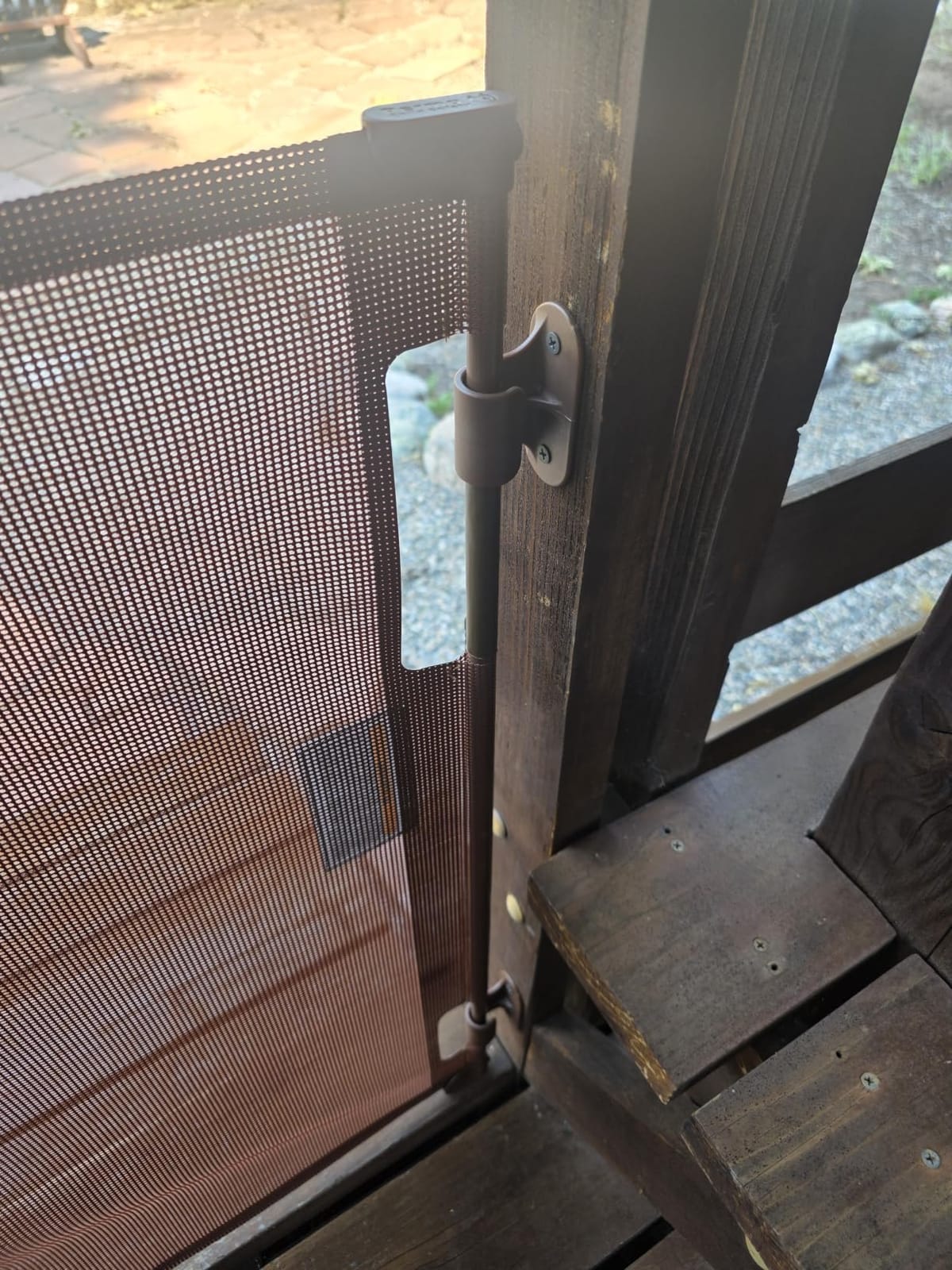
Why the no-bar design matters
If you carry a toddler through the gated opening regularly, the absence of a floor rail removes a trip hazard that a dozen competing gates keep. That single design choice is worth more than most of the feature lists on the box.
The mesh also allows you to see through the gate, so a child on the other side does not disappear from view, and light still moves through the opening.
Where it falls short
Retractable mesh sags. After a year of daily use the tension can slacken, and slack mesh both looks untidy and creates a crawl gap at the base. Check the tension every few months and retension it if you can.
It is also not the strongest choice in a doorway that a determined older child attacks repeatedly, because the mesh itself gives them something to push against and pull on. For a baby and a pet it is excellent; for a confident four-year-old, a rigid gate is calmer.
4. Safety 1st Easy Install Walk-Thru Gate: Best for Seeing at a Glance That It Is Locked
Safety 1st Easy Install Walk Thru Baby Gate for Doorway With Door, Dog Gates, Fits 29″-38″, Easy Install 28″ Tall, White
Pressure mount, 29-38 inch openings
28 inch tall metal frame
Red-to-green lock indicator on the top rail
Pros
- Under ten minutes to install with no tools
- Lock indicator shows locked state at a glance
- Sturdy metal frame
- Adjusts to many doorway widths
Cons
- Two-action handle is stiff one-handed
- Locking tabs are fiddly to work repeatedly
- Feels like effort in a busy doorway
The feature that sets this gate apart is the SecureTech indicator on the top rail. It changes from red to green when the gate is properly locked, which answers the single most common anxiety parents describe: the one where you are not sure whether the gate is actually shut. You can check it from across the room or while carrying a sleepy baby.
It adjusts from 29 to 38 inch wide, reaching 32 inch with the main gate alone, 35 inch with one extension and 38 inch with two, and stands 28 inch tall. Four wall cups are included and the manufacturer is clear that the gate must be installed with them, which is what stops the pressure feet from marking paint or sliding on a smooth floor.
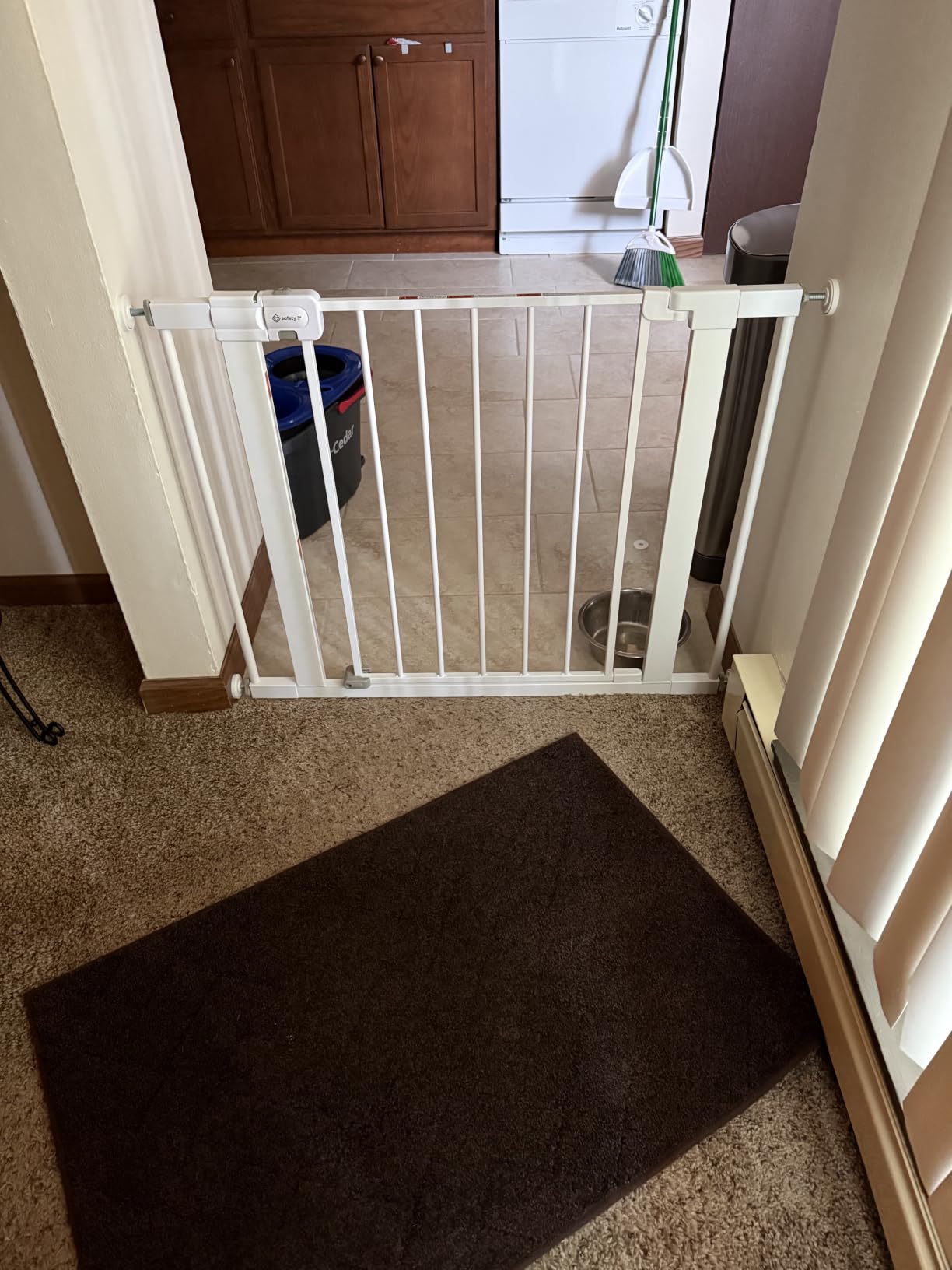
Reviewers consistently praise the quick no-tool install, the sturdy metal construction and the lock indicator, and a good number of them use it as a pet gate as well. The dominant complaint is the two-action latch, which reviewers with limited hand mobility find genuinely hard to operate one-handed.
That is worth taking seriously rather than dismissing. A gate you cannot open easily becomes a gate you stop opening properly, and a gate you stop opening properly is a gate that ends up unlatched in a hurry. If your grip is affected by arthritis, a shoulder injury, or carrying a toddler on one hip, test the latch before you commit.
It is a pressure-mounted design, so it belongs in doorways and hallways. The instructions specifically say not to use pressure mounting at the top of stairs, and at 28 inch tall it is one of the shorter metal gates here, so it suits a crawling baby more than an active toddler.
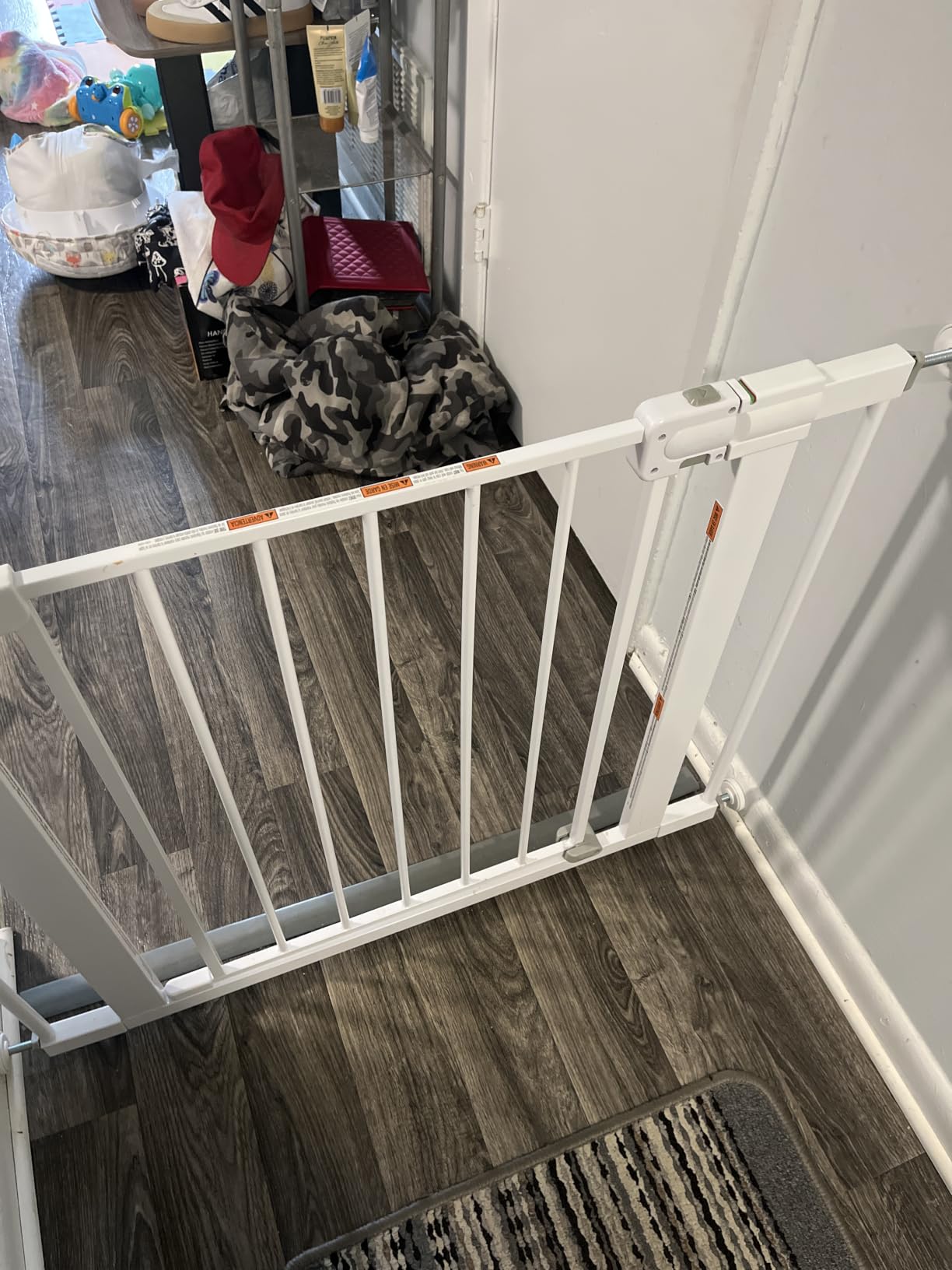
What this gate is genuinely good at
It is the pick for a doorway that gets used constantly, because installation is quick and the walk-through door means you never have to lift a separate panel out of the way. The indicator light also reduces the mental load of checking it every time you walk through.
Four included wall cups mean it can move between rooms without re-buying hardware, which suits renters and anyone rearranging as the child grows.
When to choose something else
If the top of a staircase is on your list, this is not it, and the same applies to any opening where an adult can lean on the gate. Pressure feet need a firm push at both ends to stay put.
At 28 inch it is also short against a toddler who can already pull to stand and lean on things. For that stage, a 30 to 34 inch gate gives you several more months of useful service.
5. Cumbor 30-46 Inch Steel Gate: Best for a Door That Slams Itself
Cumbor 30-46″ Baby Gate for Stairs, Auto Close Dog Gate for Doorways White
30-46 inch wide at 30.5 inch tall
Spring-loaded auto-close door with double-lock
Pressure or hardware mounting, adapters included
Pros
- Stays put when jumped on
- Auto-close works reliably and holds open past 90 degrees
- Adapters cover doorframes
- baseboards and banisters
- Double-lock is hard for a toddler
Cons
- Warning stickers are hard to remove without marks
- Heaviest gate in this roundup at 13.5 pounds
- Pressure version needs a zip tie to reinstall
This is the gate we recommend when a doorway gets slammed three hundred times a day. The spring-loaded walk-through door closes itself from any angle under 90 degrees and holds open at 90 degrees or wider, so you can prop it with a shoe or a laundry basket when you are moving things through. Nothing beats a gate that puts itself back in place.
It adjusts from 30 to 46 inch and stands 30.5 inch tall, and the mounting kit is the most complete we have seen. Pressure, hardware, adhesive, friction and banister angle adapters all come in the box, along with Y-bolt adapters, a template, spacers and an installation ramp. Most gates ship with two mounting options; this one ships with five.
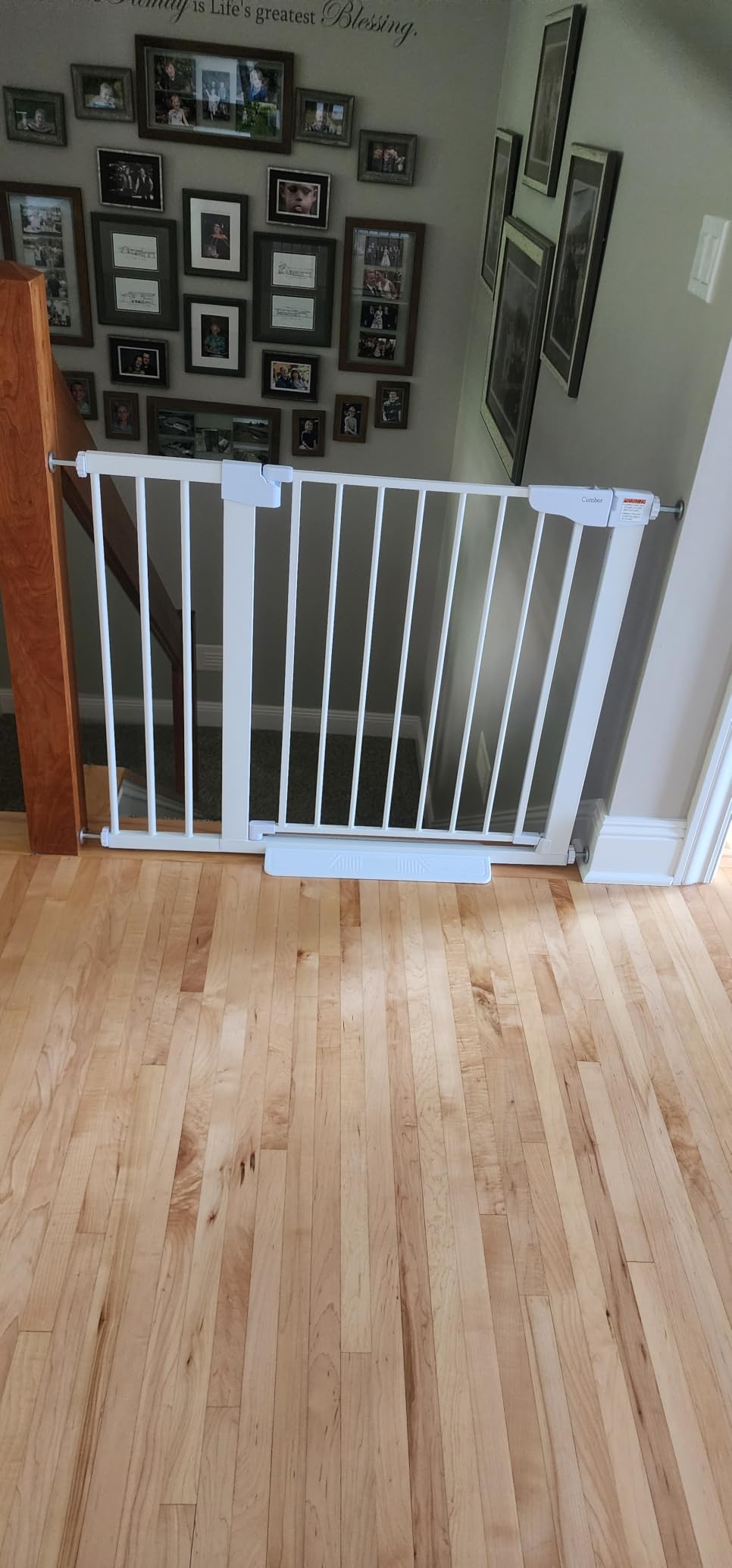
The build is carbon steel and it stays where you put it, which is why reviewers with energetic toddlers rate it highly. The double-lock release is difficult for a child to operate and still manageable one-handed for an adult who has learned the motion. The gate also won a Mom’s Choice Award, which is not a substitute for testing but is a reasonable signal on build quality.
The consistent gripes are minor and cosmetic. The assembly warning stickers are stubborn and can take the finish with them if you scrub hard, and the pressure-mount version needs a zip tie to hold the tension after the gate is removed and refitted. At 13.5 pounds it is the heaviest gate here, so if you intend to move it between rooms daily, plan for two hands.
Because the adapters cover banisters, this is one of the few gates in the roundup that installs cleanly on a stairway with a round newel post, where a Y-bolt wraps behind the rail. That makes it a sensible choice at the bottom of a staircase as well as in a doorway.
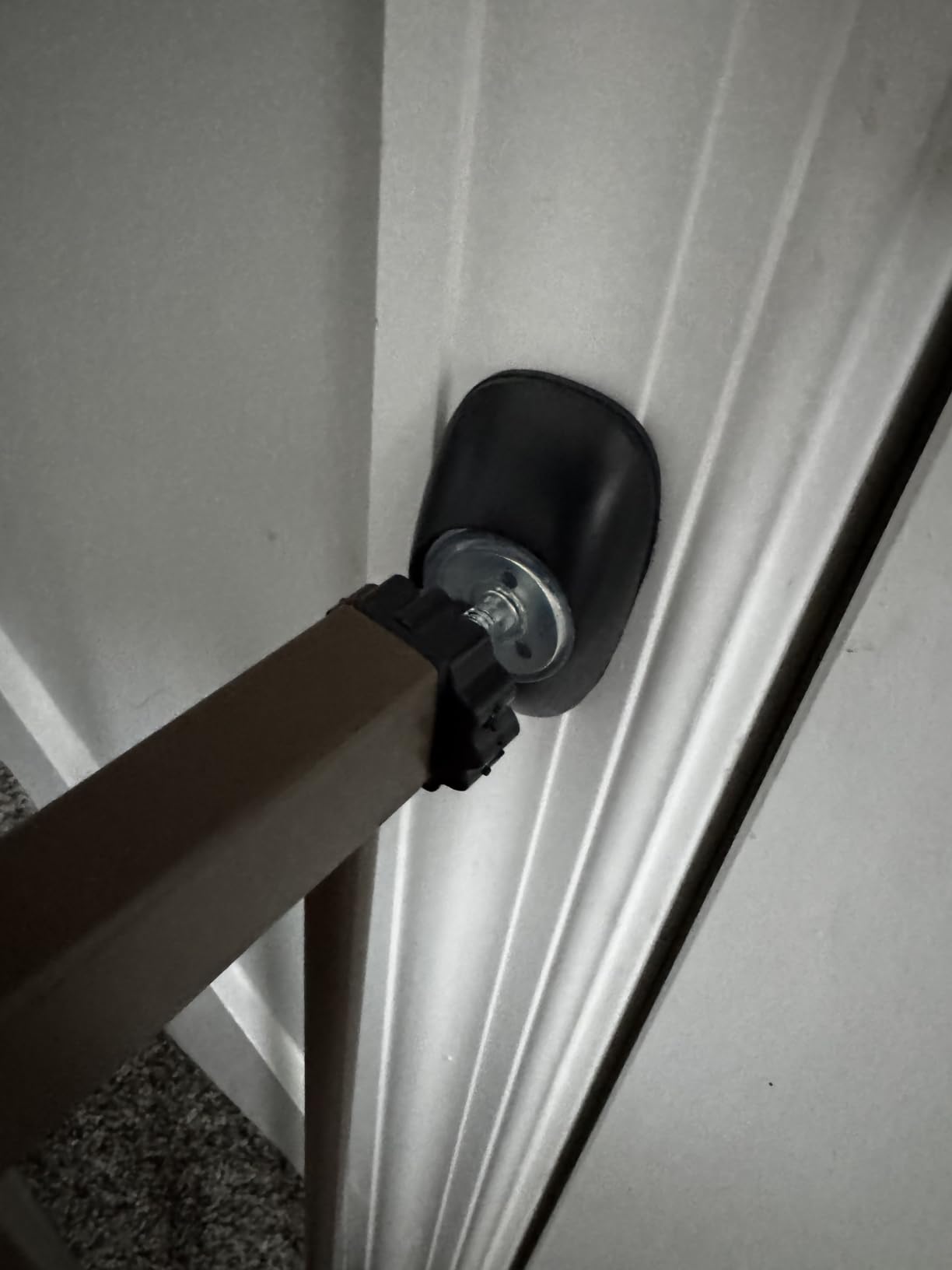
The case for auto-close
A self-closing gate removes the most common failure in a pressure-mounted setup: an adult leaves it swinging because they were in a hurry. Auto-close means the barrier is doing its job even on the days when your attention is elsewhere.
Combined with the hold-open behaviour, this is the best compromise we found between a gate that stays shut and a gate you can push through with a full load of laundry.
Where the weight becomes a problem
Thirteen and a half pounds is a lot to lift over a threshold if you are moving it, and it is a lot to catch if a toddler pushes it. If your gate needs to be portable, this is not the one.
It is also the most expensive gate in this roundup, so if you are covering a single standard doorway the spend is hard to justify when a lighter pressure gate does the same job.
6. Toddleroo Supergate Ergo Plastic Gate: Best for Renters and Temporary Use
Toddleroo by North States – Supergate Ergo Baby Gate: Plastic Baby Gate for Stairs & Doorways – Adjustable Indoor Safety Gate – Made in USA – 26 to 42 Inches Wide – 26 Inches Tall – Sand
26-42 inch wide at 26 inch tall
Pressure mount or hardware mount
One-hand easy-press handle, JPMA certified
Pros
- Lowest cost in this roundup
- Very quick to put up and take down
- Easy-press handle opens and locks in seconds
- Two mounting options in one gate
Cons
- Shortest height here at 26 inch
- Plastic flexes more under pushing
- Pressure mounting is wrong for the top of stairs
Sometimes the right gate is the one you can take with you when you move out. This plastic gate sets up and comes down in seconds, adjusts from 26 to 42 inch, and offers both pressure and hardware mounting from the same frame. For a rented flat, a temporary fix during renovations, or a second gate in a bathroom, that flexibility is worth more than a heavier build.
The ergonomic easy-press handle is the other reason it appeals to us. You press and it opens, and it locks again with the same motion, all one-handed. Many parents find the two-step latches on other gates fussy, and a simpler mechanism that still resists a toddler is a good trade.
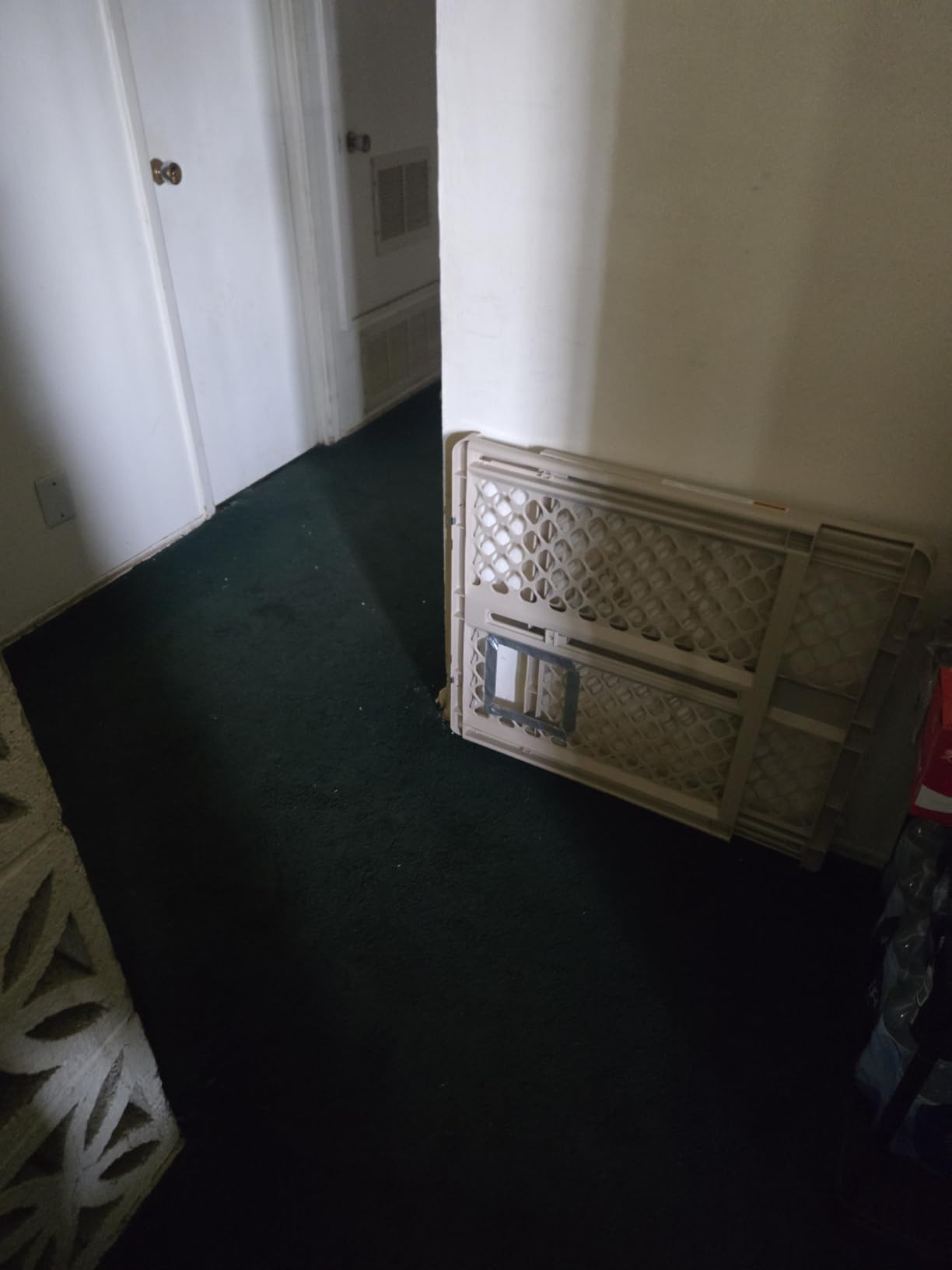
Owners value the low cost, the quick installation and the handle, and it is often bought as a spare or as a second gate rather than as a main barrier. It is JPMA-certified and made in the USA, which matters if you are buying second-hand or want a documented standard.
The lower rating relative to the metal gates reflects two real limitations. At 26 inch it is the shortest gate here, so a toddler who can already pull to stand is working with very little height to overcome. And plastic frames flex under pressure in a way steel does not, so a determined child leaning on it will move it more than a metal gate.
Because hardware mounting is available, you can screw it into a wall at the bottom of a staircase when you want permanence, and pressure mount it in a doorway when you do not. That versatility is genuinely useful, and it is why this gate remains in the roundup despite the low rating.
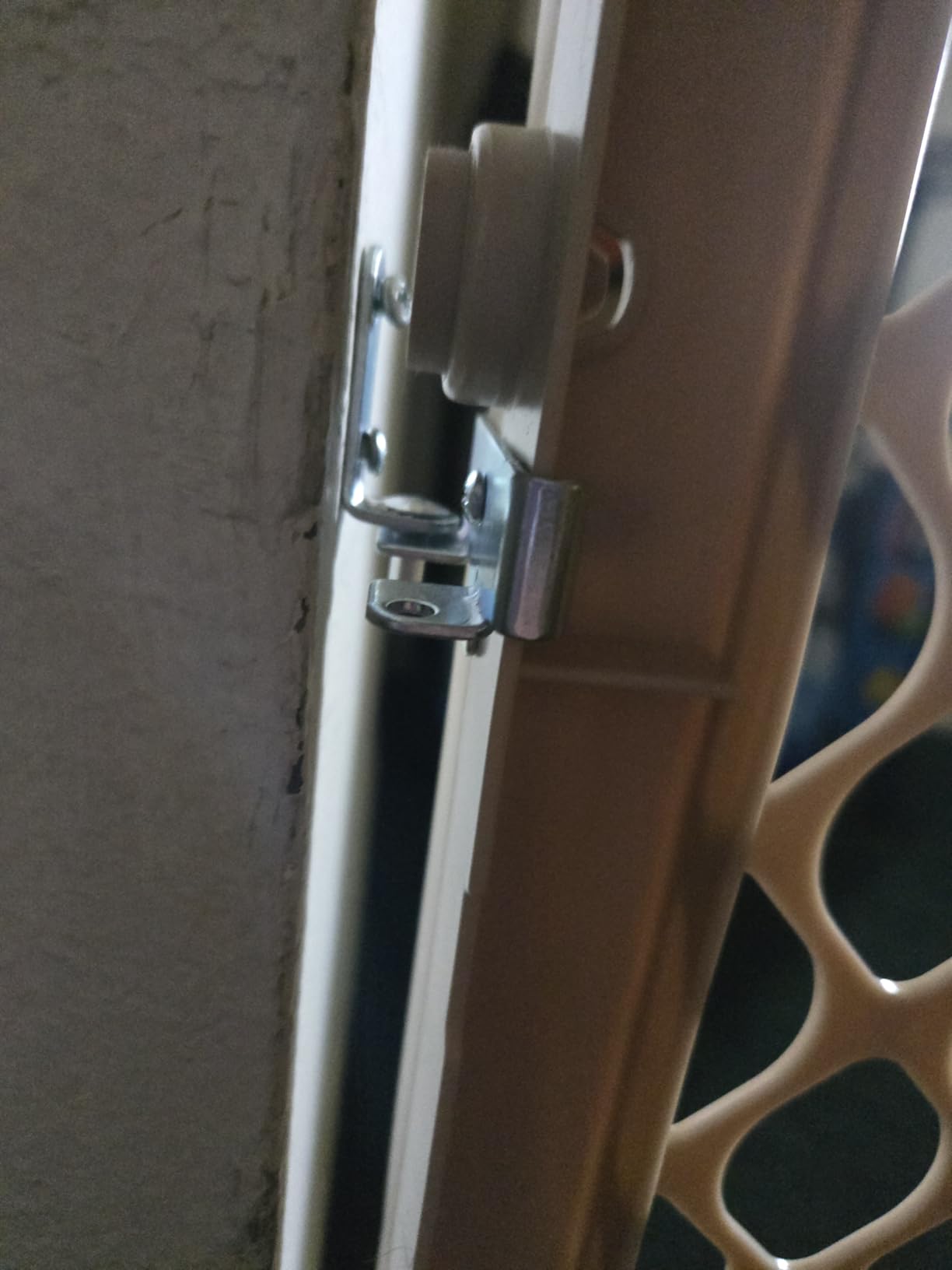
Best used as a second gate
The most common winning use is a second barrier: a bathroom door, a kitchen corner, a temporary block while you rearrange. At this size and weight you can move it in one hand, which is exactly what you want from a gate that is not the main barrier.
It is also a sensible gate to keep in the cupboard for a grandparent’s visit or a holiday stay, since it stores flat and needs no tools.
Not the gate for a climber
Twenty-six inches is low. A child who can climb a chair can work around this gate in a way they cannot work around a 34 inch one, and the plastic hinges give a comfortable handhold.
It is also the wrong choice for the top of a staircase. If pressure mounting is the only option at that opening, pick a different gate entirely and accept the extra install time.
7. BalanceFrom Easy Walk-Thru Gate: Best for Openings That Sit in a Narrow Range
BalanceFrom Easy Walk-Thru Baby Safety Gate, Fits 29.1″ to 33.8″ Openings
29.1-33.8 inch wide at 30 inch tall
Alloy steel with auto-close and hold-open
3-step controlled opening, 2-year warranty
Pros
- Fits its stated range accurately with no extension
- Auto-close and hold-open both work as described
- Alloy steel holds against dogs jumping on it
- 30 inch height stops most pets
Cons
- Narrow 29.1-33.8 inch adjustment range
- Instructions and the wire wrap are confusing
- Wobbles at the widest settings without wall cups
Every gate has a fit range, and most of them are optimistic about it. This one is not. The frame expands from 29.1 to 33.8 inch and genuinely fills that span, so if your opening falls inside the window you get a tight, rattle-free fit without buying extension pieces or shimming the gap.
It stands 30 inch tall in alloy steel, and it has both auto-close and hold-open modes, which is an unusual combination. The 3-step opening system means an adult has to perform a deliberate sequence before the gate gives, and a toddler cannot stumble into it while pulling on the bars.
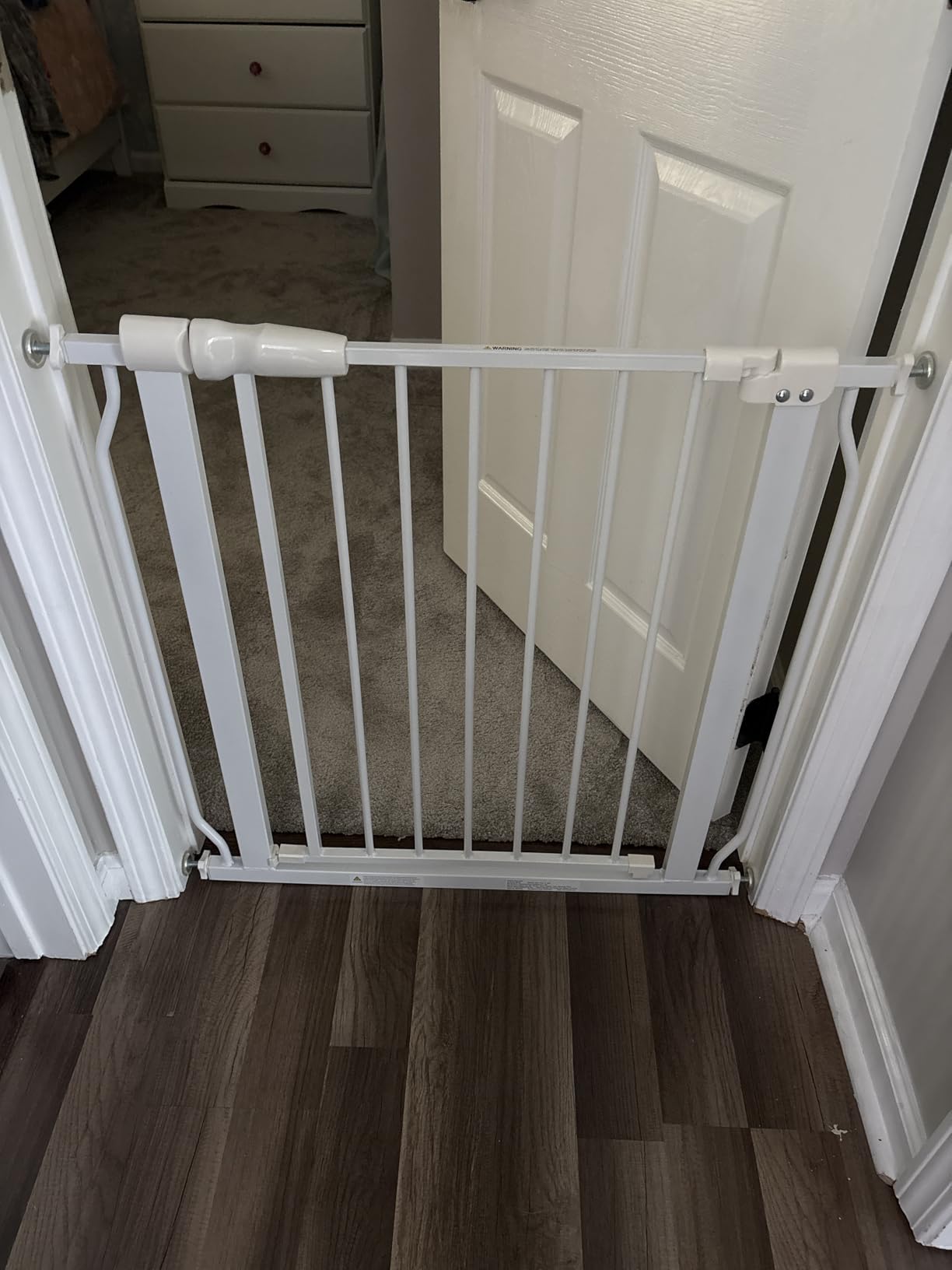
Reviewers like the accurate sizing, the sturdy alloy steel and the auto-close and hold-open combination, and several describe it as strong value used for both babies and dogs. The recurring caveat is installation confusion, particularly the wire wrap that holds the frame together, which is not intuitive from the instructions.
If you are not handy, budget an extra fifteen minutes. Read the hardware list before you start, and if the wire wrap is unclear, search the listing for a customer-submitted installation photo rather than guessing. A gate assembled incorrectly will never sit square, and a square gate is the whole point of this model.
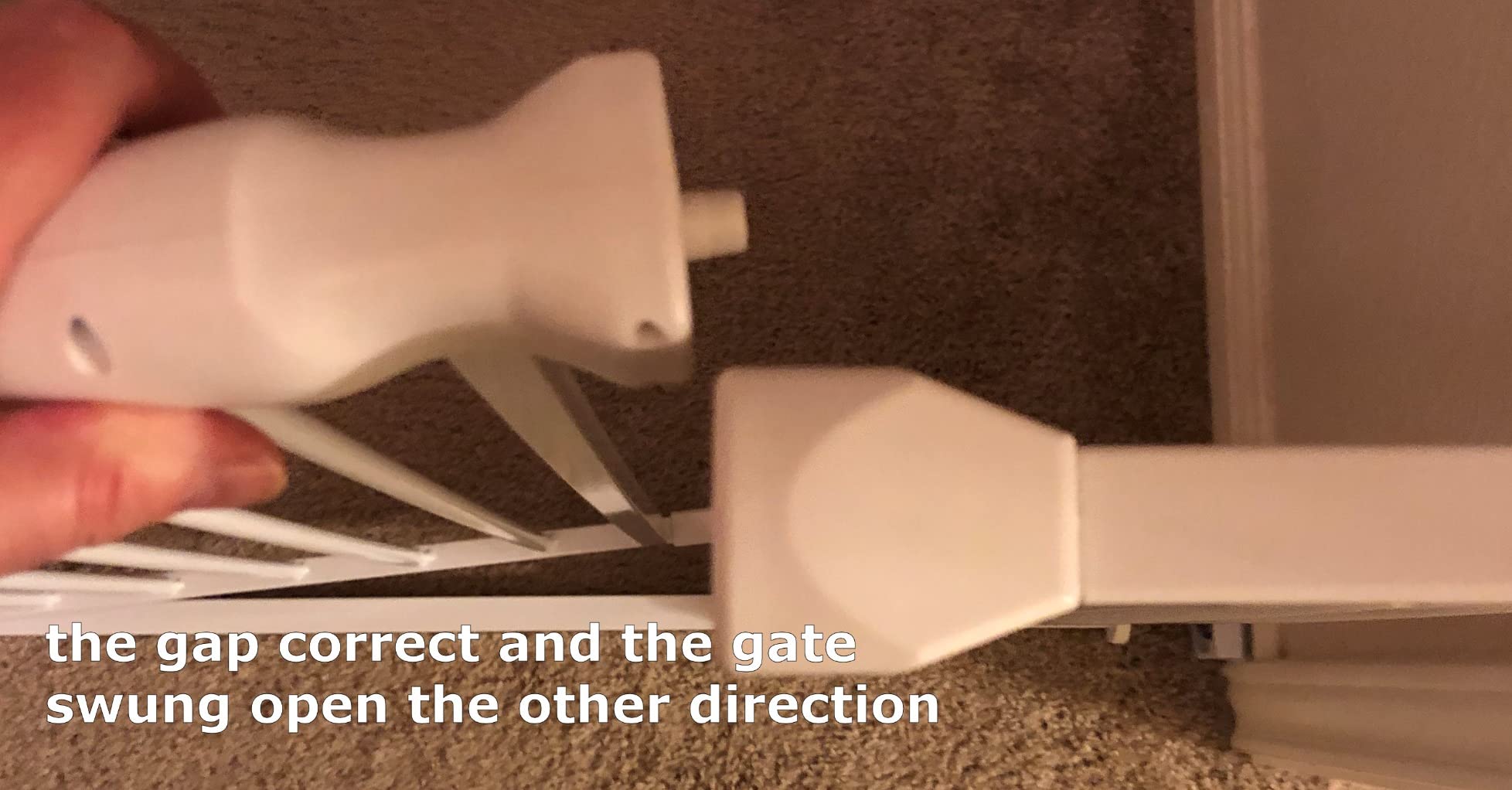
The wobble that reviewers mention at the widest settings is fixed by wall cups. Without them, the pressure feet have less contact with the frame and the top of the gate moves. If your opening is near the top of the range, add cups.
Where the tight range helps
Standard interior doorways in older homes cluster around 30 to 32 inch, which is exactly the awkward zone where many wide-range gates skip or pinch. This one is built for that band and does not need extensions.
The 30 inch height is also tall enough to stop most medium dogs, which is why so many owners use it as a pet gate as well as a baby gate.
When the range is a problem
Measure first. If your opening is under 29 inch or over 34 inch, this gate will not do the job, and there is no extension kit to solve that. Most of the disappointment in reviews traces back to buying it for a wide doorway.
The 2-year warranty is also the shortest cover in this roundup, which is worth knowing on a part that relies on a wire wrap and a spring.
8. Toddleroo Deluxe Decor Hardware-Mounted Gate: Best Looking and Most Versatile
Toddleroo by North States – Deluxe Décor Safety Gate: Hardware Mounted Extra Wide Metal Baby Gate – Adjustable Child Gate – 38.3 to 72 Inches Wide – 30 Inches Tall – Matte Bronze
Hardware mounted, 38.3-72 inch wide
30 inch tall with a 25.5 inch walk-through door
Pivot joints for angled walls, matte bronze finish
Pros
- Highest rated gate here with a finish that looks like furniture
- Screw-fixed and will not be pushed loose
- 25.5 inch door is genuinely walk-through sized
- Detaches from the mounts to clear a whole opening
Cons
- Needs studs
- drywall anchors are not included
- Lower brackets can conflict with baseboards
- Single-button release is learnable
This is the gate that convinces people babyproofing does not have to look institutional. The matte bronze finish reads as decor rather than safety equipment, and the wide walk-through door is 25.5 inch across, which means you can carry a laundry basket, a vacuum, or a sleeping toddler through without squeezing sideways.
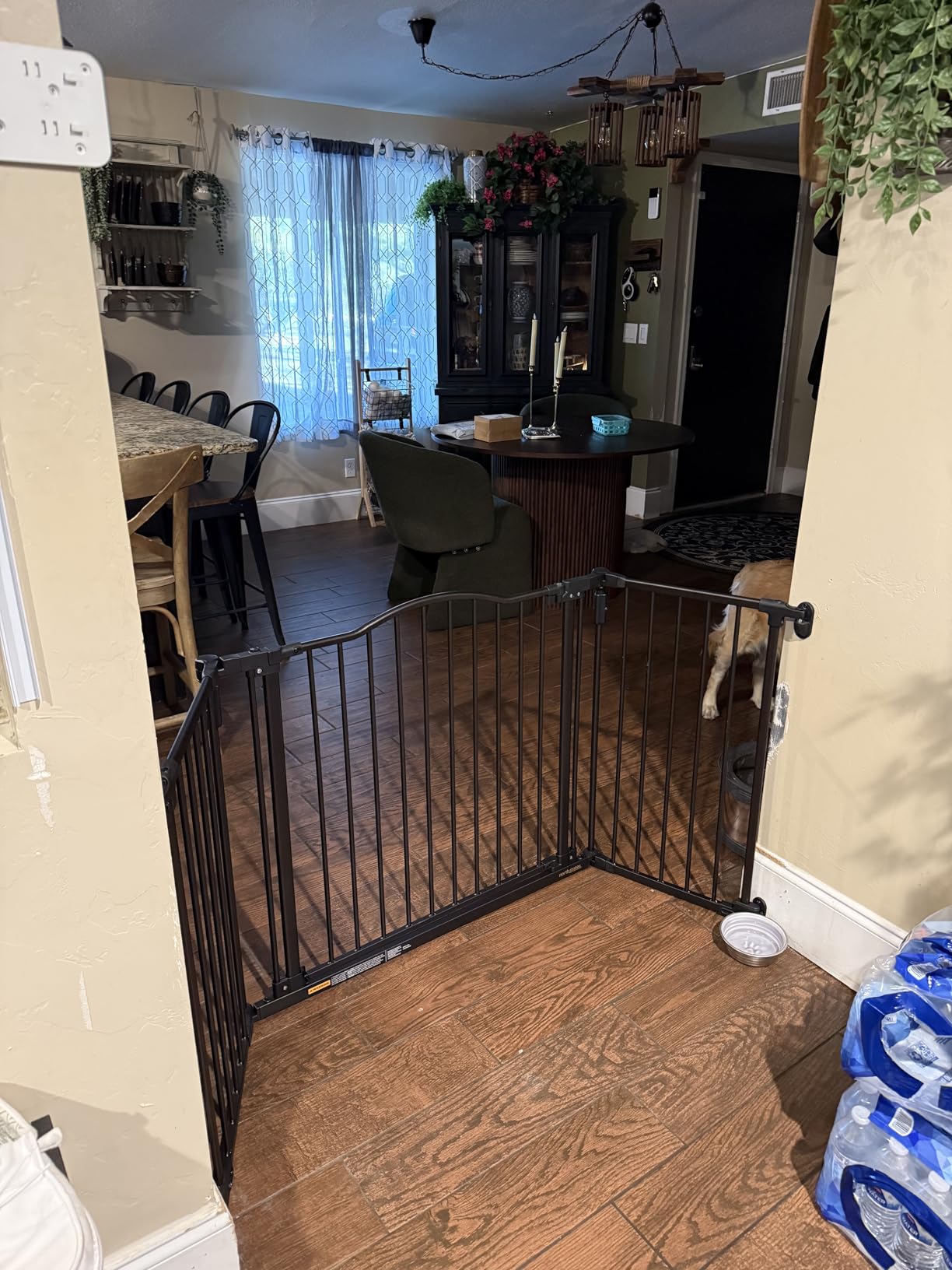
It adjusts from 38.3 to 72 inch and stands 30 inch tall, and the pivot joints between panels let the gate sit on straight or angled walls. That makes it unusually good for a wide, slightly out-of-square opening, and further extensions expand the run out to 162 inch if you are dividing a large open-plan space.
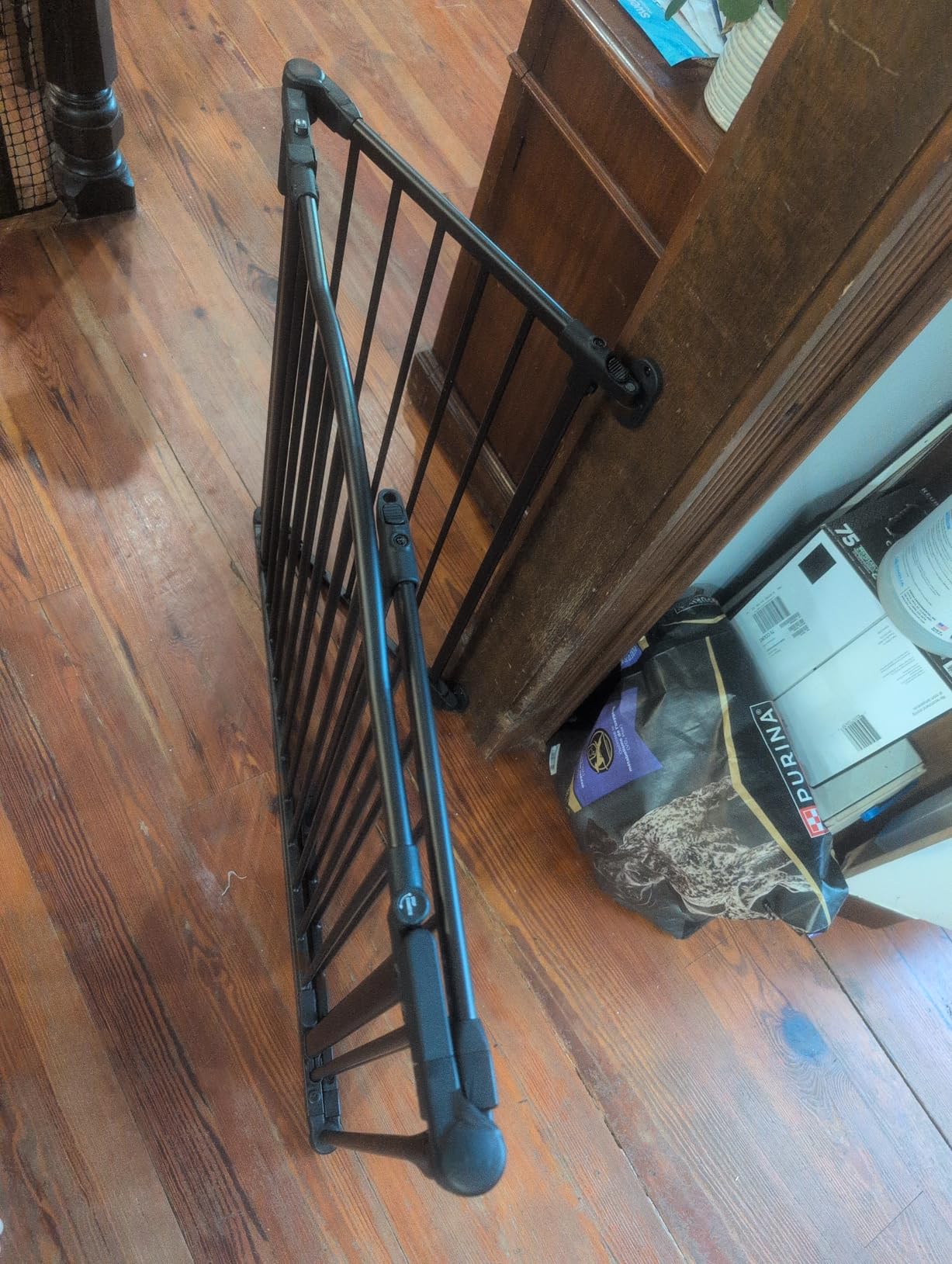
Owners frequently describe it as the best-looking and most solidly built gate they have owned, and reviewers who use it as a hearth or porch guard are especially pleased. Because it detaches completely from the wall mounts, you can lift the whole gate off when you need the opening clear for furniture or a party.
It is hardware mounted into studs, and drywall anchors are not included, so you need to find studs with a detector or a stud finder app before you start. If your baseboards project far enough to clash with the lower brackets, you will need to scribe or trim, which is the most common installation snag owners report.
The two-step locking handle opens one-handed and resists children, though some reviewers note the single release button is something a determined toddler could learn. Test it occasionally. If a four-year-old can operate it reliably, that is your signal to move up to a taller or more complex latch rather than to keep refreshing the review.
What the price pays for
It is the most expensive gate in this roundup, and the spend buys three specific things: a screw-fixed installation that will not move, a pivot-jointed frame that handles awkward geometry, and a finish you are not embarrassed to look at every day.
For a main hallway opening or a fireplace hearth, those three things are worth paying for. For a standard 32 inch doorway, they are overkill.
Installation realities
Plan around studs, not drywall. A 15.8 pound gate hung on drywall anchors will eventually work itself loose, and that is a heavy object falling next to a toddler.
Check your baseboard depth before ordering, and check whether the lower bracket sits proud of the floor where a threshold trim is present.
9. Cumbor 37-55 Inch Retractable Mesh Gate: Best for Closing the Crawl Gap Under a Retractable Gate
Cumbor 37-55″ Retractable Baby Gates for Stairs & Doorways, Indoor Outdoor
Retractable mesh spanning 37-55 inch at 34 inch tall
Solid bottom rod travels with the gate
Metal rings clamp the mesh for anti-crawl sealing
Pros
- Moving bottom rod keeps the floor trip-free
- 34 inch height makes climbing difficult
- Hardware mount is stronger than a pressure retractable
- Double-lock one-hand release
Cons
- Requires drilling and hardware installation
- Smaller review base than the metal gates
- Mesh needs careful tensioning to seal
Most retractable gates solve the trip hazard by leaving a gap at the bottom, and that gap is exactly what a crawling baby is looking for. This one closes it differently. A solid bottom rod travels with the gate as it rolls, and metal rings clamp the mesh down along that rod, so there is no fixed bar across the floor and no open channel to crawl through.
It spans 37 to 55 inch and stands 34 inch tall, which makes it the second tallest gate in the roundup. Height matters more than most buyers expect: a taller gate simply gives you more months before your child is tall enough to consider climbing it, and 34 inch holds off that conversation for most families well past the crawling stage.
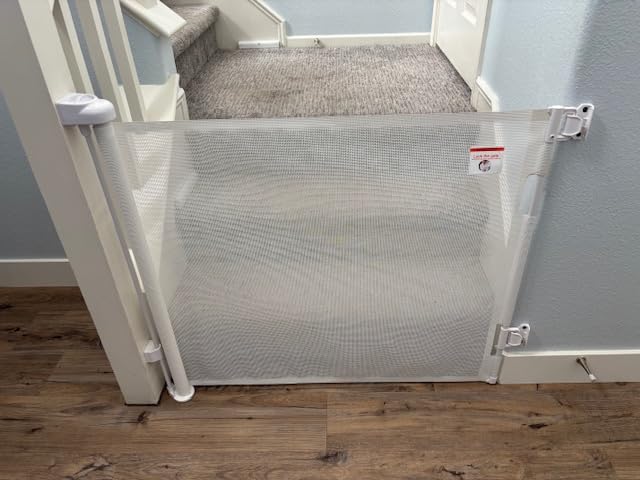
It is hardware mounted, and the brackets are designed to clear baseboards, which removes one of the usual reasons a retractable gate ends up badly installed. The double-lock press-down-and-turn release operates one-handed and is meaningfully harder for a child to defeat than a simple sliding latch.
Buyers respond to the height and the space-saving retraction. The main consideration is installation, since this is a drilling job rather than a lean-and-click one. The mesh also has to be tensioned properly for the anti-crawl seal to do its job, and tensioning takes a little more care than the diagrams suggest.
It is also a newer listing with a smaller review base than the established metal gates, so treat the long-term durability picture with proportion. Nothing in the reviews suggests a problem, but you are buying on less history than the Regalo and Safety 1st gates offer.
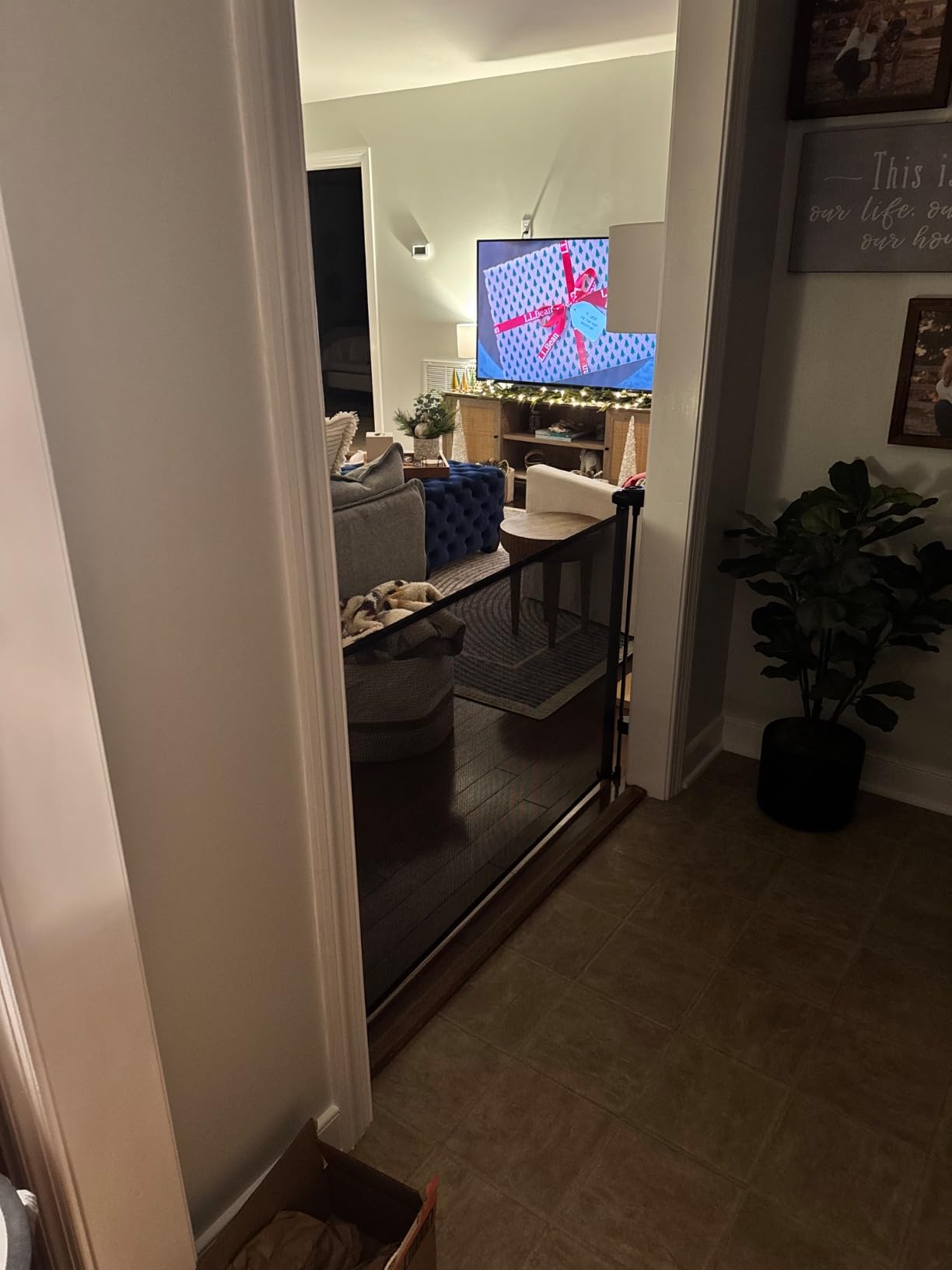
How the moving rod solves the crawl gap
Because the rod travels with the retracted gate, there is no moment when a fixed rail is waiting on the floor for an ankle. The mesh is clamped to that rod, which also removes the slacked lower edge that lets a determined baby flatten the mesh and slip underneath.
For a stair landing where adults move through carrying things, this is the combination we would want: no floor bar, and no crawl space.
What to weigh before installing
This gate is for a mounting surface you can drill into. If you rent, or the wall is a hollow partition, plan on the pressure-mounted options earlier in this list instead.
At 34 inch tall with a mesh face, expect to re-tension the mesh every year or so in a high-traffic opening, and check the rings while you are there.
10. Toddleroo Extra-Wide Wire Mesh Wood Gate: Best for Walls That Must Stay Clean
Toddleroo by North States – Extra-Wide Wire Mesh Wooden Baby Gate: Pressure Mounted Baby Gate for Doorways – Adjustable 29.5 to 50 Inches Wide – 31 Inches Tall
Pressure mounted, 29.5-50 inch wide at 31 inch tall
Hardwood frame with vinyl-coated wire mesh
No-marking rubber bumpers, arrives assembled
Pros
- Goes up and comes down in seconds
- Never marks walls
- stairs or banisters
- 29.5-50 inch range needs no extensions
- Natural wood hides dust
Cons
- Light duty against a strong toddler who climbs
- Wooden lever adjustment is stiff
- Lock takes practice to release
- Included tape pads are poor
This is the answer for anyone who rents, lives in a period property with painted trim, or simply refuses to have rubber feet mar their walls. The no-marking rubber bumpers contact the wall and the door frame without transferring pressure in a way that shows, and the whole gate arrives fully assembled so there is no build step to get wrong.
It adjusts from 29.5 to 50 inch in a single unit, which is unusually wide for a pressure-mounted gate and removes the need for extension pieces. At 31 inch tall with roughly 4 cm mesh openings, it is tall enough and fine enough for infants and small pets.
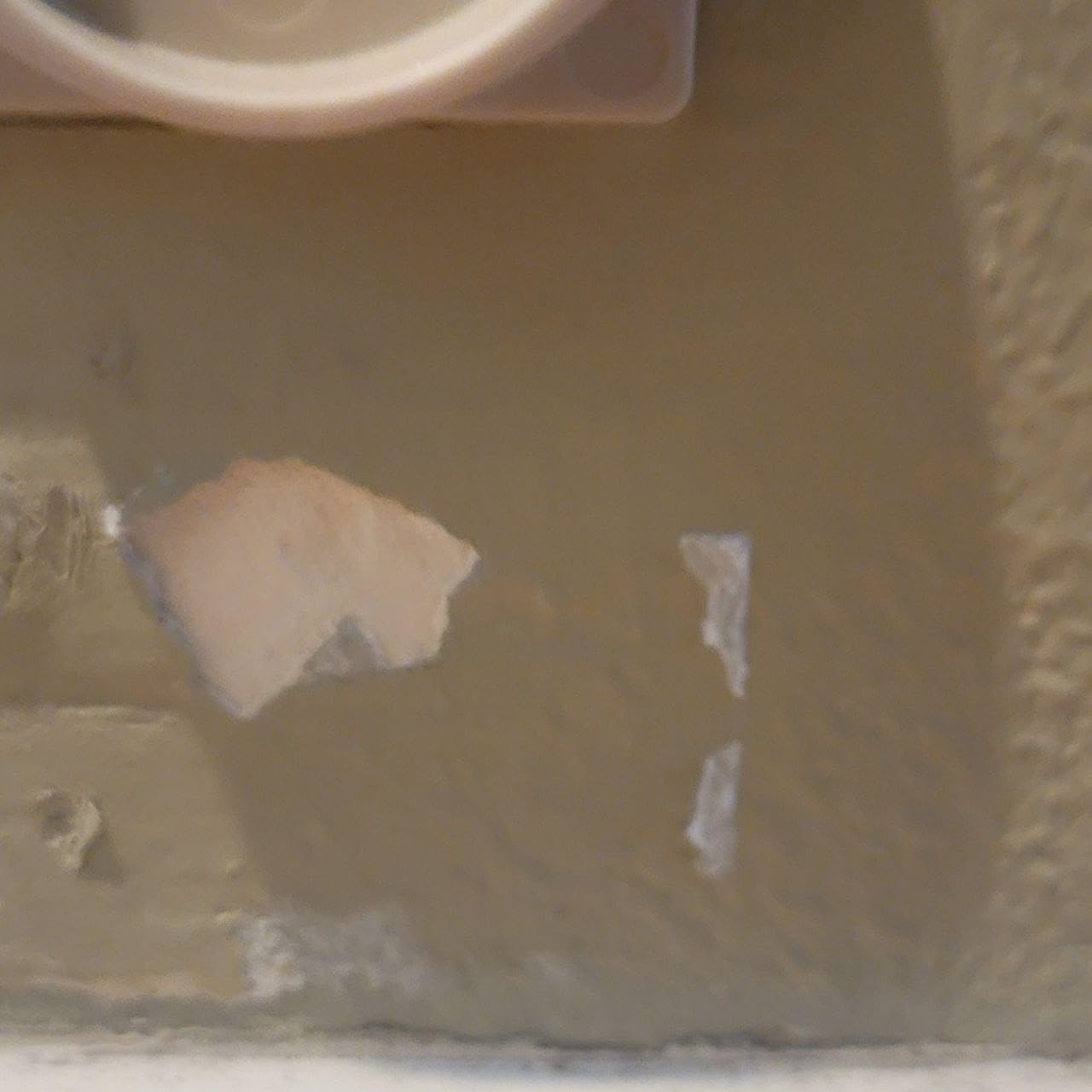
Long-term owners praise how quickly it goes up and comes down, how it never marks walls, and how the wider-than-most adjustment range makes it a single purchase rather than a starting point. It is JPMA-certified and made in the USA.
The consensus limitation is that this is a light-duty gate. It suits infants, younger toddlers and pets, but it is not the gate for a strong child who pushes, climbs or hangs body weight on the top rail. The wooden lever adjustment is stiff and not easy to change on the fly, which matters if you are moving between several openings regularly.
The included double-sided adhesive pads are the one component we would skip. Quality is poor and they often fail to release cleanly, which is ironic on a product marketed partly on not leaving marks. Use the mechanical hooks instead, or your own removable pads, and you will get the clean removal behaviour the design promises.
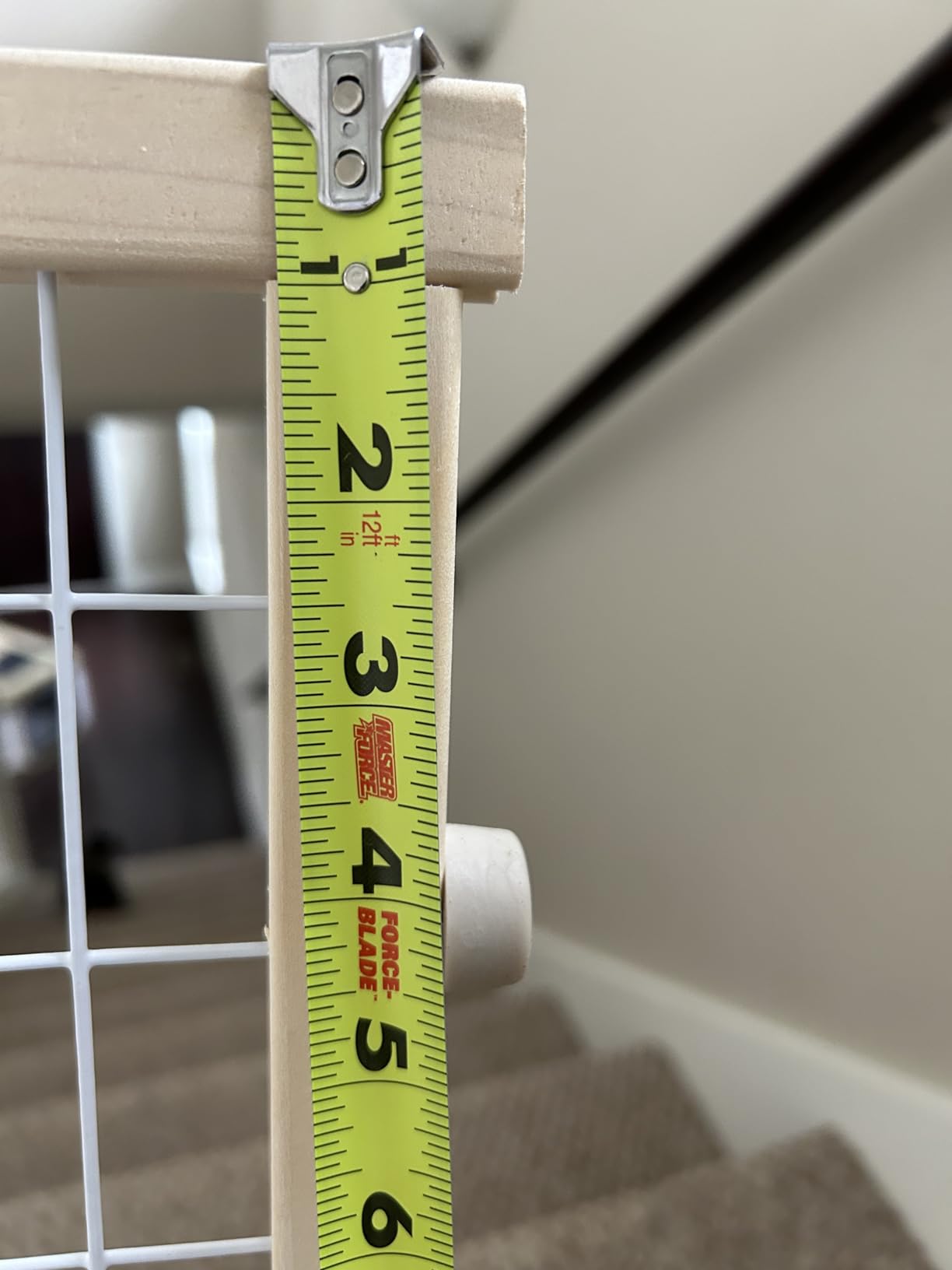
When no-marks matters most
Rental agreements, freshly painted hallways and period trim are where pressure gates show up in complaints. Rubber bumpers and corner protection solve most of that, and this gate ships with the bumpers already fitted.
It is also a good gate for a holiday visit or a second home, since it collapses to nothing and reassembles without tools.
What gives way under pressure
Light-duty is not the same as unsafe for a baby, but it does mean the gate moves. A toddler who can climb a chair will get over this one sooner than over a steel gate, and the levers are stiff enough that you will not be resizing it weekly.
If you want this look and this installation method but a tougher build, check the wall-mount hardware option and add your own screws rather than relying on the adhesive pads.
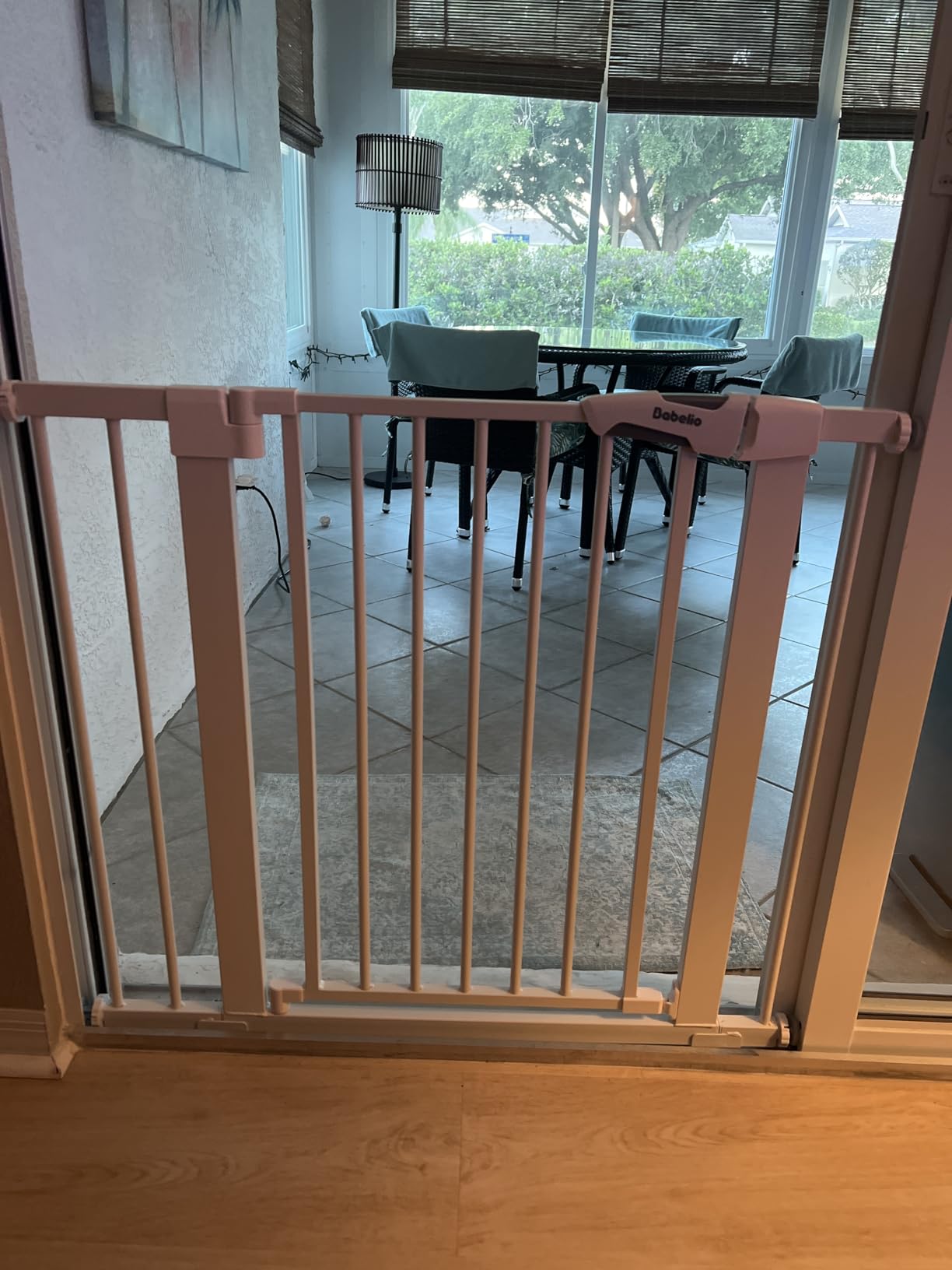
11. Babelio PressGuard 26-40 Inch Gate: Best for a Latch That Resists a Determined Toddler
Babelio 26-40″ Pressure Mounted Baby Gate for Stairs, PressGuard Dog Gate
26-40 inch wide at 30 inch tall
Triple-lock requires pressing both buttons and lifting
Auto-close below 90 degrees, tested to 260 N
Pros
- Triple-lock is genuinely hard for toddlers and dogs
- Auto-close and 180 degree two-way swing work reliably
- Pressure install does not damage the wall
- Wide wall cups spread pressure
Cons
- Must be lifted to open
- hard to use with muscle weakness
- One reported defective tension bolt
- Small plastic trim piece can break
The thing that makes this gate unusual is the triple-lock. You press the upper and lower buttons and lift, all at once, and a toddler simply cannot coordinate that sequence. Parents who have been through the stage of watching a three-year-old work out a simple sliding latch tend to rate this gate very highly for exactly that reason.
It fits 26 to 40 inch openings and needs 30 inch of height. The door auto-closes under 90 degrees and holds open at 90 degrees or wider, with a 180 degree two-way swing, so you can carry a laundry basket through without catching it on the frame. The manufacturer also states it was tested to 260 N of horizontal force against the 30 lbf ASTM F1004 minimum, which is a real number to compare against lighter rivals.
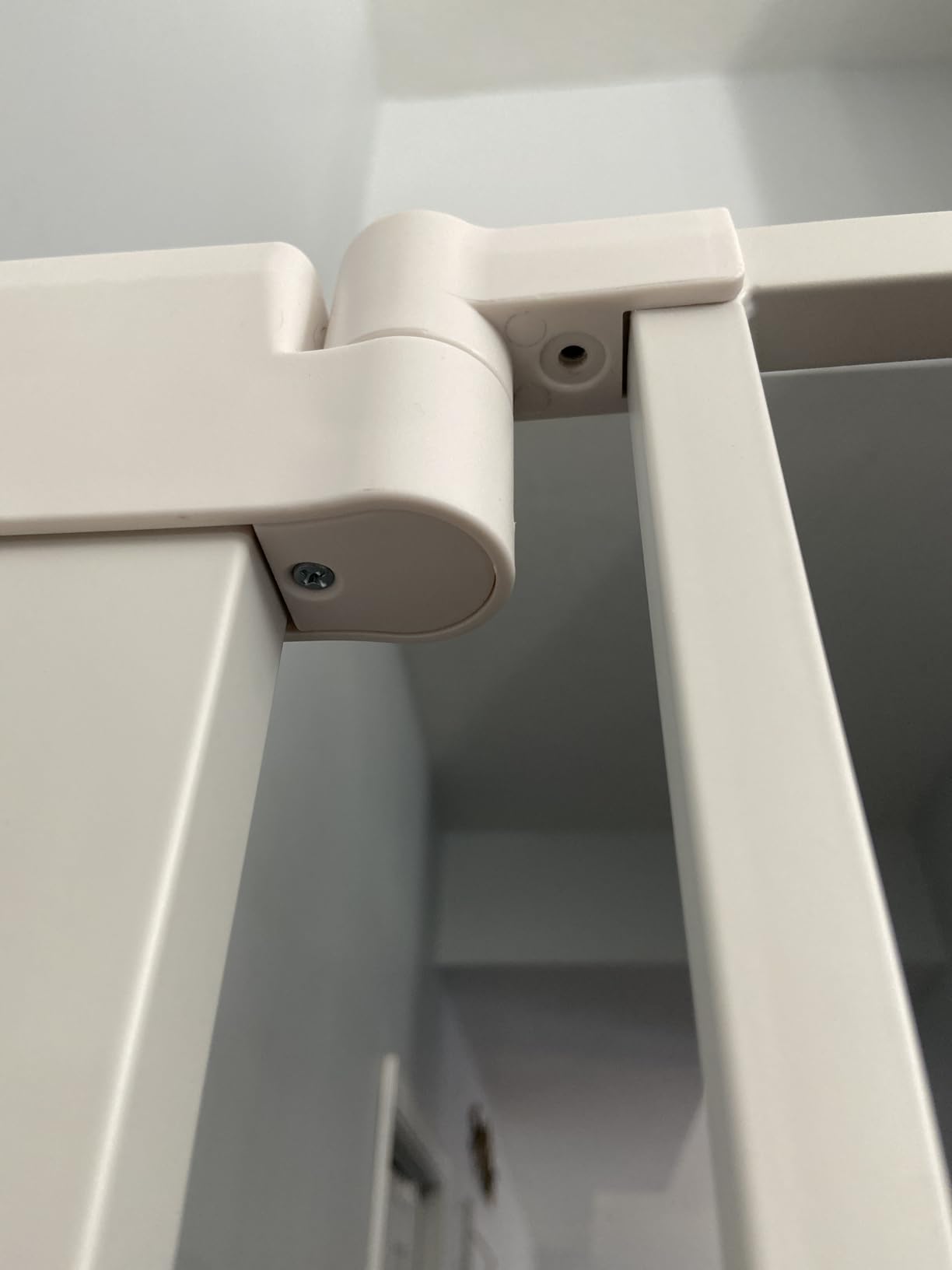
Owners who have owned many pressure gates single this one out for the most consistent auto-close and a lock that is user-friendly for adults but effectively child-proof. The wide wall cups spread pressure across the wall and the frame, which is a genuinely better answer to the wall-marking problem than a single small foot.
There are isolated complaints about a defective tension bolt that would not seat into the wall cup, a gate that lifted out of the hinge when opened fully, and a small plastic trim piece that broke shortly after installation. These are single-unit reports rather than patterns, but they are worth knowing about because a pressure gate is only as good as its mounting tension.
Hardware mounting is recommended for top-of-stairs use, so this is one of the few pressure-formatted gates here that can be legitimately screwed into studs for that opening. The word stair in the product name is not, on its own, a rating, so confirm the installation method with the listing before you commit.
Why the lift action is the trade-off
A gate that must be lifted to open is harder to defeat and also harder for an adult with limited grip or strength. If you have a back or shoulder problem, or you are lifting a heavy toddler every time, test this mechanism in person if you can.
If you cannot, favour a slide-and-turn latch over a lift action, and accept that the lock is easier for a child to learn.
What the wide wall cups fix
They spread the mounting force over a larger area of wall and frame, which reduces scuffing and reduces the chance of the gate pulling itself loose over time. This is the single most useful answer we found for people who want a pressure gate that does not damage their walls.
Fit them properly, in both ends, every time. A gate mounted with one cup and one bare foot is worse than one mounted consistently.
12. InnoTruth 27-36.6 Inch Gate: Best for Narrow Doorways and Stroller Access
InnoTruth 27-36.6 in Wide Baby Gate for Stairs and Doorways, Black
27-36.6 inch wide at 28 inch tall
20 inch walk-through door with auto-close
Double-lock release, Y-bolts for banisters, bottom ramp
Pros
- Quick no-drill install with rubber caps that protect the wall
- Auto-close plus the ability to leave the door propped open
- Two-way swing with a 20 inch opening
- Fits narrow doorways other gates miss
Cons
- Bottom ramp is easy to step on
- One reported lock spring failure within a year
- A frame and latch gap can stay hard to close
- Must be lifted to open
This gate exists for the doorways nothing else fits. The range starts at 27 inch, narrower than most metal gates in the roundup, and tops out at 36.6 inch, so it covers the tight band between a standard interior door and a full-size frame. The walk-through door is 20 inch across, which is wide enough to push a stroller through without folding it.
It mounts by pressure or by hardware, and Y-bolts are included for wrapping around a round stair banister. The included bottom ramp is a thoughtful addition for anyone moving a pram or a laundry trolley across the threshold, though it is the part reviewers are most divided on.
The gate earns strong marks for a fast no-drill install that still feels solid at the bottom of a staircase, an auto-close door that can be propped open, and a narrow-doorway fit. Reviewers also note the rubber caps do an effective job of preventing wall damage, and many use the gate for dogs as well as children.
The bottom ramp is the recurring complaint. It helps a stroller and annoys adults, because it is easy to catch a toe on and it is not always flush with the floor. If you are not moving wheeled things through the opening, remove it. Several reviews also flag that a small gap at the frame and latch can stay hard to close on some units, and one reported a lock spring part failing within the first year.
At 28 inch tall it sits in the shorter group, so it is a crawling-baby gate more than a toddler gate. Like the others in its bracket, it is a pressure-formatted design, and a manufacturer recommendation for hardware mounting on stairs applies if you fit it at the bottom of a staircase.
What makes it fit awkward frames
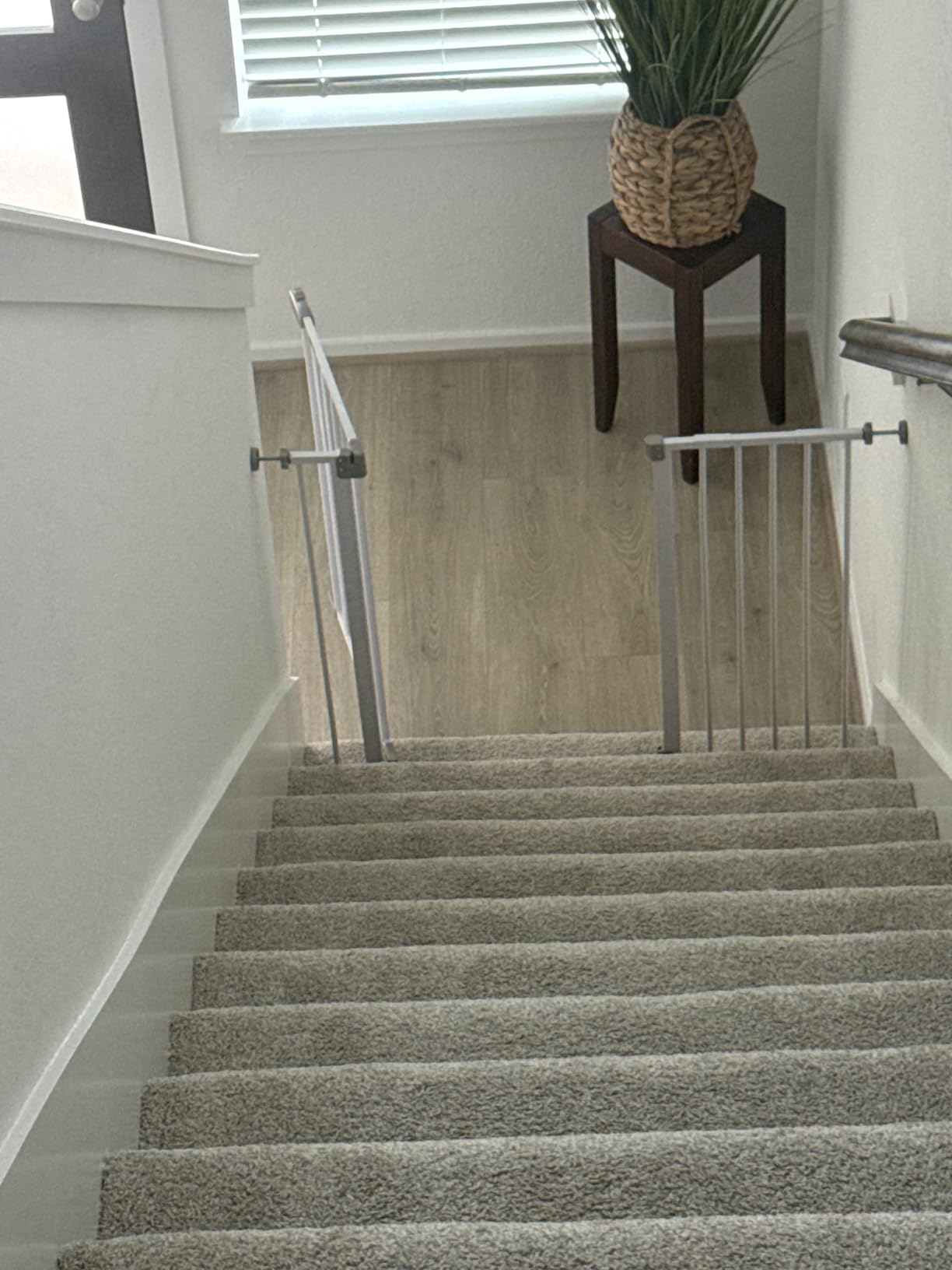
A 27 inch opening is a real problem in older homes, and gates that start at 29 inch simply will not go in. The Y-bolts solve the same problem on the stair side, where a round banister gives a pressure gate nothing to grip.
For a stroller user, the 20 inch door and the included ramp are the two features no other narrow gate in this roundup combines.
Watch these before you commit
Check the gap at the latch end after the gate has been tensioned for a week. If the door does not pull itself fully closed, treat it as a fault rather than a quirk.
The lift-to-open motion is worth testing if your grip is limited, and at 28 inch it will be outgrown by an active toddler sooner than a 30 or 34 inch gate.
How to Choose the Right Baby Gate in 2026
Most disappointing gates are not bad products. They are the right gate installed in the wrong opening, or fixed with the wrong method. Work through the location first, then the fit, then the latch, and the choice narrows quickly.
Which mounting type belongs in which room
Pressure-mounted gates are safe on level floors between two flat surfaces: standard doorways, hallways and the bottom of a staircase. They push against the frame with padded feet, they can be moved in seconds, and they mark paint if you skip the wall cups. Hardware-mounted gates are screwed into studs, a banister or a wall bracket. They do not move, they do not mark the wall, and they are the only acceptable choice at the top of a staircase.
Retractable mesh gates roll across the opening on wall brackets, so they save floor space and remove the fixed threshold bar, but they are only as strong as their mounting and they lose tension over time. Freestanding play yards build a boundary from panels that lock together on the floor, which makes them a room solution rather than a doorway solution. Our guide to the [best baby monitors with room temperature sensors](https://www.skrecords.org/best-baby-monitors-with-room-temperature-sensors/) covers the other half of a nursery setup, and our picks for [baby dressers with changing tops](https://www.skrecords.org/best-baby-dressers-with-changing-tops/) cover the furniture side of the same job.
The naming trap is worth stating plainly. A product called a stair gate is not automatically rated for the top of a staircase. Look for an explicit statement about top-of-stairs use, and if the listing is ambiguous, assume it means the bottom.
How to measure an opening before you order
Measure at the narrowest point, at three heights: top, middle and bottom, and take the smallest figure you find. Walls are rarely plumb, and the difference between a 34 inch frame and a 33 inch opening is the difference between a gate that fits and one that does not.
Then subtract the obstacles. Skirting boards, baseboards and architraves all reduce usable width, and a gate that fits the frame but not the trim is a common and expensive surprise. Measure the trim at its deepest point and add that thickness to the clear opening you need.
For reference, 29 inch is about 74 cm, 38 inch is about 97 cm, 46 inch is about 117 cm, and 72 inch is about 183 cm. Check the height as well: most of these gates are 26 to 34 inch tall, and a low gate is a short-term purchase.
The safety checklist that matters most
Look for certification. In the US market, JPMA certification and ASTM compliance are the markers to look for, and gates that carry a documented standard are easier to trust and easier to resell. Check the base of the gate or the packaging for the marking rather than trusting the listing photo alone.
Check bar spacing. Anything wider than about 2.5 inch can be crossed by a determined child, and many older wooden gates are well outside that. Check the gap under the gate too, and close any gap that exceeds about 3 inch. With mesh gates, check that the fabric is taut, because slack mesh is a crawl space.
Check the height against the child. The common rule of thumb is that the gate should stand at least three-quarters of the child’s height, with an absolute minimum in the low twenties, which is why a 26 inch gate is a crawling-baby gate. Finally, check the latch by watching whether a two-year-old can operate it. If they can, you do not have a locked gate, you have a suggestion.
And on latches specifically: the forum complaint we hear most often is not that a gate is easy to open, it is that a three- or four-year-old eventually learns the latch. Once that happens, a taller gate or a more complex lock is a better answer than a reminder to recheck it.
Gates that will not mark your walls
Three things prevent marks. Rubber bumpers or corner bumpers on the pressure feet spread the load and protect paint. Wall cups on both ends stop the gate from being pulled off the frame and dropped, which is how most scuffing actually happens. And removable mounting hardware, such as hook-and-loop pads or a banister kit, lets you take the whole gate down without tools or residue.
Among the gates here, the wood mesh model and the wide-cup pressure gate do the best job of protecting finishes, and the two retractable gates never touch the wall surface across the opening at all. Whatever you choose, do not stack gates, do not extend a pressure gate past its rated range, and never use a pressure gate at the top of a staircase to save an afternoon of drilling.
When to start and when to retire a gate
Most households install the first gate at the crawling stage, and the equipment list for that period is already large, so our picks for the [best video baby monitors for nurseries](https://www.skrecords.org/best-video-baby-monitors-for-nurseries/) and the [best baby dressers with changing tops](https://www.skrecords.org/best-baby-dressers-with-changing-tops/) usually arrive around the same time.
Retire a gate when the child can open the latch, when they can climb over it consistently, or when they are simply too tall for it to mean anything. Most families reach that point between two and three years old, and the correct move is to take the gate down rather than leave a decorative obstacle in a doorway.
On second-hand gates, the same markings apply: check for a JPMA or ASTM mark on the frame, check the latch and the hinges for damage, and be sceptical of any gate with no visible standard marking at all. Forum buyers regularly report that second-hand gates are a coin flip on which latch mechanism you inherit.
Frequently Asked Questions
What is the safest type of baby gate?
A hardware-mounted, screw-fixed gate is the safest type, and it is the only style that should be used at the top of a staircase. Pressure-mounted gates push against the frame with padded feet and can shift when a child leans on them, which is a fall risk at a stair landing. At the bottom of a staircase or in a level doorway, a pressure-mounted gate is safe when it is fitted with wall cups.
How safe are pressure mounted baby gates?
Pressure-mounted gates are safe on level floors between two flat surfaces, such as a standard doorway or a hallway, provided they are installed with the wall cups supplied. They should never be used at the top of a staircase, and they can mark paint or skirting boards if fitted without bumpers. Check the bar spacing is no wider than about 2.5 inch and that the gap under the gate is closed.
Which pressure-mounted baby gate is the best?
The best pressure-mounted options depend on the opening and how often the gate is used. For a standard doorway, the Regalo Easy Step is the strongest all-round choice, with an all-metal frame and a walk-through door. For a doorway that slams constantly, the Cumbor auto-close model suits busy kitchens. For lock security, the Babelio triple-lock model is the hardest for a toddler to open.
What are the best baby gates that do not damage walls?
Gates with no-marking rubber bumpers and wide wall cups cause the least damage, and retractable mesh gates cause almost none because they fix to narrow brackets rather than pressing across the opening. The Toddleroo extra-wide wire mesh wood gate ships with no-marking bumpers, and the Babelio pressure gate uses wide wall cups to spread the load. Always fit both wall cups rather than relying on the pressure feet alone.
Do retractable baby gates actually work?
Retractable gates work well in low-traffic openings and save significant floor space, with the advantage that many of them have no fixed bottom bar to trip over. The trade-offs are mesh that can slacken over time and create a crawl gap, and locks that can be harder to operate one-handed in wide openings. Look for designs with a moving bottom rod and anti-crawl mesh clamps if a crawling baby is the concern.
How do I measure a doorway for a baby gate?
Measure the narrowest point of the opening at the top, middle and bottom, and use the smallest figure. Then account for skirting boards, baseboards and architraves, which can each reduce the usable width by an inch or more. Compare that clear width against the gate’s stated adjustment range, and remember that some ranges skip widths in the middle, so check the specific figure rather than the minimum and maximum alone.
When should I stop using a baby gate?
Stop using a gate when your child can operate the latch, when they can climb over it consistently, or when they are tall enough that it no longer functions as a barrier. For most families that point arrives between two and three years old. The right move at that stage is to remove the gate from the doorway rather than leave an obstacle that no longer protects anything.
Can I use a second-hand baby gate?
A second-hand gate can be safe if it carries a visible JPMA or ASTM marking, has no damage to the hinges, bars or latch, and still locks firmly. Avoid any gate with no standard marking, bent bars, or a latch that has been painted over or modified. Many parents buy second-hand gates for a holiday visit or a second home, and the latch mechanism is the part most likely to have been superseded.
Which Baby Gate Should You Buy?
For most homes, the best baby gate in 2026 is the Regalo Easy Step. Its all-metal frame, one-handed walk-through door and 29 to 38.5 inch fit cover the single largest share of real doorways, and the huge installed base means replacement parts are easy to find when a plastic latch piece eventually cracks. Fit it with the wall cups, install it the right way up so the door swings where you need it, and it will serve two years without drama.
Buy something else when your situation is specific. A hardware-mounted screw-fixed gate is the only acceptable answer at the top of a staircase, and the Toddleroo Deluxe Decor is the strongest build if you want one that also looks like furniture. A retractable mesh gate removes the trip hazard of a floor bar if you carry a child through the opening often, and the Cumbor auto-close model is the one to pick for a kitchen doorway that is used all day.
Whatever you choose, measure the narrowest point of the opening first, check the bar spacing and the gap under the gate, and install the wall cups. Those four minutes decide whether a gate stays a safety device or becomes one more thing to worry about.