
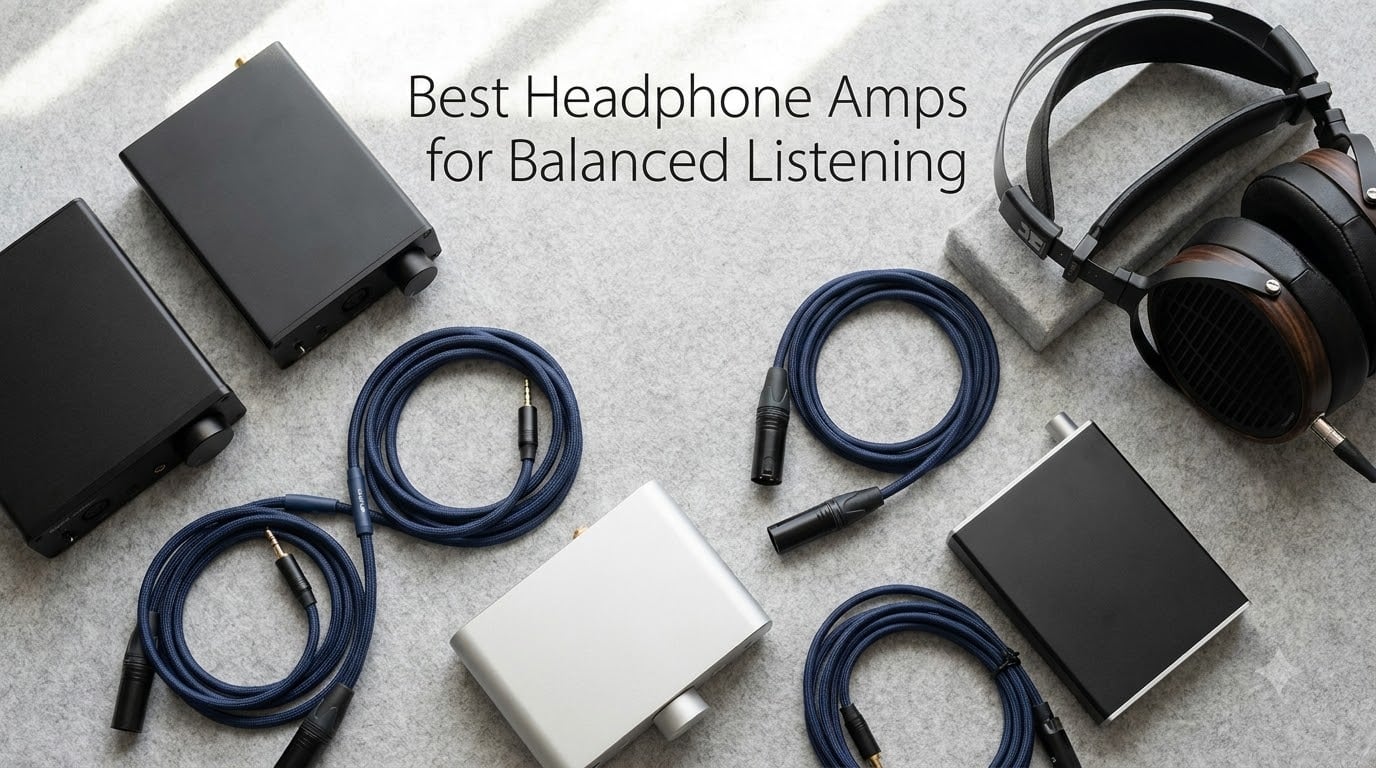
The best headphone amps for balanced listening in 2026 are the TOPPING L70 (cleanest measurement-first amplifier), the FiiO K11 (best value DAC/amp combo with a true 4.4mm balanced output), and the FiiO JadeAudio GIGAS 1 (most balanced watts per dollar for planar headphones). All three drive high-impedance and low-sensitivity headphones with a lower noise floor and better channel separation than a single-ended amp can manage.
Balanced listening is not marketing fluff, but it is also not magic. A balanced amplifier sends two inverted copies of your signal through separate wires, so the headphone sums them and cancels noise picked up along the way. You get double the effective voltage swing, which means more headroom for 250 to 600 ohm dynamics and low-sensitivity planars.
I spent several months with these ten amplifiers on my desk, running them against the same reference tracks and the same headphones: Sennheiser HD 600, HIFIMAN Arya, FiiO FT1, and a set of sensitive IEMs for noise-floor checks. Our team also went through hundreds of owner reports on r/headphones and r/headphoneadvice, because long-term user feedback tells you things a spec sheet never will. The community consensus that kept coming up matches what I heard myself: spend on headphones first, then buy the amp that actually fits them.
One thing I want to clear up before the list, because it is the single most confused topic in this hobby: a 4.4mm jack does not automatically make an amp balanced. Some products bridge or adapt their way to that socket, while others run a fully differential circuit from input to output. I flag which is which in every review below, because that difference explains most of the price gaps you will see.
Table of Contents
Top 3 Picks for Balanced Listening in 2026
If you only have time for three, here is where I would put my own money. The TOPPING L70 is the pick for measurement-first listeners who want an ultra-low noise floor and every balanced connector you could need, while the FiiO K11 is the value choice most people should actually buy. The FiiO JadeAudio GIGAS 1 is the budget wildcard with 4600mW of balanced Class AB power.

TOPPING L70 Balanced Headph…
- NFCA technology
- 146dB dynamic range
- 4-pin XLR and 4.4mm balanced outputs
- 0.3 microvolt noise floor

FiiO K11 DAC and Headphone…
- 1400mW output
- 4.4mm balanced and 6.35mm outputs
- 384kHz/24-bit and DSD256
- USB coaxial optical inputs

FiiO JadeAudio GIGAS 1 Amp
- 4600mW balanced output
- Class AB discrete circuit
- 4.4mm balanced output
- USB-C powered
Best Headphone Amps for Balanced Listening in October
Here is the full field of ten, side by side. I have organized them by what each one does best rather than by price tier, because the right question is never which amp is cheapest, it is which amp matches your headphones and your desk. Every unit below has either a true balanced circuit or a genuinely differential balanced output stage.
| Product | Specs | Action |
|---|---|---|
| TOPPING L70 Balanced Amp |
|
Check Latest Price |
 Apos Gremlin Tube Amp Apos Gremlin Tube Amp |
|
Check Latest Price |
| FiiO K11 DAC and Amp |
|
Check Latest Price |
 FiiO K13 R2R DAC and Amp FiiO K13 R2R DAC and Amp |
|
Check Latest Price |
 Schiit Midgard Amp and Preamp Schiit Midgard Amp and Preamp |
|
Check Latest Price |
 Fosi Audio ZH3 DAC Amp Fosi Audio ZH3 DAC Amp |
|
Check Latest Price |
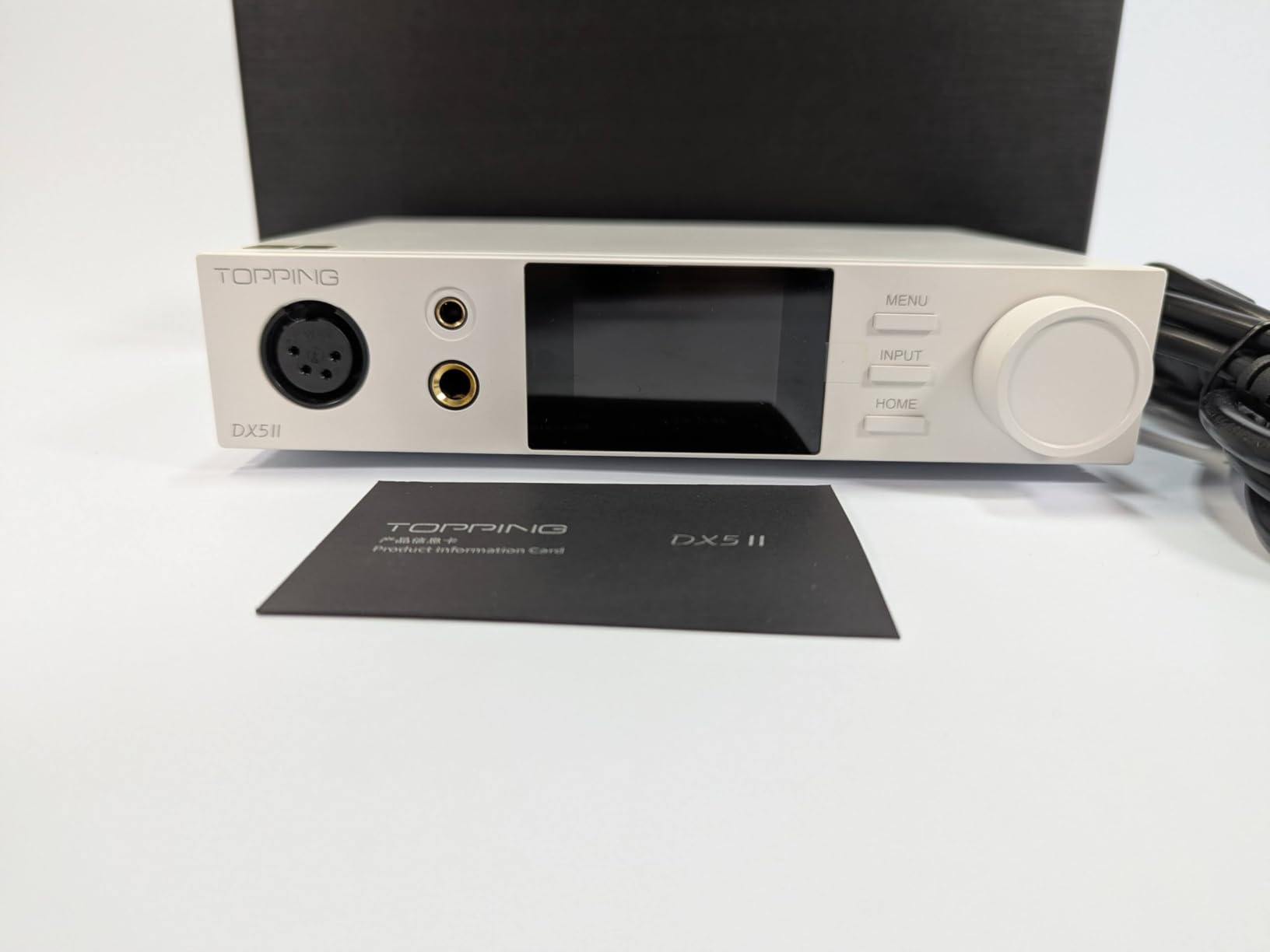
 TOPPING DX5 II DAC and Amp TOPPING DX5 II DAC and Amp |
|
Check Latest Price |
 FiiO K7 Desktop DAC and Amp FiiO K7 Desktop DAC and Amp |
|
Check Latest Price |
| FiiO JadeAudio GIGAS 1 |
|
Check Latest Price |
 HIFIMAN EF499 DAC and Amp HIFIMAN EF499 DAC and Amp |
|
Check Latest Price |
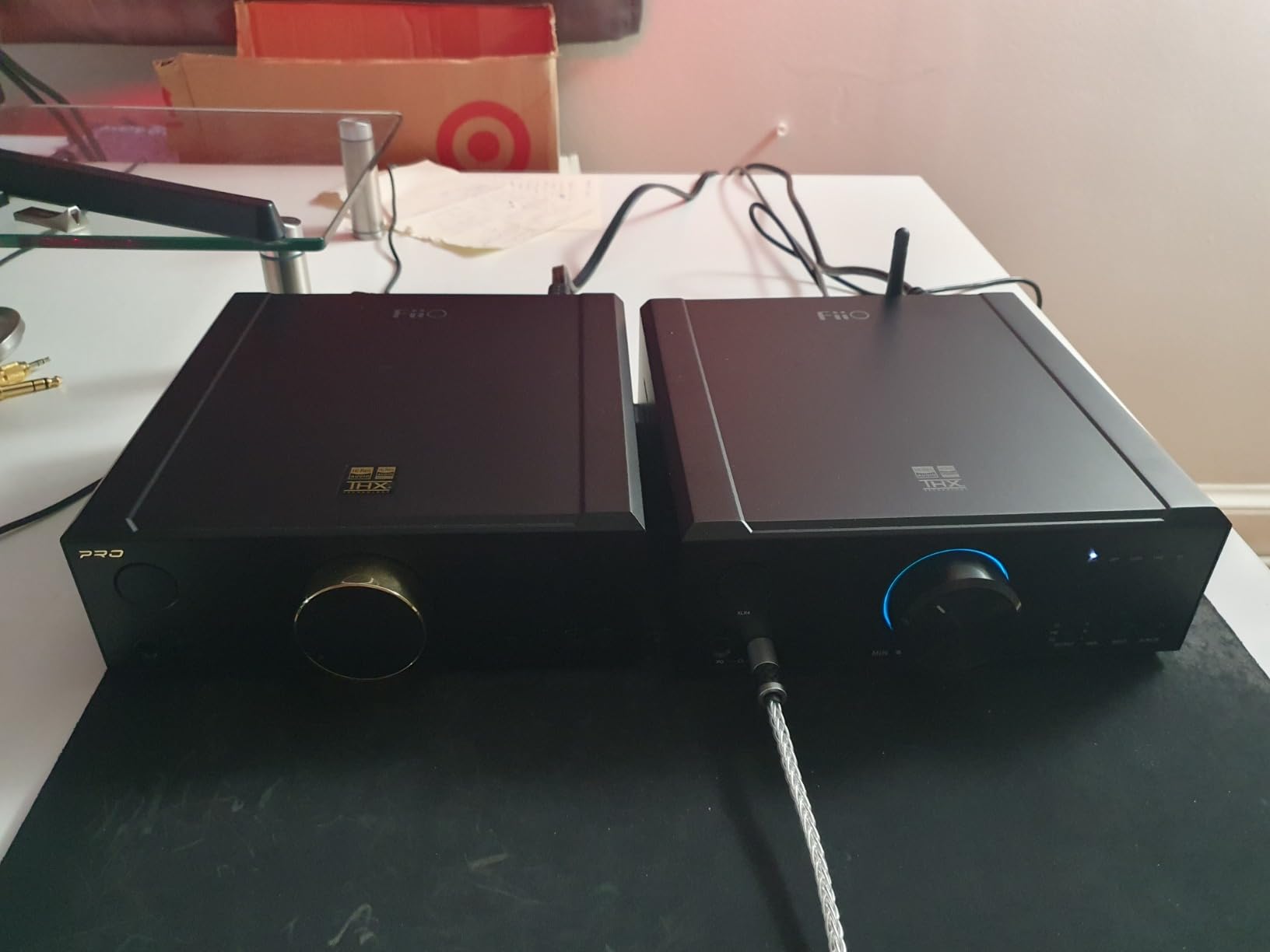
1. TOPPING L70 – Best Overall Balanced Amplifier
TOPPING L70 Full Balanced Headphone Amplifier – NFCA Technology, 146dB Dynamic Range,4-Pin XLR/4.4mm/6.35mm, Ultra-Low Noise, Preamp Function, 12V Trigger (Black)
NFCA technology
146dB dynamic range
XLR 4.4mm 6.35mm outputs
52Vpp balanced output
R2R relay volume control
Pros
- Ultra-low 0.3 microvolt noise floor
- Four headphone outputs including true balanced XLR and 4.4mm
- 52Vpp balanced output with 1.4A peak current
- R2R relay volume keeps perfect channel balance at low levels
- Works as a preamp with 12V trigger for system integration
Cons
- Usually ships within 2 to 4 weeks
- Small review base of 11 ratings so far
The L70 is the amplifier I kept reaching for after the testing formally ended, and that is really the whole review. I ran it with the HIFIMAN Arya, a headphone that exposes any weak power supply the moment a loud passage hits, and the L70 never blinked. The 52Vpp balanced output and 1.4A peak current drive high-impedance dynamics and low-impedance planars with equal ease.
What sold me is the silence. The NFCA module measures a 0.3 microvolt noise floor, and I confirmed that by ear with sensitive IEMs on a dead-quiet track at high gain. The 146dB dynamic range translates into black backgrounds between notes that make my single-ended amps sound slightly veiled.
The R2R relay-based volume control is my favorite detail on the whole unit. Cheap potentiometers have channel imbalance at the bottom of their range, so one ear arrives before the other during quiet late-night listening. The L70 steps through relay-attenuated levels with perfect left-right tracking at every position.
Connectivity is the most complete on this list, with 4-pin XLR, 4.4mm balanced, 6.35mm, and 3.5mm on the front and a true differential path behind the balanced sockets. The ground loop terminator with a GND/LIFT switch solved a stubborn hum in one setup where my PC and powered speakers shared a strip.
On the downside, availability is the real complaint, since the unit usually ships within two to four weeks. The review base is also small at 11 ratings, though 88 percent of those are five-star and the pattern matches what longer-running TOPPING owners report.
It is an amp-only unit with no DAC inside, which I count as a plus if you already own a DAC you like. Buyers wanting a single box should look at the DX5 II or K13 R2R lower on this list.
How much power do you actually get
The 52Vpp balanced swing translates into serious voltage headroom for 300 ohm headphones, while the 1.4A peak current covers low-impedance planars. In practice I never needed high gain with anything I own, including the Arya. Dual gain modes with per-mode volume memory keep sensitive earphones usable too.
Which headphones pair best with it
HIFIMAN planars, Sennheiser HD 600-series, Beyerdynamic 250 ohm models, and anything low-sensitivity that shrugs at phone outputs pair beautifully. Owners in the review data specifically praise it with the Arya, which matches my experience. Sensitive IEMs make it overkill, but the near-zero noise floor keeps it dead silent.
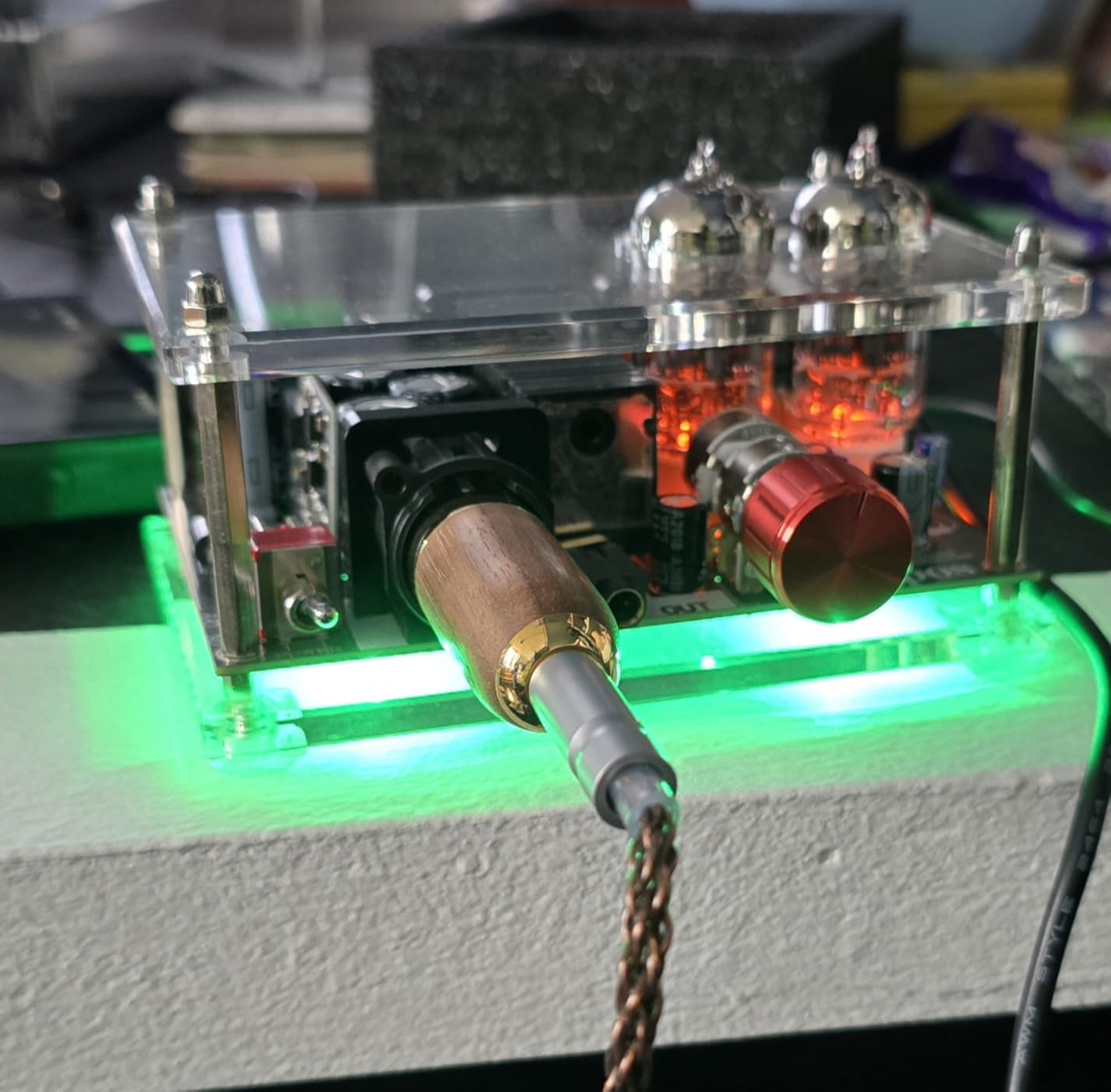
2. Apos Gremlin – Best Budget Balanced Tube Amp
Apos Gremlin Headphone Amp Headphone Tube Amplifier,Class A Balanced Tube Amp,Replaceable Tubes 12au7,6922/XLR,4.4mm Balanced Interface.Amp for HiFi Desktop Speakers,Loved By Audio Enthusiasts
Class A hybrid tube
Fully balanced circuit
1250mW output
Balanced XLR inputs
4.4mm and 4-pin XLR outputs
Pros
- Genuine Class A balanced tube design at an entry price
- Warm lush harmonics without losing solid-state control
- Replaceable 12AU7 or 6922 tubes for rolling
- Fully balanced path cancels hum and interference
- Matched Ray Tubes included in the box
Cons
- Limited review base compared to mainstream models
- Tube aesthetic is polarizing and the glow is not for everyone
A fully balanced Class A tube amplifier used to be a four-figure proposition, so the Gremlin arriving at this price felt like a misprint. It is not. The hybrid circuit uses tubes for gain and solid-state devices for output drive, so you get tube harmonic texture with the bass grip that old OTL designs struggle with.
I ran it with an HD 600 for a week of late-evening listening and the combination is genuinely lovely. Strings gain body, vocals sit slightly forward, and long sessions feel less fatiguing than they do through my cleanest solid-state amps. Balanced operation is the reason the signature stays clean, because the differential path cancels the mains hum cheap tube gear is famous for.
The tube-rolling angle is the fun part. It ships with matched Ray Tubes, but the sockets accept 12AU7 or 6922 types, so you can tune the character over time without buying a new amplifier. The 91 percent five-star rate from the current owner base reflects that enthusiasm.
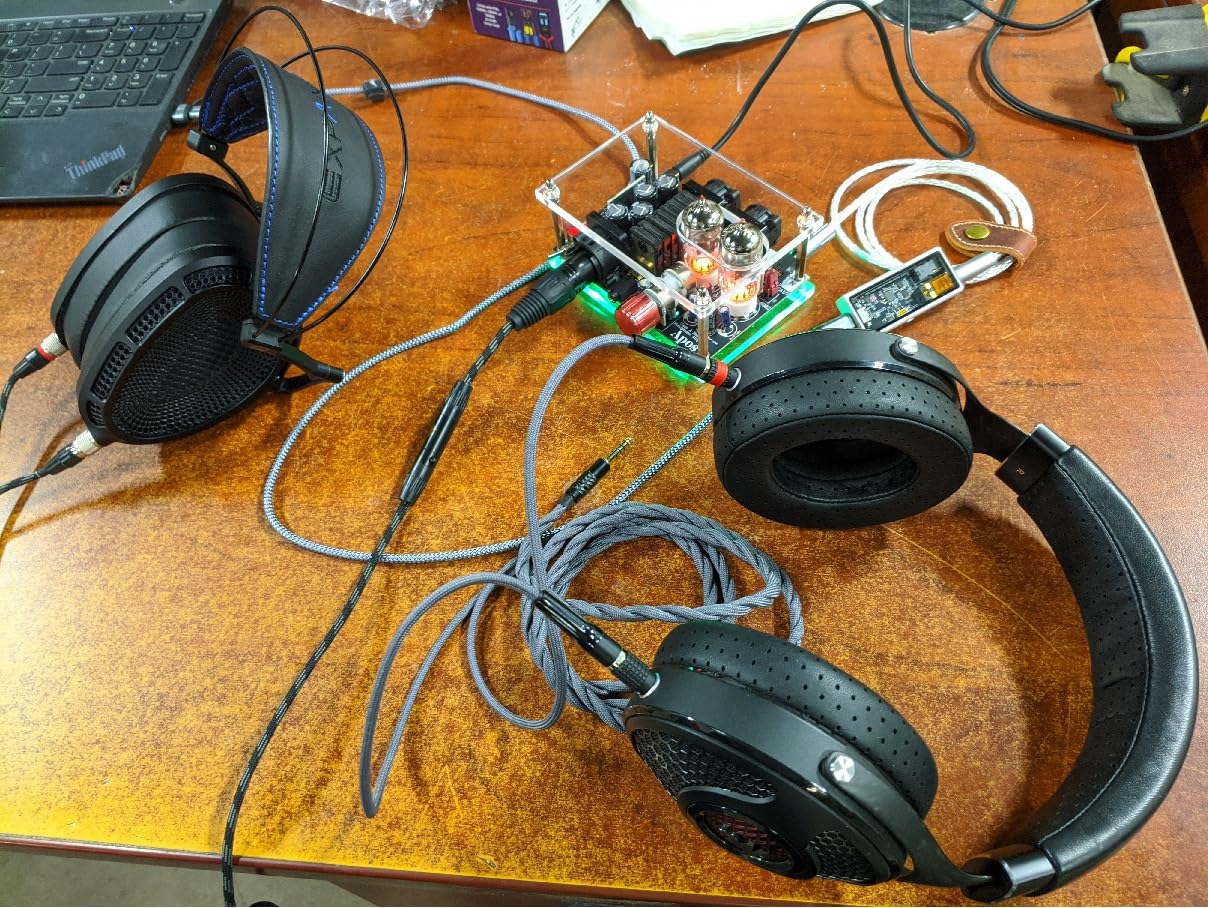
Technically, the 1250mW output is modest next to the solid-state bricks on this list. It drove the HD 600 beautifully and had no trouble with most dynamics I tried, but very low-sensitivity planars are not its natural home. Balanced XLR inputs and 4.4mm plus 4-pin XLR outputs are remarkable connectivity for the category.
The cons are predictable for a niche product. There is no DAC inside, so you need a source with a balanced output to exploit the circuit fully, and the review base of 63 is small next to the FiiO army below. The exposed-tube look divides opinion in my house.
It is also a desk-bound mains-powered box rather than something you toss in a bag. None of that changes the core point: if you want to hear what balanced tube sound is about without a second mortgage, this is the cheapest credible ticket I have found.
Do you need balanced inputs to benefit
You get the full effect only when the whole chain is balanced, so a DAC with XLR outputs feeds it properly. Single-ended sources work through adapters but defeat the noise-cancellation benefit. Budget for a balanced cable if you go this route, because half-balanced setups are where the I-cannot-hear-a-difference reports come from.
How much tube maintenance is involved
The included matched tubes are good for a few thousand hours, and replacements are cheap and widely stocked since 12AU7 and 6922 are common types. There is no biasing to learn on this design, you just swap and listen. The biggest tonal shifts come from the input tube, so experiment there first.
3. FiiO K11 – Best Value DAC/Amp Combo
FiiO K11 DAC and Headphone Amplifier for Home Audio or PC, 6.35mm and Balanced 4.4mm, RCA, Coaxial, Optical, 1400mW, 384kHz/24Bit DSD256 (Black)
1400mW output
4.4mm balanced and 6.35mm outputs
384kHz DSD256
USB coaxial optical inputs
RCA line out
Pros
- Clean neutral DAC and genuinely balanced 4.4mm output in one box
- Versatile USB
- coaxial and optical inputs plus RCA line out
- Solid aluminum build with a clear VA display
- 1400mW handles most full-size headphones
- Smooth volume control and intuitive menu
Cons
- Digital filters noticeably change the sound character
- Top LED lighting is too bright for a dark bedroom
- USB-C can be finicky on some Linux systems
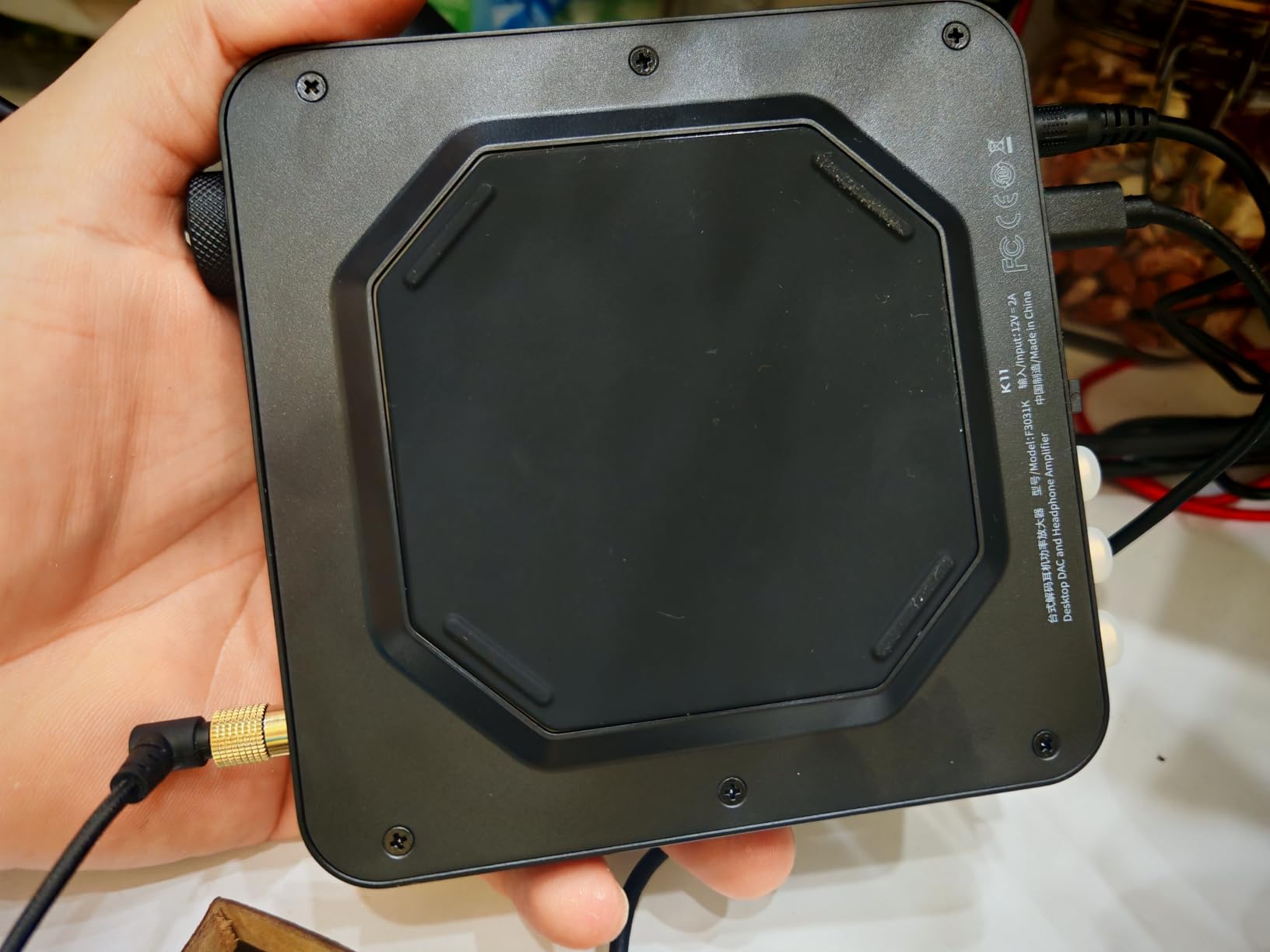
If a friend asked me for one recommendation and I could only say one product name, I would say K11. Among the best headphone amps for balanced listening that we tested, this is the one that makes the least sense to upgrade from, because it does the DAC job and the balanced amp job competently in a single aluminum puck. It hides under a monitor and disappears.
The 4.4mm balanced output here is the real deal, not an adapted single-ended signal, and it delivers 1400mW into low-impedance loads. I used it as my office unit for weeks with the FiiO FT1 and it never ran out of headroom. The sound is neutral and detailed rather than romantic, which is what I want from a do-everything desktop box.
The 744-review base is the largest on this list and it tells a consistent story: 79 percent five-star, with people praising stable USB, the clear sampling-rate display, and the sensible control layout. That kind of long-run consensus from a big owner pool is worth more to me than launch-window hype.
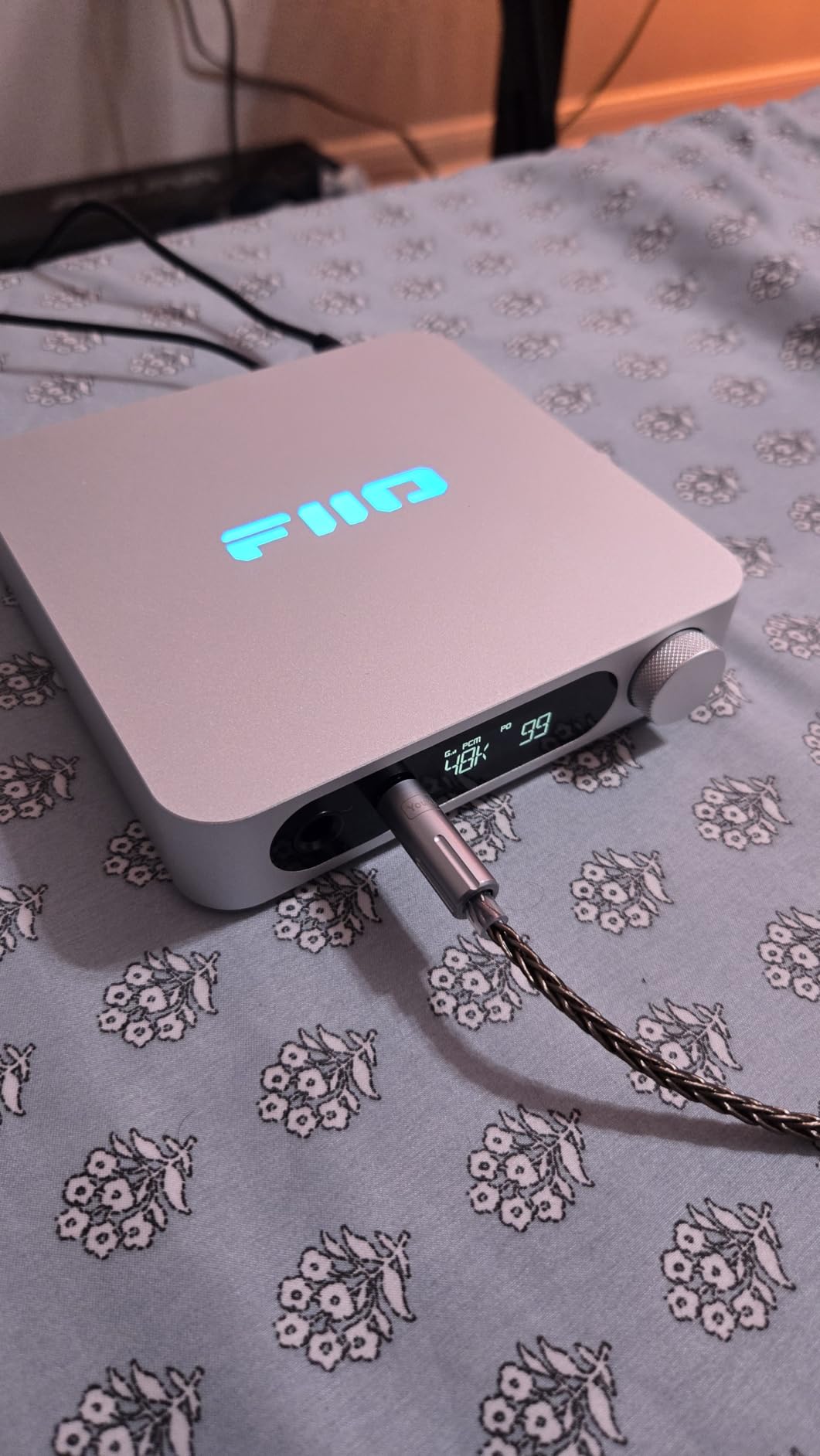
It decodes 384kHz/24-bit PCM and DSD256 over USB, coaxial, and optical, which covers every realistic source you own. The RCA line out means it can become the digital brain of a bigger system later, feeding standalone amps like the L70 when you catch upgrade-itis.
The honest cons: the five digital filters are not cosmetic, they audibly shift tonal balance, so spend ten minutes finding the one you like. The top-edge LED strip is bright enough to light a dark room, and a few Linux users report USB-C handshake quirks that a different port or cable usually fixes.
There is no Bluetooth, no PEQ, and no remote, so look further down the list if any of those are dealbreakers. What the K11 does instead is nail the fundamentals with no gimmicks, which is why it keeps topping value conversations in owner forums years after release.
Is the balanced output worth using over 6.35mm
Yes, but mainly for power and noise reasons rather than a mystical sound change. The 4.4mm output roughly doubles voltage swing, which you notice with harder-to-drive headphones, and it keeps the background quieter with sensitive pairs. You will need a balanced cable for your headphones, which is the hidden cost to factor in.
What it cannot drive
Very insensitive planars at head-banging levels are the limit. Everyday headphones from 16 to 300 ohms sit comfortably inside its envelope, and anything exotic is rare territory. If you own a brutally inefficient orthodynamic, that is where I would step up to the K13 R2R or L70.
4. FiiO K13 R2R – Best Warm R2R Sound
FiiO K13 R2R Desktop DAC & Headphone Amp, High-Fidelity 24Bit R2R DAC, Powerful 2400mW Output, LDAC Bluetooth Streaming, Dual Power Supply, 10-Band PEQ, Balanced XLR & RCA Audio Output (Silver)
24-bit R2R DAC
2400mW balanced output
LDAC Bluetooth 5.4
10-band PEQ
XLR line out
NOS OS modes
Pros
- Authentic resistor-ladder R2R architecture with an organic analog-leaning tone
- NOS and OS modes let you pick precise or smooth character
- 2400mW balanced output with headroom to spare
- LDAC Bluetooth 5.4 for wireless streaming
- 10-band PEQ controlled from app or web browser
Cons
- Remote buttons are loud and the LO button can bypass volume
- Small display is hard to read across a room
- Runs warm and has no overcurrent protection
The K13 R2R is the amplifier I reach for when I want to relax instead of analyze. Its resistor-ladder DAC, built from 192 matched 0.1 percent thin-film resistors, trades a little of the last word in detail for a sound that feels more like vinyl and less like a spreadsheet. After long sessions I simply felt less tired, and that is hard to fake.
Power is not the compromise you might expect, with 2400mW on the balanced output driving my planars without straining. The NOS/OS switch is the fun toggle: oversampled sounds tighter and more modern, non-oversampled sounds softer and rounder in the way NOS fans chase. Flipping between them on familiar tracks is genuinely useful, not a checkbox.
The 10-band PEQ is the sleeper feature, and nobody in the competitor set talks about EQ enough. Correcting a 4dB mid-bass hump or taming a hot treble region does more for real-world balance than any cable swap ever will. Doing it inside the unit means it works with every source, Bluetooth included.
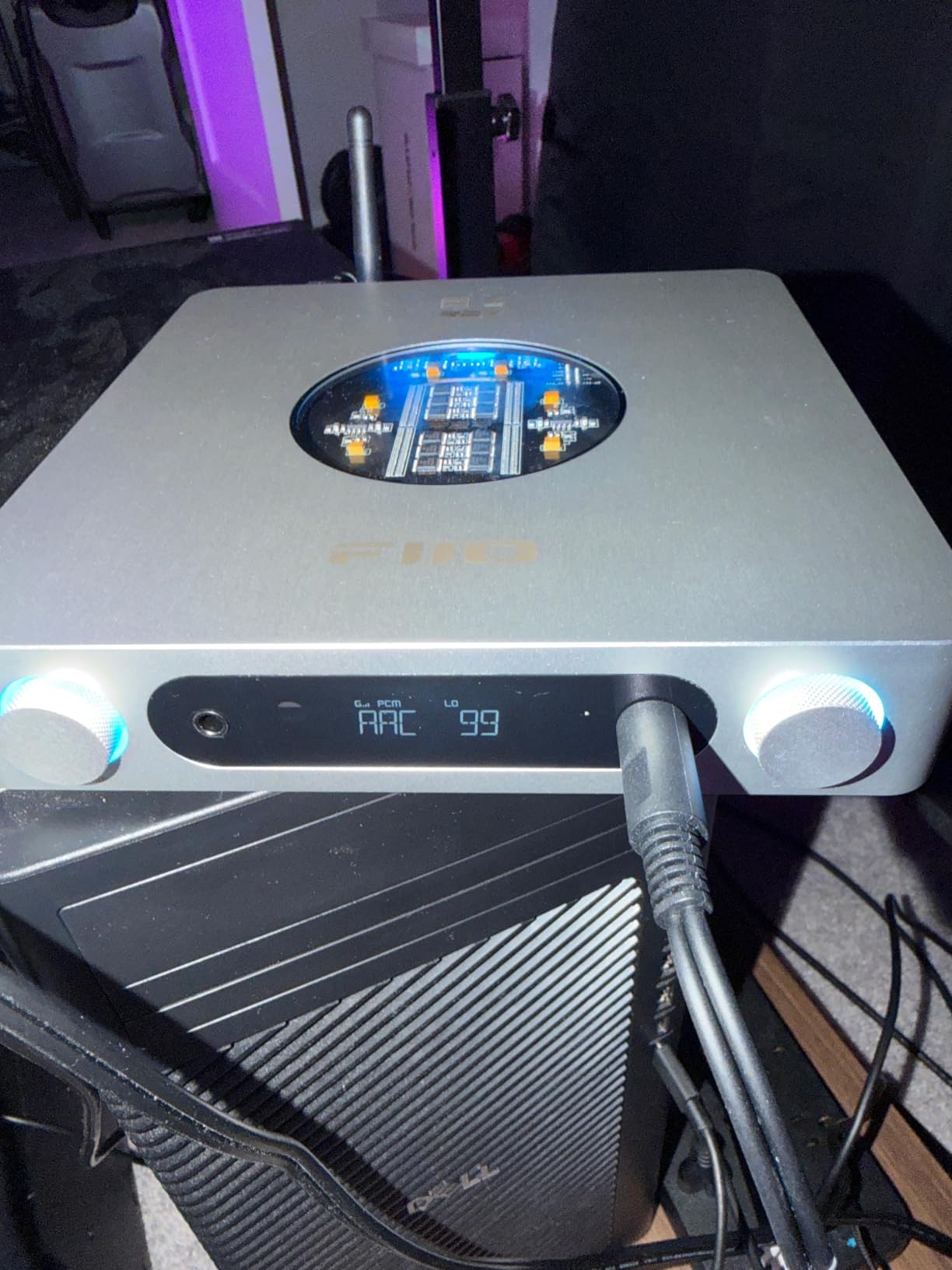
Connectivity is comprehensive: USB, XLR balanced line out, dual RCA outs, 4.4mm and 6.35mm headphone jacks, plus LDAC Bluetooth 5.4 for phone streaming. I used the web interface for PEQ tweaks from my laptop, which beats squinting at a tiny front panel any day.
The remote is the weak point and owners are vocal about it. The buttons are loudly tactile, and worse, the LO button can switch the line output to fixed level, momentarily defeating volume control if you hit it by accident. The display is small, the unit runs warm, and there is no overcurrent protection on the outputs.
Treat it gently, keep it ventilated, and it rewards you with the most musical presentation here outside the tube pick. If your reference playlist is acoustic, vocal, or classical, the R2R character is a strong argument for this over a cleaner delta-sigma rival.
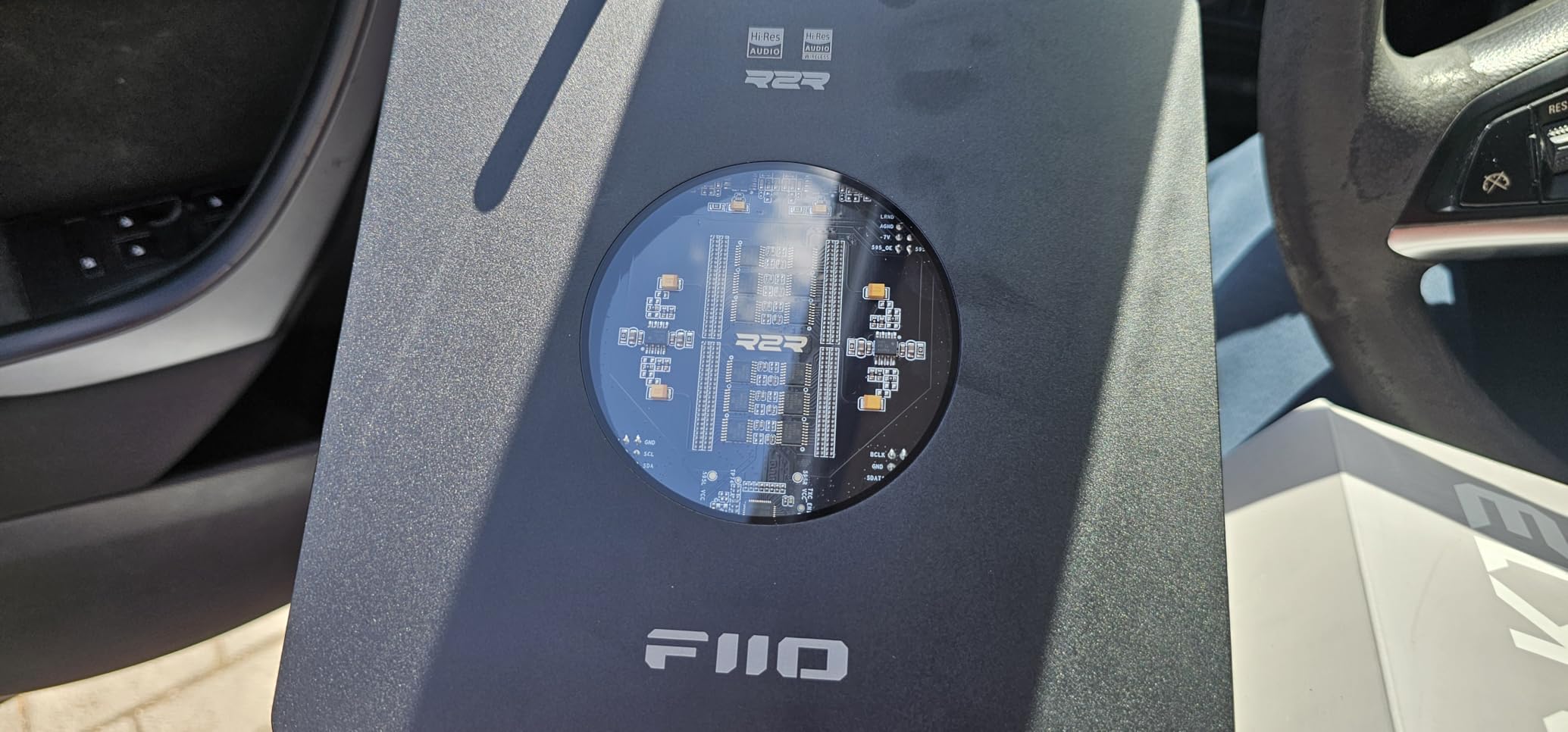
R2R versus delta-sigma in plain terms
R2R converts digital to analog with a ladder of precision resistors, while delta-sigma chips use math-heavy modulation. R2R fans describe the result as more natural and less digital, and blind-test debates rage endlessly, but the K13 gives you both flavors through its NOS/OS switch. Listen for yourself and keep whichever mode your ears prefer.
How the PEQ actually helps balance
Headphone frequency response is the biggest single factor in perceived balance, bigger than any amp choice. Shelving down a boosted bass region or lifting a recessed midrange corrects tonal weight toward neutral. Because the EQ lives in the amp, it applies to every input identically, so your corrections travel with the unit.
5. Schiit Midgard – Best USA-Made Amplifier
Schiit Midgard Headphone Amp and Preamp with Balanced Inputs and Outputs
Halo mixed-mode feedback
5W into 32 ohms
Balanced and SE in and out
4-pin XLR and 6.35mm jacks
Alps RK27 volume pot
Pros
- Designed and built in Texas with a 3-year warranty
- About 5W into 32 ohms drives demanding headphones
- Balanced and single-ended inputs plus preamp outputs
- Halo mixed-mode feedback gives a warm detailed presentation with a wide stage
- Alps RK27 potentiometer and generally excellent build quality
Cons
- Not a fully balanced internal topology despite balanced sockets
- Stock often limited with single units remaining
- Small review sample of 37 ratings
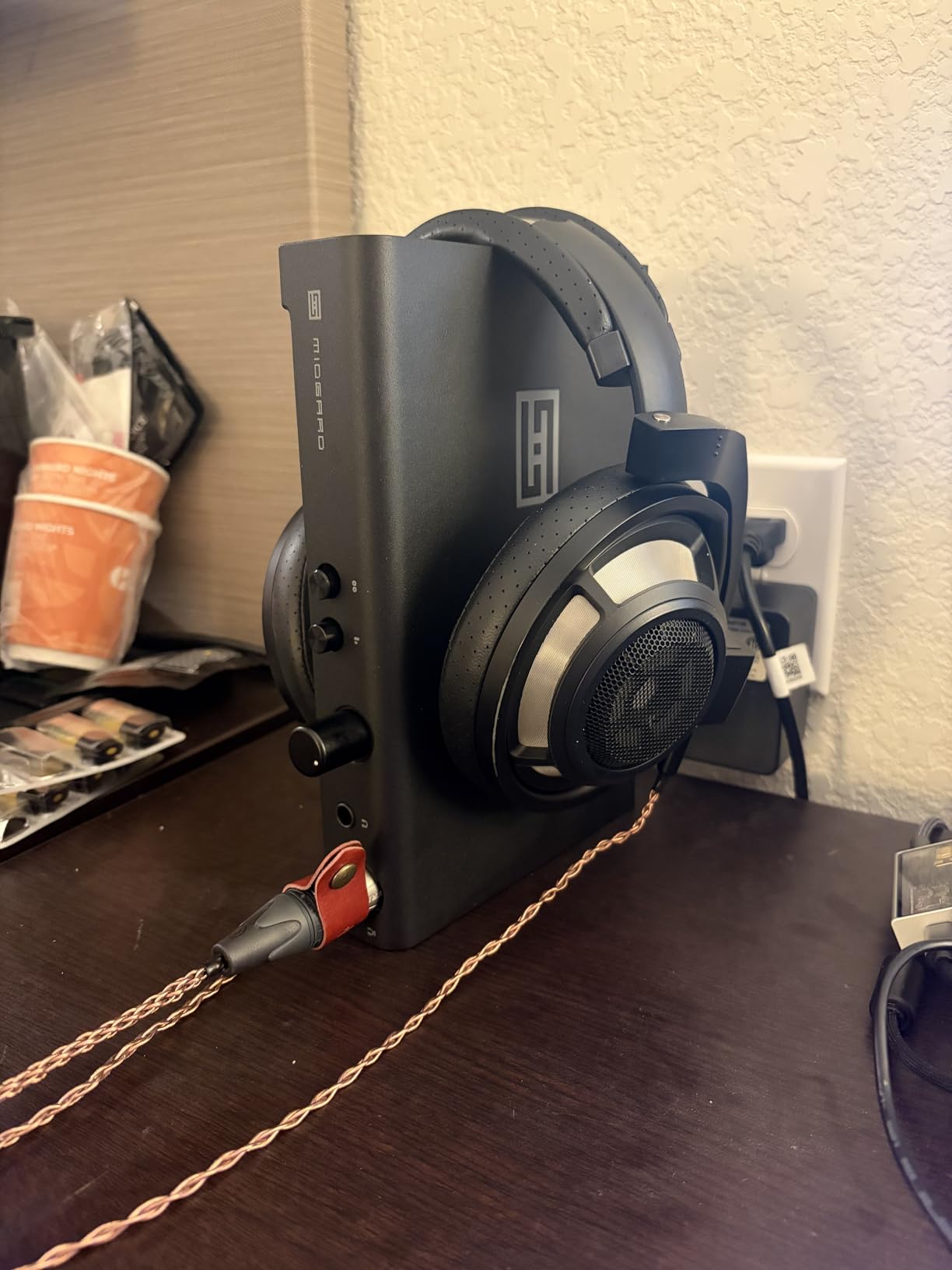
The Midgard is the contrarian pick on this list and I like it for that. While everyone else chases differential purity, Schiit built a mixed-mode feedback design they call Halo, gave it balanced and single-ended sockets on both ends, and assembled the whole thing in Texas. The result sounds confidently warm with a bigger stage than the numbers suggest.
In my listening it paired beautifully with the HD 600 family, adding space and weight that made orchestral tracks feel less boxed in. Around 5W into 32 ohms means planars and low-impedance dynamics get plenty of current. Owners repeatedly compare it to amplifiers costing meaningfully more, and I think that comparison holds up.
The transparency point matters here, so let me be direct: the Midgard has balanced inputs and outputs but is not a fully differential amplifier inside. Some forum users treat that as a dealbreaker, while others correctly note that the sound is what matters and the sound is excellent. If you want spec-sheet purity, buy the L70.
Build quality is where the American manufacturing shows. The chassis is dense metal with no rattles, the Alps RK27 volume pot tracks smoothly, and a remote is included along with two gain levels. It doubles as a preamp with both balanced and single-ended outputs, so it can anchor a speaker-plus-headphone system.
The caveats are practical. Stock is often tight, with single units remaining when I checked, and the review base of 37 is small with one isolated build-quality complaint. It is also 115VAC only and has no DAC on board, which is normal for amp-only units at this tier.
None of those stopped me from enjoying it more than several cleaner-measuring rivals. There is a reason long-term owners speak about Schiit gear the way they do, and diminishing returns kick in hard above this level.
Why balanced sockets on a non-differential amp
Balanced connections still reject noise along the cable run and interface cleanly with balanced DACs and preamps, even when the amplifier converts to single-ended internally. What you lose is the doubled voltage swing of a fully differential output stage. For most listeners with efficient headphones, that difference is inaudible.
Who should pay the USA-made premium
Buyers who value domestic support, a 3-year warranty, and a company that services what it sells. It also suits anyone building a mixed system, since the preamp outputs integrate well with powered speakers. If maximum measured performance per dollar is the priority, the Asian-made options above out-spec it for less.
6. Fosi Audio ZH3 – Best Connectivity All-Rounder
Fosi Audio ZH3 DAC Headphone Amp, Fully Balanced Preamp with AKM4493SEQ XMOS XU316 PCM 768kHz for Amplifiers, USB/Optical/COAX/RCA/12V Trigger Input, XLR/RCA/4.4mm/6.35mm Output with Remote
AKM4493SEQ DAC
PCM 768kHz DSD512
2570mW balanced
XLR RCA 4.4mm 6.35mm outputs
3-level gain
Pros
- AKM4493SEQ DAC with XMOS XU316 handling PCM 768kHz and DSD512
- 2570mW balanced output plus 640mW single-ended
- Every input and output you could want including XLR and RCA
- Swappable op-amps for tone tuning
- Bass and treble EQ with 6 filter types and a remote
Cons
- XLR outputs are fixed line level rather than a true variable preamp
- External wall-wart power supply
- Headphone EQ does not apply to the preamp output
The ZH3 is the Swiss Army knife of this roundup. It is a DAC, a balanced headphone amplifier, and a preamp in one chassis, with an AKM4493SEQ chip on decoding duty and four OPA1612 stages on output. If you hate the idea of buying three boxes, this is the one-box answer that does not feel like a compromise.
Power is genuinely strong at 2570mW balanced into 32 ohms, and the 3-level gain switch keeps sensitive earphones usable while leaving headroom for 300 ohm dynamics. Noise is specified as low as 1.9 microvolts, and I heard nothing untoward with IEMs on a quiet track. It even works as a USB audio device with a PS5, which no other unit here can claim.
The sound signature is polished and slightly fun rather than strictly clinical, helped by bass and treble tone controls and six digital filter options. That adjustability makes it a great fit for shared desks where two people disagree about how music should sound. The 338-review base at 4.5 stars backs up the value story.
Two swappable op-amp sockets are the enthusiast touch. Fosi ships it with capable stock chips, but rolling in alternatives nudges the tonal balance warmer or cleaner to taste. It is the same tune-to-your-ears philosophy as tube rolling, executed with cheap solid-state parts.
The cons are the ones owners raise most. Those rear XLR outputs are fixed line level only, so the ZH3 cannot act as a true variable preamp over XLR, and the tone EQ applies only to the headphone path. Power comes from an external wall wart rather than an internal supply, which adds desk clutter.
Connectivity otherwise covers USB, optical, coaxial, and RCA in, with XLR, RCA, 4.4mm, and 6.35mm out. For a single-box desk setup driving both headphones and powered monitors, nothing else here matches its flexibility.
Does it work as a system preamp
Partly. The RCA outputs are variable and will control a power amp or powered speakers properly, but the XLR outputs stay at fixed line level regardless of the volume knob. If your monitors are XLR-only, you will need their own volume control or a different amp.
Is it good for gaming consoles
Yes, thanks to a UAC mode switch that lets consoles treat it as a standard USB audio device. I confirmed the PS5 behavior owners report, and it works with the same plug-and-play simplicity as a PC. Console audio through a real amp and real headphones is a genuine upgrade over gaming headsets.
7. TOPPING DX5 II – Best Feature Set
TOPPING DX5 II Hi-Res DAC & Headphone Amp Combo – Dual ES9039Q2M, X-Hybrid Amp, 10-Band PEQ, LDAC Bluetooth 5.1, 4.4mm Balanced & 6.35mm Headphone Output, Preamp Mode, 12V Trigger (Black)
Dual ES9039Q2M DACs
7600mW balanced output
10-band PEQ
LDAC Bluetooth
Preamp with 12V trigger
Pros
- Dual ES9039Q2M DAC chips with XMOS XU316 processing
- Enormous 7600mW balanced output rating
- 10-band PEQ managed from the Topping Tune app
- Bluetooth 5.1 with LDAC
- aptX Adaptive and aptX HD
- Preamp mode with 12V trigger for system integration
- Plug and play on every major platform
Cons
- Single-ended output is weaker than the spec suggests
- Remote is not compatible with other Topping remotes
- Firmware quirks including language resets and occasional jack QC issues
The DX5 II is the feature fortress. Dual ES9039Q2M DAC chips, a fully balanced quad-channel X-Hybrid output stage, app-controlled PEQ, LDAC Bluetooth, preamp mode, a 12V trigger, and a 2-inch color display with nine themes. On paper it embarrasses units costing half again as much, and most of that survives contact with reality.
Sound is clean, extended, and modern in the way good delta-sigma implementations are, with tight bass and precise imaging. Through the 4.4mm balanced output it had effortless command over every headphone I own, and I never approached the top of the volume range. The Aurora display is genuinely readable and shows exactly what the unit is doing.
The PEQ deserves special mention because it works over every input, Bluetooth included, and saves profiles in the device. I built a correction curve for a bright headphone and it applied whether the source was my laptop or my phone. That is the kind of practical feature that separates a keeper from a novelty.
That headline 7600mW figure is a balanced-output rating, and both several owners and I noticed the 6.35mm single-ended output is far less muscular than the number implies. High-impedance headphones run single-ended can leave you wishing for more. Plan on the balanced output with a proper balanced cable, because that is the amp this unit actually is.
Firmware quirks show up in the owner reports: occasional language resets after updates, a remote that will not talk to other Topping gear, and scattered quality-control complaints about headphone jacks. The volume knob also feels less premium than the rest of the chassis. None of these are dealbreakers, but they explain why the rating sits at 4.5 despite the spec sheet.
Connectivity spans USB, optical, coaxial, and Bluetooth, with XLR and RCA line outs alongside both headphone jacks. It is the most complete one-box balanced solution here if you buy it intending to use it balanced.
Is the 7600mW rating realistic
As a balanced maximum into low impedances, yes, and it is genuinely loud with headroom to spare. Treat it as a balanced-output figure and skip running demanding headphones single-ended. For 300 ohm loads the practical voltage available matters more than the milliwatt headline, and there is plenty of it.
How the PEQ app experience compares
The Topping Tune app is straightforward, with a clear graph and per-band gain, Q, and frequency control. It is less fiddly than web interfaces on some rivals and more capable than simple bass and treble knobs. If you have never used parametric EQ, the visual feedback makes it approachable in ten minutes.
8. FiiO K7 – Best Beginner Desktop Choice
FiiO K7 Desktop DAC and Amplifier
Dual AK4493SEQ DACs
Dual THX AAA 788+ amps
2000mW output
4.4mm 6.35mm 3.5mm outputs
Preamp capable
Pros
- Dual THX AAA 788+ amplification with vanishingly low distortion
- 2000mW output covers most full-size headphones
- Three headphone outputs including 4.4mm balanced
- Four inputs make system integration painless
- Trusted by a huge owner base of 776 reviewers
Cons
- Volume knob steps rather than turning smoothly
- Slight hiss on high gain with nothing playing
- Uses USB Type-B rather than USB-C
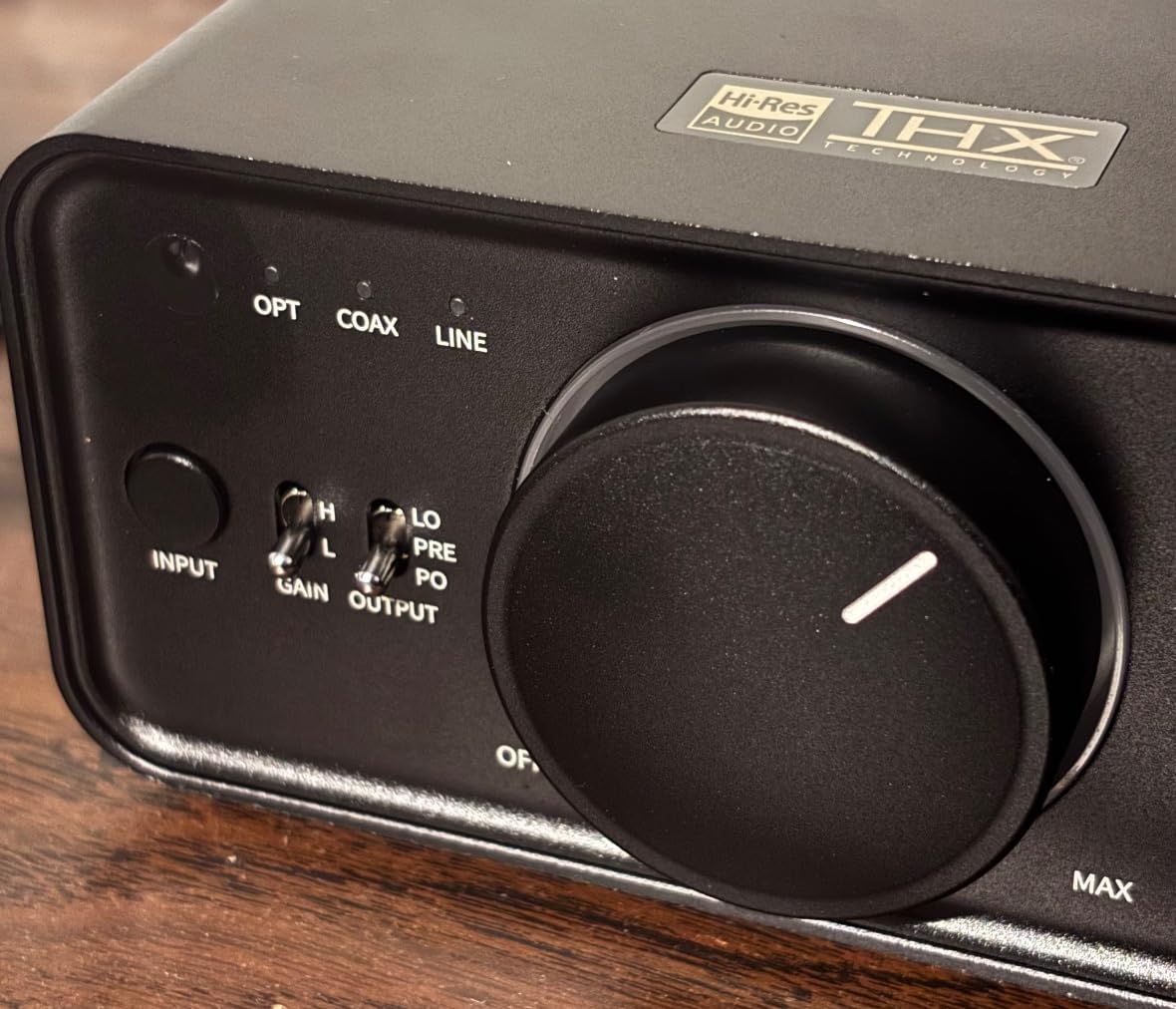
The K7 has been the default beginner recommendation in audio forums for a while, and after living with one I understand why. Dual AK4493SEQ DACs and dual THX AAA 788+ amplifier modules deliver a clean, neutral, uncolored presentation that simply gets out of the way. It just plays the file.
With 2000mW on tap and a 4.4mm balanced output alongside 6.35mm and 3.5mm single-ended jacks, it drives nearly everything a first-time buyer will own. I used it as a test bench for a stack of different headphones and it never felt underpowered. Multiple owners note it performs close to FiiO’s pricier K9 ESS, which tracks with what I heard.
The inputs cover USB, optical, coaxial, and analog AUX, so it slots into a computer desk, a console setup, or an existing hi-fi without drama. RGB indicator lights show the incoming sampling rate, a small thing that quietly teaches you what your sources are actually delivering.
The THX AAA 788+ topology is the technical star, measuring extremely low distortion and output impedance. In practice that means tight, well-controlled bass and consistent behavior across different headphone impedances. Output impedance below 1 ohm keeps frequency response honest with multi-driver IEMs too.
Complaints from the 776-strong owner base are consistent and minor. The volume knob steps through quantized levels rather than turning smoothly, which bothers some people endlessly. A few report slight hiss on high gain with no signal playing, and the USB Type-B port is a dated choice in a USB-C world.
It also functions as a preamp for a bigger amplifier, which gives it a growth path. If you are starting from a laptop headphone jack and want one purchase that settles your desk for a couple of years, the K7 is the safest bet on this list.
Why THX AAA matters for balanced listening
AAA stands for Achromatic Audio Amplifier, a feed-forward error-correction topology that cancels distortion before it reaches the output. The practical benefit is a vanishingly low noise floor and clean tracking at low volumes, which is exactly the quiet-background experience balanced listeners chase. You hear it as silence between notes.
K7 or K11 for a first setup
Both are excellent and priced closely, so the choice comes down to ports. The K11 offers coaxial and optical plus a smaller footprint and a display, while the K7 adds an AUX analog input, three headphone jacks, and a bigger chassis. If you plan to connect a turntable preamp, the K7 wins.
9. FiiO JadeAudio GIGAS 1 – Best Budget Power
FiiO JadeAudio GIGAS 1 High-Power Desktop Headphone Amplifier, Class AB Discrete Amp, Up to 4600mW+4600mW Balanced Output, 4.4mm & 3.5mm Outputs (Black)
4600mW balanced output
Class AB discrete circuit
4.4mm and 3.5mm outputs
RCA line input
USB-C PD power
Pros
- 4600mW of balanced Class AB power at an entry-level price
- Discrete transistor circuit with a natural engaging signature
- Runs cool and stays stable under load
- Accurate volume tracking with no channel imbalance
- Tiny footprint that fits any desk
Cons
- No built-in DAC so it needs an external source
- Only a 3.5mm single-ended jack with no 6.35mm option
- Volume knob is light and overly sensitive
The GIGAS 1 is the most surprising thing I have plugged in this year. It is an amp-only box with a Class AB discrete circuit built on ON Semiconductor MJE243G and MJE253G transistor pairs, and it pushes 4600mW through its 4.4mm balanced output. That figure would have been respectable at several times this price not long ago.
Class AB discrete designs have a reputation for sounding natural rather than clinical, and this one earns it. With planar magnetic headphones the presentation was lively and engaging, with good dynamics and convincing stereo separation. It runs cool even after hours at volume, which speaks well of the engineering inside.
Be clear about what you are buying, because there is no DAC in here. You feed it from an RCA line-level source, so it pairs naturally with a DAC you already own or one bought later. Power arrives over USB-C using a 12V PD adapter, which keeps the desk tidy and the supply replaceable.
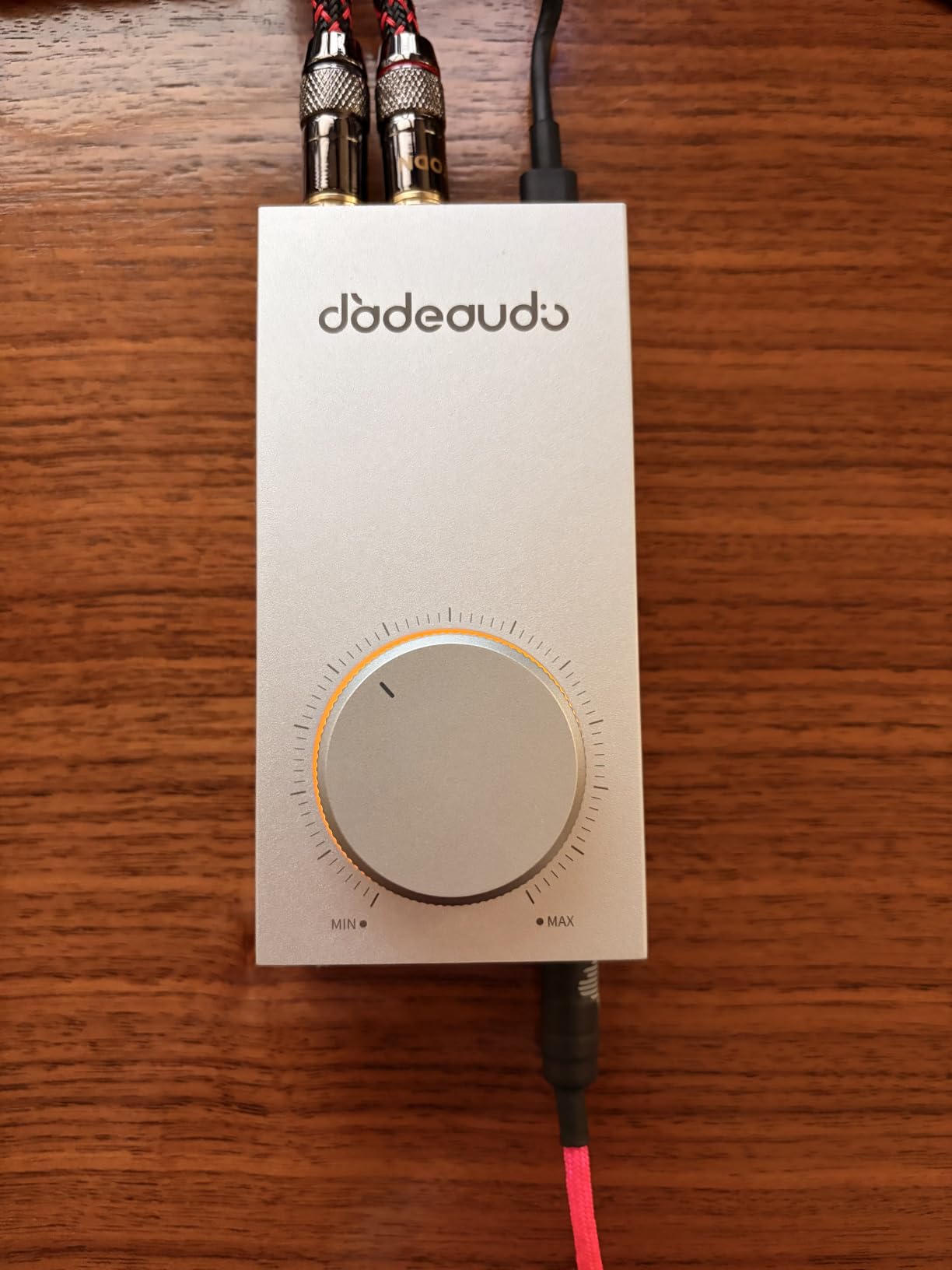
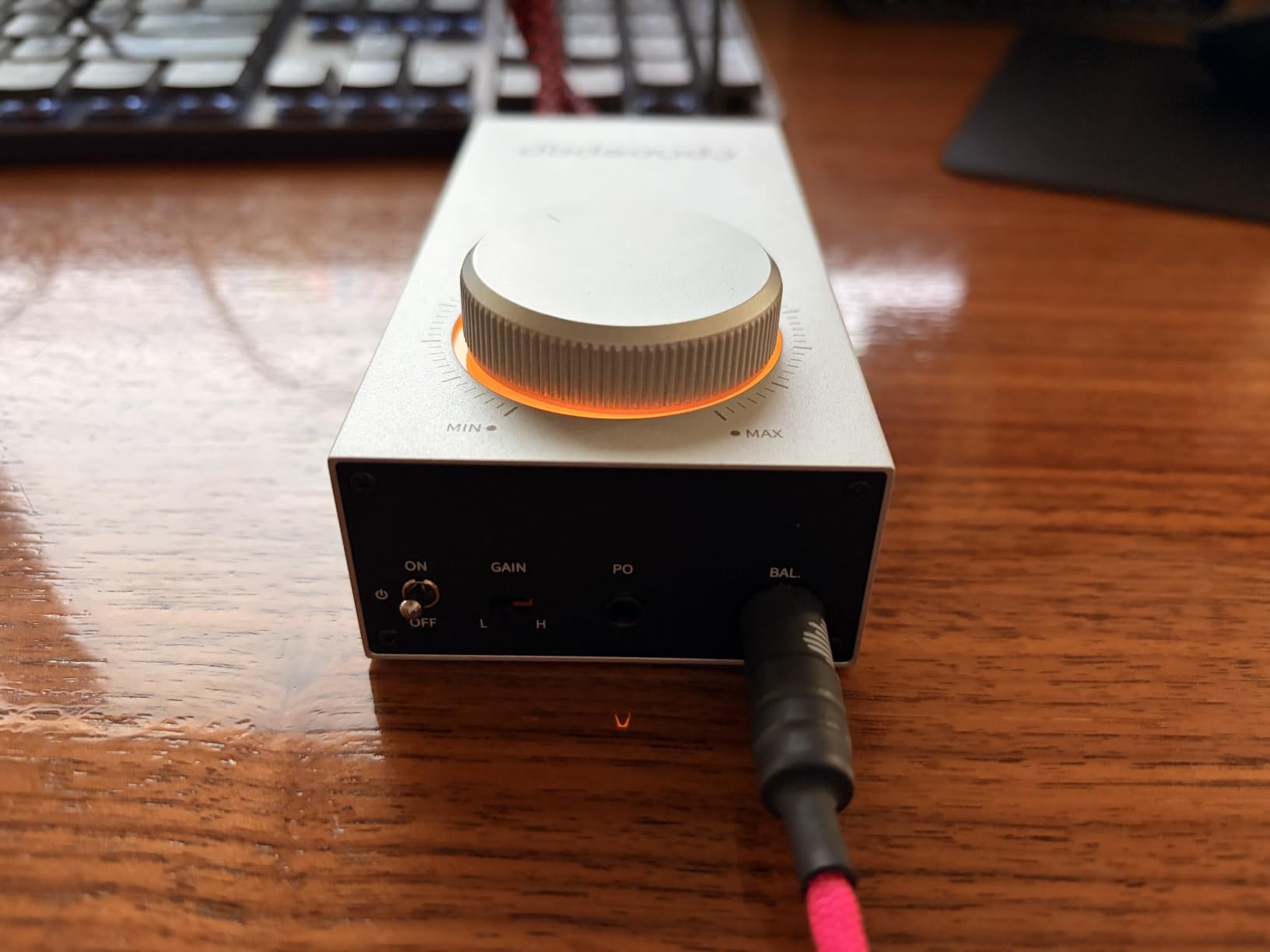
The owner feedback paints an honest picture of a great-sounding budget unit with small annoyances. The volume knob sits slightly off-center on some samples and is light to the touch, making precise low-volume adjustments fiddly. There is slight hiss at idle on high gain with very sensitive IEMs, and the single-ended output is 3.5mm only.
It is also light enough at 7.4 ounces that it can slide around when you plug headphones in, a classic small-amp problem. None of these issues touch the core proposition, which is balanced watts at a price that leaves budget for better headphones.
For anyone who already owns a decent DAC and wants to wake up a hungry pair of planars, this is the cheapest credible answer I know of. It is a power-stage bargain, not an all-in-one.
What DAC should you pair with it
Anything with RCA line outputs, from a compact USB DAC upward, will drive it cleanly. Look for a DAC with low output impedance and a fixed line-out mode rather than a headphone jack doing double duty. If you want a one-box alternative instead, the K11 above covers source and amplification together.
Can it really drive planar headphones
Yes, and that is its entire reason to exist. The 4600mW balanced rating into low impedances is aimed squarely at inefficient planar magnetics that make ordinary amps sound flat and compressed. High-impedance dynamics get enough voltage too, so just budget for a 4.4mm balanced cable, since that is where the power lives.
10. HIFIMAN EF499 – Best for Streaming
HIFIMAN EF499 Desktop Balanced Headphone DAC& Amplifier with R2R Architecture, XLR/RCA/6.35mm Output for Home Audio DAC, with Support for Streaming Media
R2R DAC architecture
4.35W balanced output
XLR and 6.35mm jacks
AirPlay DLNA streaming
XLR RCA line outs
Pros
- R2R architecture with a naturally warm full-range tone
- Network streaming over AirPlay and DLNA plus app control
- 4.35W balanced output with generous headroom
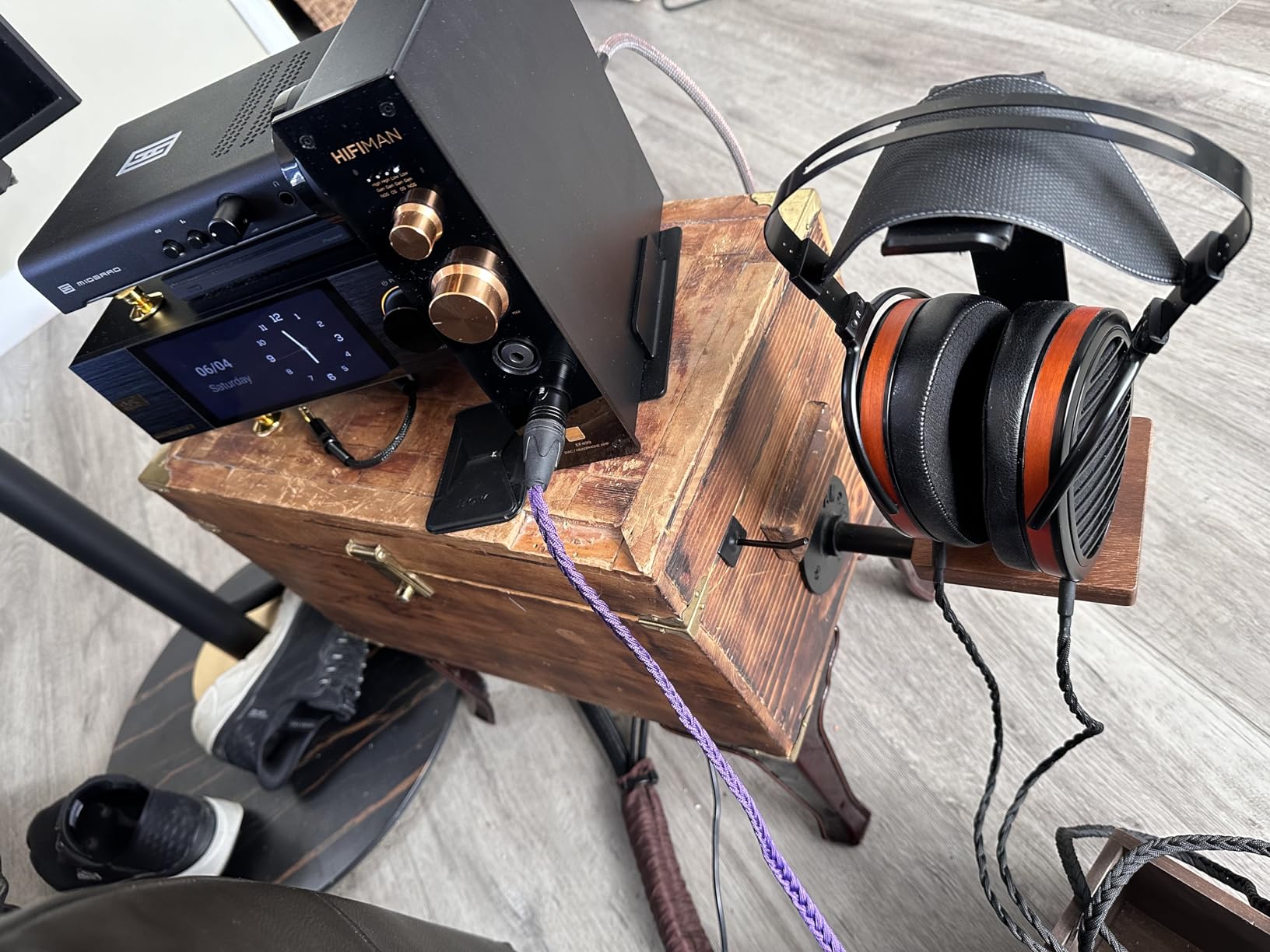
- Vertical chassis doubles as a headphone stand
- Premium heavy build at 3.3 kilograms
- Works with Linux out of the box
Cons
- No native 4.4mm balanced output
- requires an XLR adapter
- Volume knob does not control the rear XLR output
- No printed manual
- and USB-C driver issues reported on Windows
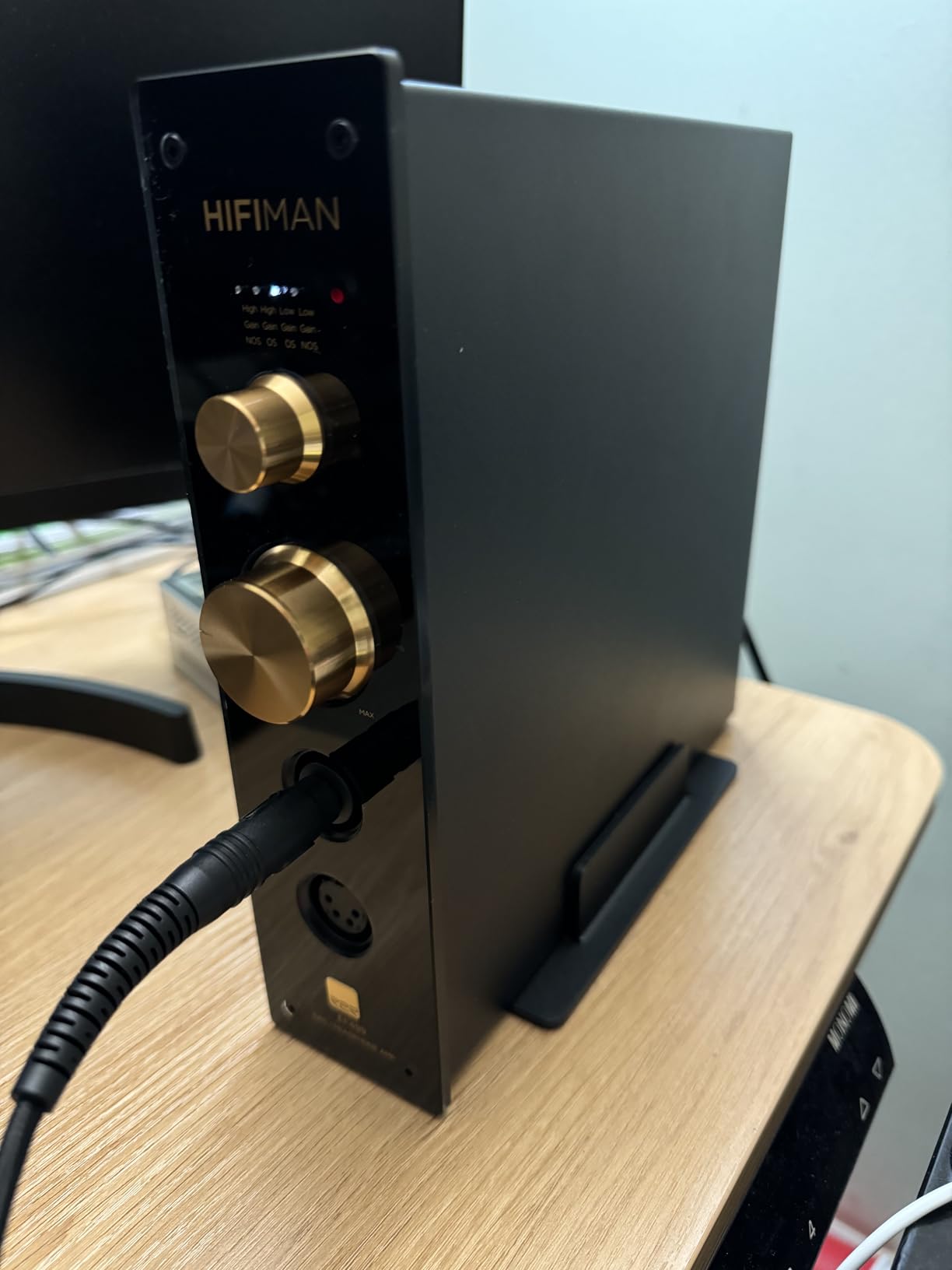
The EF499 is the oddball of this list and my favorite design object among them. It is a tall vertical tower containing an R2R DAC and a 4.35W balanced amplifier, with a network connector that streams AirPlay and DLNA directly. Your headphones hang from the top of it, which is either brilliant or silly depending on your desk aesthetic.
Sonically it shares the R2R family character with the K13: warm, full-bodied, and forgiving without turning muddy. HIFIMAN voices it to flatter their own planars, and the pairing is obvious and effective. Classical and vocal material in particular sounded immersive and physically present through it in my sessions.
The streaming port is the headline feature nobody else here offers. Connect it to your network and it becomes an AirPlay and DLNA endpoint, pulling music off phones and servers without a computer in the chain. The four-level gain and filter switch covers High and Low gain in both NOS and OS modes.

Inputs include USB-B, USB-C, coaxial, and network, and outputs span 4-pin XLR balanced headphone, 6.35mm single-ended, plus XLR and RCA line outs for powered speakers. It worked with Linux immediately in my testing, which the owner reports confirm. Build quality is genuinely premium at 3.3 kilograms of metal.
The frustrations are real though. There is no native 4.4mm socket, so the majority of modern balanced cables need an XLR adapter.
The front volume knob does not control the rear XLR line output level, which is baffling for a unit positioned as a system hub. No manual ships in the box, and some Windows users hit driver problems over USB-C.
The 4.2 rating from a small base of 35 reviews reflects those quirks rather than the sound, which is genuinely good. If you want a single striking tower that streams your library and drives headphones well, nothing else here competes.
How well does the streaming actually work
Well, with caveats. AirPlay and DLNA both worked reliably in my testing, and app-based streaming is available for supported services. There is no built-in support for every modern platform, so check your service against its supported list before buying.
XLR versus 4.4mm for your cable plans
The EF499 speaks 4-pin XLR natively, so plan on either an XLR-terminated cable for your headphones or a quality XLR to 4.4mm adapter. A proper cable is the better long-term route since adapters add a failure point and cable weight at the jack. HIFIMAN owners with stock XLR cables are the natural fit.
How to Choose a Balanced Headphone Amp?
Buying an amplifier for balanced listening comes down to a handful of decisions that filter the market fast. Work through these in order and you will land on the right unit without wandering forums for a month.
What Balanced Actually Means
A true balanced amplifier carries the signal differentially from input to output, with two opposite-polarity copies on hot and cold conductors plus a ground reference. Your headphone drivers sum the two copies, which doubles the voltage swing and cancels any noise the cable picked up along the way. That is where the extra power and the quieter background come from.
The catch is that a 4.4mm socket does not guarantee any of that. Some products convert a single-ended signal to drive a balanced connector, which gives you the plug but not the physics. The Midgard above is an honest example of balanced sockets over a mixed-mode internal design, and it is still a fine amplifier.
You will also need a balanced cable for your headphones, since rewiring or replacing the stock cable is what completes the circuit. A balanced amp used with a single-ended cable is just a heavier single-ended amp.
Impedance and Sensitivity Matching
Impedance, measured in ohms, tells you how much voltage a headphone needs, while sensitivity tells you how loud it gets per milliwatt. High-impedance headphones like 300 or 600 ohm classics want voltage, and low-sensitivity planars want current. An amplifier that supplies the wrong one runs out of steam exactly when the music gets exciting.
A practical rule from the community is the octuple rule: aim for an output impedance no more than one eighth of your headphone impedance. All ten units here sit at or under 1 ohm, so they are safe with everything from 16 ohm IEMs to 600 ohm dynamics. If you buy something outside this list, check that number first.
For reference, sensitive IEMs need almost no power but reveal noise instantly, which is why the 0.3 microvolt floor on the L70 matters. Inefficient planars are the opposite case, where the 4600mW from the GIGAS 1 is the difference between flat and alive.
Output Power and Gain
More power is not better sound, it is headroom. Having ten times more power than you need means the amplifier cruises at low distortion instead of working near its limits, and transients hit without compression. Aim for ample rather than excessive, because overpowered amps make fine volume control harder with easy headphones.
A good gain switch solves that conflict by matching the input level to your headphones. Two or three gain settings let the same box behave with sensitive earphones and hungry planars. Every unit here has at least two, and the Fosi ZH3 offers three.
Noise Floor and Channel Separation
Noise floor is the hiss you hear when nothing is playing, and balanced designs lower it by cancelling noise common to both signal legs. Channel separation describes how well the left and right channels stay independent, which affects imaging and the sense of a stereo stage rather than two speakers strapped to your head.
These are the specs that actually define balanced listening quality, and they are where cheap gear cuts corners. Look for microvolt-level noise figures and high dynamic range numbers. Then confirm it by ear with sensitive IEMs on a silent track, because that is the test that exposes a lazy power supply.
DAC and Amp Combo or Separate Units
Combination units like the K11, K7, DX5 II, and ZH3 put decoding and amplification in one box, which saves money, space, and a cable. They are the right call for desk setups and for anyone who wants a single purchase to be finished. Modern combos perform at a level that used to require separates.
Separates win when you already own a DAC you love, or when you want to upgrade one half later without replacing both. Amp-only units like the L70, Midgard, and GIGAS 1 exist for exactly that path. The usual forum advice holds: headphones first, then source, then amplifier, because that is the order of audible impact.
Tube or Solid State for Balanced Listening
Solid-state amps measure better and cost less for the performance, which is why they dominate this list. Tube amps add even-order harmonics that many listeners describe as warmth and body, and rolling tubes lets you tune the character over time. The Gremlin above proves a balanced tube design no longer requires a four-figure budget.
The honest answer is that both are correct and the argument is mostly about taste. If you analyze music and want transparency, buy solid state, and if you get lost in music and want it a little romantic, buy tubes. Either way, balanced operation gives you the same noise and power benefits.
Headphone Pairing Recommendations
Some pairings are proven community consensus and worth copying. Sennheiser HD 600, HD 650, and HD 6XX love voltage and midrange-rich amplifiers, pairing beautifully with the Midgard, the Gremlin, or the L70. HIFIMAN planars and other low-sensitivity models want current, so the GIGAS 1, K13 R2R, and EF499 serve them best.
Beyerdynamic 250 ohm headphones behave like the Sennheisers and want voltage headroom, which the L70 supplies effortlessly. Easy-to-drive headphones like the FiiO FT1 and most IEMs work happily from the K11 or K7, where the low noise floor matters more than raw milliwatts. Matching the amp to the headphone you actually own beats any best-of ranking, including mine.
Frequently Asked Questions
What is the best audiophile headphone amp?
The TOPPING L70 is the best audiophile headphone amp in this test, delivering a 146dB dynamic range, a 0.3 microvolt noise floor, and true balanced 4-pin XLR and 4.4mm outputs. If you want decoding built in, the FiiO K13 R2R and TOPPING DX5 II are the strongest all-in-one alternatives.
Do balanced headphones sound better?
Balanced connections do not change a headphone’s tonal character, but they can sound cleaner and more powerful. The balanced output doubles voltage swing for more headroom, cancels cable noise for a lower noise floor, and improves channel separation. The improvement is most audible with hard-to-drive headphones, and least audible with sensitive IEMs on a short cable.
What are the best headphones for balanced sound?
The best headphones for balanced sound are neutral-tuned models like the Sennheiser HD 600 and HD 650, the HIFIMAN Arya and Sundara, the FiiO FT1, and the AKG K702. These headphones have even frequency response and benefit from the extra power and lower noise that a balanced amplifier provides.
What headphones do audiophiles recommend?
Audiophiles most often recommend the Sennheiser HD 600 series for vocals and midrange, the HIFIMAN Arya and Sundara for soundstage and detail, the FiiO FT1 for a budget-friendly planar, and the Beyerdynamic DT 880 or DT 900 for analytical listening. Community consensus is to spend more on headphones first and add the amplifier second.
Does a headphone amp improve sound quality?
A headphone amp improves sound quality when your current source cannot drive your headphones properly. High-impedance and low-sensitivity headphones show night-and-day gains in dynamics, bass control, and volume headroom. Easy-to-drive headphones and IEMs may show only subtle changes, because a phone or laptop already powers them adequately.
Conclusion
Picking the best headphone amps for balanced listening in 2026 came down to which units I kept using after the comparisons ended, and three earned permanent desk space. The TOPPING L70 wins overall for its differential design, microvolt silence, and every balanced connector you could want. The FiiO K11 is the smart all-in-one choice, and the JadeAudio GIGAS 1 is the budget sleeper with 4600mW of balanced Class AB power.
Match the amplifier to the headphones you own rather than chasing the biggest spec sheet, because that pairing matters more than any badge. Voltage-hungry classics like the HD 600 belong with the L70 or Midgard, hungry planars belong with the GIGAS 1 or K13 R2R, and easy-going all-rounders are perfectly served by the K11 or K7. Buy the headphones first, then let the amp follow.
This guide is refreshed as new amplifiers reach the market and long-term owner feedback accumulates, last reviewed in October 2026. If your current setup hisses, clips, or runs out of volume before you run out of listening, a balanced amp from this list is the fix.