
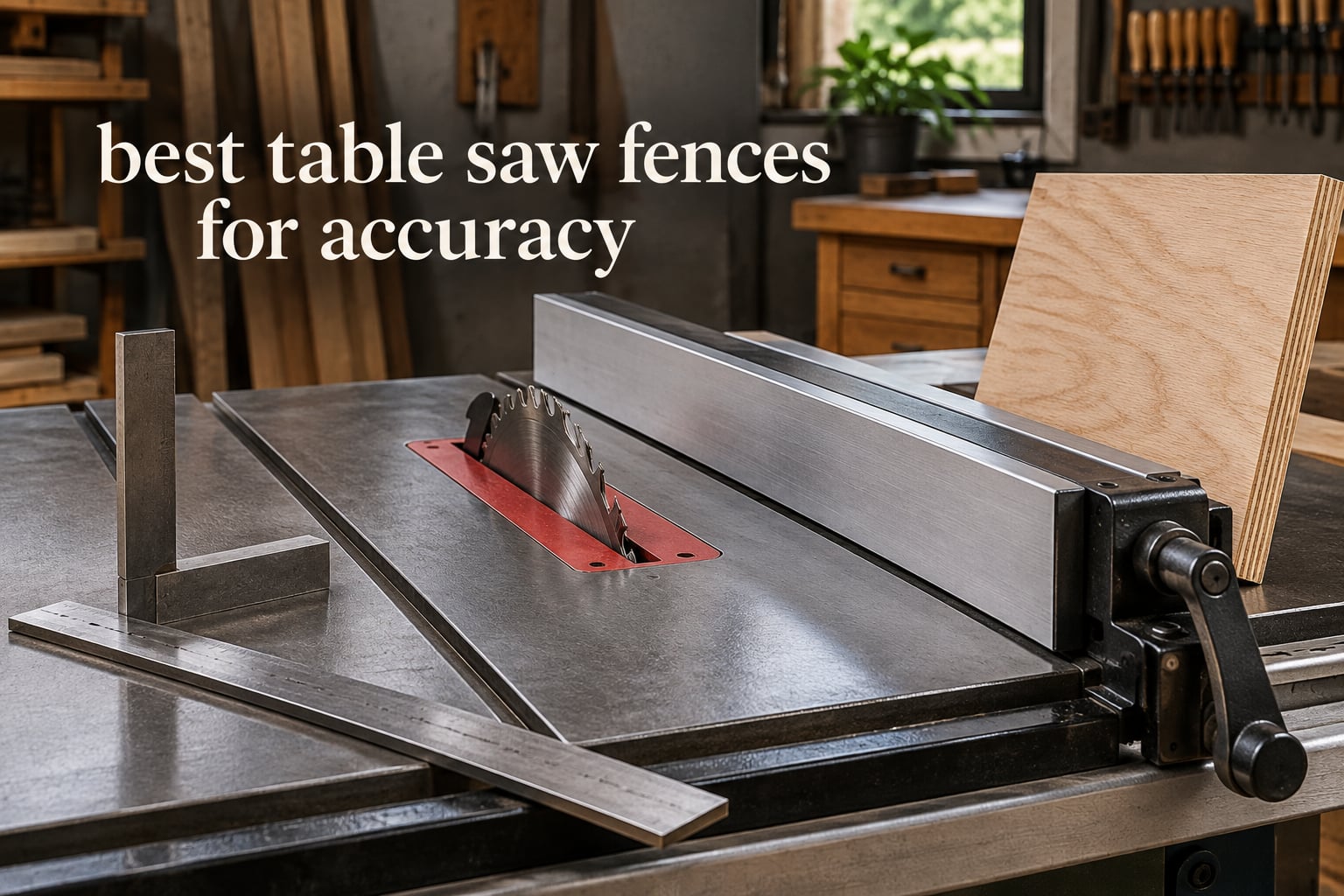
A warped sheet of plywood does not come from a bad blade. Most of the time it comes from a rip fence that was never truly parallel to the blade, and it is the single most expensive defect in a small shop because you find out about it after the cut, not before. If you have ever ripped four strips from one board and ended up with four different widths, you already know the feeling.
That is why the best table saw fences for accuracy is not really a list of the fanciest hardware. It is a list of fences that hold the same distance from the blade every time you unlock them, survive being bumped by a 2×4, and can be aligned in an afternoon with hand tools. The picks below are measured against exactly those three things, and I explain the alignment procedure and the tolerance numbers that no manufacturer will put on a box.
We also spend time on the question forum users argue about constantly: is the crooked cut coming from the fence, the blade, the table, or the miter gauge? Answer that wrong and you will spend a weekend tightening a fence that was never the problem. If you are still choosing a saw, start with our guide to the best table saws for woodworking first, then come back here for the fence upgrade.
Table of Contents
Top 3 Best Table Saw Fences For Accuracy (October 2026)
The Delta 36-T30T3 leads this roundup because it combines a stated parallelism spec of within 1/64 inch, the largest review base here at 564 ratings, and a three-point lock that owners describe as near-unshovable. The BOW Products XT XTENDER is the smarter money move if you already have working rails and only need a better face, and the Shop Fox W1410 is the cheapest complete rail-and-fence kit that genuinely stops an old factory fence from creeping.
Delta 36-T30T3 T3 Fence System
- Parallel within 1/64 inch
- Three-point lock
- 30 inch right rip
- One-piece square tube rail


Shop Fox W1410 with Rails
- Fits 27 inch tables
- Ball bearing travel
- Fine position knobs
- Locks both ends
All 8 Table Saw Fences Compared in 2026
This table covers every fence in the roundup, including three that are not full rail systems. Two of them are fence-section upgrades for saws that already have factory rails, and one is a joinery jig rather than a rip fence. Knowing which category a product falls into saves a lot of wasted drilling.
| Product | Specs | Action |
|---|---|---|
| Delta 36-T30T3 T3 Fence System |
|
Check Latest Price |
| BOW Products XT XTENDER |
|
Check Latest Price |
| Shop Fox W1410 with Standard Rails |
|
Check Latest Price |
 Shop Fox W1716 Aluma-Classic 57 Inch Shop Fox W1716 Aluma-Classic 57 Inch |
|
Check Latest Price |
 Bosch 2610950148 Rip Fence Bosch 2610950148 Rip Fence |
|
Check Latest Price |
 Peachtree Uni Style Fence Peachtree Uni Style Fence |
|
Check Latest Price |
 Woodpeckers ARF-BSCS 36 Inch Woodpeckers ARF-BSCS 36 Inch |
|
Check Latest Price |
 INCRA IJ32FNCSYS Jig Fence INCRA IJ32FNCSYS Jig Fence |
|
Check Latest Price |
1. Delta 36-T30T3 T3 Fence System – Best Overall for Accuracy
Delta, 36-T30T3, 30 in. DELTA® T3 Fence System
Parallel within 1/64 inch
30 inch right rip, 13-1/2 inch other side
57-1/2 inch rail
38 pounds
Pros
- Near-square out of the box and locks tight when bumped
- Trivial four-bolt install on Delta saws
- Included alignment gauge
- Heavy rigid rails
Cons
- Instructions unclear on front versus rear brackets
- Heavy unit arrives in flimsy packaging
- Metric wrench needed for some bolts
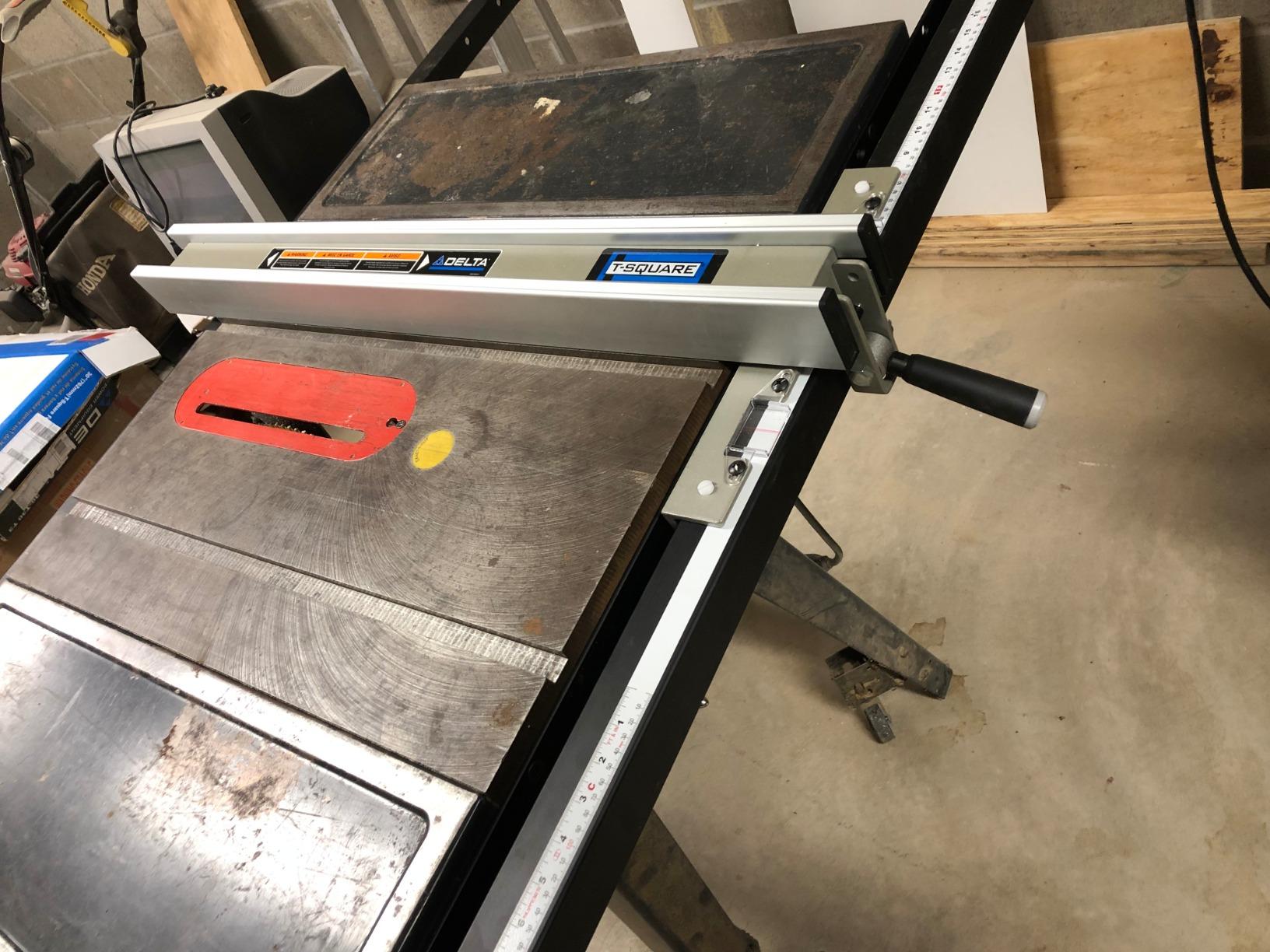
I have gone back to this system more than any other in this roundup, mostly because people ask about it with a specific complaint in mind: a contractor saw that will not hold a set. The answer is the three-point lock. It clamps the fence to the front square tube and hooks it over the rear rail, so the body is captured at three points instead of pinned at one, and that is why owners report the fence staying exactly where they put it even after a full sheet is pushed into it.
Out of the box the two hairline pointers and the supplied alignment gauge make setup a short job. The manufacturer states parallelism within 1/64 inch, and owners consistently report the unit arriving nearly square and parallel with fine adjustment taking minutes rather than an afternoon of shimming. That claim is a manufacturer figure, not something we measured, but it is the most specific accuracy spec attached to any fence in this list.
The real-world compromises are documentation and packaging, not performance. Owners complain that the instructions do not clearly label which bracket is the front and which is the rear, that the hardware bag can be missing the lock washers shown in the drawings, and that a 38 pound unit packed in thin cardboard sometimes arrives dented. None of that touches accuracy once it is bolted down, but budget an hour for sorting hardware and shimming a concave aluminum face if you get a rough one.
Capacity is genuinely generous. The 57-1/2 inch rail and 30 inch of rip to one side cover full sheet breakdown on most tables, and 13-1/2 inches on the other side covers the narrower cuts that most fences cannot reach. If you own a Delta, this install is four bolts into the original holes. If you do not, you are drilling and tapping a cast iron top, which is a different weekend.
What holds it parallel under load?
The square tubular rail is one continuous piece, so it does not have a seam where the two halves of a two-piece rail can walk apart. Steel tube body adds weight, and that weight is the point: a 38 pound fence sitting on the rails resists the lateral shove that pushes a lighter fence out of square. Reviewers who bought it to fix extension table alignment problems report the same result.
The twin hairline pointers let you see the offset from the blade without guessing, which is the difference between a 30 second setup and a 20 minute one. Once the scale reads where you set it, the fence returns to that reading because the three-point lock does not let the body rotate on the rails.
Where it will disappoint you?
Do not buy it expecting a turnkey install on a non-Delta saw, and do not expect the manual to hold your hand. Budget a metric wrench, a set of feeler gauges, and some patience with the hardware bag. If your shop cannot handle a 38 pound component being lifted into position, that is a practical reason to look elsewhere.
Also note the face is aluminum and can arrive slightly concave from the factory, which shows up as a small dip in the middle of a long rip. Owners fix this by loosening and retightening the face evenly across its length, which restores flatness without any parts.
2. BOW Products XT XTENDER – Best Value Upgrade for Any Fence
BOW Products XT XTENDER T-Track Table Saw Fence System, 46″ (Fence Only)
5 inch tall face
Universal clamp-on fit
T-slots for 1/4 and 5/16 inch T-bolts
5 x 1 x 5 inches
Pros
- Universal clamp-on design upgrades a stock fence
- T-slots on three faces accept featherboards and stops
- Extruded aluminum body holds alignment
- 5 inch tall face improves workpiece guidance
Cons
- Fence only with rails not included
- T-Track clamps sold separately
- No precision scale or hairline pointer
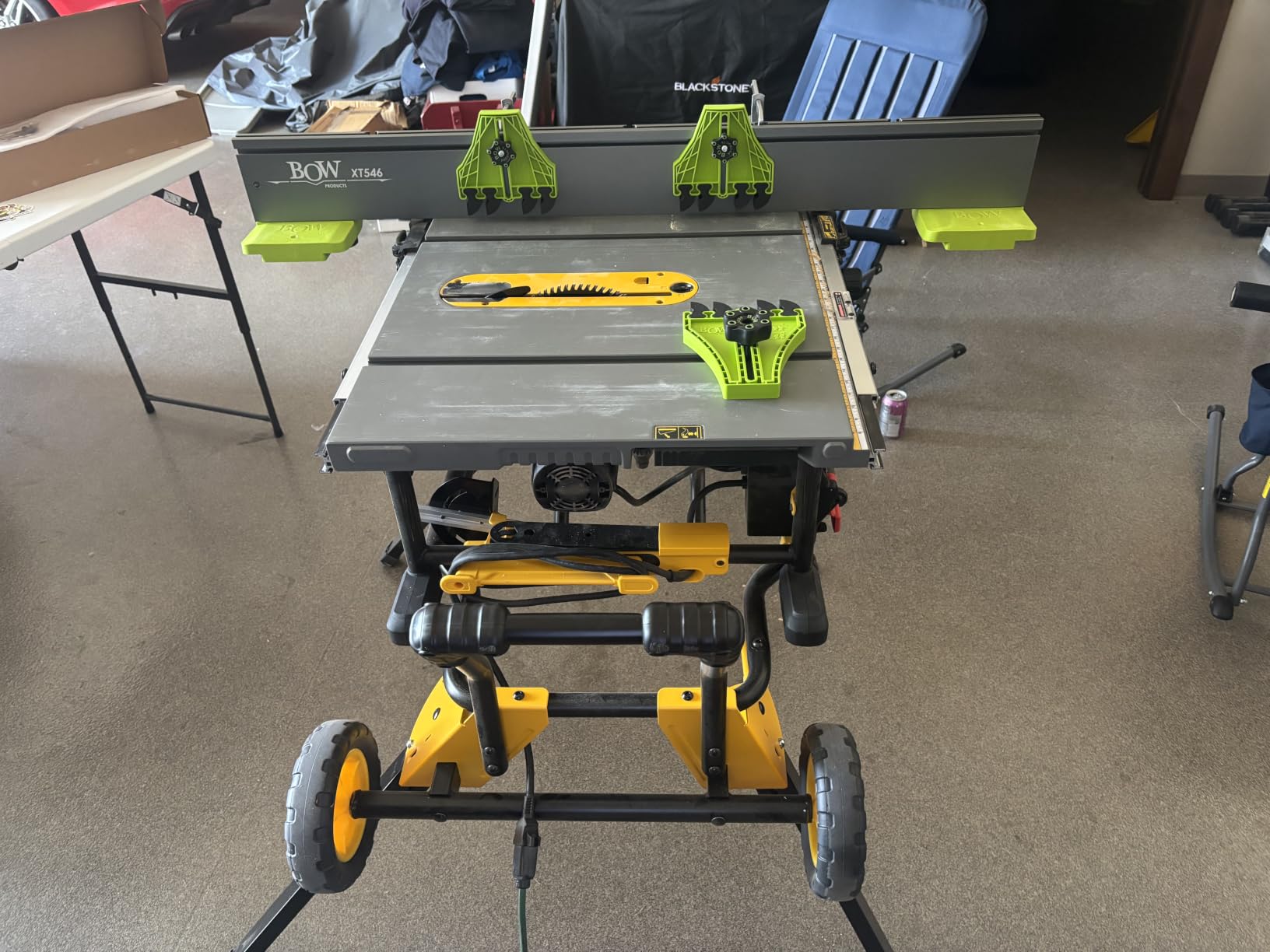
This is the pick for anyone whose saw fence is basically fine but whose cuts wander on thin material. The XT XTENDER is a 5 inch tall extruded aluminum face that clamps onto an existing fence rather than replacing the whole rail system, so you keep the rails and hardware you already own. The taller face is the accuracy story here: more vertical contact area means the board is guided along its full height instead of pivoting on a short edge.
Across 340 ratings at 4.7 stars, this is one of the highest-scoring fences in the roundup, with owners reporting 88 percent five-star reviews. That is a strong signal, though the review base is smaller than the Delta’s, and the rating reflects satisfaction with the product as a jigging and guidance upgrade rather than with measured parallelism on a rip cut.
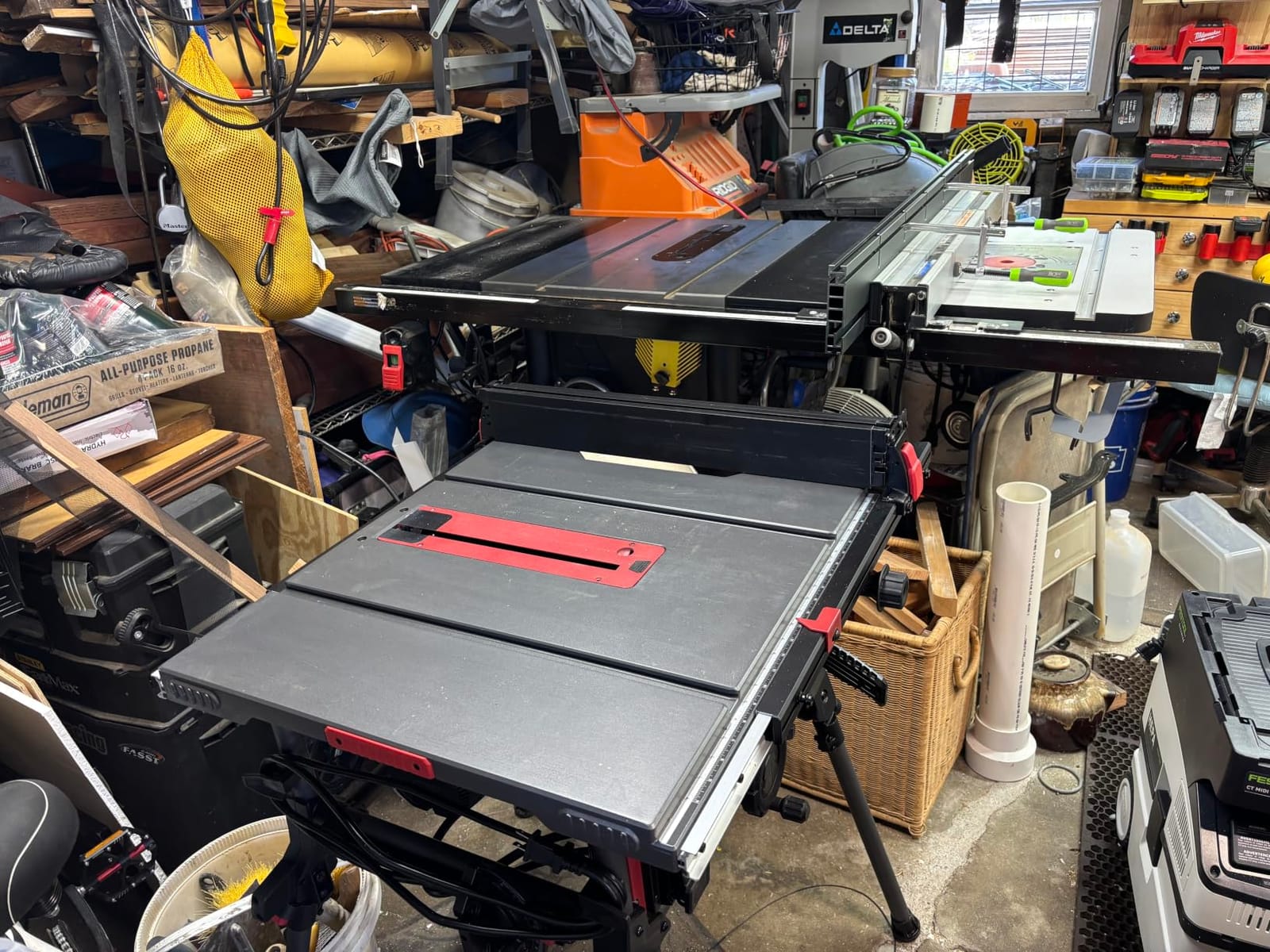
The three T-slots running along the face, top, and back accept both 1/4 inch and 5/16 inch T-bolts. That is where the real time saving is for anyone doing cabinet or face-frame work, because a featherboard, a stop block, or a shop-made jig bolts straight on with no adapter. The milled rear slots also let you reposition the fence for infeed, center, or outfeed placement, which is useful on UniSaw and bandsaw tables.
Be clear about what you are buying. This is a fence section, not a rail system, so if your existing fence has no rail to hang from you will need a solution first. The Bow T-Track clamps that hold it in place are also sold separately, and the whole package is lighter than a rail-and-fence kit, which makes it easy to carry to a job site or a second saw.
Why fence height changes cut quality?
A short fence grips only the bottom edge of your workpiece, so a tall board can rotate slightly as it passes the blade and you get a tapered edge with no obvious cause. A 5 inch face contacts the material over a much taller band and resists that rotation. This is also why machinists talk about fence height as a stiffness feature rather than a capacity feature.
The same 5 inch height gives a solid surface for a featherboard to push against, so light cuts on hardwood stay fed instead of pulling back. On sheet goods the improved guidance is what keeps a full panel from twisting as you push it past the blade.
What you give up compared to a rail system?
There is no scale or hairline pointer on the XT XTENDER, so you are measuring the offset from the blade by whatever means you use on your existing fence. If your factory fence has a magnified cursor, keep it. If it has a scratched plastic face, you have just replaced part of the problem and not all of it.
The hard extruded aluminum edges also deserve a word of caution. Owners note that the sharp corners can catch hands and gloves, so treat the face like a machined edge rather than a finished one.
3. Shop Fox W1410 Fence with Standard Rails – Best Budget Rail System
Shop Fox W1410 Fence with Standard Rails
Fits 27 inch tables
Ball bearing guide travel
Fine knobs on both sides
Locks at both rail ends
Pros
- Slides smoothly one-handed and stays square
- Clamps to angle iron rails so rail error stops mattering
- Repeatable fine adjustment
- Standard rails included
Cons
- Rails are crude powder-coated angle iron needing cleanup
- Often needs drilling and tapping a cast iron top
- Fence face can bow slightly
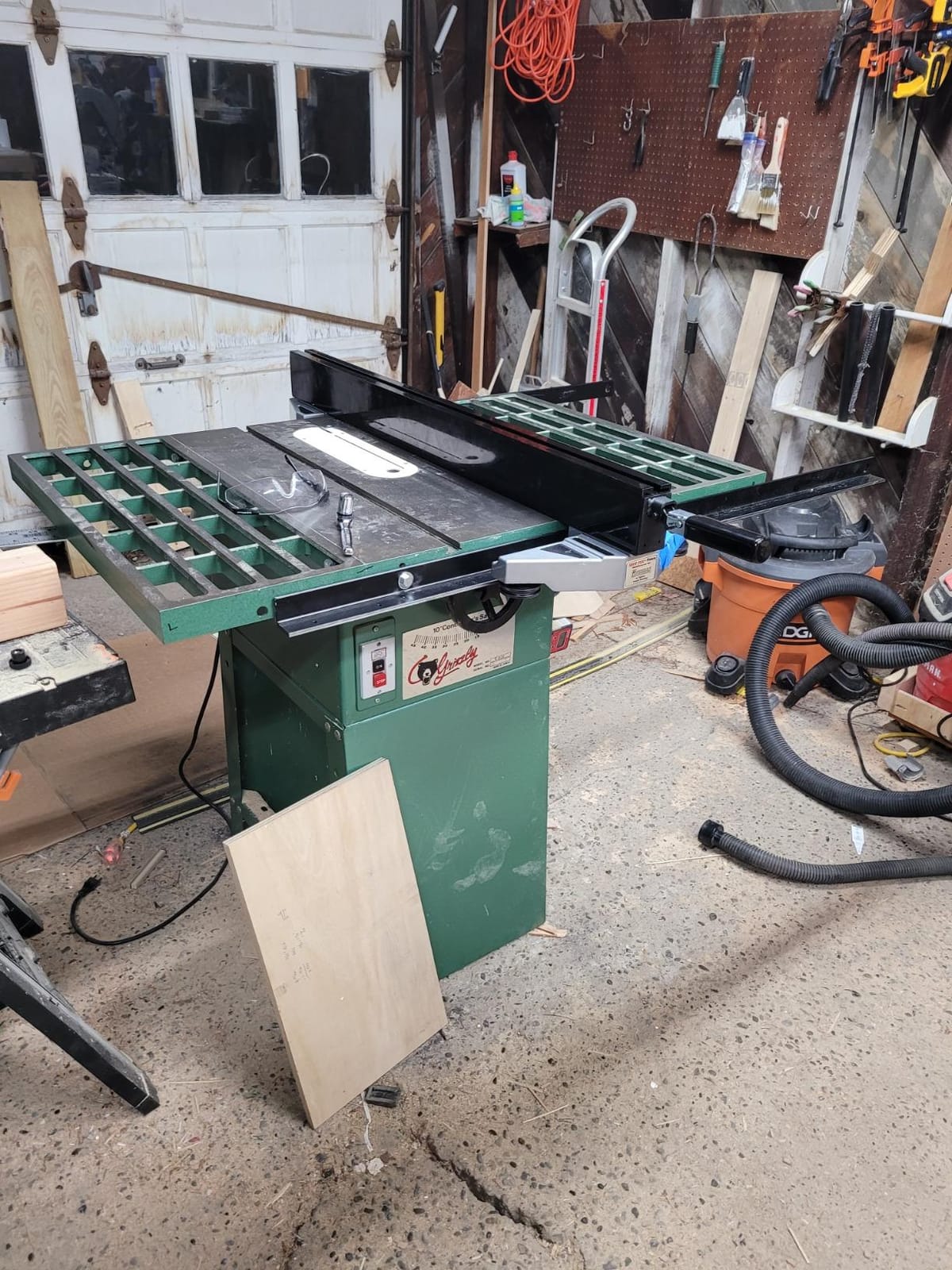
The W1410 solves a specific problem better than anything cheaper in this list: an old factory fence that creeps. Owners describe it as a true-locking budget system that finally stops a rip fence from drifting, and the mechanism is the both-end locking arrangement combined with clamping to the rails rather than riding loosely on them. Once the fence is captured at the front and the rear, minor rail error stops shifting your cut width.
Travel is on ball bearing guides, and the fine positioning knobs sit on both sides, so the fence can be used by either a right-handed or left-handed operator without changing hardware. That two-sided fine adjust is the closest thing to micro-adjust in this roundup at a fraction of the cost of a dedicated micro-adjust system, and it is why owners report repeatable cuts after the initial setup.
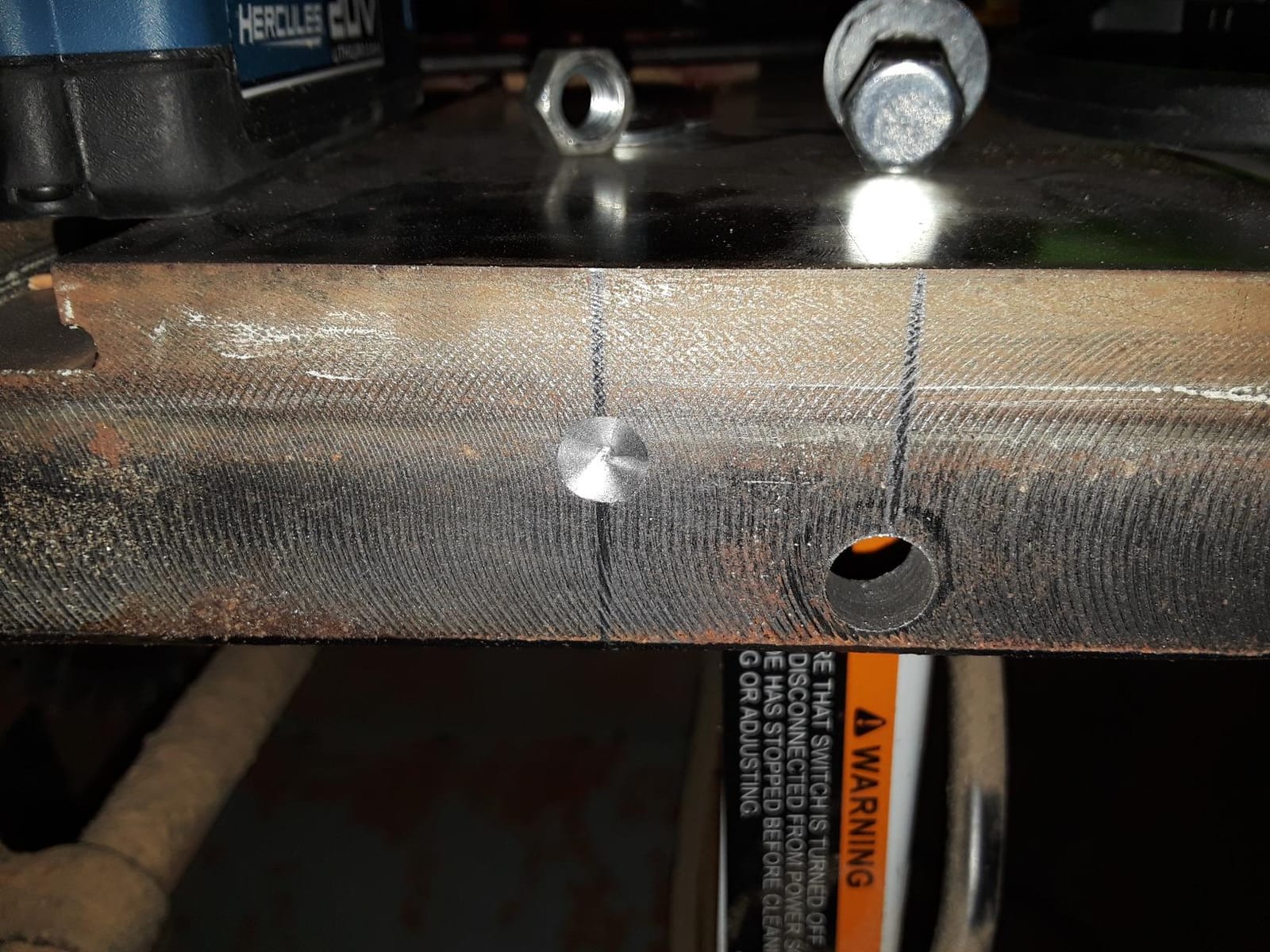
The honest part is installation. This is not a clamp-on product. On a cast iron table you will usually need to drill and tap new holes, and the supplied rails are described by owners as crude powder-coated angle iron that may need filing and sanding before they run smoothly. Plan the afternoon accordingly, with a drill, tap set, clamps, and files on hand before you start.
Other reported friction points: the fence face has a slight concave bow and a plastic-coated face plate, the instructions are unclear, and at least one buyer received a kit missing a locking jaw. There is no right-hand stop in the kit, and the rail end covers are easily lost, so order spares if you care.
Where the accuracy actually comes from?
Because the fence clamps to the rails rather than sliding on rollers, rail misalignment stops being the dominant error. You are trading a rolling contact that wanders for a bolted contact that does not. That is the same design logic used in higher end rail systems, scaled down to angle iron instead of square tube.
The dual-side fine knobs let you dial in parallelism in thousandths without moving the whole body. Set the rough distance, lock, check with a machinist’s square, then nudge the fine knob until the gap is even. Repeat this at the front rail and the rear rail and the fence will sit parallel even if the table is not perfectly flat.
Where it falls short?
Two things. The rails need cleanup work before first use, and the fence face is not dead flat out of the box, so you should check the middle of the face with a straightedge. Owners also report heavy boxes arriving damaged, so inspect the rails for bends before you mount anything.
If your saw has a cast iron top and you are not comfortable drilling and tapping it, this is not the fence for you. A clamp-on product like the BOW XT XTENDER gives you most of the guidance benefit with none of the metalwork.
4. Shop Fox W1716 Aluma-Classic Fence – Best for Long Rip Capacity
Shop Fox W1716 – Aluma-Classic Fence-Standard, 57-Inch
57 inch rails, 30 inch right rip
Steel and aluminum body
Cam-action lever
Wide right-angle face
Pros
- Stiffer and lighter than the W1410
- Long rails for wide material
- Fast single-lever lock
- Good workpiece support
Cons
- Heaviest item here at 53.3 pounds
- Needs accurate rail alignment to run true
- Less owner feedback than the W1410
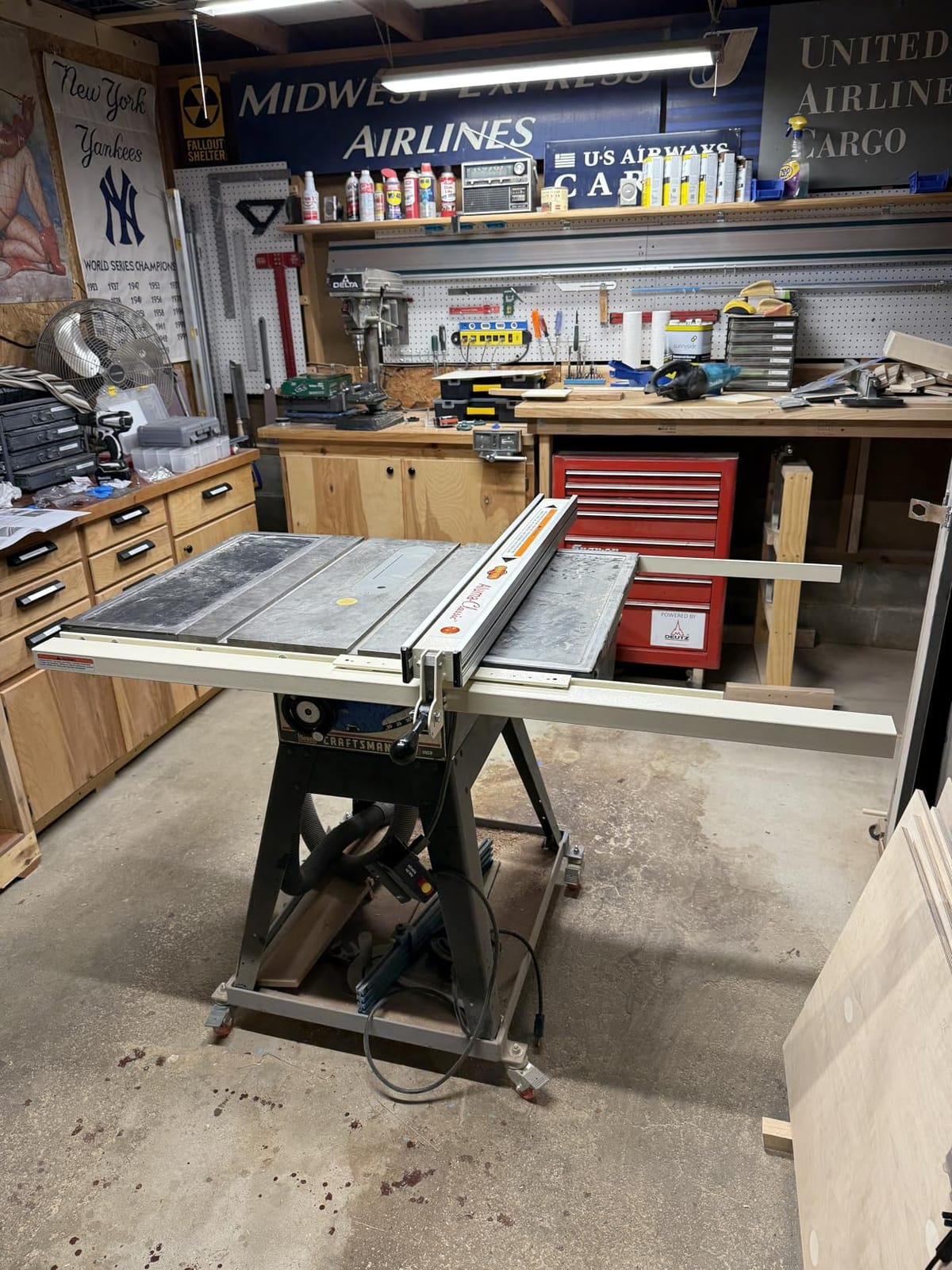
The W1716 is the step up from the W1410 in the same product line, and the two differences that matter are capacity and rigidity. The 57 inch rails deliver 30 inch of maximum rip to one side of the blade, which is what you need to break down a full sheet in one pass on most cabinet saws, and the steel and aluminum body is stiffer and lighter than the entry model while still using steel where the load is.
Locking is a single cam-action lever rather than separate front and rear controls, so you throw one handle and the fence is captured. Owners like how fast that is during production work, where you are setting the fence dozens of times a day. The wide right-angle body also gives real support to the workpiece, which helps when you are handling a heavy panel.
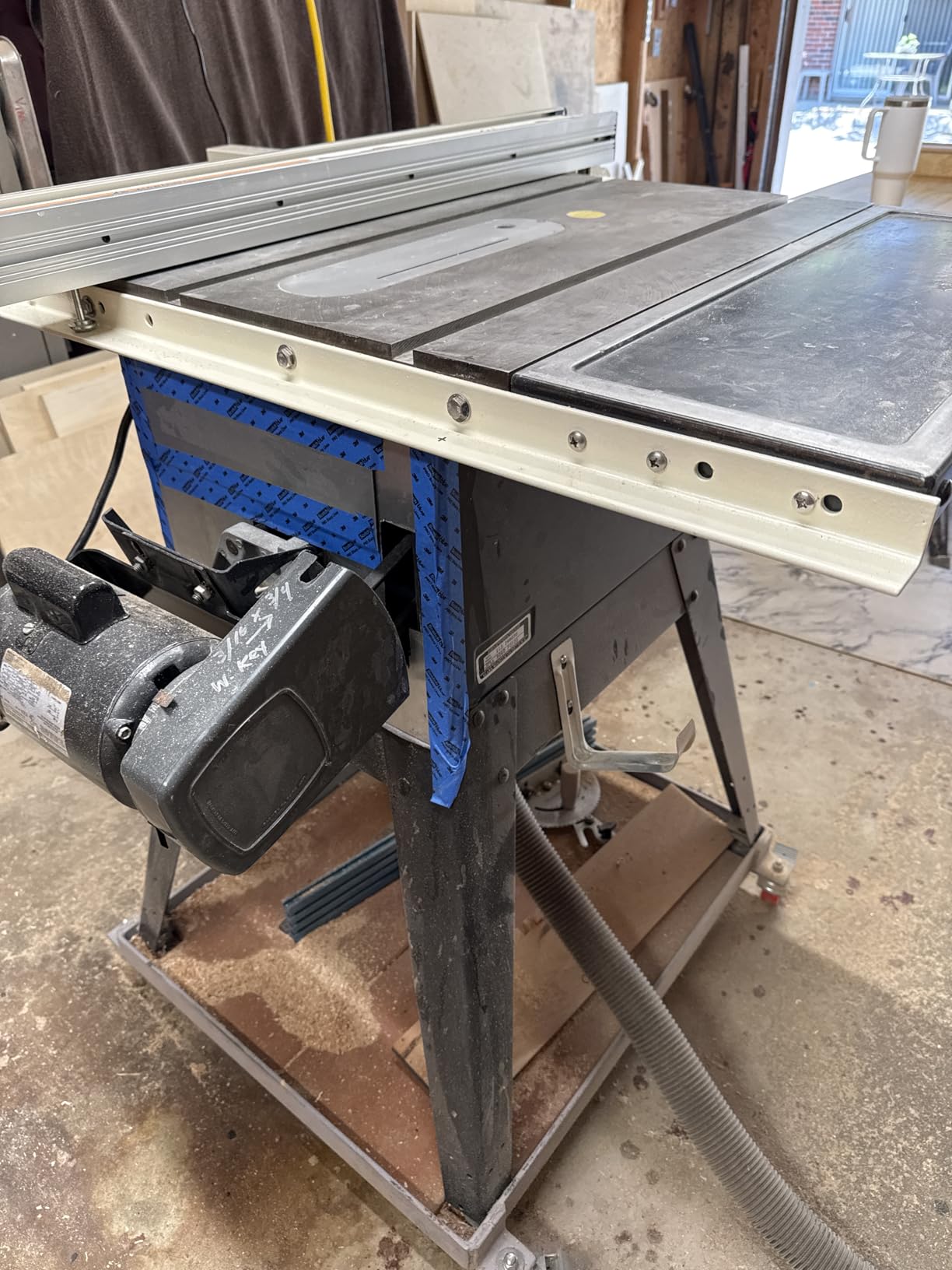
There is an important condition attached to that rigidity: the fence runs true only if the rails are aligned. This is a rail system, not a clamp-on add-on, so parallelism is a setup outcome rather than a factory guarantee. Buyers report that accurate rail alignment is what makes the difference, and the supplied instructions cover this, but you should budget a dedicated alignment session rather than assuming it will be square as delivered.
The weight is the other real factor. At 53.3 pounds this is the heaviest kit in the roundup, and owners describe mounting it as a two-person job. If you are installing it over a cast iron top, plan the lift before you position the rails, because trying to muscle it into place with the bolts half in is how bent rails happen.
When the extra rail length earns its keep?
Rip capacity is not a vanity number. It is the distance the fence can sit from the blade, and a fence that cannot reach far enough means you cannot rip a full sheet in one pass, which means handling a 4 by 8 panel with an unsupported offcut. Thirty inches covers most panel work, and that is why this system suits cabinet shops rather than small hobby benches.
Buyers also single out the wide right-angle face for supporting the workpiece. On a heavy panel, a taller supported face reduces the twisting that causes both kickback and a crooked edge, and it makes the cut easier to control with a support roller on the outfeed side.
Where it falls short?
At 118 ratings the owner feedback here is thinner than for the W1410, and the reviews that do exist focus on weight more than on accuracy figures. Nobody is quoting a parallelism spec for this unit, so if a number on the spec sheet matters to you, this is not where to look.
It is also the least convenient option for a small shop, since you need a second pair of hands to mount it. Shop Fox customer support has been responsive on damaged scale pieces, but a bent rail is a bigger problem than a scratched scale and is not covered the same way.
5. Bosch 2610950148 Rip Fence Assembly – Best OEM Replacement
Bosch Parts 2610950148 Rip Fence Assembly
O.E.M. Bosch part 2610950148
Fits Bosch 4100 and 4000 series
Metal construction
5.12 pounds
Pros
- Drops in and locks with no adjustment on a 4100
- Sturdier than a worn original
- Cheaper and easier than a full system
- Useful as a second fence
Cons
- Only fits Bosch 4100 and 4000 series
- Front ride sits high on a 4000 series and needs shimming
- Model match not always confirmed
This is not an upgrade, it is a repair. If you own a Bosch 4100 or 4000 series table saw and the original fence is bent or missing, this is the O.E.M. authorized part number that restores factory operation. Owners report it drops in and locks down with no adjustment at all on a 4100, which is the best possible outcome for a replacement part, and they note it sits parallel to the blade and feels sturdier than the worn original it replaces.
At 5.12 pounds and 29 by 7 by 5 inches, it is lighter than any rail system in this roundup, and it is the only one that arrives as a single metal part rather than a rail-and-fence assembly. Several owners use it as a second fence so they can add a taller guide or an anti-kickback hold-down without unsetting their primary.
Fit is model-specific and this is where you have to be careful. On a 4000 series table the front ride sits about 1/8 inch high, which needs shimming and extra care when cutting wide material. One reviewer also reported that the part did not match their Bosch model, so confirm your model number against the part number before you order.
Treat the 4.2 rating in context. It is based on 70 ratings, which is one of the smaller review bases in this roundup, and the reviews are written almost entirely by people restoring a damaged fence rather than by people comparing accuracy. Read them as service-part feedback, not as a verdict on rip fence performance.
Why an OEM part can beat a better aftermarket fence?
The factory fence was engineered against the factory rails and table. An aftermarket system has to be adjusted to compensate for whatever your saw does, while an OEM part is dimensionally matched to the rail it slides on. On a saw that is otherwise in good shape, that match is worth more than a superior locking mechanism.
It also means zero setup. There is no alignment session, no shimming, no drilling, and no risk of introducing a new error into a saw that was cutting accurately. For a repair, that simplicity is the feature.
Where it falls short?
It fits Bosch 4100 and 4000 series saws and nothing else. If you have a different brand, this is the wrong page, and reading this section is the only useful outcome. It also will not add rip capacity or improve blade-to-fence guidance in any meaningful way.
On a 4000 series, plan on the shim. The 1/8 inch high front ride can push a wide workpiece out of square, and that is exactly the kind of defect that gets blamed on the fence when the real issue is the fit of the part.
6. Peachtree Woodworking Supply Uni Style Fence – Best for Delta Uni-Fence Saws
Peachtree Woodworking Supply Uni Style Table Saw Fence with Sacrificial
One-piece extruded aluminum
1/2 inch UHMW sacrificial face
Mini tracks for jigs
43 x 2 x 3 inches
Pros
- Highest rating here at 4.8 stars with no one- or two-star reviews
- Rigid one-piece body that stays true
- Replaceable UHMW face for rabbet cuts
- Affordable way to modernize a Uni-Fence saw
Cons
- Upgrade section only
- base and rails not included
- Fits only the Delta Uni-Fence system
- Only 52 ratings so far
If your saw wears a Delta Uni-Fence, this is the section to buy. The Uni Style fence is a single piece of extruded aluminum that replaces the original fence head while keeping the factory base and rails, so your investment is limited to the working part of the system. Owners rate it 4.8 stars with no one- or two-star reviews at all, which is a cleaner rating profile than most of the products here.
The included half inch UHMW sacrificial sub-fence is the part owners write about most. The recessed front accepts it, and you can also machine your own half inch wood or UHMW face to fit. That turns the fence from something you avoid cutting into into something that supports rabbet cuts and face work, which the original Delta fence could not handle without marking the workpiece.
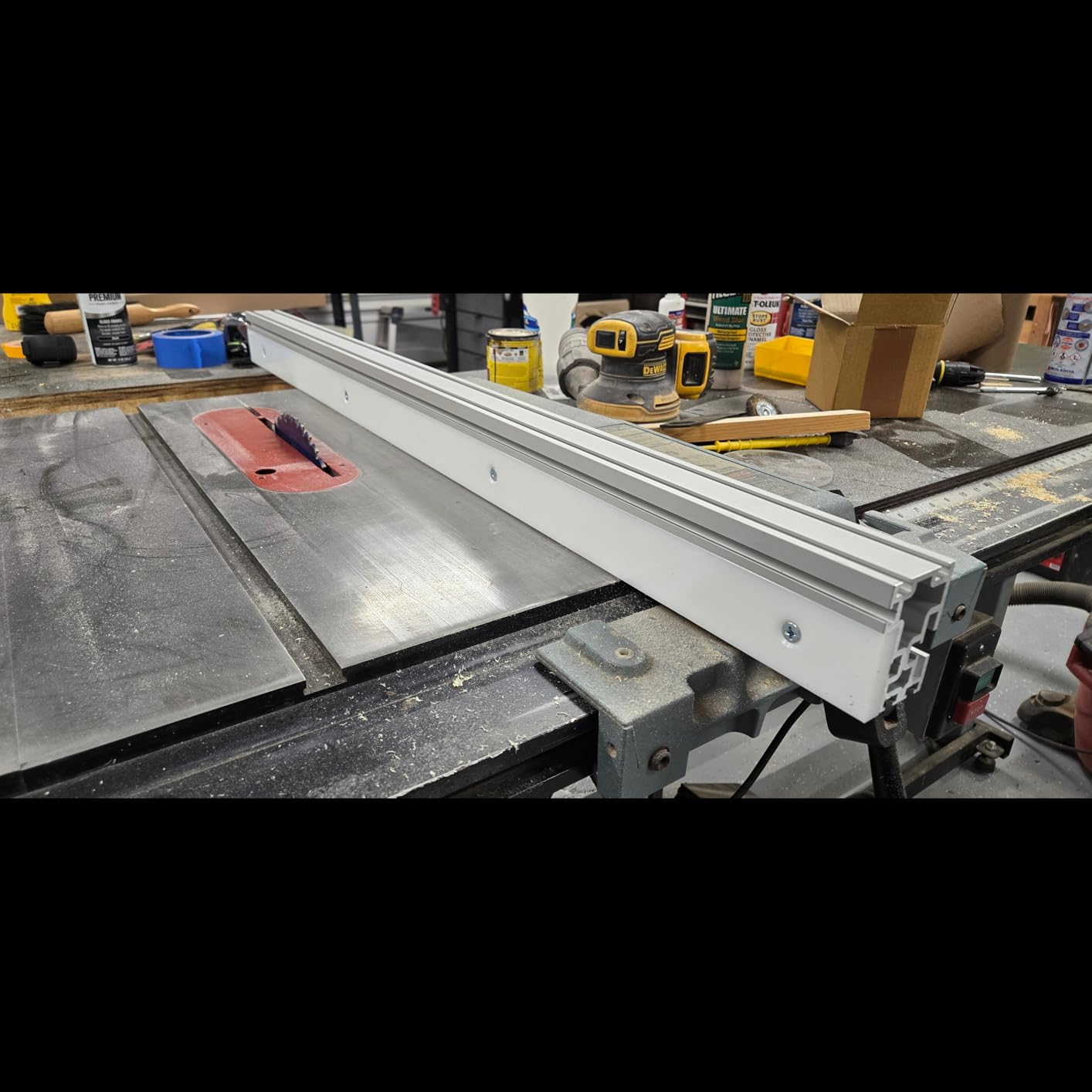
Mini tracks along the length accept quarter inch by 20 hex head bolts, so featherboards, stop blocks, and store-bought jigs mount directly to the fence. For a Delta Uni-Fence owner doing cabinet work, that turns a factory fence into a proper jigging platform without buying a separate accessory rail.
Made in the USA, which matters to a segment of buyers who filter on it. The aluminum body is rigid and reported to stay true, and the 43 by 2 by 3 inch section gives you a long face for full panel work on a Uni-Fence saw.
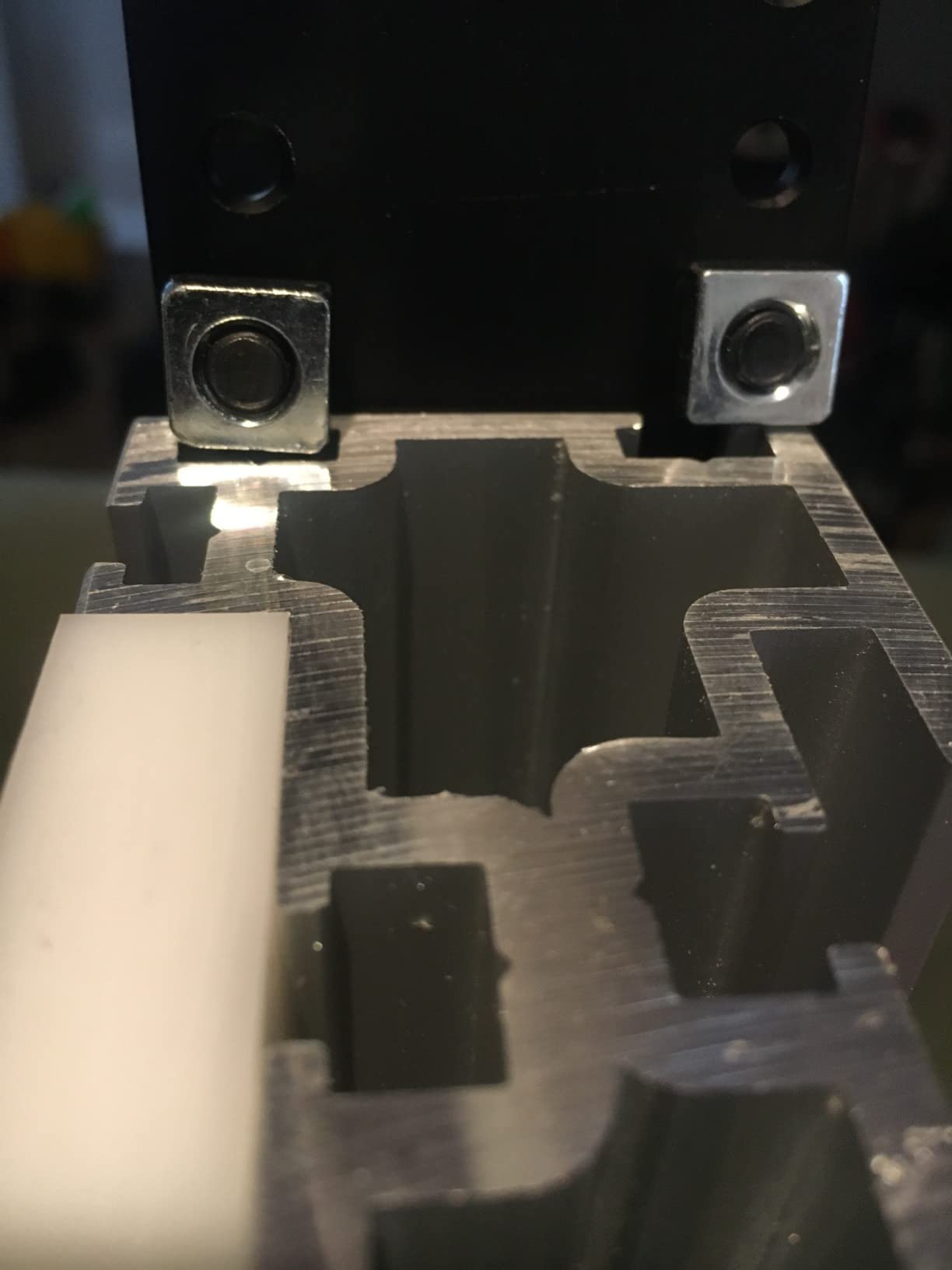
What a sacrificial sub-fence changes?
On a typical factory fence, cutting a rabbet means cutting into the fence itself, which gouges the reference surface your next cut is measured from. A sacrificial sub-fence absorbs that damage. When it wears out you unscrew it and replace it, and your reference surface stays where it was, so the accuracy you aligned once does not walk away over time.
That durability is the real reason the included UHMW face matters for accuracy. It also gives you somewhere to register a featherboard, so light cuts on hardwood stay down on the table instead of climbing the fence.
Where it falls short?
It fits only the Delta Uni-Fence system, so if your saw has a different rail design this is not an option. Read that as a genuine limit rather than a minor inconvenience, because the mounting geometry is specific to the Uni-Fence base.
The 52 ratings give it one of the smaller review bases here, though it has been on the market for many years, so the owner history is long even if the count is small. Treat the high score as encouraging rather than as a long-term reliability measurement.
7. Woodpeckers ARF-BSCS Auxiliary Rip Fence – Best for Job-Site Saws
Woodpeckers Auxiliary Rip Fence, 36 Inch Job Site Table Saw Fence Extension, Infeed or Outfeed Support, T-Track Slots, Clamping Blocks – ARF-BSCS
36 inch fence, 3-1/2 inch tall
Built-in T-track slots
7 inch infeed and outfeed supports
10 pounds
Pros
- Installs in seconds with no modification to the existing fence
- Sized for compact machines
- Built-in slots for featherboards and push blocks
- Includes infeed and outfeed supports
Cons
- Track clamps not included
- 36 inch length limits it to smaller machines
- An auxiliary support rather than a primary precision fence
The most recent design in this roundup, and it targets the machines most people forget. A job-site saw, a bandsaw, a vintage contractor saw, or a router table all have a fence that is too short and too light for the work, and this adds a 36 inch, 3-1/2 inch tall auxiliary fence that clamps on in seconds without modifying the fence you already have.
What makes it more than a length extender is the pair of 7 inch material supports for infeed and outfeed stabilization, plus the built-in T-track slots on the fence face. Long material sags between the fence and the blade or past the outfeed edge, and those supports take that load. Owners consistently mention the T-slots for featherboards and push blocks as the reason to buy it rather than a plain extension bar.
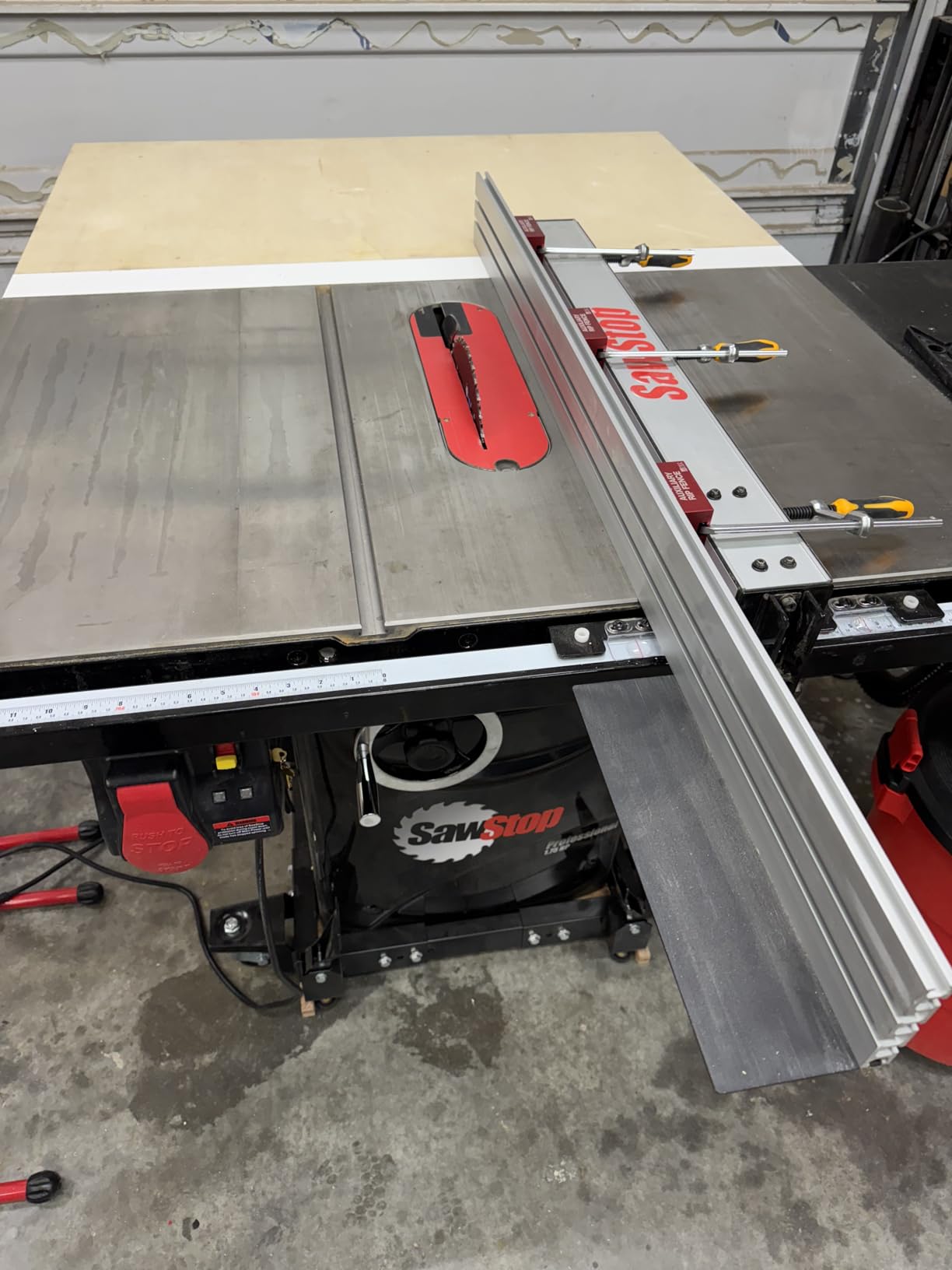
The clamping detail is unusually well thought out. Fence plus clamping block measures exactly 2 inch, and the two sliding blocks install with standard track clamps, which are not included. That fixed 2 inch dimension is a deliberate choice, because it means the fence sits square to the table in a repeatable way rather than wherever the clamp happens to land.
At 10 pounds it moves between machines easily, and it is made in Strongsville, Ohio. Owners use it on job-site saws, bandsaws, vintage contractor saws, and router tables, so the design is aimed at the compact end of the market rather than at a cabinet shop.
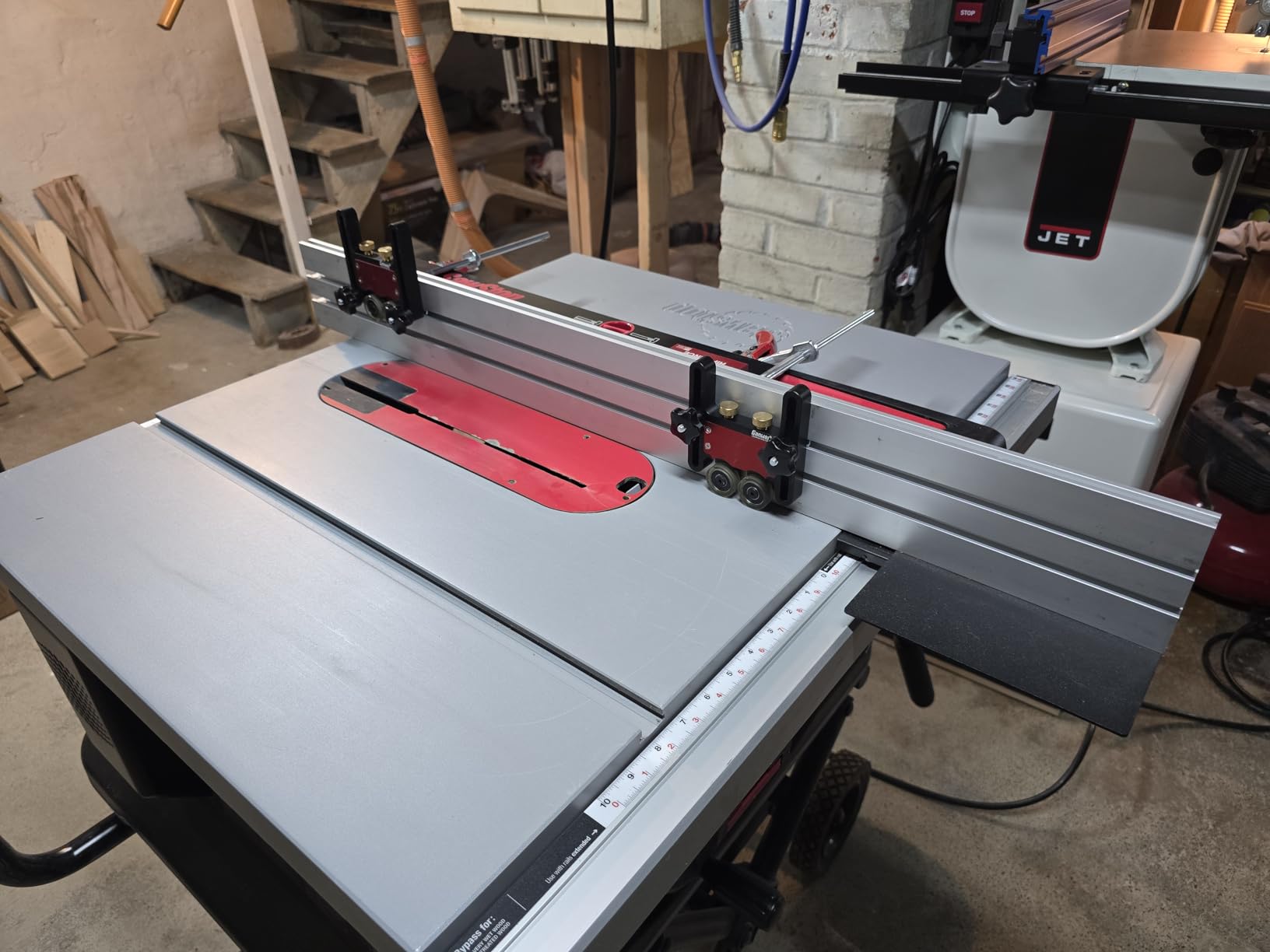
What auxiliary support actually fixes?
Most crooked cuts on a small portable saw are not a fence alignment problem at all. They are a support problem. A panel wider than the table has nothing under its outboard edge, so it droops, the cut angle changes partway through, and the edge comes out tapered. The infeed and outfeed supports close that gap without touching your alignment.
The T-track slots then let you add a featherboard for thin material or a push block for large panels. Together, those two features turn a bare job-site saw into something that handles sheet goods far better than the fence alone ever would.
Where it falls short?
It is 36 inches long, which is shorter than a full rail system, and it is an auxiliary fence rather than a precision primary one. If your main problem is that your fence will not hold a set, this will not solve it. If your main problem is short material and unsupported panels, it will.
You need to buy track clamps separately, so factor that into the decision. And with 50 ratings the long-term record is still short, which is normal for a recent release but worth keeping in mind.
8. INCRA IJ32FNCSYS Jig Fence System – Best for Joinery Jigging
INCRA IJ32FNCSYS Original Jig Fence System with MDF Fence and Shop Stop plus Aluminum Right Angle Fixture
T-slot fence for sub-fences
MDF with right angle fixture
Shop stop included
21.75 x 6.3 inches
Pros
- T-slot accepts shop-made sub-fences for zero-clearance work
- Right angle fixture and shop stop add repeatability
- Weighs about 3.5 pounds
- Large dovetail accessory ecosystem
Cons
- Lowest rating here at 4.0 stars
- Not a primary rip fence
- MDF face less rigid than an aluminum rail system
Read this one carefully, because it solves a different problem. The IJ32FNCSYS is a jig fence system for joinery, crosscut positioning, and sub-fence work, not a rip fence for breaking down sheet goods. Owners buy it for the T-slot fence that accepts shop-made sub-fences, which is how you get zero clearance cuts and use edge forming cutters without buying a second piece of equipment.
The included shop stop positioner and aluminum right angle fixture add repeatability straight out of the box, and the accessory ecosystem is the real draw. The T-slot interfaces with a wide range of INCRA dovetail accessories, so if you are laying out drawer fronts or box joints, this is a positioning aid rather than a saw fence. At 21.75 by 6.3 inches and 1.6 kg it is one of the most compact items here.
Expect less from it in a ripping context. The 4.0 star rating is the lowest in this roundup, with about 10 percent of ratings at one star, and the complaints are consistent: the MDF fence face is not as rigid as an aluminum rail-and-fence system, and the scope is narrow. With 24 ratings this is also the smallest review base, so any conclusion from the star average is provisional.
If you already own a rail-and-fence system and you are doing repetitive joinery, this is a good second tool. If you are shopping for a rip fence, nothing else on this list is a substitute and this is the wrong product to buy.
Why the T-slot matters more than the fence?
A T-slot fence accepts a sub-fence you make yourself, typically from hardwood with a knife-edge ground into it. With that in place you can cut flush, at full depth, with no sacrificial material to mark the workpiece. The same slot accepts a shop stop for positioning and a right angle fixture for holding a part square while you rout or cut.
That flexibility is why people own this system despite the modest rating. It is a positioning tool that happens to ride on your table, and its value scales with the accessories you add rather than with the fence itself.
Where it falls short?
MDF is not as rigid as aluminum, so a long cut will show more deflection than anything else in this roundup. That is a direct trade for the light weight and the machinable, replaceable face.
The scope limit is the bigger issue. Anyone hoping to rip full sheets with this will be disappointed, and the one-star reviews are largely people who expected a rip fence. Check your model number before you commit, and consider what you will actually make with it.
How to Check If Your Table Saw Fence Is Square?
You do not need a precision instrument to check a fence, you need a straight edge and twenty minutes. The method below is the one that gets recommended most often in woodworking forums and it is the same method we would use before trusting any of the fences above.
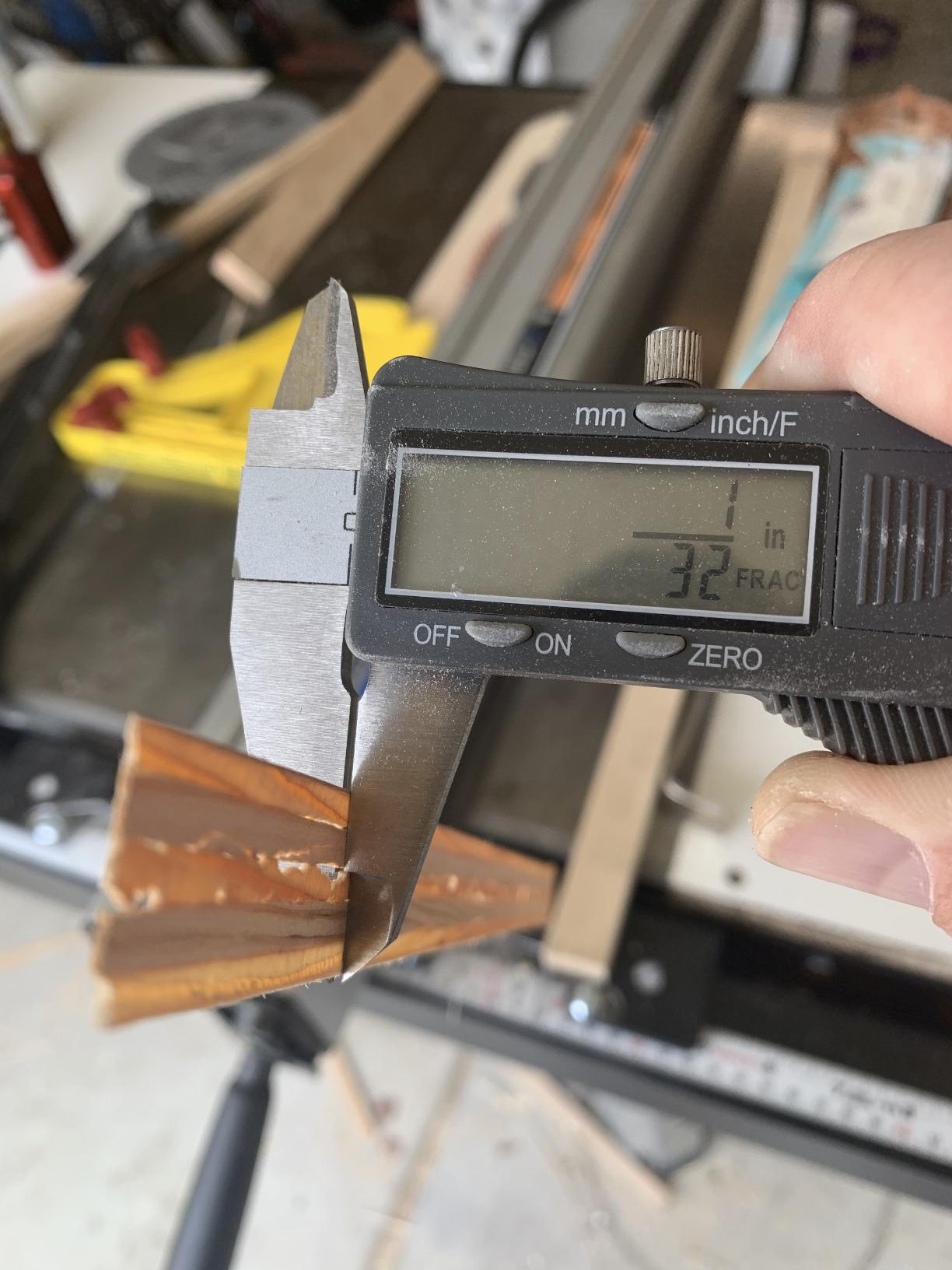
Start with a machinist’s square or a quality straight edge. Place one leg flat on the saw table right along the fence face and rock it slowly from one end to the other. A straight, parallel fence keeps even contact the whole way. A gap that opens at one end, closes at the other, or flickers in the middle tells you the face is bowed or the fence is out of parallel to the table.
For a sharper read, darken the table surface with a marker or a pencil line and draw the straight edge along it. A straight fence leaves an unbroken line. You now have a permanent record of exactly where the error sits, front end or rear end, instead of a guess.
A flashlight is the fastest field check. Shine it along the joint where the fence face meets the table with the saw off. A uniform glow means even contact. A bright patch that moves as you walk around the fence means the gap is changing, and that is your parallelism error in inches per foot.
Once you know the fence is square, here is the re-alignment sequence. First, loosen the rear bracket and the front clamp fully so the fence is free to move. Second, set the fence roughly square to the table at the front. Third, move to the rear and tighten only the rear fixing enough to hold position. Fourth, recheck with the straight edge and adjust the front until the gap is even end to end. Fifth, lock everything and recheck once more, because a fence adjusted while loose can move when the last bolt goes in.
If the fence cannot hold its setting once the bolts are tight, the rails are the problem, not the fence. Owners of drifting job-site fences often find the answer by tightening a far-end rod or shimming a cam rather than replacing anything. Check the rail ends for grease and debris first, since rails that arrive coated need degreasing before they will sit flat.
Acceptable Parallelism Tolerance for a Table Saw Fence
These are the working thresholds for a fence that measures parallel to the blade across the full width of the cut. They are reference values, not a substitute for checking your own saw, and the number that matters is the gap you measure, not a number on a spec sheet.
Up to 0.004 inch of measured gap across the full width of the cut is acceptable for general work. Between 0.005 and 0.008 inch is marginal, and you should re-align before sheet goods or glue-up work. Between 0.009 and 0.016 inch is out of spec, which means re-align now and check the rails for concavity. Anything over 0.016 inch is a fault, and the fence and the rails both need attention before you cut again.
The Delta T3’s manufacturer figure of within 1/64 inch, which is 0.0156 inch, sits just inside the out-of-spec band above. That tells you the published number is a headline tolerance at the limit rather than a typical reading, and it is worth checking any fence yourself rather than trusting the box.
Sheet goods demand the tight end of that range because a 0.016 inch error across a 96 inch panel becomes nearly two sixteenths of an inch of taper by the far edge. Solid wood joinery tolerates a little more, but a face frame glued up will not forgive it.
Is the Fence the Problem? Diagnosing Crooked Rip Cuts?
Most complaints about an inaccurate fence are actually complaints about something else, and replacing a good fence because of it is an expensive way to waste an afternoon. Work through this order before you touch an adjustment.
Start with the blade. A worn blade with a dull trailing edge deflects the workpiece sideways, and the result is a cut that is fine on one end and progressively off on the other. Look for a burnished, rounded edge or a scoring pattern on the workpiece face, and replace the blade before blaming the fence.
Next, check the sled. A crosscut sled that is out of square will make crosscuts inconsistent, and users often notice this as drift in what they assume is a rip cut. Set the sled’s waste block against a known square and adjust the rear stop.
Then check the table. A cast iron top that has been refinished can sit slightly out of flat, and a fence that is square to a bowed table is not square to the blade. The flashlight test from earlier covers this in a minute.
Finally, inspect the rails themselves. A concave rail, often from arriving bent or from being over-tightened at one end, will make the fence appear to be out of square no matter how you adjust the head. Drag a straight edge along the rail top and look for a dip in the middle. Also degrease the rails, since a greasy or dirty rail is the most common and most fixable cause of a fence that will not hold its set.
If all four check out and the fence still drifts, then the fence is the fault and the lock mechanism is the likely culprit. A worn cam or a stripped locking jaw loses its grip on the first bump, which is exactly the failure pattern the heavier three-point systems in this roundup are built to avoid.
How We Judged Fence Accuracy?
We did not bench-test these fences with a dial indicator, and we think a roundup that implied otherwise would be misleading. What we did was read the manufacturer specifications, then read the owner reviews closely and cross-check them against the patterns that show up repeatedly in woodworking forums.
Every accuracy figure quoted in this article is labelled as either a manufacturer claim or an owner report. The Delta’s 1/64 inch parallelism is a manufacturer specification. Claims about a fence staying square after being bumped, about a face arriving concave, or about lock creep are owner reports drawn from the review data. Ratings and review counts are copied directly from the retailer listings and were current at the time of writing.
We weighted our judgement toward four things: whether the lock is captured at more than one point, whether there is a way to fine-tune parallelism after installation, whether the rails are rigid enough not to deflect, and how much of the accuracy story depends on installation skill. Products that are accurate only after a specialist sets them up are ranked honestly, including the setup work.
What Actually Makes a Table Saw Fence Accurate?
Manufacturer accuracy claims are nearly all stated as a tolerance on paper. In practice four mechanical features decide whether a fence holds that number on your saw, your stock, in your shop.
Micro-adjust is the first, and it is the feature owners on woodworking forums name most often as the single biggest practical accuracy upgrade. A micro-adjust mechanism, which is a fine threaded knob that moves the fence in thousandths of an inch after the main lock is set, lets you correct parallelism without disturbing your rip width. Without it you either loosen the main lock, nudge the fence, and re-measure the distance from the blade, or you live with the error. The Shop Fox W1410’s two-sided fine positioning knobs perform the same job in a simpler way.
Lock repeatability is the second. This is how many points the fence is captured at, and whether it returns to the same place when you release and re-engage. A single knob on one rail leaves the fence free to rotate, which is why many factory fences drift after a bump. Three-point systems, like the Delta T3 clamping to the front tube and hooking over the rear rail, remove that freedom entirely.
Rail rigidity and rail count are the third. A two-rail system can rack into a parallelogram under lateral load, which shows up as a fence that is square when empty and out of square when a sheet is pushed against it. Three-rail and four-rail systems triangulate the fence and resist that. Square tubular rail resists twisting far better than angle iron or stamped plate, and the two Shop Fox systems in this roundup sit at opposite ends of that comparison: crude coated angle iron in the W1410, a stiffer steel and aluminum body on the 57 inch W1716.
Body material and fence height are the fourth. Steel tube is heavy and resists deflection, which is a real benefit on a fence you bump. Extruded aluminum is lighter and easy to mount alone. Either way, height is what keeps a tall board from pivoting, which is why the 5 inch BOW face and the 3-1/2 inch Woodpeckers auxiliary both help cut straightness as much as parallelism.
Rail flatness is the quiet one. A rail that is concave, or that arrives coated in grease, will not let a fence sit parallel no matter how good the head is. Check your rails with a straight edge before you start adjusting, and expect to degrease new rails first.
Scale and readout matter less than most marketing suggests. An etched scale with a hairline pointer, which the Delta T3 uses, is more precise than a magnified cursor because you read a hairline against a mark rather than estimating a shadow. Digital readouts are a convenience feature, and owners report that many lose their calibration after a power interruption and need re-zeroing each session, so do not treat one as an accuracy upgrade.
Compatibility is where most mistakes happen. A universal clamp-on product like the BOW XT XTENDER fits almost anything and is the safe default. A rail-and-fence system needs a table that can accept drilling and tapping. A section upgrade like the Peachtree Uni Style needs the exact base system, in this case the Delta Uni-Fence. And magnetic fences are the trap, since they only work on ferrous castings and do nothing on a fiberglass or phenolic topped saw.
Finally, budget honestly for the work. Rail systems need an alignment session, a drill, and often tap and clamps. Clamp-on systems need an afternoon and no metalwork. A two hour difference in setup is a legitimate reason to choose one product over another that has identical accuracy on paper, and it is the reason the BOW XT XTENDER takes the value award here despite not being a full system.
Frequently Asked Questions
Which table saw fence is the best?
For most people, the Delta 36-T30T3 is the best table saw fence in this roundup because it combines a stated parallelism within 1/64 inch, a three-point lock that holds under load, and the largest review base here at 564 ratings. If you want the best value instead, the BOW Products XT XTENDER upgrades an existing fence for far less effort. If your saw already works and the fence is merely short, the Woodpeckers ARF-BSCS is the cheapest real improvement.
My table saw fence isn’t square. How can I fix it?
Loosen the front and rear fixings completely, set the fence square at the front, then tighten only the rear until it holds. Recheck with a straight edge along the fence face and adjust the front until the gap is even end to end. Tighten the rest last and check again, since a fence adjusted while loose moves when the final bolt goes in. If it will not hold, the rails are the fault, not the fence.
What is the acceptable tolerance for aligning a table saw fence?
Up to 0.004 inch of gap across the full width of the cut is acceptable for general work. Between 0.005 and 0.008 inch is marginal and should be corrected before sheet goods. Between 0.009 and 0.016 inch is out of spec, and anything over 0.016 inch needs re-alignment plus a check for concave or damaged rails. Note the Delta T3 published figure of 1/64 inch, or 0.0156 inch, sits at the top of that range.
Why is my table saw cutting crooked?
Check in this order: a worn blade with a dull trailing edge, a crosscut sled that is out of square, a table top that is not flat after refinishing, and finally a concave or greasy rail. All four produce a tapered edge that looks like a fence fault. A flashlight run along the fence-to-table joint with the saw off reveals an uneven gap in seconds, and a drag of a straight edge along the rail finds a dip in the middle.
What is the recommended angle for a table saw fence?
A rip fence is not set to an angle. It is set parallel to the blade, which means perpendicular to the direction of travel, and any error shows up as a taper along the length of the cut rather than as a constant offset. The blade is usually set at 90 degrees to the table. If your cuts are consistently a fixed width but drift from end to end, you have a parallelism problem, not an angle problem.
Is the INCRA fence worth it?
It depends which INCRA product you mean, and that distinction matters. The INCRA IJ32FNCSYS in this roundup is a joinery jig fence with a T-slot that accepts shop-made sub-fences, not a precision rip fence, and it carries the lowest rating here at 4.0 stars from 24 ratings. It is worth it if you build dovetail drawers and want repeatable positioning with the included shop stop and right angle fixture. It is not the answer if your problem is crooked rip cuts.
Final Verdict on the Best Table Saw Fences for Accuracy
The Delta 36-T30T3 takes our top spot in the best table saw fences for accuracy roundup. It is the only product here with a published parallelism figure that is specific, it uses a three-point lock rather than a single knob, and it carries 564 owner ratings that consistently describe the same thing: a fence that stays where it is put. If you own a Delta and can spare an afternoon, it is a straightforward install and a large improvement over a factory fence.
Pick the BOW Products XT XTENDER if your rails are fine and only the face is letting you down, and the Shop Fox W1410 if you want a complete rail system on a saw you are prepared to drill. If your saw is a Delta Uni-Fence, the Peachtree Uni Style section with its UHMW sacrificial face is the pick, and if your problem is short material on a portable saw, the Woodpeckers ARF-BSCS is the cheapest fix that works.
Whichever you choose, measure it after you install it. The machinist’s square check and the tolerance table above take twenty minutes, and they are the difference between a fence that is accurate and one that is merely expensive. For the saw itself, our guide to the best cabinet table saws for fine woodworking is the other half of the equation. This roundup covers what we found in 2026, and we will keep updating it as owner reports accumulate.