
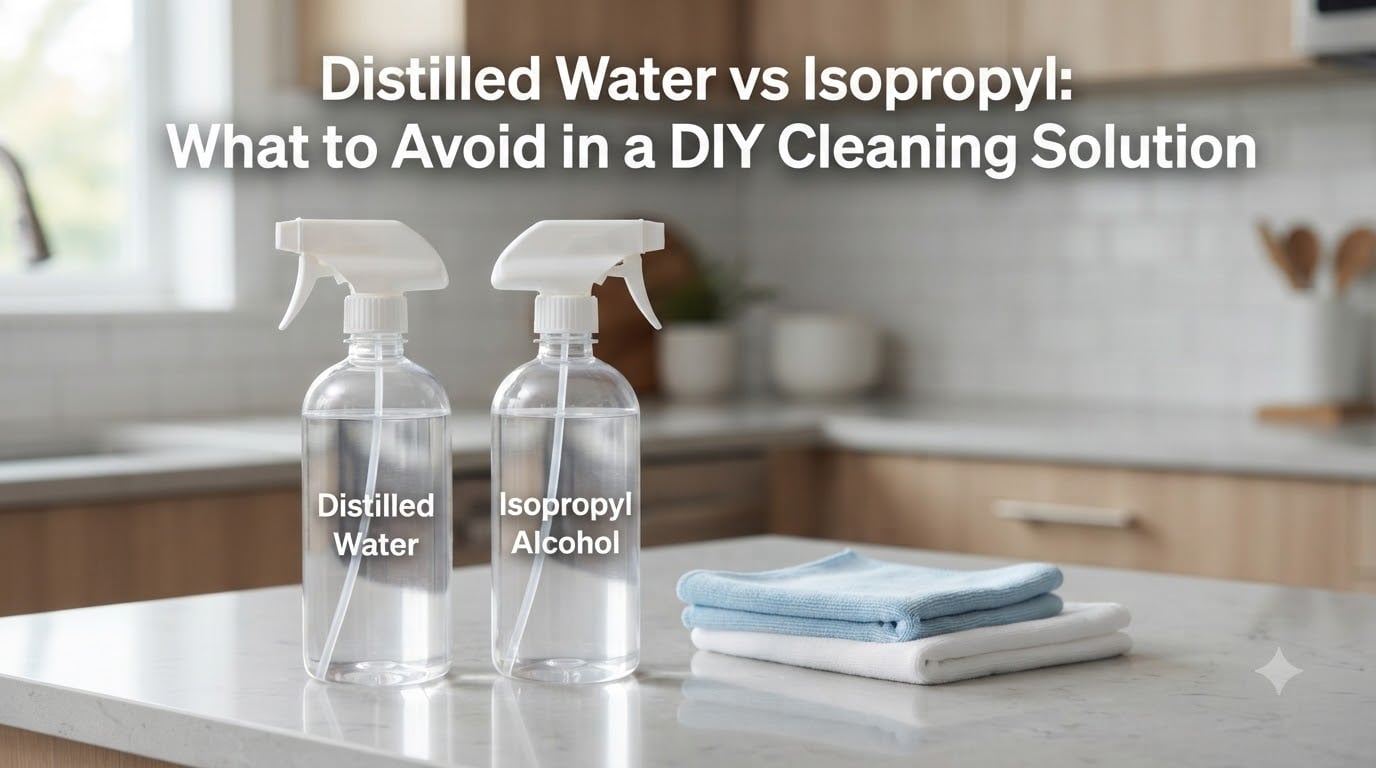
I’ve mixed my own cleaning solutions for years, and the two ingredients I reach for most are distilled water and isopropyl alcohol. They sound simple, but using them wrong can leave streaks, damage electronics, or even create toxic fumes. In this guide, I’ll walk you through the real differences between distilled water vs isopropyl alcohol, why percentage matters, and exactly what to avoid in your DIY cleaning solution.
By the end, you’ll know which concentration to buy, what to never mix with rubbing alcohol, and how to build streak-free cleaners that actually work.
Table of Contents
Distilled Water vs Isopropyl Alcohol: What’s the Real Difference?
Distilled water is water that has been boiled into vapor and condensed back into liquid. This process strips out minerals, calcium, magnesium, and other dissolved solids. The result is essentially pure H2O with no mineral content.
Isopropyl alcohol (also called rubbing alcohol or IPA) is a chemical solvent and disinfectant. It kills germs by denaturing proteins and dissolving cell membranes. The bottle you buy at the drugstore is rarely 100% alcohol though. It’s a mixture of isopropyl alcohol and water, usually labeled 70%, 91%, or 99%.
So when we talk about distilled water vs isopropyl alcohol for cleaning, we’re really talking about two different jobs. Distilled water is the carrier that prevents mineral streaks. Isopropyl alcohol is the active cleaner and disinfectant. They work together in most DIY recipes.
You can use them separately, but they shine when combined. Alcohol evaporates fast and dissolves grime. Distilled water keeps the solution balanced and prevents the streaky residue you’d get from tap water.
70% vs 99% Isopropyl Alcohol: Which One Should You Use?
Seventy-percent and 99-percent IPA behave very differently, and choosing the wrong one is one of the most common DIY cleaning mistakes.
Seventy-percent isopropyl alcohol contains 30% water. This is the concentration most hospitals and labs use for disinfection. The water content actually helps it work better because it slows evaporation and gives the alcohol more contact time to penetrate cell walls. If you want to kill bacteria and viruses, 70% is your best pick.
Ninety-nine-percent isopropyl alcohol is almost pure. It evaporates almost instantly and leaves almost no residue. This makes it ideal for cleaning electronics, circuit boards, optics, and anything where water could cause damage. But it costs more and is overkill for routine household cleaning.
Here is a quick comparison:
70% IPA: Better disinfectant, slower evaporation, cheaper, good for general cleaning and kitchens.
91% IPA: Middle ground, often used in pharmacies, decent for most home cleaning.
99% IPA: Best for electronics, optics, and tasks needing fast evaporation without residue.
If I had to pick one bottle for a DIY cleaning solution, I’d choose 70%. It’s the safest, most effective, and most economical choice for everyday use.
Why Distilled Water Matters for Cleaning
Tap water contains dissolved minerals like calcium, magnesium, and iron. When water evaporates from a cleaned surface, these minerals stay behind as a faint white film. You’ve seen this on glasses taken out of a dishwasher or on windows after a rainy day.
Distilled water has no dissolved minerals. When it evaporates, nothing stays behind. This is why photographers, lens cleaners, and electronics technicians insist on it. It is the only way to guarantee a truly streak-free finish.
Switching from tap water to distilled water is one of the cheapest upgrades you can make to your DIY cleaning routine. A gallon of distilled water costs around a dollar at most grocery stores. For glass, mirrors, screens, and any reflective surface, the difference is immediately visible.
If you run out of distilled water, your next-best option is filtered water from a reverse osmosis system. Spring water and bottled water still contain minerals and will leave streaks. Avoid them for cleaning.
What You Should Never Mix with Isopropyl Alcohol?
This is the part of DIY cleaning that can actually hurt you. Some combinations of isopropyl alcohol and other household chemicals produce toxic gases, dangerous reactions, or explosive compounds.
Here is what to never mix with rubbing alcohol:
Bleach (sodium hypochlorite): Mixing bleach with isopropyl alcohol creates chloroform and other toxic chlorinated compounds. Even small amounts can cause dizziness, lung damage, and chemical burns. Never use them in the same room, let alone the same bottle.
Ammonia: Ammonia plus alcohol can produce chloramine-type gases if bleach is also present. Even alone, mixing alcohol with ammonia-based cleaners creates unpredictable fumes. Use one product at a time and ventilate the room.
Hydrogen peroxide: Combining hydrogen peroxide and isopropyl alcohol can produce peracetic acid, which is corrosive and irritates skin, eyes, and lungs. Use them in separate cleaning sessions.
Acetone or paint thinner: These are highly flammable solvents. Mixing them with alcohol increases fire risk and produces strong, harmful vapors.
Strong acids (like vinegar in concentrated form): While diluted vinegar is fine, never mix alcohol with strong acids. The reaction can release irritating fumes and degrade the container.
The safer approach is to use your DIY cleaning solution by itself, rinse the surface with water, and only then use a different product if you need one. Never blend two cleaners hoping for better results.
DIY Cleaning Solution Recipes That Actually Work
Here are three recipes I keep in spray bottles around my home. All use distilled water and isopropyl alcohol as the base.
Recipe 1: Streak-Free Glass Cleaner
1 cup distilled water
1/4 cup 70% isopropyl alcohol
2 tablespoons white vinegar
Pour into a spray bottle, shake gently, and use on windows, mirrors, and glass tables. The alcohol cuts grease, the vinegar dissolves hard water spots, and the distilled water prevents streaks.
Recipe 2: All-Purpose Disinfectant
2 cups distilled water
1 cup 70% isopropyl alcohol
10 drops essential oil (lavender or tea tree for scent)
This works well for countertops, door handles, and bathroom surfaces. The 1:2 alcohol-to-water ratio keeps it well above the 50% threshold needed for disinfection.
Recipe 3: Electronics and Screen Cleaner
1 cup distilled water
1 cup 99% isopropyl alcohol
Use this on phone screens, monitors, keyboards, and remote controls. Spray onto a microfiber cloth, never directly onto the device. The high alcohol concentration and mineral-free water make it safe for sensitive electronics.
Recipe 4: Vinyl Record Cleaner (Bonus)
1 part distilled water
2 parts 99% isopropyl alcohol
A few drops of dish soap (optional, only with proper rinsing)
Apply with a soft record brush. This is a classic audiophile method for removing dust and static from vinyl records without leaving residue.
Surface Compatibility Guide: What to Avoid Cleaning with IPA
Isopropyl alcohol is a strong solvent, and it can damage certain materials. Here is where to skip it.
Natural stone (marble, granite, travertine): Alcohol can strip sealants and etch polished surfaces over time. Use a pH-neutral stone cleaner instead.
Shellac or lacquered wood: Alcohol dissolves these finishes. Use a wood-safe cleaner.
Acrylic or plexiglass: Even diluted alcohol can cause stress cracks. Use a cleaner designed for plastics.
Leather: Alcohol dries out leather and cracks the surface. Use a leather conditioner instead.
Painted surfaces in poor condition: If paint is already chipping, alcohol can lift flakes and spread the damage.
Rubber seals and gaskets: Prolonged alcohol exposure degrades certain rubbers. Wipe dry quickly.
Safe surfaces include glass, stainless steel, most ceramics, sealed tile, and most electronics. When in doubt, test a small hidden area first.
Safe Dilution Ratios for Different Cleaning Tasks
The right dilution depends on what you’re cleaning. Here is a simple guide I use.
Disinfecting surfaces: Use 70% IPA straight or diluted up to 1:1 with distilled water. Don’t drop below 50% alcohol if disinfection is the goal.
General cleaning: 1 part 70% IPA to 2 parts distilled water is fine for light jobs.
Glass and mirrors: 1 part 70% IPA to 4 parts distilled water works well.
Electronics: Use 99% IPA straight or 1:1 with distilled water for screens and circuit boards.
Optics and camera lenses: 99% IPA, often undiluted, on a lint-free microfiber cloth.
A common mistake is using too much alcohol. More is not always better. Excess alcohol can damage finishes, dry out materials, and create harsh fumes in enclosed spaces.
Common Mistakes to Avoid in DIY Cleaning Solutions
I’ve read through hundreds of forum posts on cleaning and chemistry, and the same mistakes come up over and over.
Using tap water. Even if your water is safe to drink, it’s full of minerals that leave streaks. Spend the extra dollar on distilled water.
Buying the cheapest IPA. One user reported that a CVS-brand 70% alcohol left an oily residue when evaporated. Industrial or pharmacy-grade IPA is more consistent. If you see cloudy residue, switch brands.
Mixing chemicals “just because.” Combining random cleaners doesn’t make them work better. It usually makes them more dangerous. Stick to recipes with at most three ingredients.
Storing in the wrong container. Alcohol can degrade certain plastics over time. Use HDPE or glass bottles for long-term storage.
Skipping ventilation. Even a safe DIY cleaner releases fumes. Open a window or turn on a fan when you spray.
Assuming higher percentage is always better. For disinfection, 70% beats 99%. Save the 99% for jobs that need fast evaporation.
The best DIY cleaning solutions are simple, safe, and built around the right ingredients. Distilled water and isopropyl alcohol are the foundation, and they work well when you respect what each one does.
Frequently Asked Questions
What should you never mix with isopropyl alcohol?
Never mix isopropyl alcohol with bleach, ammonia, hydrogen peroxide, acetone, or strong acids. These combinations can produce toxic gases, corrosive compounds, or flammable vapors. Use one cleaner at a time and rinse surfaces between products.
What is the best DIY cleaning solution?
The best DIY cleaning solution combines 1 cup distilled water, 1/4 cup 70% isopropyl alcohol, and 2 tablespoons white vinegar. This mixture cuts grease, disinfects, and dries streak-free on glass, mirrors, and most hard surfaces.
What can I use instead of distilled water for cleaning?
If you do not have distilled water, your next best option is filtered water from a reverse osmosis system. Bottled water and spring water still contain minerals that leave streaks, so avoid them for streak-free cleaning.
Can you mix Dawn dish soap and isopropyl alcohol?
Yes, you can mix a small amount of Dawn dish soap with isopropyl alcohol and distilled water for a gentle cleaner. Use only a few drops of soap, and rinse the surface if residue remains. This works well for delicate surfaces like vinyl records.
What should you not clean with isopropyl alcohol?
Avoid using isopropyl alcohol on natural stone, shellac or lacquered wood, acrylic and plexiglass, leather, and rubber seals. Alcohol can strip sealants, crack surfaces, and dry out materials. Test a small hidden area first if you are unsure.
Is 70% isopropyl alcohol enough to clean?
Yes, 70% isopropyl alcohol is enough for most cleaning and disinfection tasks. The 30% water content actually helps it work better by slowing evaporation and allowing more contact time to kill bacteria and viruses.
Final Thoughts on DIY Cleaning Solutions
Making your own cleaning products is rewarding when you understand the ingredients. Distilled water vs isopropyl alcohol isn’t a competition. They’re a team. Distilled water prevents streaks and balances the solution. Isopropyl alcohol disinfects and dissolves grime.
Use 70% IPA for general disinfection, 99% for electronics and optics, and always pair it with distilled water. Avoid mixing alcohol with bleach, ammonia, or hydrogen peroxide. Stick to the recipes above, ventilate your space, and store everything in proper containers.
With these basics, you’ll have a safe, effective DIY cleaning setup that costs less than store-bought sprays and works just as well, if not better. Bookmark this guide for 2026 and revisit the recipes whenever you want to refresh your cleaning routine.