
You slide the record out of its mailer, set it on the turntable, drop the needle, and within seconds you hear it. That wobbly, pitch-shifting sound that tells you the vinyl warped somewhere between the seller’s hands and your front door.
I’ve been there. Our team has shipped hundreds of records over the years, and we’ve learned the hard way that what happens inside that box matters more than which carrier you choose. If you want to pack and ship vinyl so it arrives in the same condition it left, every step counts.
This guide walks through the complete process: what causes warping, the materials you actually need, step-by-step packing instructions, carrier choices, seasonal tips, and how to handle damage if it happens. Whether you are selling one record on Discogs or shipping a bulk order to fans, these methods come from sellers and collectors who have refined them over years of trial and error.
The good news? With the right materials and about ten minutes of care per package, you can eliminate nearly all shipping damage. Let’s break it down.
Table of Contents
What Causes Vinyl Warping During Shipping?
Vinyl records warp during shipping for three main reasons: heat exposure, uneven pressure, and impact damage. Understanding each one is the first step in preventing them.
Heat is the biggest enemy. Vinyl becomes soft and malleable at temperatures above 70 degrees Fahrenheit. When a record sits inside a hot delivery truck or a sweltering sorting facility, it can start to bend. Add any kind of uneven pressure from packaging, and the record will hold that warped shape permanently once it cools.
Pressure and weight distribution come next. If a record can shift inside its mailer, gravity and handling forces concentrate on specific points. That uneven force over several days in transit can bend even a perfectly flat record.
Impact damage is the third culprit. A package dropped on its corner transfers that shock directly to the record. Without proper padding and stiffeners, a single rough handling event can crack a jacket, split a seam, or warp the vinyl itself.
Moisture plays a smaller but still real role. High humidity inside a package can cause cardboard to soften, reducing its ability to protect the record. This is why poly bags matter more than most people think.
Essential Materials You Need to Pack and Ship Vinyl
Having the right materials before you start makes the entire packing process faster and more reliable. Here is what you need to ship vinyl records safely.
1. Vinyl Record Mailers
These are purpose-built corrugated boxes designed specifically for LPs. They come in several sizes to accommodate one record or up to twenty. The best ones are made from heavy-duty corrugated cardboard with at least 200 lb. burst strength. Record shipping boxes with fold-over flaps on all four sides provide the most even pressure distribution.
2. Cardboard Stiffeners
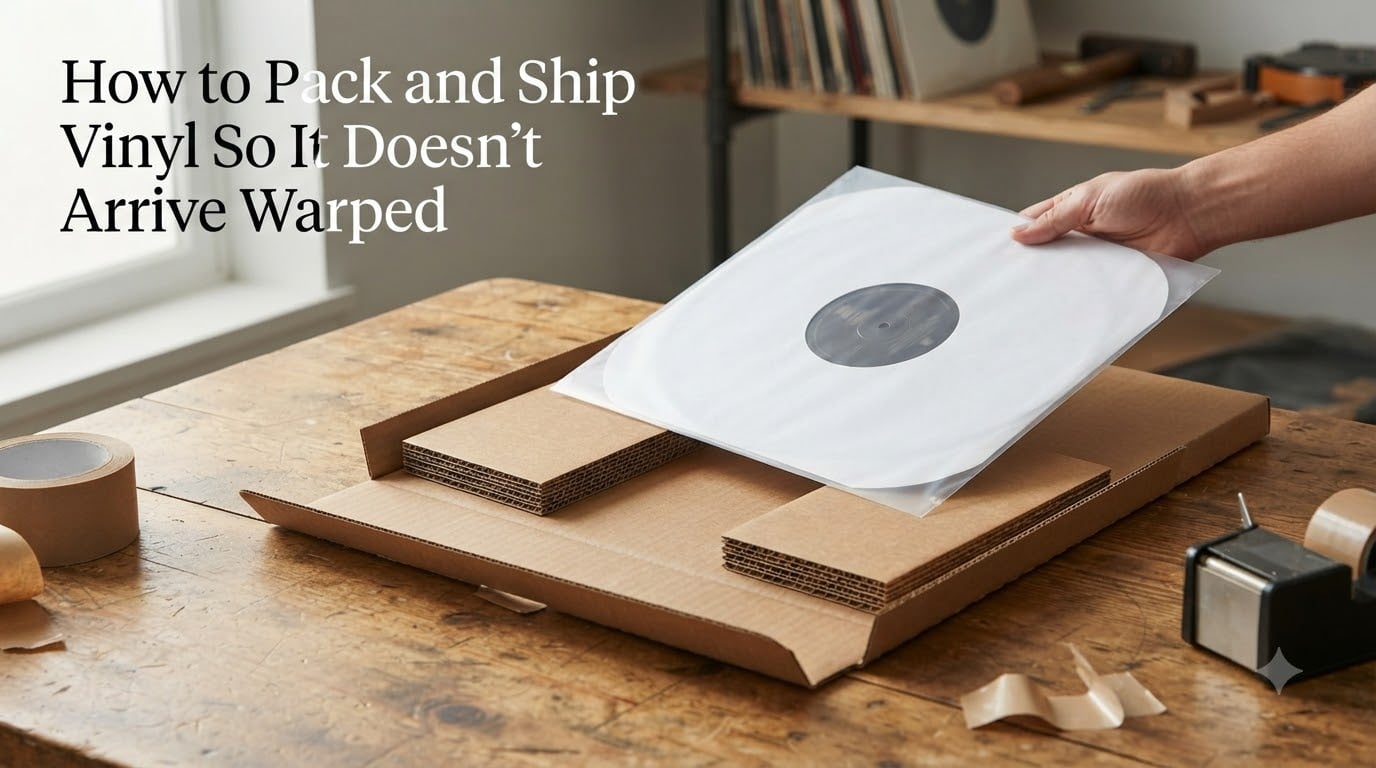
These are flat pieces of heavy cardboard cut slightly larger than a record jacket. You place them on both sides of the record inside the mailer. Stiffeners prevent the package from bending and distribute pressure evenly. Use at least two per shipment, and add more for valuable records.
3. Poly Bags
Clear polyethylene bags protect the jacket from moisture, scuffs, and dust during transit. Three-mil bags work for standard shipments, while four-mil bags provide extra protection for rare or expensive pressings. The bag should be large enough to fit the jacket with stiffeners inside.
4. Antistatic Inner Sleeves
If the record does not already have one, swap the factory paper sleeve for an antistatic inner sleeve. This protects the playing surface from scratches during shipping, especially when the vinyl is removed from the jacket as part of proper packing technique.
5. Corner Protectors
Small cardboard or plastic pieces that fit over the corners of the jacket. They prevent the most common type of cosmetic damage: bent and dinged corners that happen when packages are dropped or stacked at an angle.
6. Packing Tape and FRAGILE Labels
Use quality packing tape to seal every edge of the mailer. Cheap tape can fail in humid conditions. Add visible FRAGILE labels on multiple sides of the package to encourage careful handling.
How to Pack and Ship Vinyl: Step-by-Step Instructions
This is the core process. Follow these steps in order for every record you ship, and you will eliminate the vast majority of shipping-related damage.
Step 1: Clean and Inspect the Record
Before packing, give the record a quick visual inspection and a light cleaning with a carbon fiber brush or a record cleaning solution. This ensures the vinyl is in the stated condition before it leaves your hands. Take photos if you are selling, as documentation protects both you and the buyer.
Step 2: Remove the Vinyl From the Jacket
This is the single most important step that most beginners skip. Slide the vinyl record, along with its inner sleeve, out of the outer jacket. Place it behind the jacket inside the poly bag.
Why does this matter? When the record stays inside the jacket, any pressure during transit pushes the vinyl against the seams. This causes seam splits, one of the most common and frustrating forms of shipping damage. Removing the record eliminates this risk entirely.
Members of the r/vinyl community have confirmed this method repeatedly. Records shipped with the vinyl inside the jacket arrive with split seams far more often than those packed properly.
Step 3: Insert Cardboard Stiffeners
Place one cardboard stiffener behind the jacket and vinyl, and one in front. The stiffeners should be slightly larger than the jacket itself. This creates a rigid sandwich that resists bending from any direction.
For high-value records, add a third or even fourth stiffener. The extra thickness costs a few dollars but provides significant additional protection against bending forces.
Step 4: Slide Everything Into a Poly Bag
Place the jacket, the vinyl behind it, and the stiffeners into a clear poly bag. Seal the bag to protect against moisture and dust. The bag also keeps everything held together as a single unit, preventing internal shifting.
Step 5: Place in the Vinyl Mailer
Open your record mailer and add one or two stiffeners at the bottom for a base layer. Slide the poly-wrapped record assembly on top. Add another stiffener on top of the assembly. Close the mailer and make sure nothing can move when you shake it gently.
If anything shifts, add more padding. Use additional stiffeners or a sheet of bubble wrap to fill any gaps. A package that moves internally is a package that can get damaged.
Step 6: Tape Every Edge Securely
Seal every opening of the mailer with packing tape. Do not just tape the main flap. Tape the sides and any fold-over flaps. The goal is to create a rigid, sealed unit that cannot accidentally open during rough handling.
Step 7: Label as FRAGILE and Add Documentation
Apply FRAGILE labels on the front, back, and at least one side of the package. Include a packing slip or note inside the package with your return address and contact information. If the outer label gets damaged, the inner documentation ensures the record can find its way back to you.
Choosing the Right Shipping Carrier
The carrier you choose affects cost, speed, tracking quality, and how your package gets handled. Here is how the main options compare when you ship vinyl records.
USPS Media Mail
Media Mail is the cheapest option for shipping vinyl records domestically in the United States. Vinyl records qualify as media because they are sound recordings. A single LP typically ships for a fraction of the cost of Priority Mail.
The trade-off is speed. Media Mail travels by ground transportation and can take up to 10 business days. Packages also receive more handling since they move through the standard parcel network. If you use Media Mail, invest extra effort in padding and stiffeners.
One important note: USPS occasionally inspects Media Mail packages. If you include non-media items like t-shirts, stickers, or notes with merchandise, the package may be returned or charged at a higher rate.
USPS Priority Mail
Priority Mail offers a strong balance of cost and speed, typically delivering in 1 to 3 business days. It includes tracking at no extra charge and handles packages more carefully than Media Mail. For records worth more than about $30, the upgrade from Media Mail to Priority Mail is almost always worth it.
UPS and FedEx
UPS and FedEx offer excellent tracking and reliable service for vinyl. They tend to cost more than USPS for domestic shipments but may be better for international or high-value packages. Both carriers offer declared value coverage, which functions like insurance for valuable records.
For international vinyl shipping, compare rates between all three carriers. USPS Priority Mail International is often the most affordable option, while UPS and FedEx provide more detailed tracking once the package leaves the United States.
Protecting Vinyl From Heat and Cold During Transit
Seasonal conditions matter more than most shippers realize. Summer heat and winter cold both pose risks to vinyl records in transit.
In summer, records can sit in delivery trucks where temperatures exceed 120 degrees Fahrenheit. Vinyl begins to soften above 70 degrees, so these conditions are extreme. If you are shipping in July or August, consider using expedited shipping to reduce time in transit. Priority Mail gets the record out of hot trucks faster than Media Mail.
You can also add a layer of insulation inside the package. Wrapping the poly-wrapped record assembly in a sheet of bubble wrap adds a small thermal buffer. It will not protect against sustained extreme heat, but it helps with short-term temperature spikes.
In winter, the concern shifts to extreme cold. While vinyl is less prone to warping in cold, rapid temperature changes can cause condensation inside the package. Moisture on the playing surface leads to mold and sleeve damage. The poly bag is your primary defense here. Make sure it is sealed properly.
If possible, avoid shipping records during the hottest and coldest weeks of the year when extreme weather is forecast along the shipping route. A two-day delay in shipping is better than a warped record.
How to Ship Multiple Vinyl Records Safely?
Bulk shipping requires a different approach. When you are sending five, ten, or twenty records at once, the strategy changes.
Use a bulk vinyl mailer box designed for multiple records. These are larger and deeper than single-record mailers, with enough width to accommodate stacked records without edge pressure. Do not cram single-record mailers into a larger box. Each record needs its own protection inside the larger container.
Stack records vertically, not flat. Lay the records on their edges inside the box, just as they would sit in a shelf. This orientation distributes weight along the strongest axis of each record and prevents the bottom records from bearing the full weight of the stack.
Fill any empty space in the box with bubble wrap or additional stiffeners. Records that can shift within a bulk package will rub against each other and against the box walls, causing scuffs and jacket damage.
For cost savings, USPS Media Mail becomes even more attractive for bulk shipments. The per-record cost drops significantly as you add more records to a single package. Just remember to invest the savings back into better padding.
Common Mistakes to Avoid When You Ship Vinyl Records
Even experienced sellers make these errors. Knowing what goes wrong helps you avoid the same fate.
Leaving the record inside the jacket. This is the number one cause of seam splits. Always remove the vinyl and place it behind the jacket before packing. It takes 15 seconds and prevents the most common shipping damage.
Using padded envelopes instead of proper mailers. Padded mailers offer almost no rigidity. They bend, and so does the record inside. Only use purpose-built record mailers or rigid corrugated boxes.
Skipping stiffeners. A mailer without stiffeners is just a piece of folded cardboard. The stiffeners provide the structural integrity that prevents bending. Never skip them.
Not testing for movement. After sealing the package, shake it gently. If you can feel or hear anything moving inside, open it back up and add more padding. Internal movement equals damage risk.
Under-declaring value for insurance. If a record is worth $80, declare $80. Declaring a lower value to save on insurance costs means you cannot recover the full amount if the record gets lost or damaged.
How to Tell If a Vinyl Record Arrived Warped
If you are on the receiving end of a vinyl shipment, here is how to check for damage before you even play the record.
Place the record on a flat, level surface like a glass table or a kitchen counter. Look at it from eye level. A flat record will sit perfectly flush. A warped record will show visible gaps where the edge lifts off the surface.
For a more precise check, hold the record up to a light source and look across the surface while slowly rotating it. Warps show up as light and shadow patterns that move across the grooves. Edge warps are the most common and the easiest to spot.
If the record looks flat but you want to be sure, do a play test. Listen for pitch wavering, especially on sustained piano notes or steady tones. This wow and flutter effect is the audible signature of a warp that may be too subtle to see visually.
If the record arrives damaged, document everything immediately. Take photos of the packaging, the record, and any visible damage. Contact the seller and the carrier right away. If you purchased insurance, file the claim promptly with your photos as evidence.
Frequently Asked Questions
How to prevent vinyl from being warped?
To prevent vinyl warping during shipping, remove the record from its jacket, place it behind the jacket inside a sealed poly bag, and sandwich it between cardboard stiffeners inside a purpose-built vinyl mailer. Keep the package away from heat sources, ship during cooler parts of the day in summer, and use expedited shipping to reduce time in hot delivery vehicles.
How to store vinyl so it doesn’t warp?
Store vinyl records vertically, like books on a shelf, never flat or leaning. Keep them in a climate-controlled room between 65 and 70 degrees Fahrenheit with moderate humidity. Avoid direct sunlight, radiators, and vents. Use sturdy shelving that supports records evenly, and never overcrowd or let records lean at an angle.
How to protect vinyl when shipping?
Protect vinyl during shipping by using a rigid vinyl record mailer with at least two cardboard stiffeners, removing the record from the jacket to prevent seam splits, sealing everything in a poly bag, and taping all edges of the mailer securely. Label the package as FRAGILE and choose a carrier with tracking and insurance for valuable records.
How to package vinyl for shipping?
To package vinyl for shipping, first clean the record and place it in an antistatic inner sleeve. Remove the vinyl from the outer jacket and position it behind the jacket. Slide both into a poly bag with cardboard stiffeners on either side. Place the assembly inside a record mailer, fill any gaps with bubble wrap, tape every edge, and add FRAGILE labels.
Wrap-Up: Ship Vinyl With Confidence
Learning how to pack and ship vinyl properly takes about ten minutes of care per record, and those ten minutes make the difference between a record that arrives pristine and one that arrives unplayable. The process is straightforward: remove the vinyl from the jacket, use proper vinyl mailers with stiffeners, seal everything in a poly bag, eliminate all internal movement, and choose a carrier that matches the value of what you are shipping.
Remember the seasonal factors. Heat is the enemy in summer, so consider expedited shipping during the hottest months. In winter, sealed poly bags protect against condensation and moisture. And if you are shipping multiple records, stack them vertically in a bulk mailer with plenty of padding between them.
Every record you ship represents a connection between you and the person on the other end. Whether it is a sale on Discogs, a gift to a friend, or a bulk order to fans, proper packing shows you care about the music arriving in the condition it was meant to be heard. Now grab your stiffeners, tape up every edge, and ship with confidence.